3D Gallery
Why Do Bees Dance?
Enter gallery
Why Do Bees Dance? is a 3D virtual gallery on MyGallery3D, a walkable online exhibition of 12 works. Step inside and explore it in your browser: no app, no headset.
Welcome to a 3D virtual gallery you can walk through in your browser, exploring the crisis facing the world's pollinators.
There are over 20,000 known species of bee, yet more than 90% are solitary creatures most people never notice. A 2021 study found the number of bee species recorded worldwide shrank by a quarter after the 1990s. Meanwhile, demand for animal-pollinated crops has tripled even as managed honeybee hives grew by only 45%. The gap between supply and need is widening.
An estimated 87.5% of flowering plant species depend on animal pollination. If all pollinators disappeared, models predict the global fruit supply would fall by 23%, vegetables by 16%, and nuts by 22%. An additional 1.42 million deaths per year could follow from nutritional deficits, chiefly in vitamin A and folate. Seventy percent of dietary vitamin A worldwide comes from animal-pollinated crops.
No single cause explains pollinator decline. Neonicotinoid pesticides cause neurological and immune disorders in bees. Varroa mites transmit deformed wing virus directly into colonies. Habitat destruction removes the flowers bees depend on. Climate change pushes emergence out of sync with bloom times. Air pollution breaks down floral scent molecules, forcing pollinators to travel further. These pressures compound one another.
Of roughly 20,000 bee species, only seven are honeybees. The vast majority are solitary, rarely sting, and make no honey. Many pollinate just one group of flowers and depend on the specific habitat where those flowers grow. When that habitat disappears, so do they. The most common bees in the Northern Hemisphere are sweat bees, so small they are often mistaken for flies.
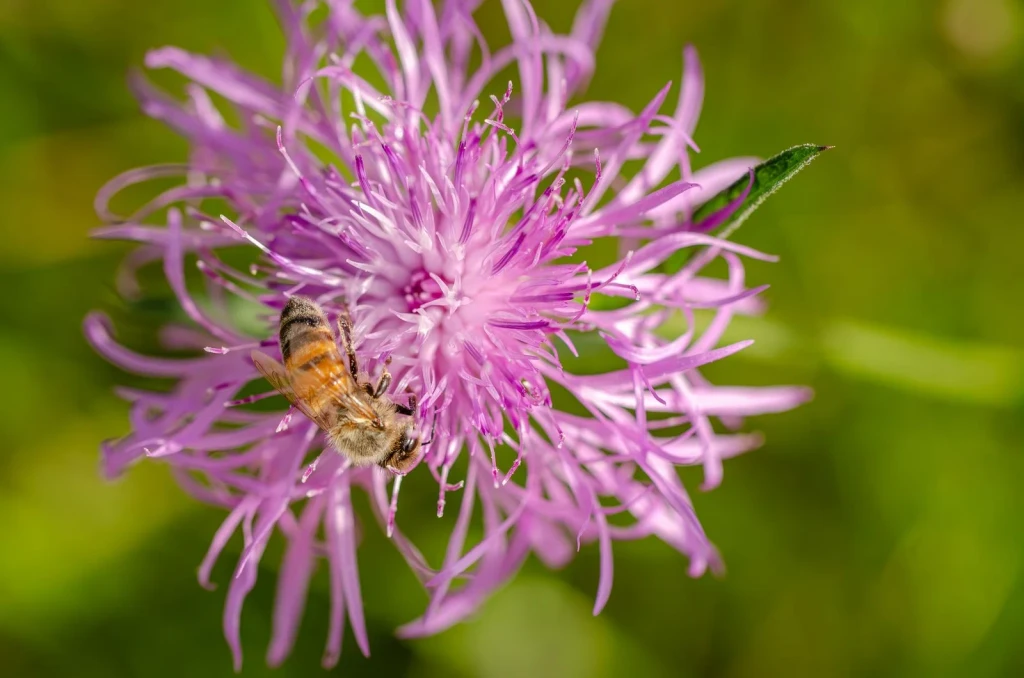
A honeybee collects nectar from a pink wildflower in this macro study. The garden setting frames an essential moment of pollination.
Photograph by Leon Aschemann, via Pexels.
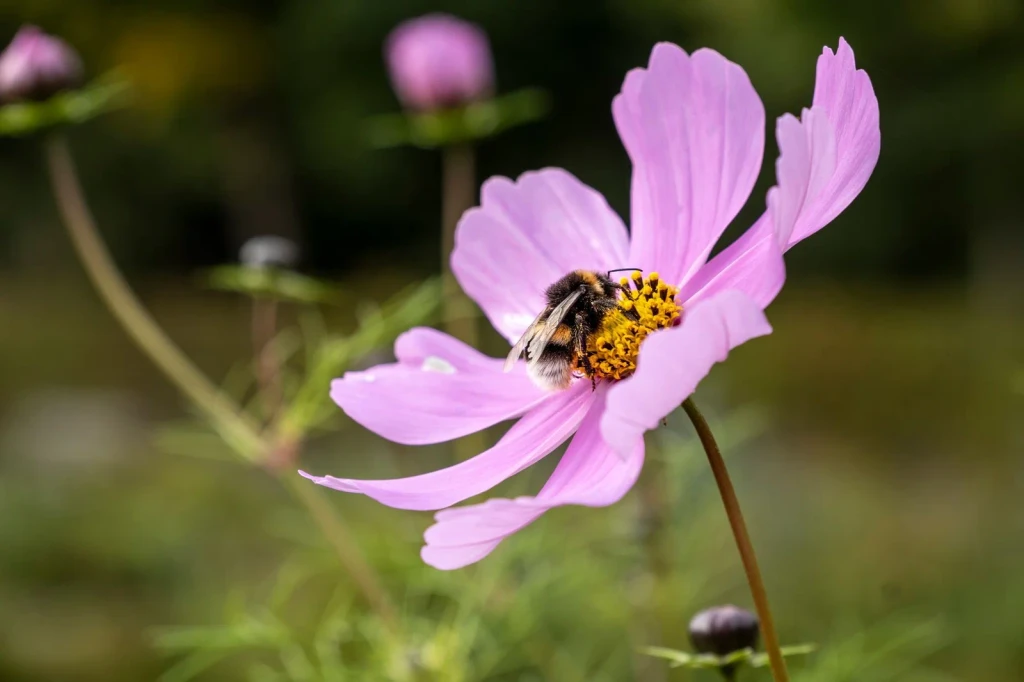
A bumblebee rests on a pink cosmos flower in sunlight. Close enough to see the bee's form against the delicate petals.
Photograph by Horst Joachims, via Pexels.
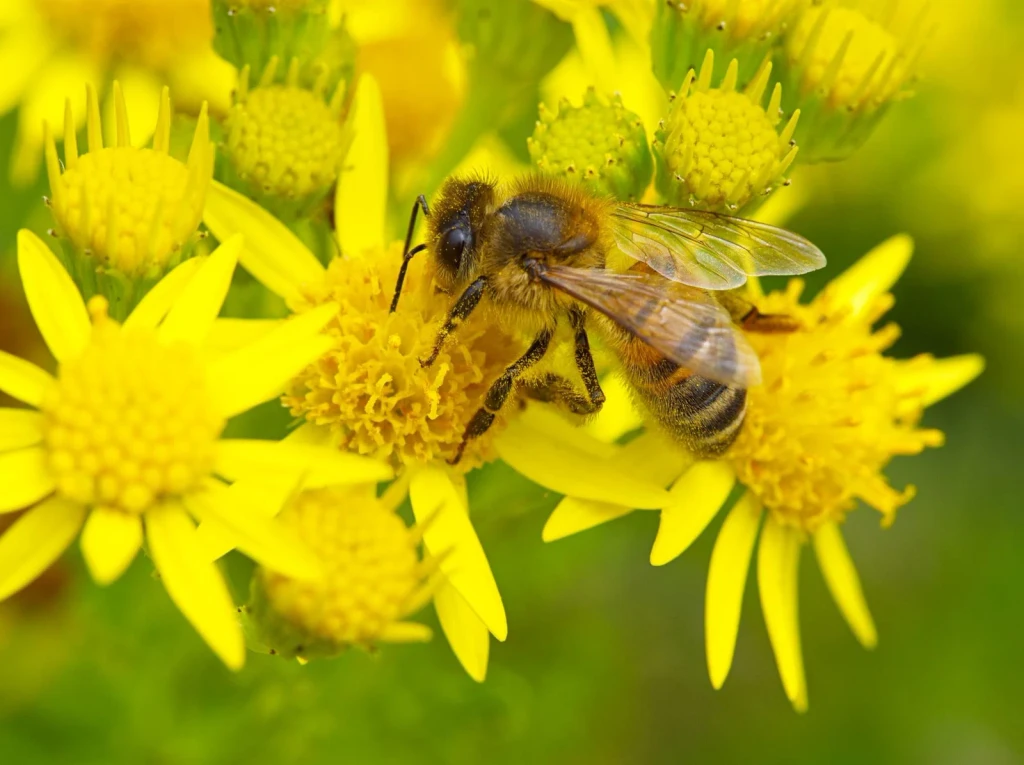
A honeybee collects nectar from bright yellow flowers on a sunny day. A straightforward document of pollination at work.
Photograph by Phil Mitchell, via Pexels.
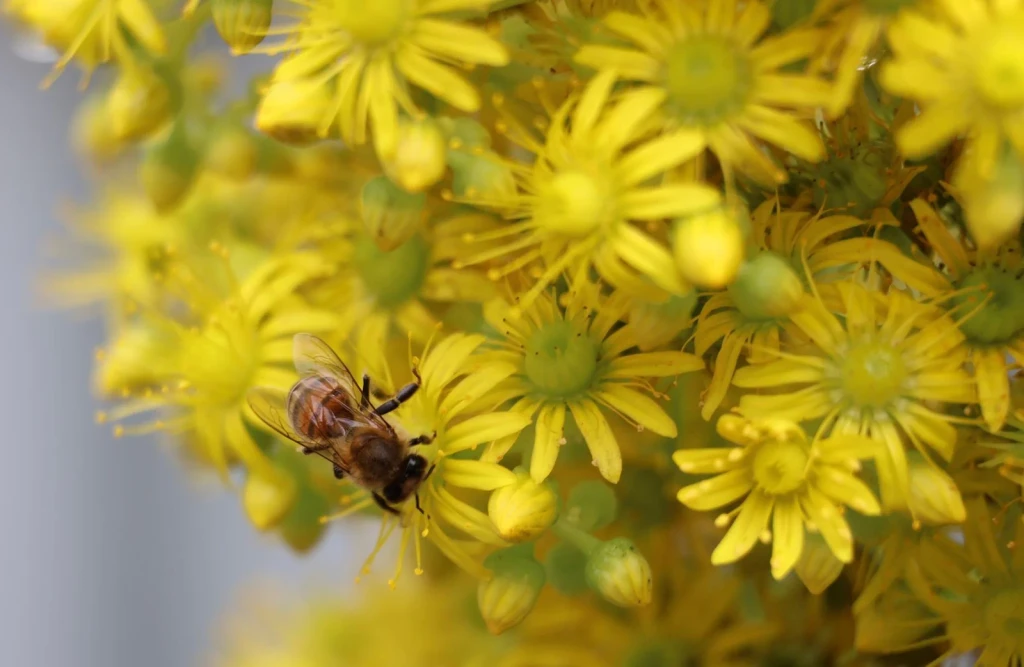
A macro view of a honey bee at work on vibrant yellow flowers. The photograph captures a moment of pollination in nature's intimate detail.
Photograph by Sunny spring bean, via Pexels.
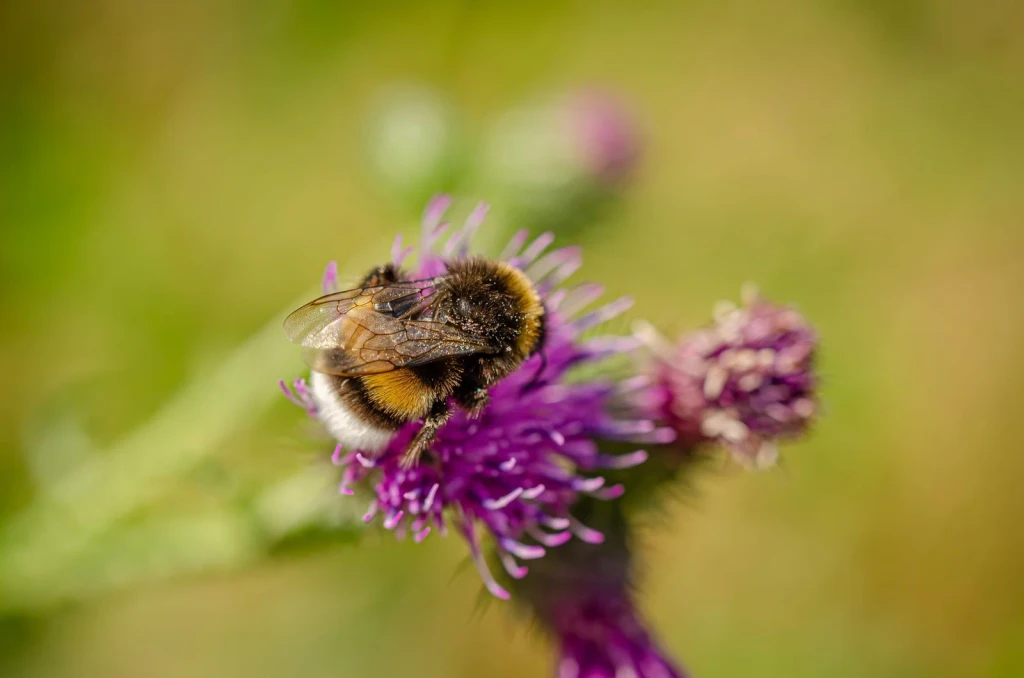
A bumblebee gathers pollen from a purple thistle in natural light. This close encounter shows the relationship between pollinator and plant.
Photograph by Leon Aschemann, via Pexels.
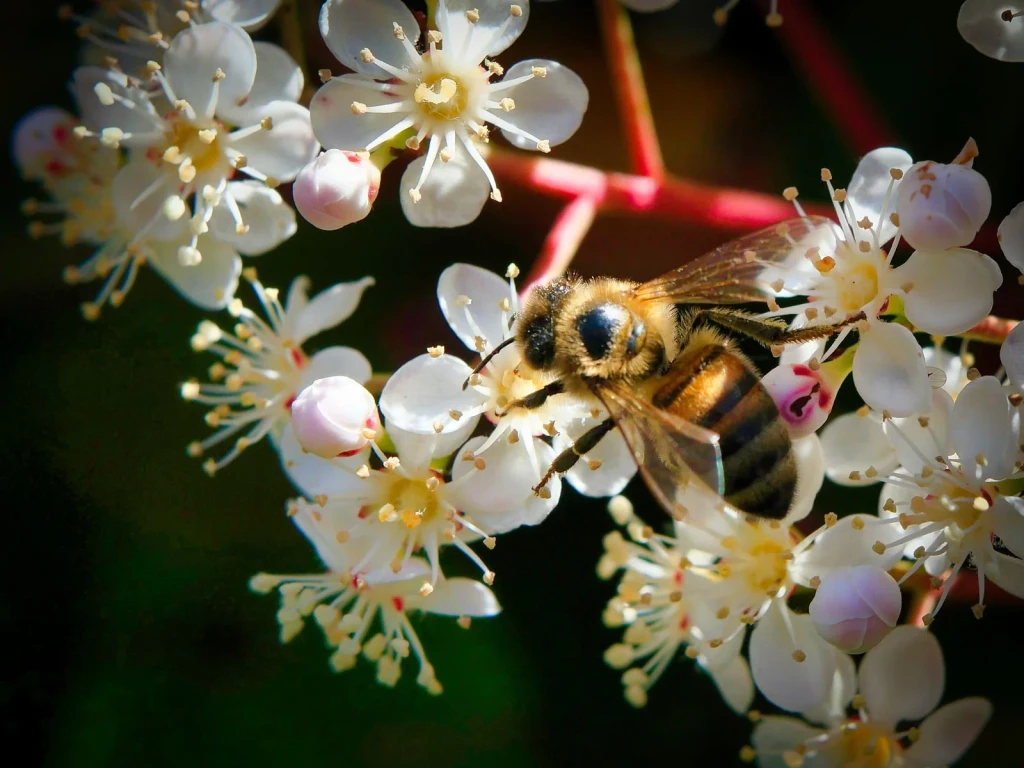
A honeybee pollinates white blossoms in this close-up shot. Nature's interdependence is visible in a single moment.
Photograph by Didier ROUSSEL, via Pexels.
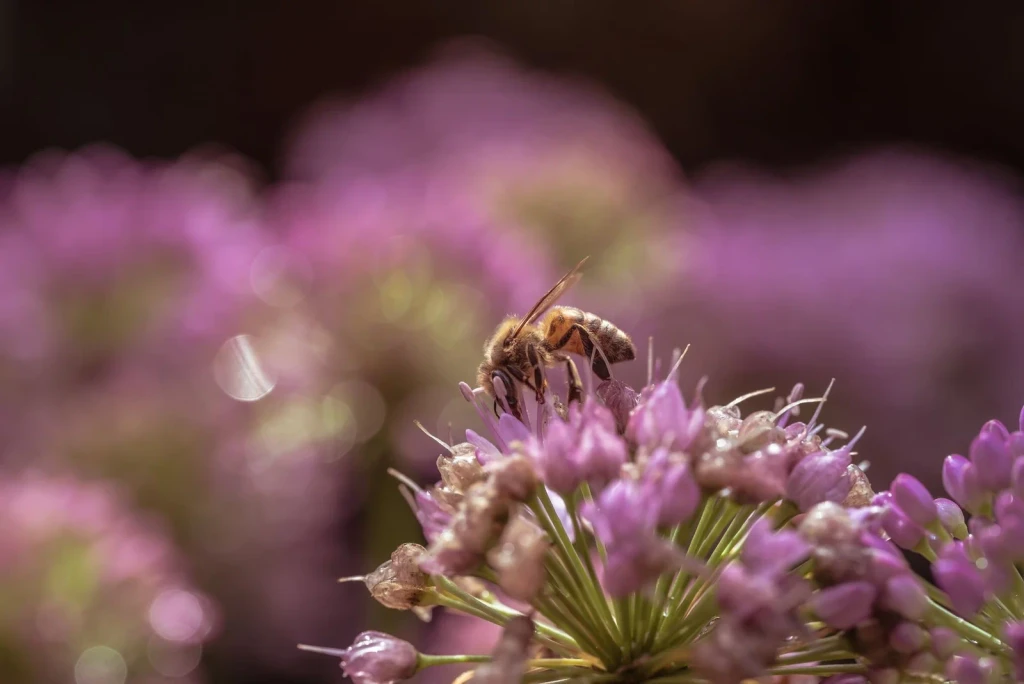
A honeybee pollinates purple flowers under sunlight. The photograph records a moment of active pollination in nature.
Photograph by Chris F, via Pexels.
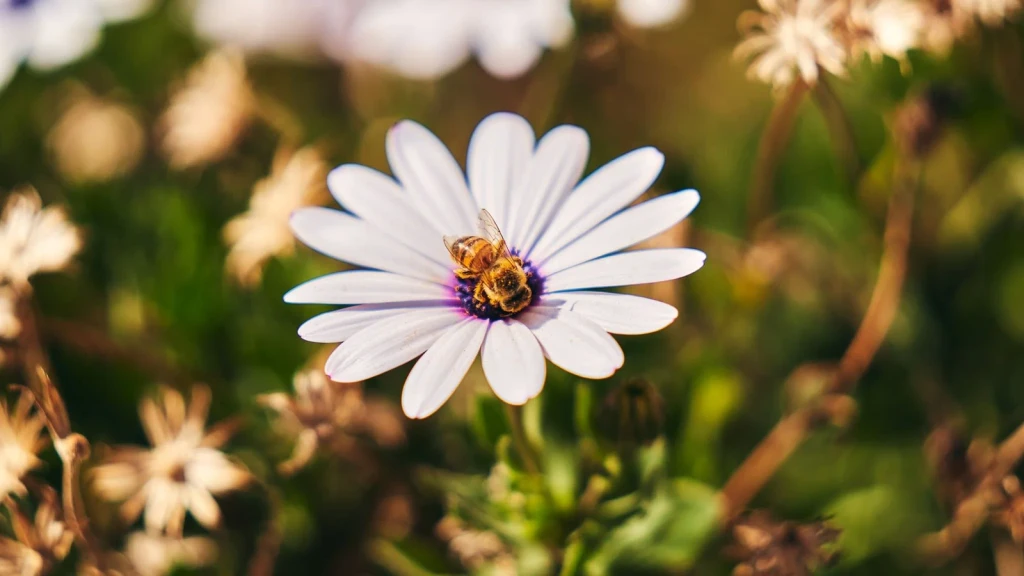
A bee rests on a white daisy in a spring garden. A quiet image of the everyday pollination that sustains plants.
Photograph by Willians Huerta, via Pexels.
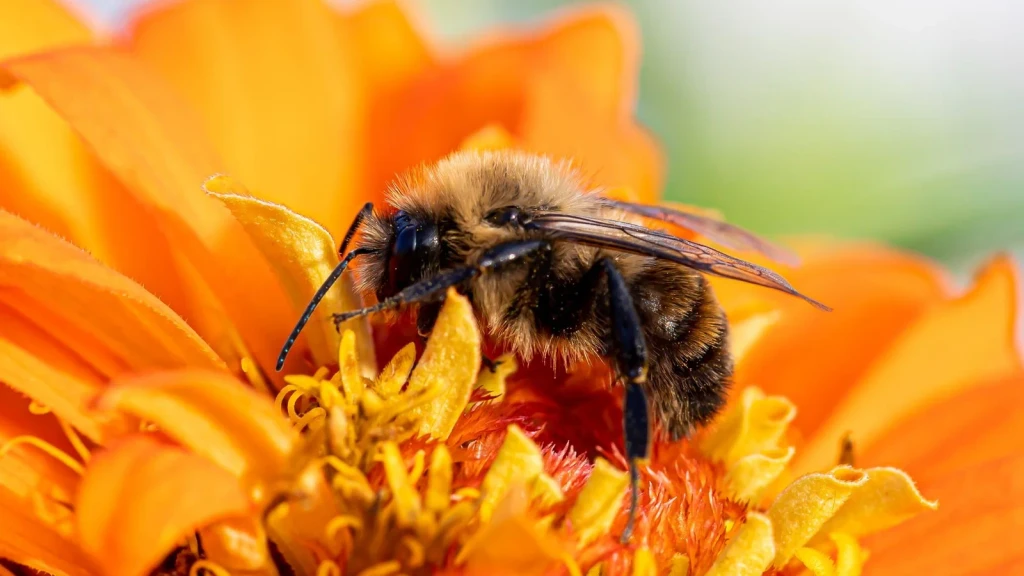
A bee gathers pollen from a vibrant orange flower. The macro lens reveals the detail of this essential natural process.
Photograph by Mason McCall, via Pexels.
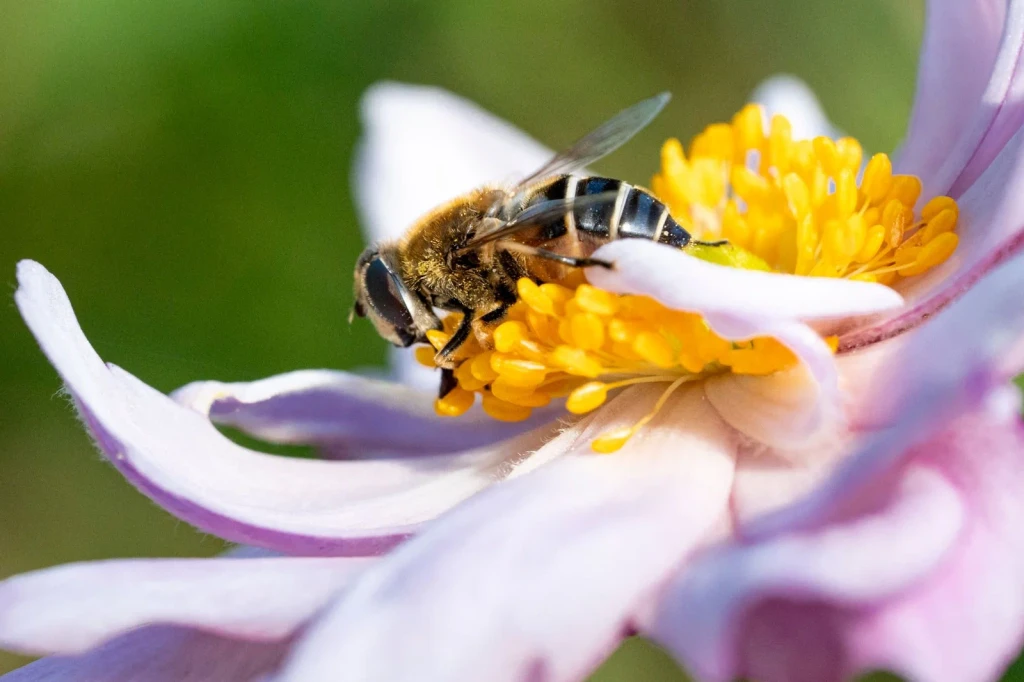
A bee works at a vibrant flower in close detail. The photograph documents an act central to pollination.
Photograph by Robert Schwarz, via Pexels.
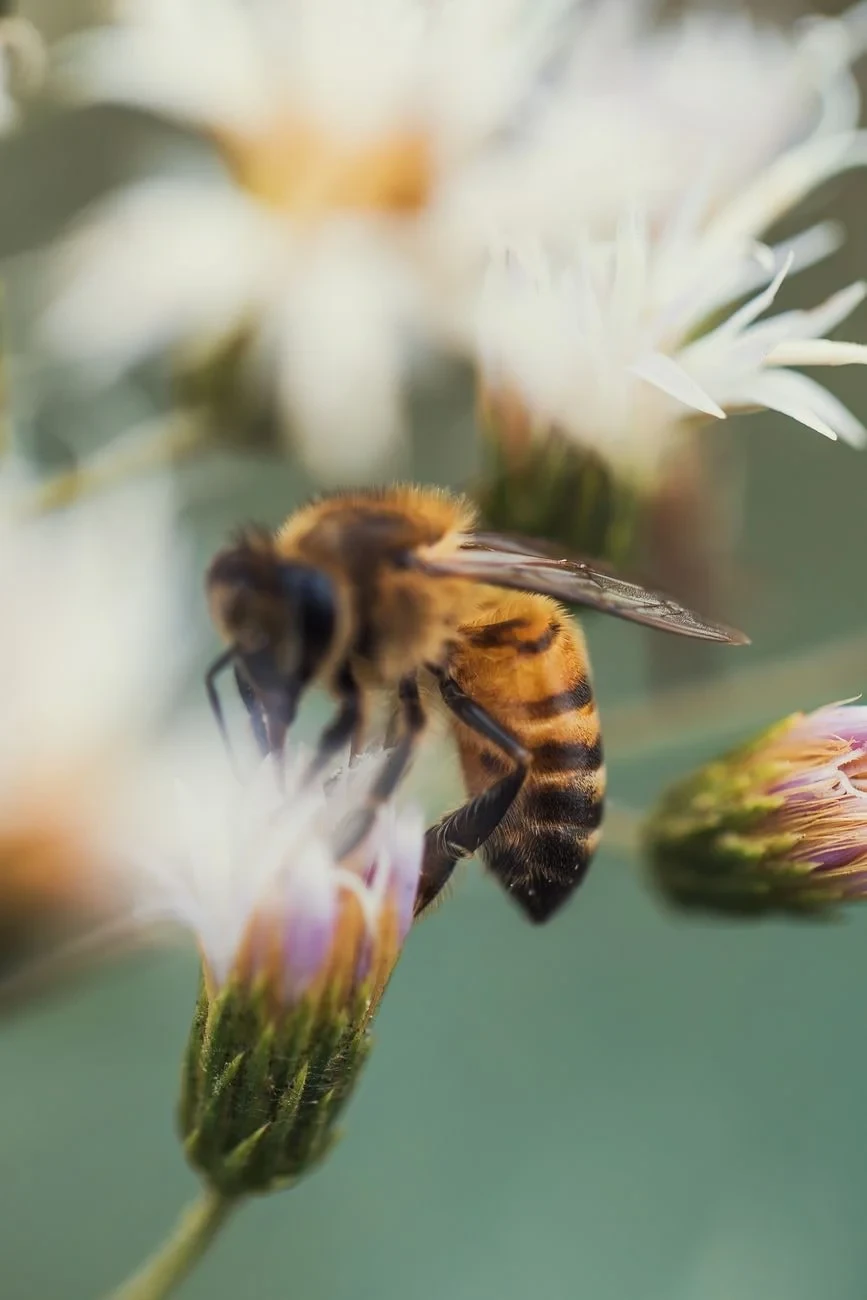
A honey bee gathers nectar from white flowers in this detailed view. The image shows the quiet beauty of pollination work.
Photograph by Matheus Bertelli, via Pexels.
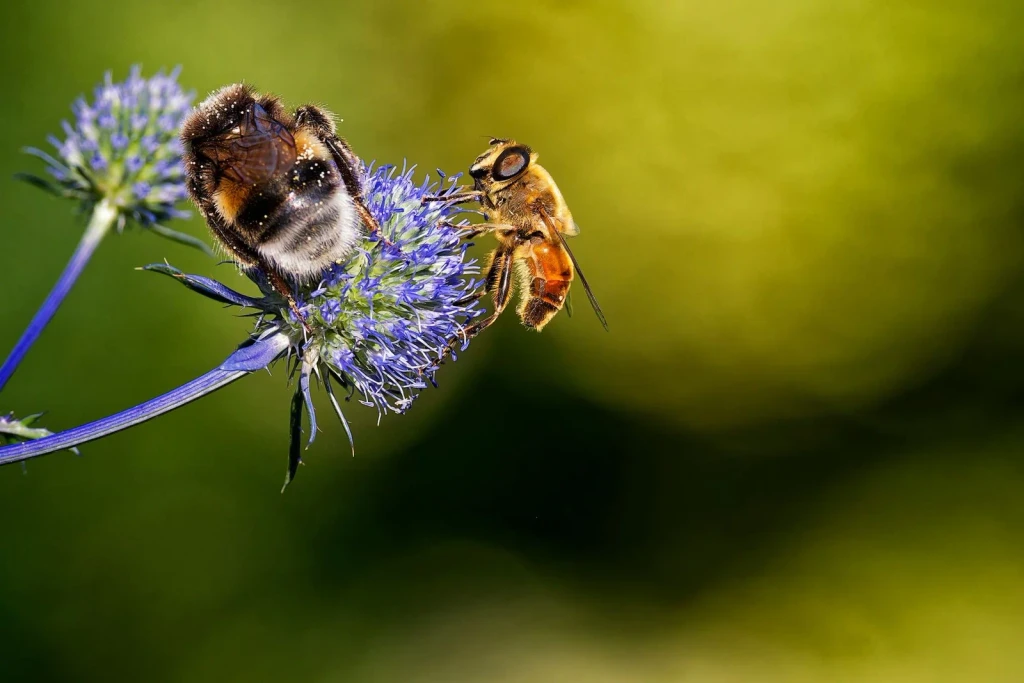
A macro view of bees at work on a blue flower. The image captures the pollination process in direct, intimate detail.
Photograph by Carsten Ruthemann, via Pexels.
