3D Gallery
Ceramics: The Oldest Craft
Enter gallery
Ceramics: The Oldest Craft is a 3D virtual gallery on MyGallery3D, a walkable online exhibition of 12 works. Step inside and explore it in your browser: no app, no headset.
Welcome to a 3D virtual gallery you can walk through in your browser, exploring the oldest craft humanity ever learned. A ceramic figurine found in the Czech Republic dates to 29,000–25,000 BC. The earliest known pottery vessels, from Jiangxi, China, date to 18,000 BC. Ceramics preceded the Neolithic period itself.
Often ceramic objects are all the artistic evidence left from vanished cultures. Every major civilisation, from the Nok of Africa to the Chinese, Greek, Persian, Mayan, Japanese and Korean, shaped clay and fired it.
Unglazed earthenware leaks. Ceramic glaze, a glassy coating fused by heat, solved this and opened a world of decoration. Glazes first appeared on stone materials in the 4th millennium BC. By around 100 BC, lead glazing was widespread. Islamic potters later pioneered tin-opacified glaze, producing the opaque white surfaces that inspired European faience, Delftware, and maiolica.
A pot is only dried clay until a kiln transforms it. The earliest known kiln, found at Yarim Tepe in modern Iraq, dates to around 6000 BC. China developed kilns reaching 1,000°C before 2000 BC. The long dragon kilns of southern China climbed hillsides, while compact mantou kilns served the northern plains. Both could exceed 1,300°C, the threshold for porcelain.
All traditional pottery falls into three types defined by firing temperature. Earthenware, the oldest, fires as low as 600°C and remains porous. Stoneware fires above 1,100°C, producing a dense, waterproof body. Porcelain requires 1,200 to 1,400°C and gains its translucence from the mineral mullite forming within the clay. China achieved porcelain by the Tang dynasty. Europe could not produce it until the 18th century.
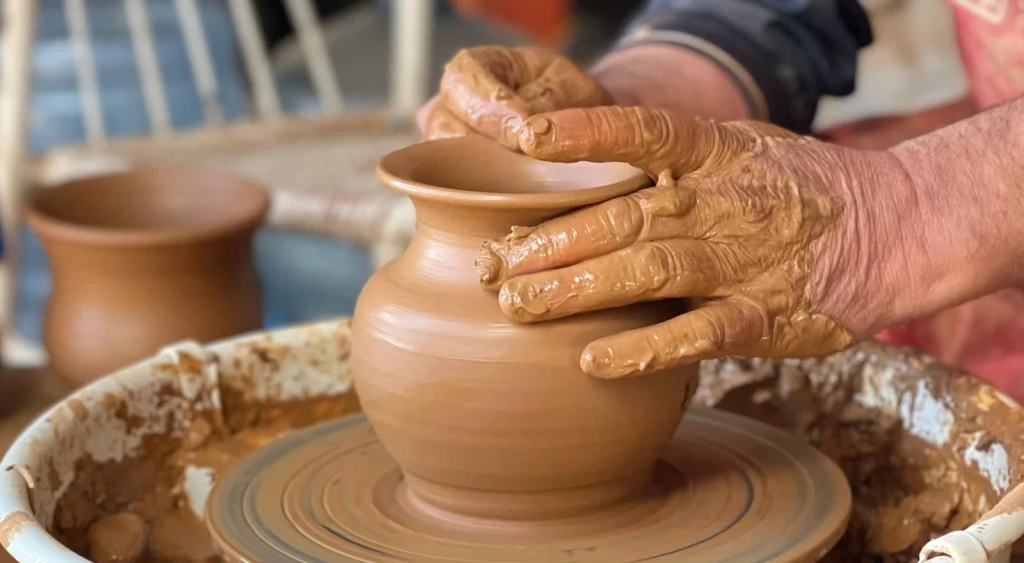
An artisan's hands sculpt pottery on a wheel. The photograph reveals the creative process made visible through the potter's gesture.
Photograph by Seda Nur Koç, via Pexels.
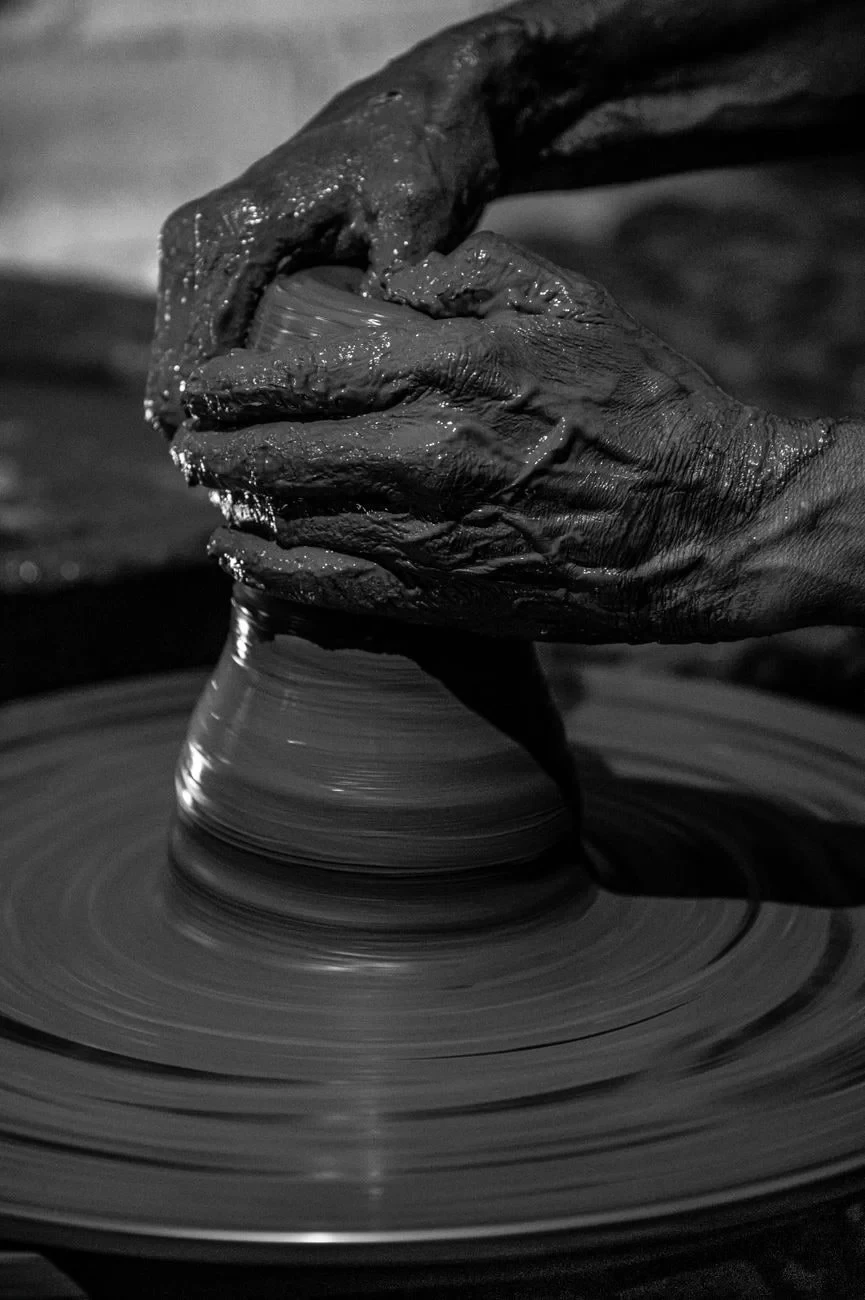
Black and white photography emphasizes skilled hands engaged in the precise work of shaping clay.
Photograph by Anirban Das, via Pexels.
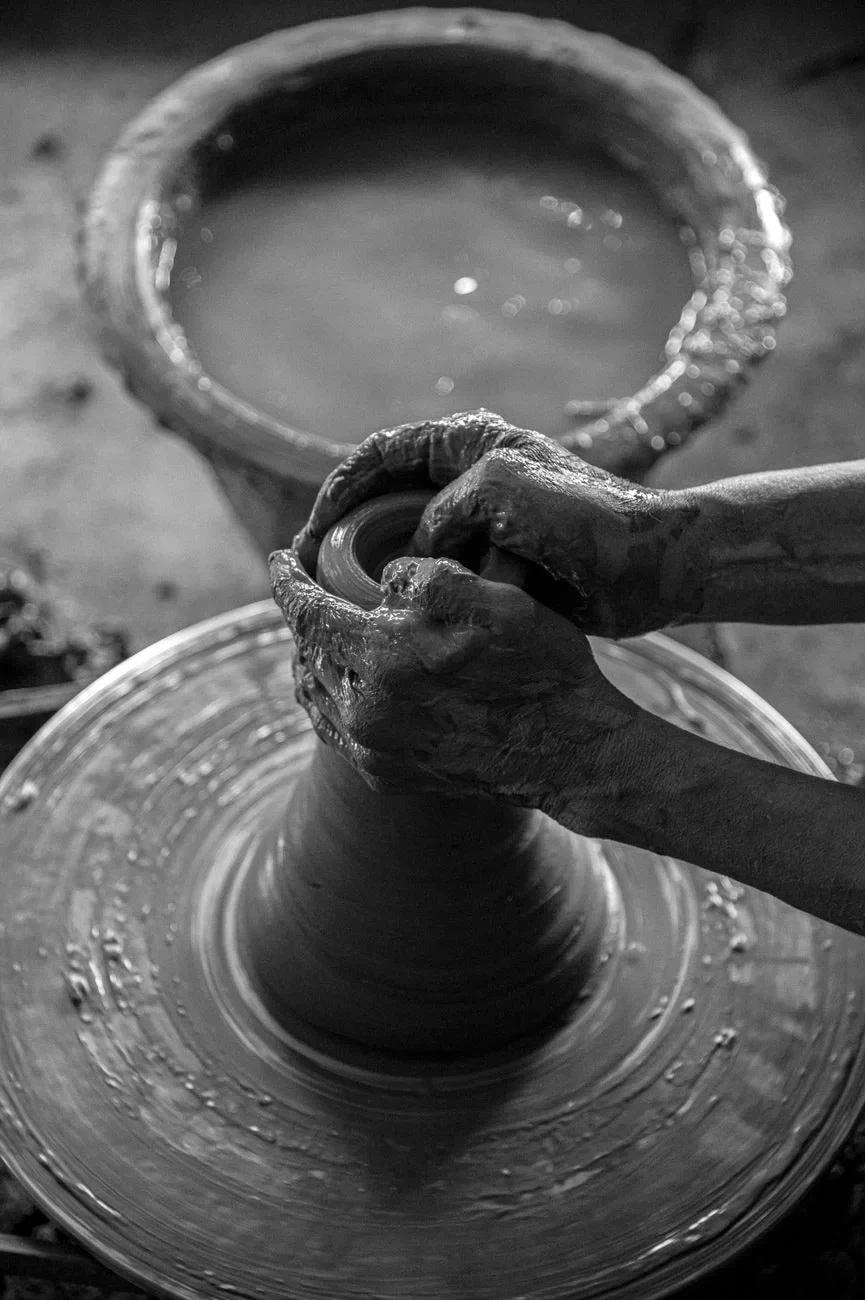
Hands mold clay on a spinning wheel in this study of traditional craftsmanship and its methods.
Photograph by Anirban Das, via Pexels.
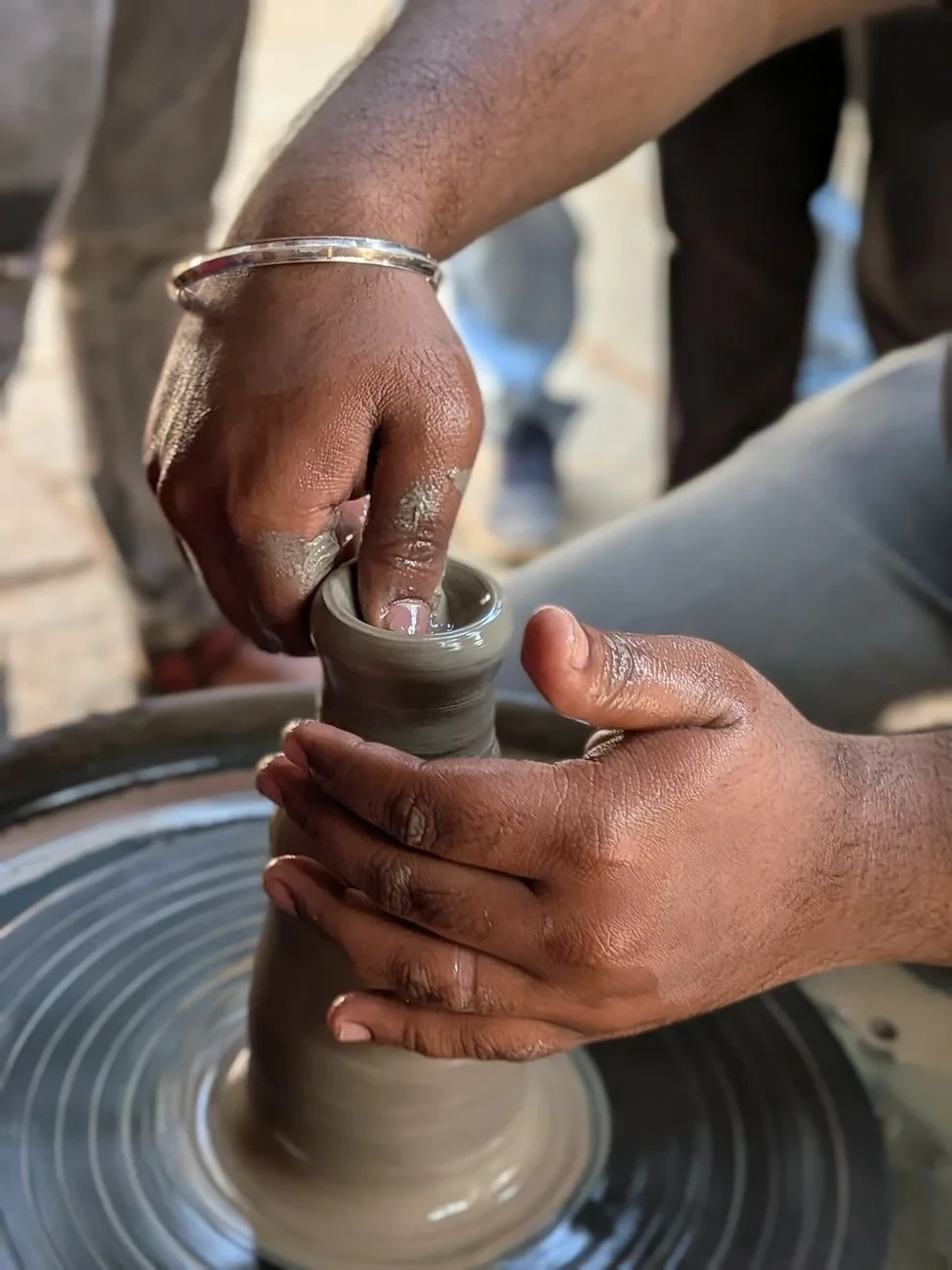
Two hands shape clay on a pottery wheel. The image documents the craftsmanship required to transform raw material into form.
Photograph by Narasimhan AVPL, via Pexels.
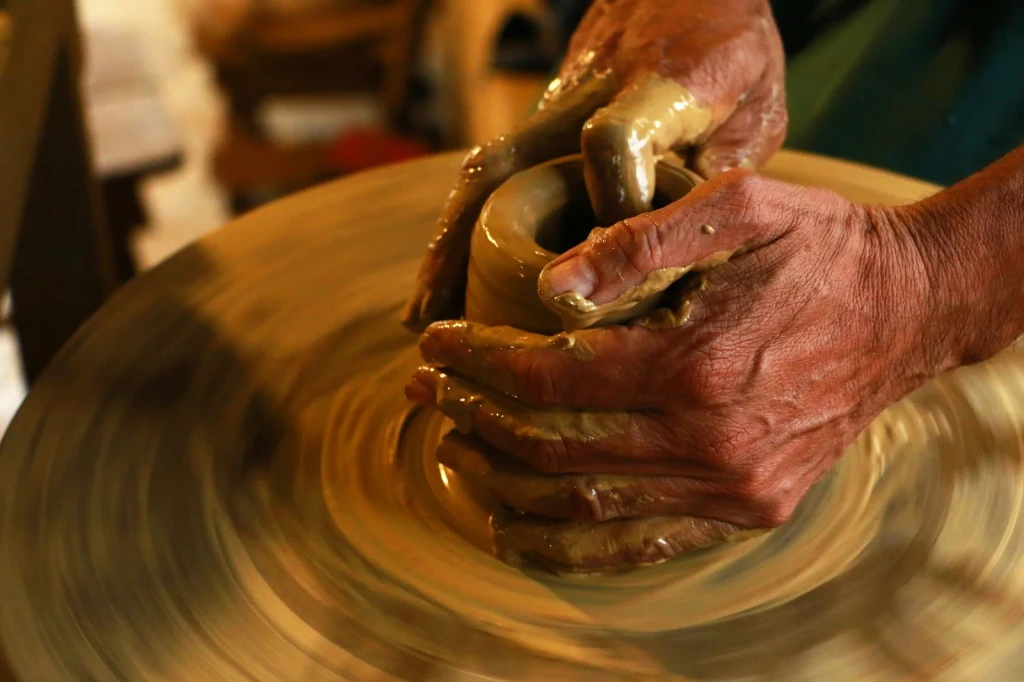
Hands shape clay on a pottery wheel in close view. The image speaks directly to the artistry of working with clay.
Photograph by Regiane Tosatti, via Pexels.
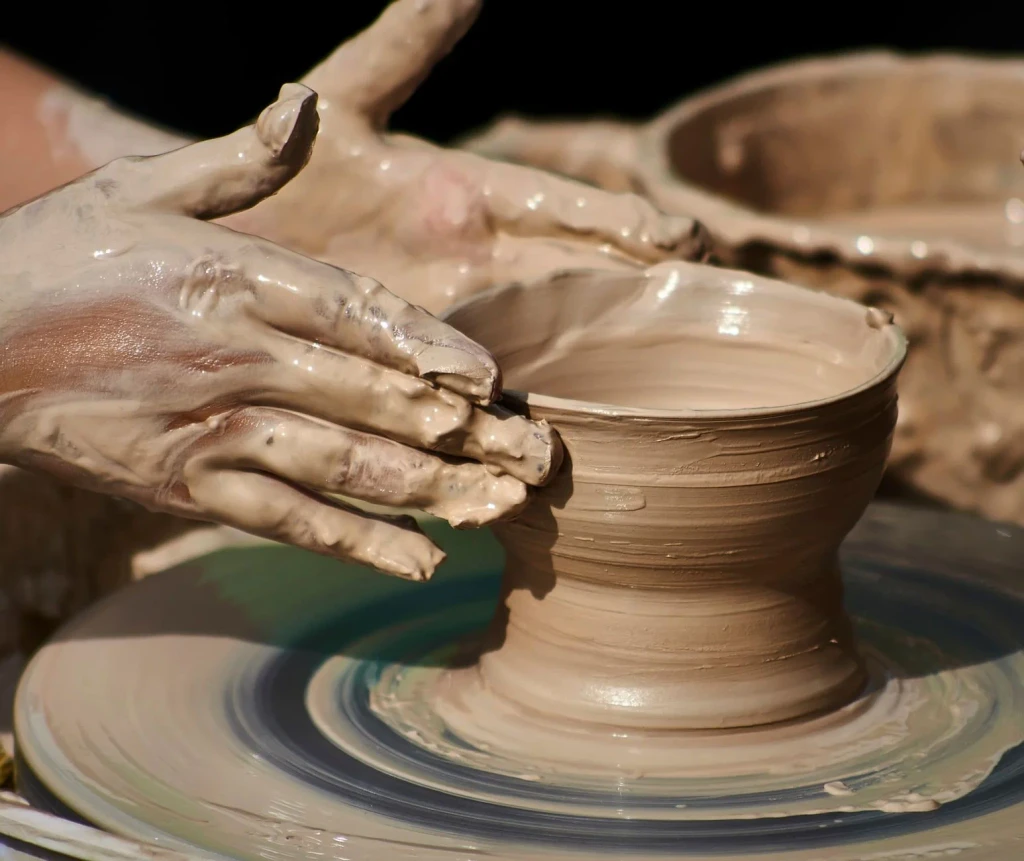
A close-up perspective shows hands at work on the wheel, documenting the specific techniques of pottery.
Photograph by igovar igovar, via Pexels.
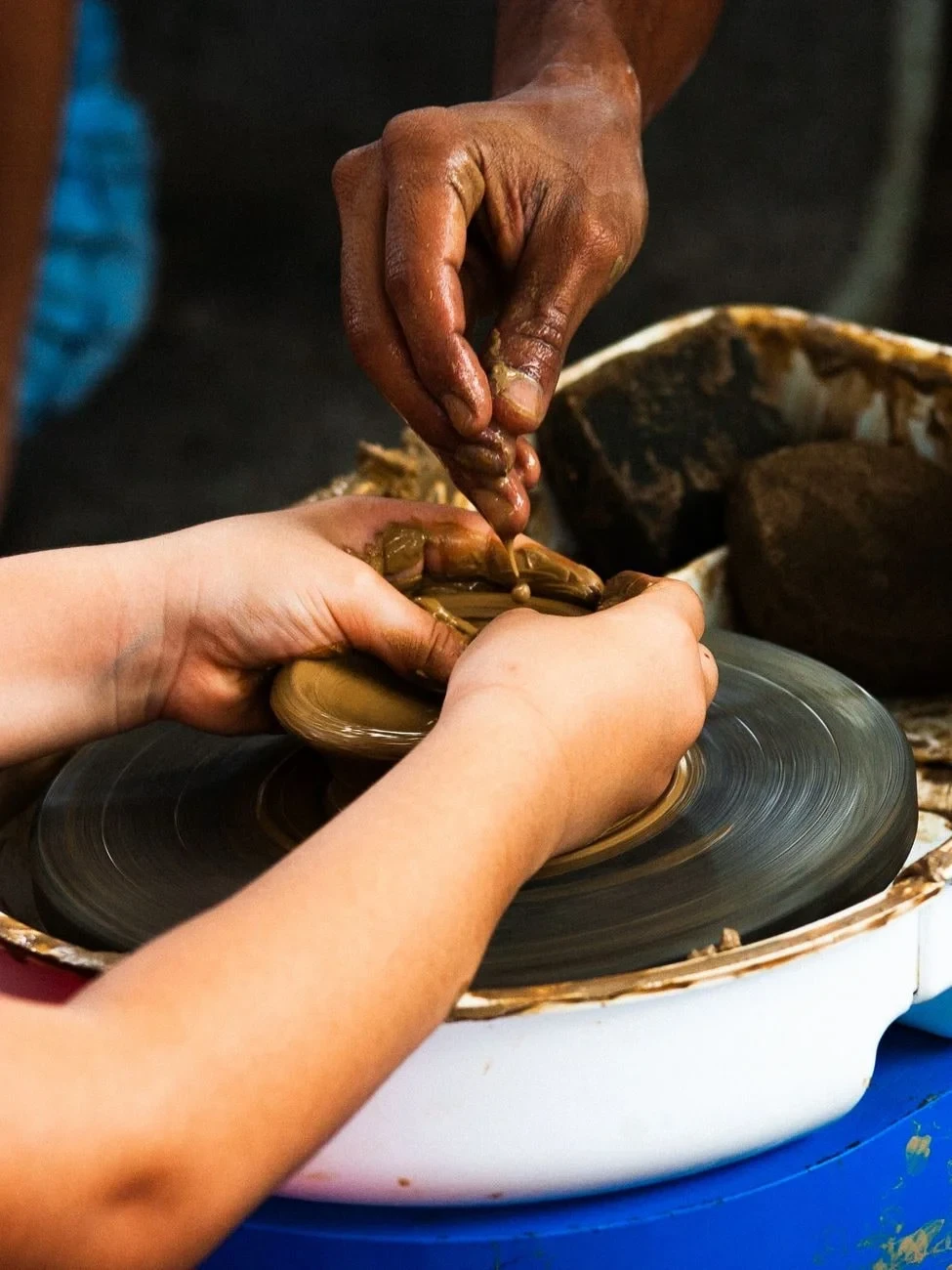
Two pairs of hands shape clay together on a pottery wheel. This image shows collaboration as part of the ceramic process.
Photograph by Luis Eduardo Lustosa, via Pexels.
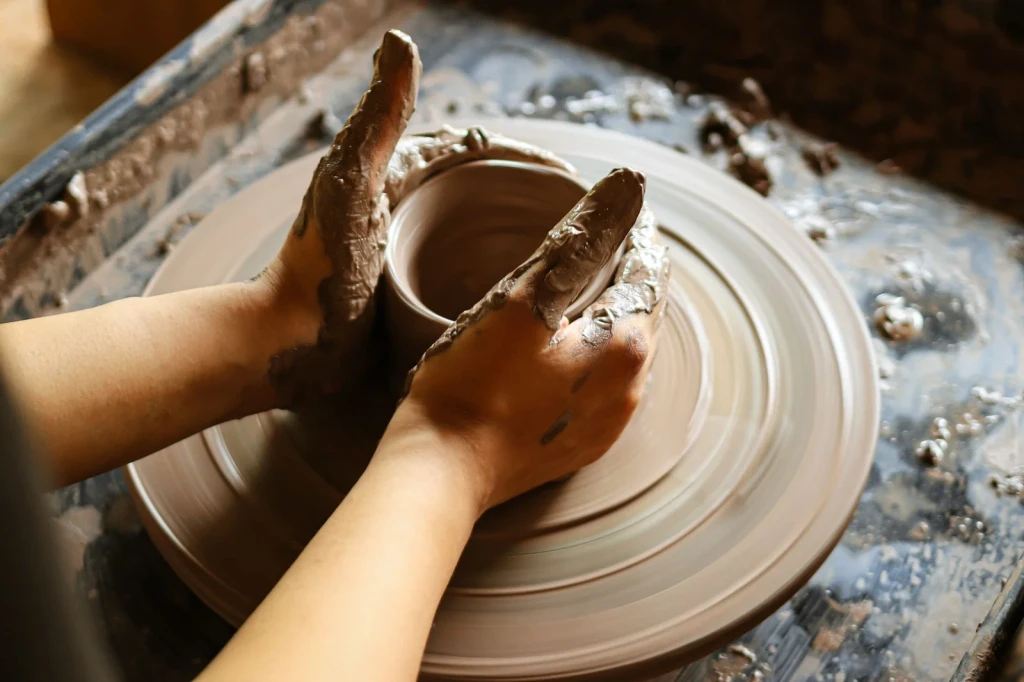
Hands craft pottery on a wheel in close detail. The photograph emphasizes the skill and concentration required in ceramic work.
Photograph by Henlynn, via Pexels.
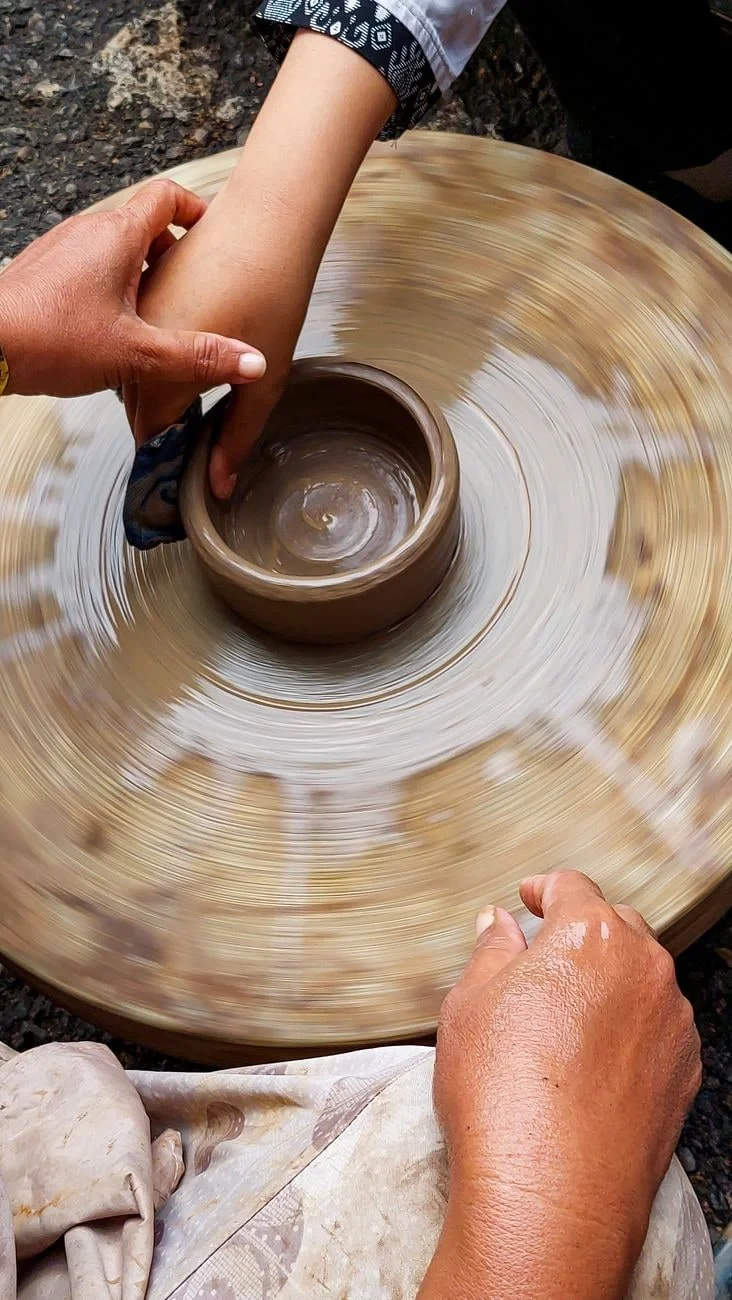
Hands shape clay on a pottery wheel, illustrating the enduring methods of ceramic creation.
Photograph by Henny Wiyanti, via Pexels.
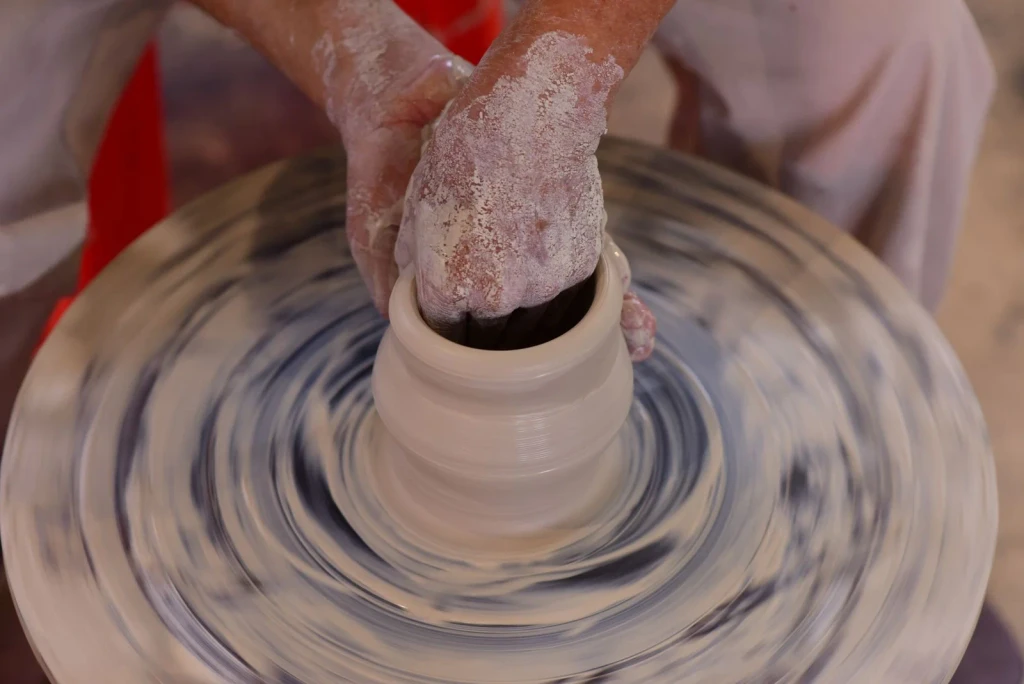
Hands demonstrate expert technique on a pottery wheel. The close-up captures the fundamental gesture of ceramic creation.
Photograph by Sóc Năng Động, via Pexels.
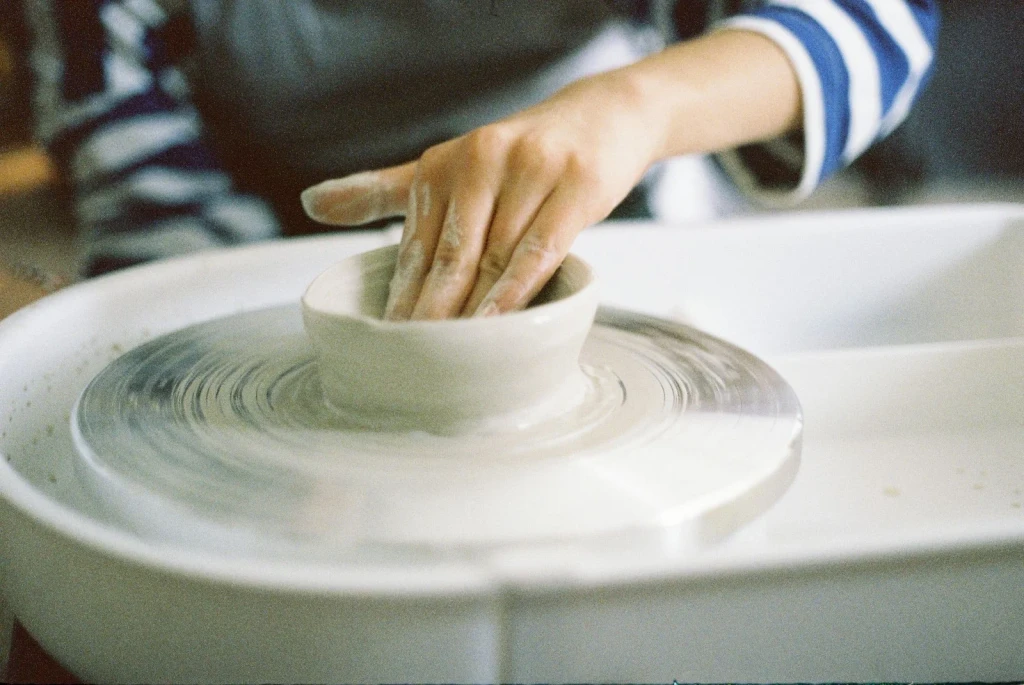
A close-up view of hands shaping clay reveals the direct, tactile nature of handmade pottery work.
Photograph by Rüveyda, via Pexels.
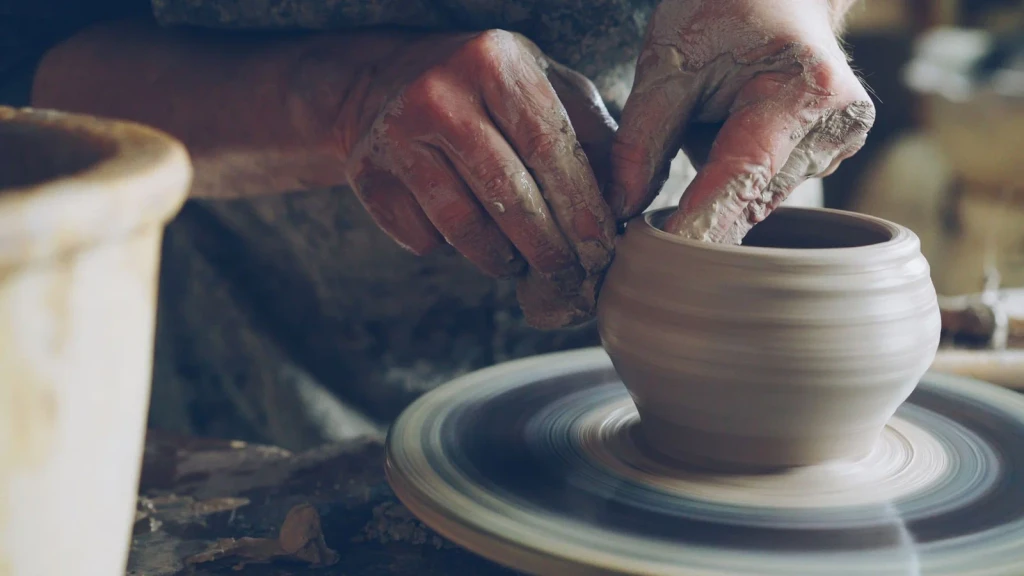
A potter's hands guide clay on a spinning wheel. This photograph captures traditional techniques at the heart of ceramic practice.
Photograph by Vitaly Gariev, via Pexels.
