3D Gallery
Cities at Night: Light, Work and Insomnia
Enter gallery
Cities at Night: Light, Work and Insomnia is a 3D virtual gallery on MyGallery3D, a walkable online exhibition of 14 works. Step inside and explore it in your browser: no app, no headset.
Welcome to a 3D virtual gallery you can walk through in your browser, exploring how artificial light reshaped cities after dark.
Eighty percent of North Americans can no longer see the Milky Way. What began with candles and oil lamps hung at intersections in 1600s Paris became gas flames that earned the city its nickname, then arc lamps and incandescent bulbs that turned night into an industrial resource. This exhibition traces that transformation and its costs: to sleep, to ecosystems, and to the sky itself.
Paris had more than 2,700 streetlights by the end of the 17th century, and twice as many by 1730. Lanterns hung on cords 20 feet above the street. By 1857, gas flames lit the Grands Boulevards with a clarity one writer called "white and pure." The first electric arc lamps appeared on the avenue de l'Opera in 1878. Each advance pushed working and social life deeper into darkness.
An estimated 83 percent of the world's people now live under light-polluted skies. Global light pollution rose at least 49 percent from 1992 to 2017. Over-illumination is not universal: American cities emit three to five times more light per capita than German ones. Night-flying insects that navigate by moonlight die from exhaustion around artificial lamps, disrupting food chains that depend on their larvae.
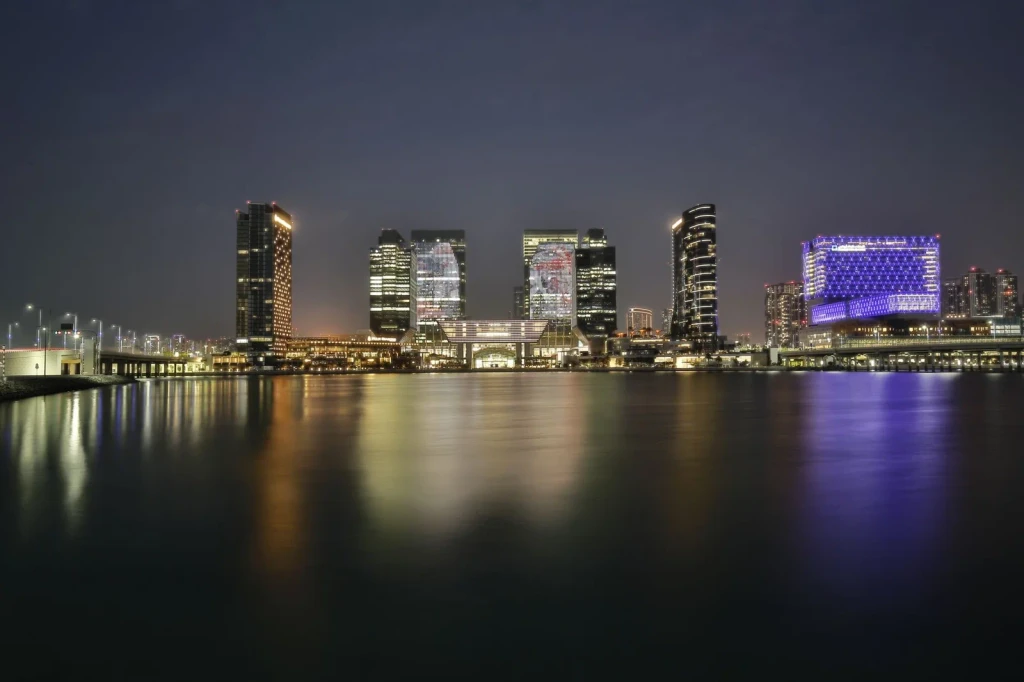
Modern buildings cast their glow onto still water below. The doubled image suggests how cities transform at night.
Photograph by Naeem Alterawy, via Pexels.
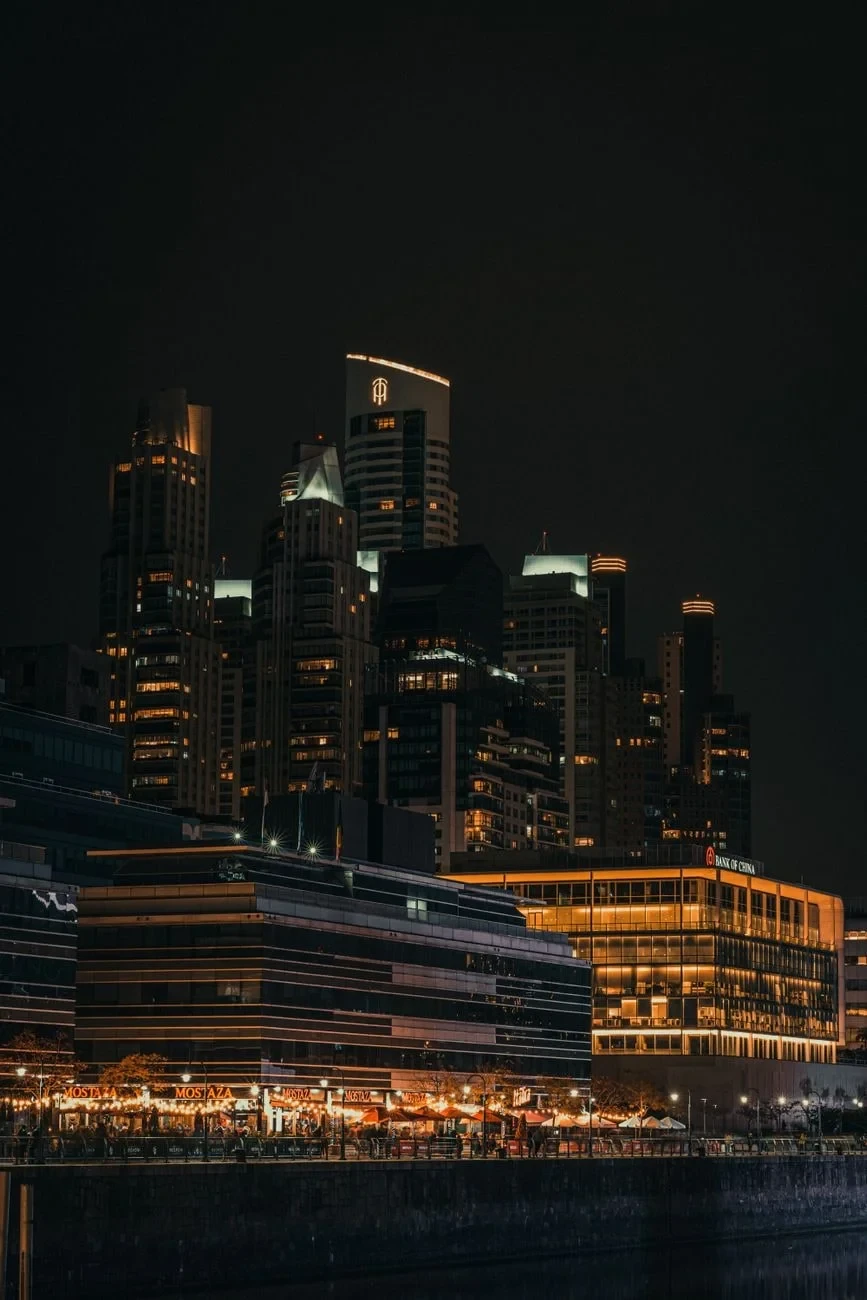
Skyscrapers emit their own light into the darkness. The cityscape becomes a landscape of pure luminescence.
Photograph by Andres Idda Bianchi, via Pexels.
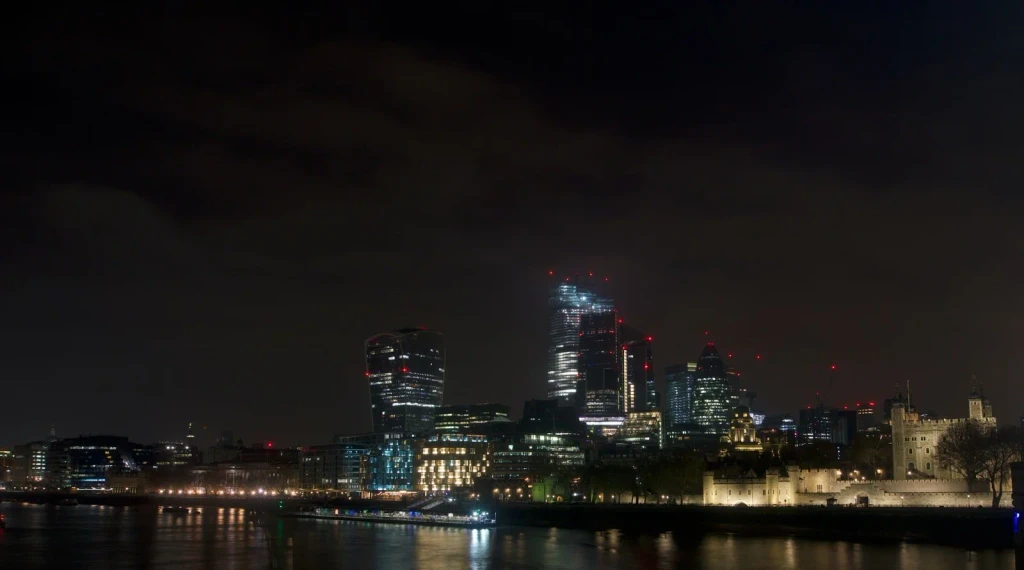
A skyline where historic and contemporary architecture share the night. The contrast between old fortifications and modern towers frames how cities evolve under darkness.
Photograph by Manzoni Studios, via Pexels.
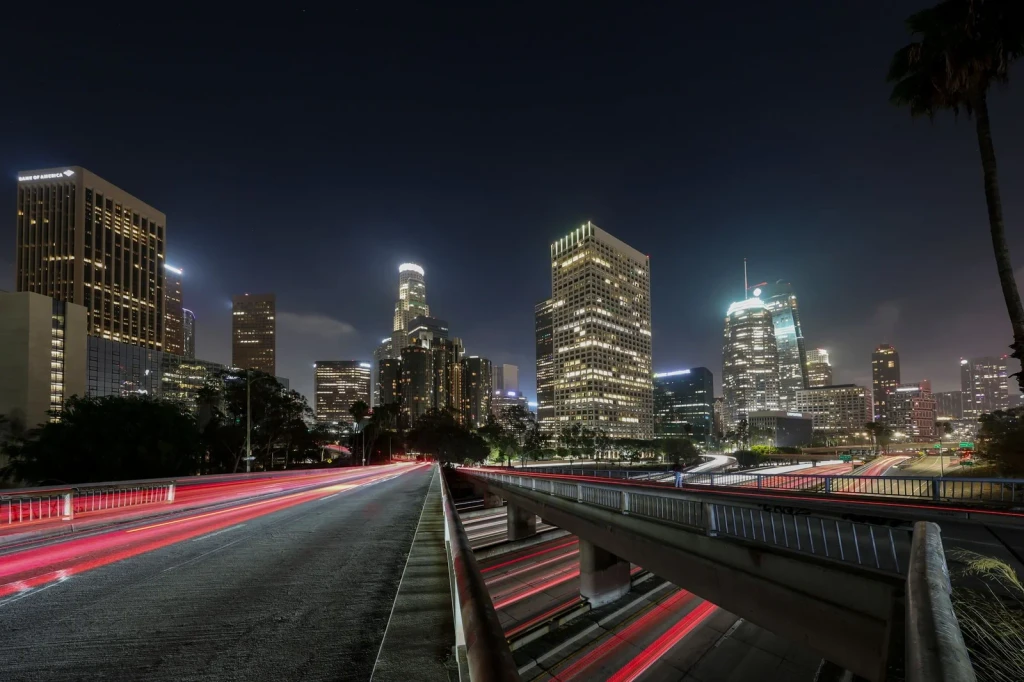
Long exposure transforms Downtown's nighttime movement into flowing light trails. The technique reveals temporal layers within static architecture.
Photograph by Stephen Leonardi, via Pexels.
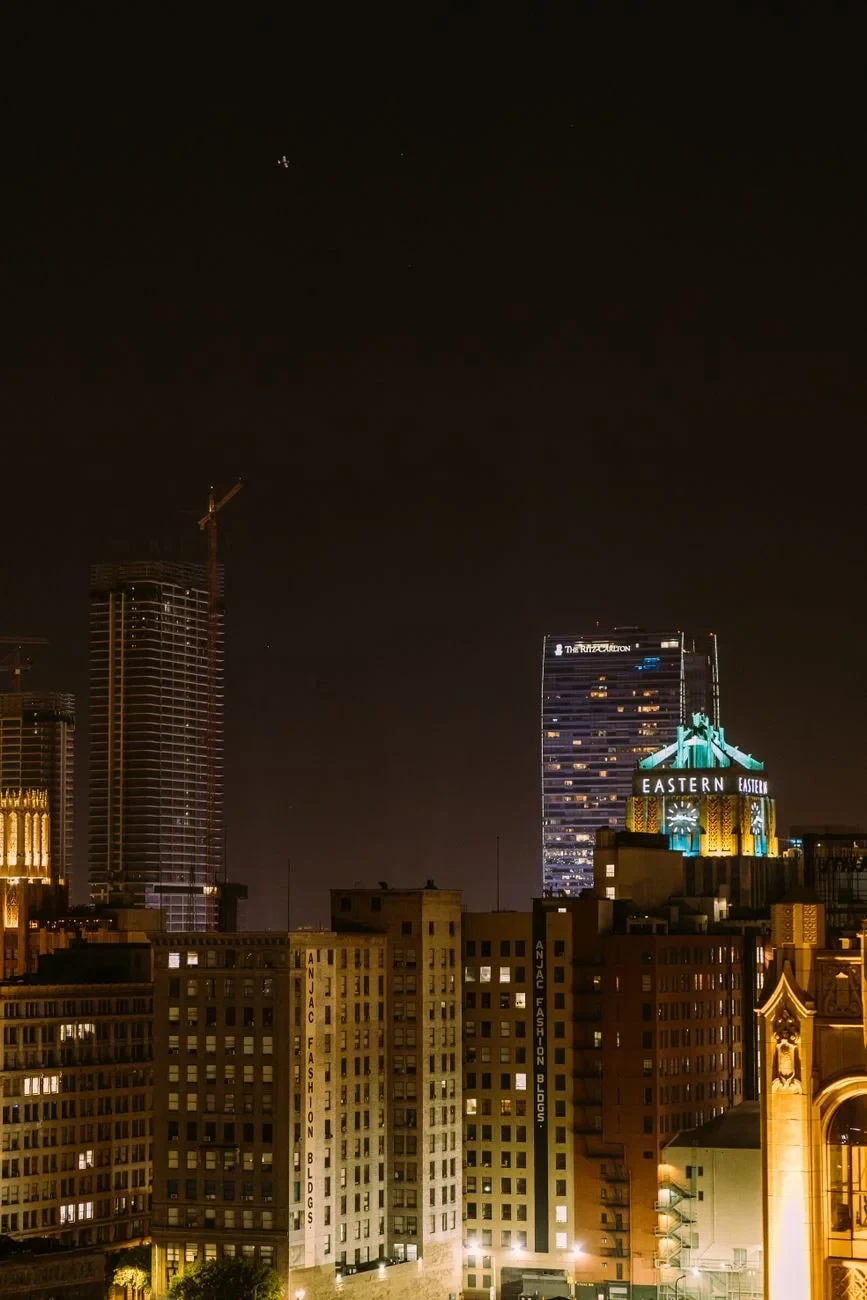
A single building becomes striking when illuminated against the night. Focused lighting reveals architectural character that daylight might diffuse.
Photograph by Ricky Esquivel, via Pexels.
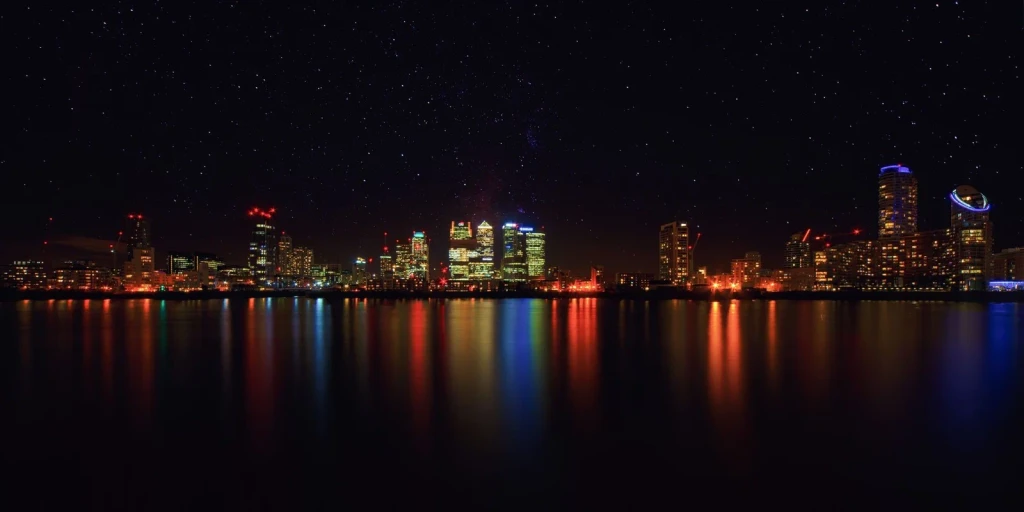
A city's nighttime lights shimmer across water below a starry sky. The reflection doubles the glow, collapsing the boundary between earth and cosmos.
Photograph by Johannes Plenio, via Pexels.
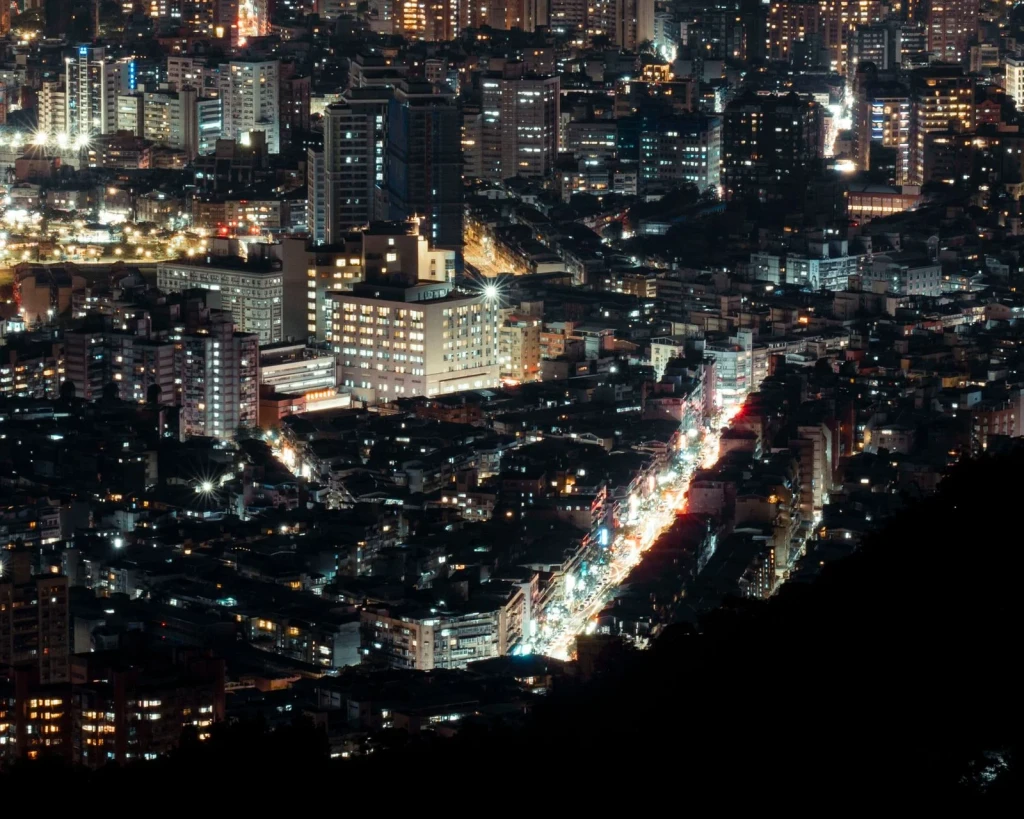
Seen from above, a city's nighttime grid reveals density and architectural ambition. Light maps human presence across the urban landscape.
Photograph by Jimmy Liao, via Pexels.
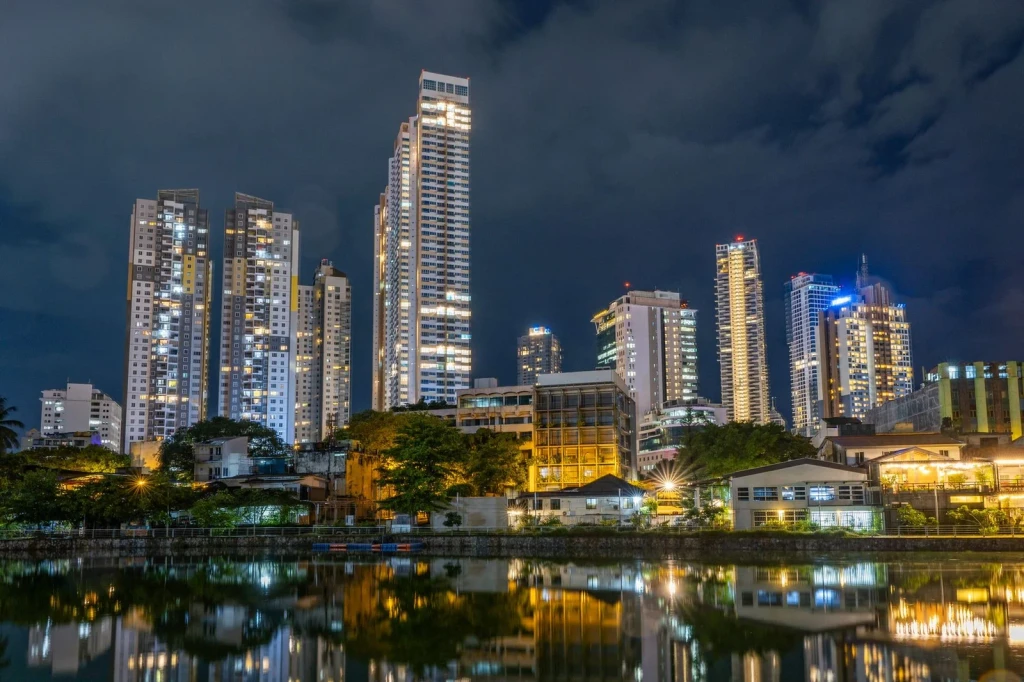
Glowing skyscrapers reflect into the water below. The city's light defines the night.
Photograph by Thilina Alagiyawanna, via Pexels.
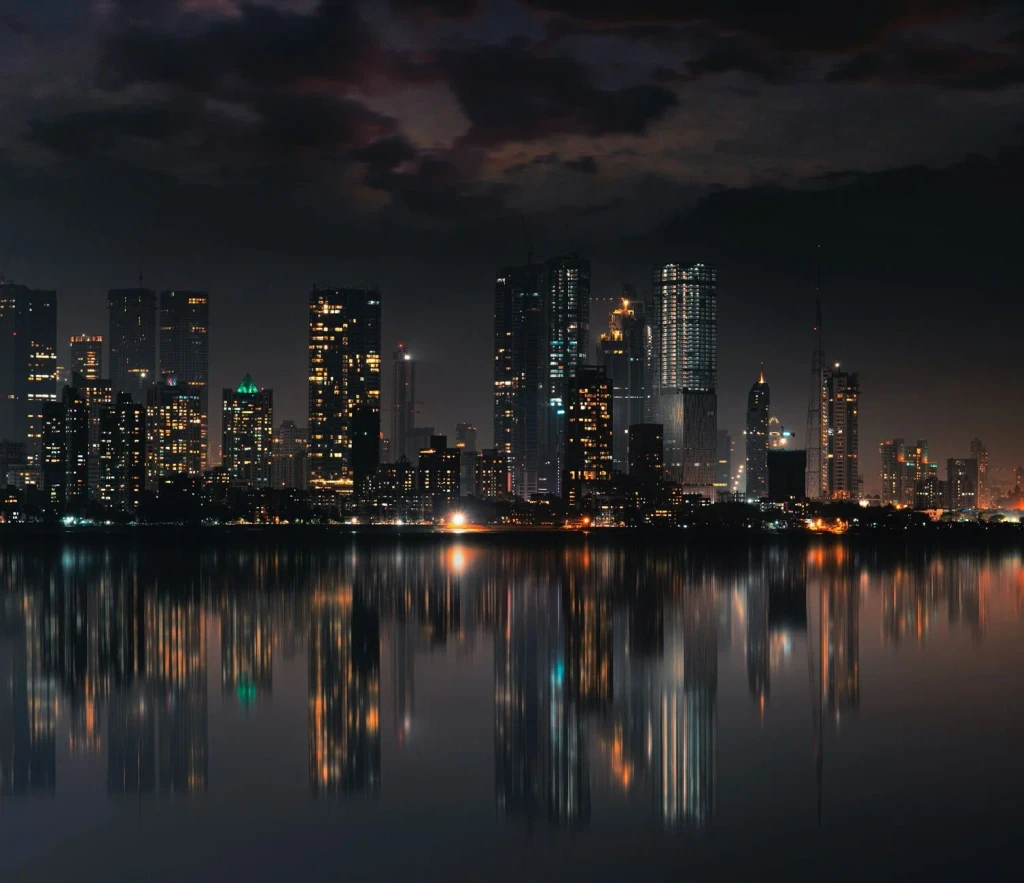
Still water mirrors the illuminated skyline, doubling the city's presence. Reflection transforms night views into layered compositions of light and stillness.
Photograph by Vijit Bagh, via Pexels.
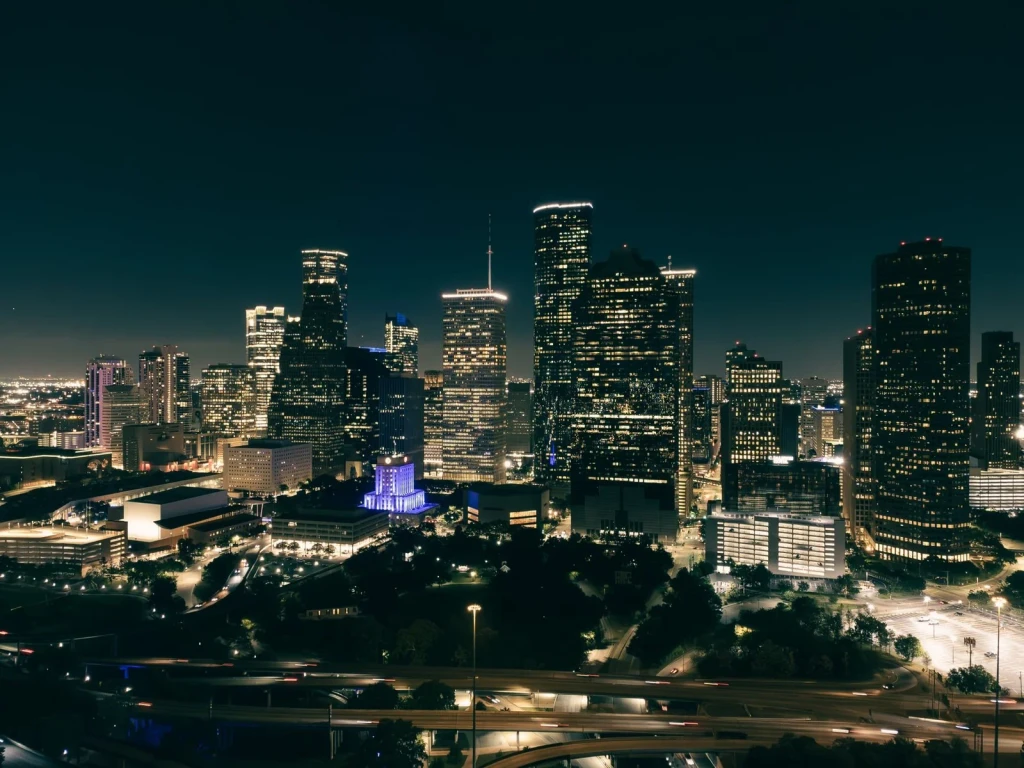
From above, a city becomes a glowing network. Skyscrapers and roads form patterns of light that reveal urban structure invisible by day.
Photograph by Erik Mclean, via Pexels.
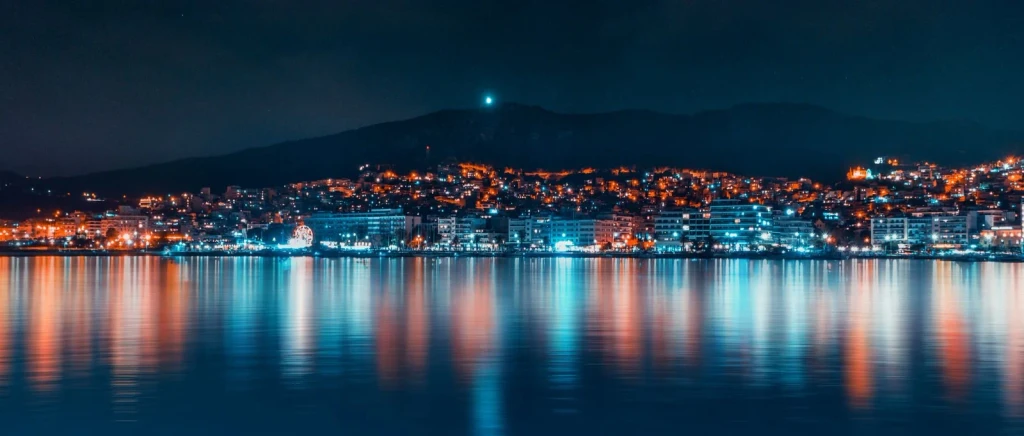
Vibrant lights play across calm water at night. The reflective surface amplifies the visual energy of the urban landscape.
Photograph by Mack Kamp, via Pexels.
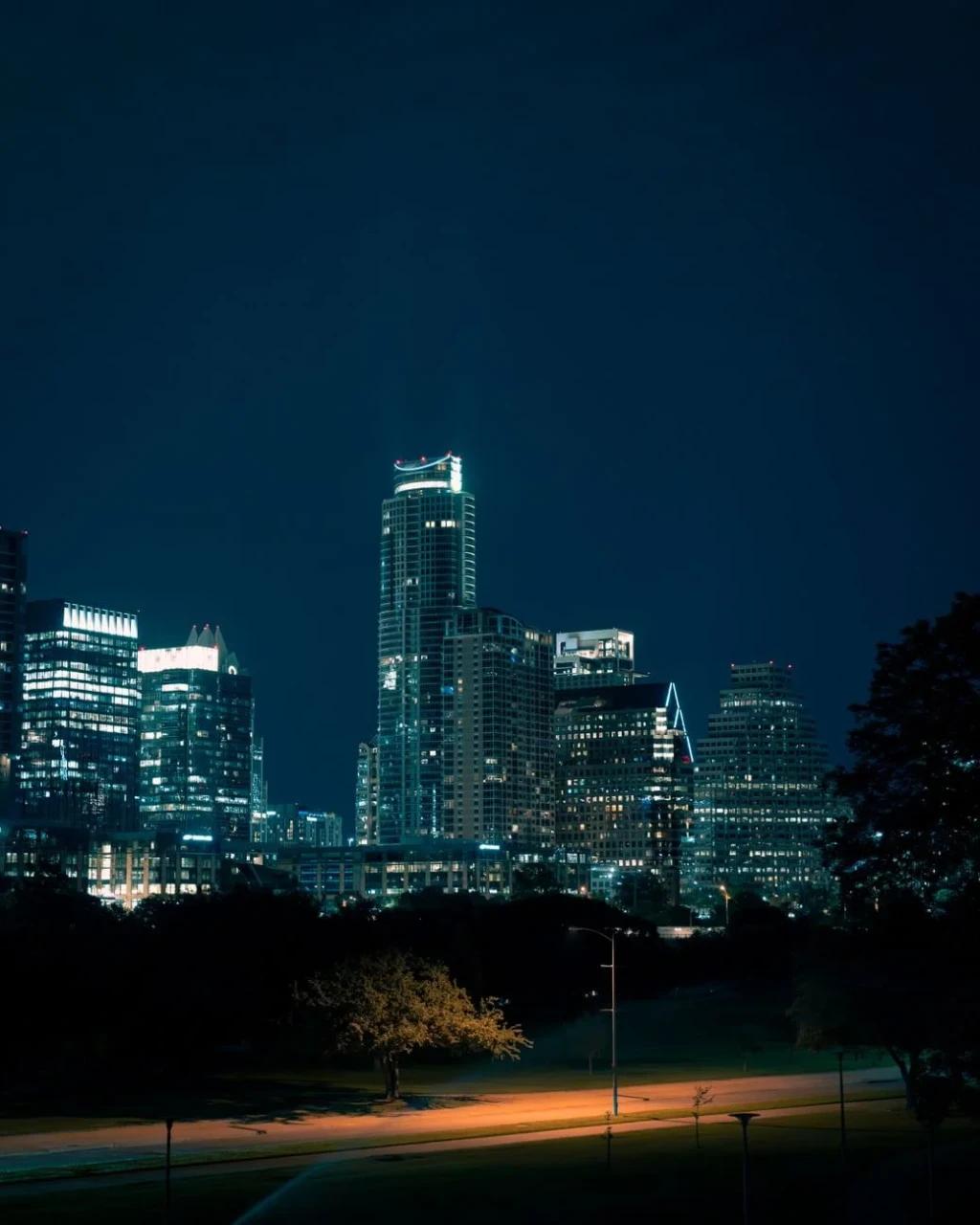
Skyscrapers glow against the night sky. The city's illuminated architecture defines the urban landscape after sunset.
Photograph by Alberto Alvarez, via Pexels.
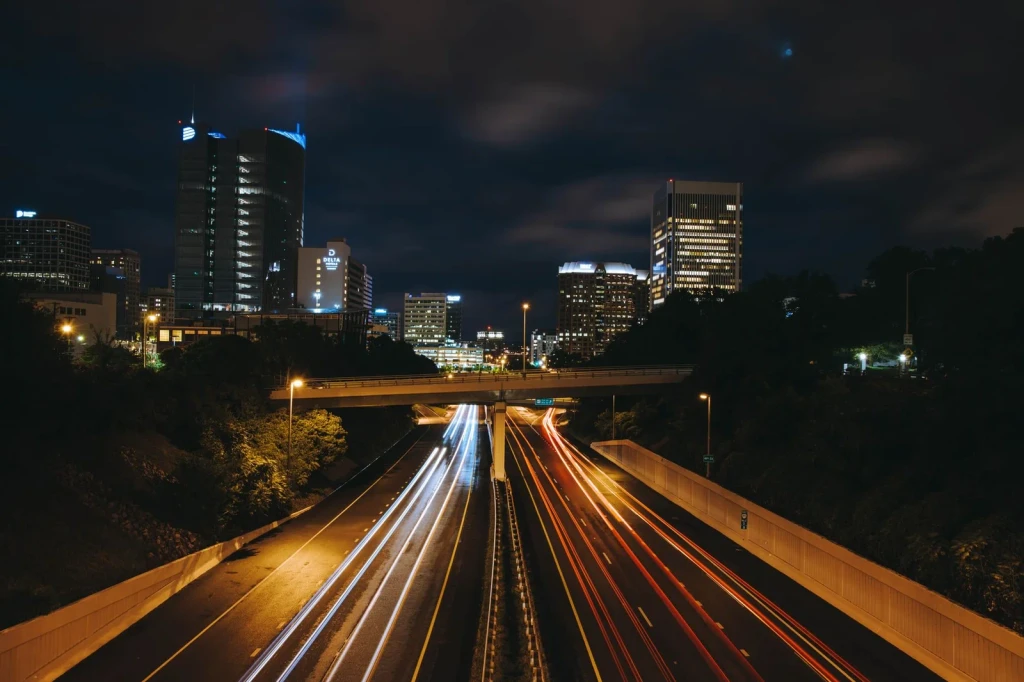
Light trails from vehicles trace motion across a night highway. Above them, illuminated buildings hold still. Speed and permanence coexist.
Photograph by Tnarg, via Pexels.
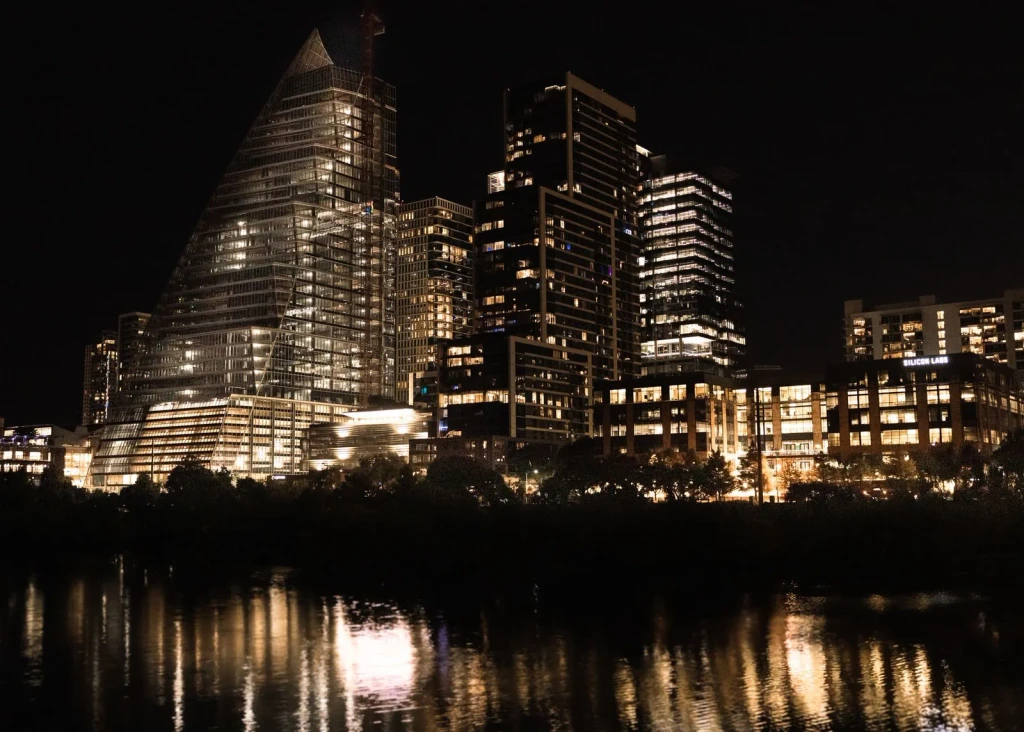
Illuminated towers meet their mirror image in water. The reflection suggests the city exists in two dimensions at night.
Photograph by Elsie Soto, via Pexels.
