3D Gallery
What Your Hands Already Know About Craft
Enter gallery
What Your Hands Already Know About Craft is a 3D virtual gallery on MyGallery3D, a walkable online exhibition of 12 works. Step inside and explore it in your browser: no app, no headset.
Welcome to a 3D virtual gallery you can walk through in your browser, exploring the long human tradition of making things by hand.
In 1968, the core rope memory of the Apollo 8 spacecraft was woven by hand, wire by wire, around electromagnetic cores. That a moon mission depended on a craft technique captures something essential: handcraft is not a relic but a living skill, adapting across millennia from ancient pottery to spaceflight.
Craft skills were never simply picked up. In the Middle Ages, apprentices trained under a master for years, then became journeymen searching for a place to open their own shop. Only then could they call themselves masters. This stepwise path survives in some countries today. Scholars still debate how craft skill develops: through tool use, observational learning, or the materials themselves acting as collaborators in production.
Before the Industrial Revolution, artisans were the dominant producers of goods. Mass production gradually eliminated many of their roles. William Morris and the Arts and Crafts movement responded in the 1880s, arguing that factory labour alienated workers from creative fulfilment. Morris insisted on mastering every technique personally. Today, craftspeople often adapt semi-finished industrial components to individual needs, occupying a middle ground between handwork and mass manufacture.
Handcraft is not marginal. Vietnam's handicraft exports reached US$2.2 billion in 2023, supported by over 10 million workers across some 600 craft villages. In cities like Istanbul, informal craft neighbourhoods remain vital income sources. Consumers pay more for handmade goods, driven by a perception that they "contain love." The connection between maker, material, and place keeps these economies cohesive and resilient.
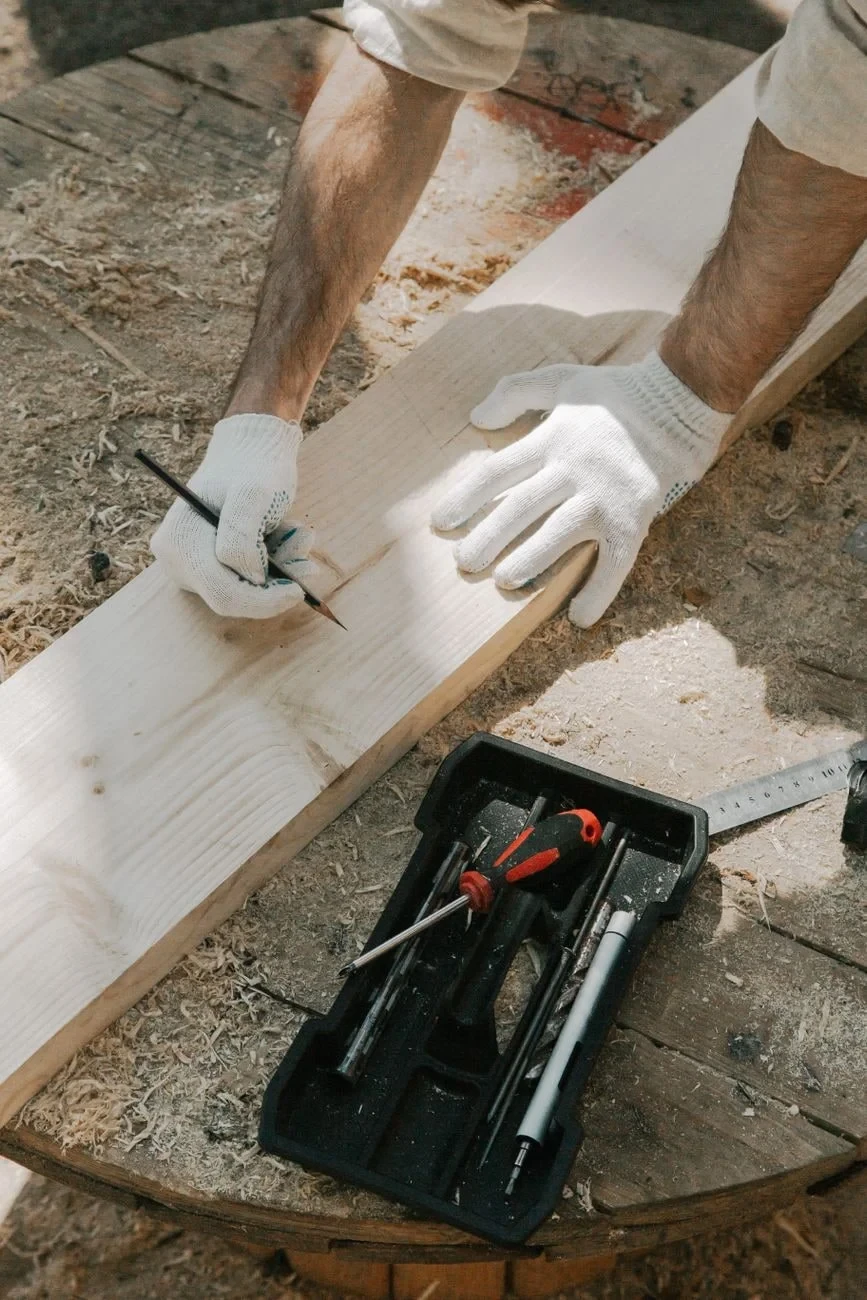
A carpenter marks wood with precision. Before the cut comes the mark: planning made visible.
Photograph by Ron Lach, via Pexels.

A craftsman sands a skateboard with focused attention. The image documents the quiet labor that transforms raw material through hand-guided detail.
Photograph by Yaroslav Shuraev, via Pexels.
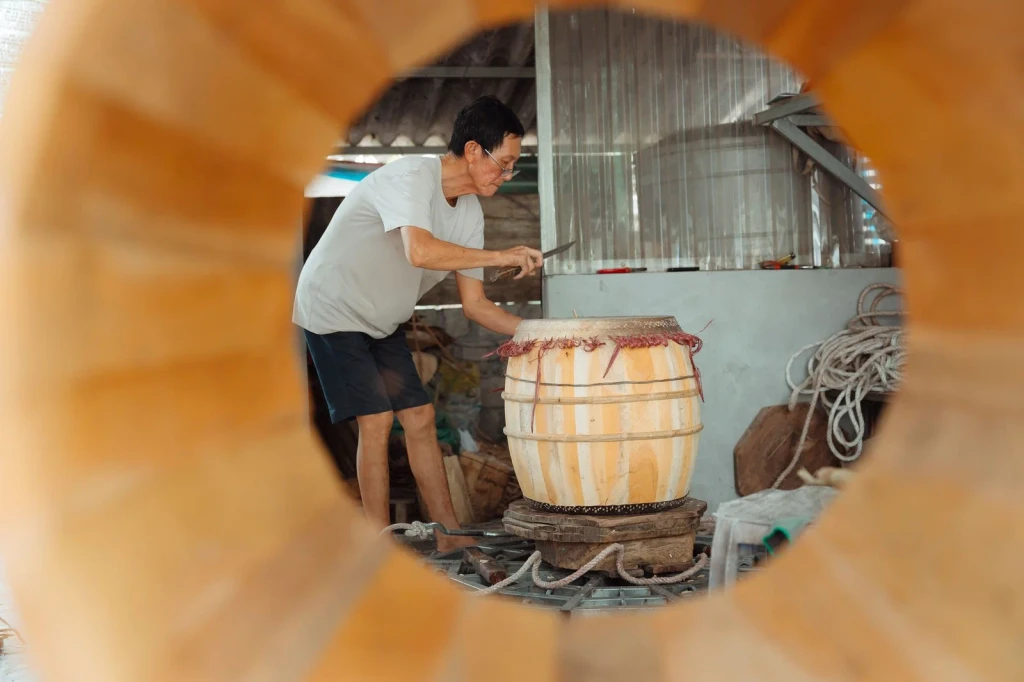
A craftsman works wood through a circular frame. The composition itself becomes part of the craft, framing the hand's deliberate work.
Photograph by HONG SON, via Pexels.
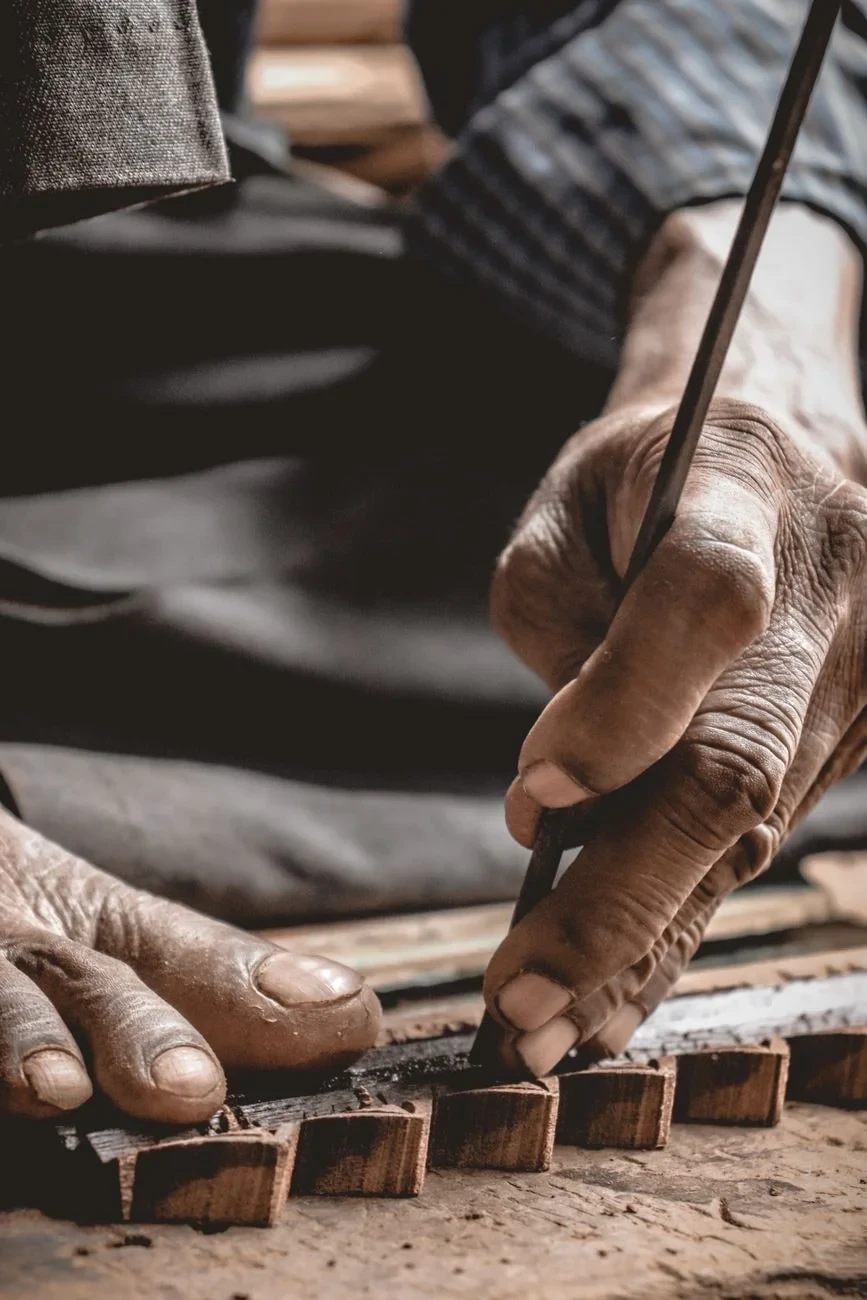
An elderly craftsman's hands carve wood with visible precision. Experience is present in the gesture, in the confidence of hands trained over time.
Photograph by GOWTHAM AGM, via Pexels.
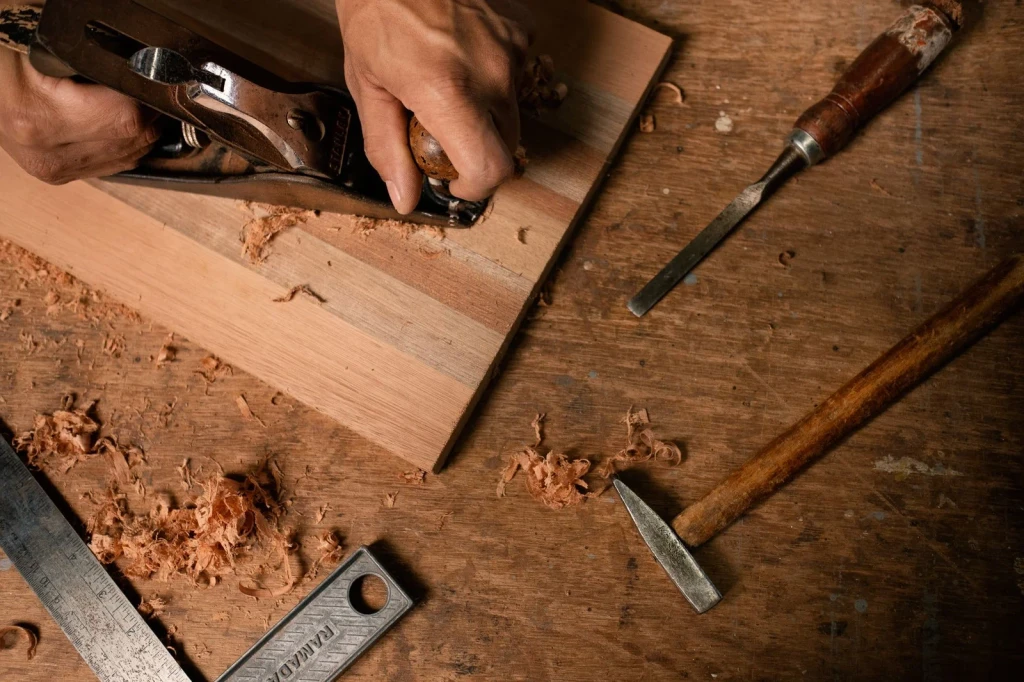
Hands guide a planer across wood as shavings curl away. The image shows material responding to skill, revealing the conversation between tool and maker.
Photograph by Daniel Reche, via Pexels.
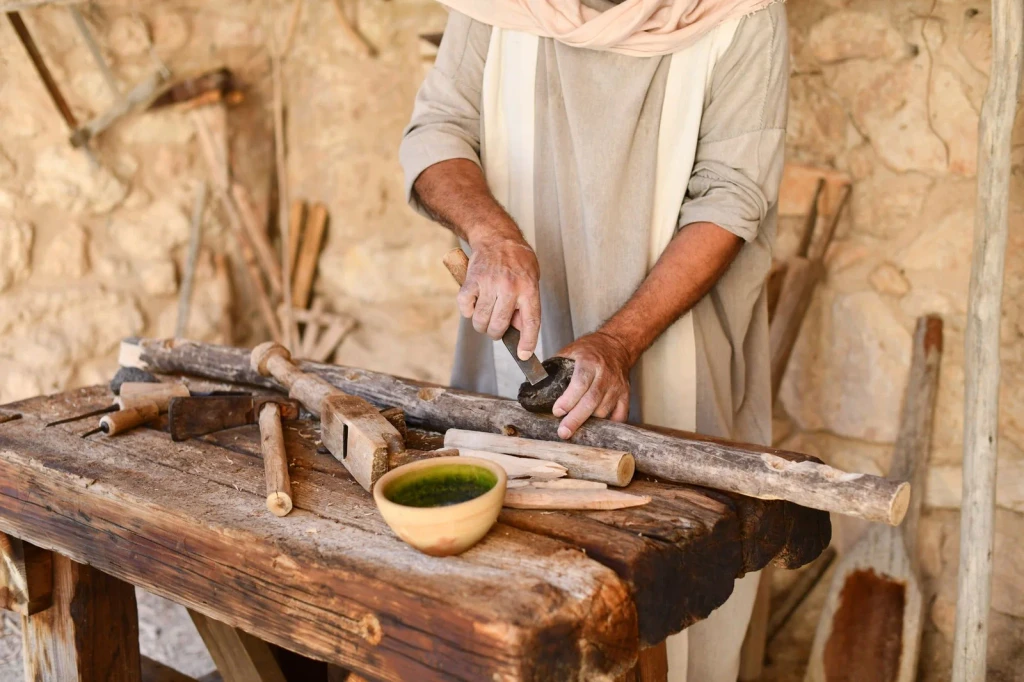
An artisan surrounded by wooden tools in a rustic space. Everything handmade, everything interconnected.
Photograph by Rosa Stone, via Pexels.
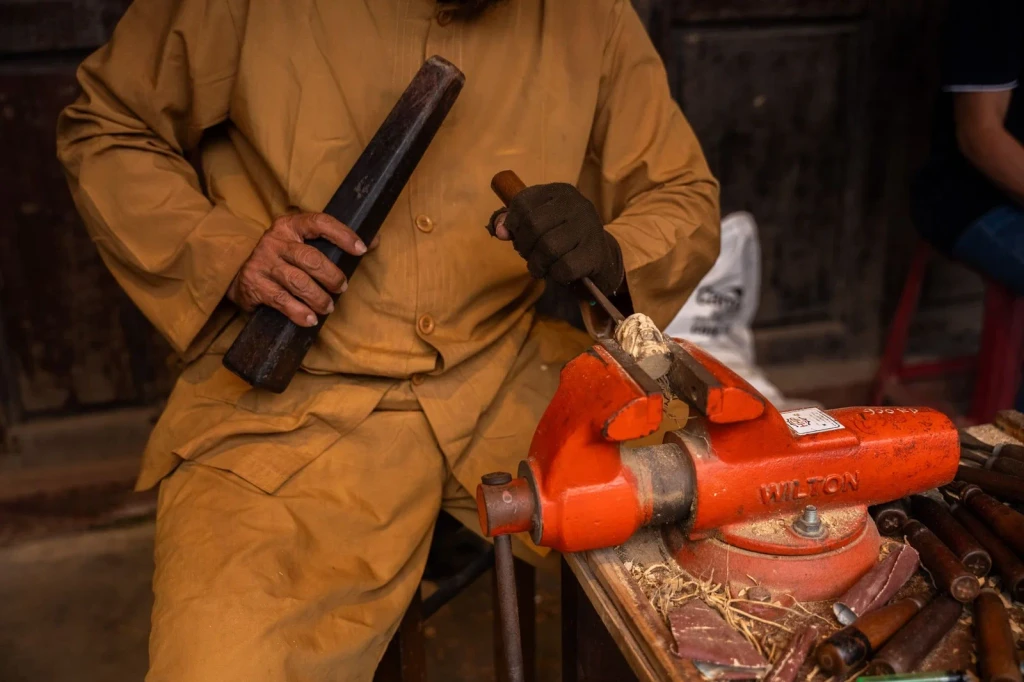
Detail work with chisel and vise. A moment where focus and tool become one.
Photograph by Pragyan Bezbaruah, via Pexels.
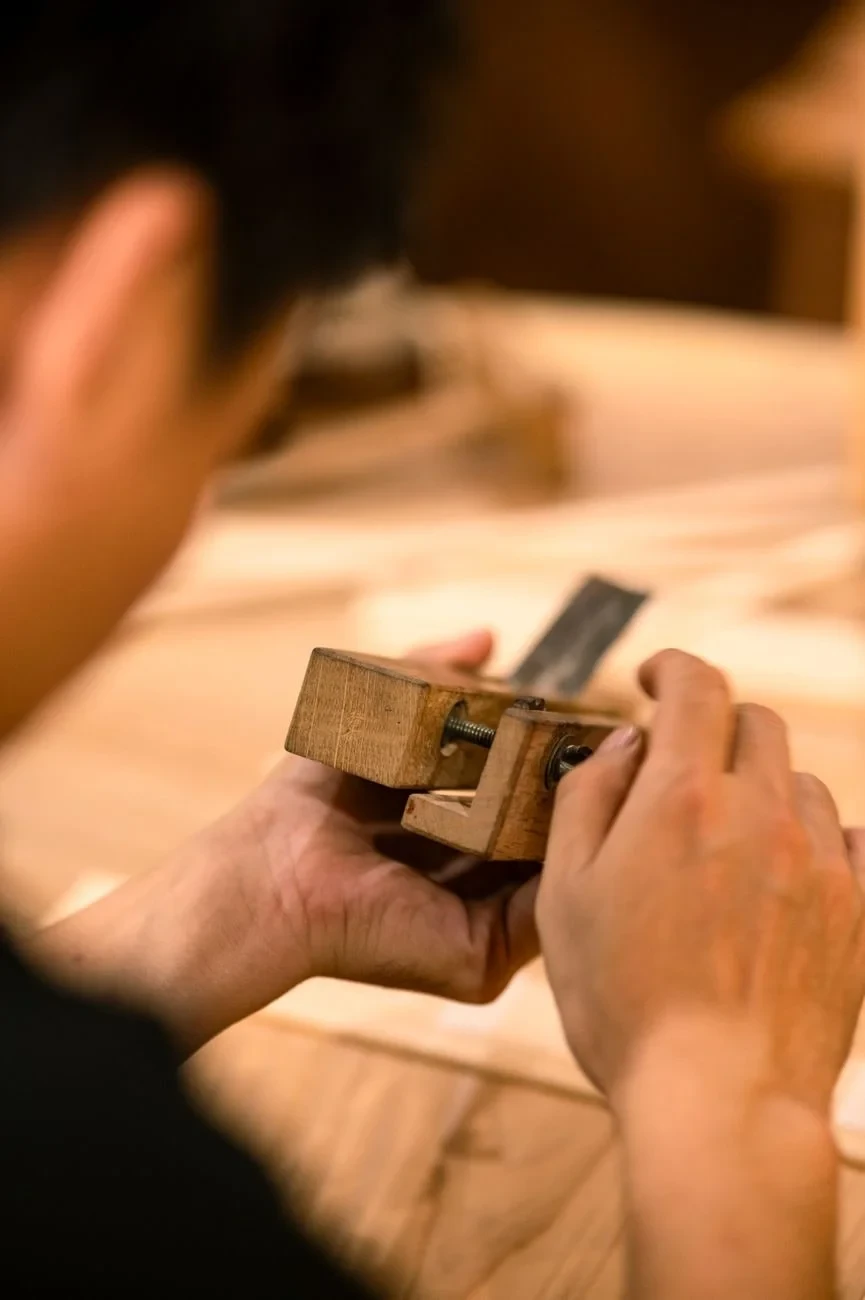
Hands adjust a wooden tool with care. The craftsman tends to their instruments as much as their materials.
Photograph by Đậu Photograph, via Pexels.

A craftsman refines wood through patient sanding. This quiet, repetitive action embodies the craft itself.
Photograph by cottonbro studio, via Pexels.
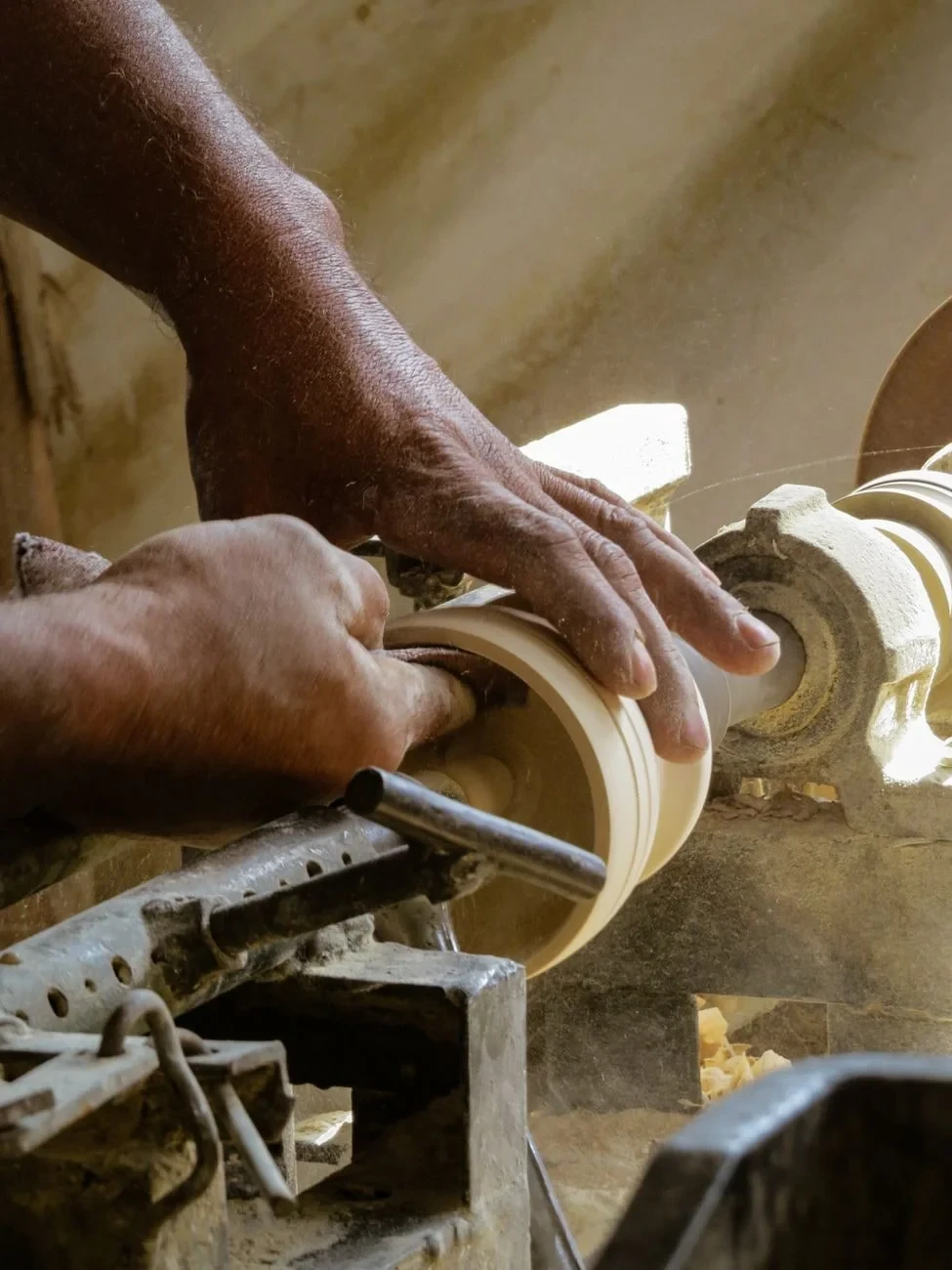
A skilled artisan's hands shape wood in motion. The close focus captures the precision and concentration that define patient craftsmanship.
Photograph by Fco Javier Carriola, via Pexels.
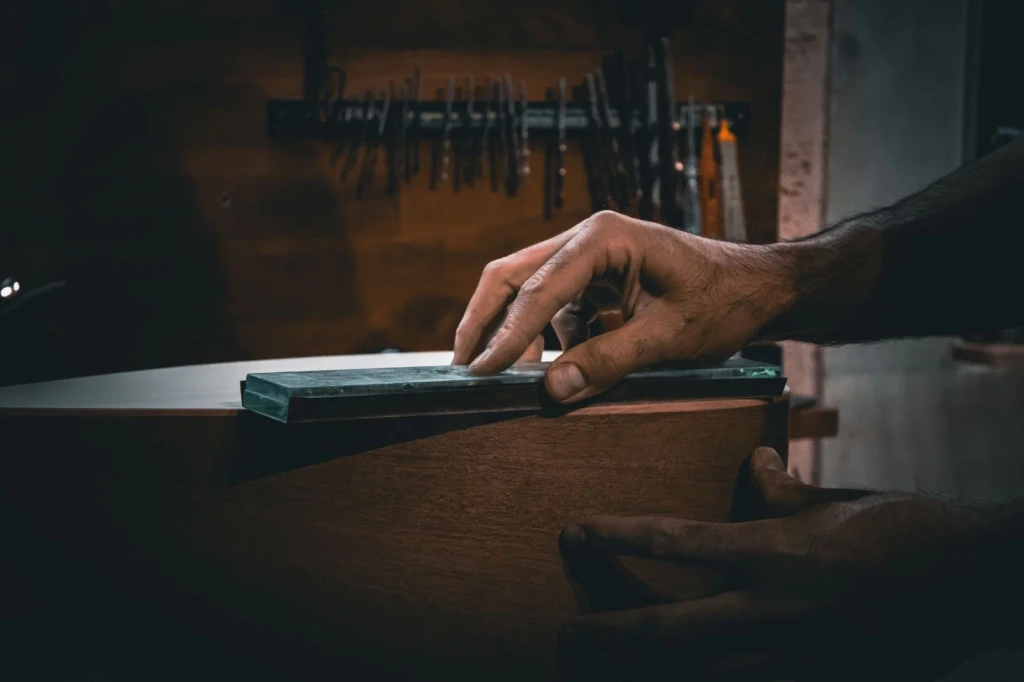
A craftsman sharpens a tool with deliberate care. The photograph captures a moment of preparation, where maintaining equipment becomes an act of craft itself.
Photograph by Gizem toprak, via Pexels.
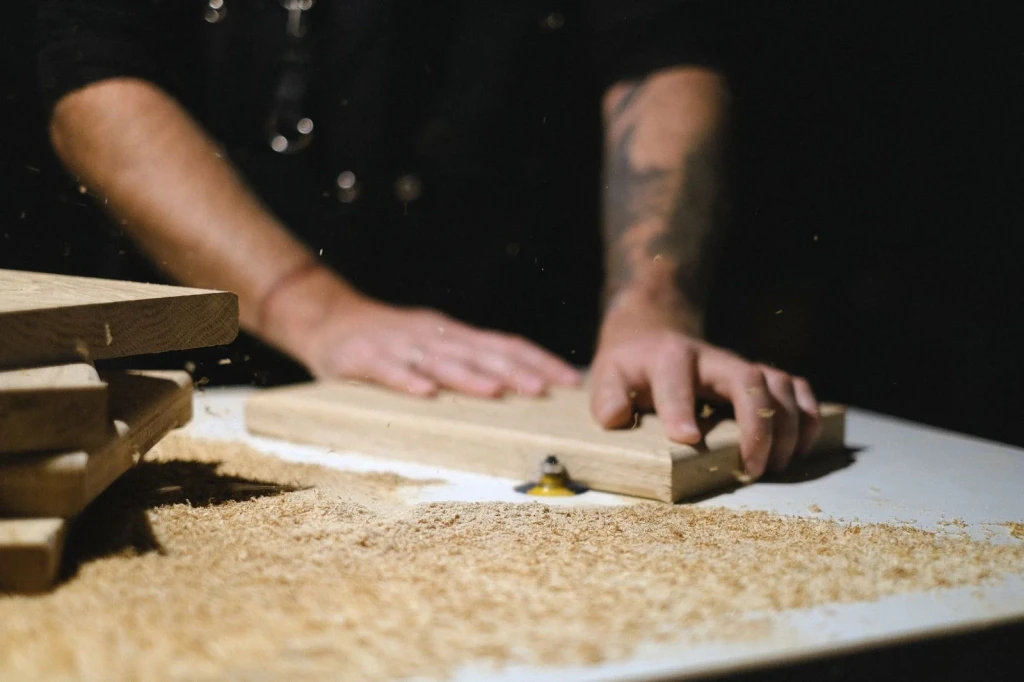
A craftsman shapes a wooden plank at the router table. Shavings scatter as hands guide material through transformation, the workshop alive with making.
Photograph by Anna Shvets, via Pexels.
