3D Gallery
How Deserts Stay Alive
Enter gallery
How Deserts Stay Alive is a 3D virtual gallery on MyGallery3D, a walkable online exhibition of 12 works. Step inside and explore it in your browser: no app, no headset.
Welcome to a 3D virtual gallery you can walk through in your browser, exploring how life persists where water nearly vanishes.
The Atacama Desert may not have received significant rainfall for over four hundred years, from 1570 to 1971. Yet even there, specialist plants survive on dew and Pacific fog. Deserts cover a third of Earth's land surface. From nocturnal animals concentrating their urine to plants that complete entire life cycles in weeks after a single storm, survival here means reinventing every relationship with water.
Desert plants split into opposing strategies. Ephemerals germinate, bloom, and set seed within weeks of rainfall, completing their entire life cycle before soil dries. Long-lived xerophytes take the opposite path: deep roots, waxy cuticles, leaves reduced to spines, and stomata that open only at night. Some resurrection plants shut down metabolism almost entirely during drought, reviving when moisture returns. Cacti store water in swollen stems, their transpiration rates through cuticles twenty-five times lower than through open stomata.
At least ninety percent of dryland inhabitants live in developing countries. Desertification has degraded 5.43 million square kilometres of drylands, affecting 213 million people. Overgrazing strips vegetation, exposing soil that bakes into unproductive hardpan. In the Sahel, roughly 650,000 square kilometres of productive farmland have been lost in fifty years. Environmental refugees from these regions may rise from 14 million in 2010 to nearly 200 million by 2050. Oases and irrigation offer survival, but the pressures keep growing.
Most deserts sit in basins with no drainage to the sea. Rain, when it comes, arrives with violence. Dry channels called arroyos or wadis become raging torrents within minutes from storms many kilometres away. Lakes form, then evaporate into salt-crusted flats called playas. North America alone has over a hundred, many relics of ancient Lake Bonneville. Beneath the Sahara lies the Nubian Sandstone Aquifer, the largest known accumulation of fossil water on Earth.
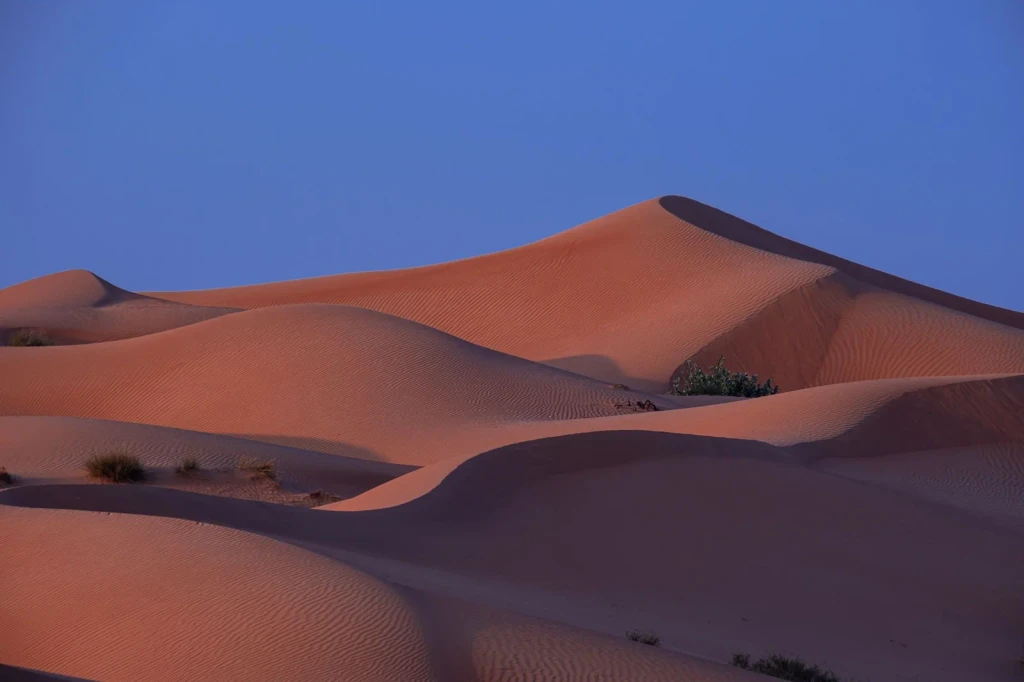
As light fades, sand dunes take on a quieter presence. Twilight softens the desert's usual severity.
Photograph by Mo Eid, via Pexels.
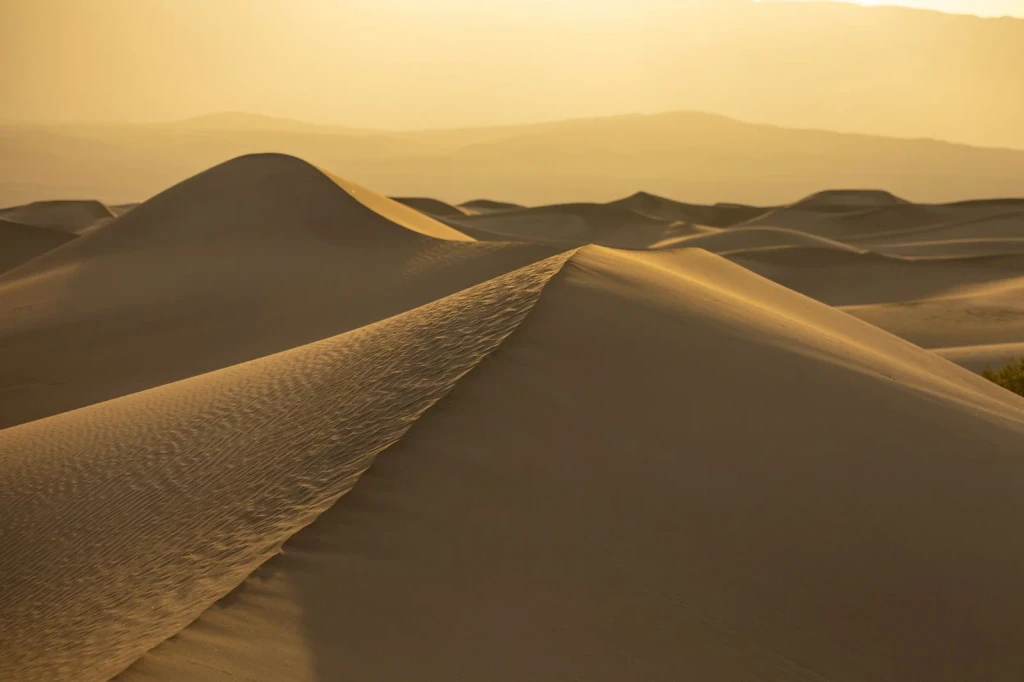
Warm light bathes the dunes, emphasizing their form and contours. The photograph celebrates the desert's natural beauty at a particular moment.
Photograph by Stephen Leonardi, via Pexels.
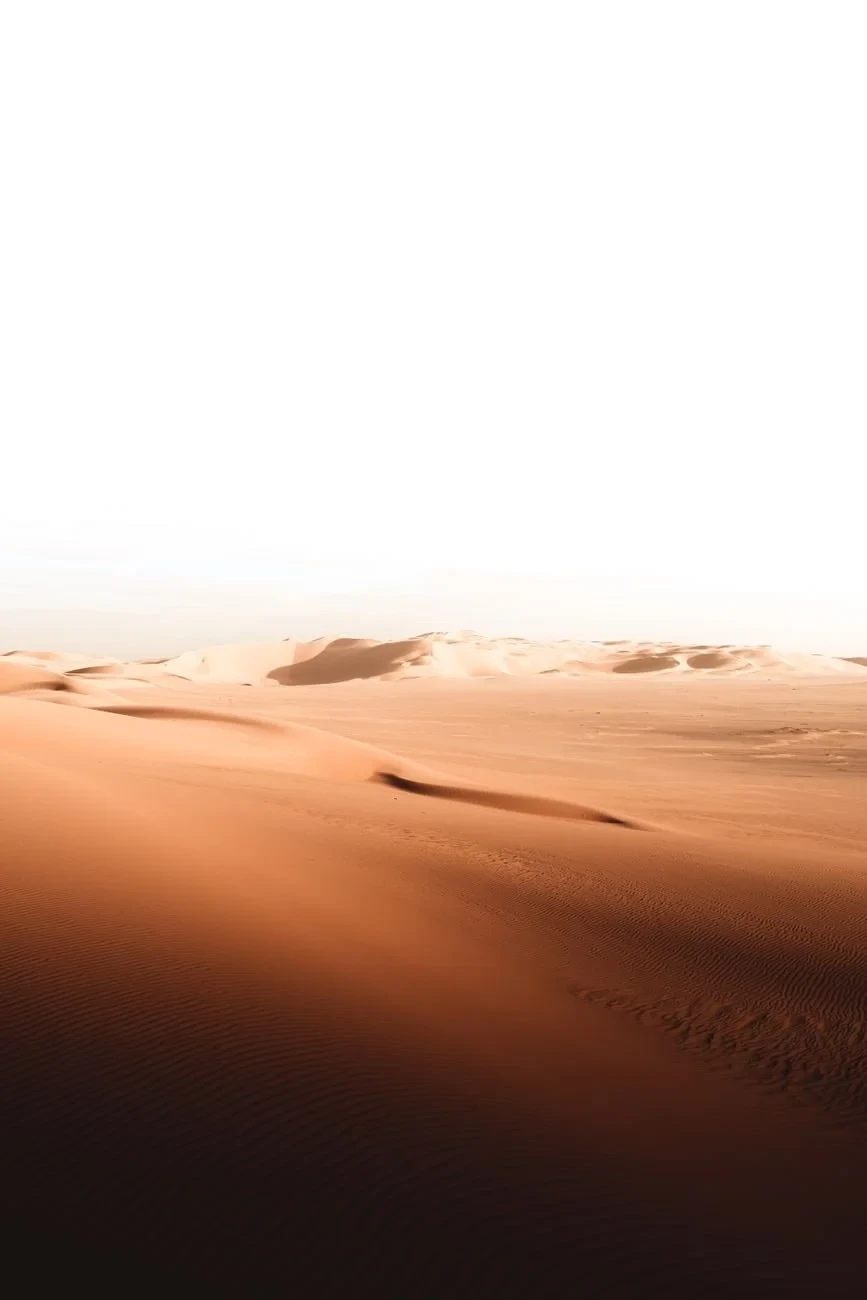
Bright sun bathes sand dunes in intense light, emphasizing the harsh conditions and stark beauty of desert terrain.
Photograph by raouf bedrani, via Pexels.
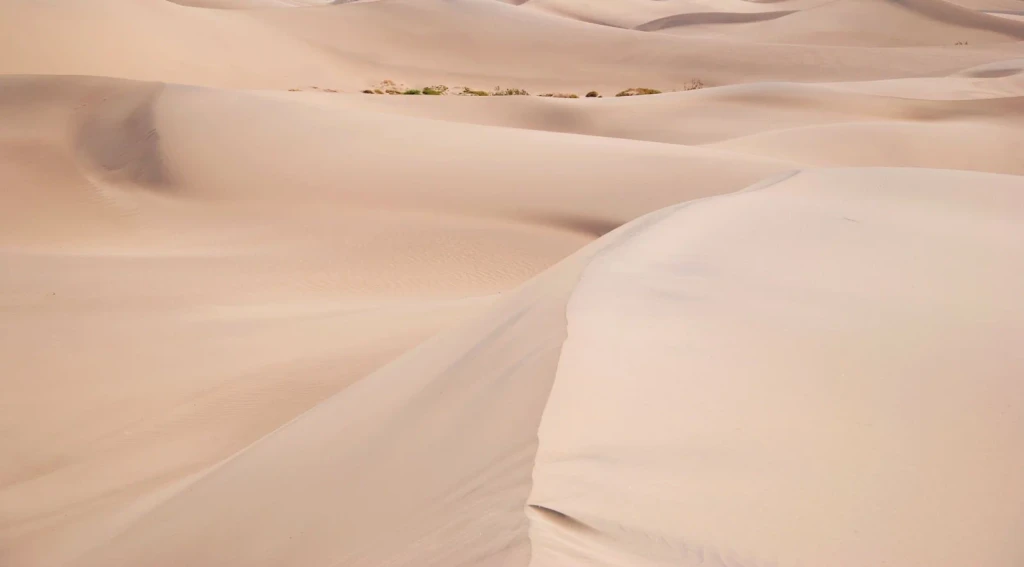
Expansive dunes stretch beneath clear sky. The image captures the vastness and solitude central to desert experience.
Photograph by Dirk Pothen, via Pexels.
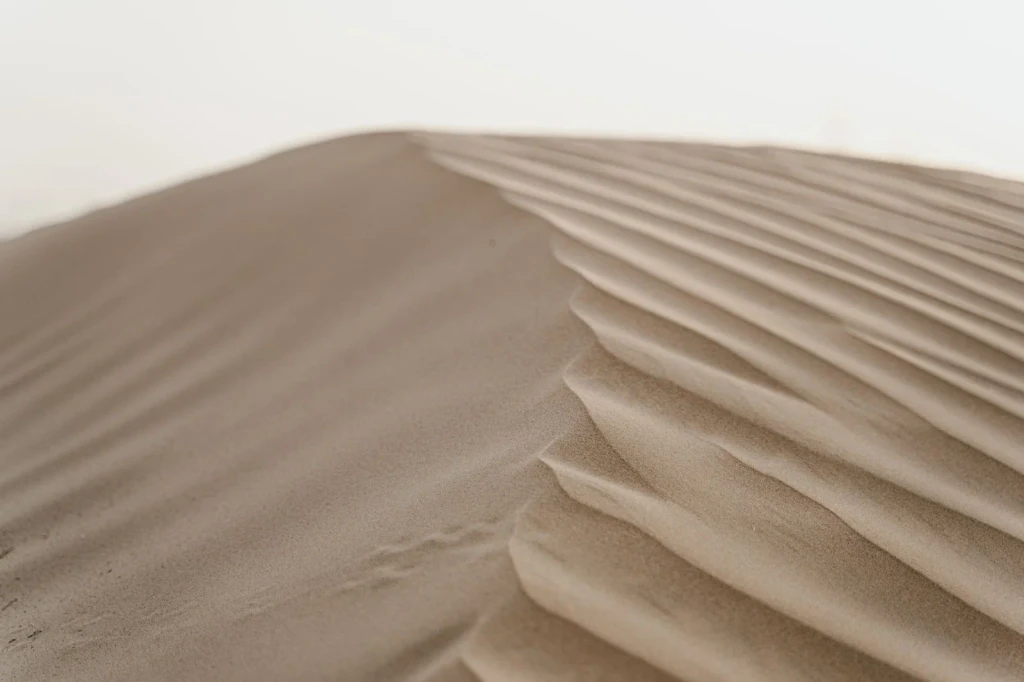
A close-up reveals the intricate patterns that form across desert surfaces. These natural geometries show how wind and time sculpt the landscape at intimate scale.
Photograph by MART PRODUCTION, via Pexels.
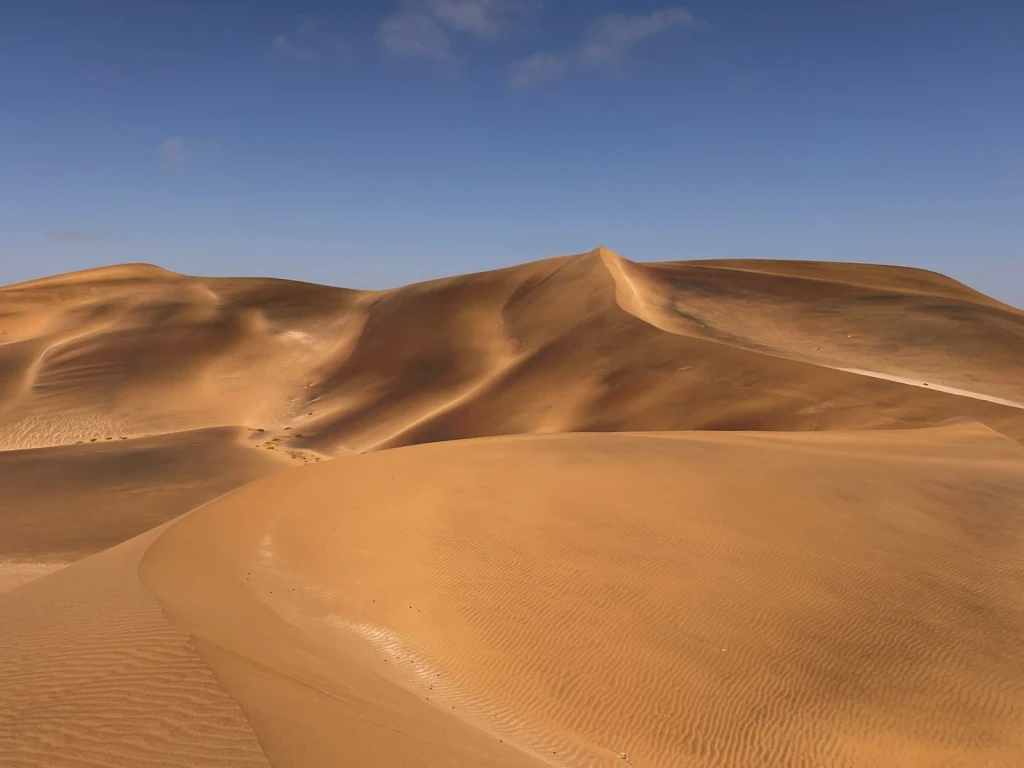
Sand dunes stretch beneath clear skies, their pale curves catching light. The photograph captures the vast, open character of desert terrain.
Photograph by Lucy Du Preez, via Pexels.
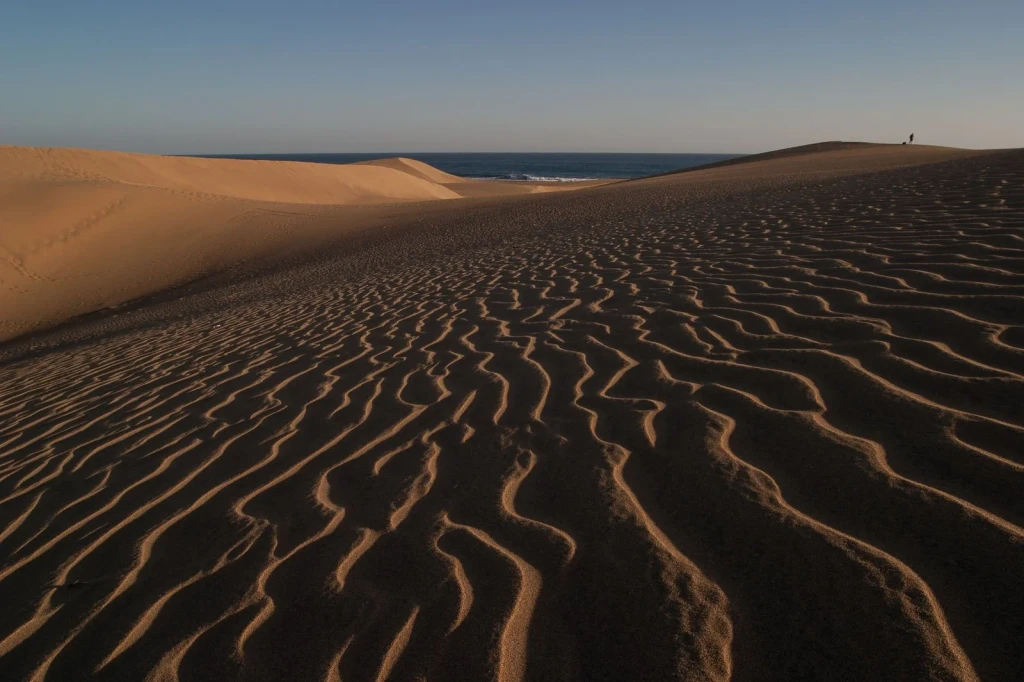
Vast sand dunes meet a tranquil sea under clear light, showing the desert's unexpected meeting with water.
Photograph by Rene Terp, via Pexels.
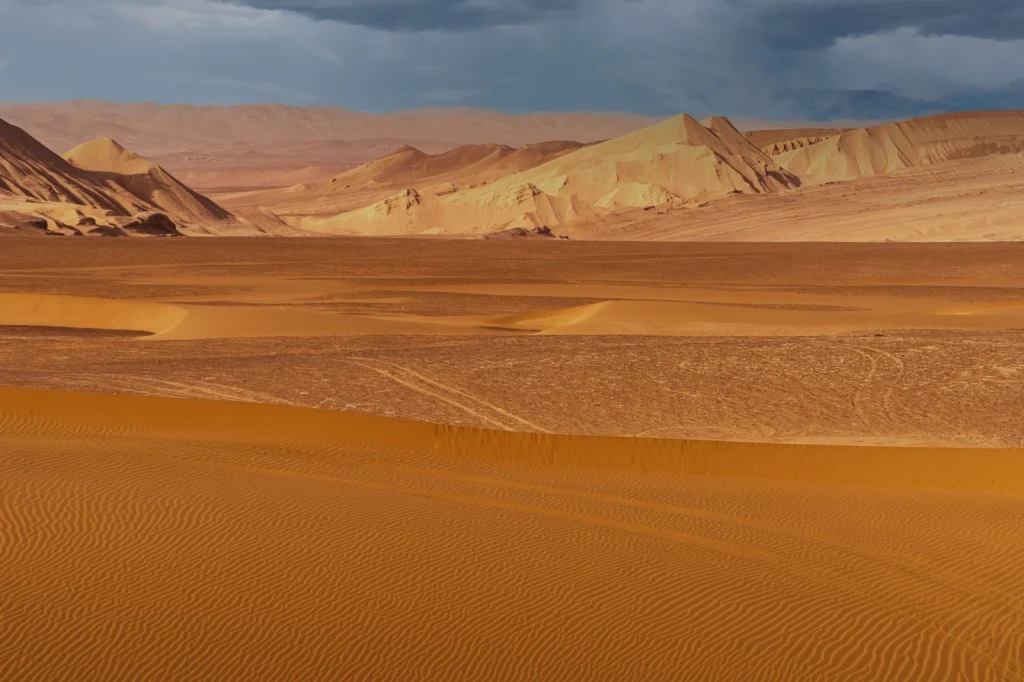
Sand dunes stretch toward a dramatic sky, capturing the scale and raw visual power of an arid landscape.
Photograph by 光曦 刘, via Pexels.
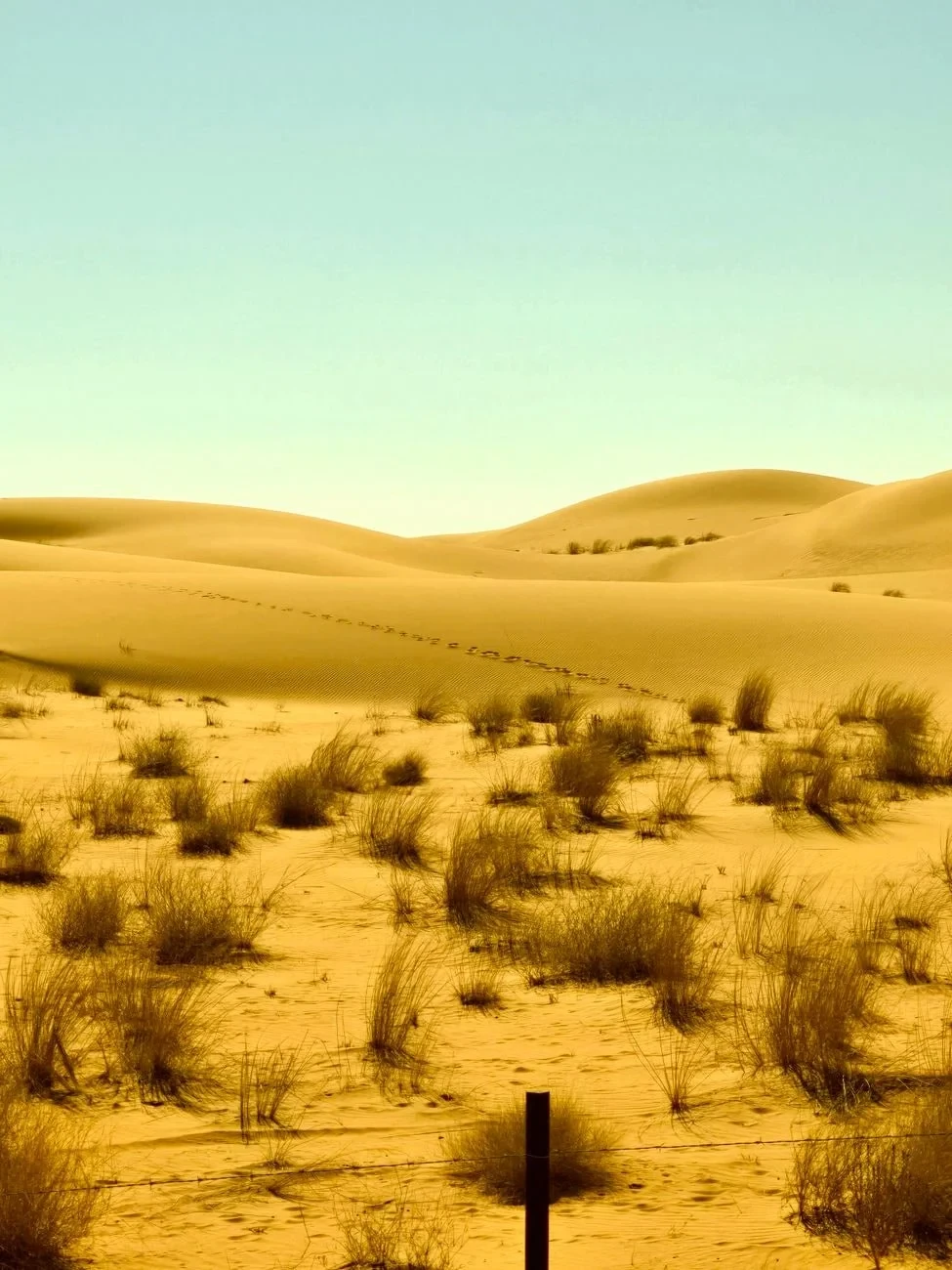
Dunes rise against an open sky in a spare, undisturbed landscape. The clarity suggests the desert's scale and emptiness.
Photograph by Æmyr Sahli, via Pexels.
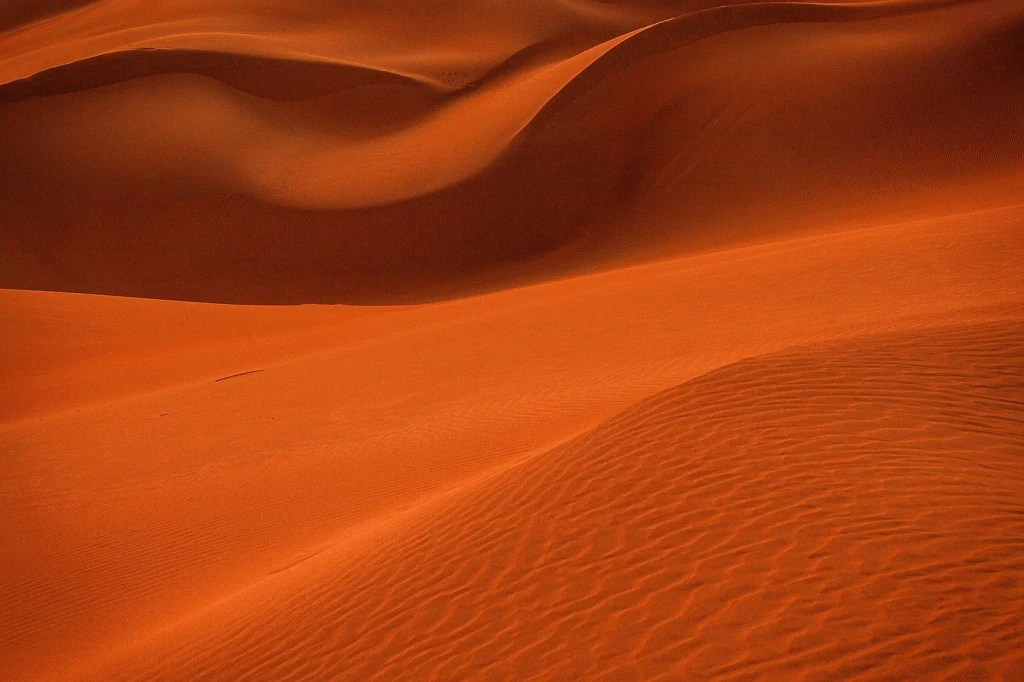
Sunset transforms the sand into warm, glowing tones. The photograph captures the dramatic shift in color that sunset brings to the desert landscape.
Photograph by 光曦 刘, via Pexels.
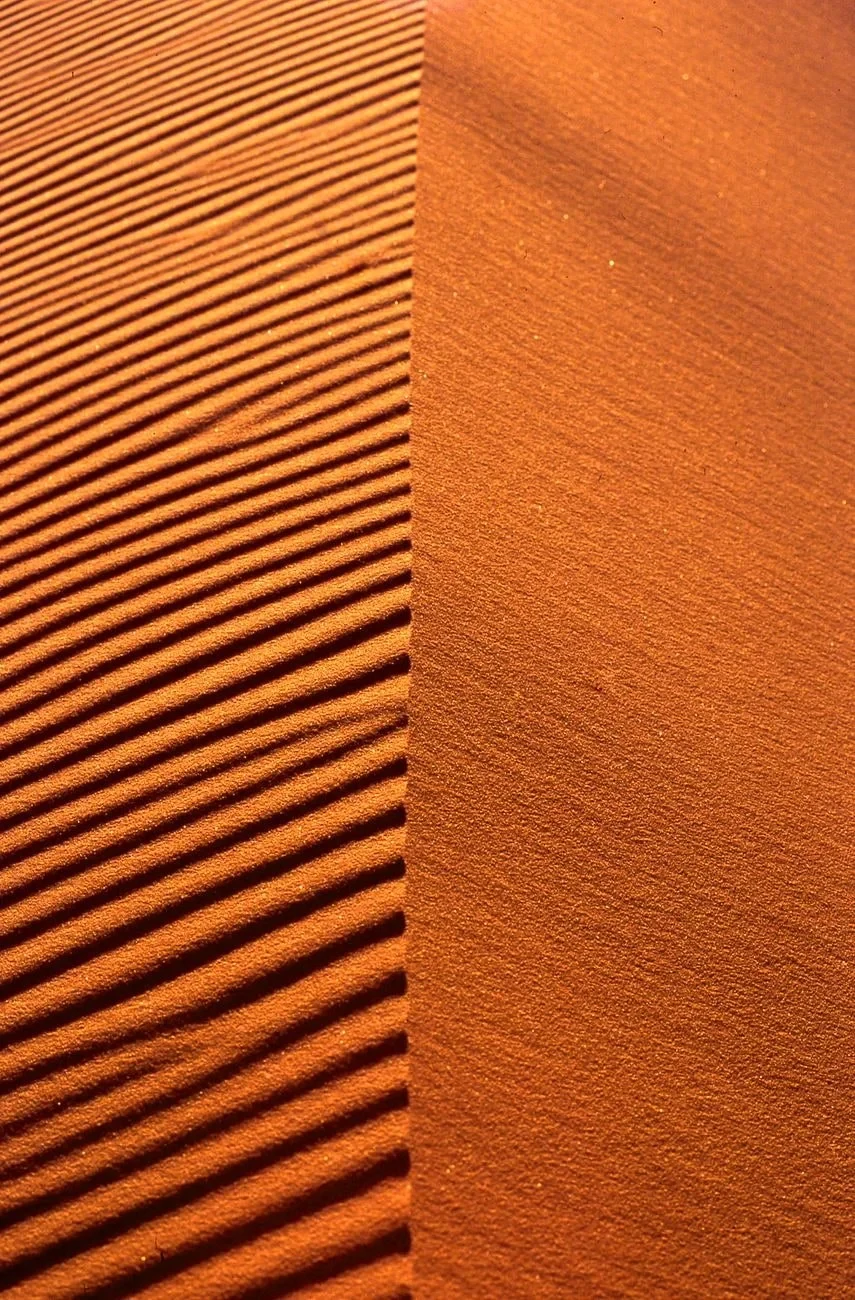
A close view of sand patterns in the Merzouga Desert reveals the intricate textures that wind and time create across desert floors.
Photograph by Moussa Idrissi, via Pexels.
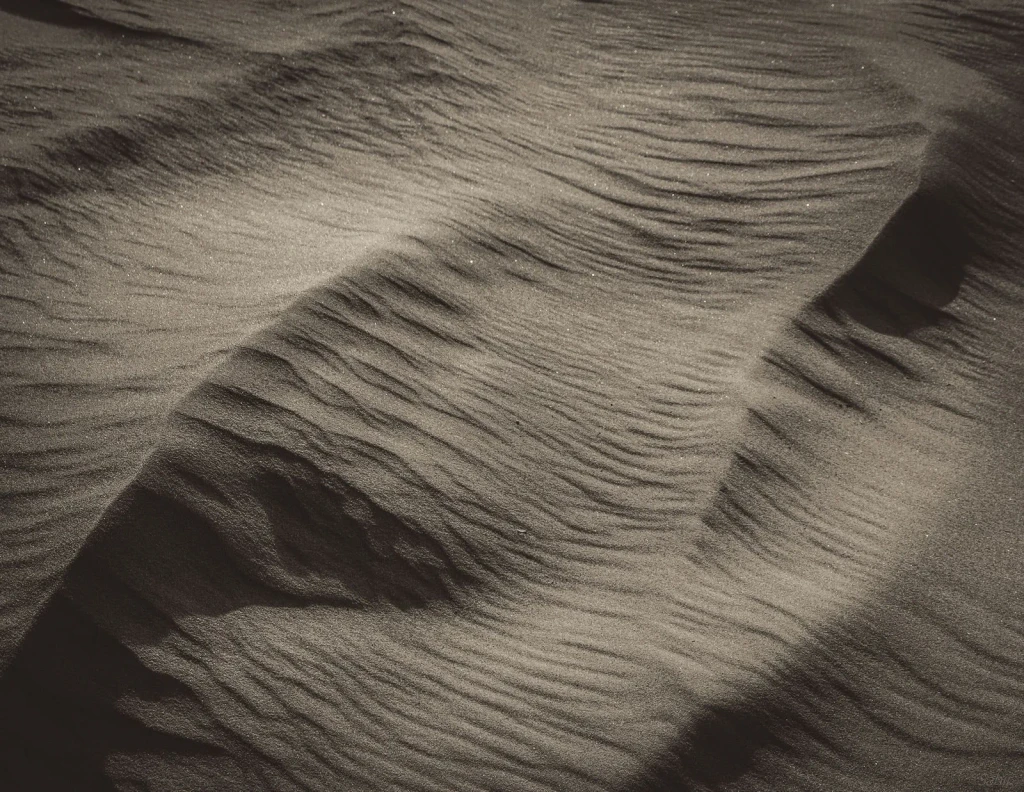
This close-up explores the textured ridges and valleys of dune formations. Each undulation tells a story of wind and movement.
Photograph by Sahir Sujahudeen, via Pexels.
