3D Gallery
The Horse That Carried History
Enter gallery
The Horse That Carried History is a 3D virtual gallery on MyGallery3D, a walkable online exhibition of 12 works. Step inside and explore it in your browser: no app, no headset.
Welcome to a 3D virtual gallery you can walk through in your browser, tracing how one animal reshaped human civilisation. Horses were domesticated around 2200 BCE in the Volga-Don region of southwestern Russia. From that single origin, they replaced every local horse population across Eurasia.
Two genetic mutations may explain why. One gene, GSDMC, likely gave them stronger backs for carrying riders. Another, ZFPM1, made them more docile. Strength and tameness, coded in DNA, built an engine for warfare, agriculture, and transport.
A horse can carry roughly 30 percent of its body weight, creating a permanent trade-off between armour and speed. Light horses under 15 hands served nomadic raiders and early cavalry. Medium-weight horses carried armoured knights. Heavy draught breeds, weighing up to 910 kilograms, pulled supply wagons and artillery. The same animal that gallops at nearly 55 miles per hour in a quarter-mile sprint can also haul eight times its weight on a paved road.
The earliest evidence of horses in warfare dates to 4000-3000 BCE. By 1600 BCE, improved harness designs made chariot warfare common across the Ancient Near East. The oldest known training manual, written about 1350 BCE by the Hittite horsemaster Kikkuli, taught conditioning for chariot teams. Later innovations, the solid-tree saddle, the stirrup, the padded horse collar, each transformed mounted combat from the steppes to medieval Europe.
All modern domestic horses descend from a single domestication event in the Pontic-Caspian steppe around 2200 BCE. Genetic analysis of 264 ancient genomes confirmed this in 2021. Earlier candidates, Botai in Kazakhstan, Iberia, Siberia, left almost no trace in living horses. The domestic lineage spread rapidly, completely displacing other local populations. Przewalski's horse, once thought ancestral, actually descends from feral Botai stock.
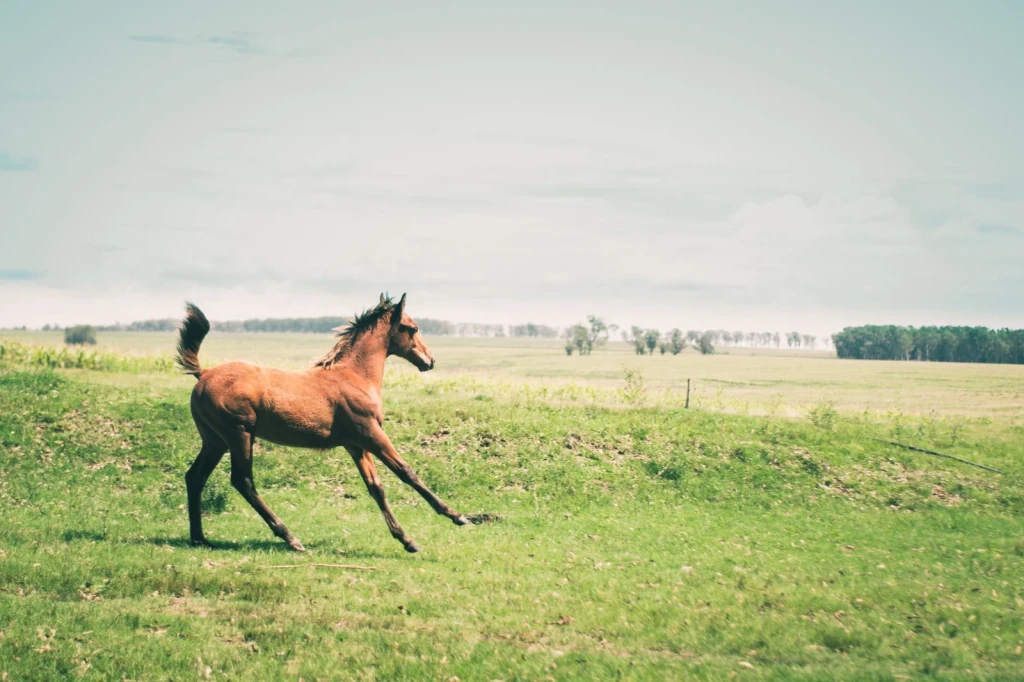
A horse gallops through open countryside. The image conveys the animal's strength within its environment.
Photograph by Gonzalo Facello, via Pexels.
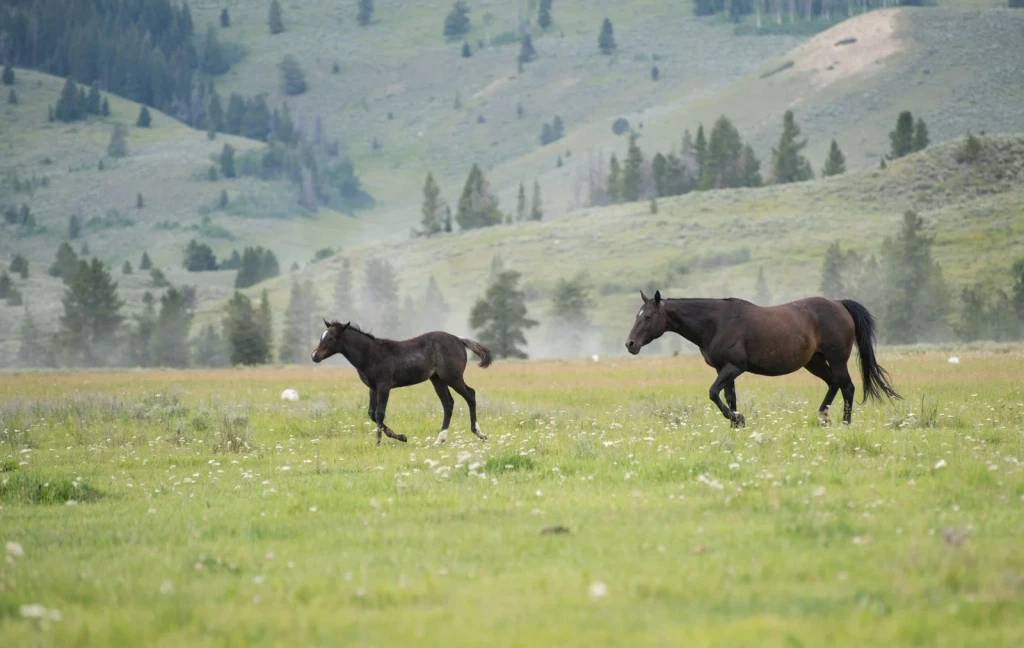
A pair of horses traverse lush terrain with mountains in the distance. The composition emphasizes movement across expansive space.
Photograph by Alice Belthoff, via Pexels.
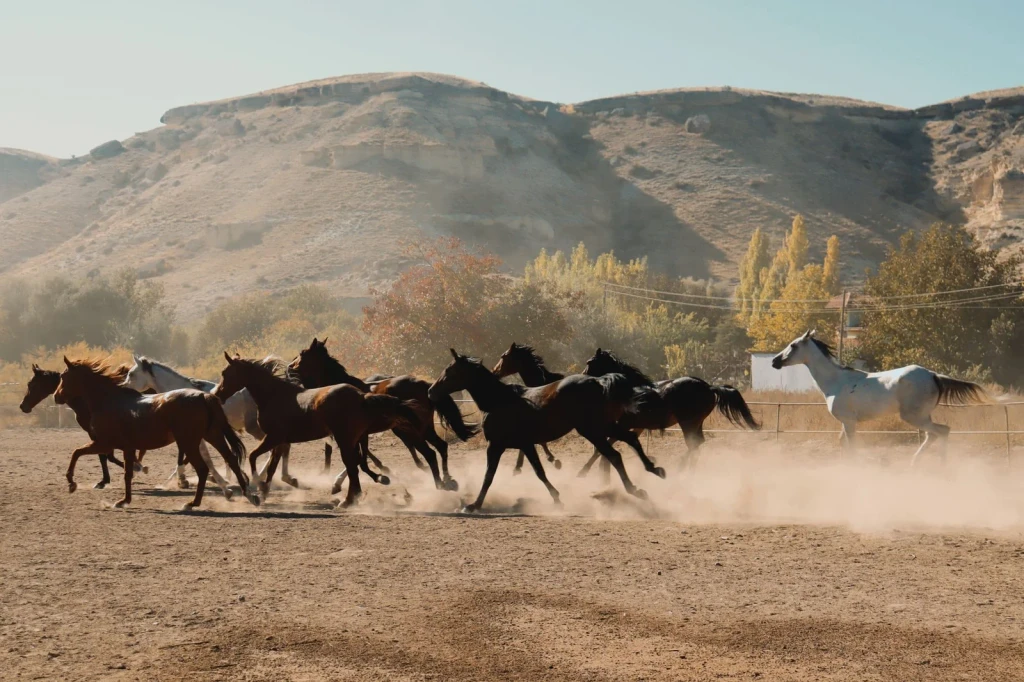
Multiple horses run together across dusty ground with mountains beyond. The composition captures both power and the collective energy of movement.
Photograph by kübra zehra, via Pexels.
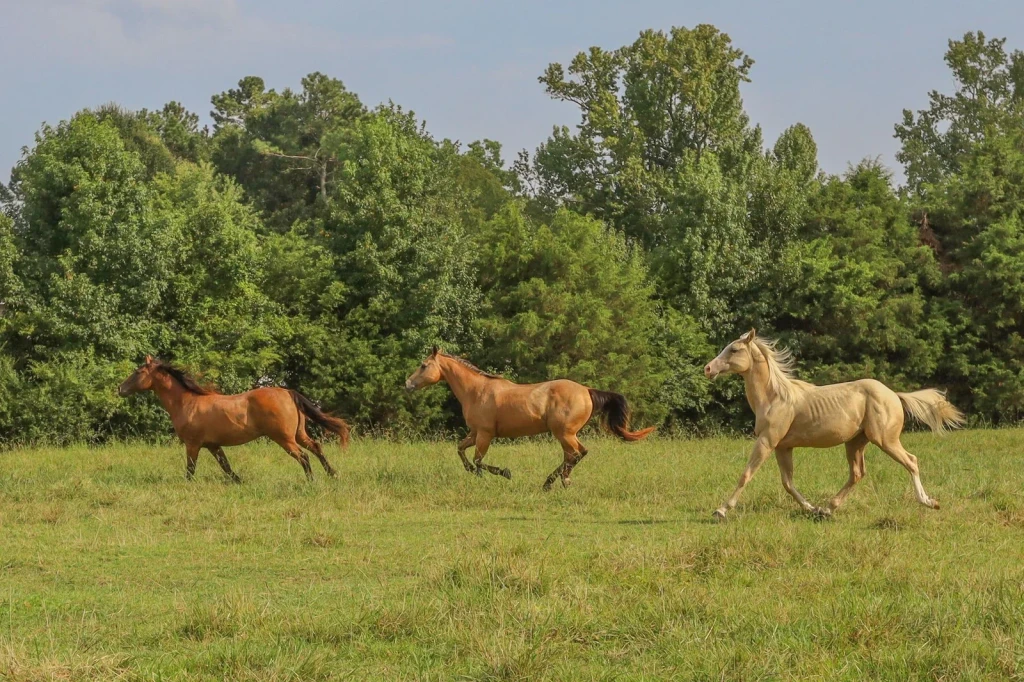
Three horses gallop through green surroundings. Lush growth frames their dynamic stride across the pasture.
Photograph by Case Joel, via Pexels.
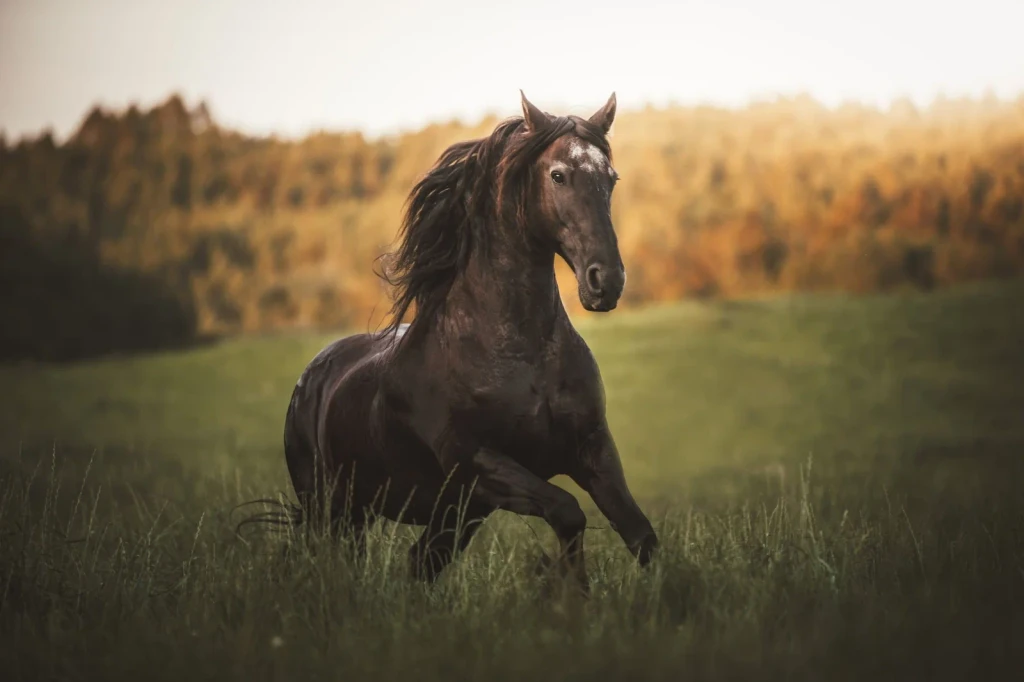
A solitary horse moves through sunlit grass. The image captures a moment of freedom in an open landscape.
Photograph by Jana Malenová, via Pexels.
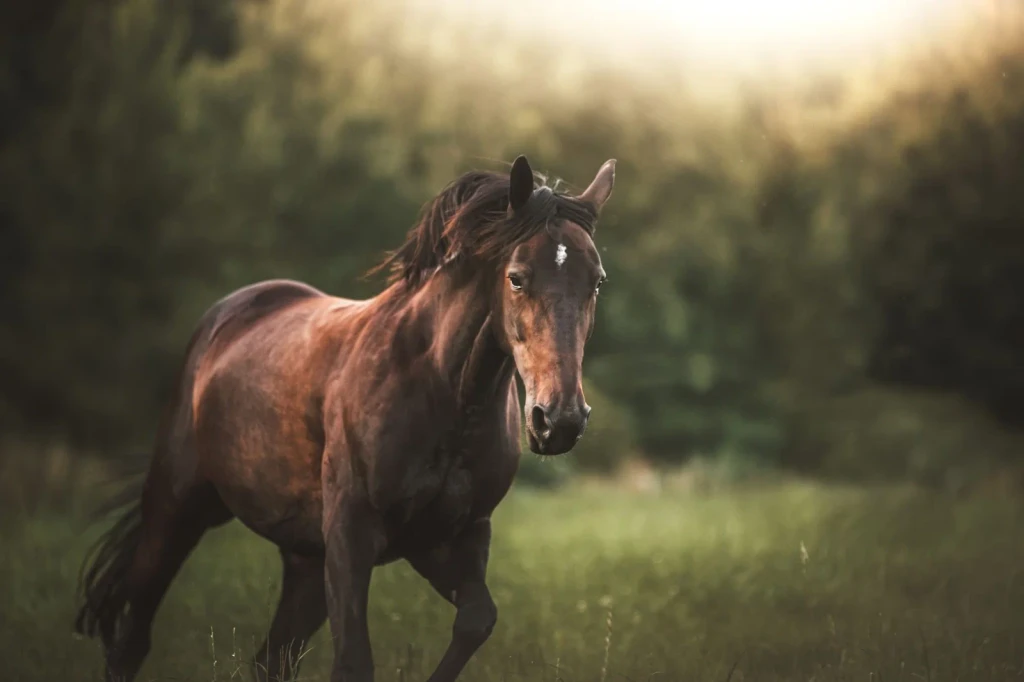
A single horse runs beneath sunny skies. The image embodies nature's grace through the animal's form and motion.
Photograph by Jana Malenová, via Pexels.
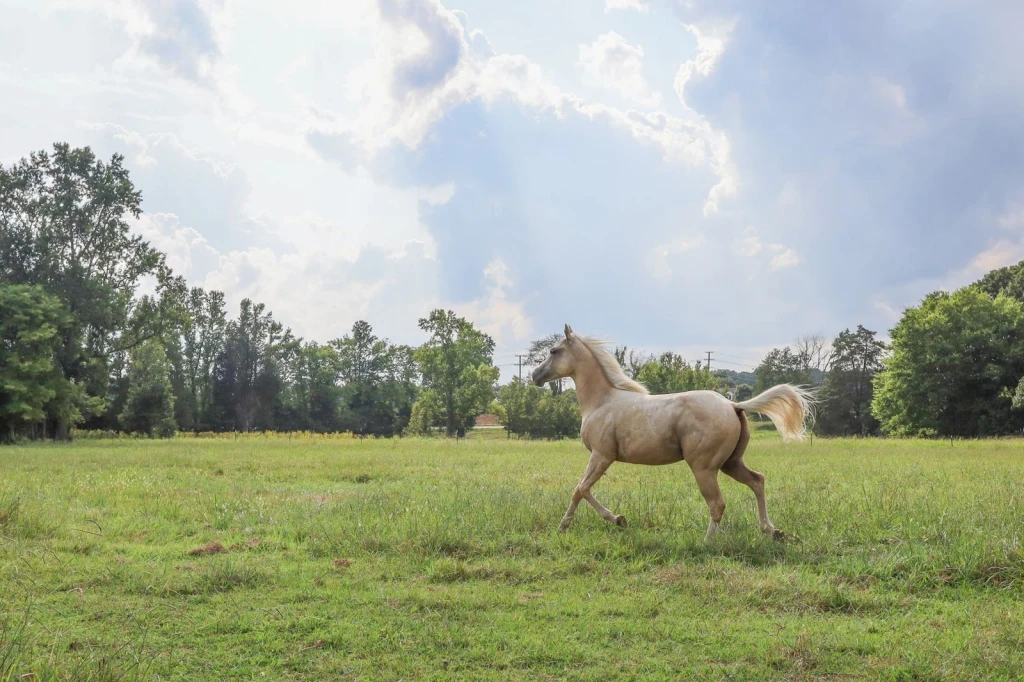
A horse trots through green fields beneath overcast sky. Its graceful movement contrasts with the quiet landscape.
Photograph by Case Joel, via Pexels.
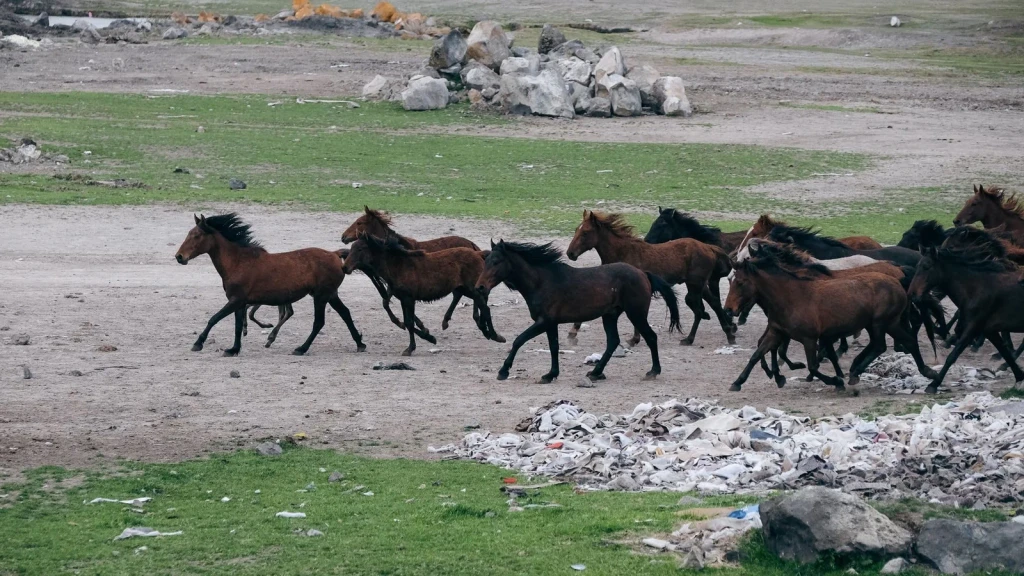
Multiple horses run together across an open field. The photograph captures collective power and the dynamics of movement as a group.
Photograph by Mehmet Turgut Kirkgoz, via Pexels.
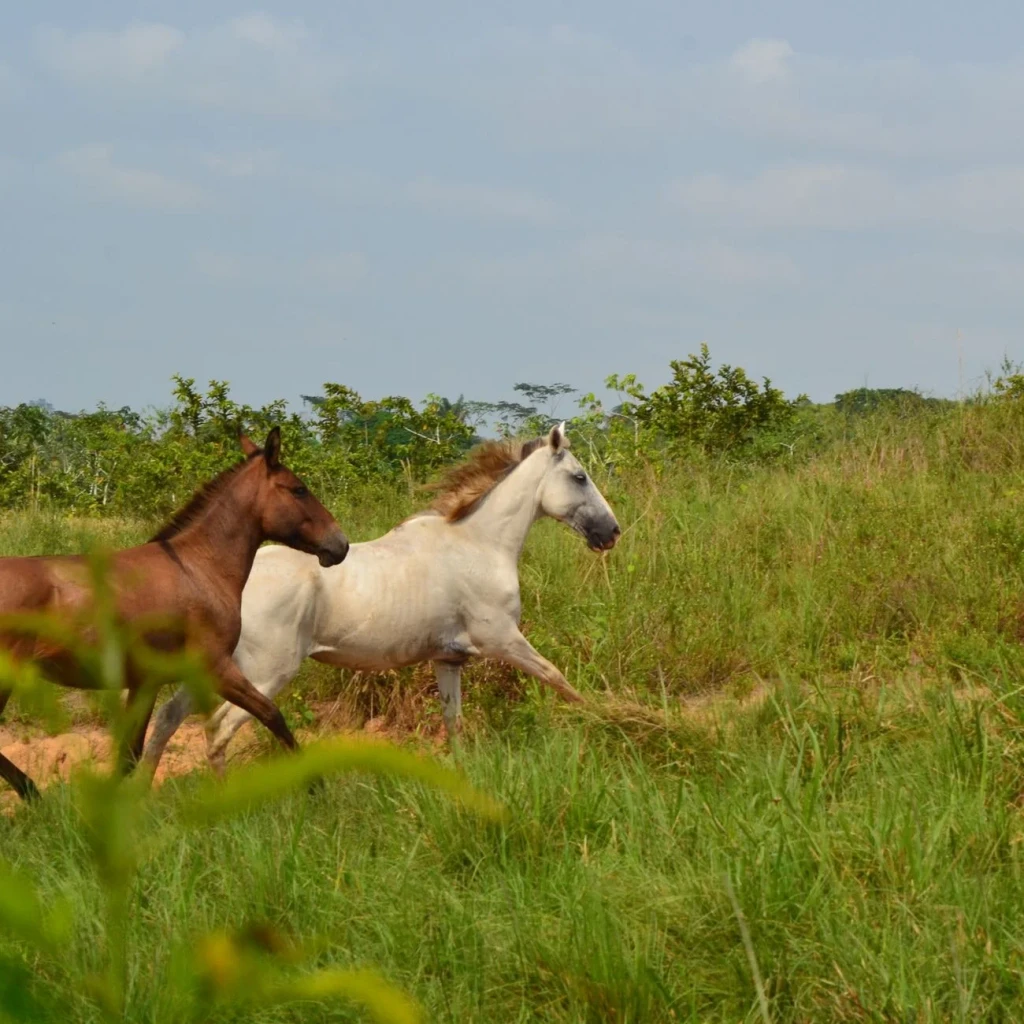
Two horses cross a vibrant pasture. The freedom and vitality of their motion define the image.
Photograph by Jose Fagundes, via Pexels.
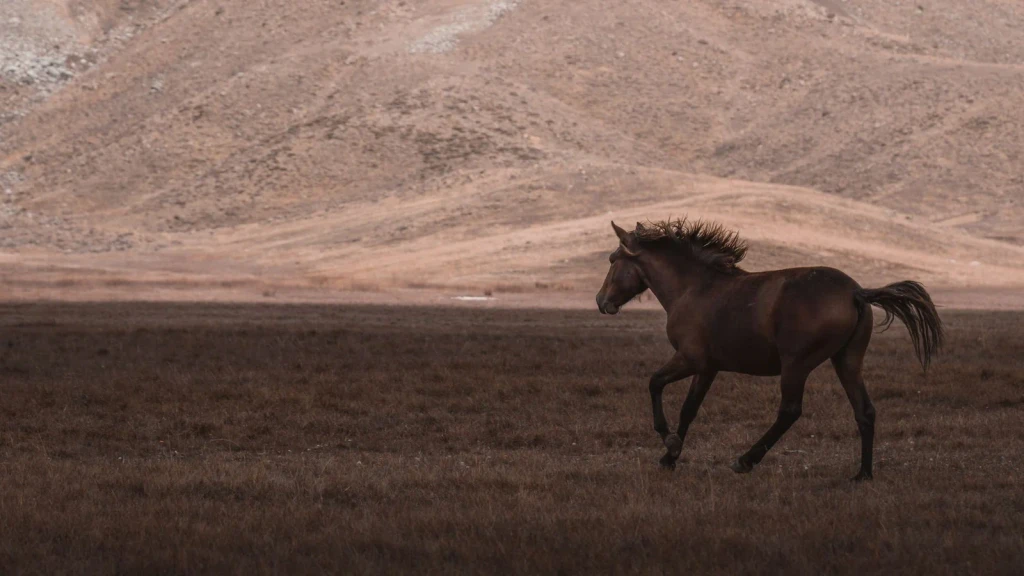
A single horse moves across open fields. The vast landscape emphasizes the animal's freedom and the space it inhabits.
Photograph by Ahmet Yüksek ✪, via Pexels.
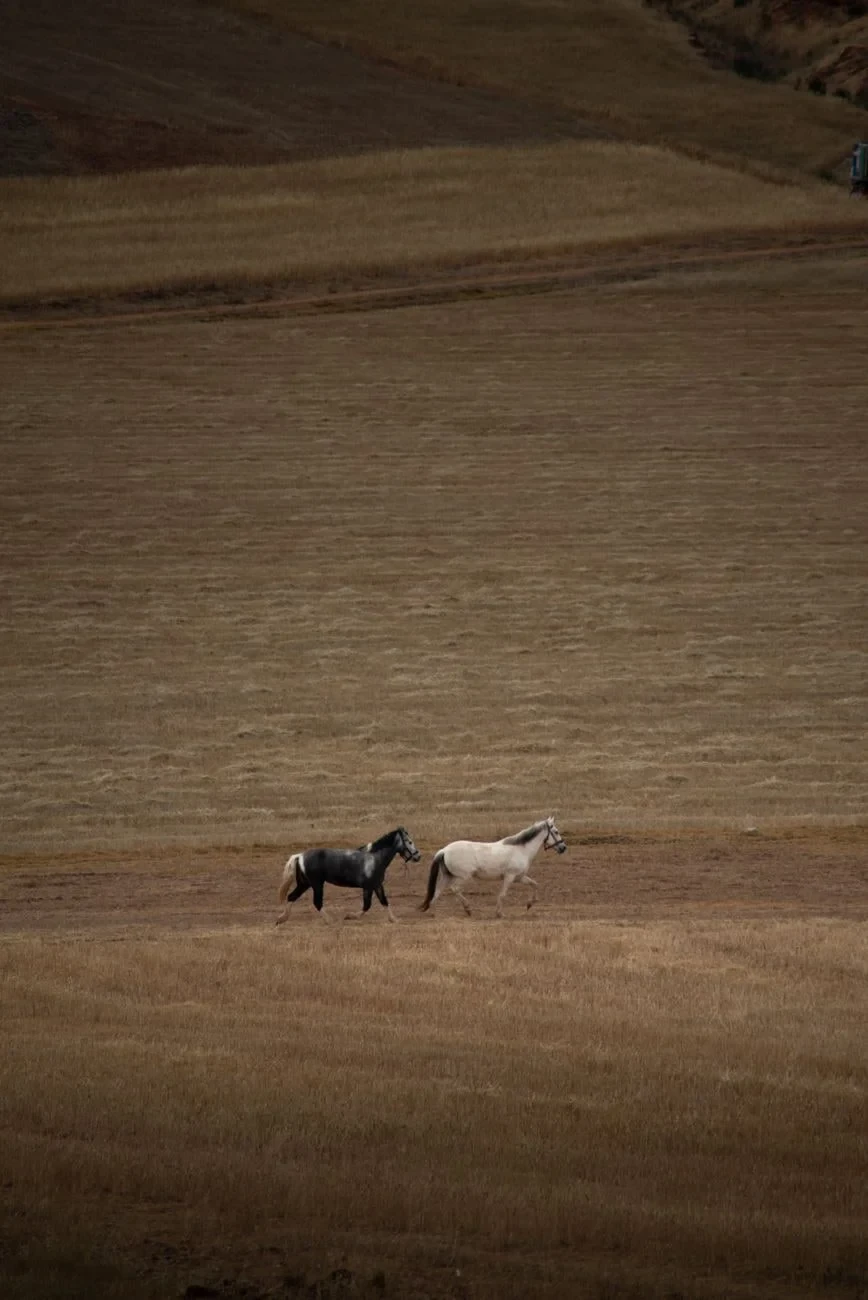
Two horses gallop across countryside terrain. The scene embodies a natural spirit expressed through movement.
Photograph by Alejandro Novoa, via Pexels.
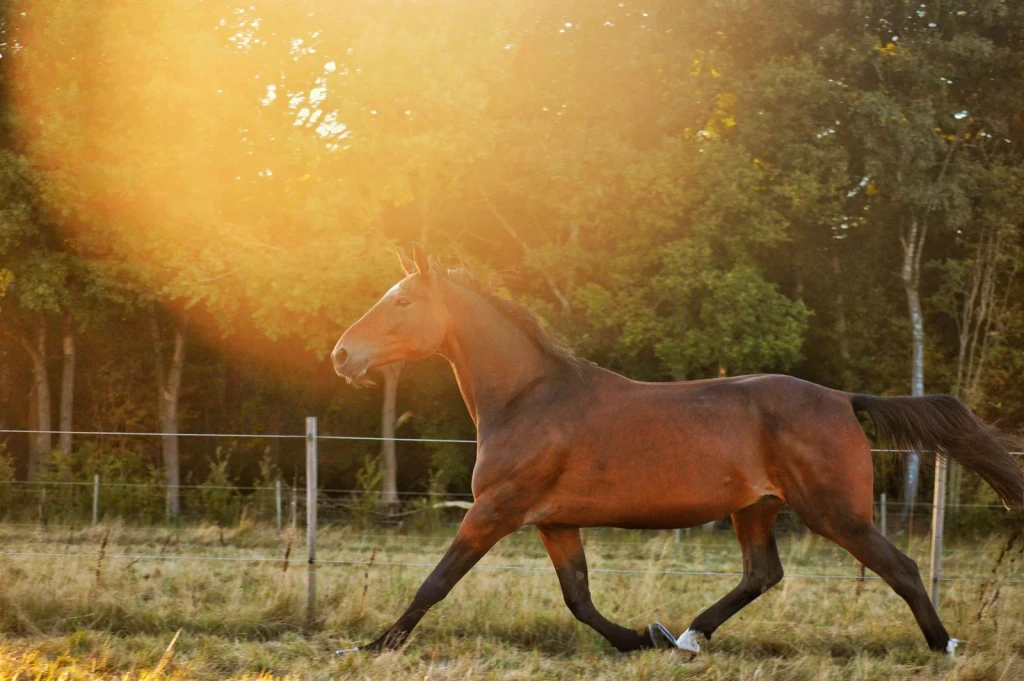
A horse in motion displays the grace of its form against a tree-lined pasture. Light and shadow define the moment of exertion.
Photograph by Sara Mölzer, via Pexels.
