3D Gallery
Read the Shadow on a Sundial
Enter gallery
Read the Shadow on a Sundial is a 3D virtual gallery on MyGallery3D, a walkable online exhibition of 12 works. Step inside and explore it in your browser: no app, no headset.
Welcome to a 3D virtual gallery you can walk through in your browser, exploring how humanity has read the shadow on a sundial for over three thousand years.
The oldest known sundials date to around 1500 BC in Egypt and Babylon. Yet even ancient devices posed a problem that still catches people out: the Sun does not keep steady time. Earth's tilted axis and elliptical orbit make a sundial disagree with a clock by as much as 16 minutes, shifting constantly through the year.
The gnomon is the object that casts the shadow. Its time-telling edge, the style, must be parallel to Earth's rotational axis. That means the style's angle from horizontal equals the sundial's geographic latitude. Get this wrong and the hour lines are meaningless. The oldest known gnomon in China, a painted stick from about 2300 BC, was used not for timekeeping but to track seasons and determine orientation.
By 240 BC, Eratosthenes estimated the circumference of the Earth using an obelisk's shadow and a water well. Ptolemy later charted the latitude of cities by measuring the Sun's angle. The Romans built the enormous Solarium Augusti around 10 BC, an obelisk casting its shadow across a pavement marked with date lines. Reading shadows was never just about time. It was geography and astronomy made visible.
Earth's orbit is elliptical and its axis is tilted. These two facts produce the equation of time, a correction that swings from about 14 minutes fast in February to 16 minutes slow in November. Before railways imposed standard time in the 1840s, local sundial time was the official time used by government and commerce. Clocks, too inaccurate on their own, had to be regularly reset from a sundial.
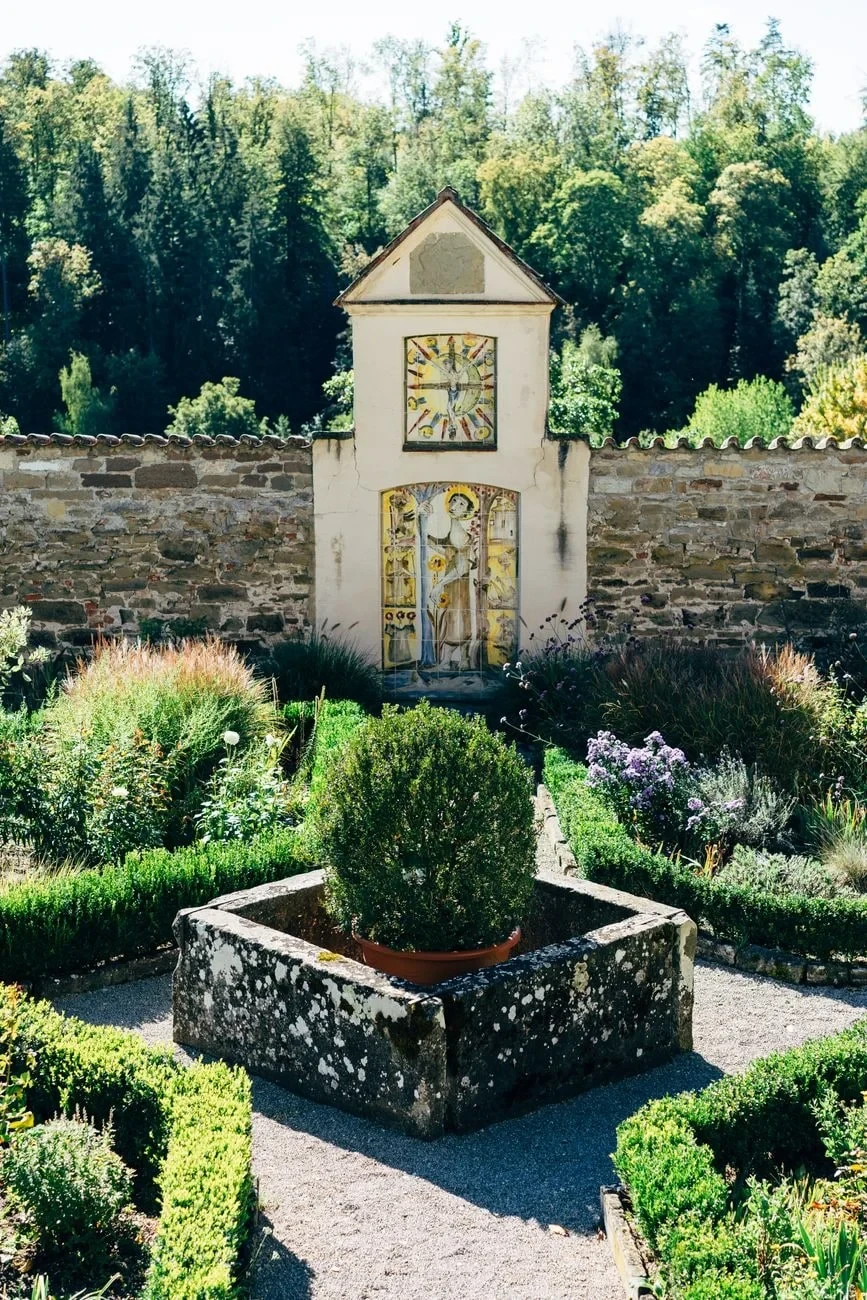
A historic garden holds a sundial among lush greenery. In this peaceful setting, time is measured gently by the sun's movement.
Photograph by Markus Winkler, via Pexels.
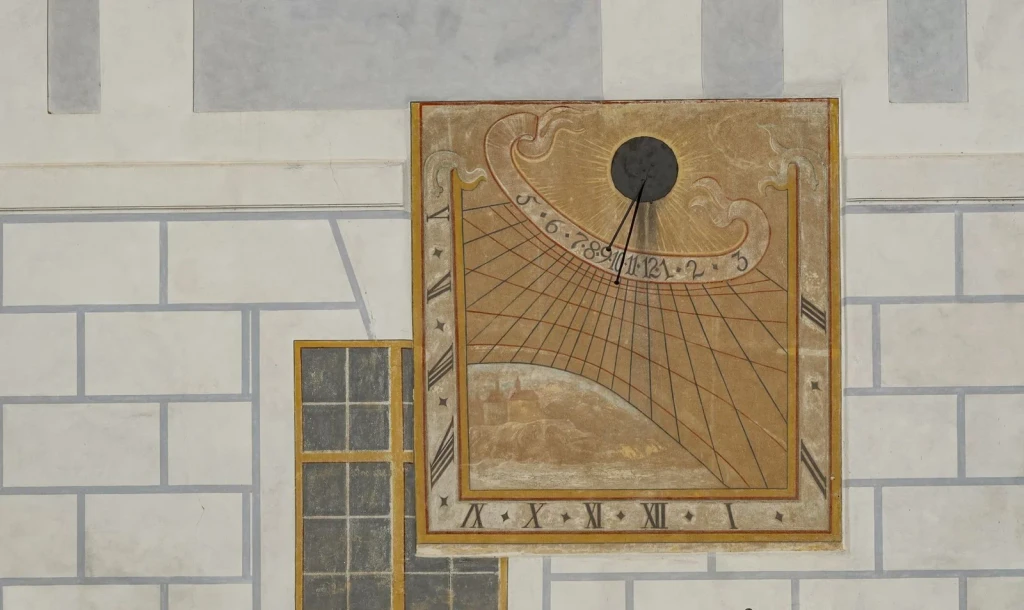
A close view of an ornate sundial mounted on historic stone. The dial's face waits for shadow to arrive and speak.
Photograph by Magda Ehlers, via Pexels.

A sundial sculpture sits within ornate grounds. Architecture and garden frame this instrument for reading the sun's slow passage across the day.
Photograph by Patrick Nizan, via Pexels.
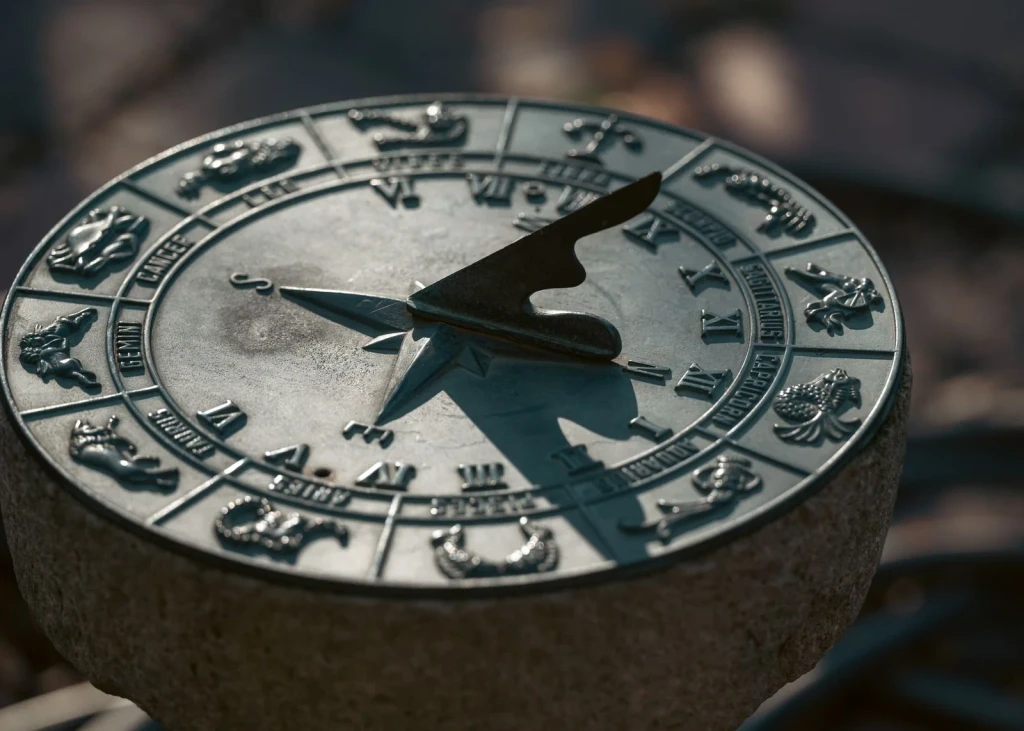
An antique sundial decorated with zodiac symbols. The dial's intricate details are revealed in natural light, mapping both celestial and temporal cycles.
Photograph by Chris F, via Pexels.
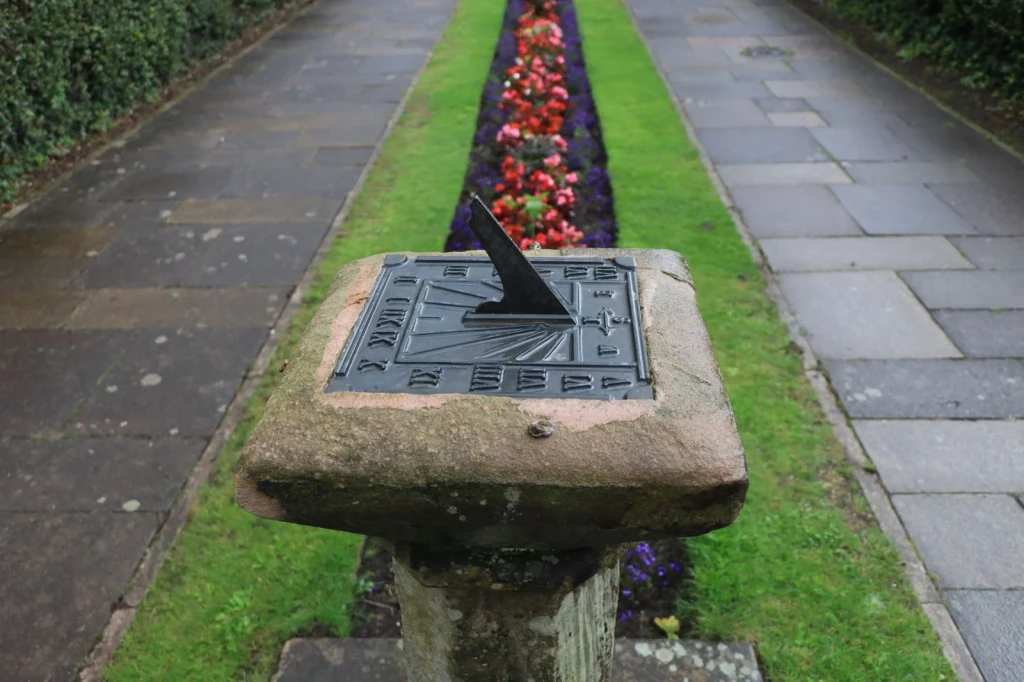
Roman numerals mark a stone dial set among garden color. The sundial's traditional face persists, unchanged in its method of timekeeping.
Photograph by Jan Wright, via Pexels.
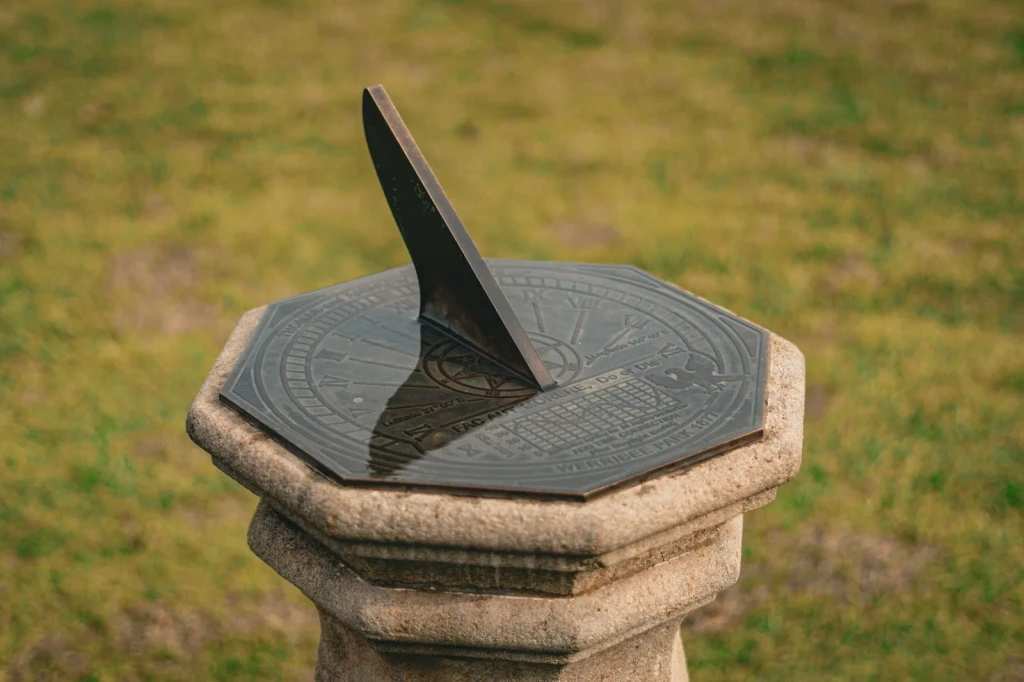
A classic stone sundial occupies a sunny public space. Simple and direct, it invites passersby to pause and read the shadow.
Photograph by Jigar Patel, via Pexels.
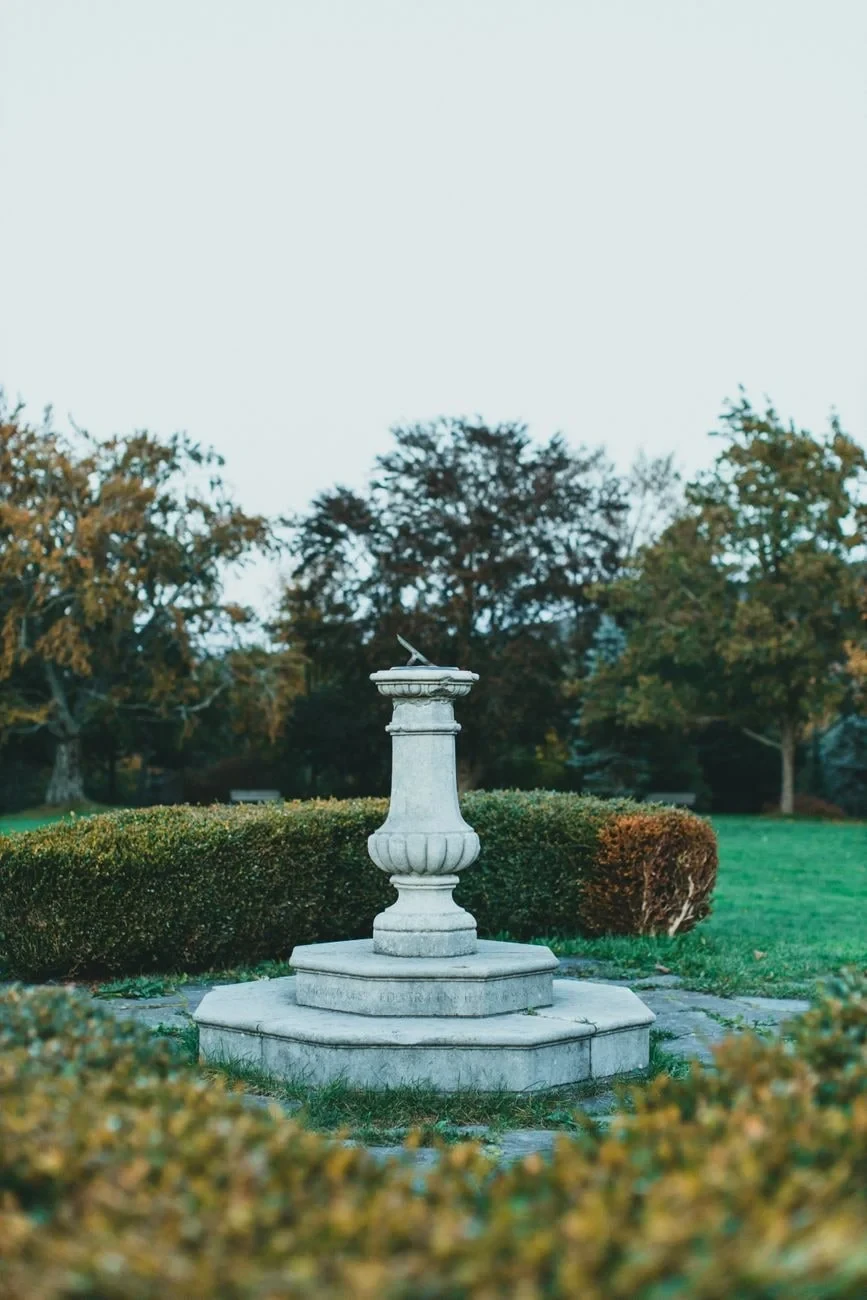
A Roman stone dial sits surrounded by green growth. The sundial offers a quiet way to measure the hours passing through a garden.
Photograph by Jonathan Cooper, via Pexels.
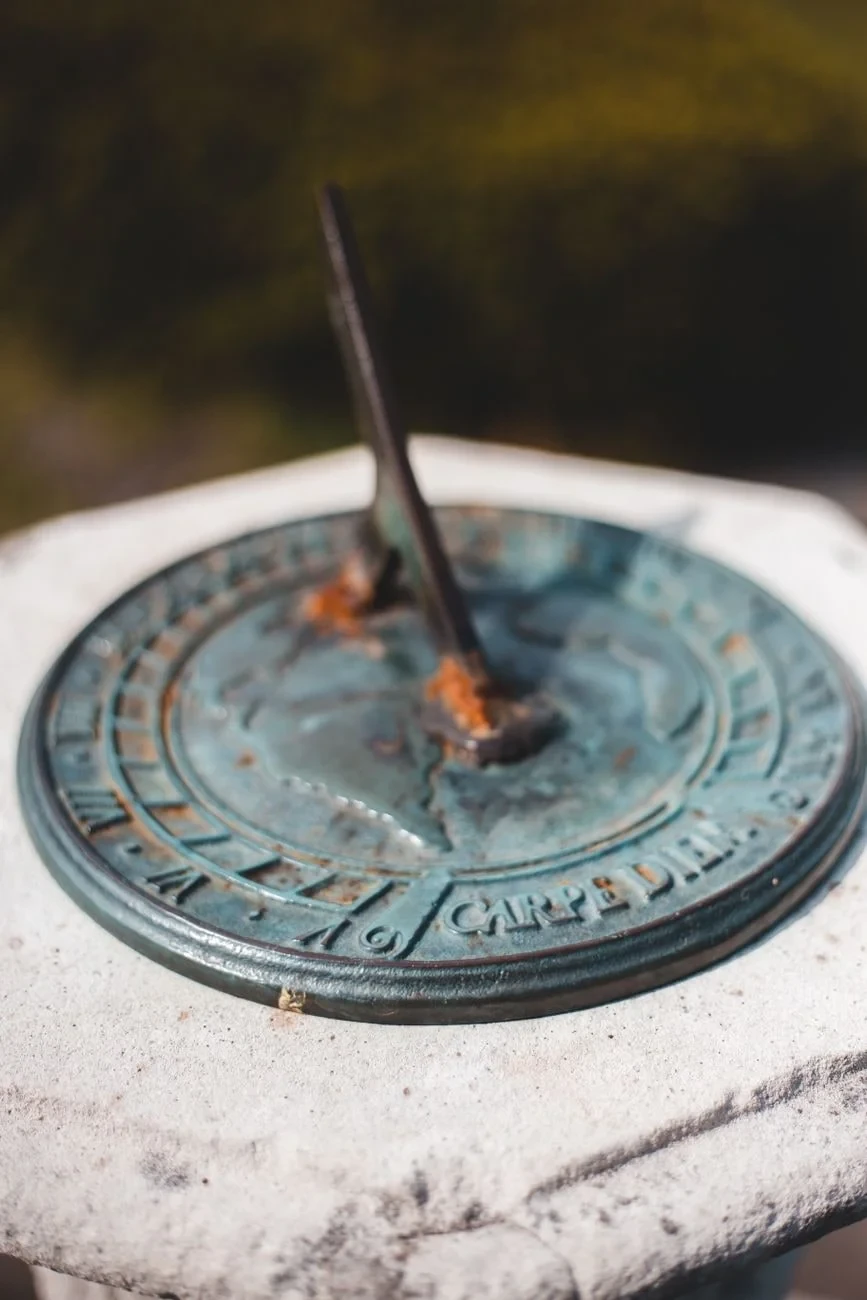
A close study of an antique sundial mounted on stone. Every carved detail catches the light, telling time through precision and craft.
Photograph by Erik Mclean, via Pexels.
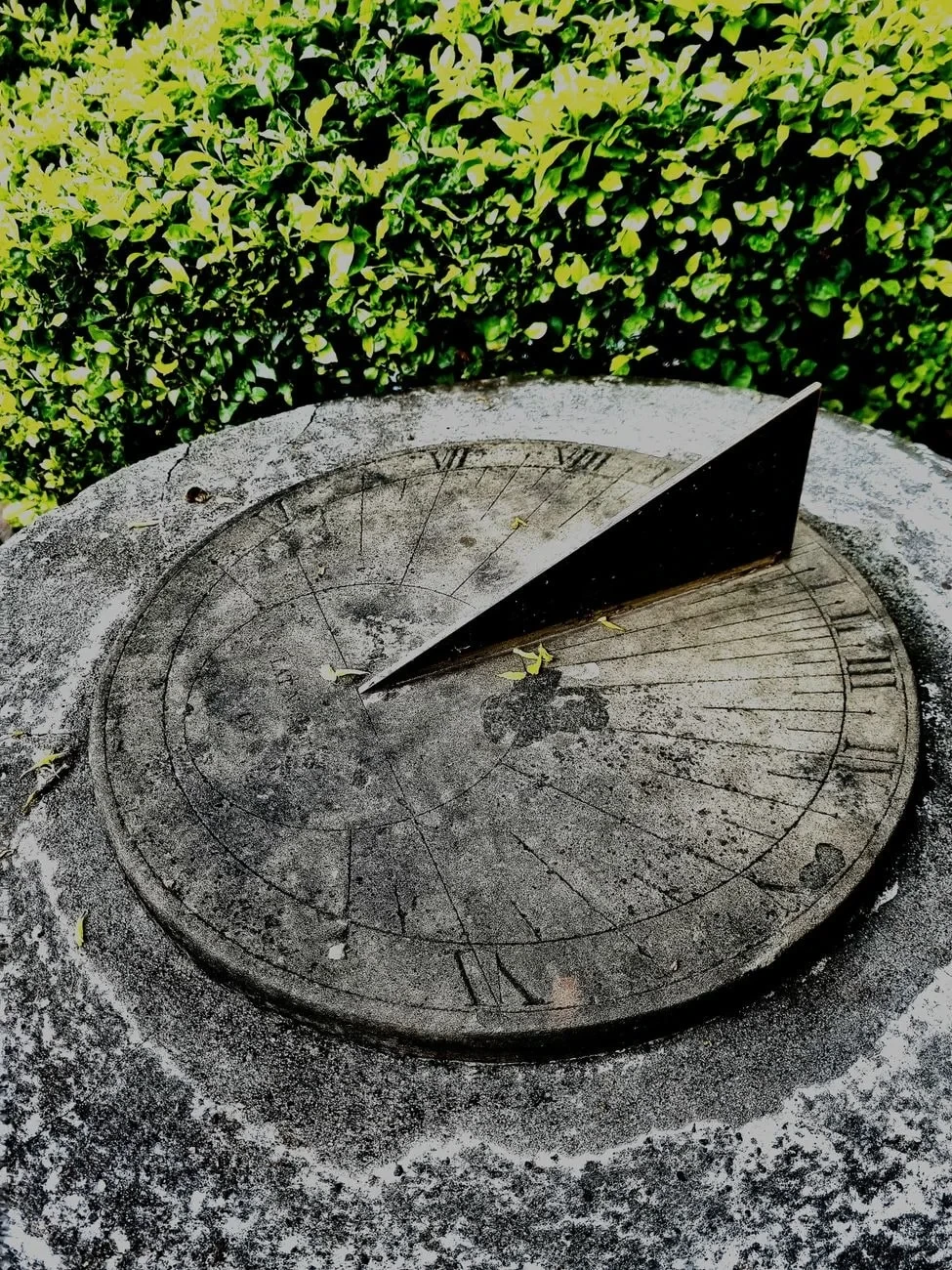
A vintage sundial surrounded by vibrant green foliage. Nature and measured time coexist in this image of elegant timekeeping.
Photograph by Aakash Bhattacharya, via Pexels.
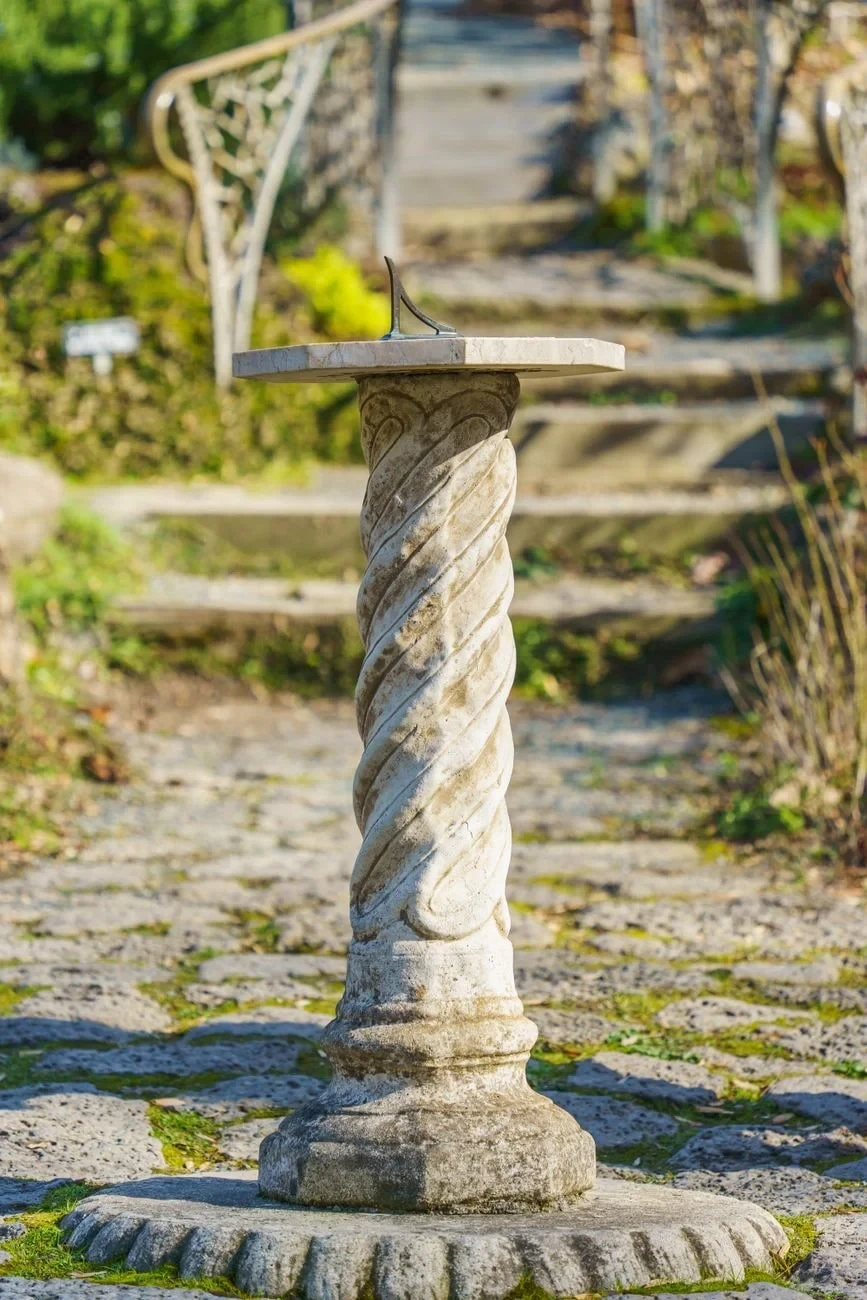
A classic sundial stands on its pedestal in bright sunlight. The spiral stone base echoes the dial's circular purpose: marking time through shadow.
Photograph by Robert So, via Pexels.
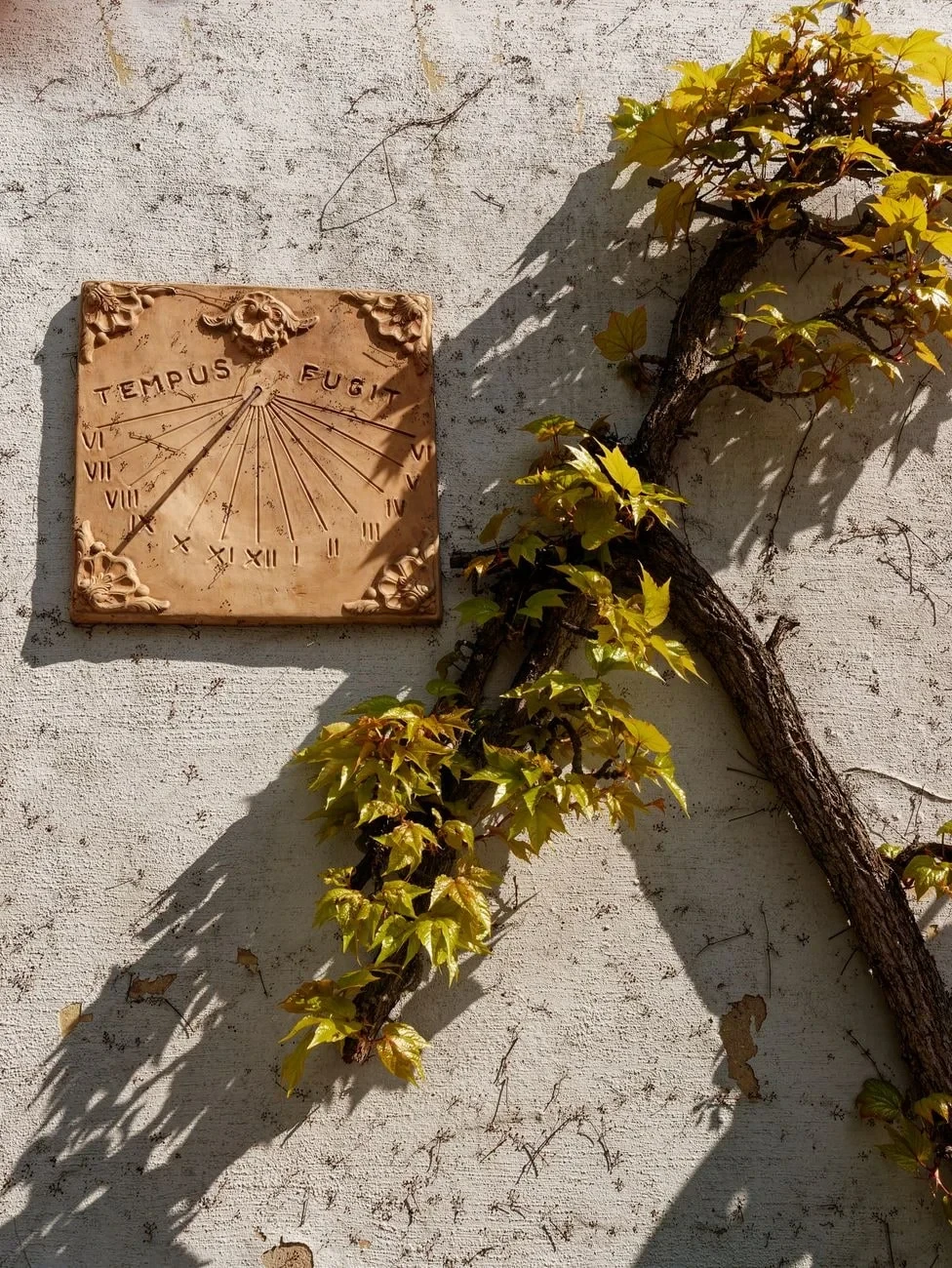
A textured wall hosts both sundial and climbing ivy. Time's passage is visible through shadow and growth, side by side.
Photograph by Sabine Freiberger, via Pexels.
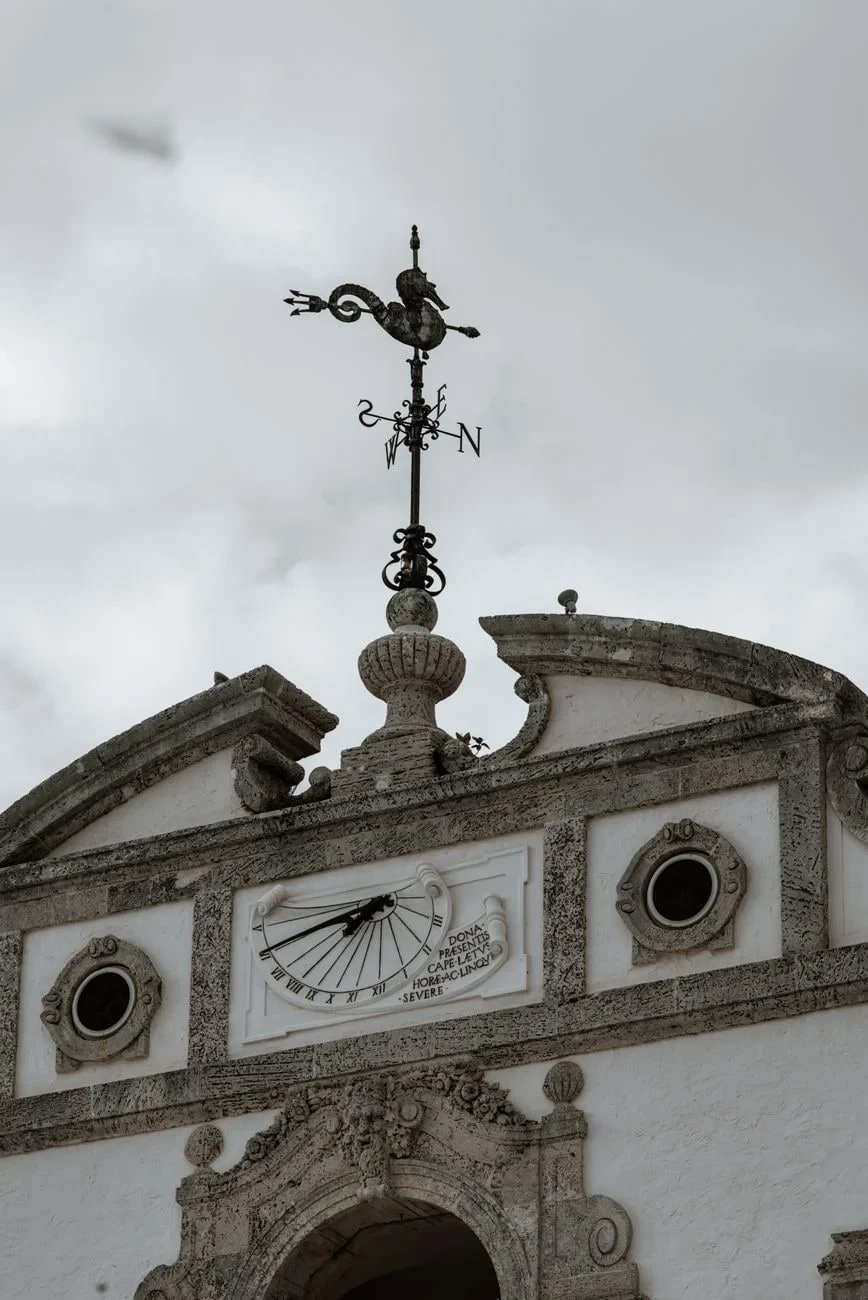
An ornate weather vane and sundial on a historic church facade. Both instruments read the sky, one tracking wind and one tracking sunlight.
Photograph by cao jun, via Pexels.
