3D Gallery
Textiles: The Labour Inside the Cloth
Enter gallery
Textiles: The Labour Inside the Cloth is a 3D virtual gallery on MyGallery3D, a walkable online exhibition of 16 works. Step inside and explore it in your browser: no app, no headset.
Welcome to a 3D virtual gallery you can walk through in your browser, exploring the labour woven, stitched, and spun into every piece of cloth.
Dyed flax fibres found in a Georgian cave date to 34,000 BCE, making textile production older than agriculture, older than pottery, older than almost every human craft. Yet the basic weaves used then, plain weave, twill, and satin, remain essentially unchanged today. The tools evolved; the hands repeated.
Where literacy was limited, embroidery became a diary. Women stitched narratives documenting their lives when they lacked access to writing. In South Africa, embroidered story cloths preserved perspectives missing from written history. The Bayeux Tapestry, nearly 70 metres long, remains one of the oldest complete embroidered works, recording the Norman Conquest of England in 1066 entirely in thread.
The earliest tool for spinning was the spindle, weighted with a whorl to control twist and thickness. Fibres of flax, wool, or cotton were drawn out and twisted into continuous yarn by hand, thousands of years before any mechanised frame existed. At Windover, Florida, hunter-gatherers produced finely crafted textiles between 6500 and 4900 BCE, with fabric reaching 26 strands per inch.
Pre-Columbian Andean weavers built pattern directly into cloth structure, manipulating warp and weft rather than adding ornament after weaving. They independently invented nearly every non-mechanised technique known today. Tapestry, double-cloth, quadruple-cloth, gauze weaves, and discontinuous warp techniques all emerged in the Andes. The Inca elite used fine tapestry-woven cumbi as currency, tribute, and a marker of social rank.
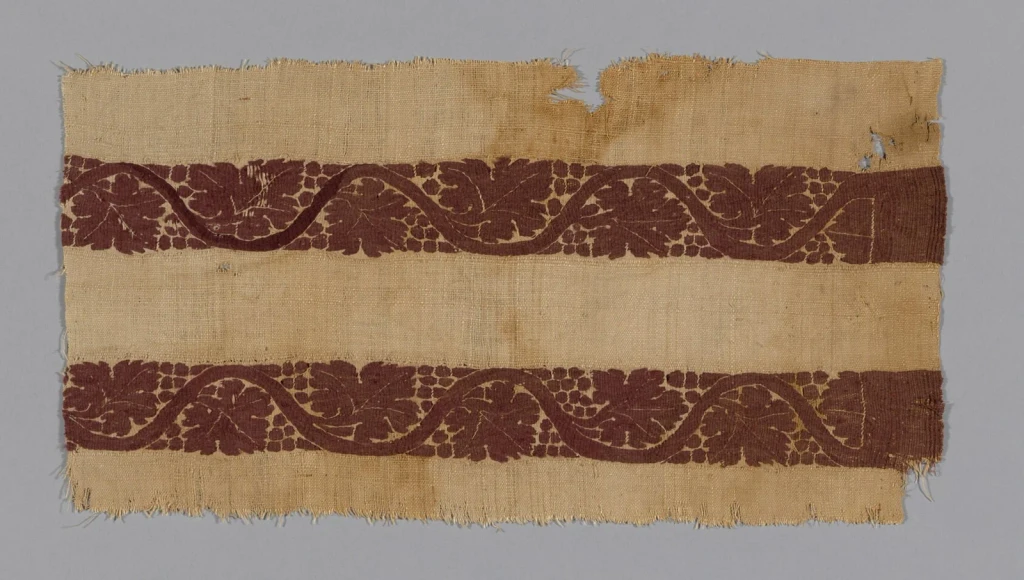
4th century
Linen and wool, plain weave and slit tapestry weave with eccentric wefts · Egypt
Gift of Martin A. Ryerson through the Antiquarian Society
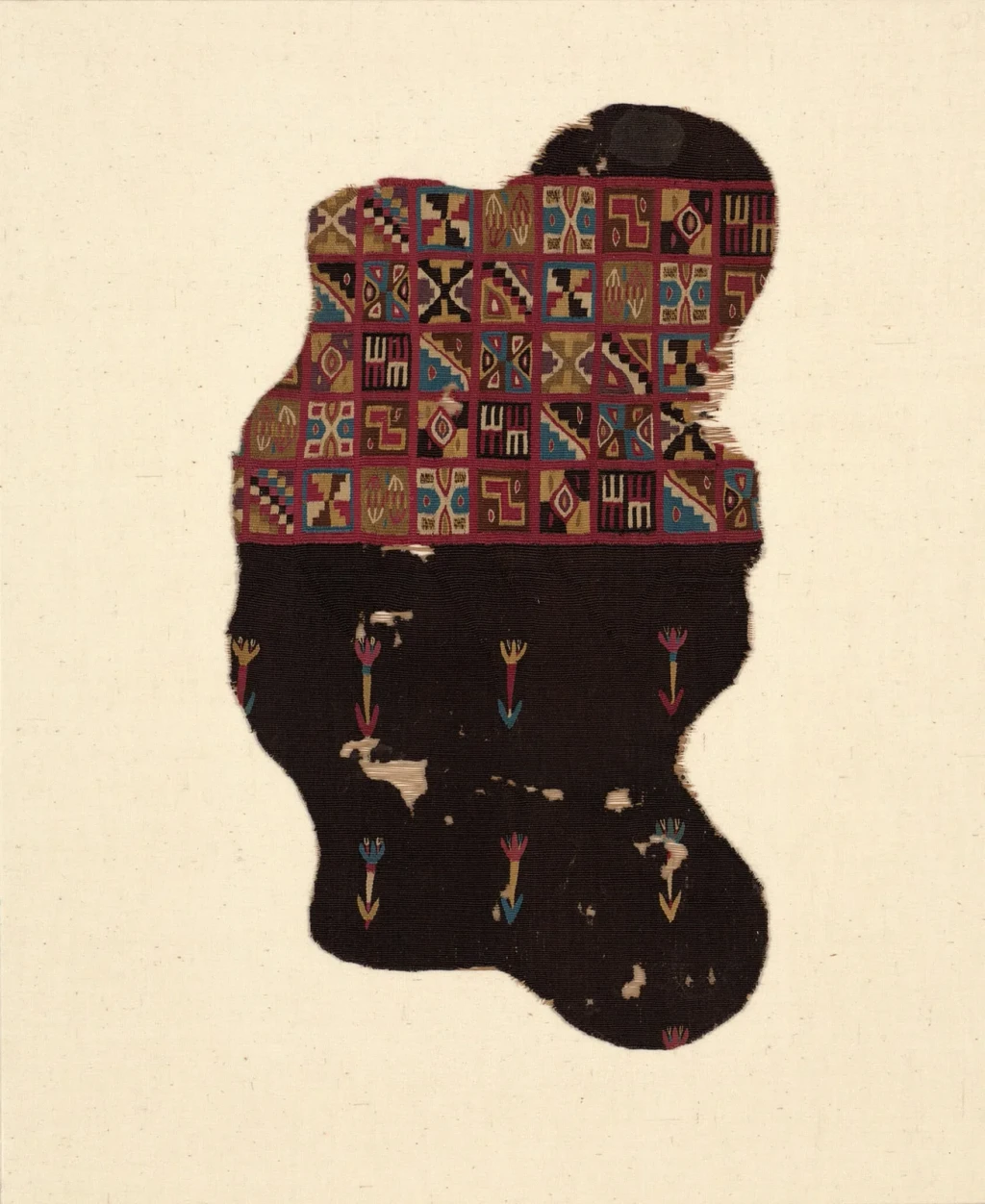
Inca, 1550-1625
Cotton and wool (camelid), single interlocking tapestry weave with eccentric wefts · Peru
Bessie Bennett Endowment · Inca Empire on Wikipedia
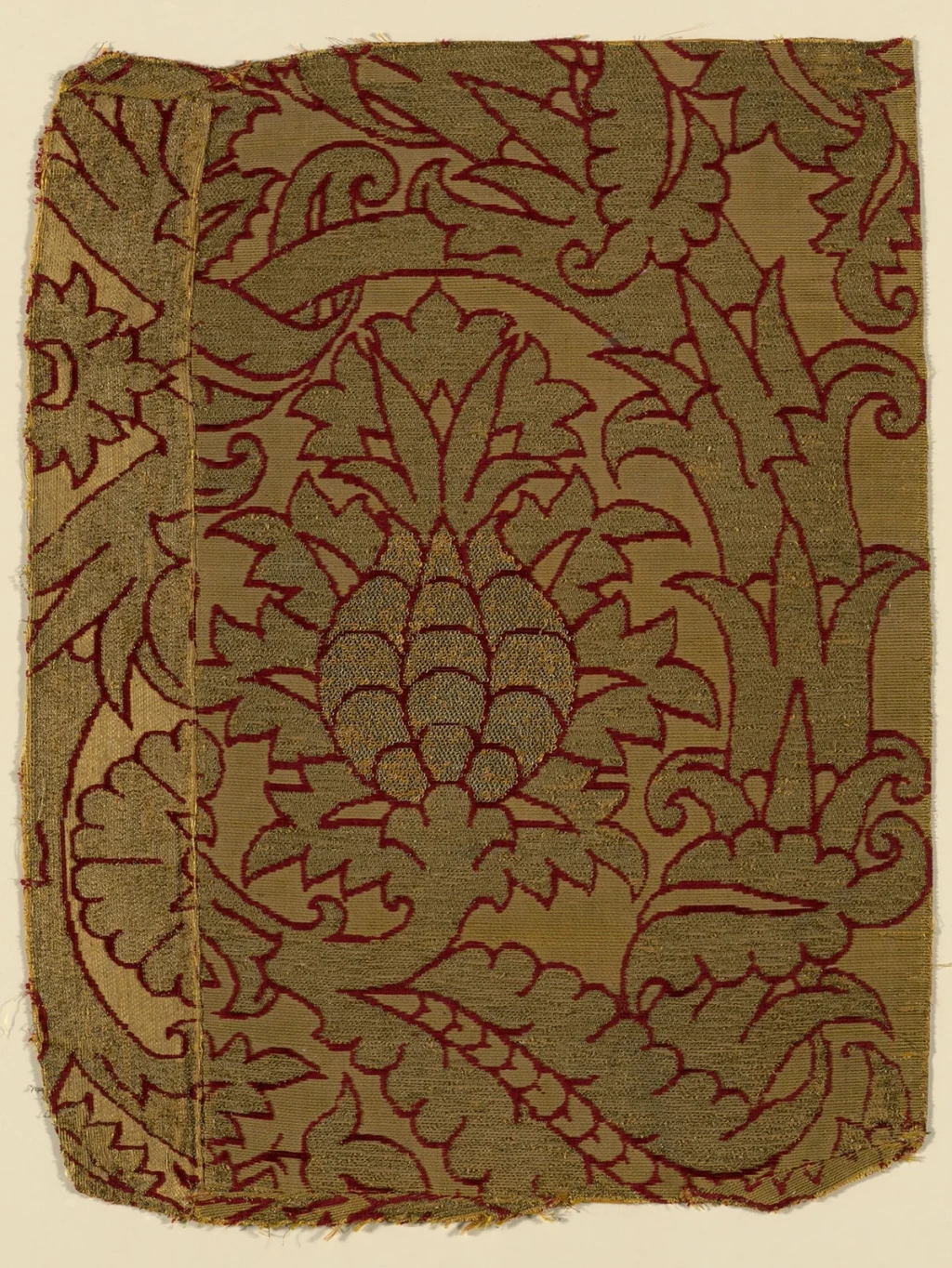
1450-1500
Silk, plain weave with supplementary silk facing wefts, secondary binding warps tying supplementary gilt-metal-strip-wrapped silk patterning and brocading wefts forming weft loops in areas and supplementary pile warps forming cut voided velvet · Italy
Gift of Martin A. Ryerson through the Antiquarian Society
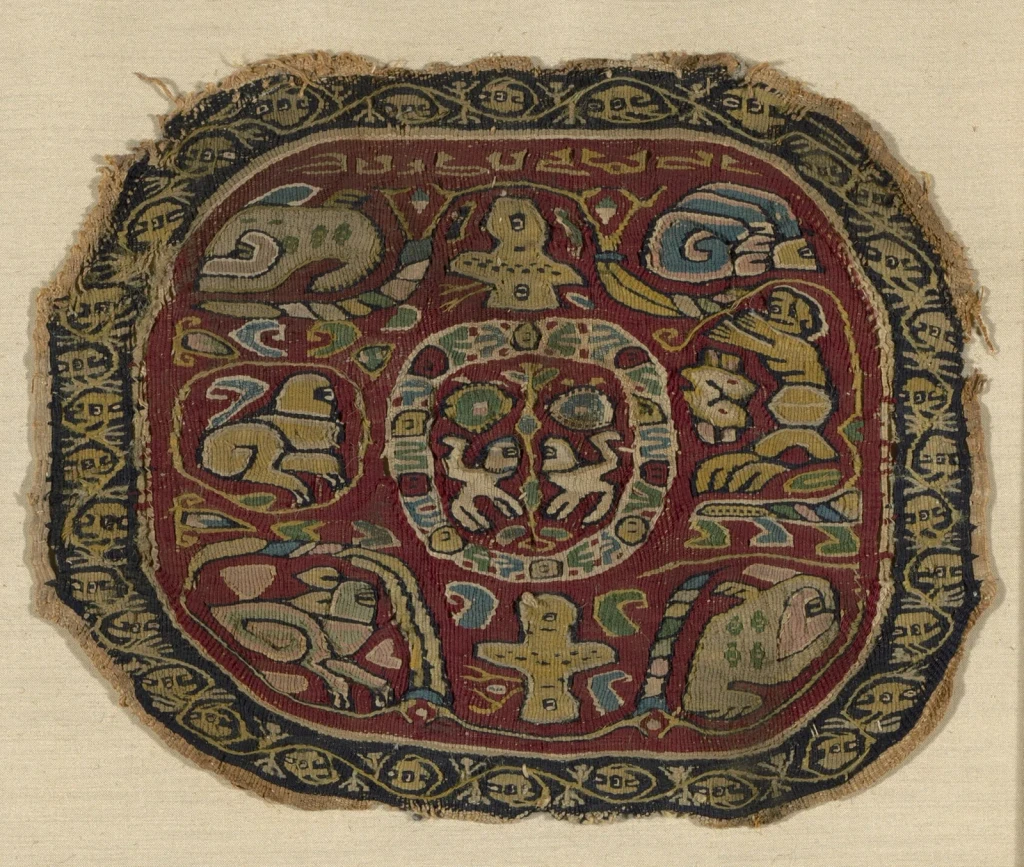
7th century
Wool and linen, slit tapestry weave · Egypt
Gift of Mrs. H. O. Stone to the Antiquarian Society
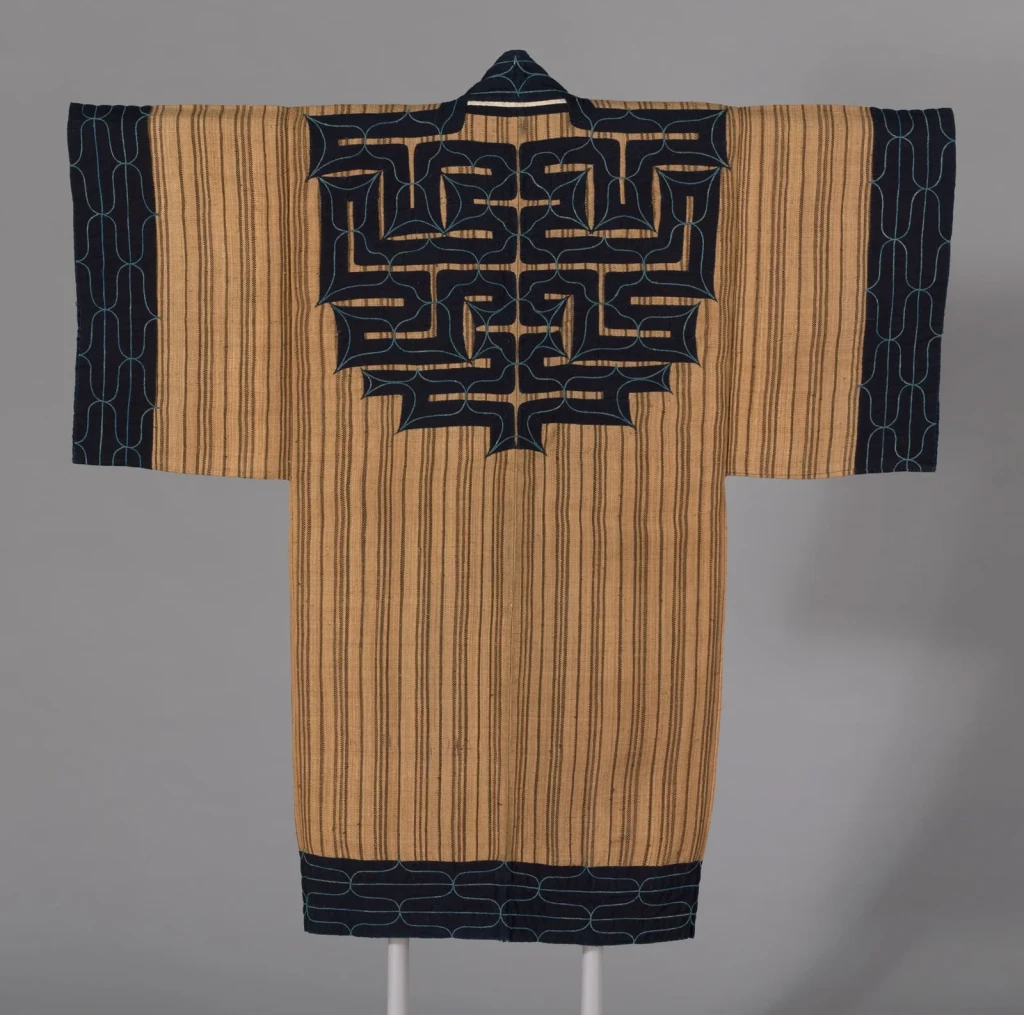
Ainu, c. 1860
Elm tree bark fiber, plain weave; center back and outer edges appliquéd with cotton, plain weave; underlaid with cotton, plain weave; embroidered with cotton in laid work and couching · Japan
Robert Allerton Endowment

Greco, Roman period (30 BCE, 641 CE), 4th/5th century
Wool and linen, tapestry weave · Egypt
Gift of Martin A. Ryerson through the Antiquarian Society
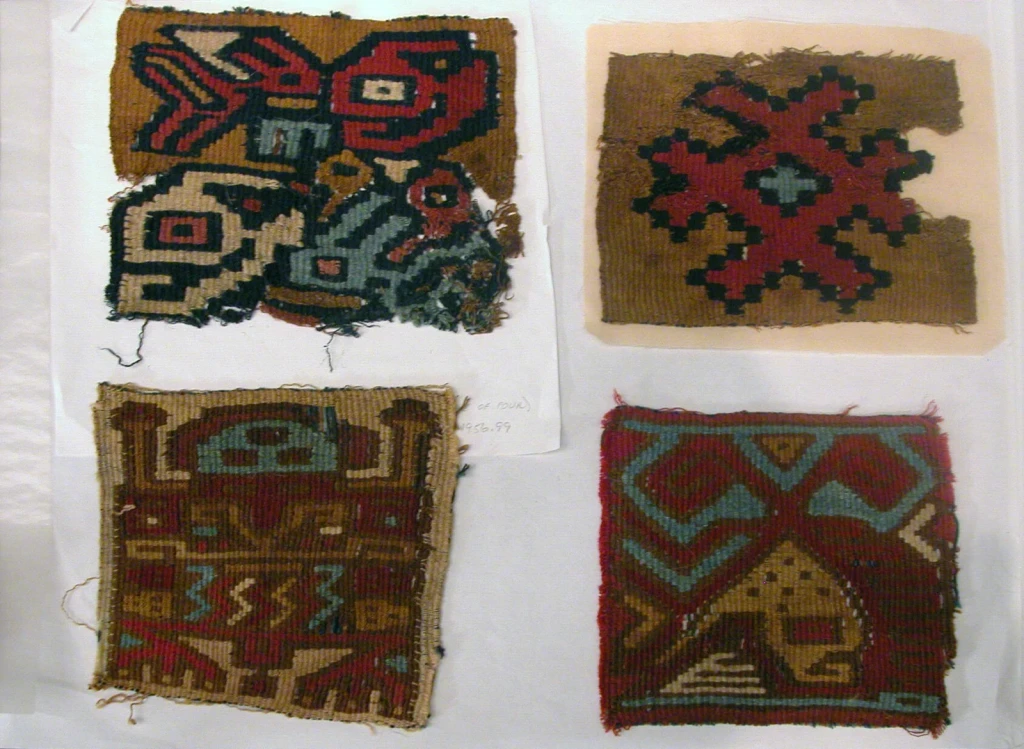
Nasca, 650 CE-700 CE
Peru
Purchased with funds provided by Mrs. Edwin A. Seipp
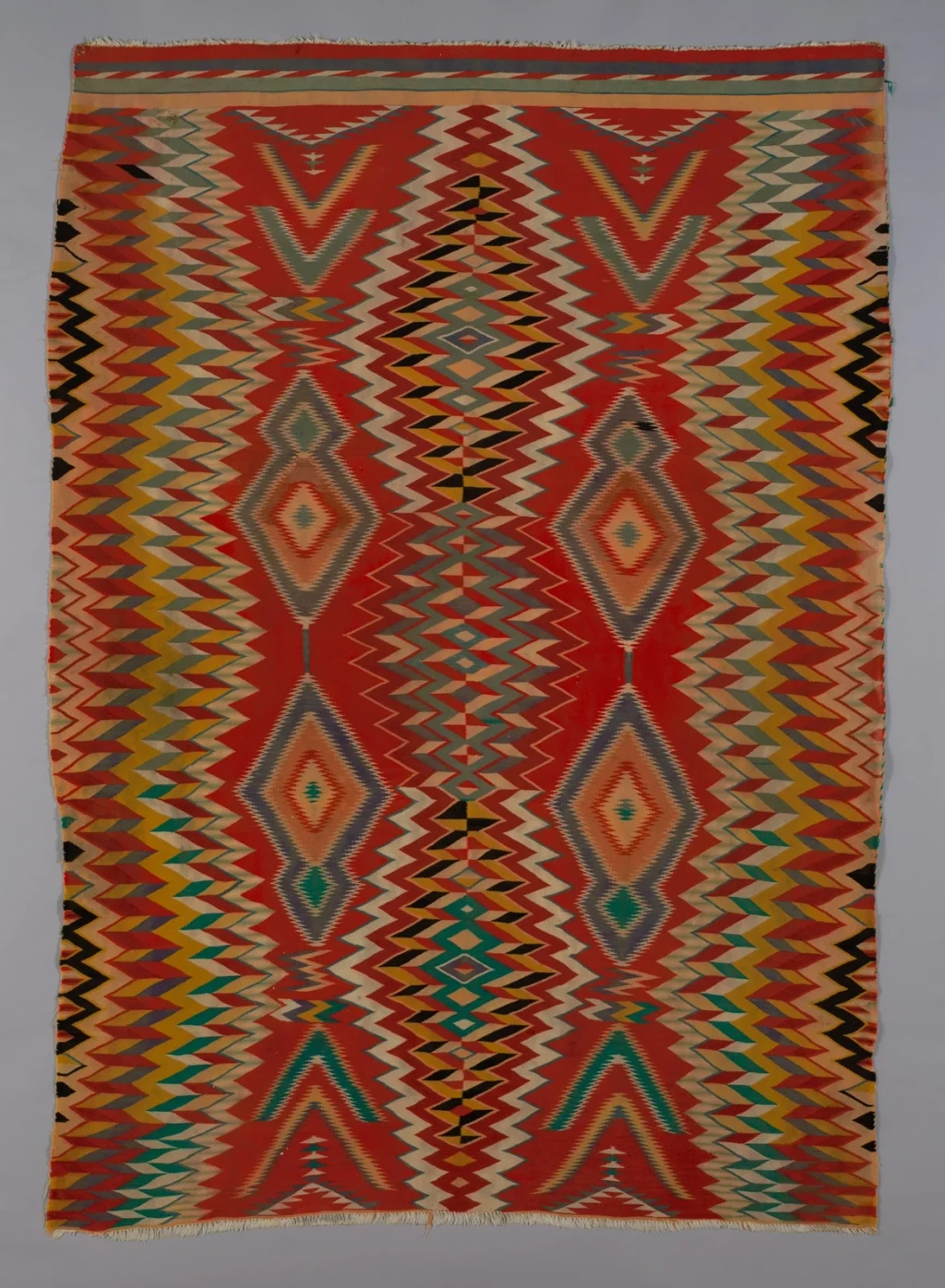
Navajo (Diné), c. 1800/90
Cotton and wool dovetailed tapestry weave · New Mexico
Robert Allerton Endowment
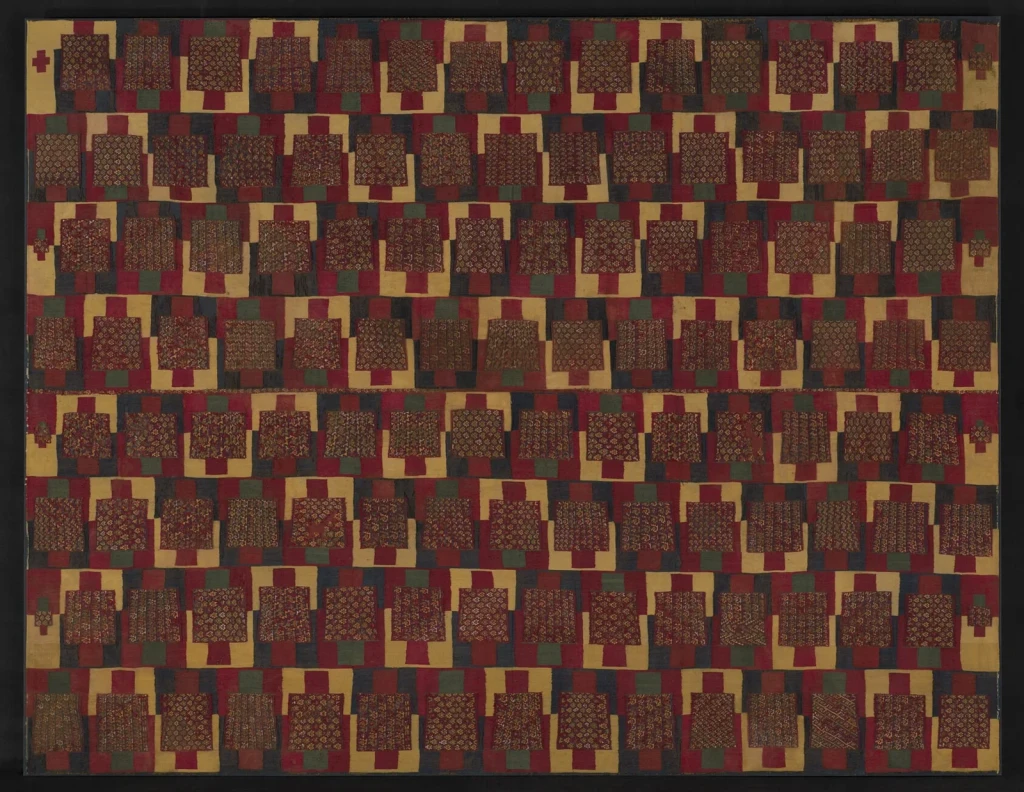
Chuquibamba, 1300-1550
Camelid wool, single interlocking tapestry weave and five-color complementary weft weave with center band of complementary weft weave · Peru
Ada Turnbull Hertle Endowment · Chuquibamba on Wikipedia
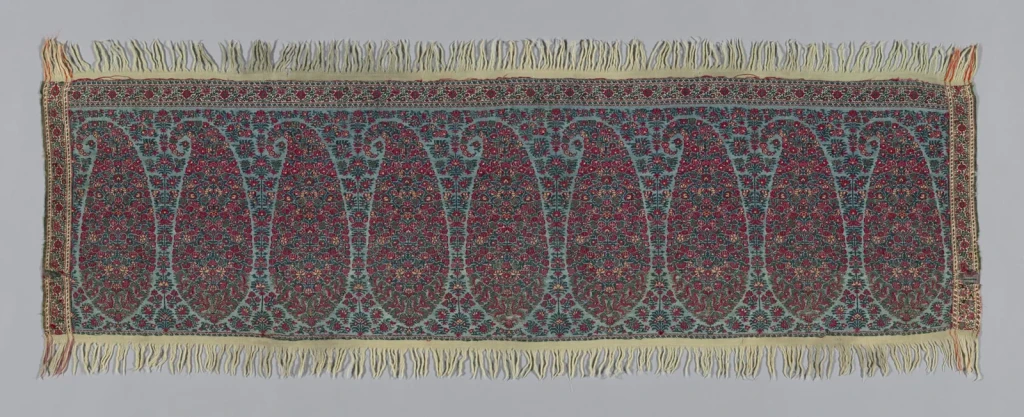
1815/20
Wool, double interlocking 2:2 'S' twill tapestry weave; ends of pieced 2:2 'S' twill weaves; main warp fringe · India
Gift of Mrs. John J. Glessner through the Antiquarian Society
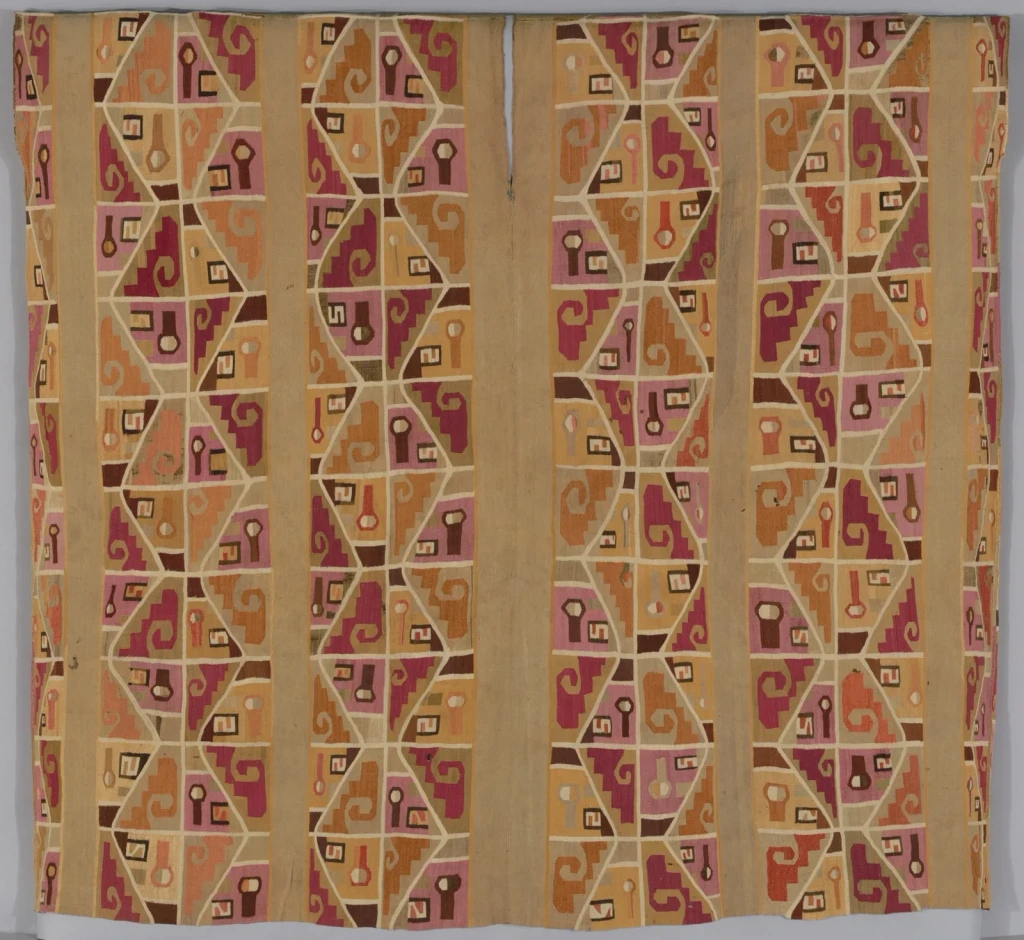
Wari, 600-800
Cotton and wool (camelid), single interlocking tapestry weave; neck and armholes finished with wool (camelid) in overcast stitches; seams joined with wool (camelid) in darning stitches · Peru
Kate S. Buckingham Endowment
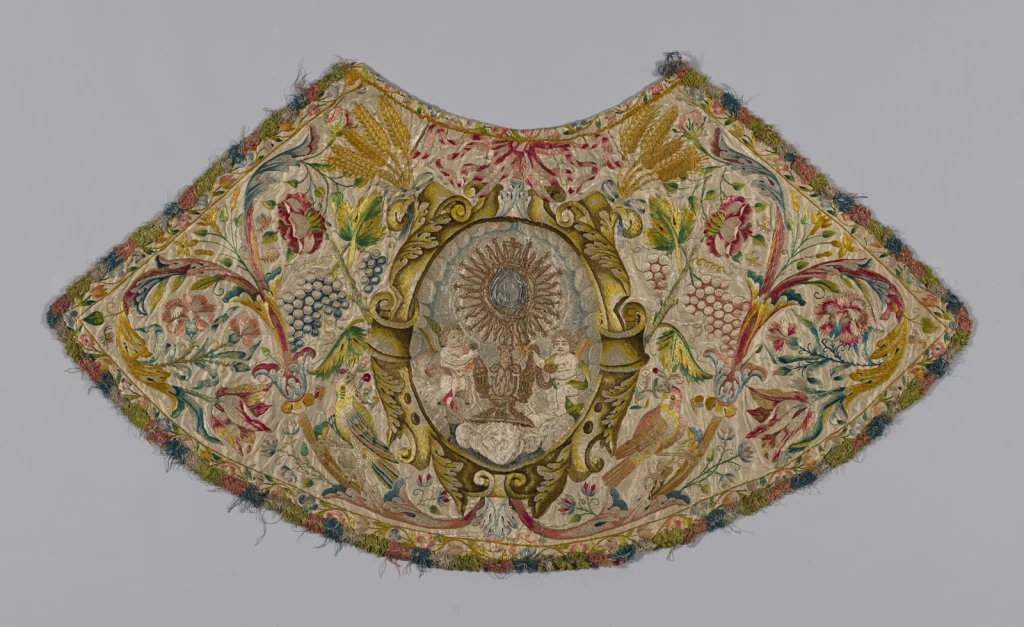
18th century
Silk, satin weave, embroidered · Spain
Gift of the Antiquarian Society
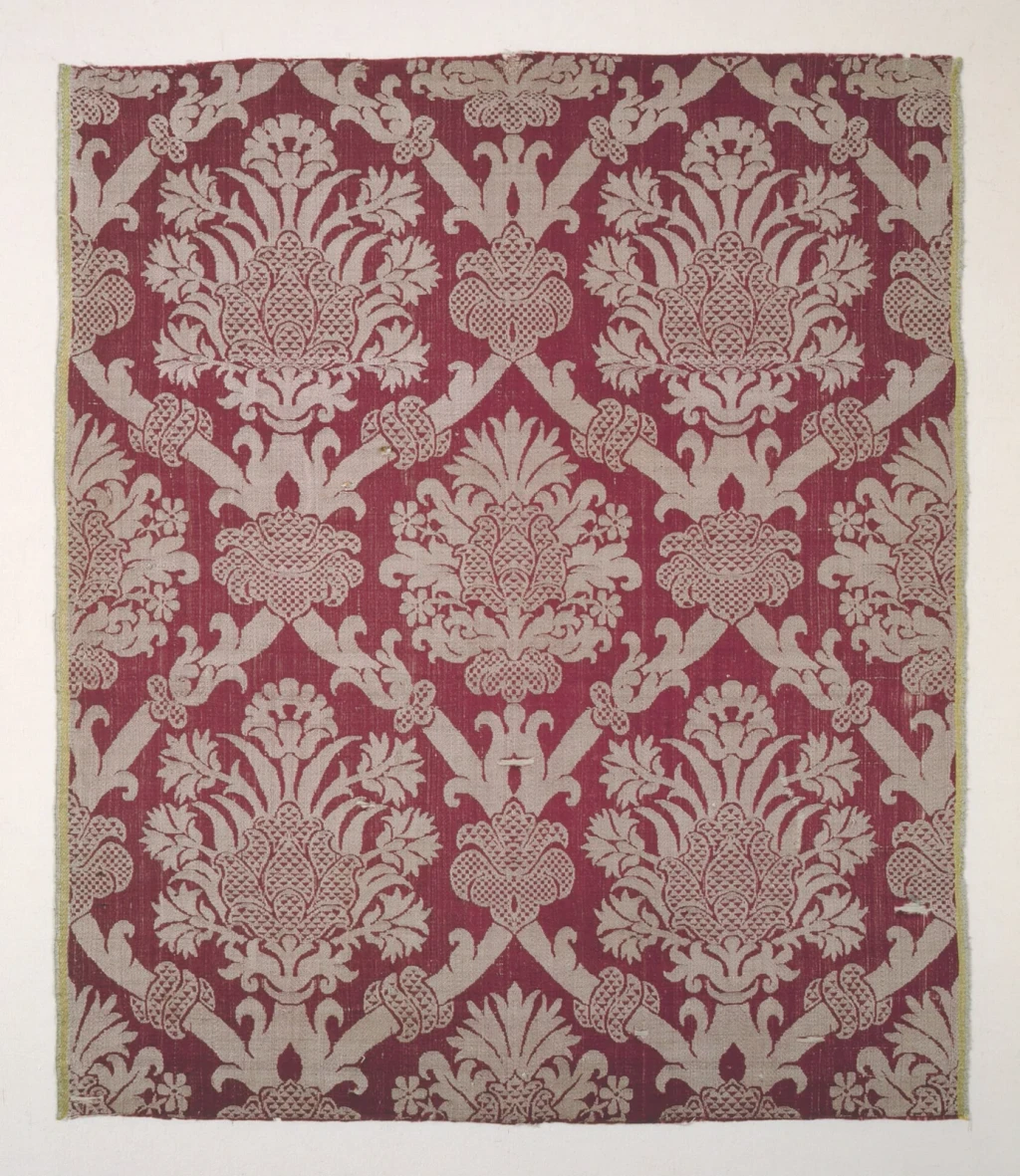
16th century
Silk and linen, satin damask weave · Italy
Gift of Martin A. Ryerson through the Antiquarian Society
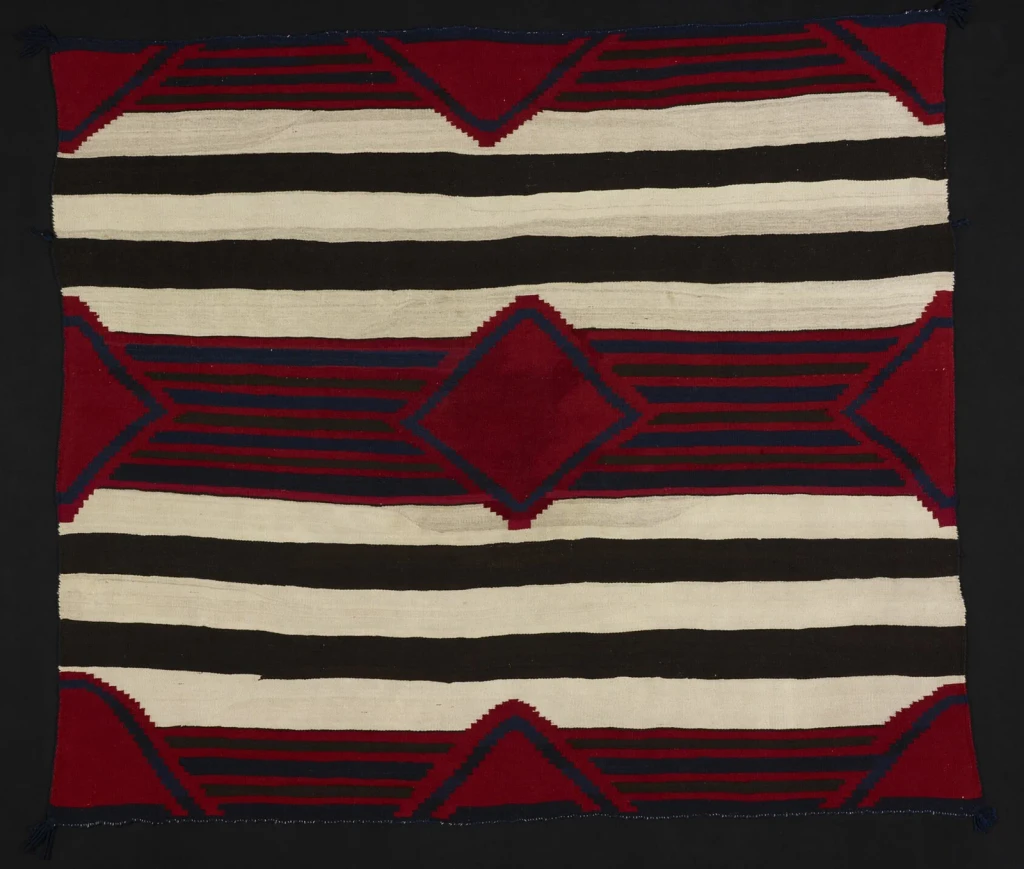
Navajo (Diné), c. 1860/65
Wool, single interlocking tapestry weave; twined edges; corner tassels · Navajo Nation, Arizona, New Mexico, & Utah
Robert Allerton Endowment
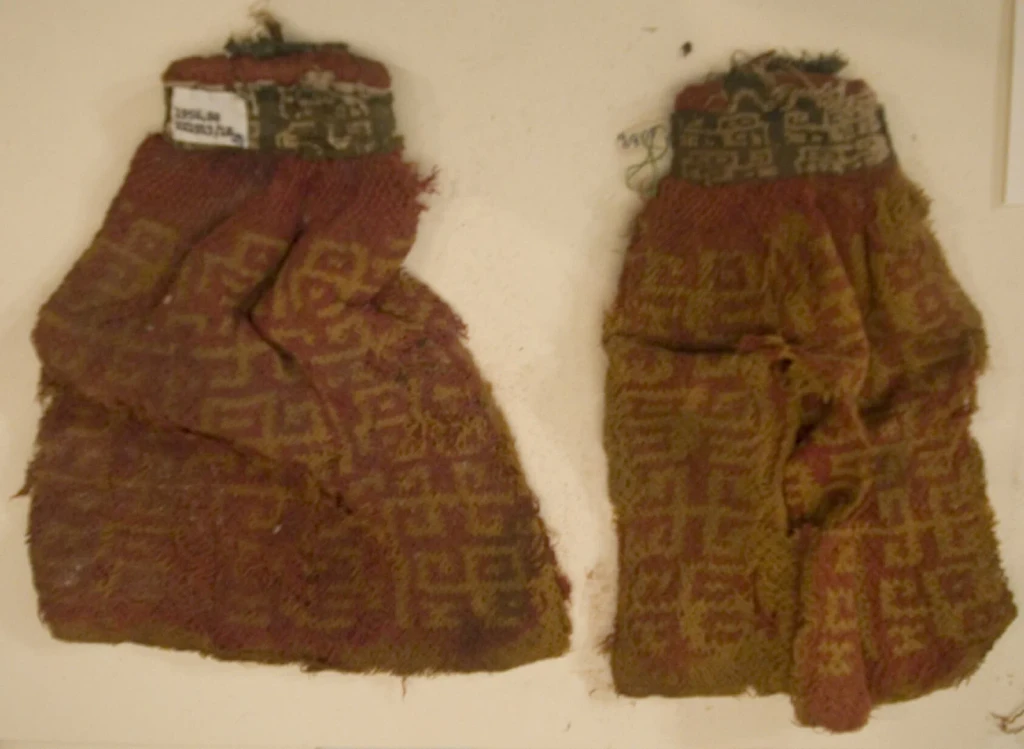
Nasca, 500-900
Peru
Purchased with funds provided by Mrs. Edwin A. Seipp
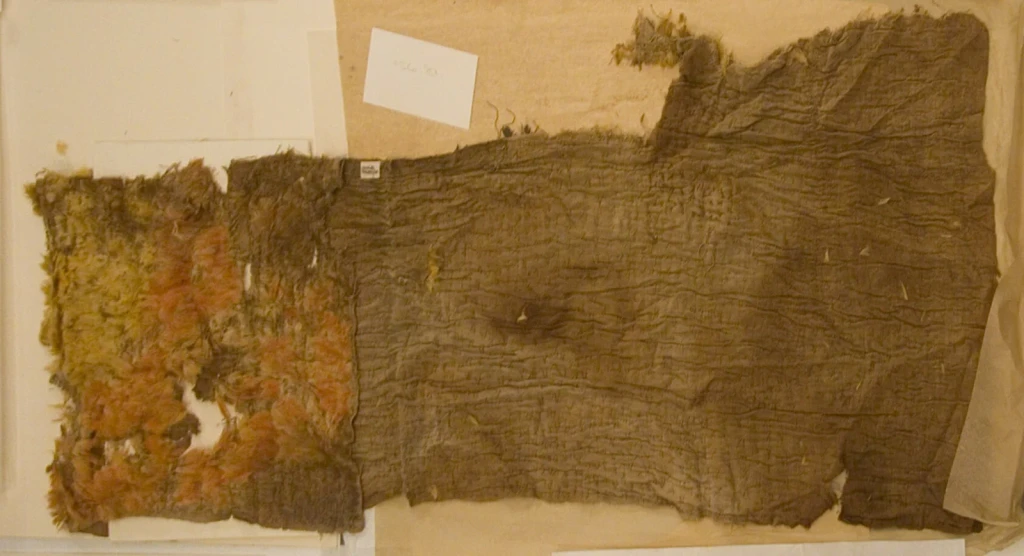
Peru
Purchased with funds provided by Mrs. Edwin A. Seipp
