3D Gallery
The Compass Needle That Opened the Ocean
Enter gallery
The Compass Needle That Opened the Ocean is a 3D virtual gallery on MyGallery3D, a walkable online exhibition of 13 works. Step inside and explore it in your browser: no app, no headset.
Welcome to a 3D virtual gallery you can walk through in your browser, tracing how a magnetized needle changed the shape of the known world.
The magnetic compass was first built in Han dynasty China, not to navigate but to practice divination. A lodestone ladle on a bronze plate, spinning to point south. It took a thousand years before anyone thought to carry it to sea. By 1088, Song dynasty sailors were using iron needles struck with lodestone to cross open water. Within two centuries, that small pivot had opened every ocean on Earth.
The compass joined ancient methods of navigation based on sightings of the sun and stars. Its use for navigation in the Indian Ocean was first mentioned in 1232. In Europe, the first recorded use was around 1190. Arab traders adopted it. Portuguese and Spanish voyages that defined the Age of Discovery depended on it, opening maritime routes to India by 1498 and crossing the Atlantic from 1492.
A compass points to magnetic north, not true north. The angle between them, called magnetic declination, shifts with location and over time. Near the magnetic poles the compass becomes useless, drifting without settling. Iron on a ship's hull, electrical engines, and ore deposits all distort the reading. Mariners must add or subtract local variation and deviation to convert a compass bearing into a true one.
Around the 2nd century BC, Chinese geomancers shaped lodestone into a south-pointing spoon placed on a smooth bronze plate for divination. By 1088, Shen Kuo described iron needles magnetized by striking them with lodestone. Shen Kuo was also the first to accurately describe magnetic declination, the difference between true north and magnetic north. Dry compasses appeared around 1300 in Medieval Europe.
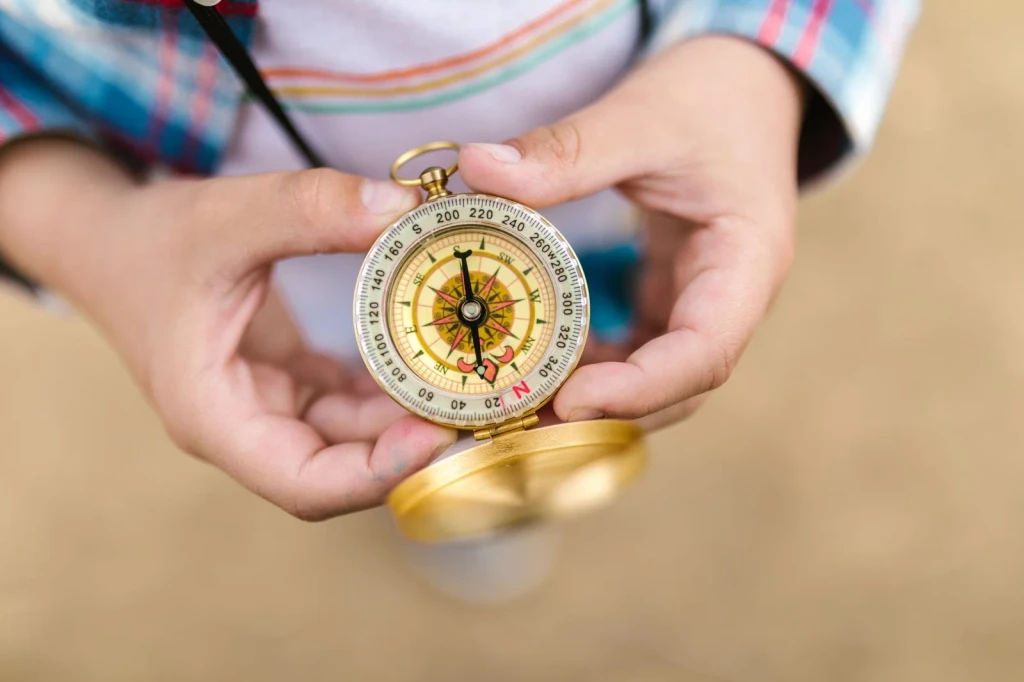
A detailed view of hands holding a vintage compass. The image suggests the personal act of exploration and the guidance a compass provides to those who seek direction.
Photograph by RDNE Stock project, via Pexels.
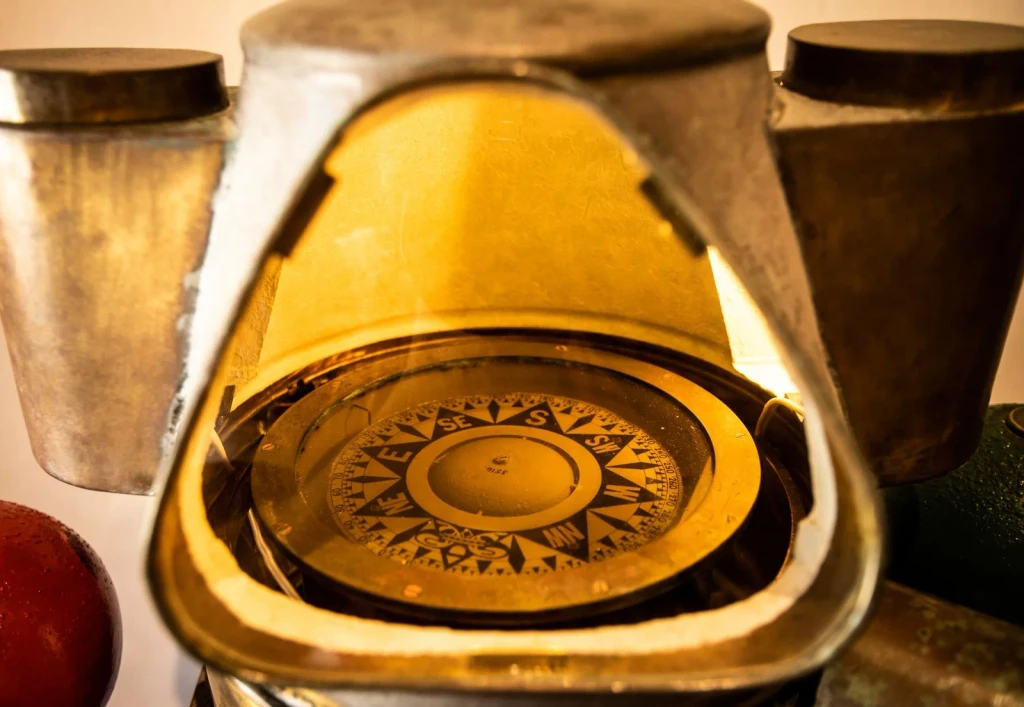
Close examination reveals the intricate craft of an antique brass compass. The needle inside represents centuries of navigation knowledge.
Photograph by alexandre saraiva carniato, via Pexels.
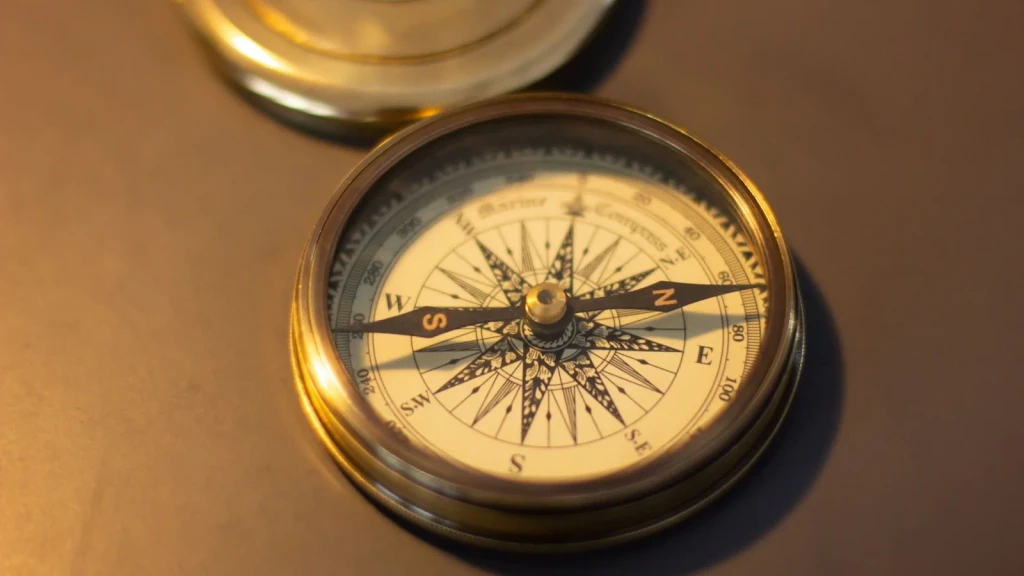
A vintage brass compass photographed in detail. Its nautical design and retro charm evoke the instruments that once opened trade routes and connected distant shores.
Photograph by Jaiju Jacob, via Pexels.
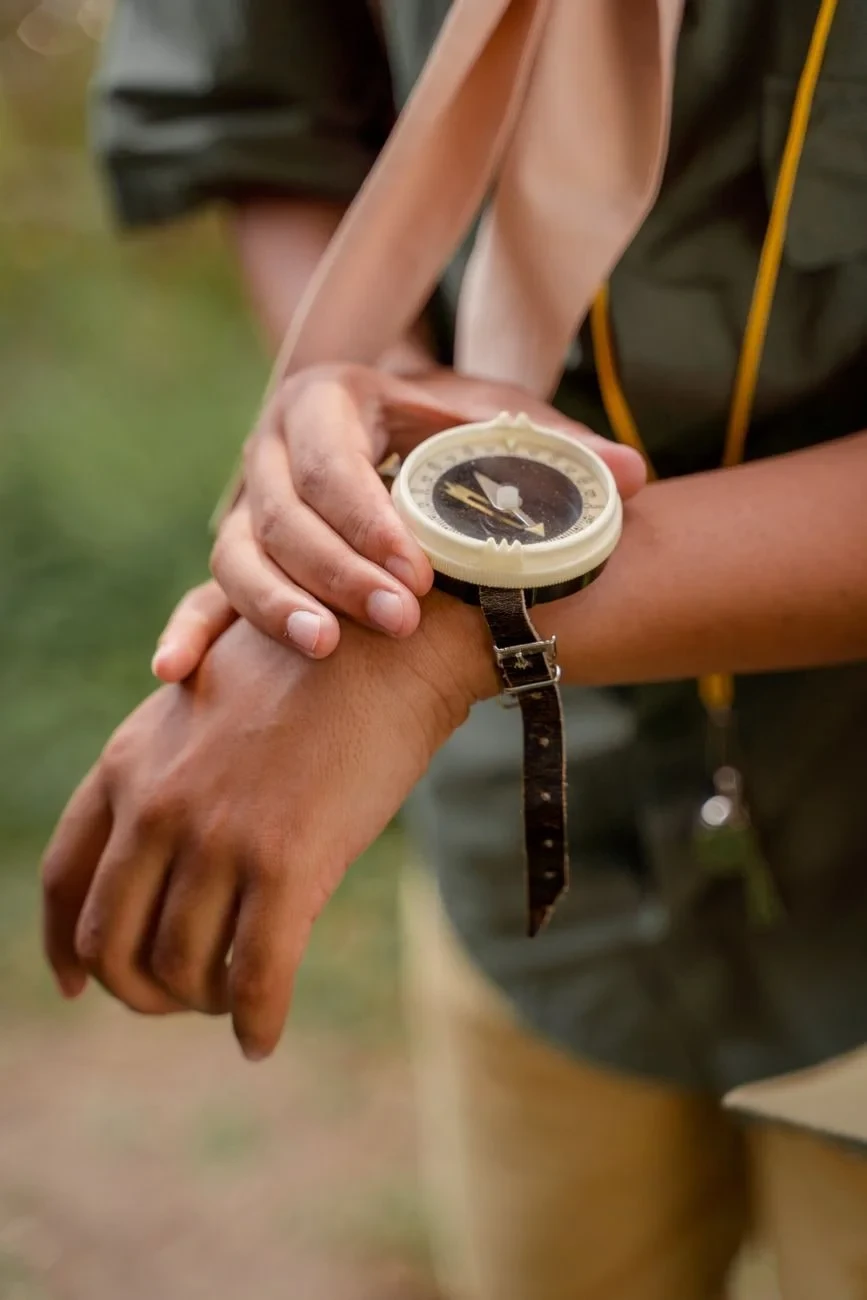
A close-up view of hands holding a compass. The intimate framing emphasizes how navigation begins with a tool held close, a first step toward exploration.
Photograph by cottonbro studio, via Pexels.
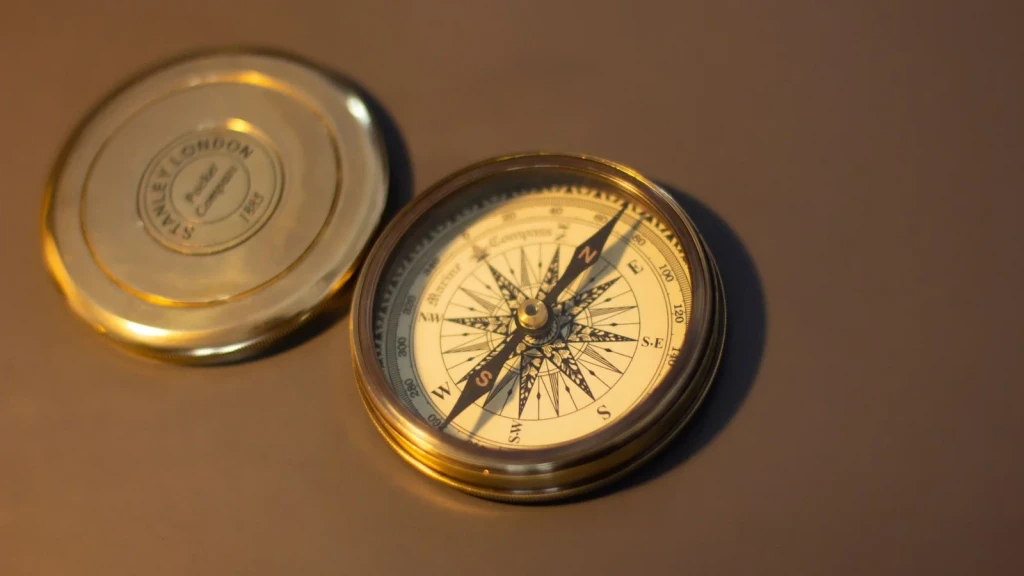
A vintage compass rests on a warm brown surface. The close study of this instrument recalls the compass needle that made ocean navigation possible.
Photograph by Jaiju Jacob, via Pexels.
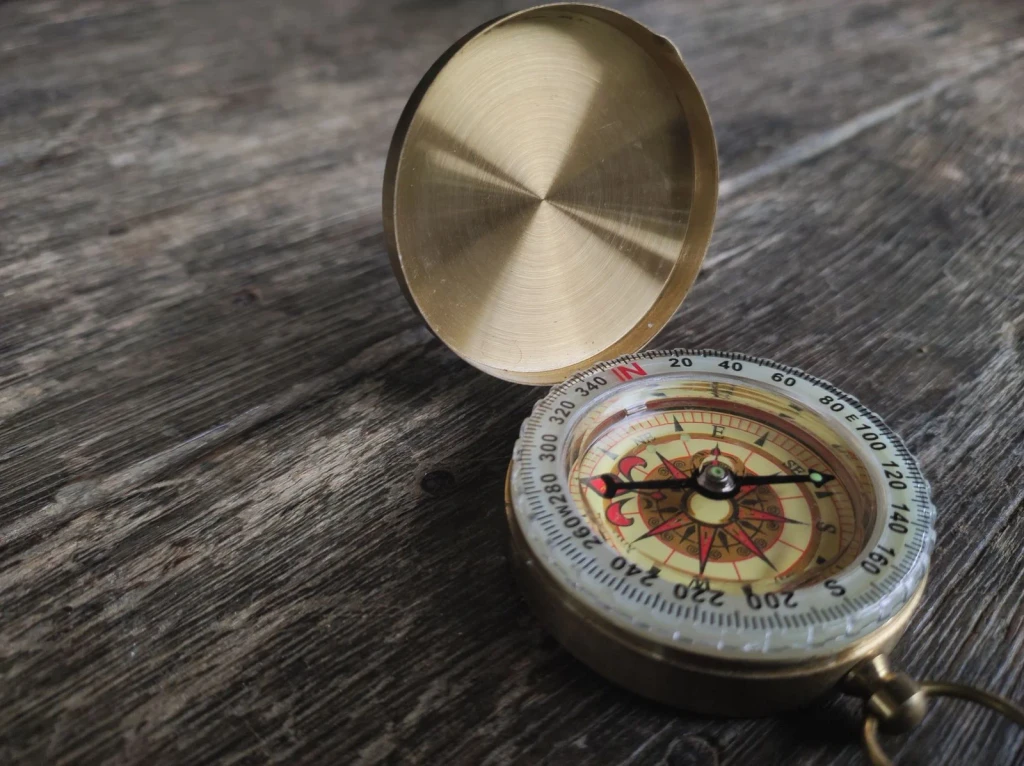
Brass meets texture. This close view of a compass on wood speaks to the solid ground from which exploration once departed.
Photograph by Ever Louie Pogosa, via Pexels.
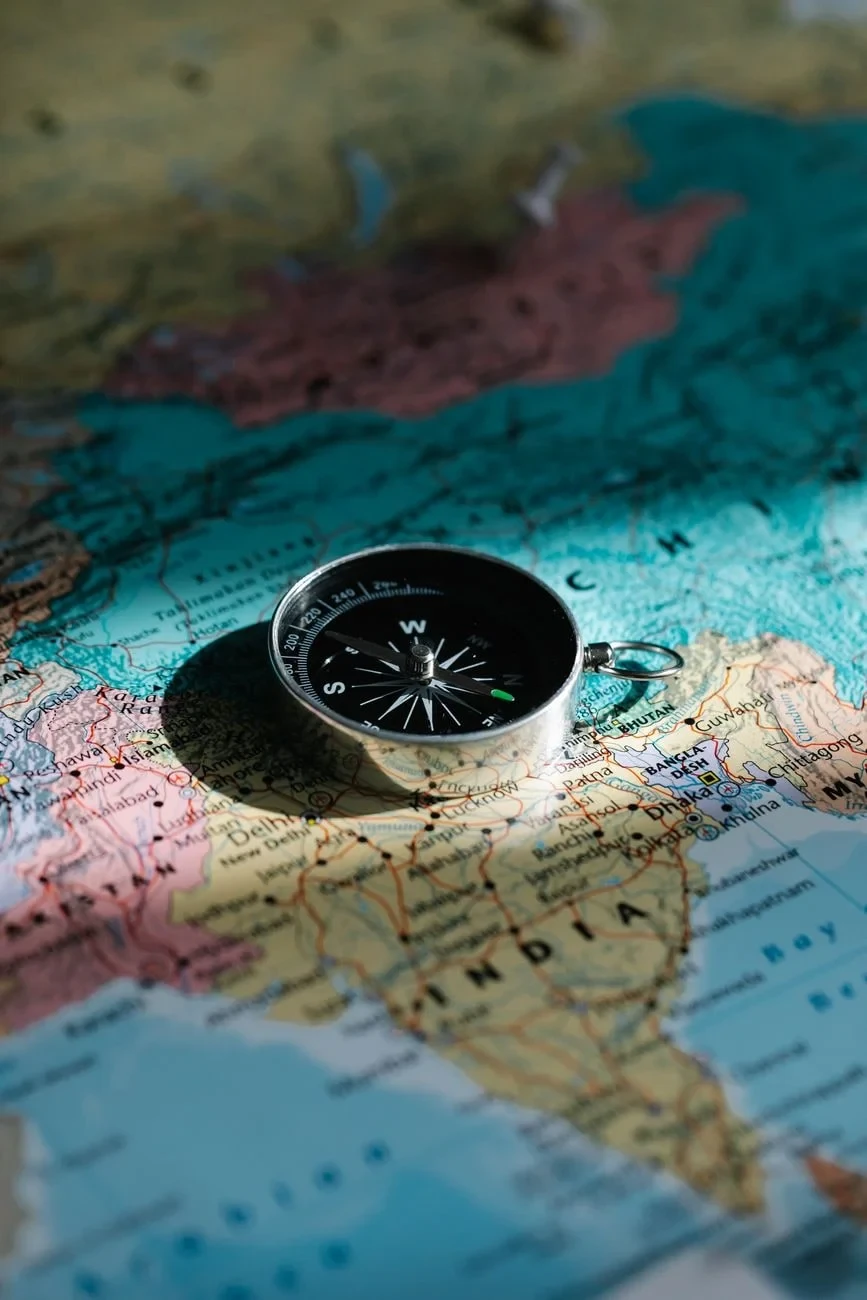
A compass rests on a map of India. The pairing suggests journeys undertaken and destinations reached through navigation.
Photograph by Lara Jameson, via Pexels.
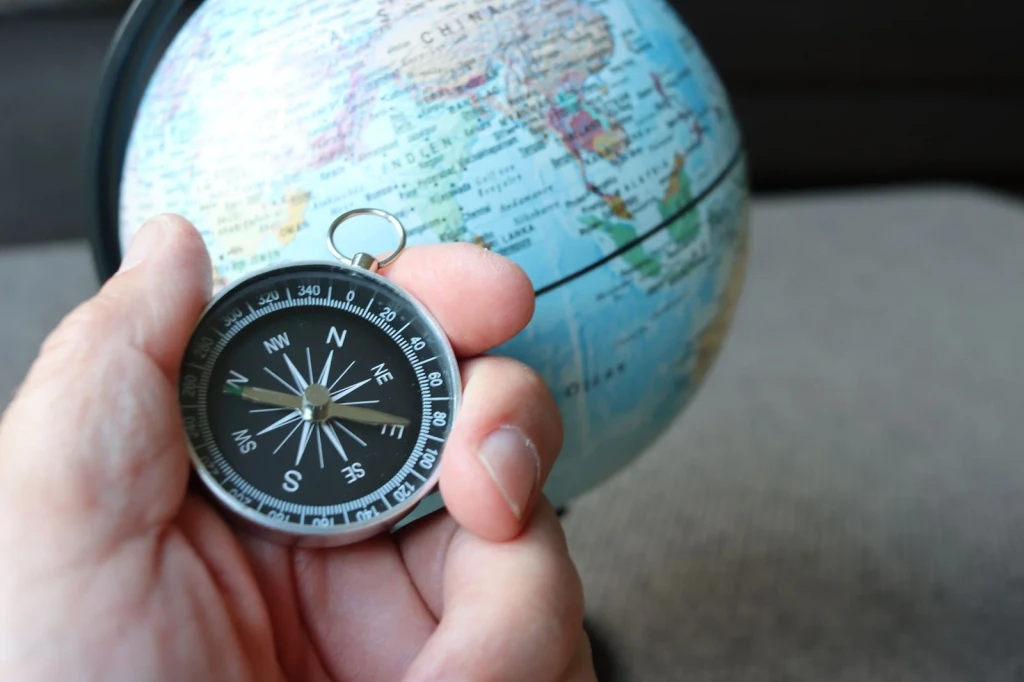
A hand holds a compass in front of a globe. The pairing speaks to the relationship between instrument and world. navigation and the desire to understand what lies beyond.
Photograph by Joachim Schnürle, via Pexels.
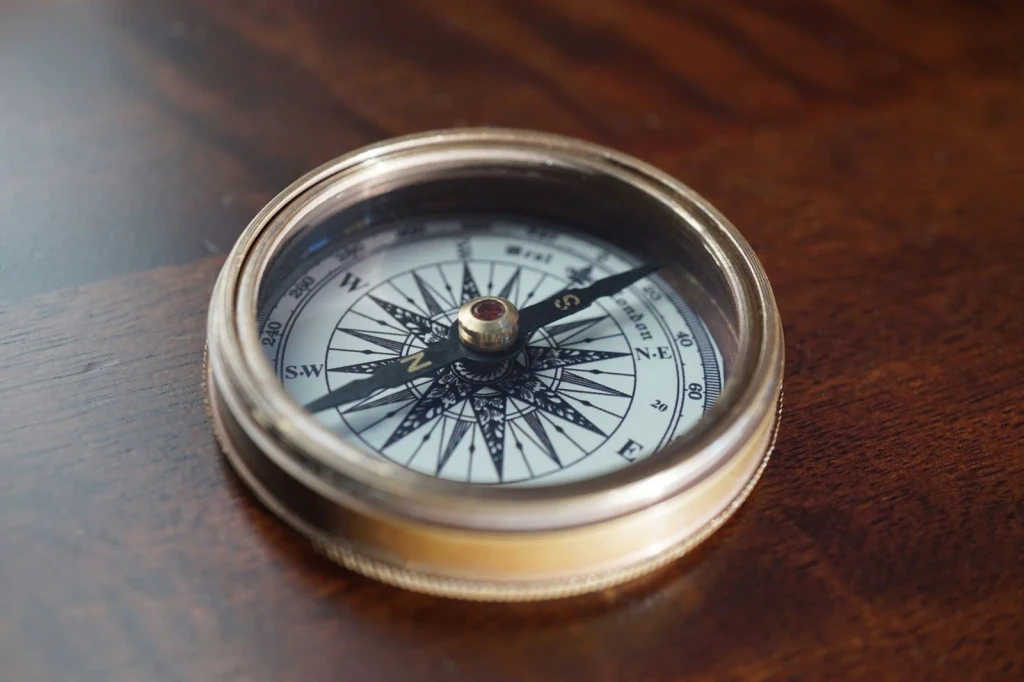
A vintage compass rests on a dark wooden surface. The warm, tactile setting suggests the practical, everyday role of the instrument in guiding journeys across water.
Photograph by Nancy Zjaba, via Pexels.
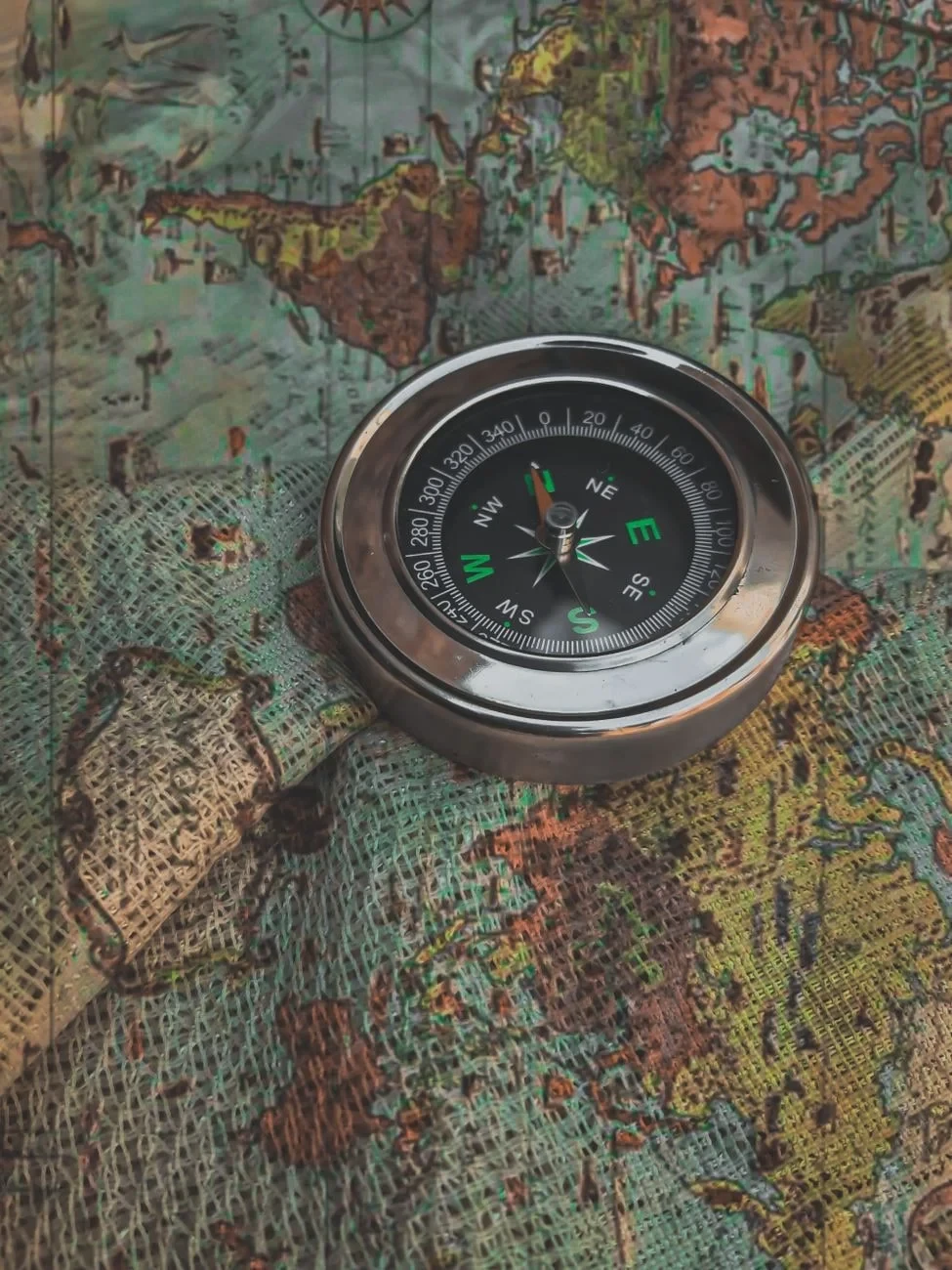
A compass rests on a vintage world map, its presence evoking the tools that made ocean exploration possible.
Photograph by Ishaan Aggarwal, via Pexels.
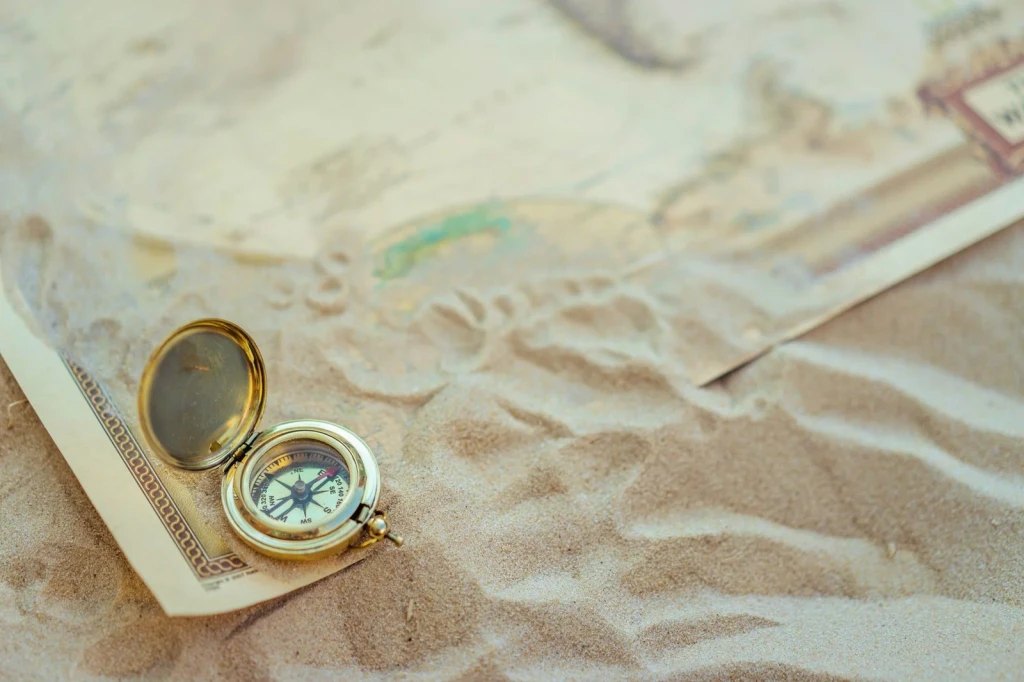
Compass and map meet on sand. Together they suggest the tools that once opened routes across unknown waters.
Photograph by Atlantic Ambience, via Pexels.
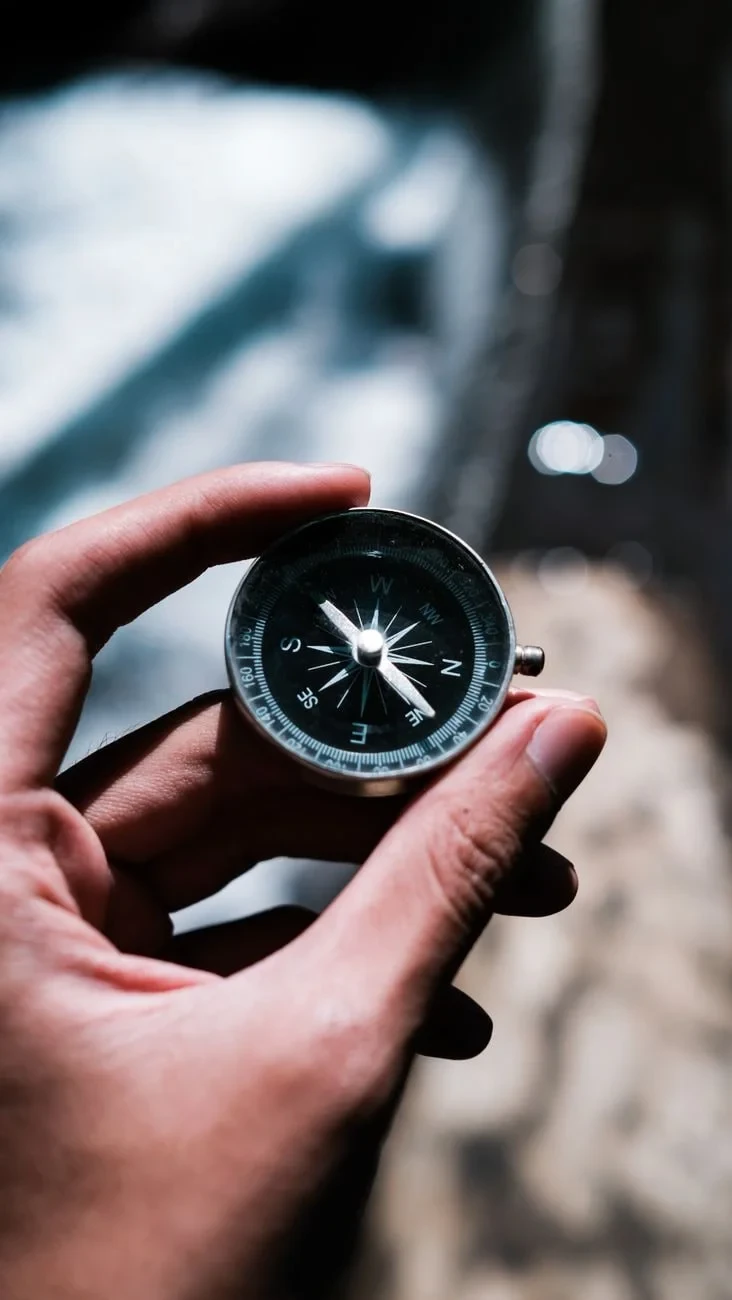
A hand holds a compass outdoors. This image captures the human act of finding direction in unfamiliar territory.
Photograph by Mochammad Algi, via Pexels.
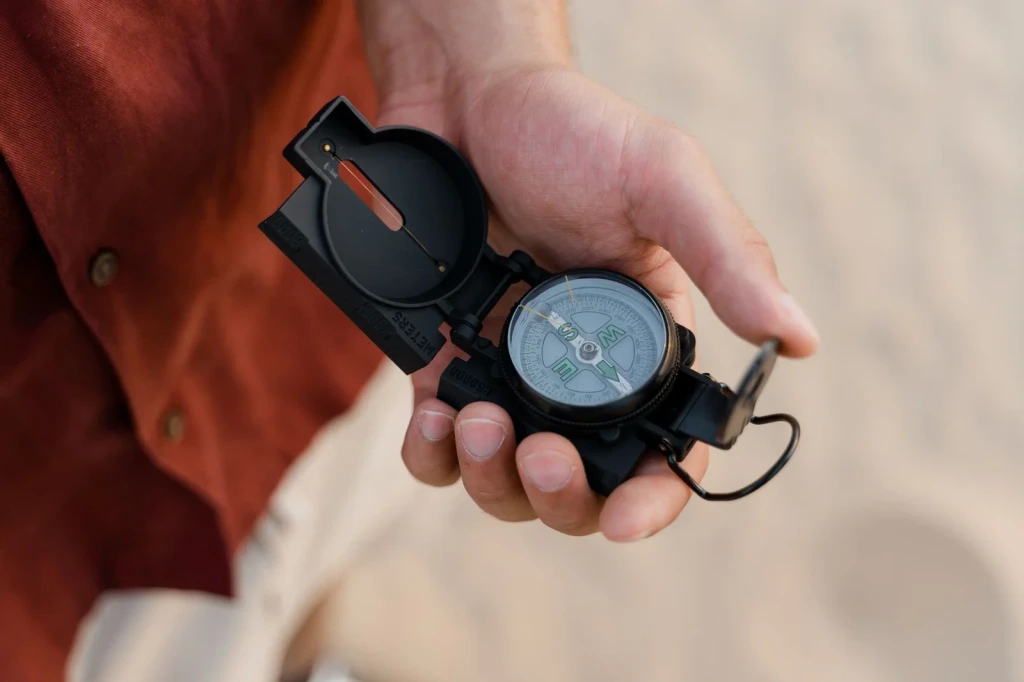
A person holds a compass in their hand. The image embodies the simple, powerful act of claiming direction. of choosing a course into the unknown.
Photograph by MART PRODUCTION, via Pexels.
