3D Gallery
Deep Field
Enter gallery
Deep Field is a 3D virtual gallery on MyGallery3D, a walkable online exhibition of 16 works. Step inside and explore it in your browser: no app, no headset.
Welcome to a 3D virtual gallery you can walk through in your browser, exploring humanity's deepest views into the cosmos. The Hubble Deep Field, Ultra-Deep Field, and eXtreme Deep Field are images of nearly empty-looking patches of sky that revealed thousands of galaxies stretching back billions of years.
The original Deep Field covered one 24-millionth of the sky, an area equivalent to a tennis ball at 100 metres. In that tiny window: roughly 3,000 galaxies, some seen as they were 12 billion years ago.
These images transformed cosmology. The Deep Field showed that galaxy collisions and mergers were far more common in the young universe. Star formation peaked 8 to 10 billion years ago and has since dropped tenfold. Galaxies at high redshifts appeared smaller and less symmetrical than nearby ones. The scarcity of faint red dwarf stars in our galaxy's halo helped rule out one leading theory of dark matter.
In 2003 to 2004, Hubble aimed at a patch in the constellation Fornax for nearly 11 days of total exposure across 800 frames, producing the Ultra-Deep Field. It captured light from galaxies that existed roughly 13 billion years ago, only 400 to 800 million years after the Big Bang. An estimated 10,000 galaxies fill an area smaller than a 1 mm square of paper held at arm's length.
In December 1995, the Hubble Space Telescope stared at a single speck of sky in Ursa Major for ten consecutive days, collecting 342 exposures through four filters. The target was chosen to avoid bright stars, infrared dust, and radio sources. Almost every object recorded was a galaxy. Fewer than twenty foreground stars appeared. The resulting image proved that even the blankest sky is dense with distant worlds.
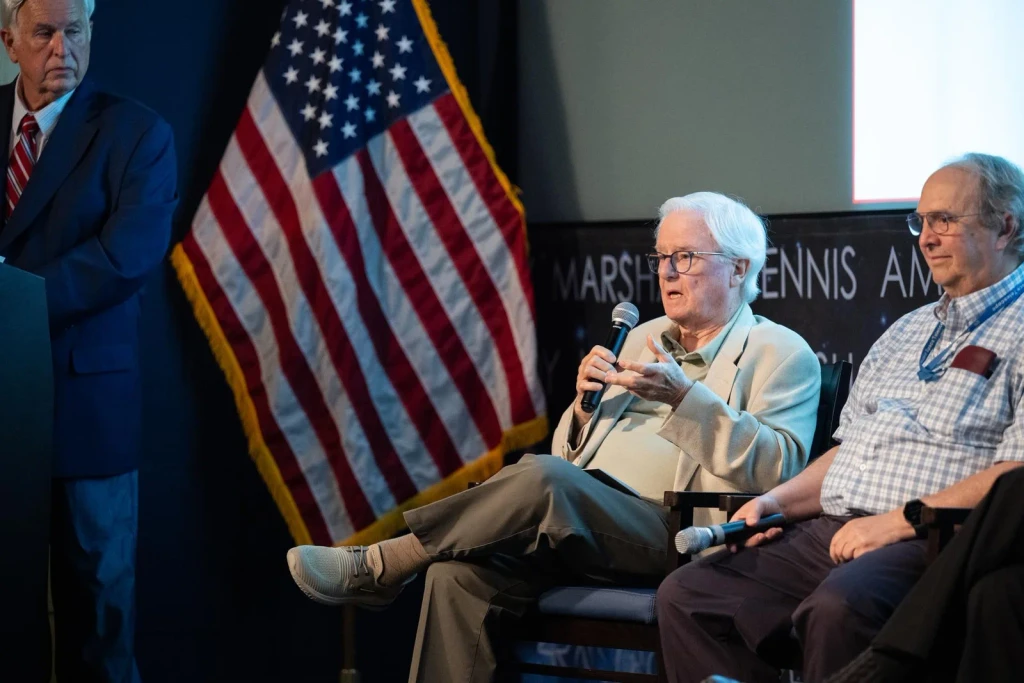
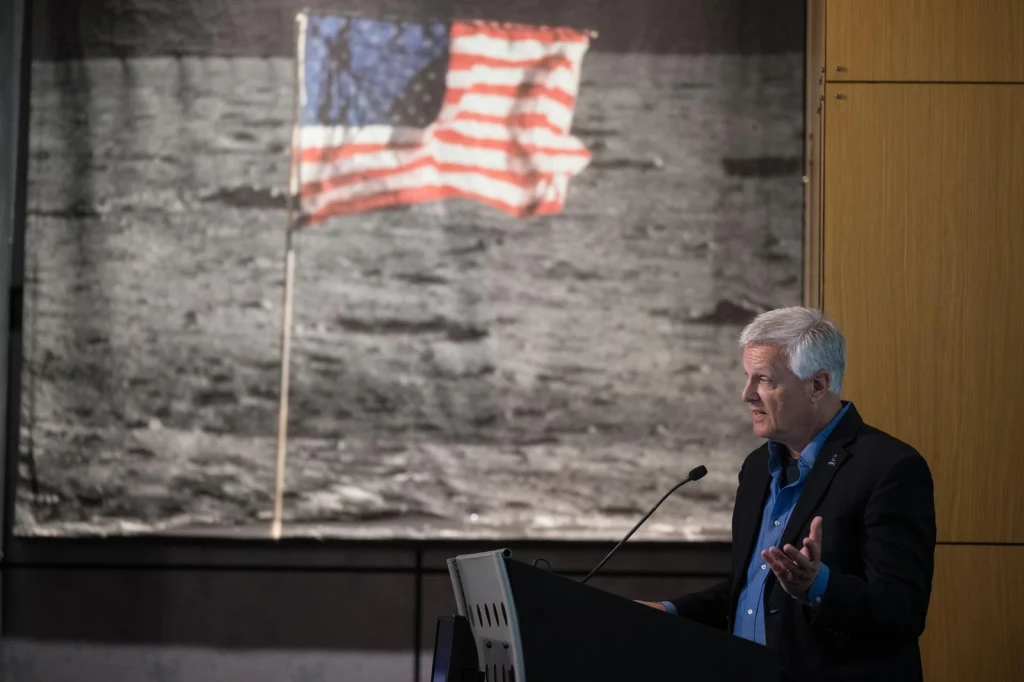
Former NASA Senior Project Scientist Dave Leckrone speaks about the history of the Hubble Space Telescope during an event titled "Beyond the Deep Field: Hubble's Legacy and the Future of Cosmic Observation," Thursday, June 4, 2026, at the Mary W. Jackson NASA Headquarters building in Washington.
NASA · HQ · 2026-06-04 · Hubble Space Telescope on Wikipedia
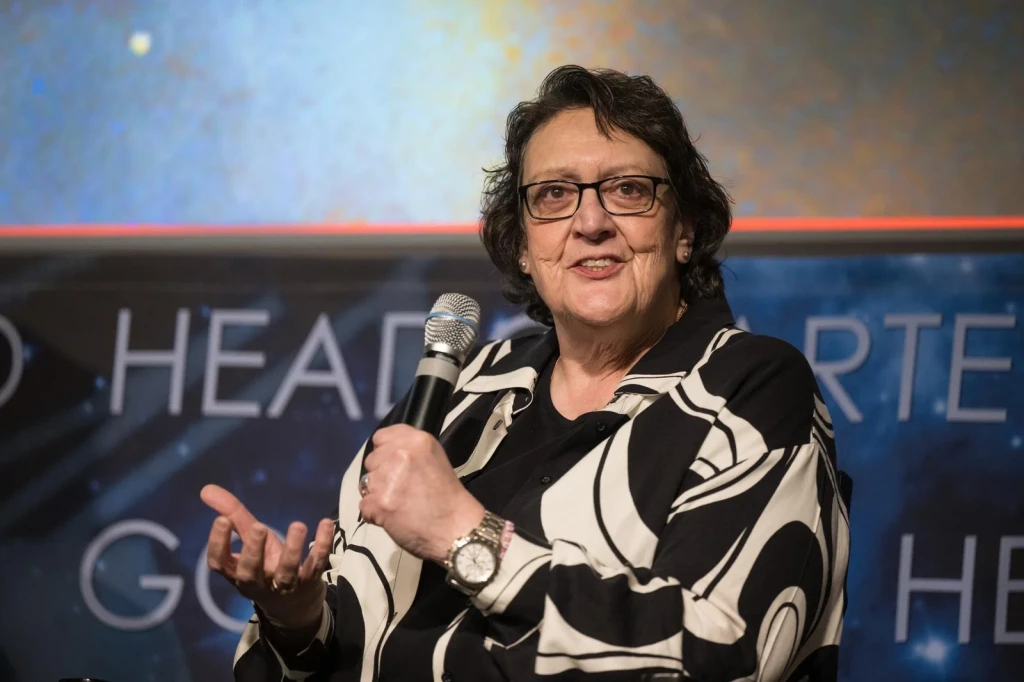
Olivia Lupie, Hubble Space Telescope instrument systems manager at NASA's Goddard Space Flight Center, speaks about the history of the Hubble Space Telescope's partnerships during an event titled "Beyond the Deep Field: Hubble's Legacy and the Future of Cosmic Observation," Friday, June 5, 2026, at the Mary W. Jackson NASA Headquarters building in Washington.
NASA · HQ · 2026-06-05 · Hubble Space Telescope on Wikipedia
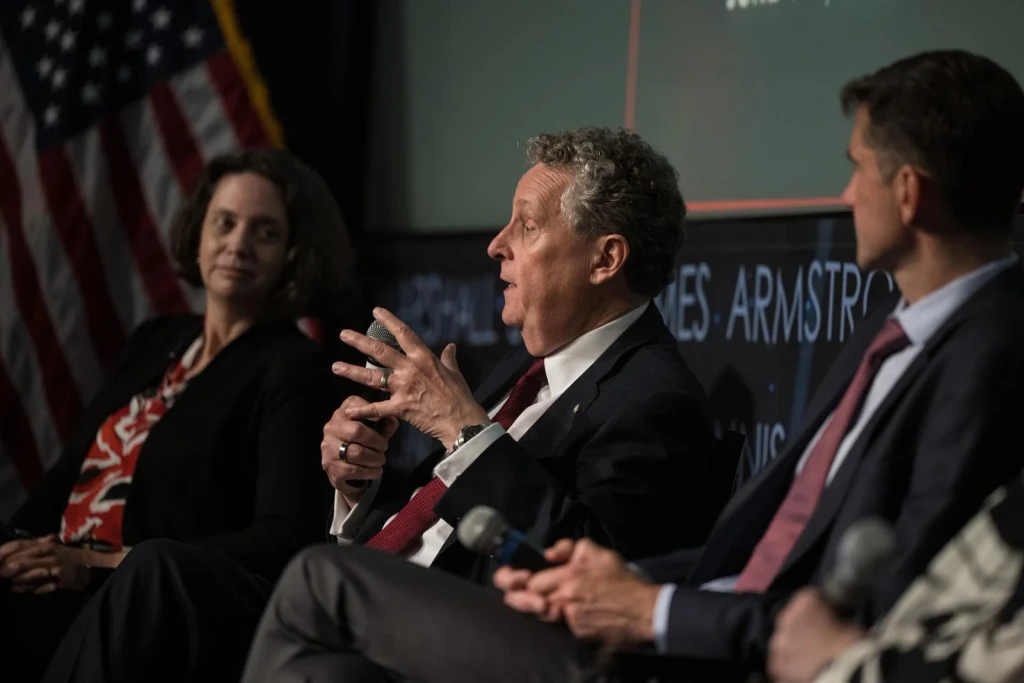
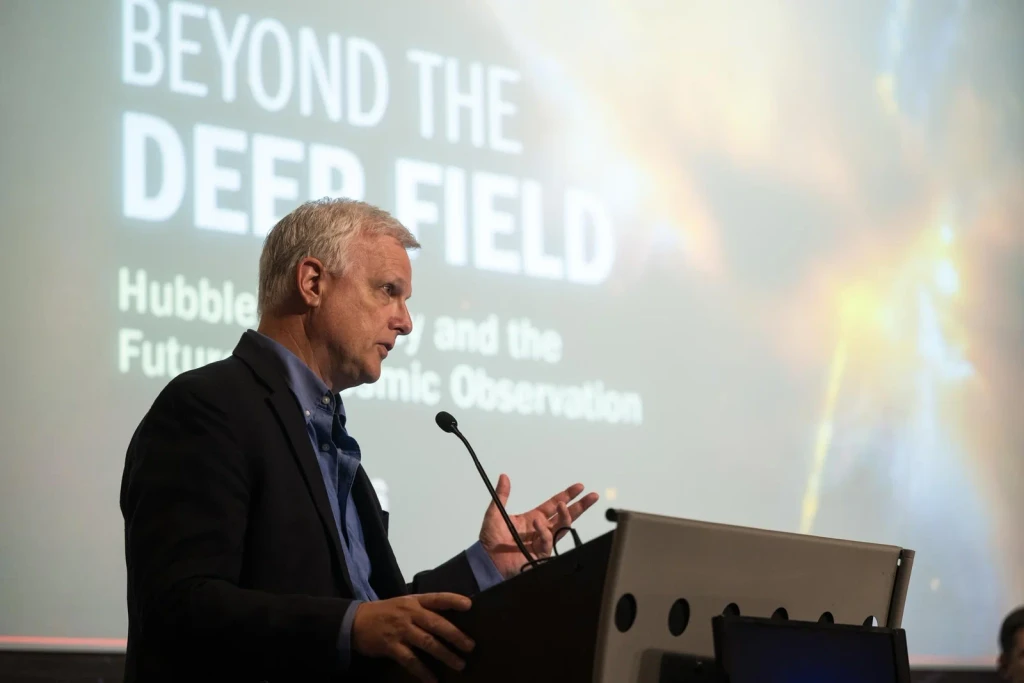
Matt Mountain, president of AURA, speaks about the history of the Hubble Space Telescope's partnerships during an event titled "Beyond the Deep Field: Hubble's Legacy and the Future of Cosmic Observation," Friday, June 5, 2026, at the Mary W. Jackson NASA Headquarters building in Washington.
NASA · HQ · 2026-06-05 · Hubble Space Telescope on Wikipedia
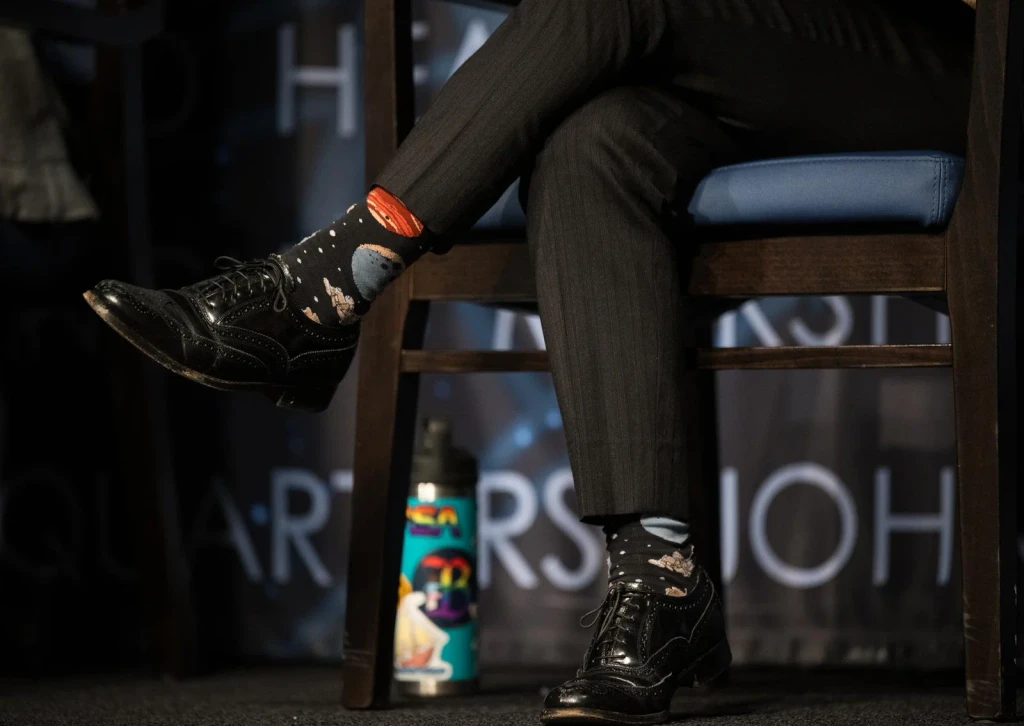
Senior Project Scientist for the James Webb Space Telescope, Jane Rigby's socks are seen during an event titled "Beyond the Deep Field: Hubble's Legacy and the Future of Cosmic Observation," Friday, June 5, 2026, at the Mary W. Jackson NASA Headquarters building in Washington.
NASA · HQ · 2026-06-05 · James Webb Space Telescope on Wikipedia

Matt Mountain, president of AURA, speaks about the history of the Hubble Space Telescope's partnerships during an event titled "Beyond the Deep Field: Hubble's Legacy and the Future of Cosmic Observation," Friday, June 5, 2026, at the Mary W. Jackson NASA Headquarters building in Washington.
NASA · HQ · 2026-06-05 · Hubble Space Telescope on Wikipedia

An audience member asks a question at the conclusion of a panel discussion about the contributions of the Hubble Space Telescope to future astronomy missions during an event titled "Beyond the Deep Field: Hubble's Legacy and the Future of Cosmic Observation," Friday, June 5, 2026, at the Mary W. Jackson NASA Headquarters building in Washington.
NASA · HQ · 2026-06-05 · Hubble Space Telescope on Wikipedia
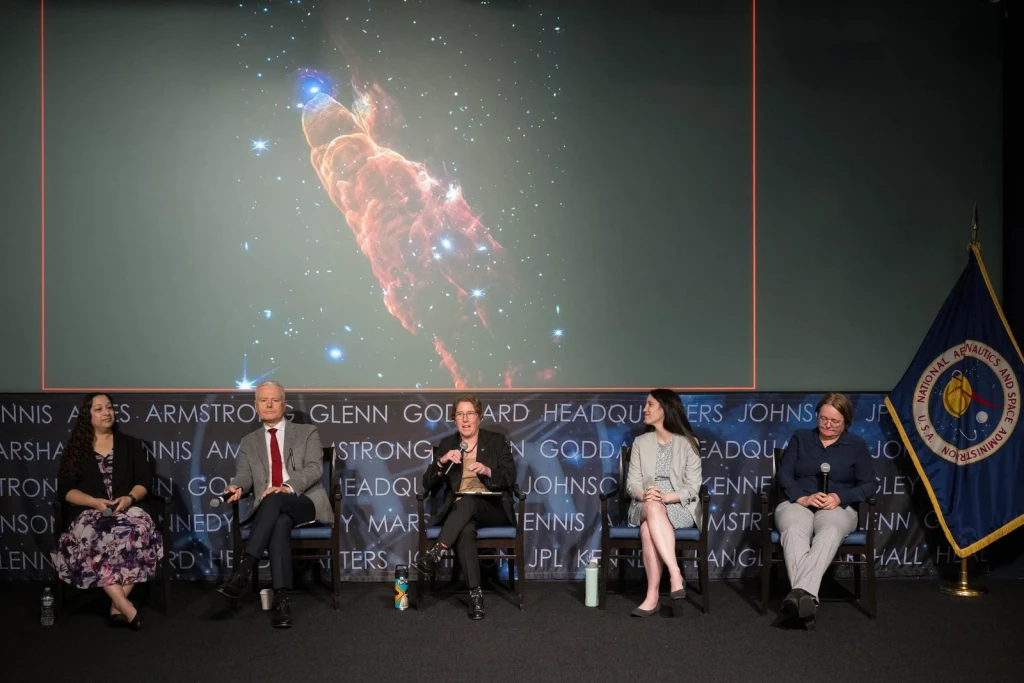
Jane Rigby, Senior Project Scientist for the James Webb Space Telescope, speaks on a panel about the contributions of the Hubble Space Telescope to future astronomy missions during an event titled "Beyond the Deep Field: Hubble's Legacy and the Future of Cosmic Observation," Friday, June 5, 2026, at the Mary W. Jackson NASA Headquarters building in Washington.
NASA · HQ · 2026-06-05 · Hubble Space Telescope on Wikipedia
NASA's Goddard Space Flight Center deputy project manager for the Hubble Space Telescope, Jim Jeletic, moderates a panel about "Partnerships Across Hubble's History" during an event titled "Beyond the Deep Field: Hubble's Legacy and the Future of Cosmic Observation," Friday, June 5, 2026, at the Mary W. Jackson NASA Headquarters building in Washington.
NASA · HQ · 2026-06-05 · Hubble Space Telescope on Wikipedia
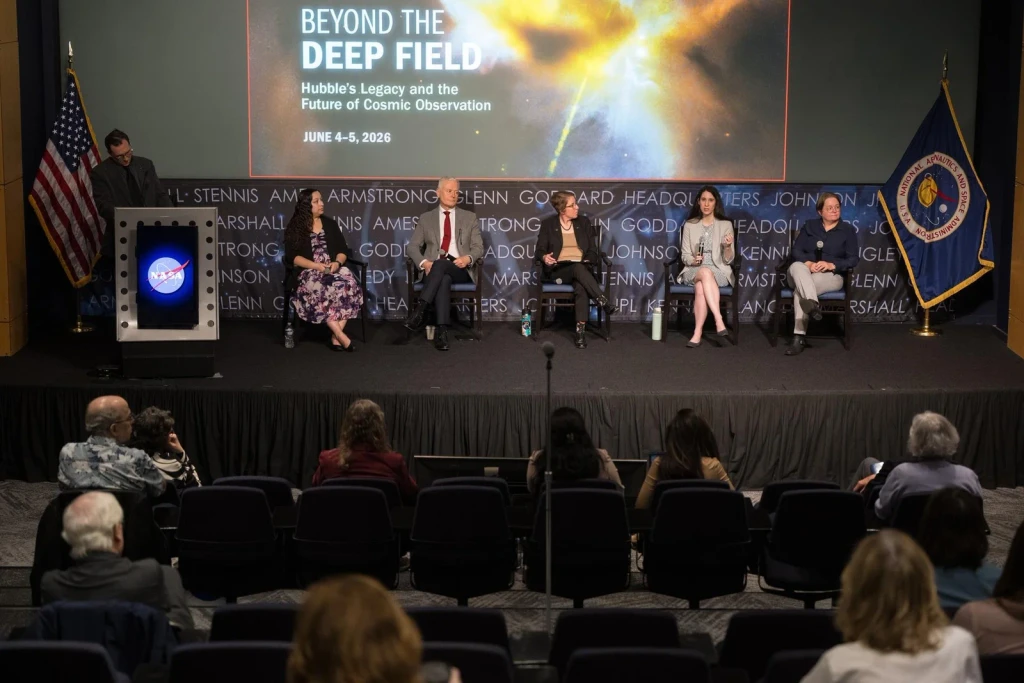
Shawn Domagal-Goldman, Astrophysics Division Director at NASA, moderates a panel discussion with Knicole Colon, Mark Clampin, Jane Rigby, Giada Arney, and Julie McEnery about the contributions of the Hubble Space Telescope to future astronomy missions during an event titled "Beyond the Deep Field: Hubble's Legacy and the Future of Cosmic Observation," Friday, June 5, 2026, at the Mary W. Jackson NASA Headquarters building in Washington.
NASA · HQ · 2026-06-05 · Hubble Space Telescope on Wikipedia
NASA's Goddard Space Flight Center deputy project manager for the Hubble Space Telescope, Jim Jeletic, moderates a panel about "Partnerships Across Hubble's History" during an event titled "Beyond the Deep Field: Hubble's Legacy and the Future of Cosmic Observation," Friday, June 5, 2026, at the Mary W. Jackson NASA Headquarters building in Washington.
NASA · HQ · 2026-06-05 · Hubble Space Telescope on Wikipedia
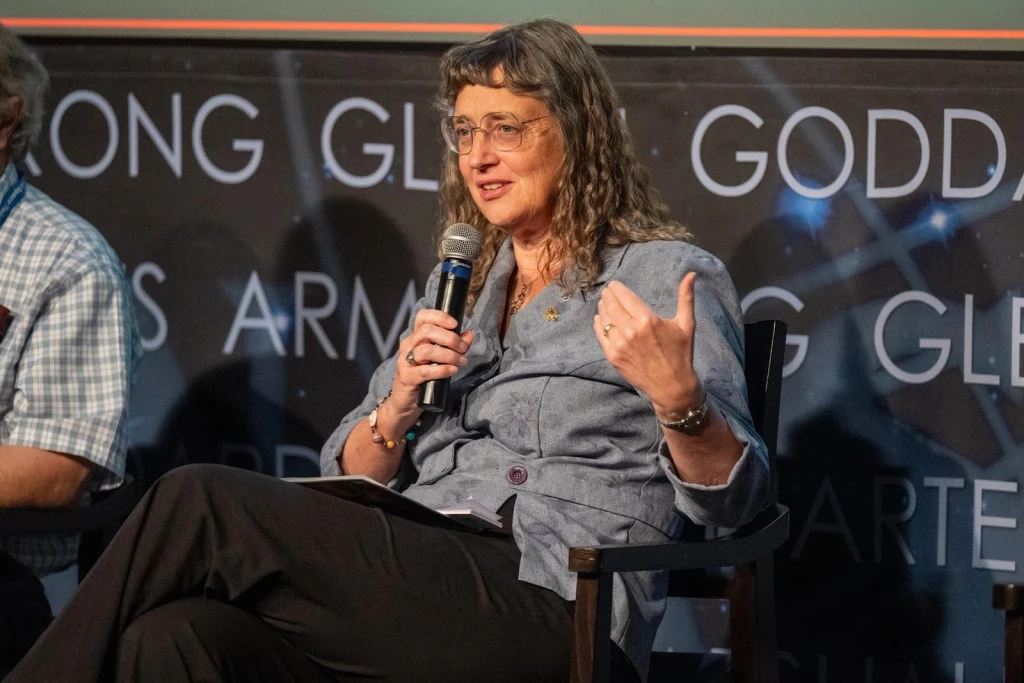
NASA Hubble Senior Project Scientist Jennifer Wiseman speaks about the history of the Hubble Space Telescope during an event titled "Beyond the Deep Field: Hubble's Legacy and the Future of Cosmic Observation," Thursday, June 4, 2026, at the Mary W. Jackson NASA Headquarters building in Washington.
NASA · HQ · 2026-06-04 · Hubble Space Telescope on Wikipedia
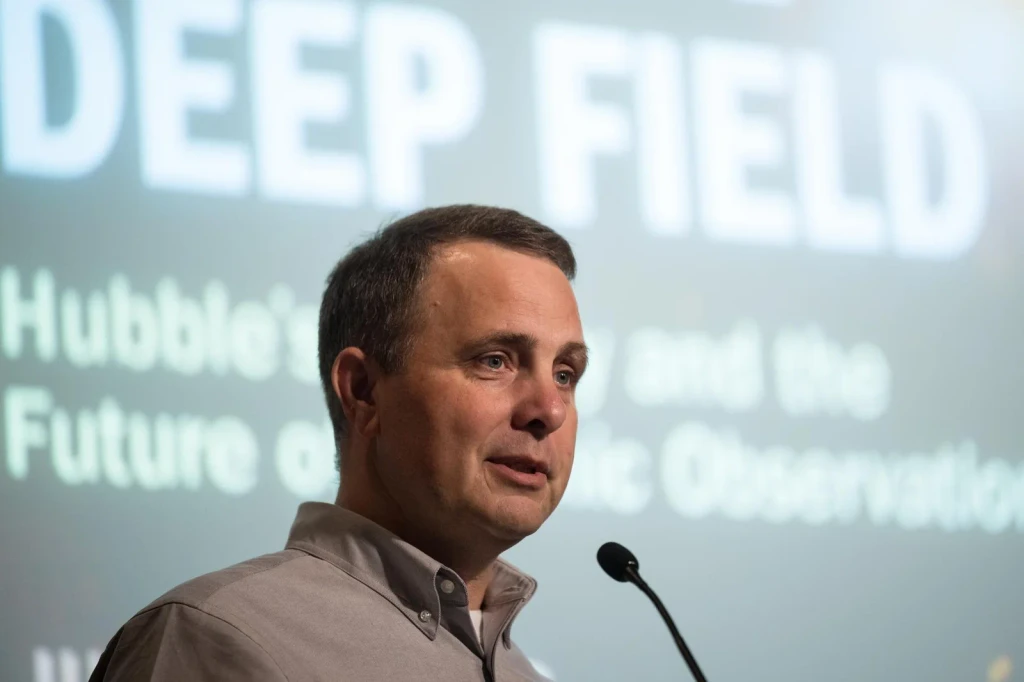
NASA Chief Historian Brian Odom introduces a panel to discuss "Partnerships Across Hubble's History" during an event titled "Beyond the Deep Field: Hubble's Legacy and the Future of Cosmic Observation," Friday, June 5, 2026, at the Mary W. Jackson NASA Headquarters building in Washington.
NASA · HQ · 2026-06-05 · Hubble Space Telescope on Wikipedia
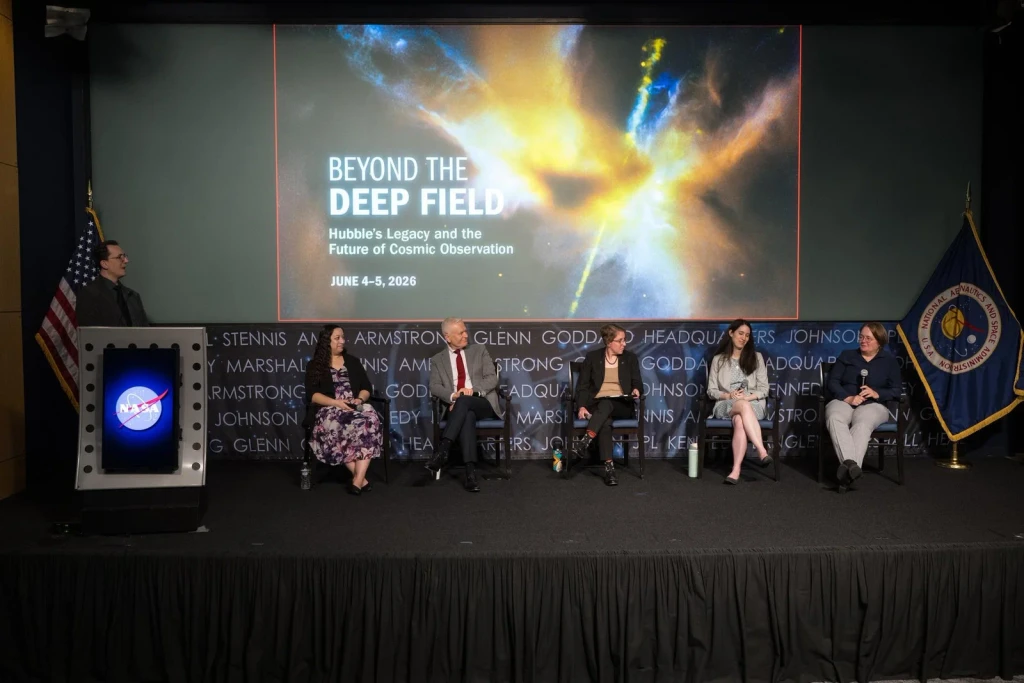
Shawn Domagal-Goldman, Astrophysics Division Director at NASA, moderates a panel discussion with Knicole Colon, Mark Clampin, Jane Rigby, Giada Arney, and Julie McEnery about the contributions of the Hubble Space Telescope to future astronomy missions during an event titled "Beyond the Deep Field: Hubble's Legacy and the Future of Cosmic Observation," Friday, June 5, 2026, at the Mary W. Jackson NASA Headquarters building in Washington.
NASA · HQ · 2026-06-05 · Hubble Space Telescope on Wikipedia
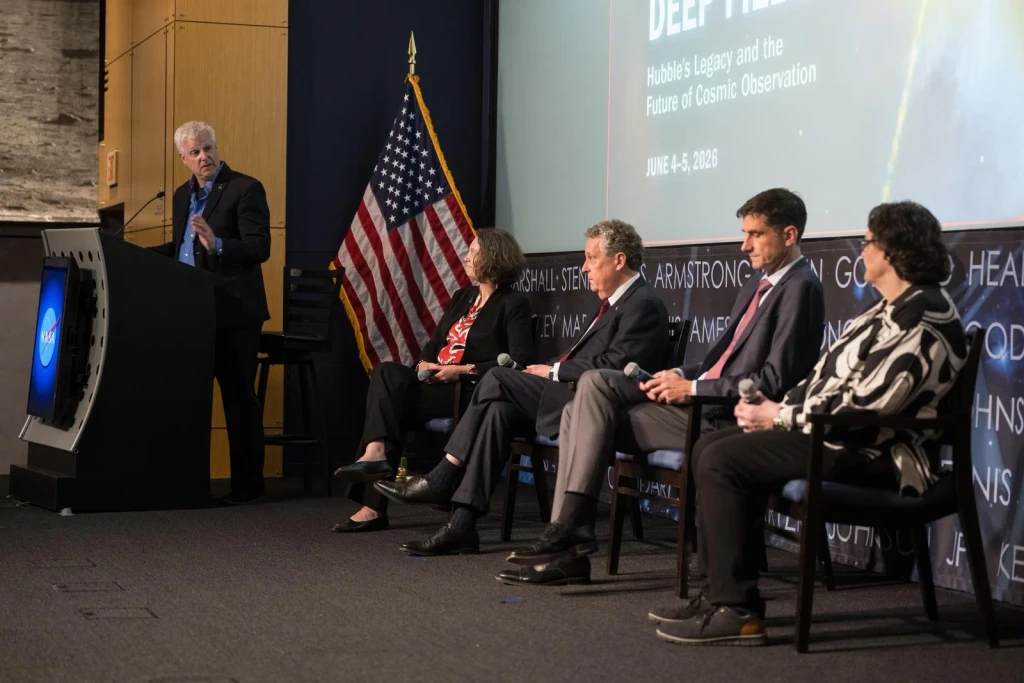
NASA's Goddard Space Flight Center deputy project manager for the Hubble Space Telescope, Jim Jeletic, moderates a panel about "Partnerships Across Hubble's History" during an event titled "Beyond the Deep Field: Hubble's Legacy and the Future of Cosmic Observation," Friday, June 5, 2026, at the Mary W. Jackson NASA Headquarters building in Washington.
NASA · HQ · 2026-06-05 · Hubble Space Telescope on Wikipedia
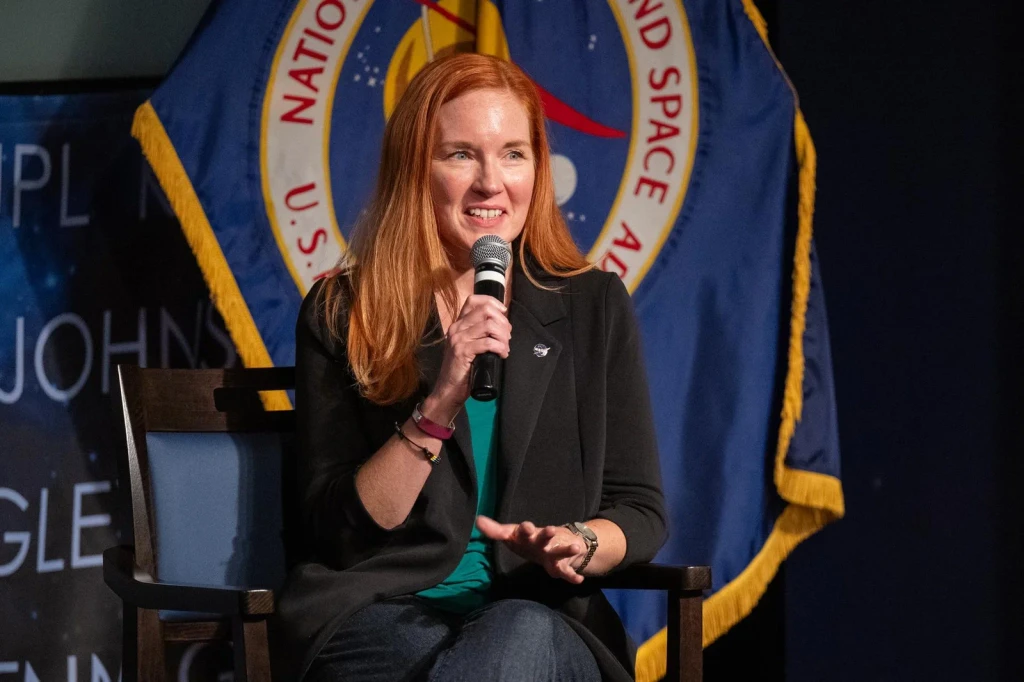
NASA Deputy Project Scientist For Communications Amber Straughn speaks about the history of the Hubble Space Telescope during an event titled "Beyond the Deep Field: Hubble's Legacy and the Future of Cosmic Observation," Thursday, June 4, 2026, at the Mary W. Jackson NASA Headquarters building in Washington.
NASA · HQ · 2026-06-04 · Hubble Space Telescope on Wikipedia
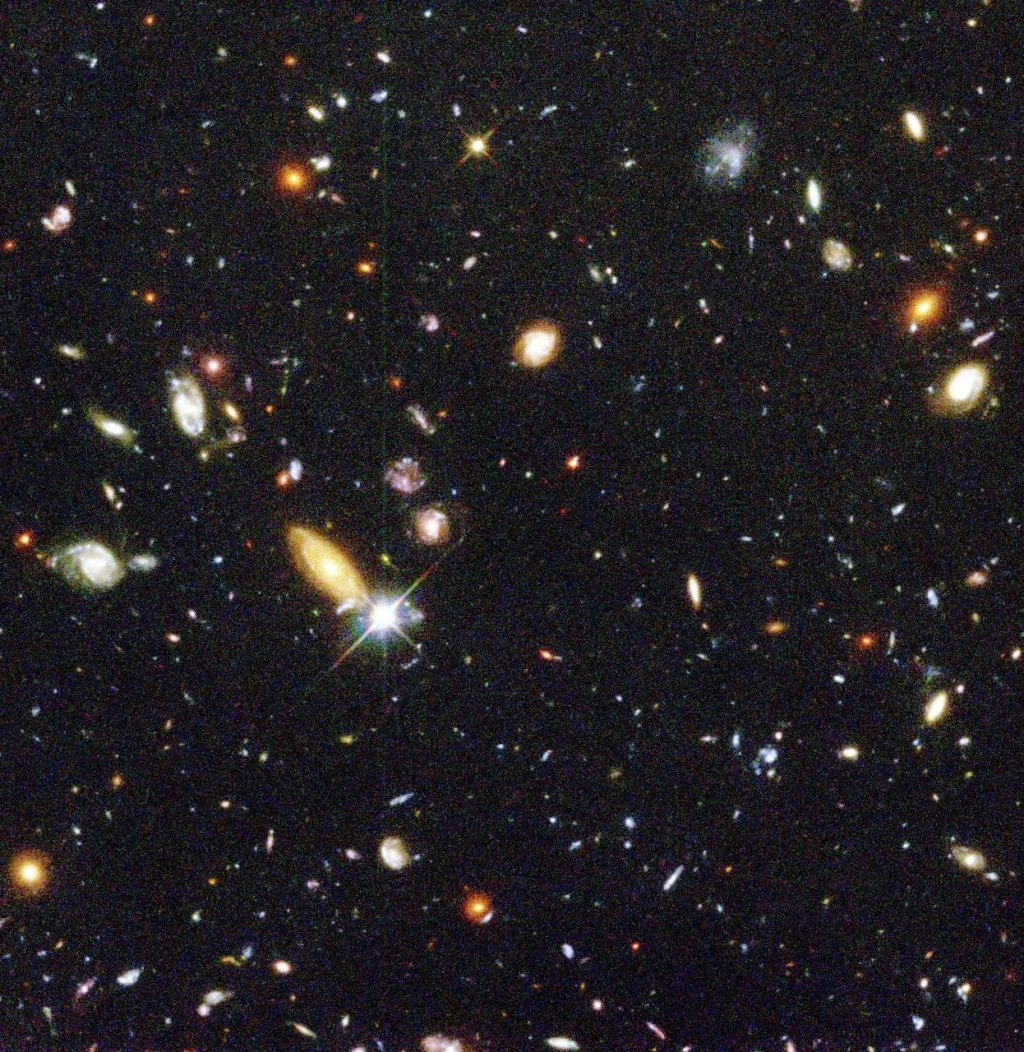
Several hundred never before seen galaxies are visible in this deepest-ever view of the universe, called the Hubble Deep Field, made with NASA Hubble Space Telescope.
NASA · STScI (Hubble) · 1996-01-15 · Hubble Deep Field on Wikipedia
