3D Gallery
The Moon
Enter gallery
The Moon is a 3D virtual gallery on MyGallery3D, a walkable online exhibition of 18 works. Step inside and explore it in your browser: no app, no headset.
A 3D virtual museum of the Moon. The lunar surface and the Apollo missions that reached it: footprints in grey dust, the far side no one on Earth has ever seen, and Earth itself rising over the horizon.
Every image in this online exhibition was made by NASA and is in the public domain. Each label carries the mission or observatory that captured it, the date, and a link to read more.
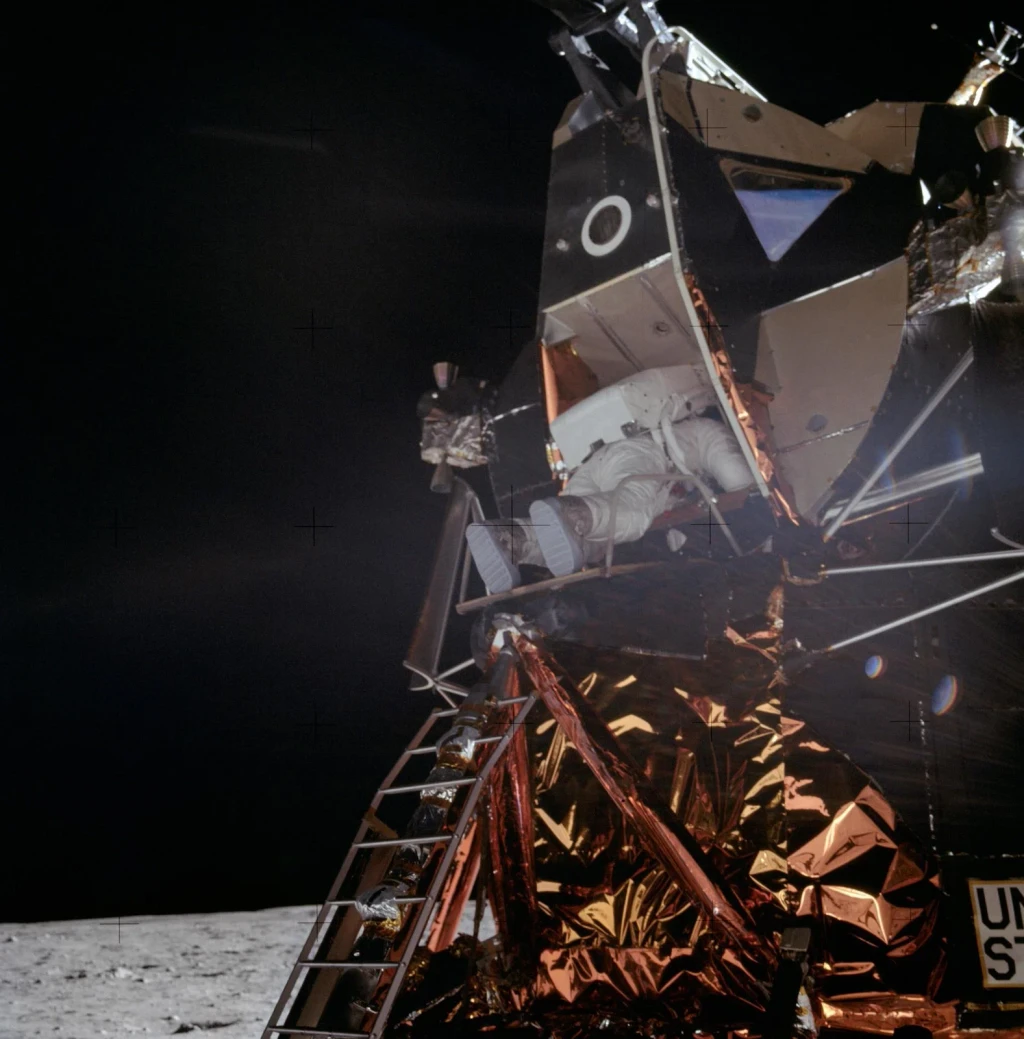
Astronaut Edwin E. Aldrin Jr., lunar module pilot, is photographed egressing the Lunar Module (LM) during the Apollo 11 extravehicular activity (EVA) on the moon. This photograph was taken by astronaut Neil A. Armstrong, commander, with a 70mm lunar surface camera on July 20, 1969.
While astronauts Armstrong and Aldrin descended in the Lunar Module "Eagle" to explore the Sea of Tranquility region of the moon, astronaut Michael Collins, command module pilot, remained with the Command and Service Modules "Columbia" in lunar orbit.
NASA · JSC · 1969-07-20 · Apollo 11 on Wikipedia
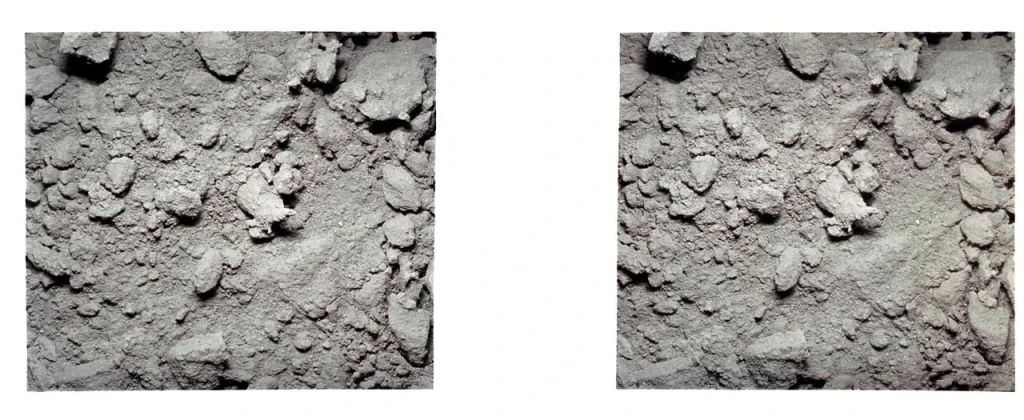
AS12-57-8455 (19-20 Nov. 1969). An Apollo 12 stereo view showing a three-inch square of the lunar surface. The exposure was made with an Apollo 35mm stereo close-up camera during extravehicular activity of the Apollo 12 lunar landing mission. The camera was developed to get the highest possible resolution of a small area.
The three-inch square is photographed with a flash illumination and at a fixed distance. The camera is mounted on a walking stick, and the astronauts use it by holding it up against the object to be photographed and pulling the trigger.
Astronauts Charles Conrad Jr., commander, and Alan L. Bean, lunar module pilot, descended in the Apollo 12 Lunar Module to explore the moon while astronaut Richard F. Gordon Jr. remained with the Command and Service Modules in lunar orbit in the capacity of command module pilot.
NASA · JSC · 1969-11-20 · Apollo 12 on Wikipedia
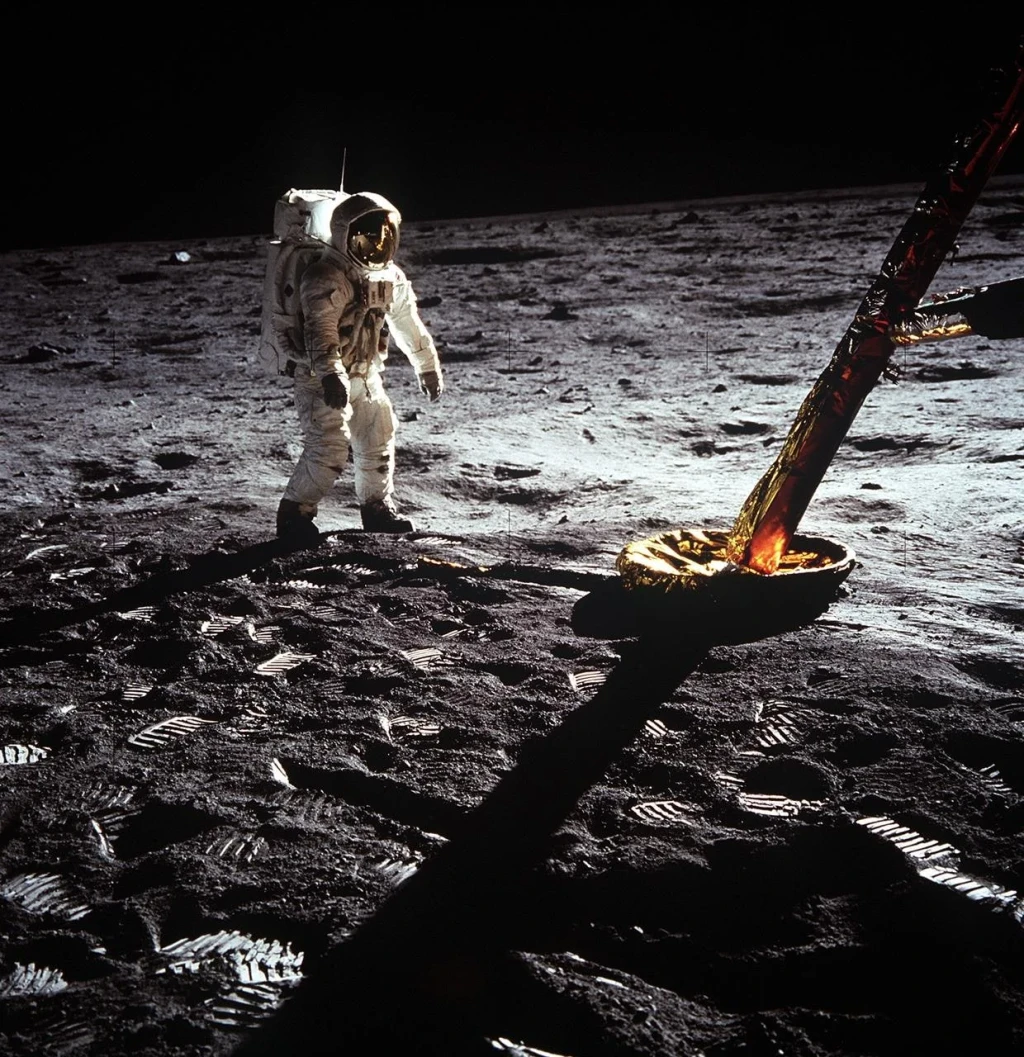
AS11-40-5902 (20 July 1969). Astronaut Edwin E. Aldrin Jr., lunar module pilot, walks on the surface of the moon near a leg of the Lunar Module during the Apollo 11 extravehicular activity (EVA). Astronaut Neil A. Armstrong, Apollo 11 commander, took this photograph with a 70mm lunar surface camera. The astronauts' bootprints are clearly visible in the foreground.
While astronauts Armstrong and Aldrin descended in the Lunar Module (LM) "Eagle" to explore the Sea of Tranquility region of the moon, astronaut Michael Collins, command module pilot, remained with the Command and Service Modules (CSM) "Columbia" in lunar orbit.
NASA · JSC · 1969-07-20 · Apollo 11 on Wikipedia
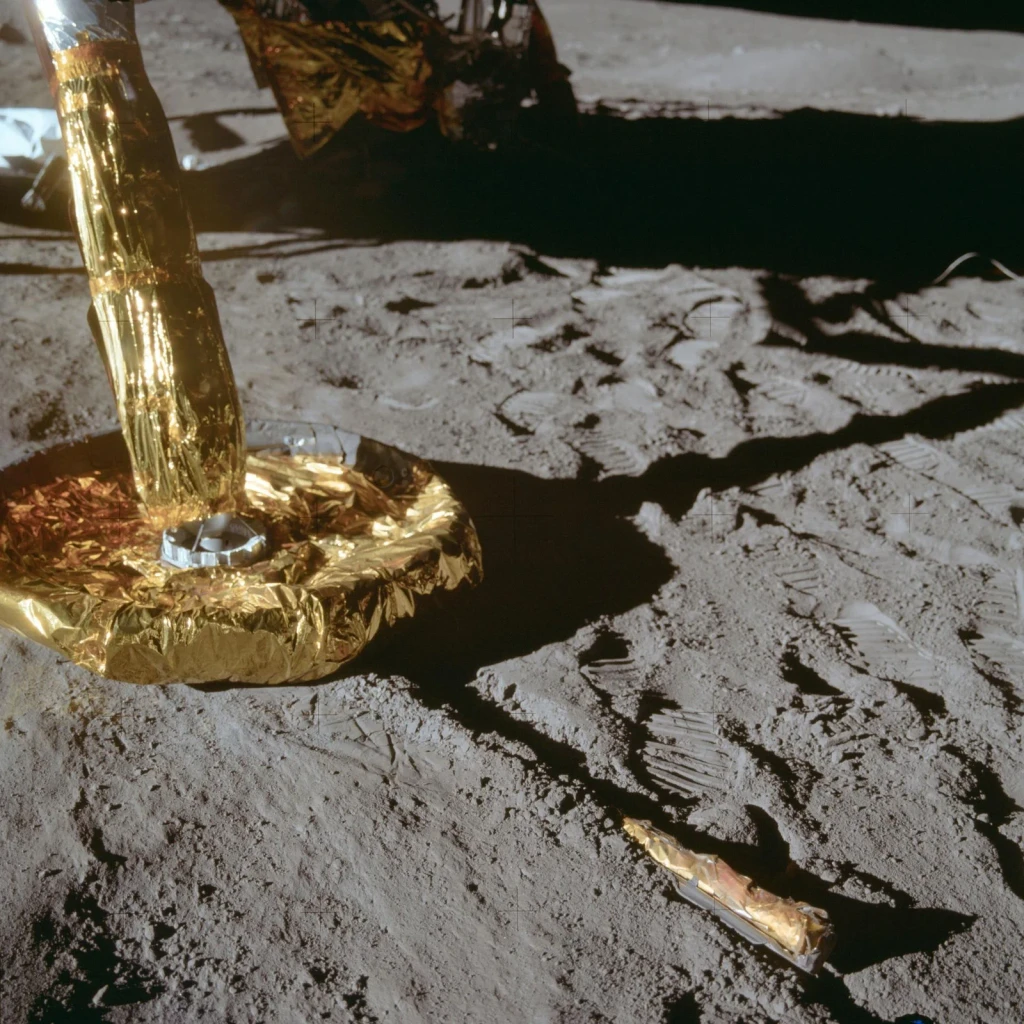
A close-up view of a footpad of the Apollo 11 Lunar Module as it rested on the surface of the Moon. The stick-like protruding object is a lunar surface sensing probe.
This photograph was taken with a 70mm lunar surface camera during the extravehicular activity of Astronauts Neil Armstrong and Edwin Aldrin on July 20, 1969.
NASA · JSC · 1969-07-20 · Apollo 11 on Wikipedia
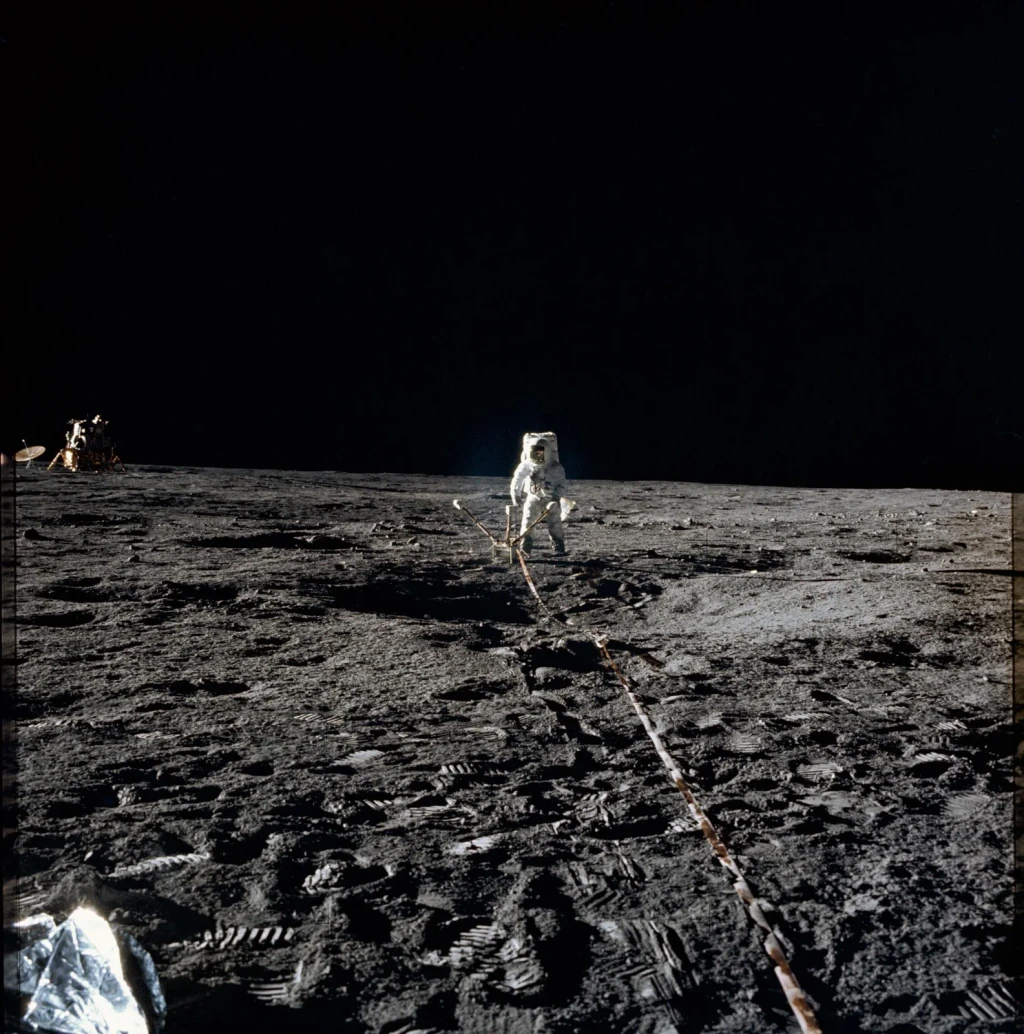
Astronaut Alan L. Bean, lunar module pilot, deploys the Lunar Surface Magnetometer (LSM) during the first Apollo 12 extravehicular activity on the Moon. The LSM is a component of the Apollo Lunar Surface Experiments Package (ALSEP).
The Lunar Module can be seen in the left background.
NASA · JSC · 1969-11-19 · Apollo 12 on Wikipedia
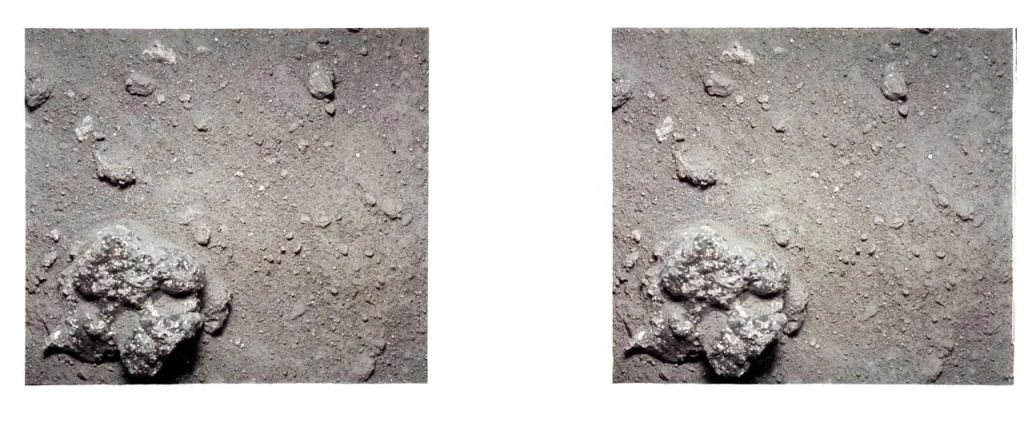
AS12-57-8452 (19-20 Nov. 1969). An Apollo 12 stereo view showing a three-inch square of the lunar surface. The exposure was made with an Apollo 35mm stereo close-up camera during extravehicular activity of the Apollo 12 lunar landing mission. The camera was developed to get the highest possible resolution of a small area.
The three-inch square is photographed with a flash illumination and at a fixed distance. The camera is mounted on a walking stick, and the astronauts use it by holding it up against the object to be photographed and pulling the trigger.
Astronauts Charles Conrad Jr., commander, and Alan L. Bean, lunar module pilot, descended in the Apollo 12 Lunar Module to explore the moon while astronaut Richard F. Gordon Jr. remained with the Command and Service Modules in lunar orbit in the capacity of command module pilot.
NASA · JSC · 1969-11-20 · Apollo 12 on Wikipedia
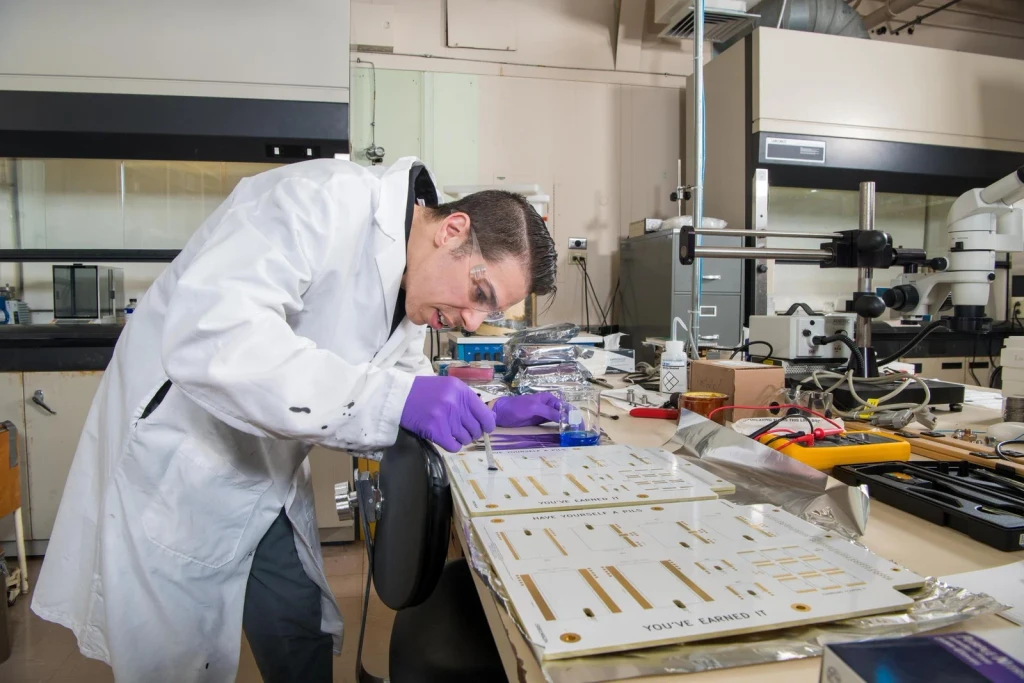
Photovoltaic Investigation on the Lunar Surface, PILS
NASA · GRC · 2020-02-26
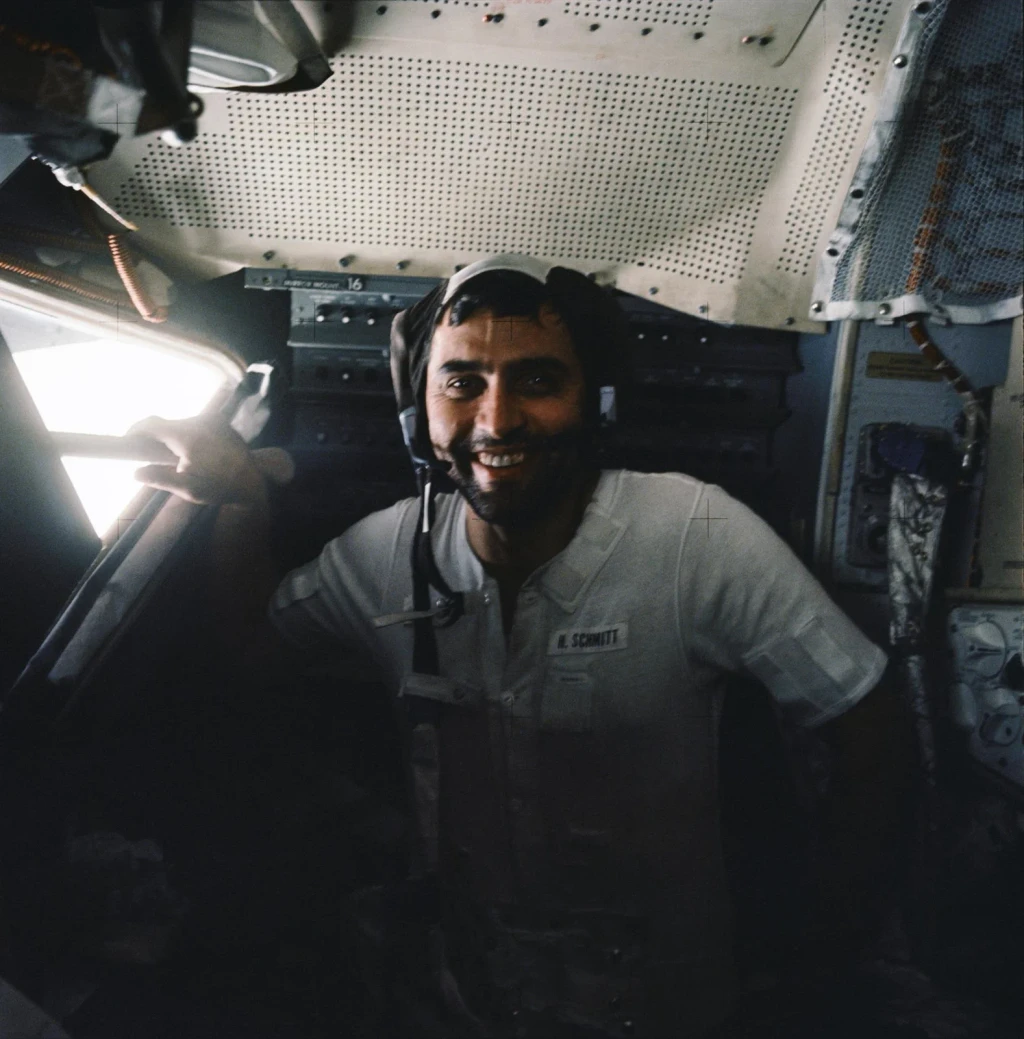
AS17-134-20530 (11 Dec. 1972). Astronaut Harrison H. Schmitt, lunar module pilot, displays several days of growth on his beard aboard the Lunar Module (LM) prior to its liftoff from the moon's surface. The photograph was taken by astronaut Eugene A. Cernan, mission commander.
The two later re-joined astronaut Ronald E. Evans, who was orbiting the moon in the Apollo 17 Command and Service Modules (CSM).
NASA · JSC · 1972-12-13 · Apollo 17 on Wikipedia
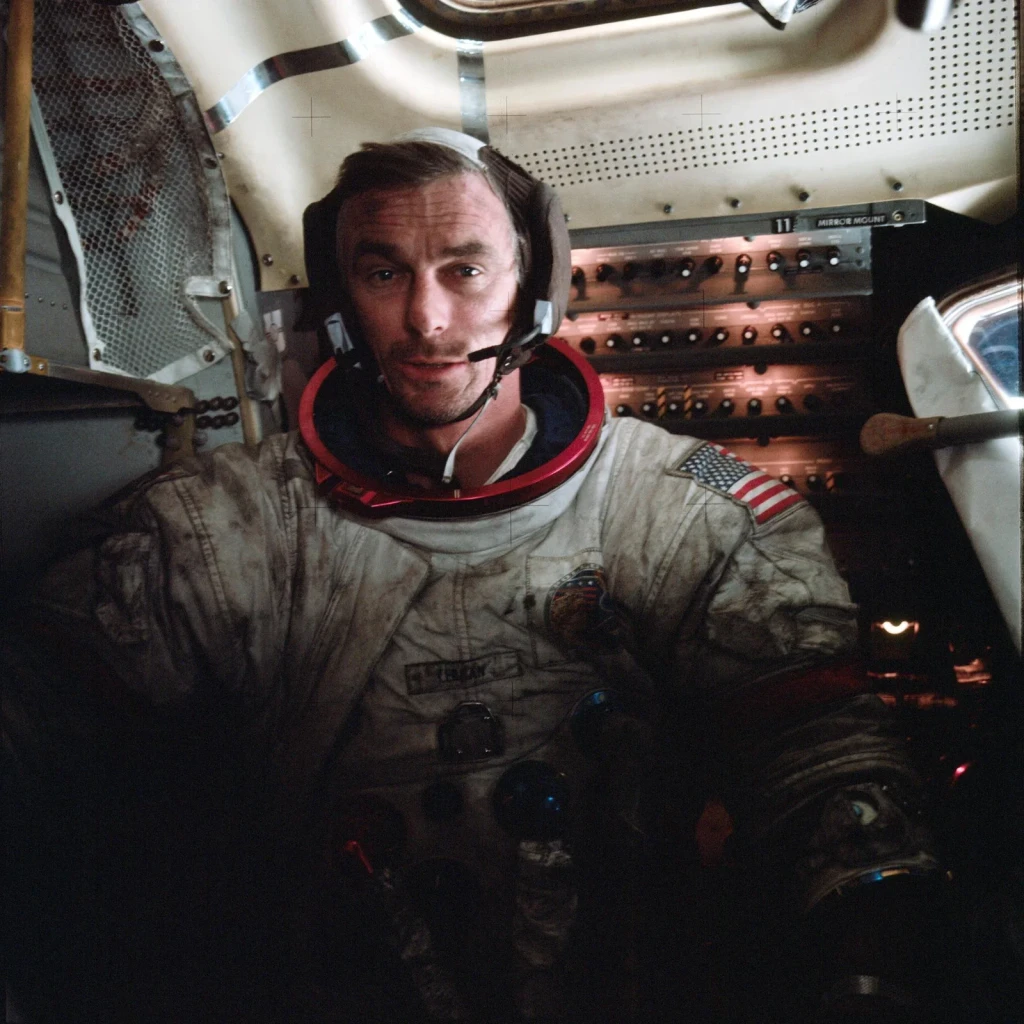
AS17-145-22224 (12 Dec. 1972) --- Astronaut Eugene A. Cernan, Apollo 17 commander, is photographed inside the lunar module on the lunar surface following the second extravehicular activity (EVA) of his mission. Note lunar dust on his suit. The photograph was taken by astronaut Harrison H. Schmitt, lunar module pilot, using a 70mm handheld Hasselblad camera and S0-368 film.
NASA · JSC · 1972-12-12 · Apollo 17 on Wikipedia
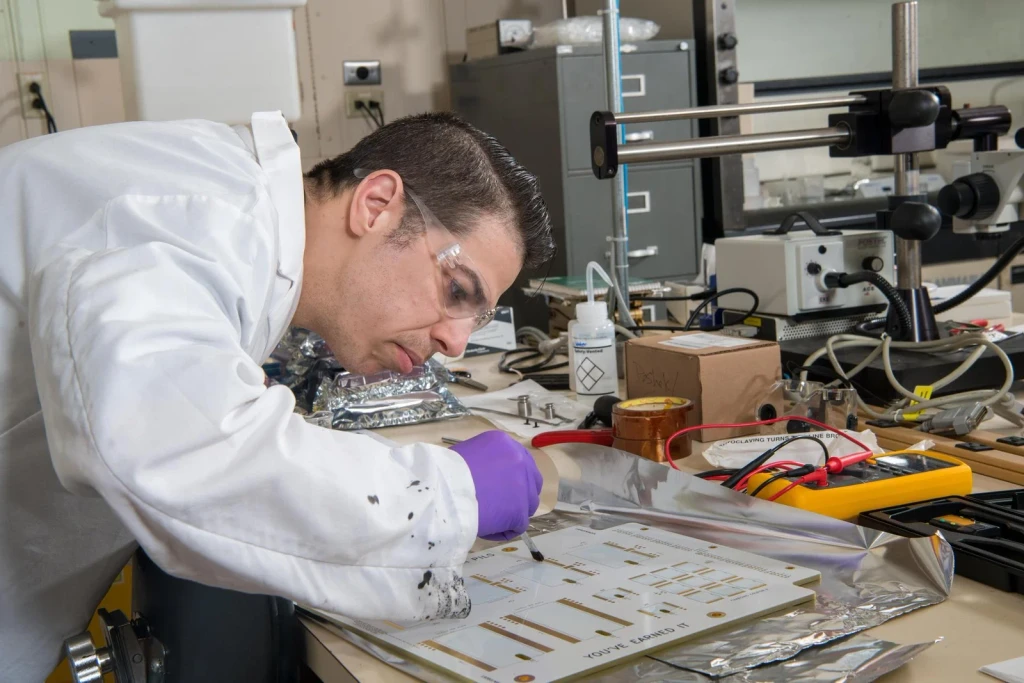
Photovoltaic Investigation on the Lunar Surface, PILS
NASA · GRC · 2020-02-26
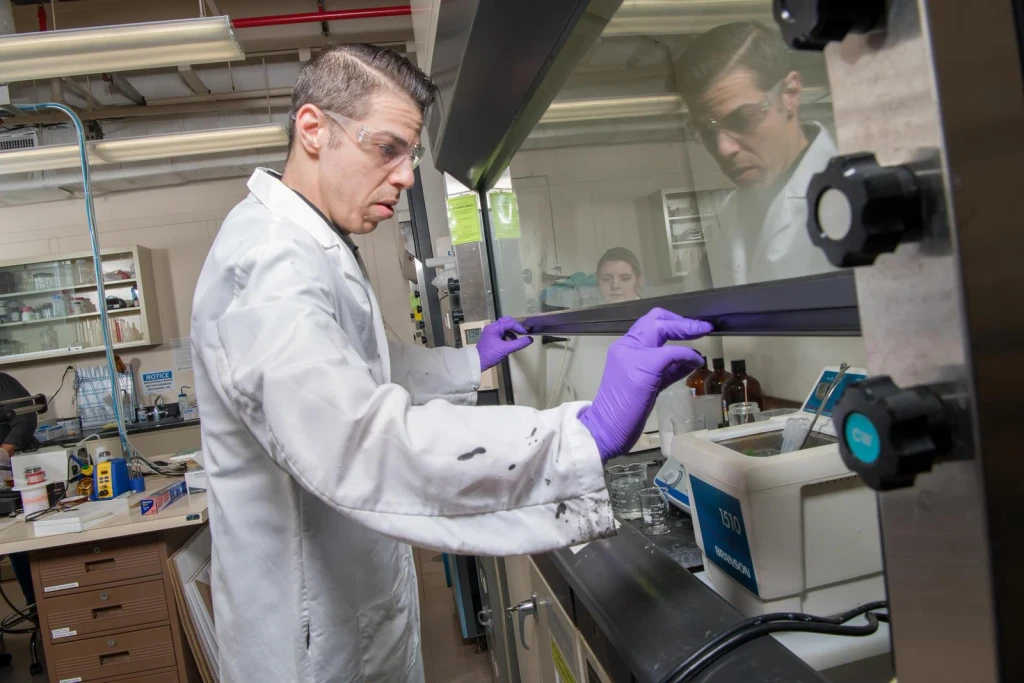
Photovoltaic Investigation on the Lunar Surface, PILS
NASA · GRC · 2020-02-26
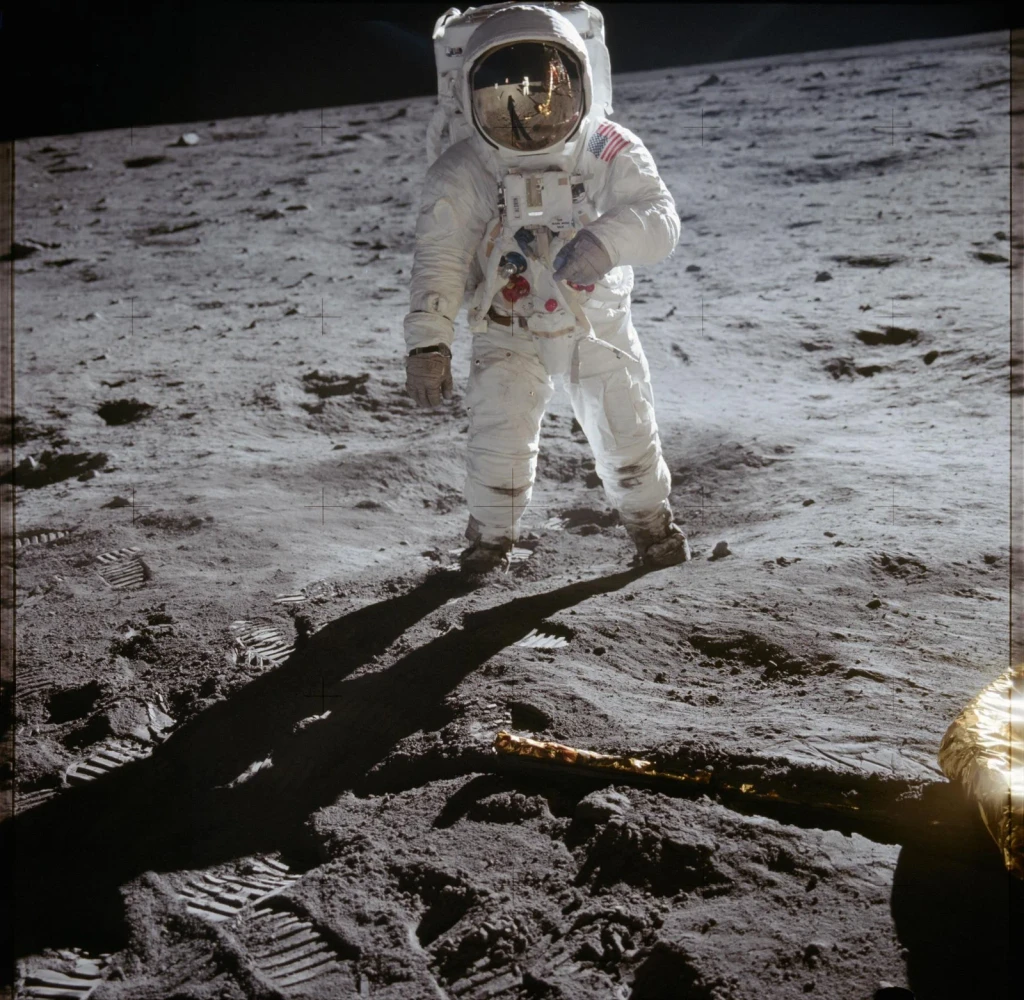
AS11-40-5903 (20 July 1969). Astronaut Edwin E. Aldrin Jr., lunar module pilot, walks on the surface of the moon near the leg of the Lunar Module (LM) "Eagle" during the Apollo 11 extravehicular activity (EVA). Astronaut Neil A. Armstrong, commander, took this photograph with a 70mm lunar surface camera.
While astronauts Armstrong and Aldrin descended in the Lunar Module (LM) "Eagle" to explore the Sea of Tranquility region of the moon, astronaut Michael Collins, command module pilot, remained with the Command and Service Modules (CSM) "Columbia" in lunar orbit.
NASA · JSC · 1969-07-20 · Apollo 11 on Wikipedia
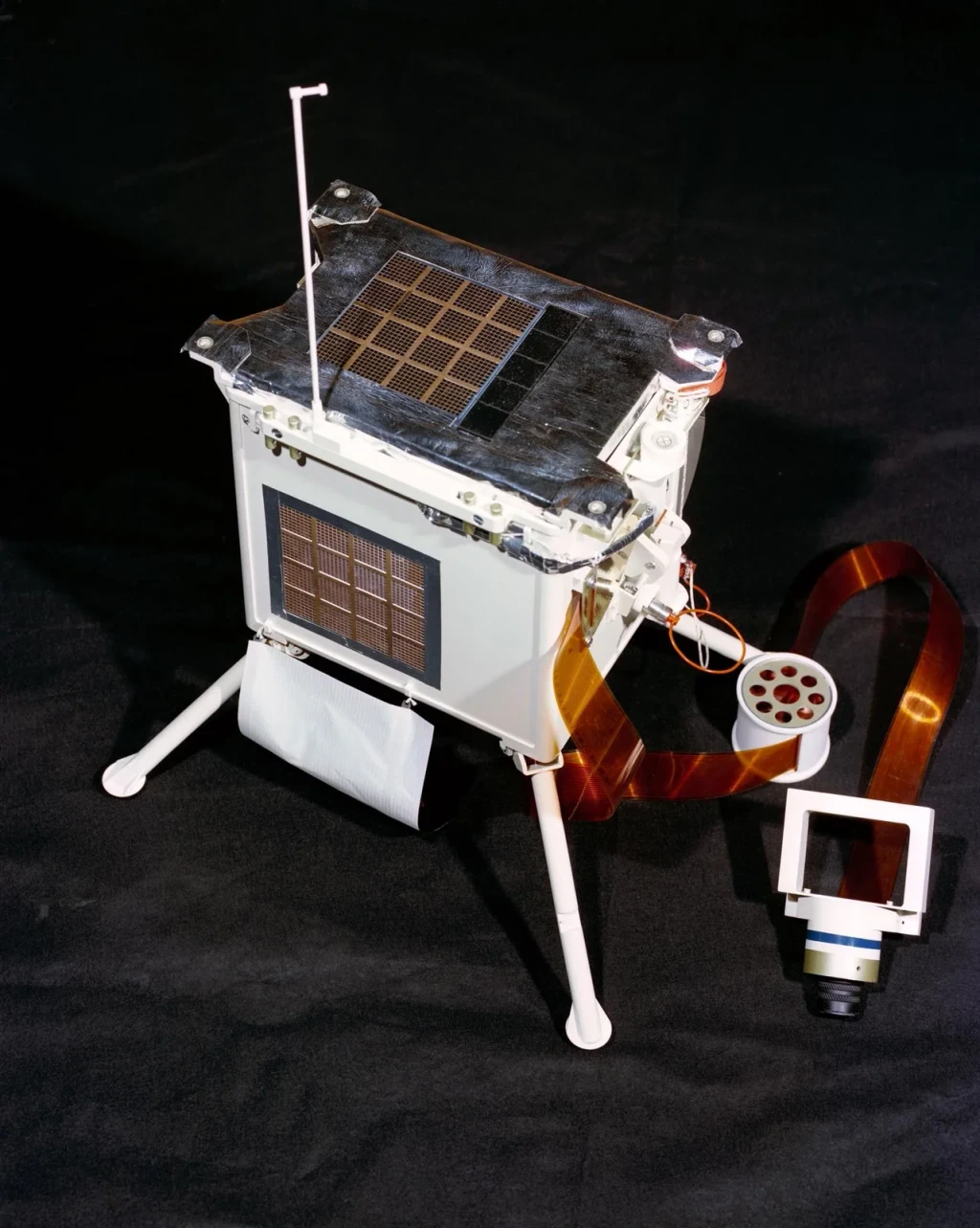
The Lunar Ejecta and Meteorites Experiment (S-202) is one of the experiments of the Apollo Lunar Surface Experiments Package which was carried on the Apollo 17 lunar landing mission.
The purpose of this experiment is to measure the physical parameters of primary and secondary particles impacting the lunar surface.
NASA · JSC · 1972-11-30 · Apollo 17 on Wikipedia
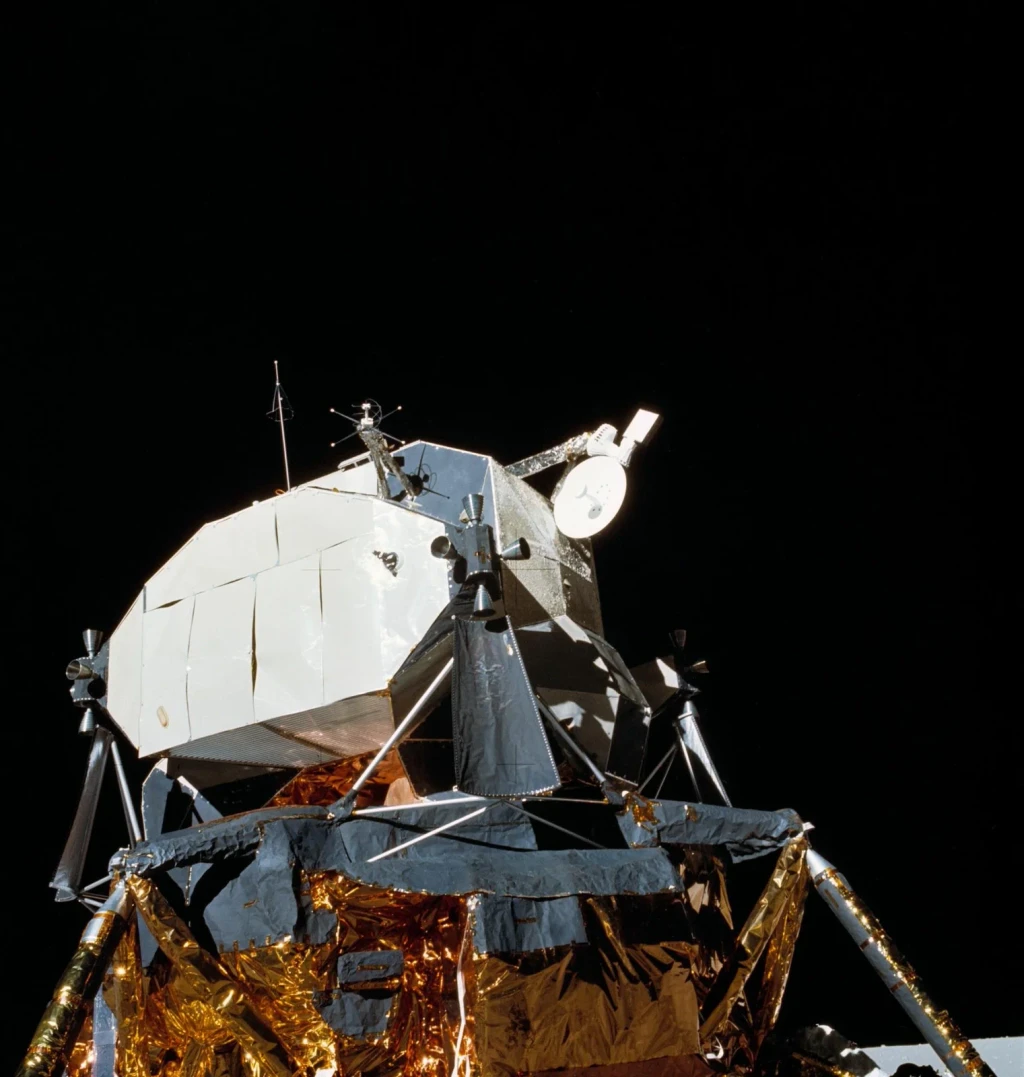
View of the Lunar Module (LM) "Orion" parked on the lunar surface. During their post mission press conference, the Apollo 16 crewmembers called attention to the steerable S-band antenna, which was "frozen" in a yaw axis during much of the flight.
This view of the LM was photographed by astronaut Charles M. Duke Jr., the lunar module pilot, during the mission's first extravehicular activity (EVA). Astronauts John W. Young, commander, and Duke had earlier descended in the LM to explore the Descartes region of the moon, while astronaut Thomas K. Mattingly II, command module pilot, remained with the Command and Service Modules (CSM) "Casper" in lunar orbit.
NASA · JSC · 1971-04-20 · Apollo 16 on Wikipedia
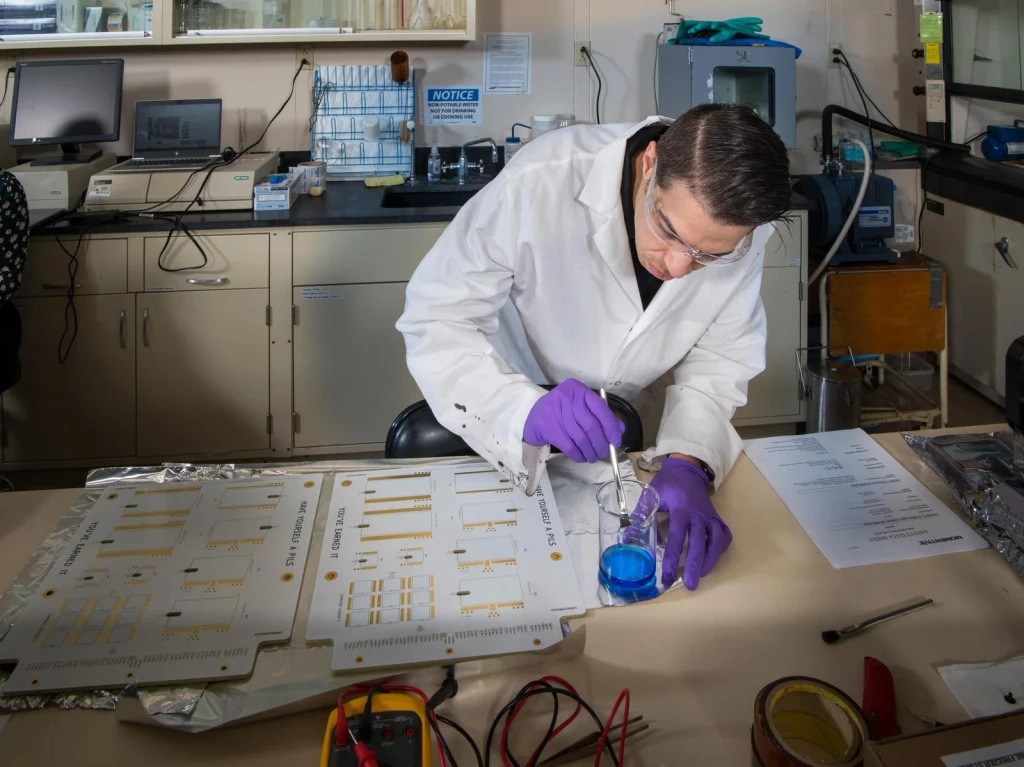
Photovoltaic Investigation on the Lunar Surface, PILS
NASA · GRC · 2020-02-26
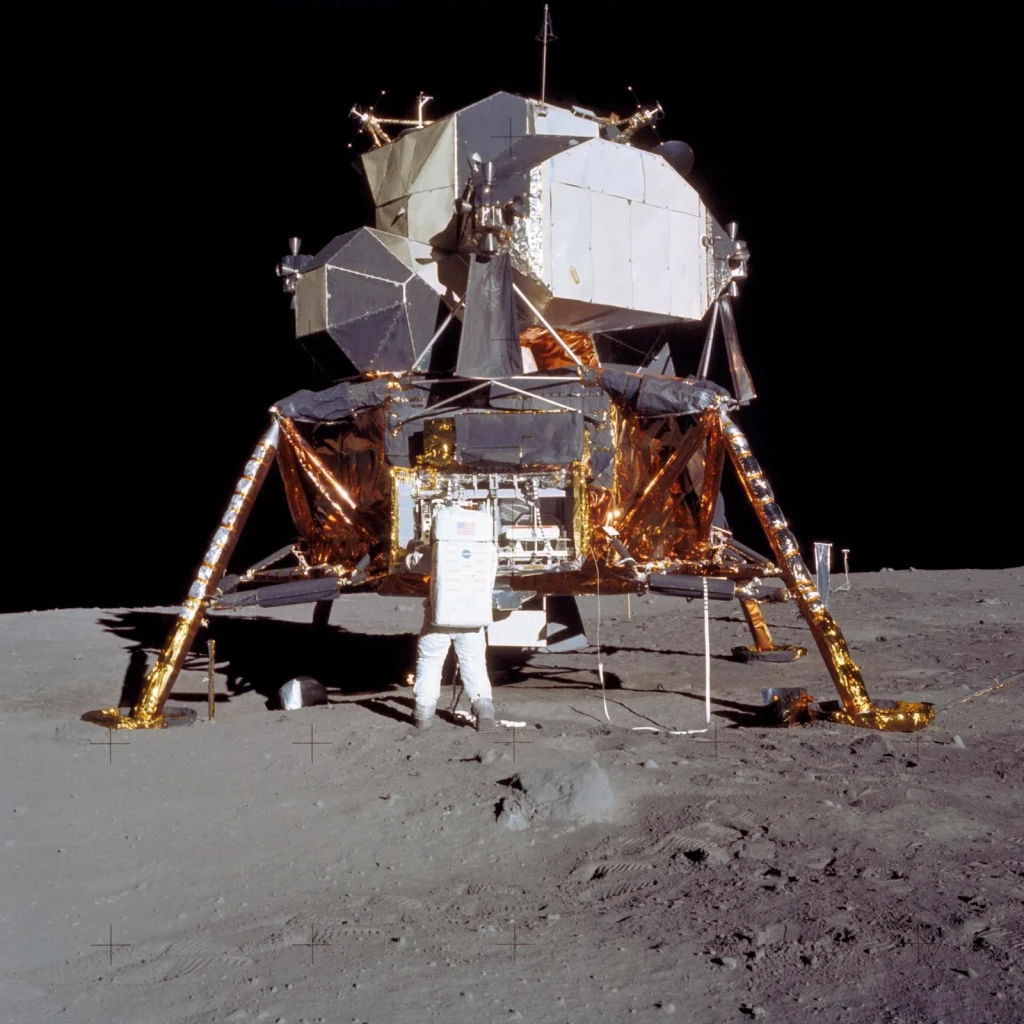
Astronaut Edwin E. Aldrin Jr., lunar module pilot, prepares to deploy the Early Apollo Scientific Experiments Package (EASEP) during the Apollo 11 lunar surface extravehicular activity (EVA). Astronaut Neil A. Armstrong, commander, took this picture with a 70mm lunar surface camera.
During flight the EASEP is stowed in the Lunar Module's scientific equipment bay at the left rear quadrant of the descent stage looking forward. Aldrin is removing the EASEP from its stowed position on July 20, 1969.
NASA · JSC · 1969-07-20 · Apollo 11 on Wikipedia

Panorama view of Apollo 17 Lunar surface photos for use in presentations to NASA management and for Outreach Education in regard to new NASA initiative for human planetary research. Photo numbers used for this panoramic include: Apollo 17 start frame AS17-147-22572 thru end frame AS17-147-22600.
View is of the Apollo Lunar Surface Experiment Package (ALSEP) Station taken during Extravehicular Activity (EVA) 1.
NASA · JSC · 1972-12-01 · Apollo 17 on Wikipedia
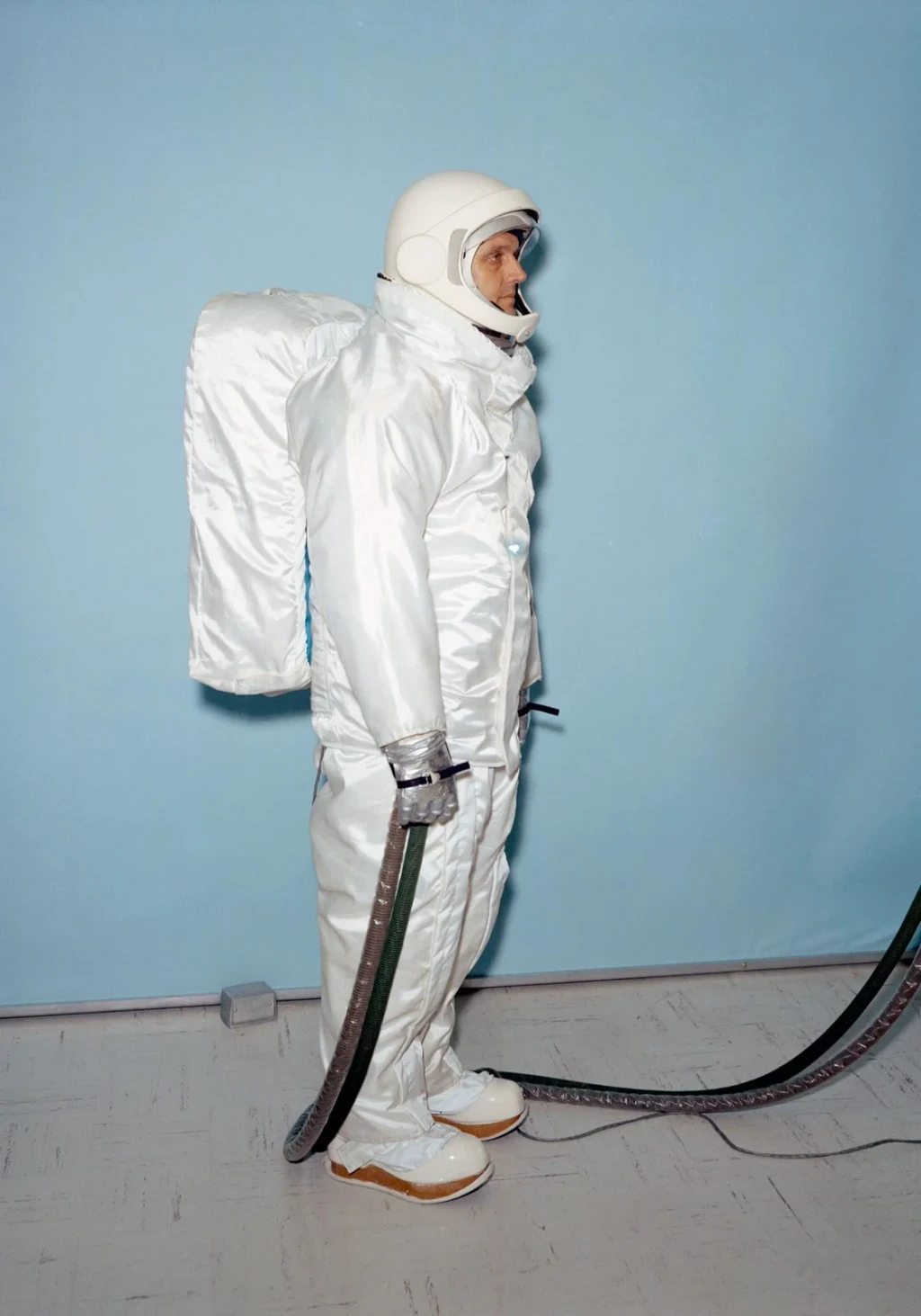
Test subject wears Apollo overgarment designed specially for use by astronauts on lunar surface missions. The overgarment is worn over the Apollo space suit.
NASA · JSC · 1965-05-18 · Apollo program on Wikipedia
