3D Gallery
The Silk Road Between Empires
Enter gallery
The Silk Road Between Empires is a 3D virtual gallery on MyGallery3D, a walkable online exhibition of 12 works. Step inside and explore it in your browser: no app, no headset.
Welcome to a 3D virtual gallery you can walk through in your browser, exploring the ancient network of trade routes known as the Silk Road. This was never a single road. It was a web of land and sea paths connecting China to the Mediterranean, active from the second century BCE to the mid-15th century.
Few travelers walked its full 6,400 kilometres. Goods changed hands through chains of middlemen at stopping points along the way. The name itself was invented in 1877 by a German geographer, Ferdinand von Richthofen. No ancient merchant ever used it.
Caravanserais were roadside inns spaced a day's journey apart, typically 30 to 40 kilometres in open landscape, closer in mountains. Rectangular buildings with a single guarded entrance enclosed a courtyard ringed by rooms for merchants, stalls for camels, and storage for goods. The oldest surviving Islamic example dates from the early eighth century at Qasr al-Hayr al-Sharqi in Syria.
Silk protein has been found in Chinese soil samples dating back roughly 8,500 years. Chinese emperors kept sericulture secret to hold their monopoly. Silk reached Korea around 200 BC, Khotan by AD 50, India by AD 140. Seventh-century murals at Afrasiyab in Samarkand show a Chinese embassy carrying silk and silkworm cocoons to the local Sogdian ruler.
Samarkand sat at the crossroads. Conquered by Alexander the Great in 329 BC, by Arab armies around 710, by Mongols in 1220, and made capital by Timur in 1370, it survived because every empire needed its position. Dunhuang, at the western end of the Hexi Corridor, served as supply base for caravans entering the desert. By the second century its population exceeded 76,000.
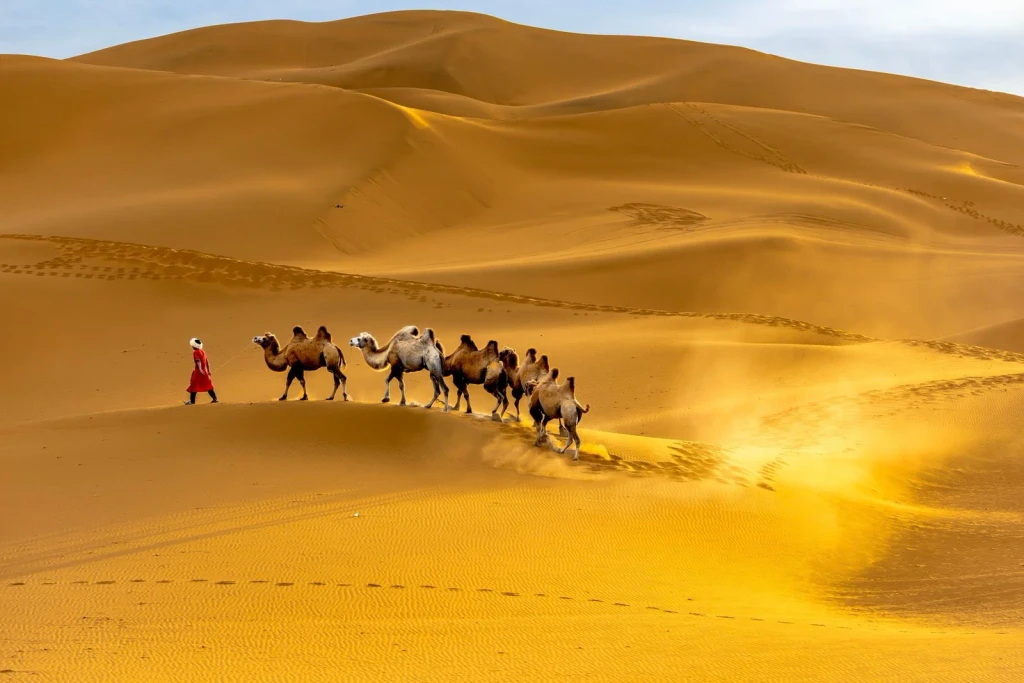
A man leads a caravan of camels across golden dunes. The scene evokes the historical movement of goods and people across desert expanses.
Photograph by Yudi Ding, via Pexels.
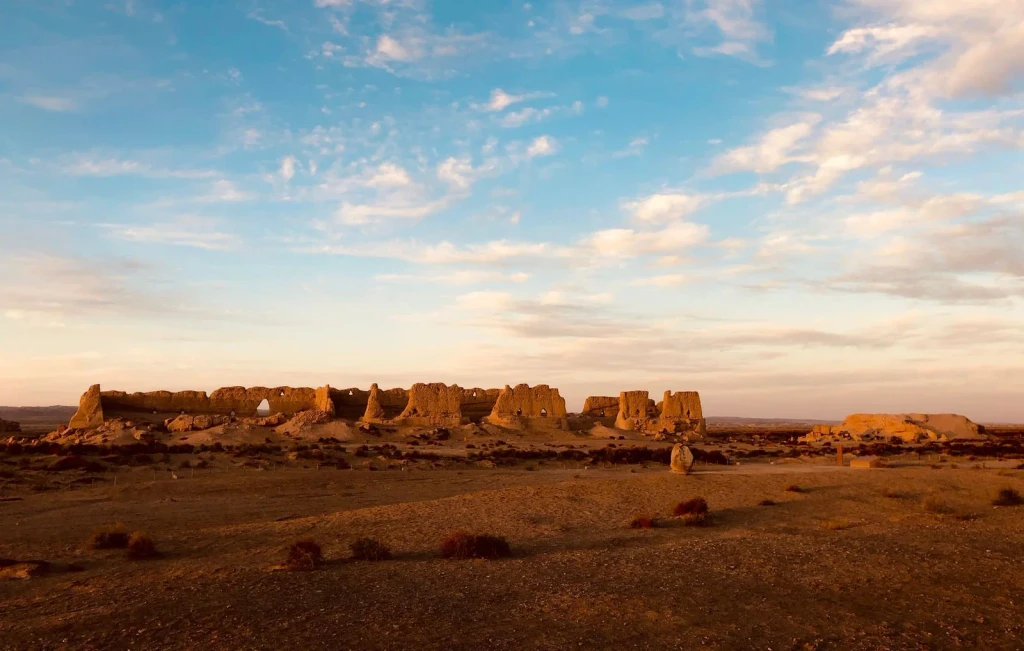
Stone ruins stand in China's Gobi Desert under dramatic light. Ancient architecture marks where empires once met and traded.
Photograph by Jason Leung, via Pexels.
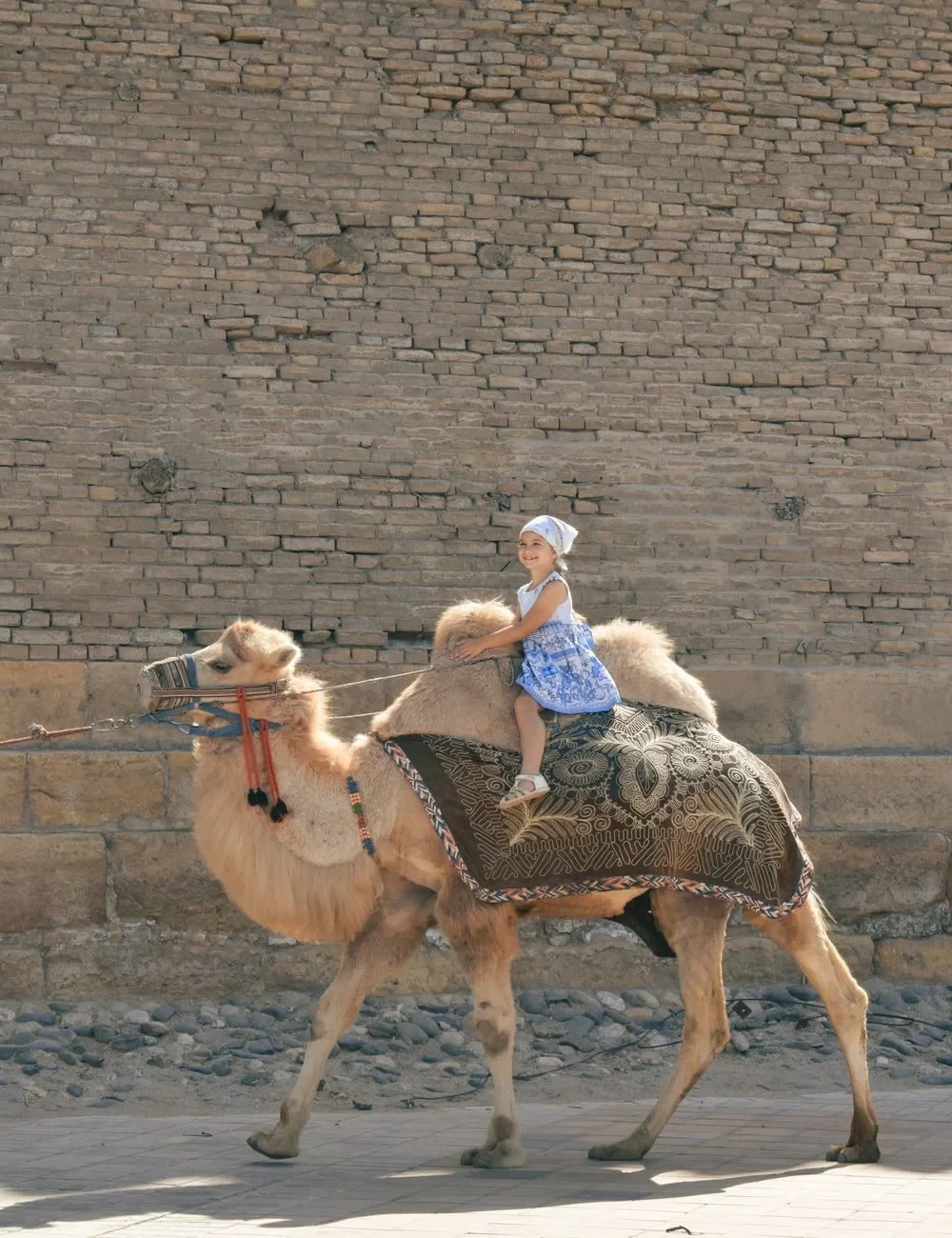
A child rides a camel past historic brickwork in Bukhara. The image layers youth and time, connecting present and past.
Photograph by Dar Cat, via Pexels.
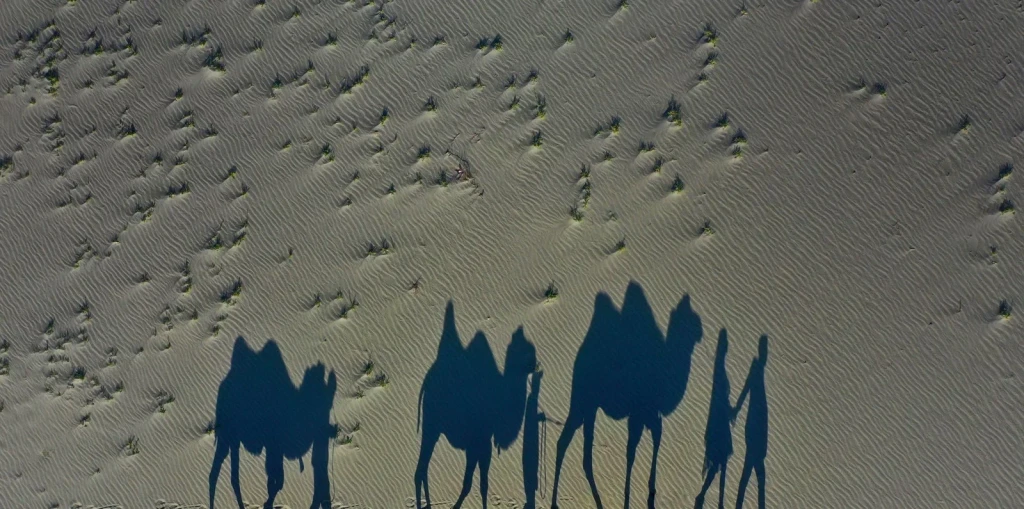
Camel silhouettes cast on rippled sand. The stark beauty of the desert landscape, and the traces of movement across it.
Photograph by Sanat Anghan, via Pexels.
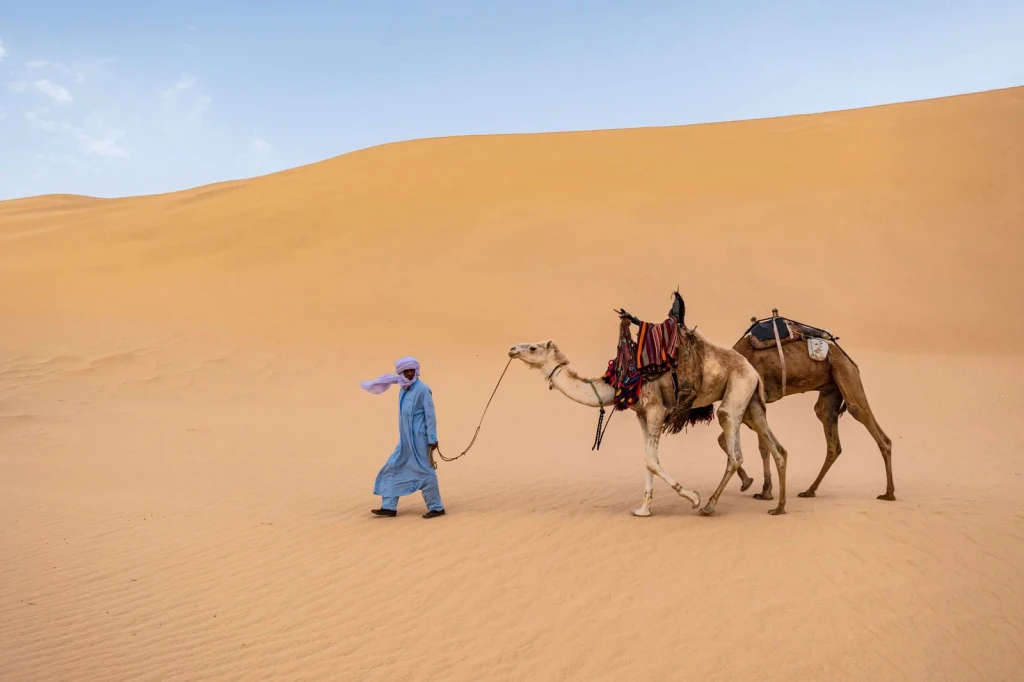
A man leads camels through golden dunes beneath clear sky. The figure and animals form the essential partnership of desert crossing.
Photograph by Noureddine Belfethi, via Pexels.
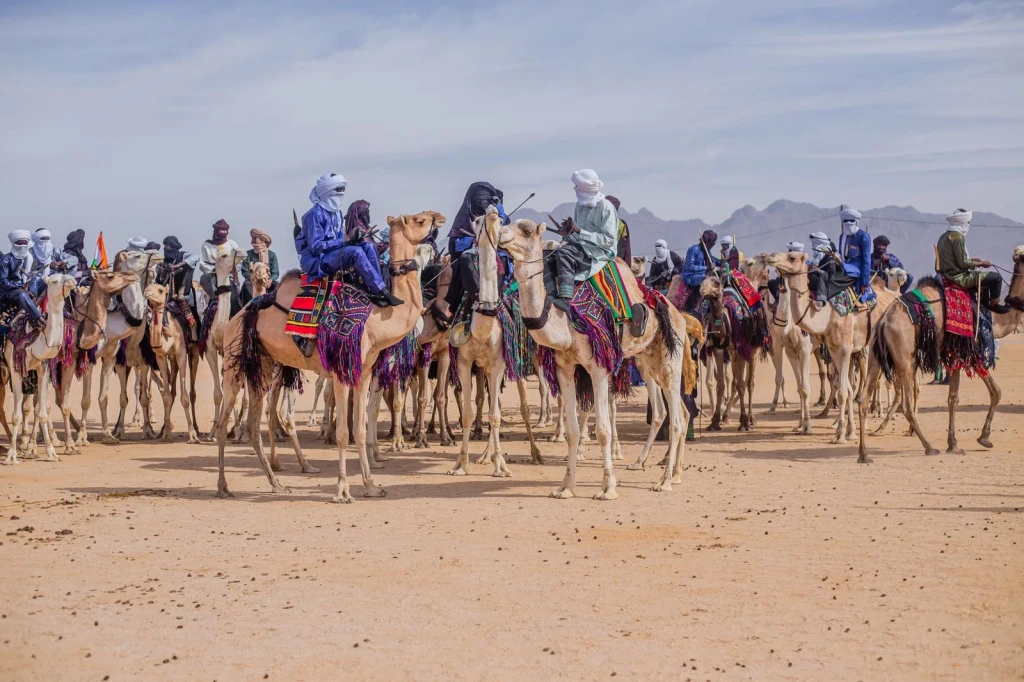
Nomads traverse vast desert on camels, their traditional attire visible against the landscape. A glimpse of the cultural practices that sustained Silk Road travel.
Photograph by iv image.ng, via Pexels.
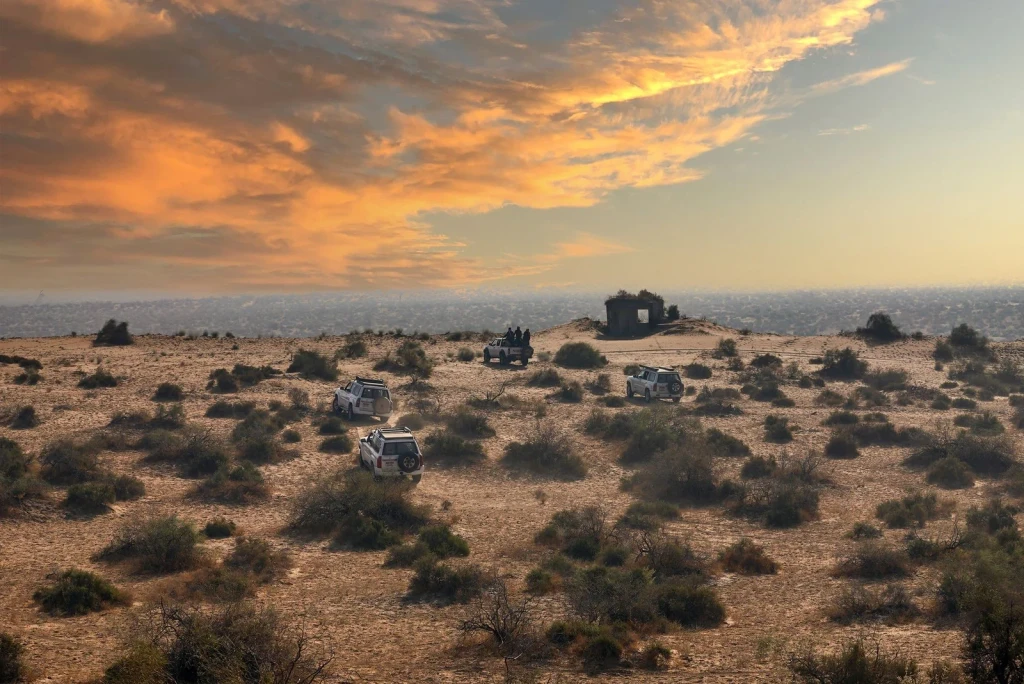
Four SUVs traverse Pakistan's Ghotki desert at sunset. The photograph shows how routes persist through changing technology and eras.
Photograph by Tauseef Kazmi, via Pexels.
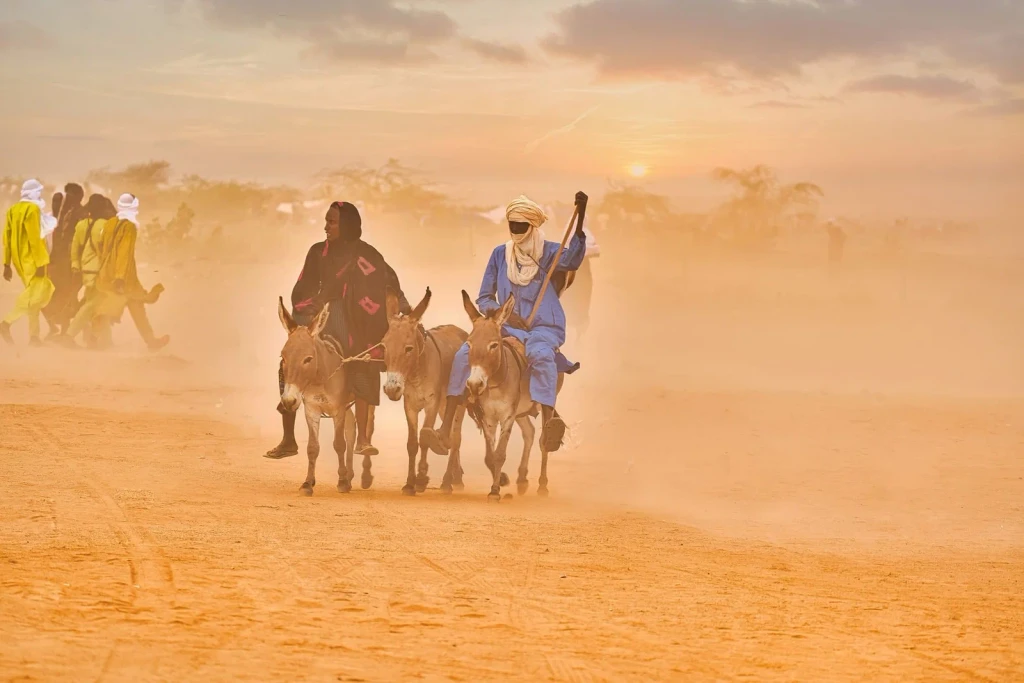
Two riders on donkeys move through dust in Agadez, embodying traditional desert culture. Movement and heritage converge on ancient pathways.
Photograph by Sani Maikatanga, via Pexels.
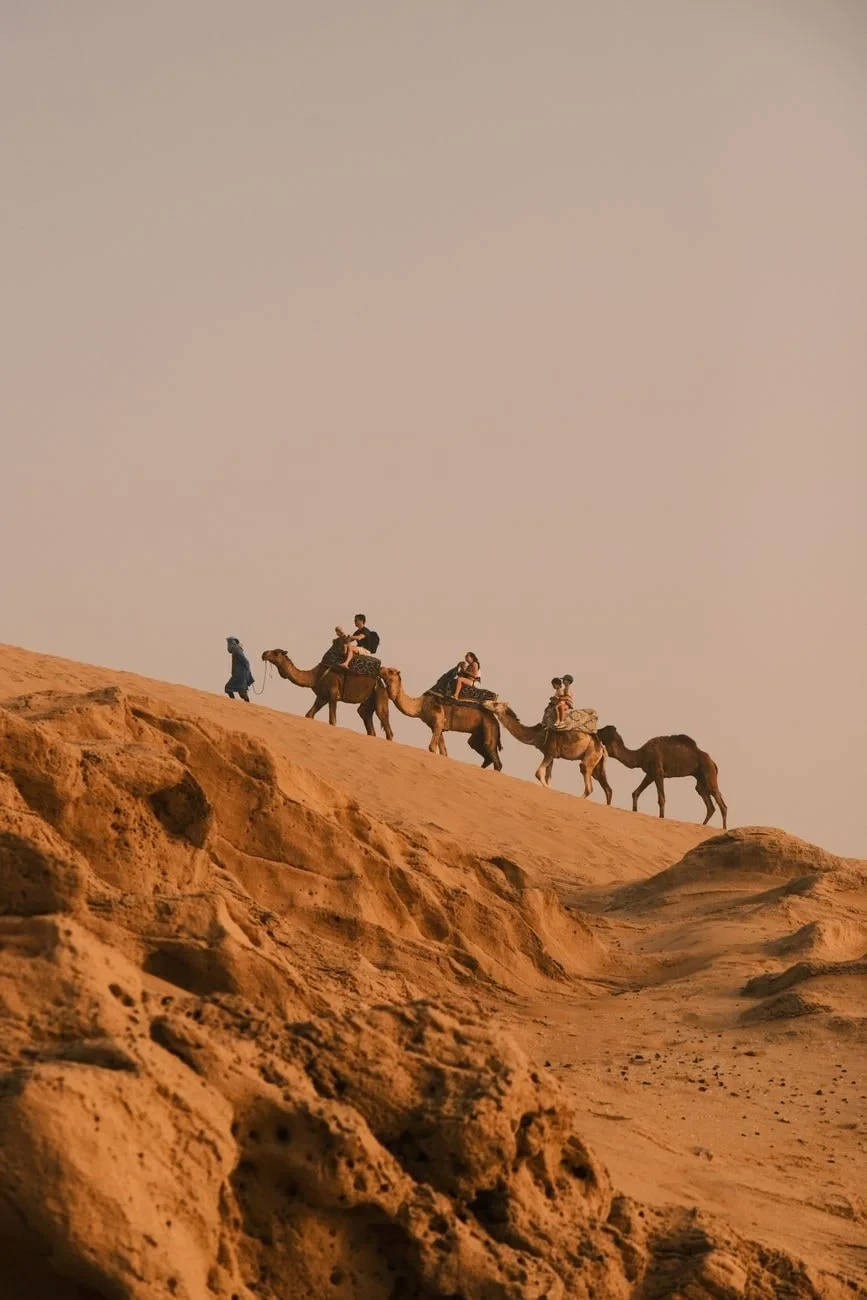
A camel caravan crosses sand at sunset, rendered in silhouette. The image captures the poetry of journey between worlds.
Photograph by Zak Mogel, via Pexels.
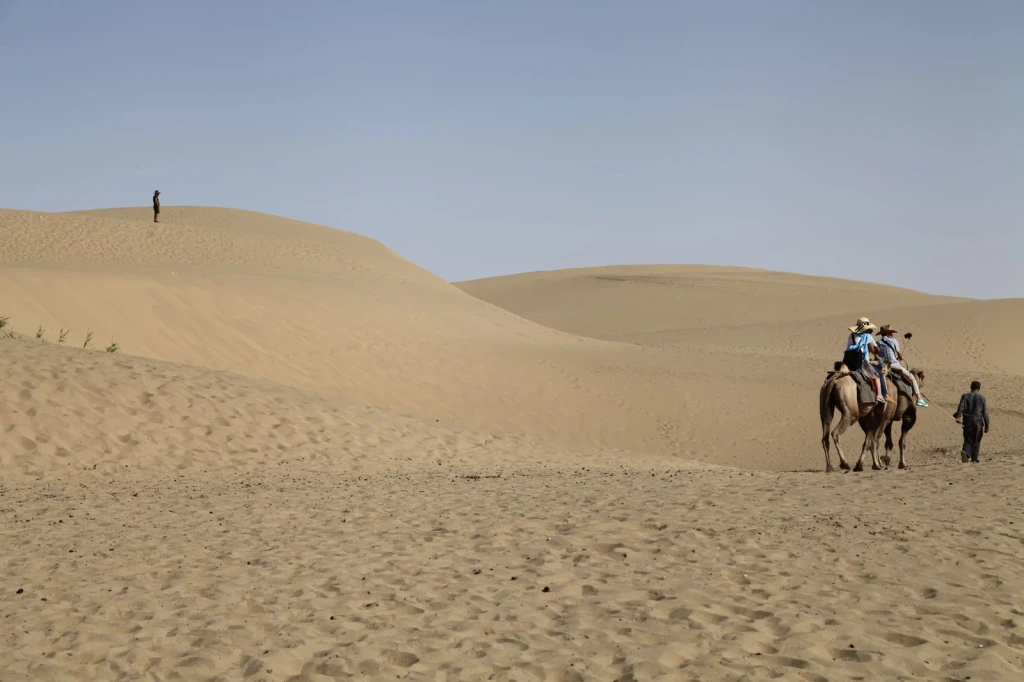
Men guide camels across vast sandy terrain under clear skies. A foundational image of desert traversal along historic trade routes.
Photograph by jihua shen, via Pexels.
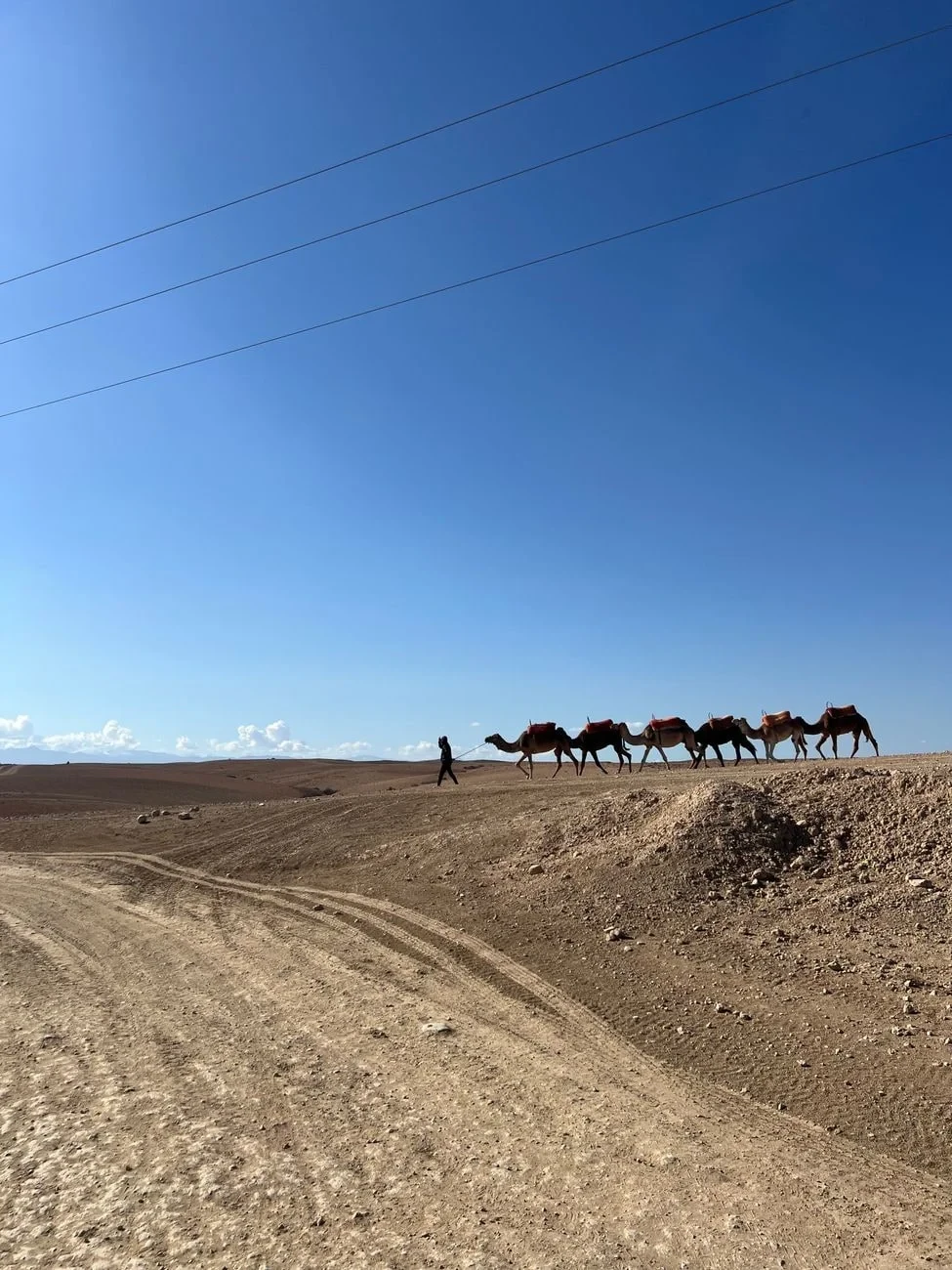
A person leads camels through desert under clear sky. An image of solitary passage through the vast terrain.
Photograph by julia hobart, via Pexels.
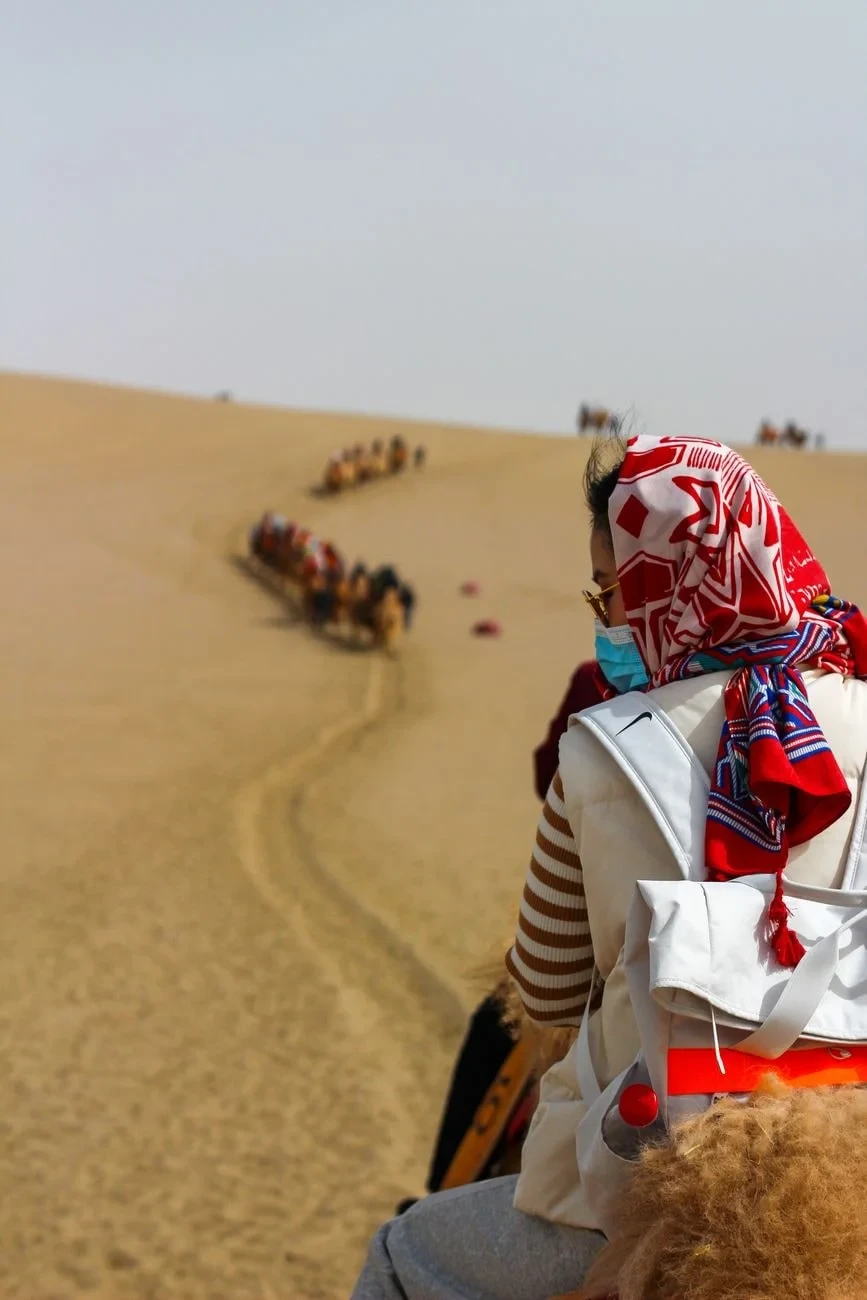
A woman undertakes a camel trek across endless desert. The image captures the adventure and scale of travel along routes that have connected distant empires for centuries.
Photograph by sven chen, via Pexels.
