3D Gallery
The Story of Tea
Enter gallery
The Story of Tea is a 3D virtual gallery on MyGallery3D, a walkable online exhibition of 12 works. Step inside and explore it in your browser: no app, no headset.
Welcome to a 3D virtual gallery you can walk through in your browser, tracing tea from its origins to every corner of the world.
Every cup of tea on earth comes from one plant: Camellia sinensis, an evergreen shrub native to the borderlands of southwestern China, northeast India, and northern Myanmar. After water, it is the most consumed drink in the world. To pay for it, Britain sold opium to China, sparking two wars. A leaf that began as medicine became an engine of empire.
People in ancient East Asia chewed tea leaves raw or added them to soups long before brewing them. By the Han dynasty, leaves were steamed, pounded into cakes, and boiled. The Song dynasty brought loose-leaf tea. During the Yuan and Ming dynasties, pan-firing stopped oxidation, keeping leaves green. In the 15th century, partial oxidation produced oolong. Full oxidation gave the West its preferred black tea.
Dutch traders shipped the first European cargo of tea from Macao to Java in 1607. By the 1660s, Catherine of Braganza brought tea drinking to the English court. Britain later broke China's monopoly by planting tea in India and Ceylon. Russian camel caravans carried it overland from China in exchange for furs. The word itself split into three global branches: te, cha, and chai.
In 8th-century China, Lu Yu wrote The Classic of Tea, codifying preparation and connoisseurship. Japan's tea ceremony evolved over centuries under Zen Buddhist monks, guided by Sen no Rikyū. In Tibet, tea is churned with yak butter, milk, and salt. Korea's darye emphasises ease and naturalness. From formal rites to vending machines, tea shapes social life across dozens of cultures.
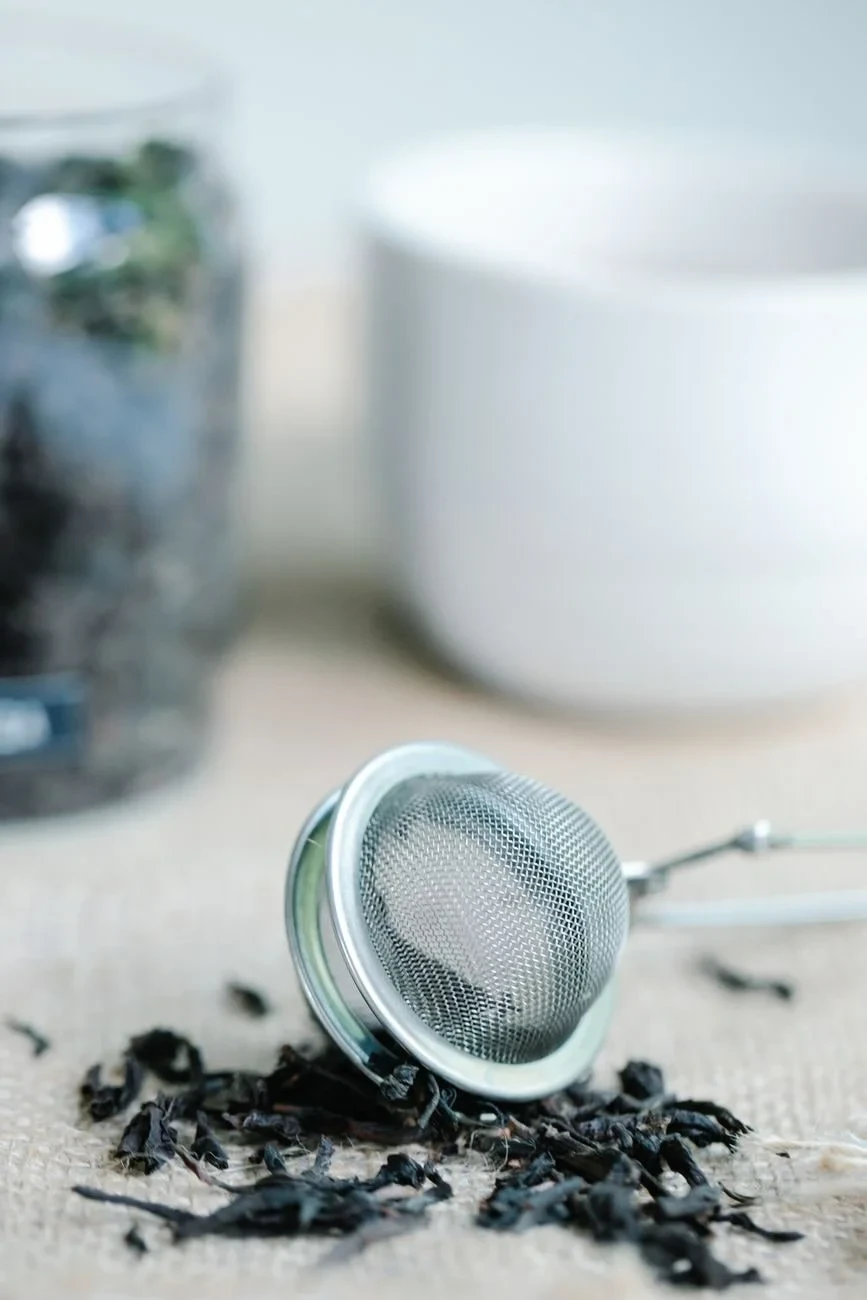
A mesh infuser rests on fabric, filled with loose leaves ready to steep. Simple tools enable the transformation of dried plants into drink.
Photograph by Anna Pou, via Pexels.
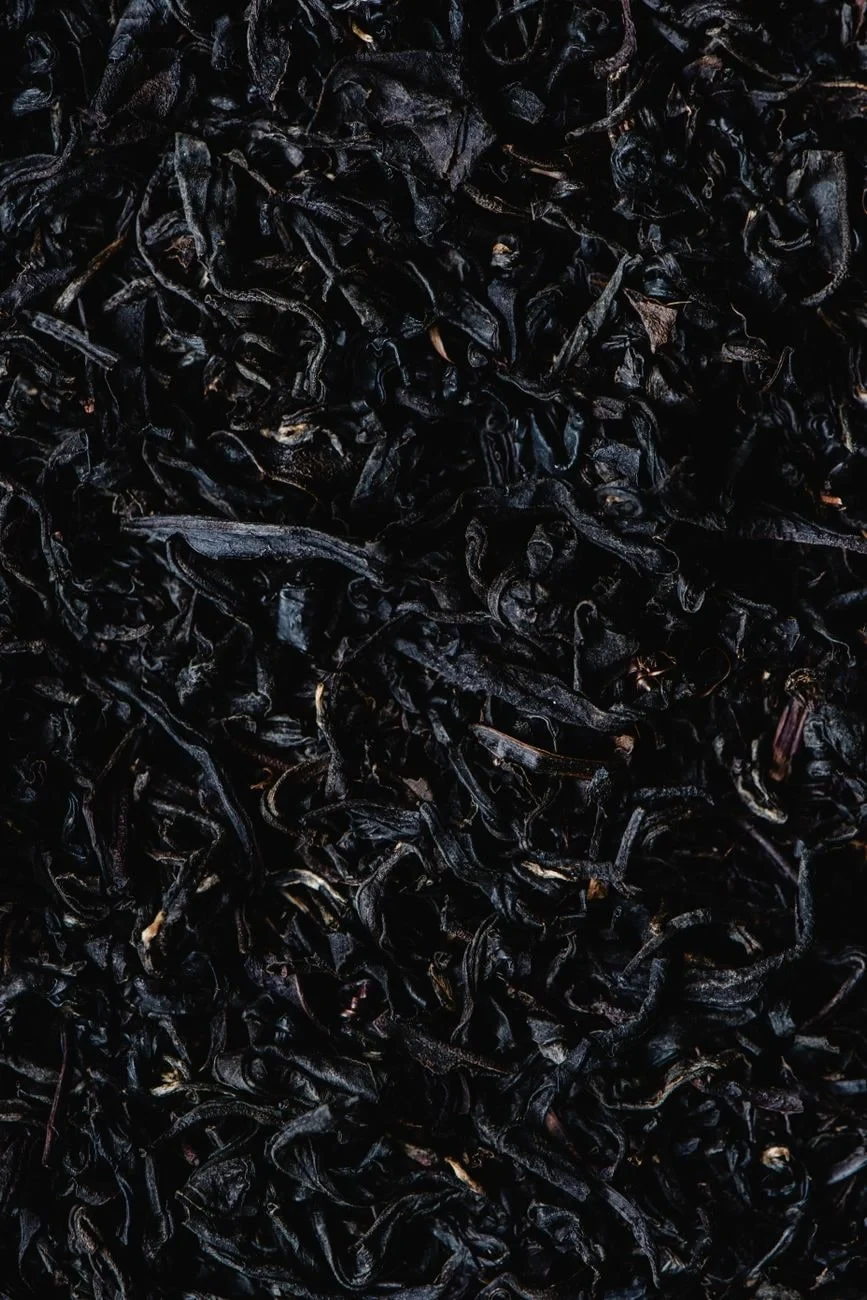
A close-up reveals the intricate texture of dried tea leaves. Natural patterns emerge when we look closely at what we steep.
Photograph by Eva Bronzini, via Pexels.
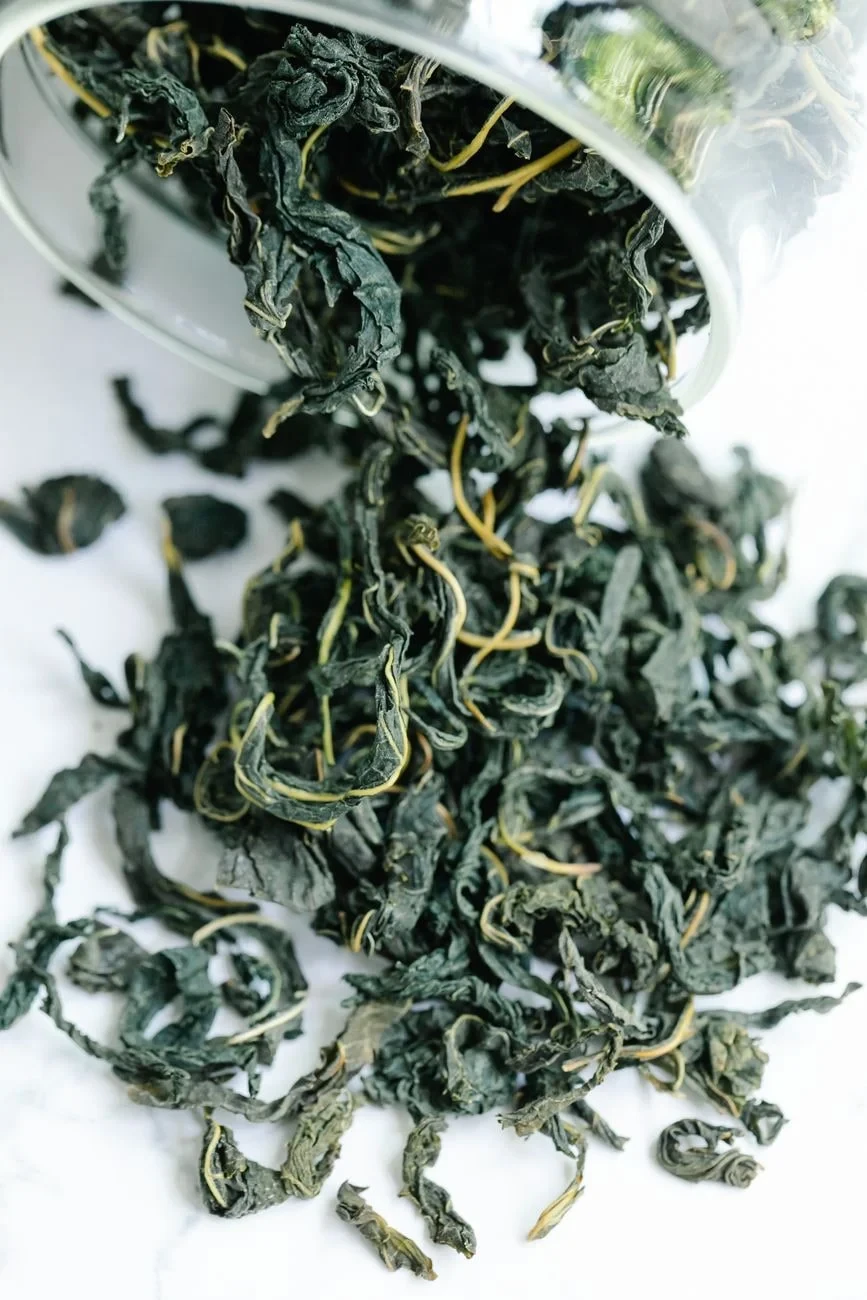
Green tea leaves pour from a glass jar. The movement captures tea in transition, from container to cup.
Photograph by Anna Pou, via Pexels.
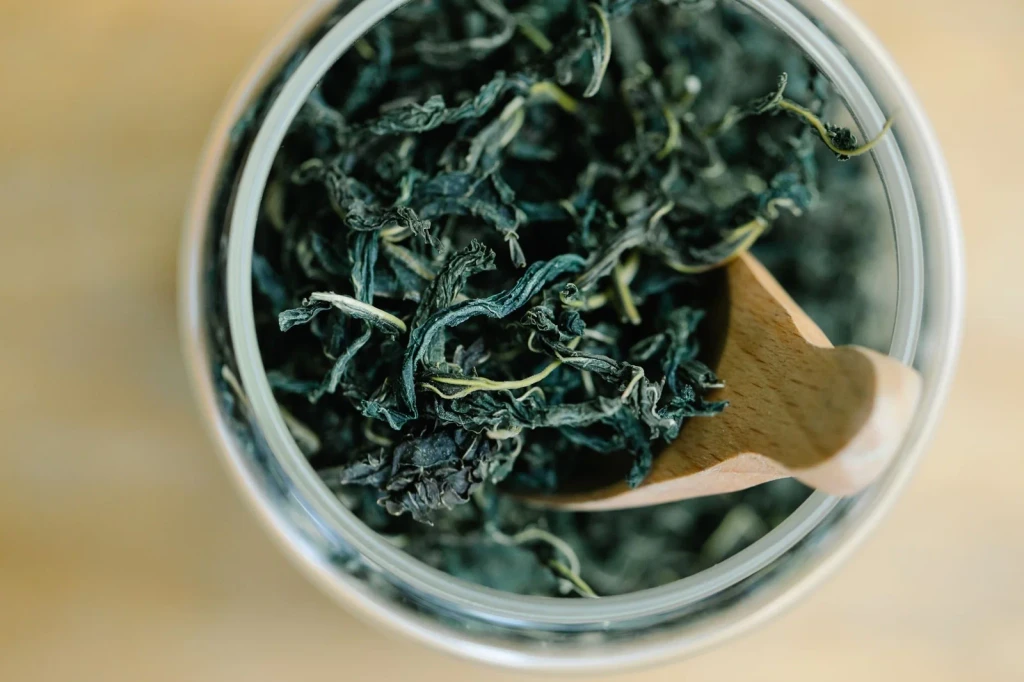
Dried green tea leaves fill a glass jar, wooden spoon at hand. A moment of quiet before the water arrives.
Photograph by Anna Pou, via Pexels.
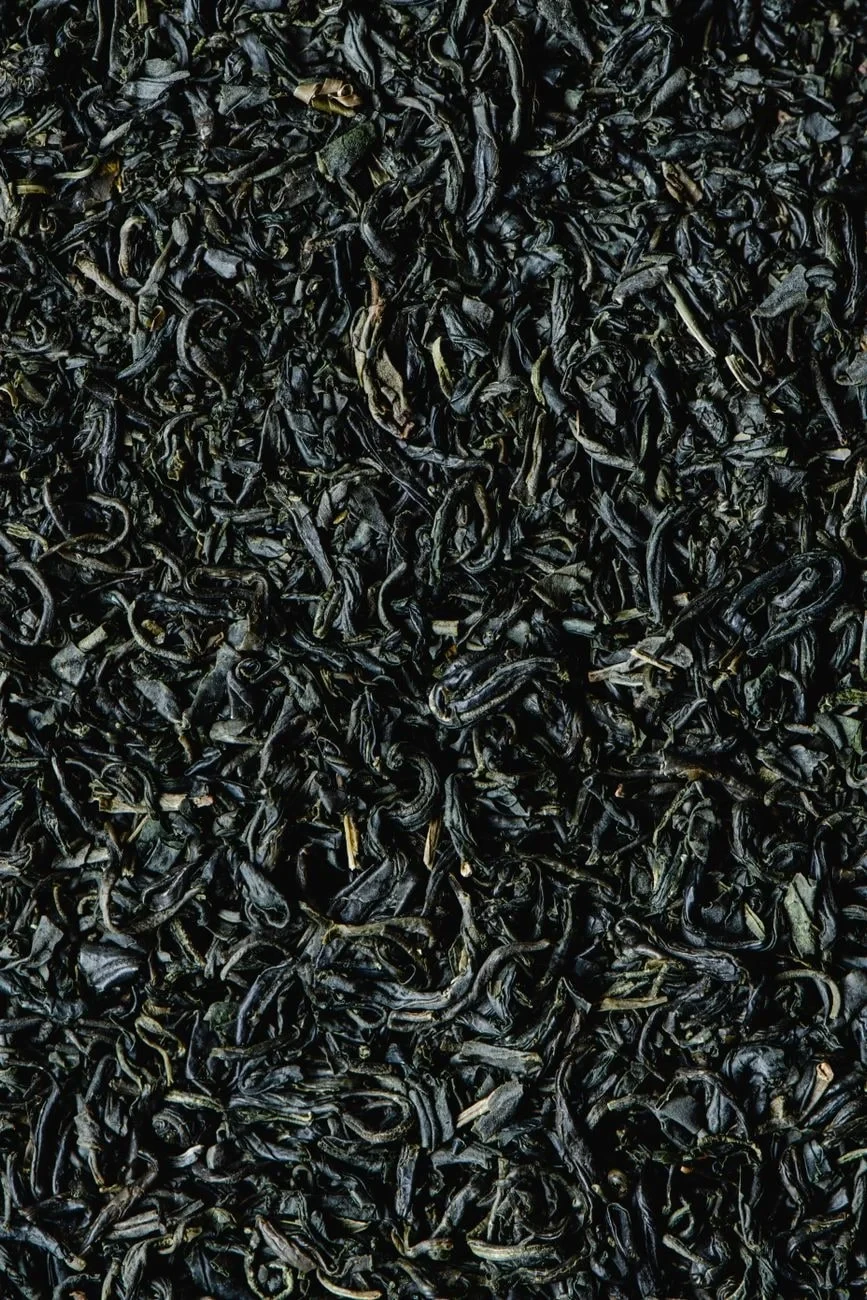
Organic dried tea leaves shown in high resolution. The texture of these small leaves hints at the complexity within.
Photograph by Eva Bronzini, via Pexels.
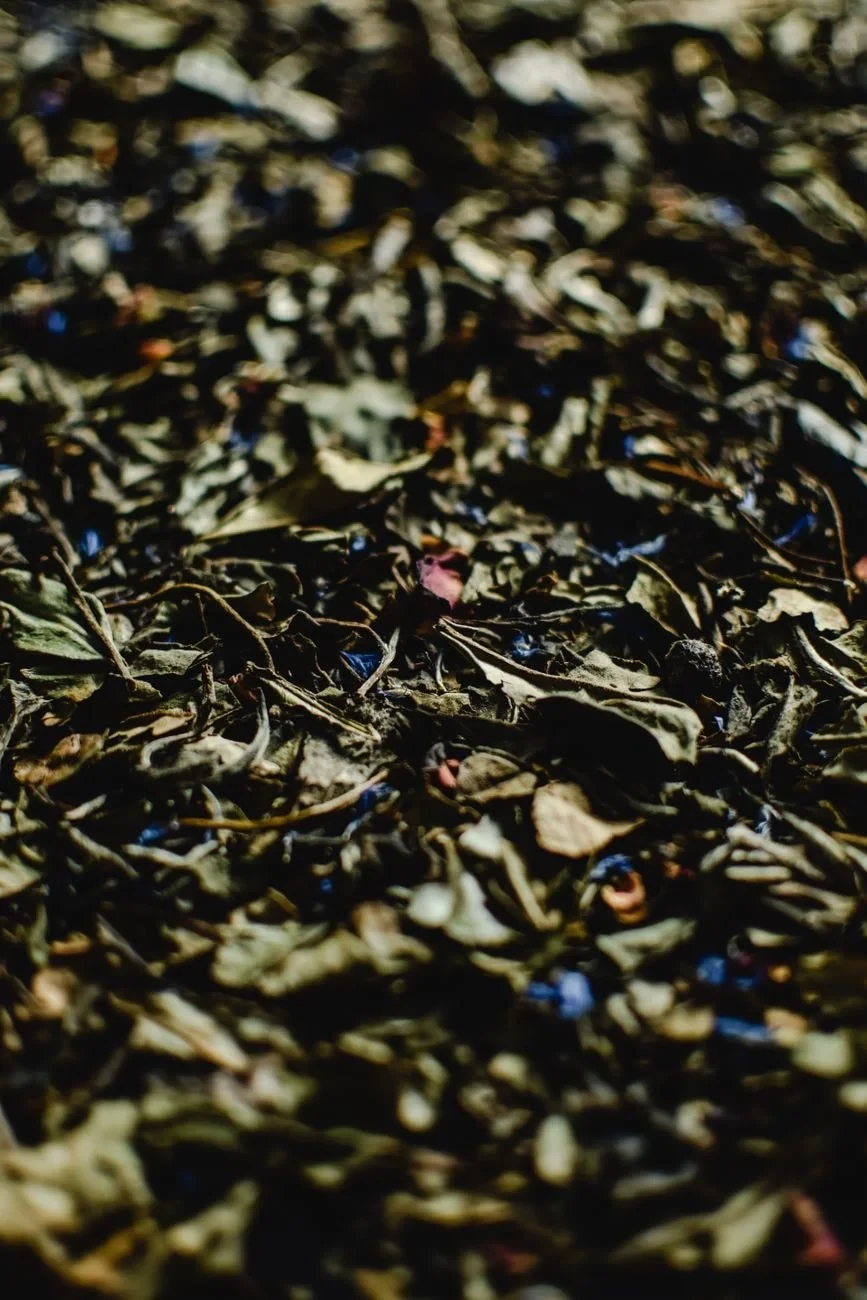
Assorted dried leaves emphasize color and texture differences across tea types. Each variety has its own visual character.
Photograph by Eva Bronzini, via Pexels.
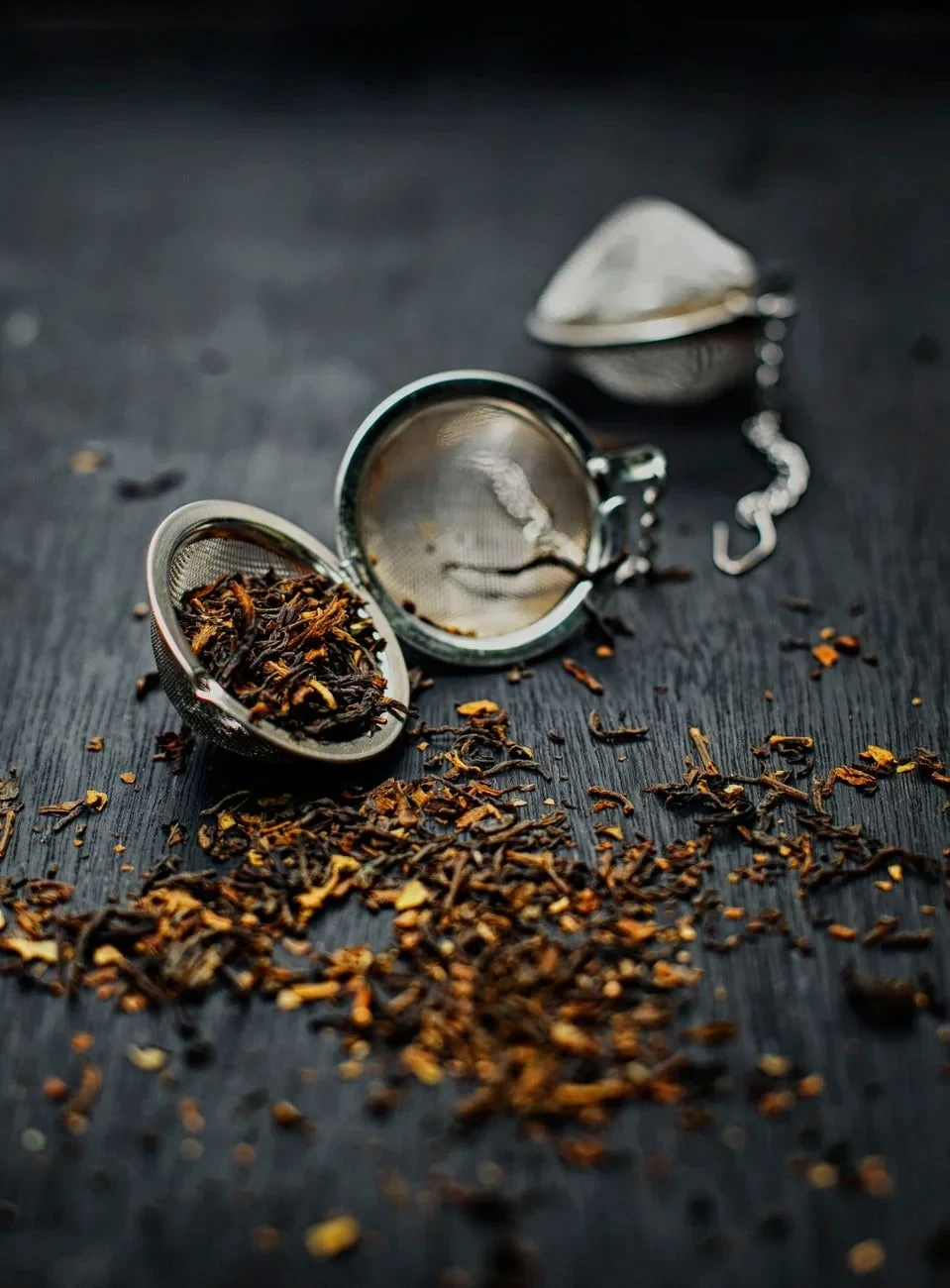
A metal strainer sits among scattered leaves on a dark surface. The tool reminds us of the rituals that follow collection.
Photograph by koko rahmadie, via Pexels.
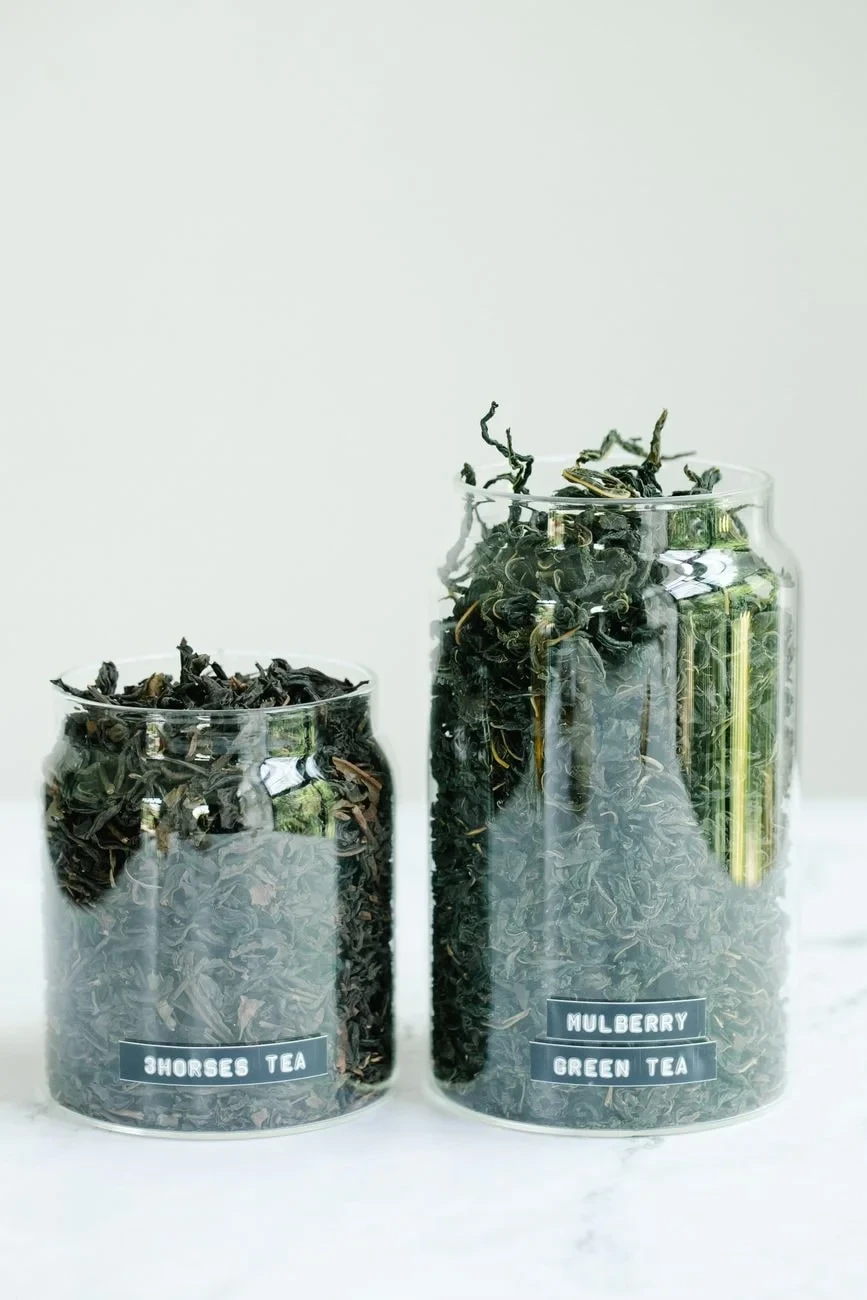
Two glass jars display different tea varieties against a minimal backdrop. Labeling tells us what we're about to brew.
Photograph by Anna Pou, via Pexels.
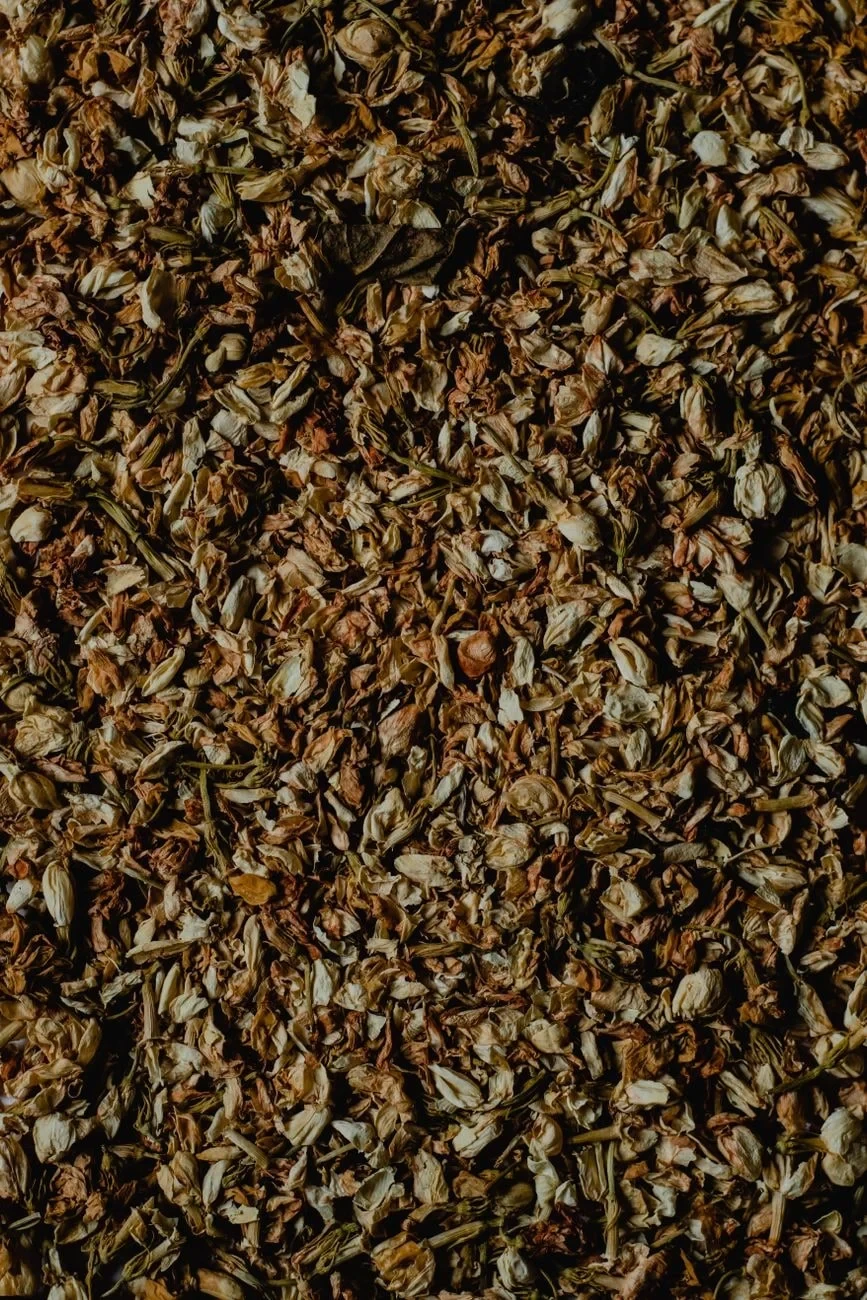
Dried jasmine flowers sit among tea leaves. This close look at texture shows the delicate botanicals that give tea its character.
Photograph by Eva Bronzini, via Pexels.
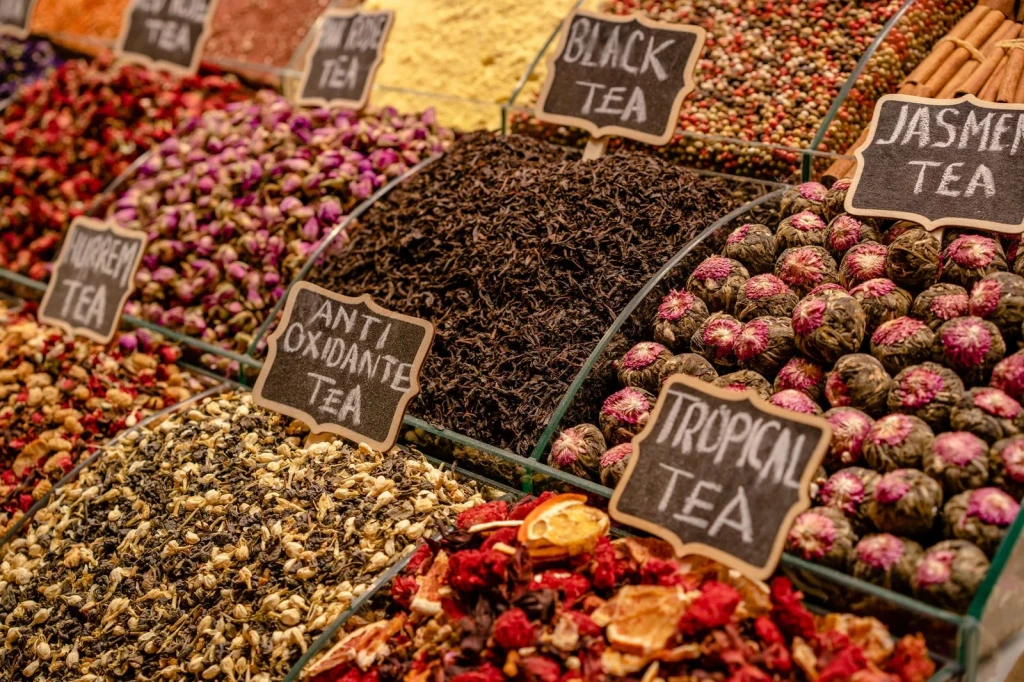
A stall displays teas in many colors and varieties. This abundance speaks to tea's reach across flavors and preferences.
Photograph by Atlantic Ambience, via Pexels.
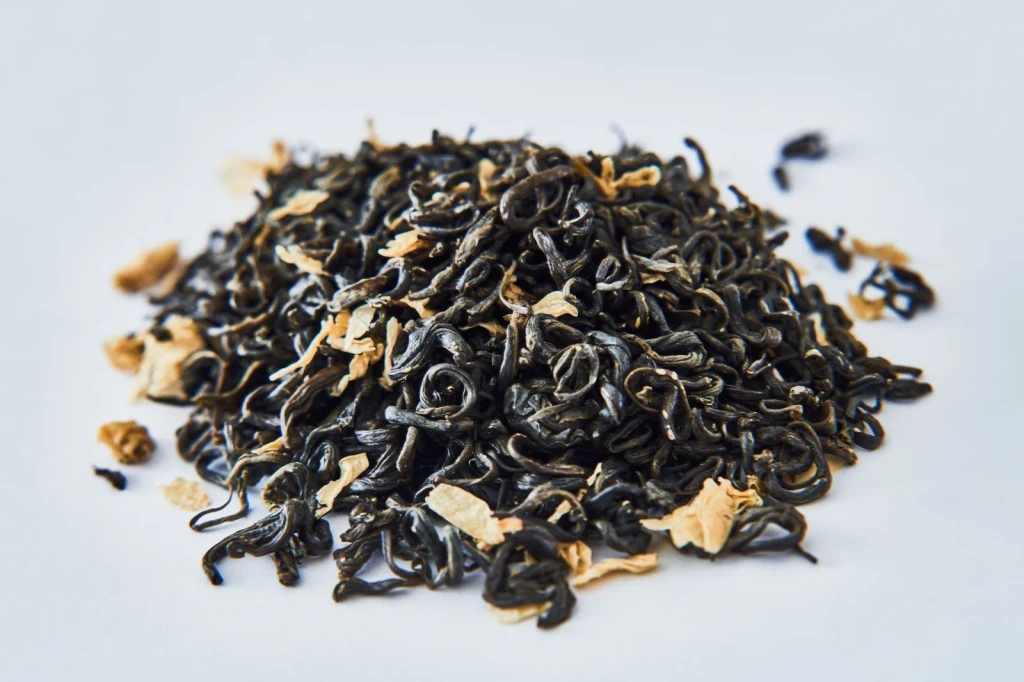
Loose black tea leaves and dried petals rest on white. The composition shows tea as both ingredient and visual subject.
Photograph by Suki Lee, via Pexels.
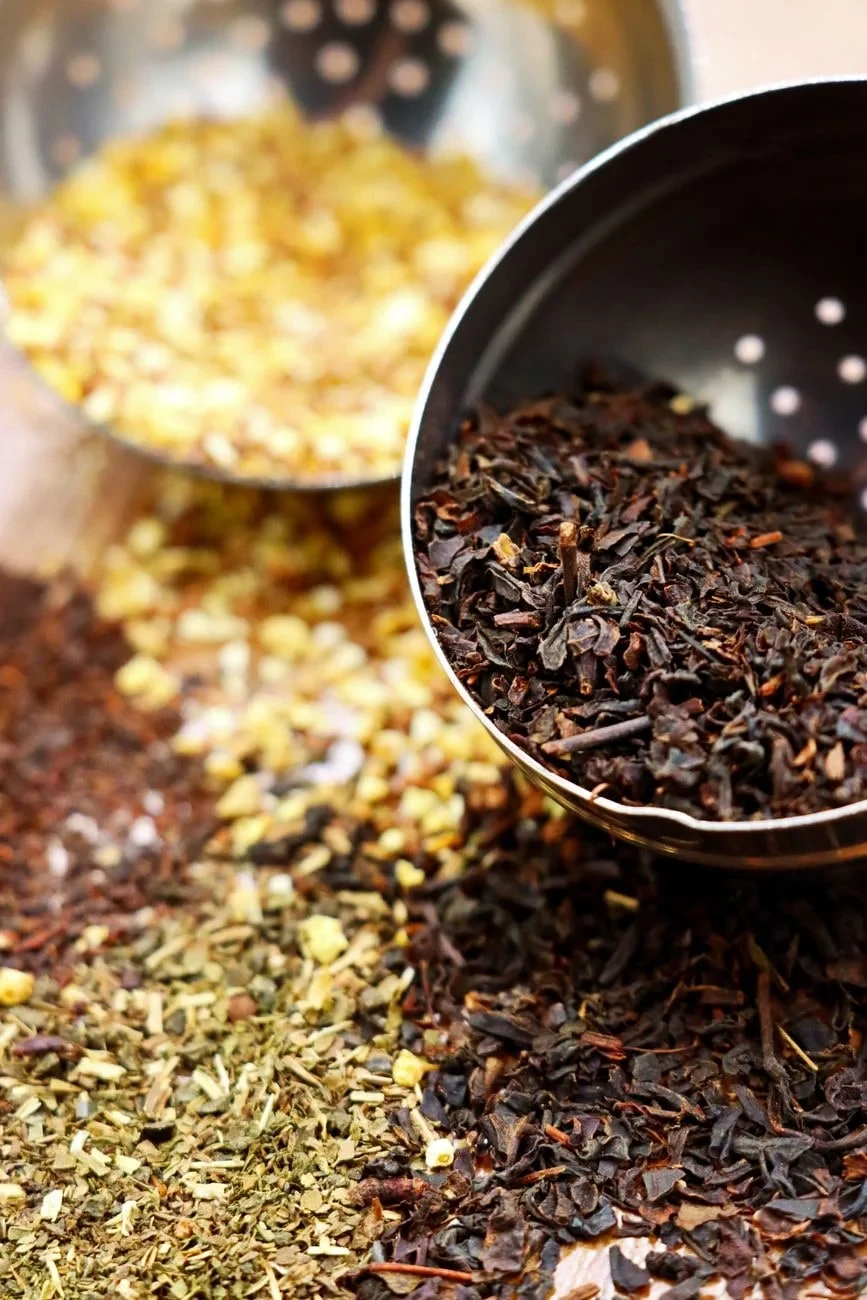
A strainer holds an assortment of loose leaf teas and herbs. The tools of tea-making reveal the diversity hidden in each cup.
Photograph by Marta Branco, via Pexels.
