3D Gallery
You Already Live Inside Architecture
Enter gallery
You Already Live Inside Architecture is a 3D virtual gallery on MyGallery3D, a walkable online exhibition of 16 works. Step inside and explore it in your browser: no app, no headset.
Welcome to a 3D virtual gallery you can walk through in your browser, exploring architecture as humanity's most unavoidable art form. Every civilisation is remembered by what it built.
The Roman architect Vitruvius wrote in the 1st century BC that a good building must have durability, utility, and beauty. That treatise is the oldest surviving text on architecture. Over two thousand years later, we still argue about which of those three matters most.
Brutalist buildings used cheap raw concrete to express socialist ideals of equality. Skyscrapers used glass curtain walls to project corporate ambition. The 828-metre Burj Khalifa in Dubai is now the world's tallest. Over seven thousand skyscrapers above 150 metres exist worldwide, three quarters of them in Asia. Architecture is never neutral. It always tells you who paid for it.
In 19th-century Vienna, Adolf Loos built houses with no ornament at all. Le Corbusier declared a house is a machine for living in. The Brutalists of the 1950s went further, leaving concrete raw and pipes exposed. Yet studies consistently find the public prefers traditional and classical styles over modernist designs. The argument between beauty and function has never been settled.
Architecture began as vernacular building, shaped by trial and error and oral tradition. The leap to cities changed everything. The ten-story Home Insurance Building in Chicago, built in 1884, was the first steel-framed skyscraper. Its architect, William Le Baron Jenney, made walls into curtains hung on a skeleton of metal. That skeleton made the modern skyline possible.
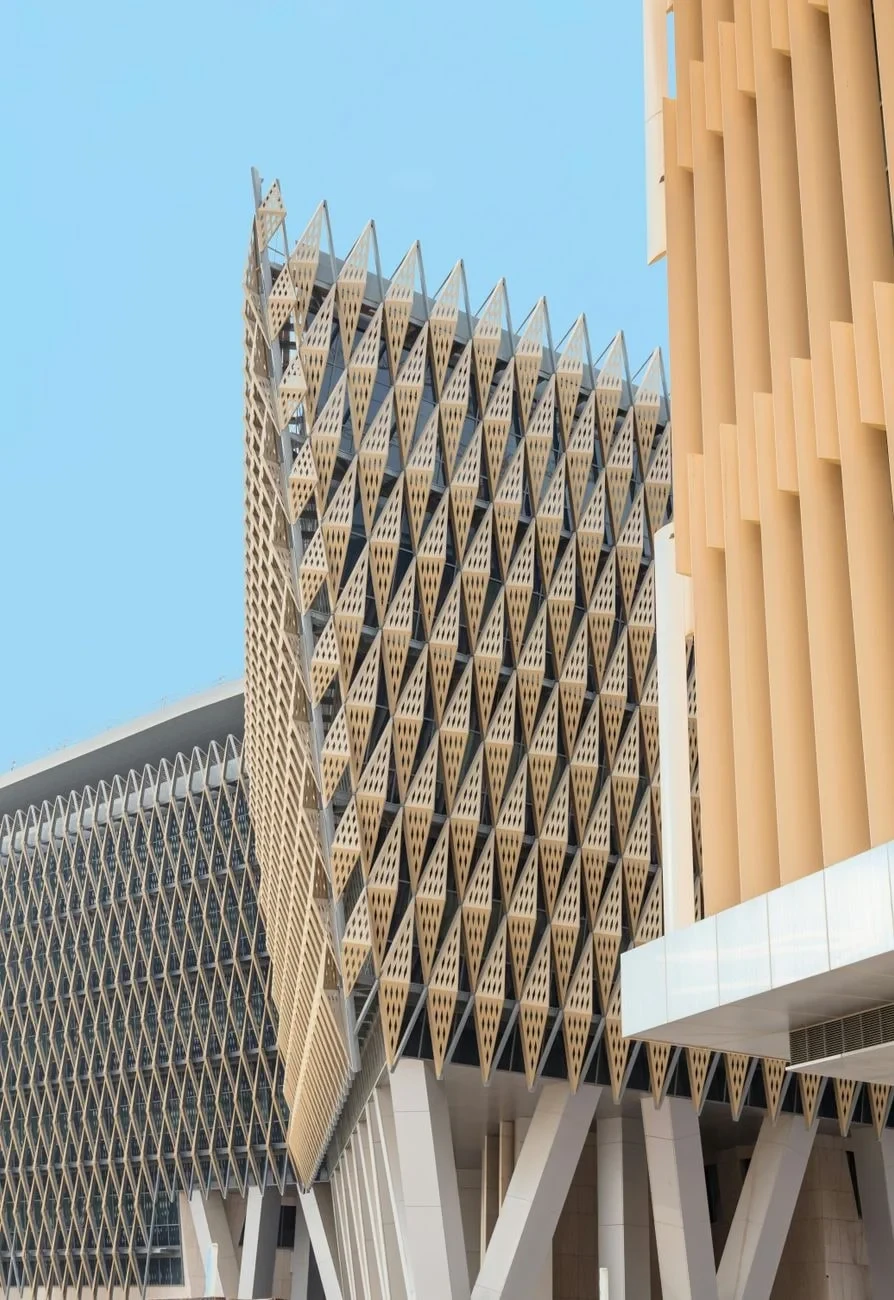
An intricate lattice pattern wraps the building's surface, creating rhythm and shadow play. The design shows how repetitive geometry becomes visual complexity.
Photograph by Tayssir Kadamany, via Pexels.
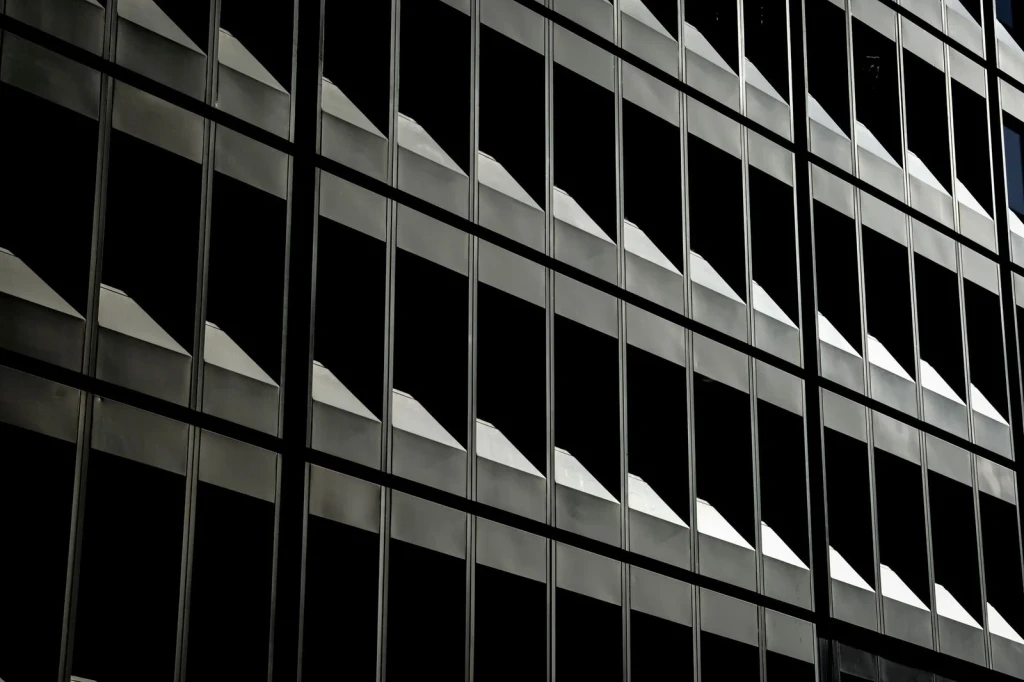
Windows create repetitive patterns across an office building's face. The abstract view shows how rhythm and order define contemporary architectural character.
Photograph by Sydney Sang, via Pexels.
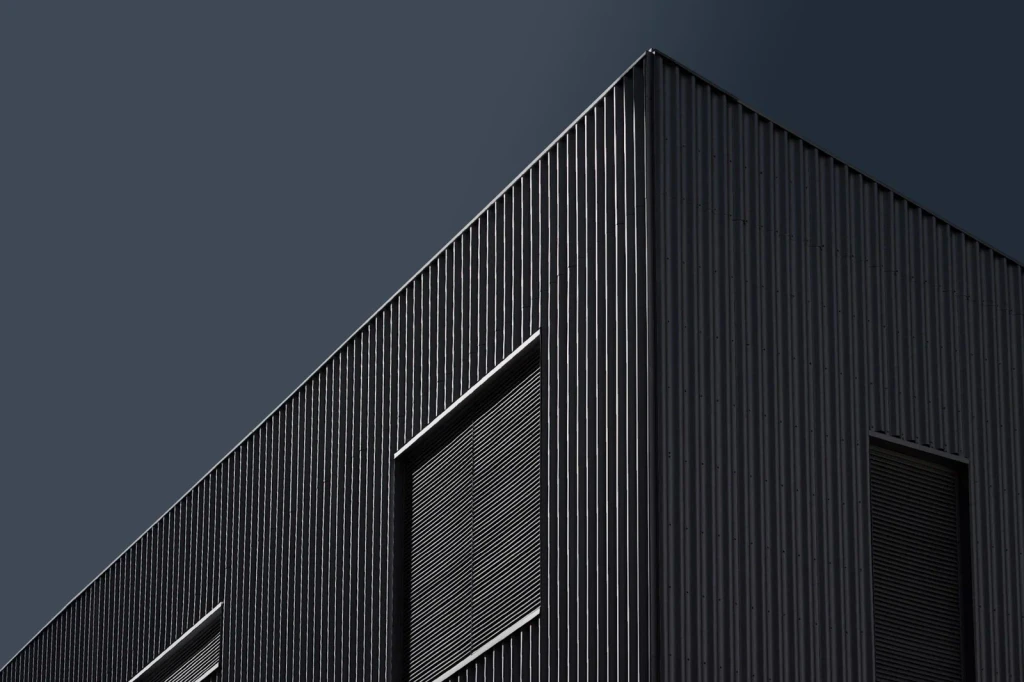
A geometric facade in dark tones demonstrates how pattern and repetition shape our perception of a building's surface. The clear sky isolates the architectural form.
Photograph by REFARGOTOHP, via Pexels.
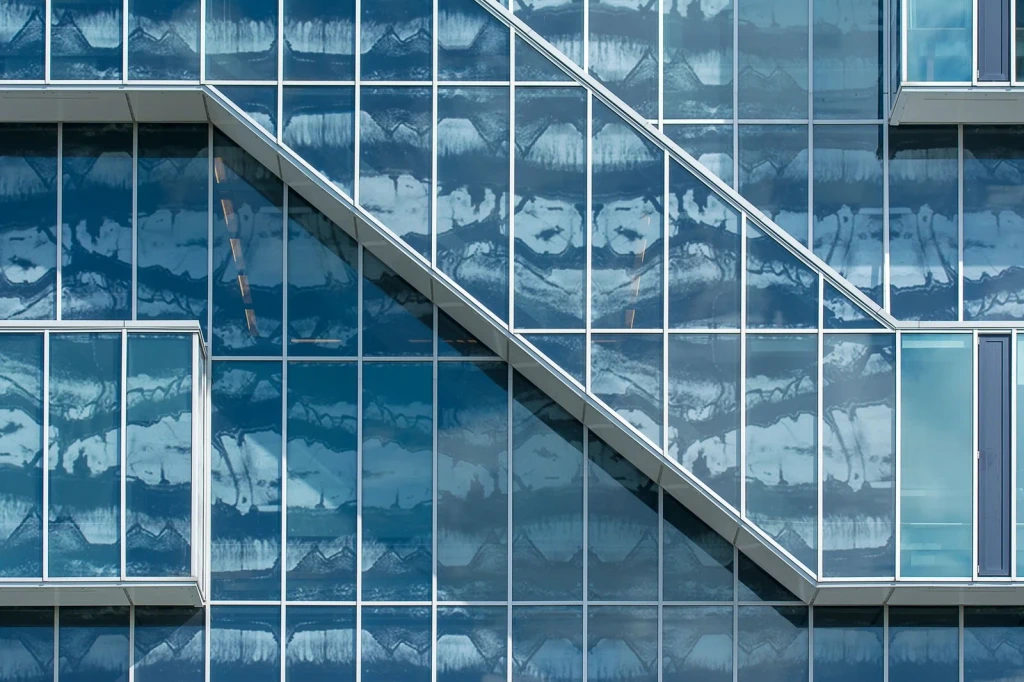
A close view of glass facade captures reflections that blur the boundary between surface and surroundings. Glass transforms architecture into something fluid and responsive.
Photograph by Jan van der Wolf, via Pexels.
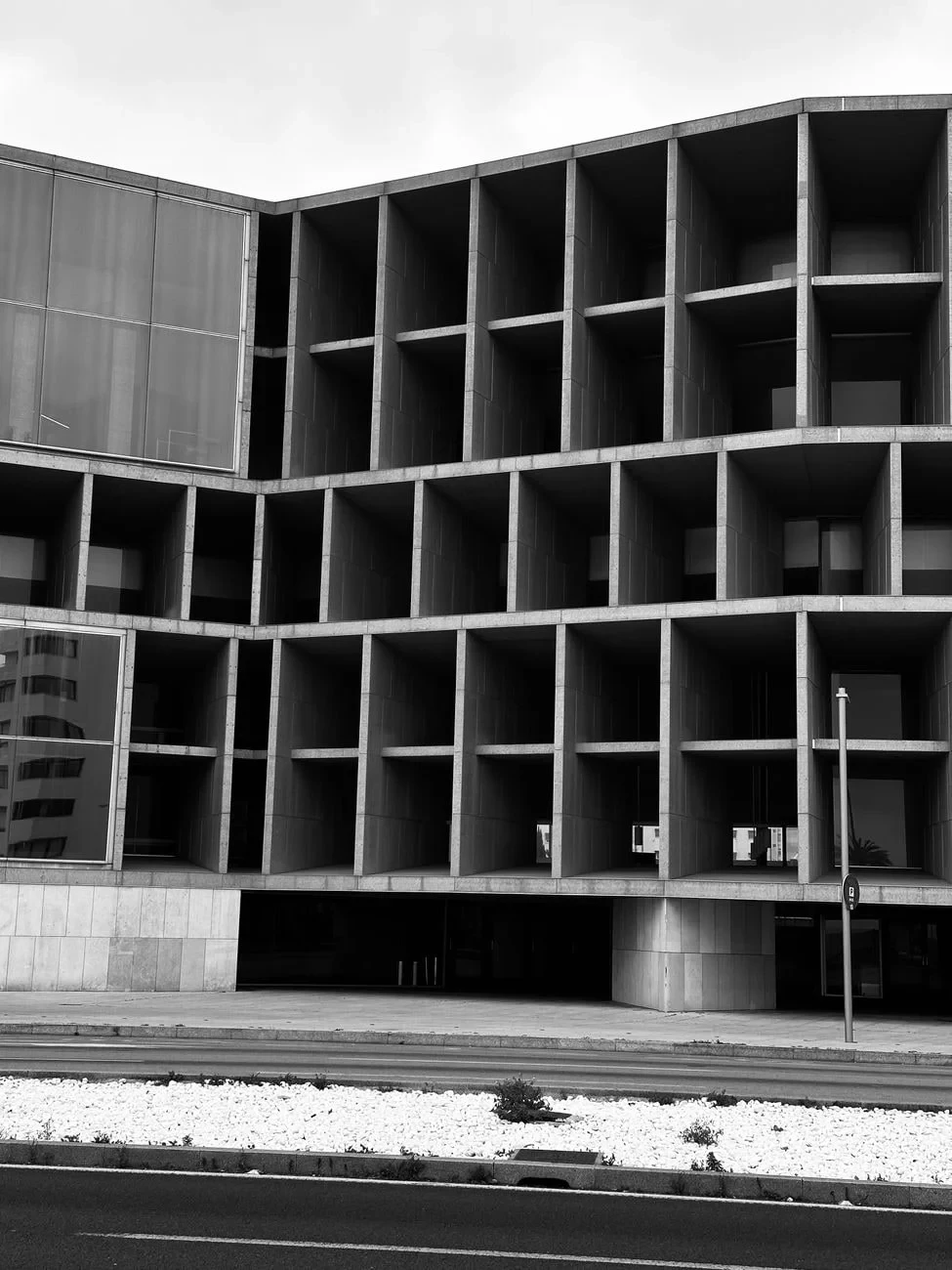
Stark black and white photography emphasizes a geometric facade's repetitive design. High contrast isolates the building's formal qualities from its surroundings.
Photograph by Sarah Rücker, via Pexels.
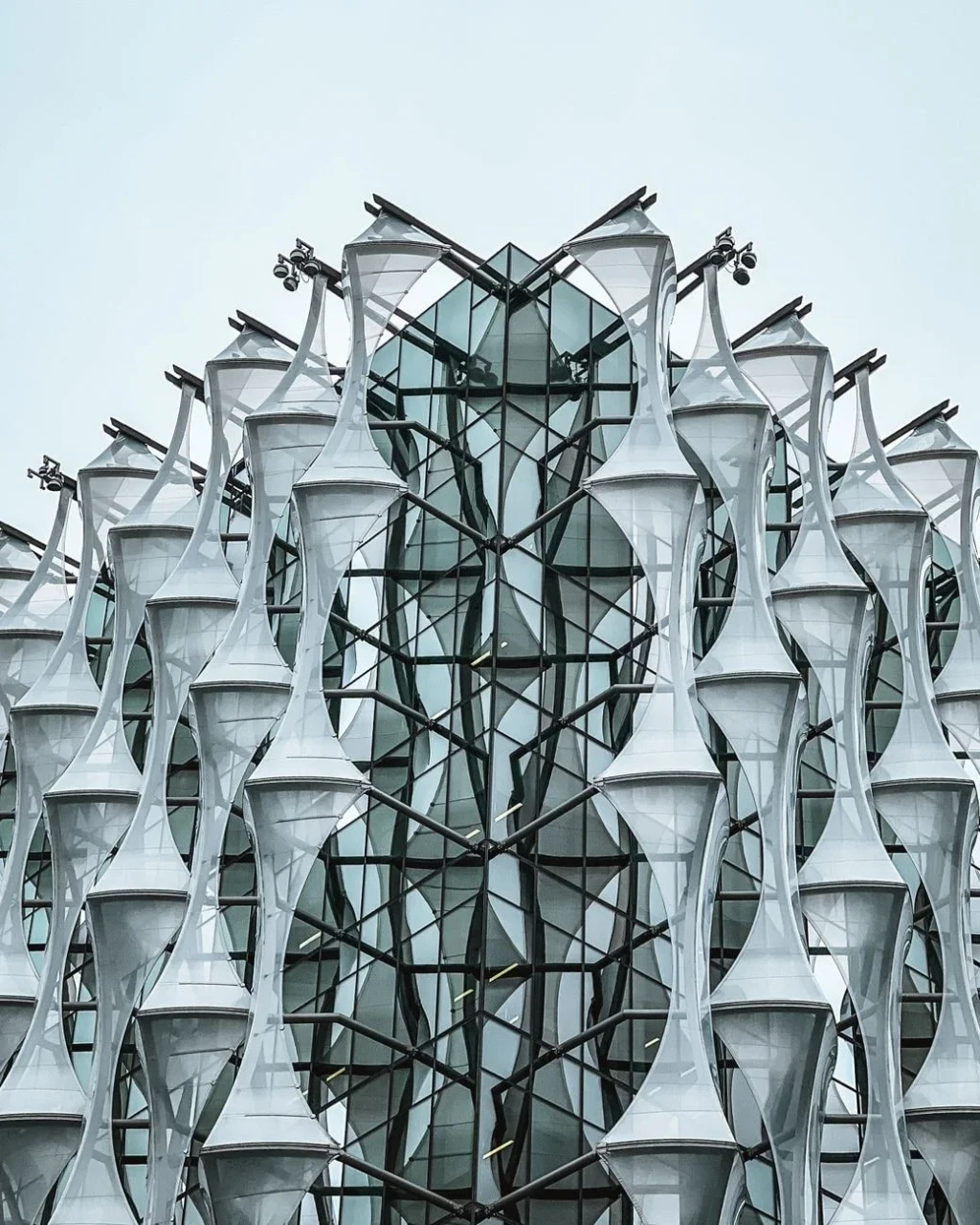
Geometric patterns dominate this modern facade. The strong visual rhythm creates visual tension and movement across the surface.
Photograph by Efe Kuyu, via Pexels.
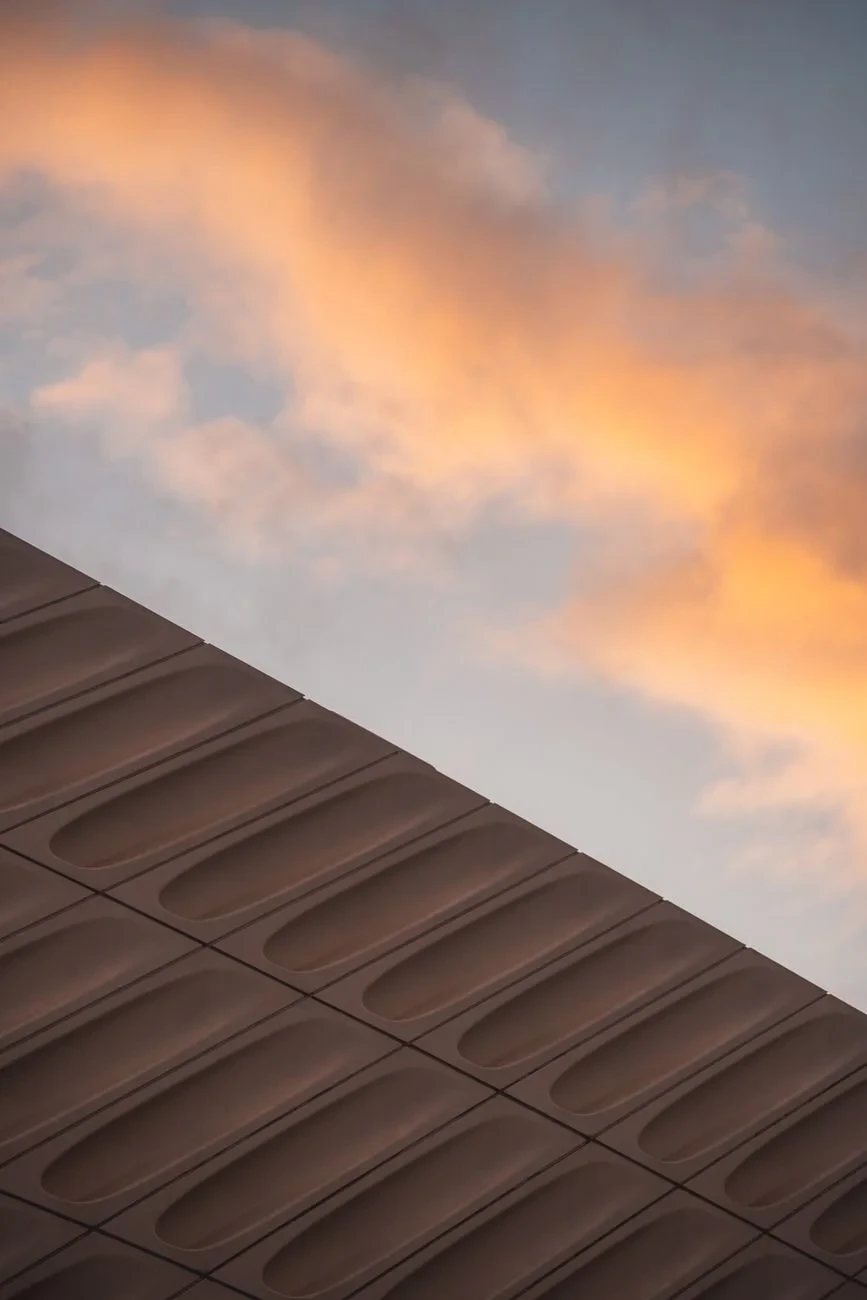
Pink clouds soften a geometric facade. Sunset light reveals how architecture responds to and reshapes natural illumination.
Photograph by Willian Justen de Vasconcellos, via Pexels.
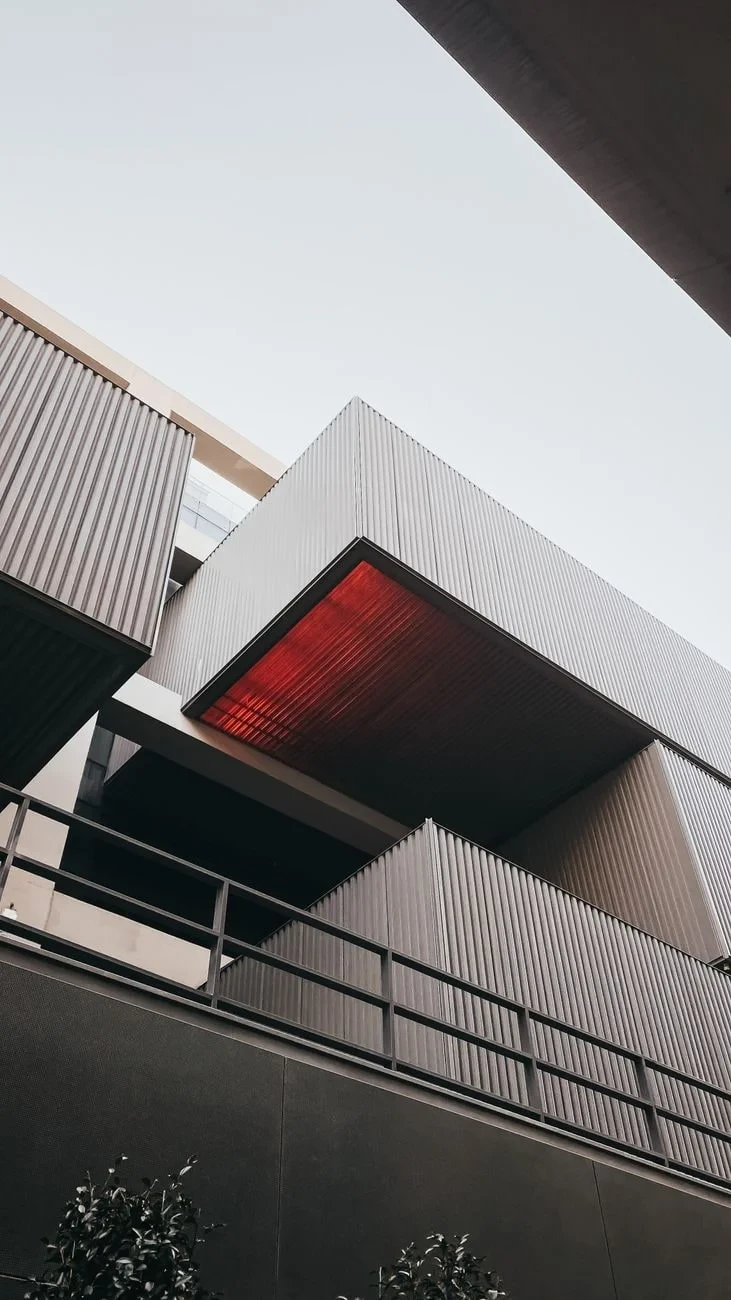
Corrugated panels and a red ceiling create texture and color contrast. The contemporary approach breaks down the facade into distinct material zones.
Photograph by Ikbal Alahmad, via Pexels.
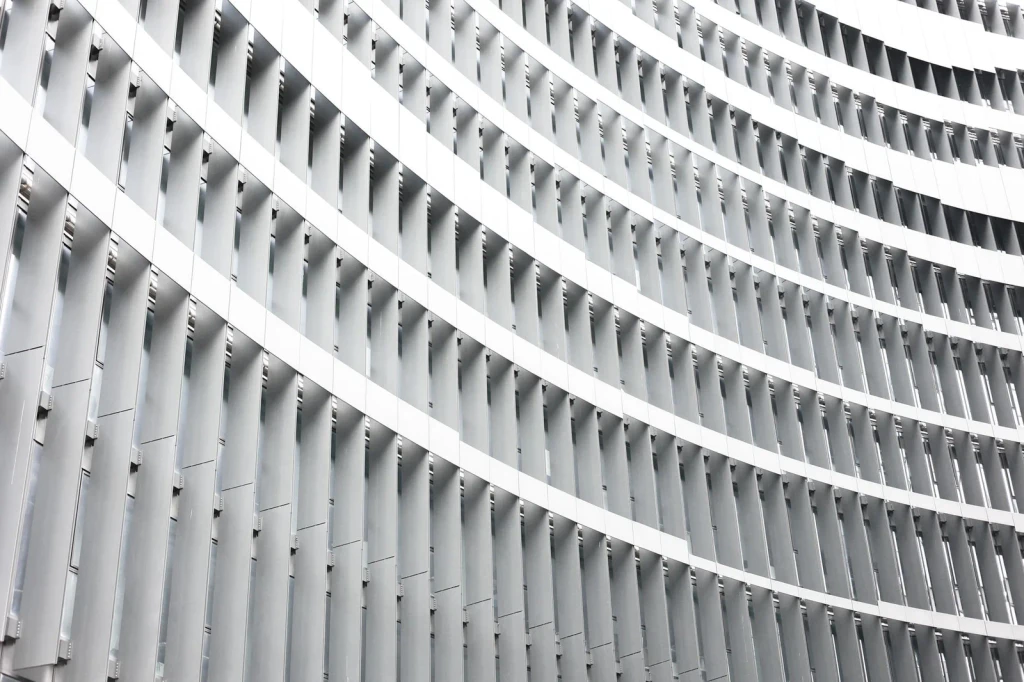
A contemporary facade displays sleek geometric forms in an urban setting. The ordered design demonstrates how modern architecture transforms built surfaces into visual rhythm.
Photograph by Wika Wawrzeniecka, via Pexels.
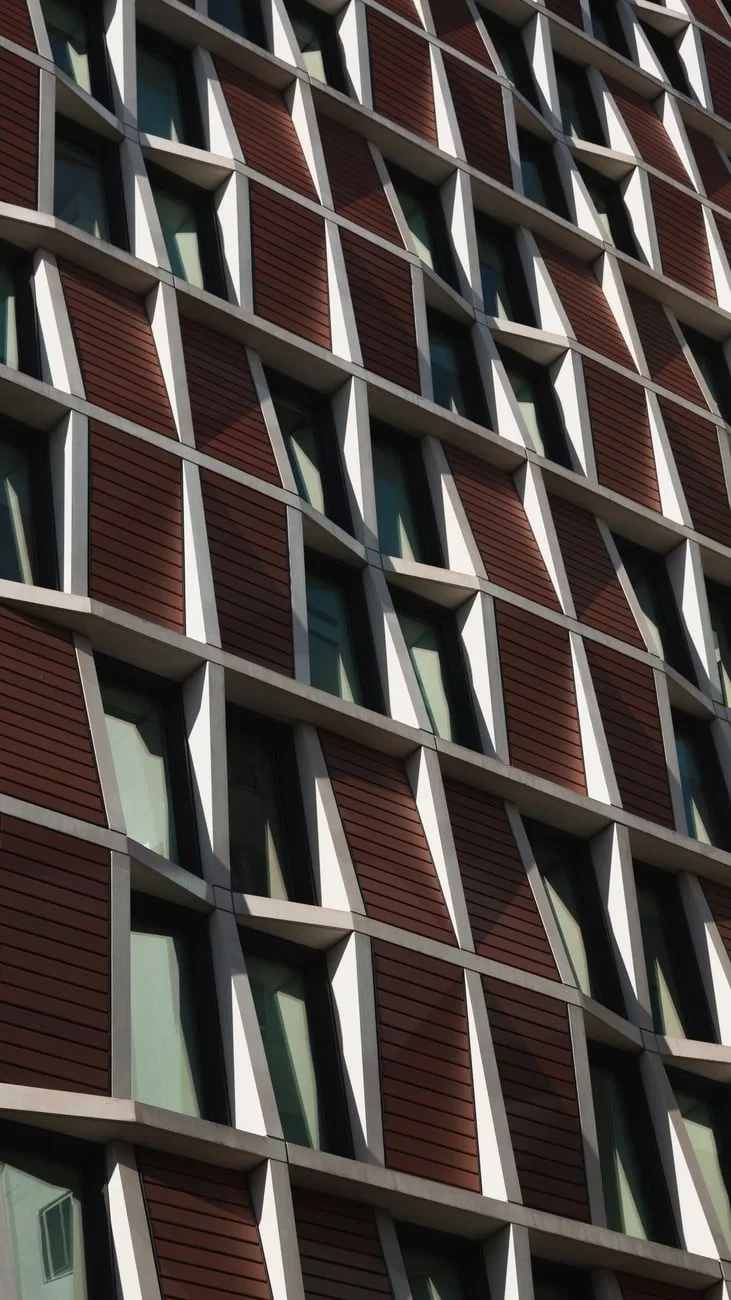
Geometric panels compose this modern facade. The close view reveals how industrial materials create rhythm and structure.
Photograph by Gustavo Vizart, via Pexels.
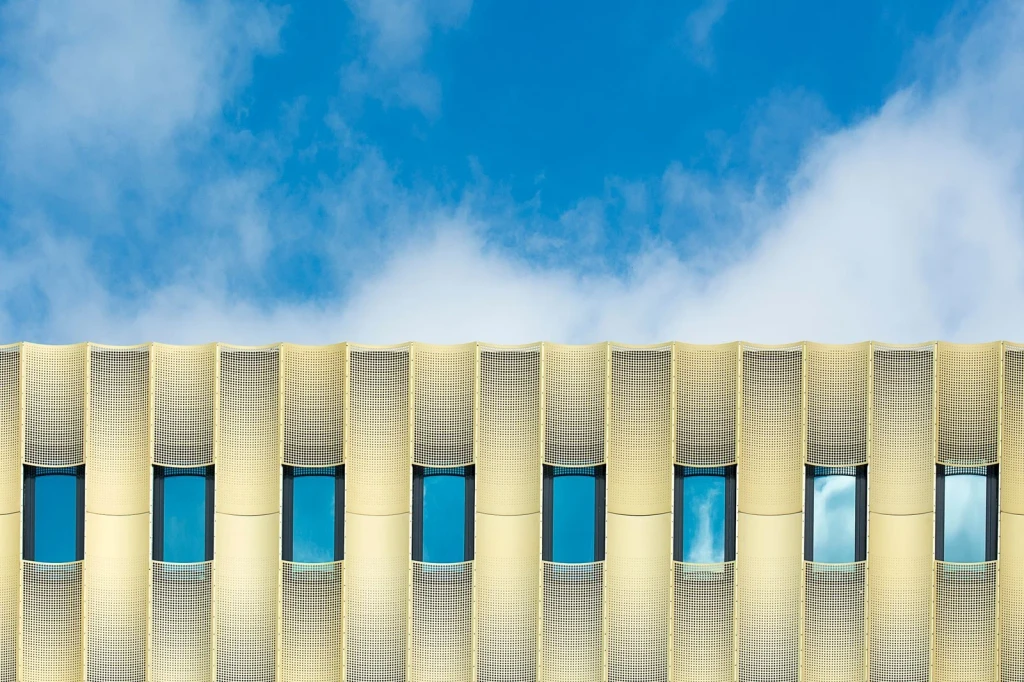
A contemporary facade meets open sky. Windows punctuate the surface, framing the relationship between built form and natural light.
Photograph by Jan van der Wolf, via Pexels.
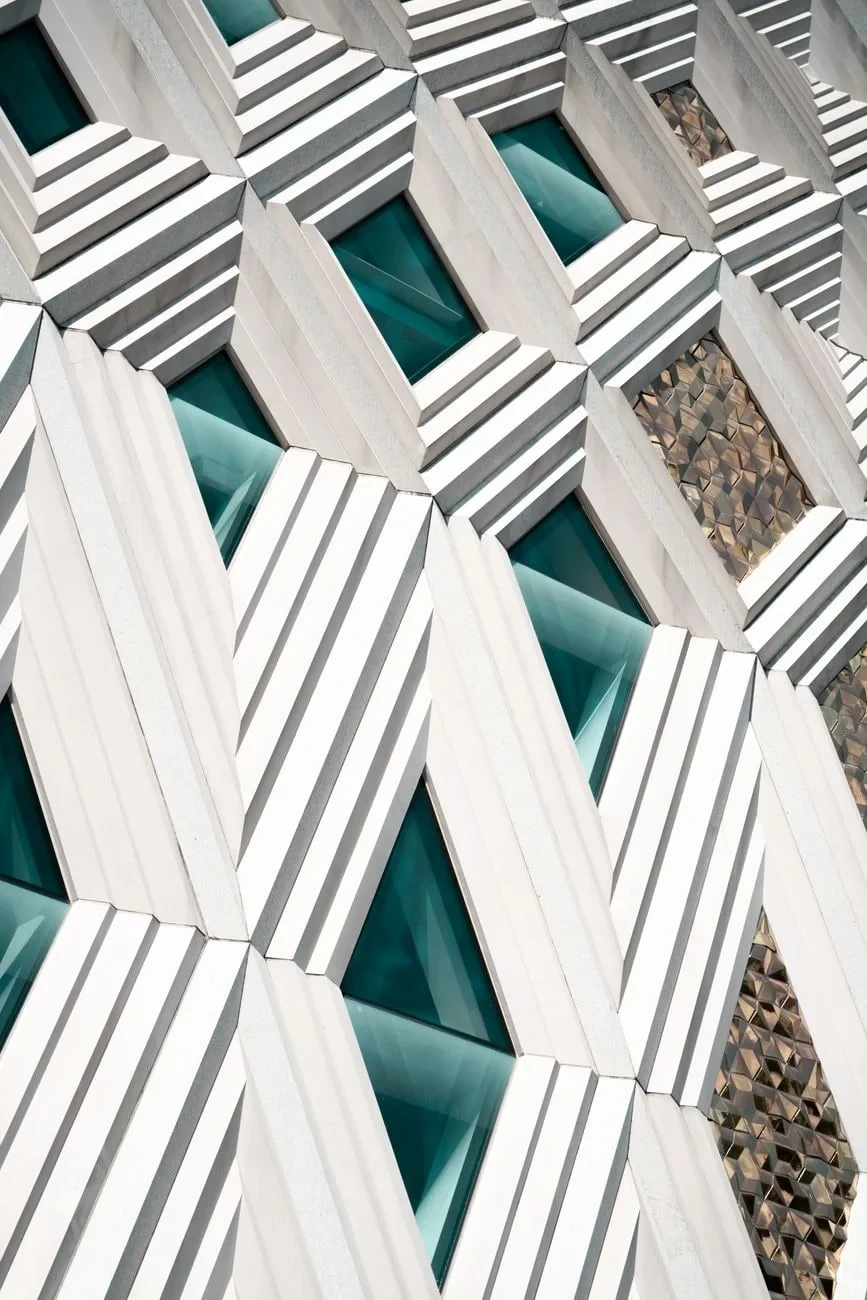
Geometric patterns layer across this facade's surface. Repetition and variation work together to define the building's character.
Photograph by Arthur Swiffen, via Pexels.
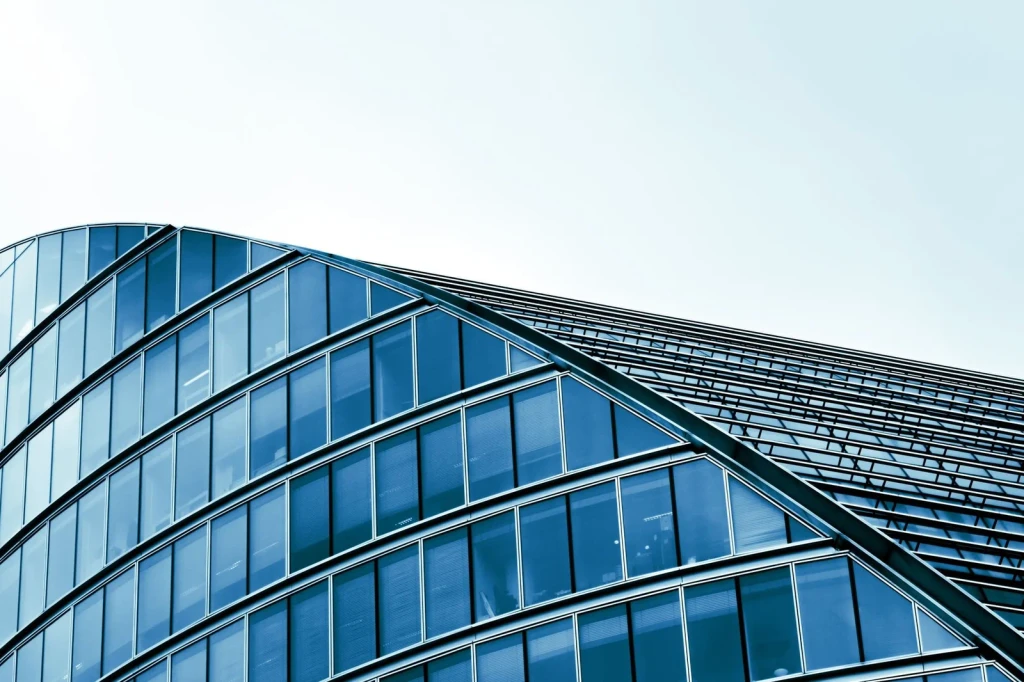
Curved glass defines this contemporary structure within its urban setting. The flowing form contrasts with the rigid geometry of surrounding buildings.
Photograph by Arthur Swiffen, via Pexels.
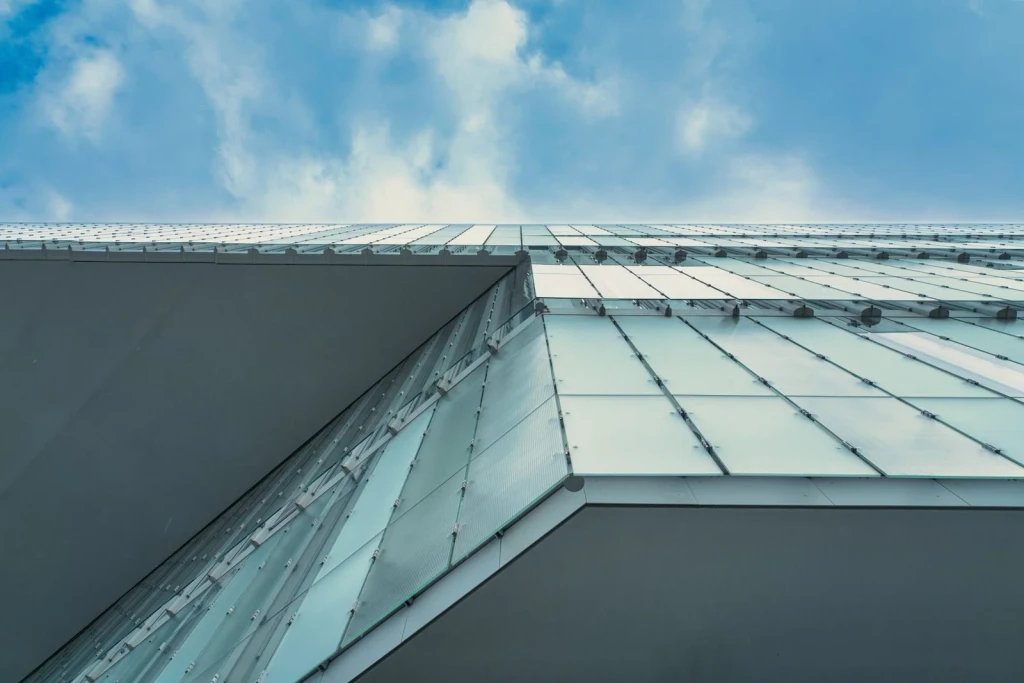
A glass facade meets clear sky. The architectural design emphasizes clean lines and contemporary urban composition.
Photograph by Ramon Perucho, via Pexels.
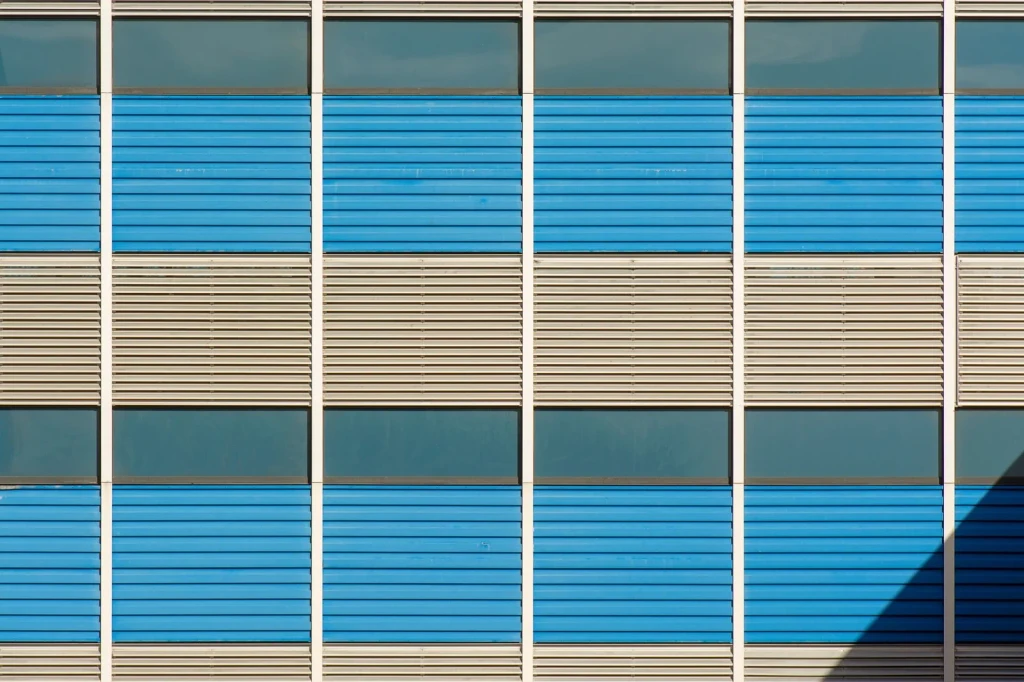
Blue and beige panels arranged in geometric sequence demonstrate how color and proportion organize a facade. Each material choice shapes the whole.
Photograph by Jan van der Wolf, via Pexels.
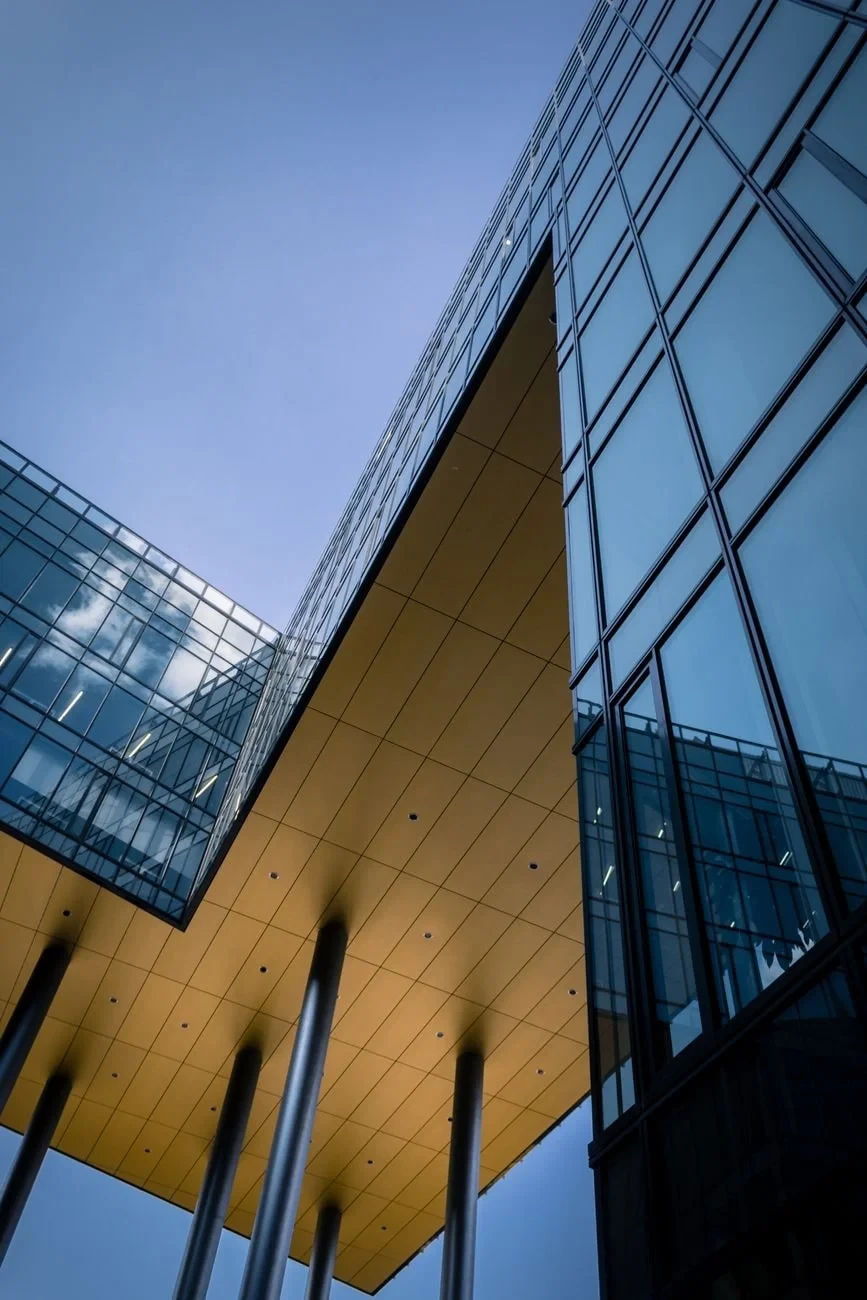
A futuristic glass building rises against the sky in this low angle view. Reflective surfaces blur the boundary between structure and surrounding environment.
Photograph by Kristóf Sass-Kovan, via Pexels.
