3D Gallery
Gunpowder Redrew Every Border
Enter gallery
Gunpowder Redrew Every Border is a 3D virtual gallery on MyGallery3D, a walkable online exhibition of 12 works. Step inside and explore it in your browser: no app, no headset.
Walk through this 3D virtual museum of gunpowder in your browser and begin where it began, in a laboratory looking for eternal life.
Chinese alchemists were trying to make an elixir of immortality. One Taoist text warns against heating sulfur, realgar and saltpeter with honey: hands and faces burnt, the whole house burned down. They called the result huoyao, fire medicine, and the word is still in use. It was first used for warfare around AD 904. The search for a way to avoid death produced the earliest known chemical explosive.
The same chemistry became entertainment. In the Han dynasty people threw bamboo stems into a fire to make a loud bang, and later the bamboo gave way to rolled paper tubes packed with gunpowder. Color came from salts: copper acetate for green, lead carbonate for lilac-white, mercurous chloride for white. John Barrow thought the colours the Chinese could give to fire were the chief merit of their pyrotechny.
The Ottomans had artillery at least by the reign of Bayezid I. At the siege of Constantinople in 1453 their cannons were large enough to batter the walls, to the surprise of the defenders. Cannons firing heavier rounds left traditional city walls and castles unsuitable for defense, and the answer was the star fort and the bastion. Architecture changed because chemistry did.
The first formulas were weak. The 808 recipe called for six parts sulfur, six parts saltpeter and one part birthwort herb, and the mixtures in the Wujing Zongyao of 1044 contain at most 50% saltpeter: enough to burn fiercely, not enough to explode. The modern ideal is 75% potassium nitrate, 10% sulphur and 15% charcoal. Everything turns on the oxidizer.
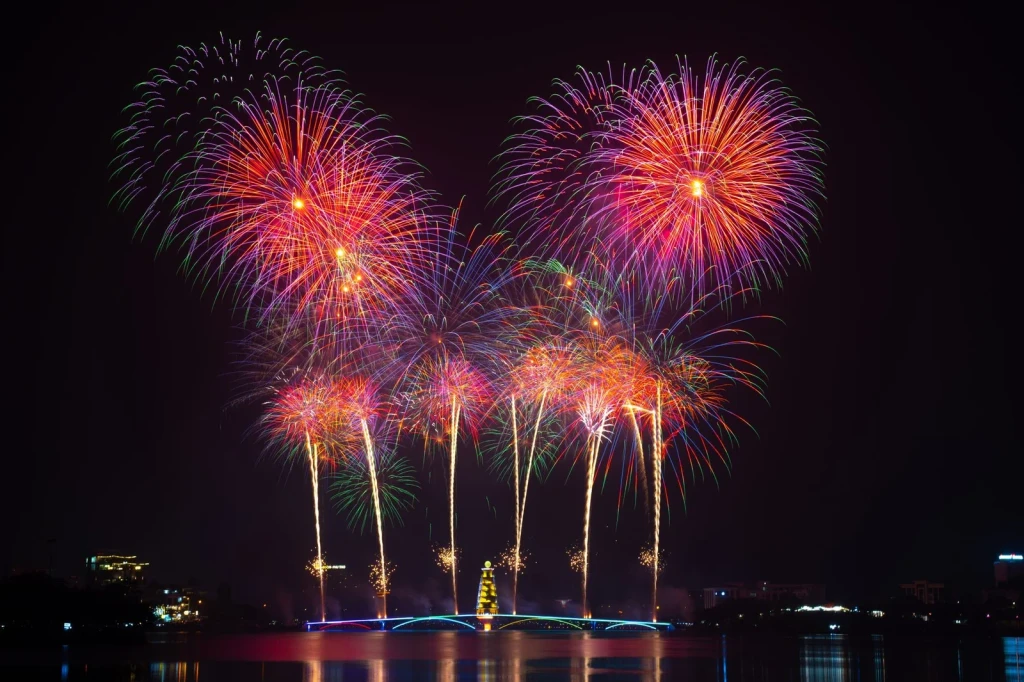
Colorful bursts explode over water, their reflections doubling the light below. A peaceful landscape becomes vivid with temporary illumination.
Photograph by Hoàng Tiến Việt, via Pexels.
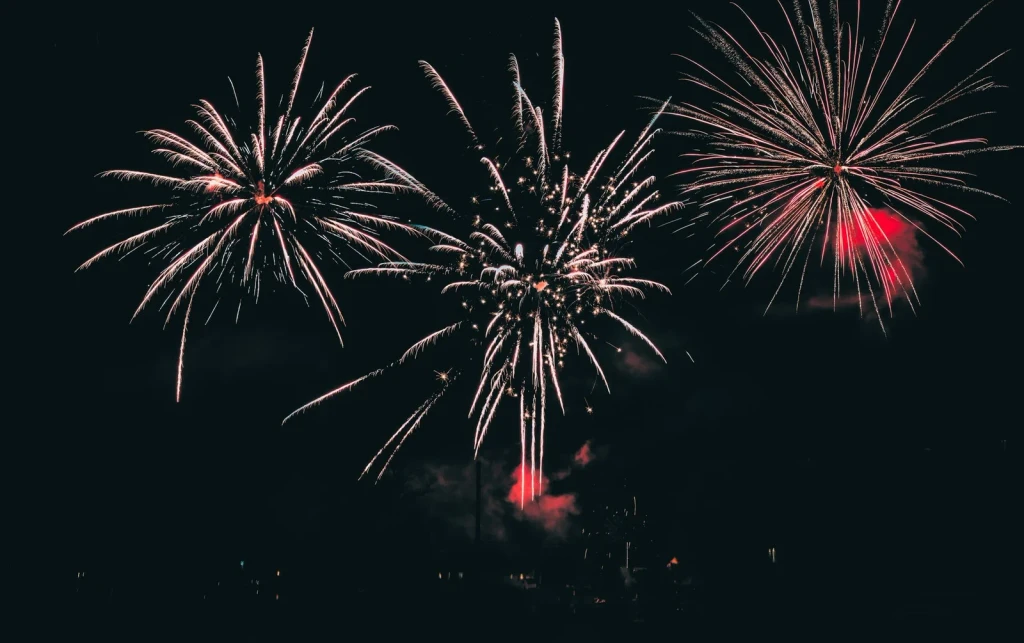
Colorful bursts illuminate darkness in a festive display. The photograph captures how explosions of light can mark moments of celebration.
Photograph by Craig Adderley, via Pexels.
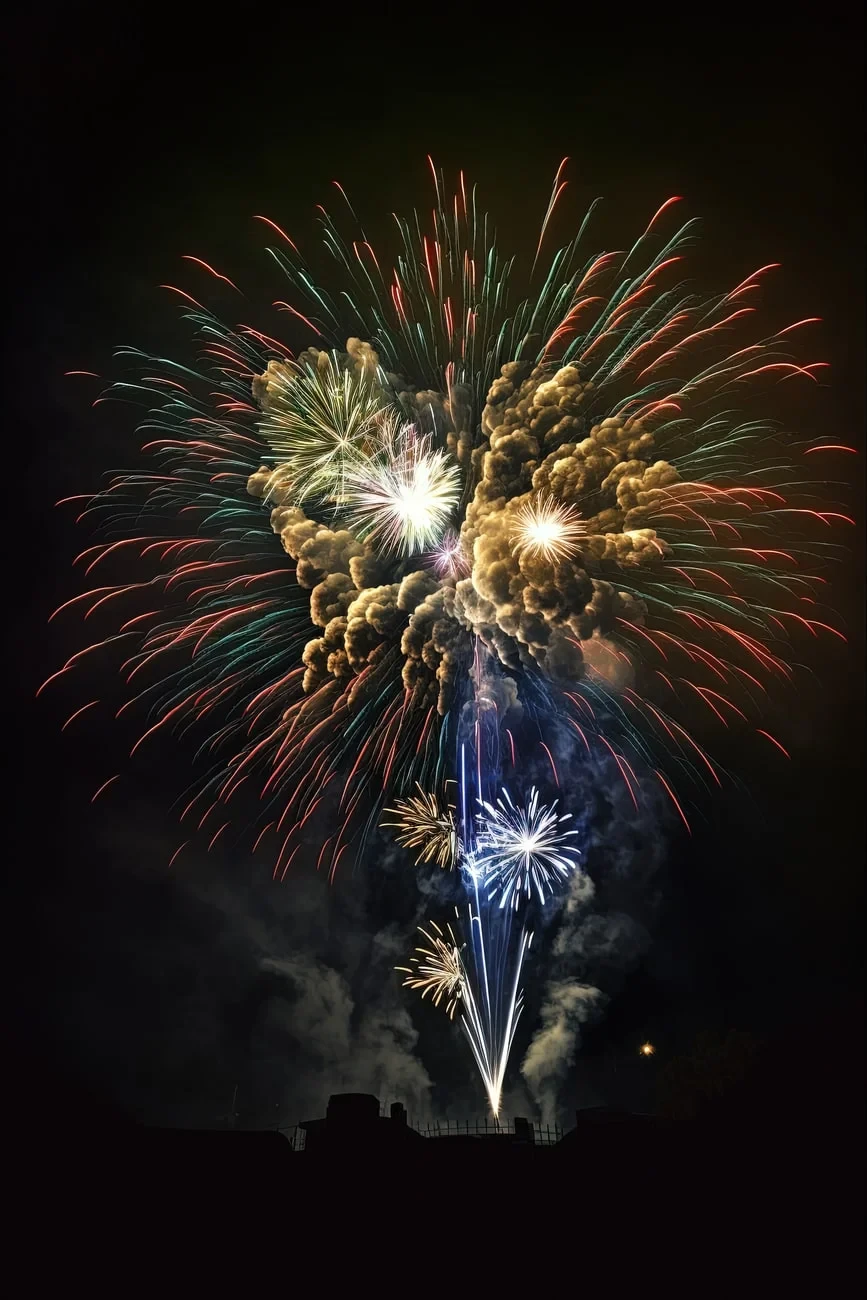
Spectacular bursts create a festive atmosphere in the night sky. Light as temporary, collective, and celebratory.
Photograph by Sam Fire, via Pexels.
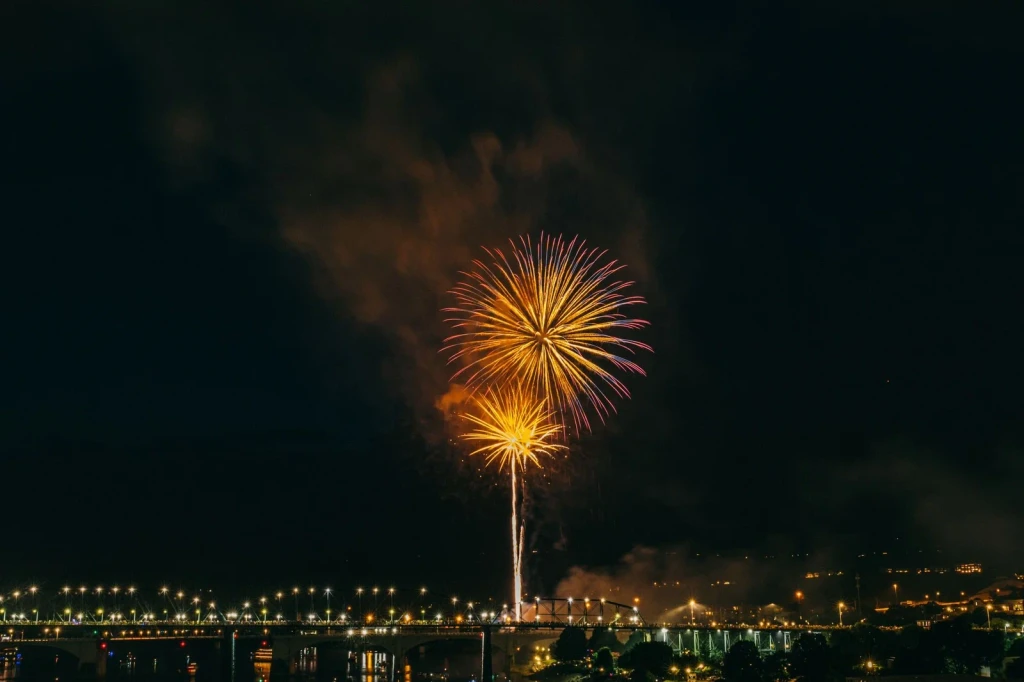
A bridge becomes the viewing platform for nighttime fireworks. Built infrastructure frames the temporary spectacle above.
Photograph by K, via Pexels.
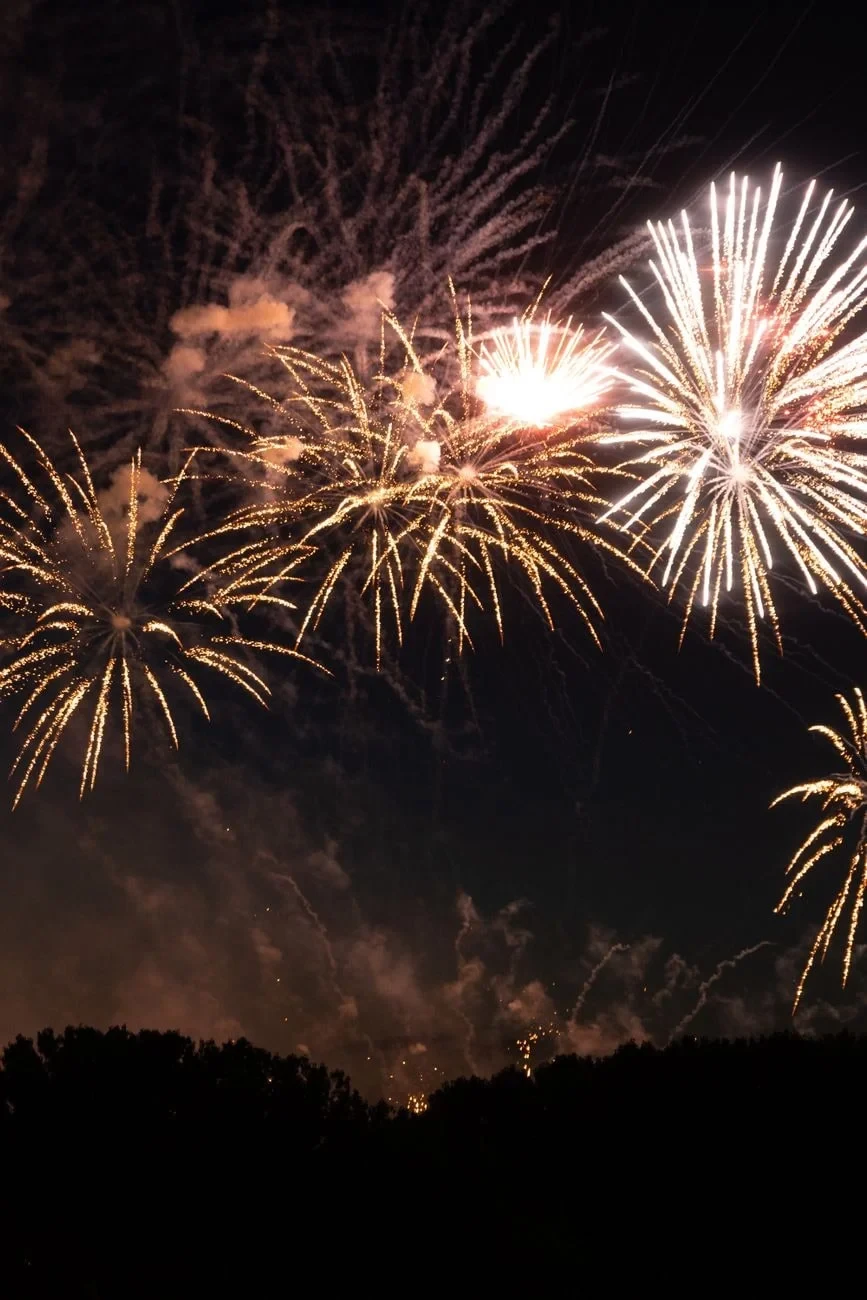
Fireworks explode against night sky in a celebratory moment. The image documents light used to mark collective joy.
Photograph by Violetta B, via Pexels.
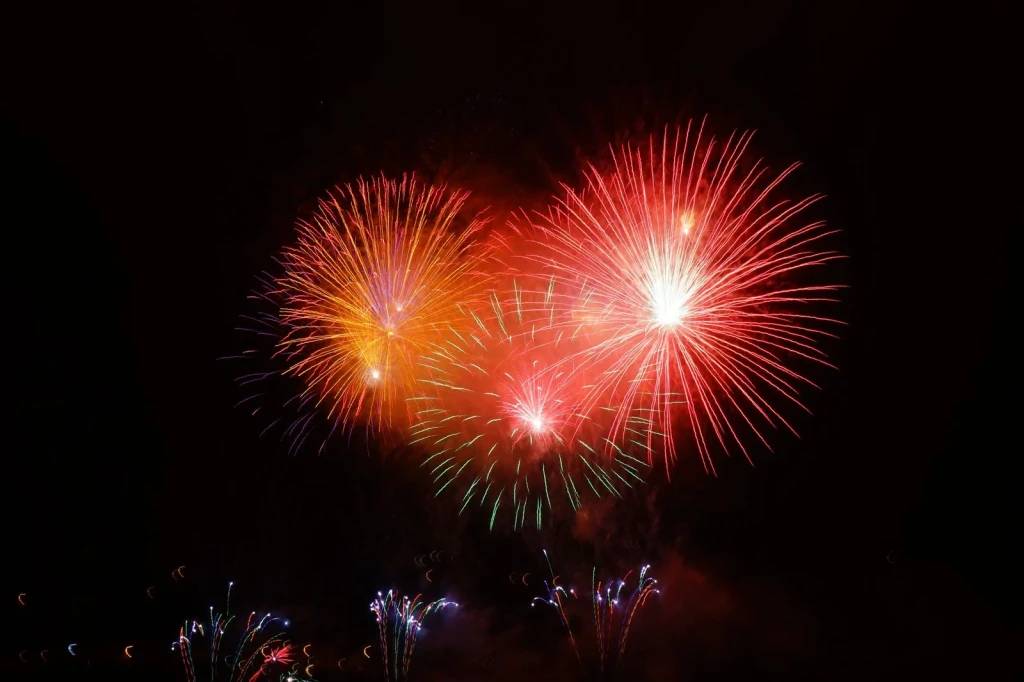
Colorful explosions mark an event or festival moment. Fireworks as a shared visual language for celebration.
Photograph by Pixabay, via Pexels.
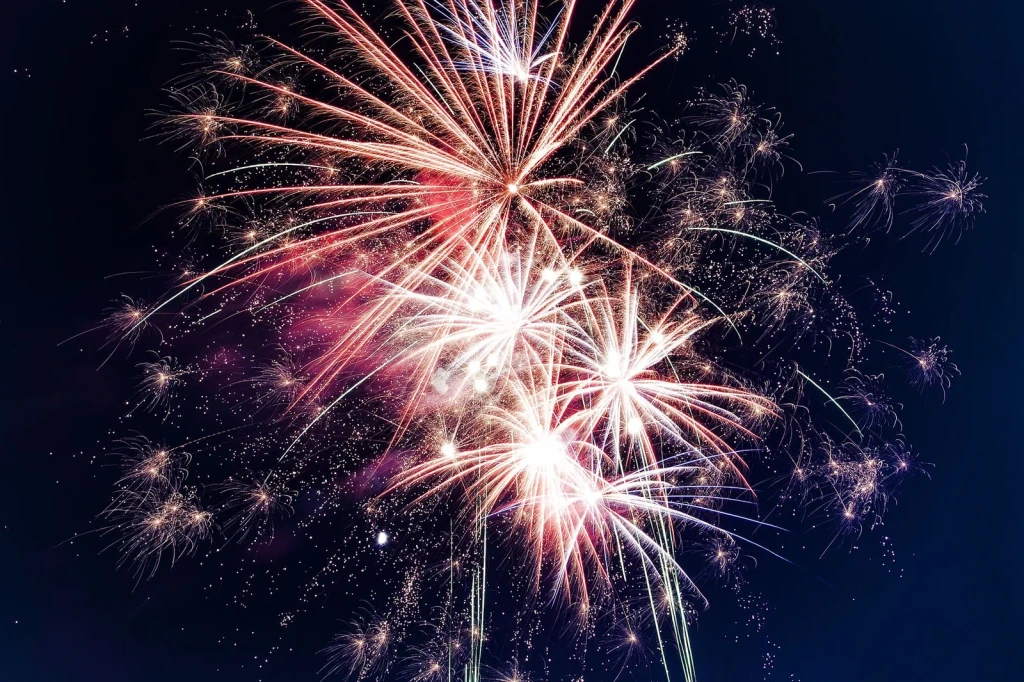
Colorful fireworks explode into darkness, creating festive atmosphere through light. A brief transformation of the night sky.
Photograph by rovenimages.com, via Pexels.
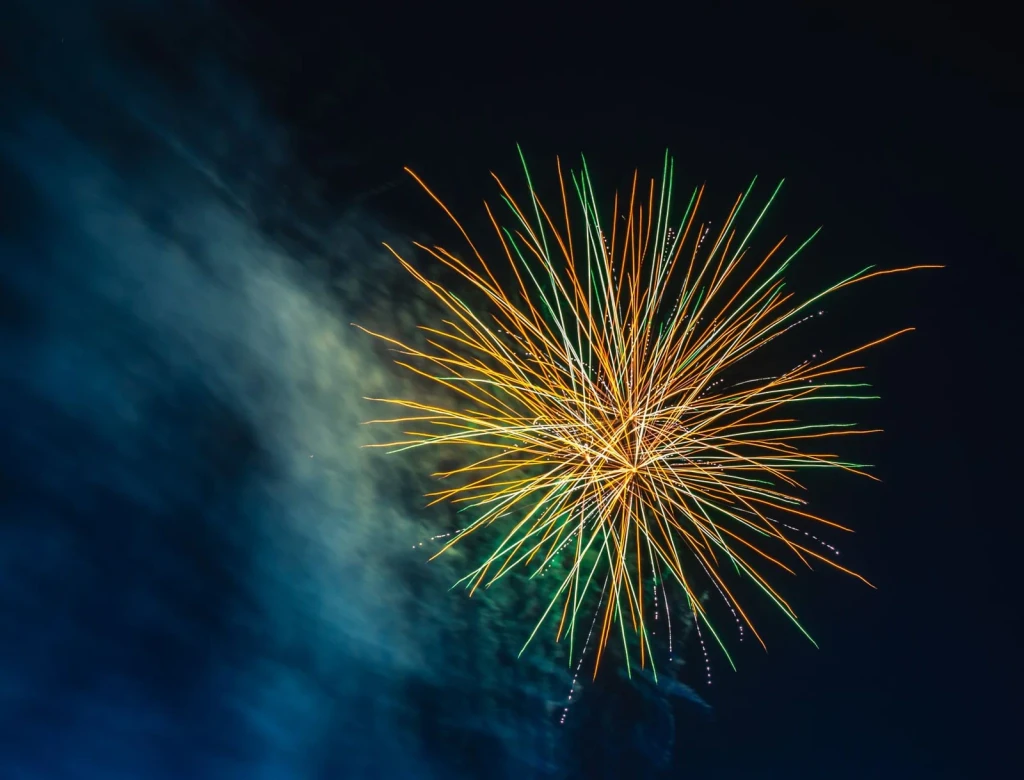
Fireworks brighten the night, creating atmosphere through light and color. A moment of brightness against dark sky.
Photograph by Robert So, via Pexels.
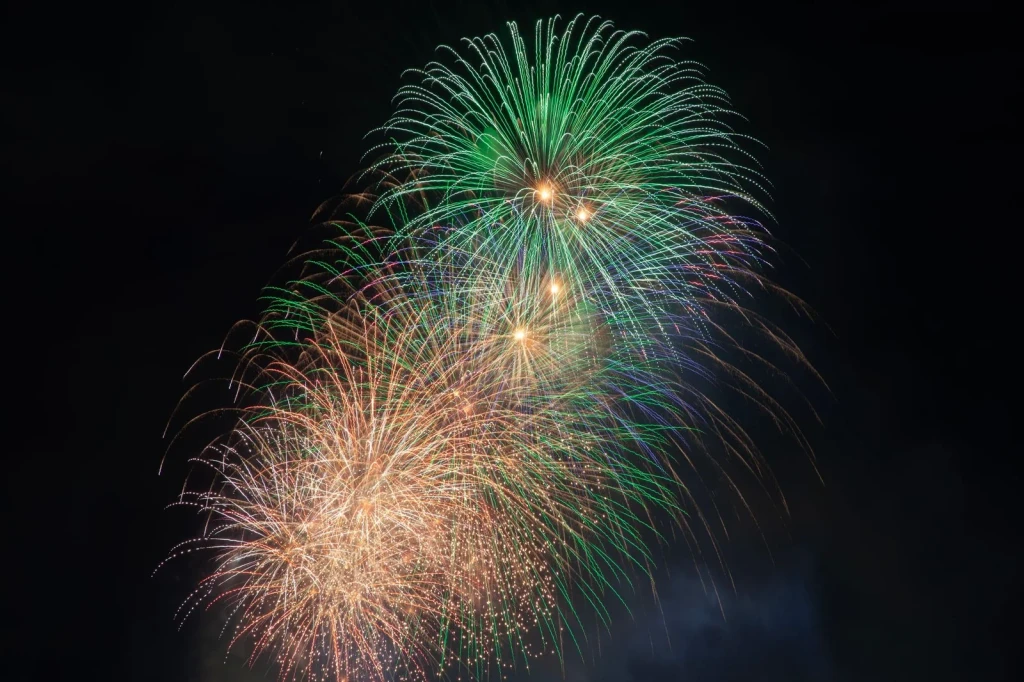
Vibrant fireworks crack open the darkness in a festive display. The explosive color suggests gathering and collective observation.
Photograph by Thể Phạm, via Pexels.
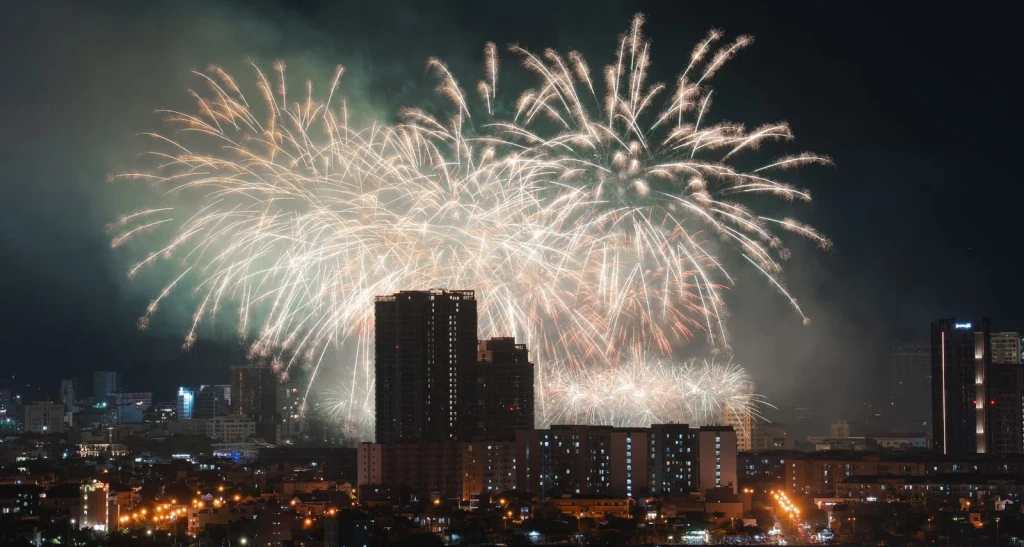
Dazzling fireworks light an evening sky above a city. The image shows how explosions mark festive moments in shared spaces.
Photograph by Phúc Phạm, via Pexels.
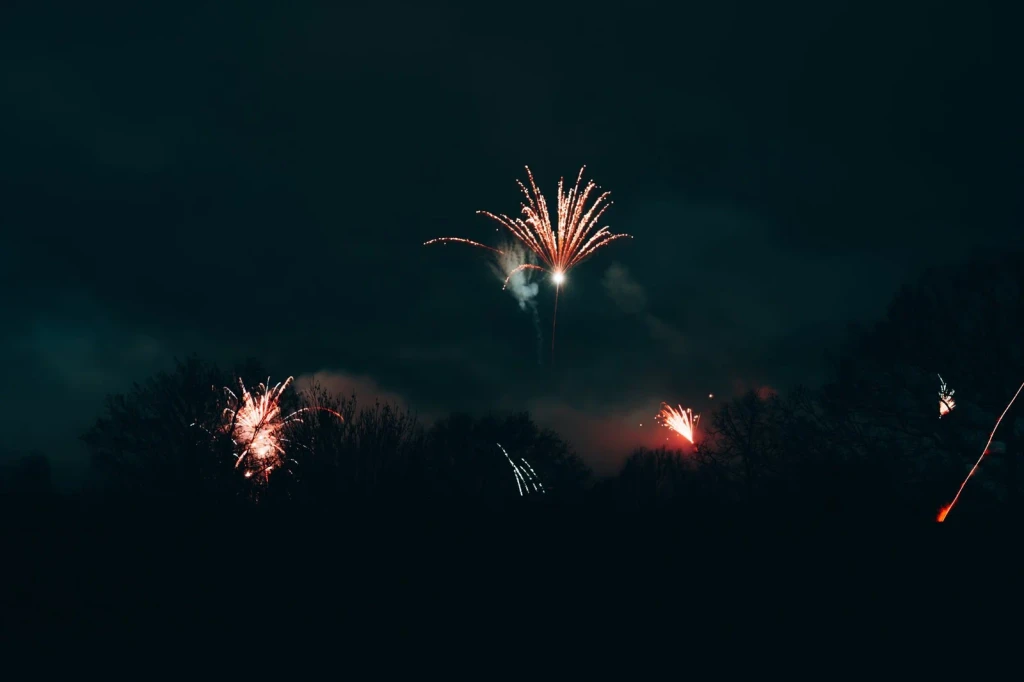
A glowing display illuminates the night sky above a tree line. Bright explosions light the darkness, suggesting celebration or commemoration.
Photograph by Omar Ramadan, via Pexels.
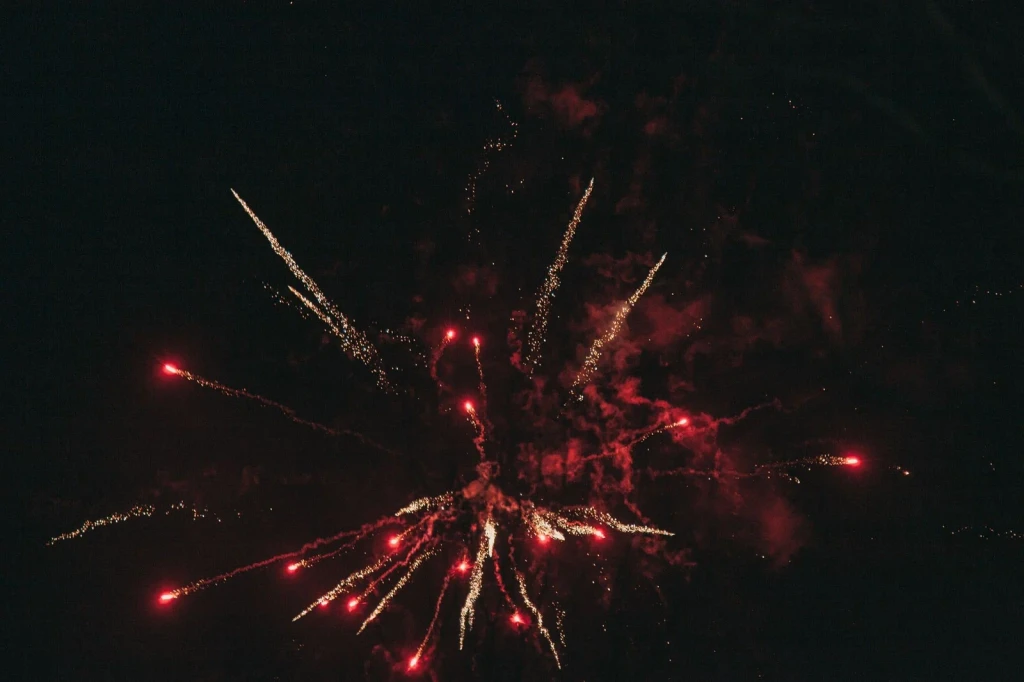
Illuminated fireworks burst across a cloudless night in warm tones. A display of light against darkness.
Photograph by Daniel Eliashevsky, via Pexels.
