3D Gallery
Human Migration: Walking Out of Africa
Enter gallery
Human Migration: Walking Out of Africa is a 3D virtual gallery on MyGallery3D, a walkable online exhibition of 13 works. Step inside and explore it in your browser: no app, no headset.
This is a 3D virtual gallery of human migration, and you can walk through the whole of it in your browser.
Almost everyone alive outside Africa descends from one expansion out of East Africa, roughly 70,000 to 50,000 years ago. From an African population of 2,000 to 5,000, possibly as few as 150 to 1,000 people crossed the Red Sea at Bab-el-Mandeb. The strait is about 20 kilometres wide today, but sea levels were then 70 metres lower and the channel far narrower. Rafts would have done.
Ours was not the first exodus. Around 1.8 million years ago Homo erectus left Africa by the Levantine corridor and the Horn of Africa, reaching Dmanisi in the Caucasus, Java by about 1.7 million years ago, and Western Europe by 1.2 million years ago at Atapuerca. At Xihoudu in Shanxi province, erectus was making fire 1.27 million years ago.
Long before the successful exodus, people walked out and vanished. A jawbone with eight teeth from Misliya Cave dates to around 185,000 years ago. Fossils from Qafzeh and Es-Skhul Caves in Israel are 80,000 to 120,000 years old, yet these humans went extinct or retreated to Africa. None of them left a trace in the genome of anyone living.
Migration was never a clean replacement. As modern humans spread, they interbred with Neanderthals and Denisovans, so living populations carry a small archaic inheritance, below 10 percent. Denisovan DNA makes up 0.2% of mainland Asian and Native American DNA, and Denisovan ancestry is shared by Melanesians, Aboriginal Australians, and the Mamanwa of the Philippines.
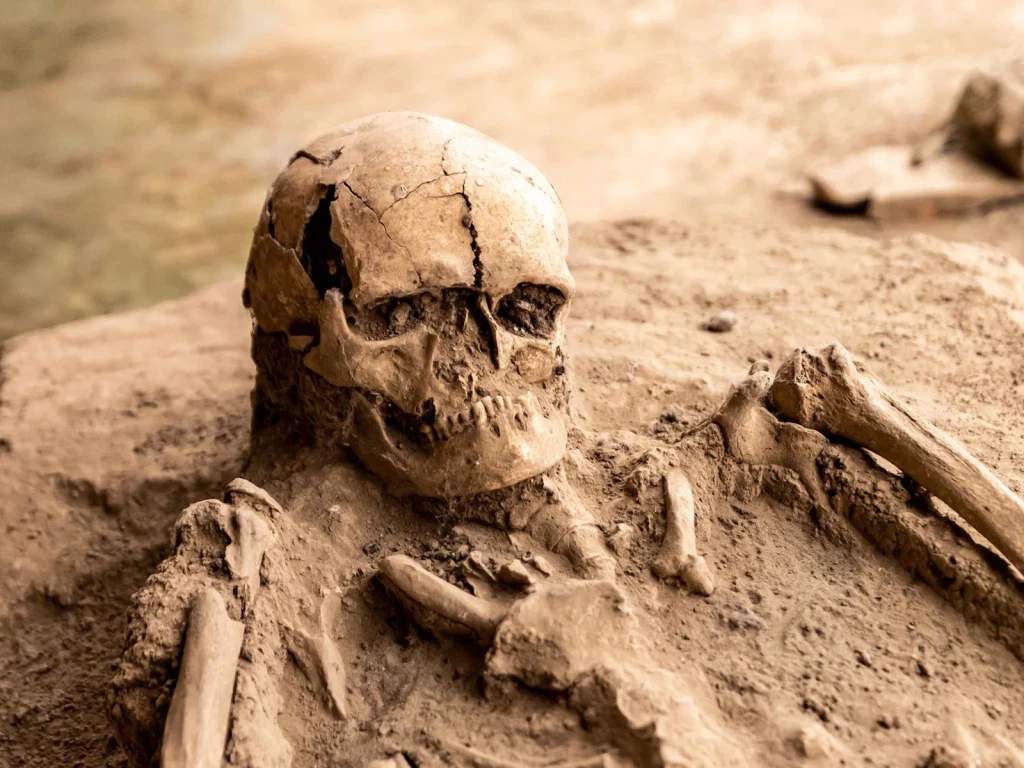
An ancient skeleton uncovered through excavation. Archaeology reveals the physical traces of those who came before. migration leaves evidence in the ground.
Photograph by Boris Hamer, via Pexels.
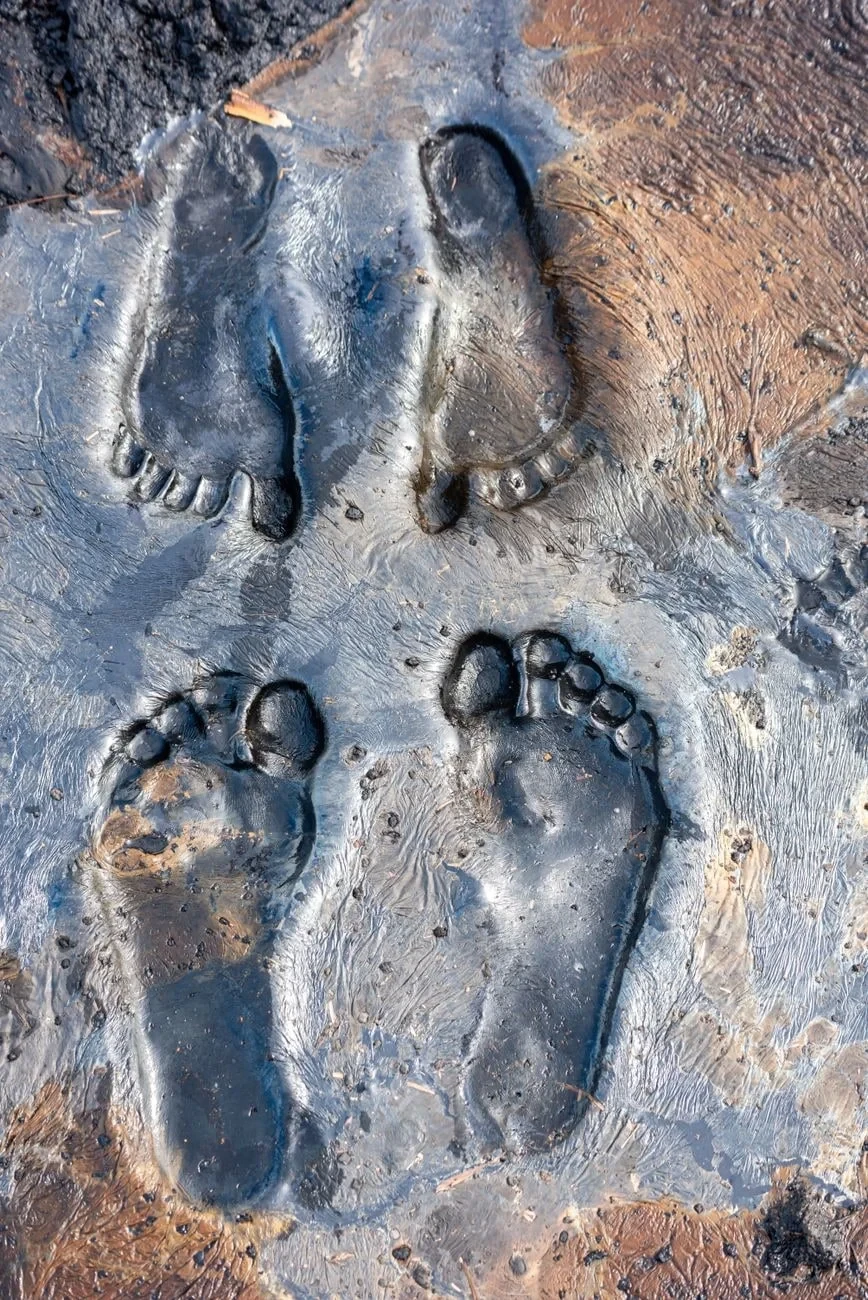
Human footprints pressed into natural asphalt. A trace of passage, preserved in an unexpected medium.
Photograph by Dominik Gryzbon, via Pexels.
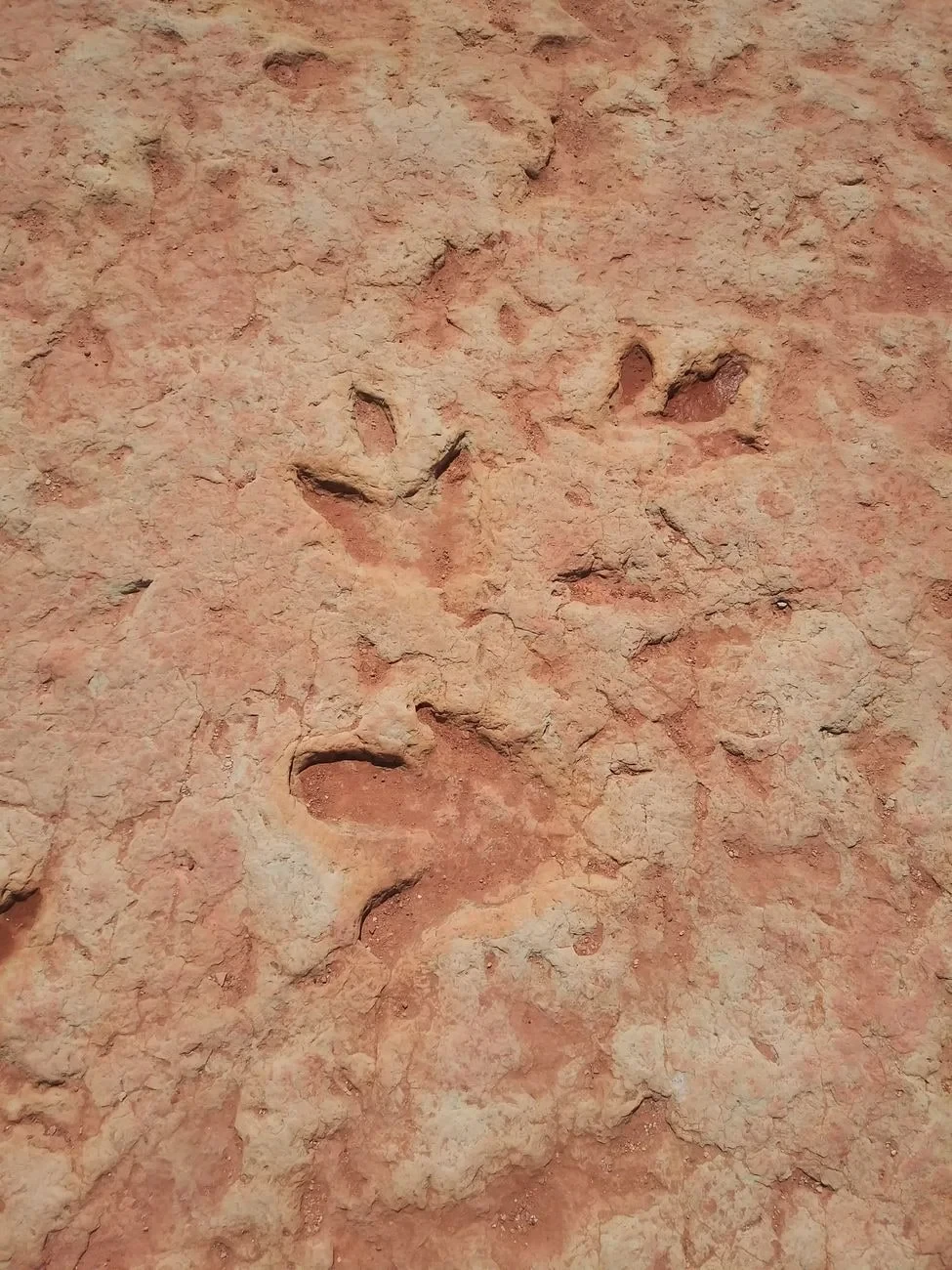
A close-up of an ancient footprint pressed into rock. Stone records what time preserves: evidence of creatures that once moved through the world.
Photograph by Deb Zipperer, via Pexels.
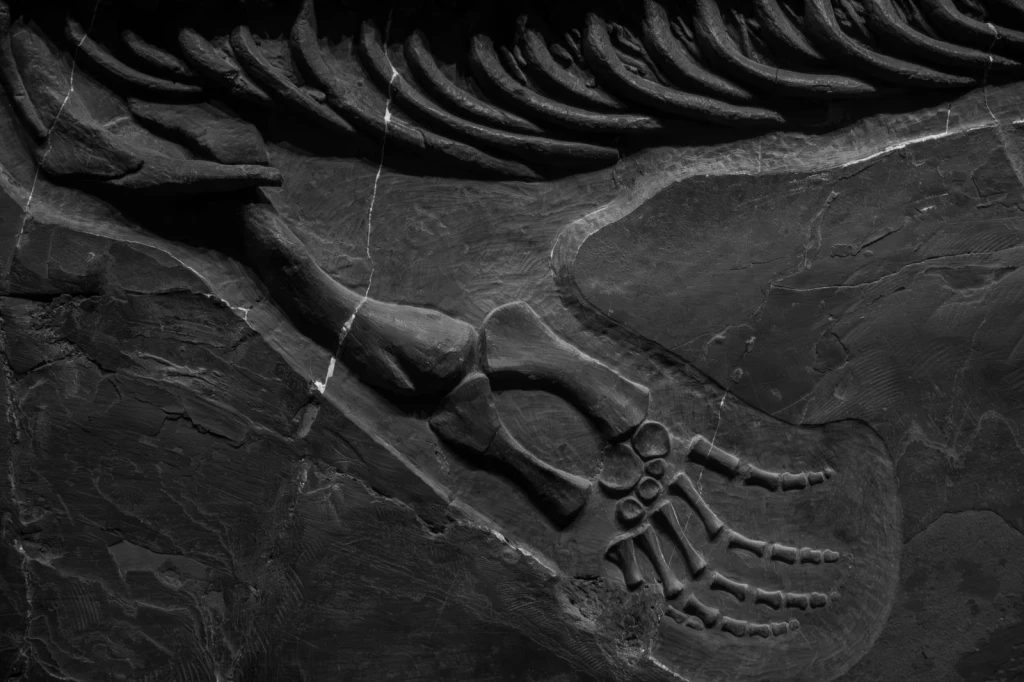
Fossilized dinosaur bones embedded in rock. A reminder that movement through time takes forms we can only study long after.
Photograph by Alex Bian, via Pexels.
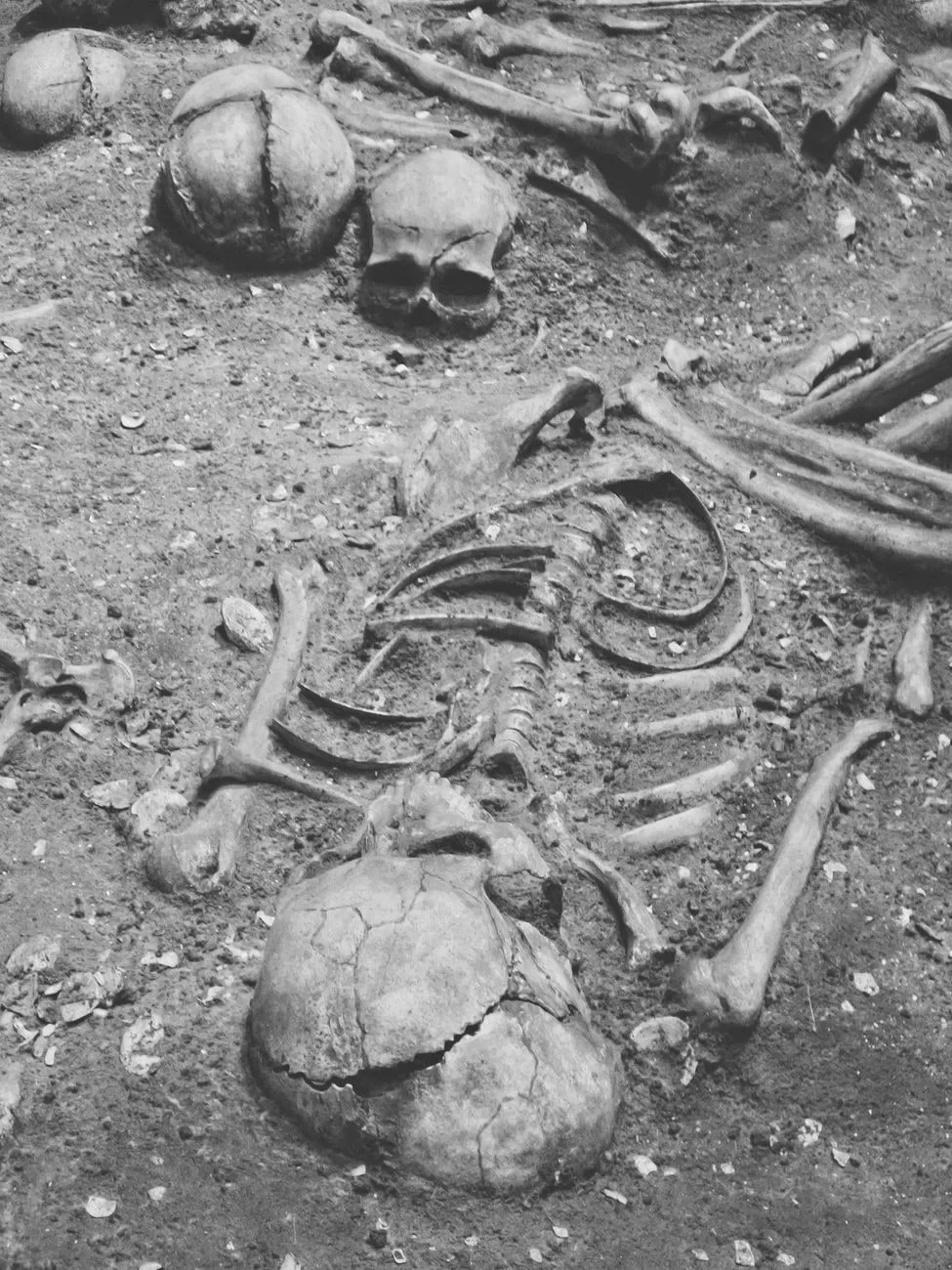
Ancient skeletal remains in monochrome. A visual anchor for the exhibition's deepest history. archaeology invites us to consider the origins from which all human journeys begin.
Photograph by Possessed Photography, via Pexels.
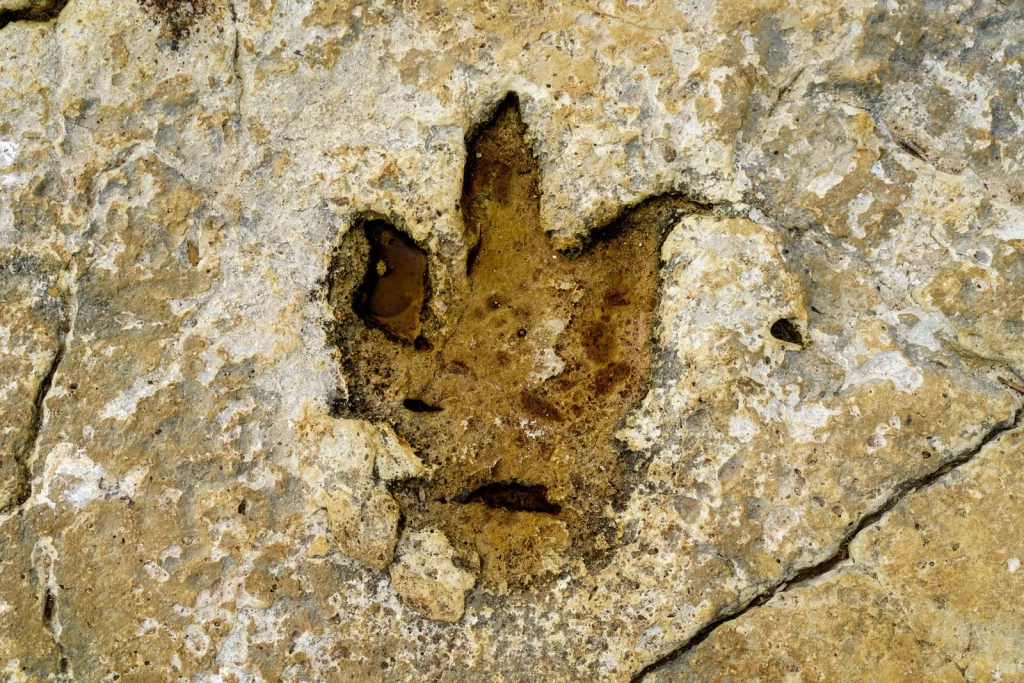
An ancient footprint preserved in rocky terrain. What remains when a creature walks is sometimes all that survives to tell us movement happened.
Photograph by Vladimir Srajber, via Pexels.
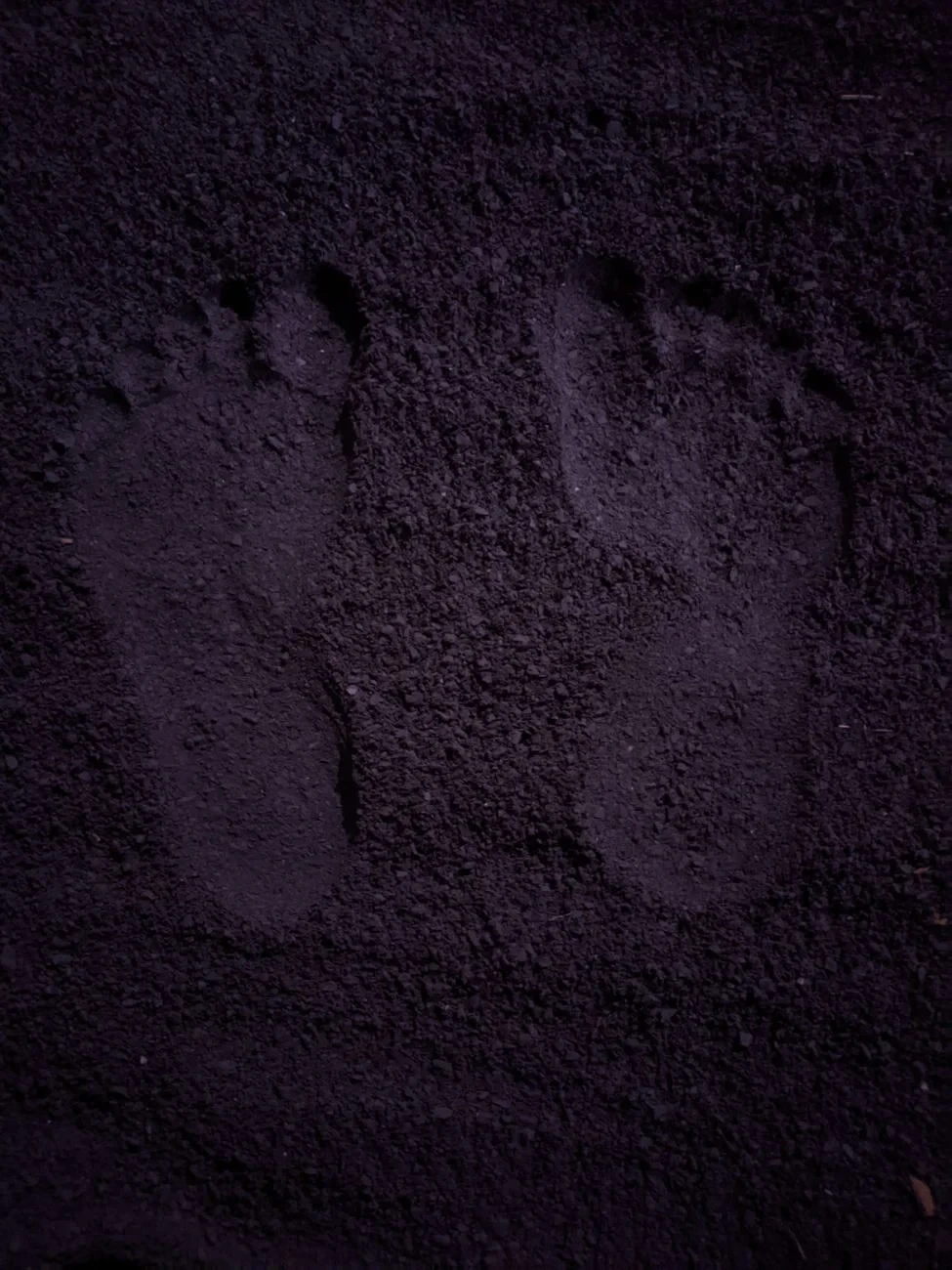
Two footprints mark dark sand. A fleeting record of someone's path, captured in shadow.
Photograph by osama siddique, via Pexels.
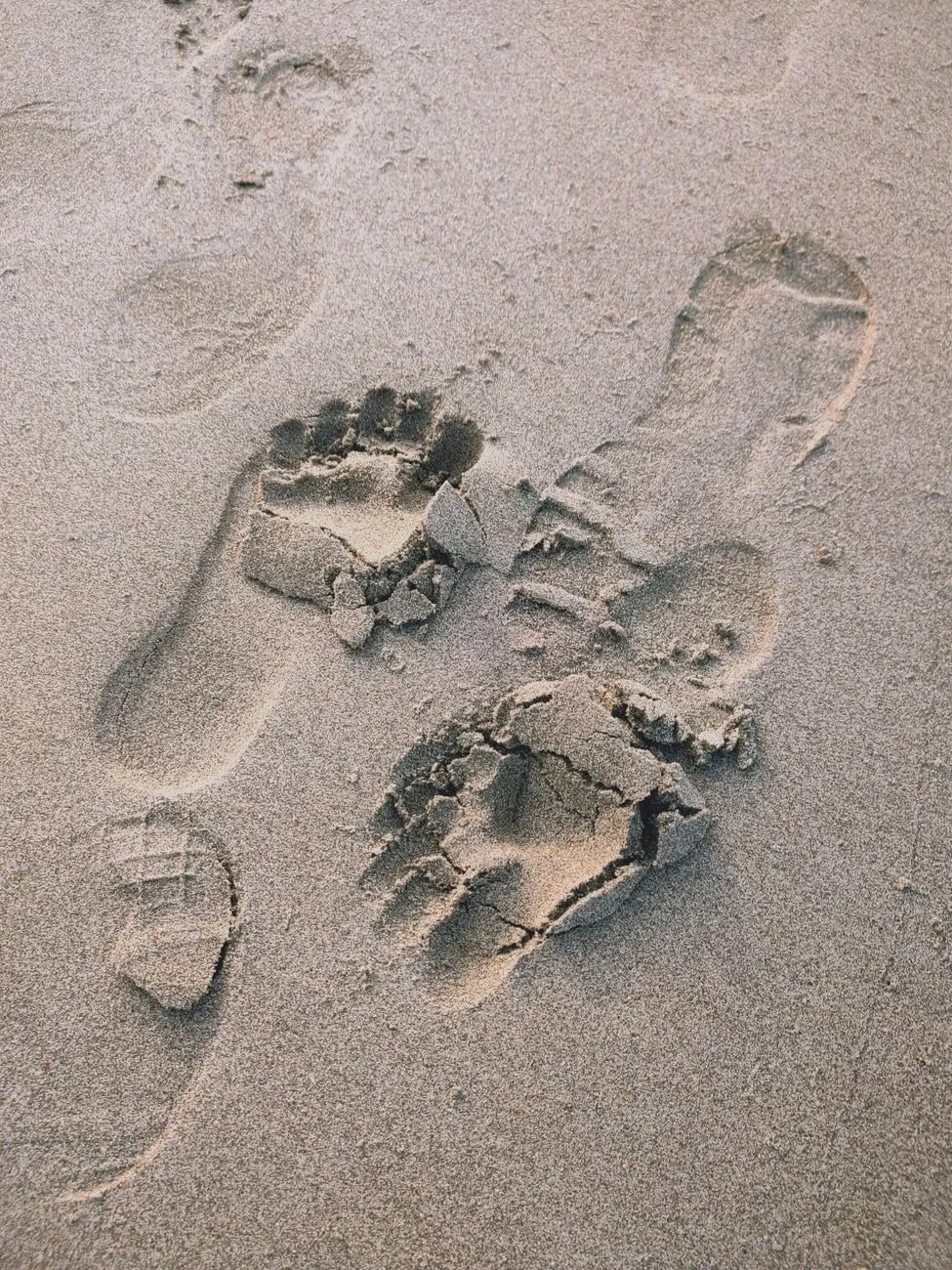
Footprints traced across beach sand. Simple evidence of journey and exploration, written in a surface that will soon erase it.
Photograph by Anushka Sawant, via Pexels.
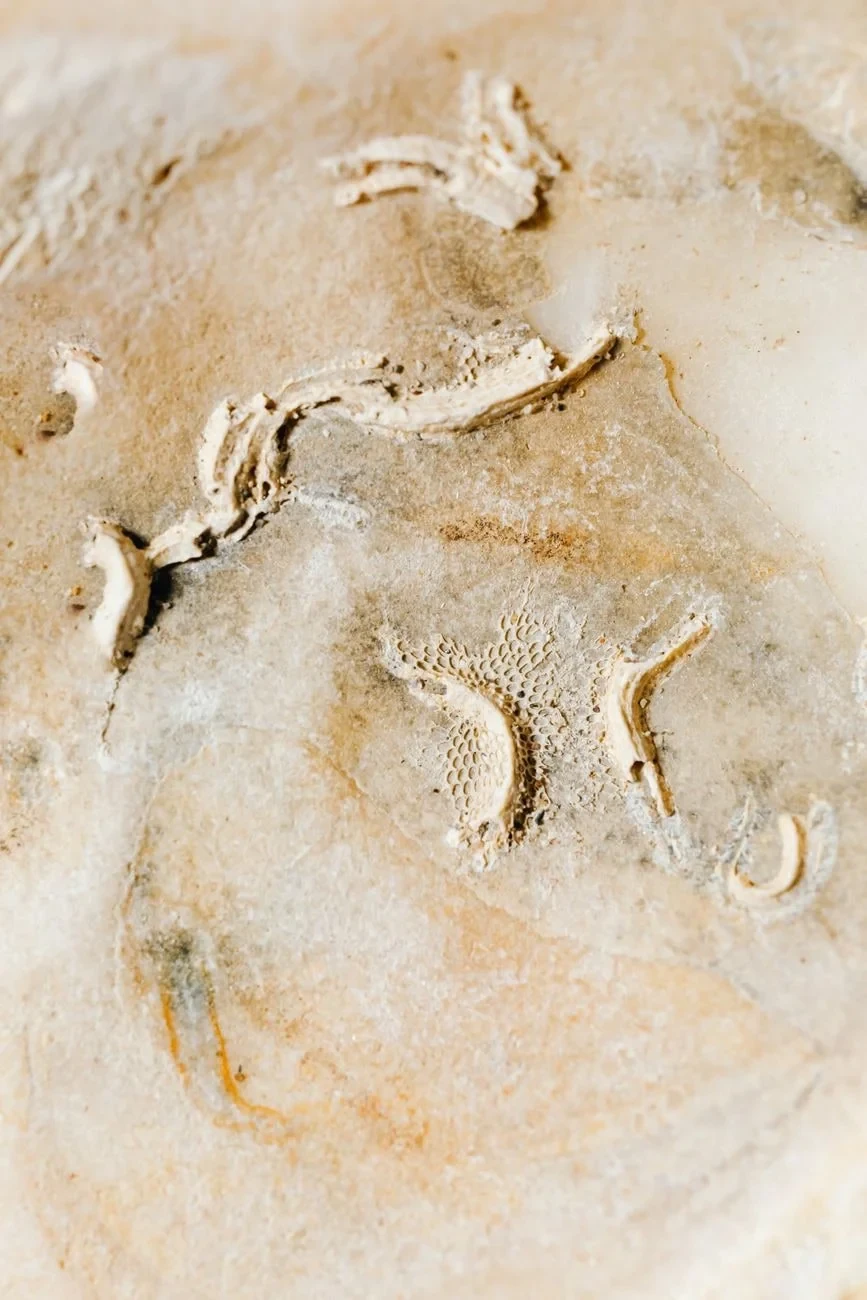
Fossilized shell patterns embedded in stone. The earth holds many kinds of evidence. layers of life mark the passage of time.
Photograph by www.kaboompics.com, via Pexels.
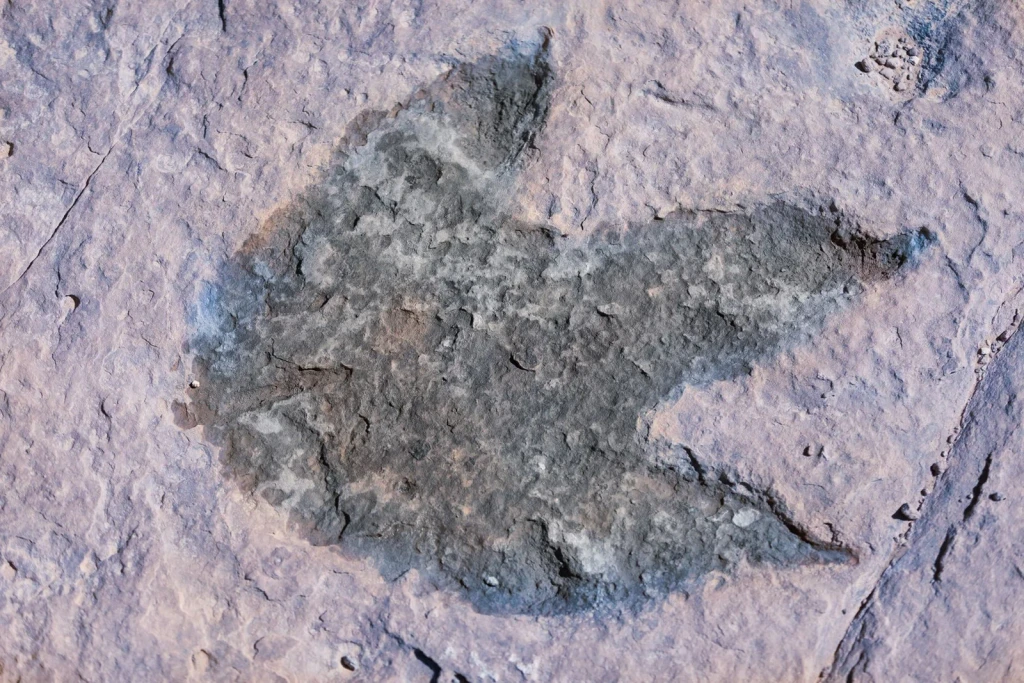
A fossilized footprint captured in stone. These impressions speak to movement and passage. the oldest records of travel.
Photograph by Djamel Ramdani, via Pexels.
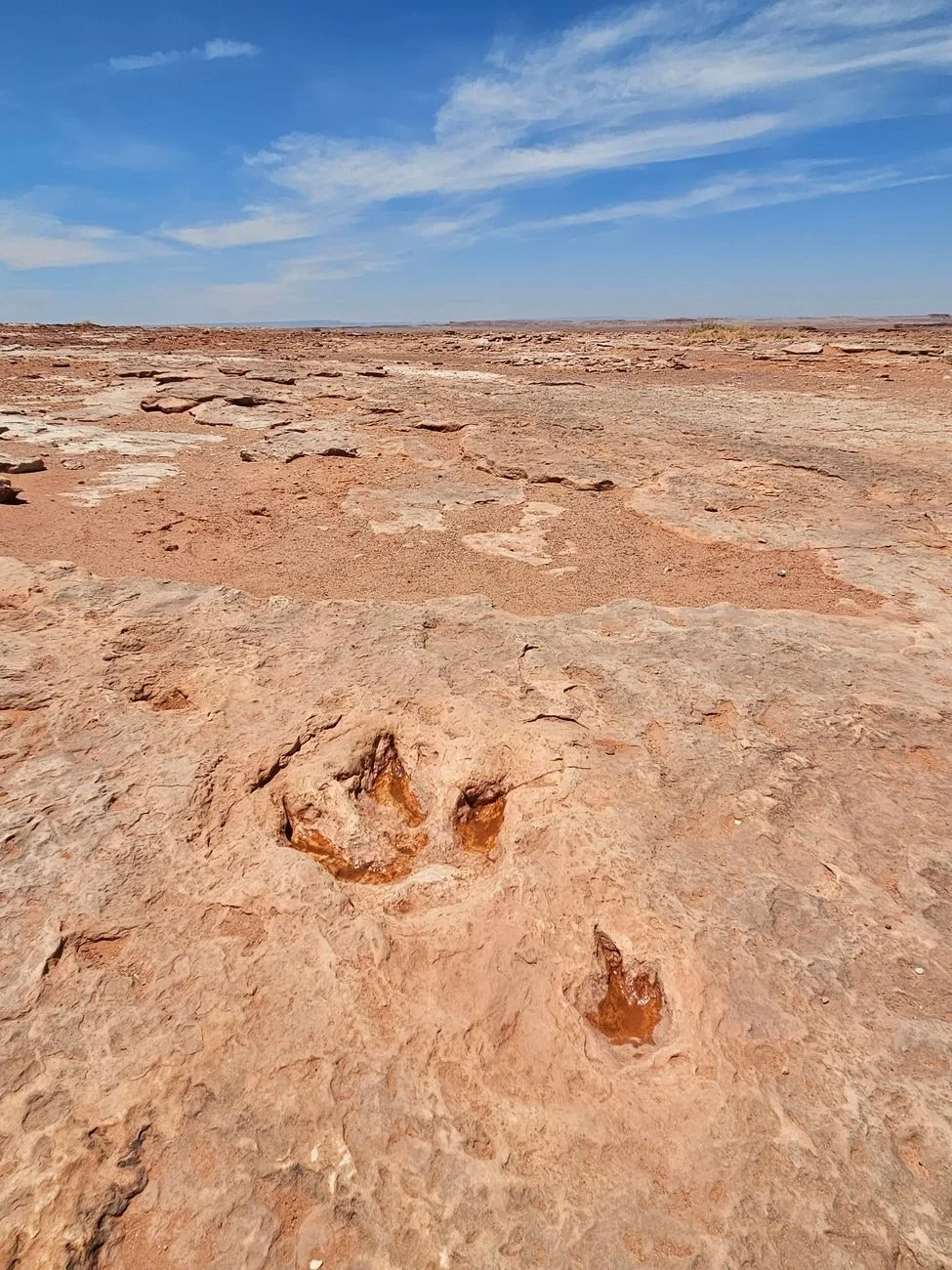
A prehistoric footprint preserved in stone. These traces of ancient movement remind us that walking across landscapes is one of humanity's oldest stories.
Photograph by Giant Asparagus, via Pexels.
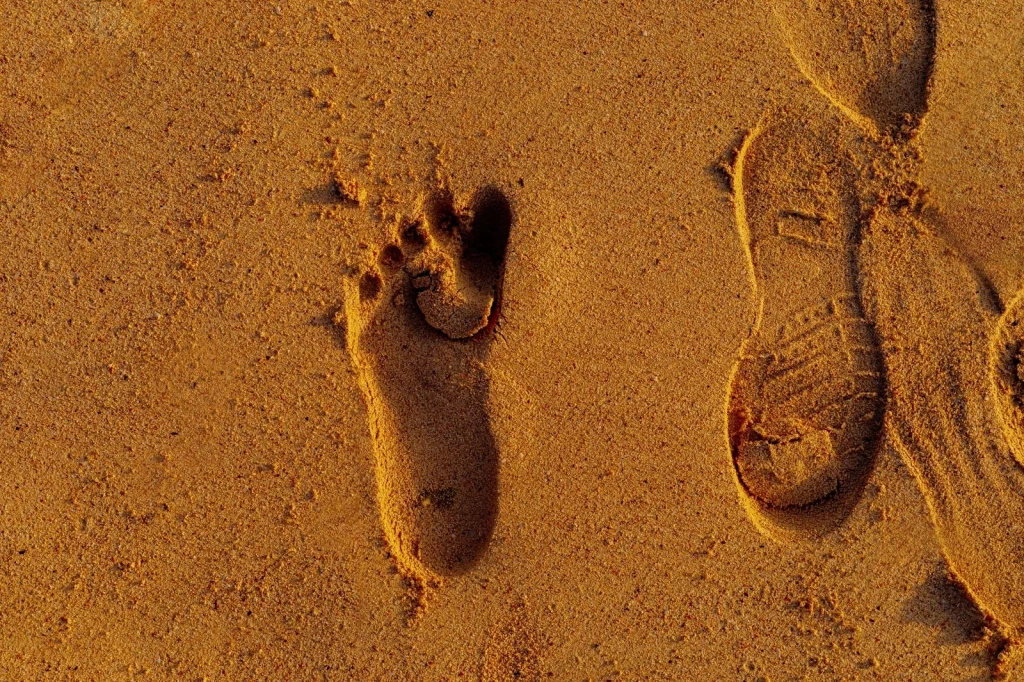
Human and shoe prints in sand. Marks of contemporary movement, showing how we leave our presence wherever we go.
Photograph by Moses Londo, via Pexels.
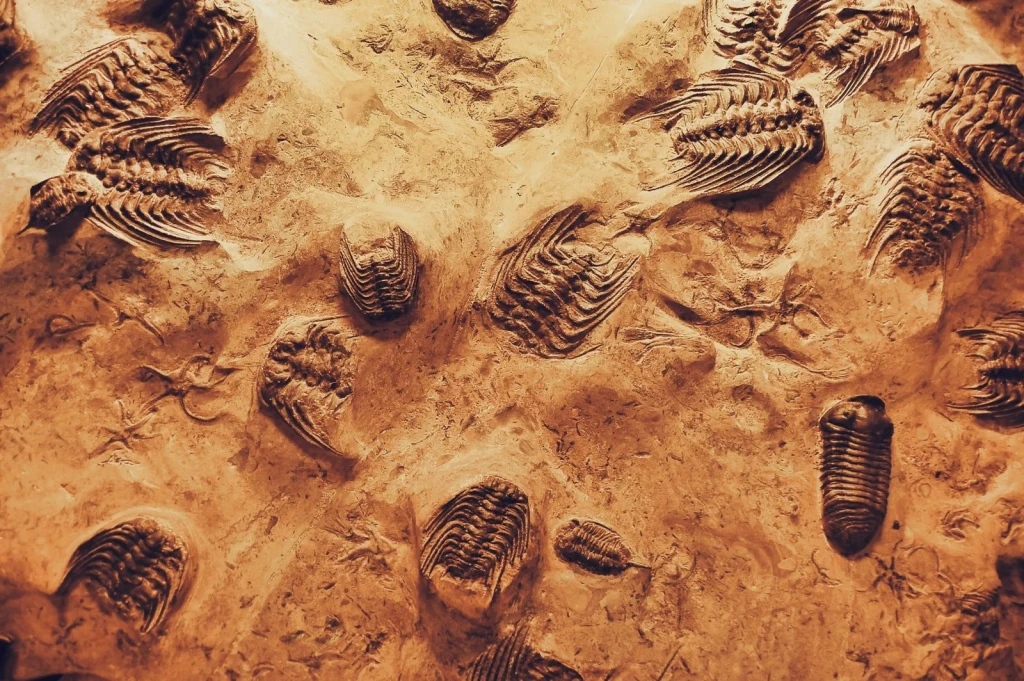
Trilobite fossils in sedimentary rock. Ancient inhabitants of oceans now turned to stone, speaking of deep time and transformation.
Photograph by Alejandro Quintanar, via Pexels.
