3D Gallery
The Telescope Deepened the Night
Enter gallery
The Telescope Deepened the Night is a 3D virtual gallery on MyGallery3D, a walkable online exhibition of 14 works. Step inside and explore it in your browser: no app, no headset.
Step into a 3D virtual museum of telescopes, walk it in your browser, and consider how recently the sky was shallow.
The first record of one is a patent filed in the Netherlands on 2 October 1608 by a spectacle maker, Hans Lippershey, for an instrument that magnified three times. Galileo built his own the next year, pushed it to 23x, and in January 1610 turned it on Jupiter, where four points of light changed places around the planet night after night. The heavens were not immutable, and they were not all circling us.
Hubble's mirror had to be figured to an accuracy of 10 nanometers, about 1/65 of the wavelength of red light. Perkin-Elmer reached that precision and applied it to the wrong curve. Launched in 1990, the telescope returned images spoiled by spherical aberration. Astronauts flying STS-61 corrected the optics in 1993. It is the only telescope designed to be maintained in space by people.
A lens can be held only at its edge, so past a certain size its centre sags under gravity and the image it makes distorts. The practical ceiling is around 1 metre. A mirror can be supported across its whole back, which is why the largest reflectors now exceed 10 metres, and why work is underway on designs of 30 to 40 metres.
Newton built the first practical reflector in 1668, and the design then took over 100 years to become popular. Its mirrors were speculum metal, which reflected only about two thirds of the light and tarnished; after repeated polishing the surface lost its precise figure. Silver coated glass mirrors arrived in 1857 and aluminized coatings in 1932. Almost every research telescope since has been a reflector.
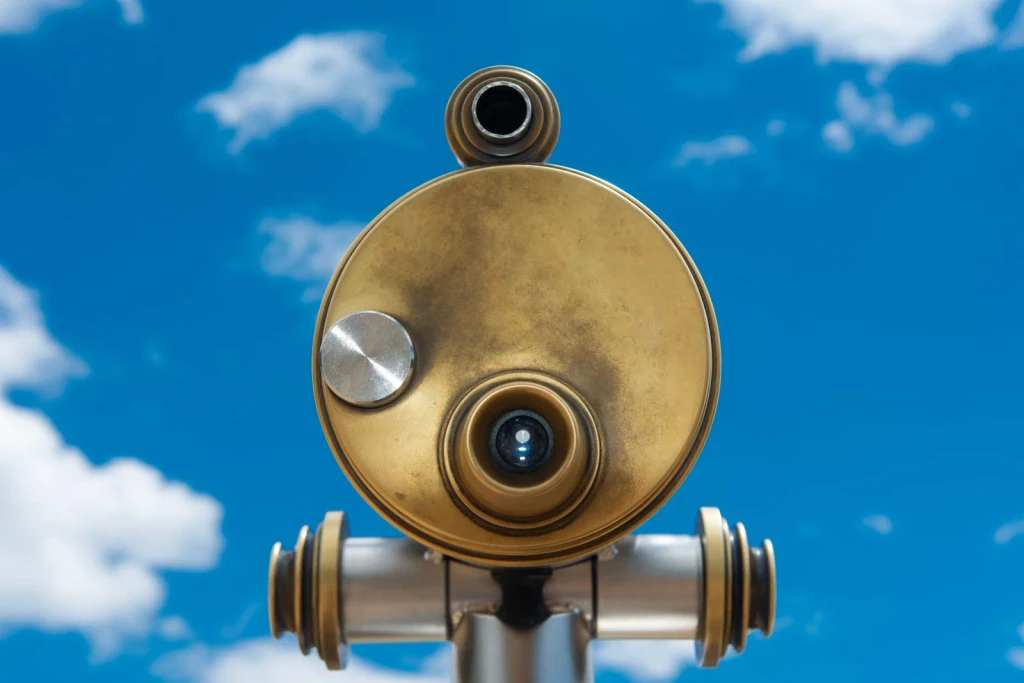
A vintage telescope gleams against bright blue and white. The close view honors the precision of the instrument itself.
Photograph by Jan van der Wolf, via Pexels.
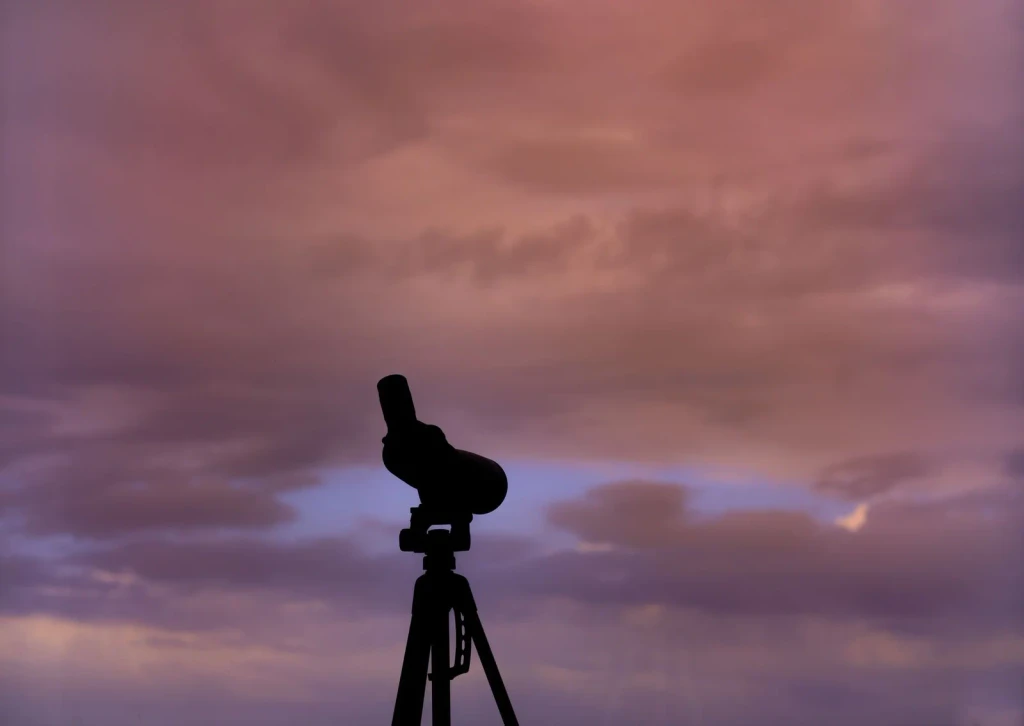
A telescope on its tripod appears in silhouette against a sunset. The instrument stands between earth and sky, a tool for deepening the darkness.
Photograph by Connor Scott McManus, via Pexels.
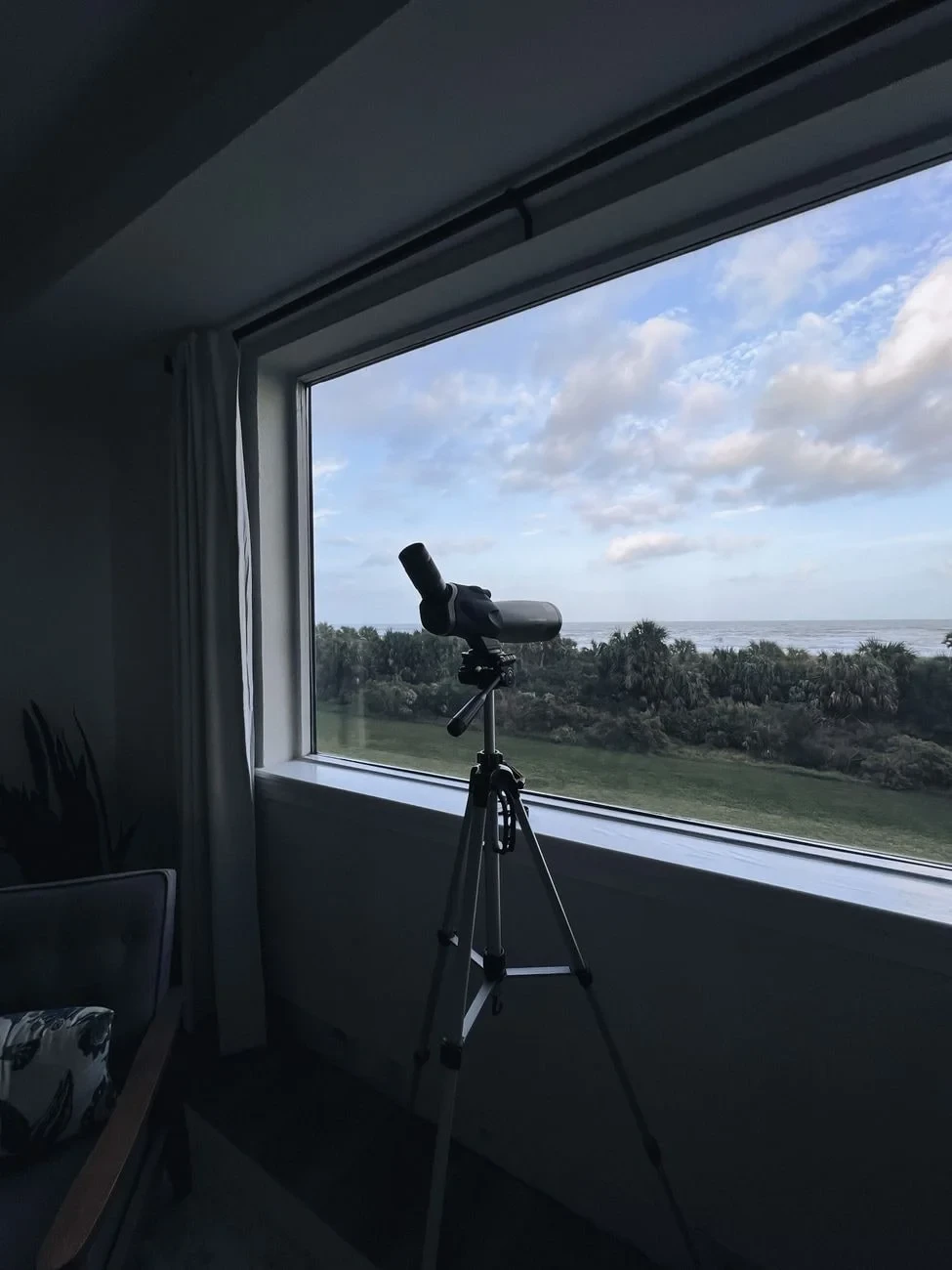
A telescope stands by a window, angled toward landscape and sky. The instrument waits at the threshold between interior and distance.
Photograph by Connor Scott McManus, via Pexels.
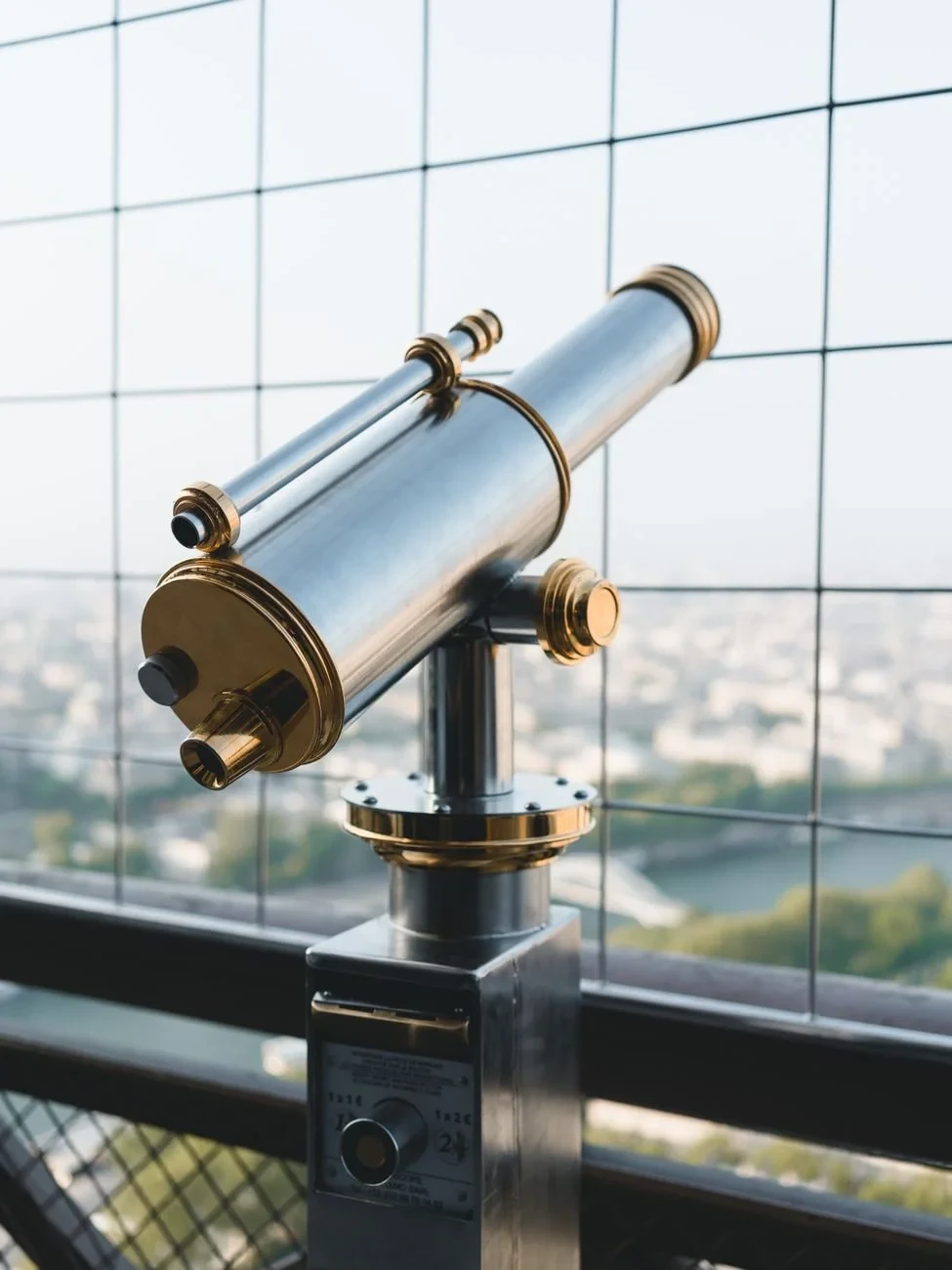
An elegant brass telescope positioned for viewing across an urban landscape. The instrument becomes a frame for the world below, extending human sight outward into the night.
Photograph by Matt Hardy, via Pexels.
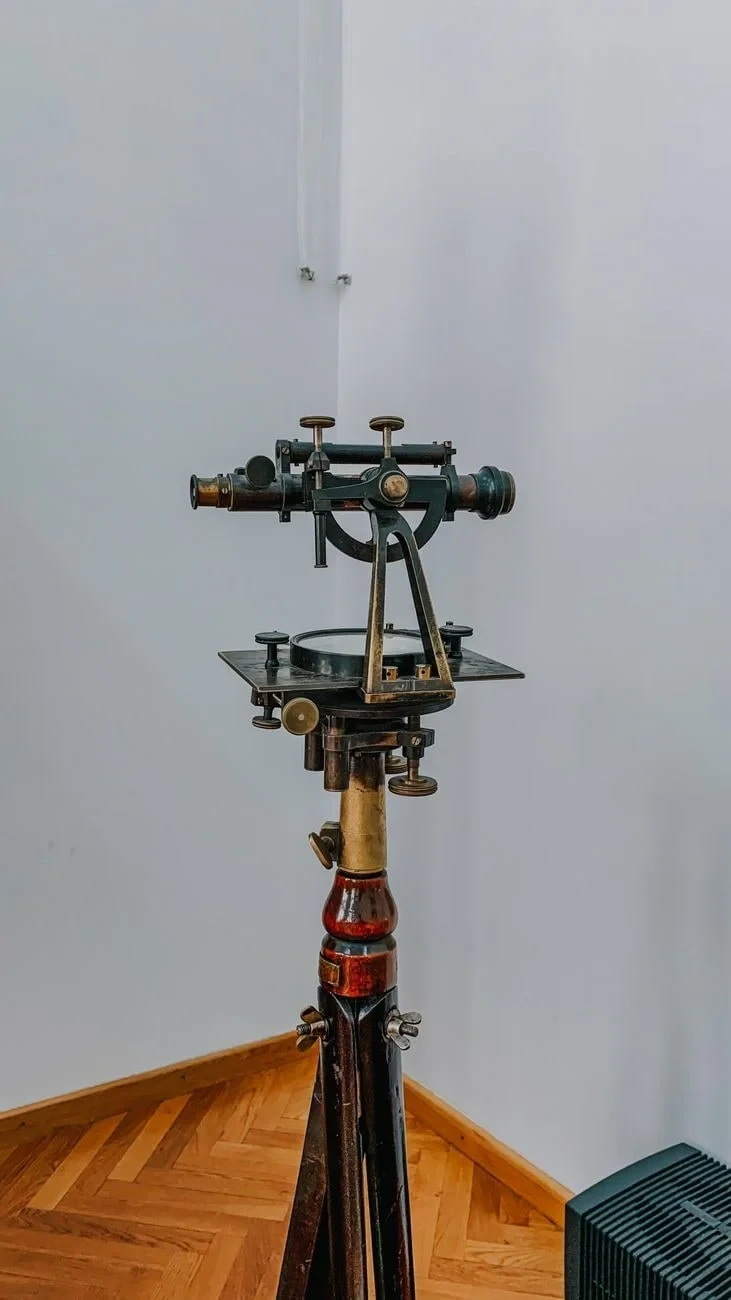
A vintage theodolite on museum display. This surveying instrument shares the telescope's purpose: measuring and mapping the world around us.
Photograph by Diana ✨, via Pexels.
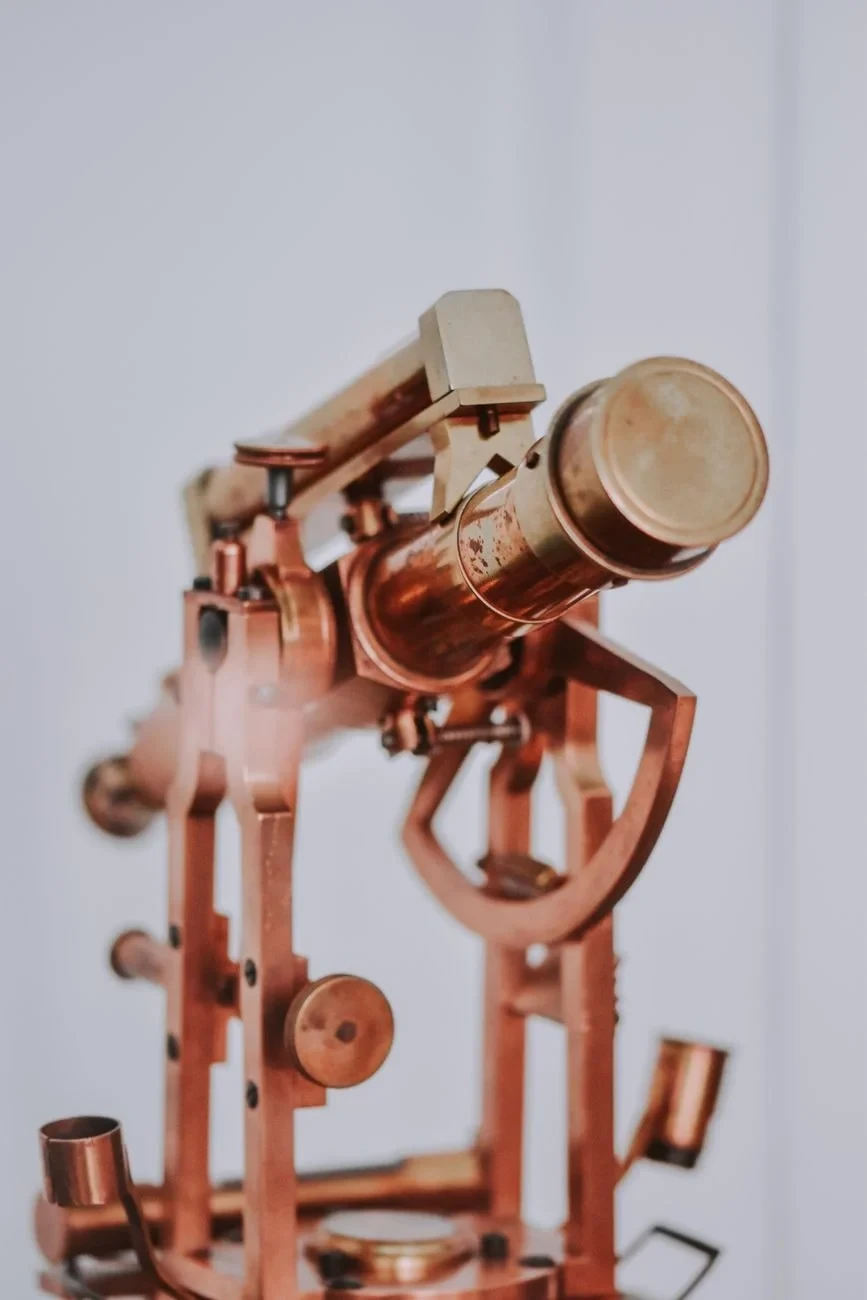
A close-up of brass and mechanics. The classic design of this telescope reflects a time when observing the sky demanded patience and precision.
Photograph by Diana ✨, via Pexels.
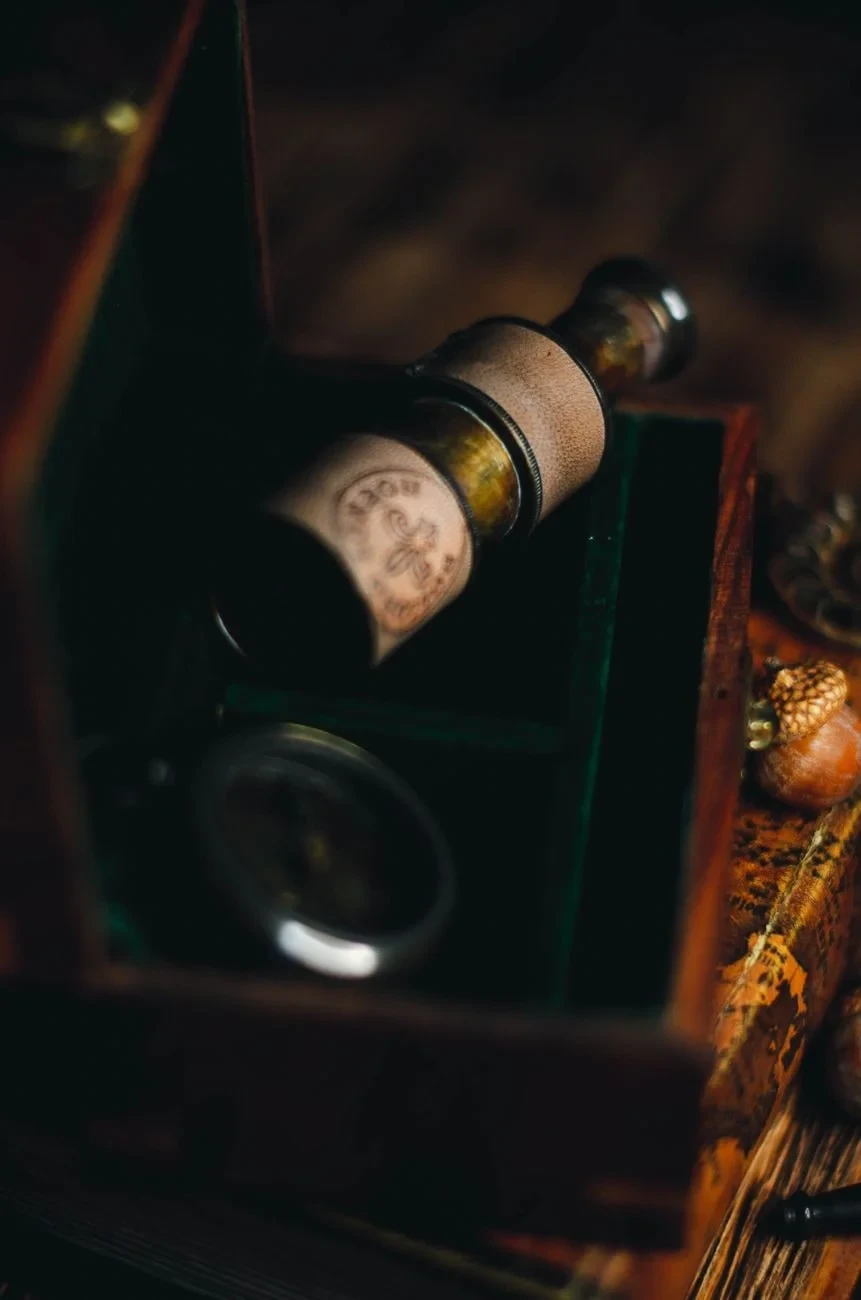
A vintage telescope nestled in wood. The photograph shows how discovery was once contained, preserved, and kept ready.
Photograph by Nika Benedictova, via Pexels.
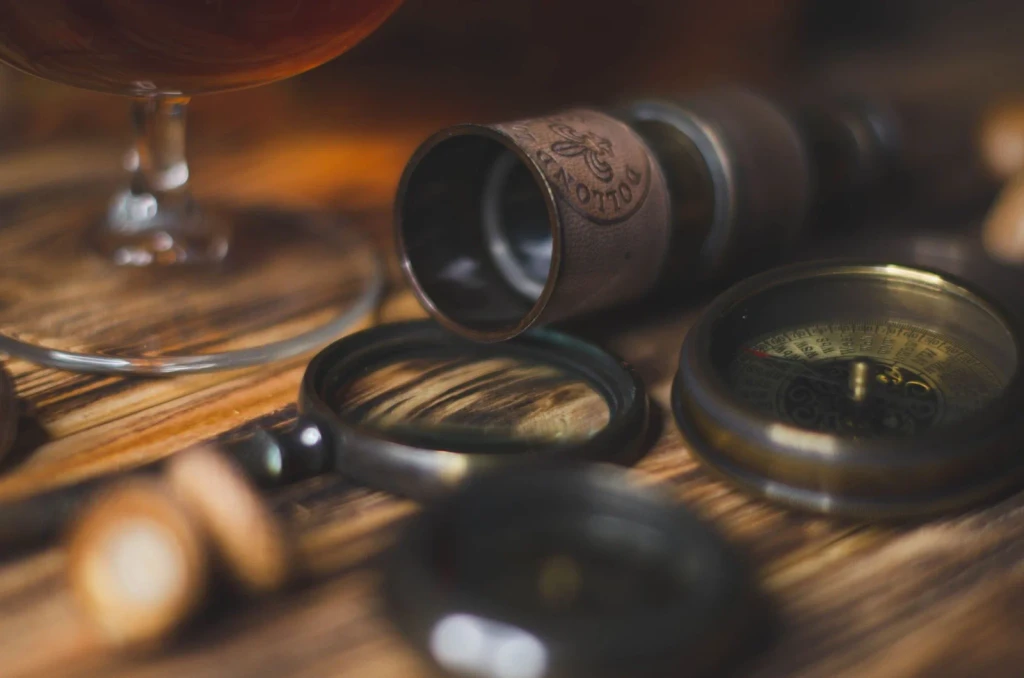
Compass and telescope rest together on a rustic surface. These exploration tools suggest the paired pursuits of direction and vision.
Photograph by Nika Benedictova, via Pexels.
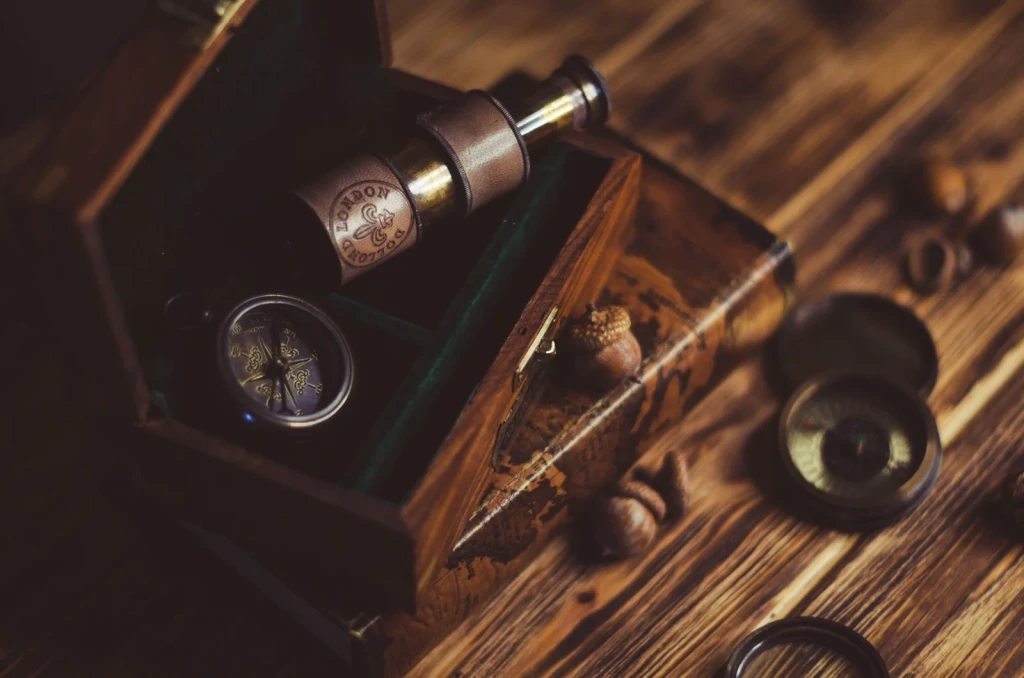
A wooden box holds the tools of observation: telescope and compass nested together. The photograph suggests how exploration was once packaged, carried, kept close.
Photograph by Nika Benedictova, via Pexels.
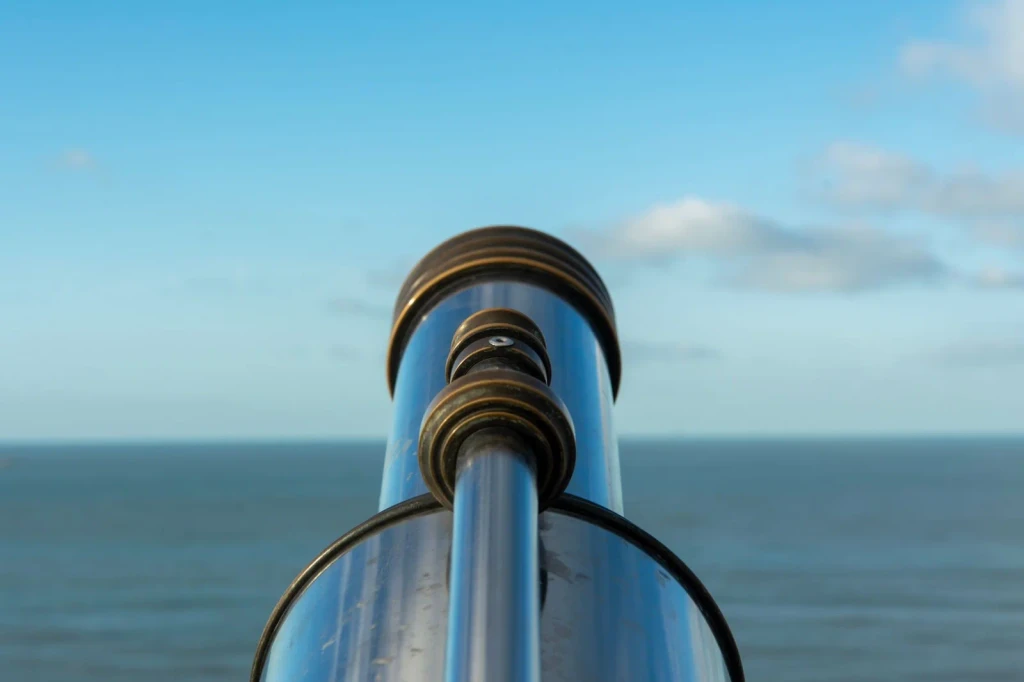
A telescope reflects sunlight as it aims toward open water. Where sky and ocean meet, the instrument waits to deepen what the eye alone can perceive.
Photograph by Jan van der Wolf, via Pexels.
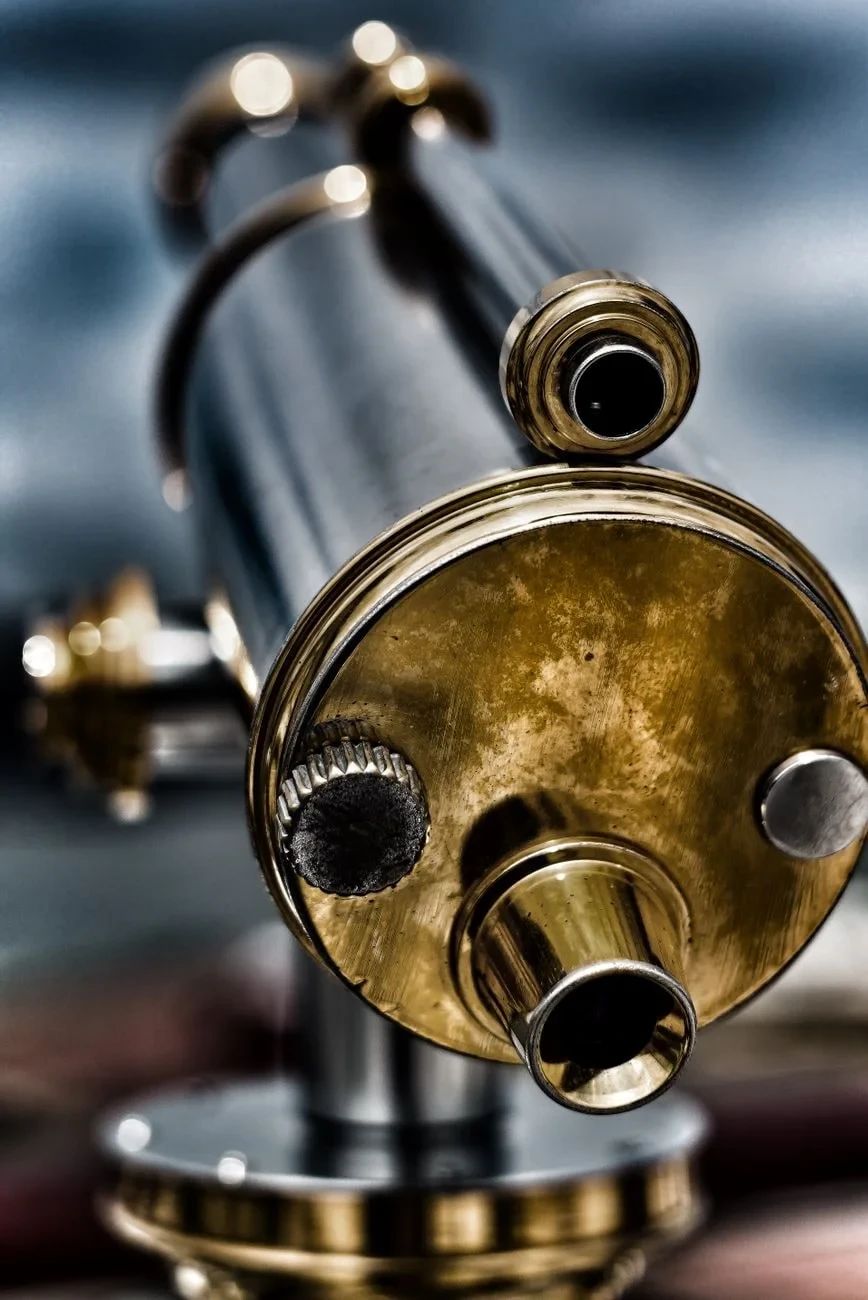
Intricate brass details of a vintage telescope showcase the artisanal labor behind precision instruments. Craftsmanship deepened our view of the night.
Photograph by Furlin Chin, via Pexels.
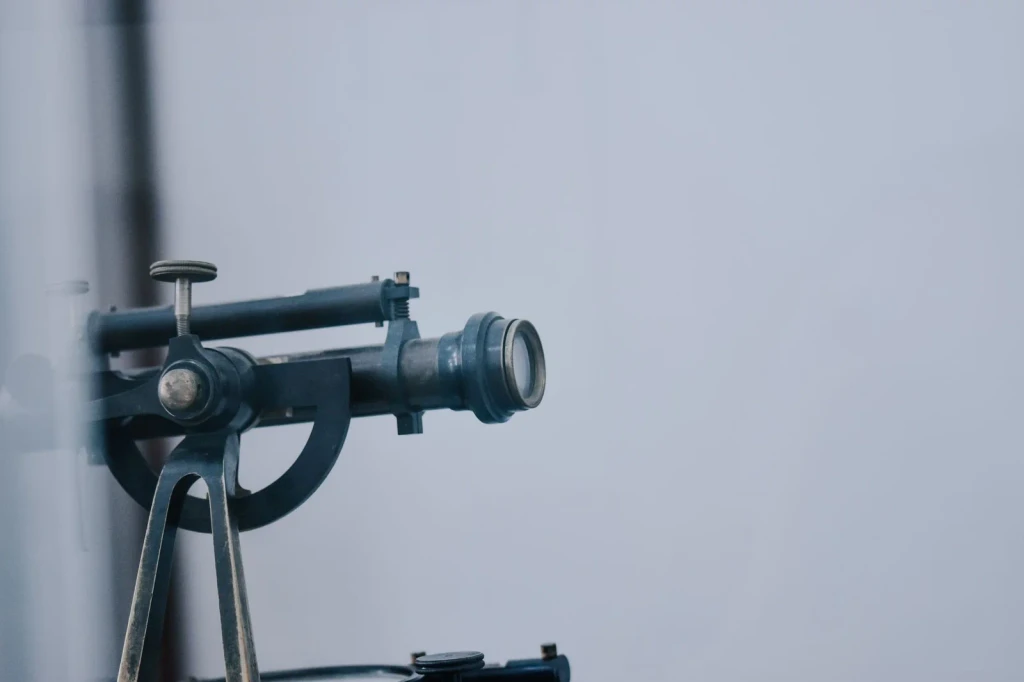
A close-up reveals the intricate metal components of a vintage telescope lens. Each detail speaks to careful engineering in service of seeing farther.
Photograph by Diana ✨, via Pexels.
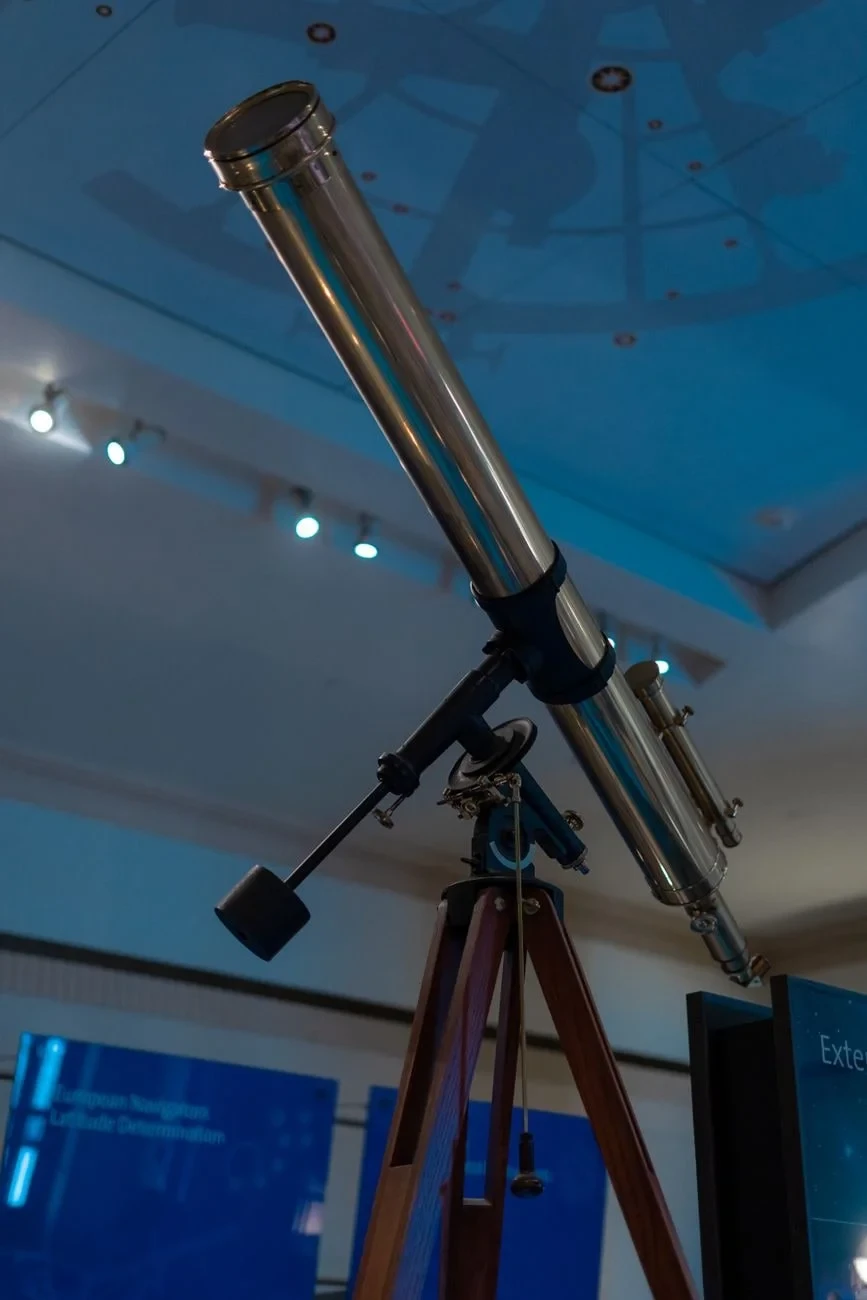
A vintage brass telescope on display. The instrument sits as a physical remnant of how we once reached toward the night sky.
Photograph by Anastasiya Badun, via Pexels.
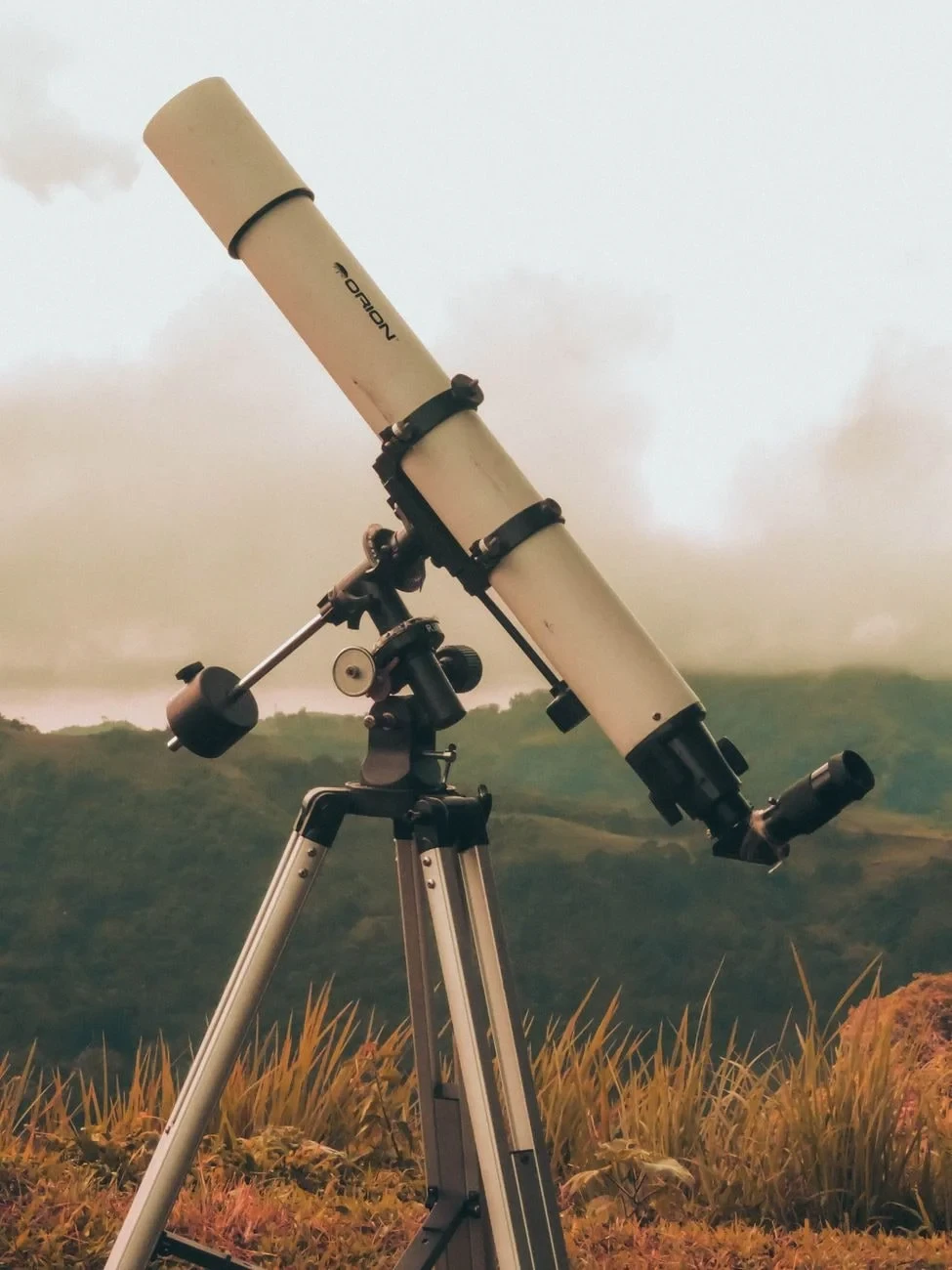
A telescope on tripod frames a lush mountain vista beneath shifting clouds. The instrument becomes a threshold between viewer and distance.
Photograph by Yatz Terix, via Pexels.
