3D Gallery
Rubber Stretches Everything
Enter gallery
Rubber Stretches Everything is a 3D virtual gallery on MyGallery3D, a walkable online exhibition of 15 works. Step inside and explore it in your browser: no app, no headset.
Walk through this 3D virtual museum of rubber in your browser. It is not a gentle story.
Rubber is a milk that trees bleed when you cut them. Demand pushed the price of it high, and King Leopold II's Congo Free State enforced its production quotas brutally: tactics included removing the hands of victims to prove they had been killed, and soldiers came back from raids with baskets full of chopped off hands. Roger Casement, who exposed this, wrote that the material is called India rubber because it rubs out the Indians.
In 1876 Henry Wickham smuggled 70,000 Amazonian rubber tree seeds out of Brazil and delivered them to Kew Gardens in England. Only 2,400 germinated. Seedlings went on to Ceylon, Singapore, Malaya and the Dutch East Indies, and the crop settled there for good. The Amazon, the tree's home, lost the trade, and the plantations there were finished off by South American leaf blight.
Untreated rubber goes soft and sticky in heat and rots in storage. In 1839 Charles Goodyear dropped a mixture of rubber and sulfur onto a hot stove and found it did not melt: it set, and it grew harder as he raised the heat. Sulfur had bridged the polymer chains. He patented the process in 1844, and died owing almost $200,000.
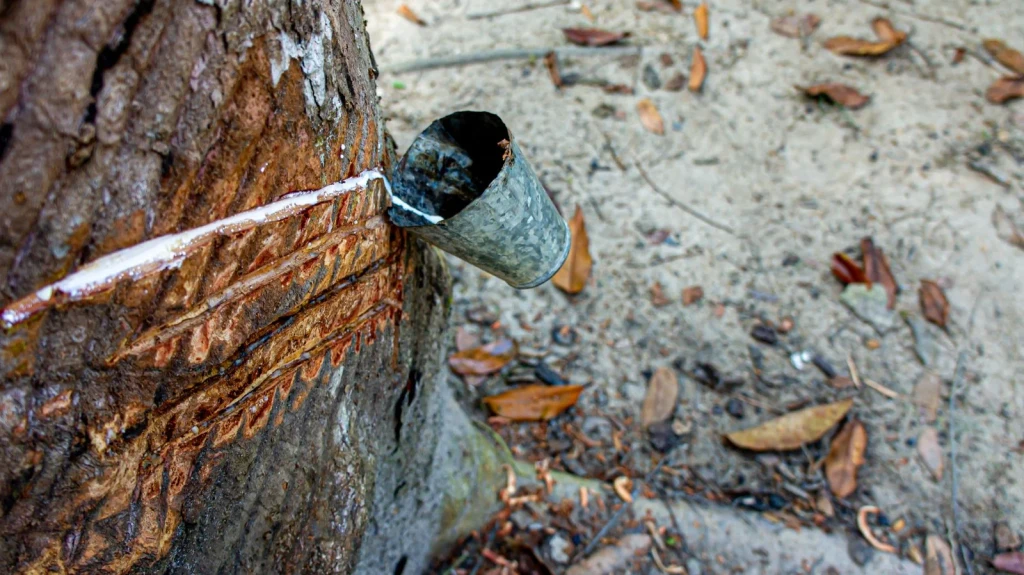
A metal cup catches latex from a tapped tree. This close view documents the interface between tool and tree in a Brazilian forest setting.
Photograph by Lucia Barreiros Silva, via Pexels.
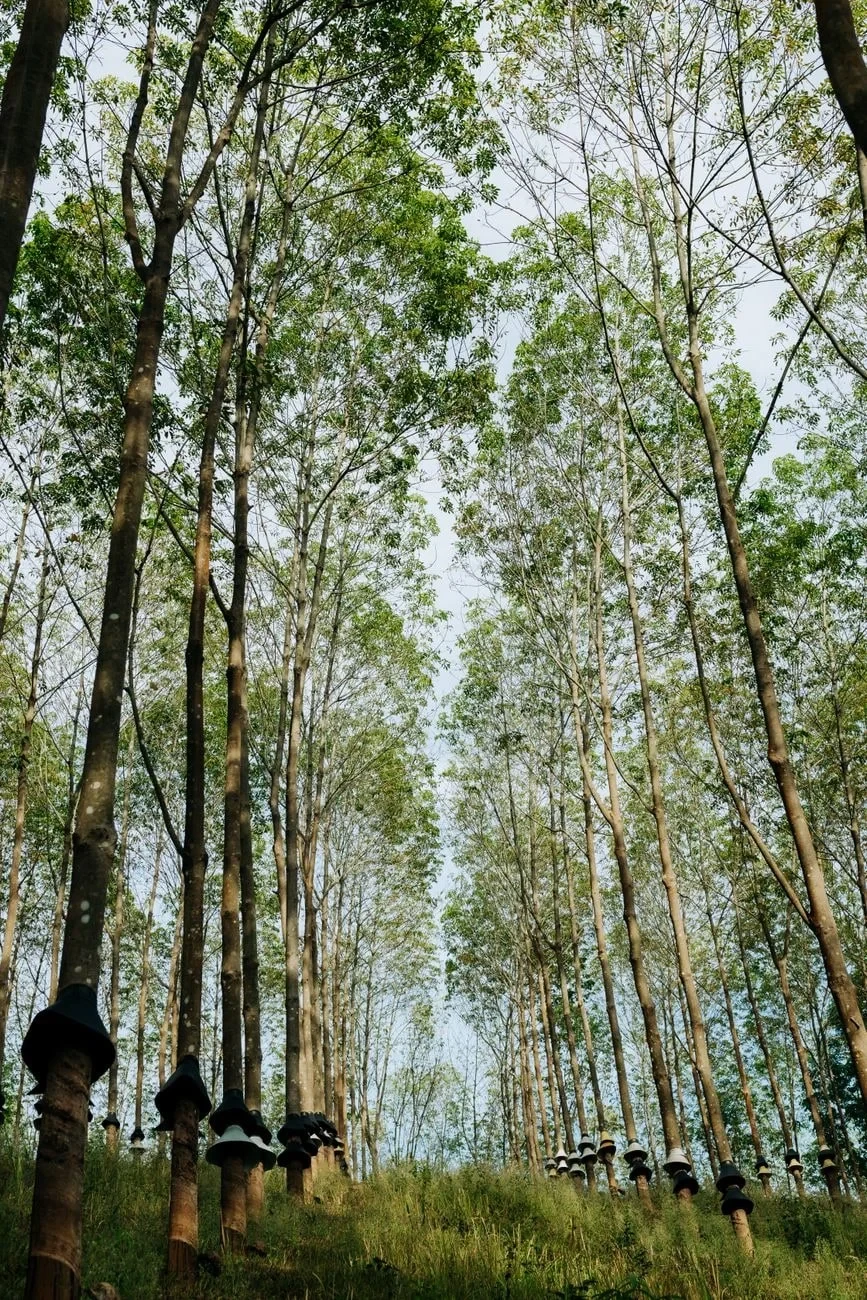
Tall rubber trees rise upward through the frame. The image captures their stretch toward the sky, a natural counterpoint to rubber's elastic properties.
Photograph by Thái Trường Giang, via Pexels.
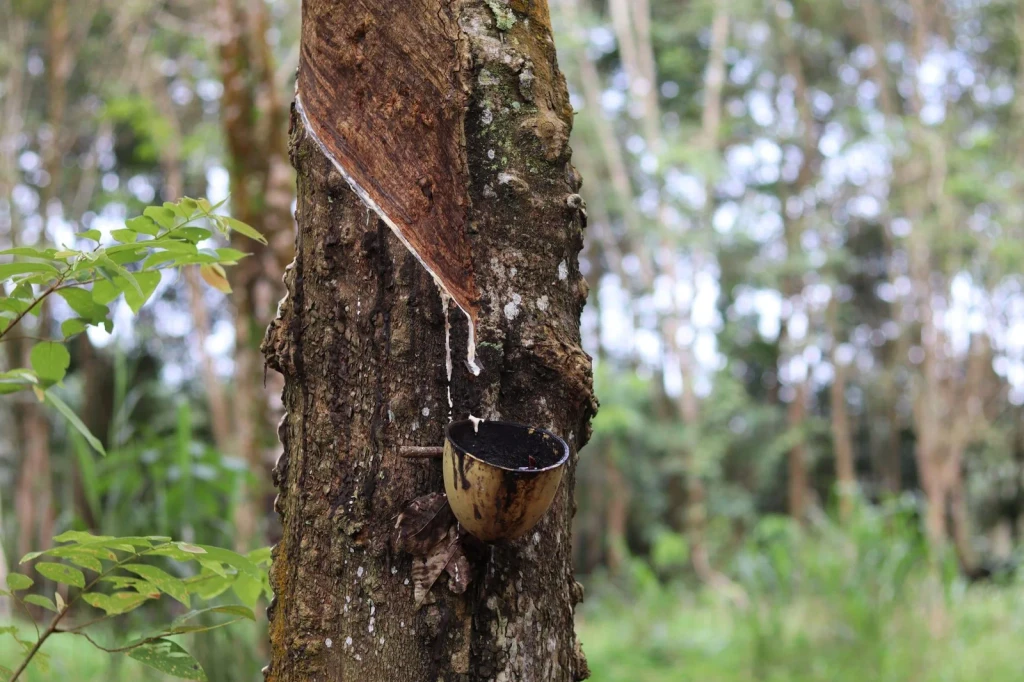
A tree yields latex into a waiting cup. The photograph isolates this single act of tapping, the core of rubber extraction.
Photograph by M. Noor TM, via Pexels.
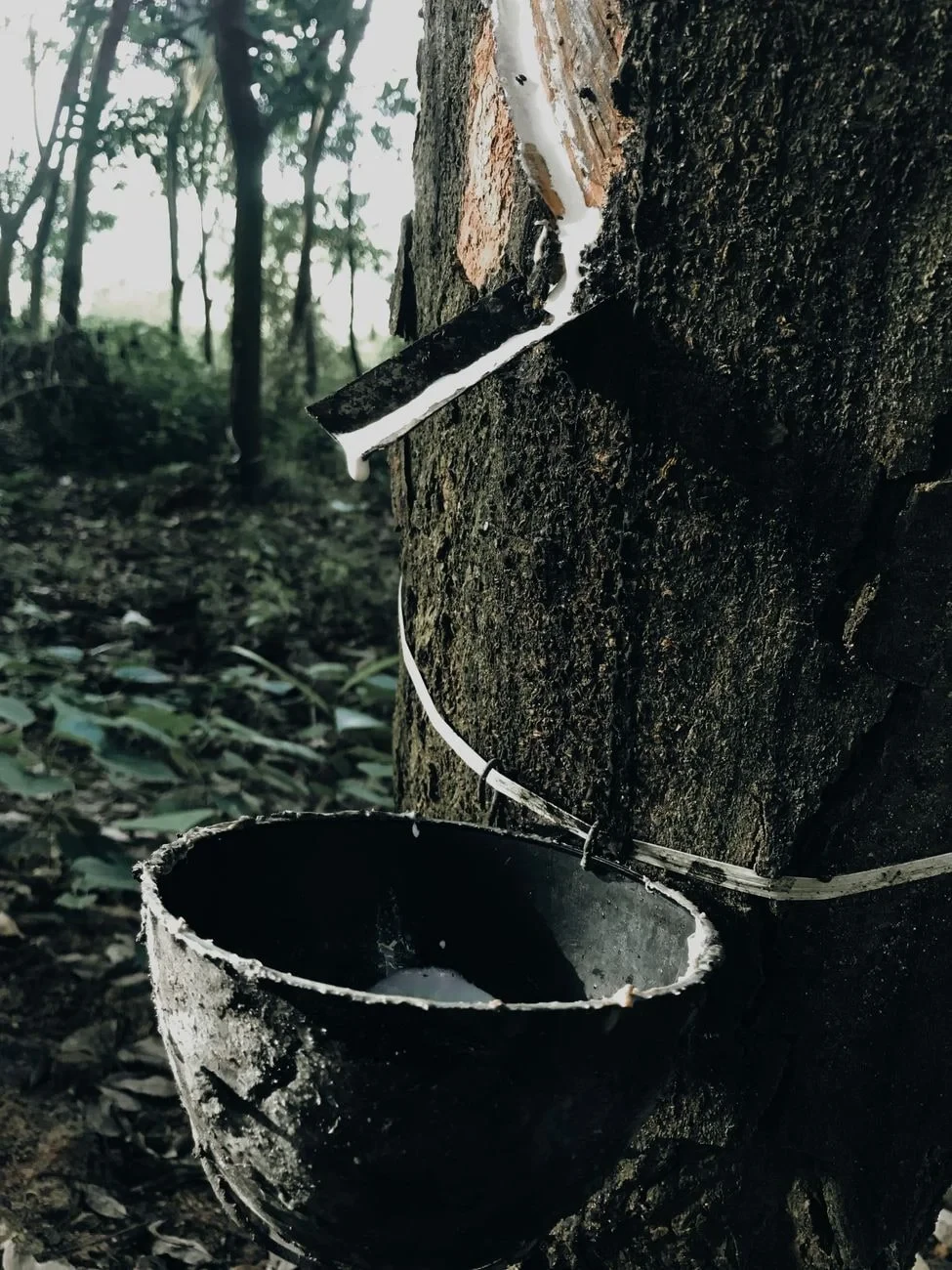
A collecting cup catches latex as it drips from a tapped tree. The forest holds the infrastructure of extraction.
Photograph by Basi Kalathingal, via Pexels.
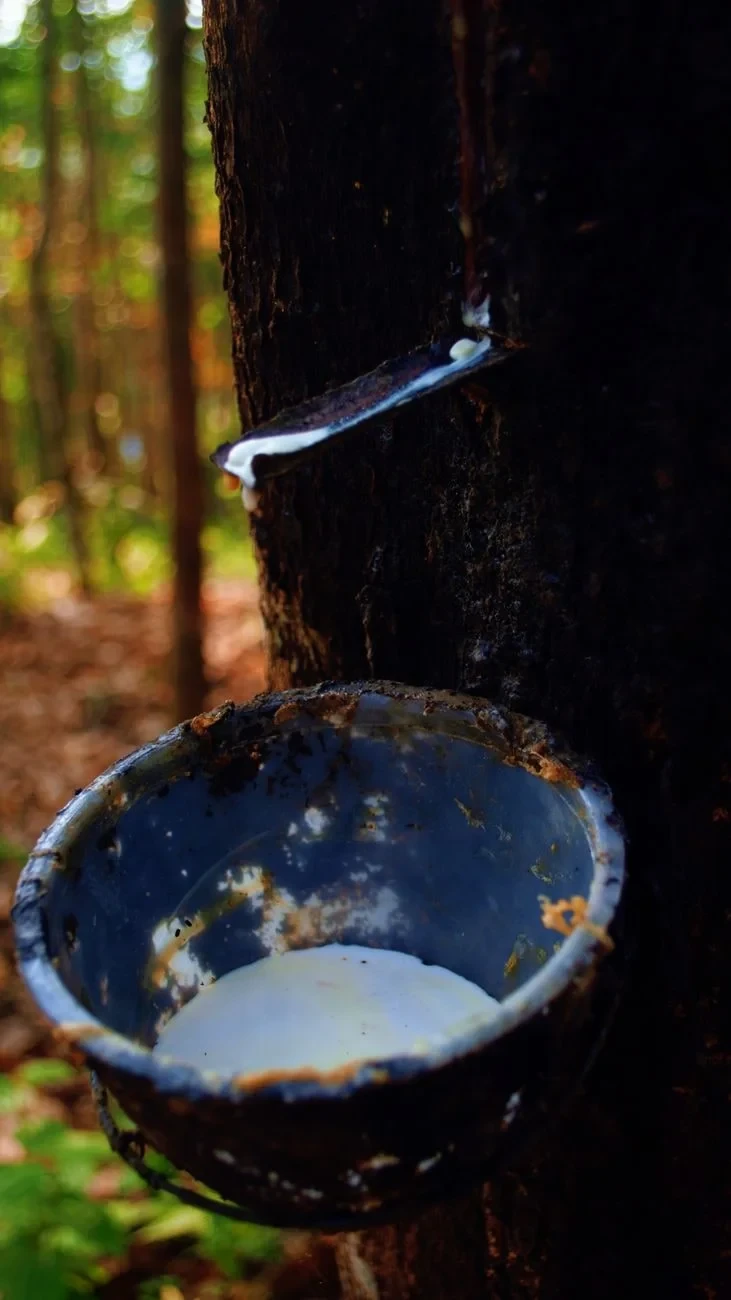
Close enough to see the incision where latex begins to flow. A direct view of the moment extraction begins.
Photograph by karinanrdyh _, via Pexels.
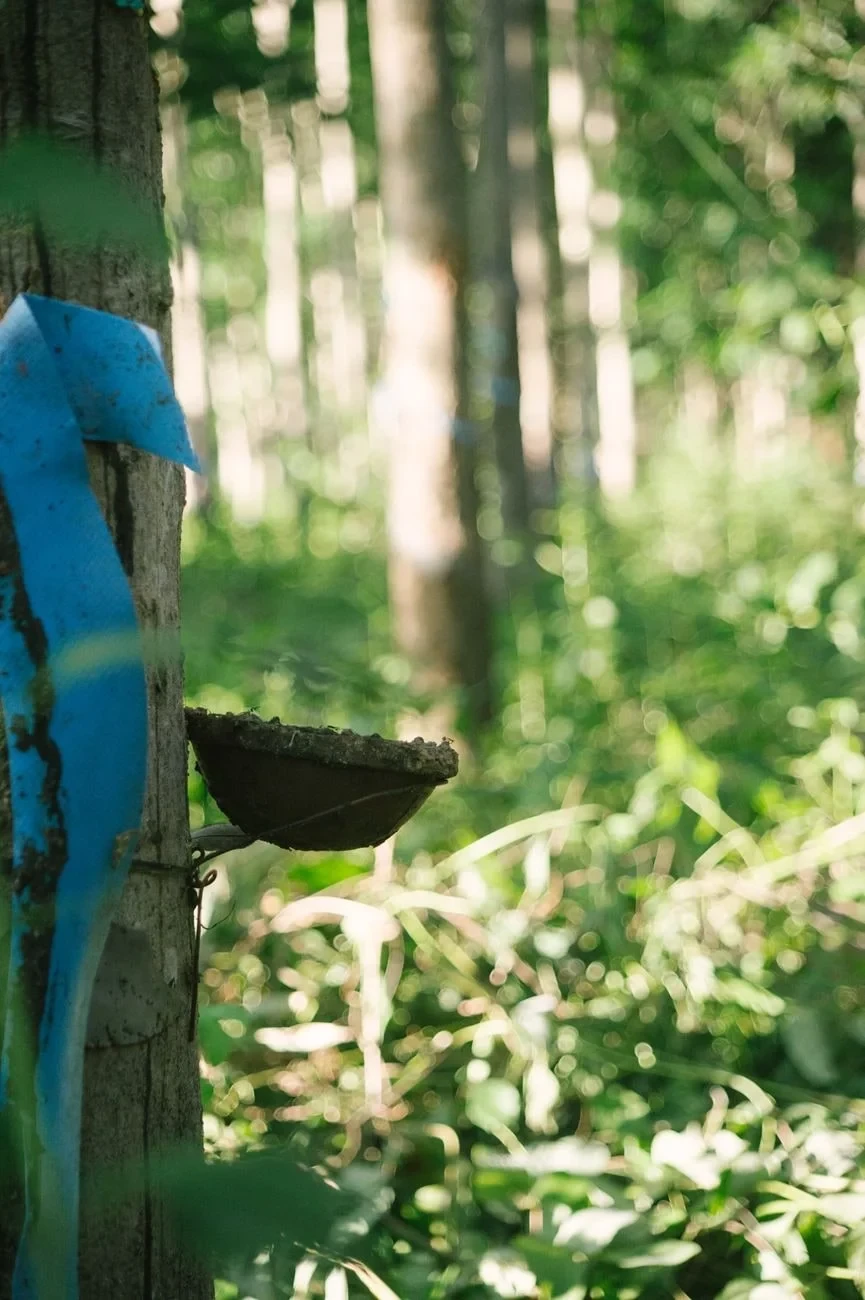
Blue marks on a tree trunk signal tapping points. The forest is mapped and managed for yield.
Photograph by Dương Nhân, via Pexels.
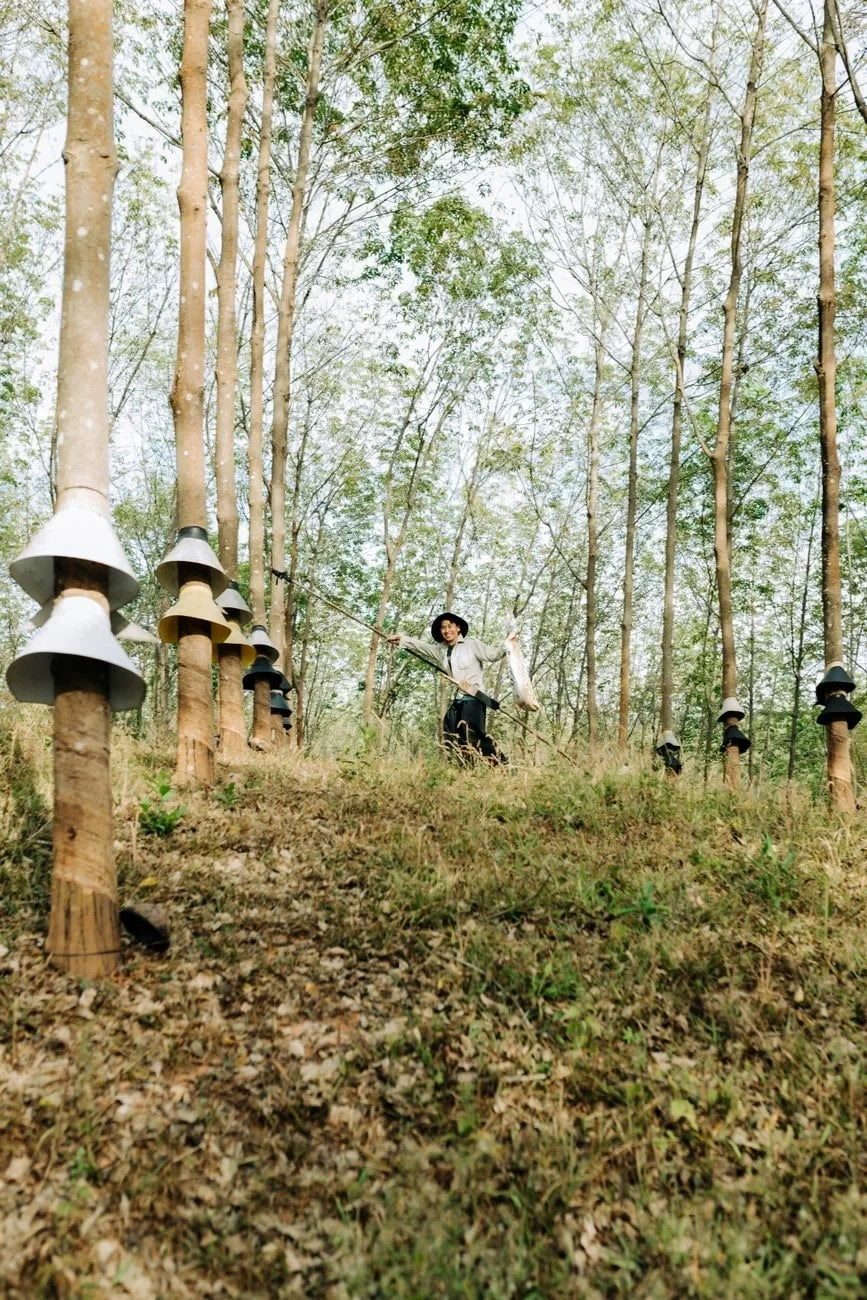
A person works among trees in bright daylight, engaged in the traditional practice of rubber harvesting. The forest setting emphasizes skill passed through forestry work.
Photograph by Thái Trường Giang, via Pexels.
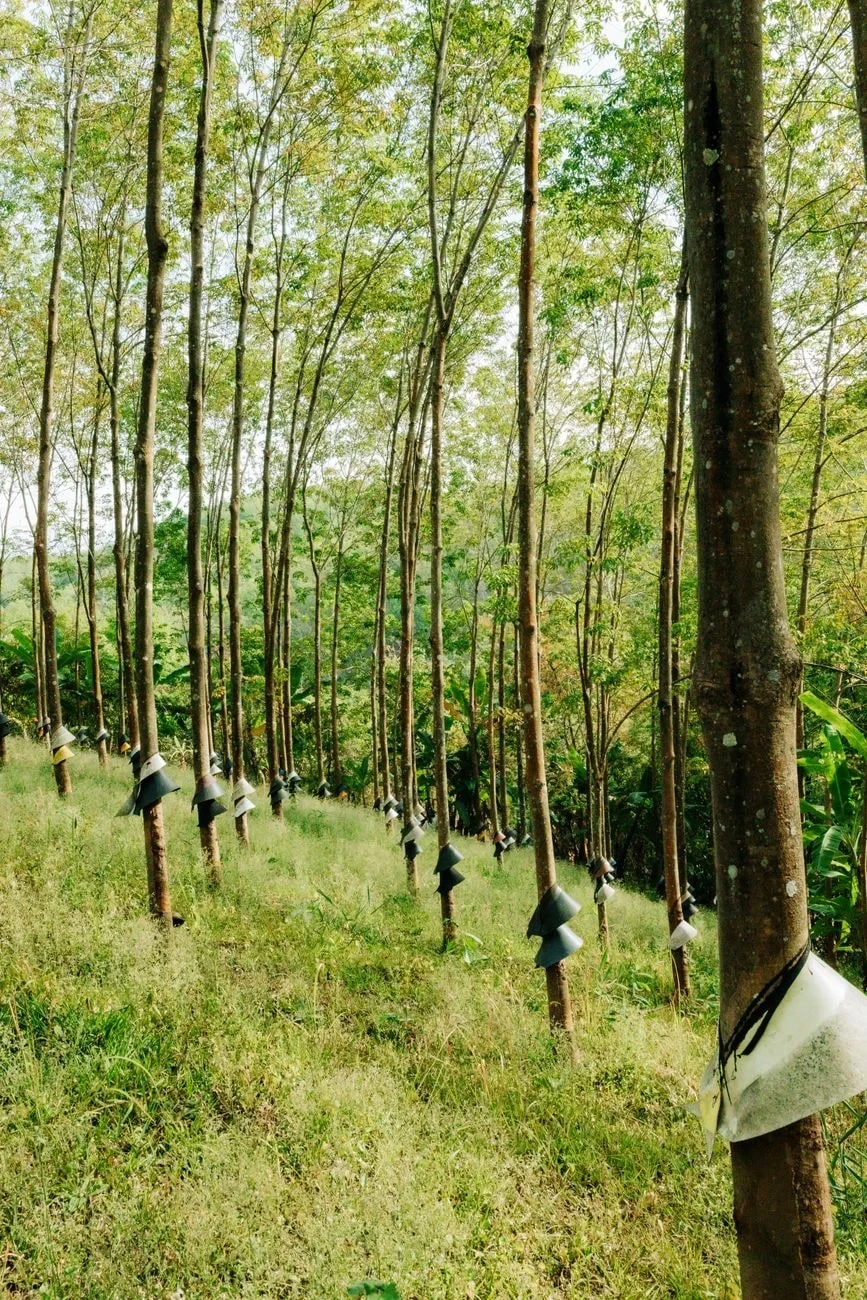
Trees stand marked with tapping cups, the visible infrastructure of rubber collection. Greenery surrounds the evidence of human intervention.
Photograph by Thái Trường Giang, via Pexels.
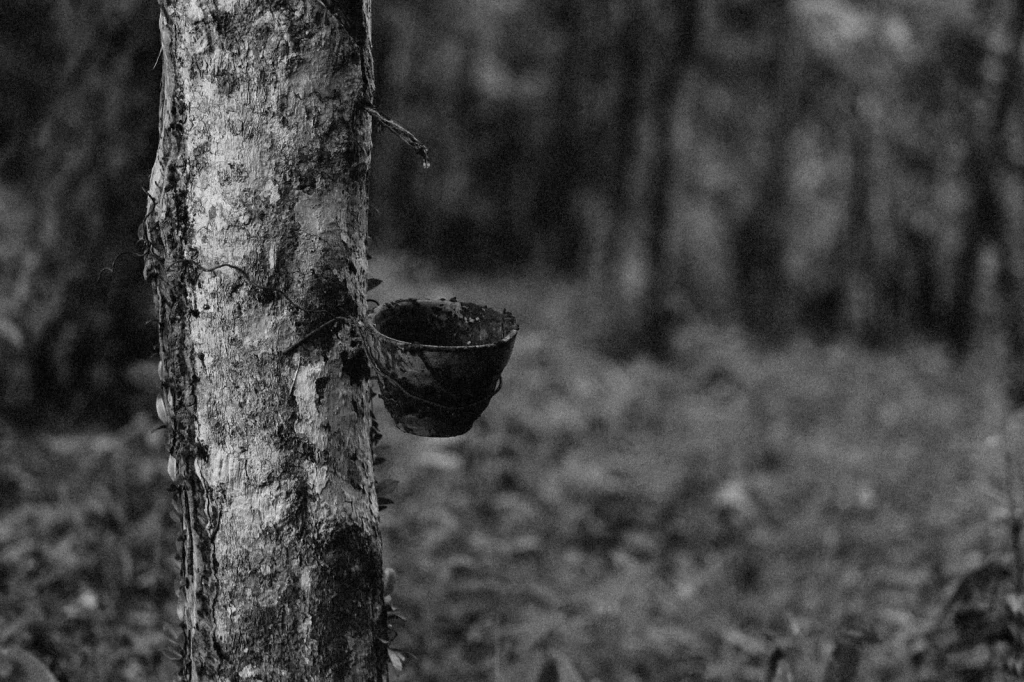
A rubber tree with its collection cup, captured in black and white. The image shows the extraction process embedded within a forest landscape.
Photograph by Alexey Demidov, via Pexels.
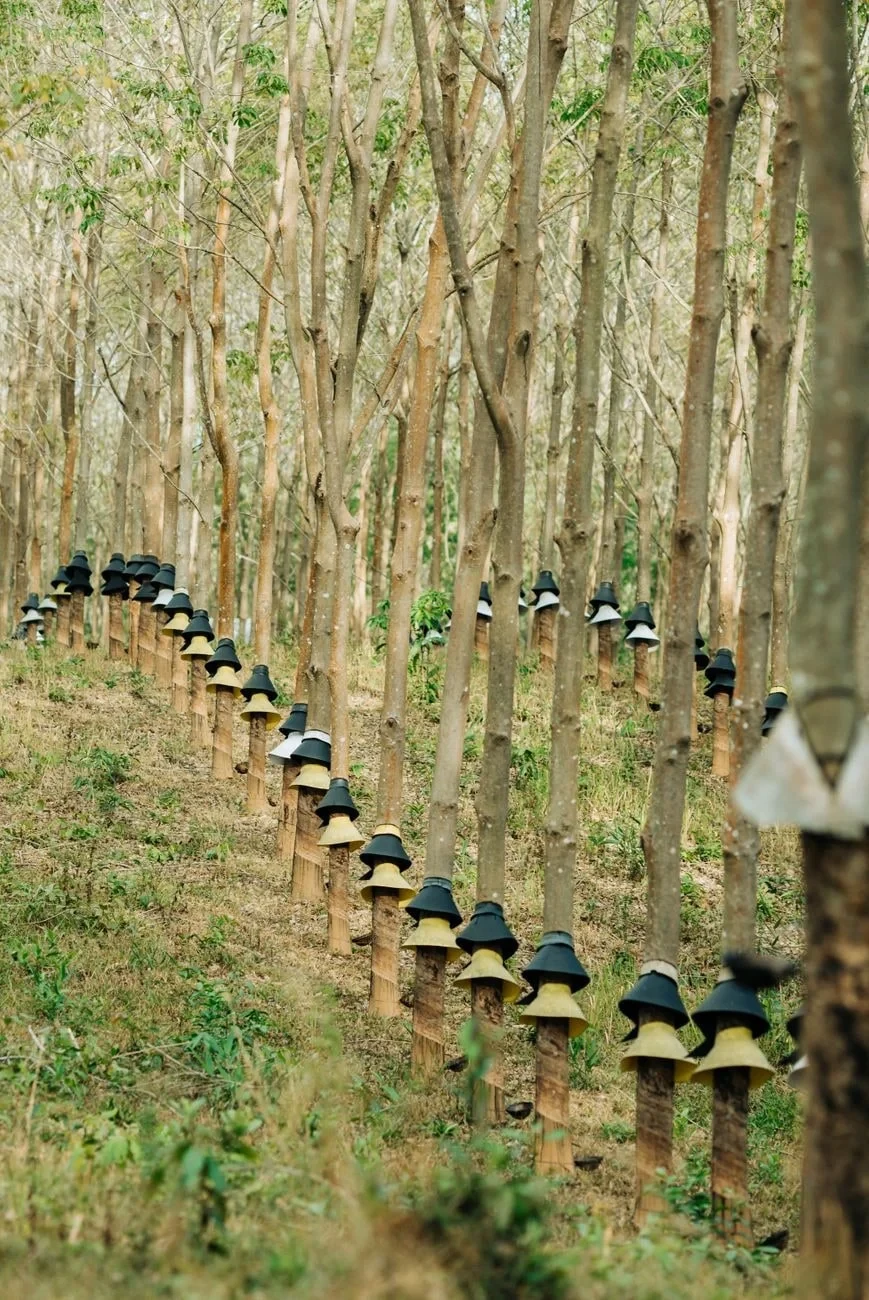
Rows of trees and collection bowls create a ordered landscape. Serenity and systematic extraction coexist.
Photograph by Thái Trường Giang, via Pexels.
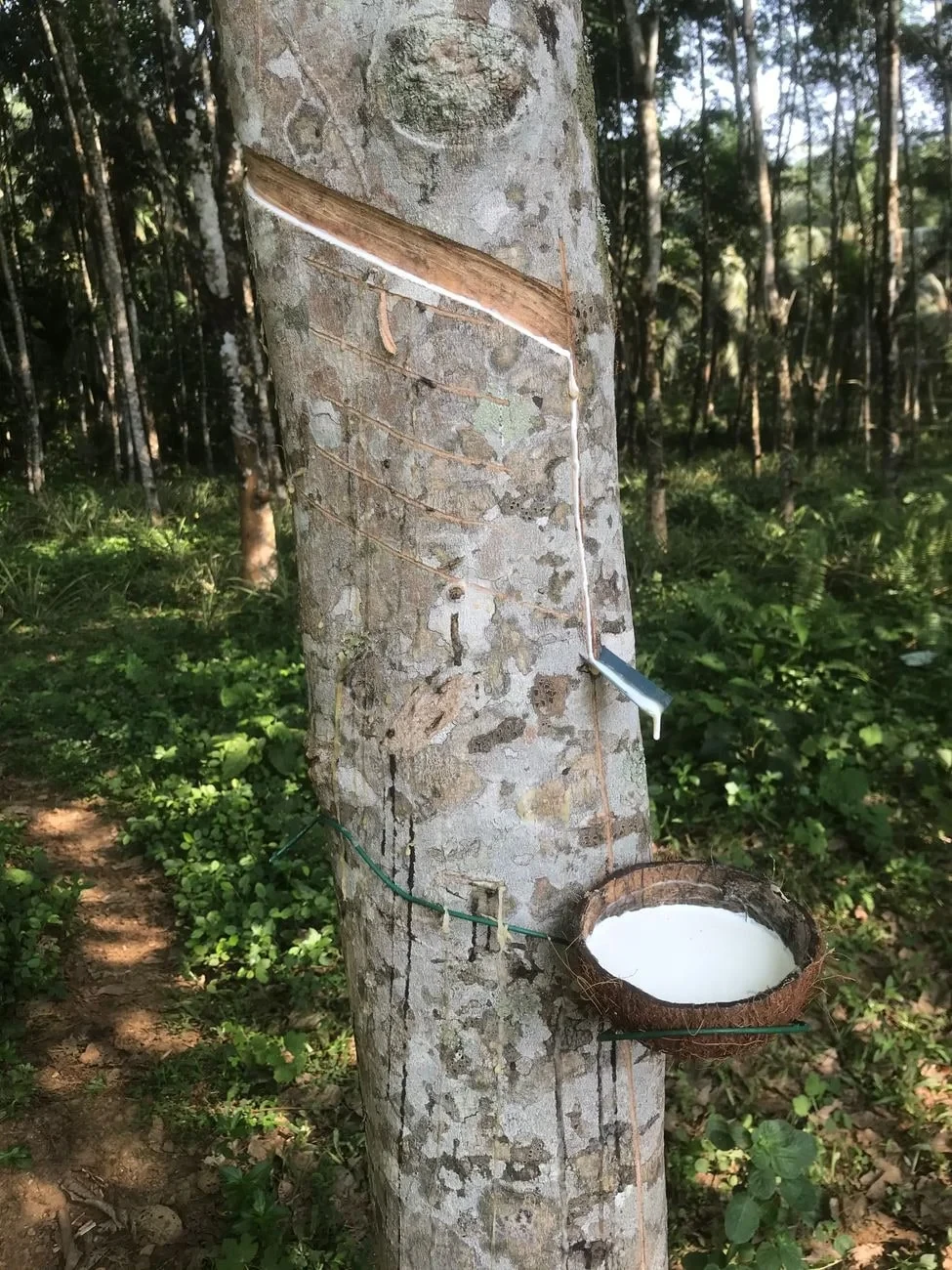
A rubber tree in a Sri Lankan forest bears the marks of tapping. The tree becomes a source of material labor.
Photograph by Terance Kaluthanthiri, via Pexels.
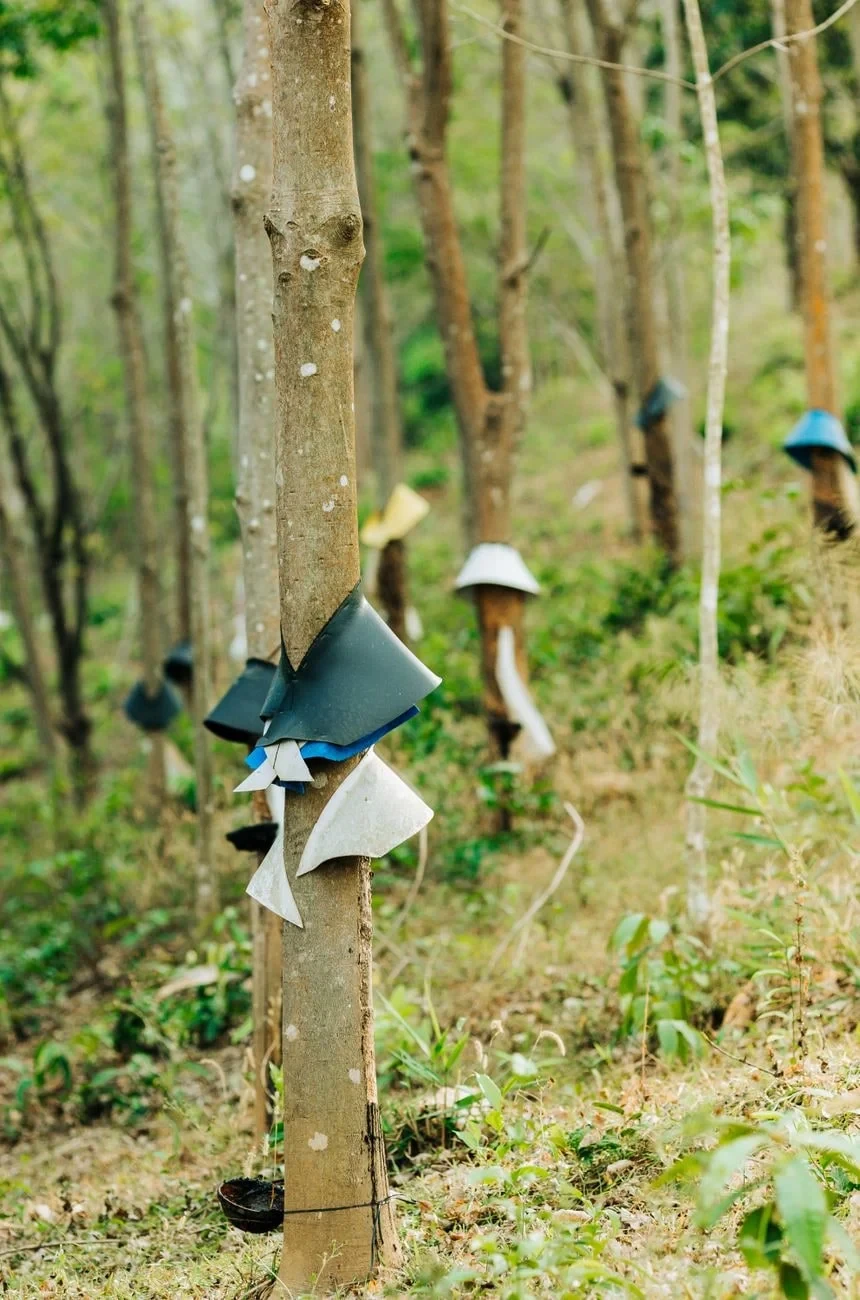
Multiple rubber trees in a lush forest, marked for harvesting. The photograph shows extraction as a practice woven into the landscape.
Photograph by Thái Trường Giang, via Pexels.
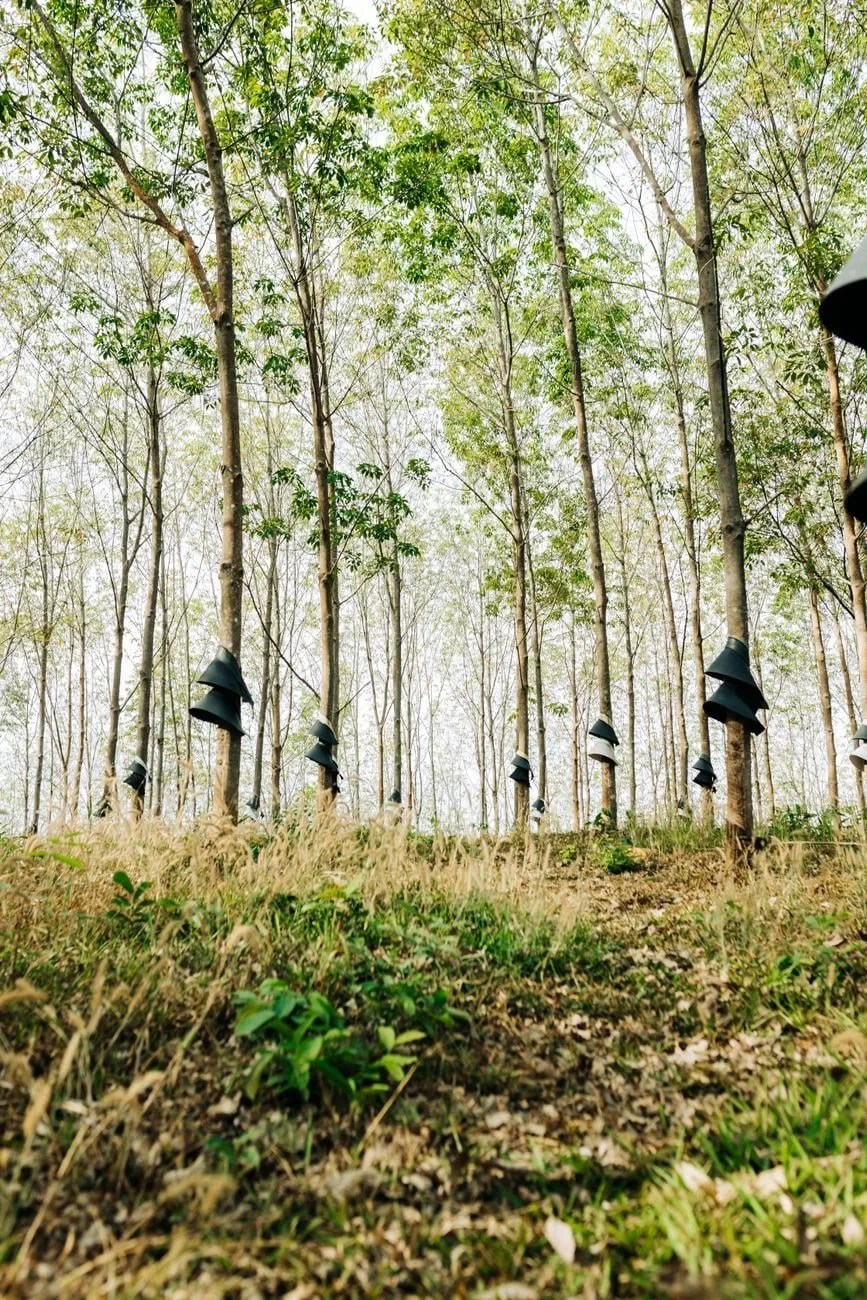
Rows of rubber trees fill the frame with lush growth. The image captures the serene aesthetic of an established plantation.
Photograph by Thái Trường Giang, via Pexels.
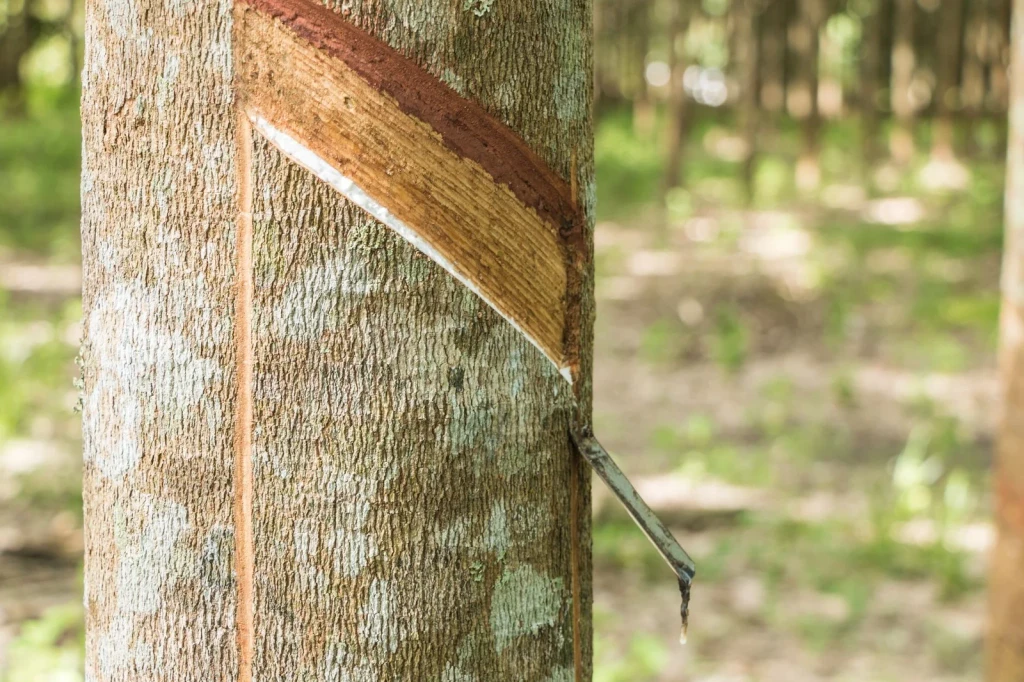
A tree trunk shows the wound of extraction. The photograph centers the act of taking.
Photograph by Srattha Nualsate, via Pexels.
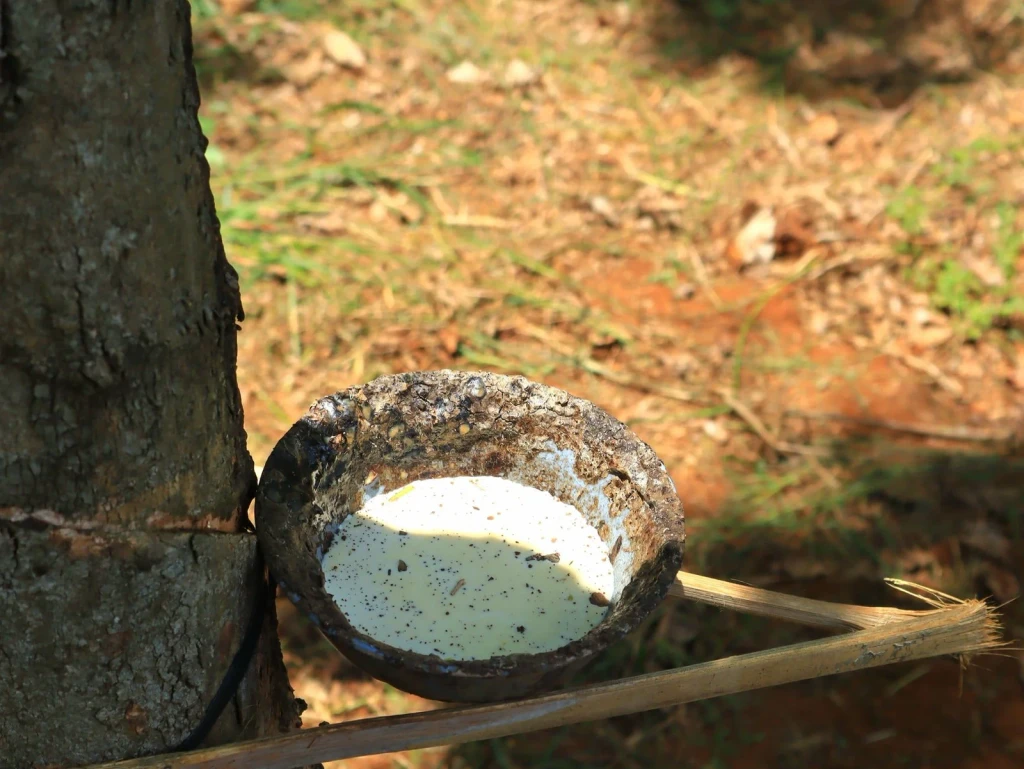
Latex pools in a collection cup using traditional tapping methods. The photograph focuses on the moment of harvest, intimate and direct.
Photograph by Hang Thu, via Pexels.
