3D Gallery
How a Bell Becomes a Sound
Enter gallery
How a Bell Becomes a Sound is a 3D virtual gallery on MyGallery3D, a walkable online exhibition of 15 works. Step inside and explore it in your browser: no app, no headset.
This 3D virtual museum of bells is a gallery you walk through in your browser, and every object in it began as a puddle of molten bronze.
A bell is tuned by having metal cut away. Founders cast it slightly thick, clamp it on a rotating table, and shave it with a cutting tool until five partials line up: hum note, strike tone, tierce, quint and nominal. The thickest part, the sound bow, is usually one thirteenth of the bell's diameter, and a bell that is never altered after casting is called a maiden bell.
Bells were small for a long time. Assyrian bells of the 7th century BCE stood around 4 inches high, Roman bells around 8, and as late as the 10th century CE European bells reached no higher than 2 feet. China was casting bells over 150 kilograms by the 13th century BCE. Today the Laura Spelman Rockefeller Memorial Carillon weighs over 91 metric tons.
Before modern communications, the bell was the message. In Kent and Surrey a death was announced by ringing three times three strokes for a man and three times two for a woman, then the age of the dead, which in a small village told you exactly who had gone. In wartime Britain the bells were silenced entirely, kept in reserve to announce an invasion.
Large bells are cast mouth downwards, molten metal poured into the gap between an inner core and an outer mould. The core is built from coke or brick and coated in loam mixed with straw and horse manure. Before bells could travel by road or rail, founders dug a bell pit in the grounds of the building itself and built a furnace beside it.
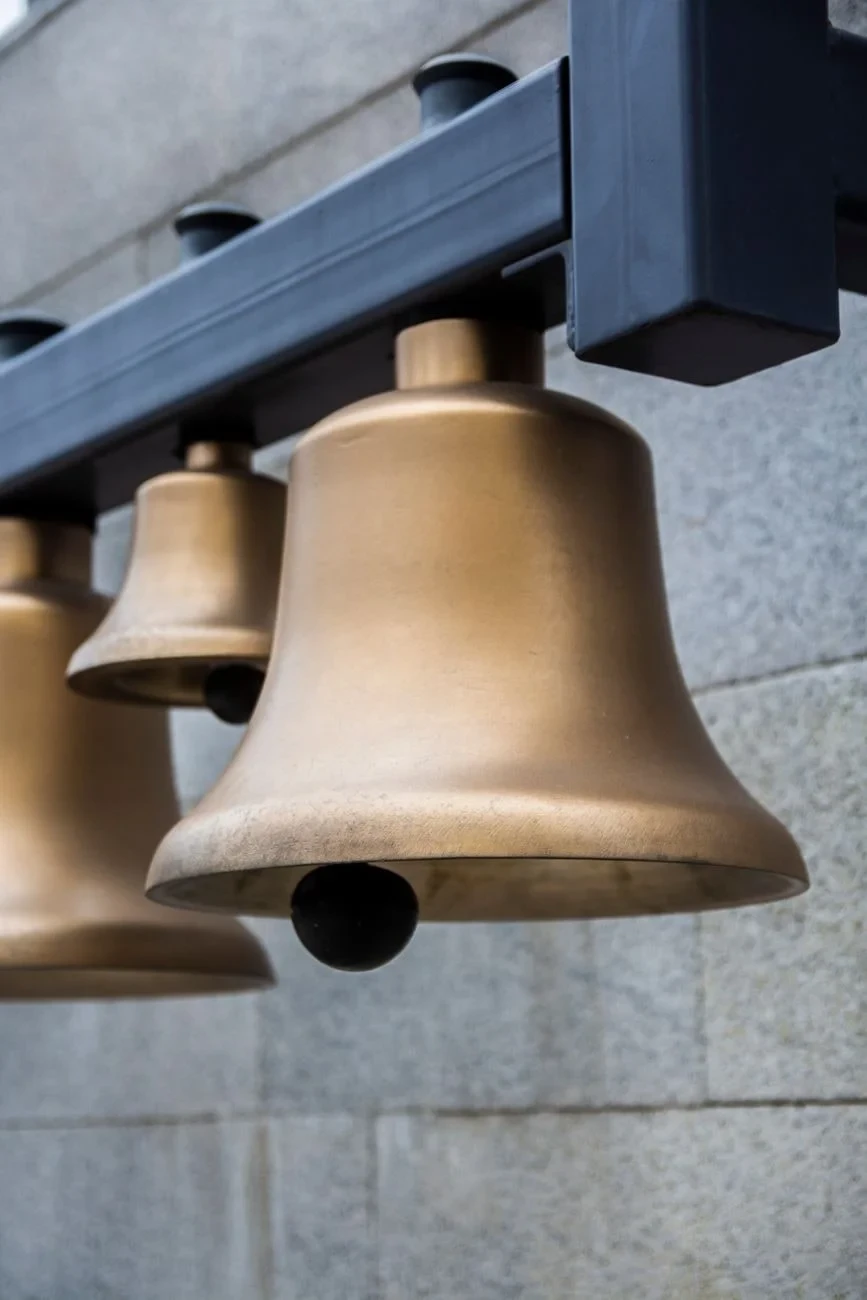
A close-up of bronze bells arranged on a wall fixture. The photograph captures how bells, even when mounted as decoration, retain their physical form and material presence.
Photograph by Paul Seling, via Pexels.
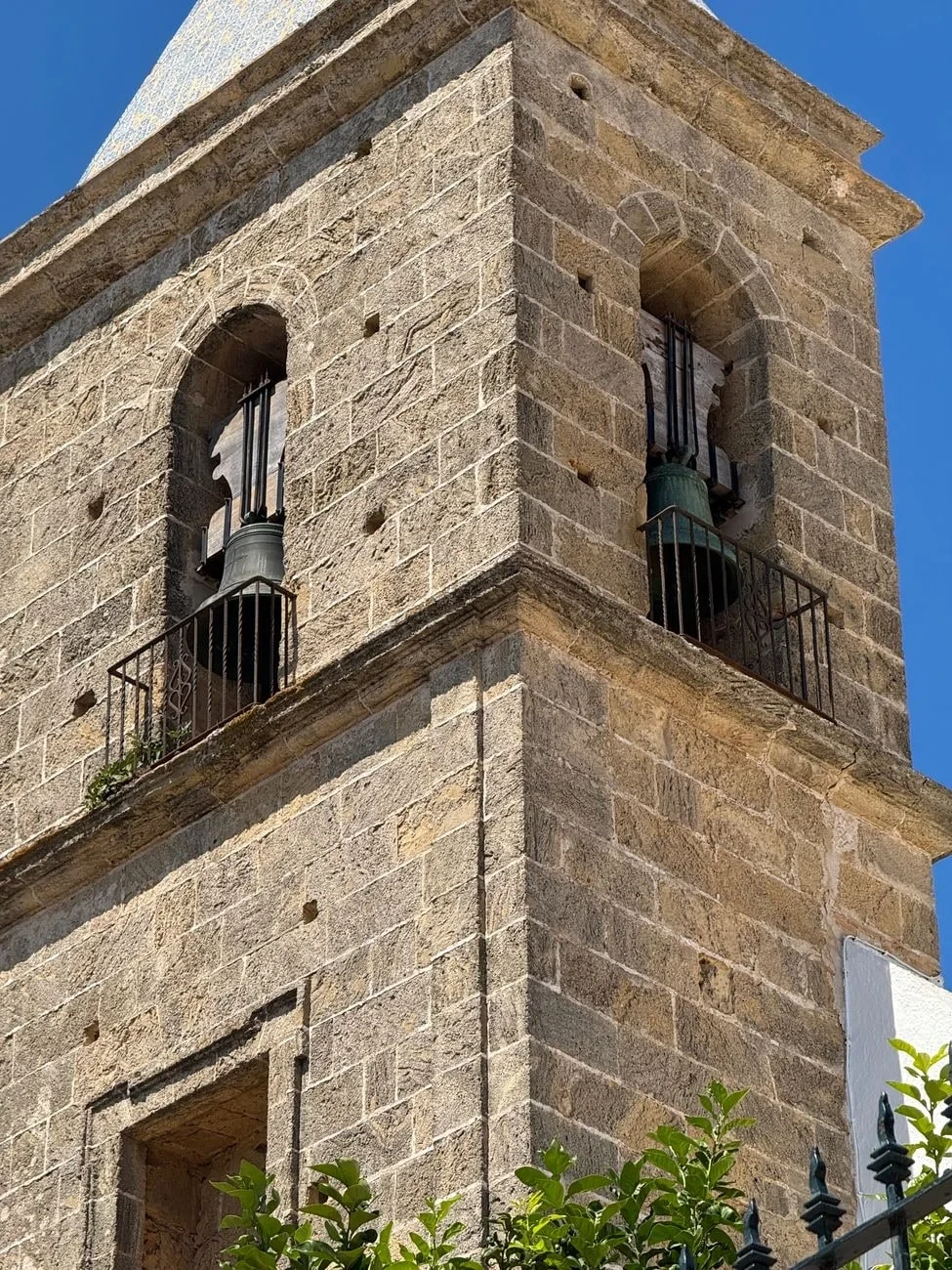
A bell tower's stone facade catches clear daylight. Architecture frames the bells we cannot see but know exist within.
Photograph by Miguel Rivera, via Pexels.
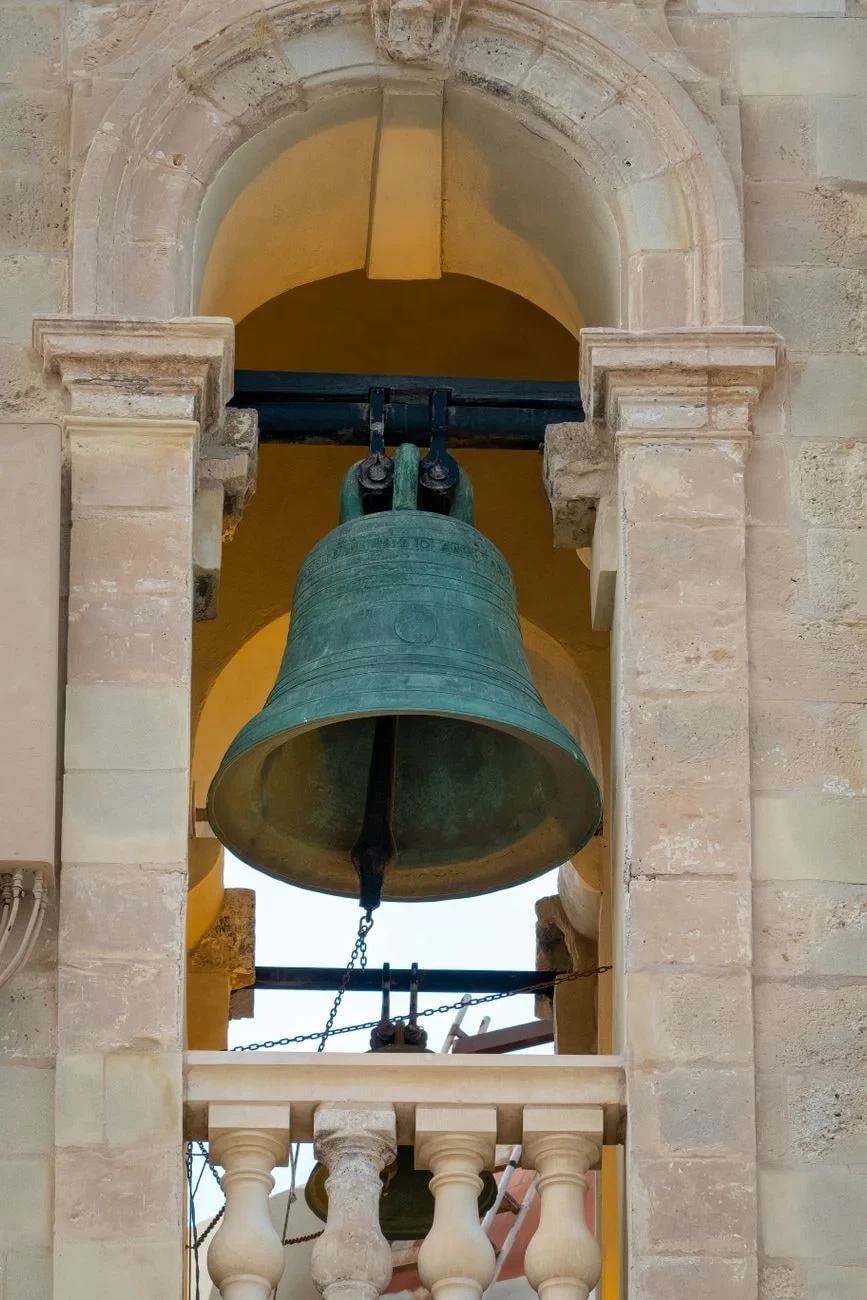
A historic bell framed in architectural detail within a Maltese tower. The image documents how bells are built into structures, becoming part of a building's permanent form.
Photograph by Tom Fisk, via Pexels.
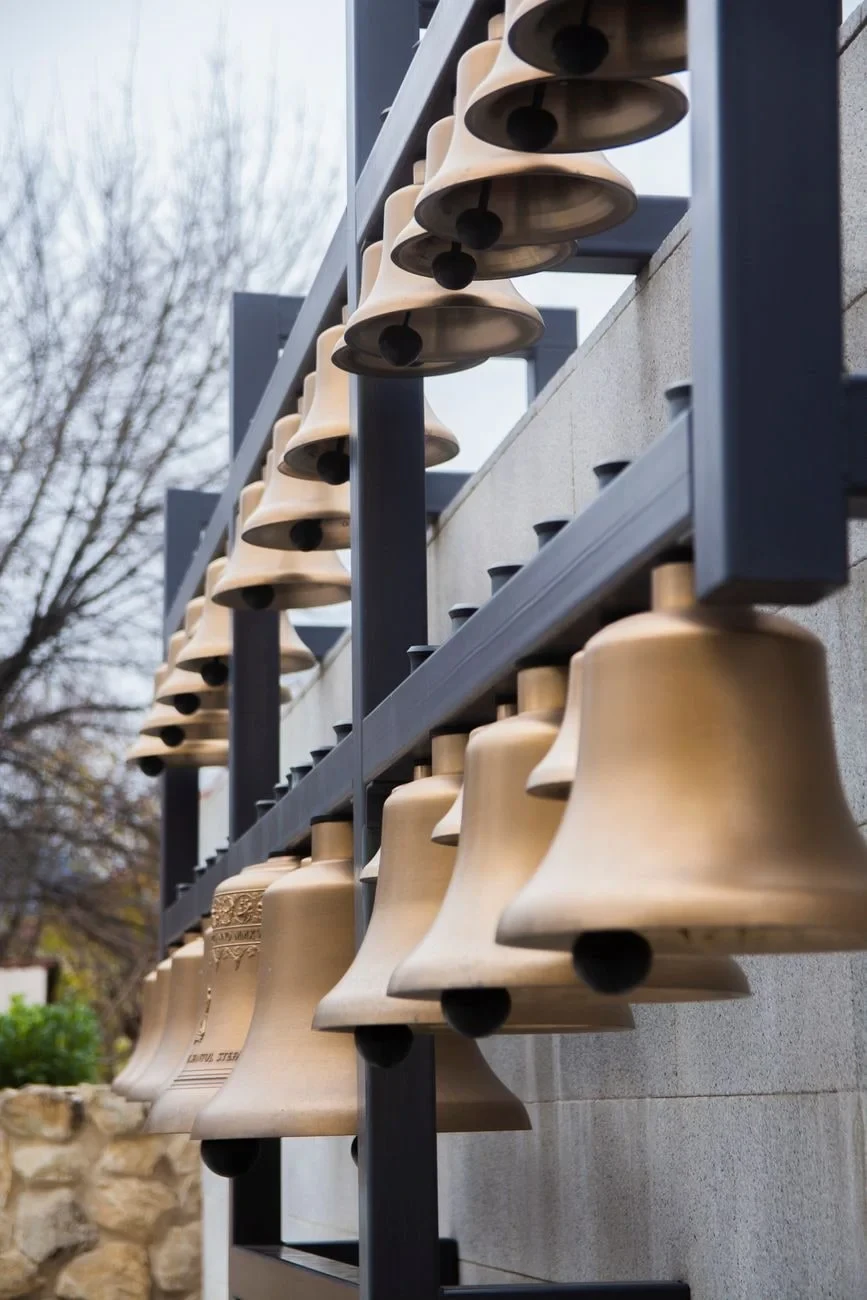
Bronze bells arranged on a metal frame in daylight. The image emphasizes the bell's object-hood, its form and material before the act of sounding.
Photograph by Paul Seling, via Pexels.
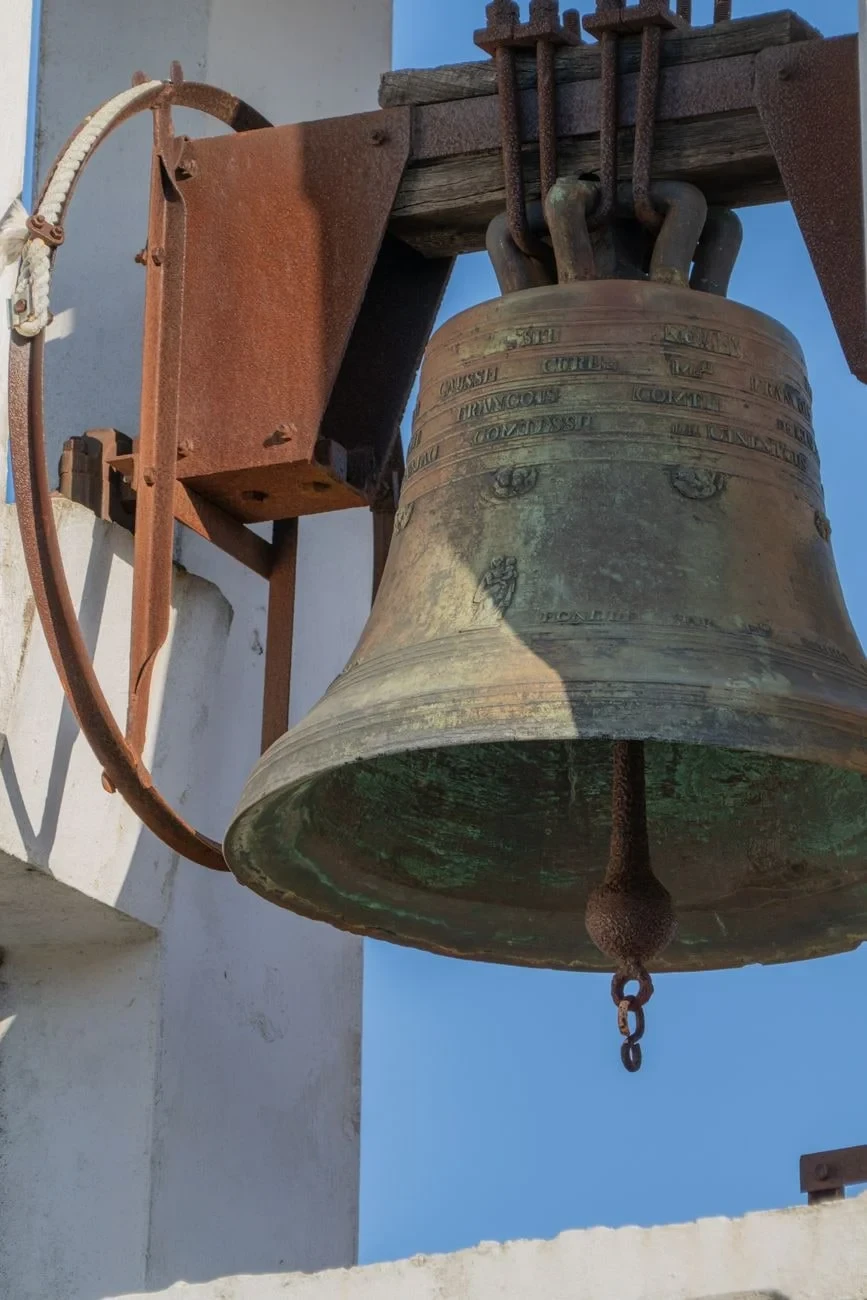
A vintage bronze bell mounted in a tower under open sky. The image captures the bell's physical weight and stillness, the state before it rings.
Photograph by Antoine Dematté, via Pexels.
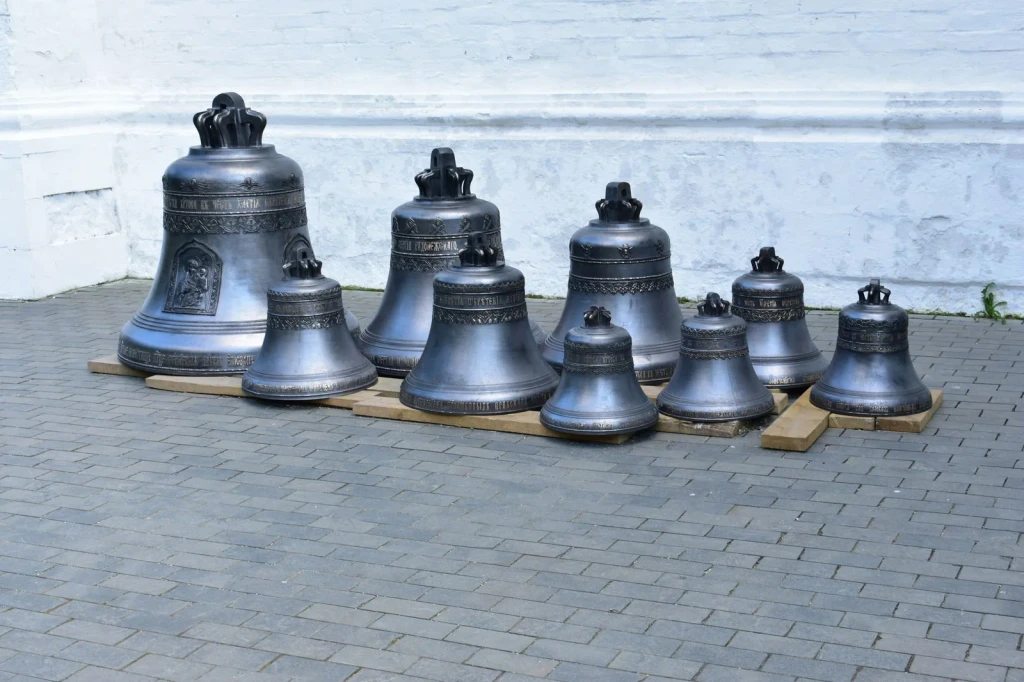
Large metallic bells rest on pavement, separated from their towers. Removed from function, they await the vibrations that would make them sing.
Photograph by Violetta Ramonaite, via Pexels.
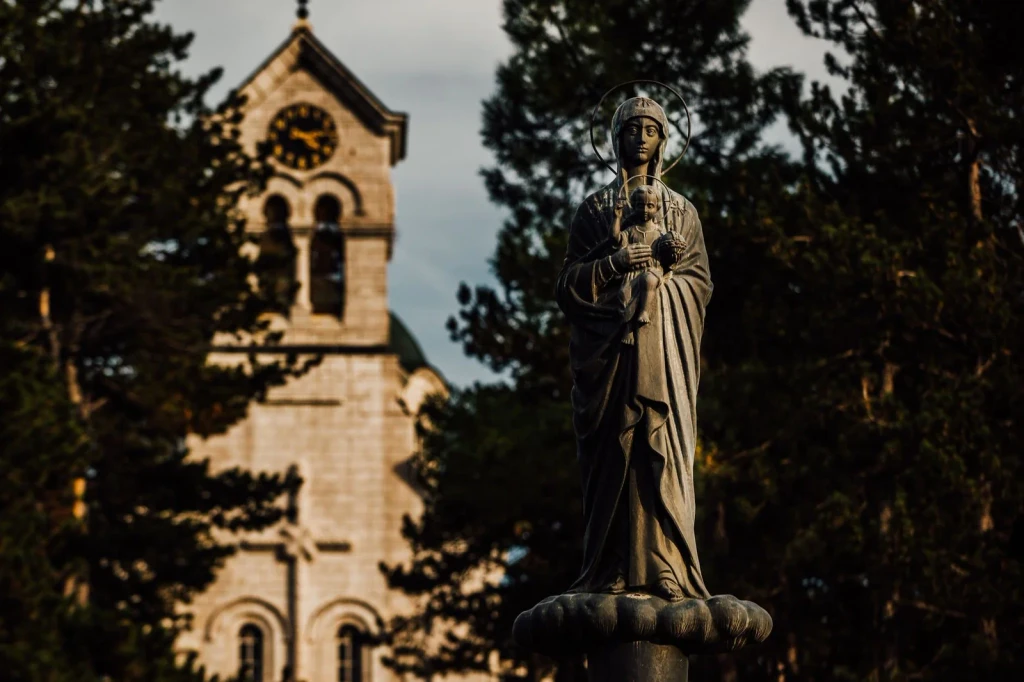
A statue of the Virgin Mary before a church. Religious settings frame where many bells live and sound.
Photograph by Alexander Nadrilyanski, via Pexels.
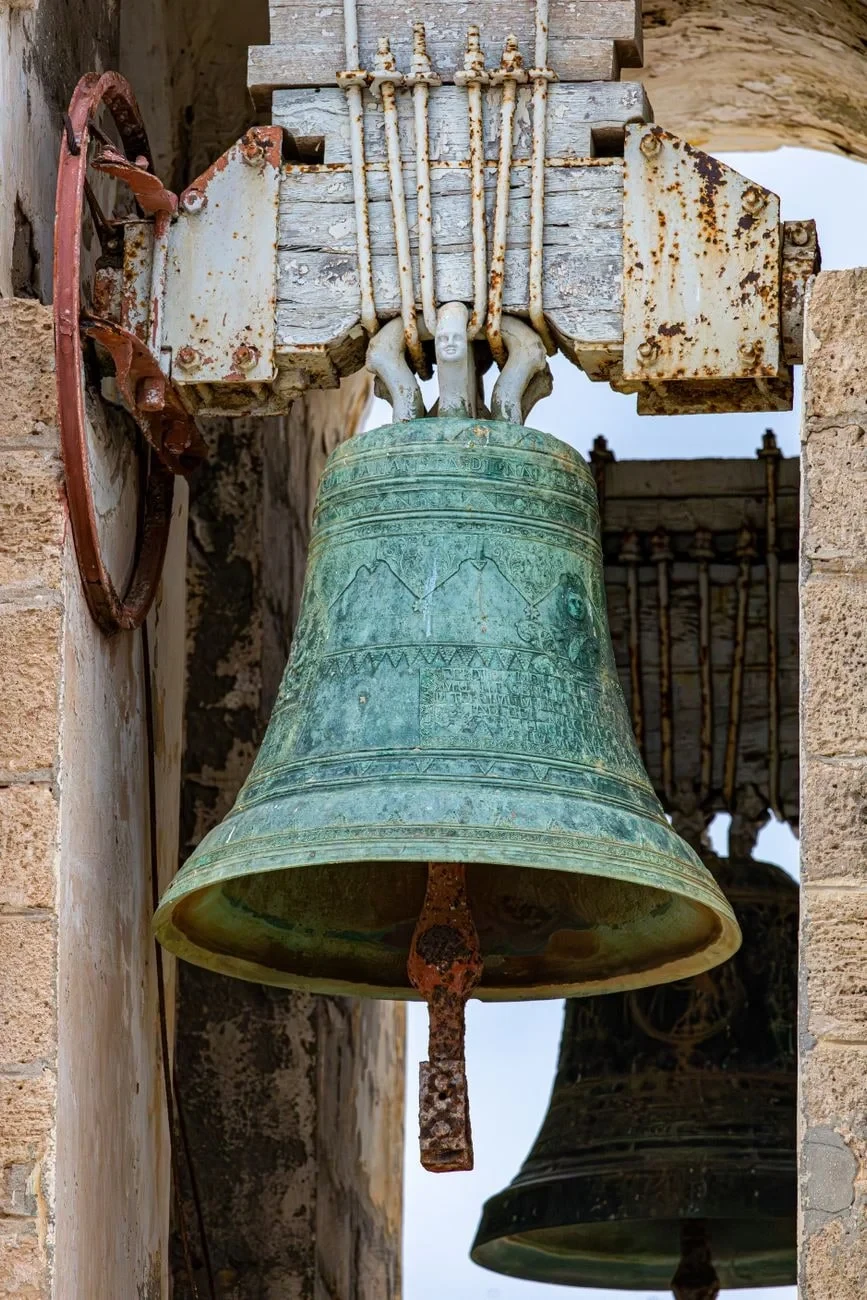
An old church bell in its stone setting. Aged details show how time and use shape the instruments that shape our soundscapes.
Photograph by Regan Dsouza, via Pexels.
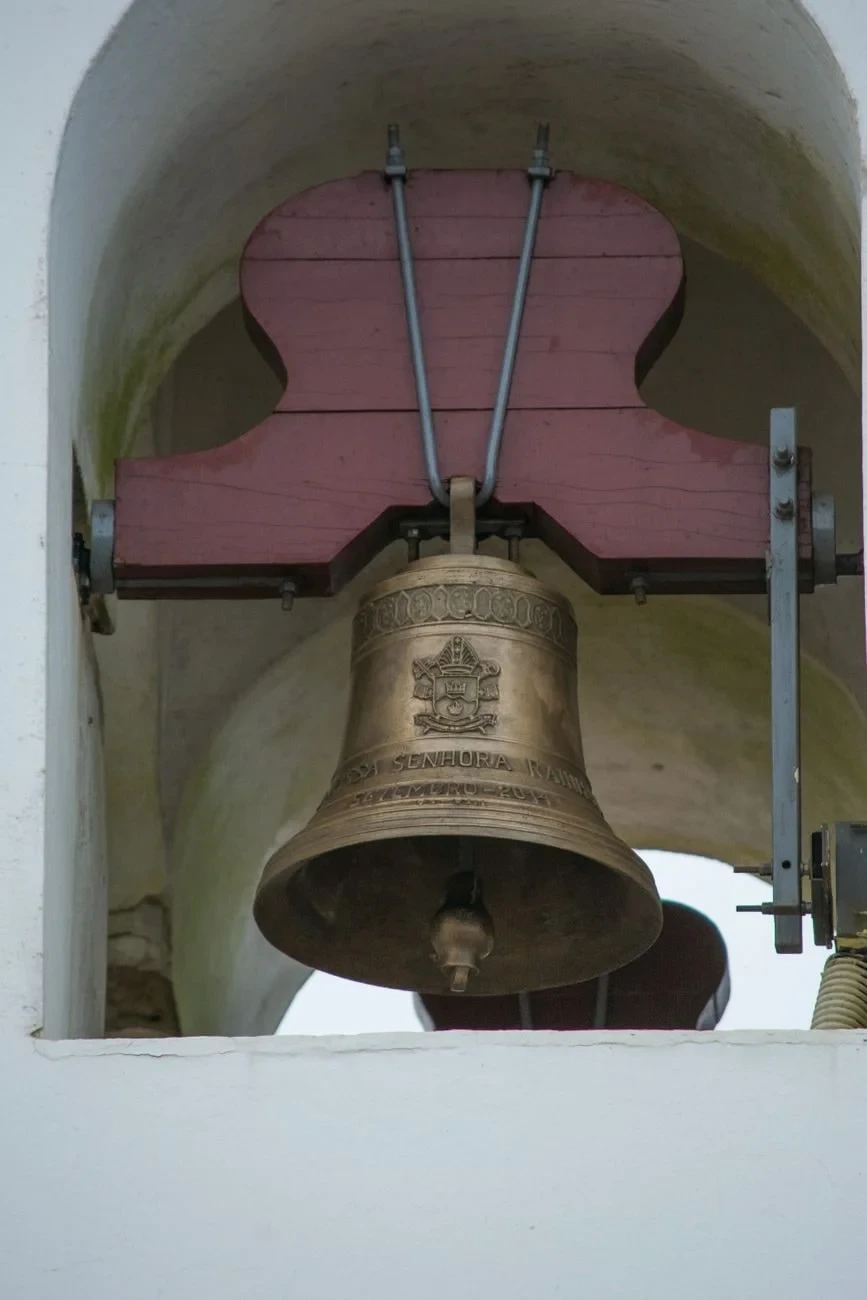
A church bell suspended within a white archway. The photograph shows the bell at rest, before the moment of vibration that would transform it into sound.
Photograph by Jerson Martins, via Pexels.
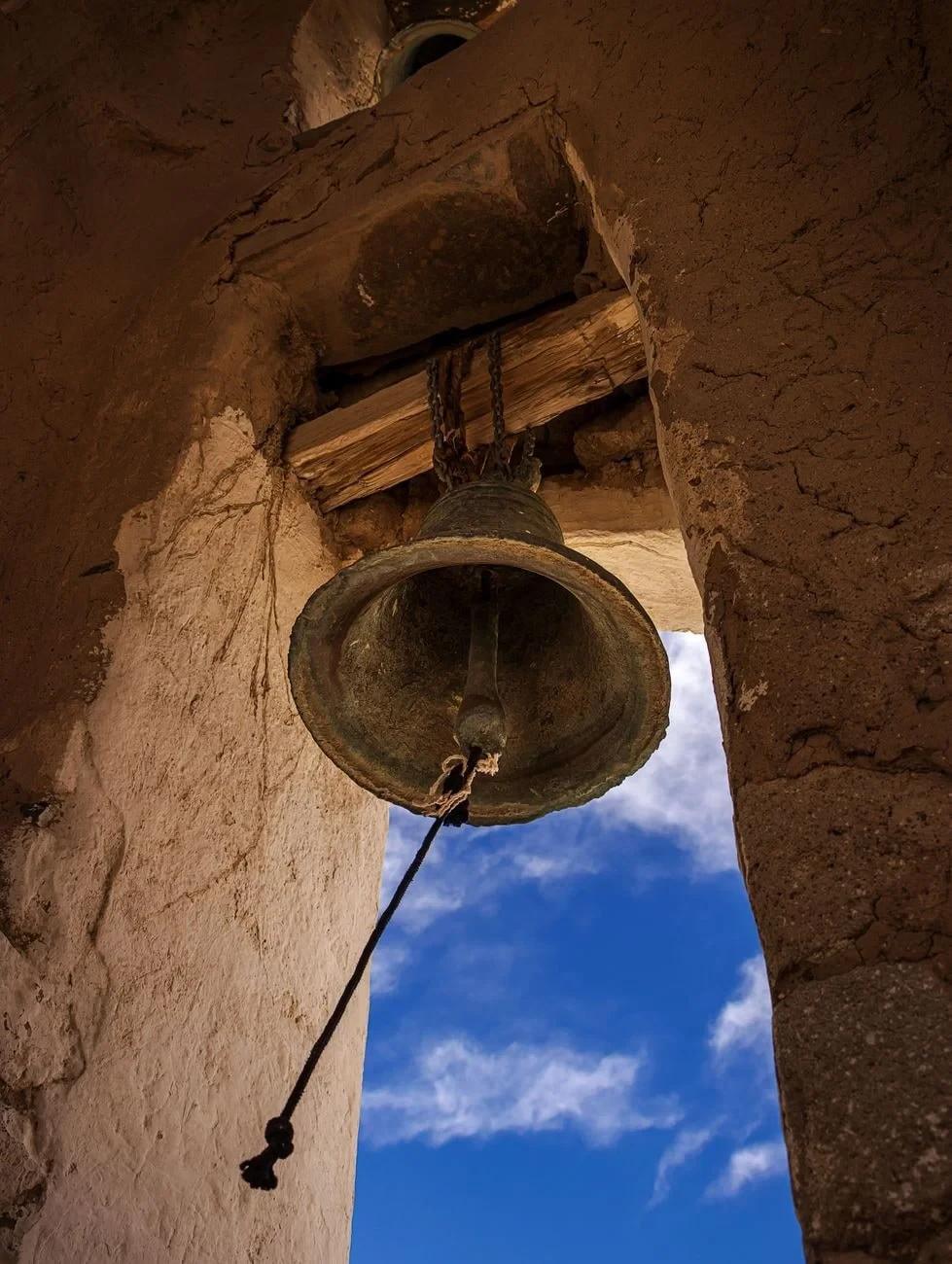
A vintage bell suspended in a weathered archway. Framed against open sky, the bell waits in stillness before it rings.
Photograph by jose luis Umana, via Pexels.
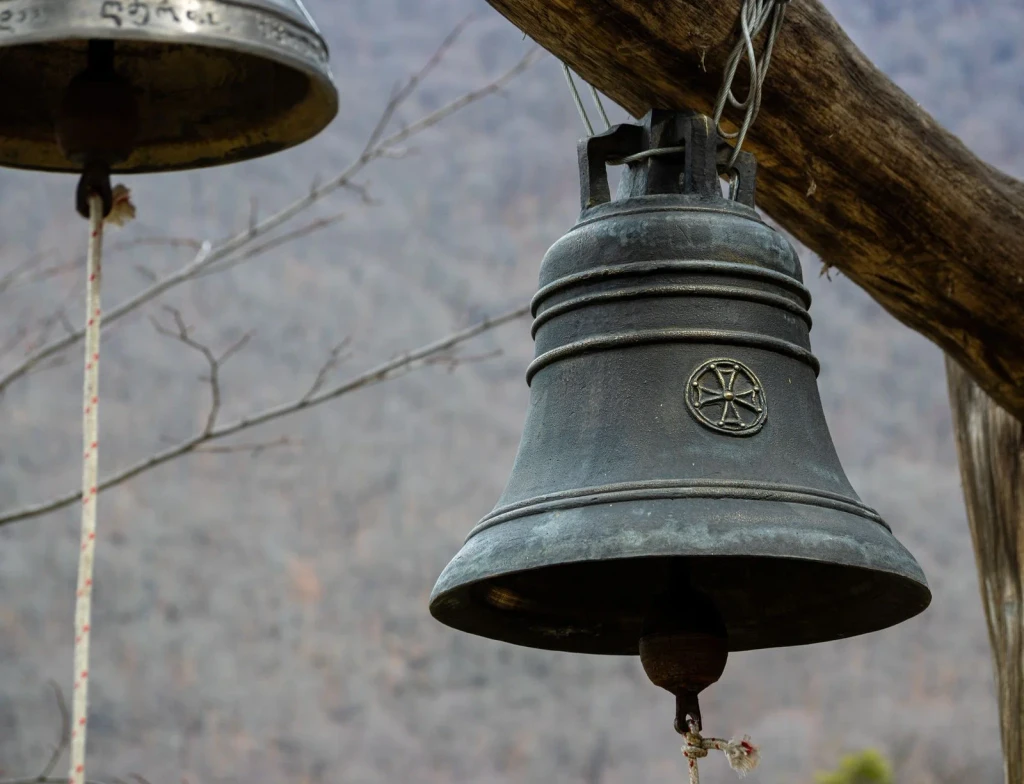
A close study of traditional bronze church bells. The surface detail hints at the vibrations these bells were made to produce.
Photograph by Genadi Yakovlev, via Pexels.
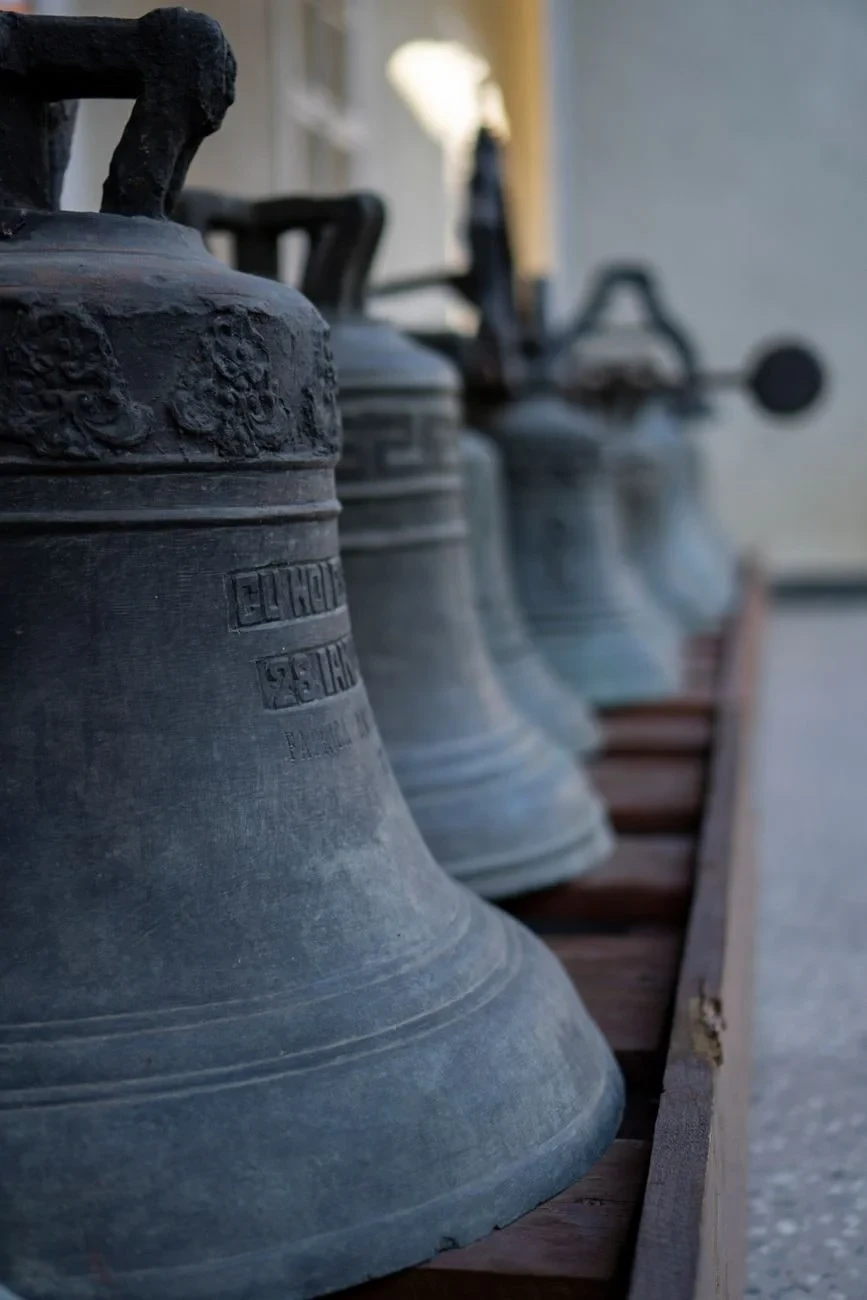
Historic metal bells arranged for display. Their intricate designs speak to centuries of craftsmanship before these objects ever made a sound.
Photograph by Paul Seling, via Pexels.
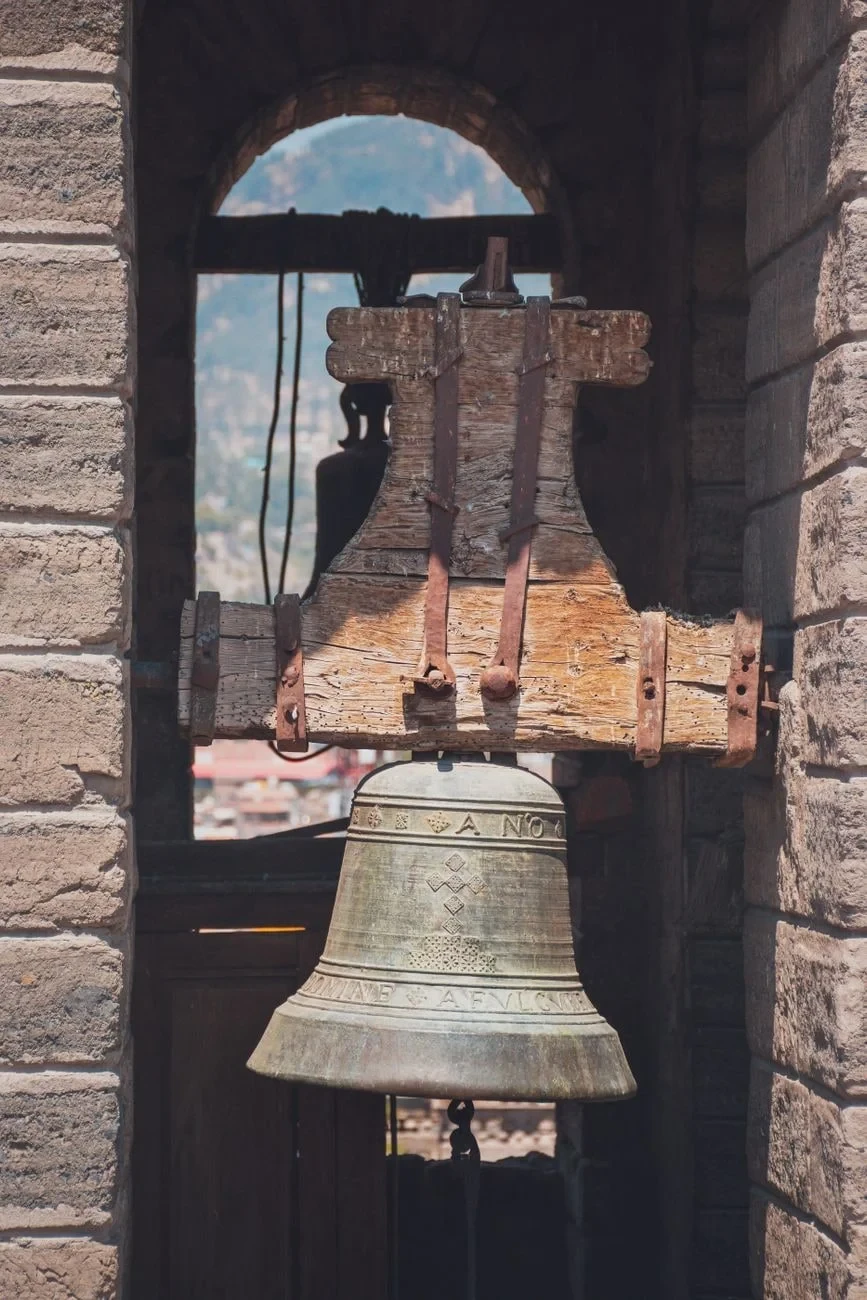
An antique church bell in a tower setting. The aged bell and ancient stone surround speak to sound's deep place in human ritual.
Photograph by Gilmer Diaz Estela, via Pexels.
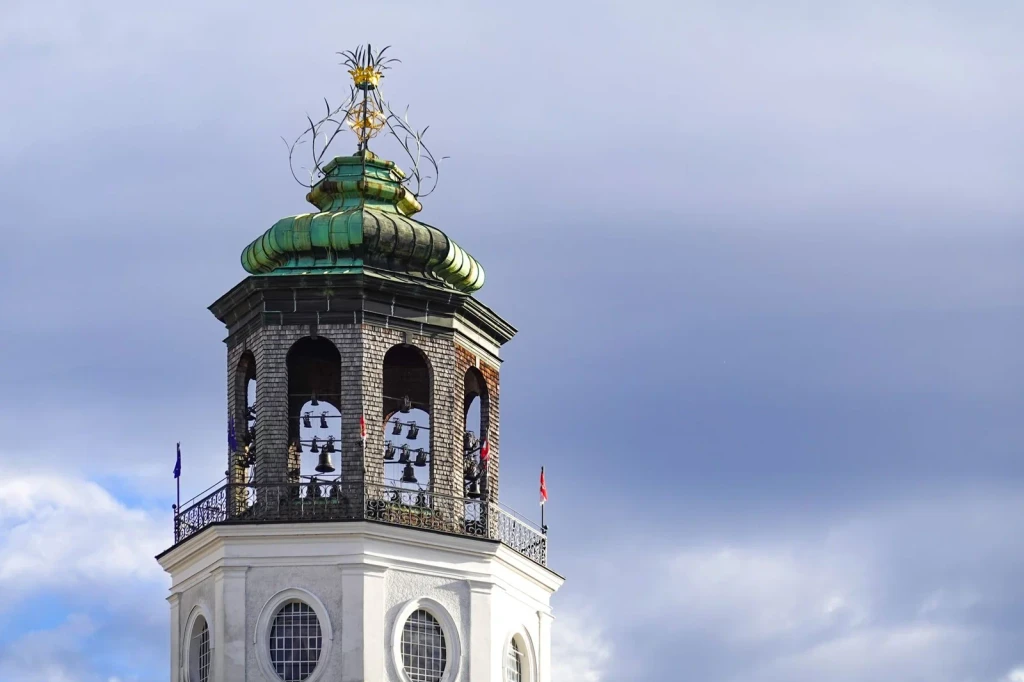
Historic architecture rises under shifting sky. The tower holds bells suspended between silence and the sound they are built to carry.
Photograph by Magda Ehlers, via Pexels.
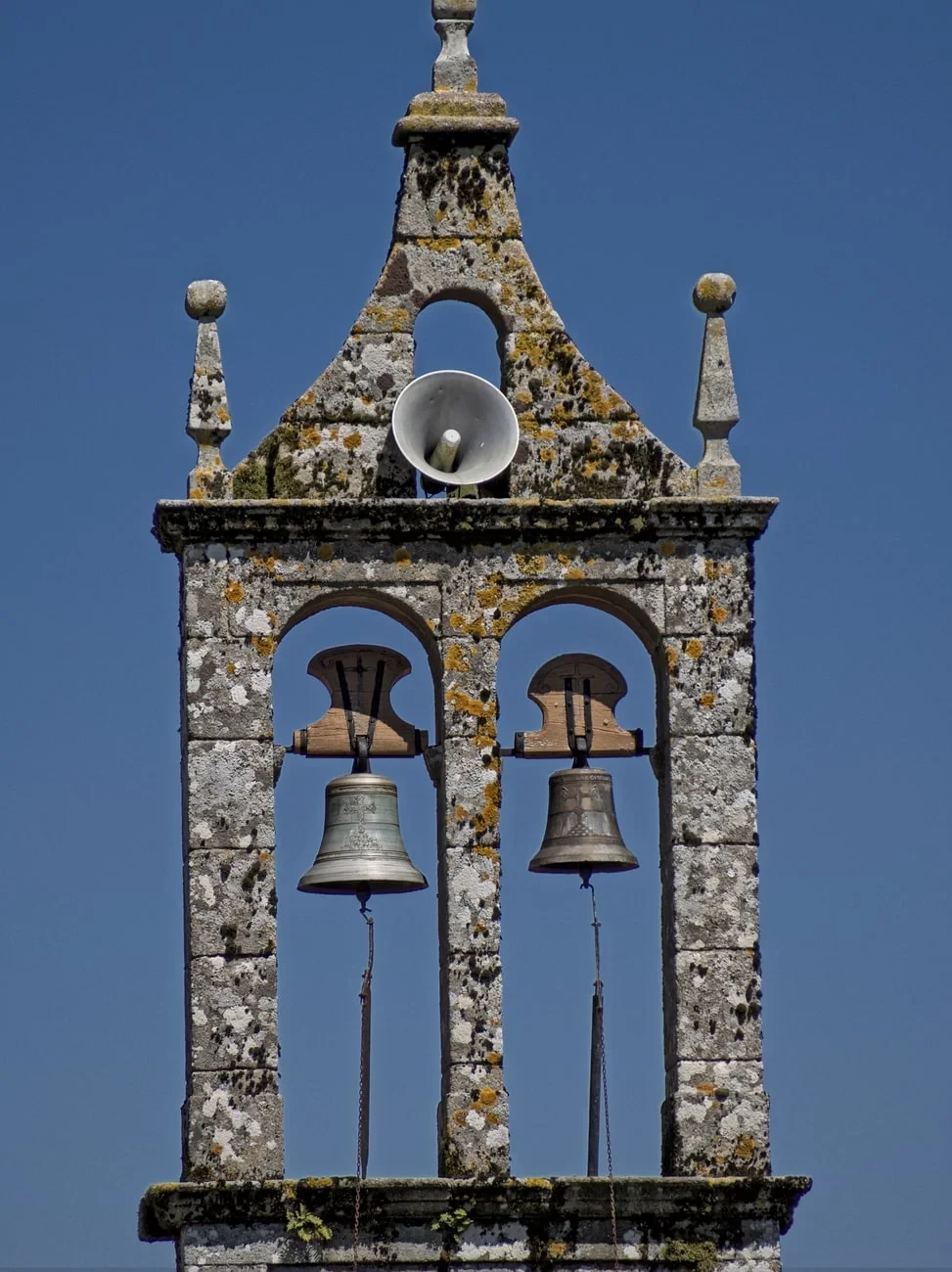
A stone tower holds two bells against blue sky. The photograph shows bells in their architectural context, before their sound reaches outward.
Photograph by M K, via Pexels.
