3D Gallery
How Printing Multiplied Ideas
Enter gallery
How Printing Multiplied Ideas is a 3D virtual gallery on MyGallery3D, a walkable online exhibition of 13 works. Step inside and explore it in your browser: no app, no headset.
Step into a 3D virtual museum of printing: walk the rooms in your browser and look at what one machine did to human thought.
Before 1440, a book was copied by hand, one at a time. A press of Gutenberg's period could pull up to 3,600 pages a day. Within decades the press reached around 270 cities, and by 1500 the presses of Western Europe had produced more than twenty million copies. In 1518 and 1519 Martin Luther became Europe's most published author, and his tracts went out in 300,000 copies.
Gutenberg invented almost nothing from scratch. He combined the screw press the Romans used for wine and oil, movable type, the codex, and mechanised paper, then added a hand mould and an oil-based ink that would hold to metal. His type was an alloy of lead, tin, and antimony, which cast cleanly and wore slowly. Those materials stayed standard for 550 years.
A press stood about seven feet tall. A compositor set the small metal letters into lines, locked them into a frame called a forme, then inked them with two leather balls stuffed with wool or horsehair. Dampened paper was pinned to the tympan. Hauling on the long lever, the bar, drove a screw that pressed the platen onto the sheet. One sheet, one pull.
Anything printed before 1500 is an incunable, from the Latin for swaddling clothes. About 30,000 distinct editions are known and roughly 550,000 copies survive, an average of about 18 per edition. The commonest is the Nuremberg Chronicle of 1493, with some 1,250 copies left. At least 20,000 editions are reckoned to have vanished completely.
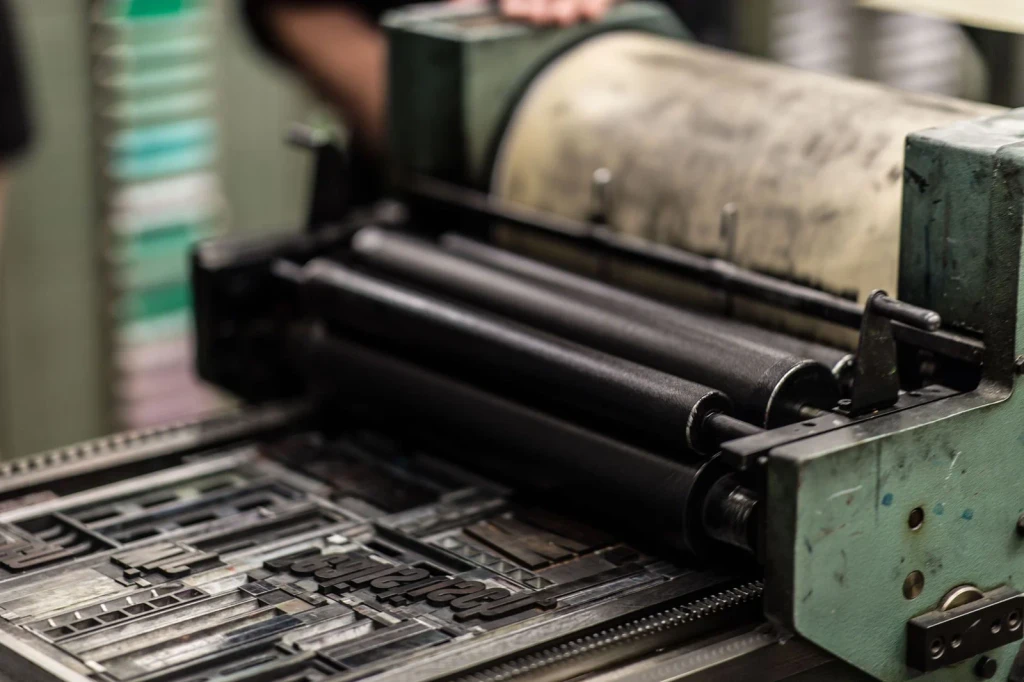
Precise mechanical parts make up an industrial printing press. The engineering behind printing made mass reproduction possible.
Photograph by Wendelin Jacober, via Pexels.
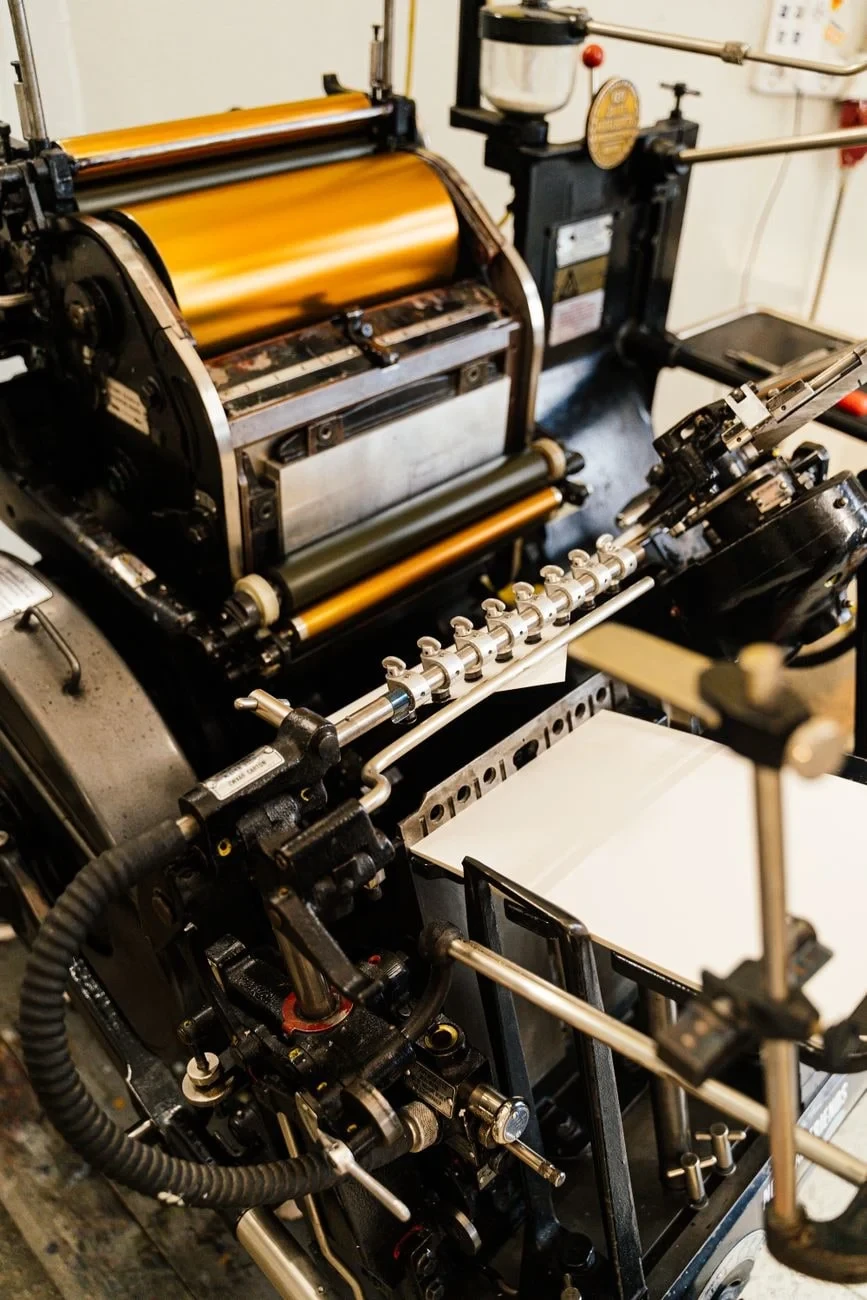
A detailed view of industrial machinery in an old printing press. The photograph shows the mechanics that made mass distribution of ideas possible.
Photograph by AI25.Studio Studio, via Pexels.
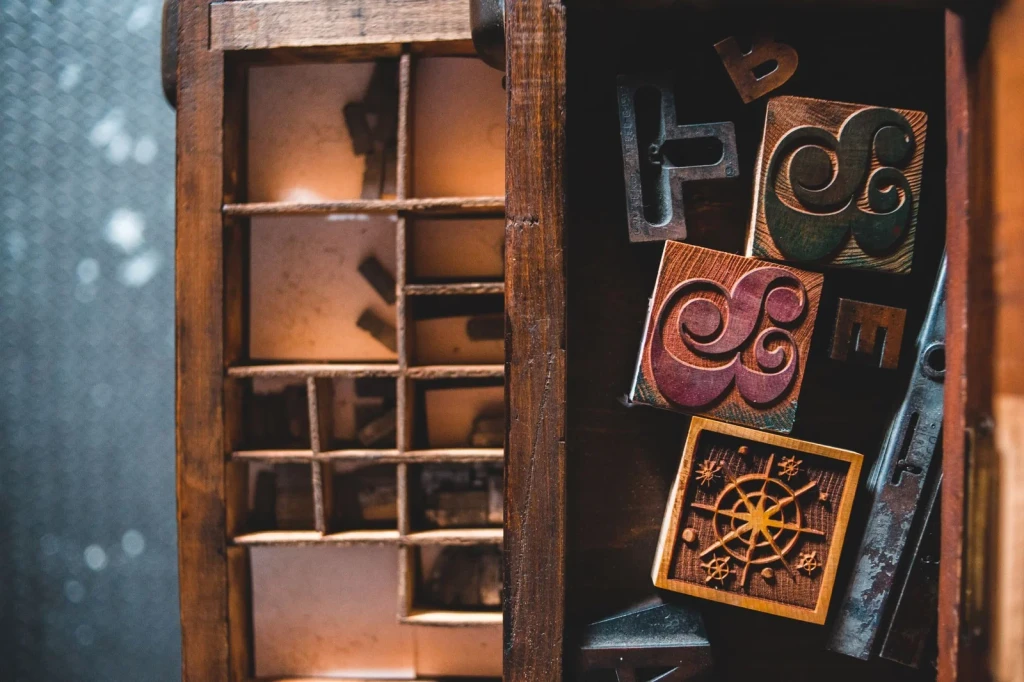
An overhead view reveals organized wooden drawers of vintage letterpress type. This storage system shows how printing required both organization and ready access to thousands of individual characters.
Photograph by Erik Mclean, via Pexels.
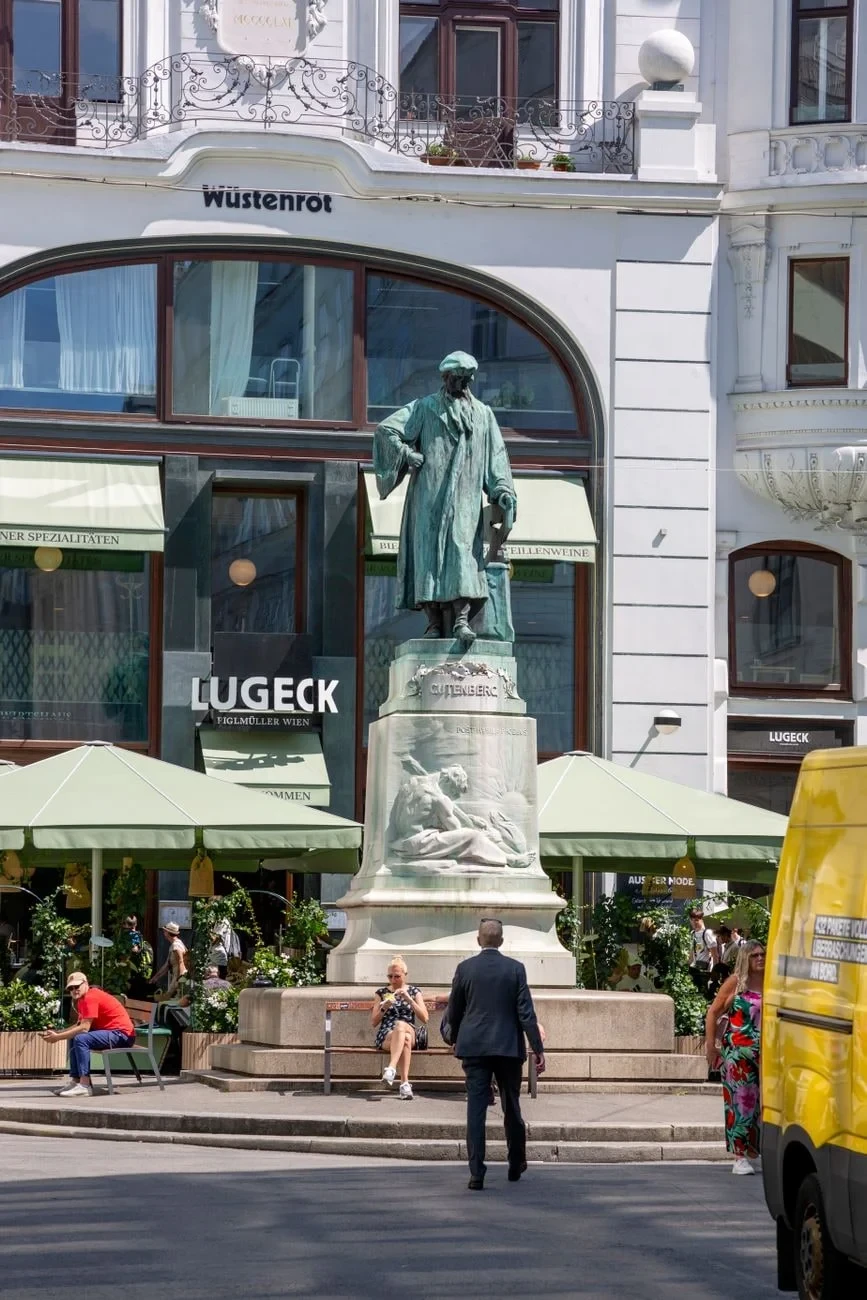
A statue commemorates a figure associated with printing's history. The urban setting reminds us that printing's impact shaped entire cities and societies.
Photograph by Valentin Ivantsov, via Pexels.
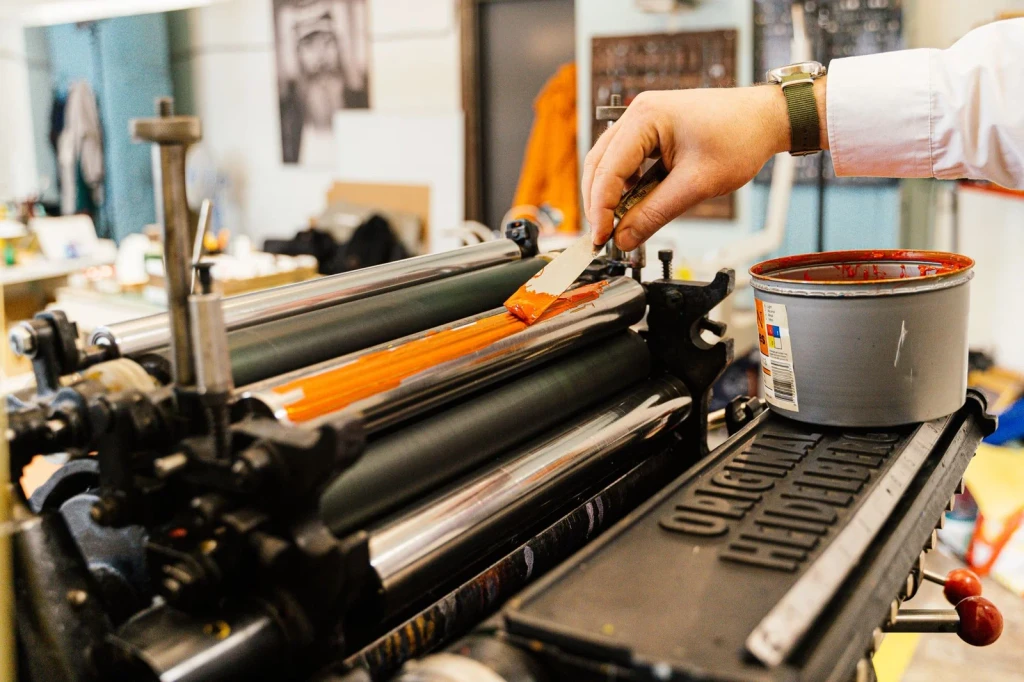
A hand guides orange ink onto a press roller. This foundational step transforms blank paper into printed copies, multiplying a single design across many sheets.
Photograph by AI25.Studio Studio, via Pexels.
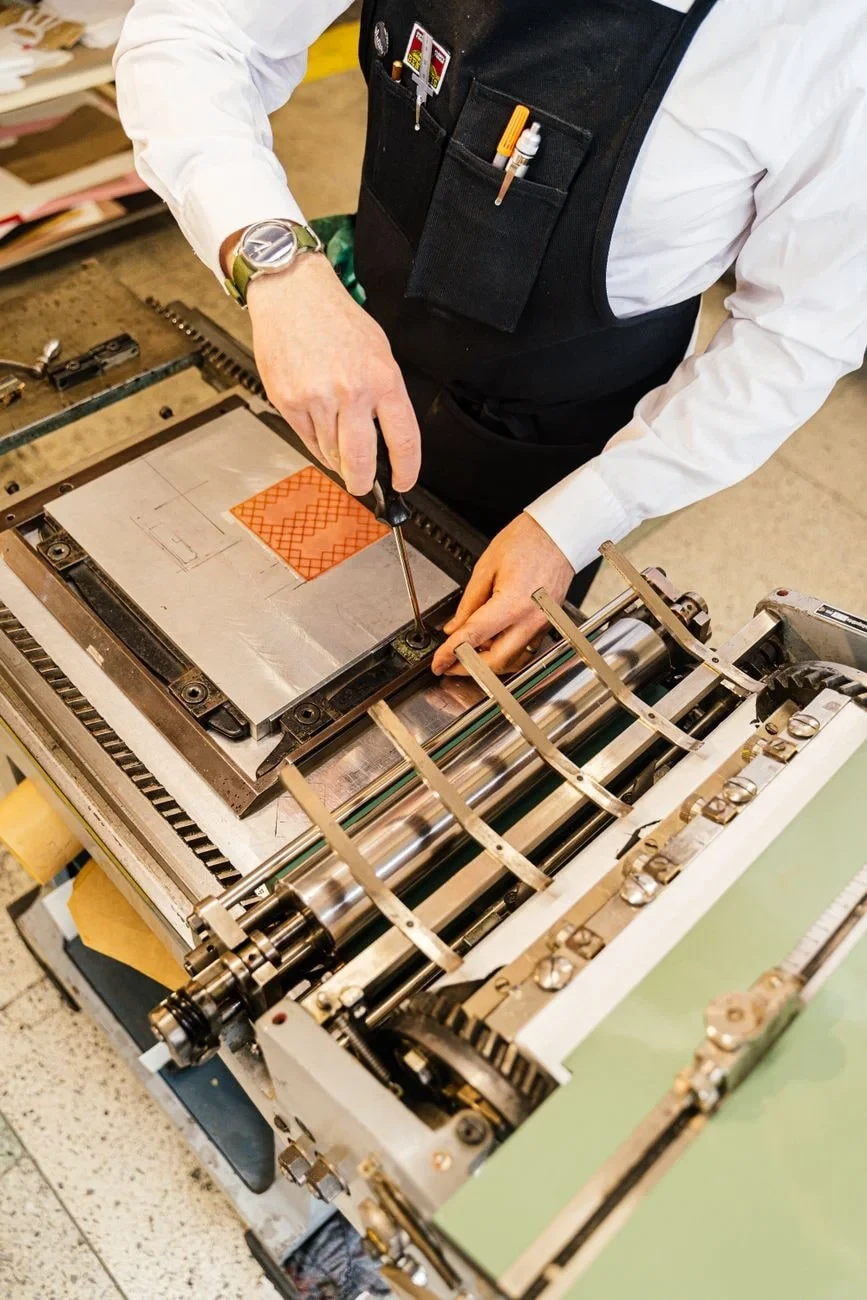
An artisan's hands demonstrate the precision required to operate a printing press. Their focused work shows how printing demanded both skill and care.
Photograph by AI25.Studio Studio, via Pexels.
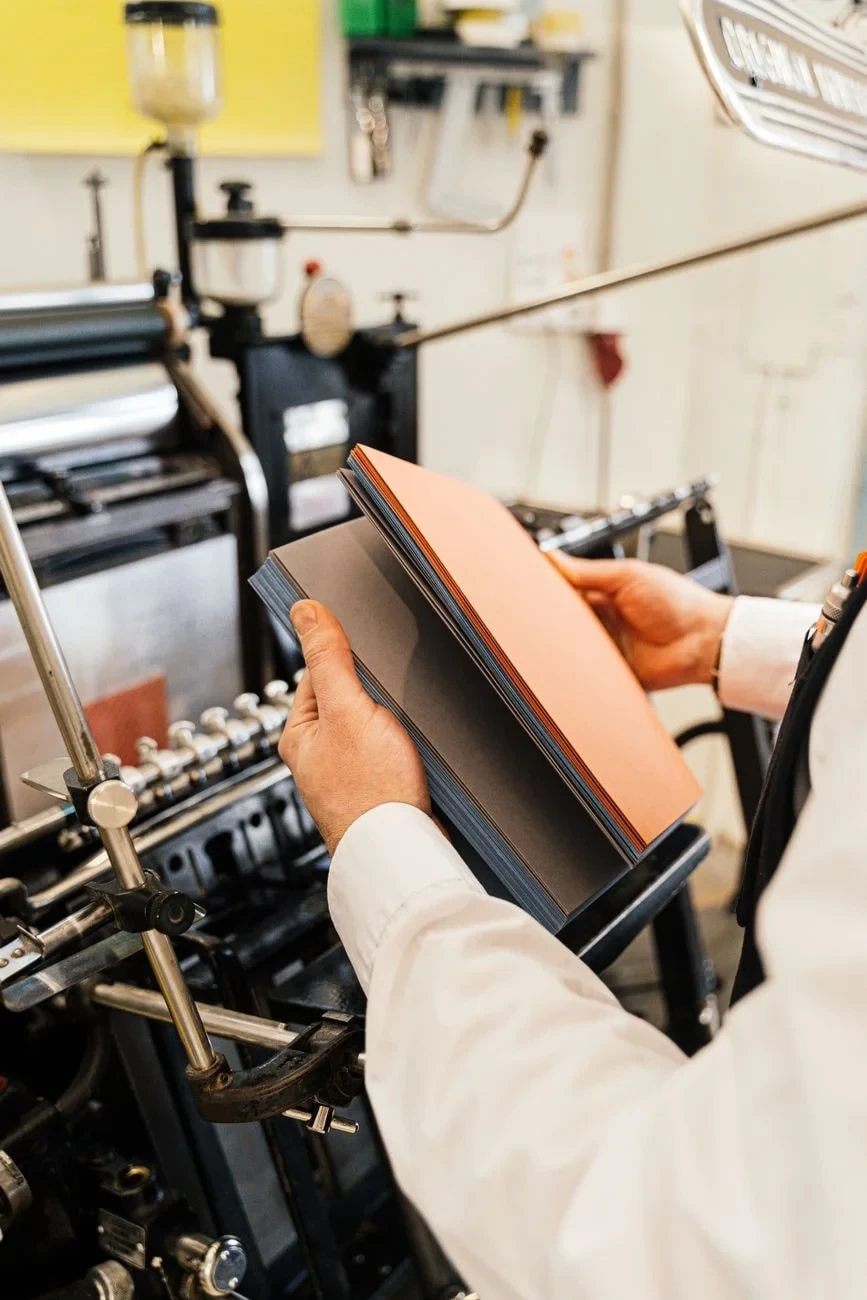
Someone holds printed papers near a working press in a workshop. The moment captures the tangible result of the printing process.
Photograph by AI25.Studio Studio, via Pexels.
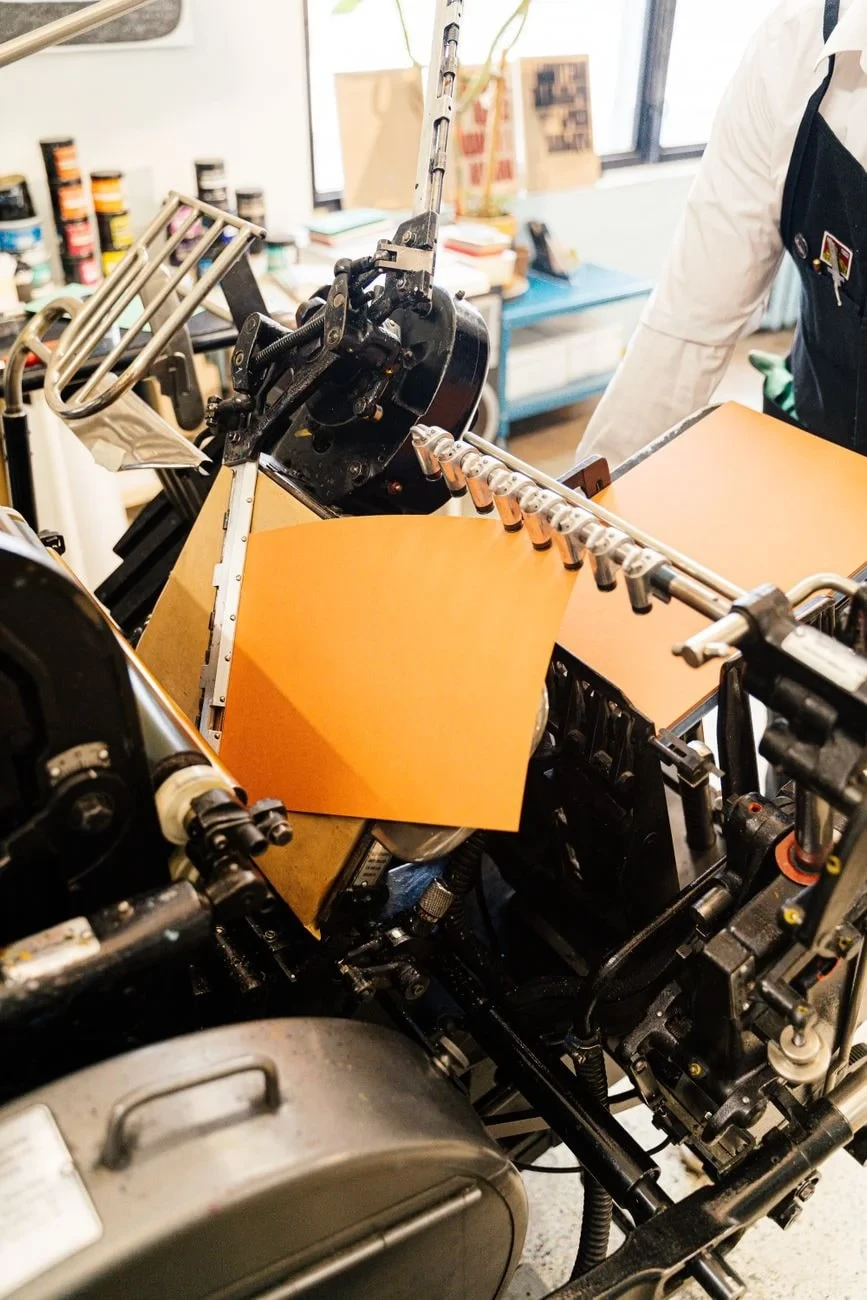
A close-up of a vintage printing press with orange paper threaded through it. The photograph emphasizes the careful craftsmanship involved in mechanical reproduction.
Photograph by AI25.Studio Studio, via Pexels.
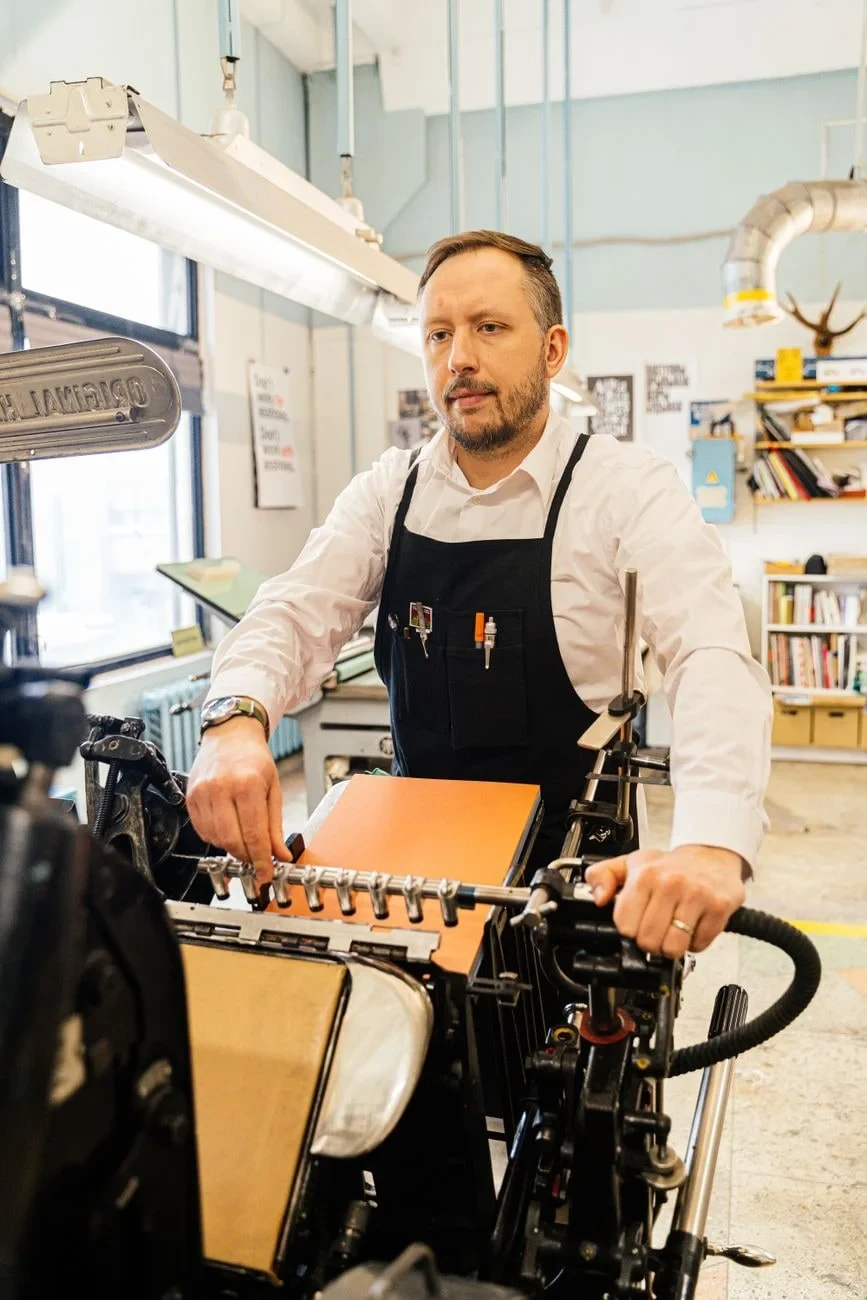
An experienced craftsman uses a vintage printing press in a workshop. The image shows the human skill required to operate the machinery that multiplied ideas.
Photograph by AI25.Studio Studio, via Pexels.
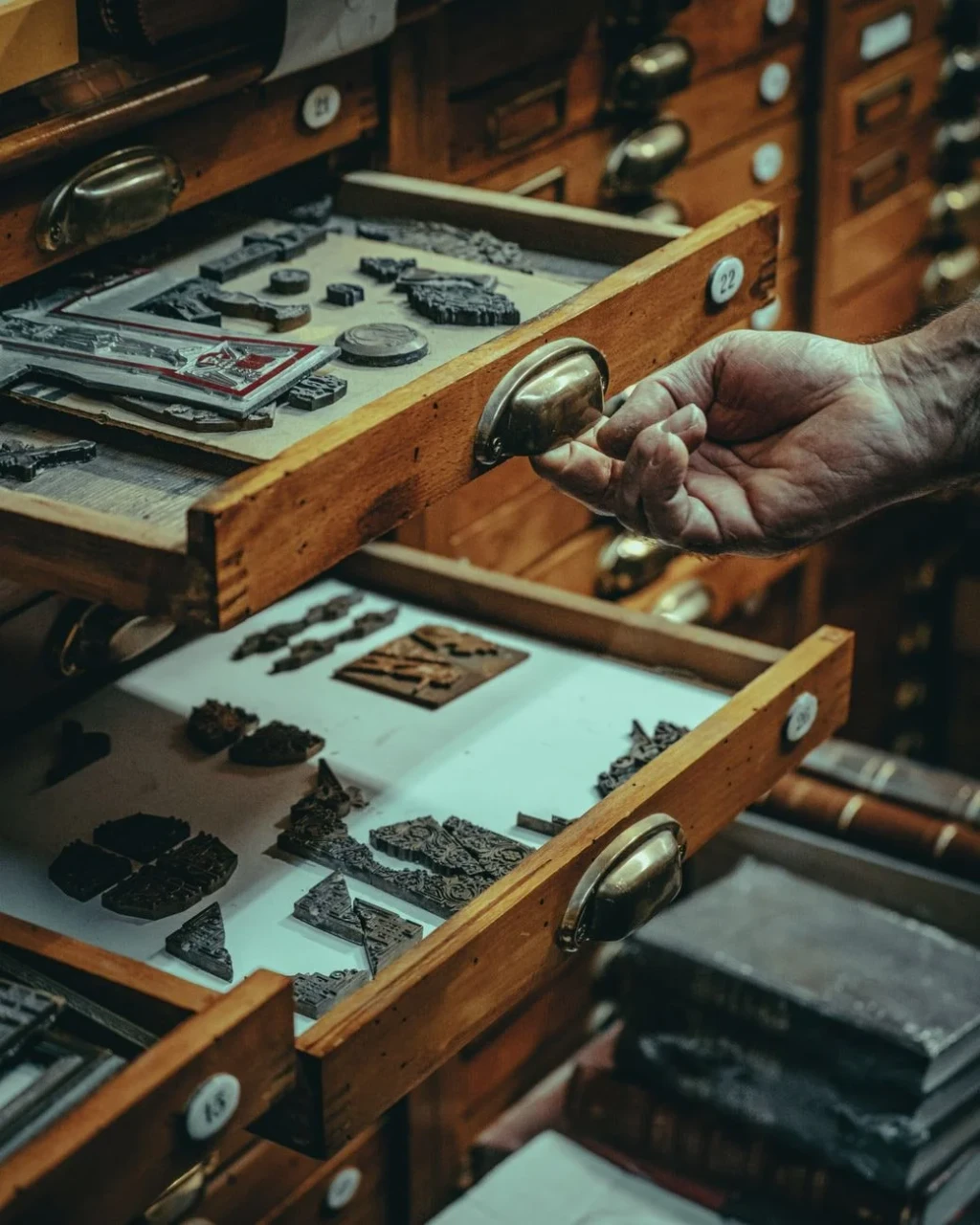
Vintage letterpress type fills wooden drawers in a printing house. Each small piece represents one building block of countless reproduced ideas.
Photograph by Mikita Yo, via Pexels.
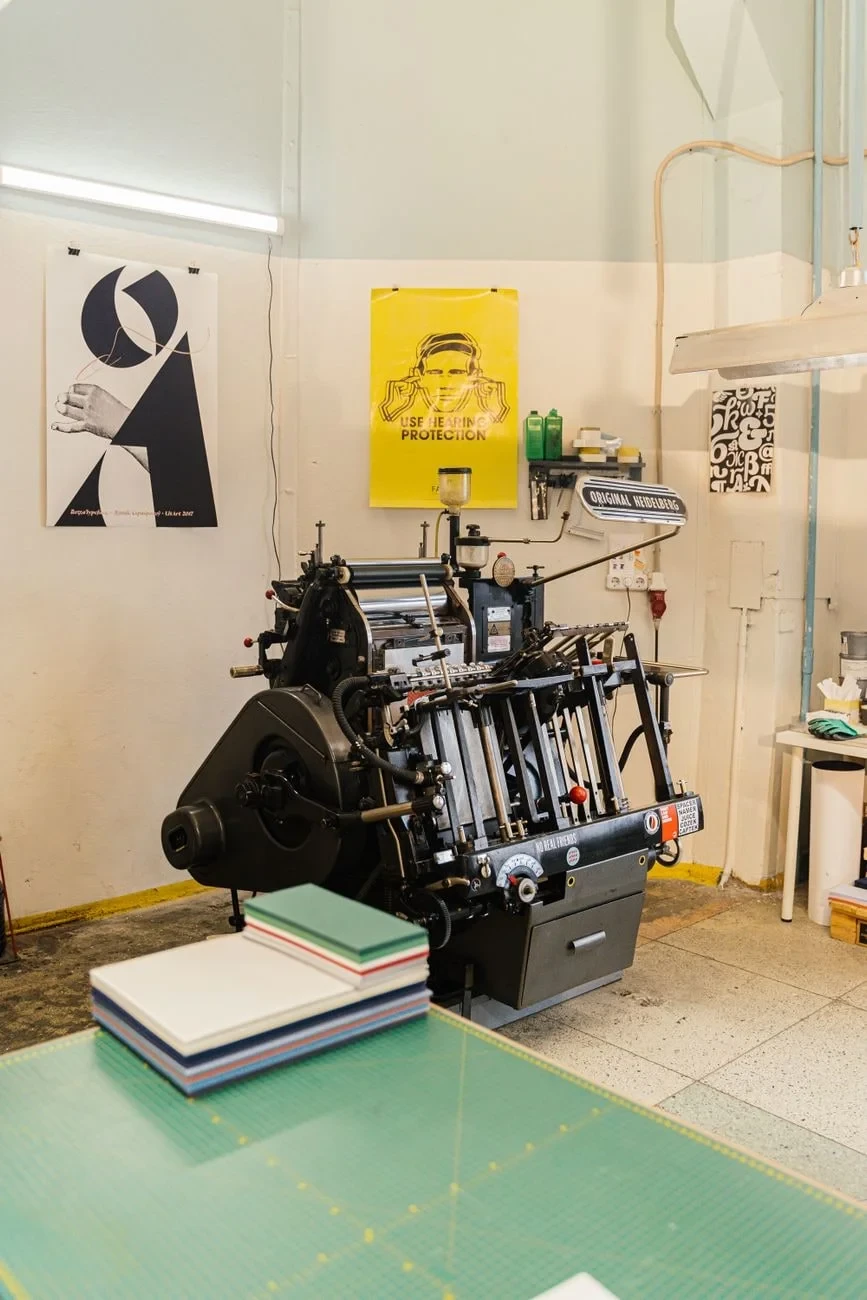
A vintage printing press sits in a creative design studio surrounded by posters and equipment. The photograph suggests how printing remained central to creative and artistic practice.
Photograph by AI25.Studio Studio, via Pexels.
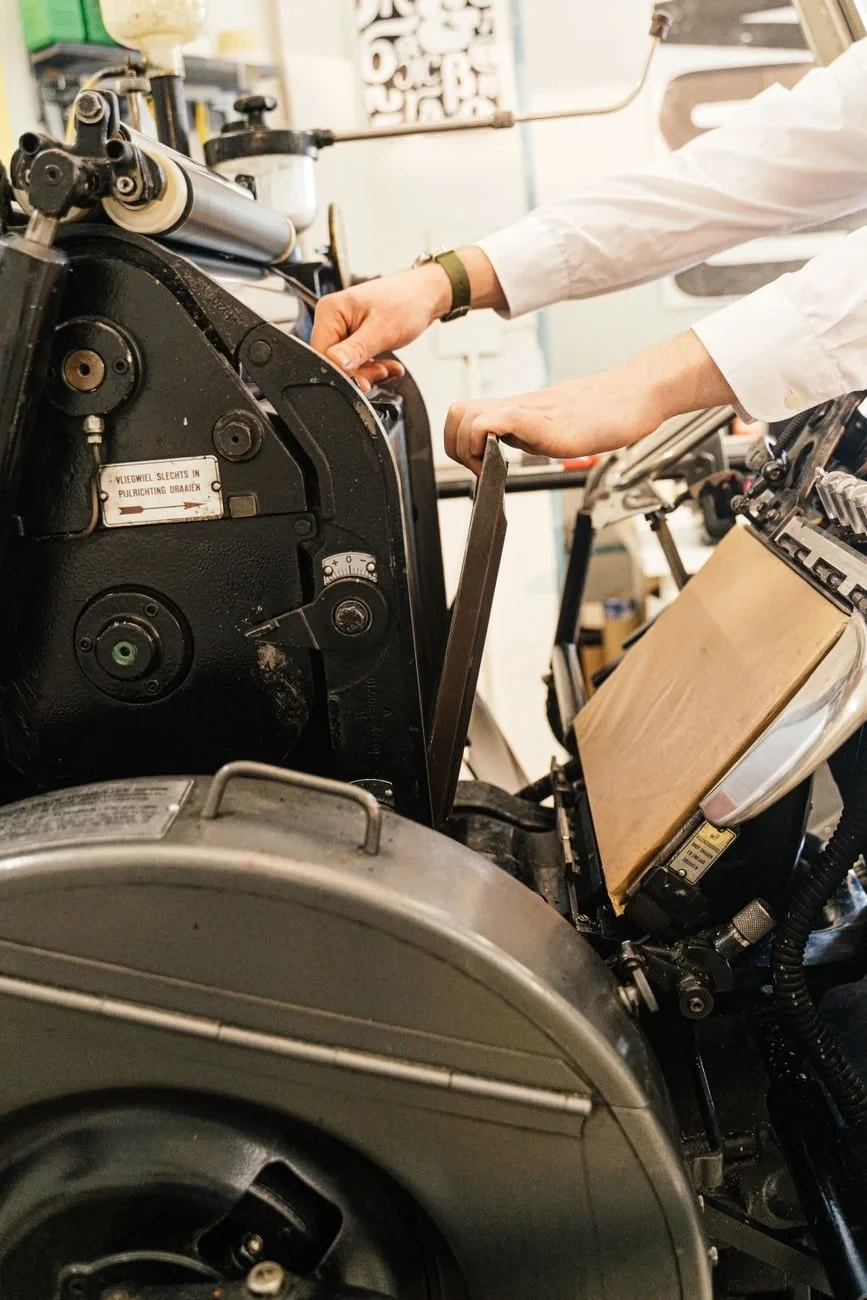
A close-up of hands adjusting a vintage printing press. The image captures the physical labor behind mechanical reproduction, showing how ideas moved from machinery into the world.
Photograph by AI25.Studio Studio, via Pexels.
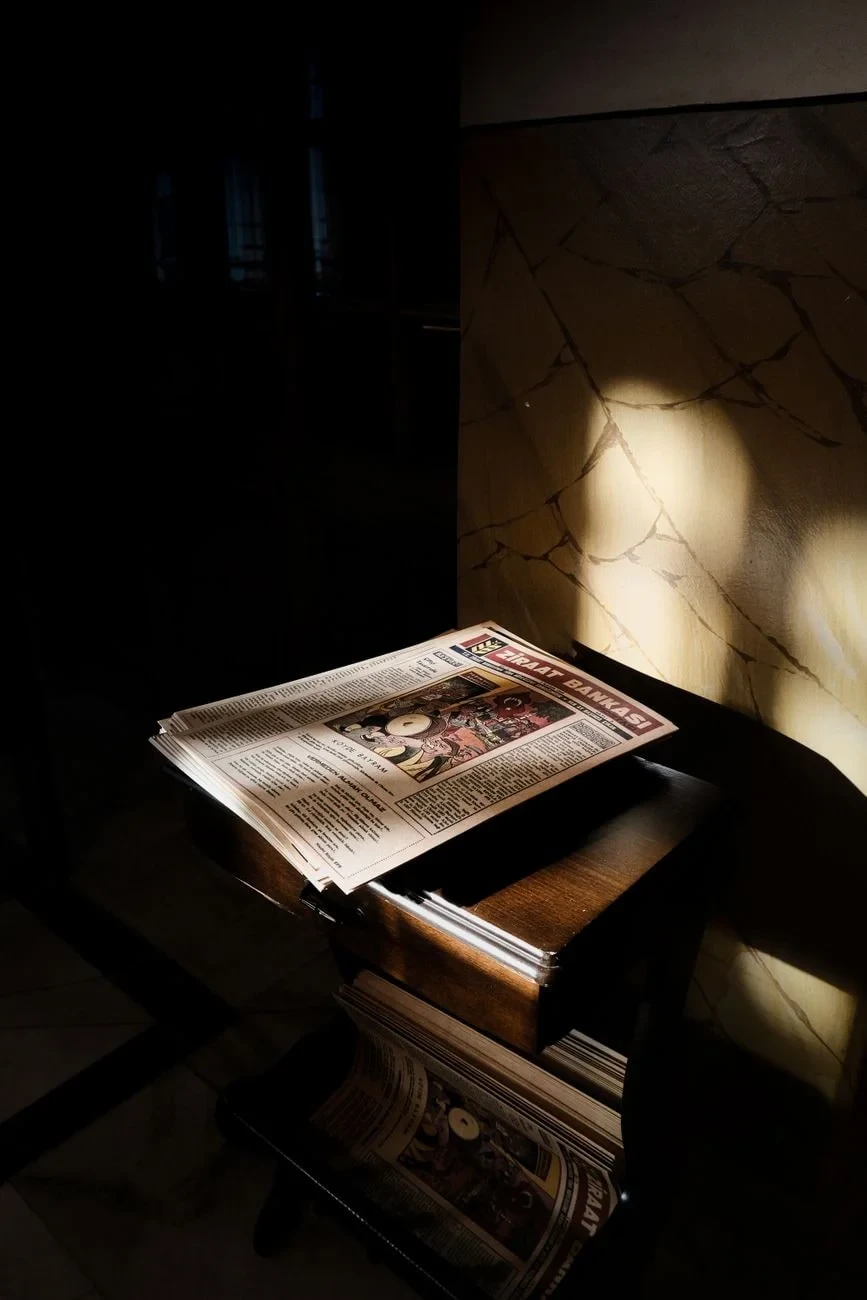
A newspaper rests on a wooden table, bathed in sunlight. A simple image of the printed object that carried multiplied ideas into homes and public spaces.
Photograph by Emre Gencer, via Pexels.
