3D Gallery
How Feathers Conquered the Air
Enter gallery
How Feathers Conquered the Air is a 3D virtual gallery on MyGallery3D, a walkable online exhibition of 16 works. Step inside and explore it in your browser: no app, no headset.
This is a 3D virtual museum of feathers, and you can walk through it in your browser.
A feather is the most complex structure a vertebrate skin can make. A shaft, branches called barbs, branches on the branches called barbules, and minute hooks, barbicels, that zip the surface into a single sheet strong enough to push air. Leave the hooks out and the barbules float free: that is down, and that is why a pillow works. It is all keratin, and a bird's plumage weighs two or three times more than its skeleton.
A bird's wing has moving parts. The alula, a tuft attached to the thumb, lies flush against the leading edge until the bird needs it, then lifts to open a gap that works exactly like the slats on an airplane wing, letting the wing take a steeper angle without stalling. At the wingtip, notches and emarginations force air through gaps and increase lift.
Not every feather is for flying. Owls have tiny serrations on the leading edge of their remiges, which is why they hunt in silence. The male club-winged manakin does the opposite: it drags a curve-tipped secondary against a ridged one as many as 110 times per second, faster than a hummingbird's wingbeat, and stridulates like an insect. Snipe dive and let wind through modified tail feathers, making notes.
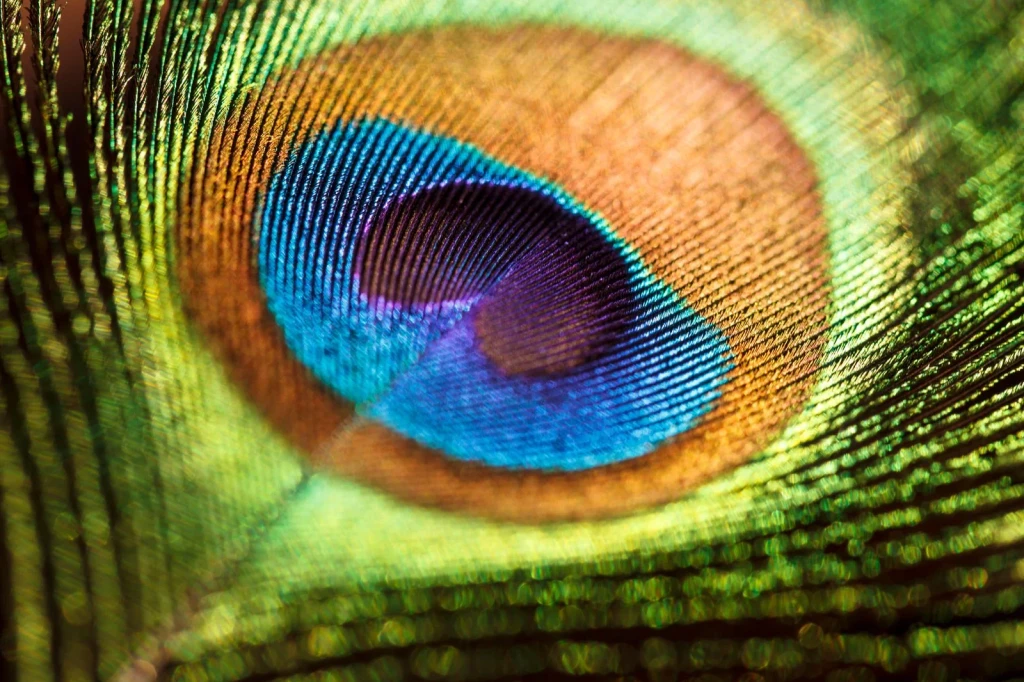
Close detail of a vibrant peacock feather showing the colorful, patterned surface. A structure evolved for visual communication.
Photograph by Kade Jermark, via Pexels.
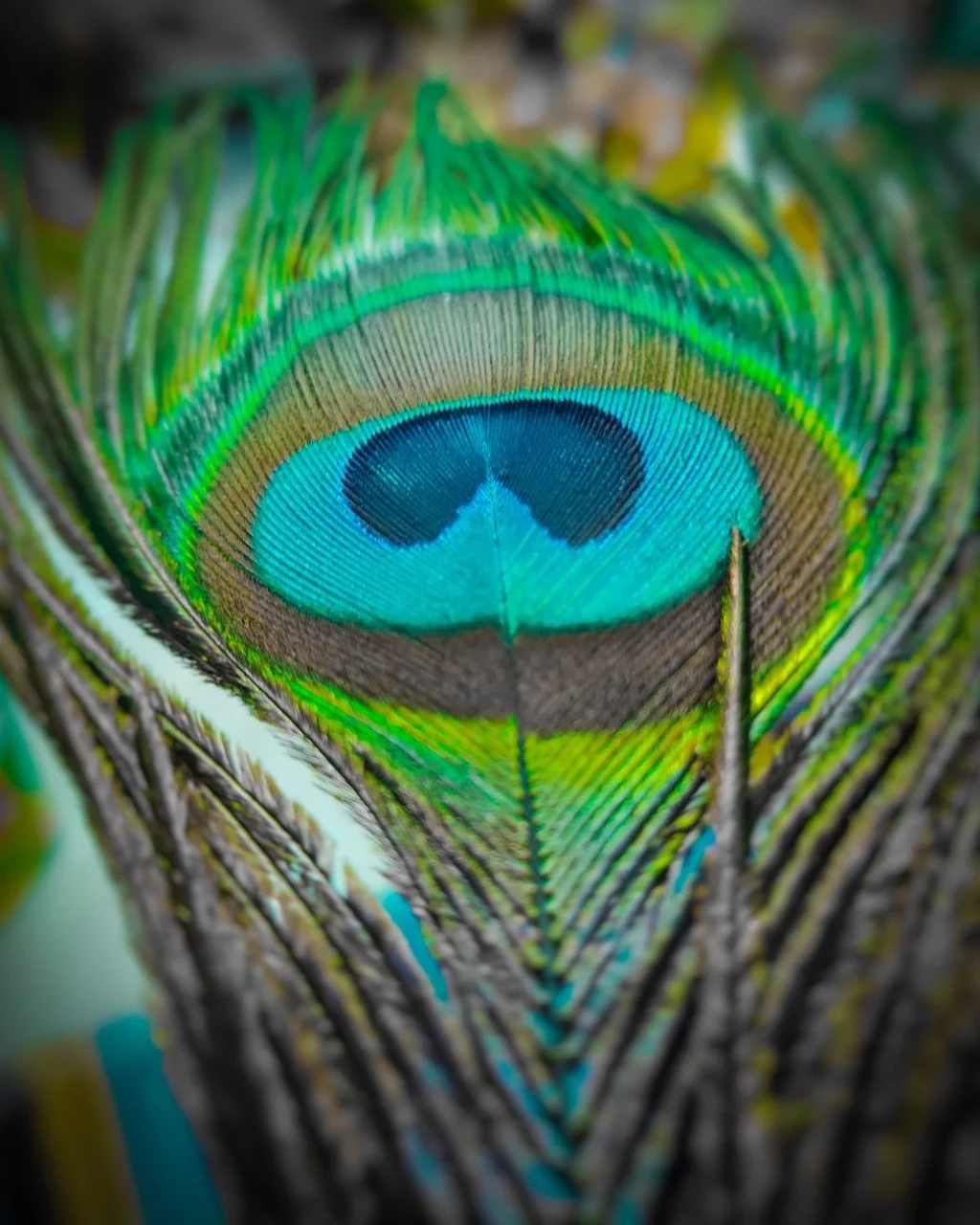
Close-up of a colorful peacock feather displaying intricate patterns and vibrant hues.
Photograph by Pankaj Dewangan, via Pexels.
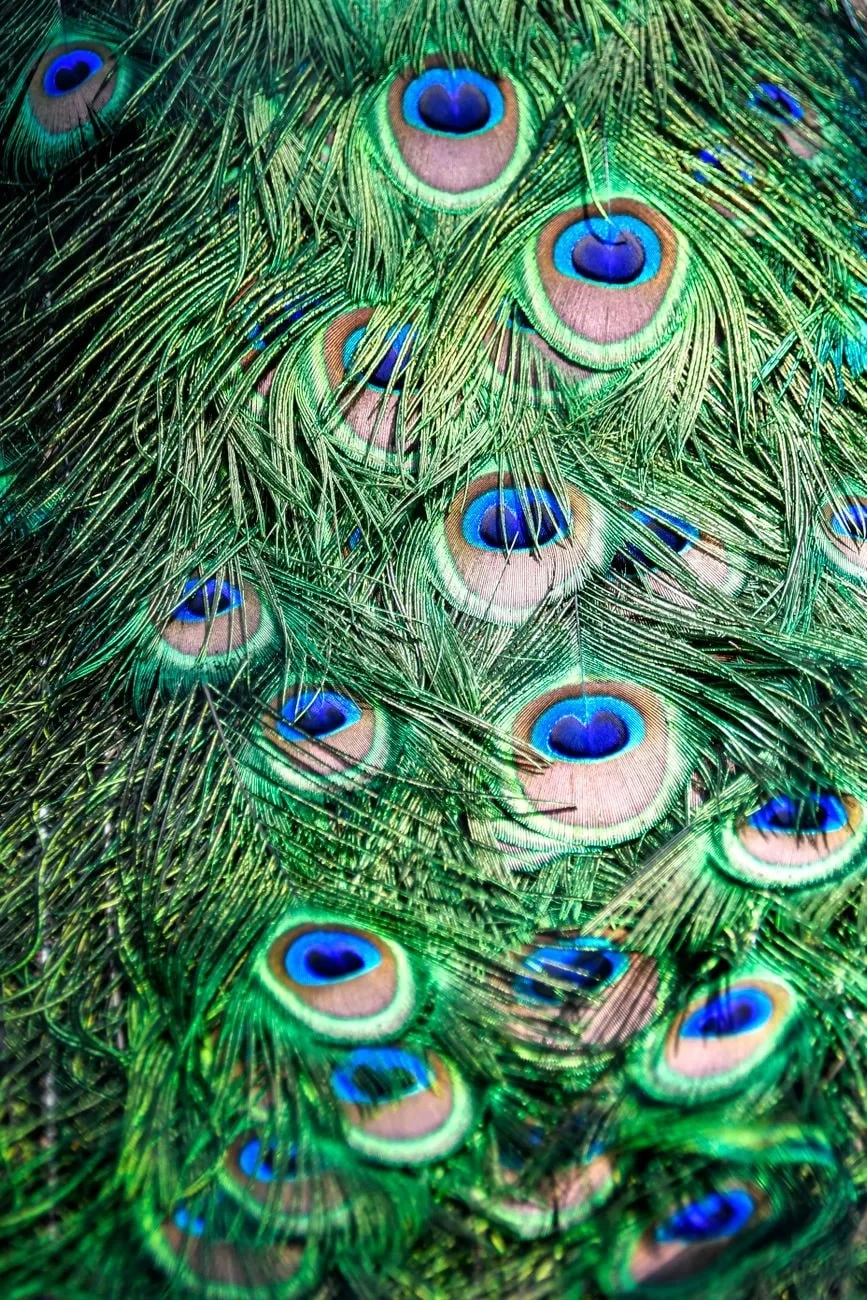
Peacock feathers display vivid patterns in meticulous detail. These structures evolved to serve multiple purposes: display, and the aerodynamic mastery that defines avian flight.
Photograph by Adonyi Gábor, via Pexels.
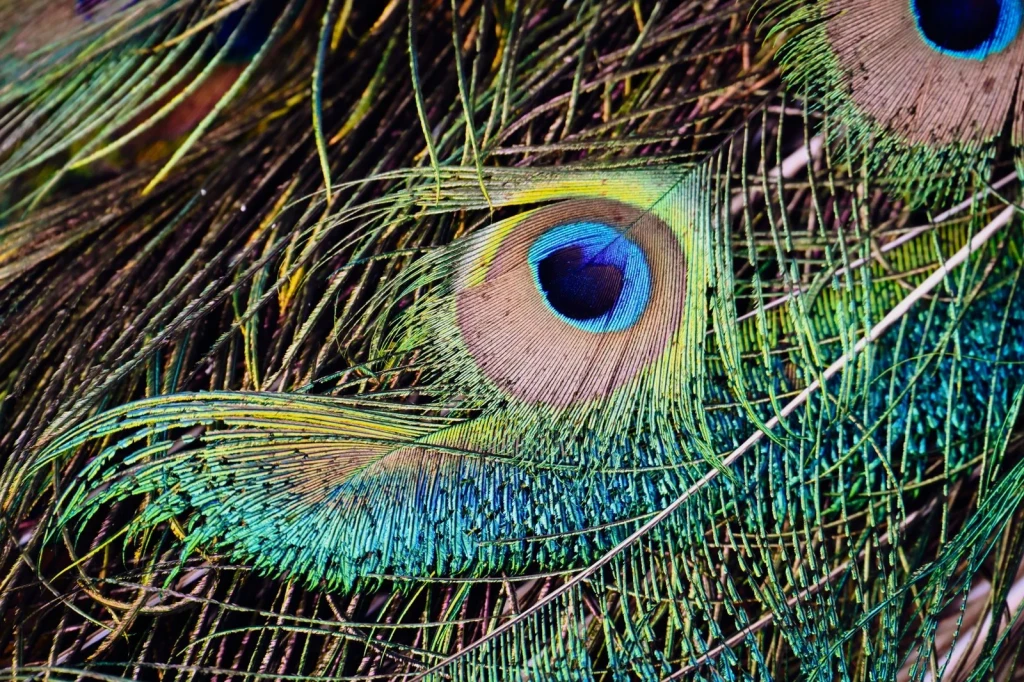
A close-up reveals how peacock feathers achieve their vivid colors through intricate physical structure. This layered complexity mirrors the engineering that made feathers so effective for flight.
Photograph by Alexas Fotos, via Pexels.
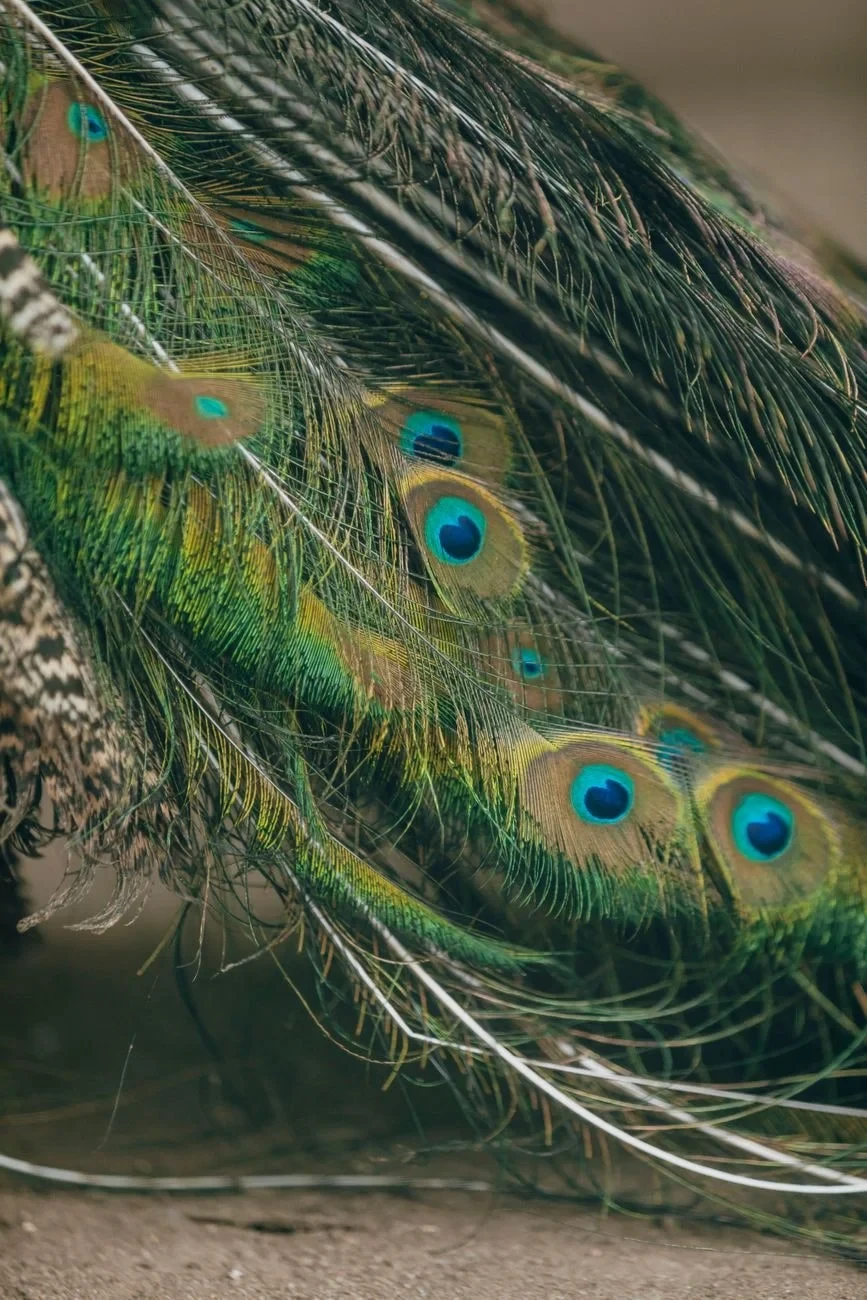
Magnified, the feather shows intricate patterns and bold colors emerging from precise geometry. These structures are inseparable from how feathers conquered the air.
Photograph by Huand Matsuda, via Pexels.
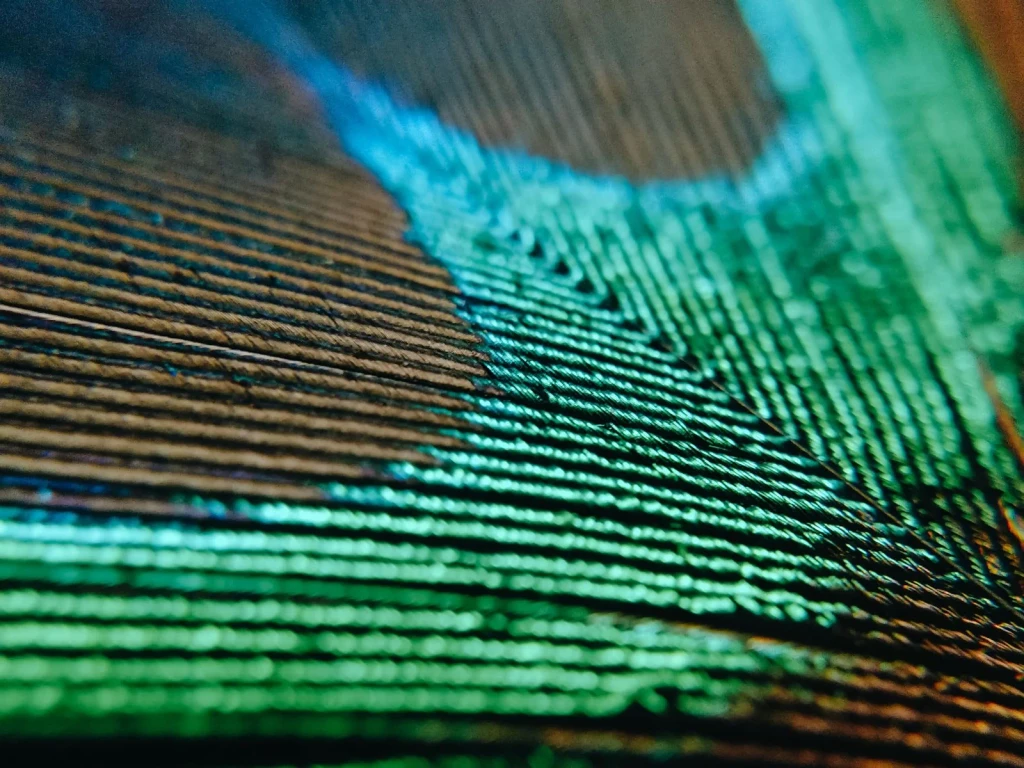
Magnified view of iridescent greens and blues dancing across a peacock feather. Light and structure combine to create color without pigment.
Photograph by Ravi Kant, via Pexels.
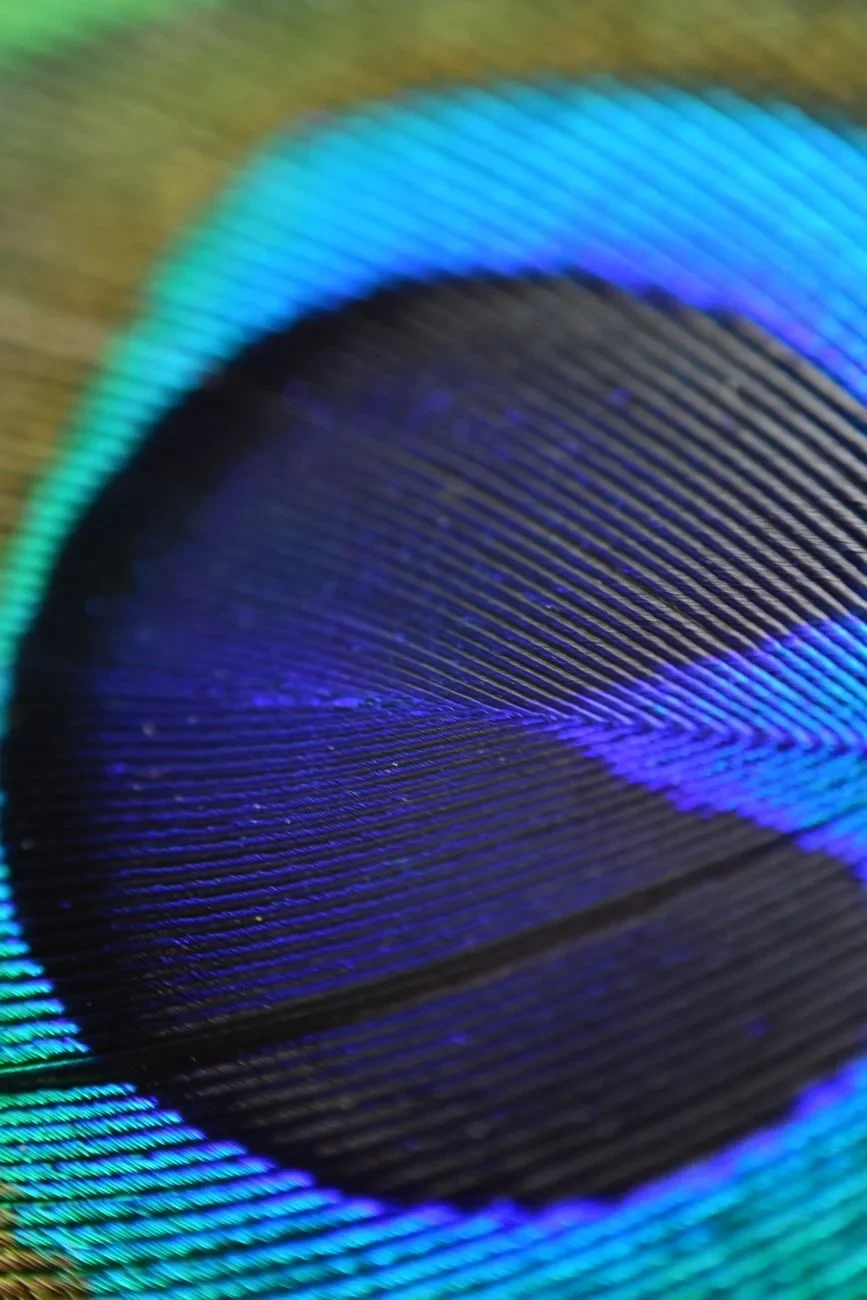
A single feather reveals vibrant colors and fine textures working together. This is nature's dual engineering: beauty and the physics of movement through air.
Photograph by Sourabh Narwade, via Pexels.
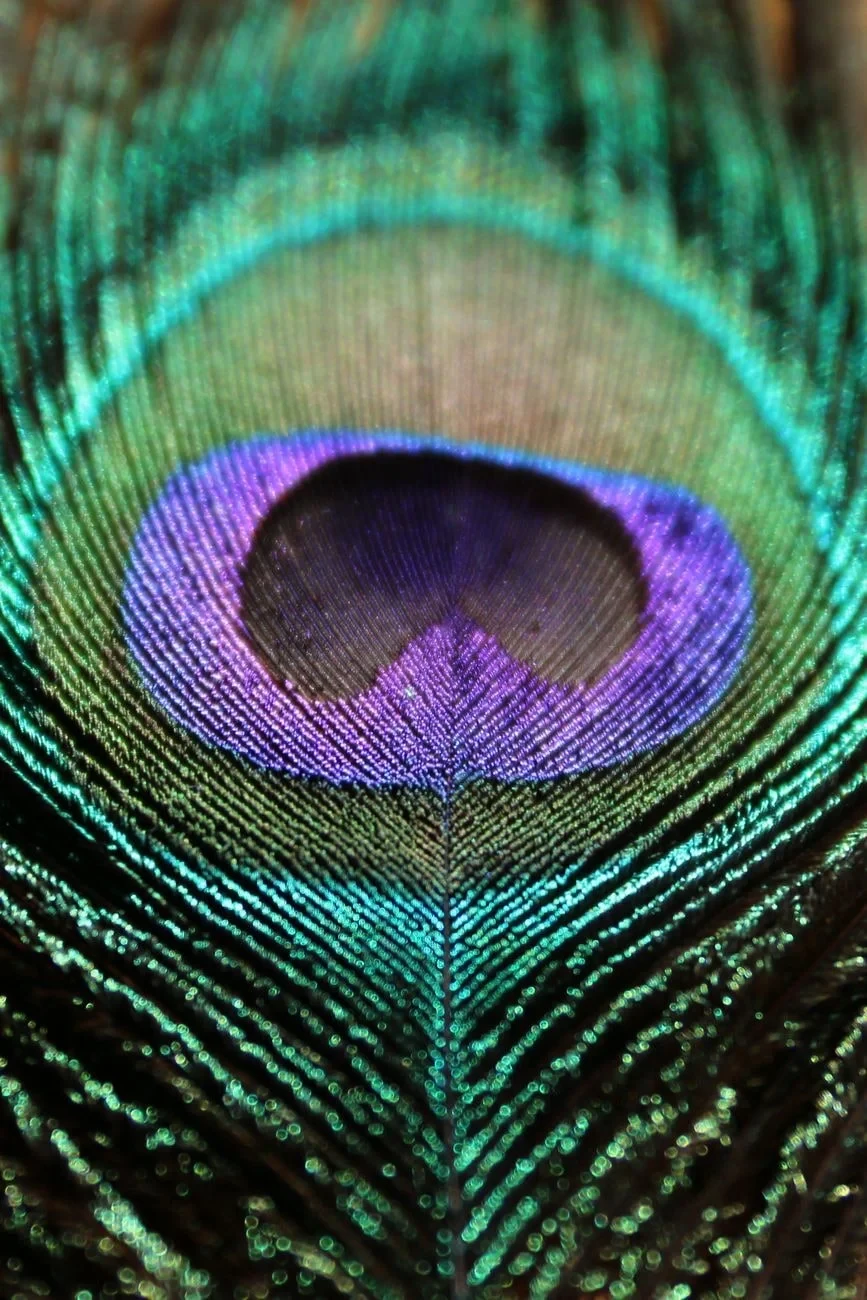
The intricate patterns of a single feather emerge under magnification. Geometry and biology work together in nature's design.
Photograph by Liliana Oliveira, via Pexels.
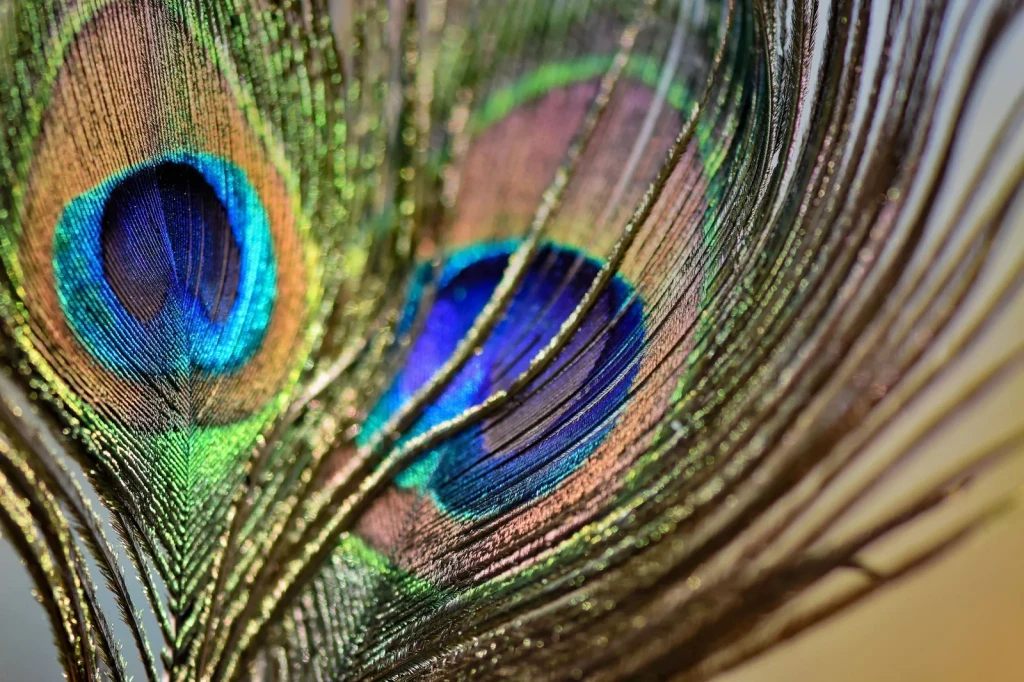
A macro view isolating the vivid patterns and colors of a single peacock feather. This level of detail reveals the extraordinary complexity feathers achieve through their layered structure.
Photograph by Alexas Fotos, via Pexels.
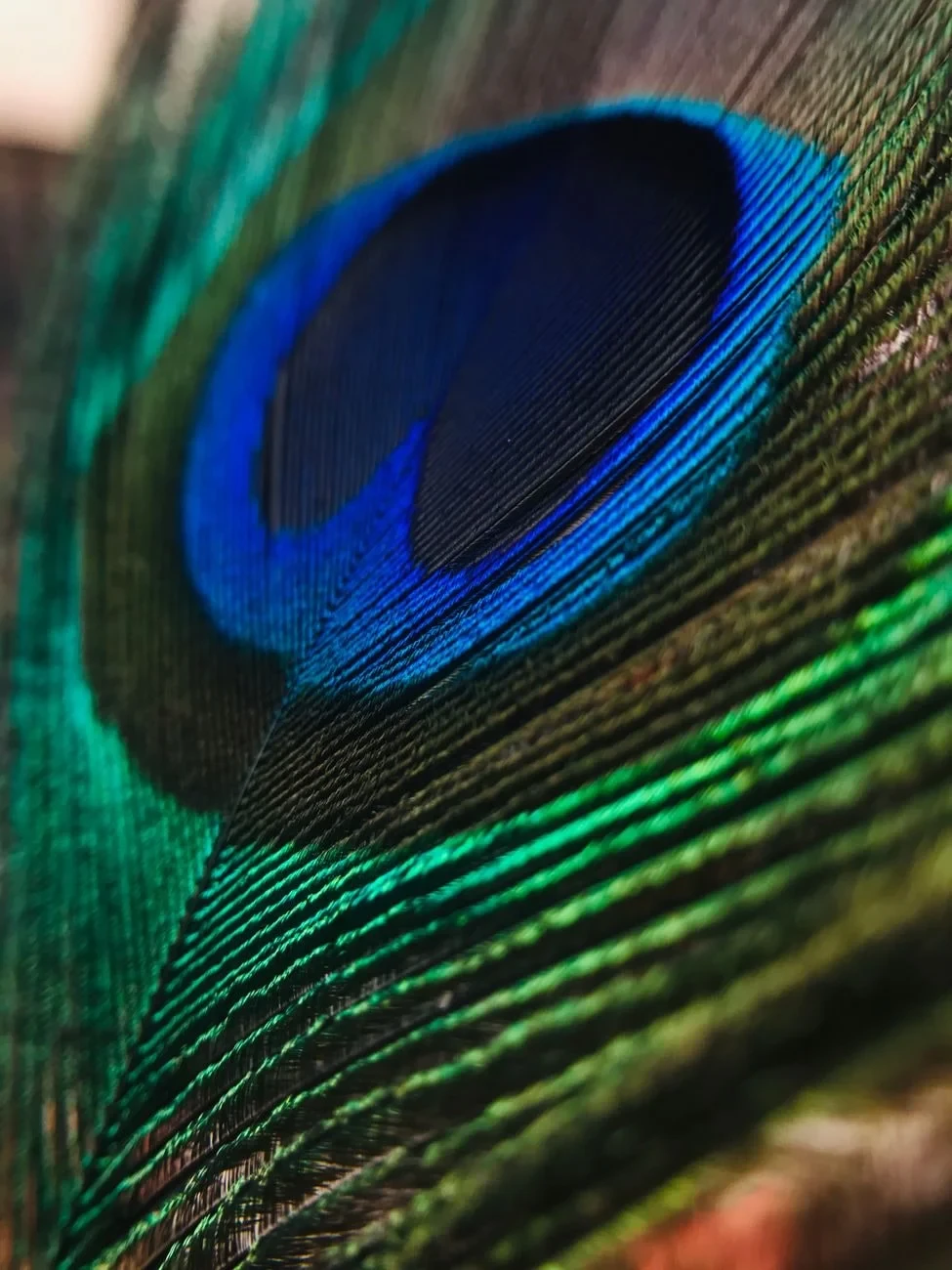
Close examination of an Indian peafowl feather reveals intricate patterns in blue and green. The photograph shows how feathers achieve their visual impact through microscopic organization.
Photograph by Aneena babu, via Pexels.
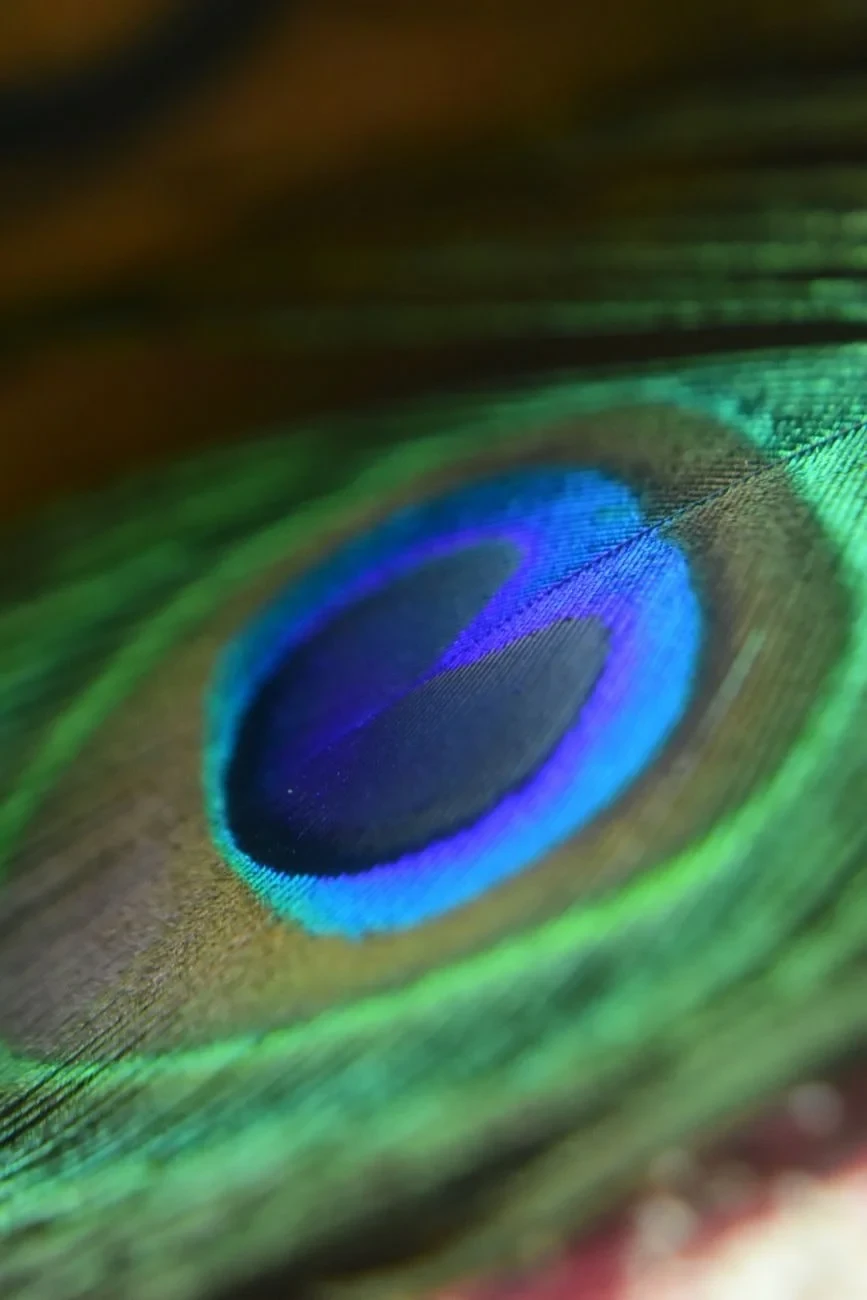
Macro view capturing both vivid color and intricate detail in a peacock feather. Evolution's answer to airborne display.
Photograph by Sourabh Narwade, via Pexels.
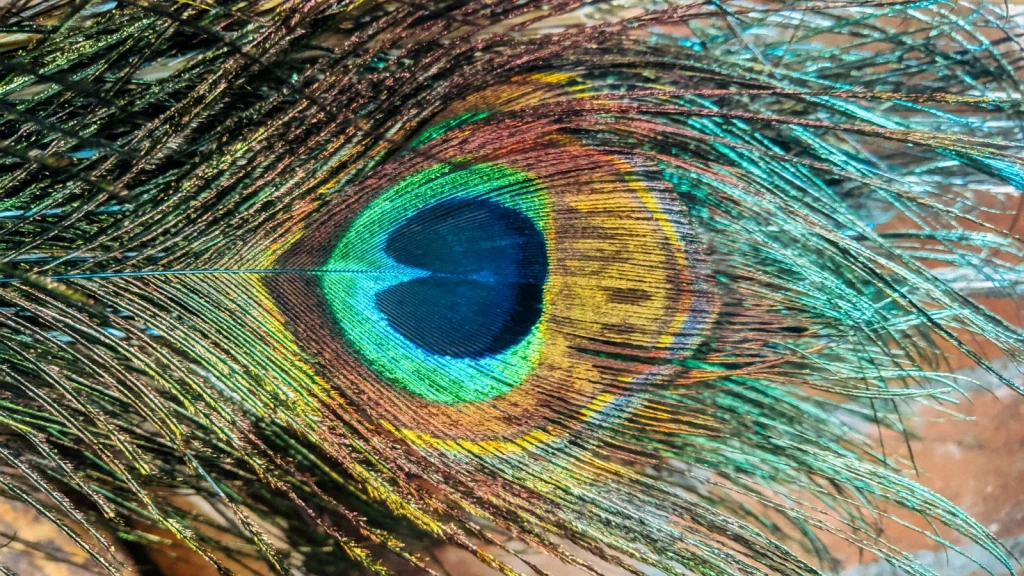
Magnified view of a colorful peacock feather showing intricate patterns and hues. The image demonstrates the architectural precision underlying feather design.
Photograph by MD ARIF, via Pexels.
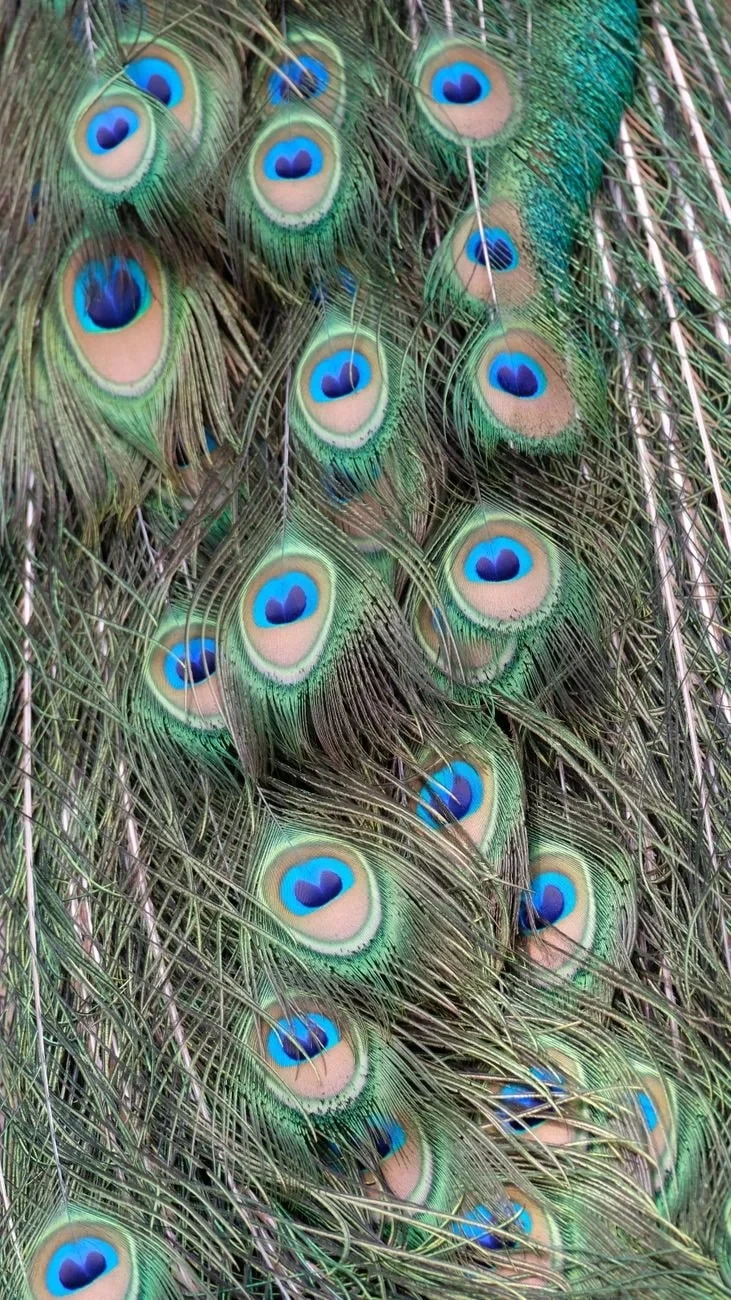
Close-up documentation of a peacock feather's pattern and texture. The photograph emphasizes how feathers combine color and form in ways that serve biological function.
Photograph by julia lee, via Pexels.
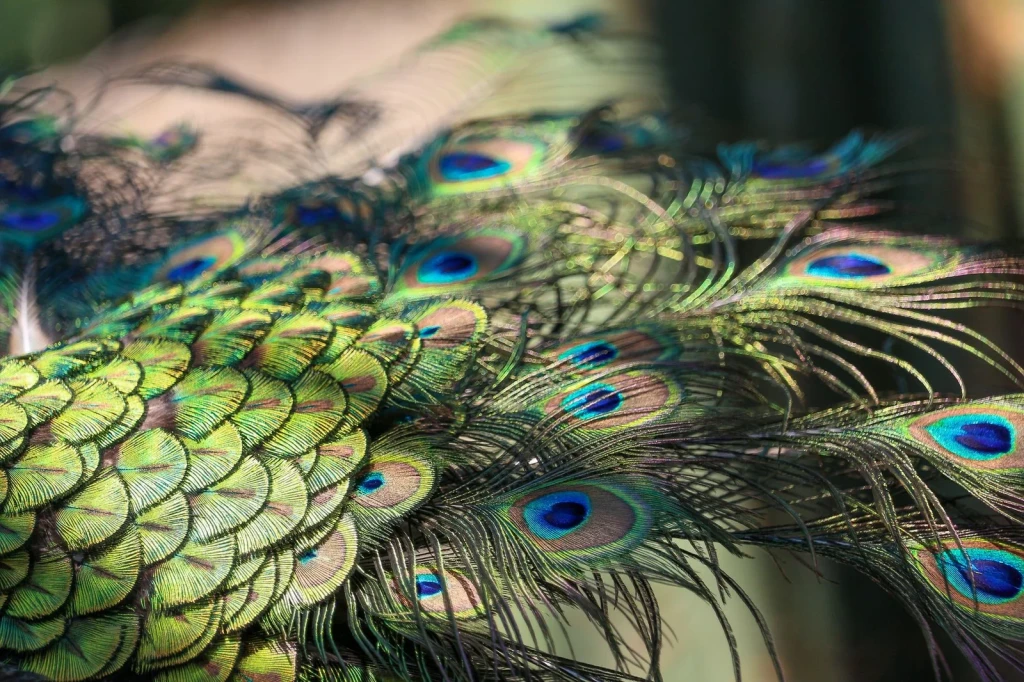
A macro photograph capturing the iridescent surface of a peacock feather in natural light. The shifting colors demonstrate how structure itself creates the visual complexity that makes feathers such effective instruments of display.
Photograph by Studio Lichtfang, via Pexels.
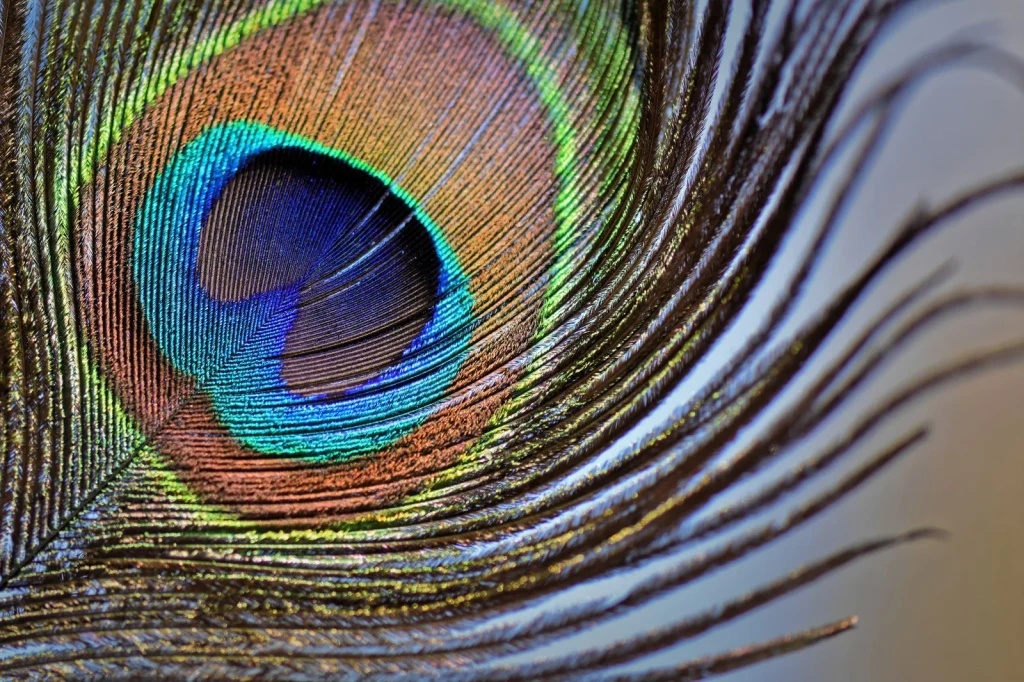
Detailed magnification reveals the complex patterns and vibrant hues of a peacock feather. Form built for both flight and spectacle.
Photograph by Alexas Fotos, via Pexels.
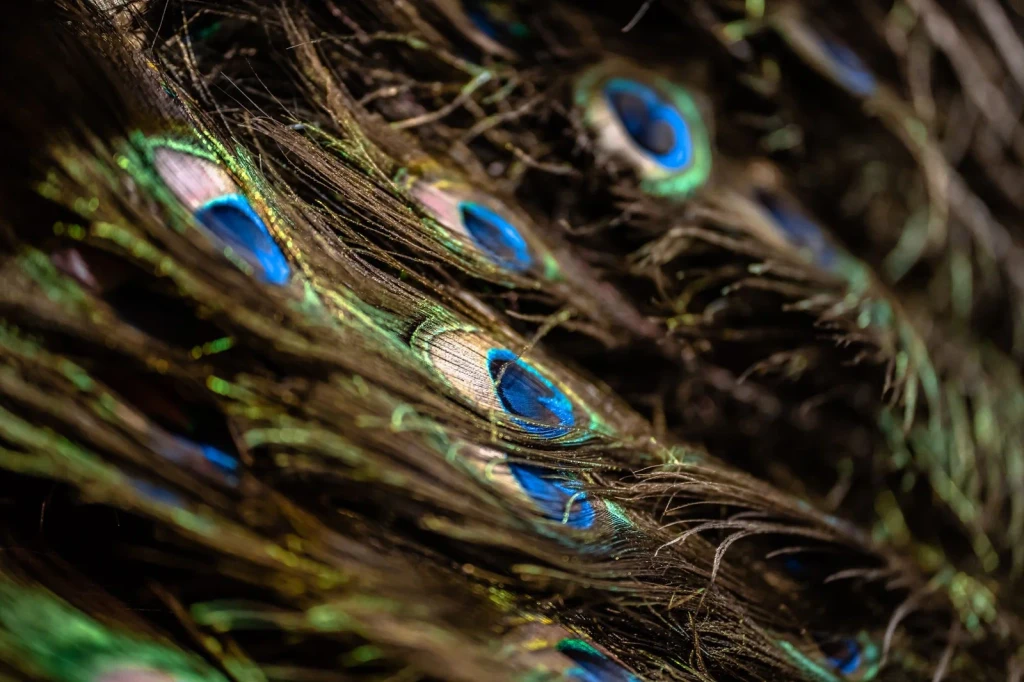
A close-up examination of peacock feathers reveals the textures and colors that make these structures so visually striking. Nature's design for display.
Photograph by viresh studio, via Pexels.
