3D Gallery
Iron and the End of Bronze
Enter gallery
Iron and the End of Bronze is a 3D virtual gallery on MyGallery3D, a walkable online exhibition of 14 works. Step inside and explore it in your browser: no app, no headset.
Walk into this 3D virtual museum of iron in your browser. Bronze was not replaced because iron was better. Iron only beats bronze once you can make carbon steel, and that needs a furnace reaching 1,500 °C, about 500 °C hotter than copper.
Iron won on supply. Bronze needs tin, and around 1300 BC a shortage of tin and disrupted Mediterranean trade forced metalworkers to seek an alternative. Iron ore, unlike tin, is abundant almost everywhere. By the time tin came back, iron was cheaper, stronger and lighter, and forged iron implements superseded cast bronze tools permanently.
Long before smelting, people worked iron that fell from the sky. The earliest known meteoric iron artifacts are nine small beads from burials at Gerzeh in Lower Egypt, dated to 3200 BC and shaped by careful hammering. The dagger with an iron blade found in Tutankhamun's tomb was examined recently and found to be of meteoric origin. About 1 in 20 meteorites are iron-nickel.
The earliest cast-iron artifacts date to the 8th century BC, found in what is now Jiangsu, China, where cast iron was poured into molds to make ploughshares and pots as well as weapons and pagodas. The technology reached the West in the 15th century and went straight into cannon. Henry VIII began casting cannon in England: heavier than bronze guns, much cheaper, and enough to arm a navy.
The difference between iron you can cast and iron you can forge is a few percent of carbon. Over 2% and it is cast iron: low melting point, easy to pour, and too brittle to hammer. Between 0.25% and 2% and it is tool steel. Below that it is wrought iron or mild steel, malleable and much easier to bend.
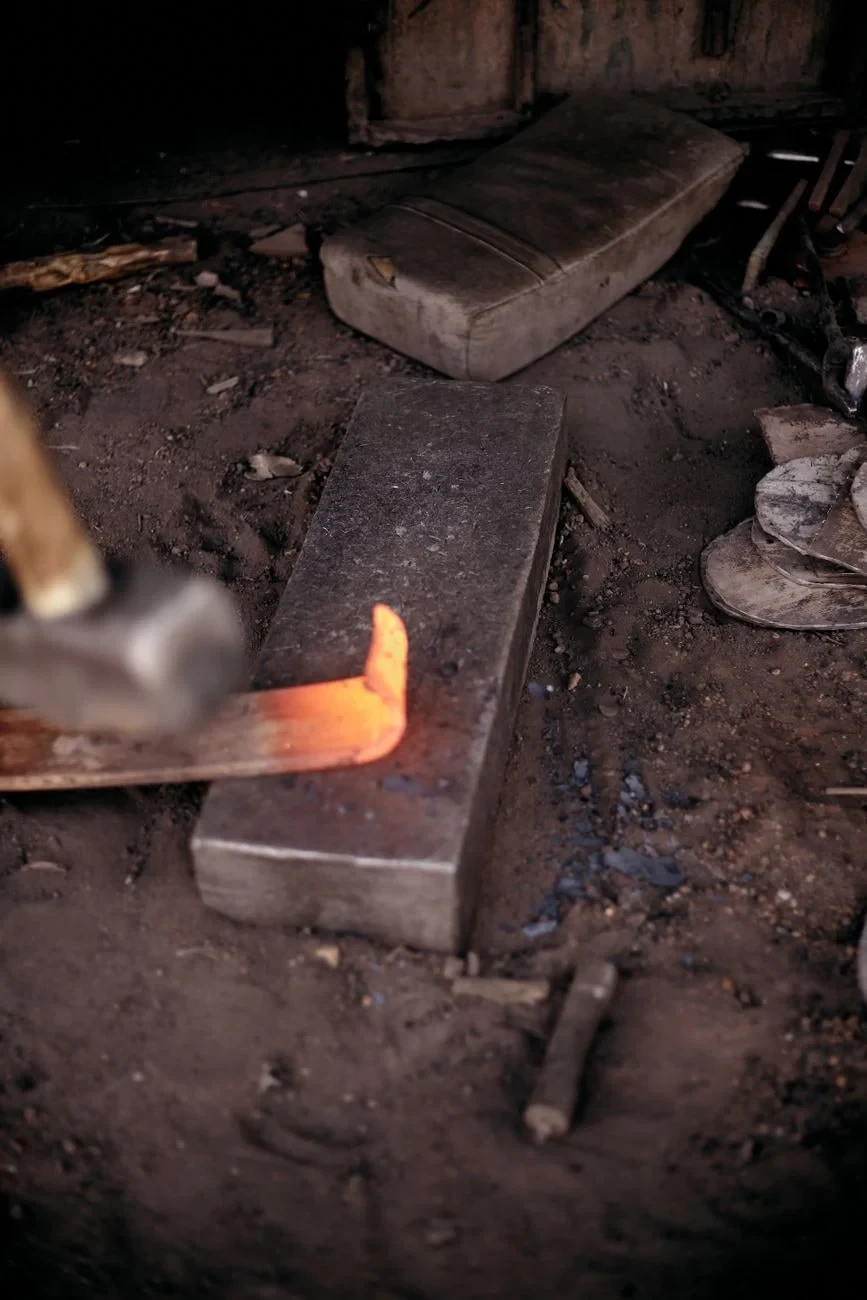
Metal glows under heat as it is forged. The image documents a moment where raw material becomes shaped metal.
Photograph by Finalchoice, via Pexels.
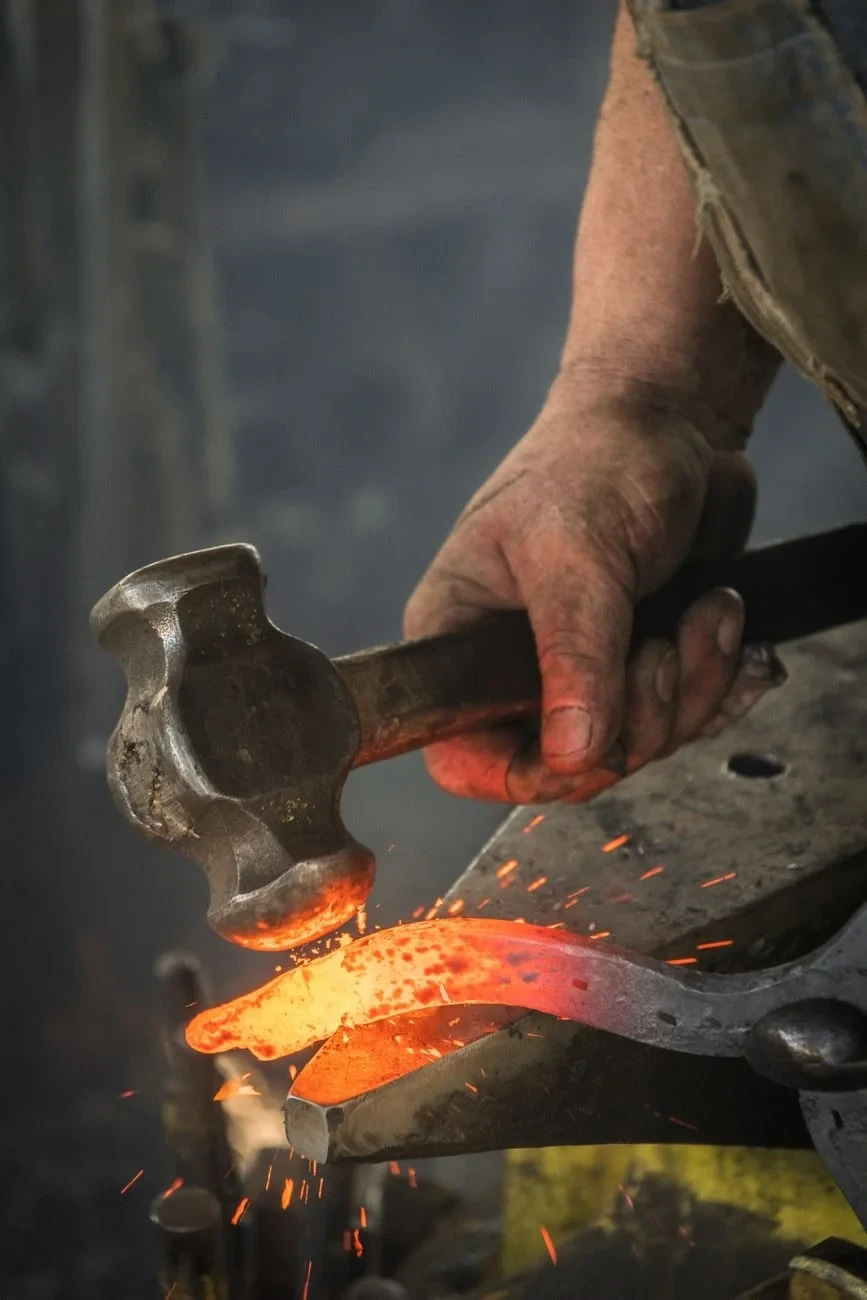
A blacksmith delivers precise blows to hot iron. The close focus on hand and metal shows the fundamental gesture of iron work: shaping through force.
Photograph by j.mt_photography, via Pexels.
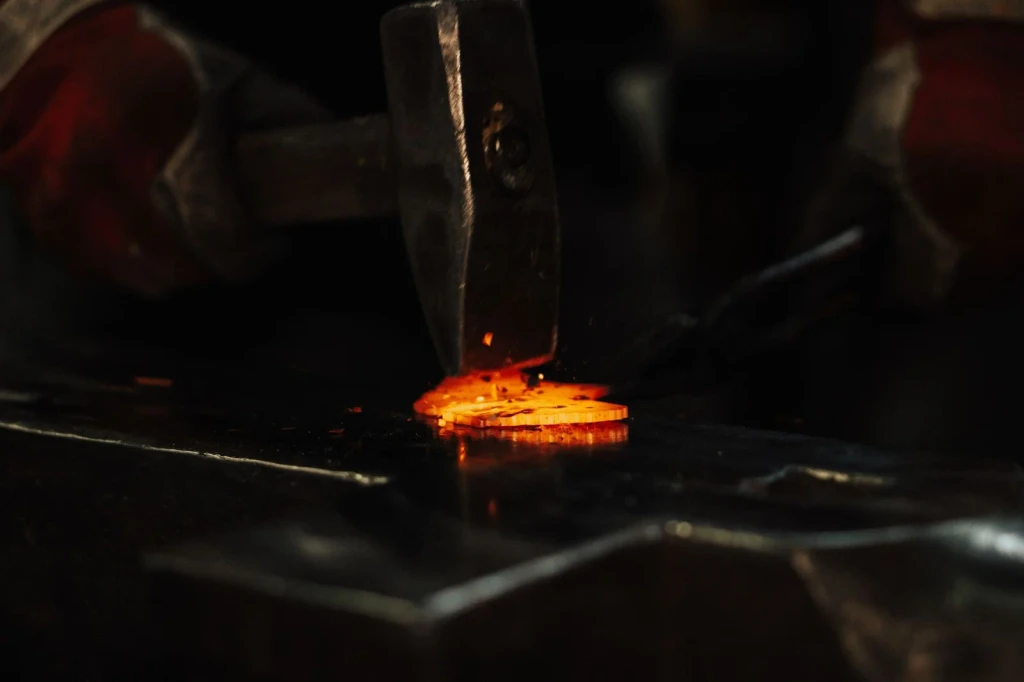
A blacksmith uses hammer and anvil in close focus. The anonymous figure emphasizes the enduring nature of the work itself.
Photograph by Lars Mai, via Pexels.
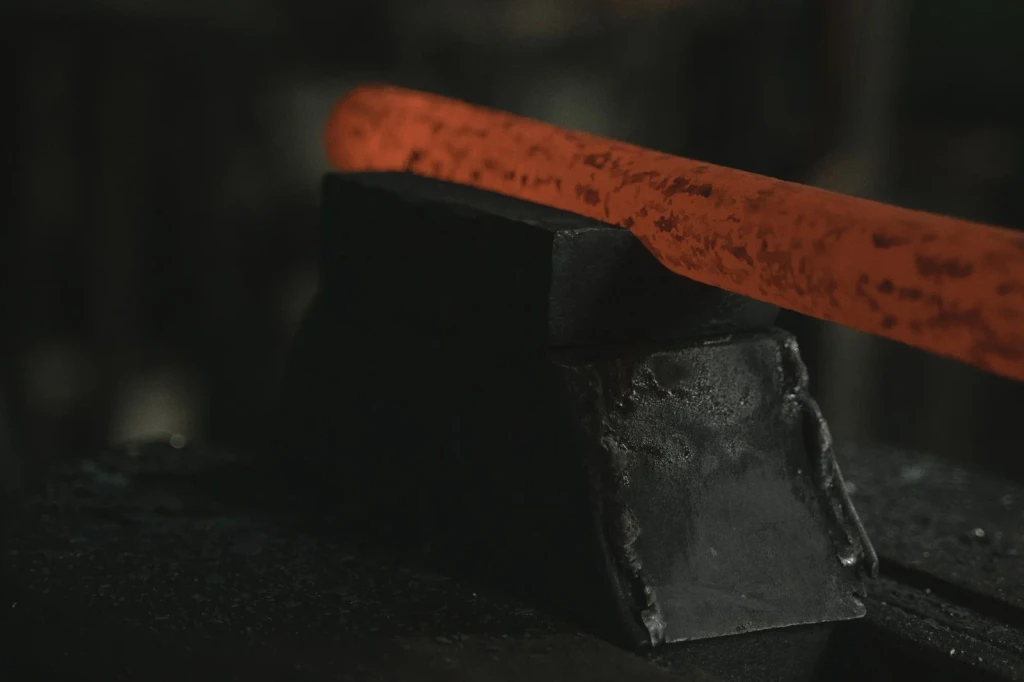
A heated bar rests on the anvil's dark surface. The moment before or after the hammer strike, iron waits.
Photograph by Tima Miroshnichenko, via Pexels.
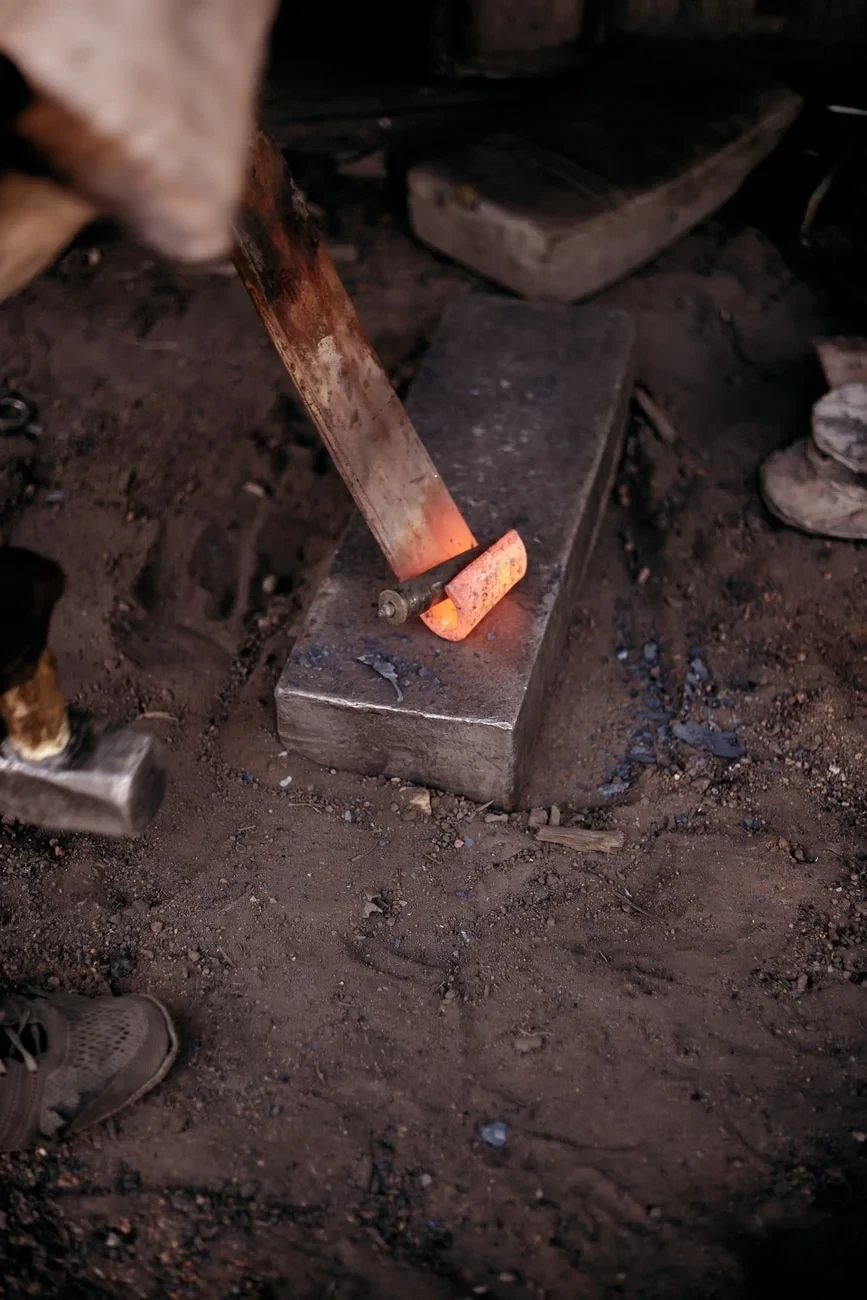
A blacksmith shapes heated metal with hammer and anvil. The image documents traditional metalworking technique in action.
Photograph by Finalchoice, via Pexels.
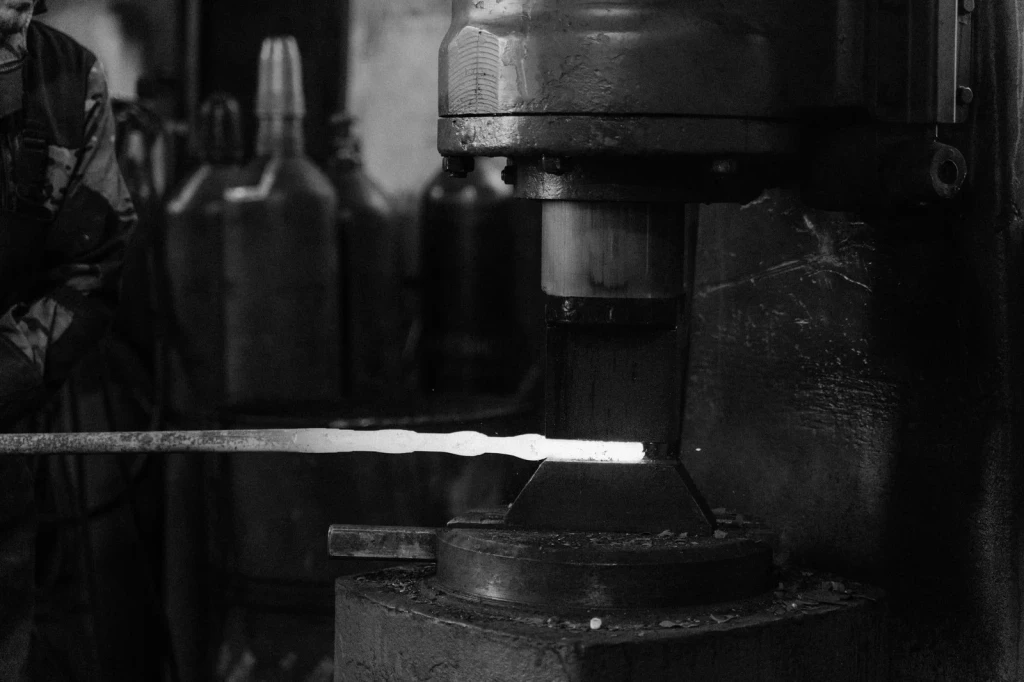
A monochrome view of the forge and its metal in process. The simplified palette focuses attention on the work itself.
Photograph by Tima Miroshnichenko, via Pexels.
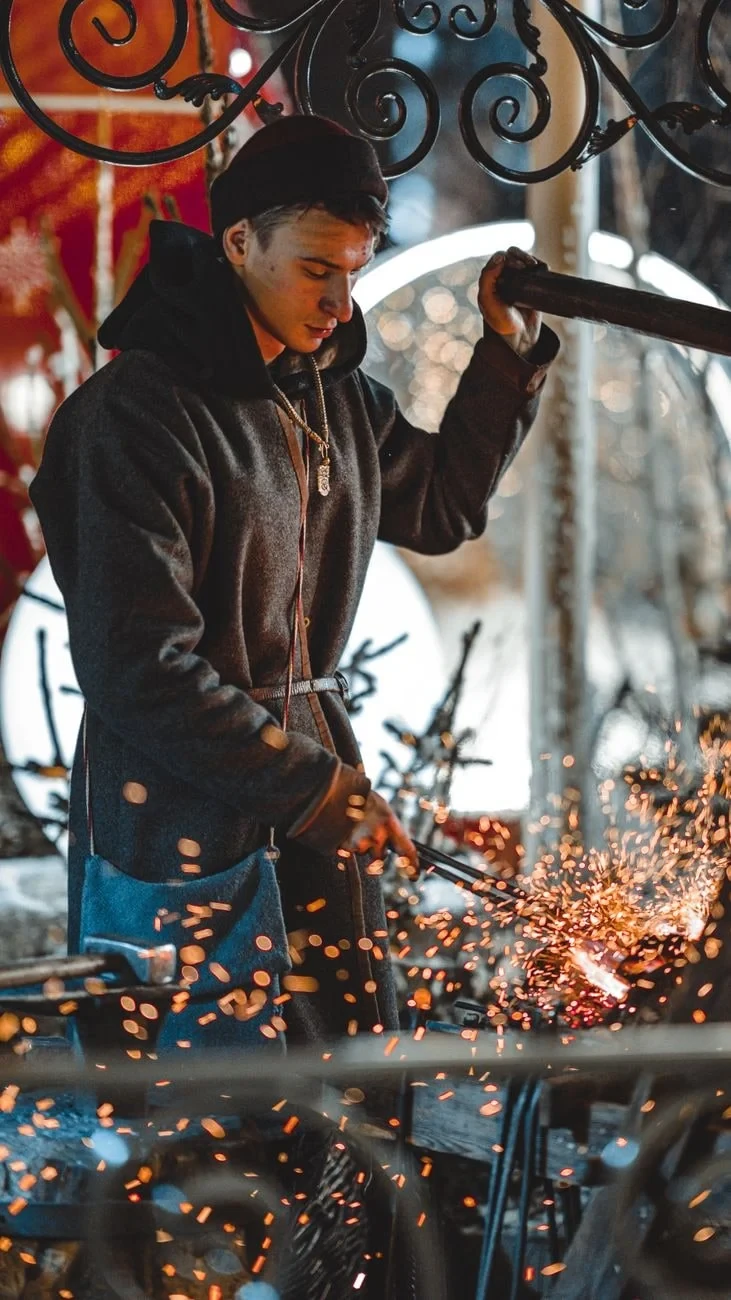
A blacksmith works at the forge, sparks illuminating the moment. The image captures metalworking as both craft and performance.
Photograph by Anton Kotlovskii, via Pexels.
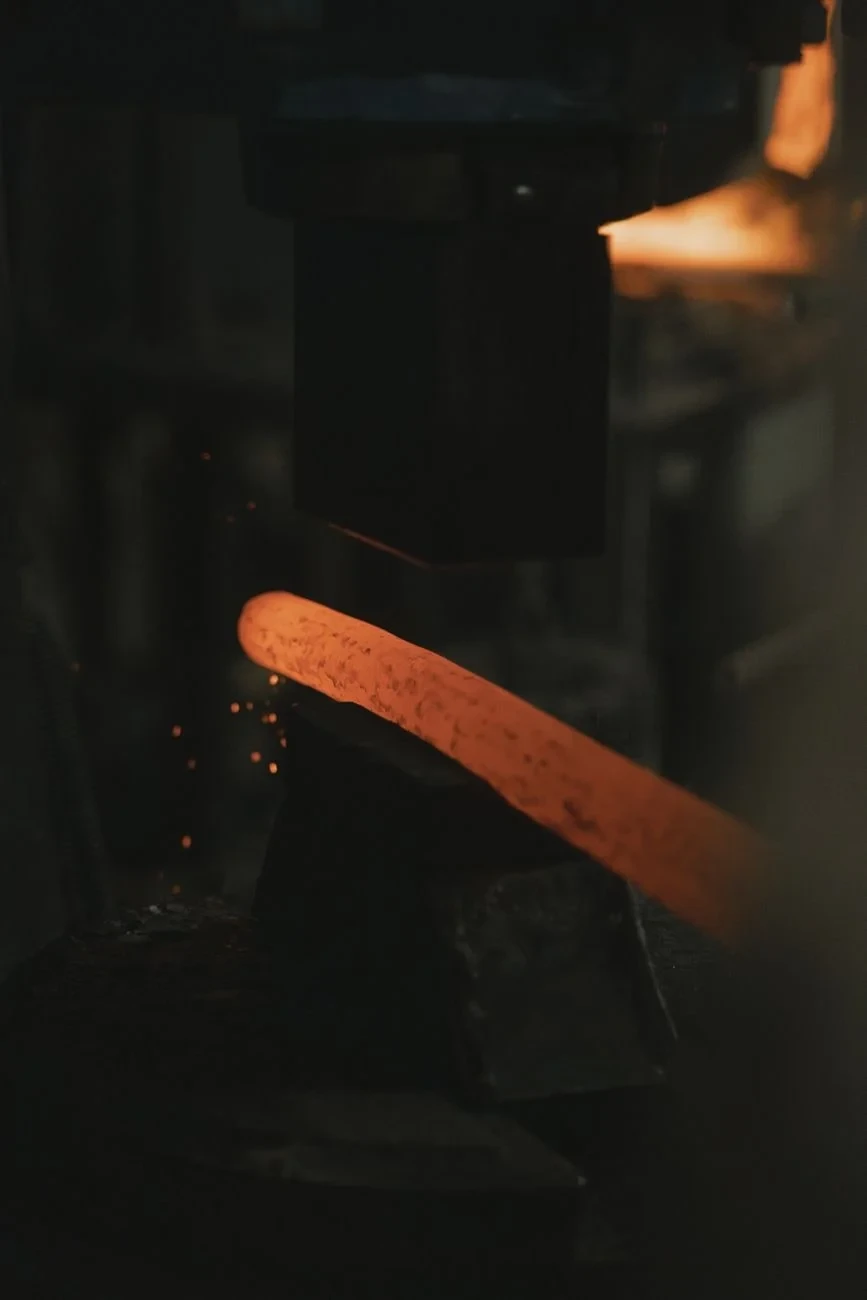
Close view of glowing metal under the blacksmith's hammer. Traditional skill made visible through light and transformation.
Photograph by Tima Miroshnichenko, via Pexels.
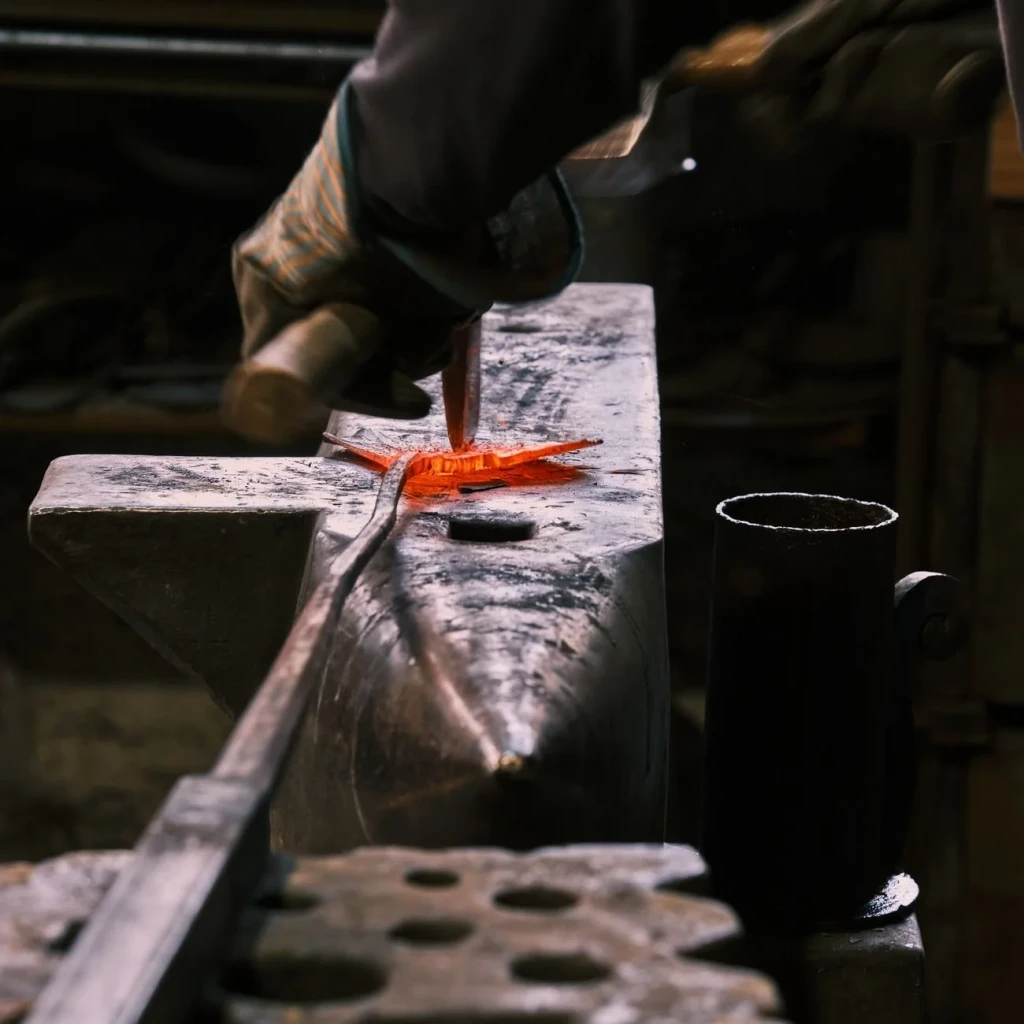
A close-up of metal being shaped on the anvil with hammer and tongs. The image shows the intensity required in traditional forging.
Photograph by Sladjan Djordjevic, via Pexels.
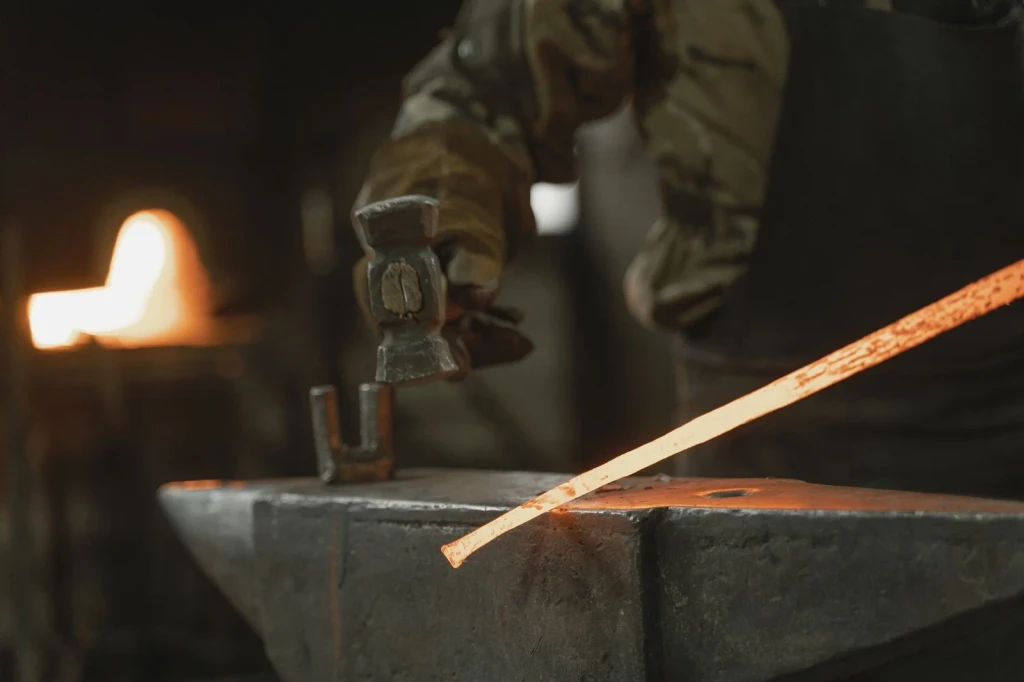
Hammer meets anvil in a dimly lit space. This is the essential equipment and setting of iron craft, repeated across centuries.
Photograph by Tima Miroshnichenko, via Pexels.
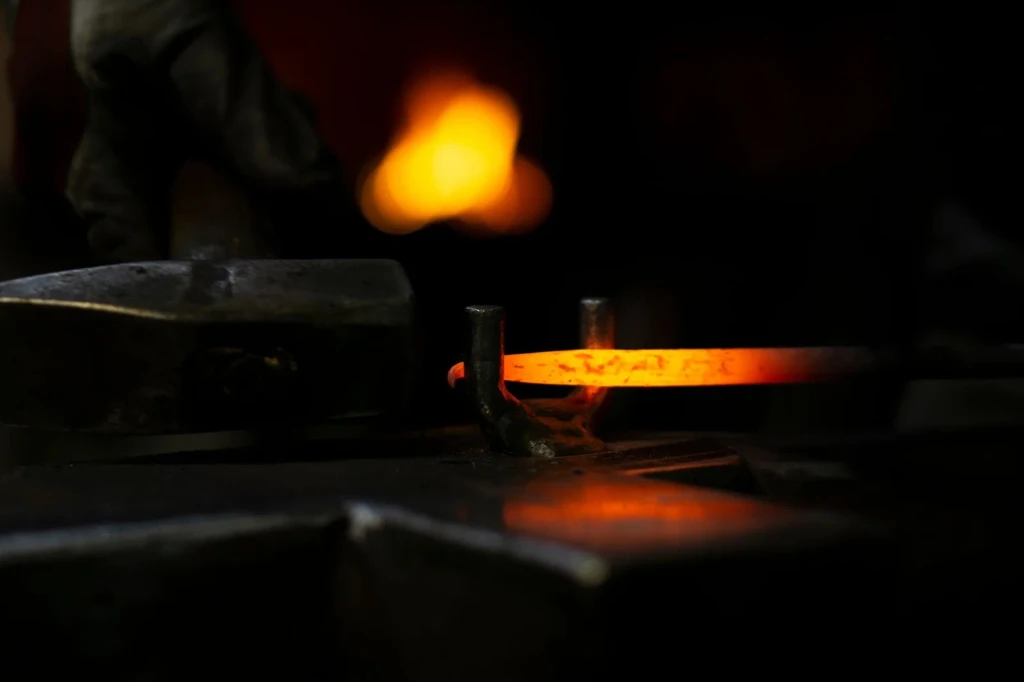
Intense view of hammer striking hot metal. The photograph brings us near the heat and concentration of the craft.
Photograph by Lars Mai, via Pexels.
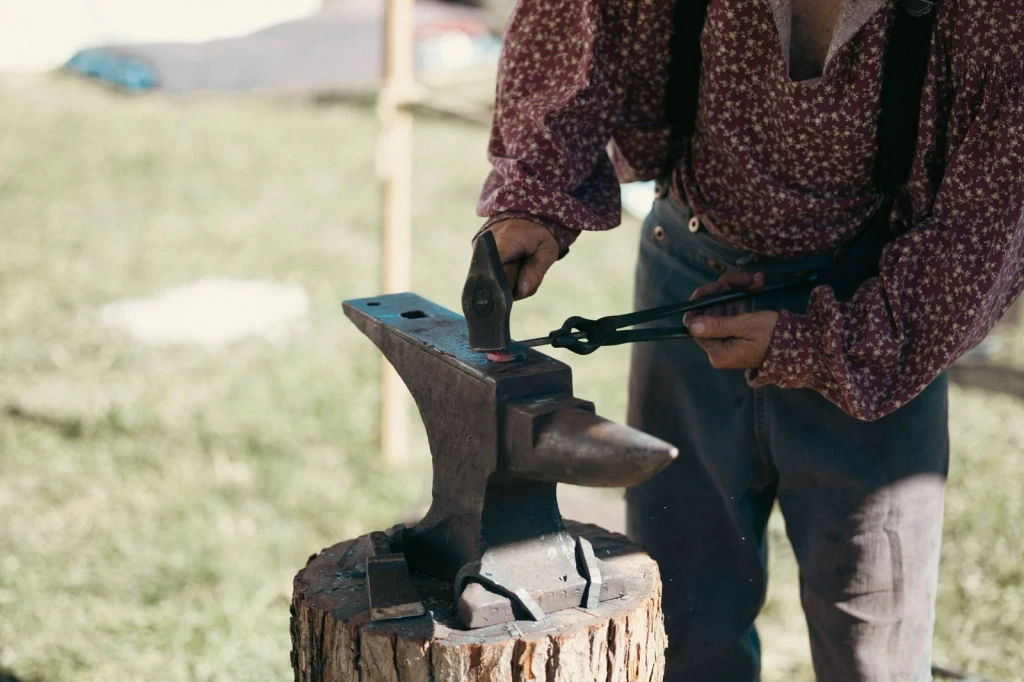
A blacksmith in period dress works metal at an anvil with traditional tools. The scene captures iron shaping as a deliberate, embodied craft.
Photograph by Owen.outdoors, via Pexels.
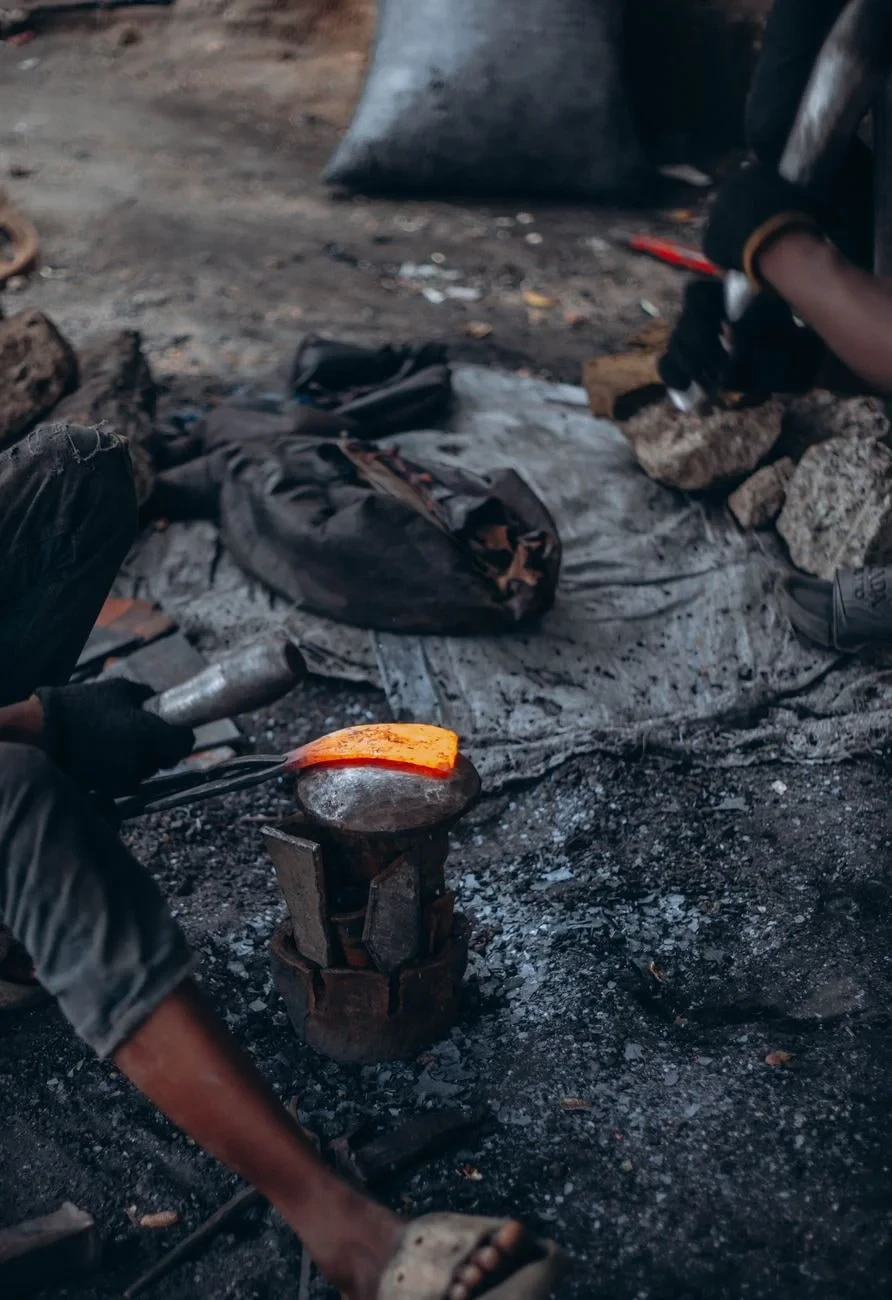
A blacksmith demonstrates the core tools of metalworking. This image speaks to traditional techniques that bridge iron and earlier eras.
Photograph by MD Photography, via Pexels.
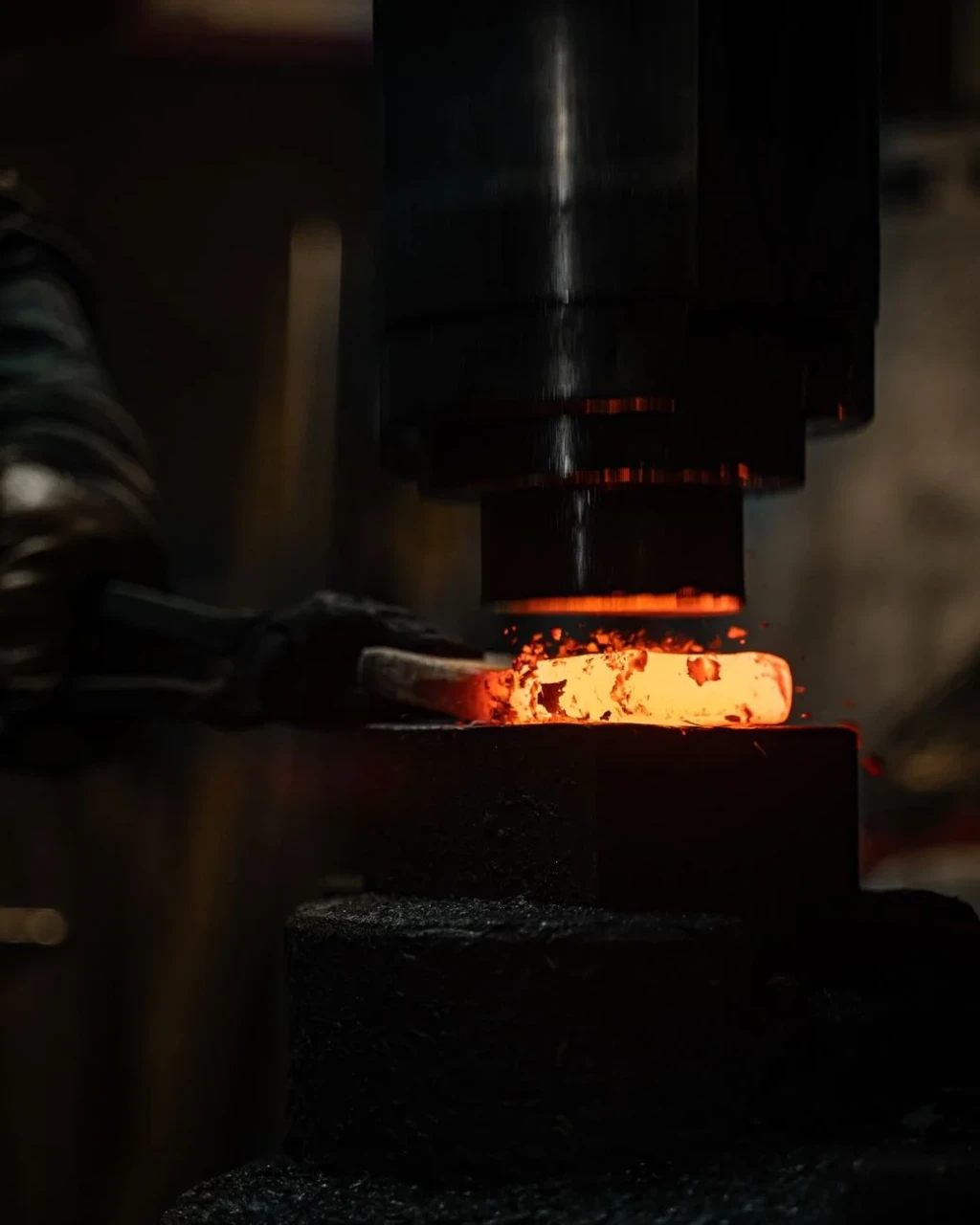
Red-hot iron under a hydraulic press. Modern machinery meets the ancient work of shaping metal.
Photograph by Yasin Onuş, via Pexels.
