3D Gallery
Leather: A Skin Given a Second Life
Enter gallery
Leather: A Skin Given a Second Life is a 3D virtual gallery on MyGallery3D, a walkable online exhibition of 16 works. Step inside and explore it in your browser: no app, no headset.
Walk through this 3D virtual gallery of leather in your browser, and begin with the thing everyone forgets: it was skin.
Raw hide dries hard, and once wet again it rots. Tanning prevents that by rebuilding the protein itself: chromium salts push the chains of collagen apart, from a spacing of 10 to 17 Å, and lock them there. We have done some version of this for a very long time. The leatherworking tools found at Hoxne in England are about 400,000 years old.
Chrome tanning does in under a day what bark takes weeks to do, and it now accounts for 85 to 90 percent of leather making. The bill is water. One ton of hide yields 20 to 80 cubic metres of waste water, carrying chromium, sulfide, fat and pathogens. Solid waste can reach 70 percent of the wet weight of the original hides.
The soft goatskin that binds fine books is called Morocco leather, but Morocco was typically not its source. Some of the best of it came from the Hausa city-states of Kano, Katsina and Zazzau in Northern Nigeria, and from Anatolia. The animal behind it is the Sokoto Red. It was prized in Western countries for its strength, its suppleness, and because it enhanced any gilding.
Tanning was an odoriferous trade, pushed to the edge of town among the poor. Ancient tanners loosened hair by soaking skins in urine, painting them with an alkaline lime mixture, or simply letting them putrefy for months. Then they softened the hide by pounding dung into it, commonly from dogs or pigeons, or by soaking it in a solution of animal brains.
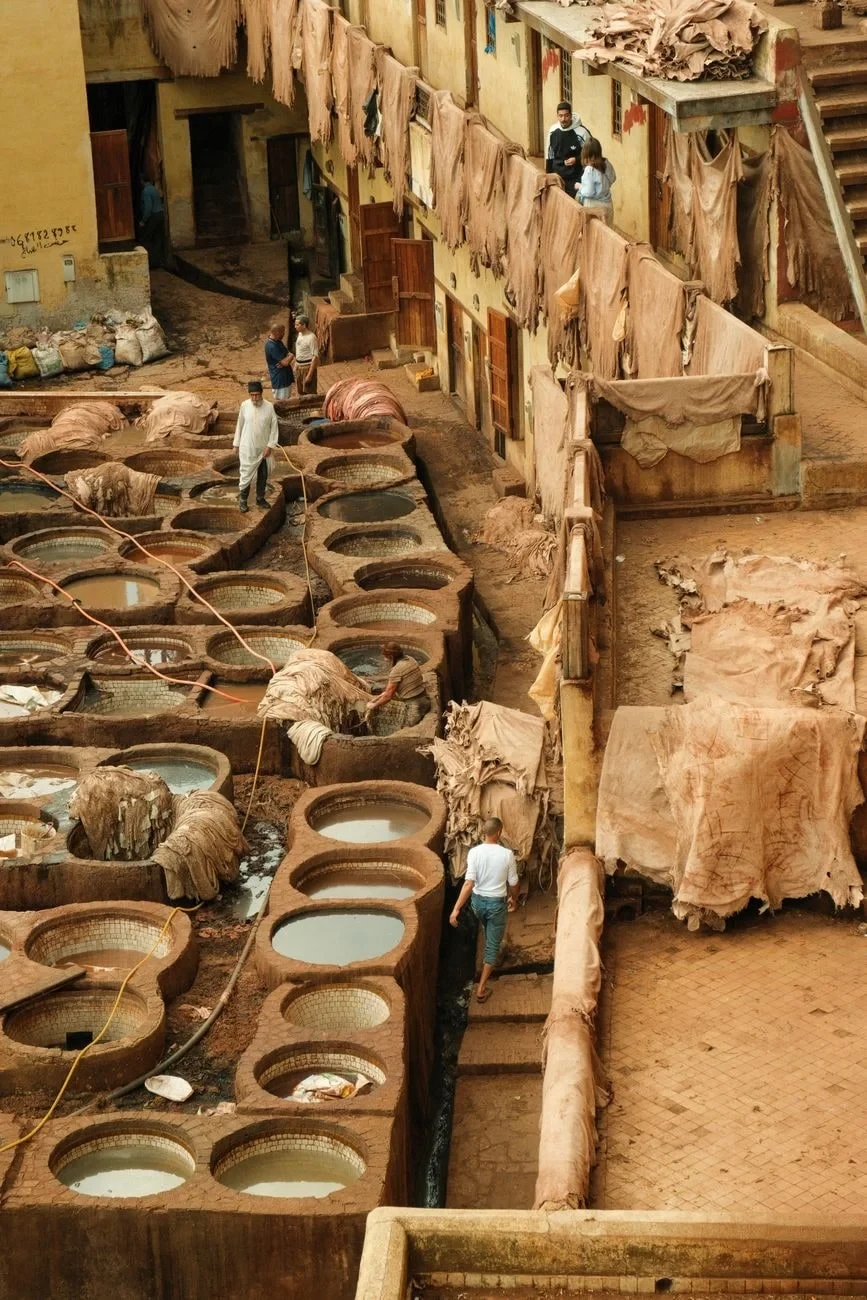
An aerial perspective captures both the dye pits and human labor. The image documents the practical reality of traditional leather processing.
Photograph by Ramon Karolan, via Pexels.
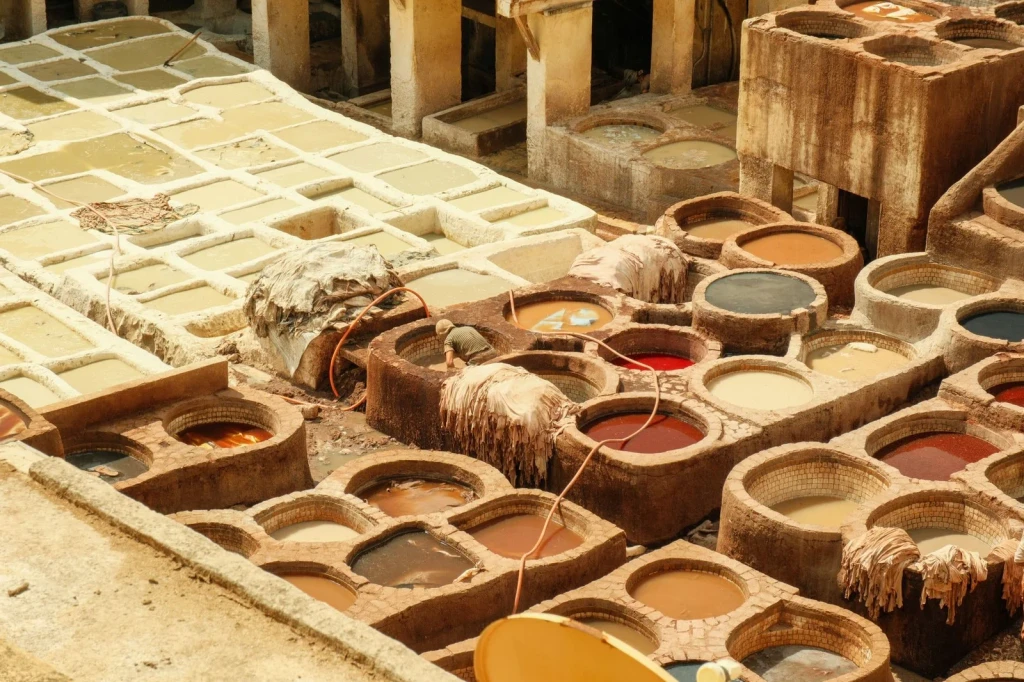
Colorful dye vats and hides tanning in sunlight at a traditional tannery. The photograph captures the transformation process in progress.
Photograph by Ramon Karolan, via Pexels.
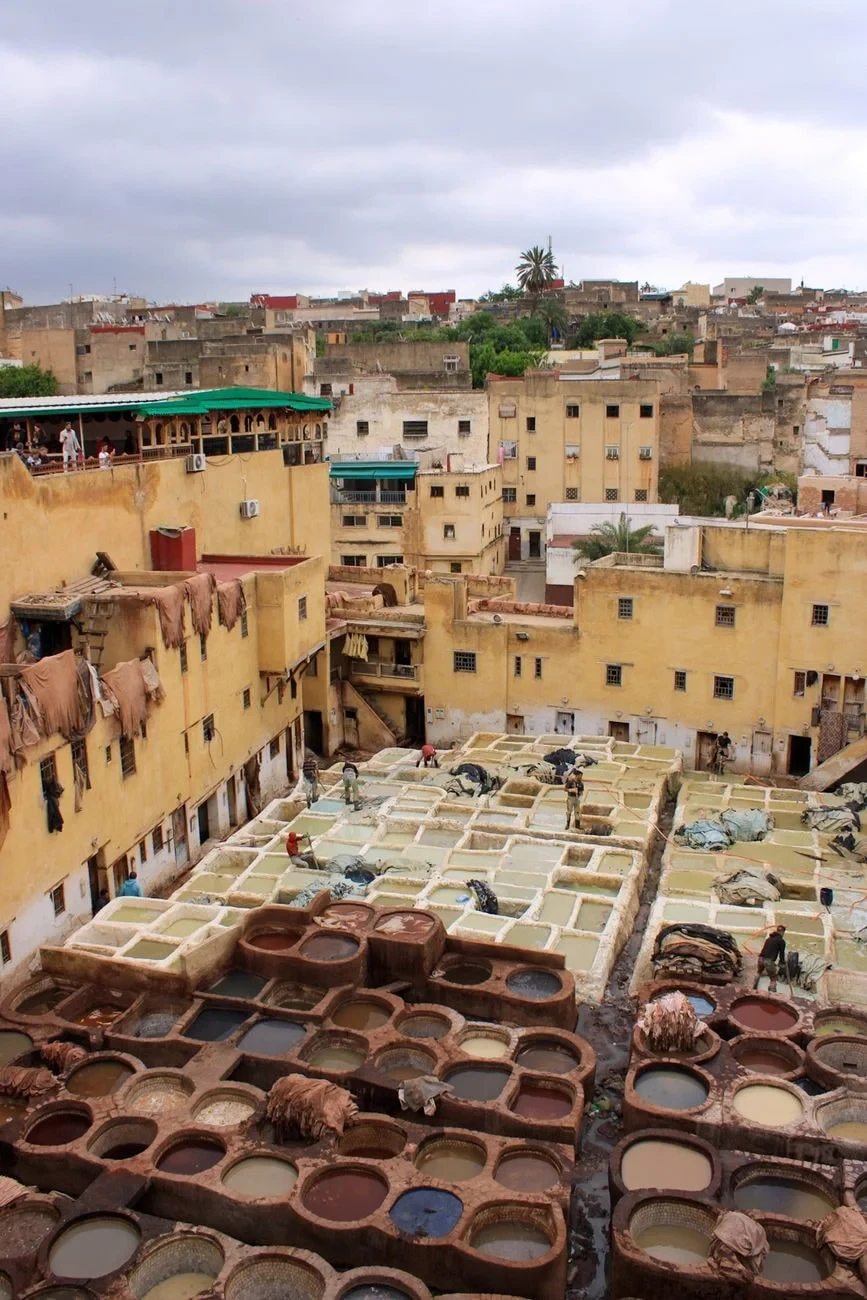
A vibrant view of traditional leather tanneries. The photograph shows the material and spatial dimensions of a craft practice.
Photograph by Büsra, via Pexels.
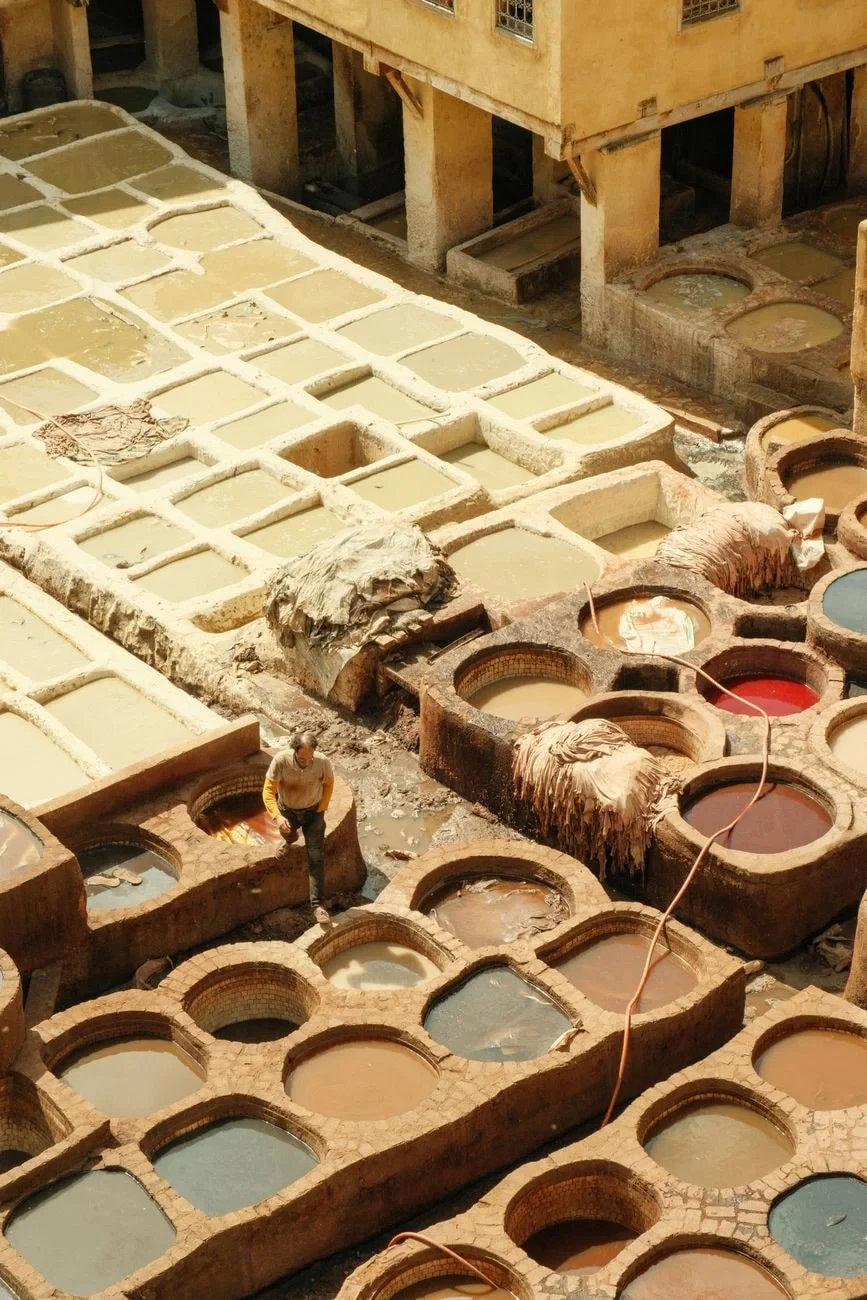
From above, the patterned vats of a traditional tannery become abstract. The image shows scale and craftsmanship from an unexpected viewpoint.
Photograph by Ramon Karolan, via Pexels.
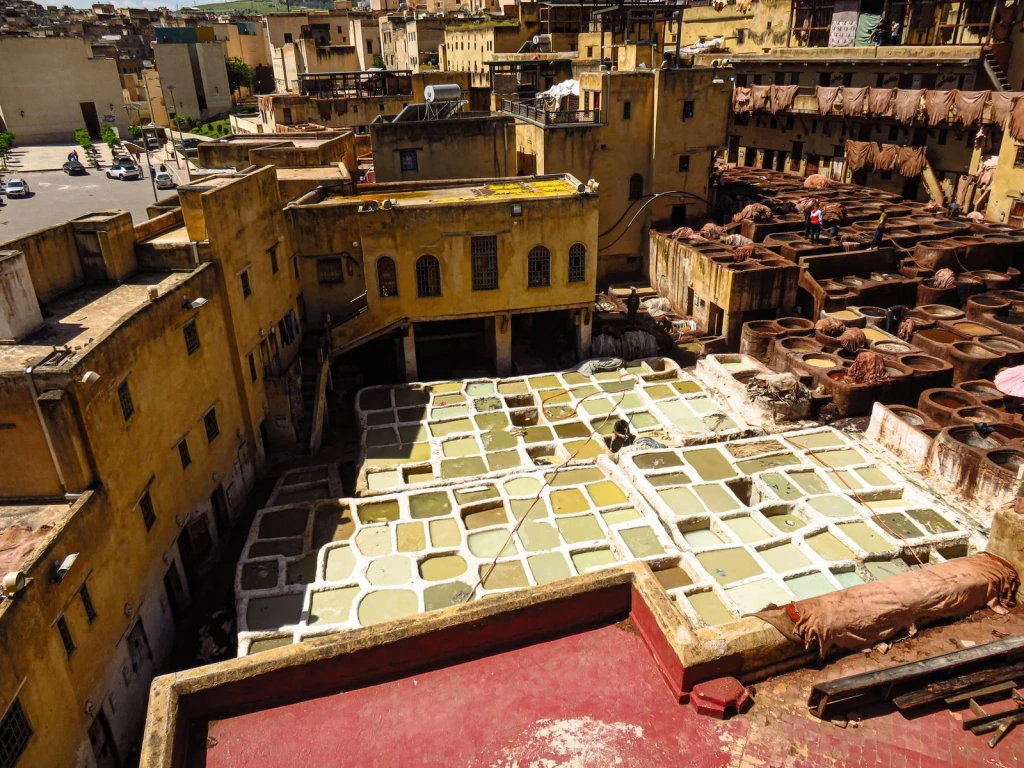
Vibrant hues and historic structures of a traditional tannery. Architecture and color reveal how leather production shapes the built environment.
Photograph by Jgcachafeiro, via Pexels.
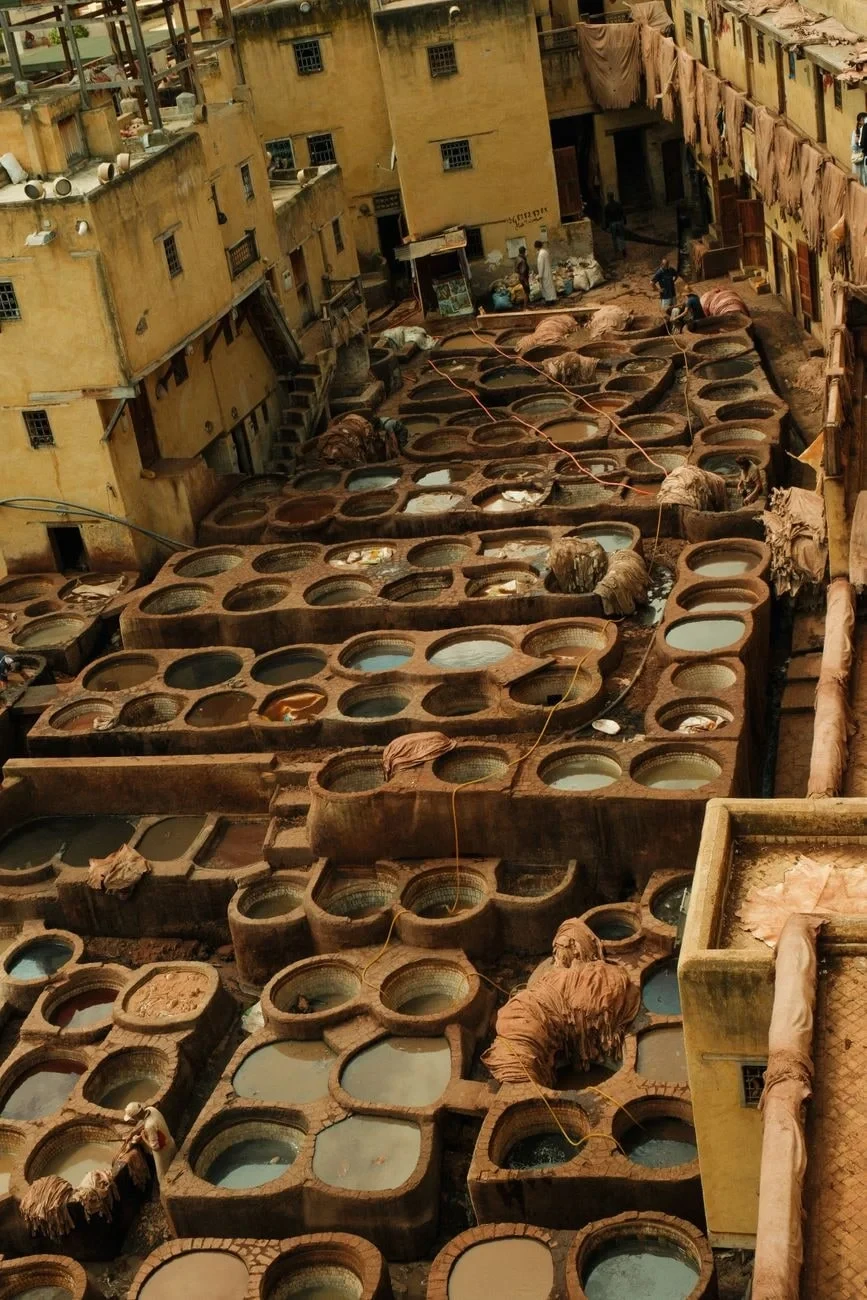
An aerial perspective of a historic leather tannery reveals the scale of traditional craftsmanship. From this height, we see the infrastructure that transforms raw hide into finished leather.
Photograph by Ramon Karolan, via Pexels.
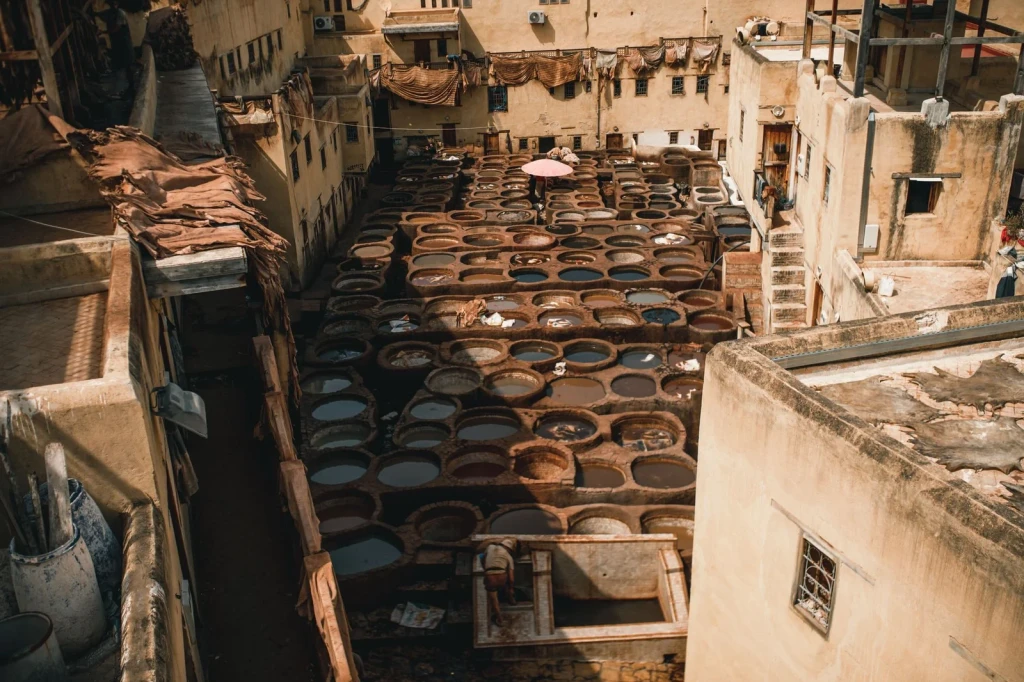
This aerial view documents a traditional tannery's layout and methods. The photograph positions us as observers of a craft that has endured through generations.
Photograph by YUSUF ROVCANİN, via Pexels.
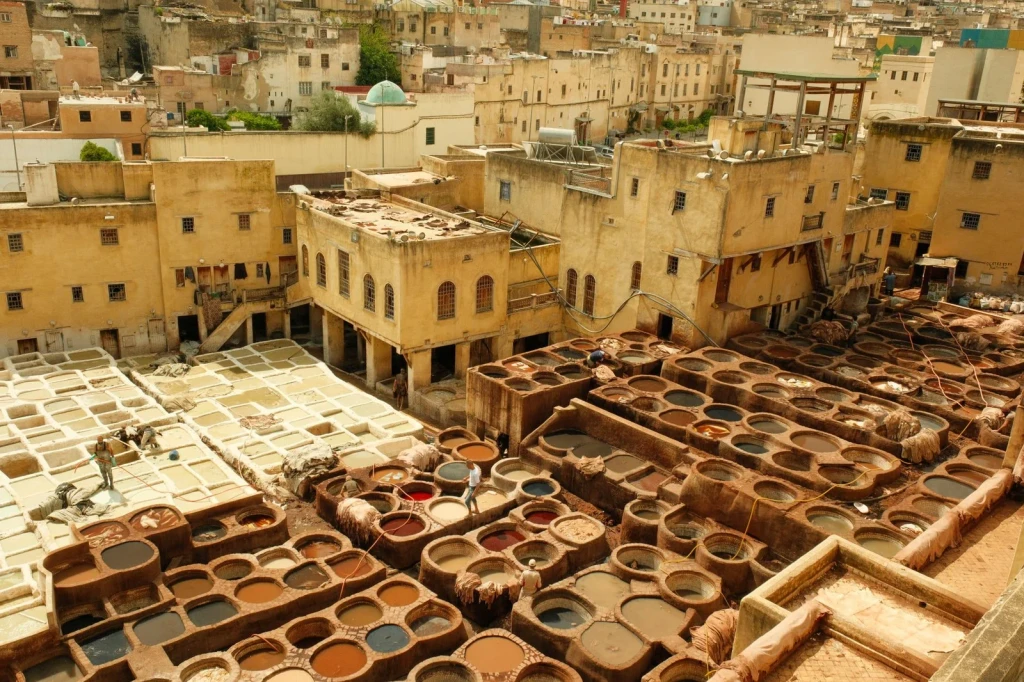
Vibrant dye vats fill the frame in this overhead view. Color and pattern emerge from the working surfaces where leather gains its second identity.
Photograph by Ramon Karolan, via Pexels.
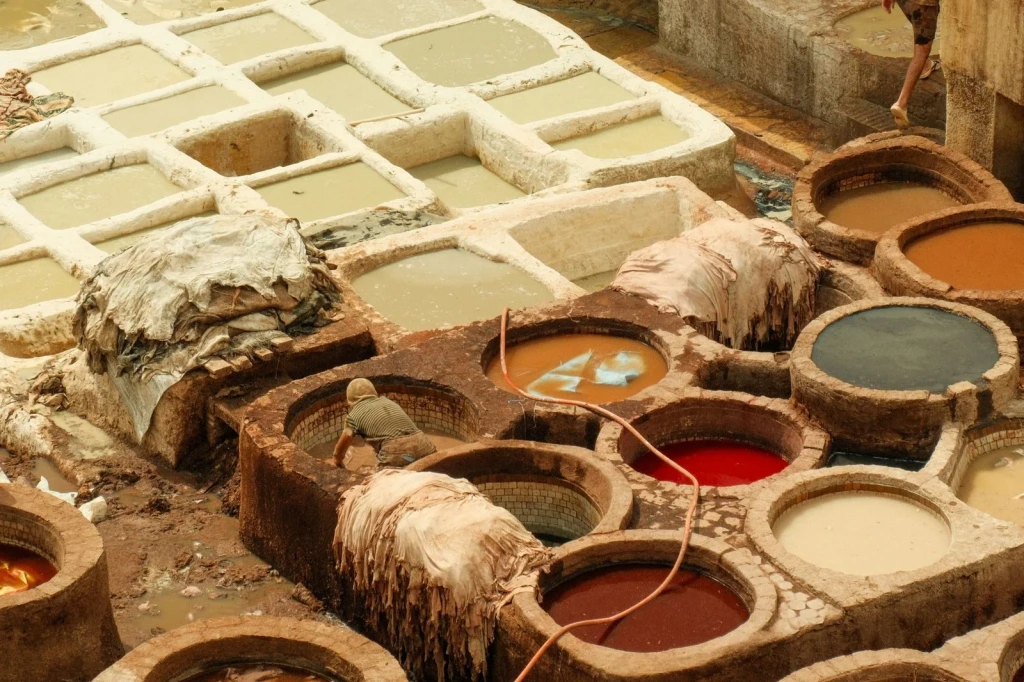
Traditional leather processing methods rendered visible through photography. The vats themselves become a record of technique and time.
Photograph by Ramon Karolan, via Pexels.
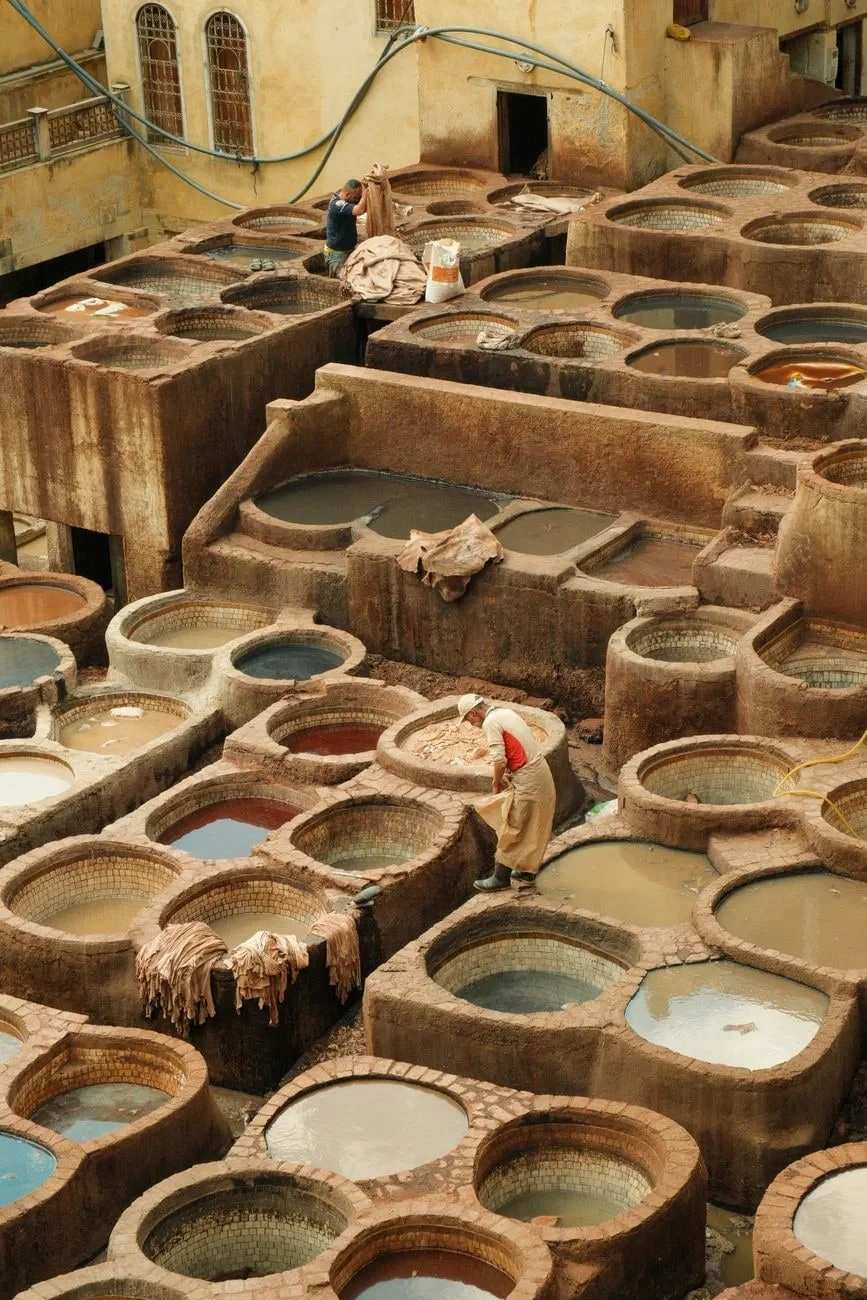
Dye vats in shades of ochre, indigo, and red fill this overhead composition. Color documents the chemical and cultural processes that give leather its character.
Photograph by Ramon Karolan, via Pexels.
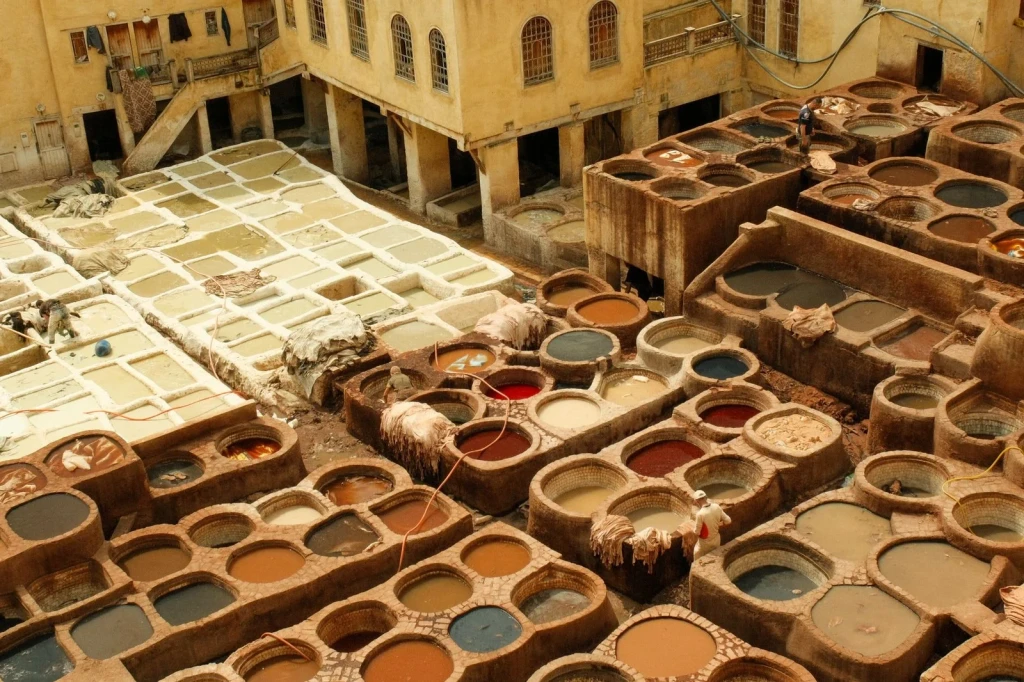
An aerial view of traditional leather tanneries. The photograph captures the scale of a craft that transforms animal hides into material for a second life.
Photograph by Ramon Karolan, via Pexels.
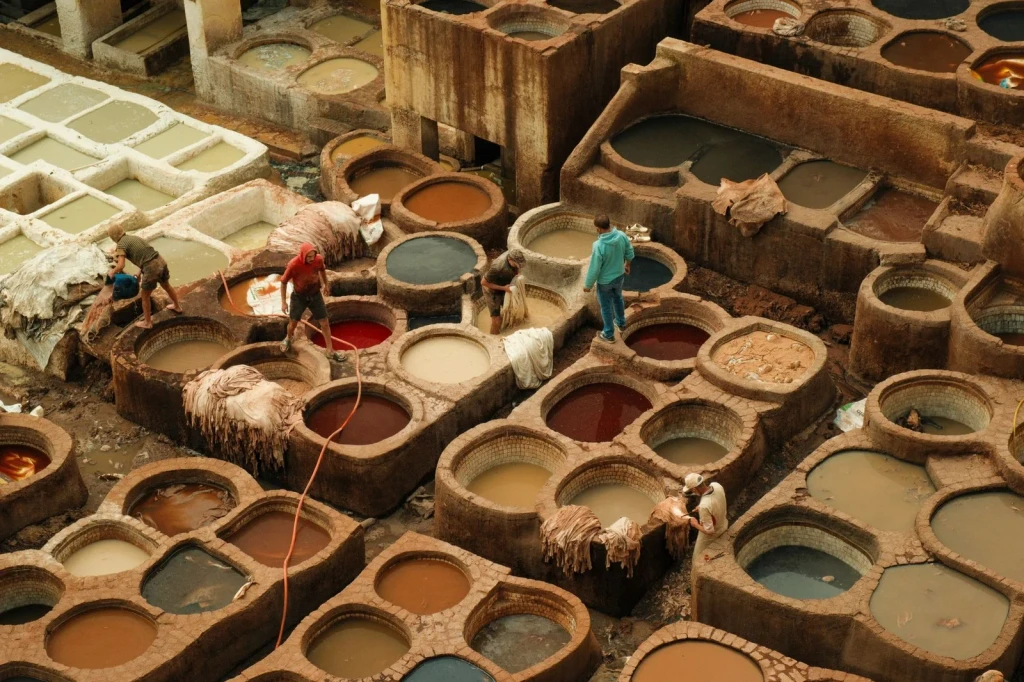
Workers move through the tannery's spaces, captured from above. The photograph shows human effort as the invisible force behind leather's transformation.
Photograph by Ramon Karolan, via Pexels.
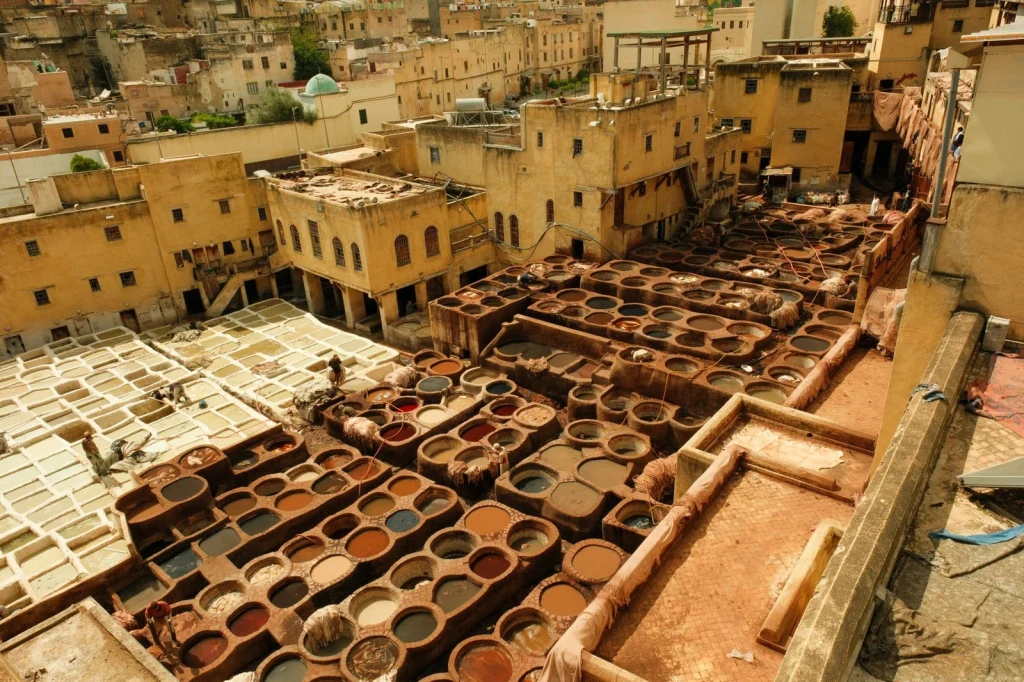
Traditional leather dyeing in historic vats. The image documents methods of transforming raw material into finished hide, a craft refined over centuries.
Photograph by Ramon Karolan, via Pexels.
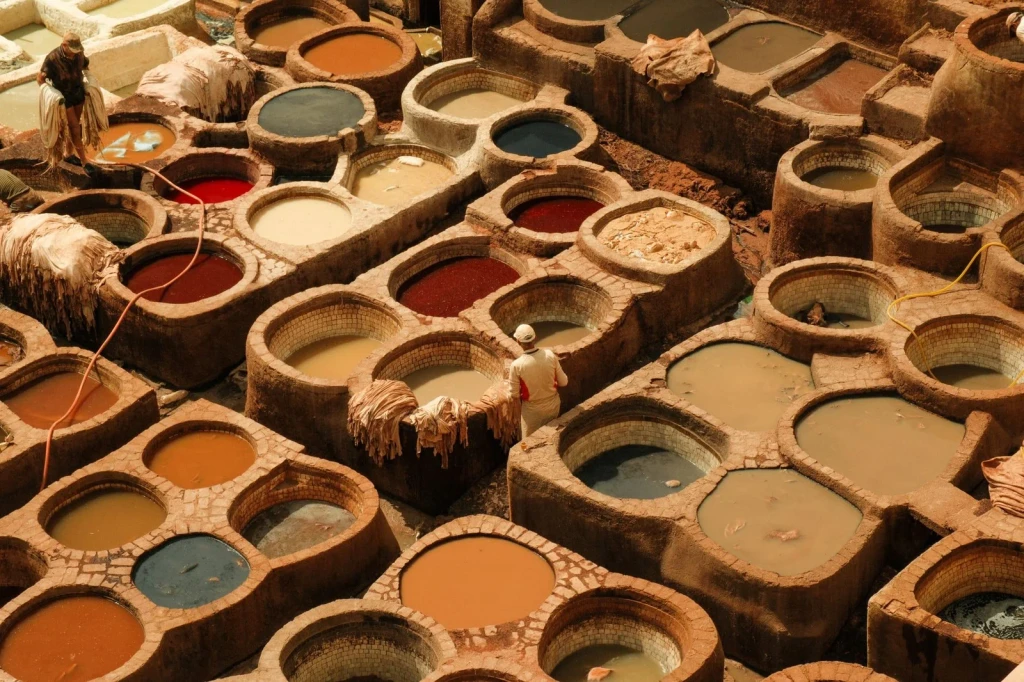
Aerial perspective on colorful vats and workers engaged in leather processing. The image documents labor within a system of traditional craft.
Photograph by Ramon Karolan, via Pexels.
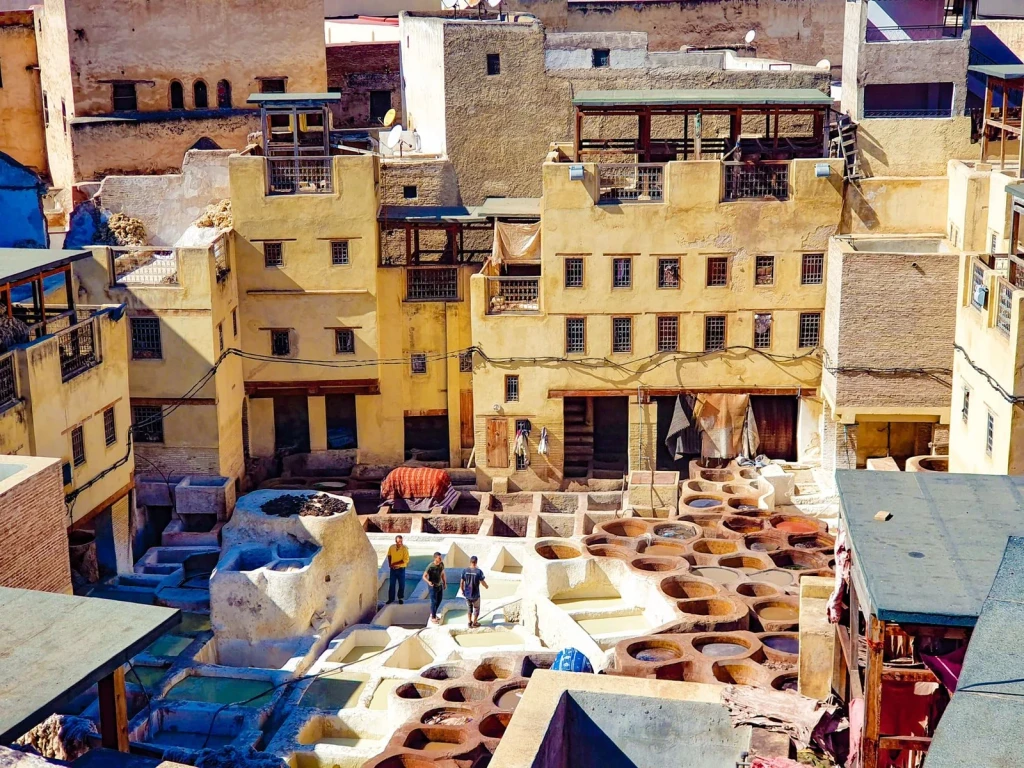
This aerial view reveals the vibrant geometry of traditional leather production. Color and pattern emerge from generations of craft.
Photograph by Daciana Cristina Visan, via Pexels.
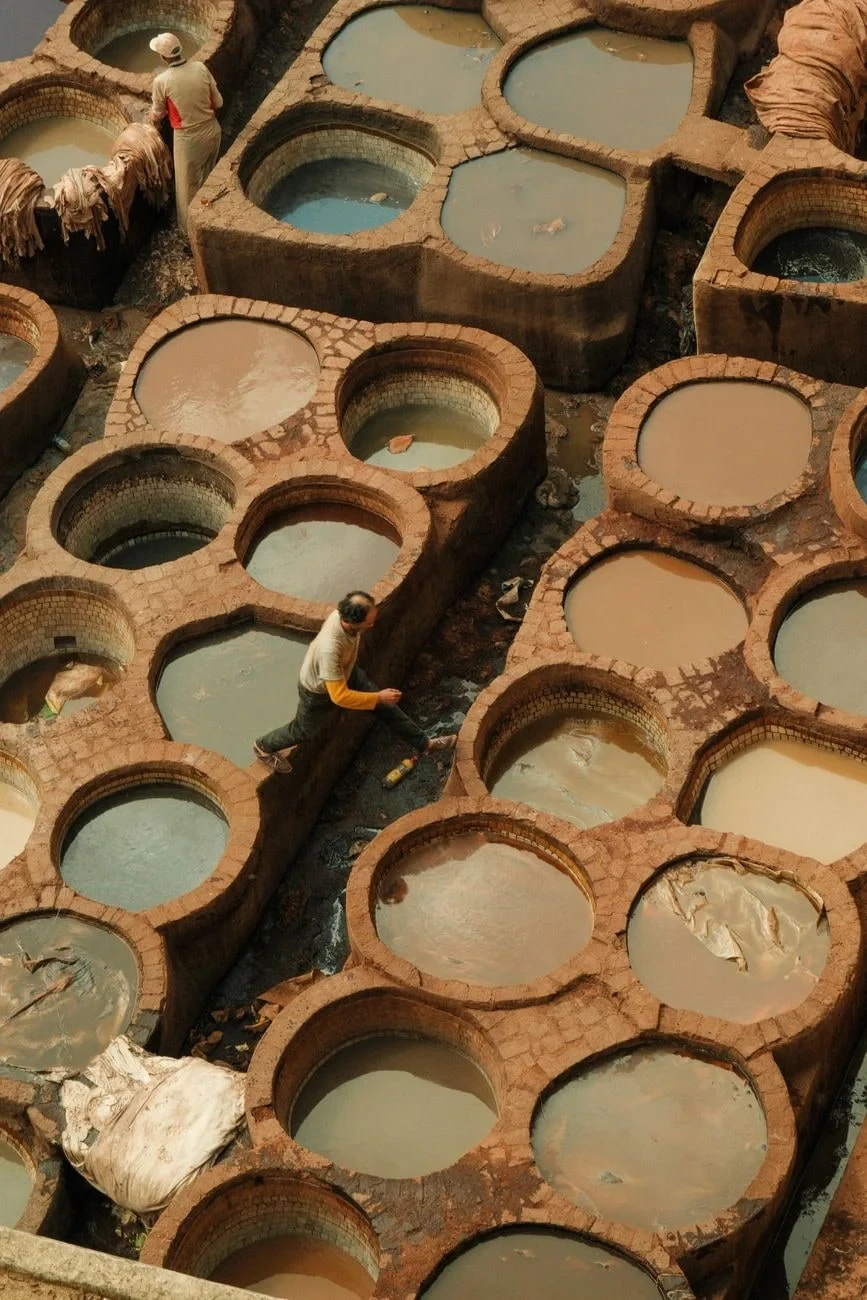
Viewed from above, workers tend to dye vats in a traditional tannery. The image captures labor as central to leather's second life, one bath at a time.
Photograph by Ramon Karolan, via Pexels.
