3D Gallery
Rowing: The Oldest Way to Move on Water
Enter gallery
Rowing: The Oldest Way to Move on Water is a 3D virtual gallery on MyGallery3D, a walkable online exhibition of 16 works. Step inside and explore it in your browser: no app, no headset.
This is a 3D virtual museum of rowing, and you can walk through it in your browser.
Before it was a sport it was an engine. Athens built its power on a fleet of more than 200 triremes, paid for with silver from the newly discovered mines at Laurion. The fleet gave permanent employment to the city's poorer citizens, and in doing so it helped hold up the radical Athenian democracy. The rower faces backwards and cannot see where the boat is going. Everything in this sport follows from that.
A trireme was just under 37 m long and drew about 1 m of water, light enough for 140 men to carry ashore, and it took roughly 6,000 man-days to build. Two cables called hypozomata ran the length of the hull, tensioned to 13.5 tonnes. Exporting them from Athens was a capital offense. Take them out and the ship could not fight at all.
The Boat Race has run since 1829, from Putney to Mortlake, a course of 4 miles and 374 yards, over three times the distance of an Olympic race. In 1877 the judge, John Phelps, called it a dead heat: both crews finished in 24 minutes and 8 seconds, and he had to decide without any finish posts. They were installed in time for the next year.
The first modern races were rowed by the professional watermen who ran the ferry and taxi service on the River Thames. Guilds and wealthy owners of riverside houses put up the prizes. Doggett's Coat and Badge, first contested in 1715, is still held every year from London Bridge to Chelsea. One sporting book counted 5000 such matches between 1835 and 1851.
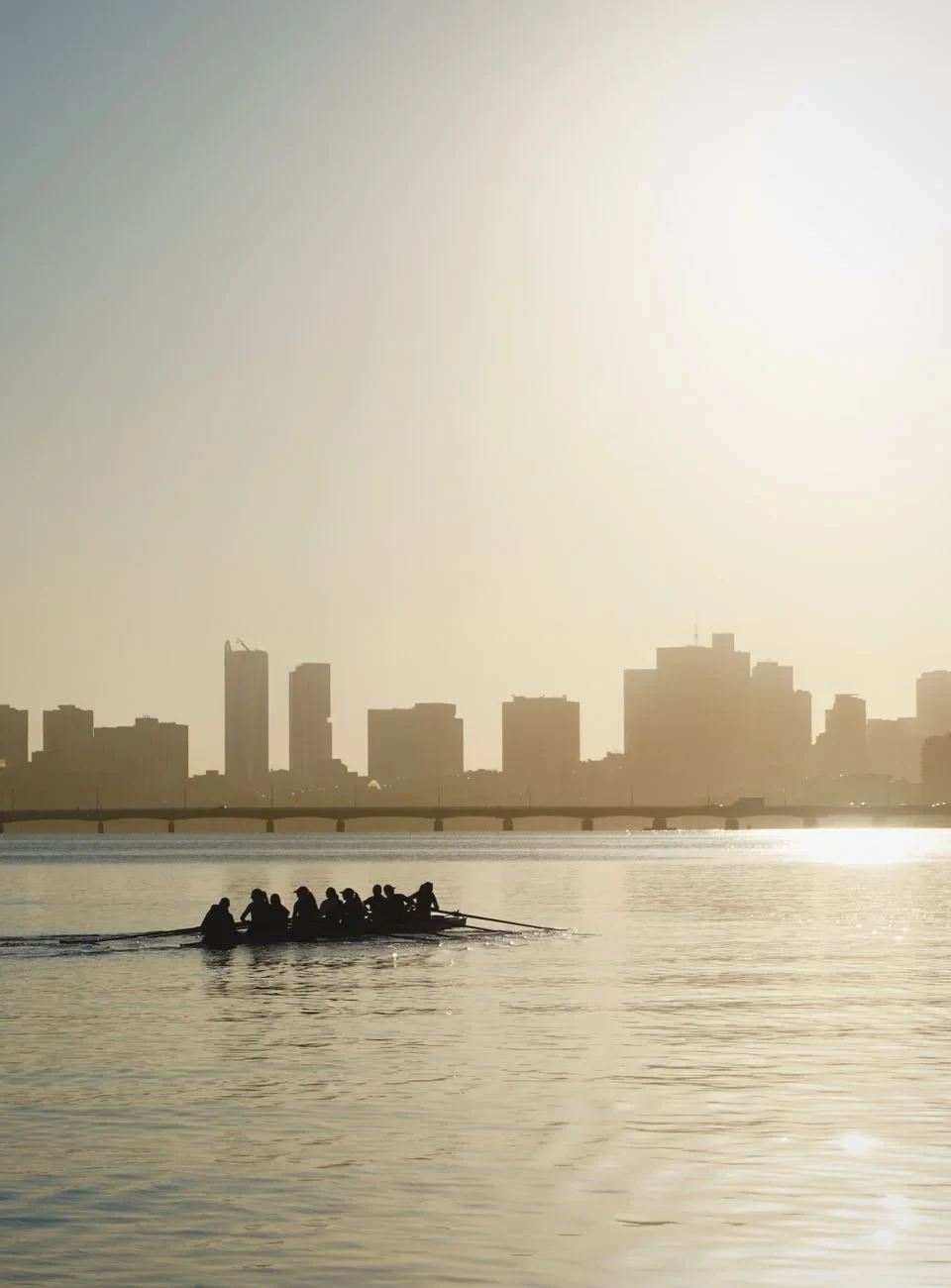
A rowing team appears as silhouettes against a sunrise cityscape. Water and light frame this ancient method of movement in a modern world.
Photograph by Ren Aukeman, via Pexels.
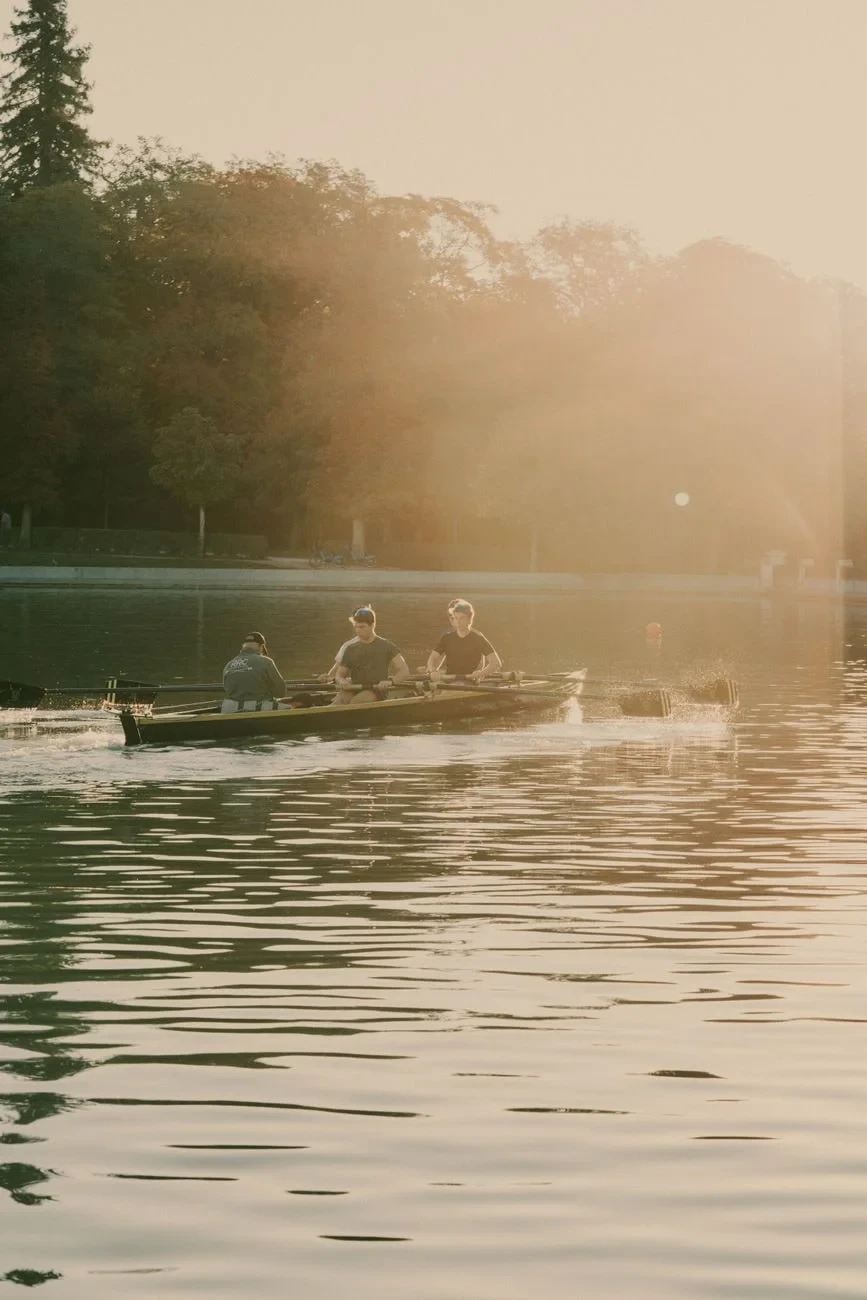
Three rowers move together across a serene lake at sunset, their boats cutting through water surrounded by trees. A study in the social nature of rowing.
Photograph by Juan TM, via Pexels.
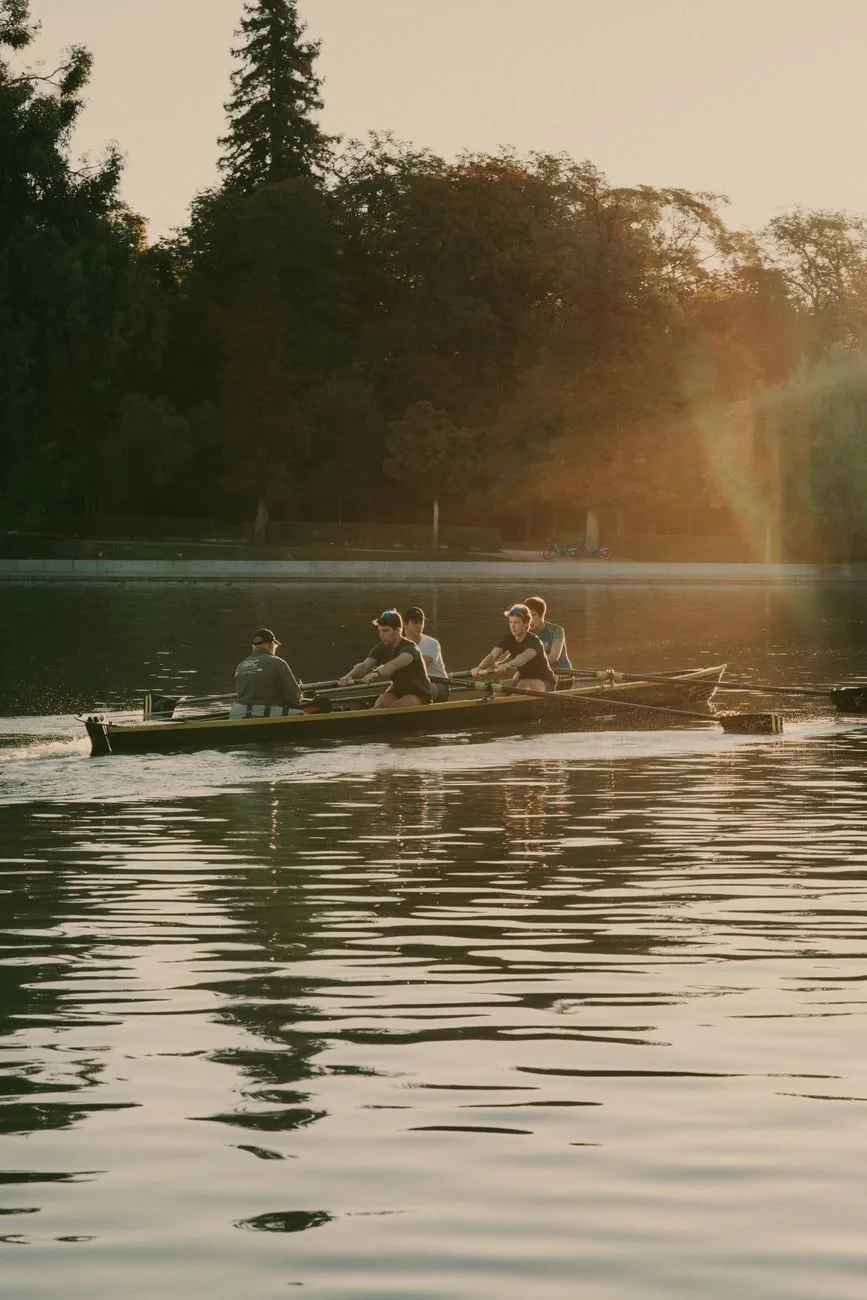
A group paddles across still water, their reflections doubling in the golden light. Rowing requires both strength and patience, found here in tranquil conditions.
Photograph by Juan TM, via Pexels.
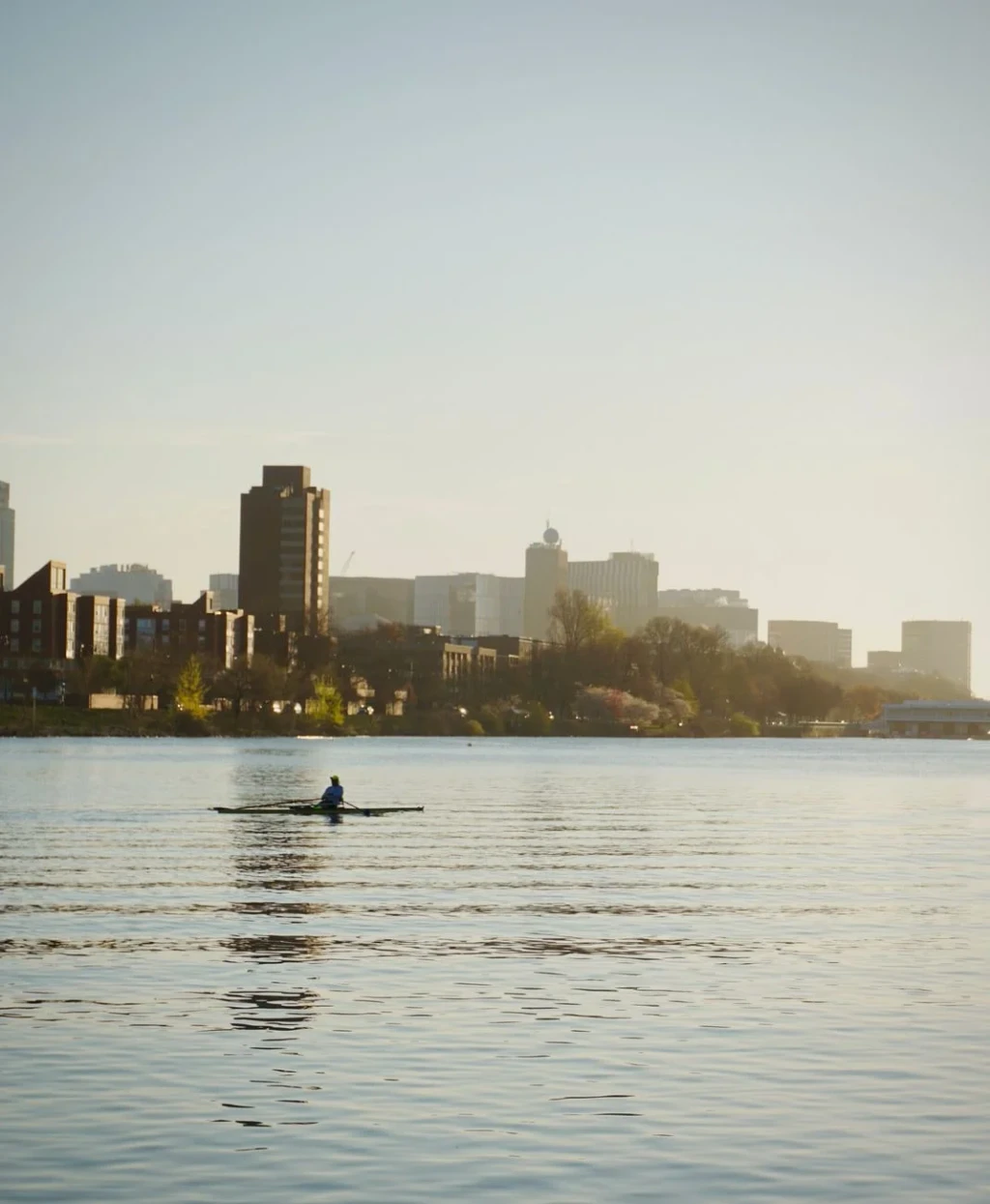
One rower propels a boat across still water while an urban skyline rises behind. Dawn rowing captures both isolation and the pull of the city.
Photograph by Ren Aukeman, via Pexels.
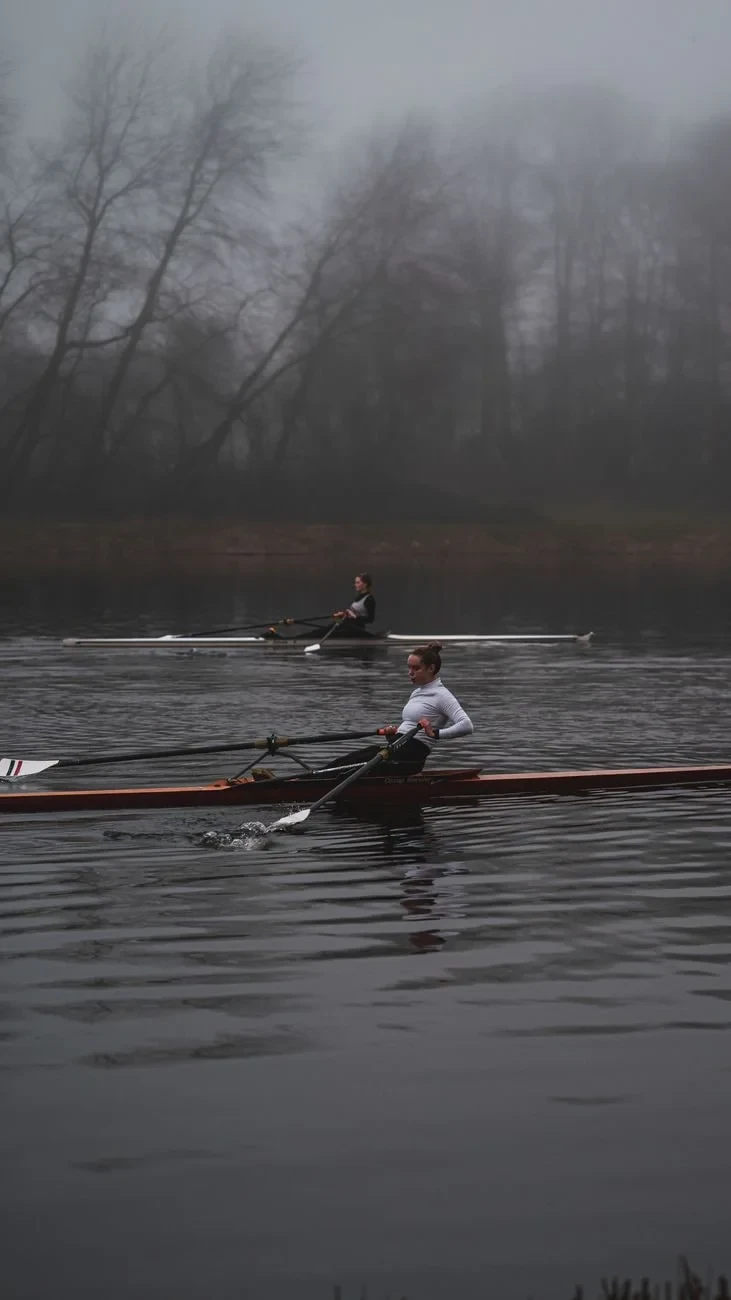
Two athletes row across a misty lake in near silence. Rowing strips the experience to essentials: water, oars, breath, and the solitude of movement.
Photograph by Nikita Grishin, via Pexels.
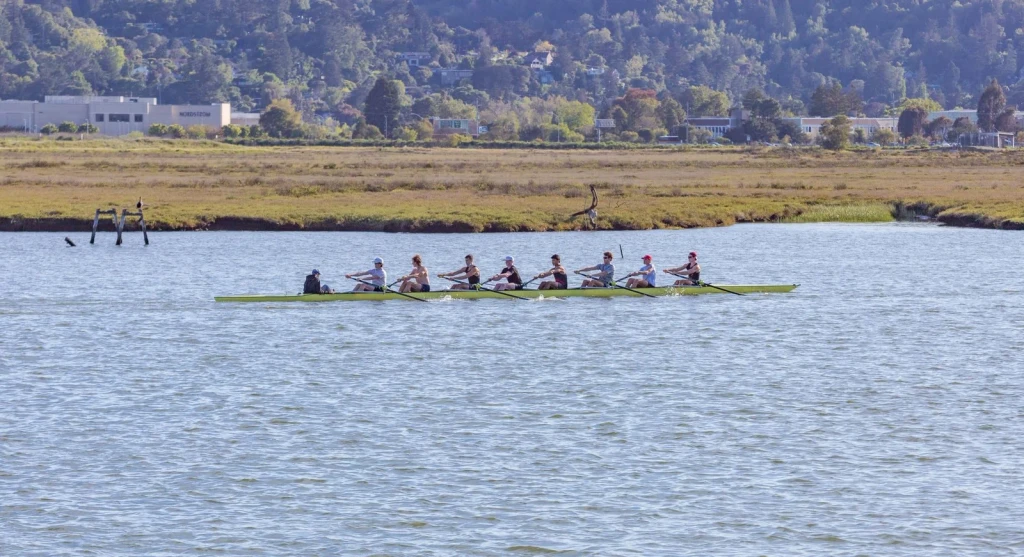
An octuple scull, eight rowers in perfect synchronization, demonstrates rowing at its most collaborative. The tranquil river becomes a stage for coordinated power.
Photograph by Robert So, via Pexels.
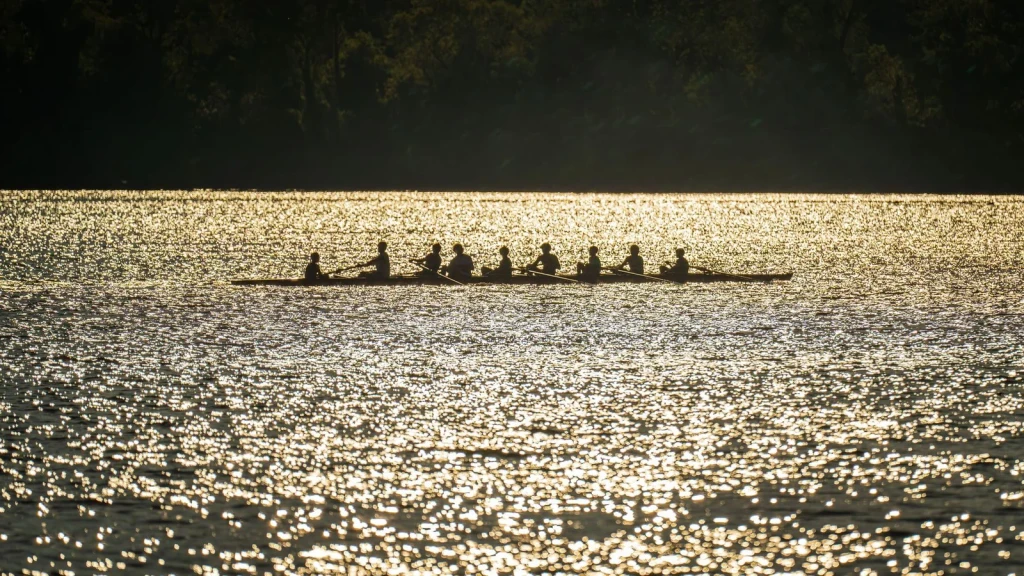
Silhouetted figures demonstrate the teamwork essential to rowing. Their synchronized movement catches the river's shimmer, showing how bodies and oars move as one.
Photograph by Mark Stebnicki, via Pexels.
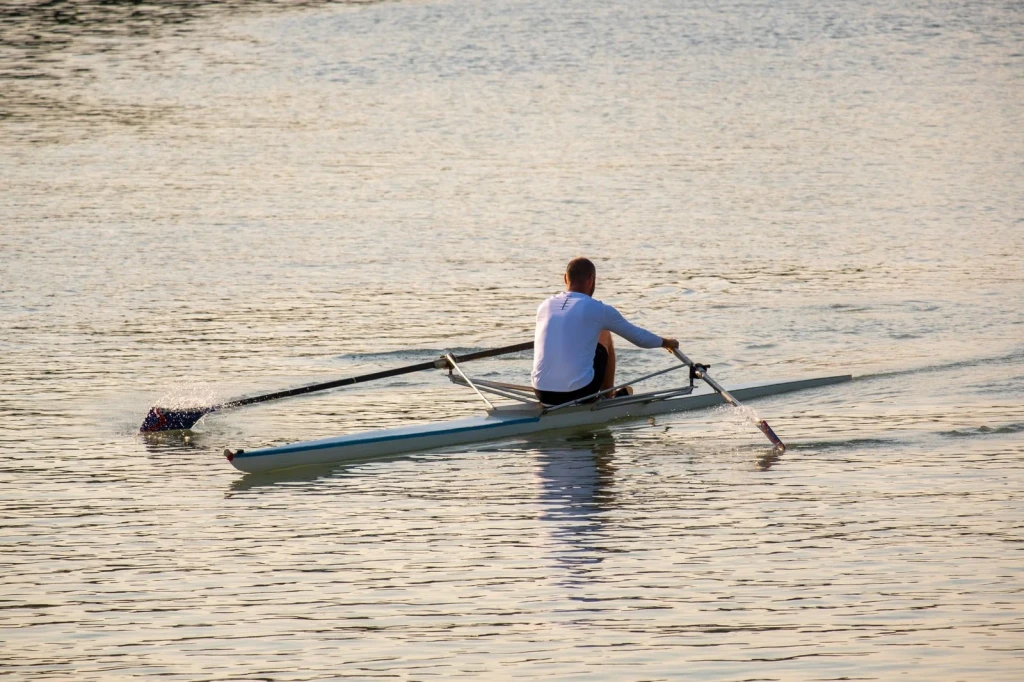
A man rowing a scull on the Danube River in Budapest at sunset, capturing a serene moment of leisure.
Photograph by Barnabas Davoti, via Pexels.
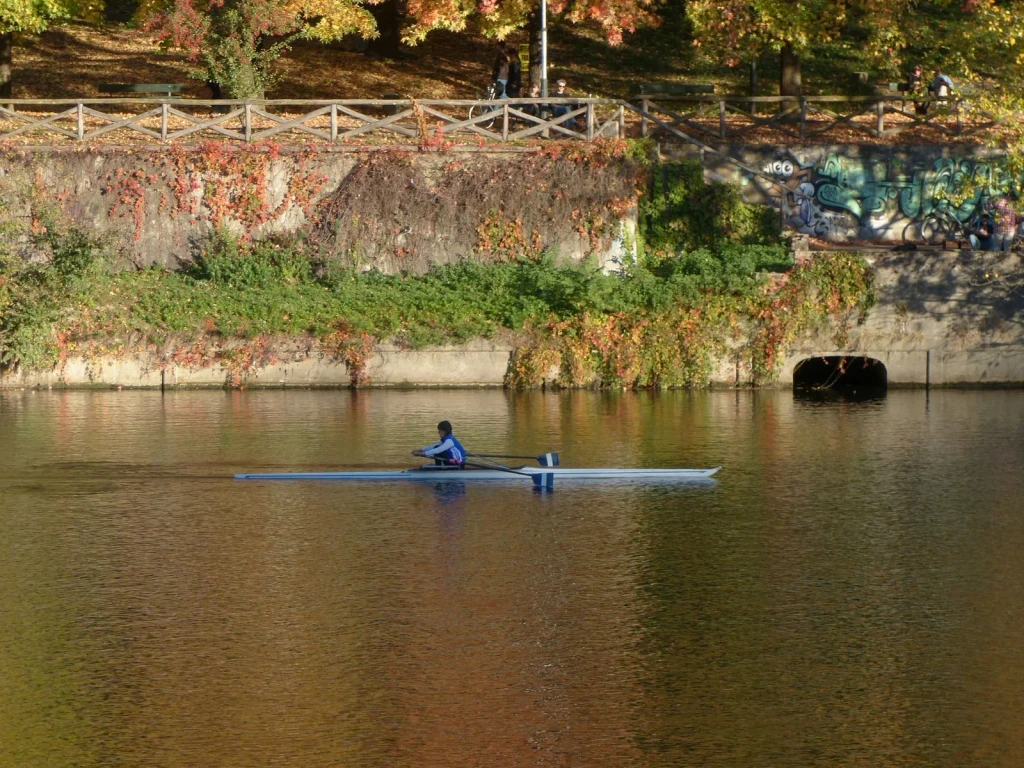
A single sculler propels their boat across a peaceful river. One person, one oar, one of rowing's most fundamental forms.
Photograph by Luca Gastaldo, via Pexels.
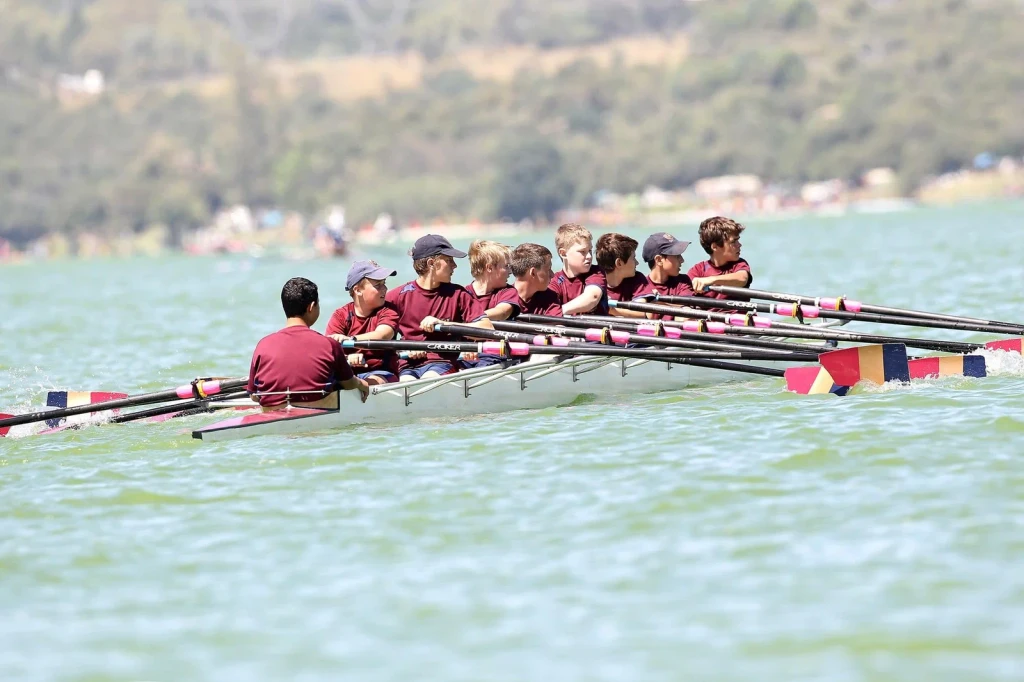
A team rows together on a river, bodies moving as one. Teamwork is the heartbeat of rowing, the coordination that turns individual effort into collective motion.
Photograph by Patrick Case, via Pexels.
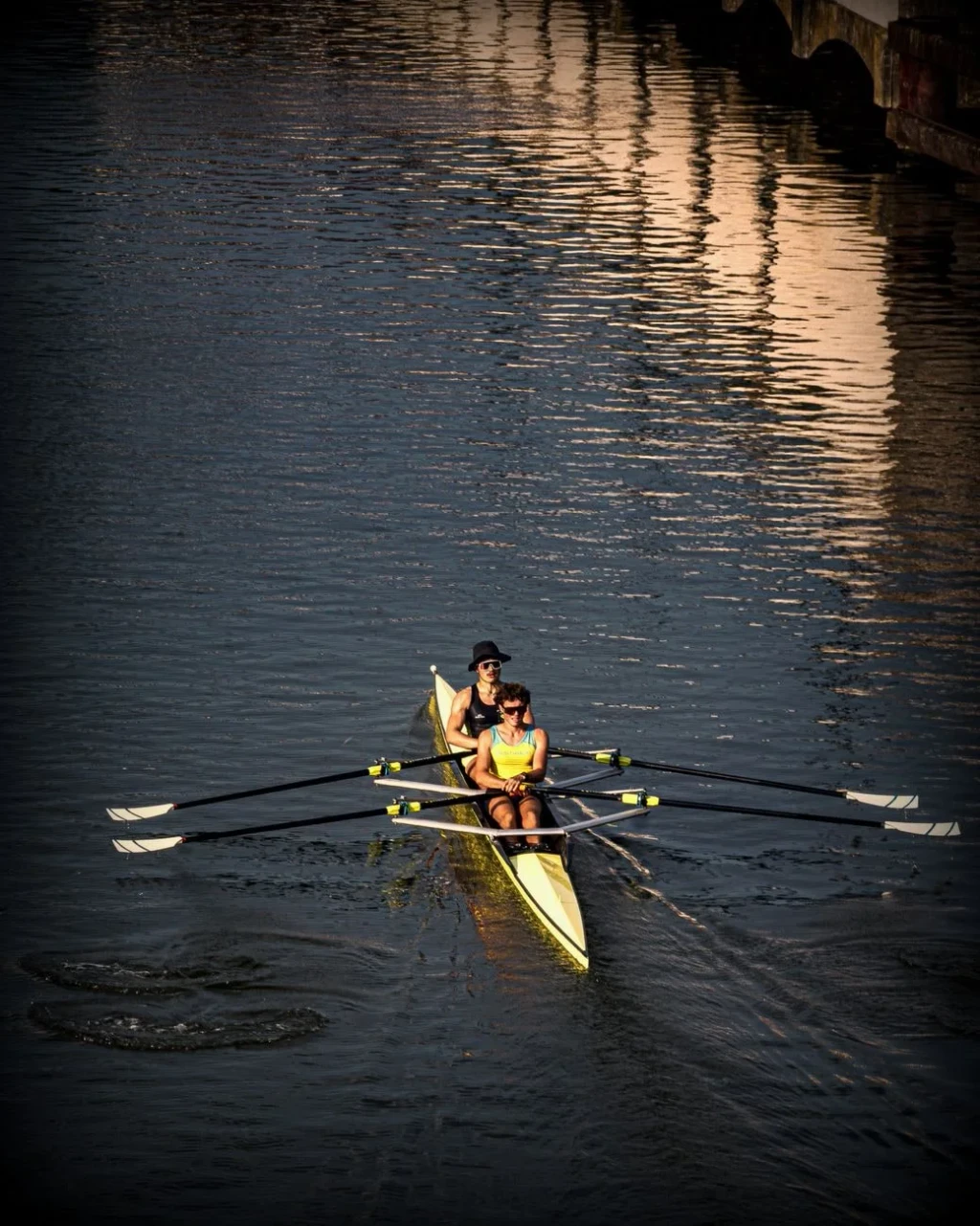
Two rowers pull in tandem beneath a bridge. The photograph captures them from above, framing the rhythm of their shared stroke.
Photograph by Jean Marc Bonnel, via Pexels.
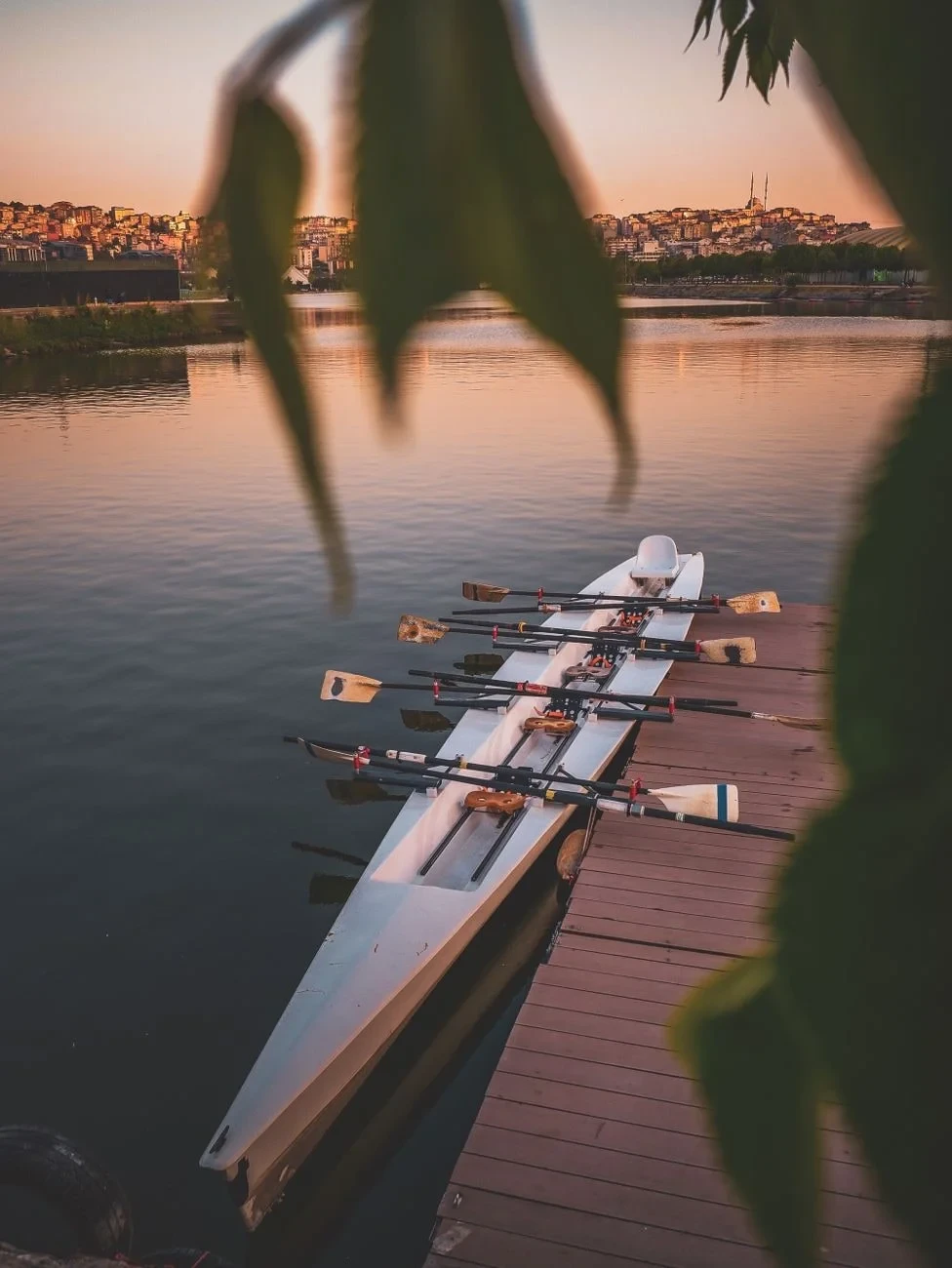
A single rowboat sits moored on calm water. Even idle, the oars and hull speak to rowing's simplicity: a basic design that has moved people for centuries.
Photograph by KÜBRA TOKUR, via Pexels.
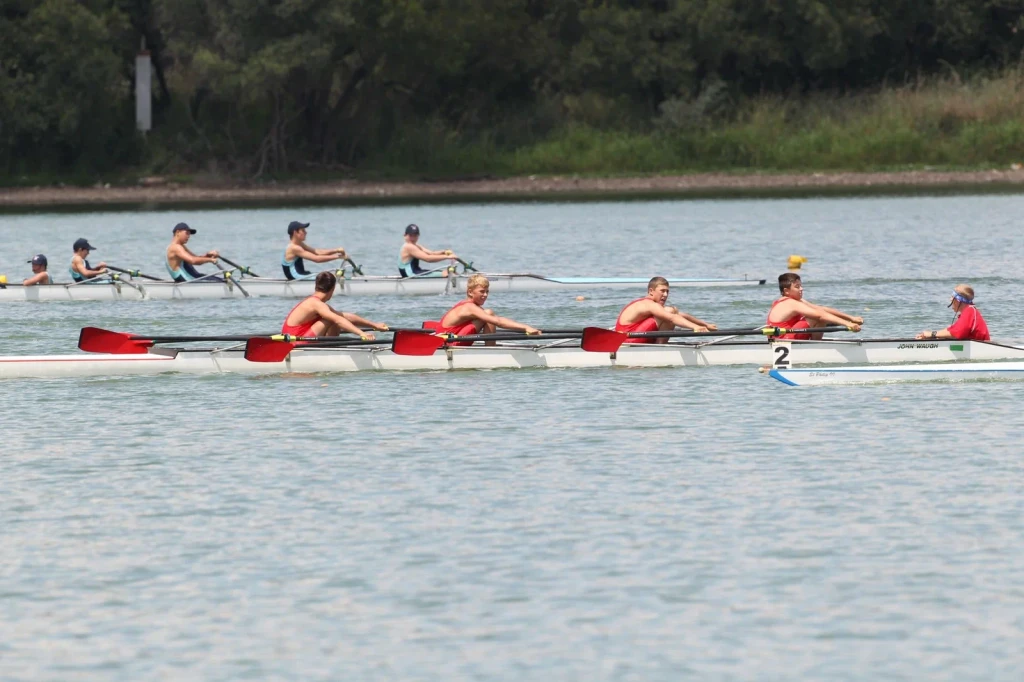
Multiple teams compete in a river race, bodies pulling in unison. Rowing as sport demands precision, power, and the coordinated will of every crew member.
Photograph by Patrick Case, via Pexels.
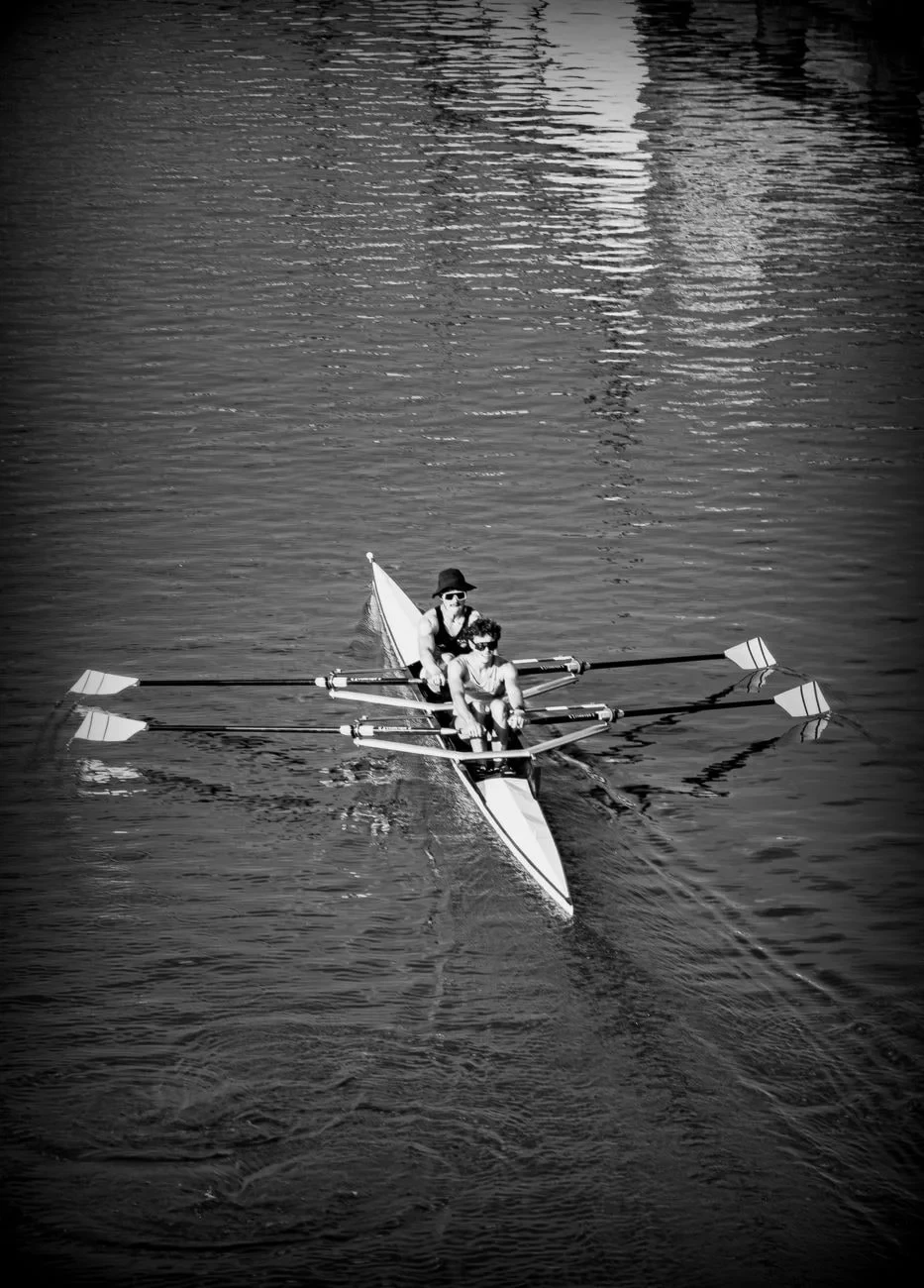
A rowing team moves through still water in black and white. The image distills rowing to its essence: bodies, oars, and synchrony.
Photograph by Jean Marc Bonnel, via Pexels.
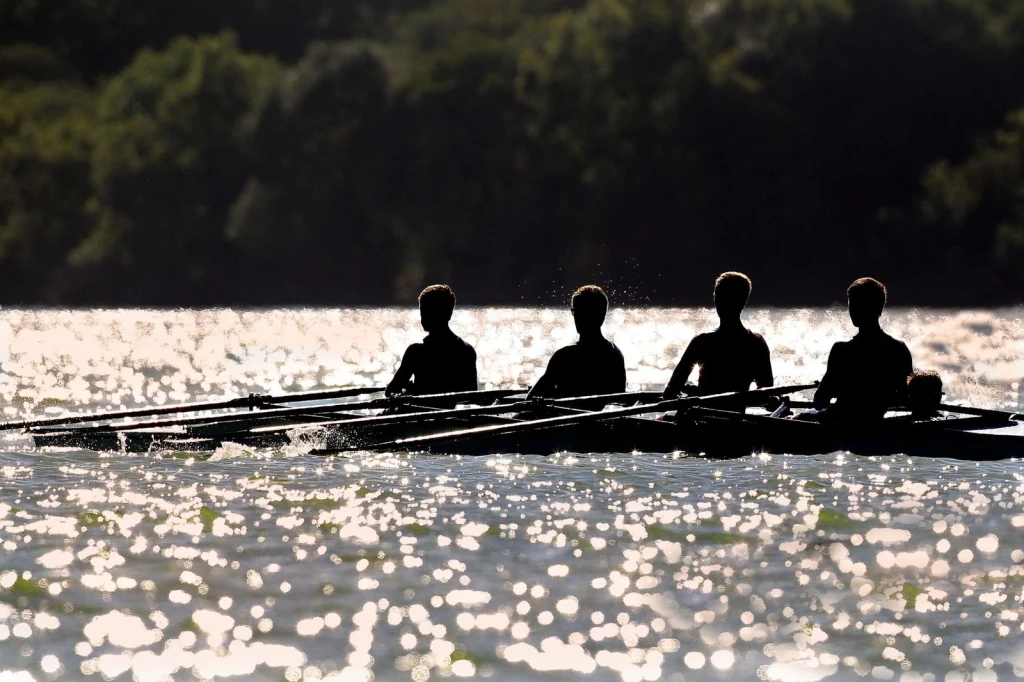
Rowers paddle beneath vibrant light, their forms dark against the water's shine. The contrast captures rowing's rhythm. the body pulling, the lake responding.
Photograph by Patrick Case, via Pexels.
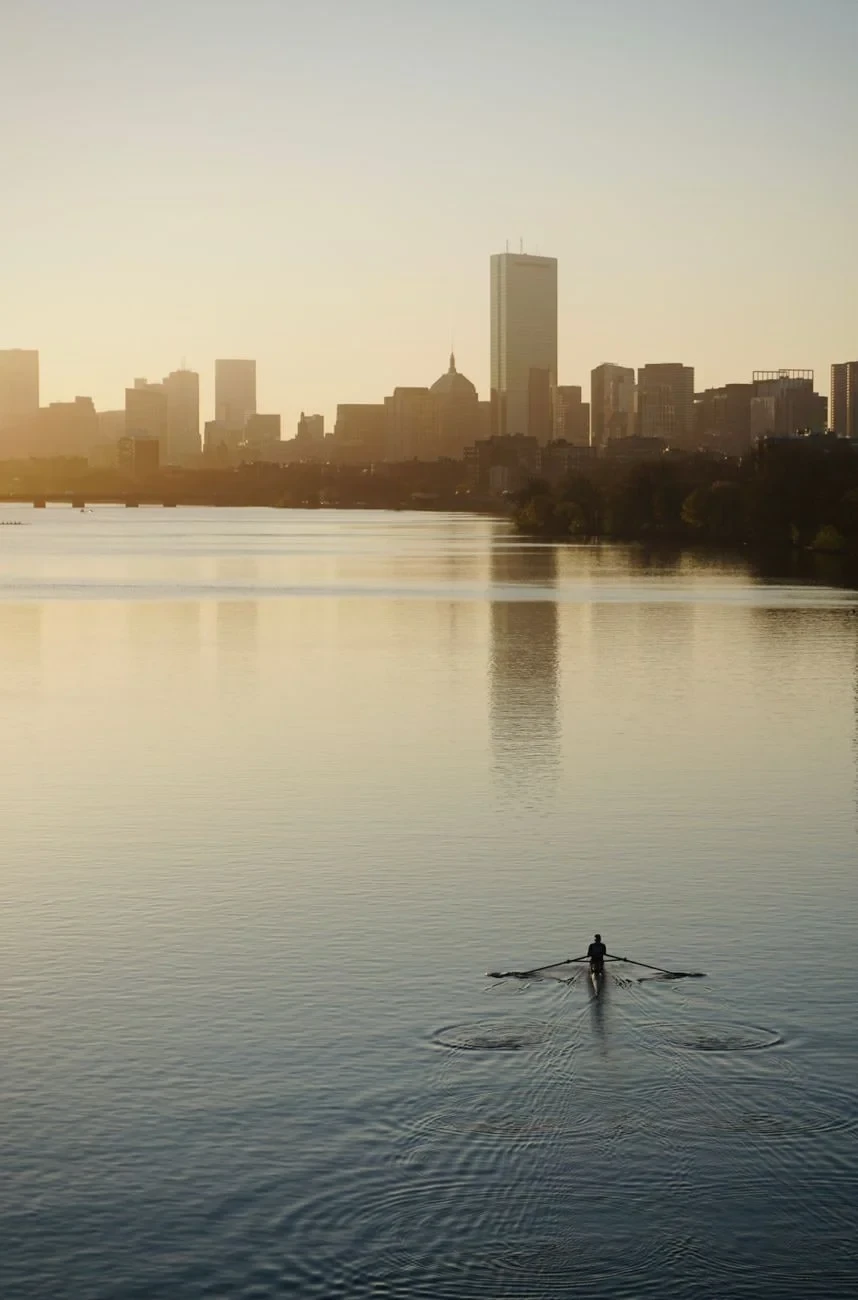
A single rower glides across calm water as a city wakes. The contrast between solitary effort and urban energy defines this moment.
Photograph by Ren Aukeman, via Pexels.
