3D Gallery
The Architecture of Snow
Enter gallery
The Architecture of Snow is a 3D virtual gallery on MyGallery3D, a walkable online exhibition of 14 works. Step inside and explore it in your browser: no app, no headset.
Walk through this 3D virtual gallery of snow in your browser, and begin by giving up the snowflake on the Christmas card.
Fewer than 0.1% of snowflakes show the ideal six-fold symmetry. Most snow particles are irregular. A single flake is roughly 10 quintillion water molecules, added at rates set by every scrap of temperature and humidity it falls through, which is why no two arrive alike. Wilson Bentley photographed his first crystal on January 15, 1885, and went on to capture more than 5,000 of them.
A crystal does not choose its form, the air does. Ukichiro Nakaya charted the rule: freezing air down to minus 3 degrees promotes thin flat plates, colder air down to minus 8 makes hollow columns, prisms or needles, and colder still returns branching plates. A crystal that starts as a column and falls into warmer air sprouts plates at each end, a capped column.
A snowpack fails when the load exceeds the strength. A slab of cohesive snow sits on a weak layer, the weak layer collapses, and fractures propagate so rapidly that thousands of cubic metres can start moving almost at once. Slab avalanches account for around 90% of avalanche deaths. The largest lift a cloud of powder and can exceed 300 km/h.
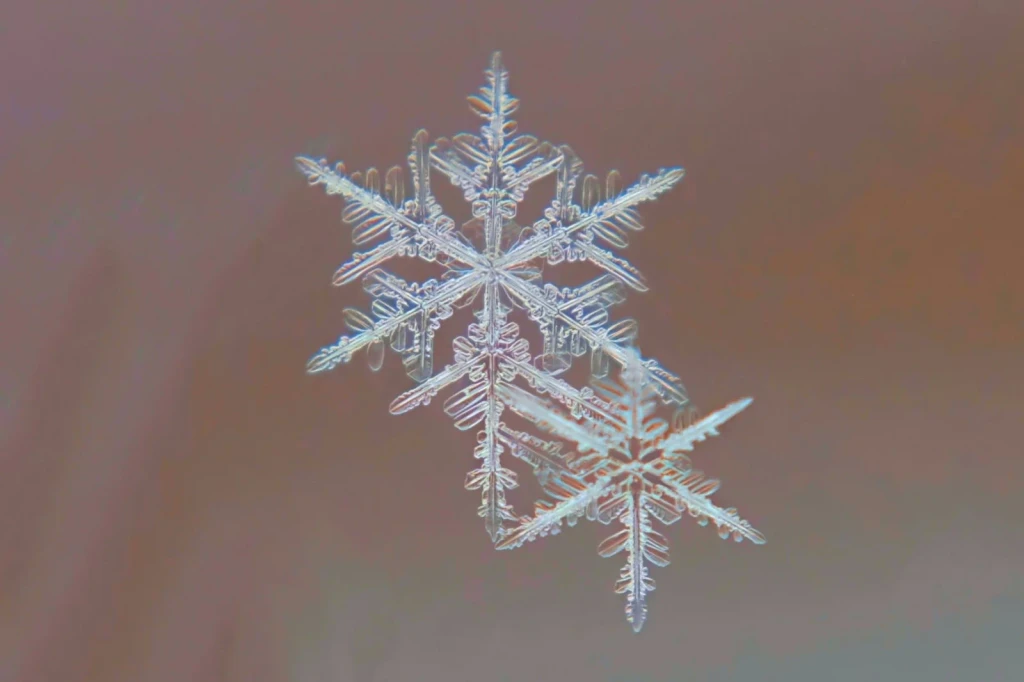
Magnified snowflakes show the delicate complexity of winter beauty. This macro view captures the precision of ice crystal formation.
Photograph by Kristin Morgan, via Pexels.
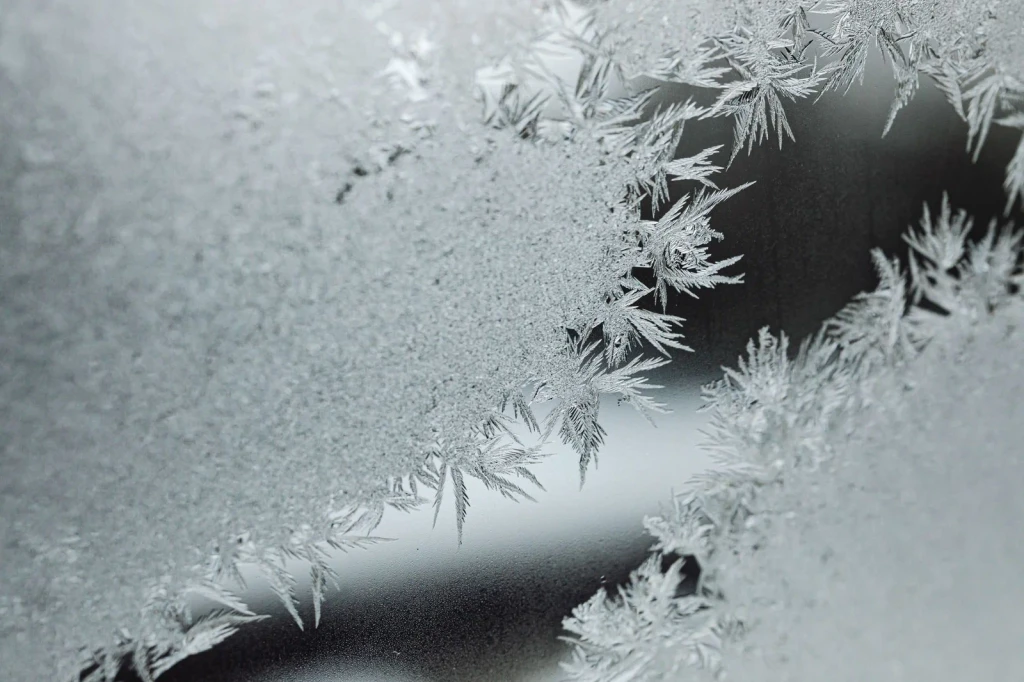
A macro view of snowflakes and frost formations on a surface. The photograph reveals the intricate detail that defines snow's architectural presence at the smallest scale.
Photograph by www.kaboompics.com, via Pexels.
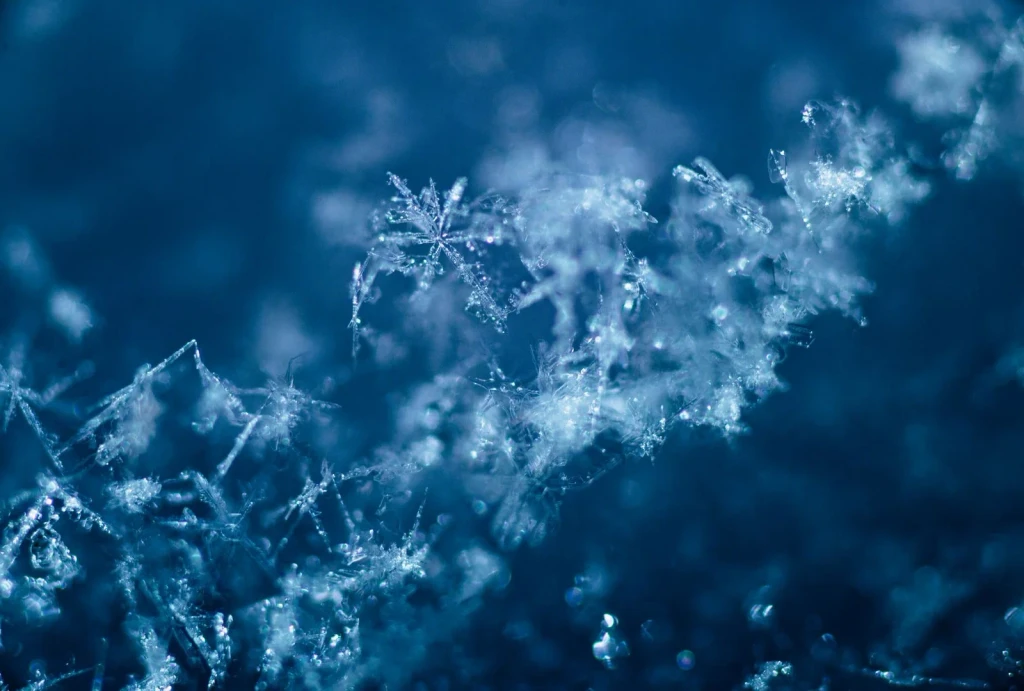
Snowflakes under magnification display intricate designs that repeat across each crystalline structure. Nature builds with mathematical precision.
Photograph by wal_ 172619, via Pexels.

Close examination of snowflake ice crystals in winter. The work reveals the precise geometric structures underlying snow's delicate forms.
Photograph by Valdemaras D., via Pexels.
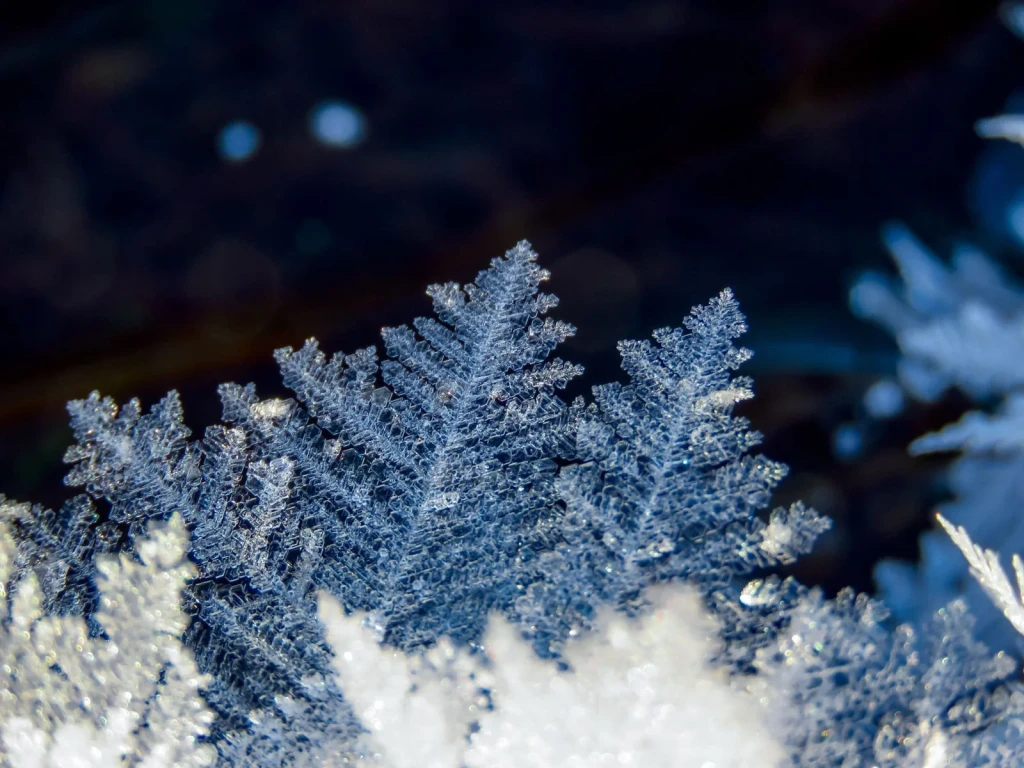
A single snowflake becomes a detailed structure, revealing the architectural language of winter crystal formations in miniature.
Photograph by sergeispas, via Pexels.
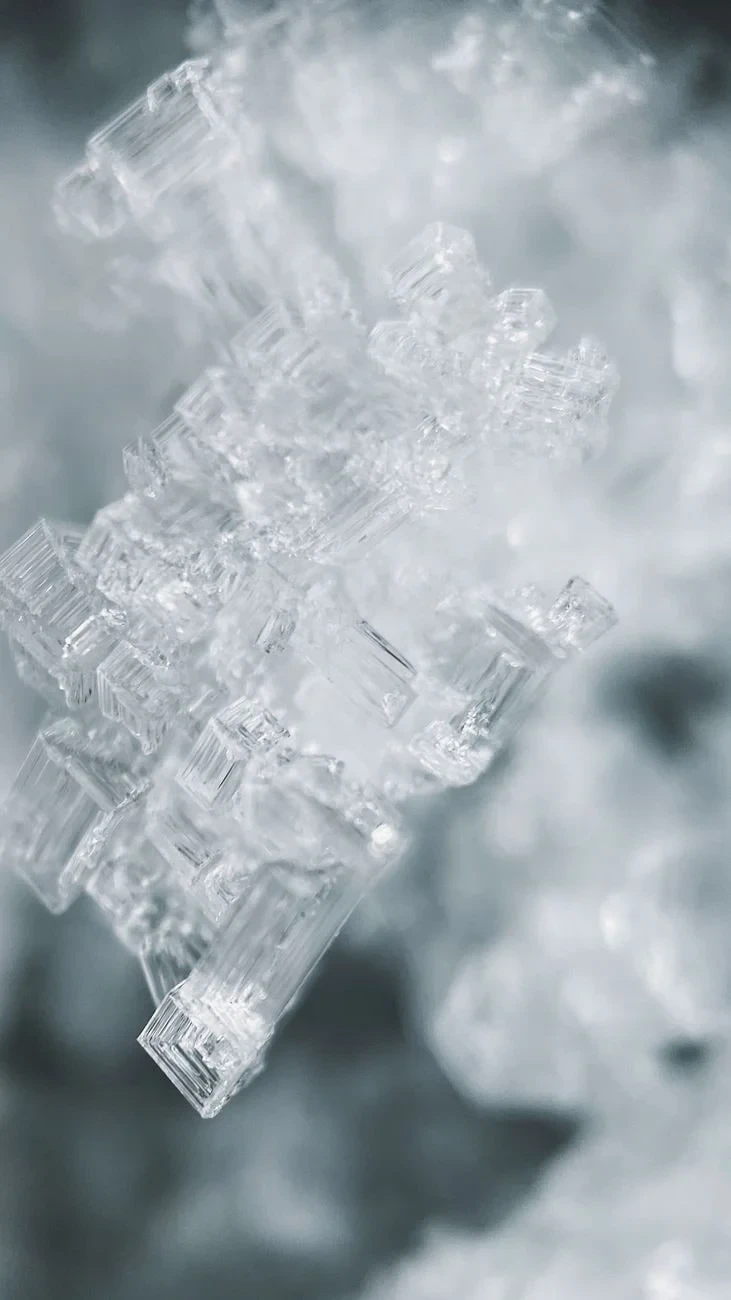
Frost crystals catch the light in sharp focus. Ice builds geometric beauty through a process both random and precise.
Photograph by Nadezhda Moryak, via Pexels.
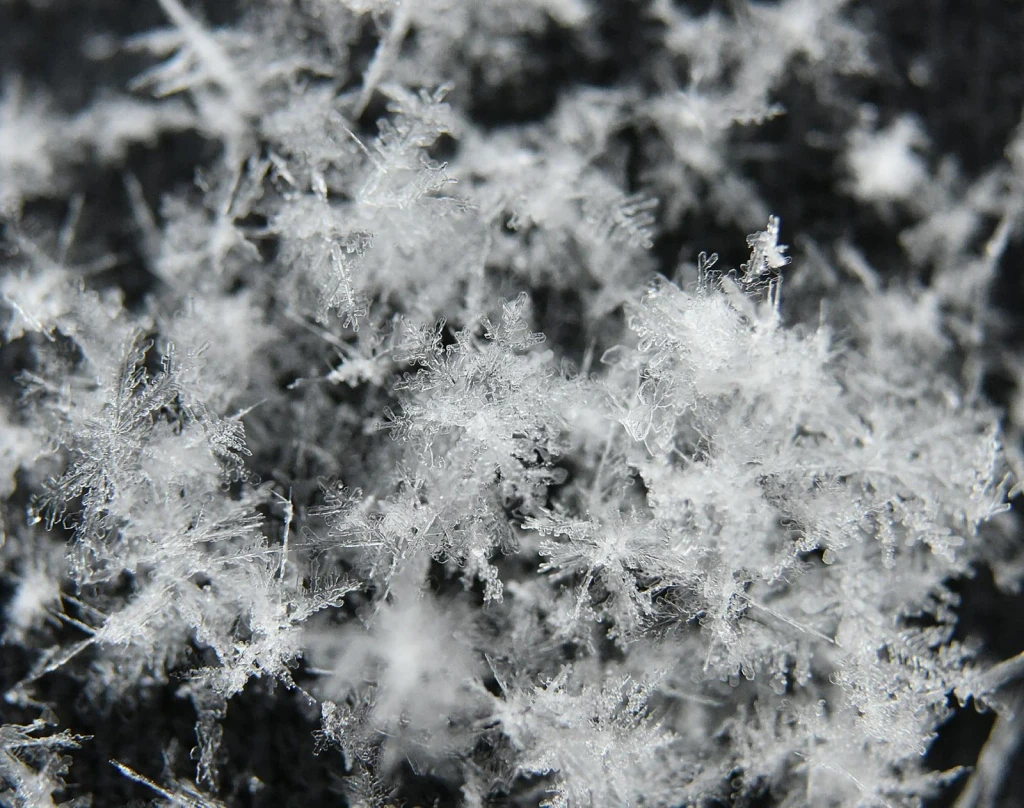
Snowflakes appear magnified, each with distinct patterns and textures. Macro vision transforms the familiar into the remarkable.
Photograph by Jay Brand, via Pexels.
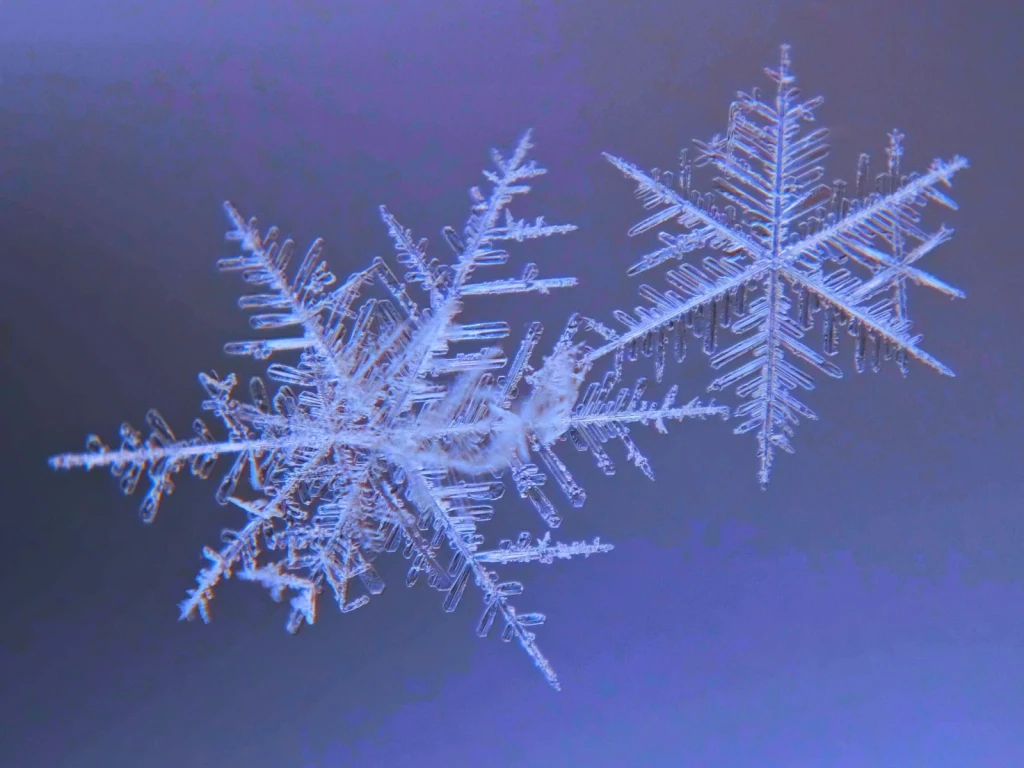
Magnified snowflake crystals display remarkable geometric symmetry. This close view shows how mathematics shapes each frozen formation.
Photograph by Kristin Morgan, via Pexels.
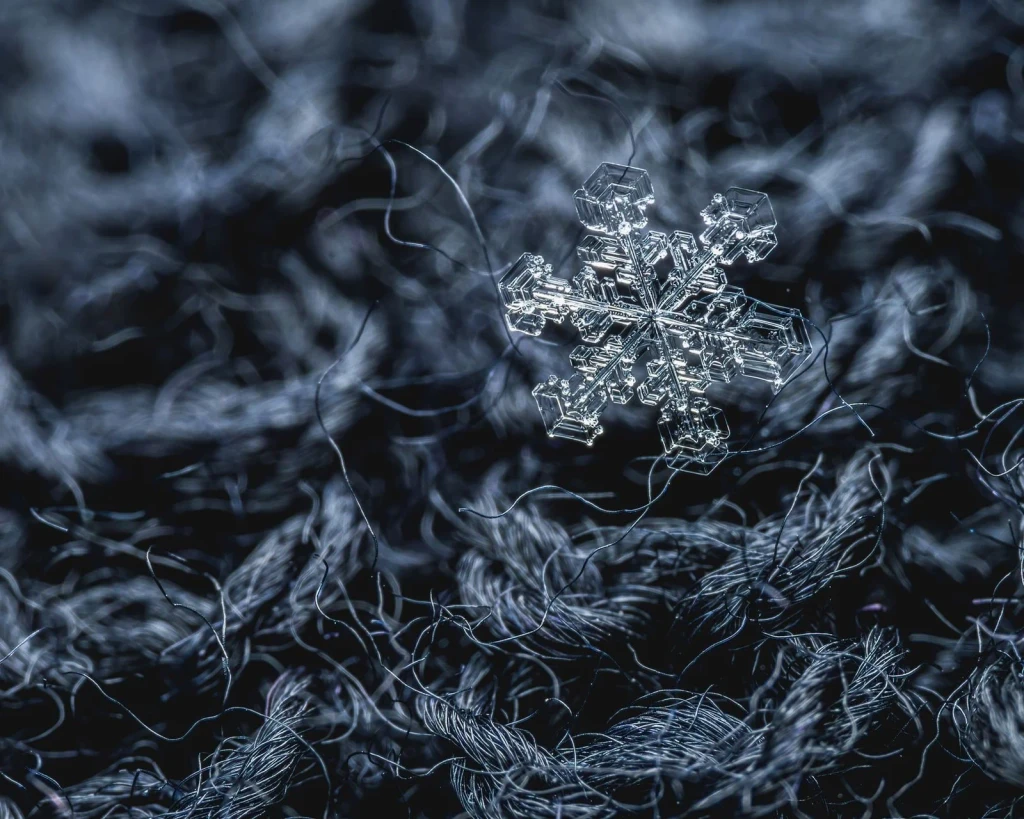
A snowflake sits against dark wool threads. The image captures an accidental encounter between winter's delicate form and everyday texture.
Photograph by Skyler Ewing, via Pexels.
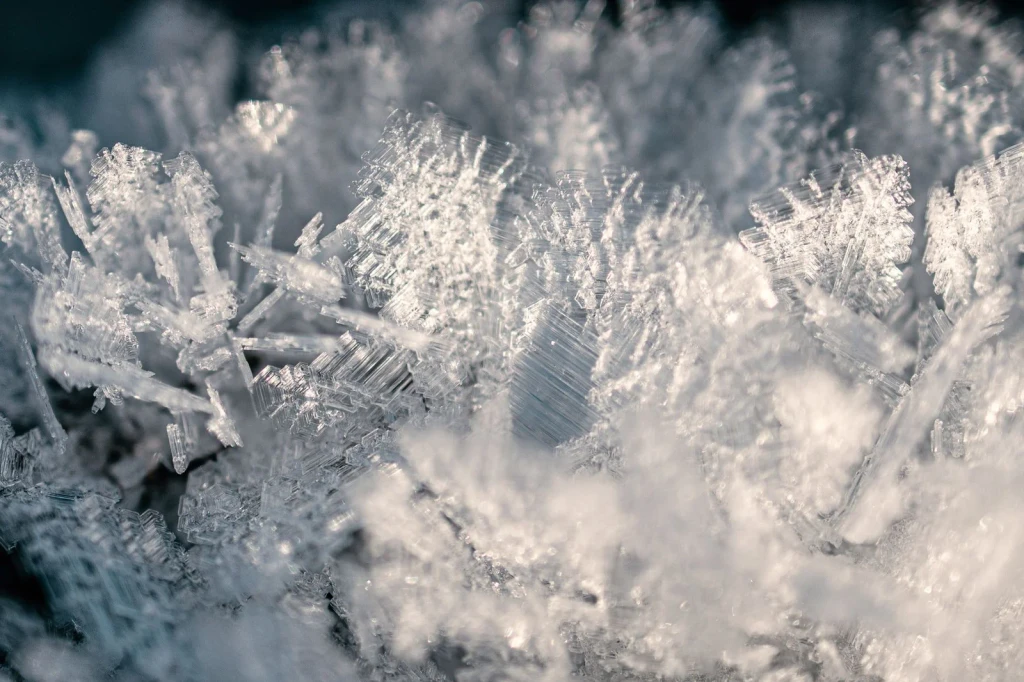
Ice crystals settle on a leaf's surface, creating icy patterns of unexpected beauty. Winter leaves its mark in fine detail.
Photograph by Choice, via Pexels.
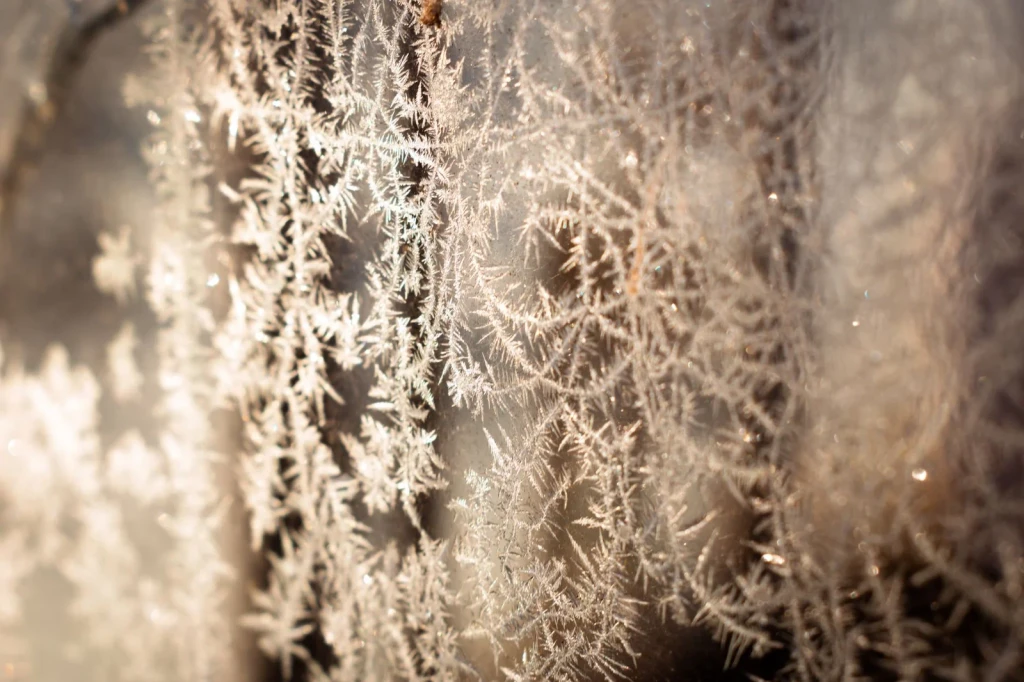
Ice crystals form delicate patterns across glass. Where water and cold meet a transparent surface, nature drafts intricate geometries.
Photograph by Nikolett Emmert, via Pexels.
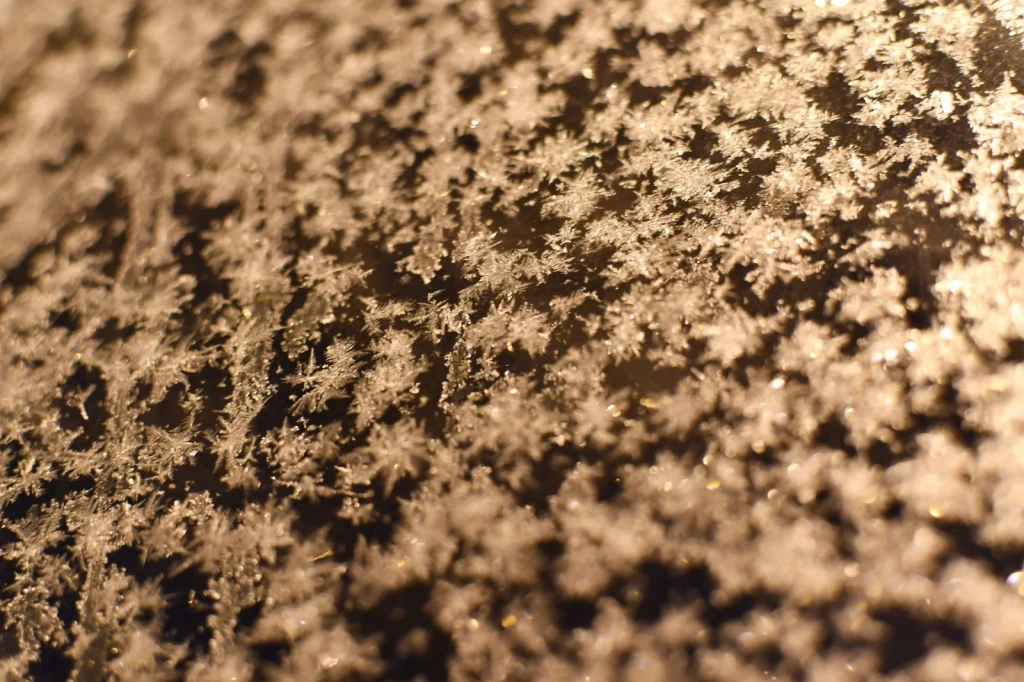
Multiple snowflakes cluster together in close view. Their intricate individual designs become visible only when examined in detail.
Photograph by Darya Grey_Owl, via Pexels.
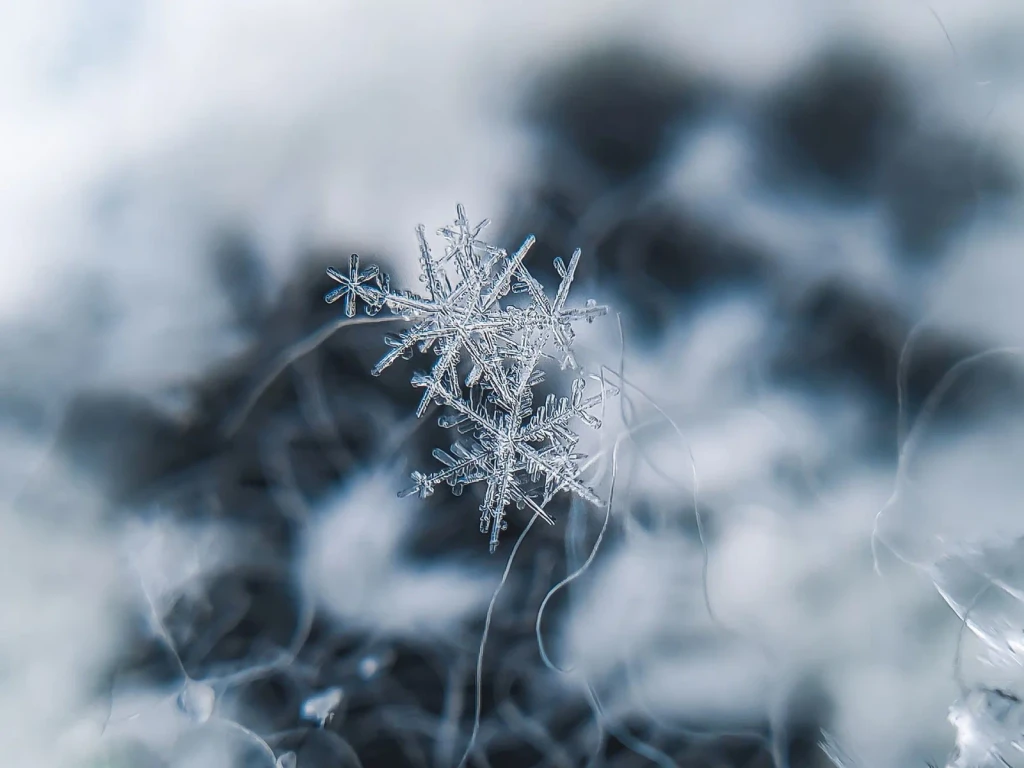
A close-up reveals the intricate geometry within individual snowflakes. Each ice crystal displays nature's own architectural blueprint, formed in the frosty air.
Photograph by Yulia Ilina, via Pexels.
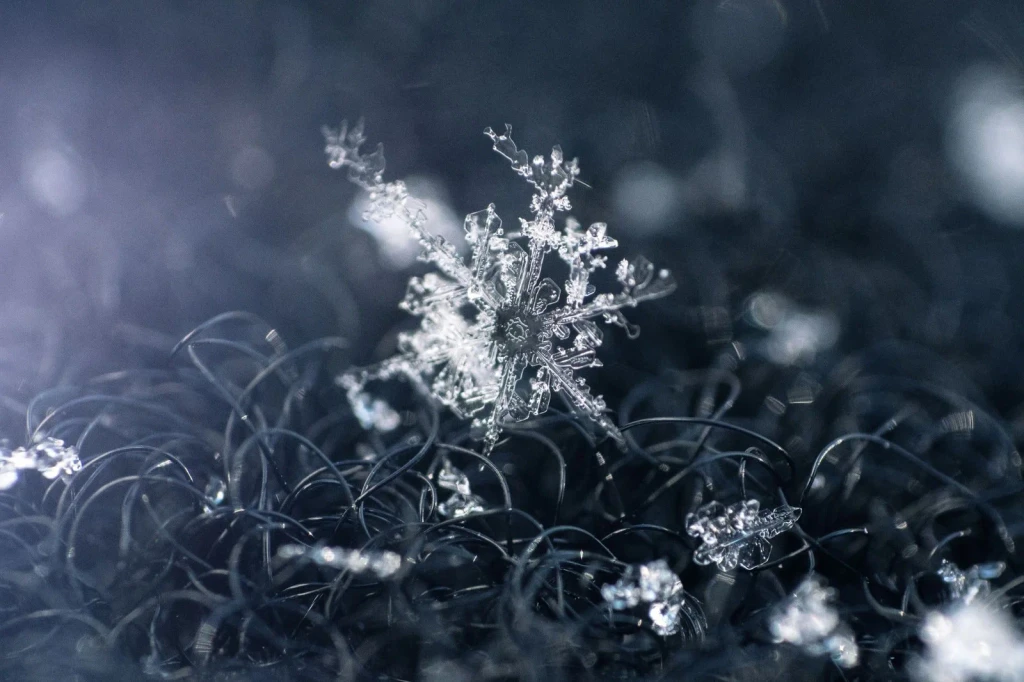
A single snowflake rests on a dark ground. Macro photography reveals the crystalline structure at the heart of snow, one geometric form at a time.
Photograph by Grigoriy, via Pexels.
