3D Gallery
The Small Coin That Ran an Empire
Enter gallery
The Small Coin That Ran an Empire is a 3D virtual gallery on MyGallery3D, a walkable online exhibition of 15 works. Step inside and explore it in your browser: no app, no headset.
Step into this 3D virtual museum of coins, walk it in your browser, and stop at the denarius.
Rome introduced it around 211 BC: 4.5 grams of silver, worth ten asses, which is what its name means. It paid a legionary and it bought a labourer's day. Then it was quietly hollowed out. The silver was above 90% in the first century AD, under 60% by 200 AD and 5% by 300 AD. The name never changed. The metal did.
The earliest coins come from Iron Age Anatolia, struck in electrum for Alyattes of Lydia. Electrum is a natural alloy of gold and silver, usually about 40 to 55% gold, and the proportion varies. A stamped lion declared what the lump contained, but nobody could be sure. That unpredictability hampered its use. Croesus solved it around 550 BC with the first standardized gold coins.
The denarius outlived Rome as a word. Its name became the dinar, used from pre-Islamic times and still current in several modern Arab nations and in Serbia, and the Macedonian denar. It hides inside denaro, dinero and dinheiro, and in the French denier. Britain abbreviated its penny as d, from denarius, until 1971. A coin struck for legionaries still does quiet work in the vocabulary of money.
Under the Republic a legionary earned 112.5 denarii a year. Julius Caesar doubled it to 225, though soldiers then paid for their own food and arms. A centurion under Augustus took at least 3,750. In the gospels the denarius is simply a day's wage for a labourer, and it is the coin held up in the Render unto Caesar passage, commonly thought to carry the head of Tiberius.
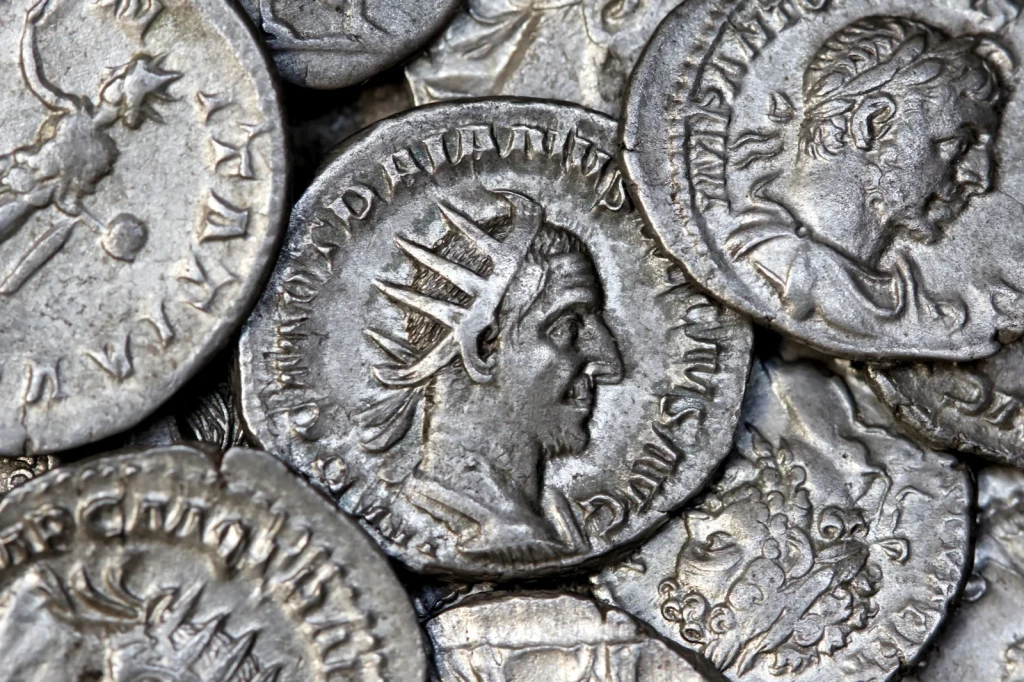
Ancient Roman coins in close-up, their engravings still legible after centuries. These small pieces of metal carried an empire's authority across vast distances.
Photograph by Thomas K., via Pexels.
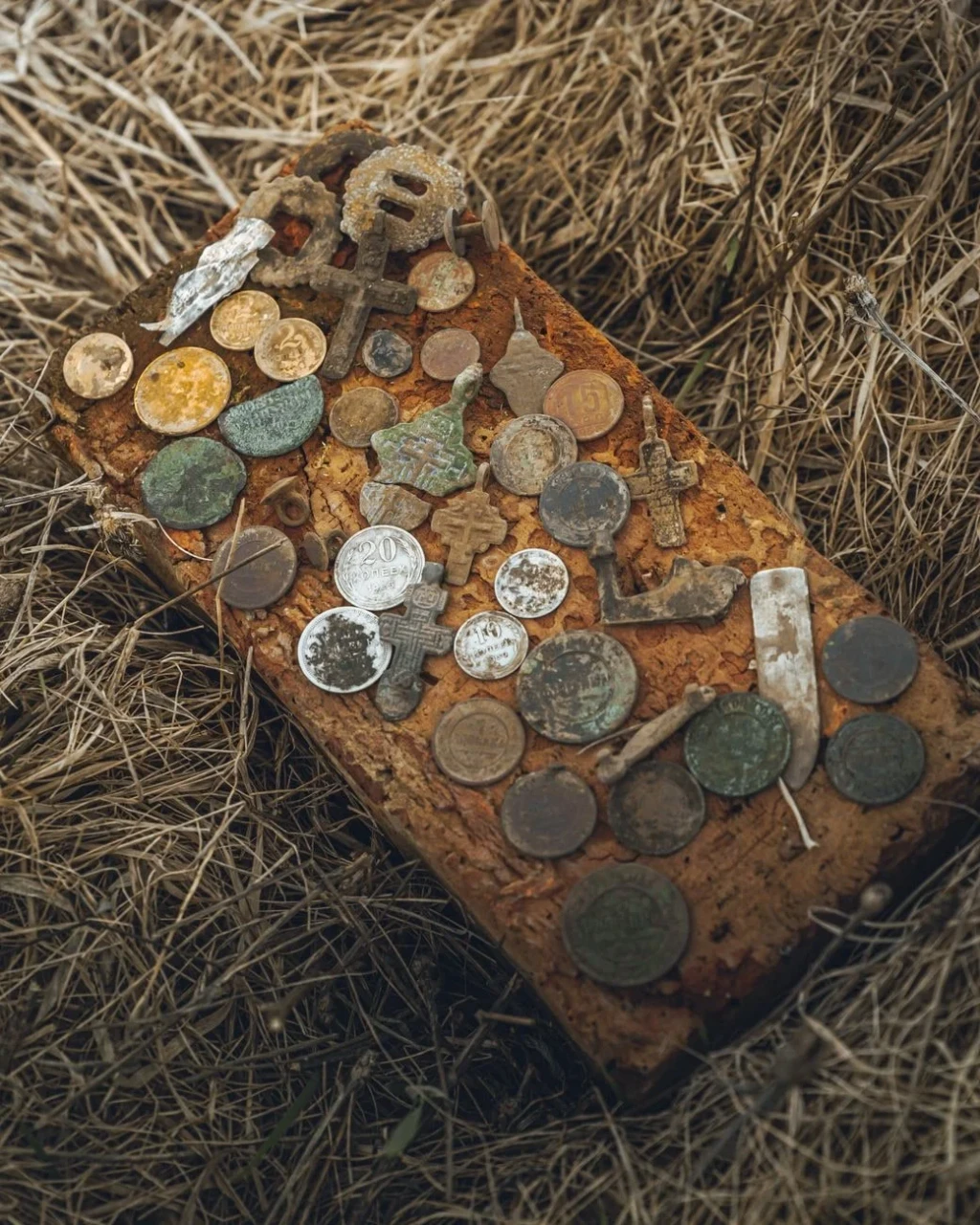
Old coins and artifacts lie amid rust and straw. Time has claimed these objects, yet their purpose endures.
Photograph by Alexey Chunihin, via Pexels.
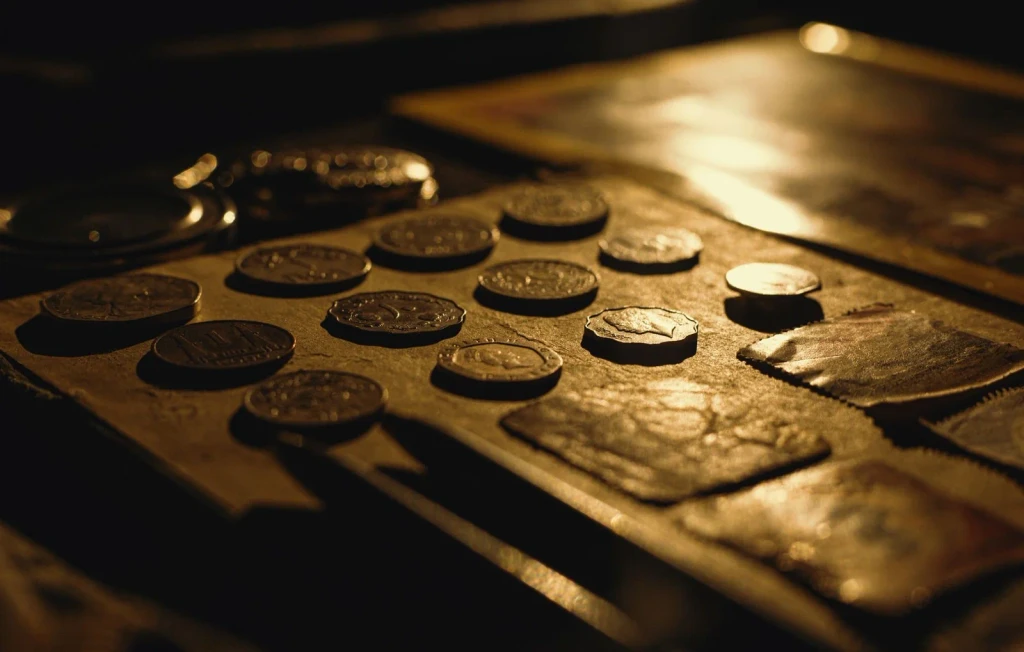
Antique coins under dramatic lighting reveal surface and shadow. The light shows us what time has done to these small objects.
Photograph by Bakr Magrabi, via Pexels.
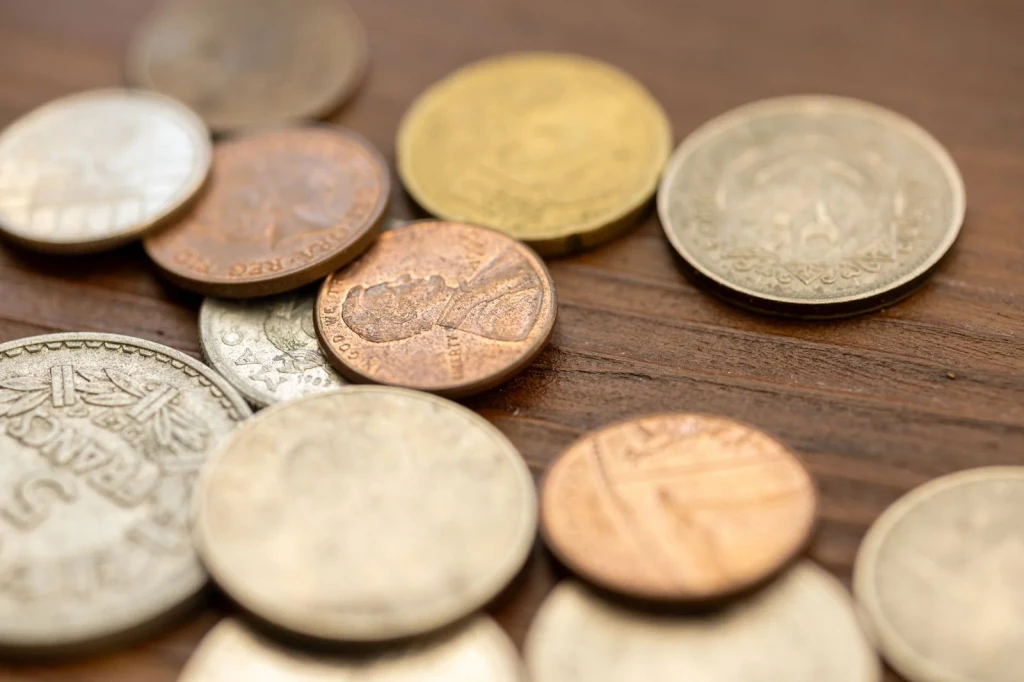
Vintage coins rest on wood, each one marked by time and handling. The engravings tell stories we can only partially read now.
Photograph by Tolga deniz Aran, via Pexels.
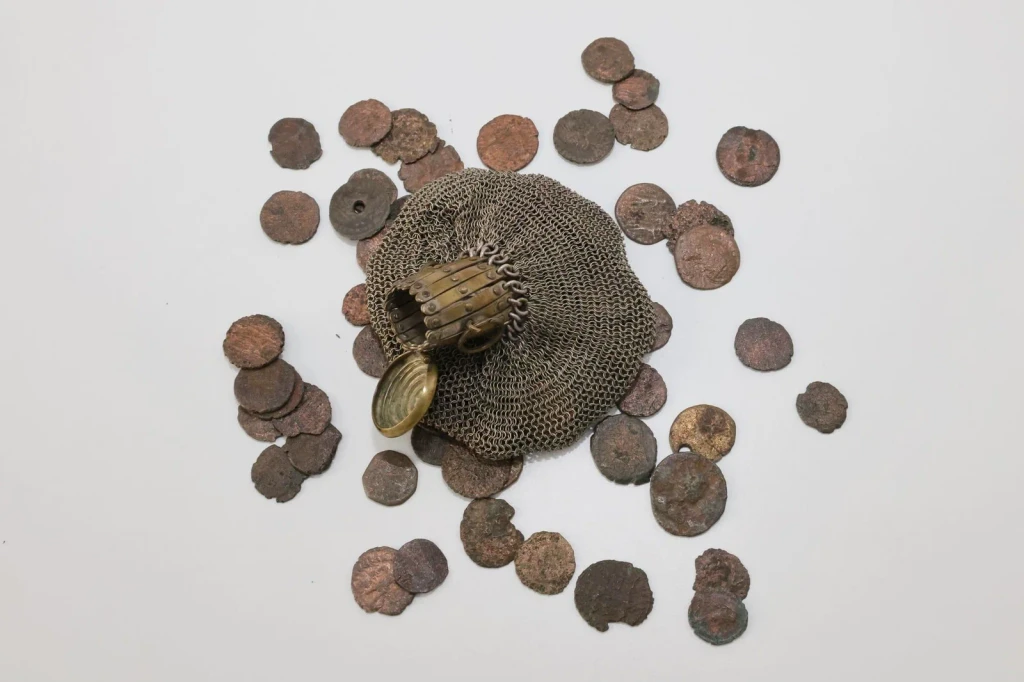
Coins and chainmail rest together on white. Metal artifacts speak to both commerce and conflict, the dual forces that sustained imperial power.
Photograph by Tahir Xəlfəquliyev, via Pexels.
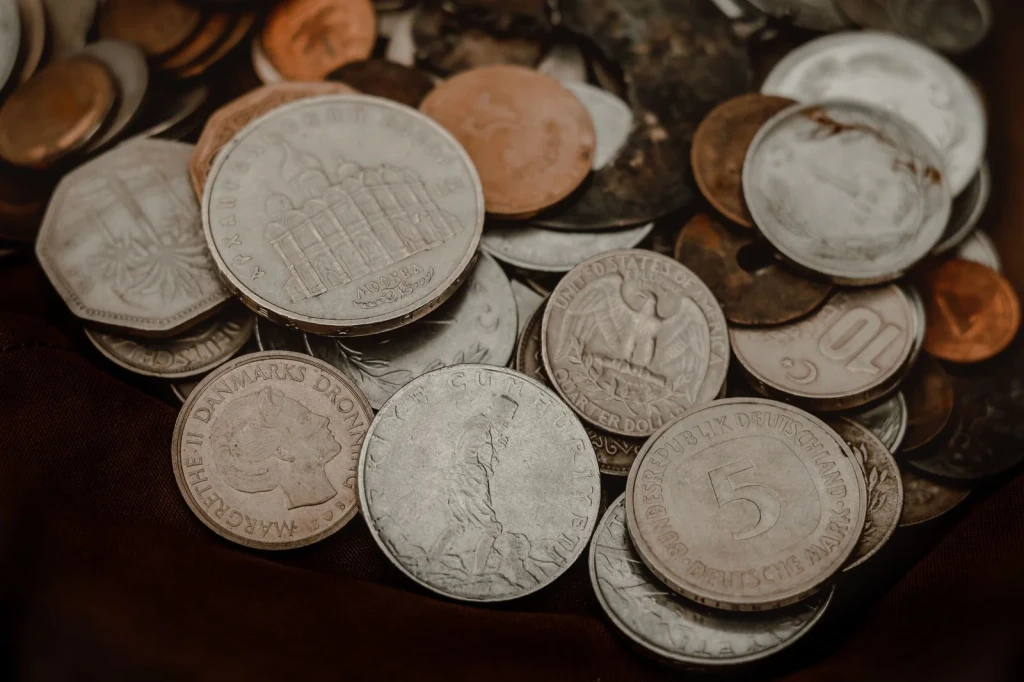
A collection of vintage coins reflects how different cultures shaped their wealth. Each piece a fragment of empire.
Photograph by kevser, via Pexels.
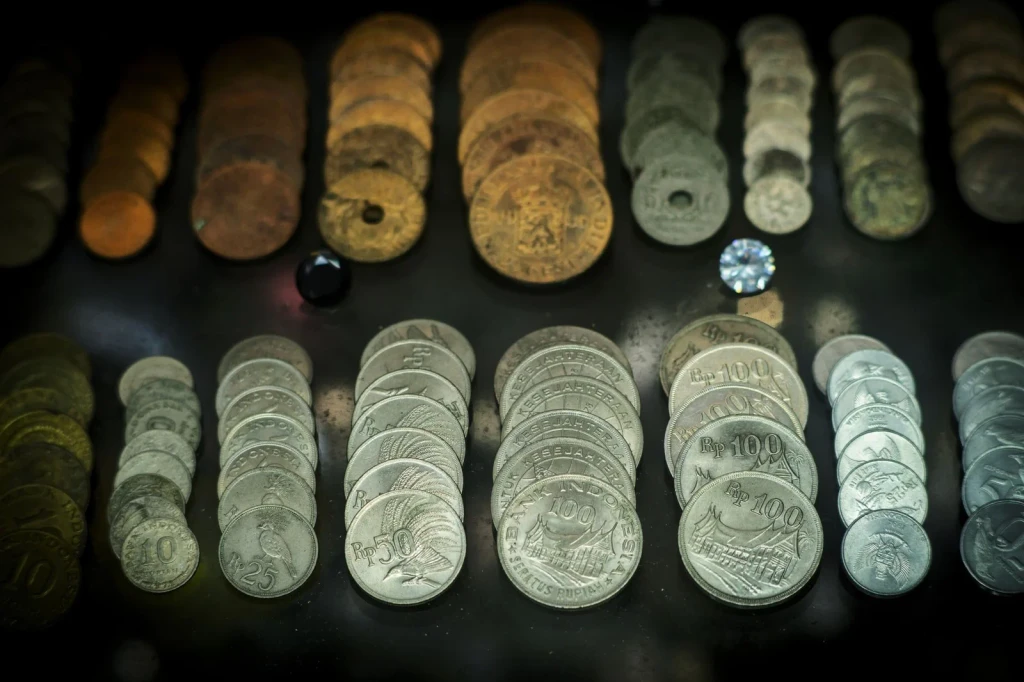
A diverse array of antique coins displayed together. This collection spans regions and eras, all gathered in one place.
Photograph by Andaru Firmansyah, via Pexels.
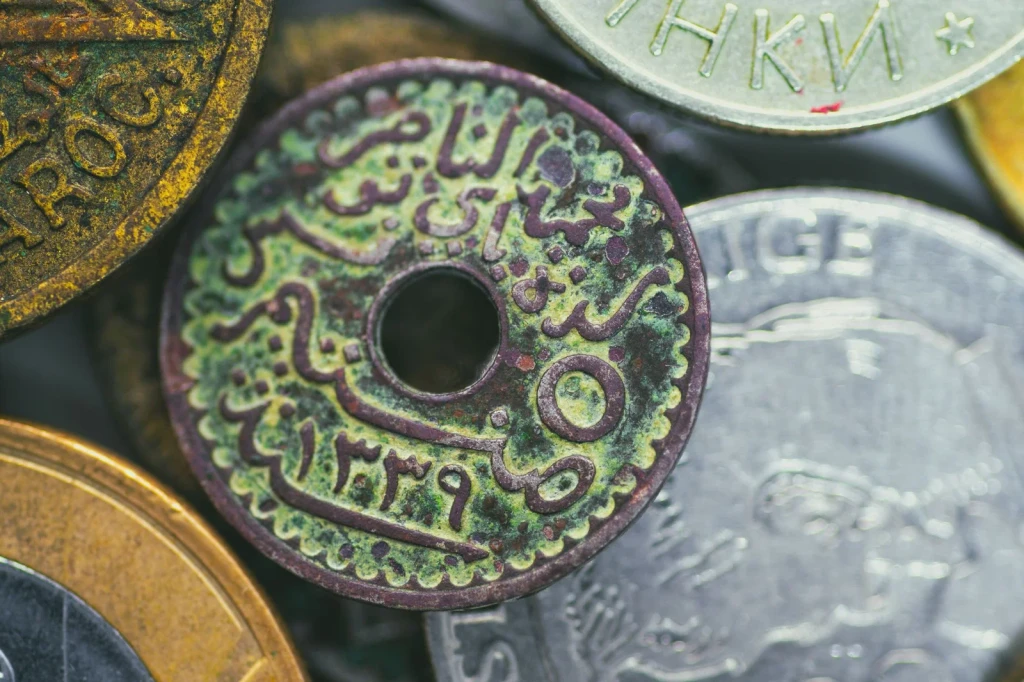
An antique Tunisian coin rendered in macro detail reveals Arabic script and intricate work. Small denominations that carried empires' messages.
Photograph by Mahmoud Yahyaoui, via Pexels.
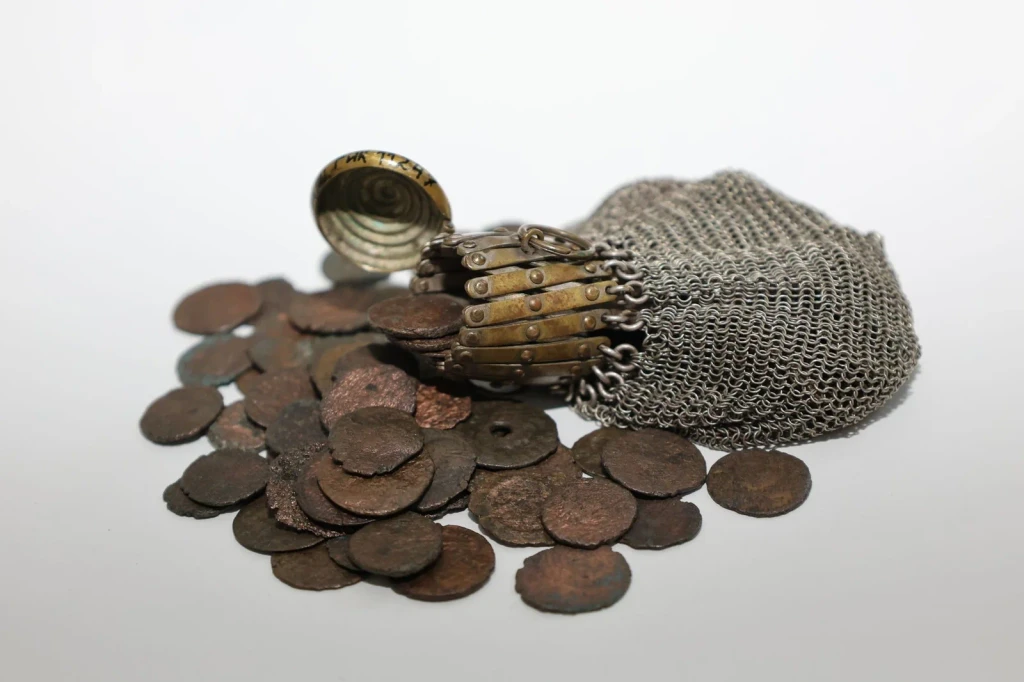
A metal pouch spills ancient coins across white. The rupture suggests wealth in motion, fortunes that moved empires.
Photograph by Tahir Xəlfəquliyev, via Pexels.
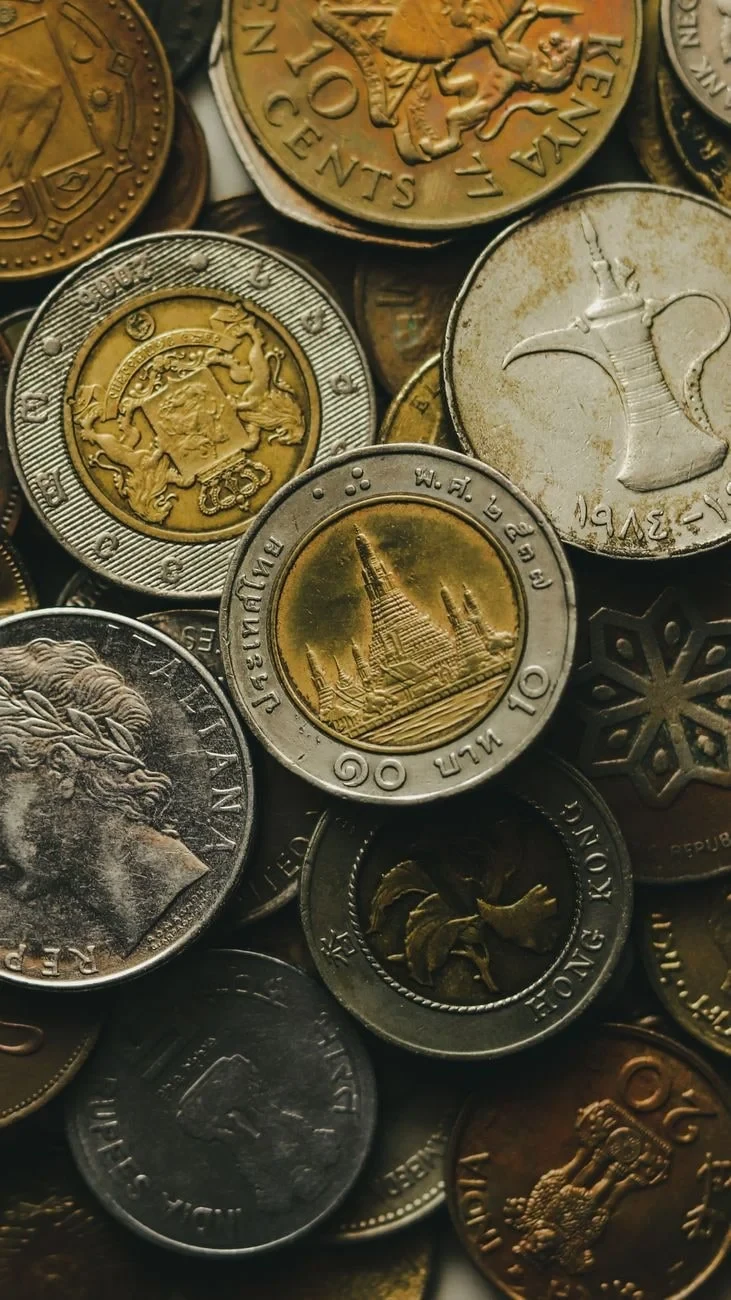
Golden and silver coins lie side by side. Different origins, different values, all reduced to their material weight in this moment.
Photograph by Pratikxox, via Pexels.
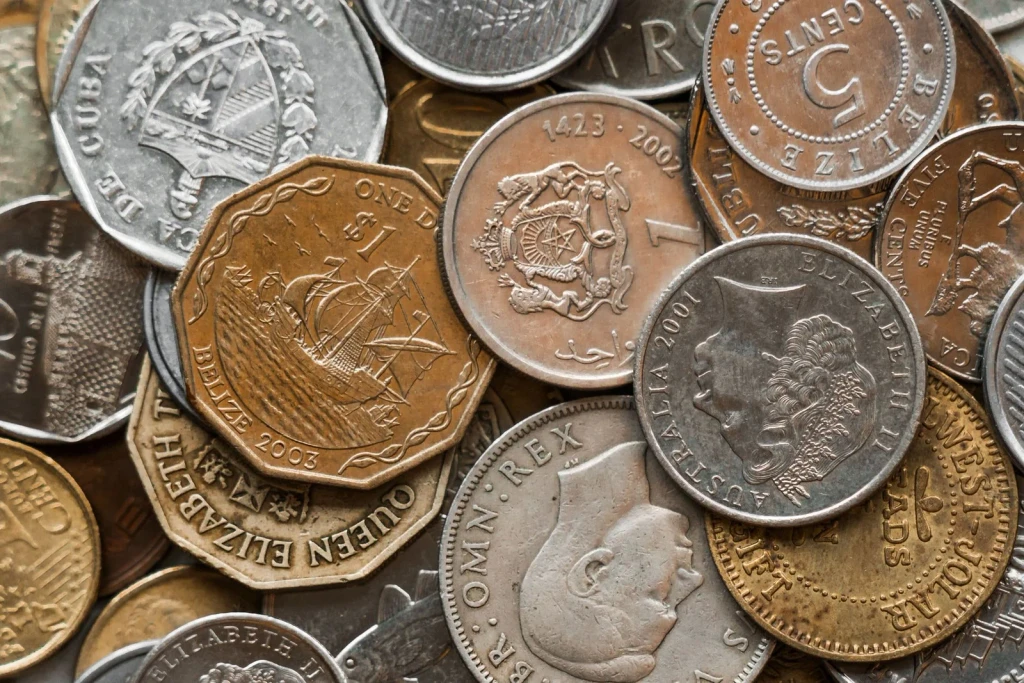
International coins gathered in high resolution reveal the diversity of human currency. Each symbol tells a story of the hands that held it.
Photograph by Burst, via Pexels.
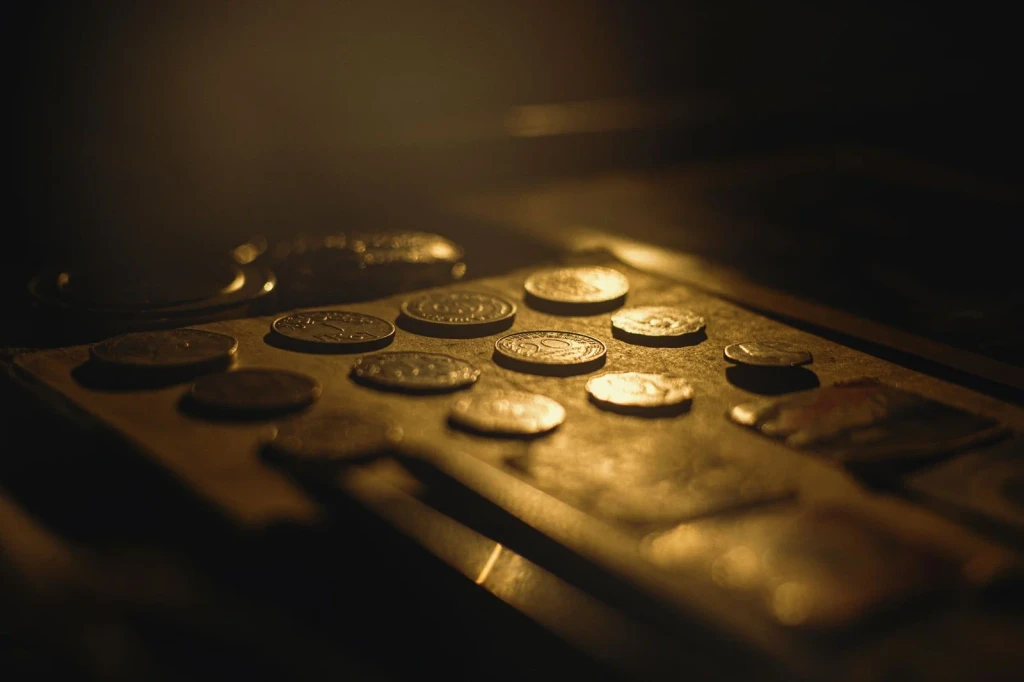
Vintage coins emerge from shadow in shallow focus. A technique that isolates the object from time itself, asking what we notice when everything else falls away.
Photograph by Bakr Magrabi, via Pexels.
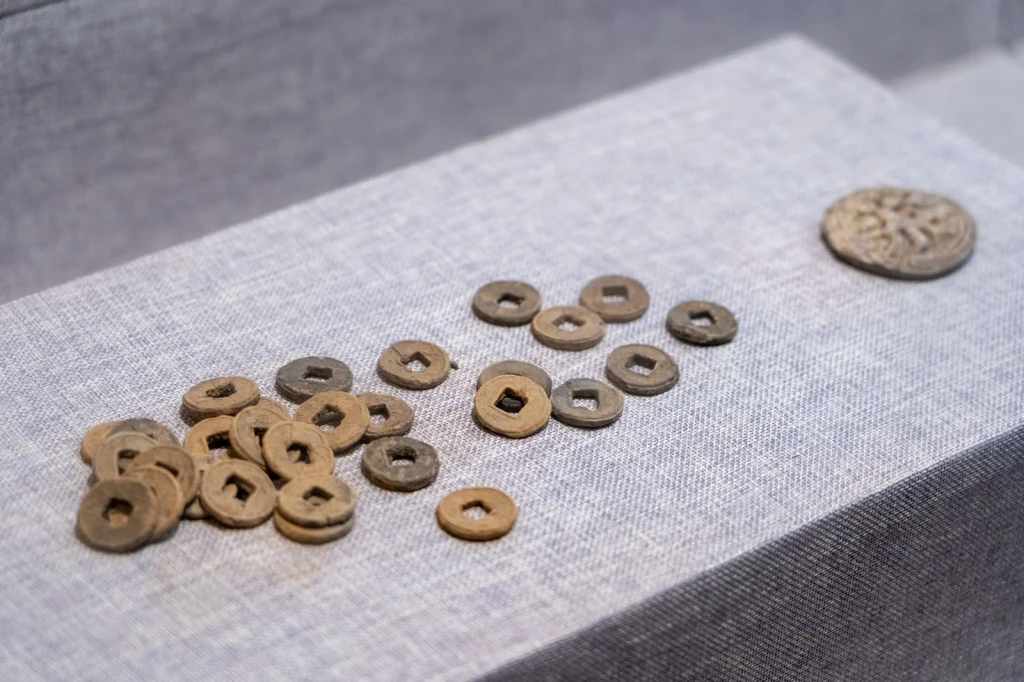
Chinese coins arranged on fabric. Historic currency organized and displayed, asking how empires standardized value across vast distances.
Photograph by Peter Xie, via Pexels.
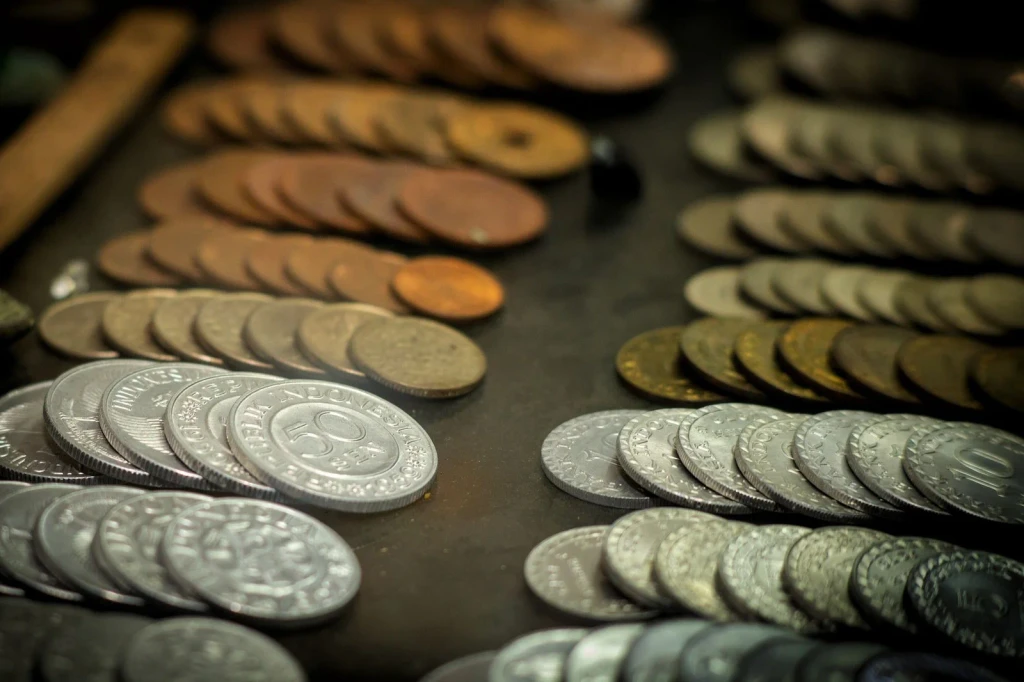
Vintage coins from Indonesia, displayed by denomination and material. Small objects that carried real weight in everyday life.
Photograph by Andaru Firmansyah, via Pexels.
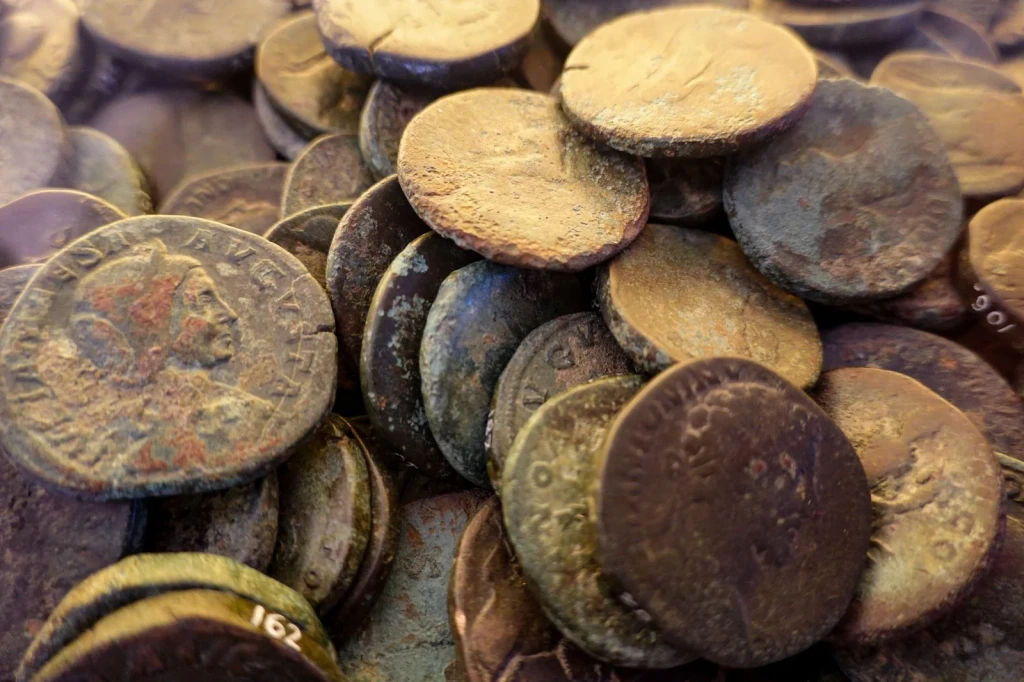
Ancient Roman coins worn smooth by age and use. Their patinas show what survived. The texture is what remains of official power.
Photograph by Magda Ehlers, via Pexels.
