3D Gallery
Where Pigments Come From
Enter gallery
Where Pigments Come From is a 3D virtual gallery on MyGallery3D, a walkable online exhibition of 16 works. Step inside and explore it in your browser: no app, no headset.
Walk through this 3D virtual gallery of pigments in your browser and treat each colour as a material, not an effect. Before the 19th century, every colour on a canvas was a substance somebody had to dig up, grind, cook or import.
Vermilion is the sharpest case: powdered cinnabar, an ore of mercury. Rome's supply came from the Almaden mine in Spain, worked by prisoners, where a term was a near-guaranteed death sentence. Pliny the Elder records some ten thousand librae sent to Rome each year under seal, at a price fixed by law.
Ochre is iron oxide in clay, and it is the oldest colour we have. Evidence for processing red ochre in Africa dates to around 300,000 years ago. Groups in Southern Africa carried deep red ochres over very long distances even where local deposits existed, so the particular pigment mattered, not merely the colour. At Blombos Cave in South Africa, ochre survives engraved with abstract designs, about 75,000 years old.
Prussian blue was discovered by accident in 1704. Guimet devised a synthetic ultramarine in 1826, Gmelin published his in 1828, and the most precious blue in Europe stopped being precious. By 1990 some 20,000 tons of ultramarine were produced industrially in a year. Colour is now a commodity worth about $30 billion, with titanium dioxide white alone at $13.2 billion a year.
Ultramarine means beyond the sea: ground lazurite from lapis lazuli, mined near Sar-i-Sang in Afghanistan and shipped through Venice. The stone itself is only moderately expensive. The pigment is roughly ten times dearer, because the blue must be kneaded out of the rock with wax, resin and lye, three extractions deep. Cennino Cennini called it glorious, lovely and absolutely perfect beyond all the pigments.
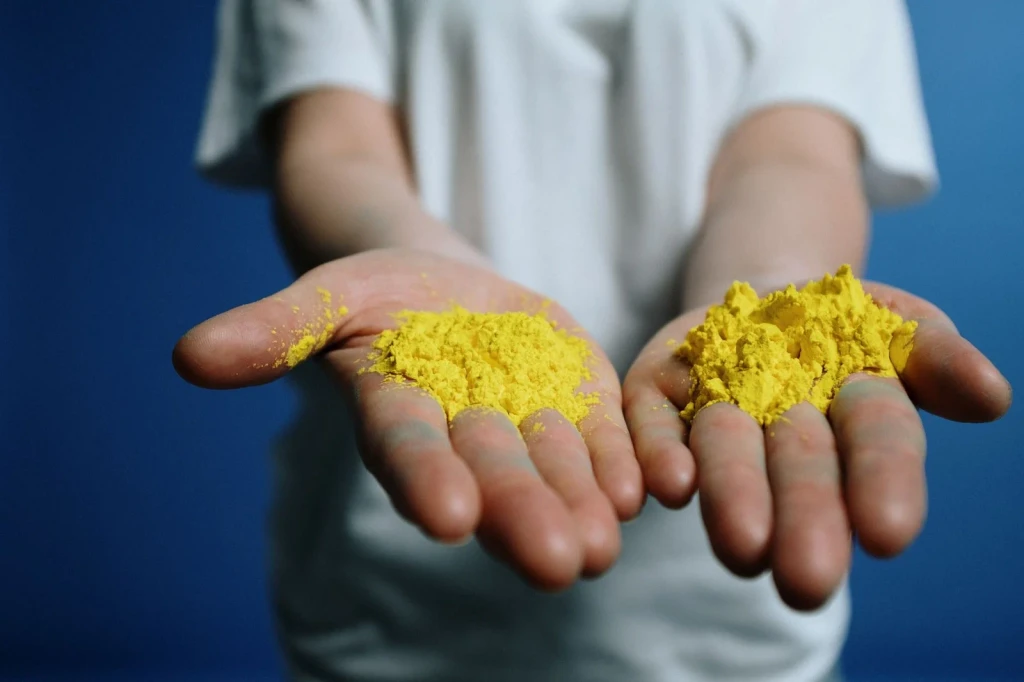
Bright yellow powder held in hands. The photograph shows color as material and as human expression combined.
Photograph by cottonbro studio, via Pexels.
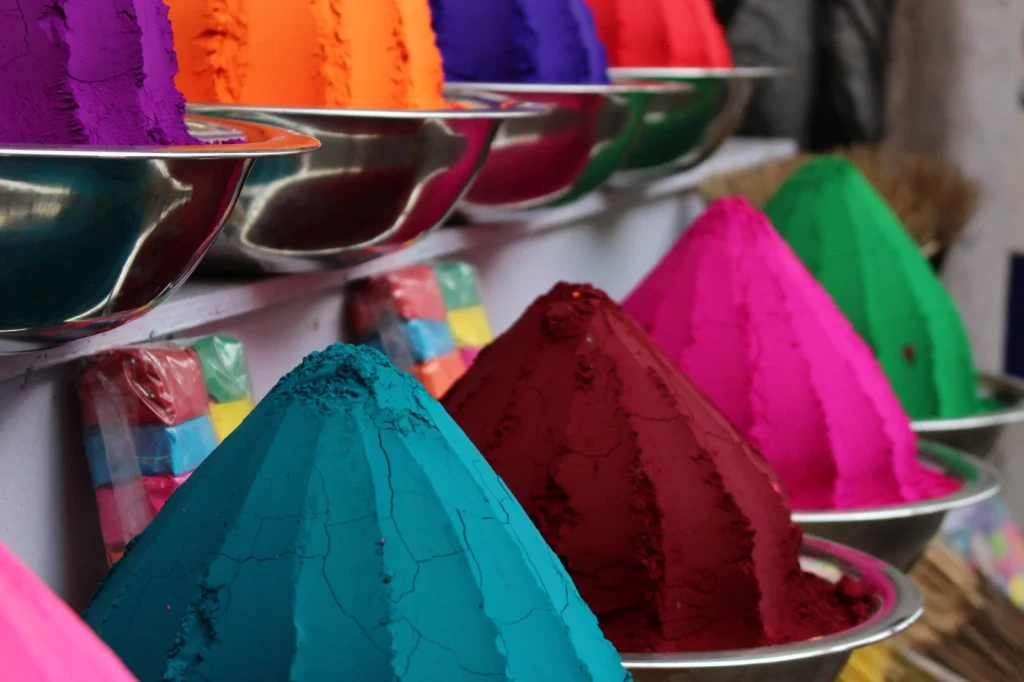
Colored powders arranged in bowls at a market. The pigments sit ready, suggesting both the materials and the hands that will use them.
Photograph by Kassandre Pedro, via Pexels.
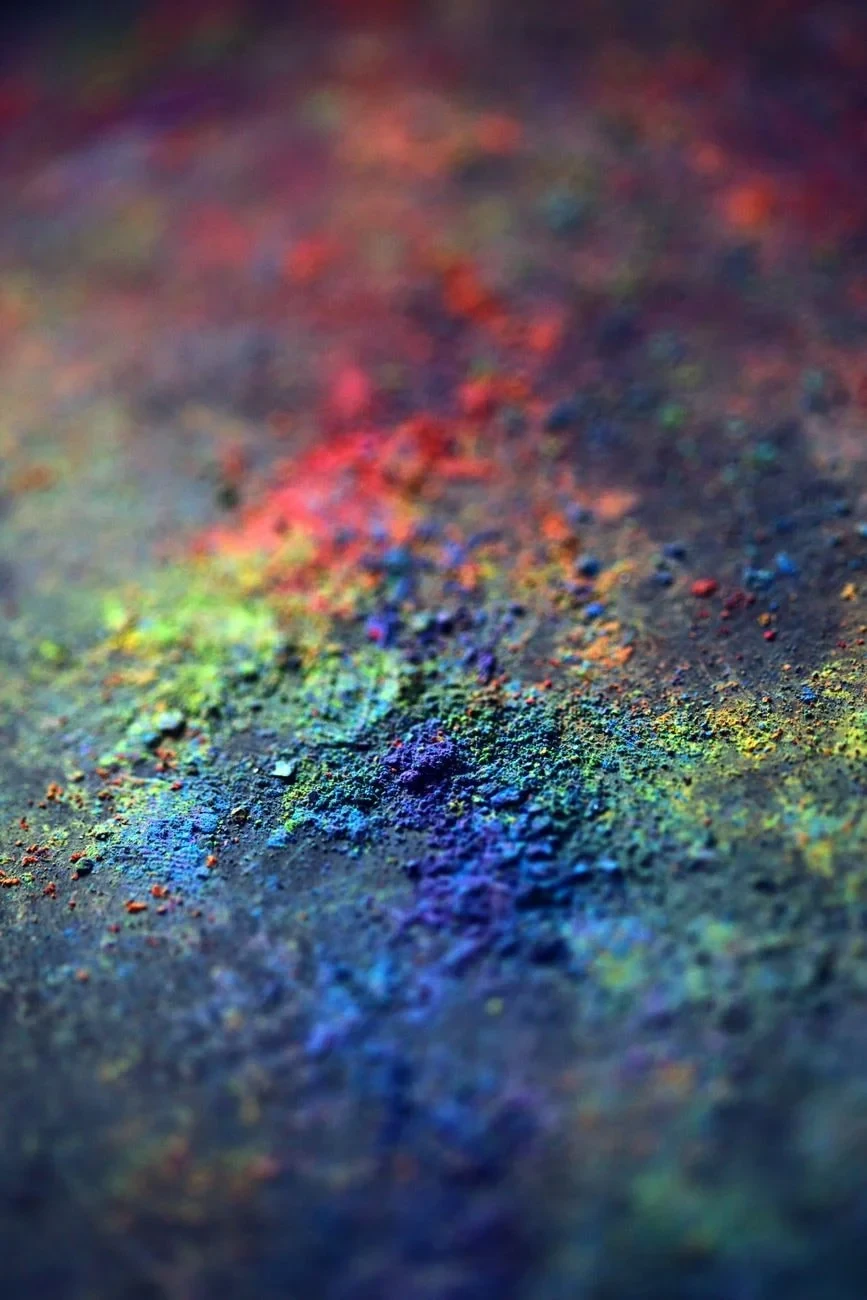
A close-up of colored powder. The magnified view of this ordinary material reveals its intensity and presence.
Photograph by Alexander Grey, via Pexels.
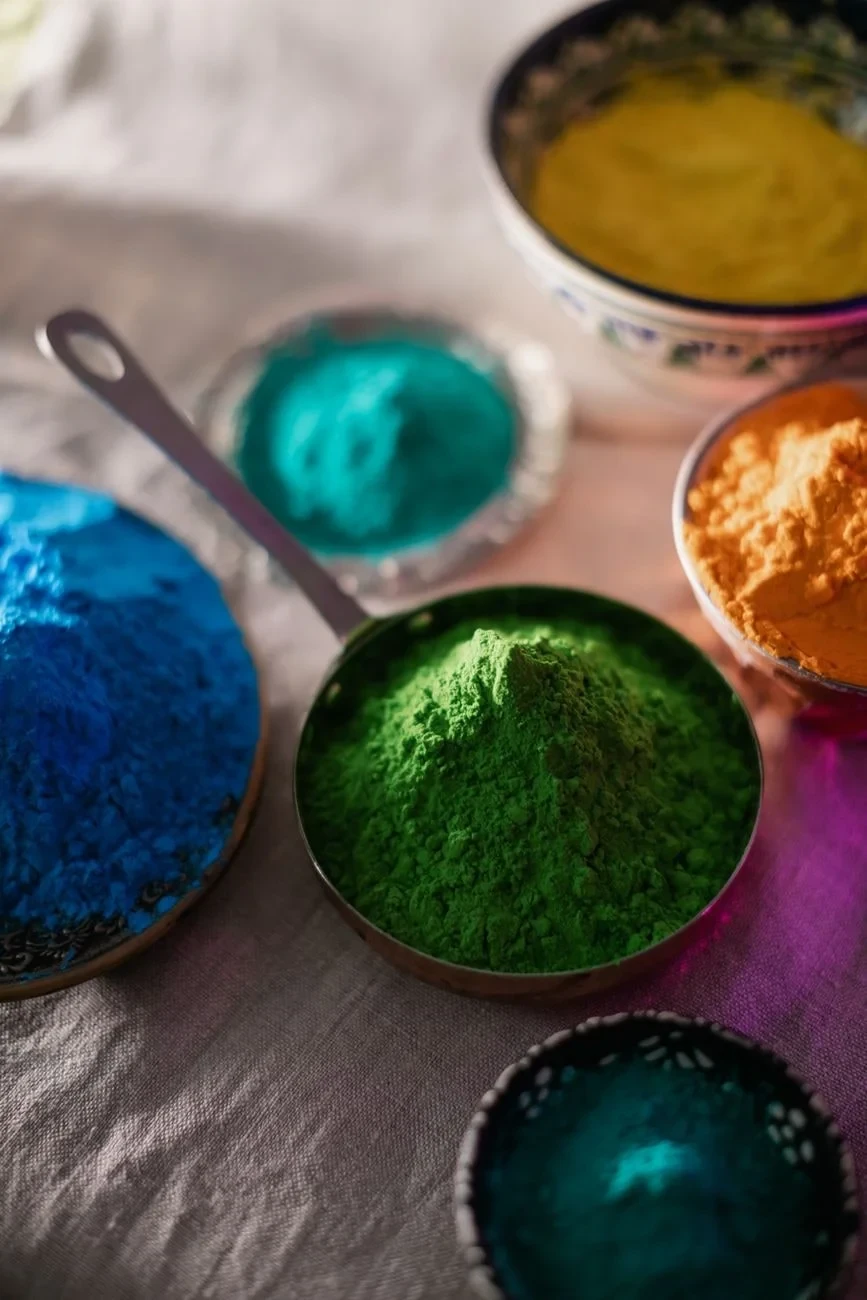
Colorful powders arranged in decorative bowls. These pigments are prepared for celebration, organized and waiting.
Photograph by Alena Darmel, via Pexels.
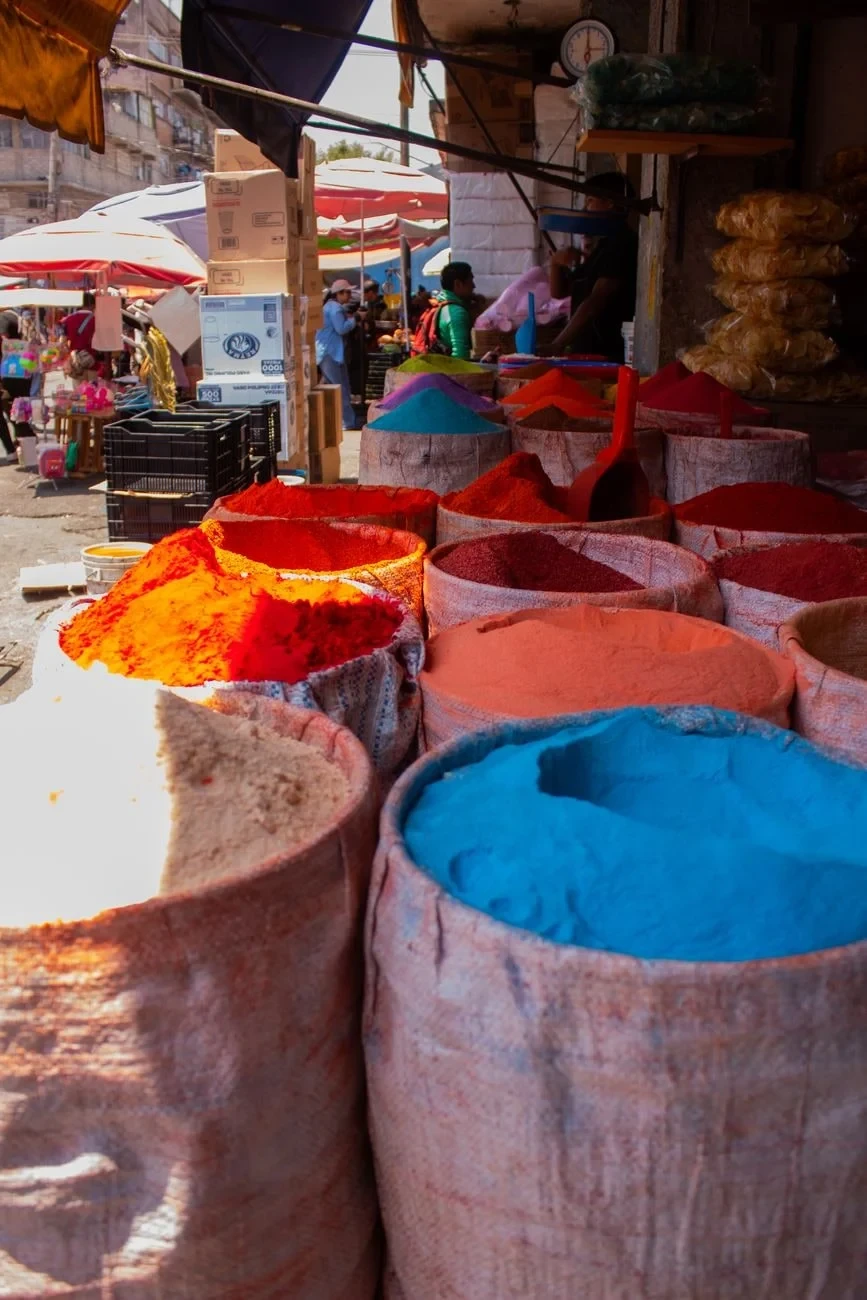
Colored powders arranged in sacks at an outdoor market. Raw pigments ready for use, displayed in their concentrated, undiluted form.
Photograph by Erick Melgar, via Pexels.
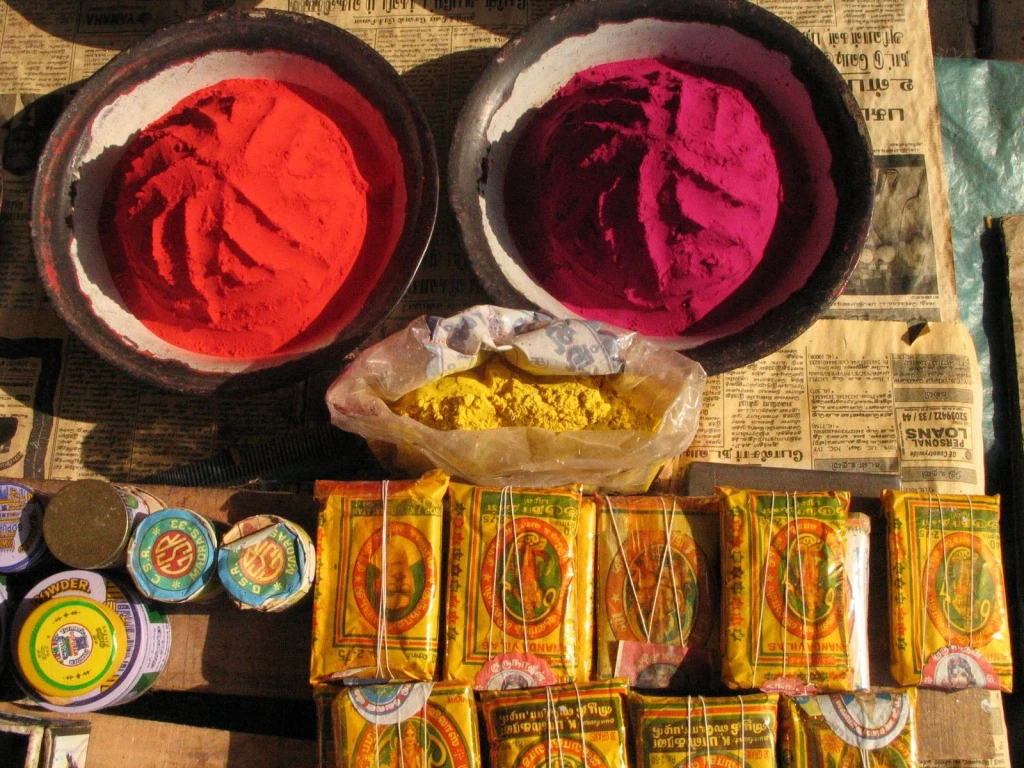
Holi powders on a market stall in red, pink, and yellow. The pigments are displayed as goods to be chosen and used.
Photograph by Krishan Jayatunge, via Pexels.
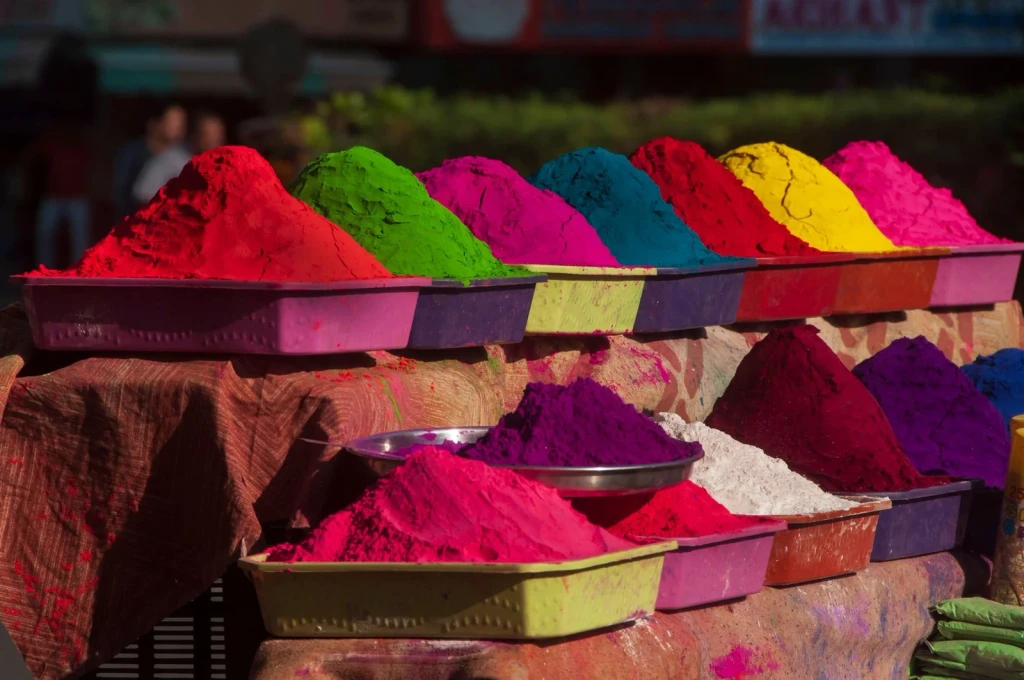
Stacked powders in vibrant hues arranged at a sunlit market stall. A direct view of pigments as commodities, ready to be dispersed.
Photograph by Kashvi Shah, via Pexels.
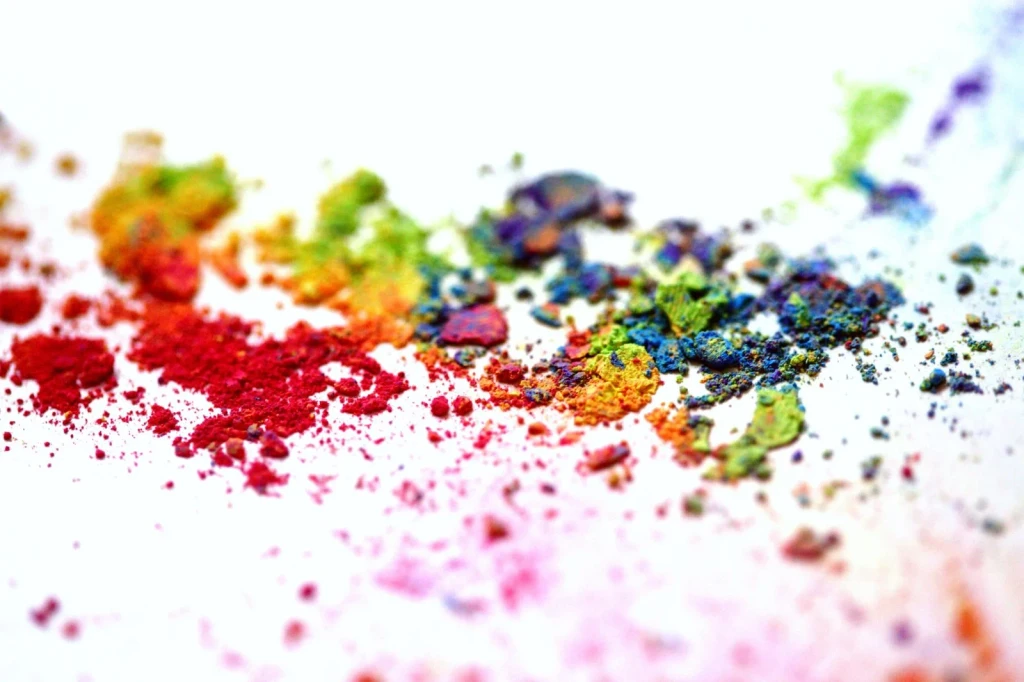
A close-up of crushed powder particles. The photograph reveals pigment at the granular level, where color becomes texture.
Photograph by Alexander Grey, via Pexels.
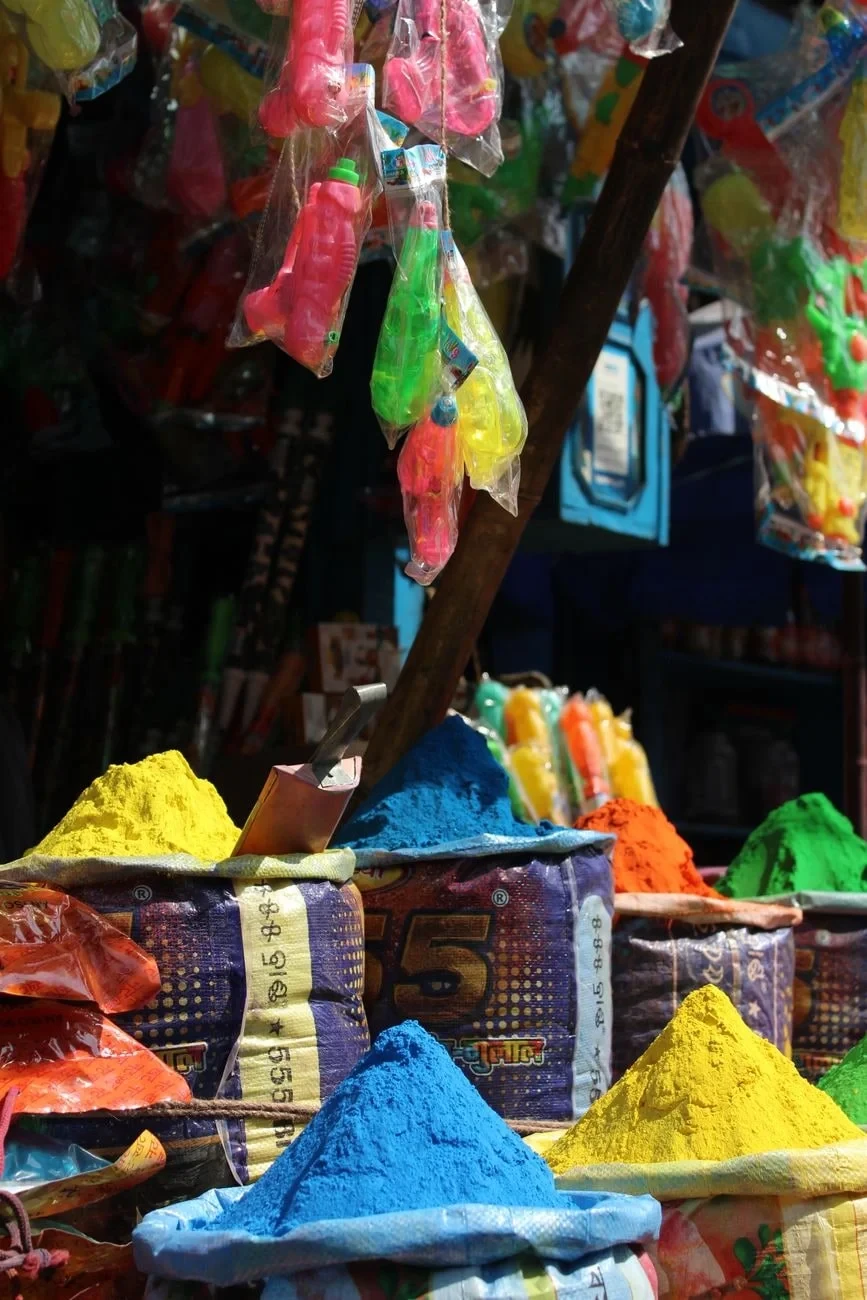
Colorful powders displayed at a festival market. The abundance of pigment suggests how colors have long been sourced, mixed, and traded in public spaces.
Photograph by Sunannya Das, via Pexels.
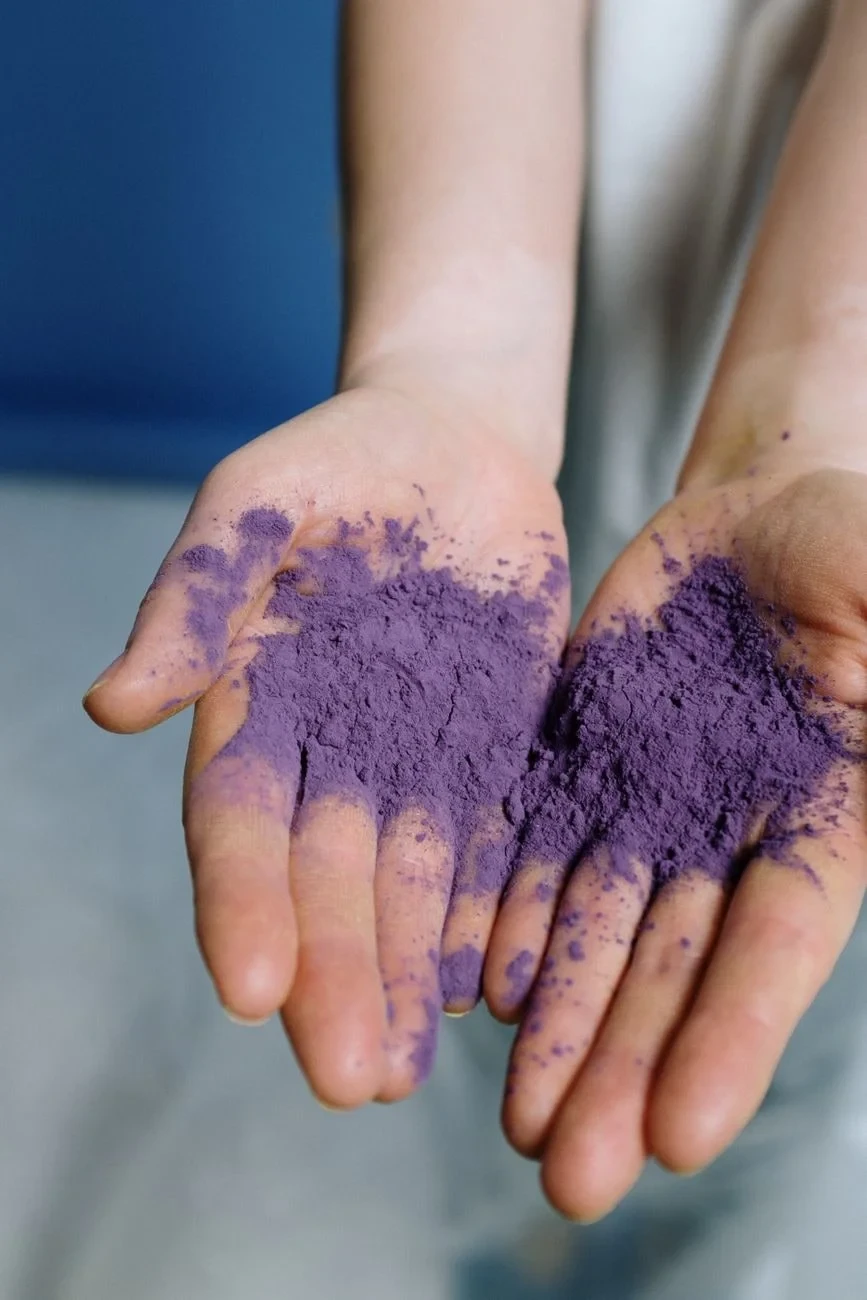
A hand holds vibrant purple powder. The image connects pigment to the person who applies it, showing color as something tactile and creative.
Photograph by cottonbro studio, via Pexels.
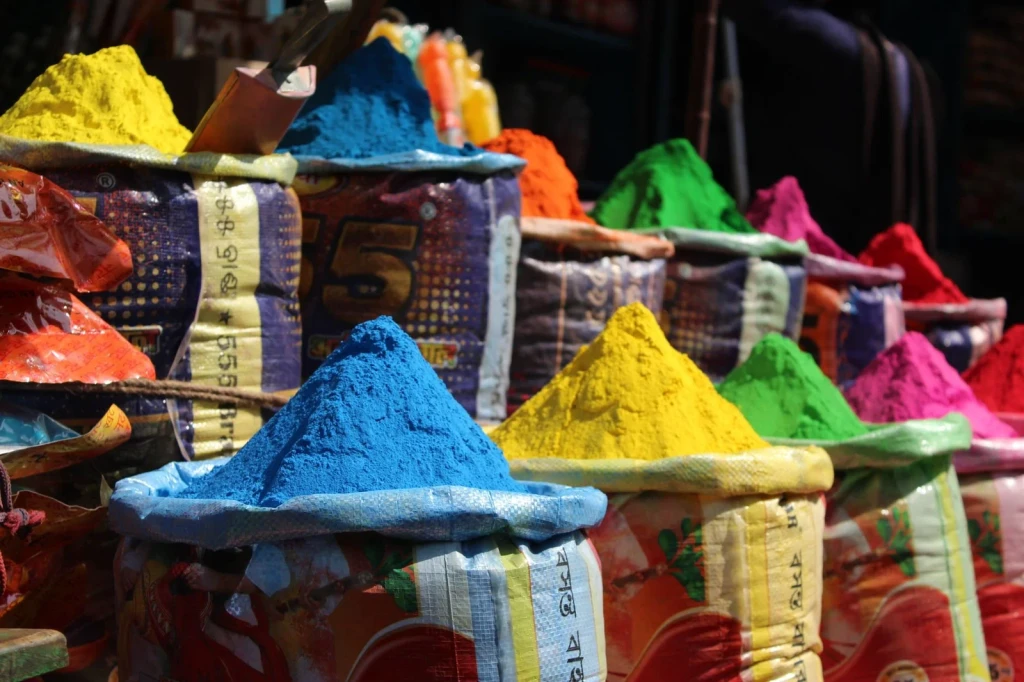
Powder piles in vibrant hues waiting outdoors. Raw pigment assembled for communal use, before dispersal into celebration.
Photograph by Sunannya Das, via Pexels.
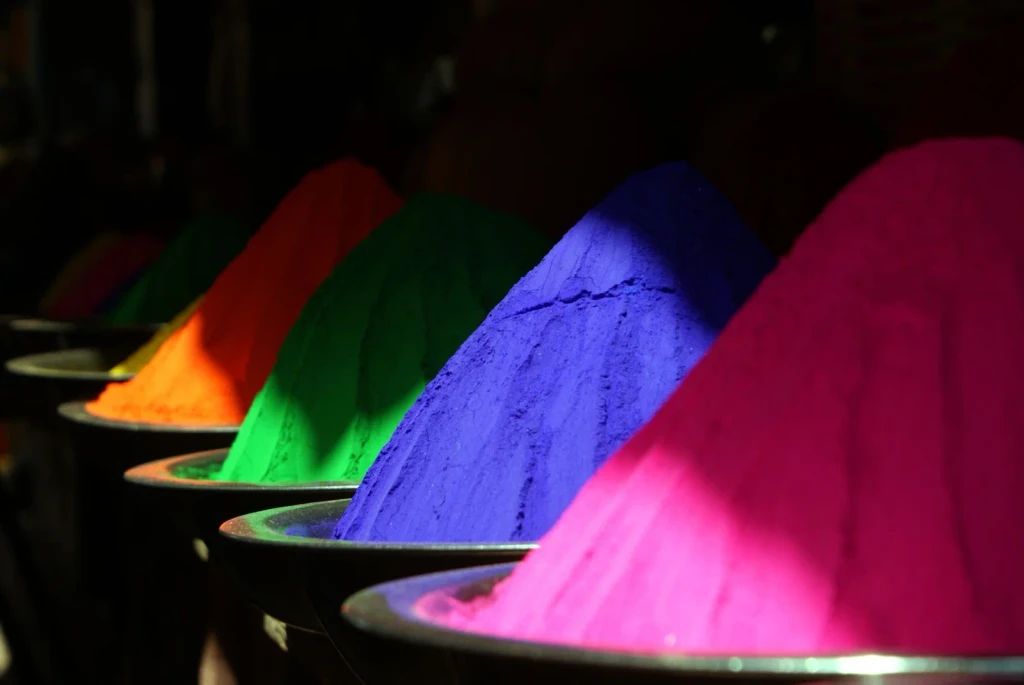
Colorful powders gathered together. The image shows pigment in its role as a vehicle for festive expression and shared joy.
Photograph by Pixabay, via Pexels.
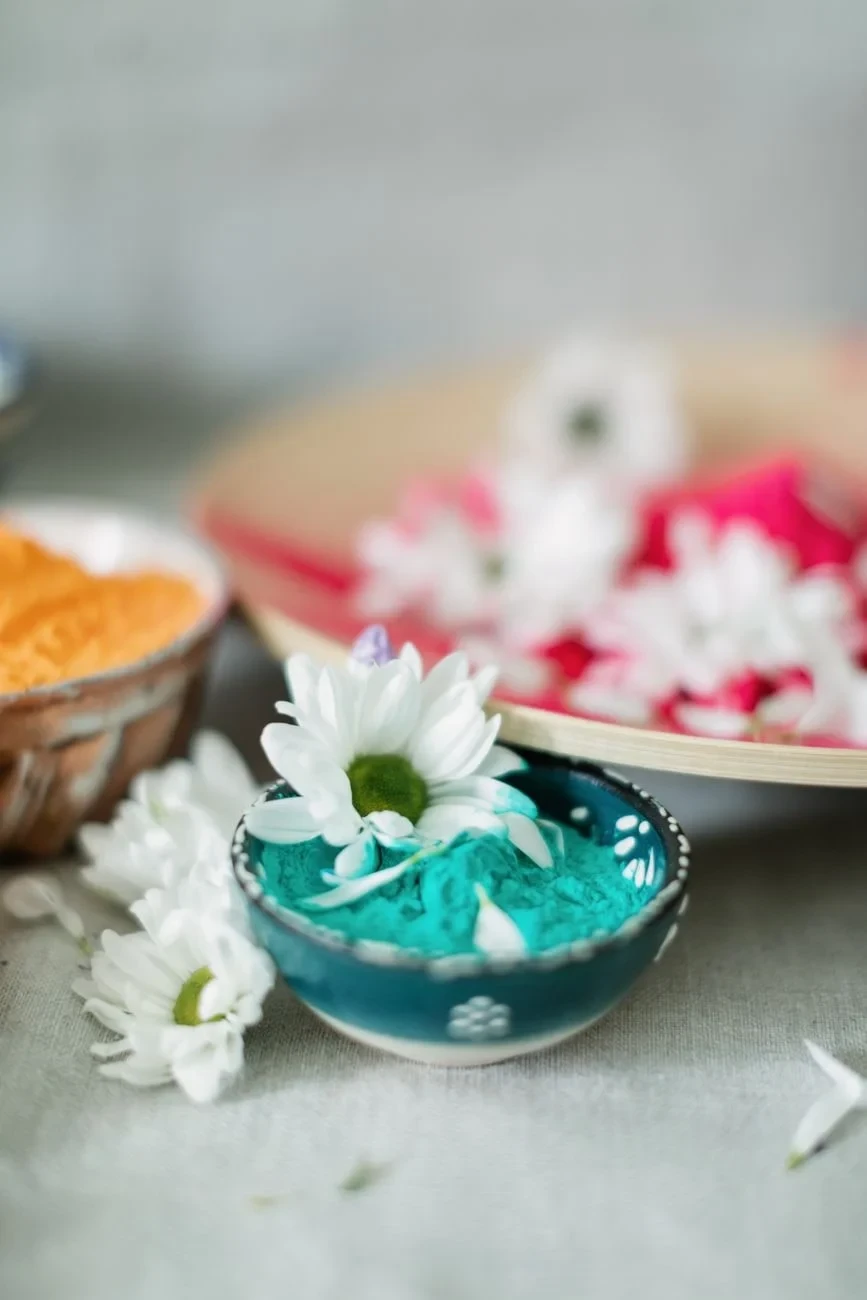
Colorful powders and white daisies arranged in decorative bowls. Pigment paired with natural materials in a festive setting.
Photograph by Alena Darmel, via Pexels.
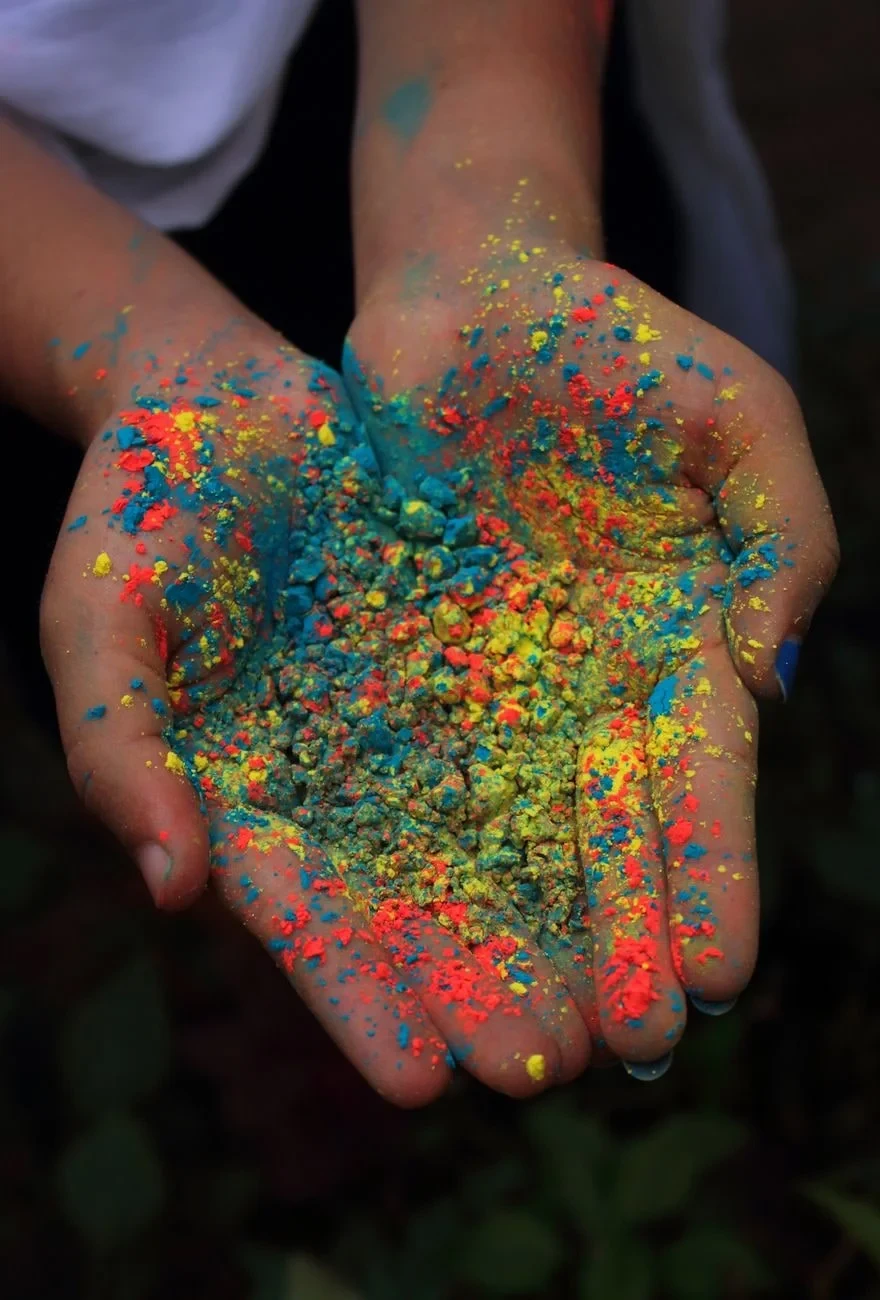
Vibrant powder held between hands. A direct encounter with pigment as a tactile, celebratory material.
Photograph by Nandhu Kumar, via Pexels.
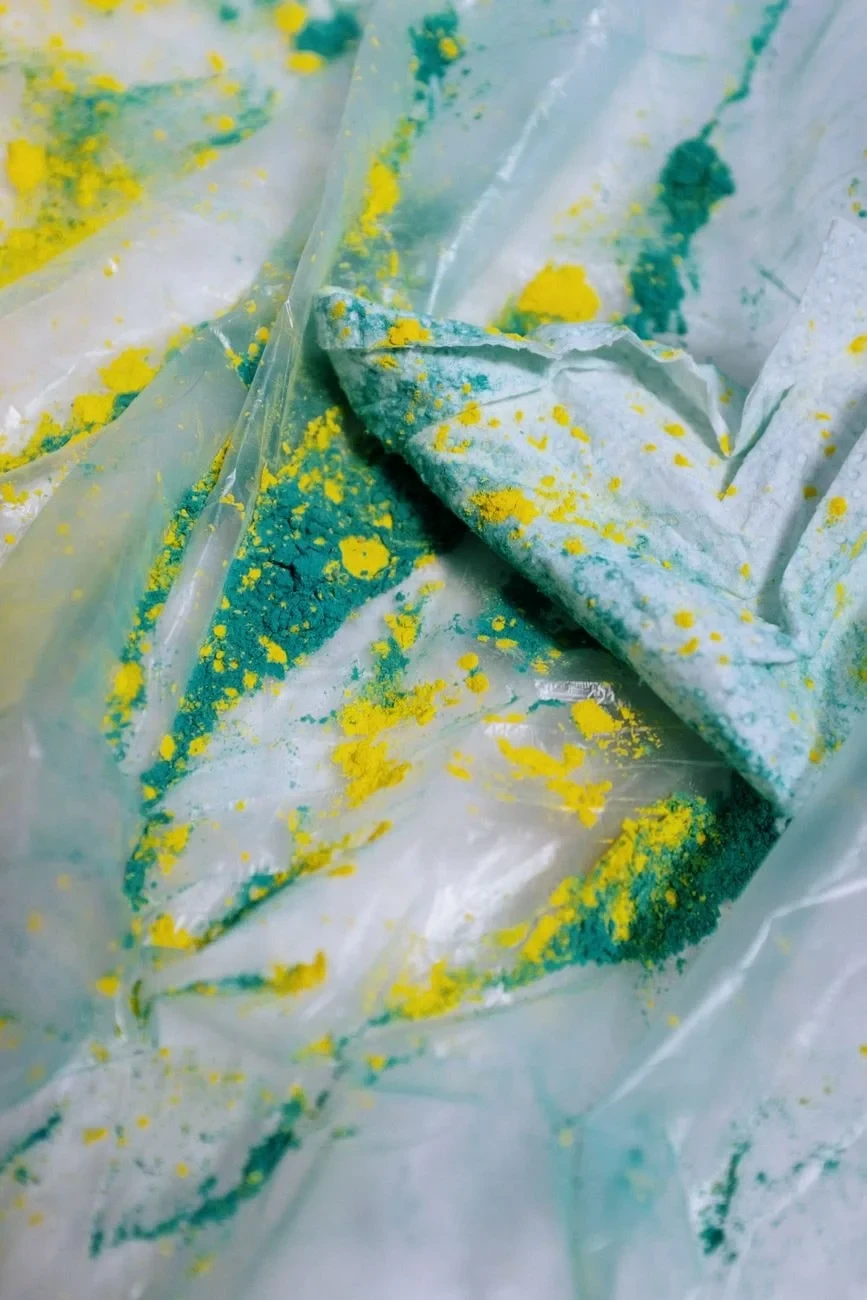
Yellow and green powders scattered across a plastic surface. An abstract composition exploring how pigments behave when dispersed and displayed.
Photograph by cottonbro studio, via Pexels.
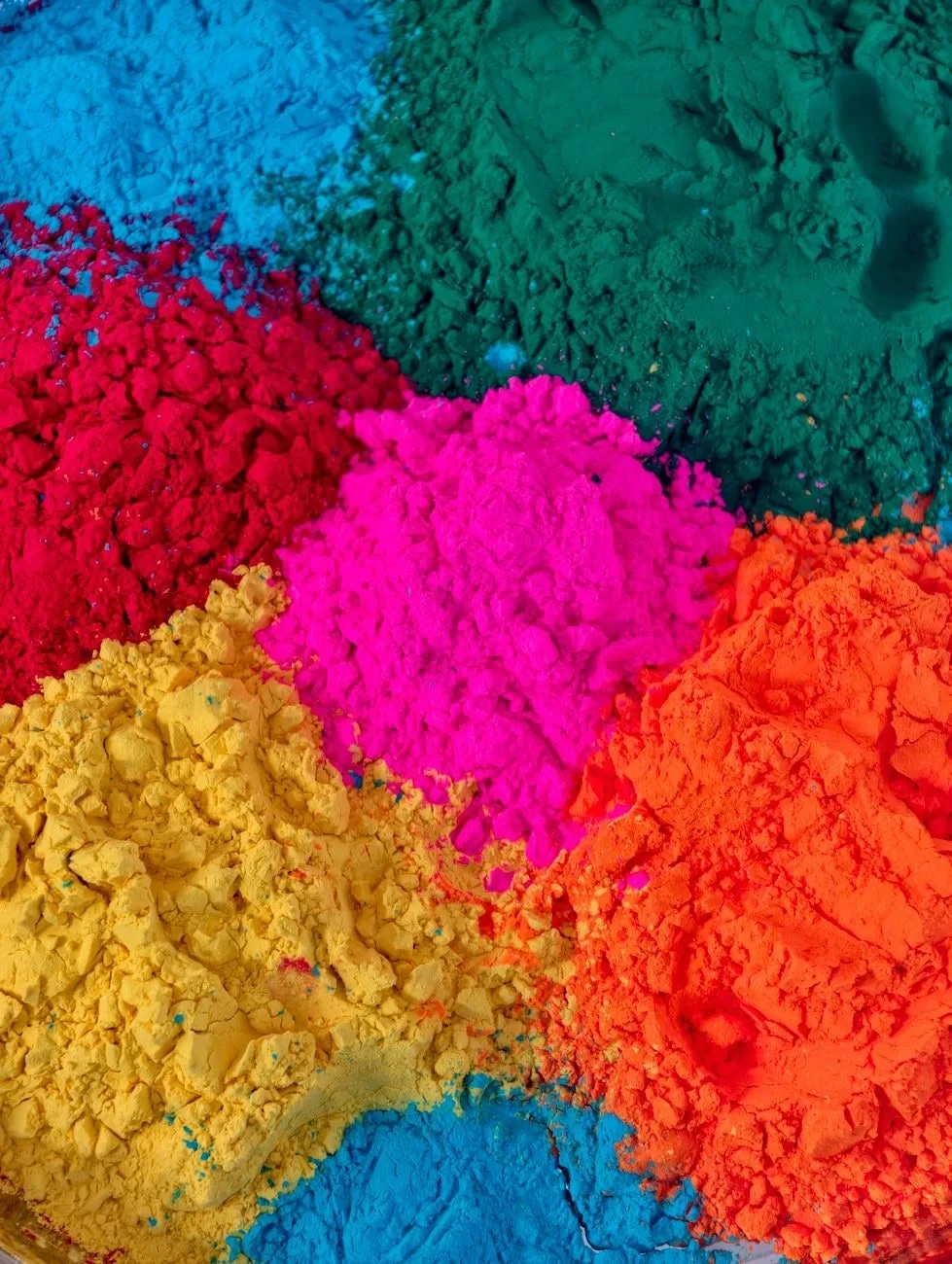
Colorful powders arranged to show their range. A straightforward presentation of pigments in their prepared, visible state.
Photograph by Vaishnav A V, via Pexels.
