3D Gallery
Why Birds Cannot Stop Migrating
Enter gallery
Why Birds Cannot Stop Migrating is a 3D virtual gallery on MyGallery3D, a walkable online exhibition of 15 works. Step inside and explore it in your browser: no app, no headset.
Walk through this 3D virtual museum of bird migration in your browser, and follow a bird that never sees a winter.
The Arctic tern breeds in the Arctic and winters at the edge of the Antarctic ice. Birds nesting in Iceland and Greenland cover about 70,900 km a year; one tagged bird from the Farne Islands flew 96,000 km in ten months. Across a life of about 30 years a tern travels some 2.4 million km, a return trip to the Moon more than three times over. It sees more daylight than any other creature on the planet.
Routes are genetic or traditional, depending on the species. In long-lived social birds like the white stork, flocks are led by the oldest members and the young learn the way on their first journey. But the Eurasian blackcap migrates alone, in its first year, on a route written into it before it hatched. Selective breeding can change that route.
Some bar-tailed godwits fly 11,000 km from Alaska to New Zealand without landing: the longest known non-stop flight of any migrant. Great snipes cross 4,000 to 7,000 km in a single go, 60 to 90 hours in the air, cruising near 2,000 m at night and around 4,000 m by day. There is no rest, no food, no water.
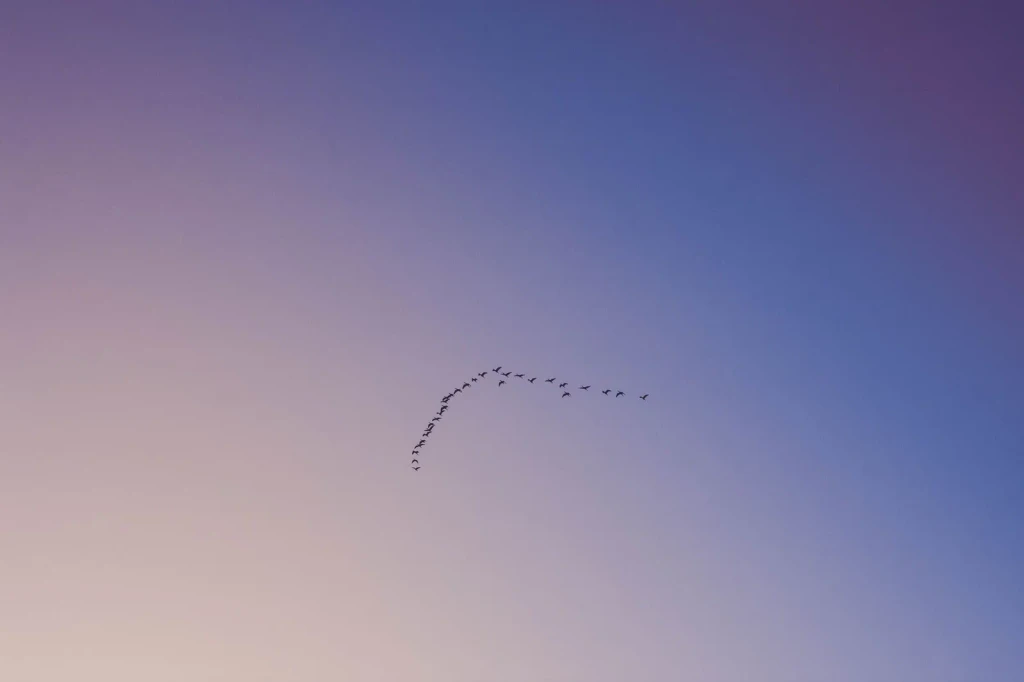
Under clear twilight, the V formation appears almost mathematical. Yet it is driven by something older than calculation. Instinct keeps them in line, keeps them moving.
Photograph by Lucas George Wendt, via Pexels.
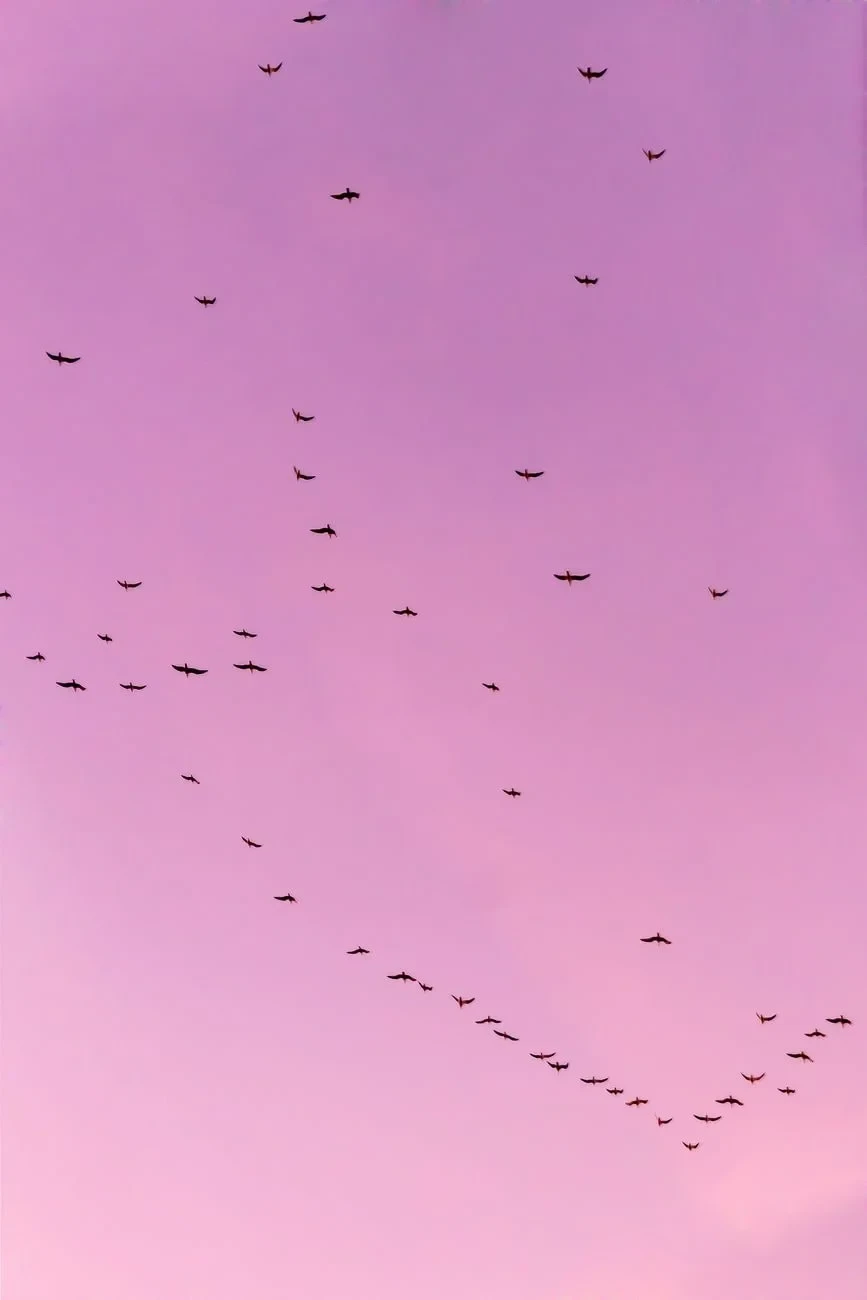
Birds form a silhouette against vibrant pink sky. At this threshold moment between day and night, the urge to migrate appears absolute.
Photograph by Kris Møklebust, via Pexels.
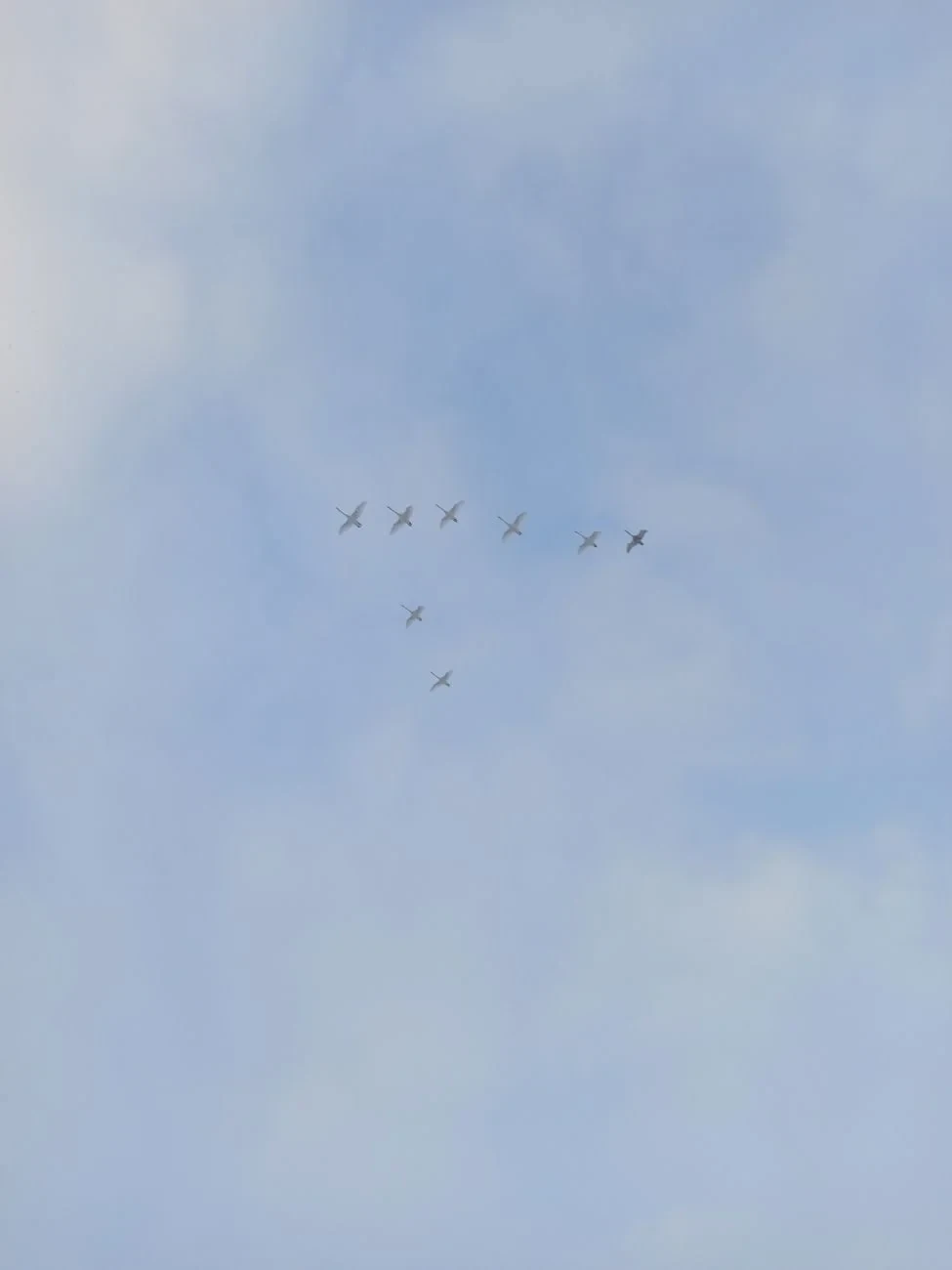
Birds hold their V formation against open blue sky. The clarity shows us what drives them onward: distance, and the need to cover it.
Photograph by White Ghost, via Pexels.
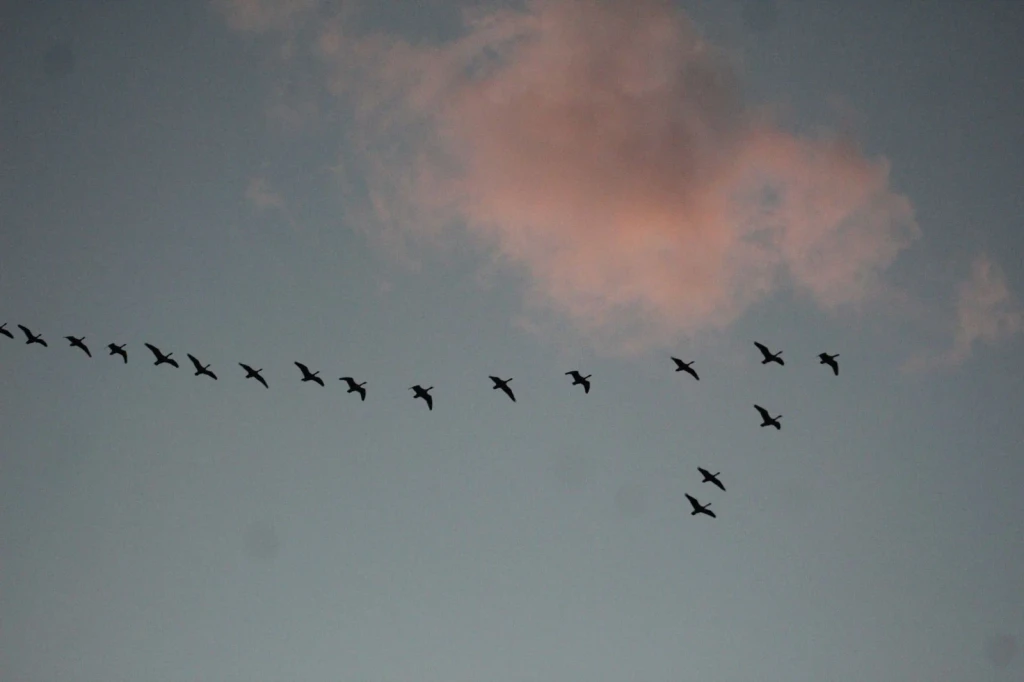
Birds fly in formation as clouds gather and light shifts. The sky holds their ancient path.
Photograph by Nadine Giza, via Pexels.
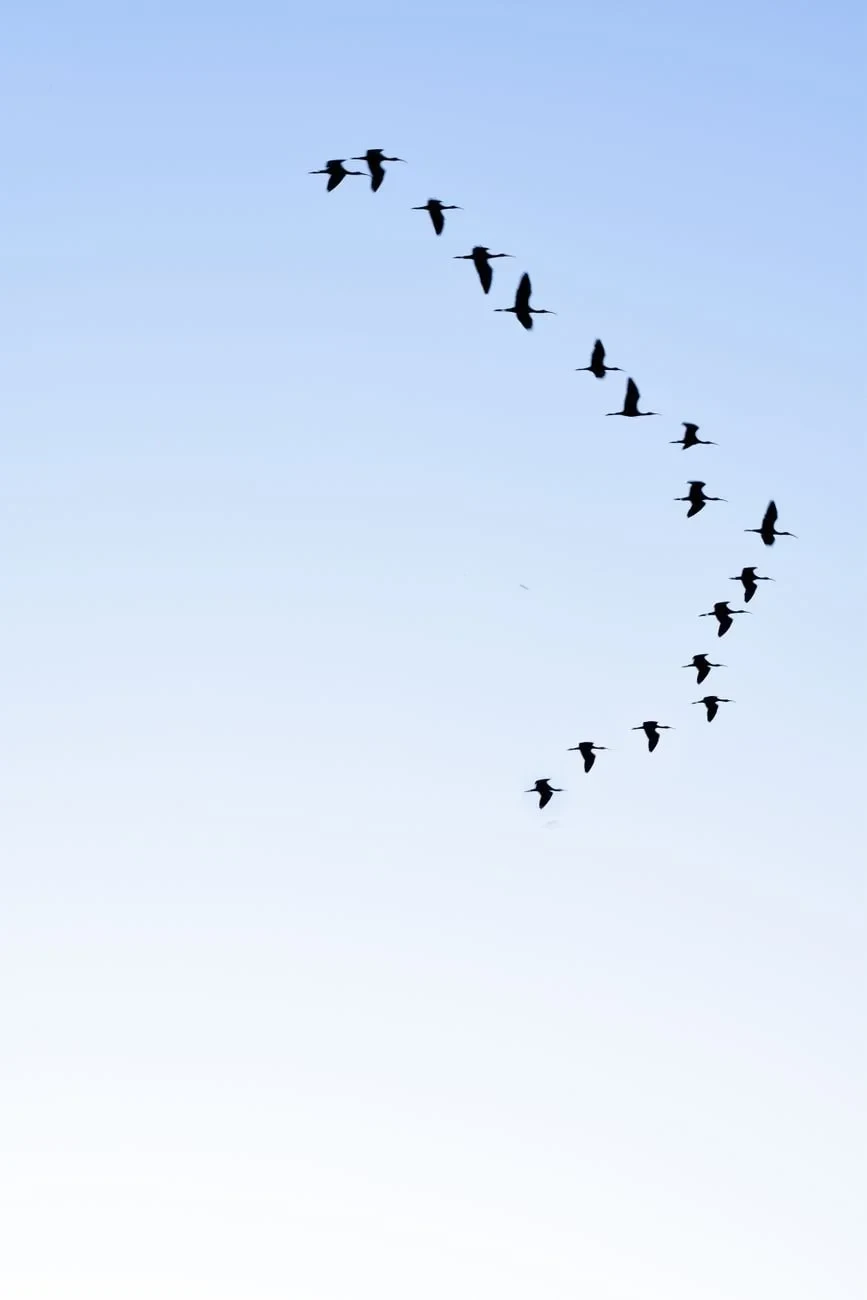
A flock assumes the classic V shape, the aerodynamic pattern birds cannot abandon. This formation is essential to their survival.
Photograph by Fatma Çakır, via Pexels.
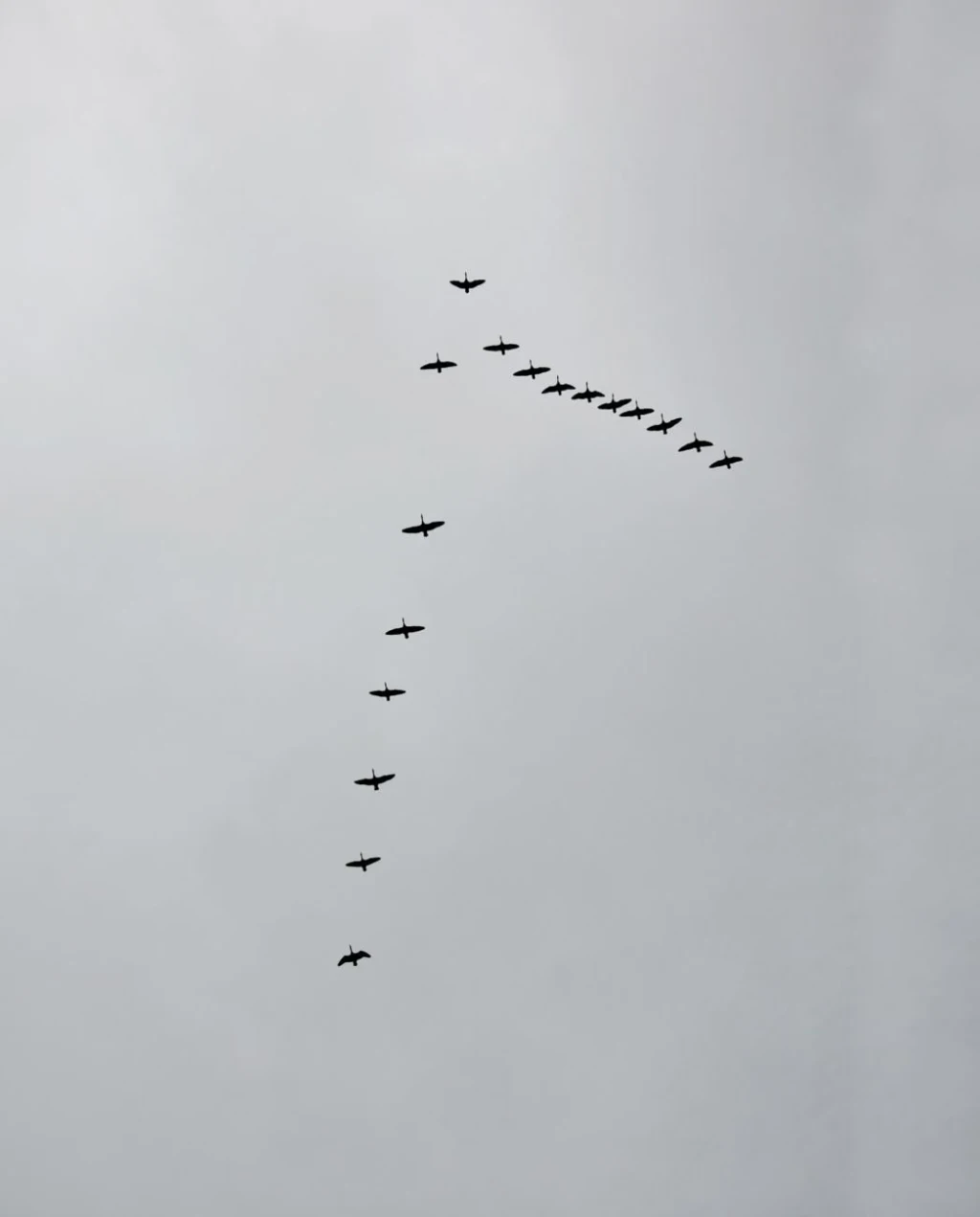
Birds fly in a V formation against clouds. This geometric pattern appears repeatedly throughout nature, hinting at why migration itself seems so inevitable and ordered.
Photograph by Semiha Deniz, via Pexels.
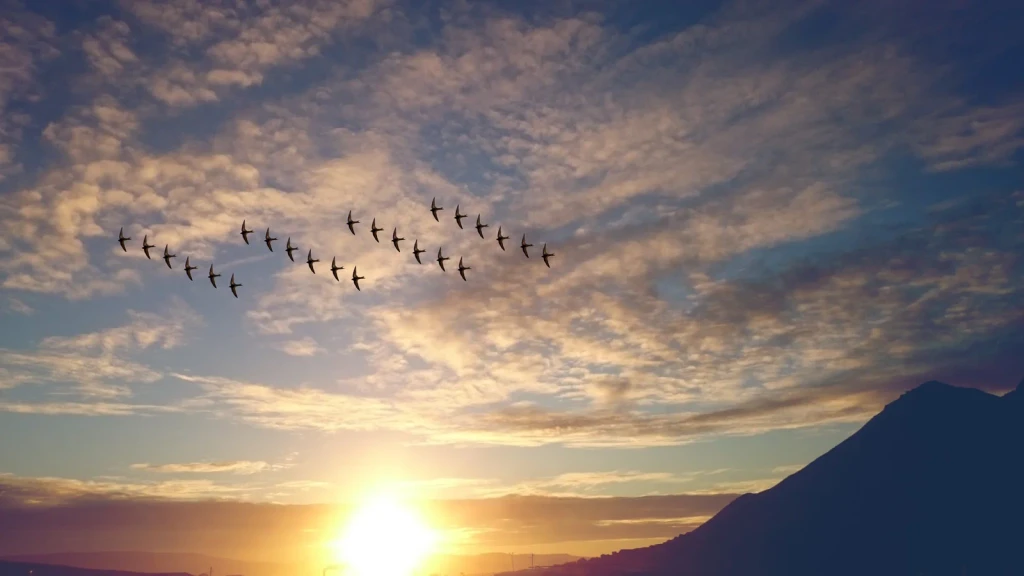
A flock of birds silhouetted against a vibrant sunrise sky over mountains.
Photograph by Bahram Jamalov, via Pexels.
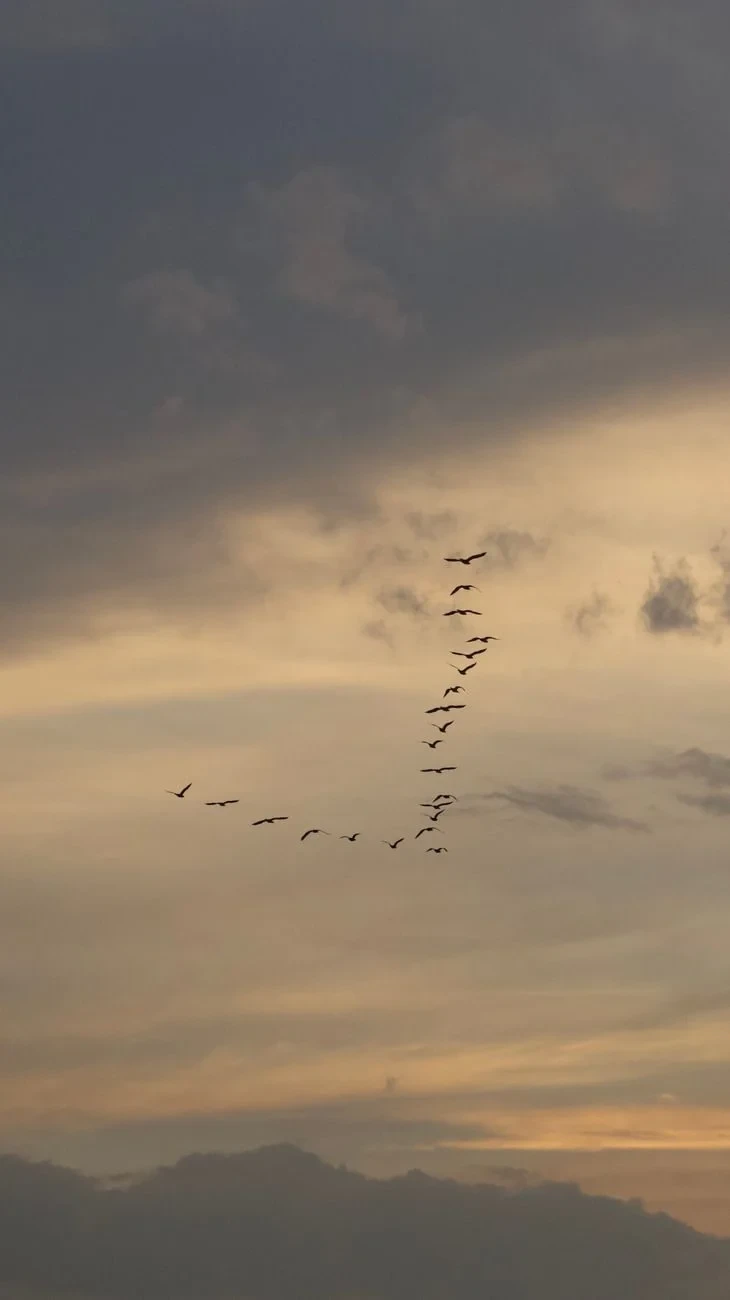
The V formation cuts through a dramatic sunset with precision and purpose. This shape, repeated across generations, is not chosen. It is compelled.
Photograph by Zeynep Kahraman, via Pexels.
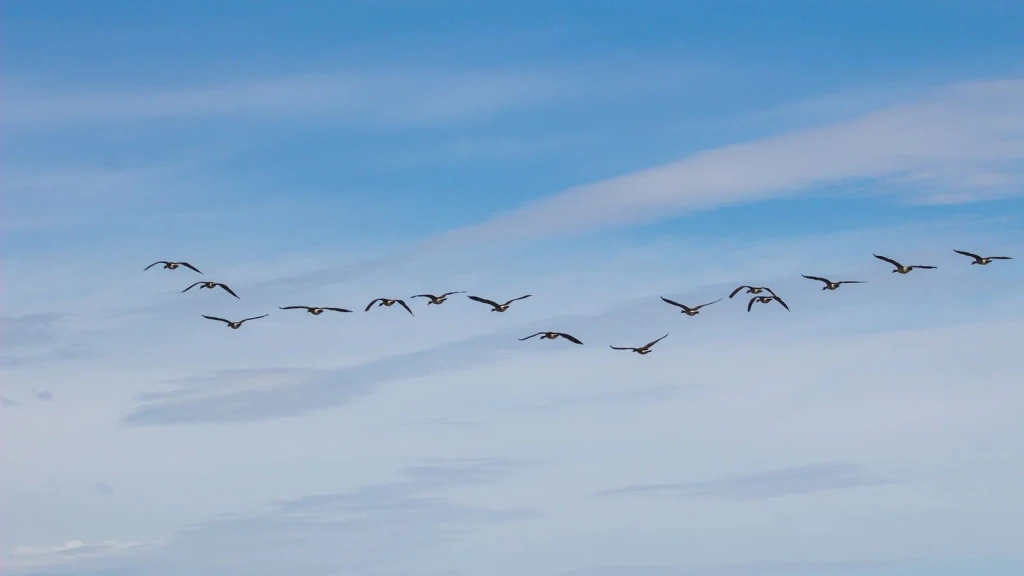
Birds cross a bright blue sky in a serene moment. Their movement speaks to the compulsion that drives migration.
Photograph by Robert So, via Pexels.
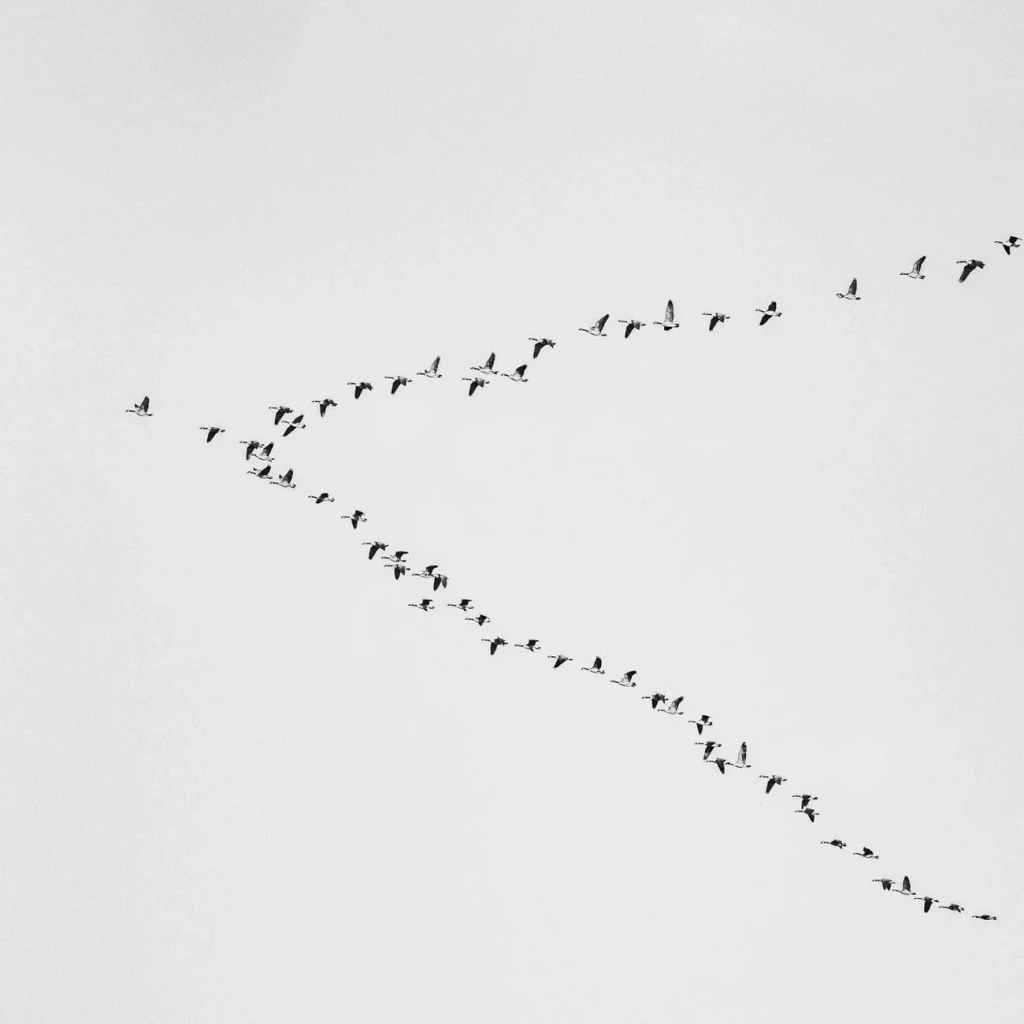
Birds maintain their distinct V shape across sky. The precision of their pattern suggests an inner compulsion, not an option.
Photograph by Marvin Filmaker, via Pexels.
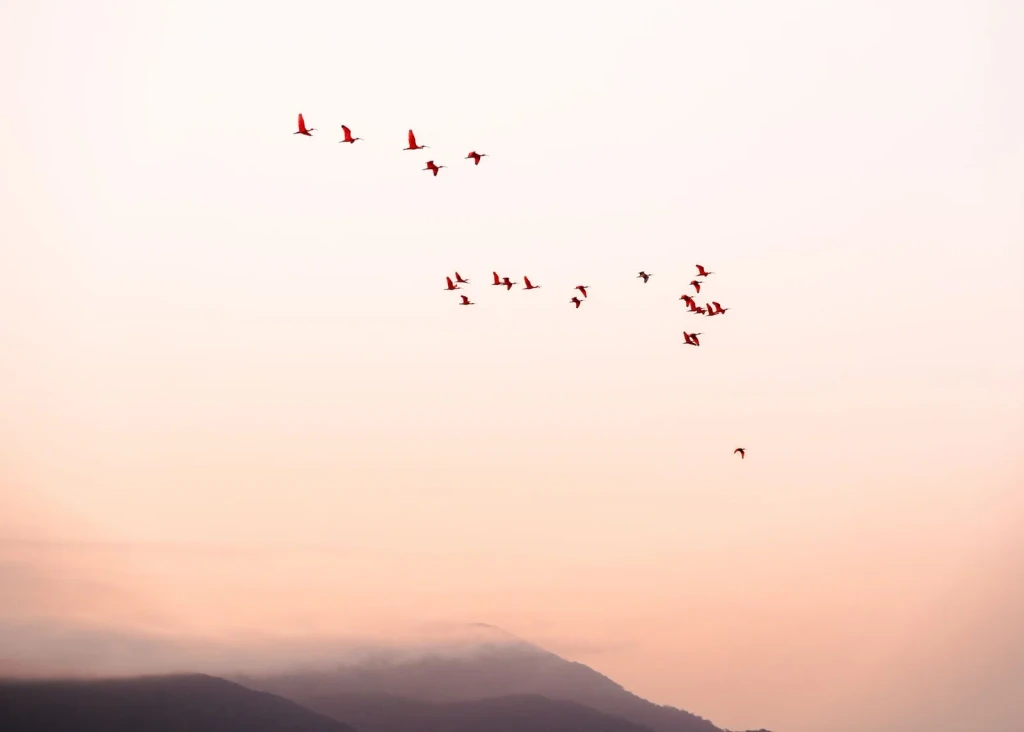
A flock moves through misty mountains as day fades. The formation itself becomes the story. birds cannot stop; they must continue through the gathering dark.
Photograph by Giulia Botan, via Pexels.
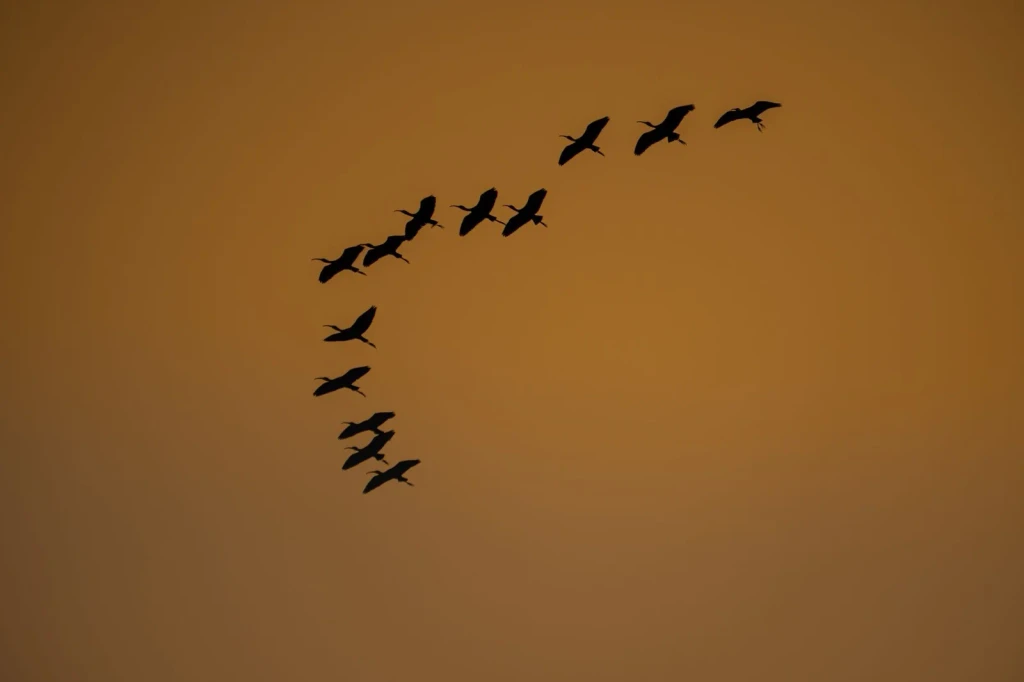
Silhouetted birds hold their V formation steady against a vivid sunset. The shape persists. Migration demands this geometry, this coordination, this relentless forward motion.
Photograph by Sabari Sambath S, via Pexels.
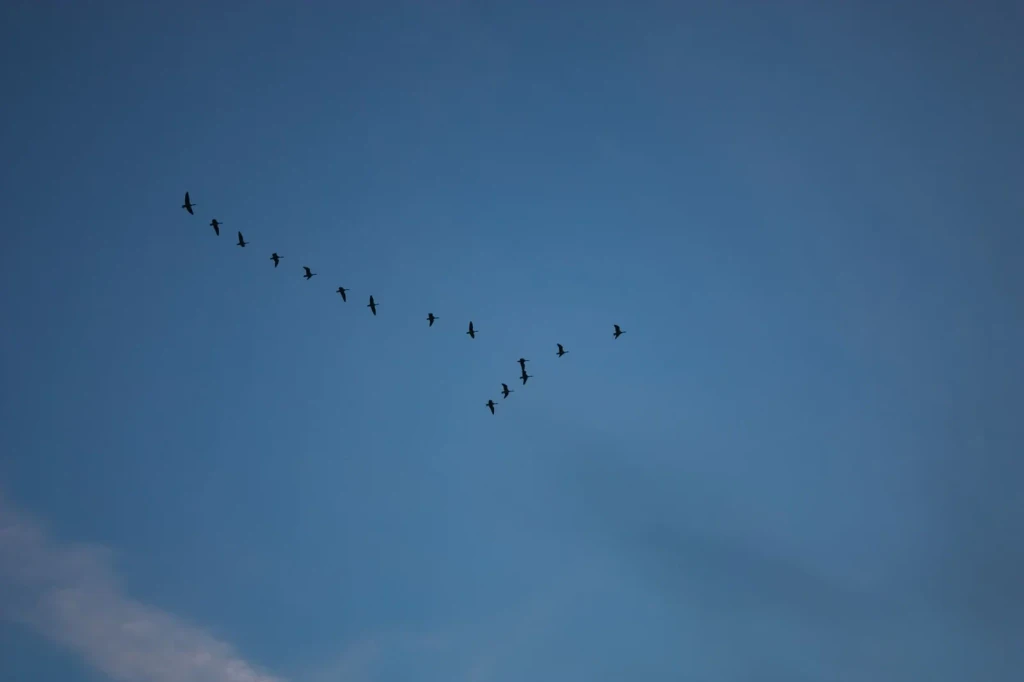
Migrating birds become silhouettes in V formation. Stripped to pure shape and movement, they show migration as something deeper than choice.
Photograph by Jan Gatzke, via Pexels.
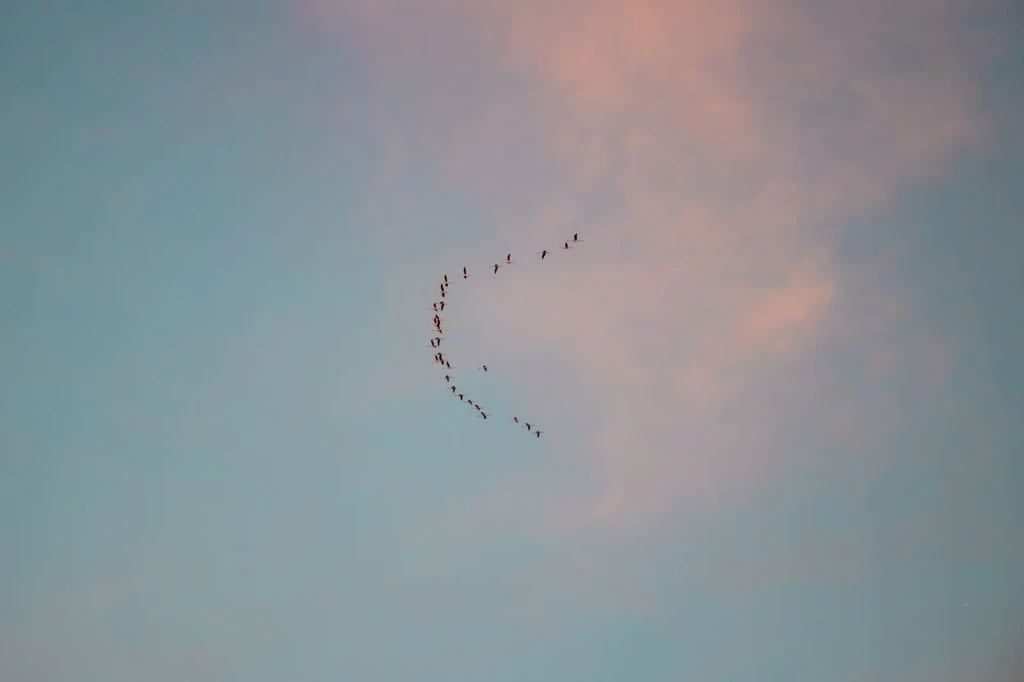
A flock moves across pink and blue sky in formation. The specific light suggests a moment of transition, when birds must move.
Photograph by Dorota Semla, via Pexels.
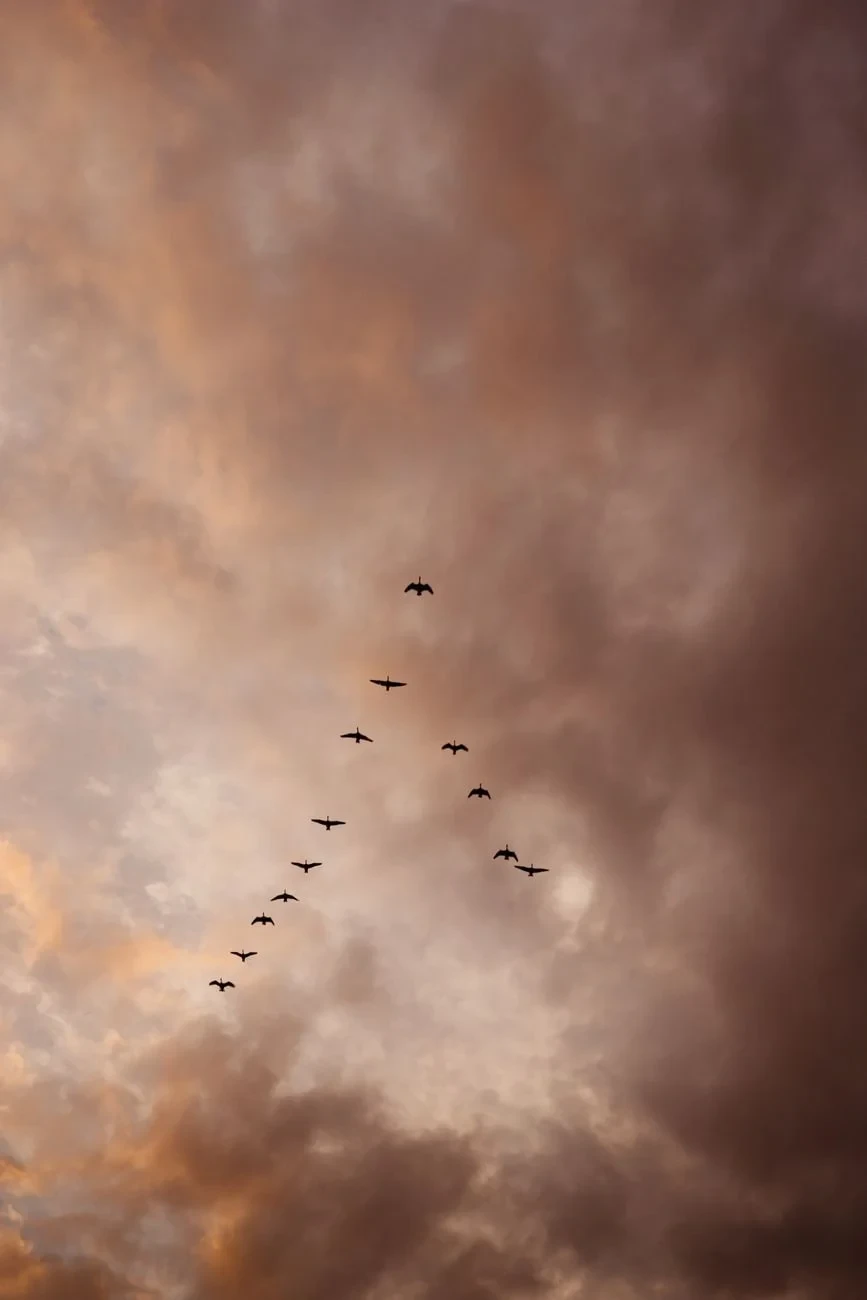
Against a dramatic sunset clouded and dark, the flock's silhouette holds the V. Birds migrate through uncertain skies. They have no choice but to continue.
Photograph by Kathrine Birch, via Pexels.
