3D Gallery
Beekeeping: An Ancient Life with the Hive
Enter gallery
Beekeeping: An Ancient Life with the Hive is a 3D virtual gallery on MyGallery3D, a walkable online exhibition of 15 works. Step inside and explore it in your browser: no app, no headset.
You are standing in a 3D virtual museum of beekeeping. Walk it in your browser and look at what the keeper actually does.
For most of its history, beekeeping was a kind of killing. To take the honey, medieval European keepers burned sulfur under the skep and suffocated the colony. The craft changed when Lorenzo Lorraine Langstroth noticed in 1851 that bees leave any gap between 6 and 9 mm alone: too narrow to build comb in, too wide to seal with propolis. He put frames in a box at that distance. Modern beekeeping is a measurement.
Wax is expensive. Worker bees secrete it from eight glands on the abdomen, in scales about three millimetres across and 0.1 mm thick, and it takes roughly 1,100 of them to make a gram. The hive must hold 33 to 36 degrees for the glands to work. By one 1946 experiment, 6.66 to 8.80 kg of honey is burned to yield one kilogram of wax.
François Huber went blind before he was twenty, then settled most of the basic science of the hive. He hired a secretary, François Burnens, who for more than twenty years made the daily observations and kept the notes. They proved a hive has one queen, mother of every worker and drone, and that she mates in the air, outside it. Huber is called the father of modern bee-science.
The oldest beekeeping we can touch is at Tel Rehov, in the Jordan Valley. Amihai Mazar found thirty intact hives of straw and unbaked clay, stacked three high in orderly rows, dating from about 900 BCE. The site could have held around 100 hives and more than one million bees, with a possible yield of 500 kilograms of honey and 70 kilograms of beeswax a year.
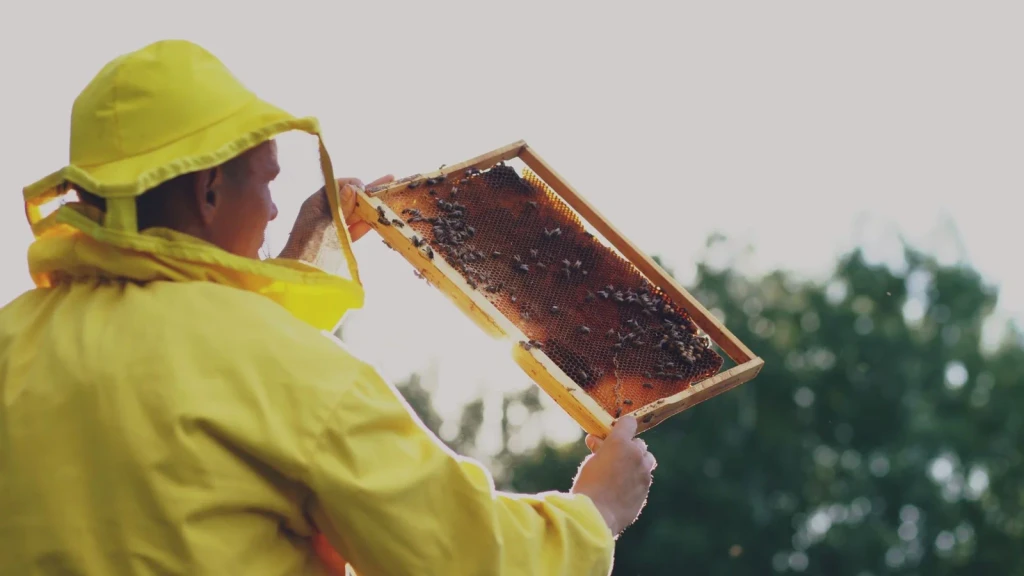
Protective gear allows close examination of a honeycomb frame. The beekeeper studies the colony's work with care.
Photograph by Vitaly Gariev, via Pexels.
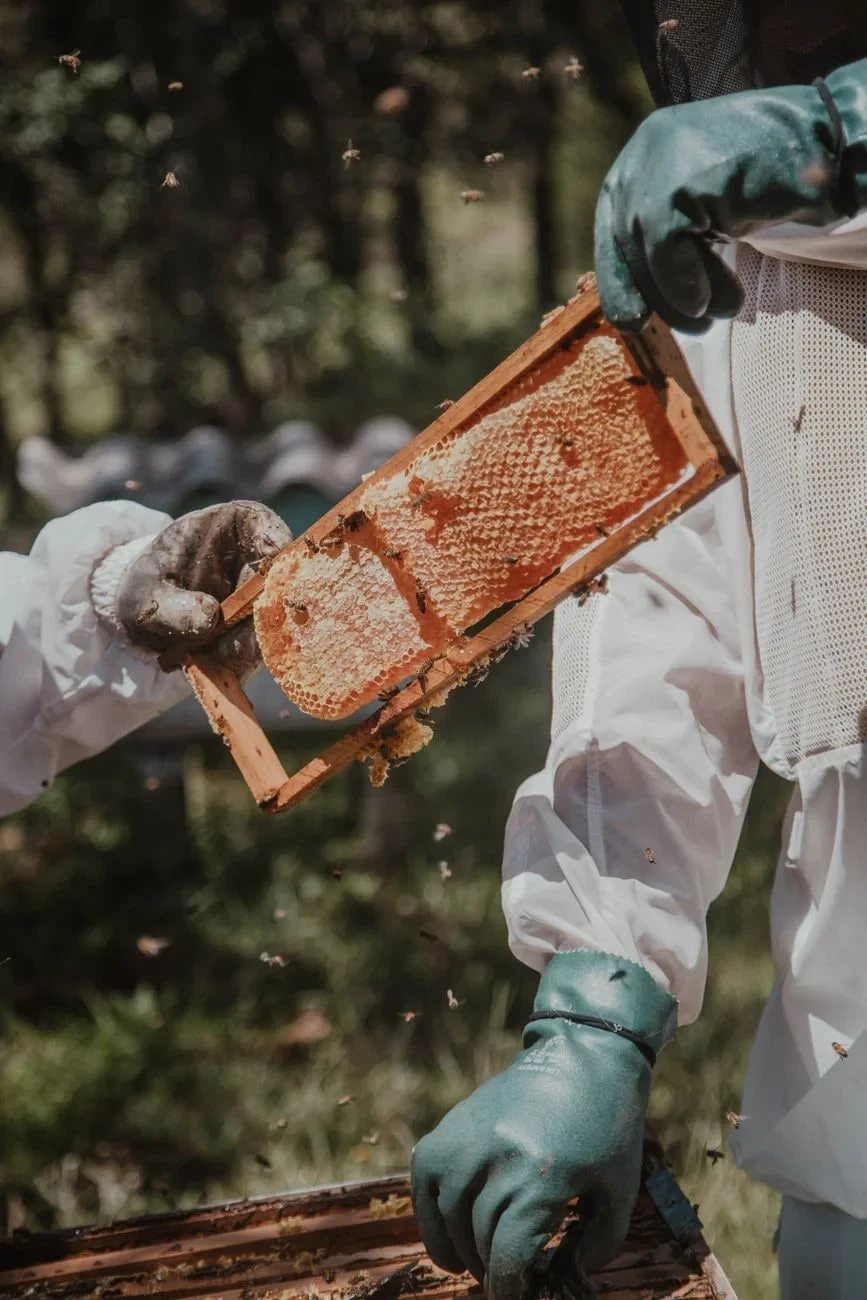
Two beekeepers examine a honey-filled frame together outdoors, their protective gear marking this as practiced, deliberate work. Beekeeping has long been passed between people through observation and collaboration.
Photograph by Arthur Brognoli, via Pexels.
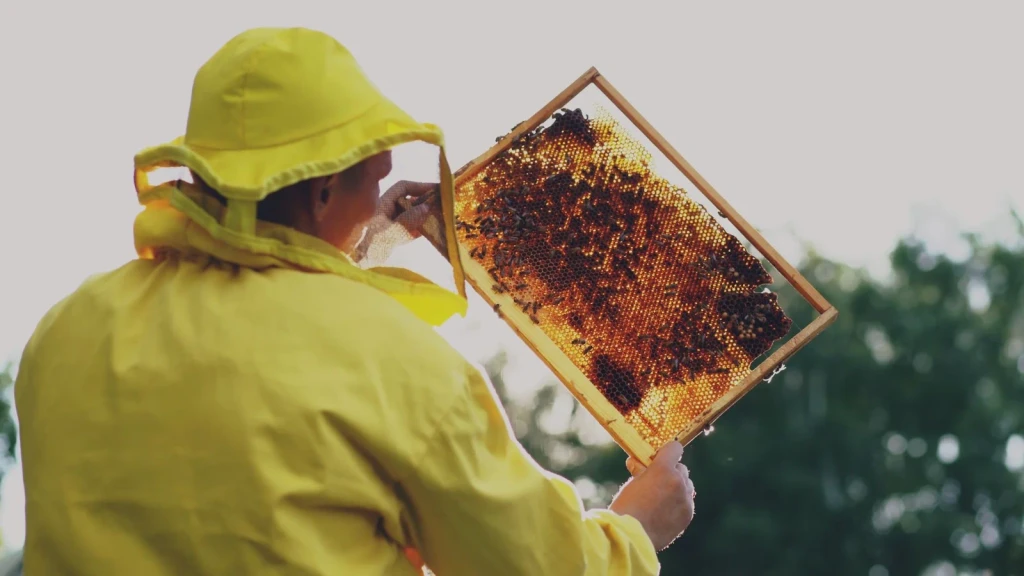
Daylight inspection of a honeycomb frame. The beekeeper's careful attention reveals the architecture of the colony.
Photograph by Vitaly Gariev, via Pexels.
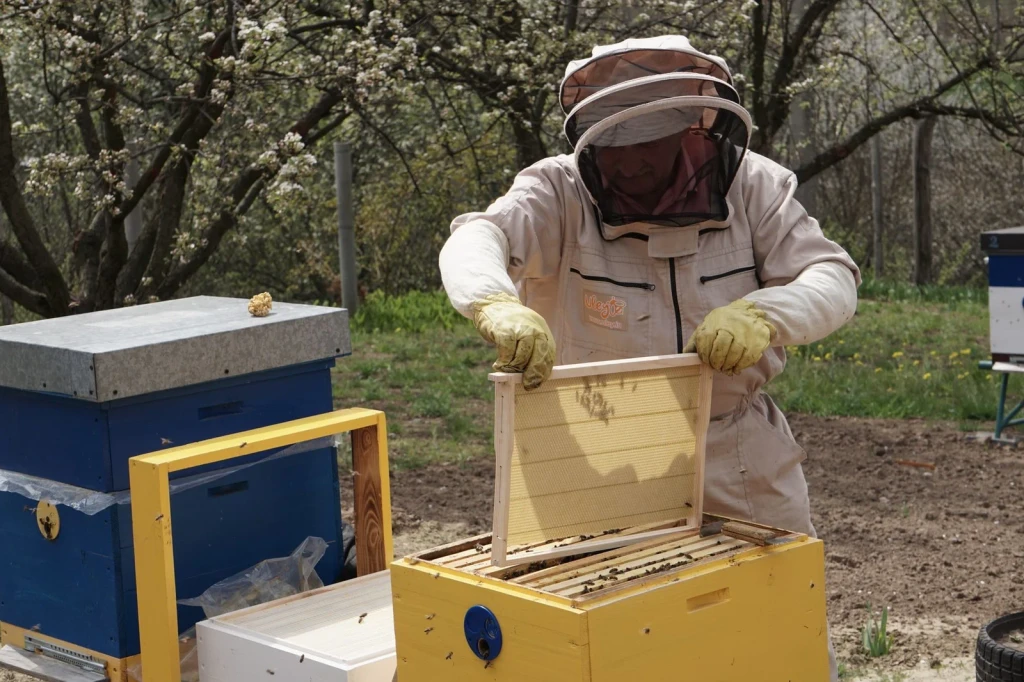
A suited beekeeper opens a hive in a lush setting. This moment of access bridges the boundary between keeper and kept.
Photograph by Dmytro Glazunov, via Pexels.
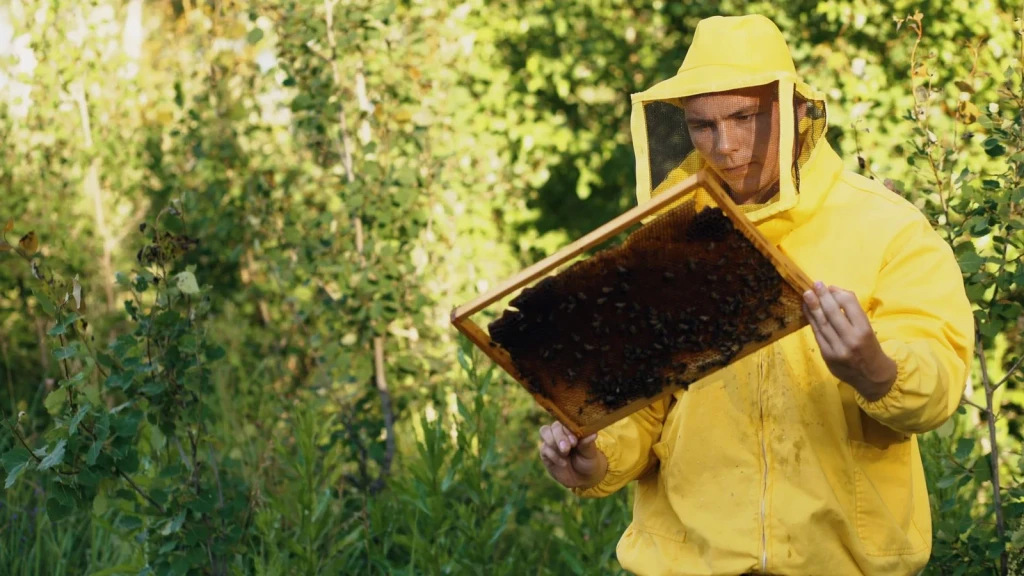
A beekeeper in protective suit examines a frame outdoors. The bright yellow gear marks the boundary between human and hive.
Photograph by Vitaly Gariev, via Pexels.
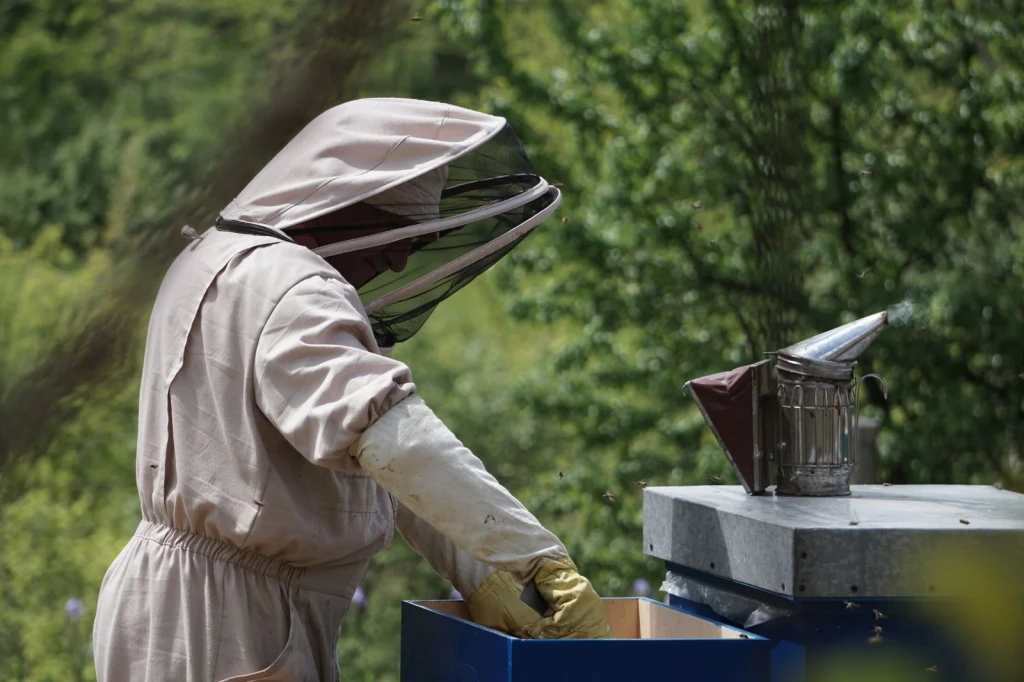
A beekeeper uses a bee smoker while inspecting a frame in a lush setting. Smoke is an ancient tool that calms bees, allowing beekeepers to work without harm to the colony.
Photograph by Dmytro Glazunov, via Pexels.
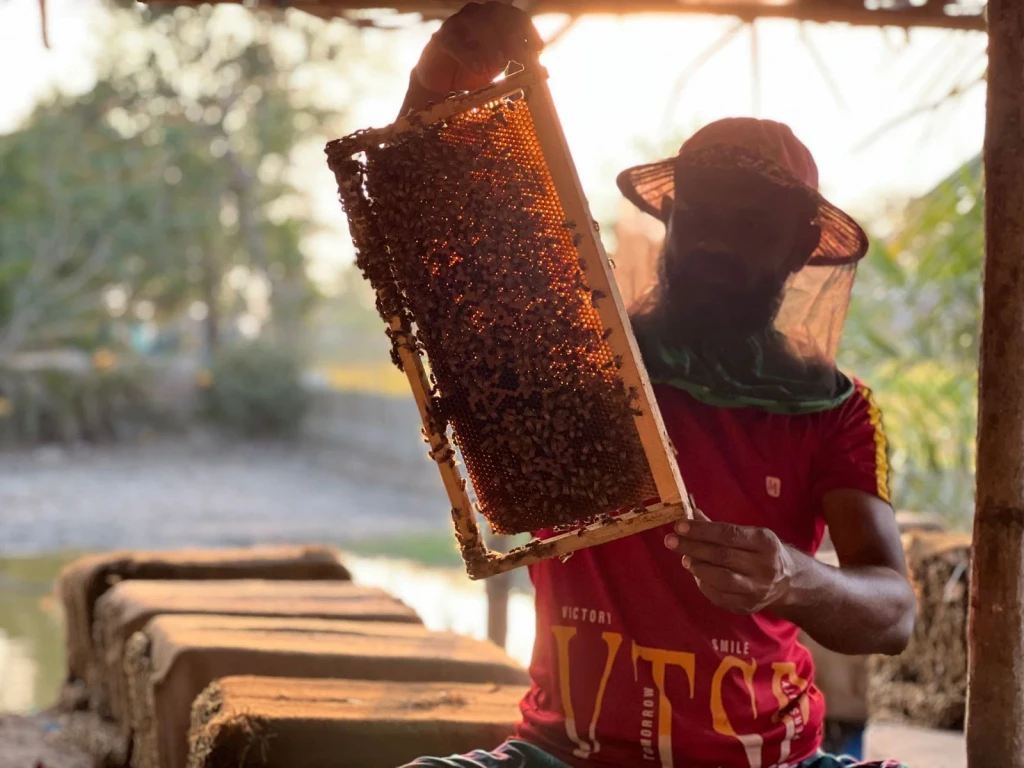
At an apiary in Shyamnagar, Bangladesh, a beekeeper inspects honeycomb closely. This moment shows the detailed observation required to maintain a healthy hive.
Photograph by Abul Kalam Azad, via Pexels.
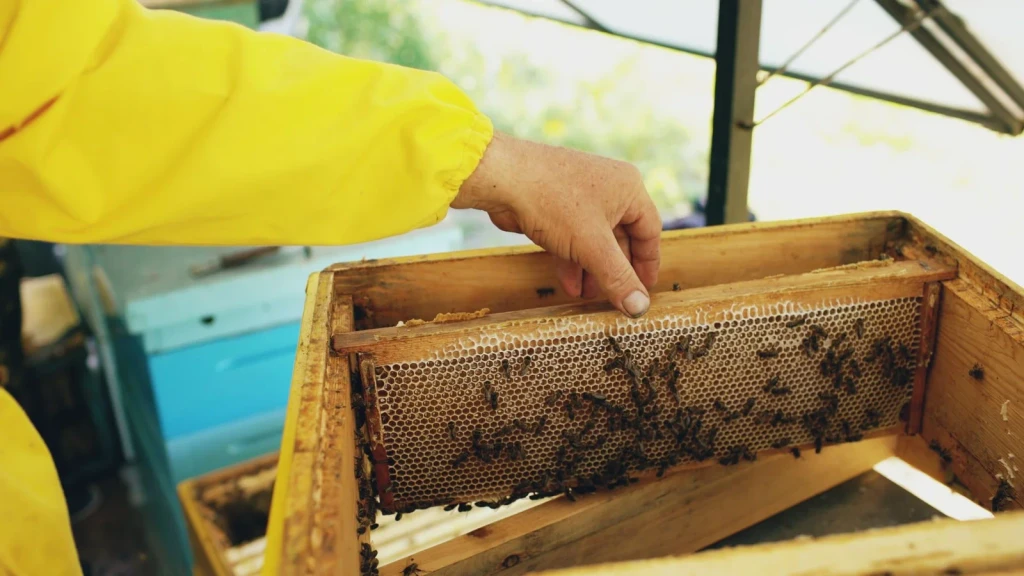
A close-up of hands examining honeycomb inside the hive. This intimate scale shows the precision and care required in every interaction between beekeeper and colony.
Photograph by Vitaly Gariev, via Pexels.
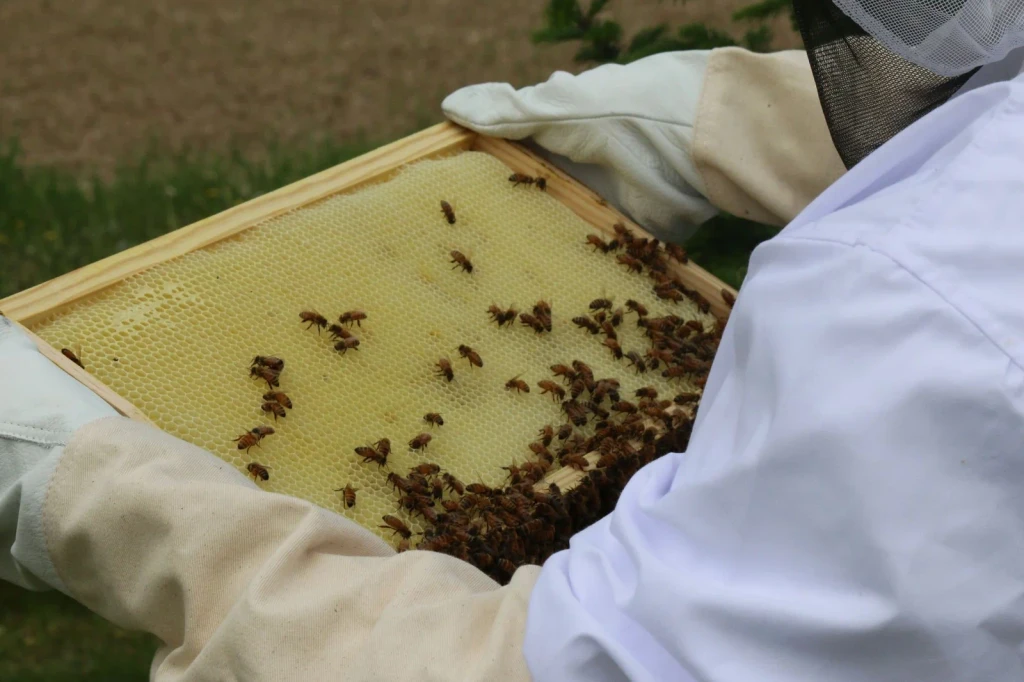
A beekeeper examines a frame full of bees, dressed in protective gear. The inspection of living combs is central to understanding the colony's needs.
Photograph by Denise Cusack, via Pexels.
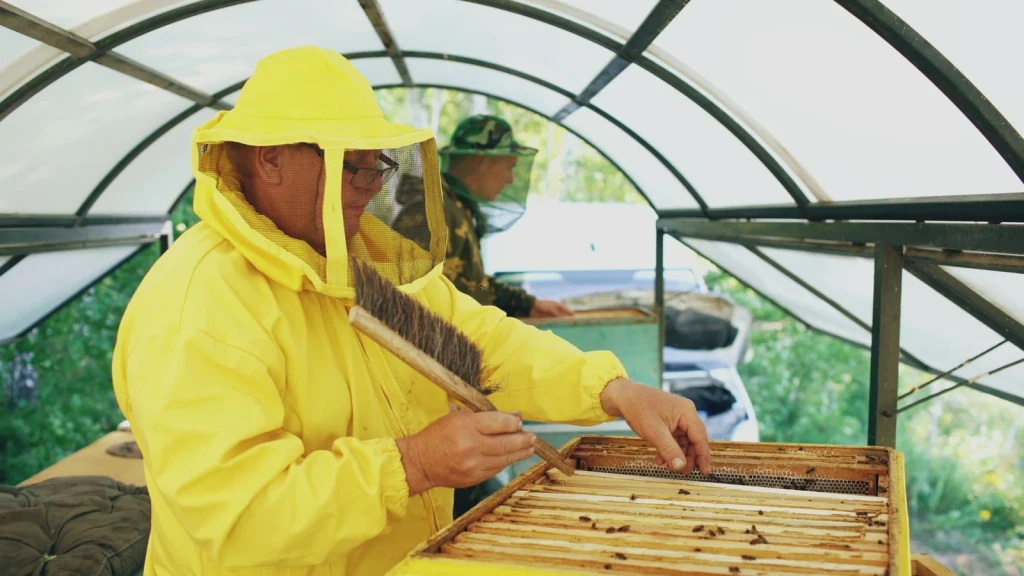
Two beekeepers examine honeycombs beneath an outdoor shelter. The setup shows how beekeepers create controlled conditions to work safely and thoughtfully with their hives.
Photograph by Vitaly Gariev, via Pexels.
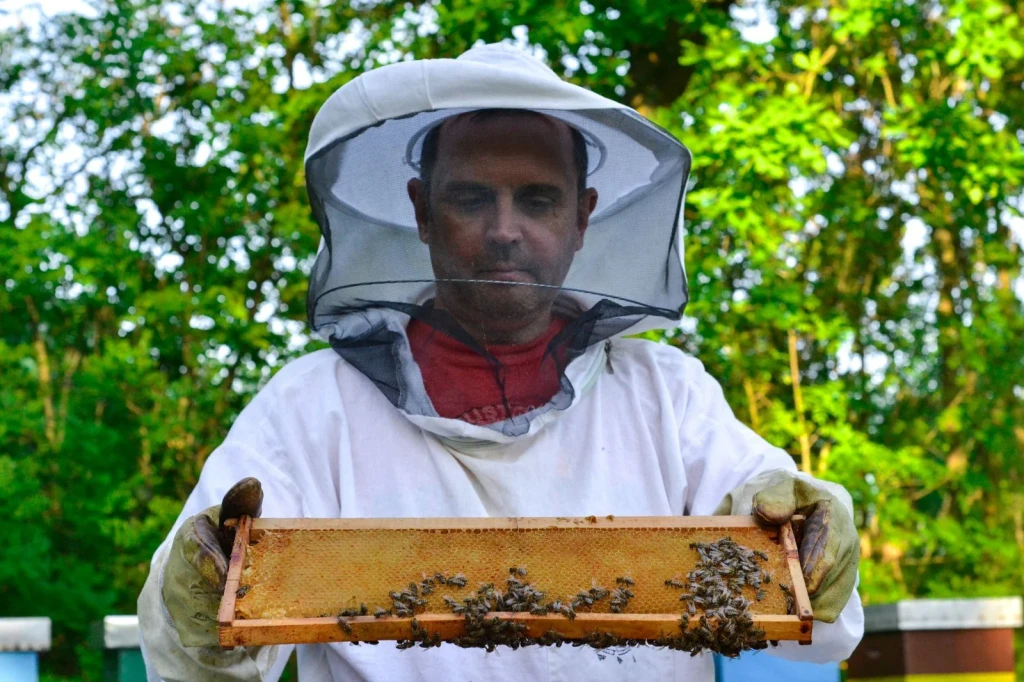
A frame of bees under examination in a sunny apiary. The light exposes the intricate labor happening within.
Photograph by Djordje Vezilic, via Pexels.
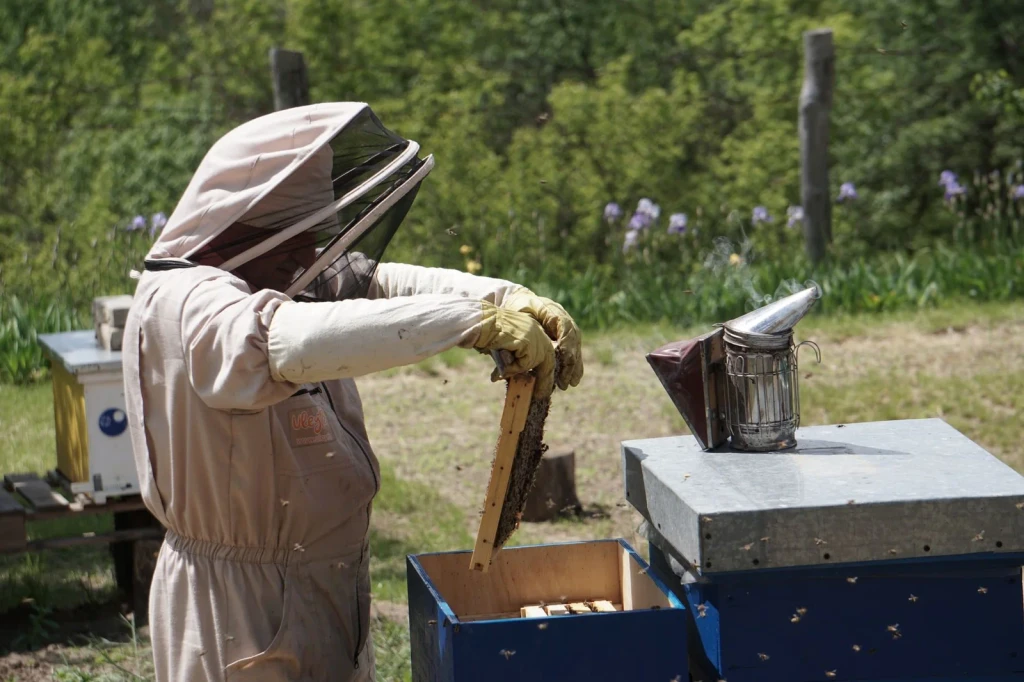
A beekeeper in full protective suit inspects a hive frame. The gear speaks to both respect for the bees and the physical reality of working closely with them.
Photograph by Dmytro Glazunov, via Pexels.
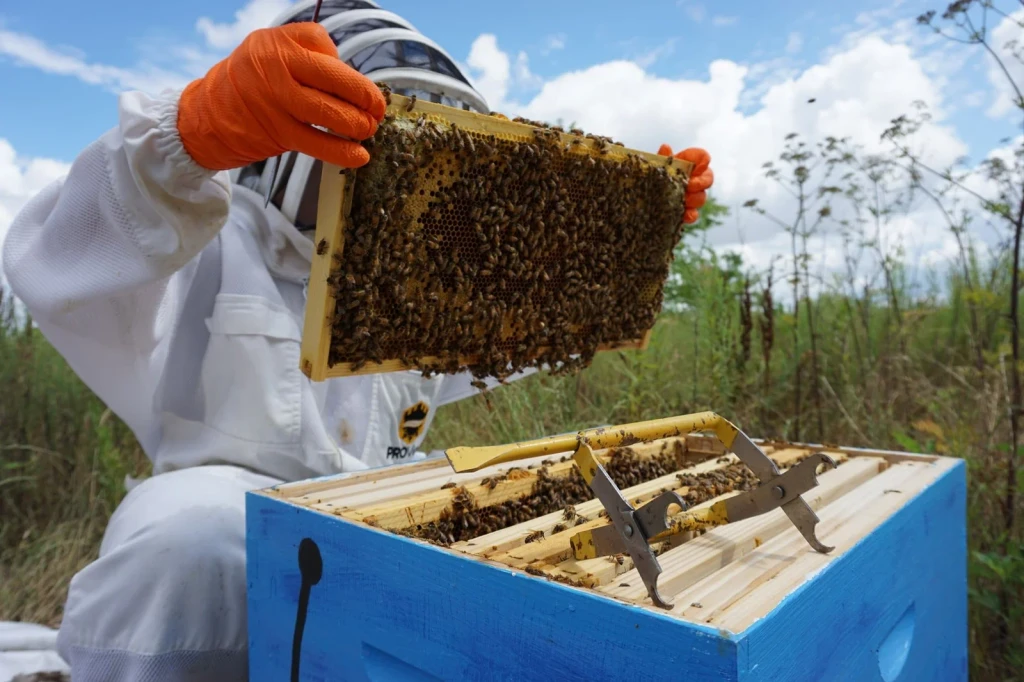
A beekeeper works with honeycomb during the day, conducting the careful inspection that keeps a hive healthy. This everyday practice connects modern beekeeping to centuries of human stewardship.
Photograph by Laurel Gougler, via Pexels.
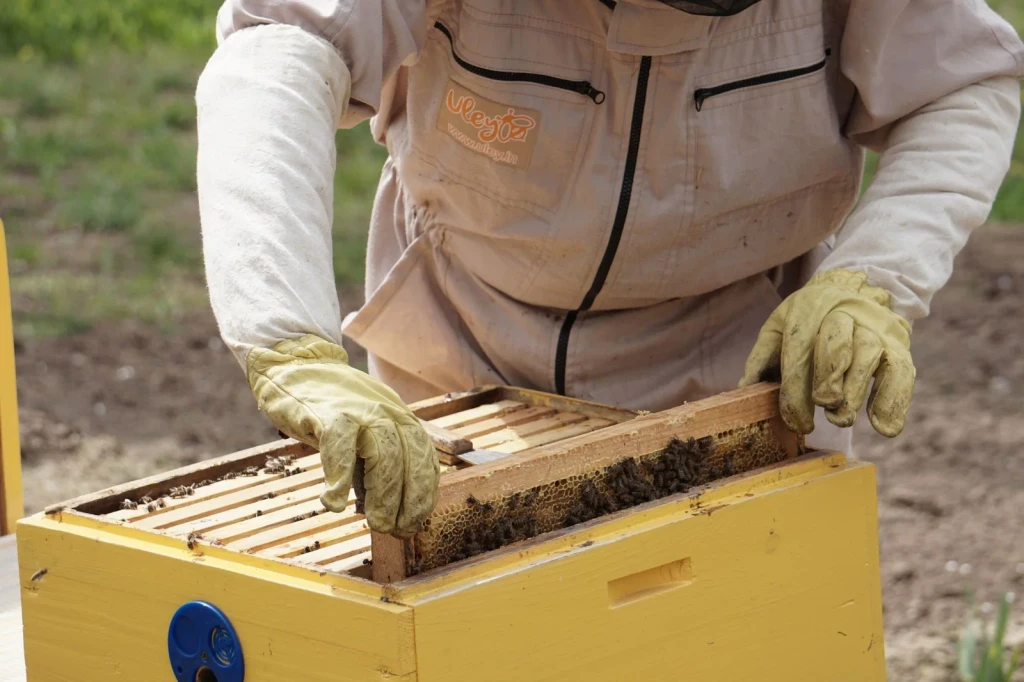
A beekeeper in protective gear works with a honey frame, the essential tool for tending a hive. This image captures the everyday practice that connects humans to their colonies.
Photograph by Dmytro Glazunov, via Pexels.
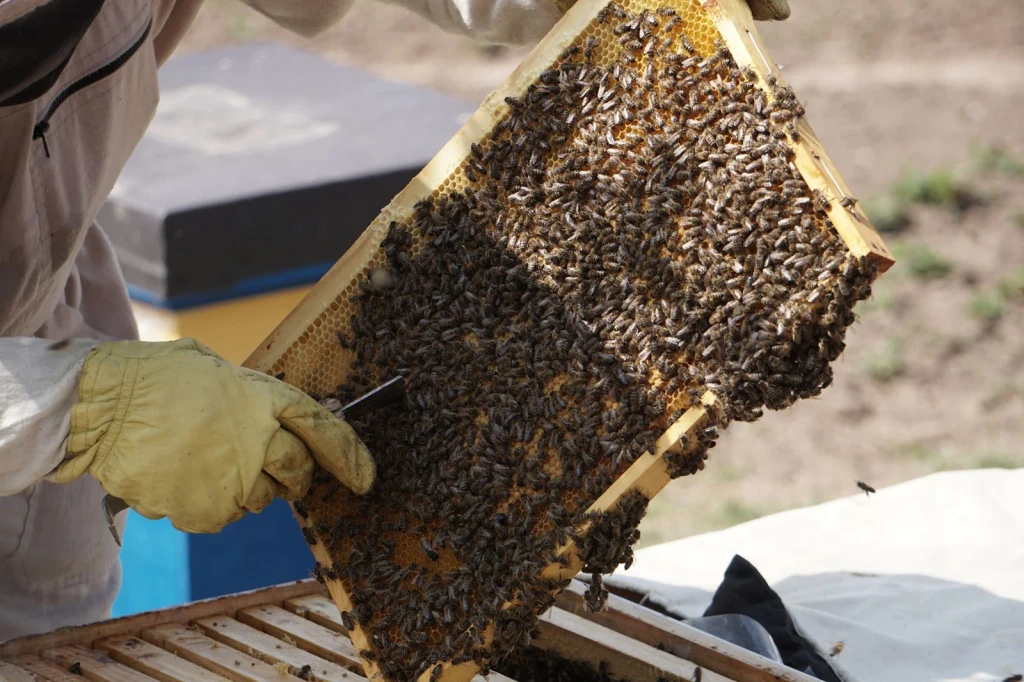
A beekeeper inspects a hive frame outdoors. This simple act connects human practice to the rhythms of the natural world.
Photograph by Dmytro Glazunov, via Pexels.
