3D Gallery
Dyes: The Chemistry That Made the World Vivid
Enter gallery
Dyes: The Chemistry That Made the World Vivid is a 3D virtual gallery on MyGallery3D, a walkable online exhibition of 14 works. Step inside and explore it in your browser: no app, no headset.
Step into this 3D virtual museum of dyes, which you can walk through in your browser, and consider what colour used to cost.
Twelve thousand snails of Murex brandaris yield no more than 1.4 grams of pure Tyrian purple, enough to colour only the trim of a single garment. The historian Theopompus reported that purple for dyes fetched its weight in silver at Colophon. By the fourth century AD, Roman sumptuary laws had tightened until only the emperor was permitted to wear it.
Making colour stank. At Tyre the snails were collected in large vats and left to decompose, producing a stench that ancient authors mentioned. The Egyptian Papyrus of Anastasi laments that the hands of the dyer reek like rotting fish. So pervasive was the smell that the Talmud granted women the right to divorce any husband who became a dyer after marriage.
Indigo was called blue gold. In 1897, 7,000 square kilometres were planted with indican-producing crops, mainly in India, where cultivators had already revolted against European planters in the Indigo revolt of 1859. In South Carolina the crop was built on plantation slavery. Today roughly 80,000 tonnes are made synthetically each year, and a single pair of jeans takes 3 to 12 grams.
In 1856 an 18 year old, William Perkin, was trying to make quinine in his home lab and produced a purple he called mauve. By the end of 1858 eight firms were making aniline dyes; by 1864 there were 68. London, said Punch, had fallen ill with the mauve measles. The madder market collapsed after synthetic alizarin arrived in 1869.
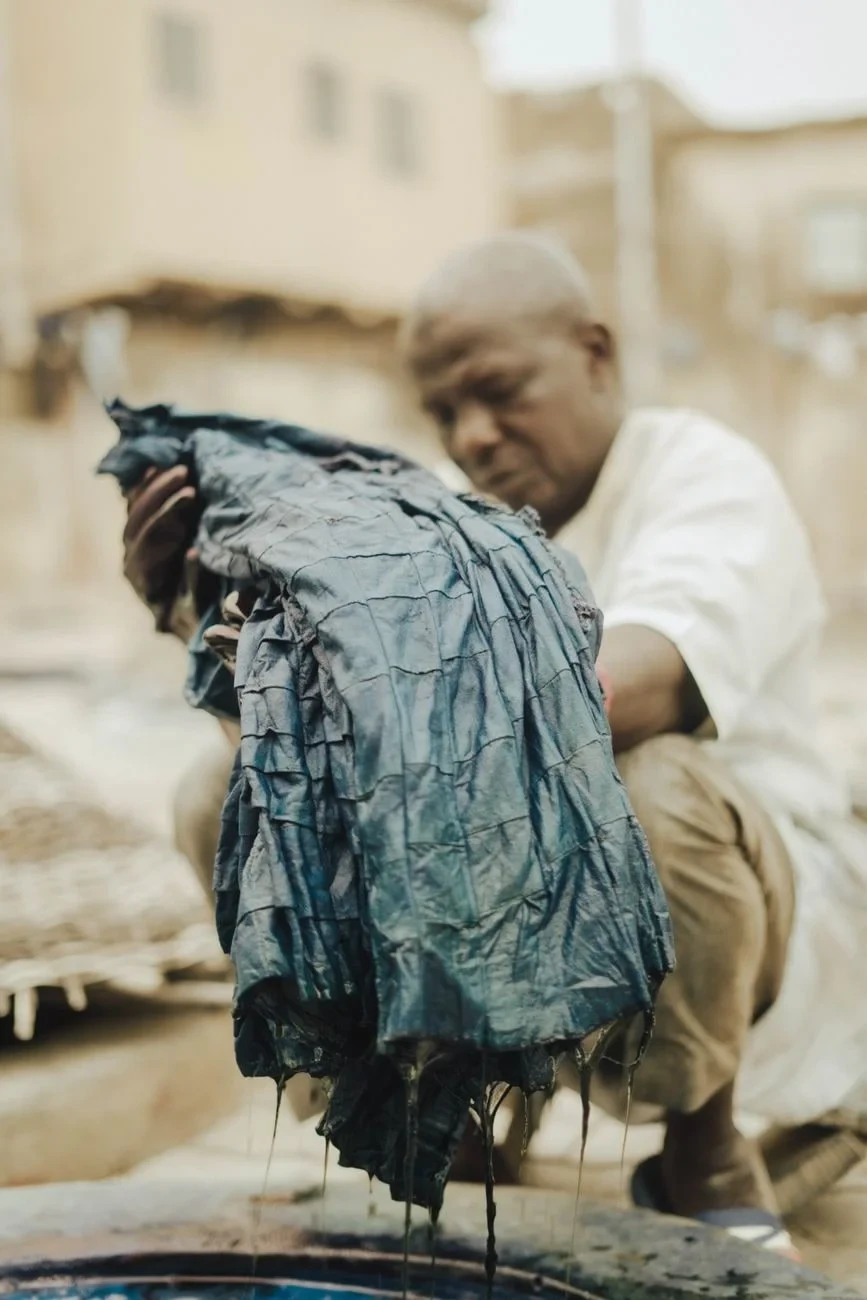
An elderly man processes leather using indigo dye at an outdoor tannery. The chemistry of dyes extended across multiple materials and trades.
Photograph by KAMAL IG, via Pexels.
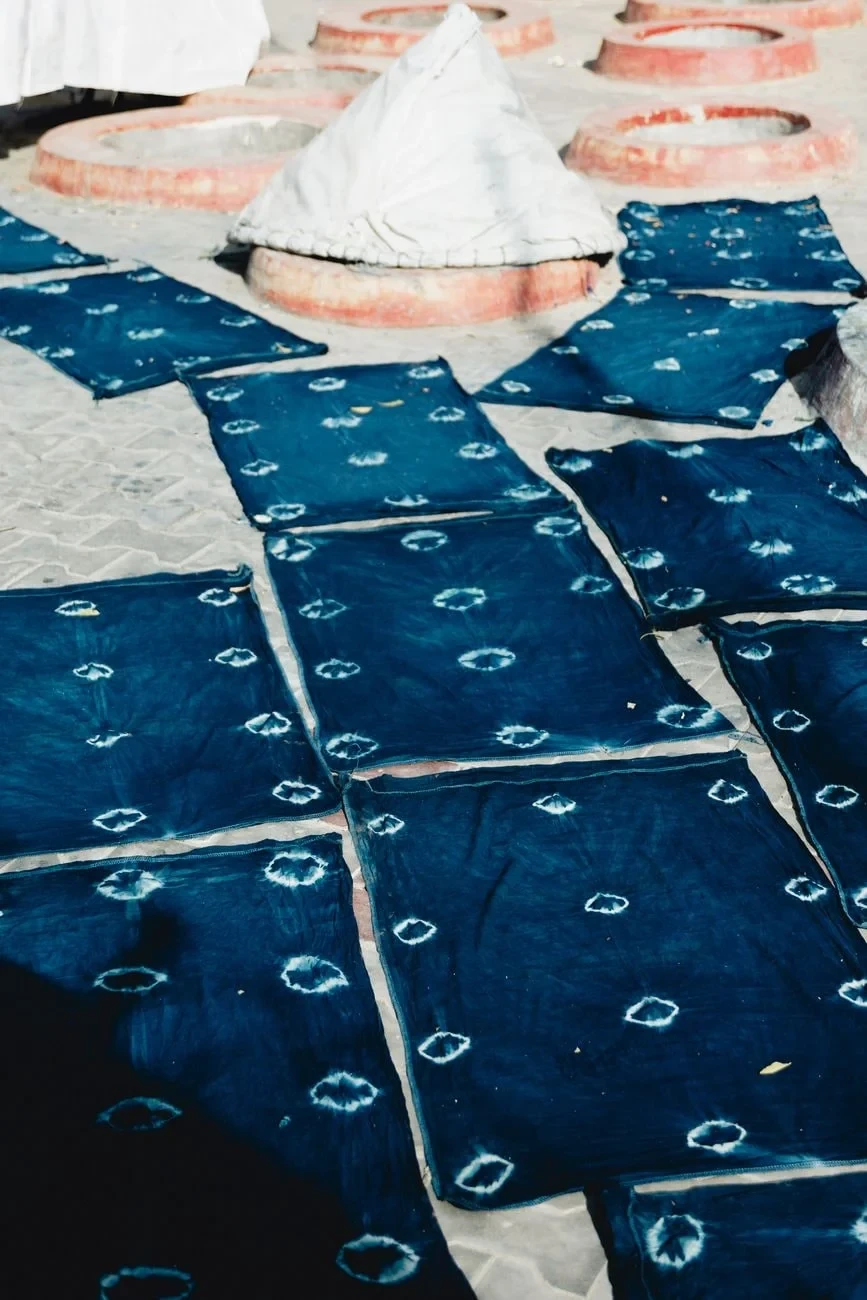
Freshly dyed textiles hang to dry outdoors. The image documents traditional methods of working with indigo, one of history's most important dyes.
Photograph by Usman AbdulrasheedGambo, via Pexels.
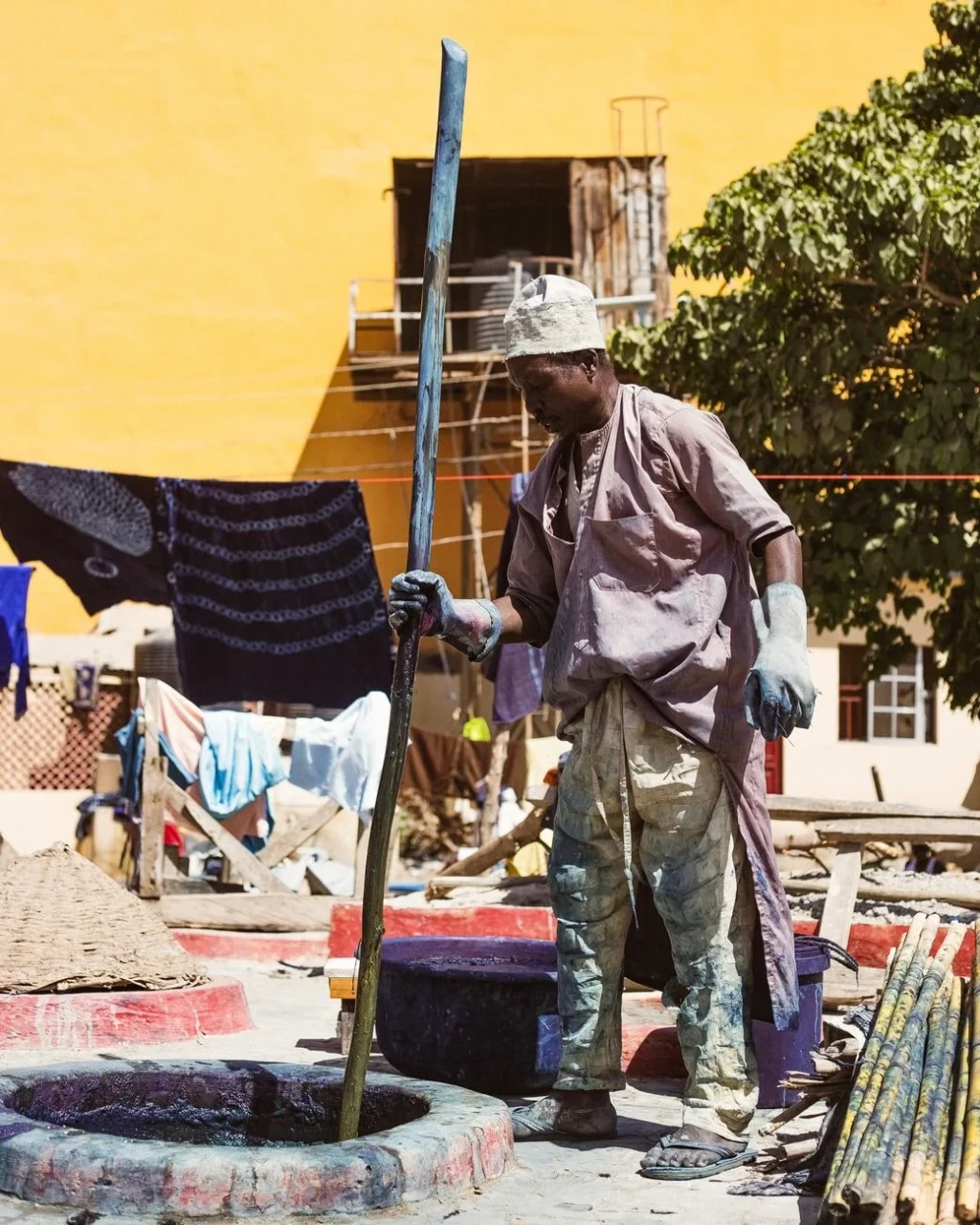
An artisan stirs indigo dye at an outdoor pit while colorful fabrics dry nearby. The image shows the full cycle of the dyeing process.
Photograph by Umar Faruq, via Pexels.
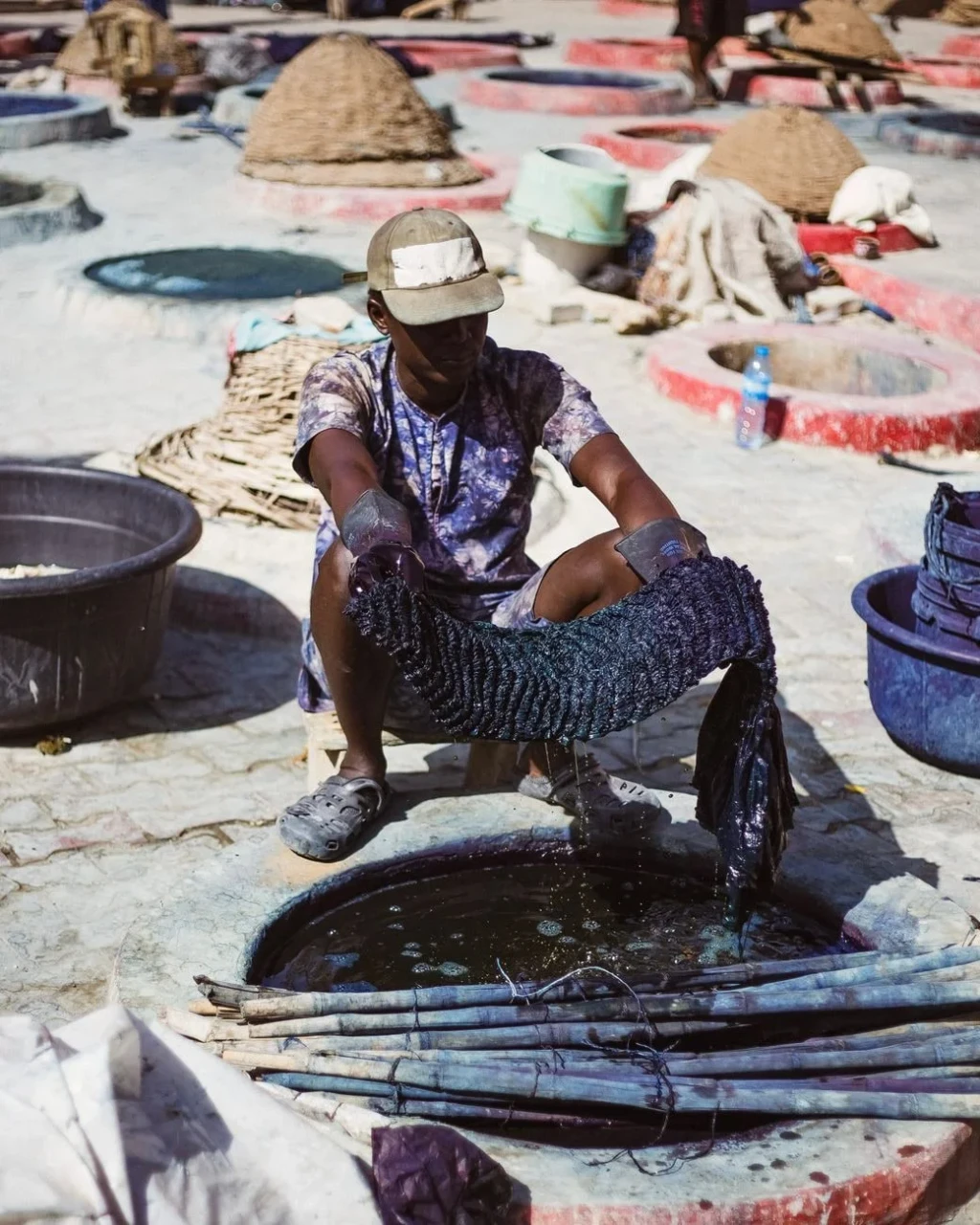
A man works with vibrant indigo dyes in an outdoor setting. The image captures the skill and tradition of fabric dyeing by hand.
Photograph by Umar Faruq, via Pexels.
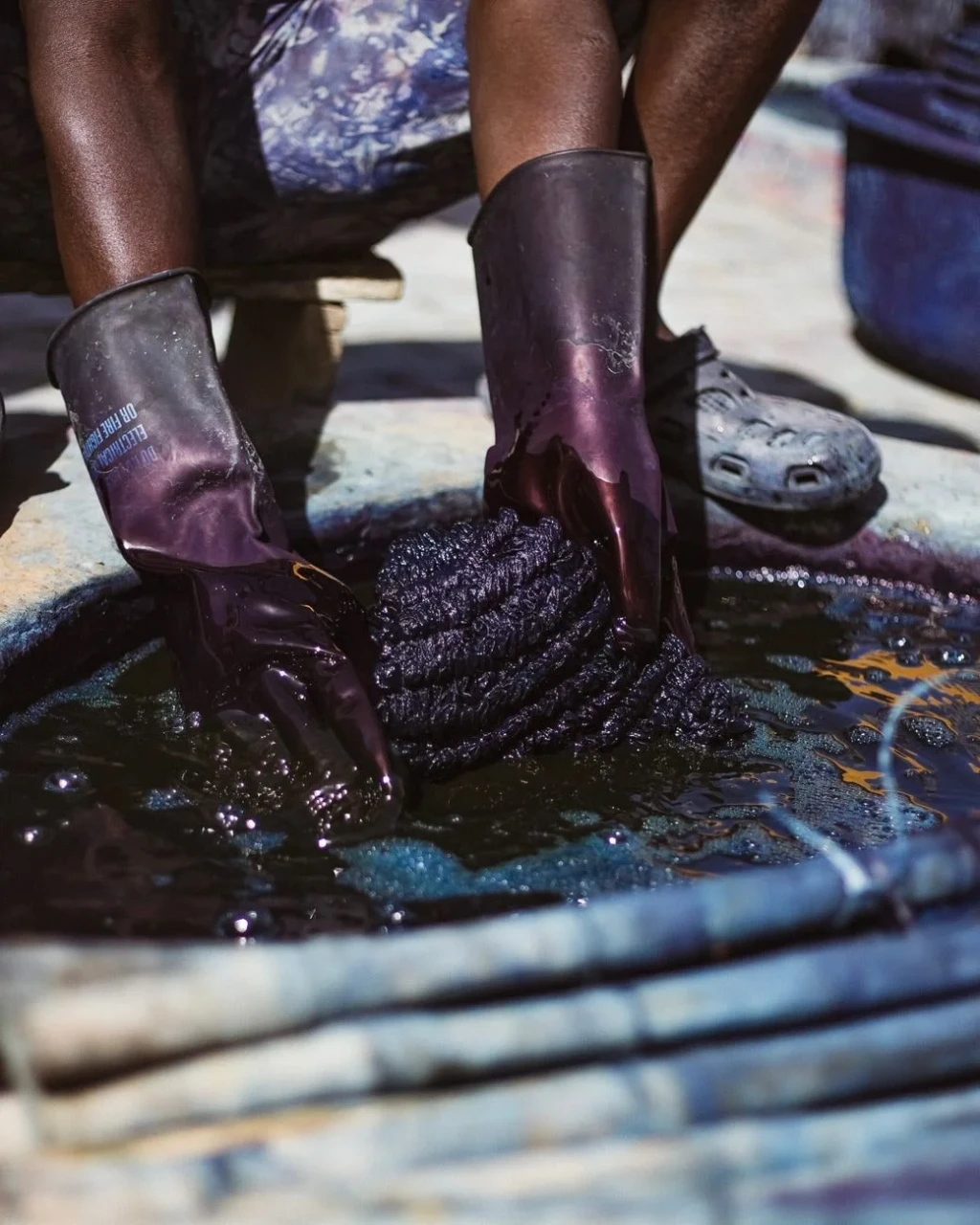
Gloved hands dye fabric in deep indigo, showcasing the skill and care required in traditional craftsmanship with one of history's most important dyes.
Photograph by Umar Faruq, via Pexels.
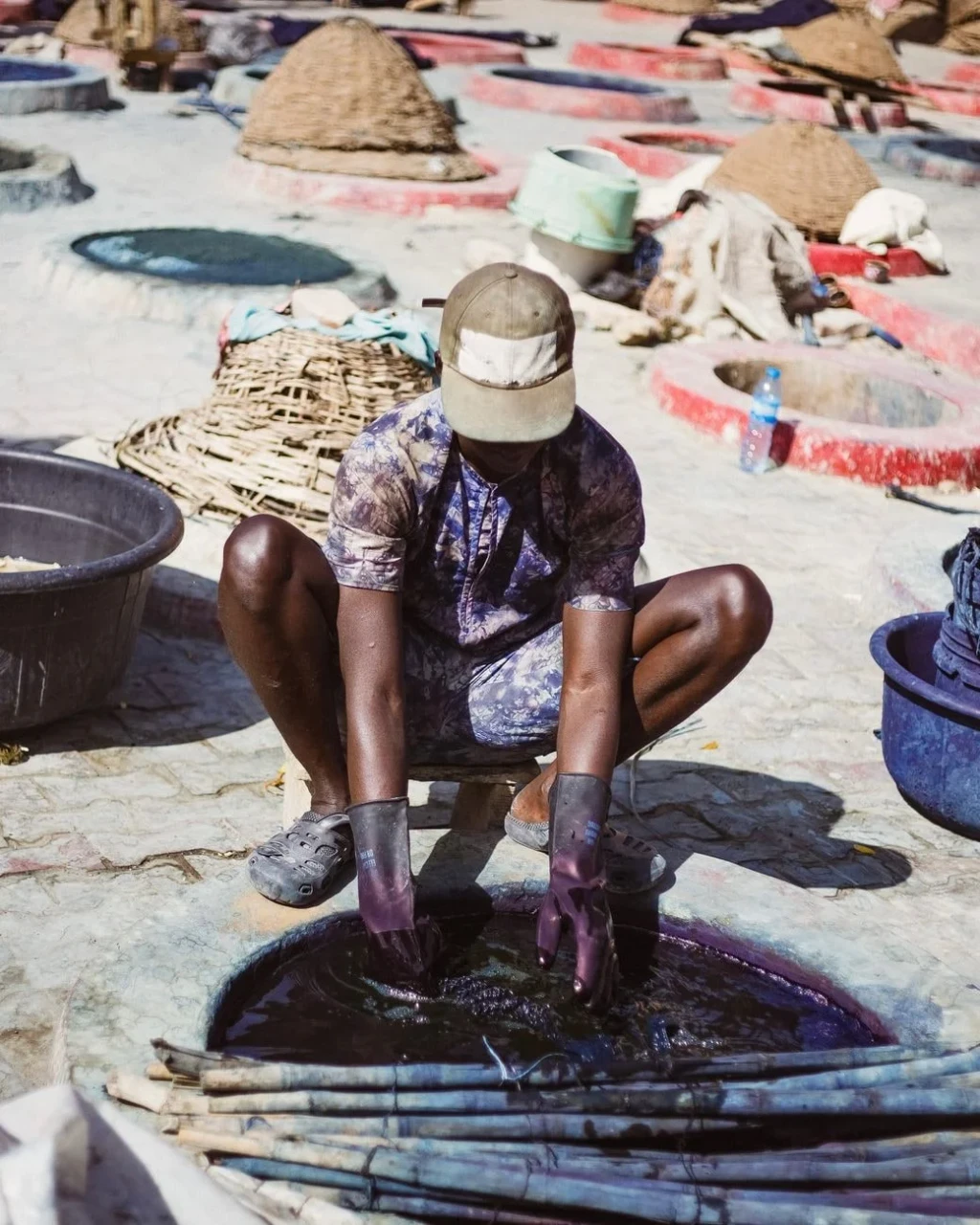
An artisan at work in an outdoor workshop, engaged in the traditional practice of fabric dyeing. A glimpse into the hands-on methods that have colored textiles for generations.
Photograph by Umar Faruq, via Pexels.
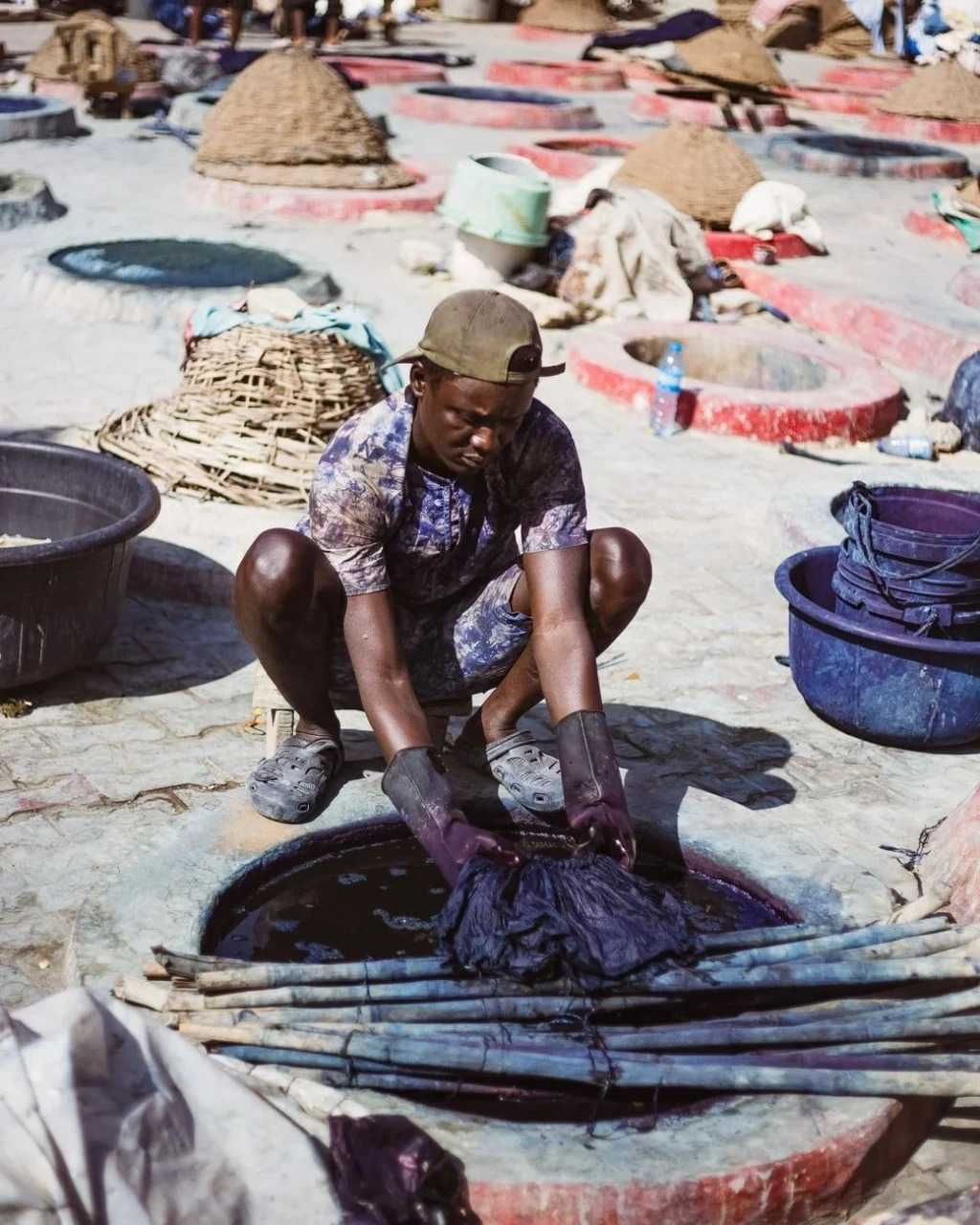
Traditional cloth dyeing takes place outdoors, surrounded by the specialized equipment and dye pits essential to the craft.
Photograph by Umar Faruq, via Pexels.
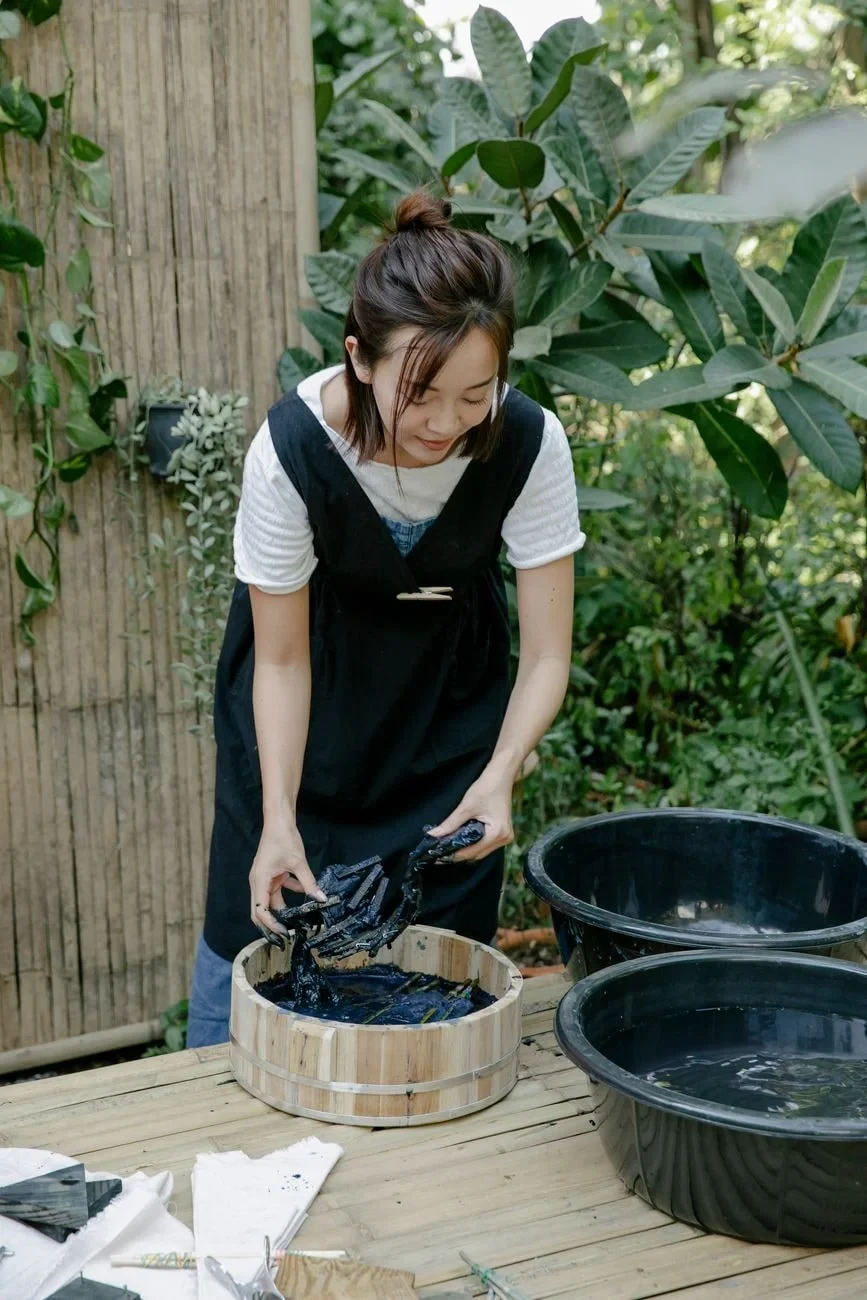
A young woman engages in fabric dyeing outdoors. The garden setting shows how this chemistry was integrated into everyday working spaces.
Photograph by Teona Swift, via Pexels.
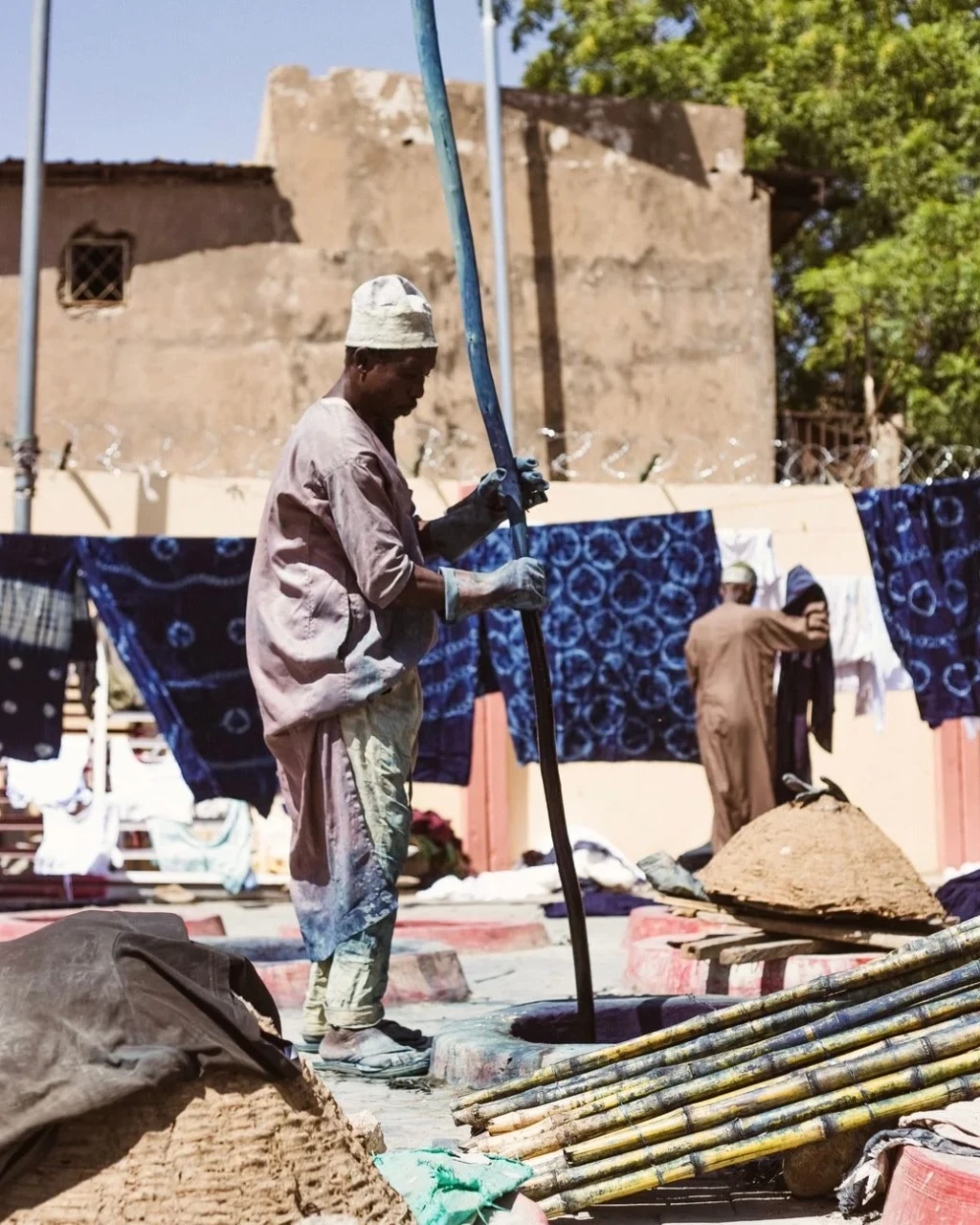
An artisan creates indigo patterns on fabric in an outdoor setting. The image captures a vibrant cultural practice centered on this historically significant dye.
Photograph by Umar Faruq, via Pexels.
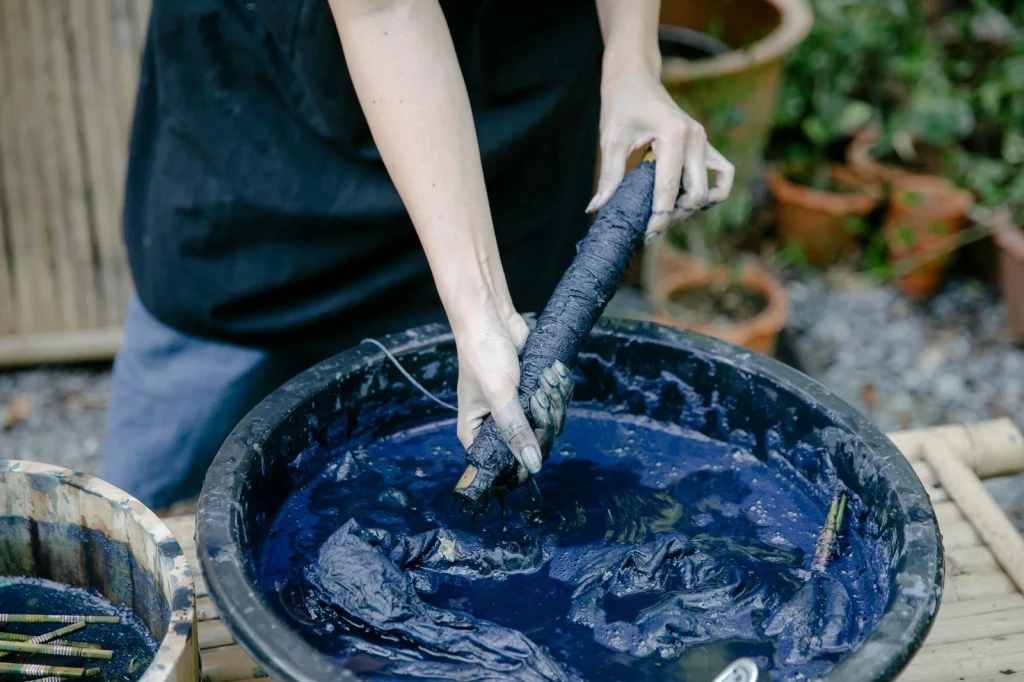
Hands work with indigo dye in an outdoor setting, emphasizing the traditional techniques that have made this blue pigment prized across cultures for centuries.
Photograph by Teona Swift, via Pexels.
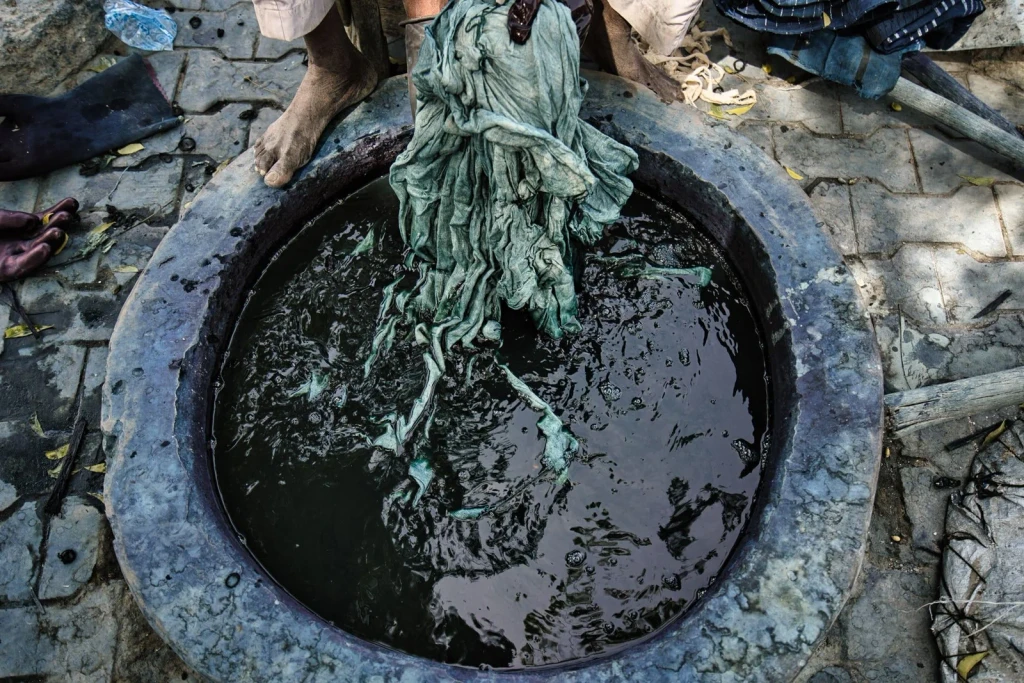
A close-up study of African craftsmanship in action. This image captures the skilled hands and techniques that have colored textiles for generations.
Photograph by Adedoyin ADEROMOLA, via Pexels.
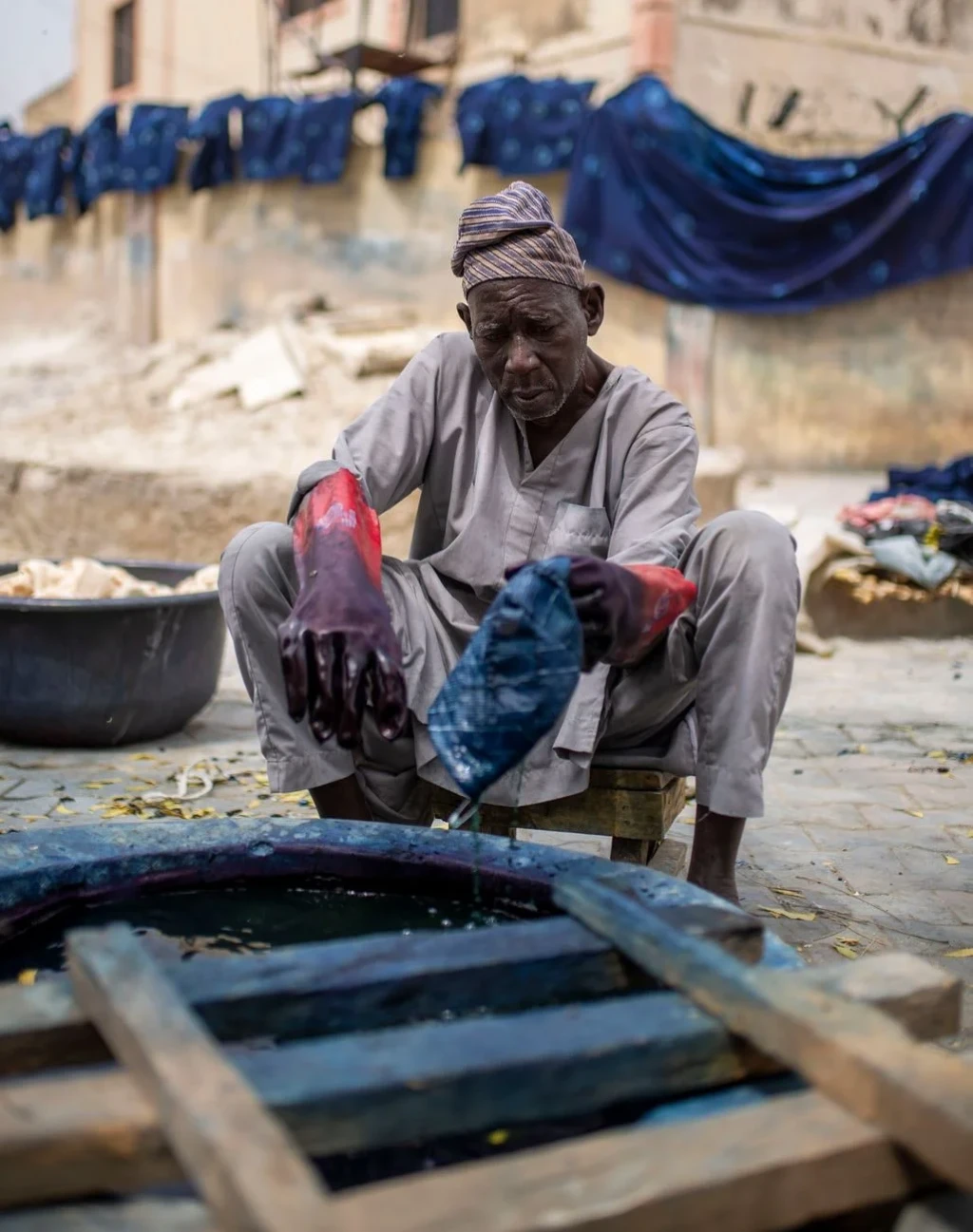
An elderly man works with fabric dyes in an outdoor setting, wearing traditional attire. Experience and knowledge passed through generations shape this craft.
Photograph by Sir Mk, via Pexels.
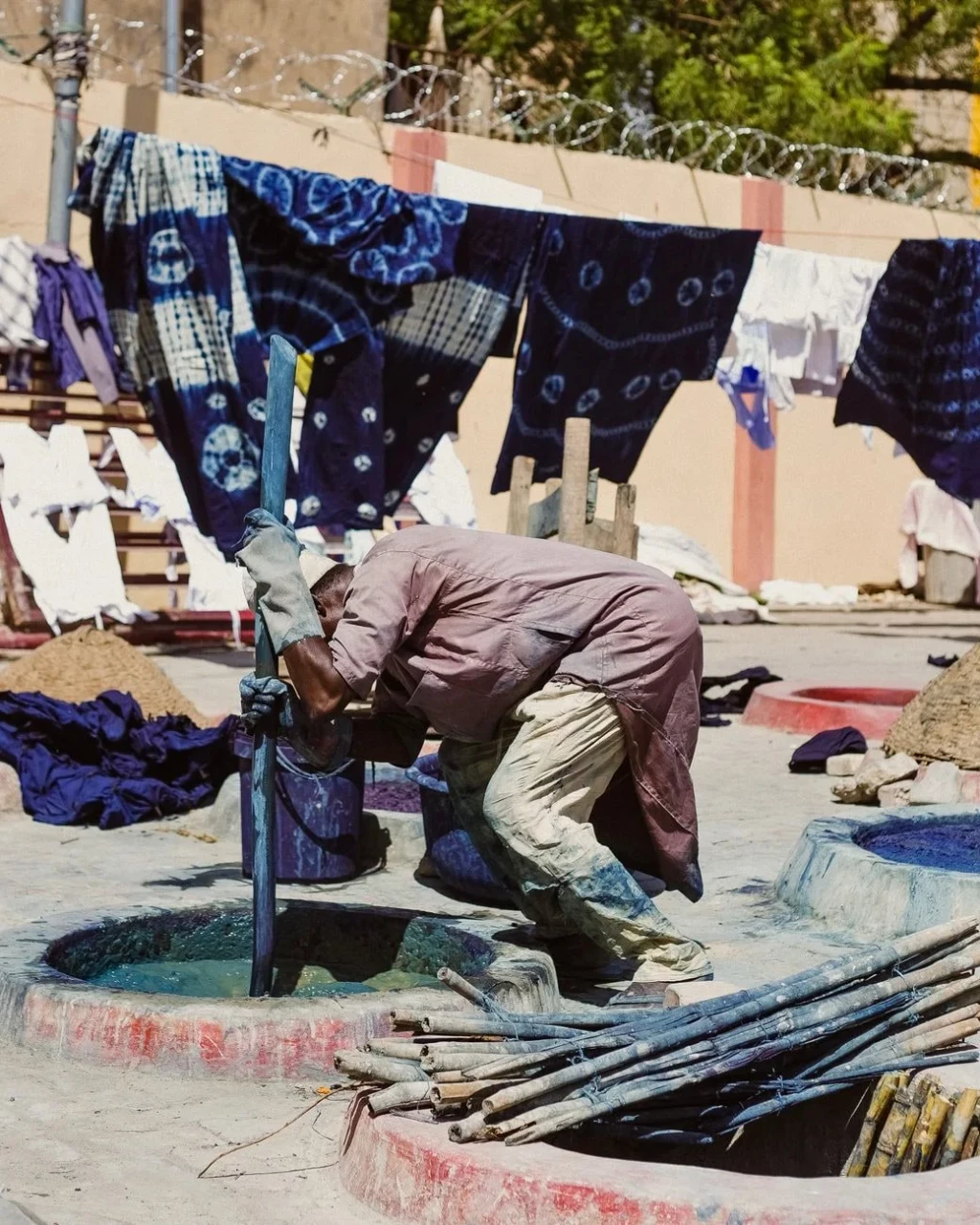
An artisan works outdoors under bright sunlight, dyeing fabrics with skill and intention. Light and chemistry meet in this moment of textile creation.
Photograph by Umar Faruq, via Pexels.
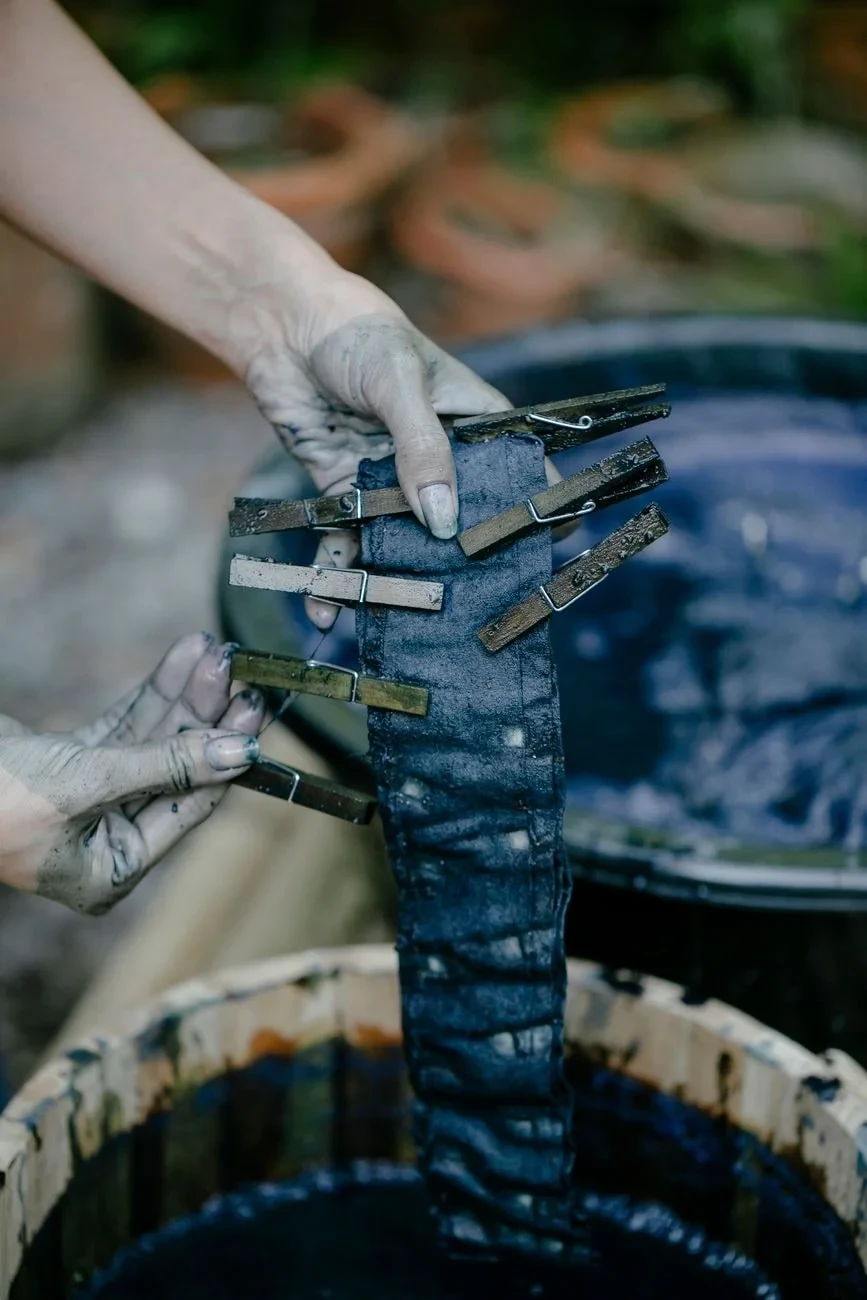
Hands manipulate fabric with clothespins, creating patterns through tie-dyeing outdoors. A close look at one of the most fundamental resist-dyeing techniques.
Photograph by Teona Swift, via Pexels.
