3D Gallery
Glass Is a Liquid We Learned to Freeze
Enter gallery
Glass Is a Liquid We Learned to Freeze is a 3D virtual gallery on MyGallery3D, a walkable online exhibition of 12 works. Step inside and explore it in your browser: no app, no headset.
Walk through this 3D virtual gallery of glass in your browser and look at a liquid that was frozen before it could become a crystal.
Cool a melt fast enough and its atoms never manage to arrange themselves into a crystal. The disorder of the liquid is locked in place, and that is glass: a solid with no long-range order, which is why light passes through it instead of scattering. The old story that windows sag because glass slowly flows is not supported by the evidence. It is frozen, and it stays frozen.
Glass is stronger than most metals. Pure, flawless glass has a theoretical tensile strength of 14 to 35 gigapascals. Real glass never comes close: scratches, bubbles and microscopic flaws drag most commercial glass down to 14 to 175 megapascals. Draw it carefully into flawless fibres and it climbs back to 11.5 gigapascals. The weakness is not the material, it is the damage.
The glassmakers' guild ruled that any glassworker who left Venice without permission must return. If he refused, his family was imprisoned. If he still did not return, an assassin was sent. A law of November 8, 1291 then confined the industry to the island of Murano, partly against fire and partly to keep the recipes where the state could watch them. Revealing them was punishable by death.
Glassblowing was invented on the Syro-Judean coast in the 1st century BC. Blow air into a gather of molten glass and it inflates, and because the thin parts cool and stiffen faster than the thick ones, the wall comes out even. It made vessels inexpensive compared to pottery, and glass, until then a luxury, became the Roman plastic.
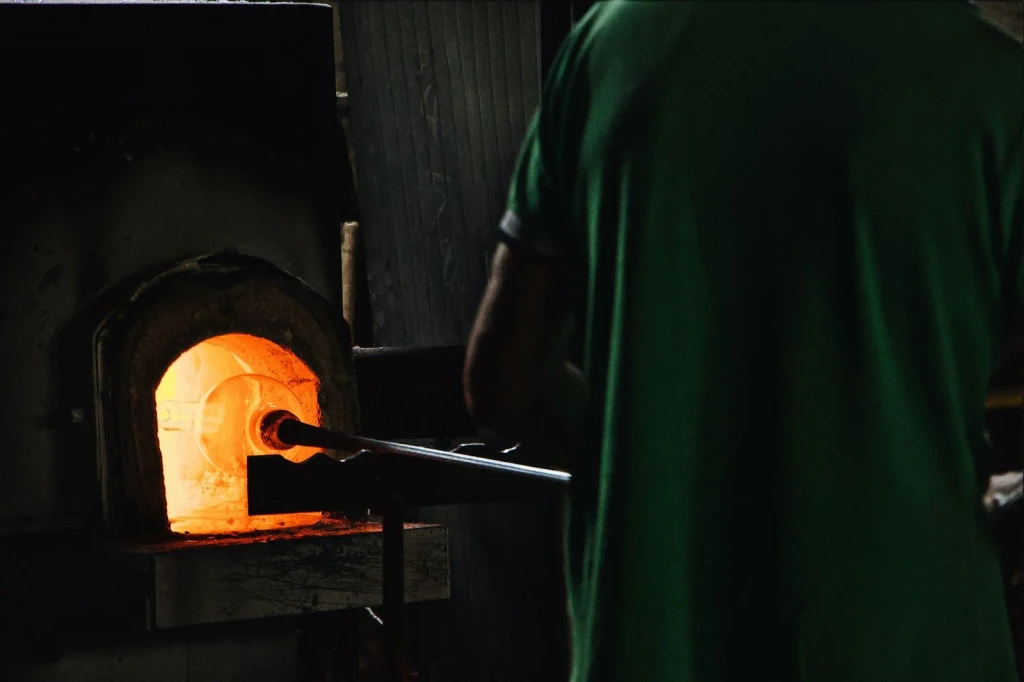
A worker stands before the furnace, blowing glass from behind. The photograph emphasizes the physical relationship between artisan and heat source.
Photograph by Maël BALLAND, via Pexels.
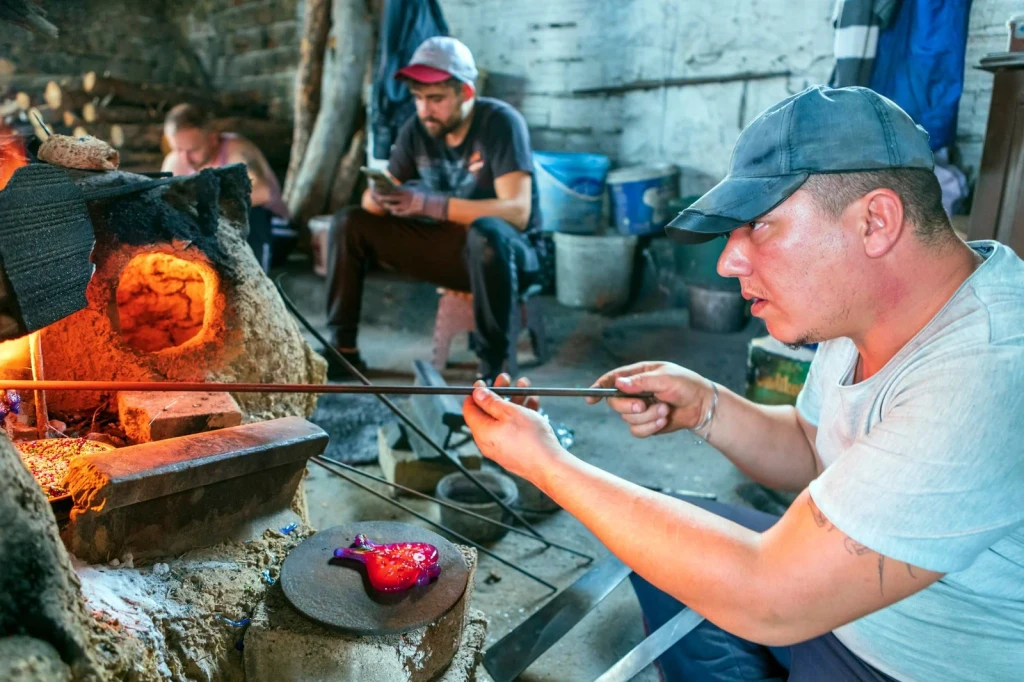
An artisan glassblows a vibrant piece within a traditional workshop. The setting anchors the work in established methods of craftsmanship.
Photograph by Hkn clk, via Pexels.
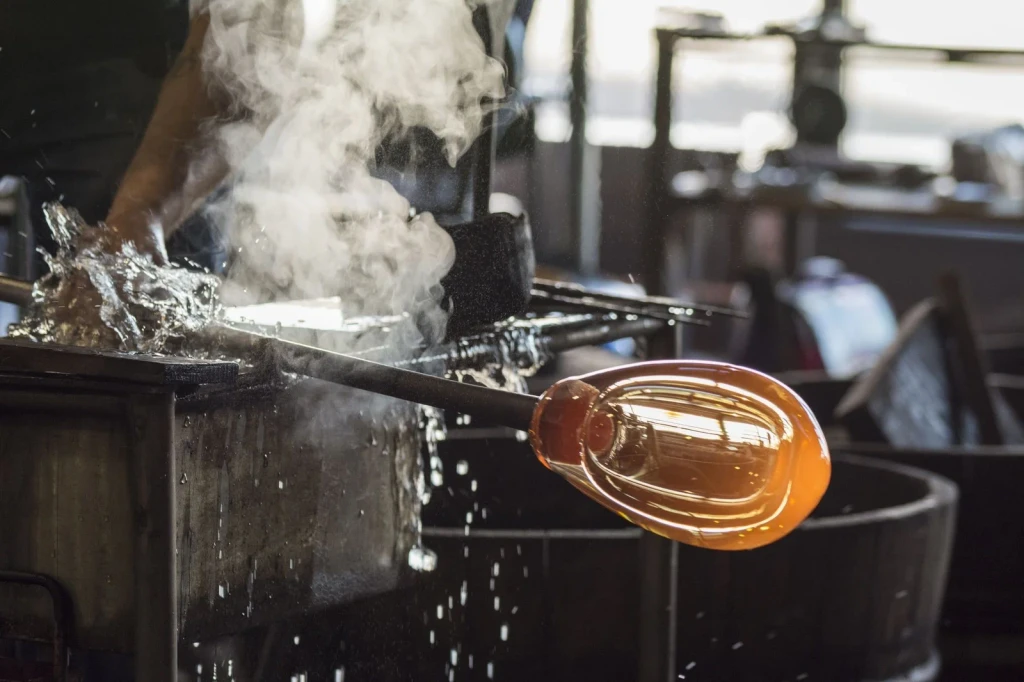
A glassblower engages in the intricate process of shaping molten glass. The photograph documents the skilled attention required to work with this fluid, demanding material.
Photograph by Pixabay, via Pexels.
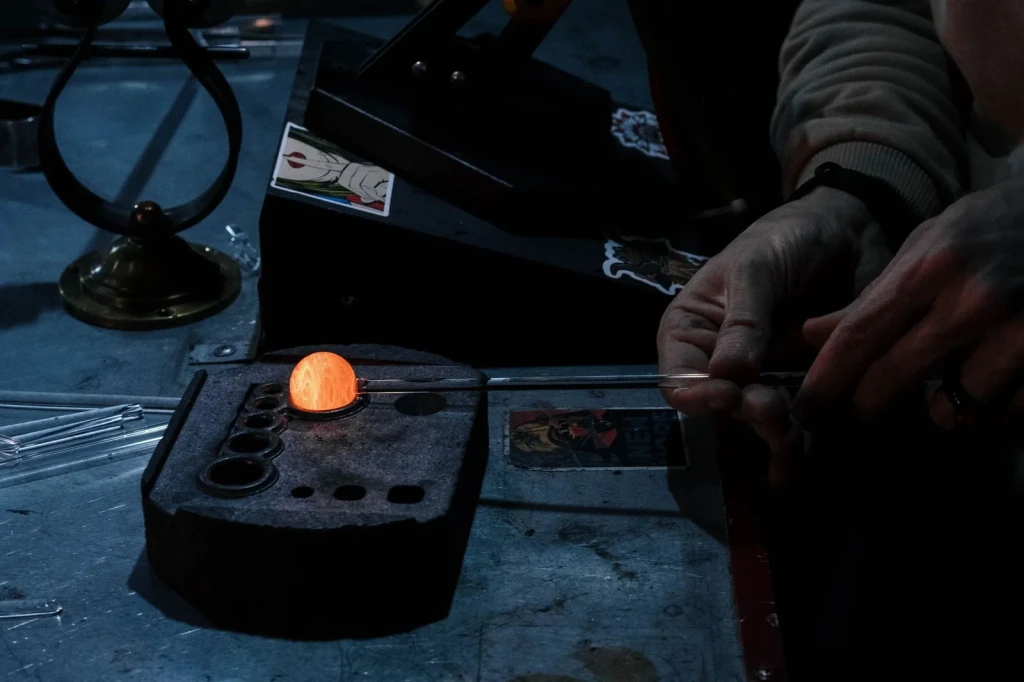
Glass takes shape over flame through skilled hands. The workshop setting emphasizes both the artistry and the precision required.
Photograph by cottonbro studio, via Pexels.
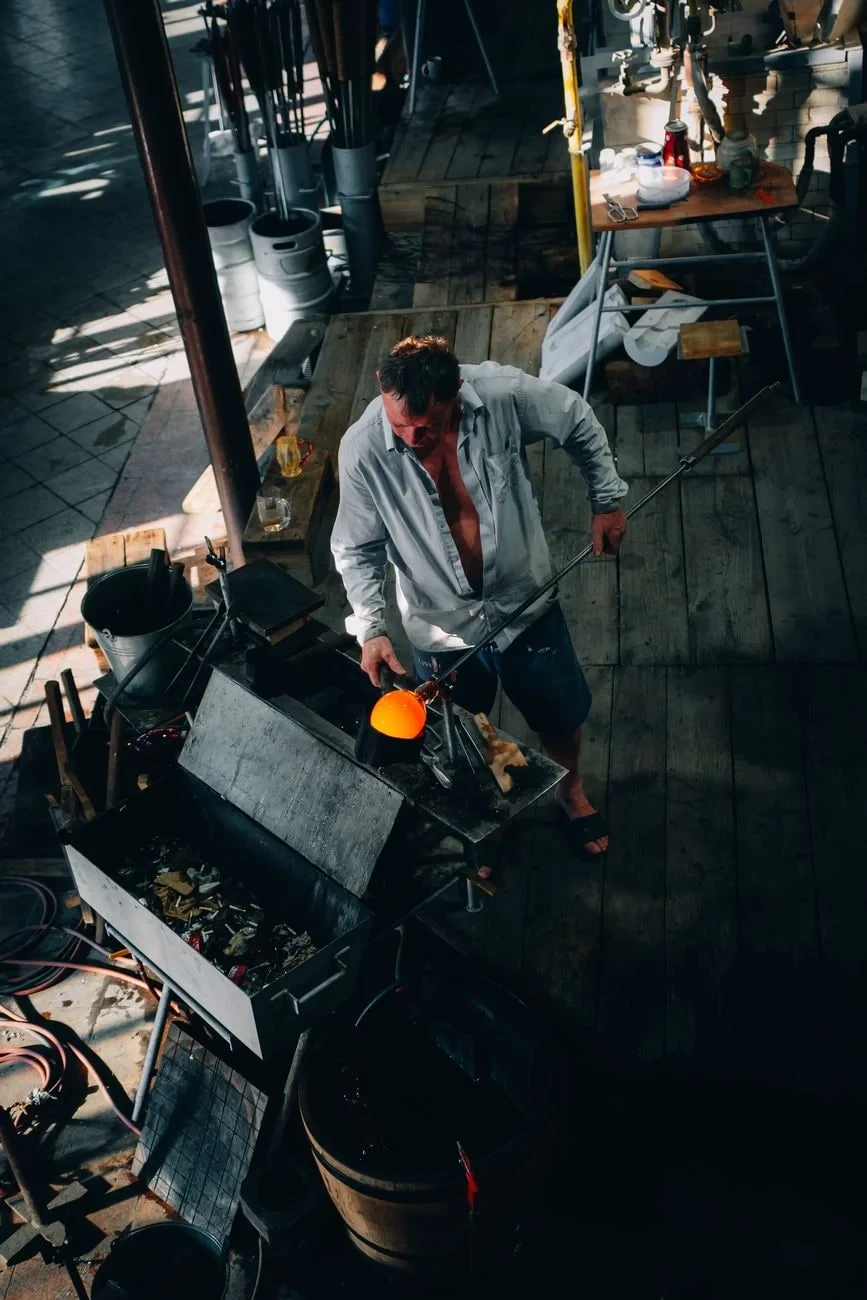
A glassblower crafts molten glass in a workshop setting. The artisan's skill transforms a fluid state into solid form through practiced technique.
Photograph by Riedelmax ., via Pexels.
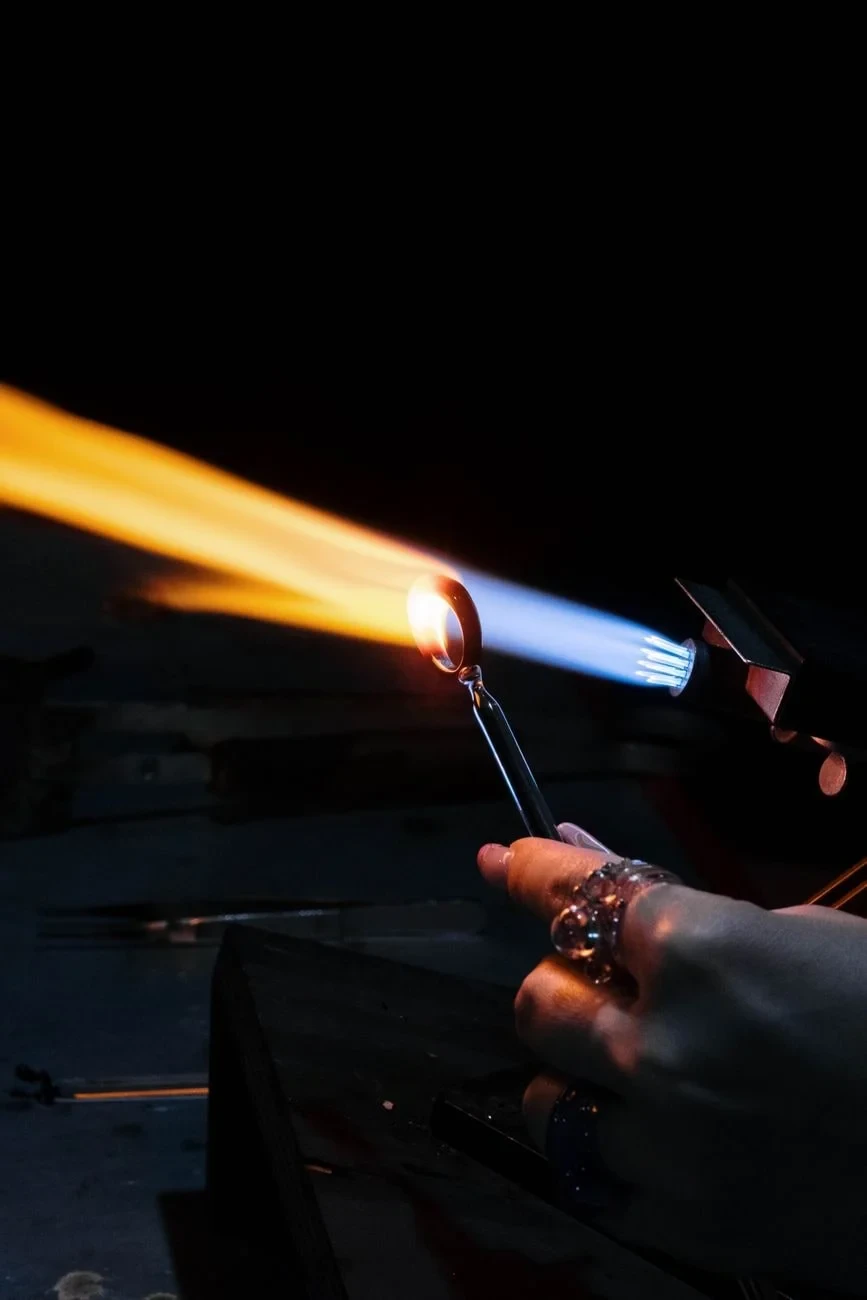
Molten glass responds to flame and tool in close detail. This is the moment where liquid becomes solid, captured at intimate scale.
Photograph by cottonbro studio, via Pexels.
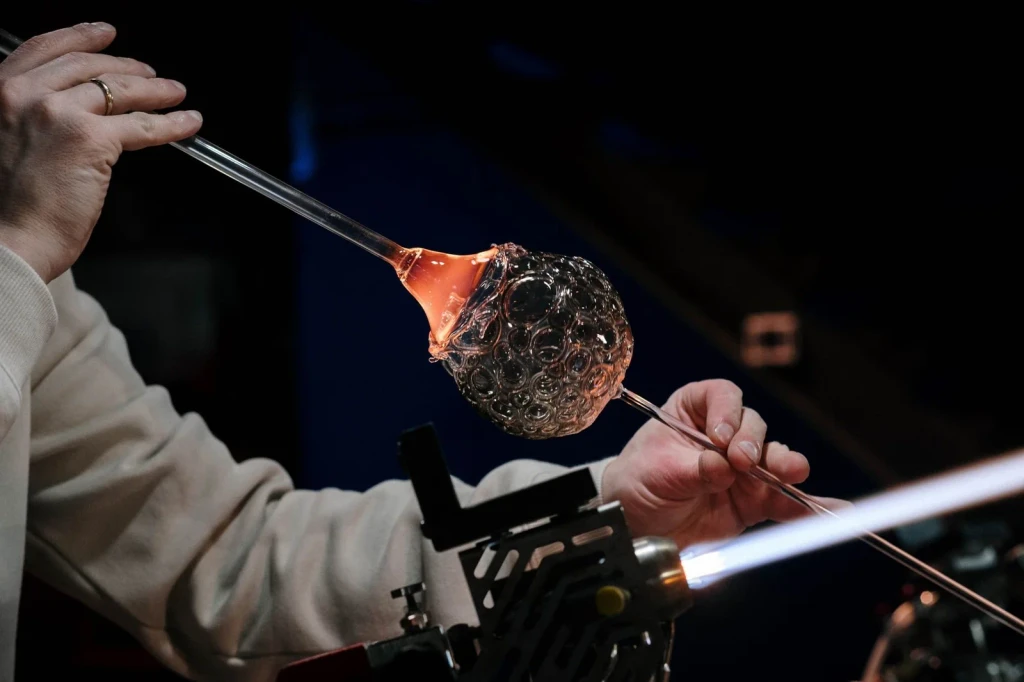
A craftsman works in dimly-lit studio space, the glass and flame providing their own light. The darkness frames the heat of creation.
Photograph by cottonbro studio, via Pexels.
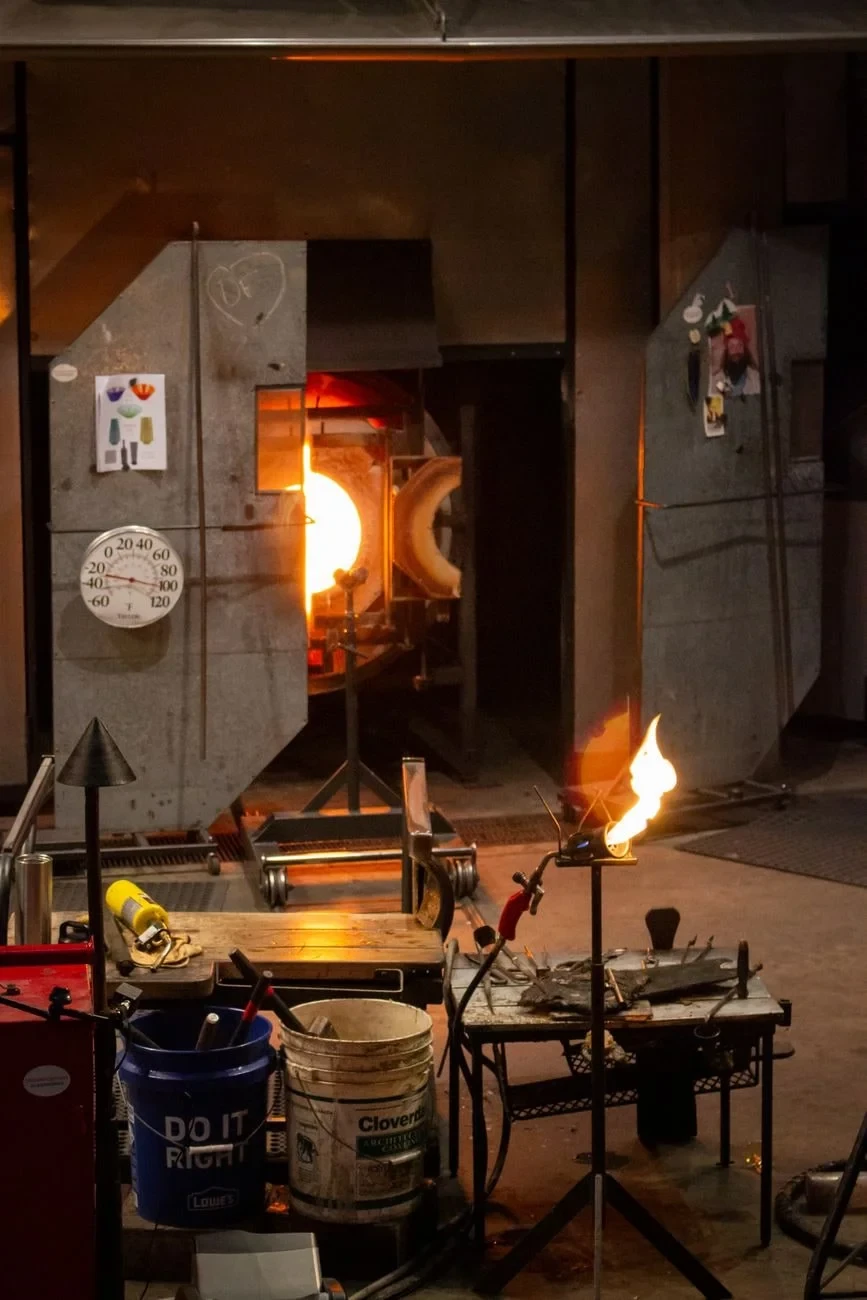
A glowing furnace anchors this artisan workspace, surrounded by the tools of glass work. The image shows where molten material becomes form.
Photograph by Lucent Designs Media International, via Pexels.
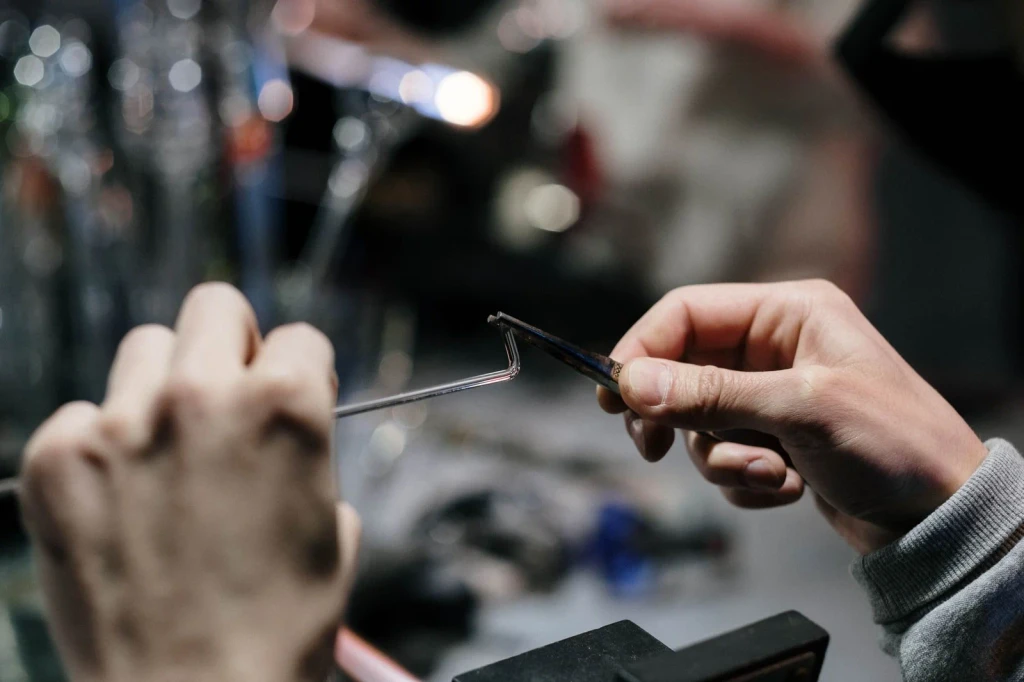
An artisan shapes glass with precision tools in close detail. The photograph captures the deliberate movements required to form molten material into intended shapes.
Photograph by cottonbro studio, via Pexels.
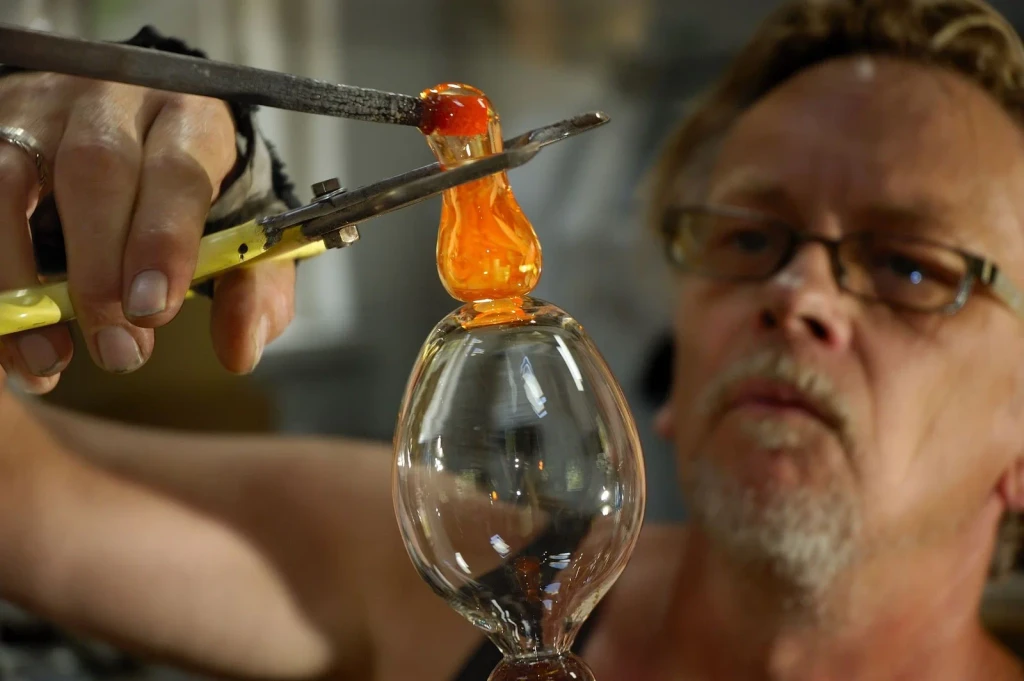
A skilled hand shapes hot glass with deliberate control. The work happens in real time, in a specific place, with focus and expertise.
Photograph by Hans Heemsbergen, via Pexels.
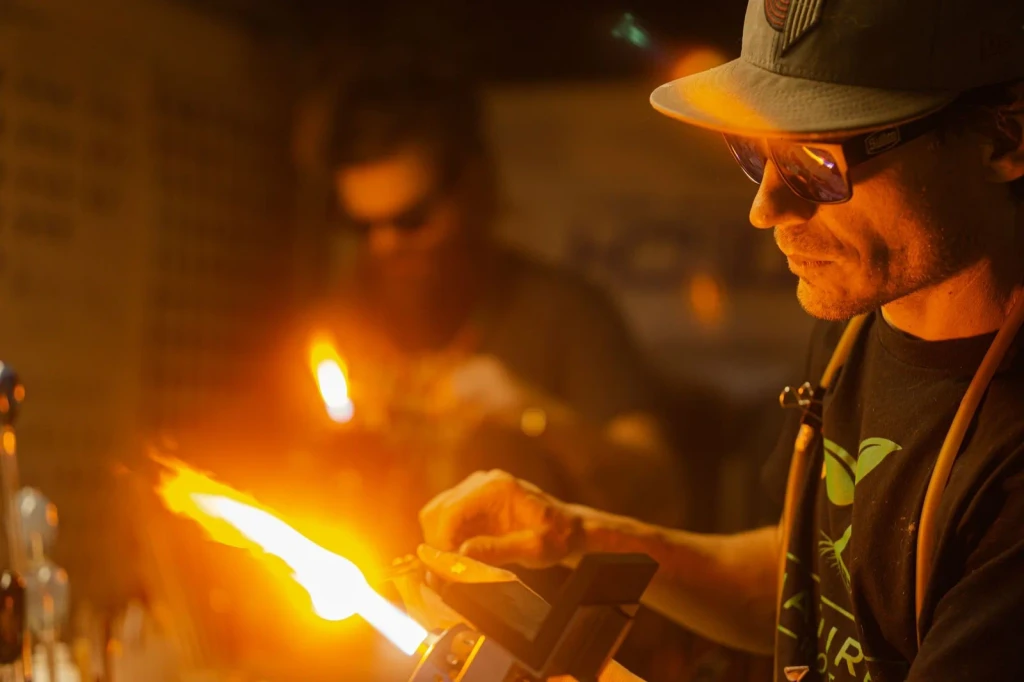
A blow torch becomes an extension of intention. This image shows the concentration glass work demands, moment to moment.
Photograph by chickenbunny, via Pexels.
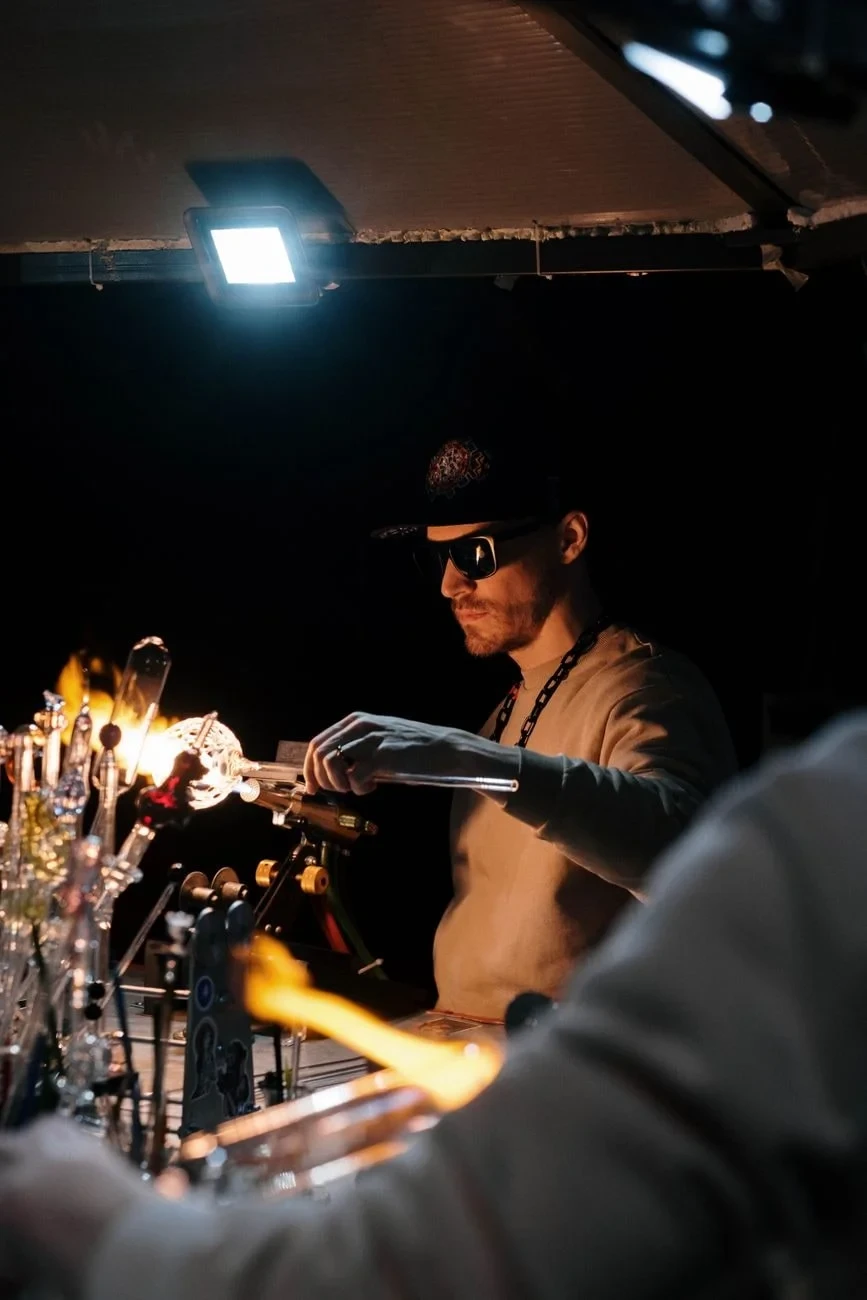
A skilled artisan performs glassblowing in a workshop lit to emphasize the work itself. The dim setting frames craftsmanship as something that emerges from focused creative effort.
Photograph by cottonbro studio, via Pexels.
