3D Gallery
Half the World Eats Rice
Enter gallery
Half the World Eats Rice is a 3D virtual gallery on MyGallery3D, a walkable online exhibition of 16 works. Step inside and explore it in your browser: no app, no headset.
Enter this 3D virtual gallery of rice and walk it in your browser. One grass feeds more than half the people alive.
Rice can move a civilisation. Around 750, some 75% of China's population lived north of the Yangtze. By 1250, 75% lived south of it, a shift made possible by quick-ripening strains brought from Vietnam that allowed more than one crop a year. In 2023 the world grew 800 million tonnes of rice, yet less than 8% of it crossed a border. It is eaten where it is grown.
Every grain of Asian rice descends from a single event. Both the sticky japonica of Japan and the long-grained indica of India carry the same nonshattering allele, the mark of domestication, taken from the wild grass Oryza rufipogon on the Yangtze between 13,500 and 8,200 years ago. Indica appeared later, when japonica reached India about 4,500 years ago and hybridised there.
Rice does not thrive if kept underwater, so it fights the flood. Deepwater varieties carry two genes, SNORKEL1 and SNORKEL2, that stretch the stem upward as the water rises; a plant in deep water can reach 5 m. A separate allele, Sub1A-1, decides whether a plant survives being fully submerged. Paddies are flooded only a few centimetres deep, and drained about a week before harvest.
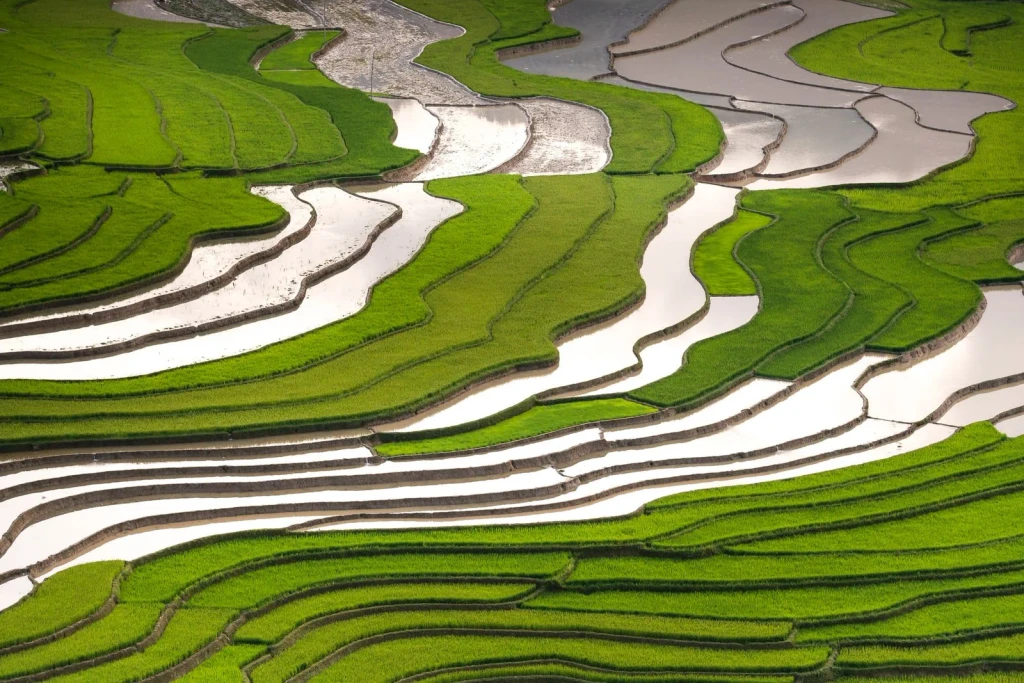
Lush terraces glow beneath sunlight in this aerial view. The image documents the verdant season when rice cultivation reaches full visual expression.
Photograph by Quang Nguyen Vinh, via Pexels.
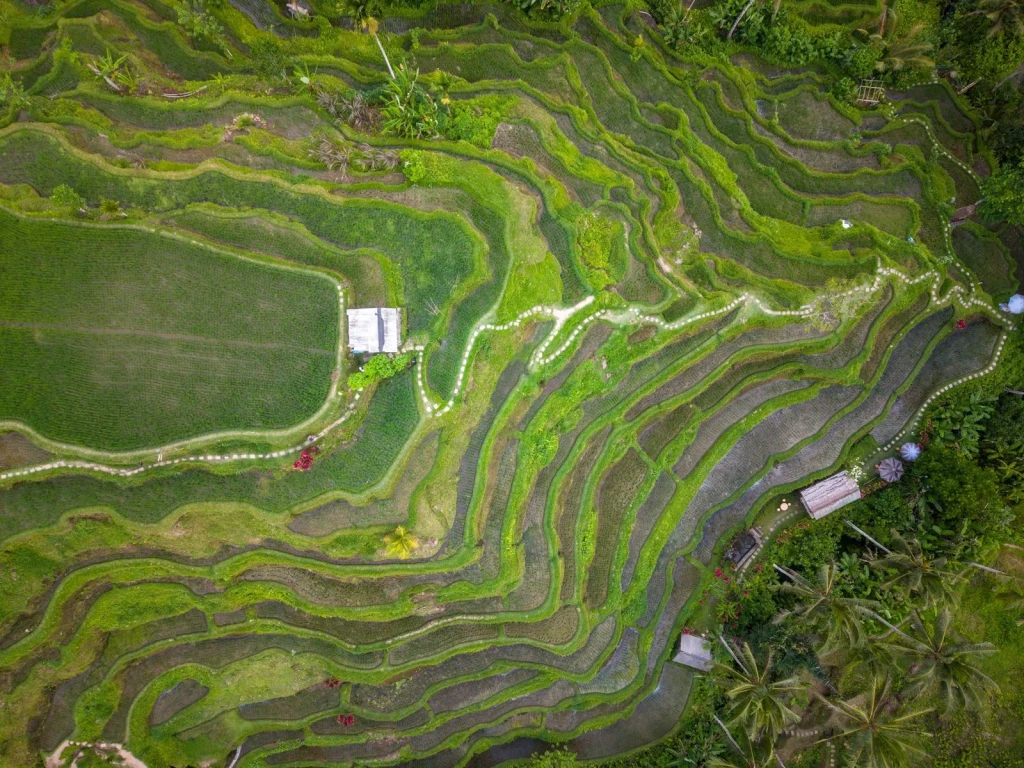
From above, rice terraces form intricate, repeating designs across the landscape. The photograph captures the visual complexity of agricultural land organization.
Photograph by Tom Fisk, via Pexels.
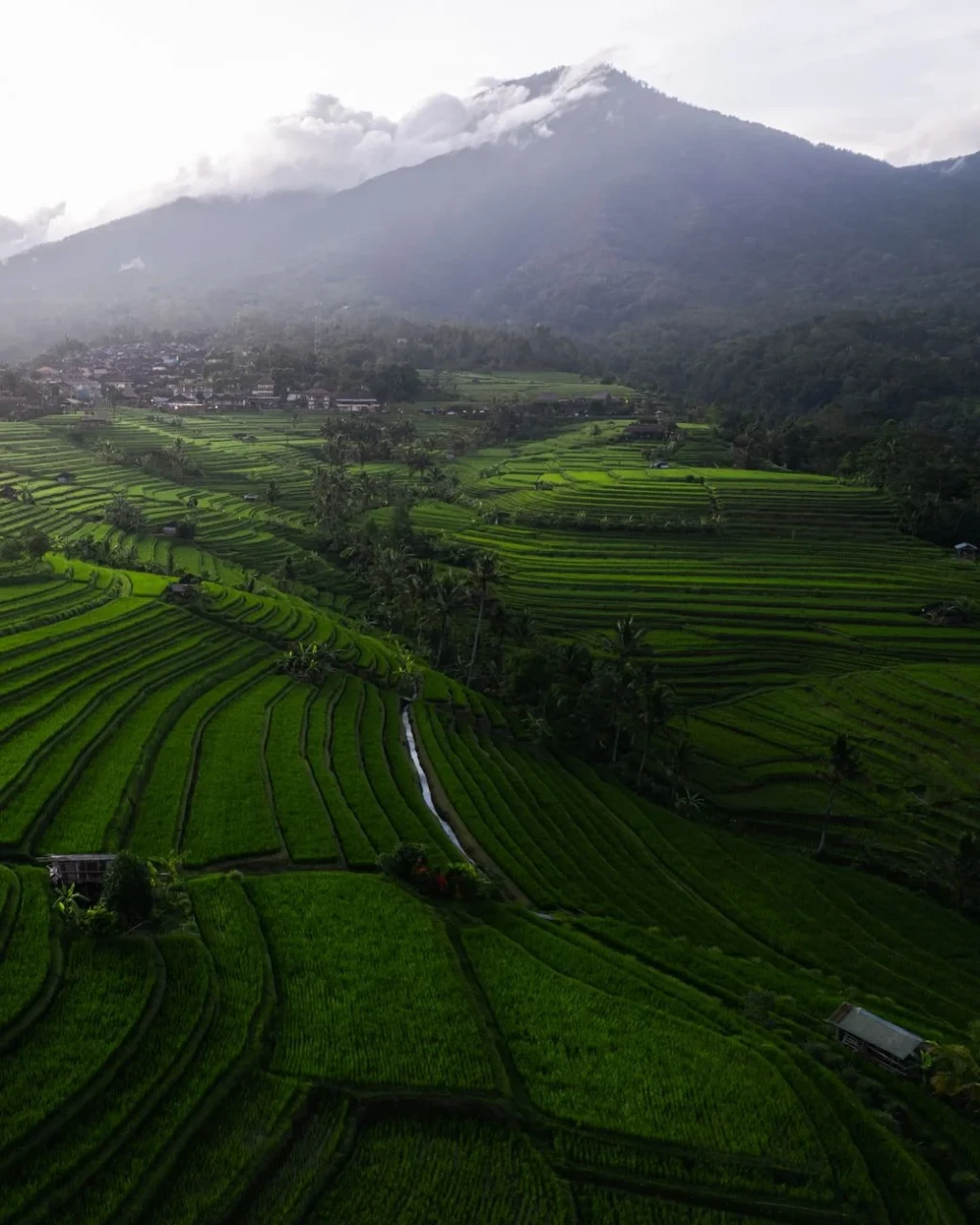
Rice terraces in shades of green occupy the foreground, with mountains visible in the distance. The landscape suggests both agricultural labor and natural topography.
Photograph by Erik Chistov, via Pexels.
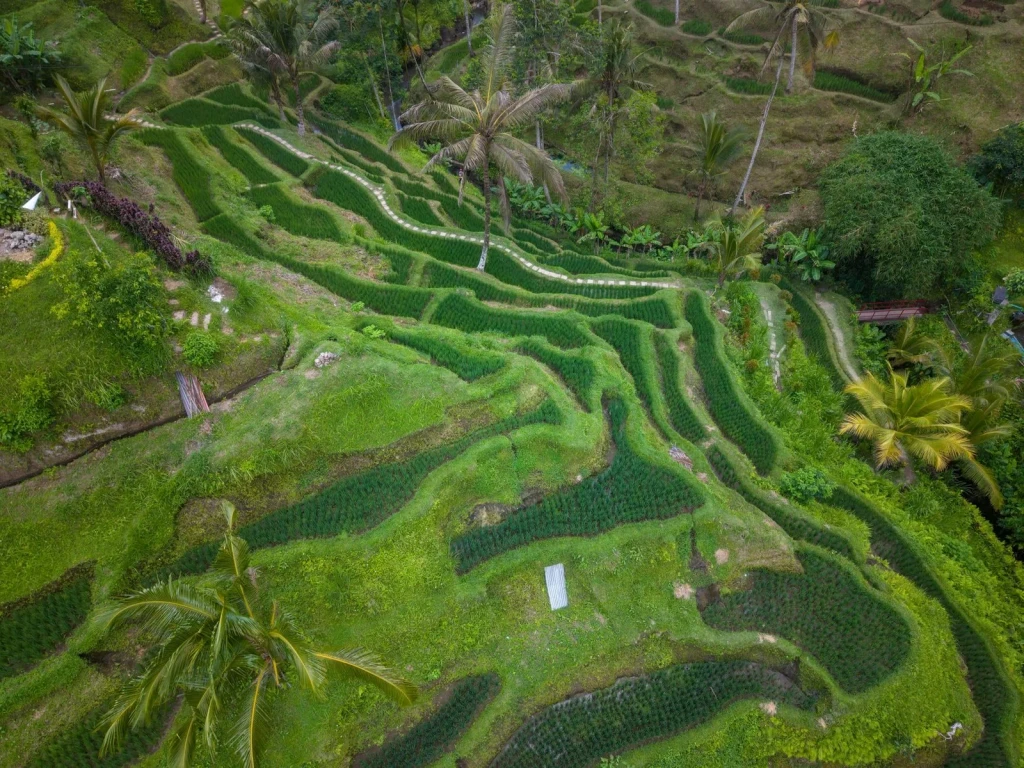
An aerial view shows terraced rice fields as both productive landscape and visual spectacle. The photograph presents agriculture as integral to natural beauty.
Photograph by Tom Fisk, via Pexels.
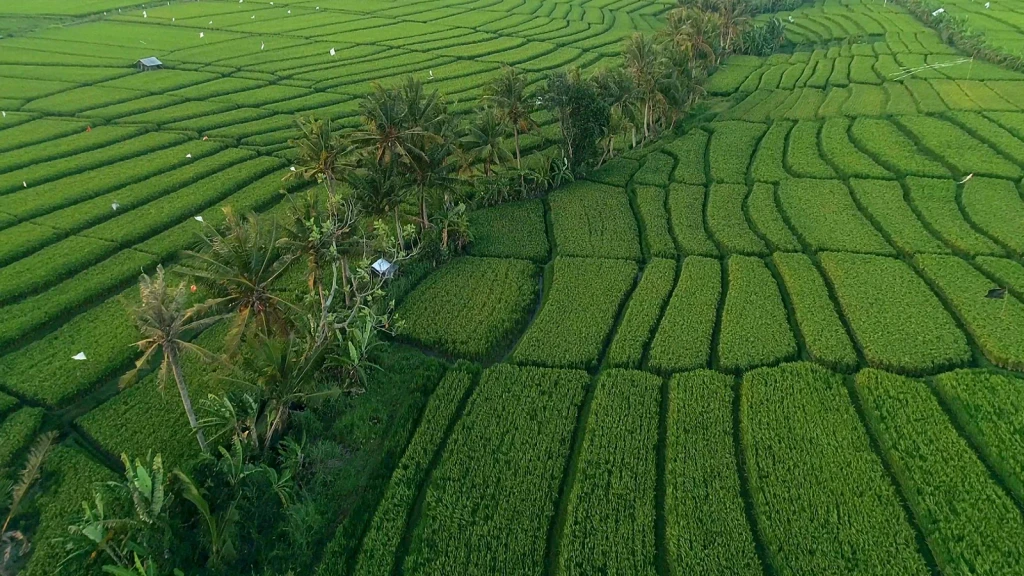
Lush terraced fields stretch across countryside, punctuated by coconut trees. The aerial vantage point emphasizes the human shaping of the land for rice cultivation.
Photograph by thanhhoa tran, via Pexels.
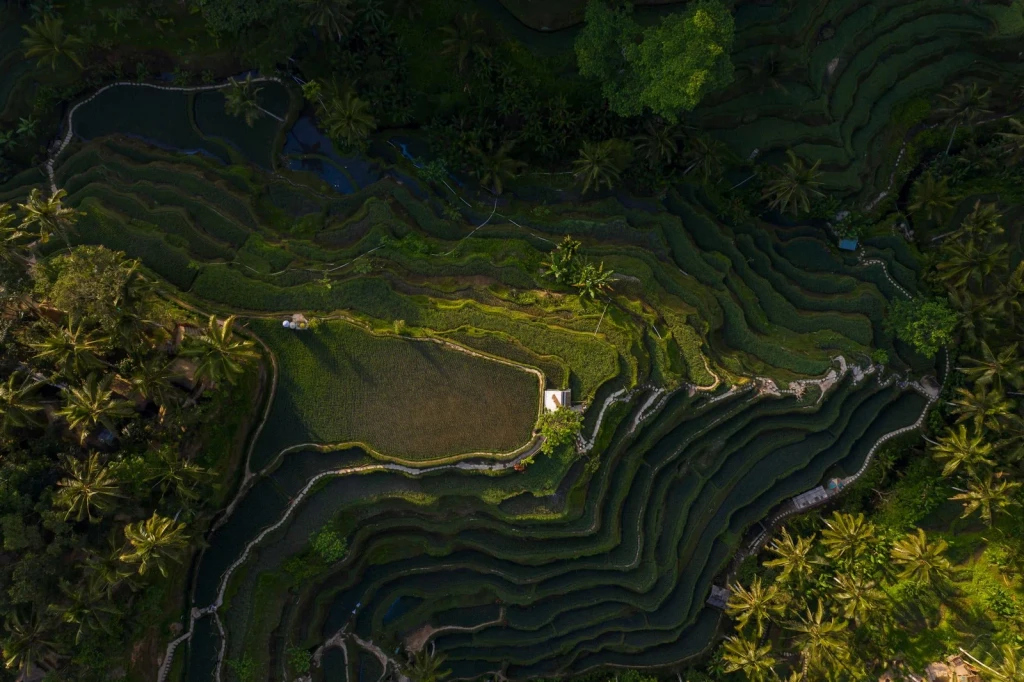
Aerial view of green rice terraces at sunset. Vibrant colors and intricate patterns show the beauty within the work of rice cultivation.
Photograph by Mikhail Nilov, via Pexels.
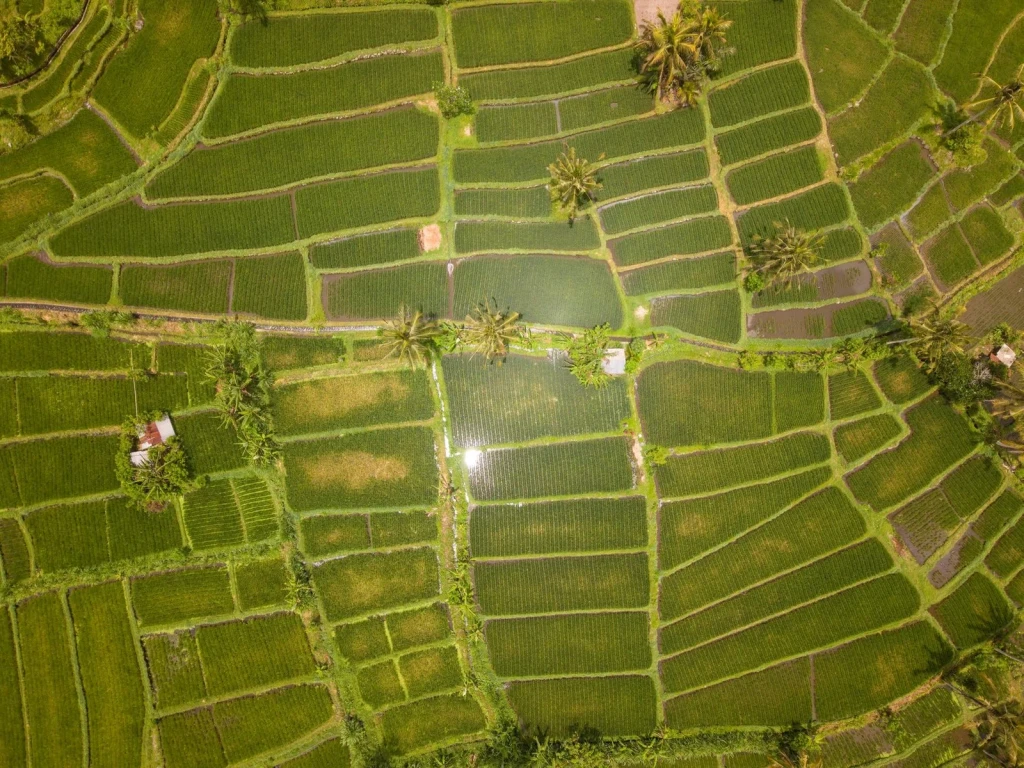
An aerial view of green rice terraces in Bali, Indonesia. The photograph documents the landscape shaped by rice farming.
Photograph by Tom Fisk, via Pexels.
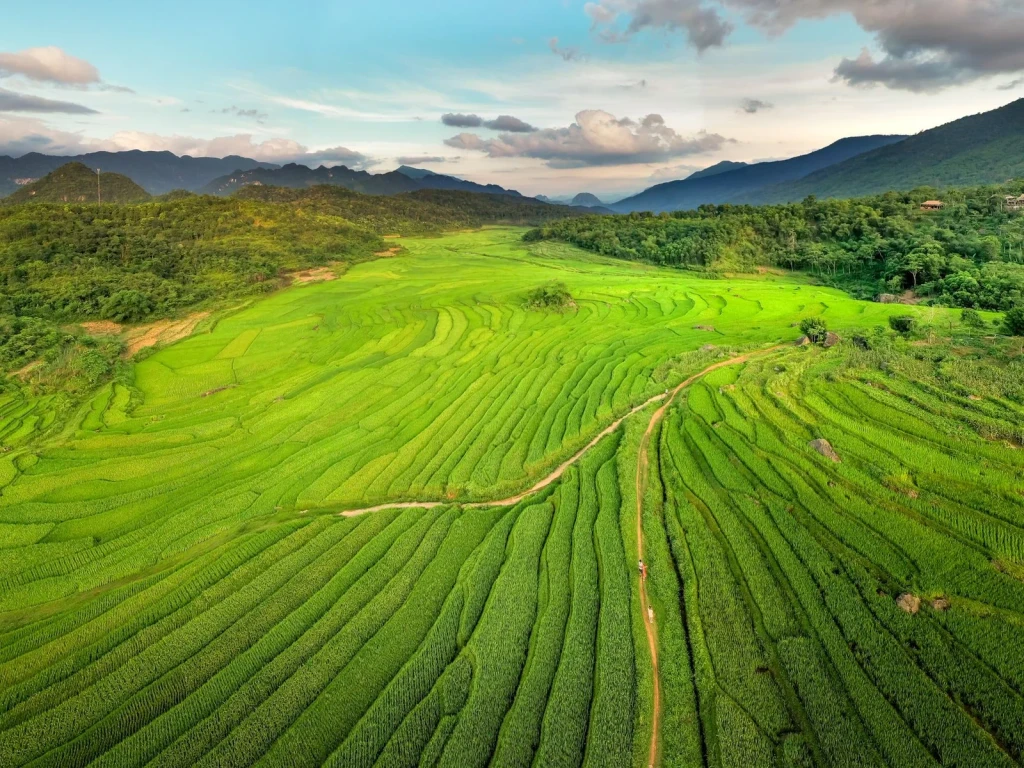
An aerial view of rice terraces set against mountains. The composition captures how rice farming shapes entire landscapes across regions where it sustains millions.
Photograph by Quang Nguyen Vinh, via Pexels.
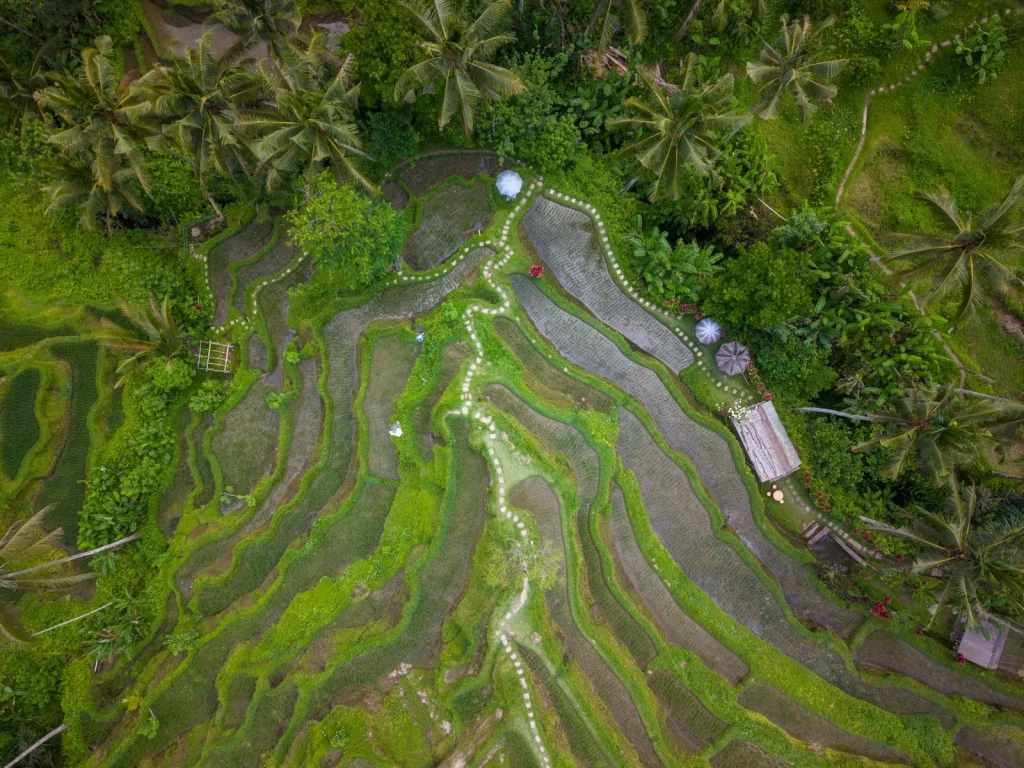
A breathtaking aerial view of lush green rice terraces in Bali, Indonesia. The photograph captures the scale of rice cultivation that feeds half the world's population.
Photograph by Tom Fisk, via Pexels.
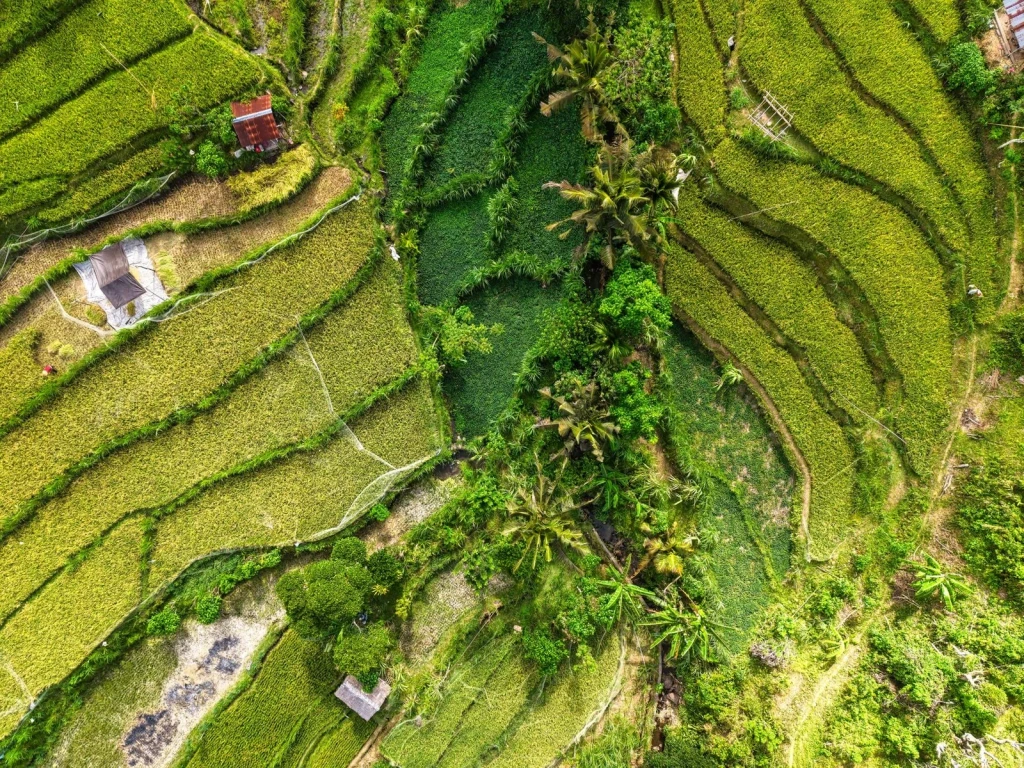
Green rice terraces create striking patterns across the landscape. The image shows how rice farming integrates human intervention with natural terrain.
Photograph by Tom Fisk, via Pexels.
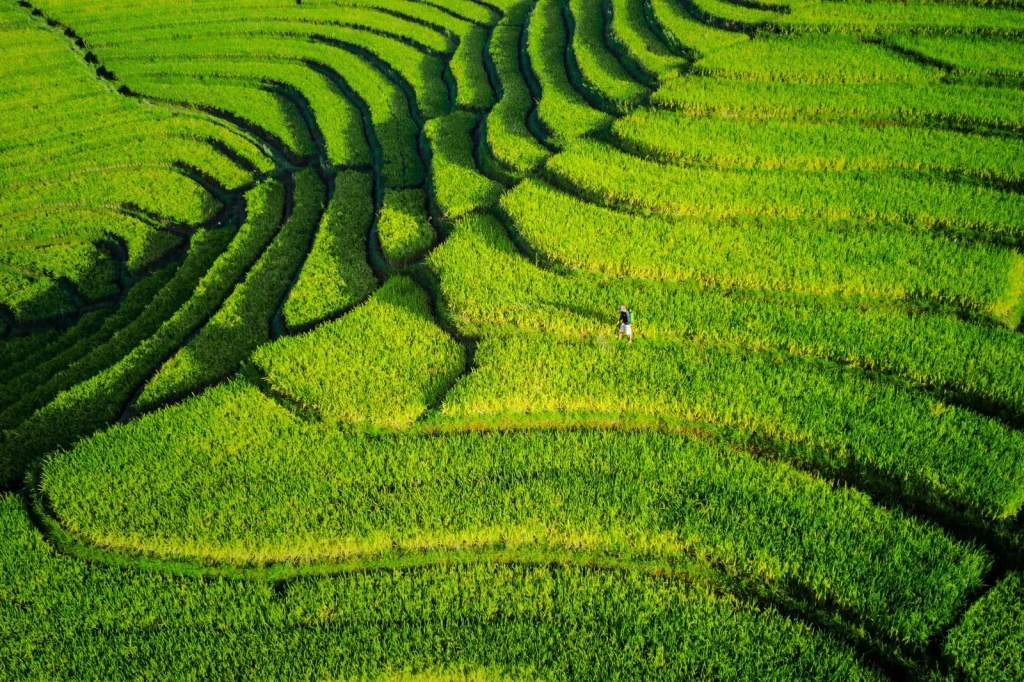
A lone farmer tends vibrant green rice terraces in an aerial perspective. The image speaks to individual labor within vast agricultural systems.
Photograph by Rahmad Himawan, via Pexels.
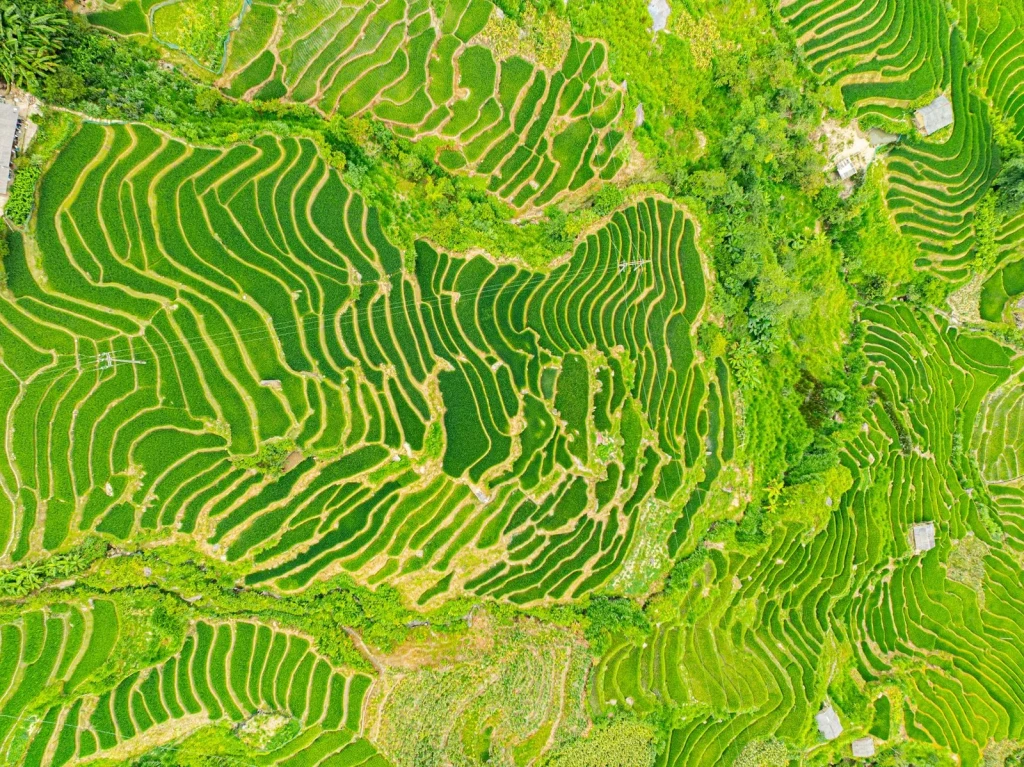
Lush green terraced rice fields photographed from above during summer growth. The aerial perspective emphasizes the scale of rice cultivation.
Photograph by Quyển Phạm Xuân, via Pexels.
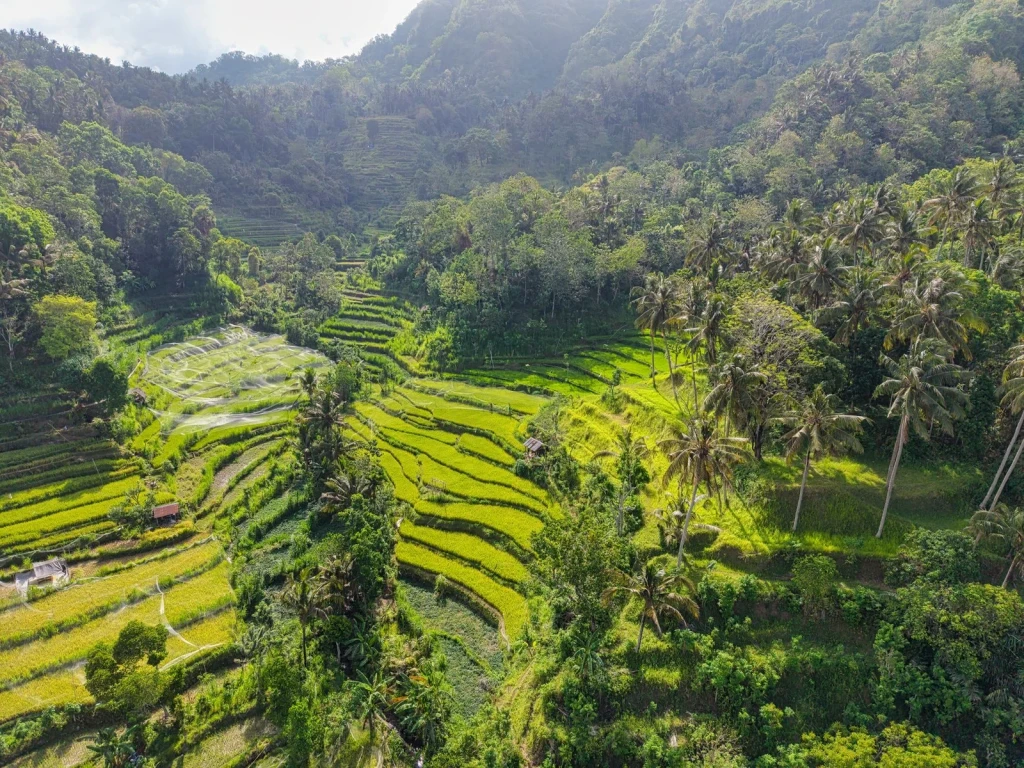
An aerial perspective reveals rice terraces carved into tropical landscape, their geometric patterns framed by surrounding forest. The composition suggests the relationship between cultivated and wild growth.
Photograph by Tom Fisk, via Pexels.
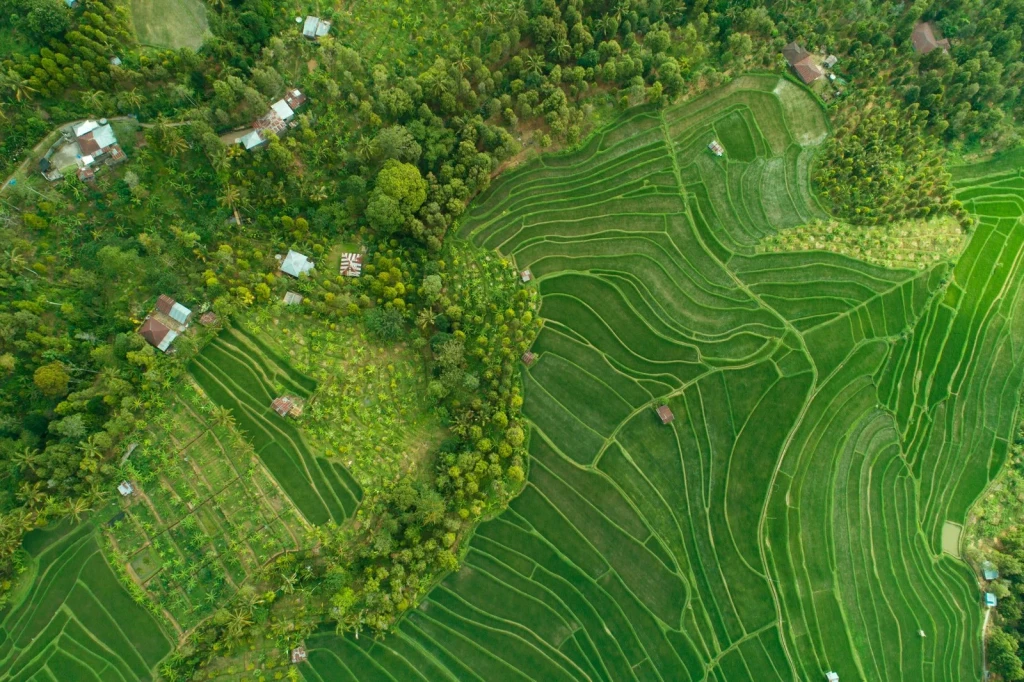
Aerial shot of rice terraces showcasing intricate patterns created by agricultural practice. The geometry reveals how humans have shaped the landscape to grow rice.
Photograph by Cak Pan, via Pexels.
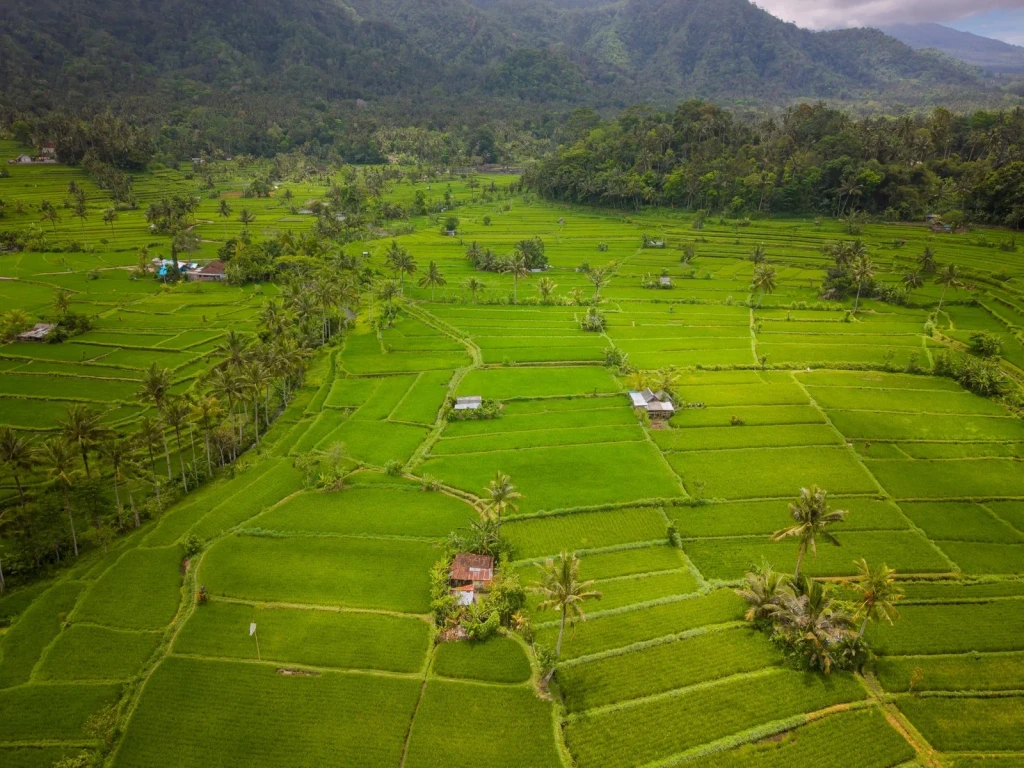
An aerial shot of lush rice terraces. The photograph documents one region's distinctive approach to growing this essential crop.
Photograph by Tom Fisk, via Pexels.
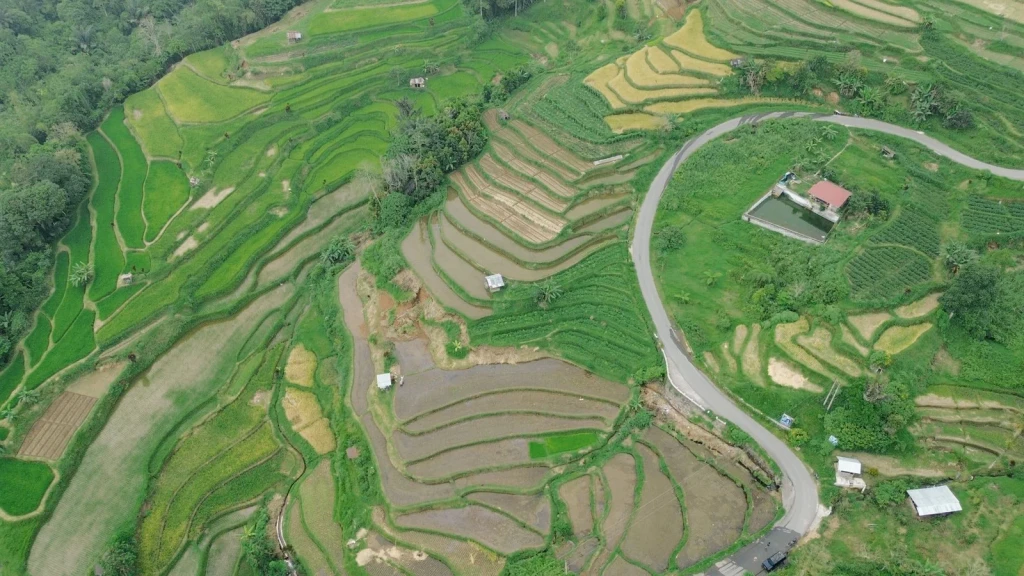
Terraced rice fields create geometric patterns across rural countryside. The photograph reveals how agriculture structures the landscape visually and culturally.
Photograph by Tomi Saputra, via Pexels.
