3D Gallery
How We Learned to Bridge the Gap
Enter gallery
How We Learned to Bridge the Gap is a 3D virtual gallery on MyGallery3D, a walkable online exhibition of 16 works. Step inside and explore it in your browser: no app, no headset.
Walk through this 3D virtual museum of bridges in your browser and look at what is really holding them up.
A bridge has to carry itself before it carries anything else, and the longest ones do it by hanging. Suspension and cable-stayed designs turn the whole load into tension in steel cable, which is why they beat every other form for span. The record has climbed steadily and only passed 2 kilometres in 2022, at the 1915 Çanakkale Bridge.
The Romans were the first to build large permanent bridges, and they did it with the arch: wedge-shaped voussoirs held by a keystone, so the load pushes outward into the piers instead of sagging. One survey counted 931 Roman bridges in as many as 26 countries. The Pons Fabricius in Rome, finished in 62 BC, is still standing.
Joseph Strauss took the credit for the Golden Gate Bridge, but the calculations were done by Charles Ellis. Strauss fired him in November 1931 over the cost of telegrams. Ellis kept working, 70 hours a week, unpaid, and handed in ten volumes of hand calculations. He got no credit in his lifetime. In May 2007 the bridge district finally gave him major credit for the design.
The deflection theory of Leon Moisseiff let a thin roadway flex in the wind, shedding stress into the cables and the towers. It made the Golden Gate possible. It also produced the original Tacoma Narrows Bridge, which tore itself apart in a windstorm in 1940 through aeroelastic flutter. The Golden Gate was braced in 1953 and 1954, after a 1951 storm set it swaying.
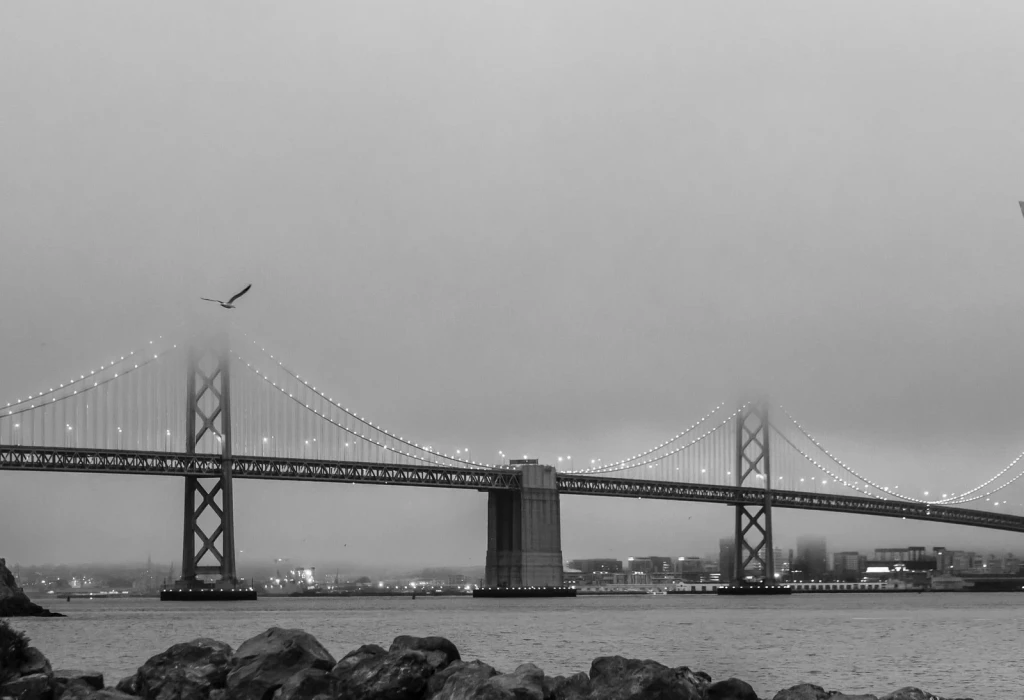
Industrial steel becomes abstract in black and white. The bridge persists through fog, its geometric forms reduced to pure line and shadow.
Photograph by Stephen Leonardi, via Pexels.
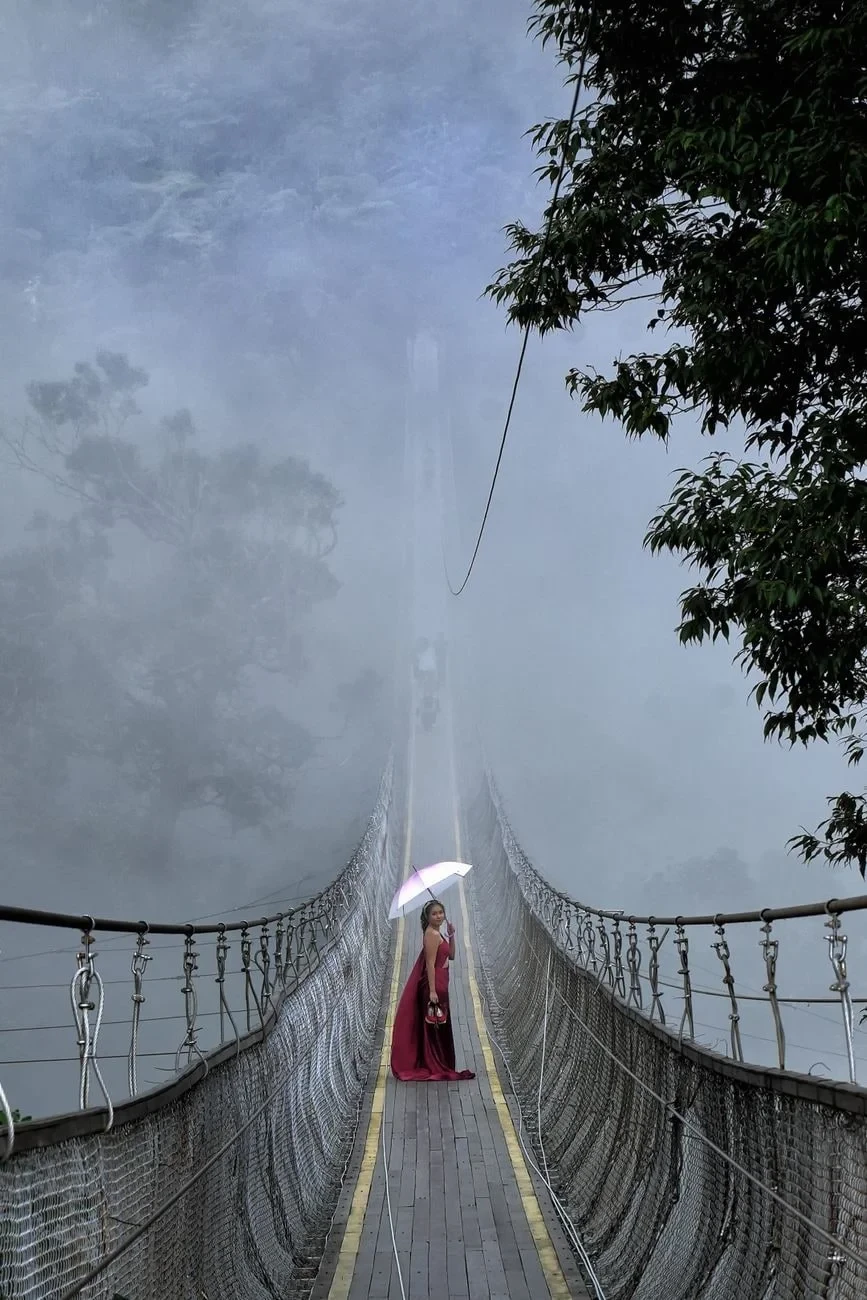
A woman with an umbrella stands on a foggy bridge. The solitary figure suggests the personal courage required to cross uncertain terrain.
Photograph by balladphotoworkchanel robinkoraag, via Pexels.
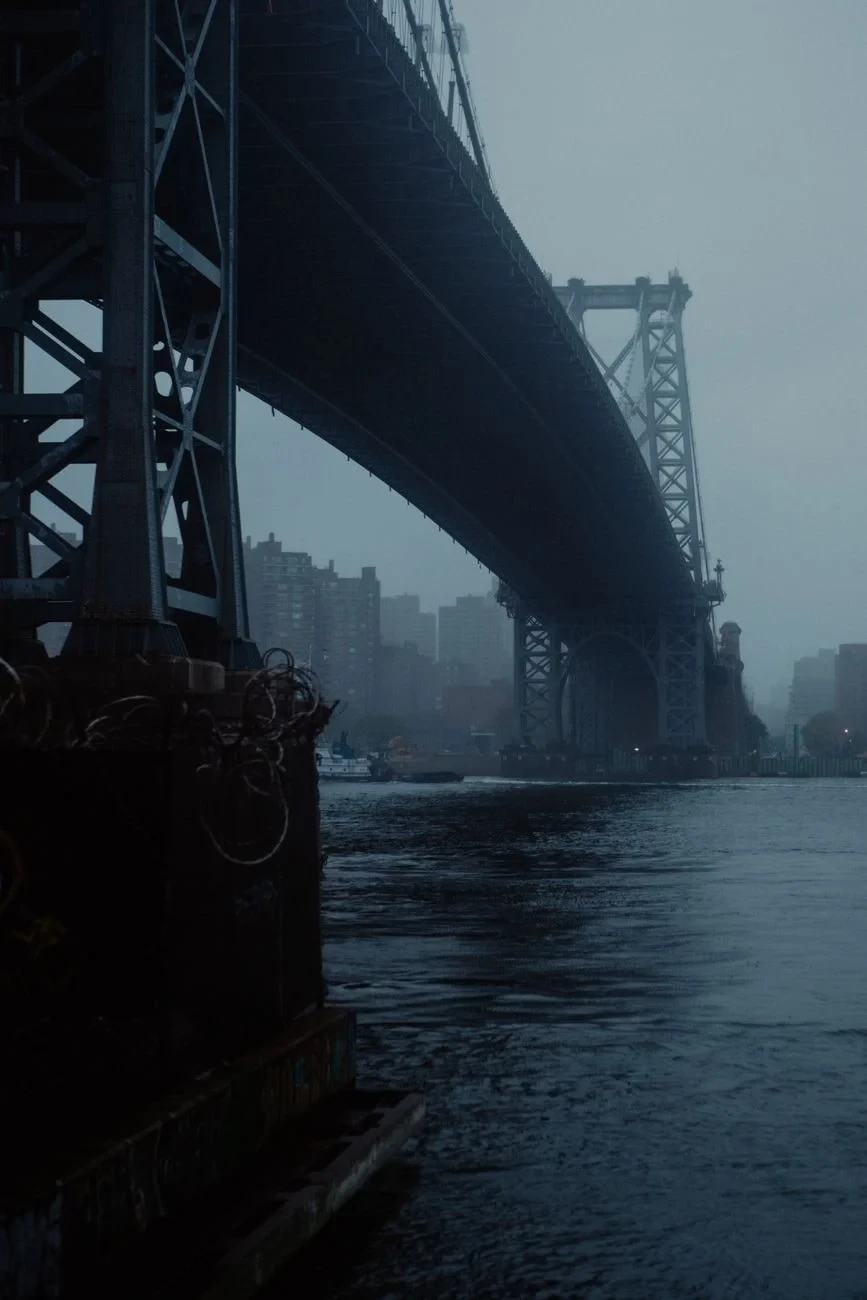
Urban geometry dissolves into mist. This fogbound bridge connects two shores we cannot quite see. The calm water below mirrors the stillness of uncertainty.
Photograph by Yura Forrat, via Pexels.
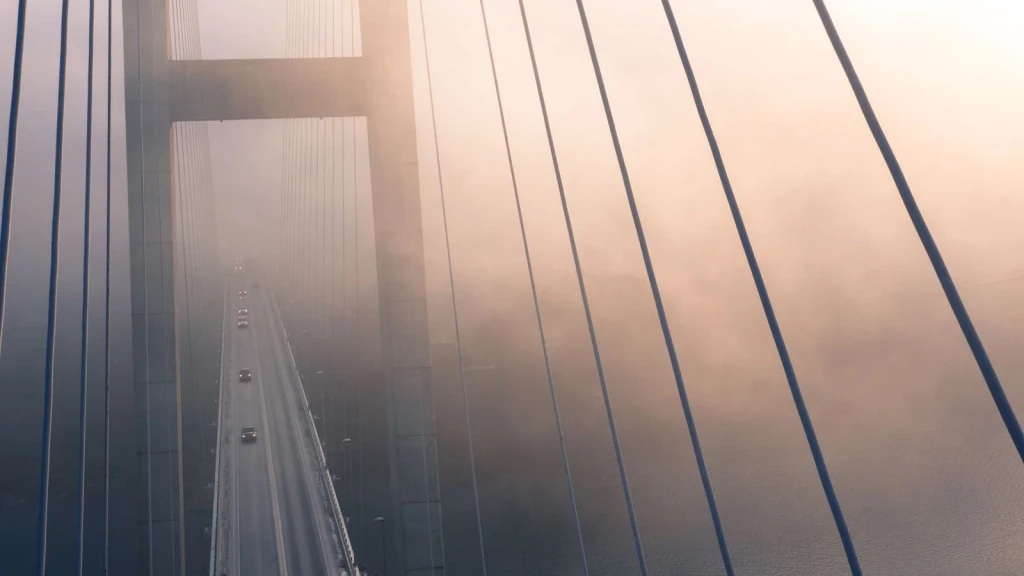
A suspension bridge materializes through morning fog. The ethereal scene suggests connection itself becoming visible, as if the bridge emerges not from geography but from atmosphere.
Photograph by Nikolai Ulltang, via Pexels.
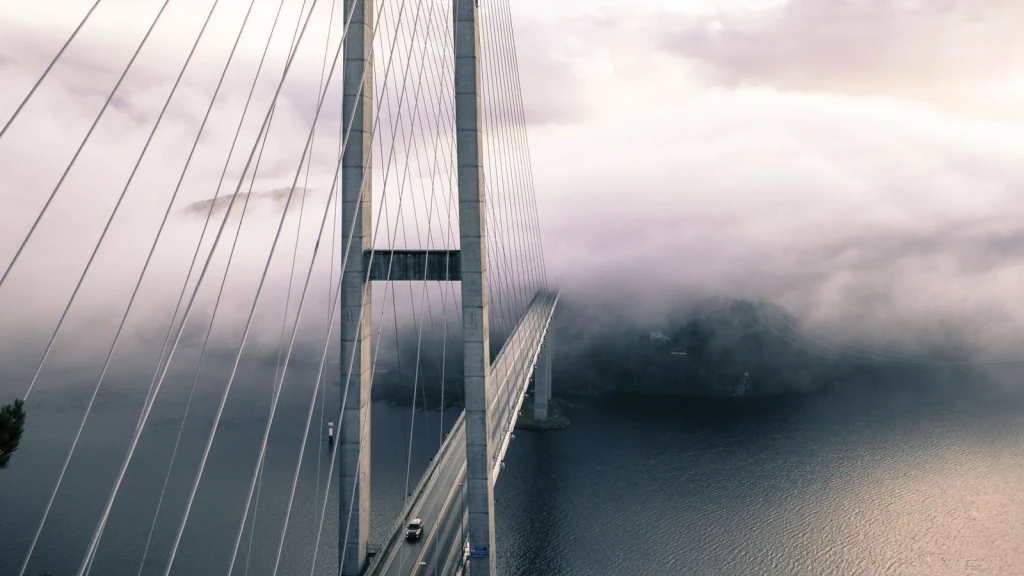
A fog-covered suspension bridge hangs above the ocean, its cables visible through the mist. The photograph captures the tension between solid engineering and atmospheric uncertainty.
Photograph by Nikolai Ulltang, via Pexels.
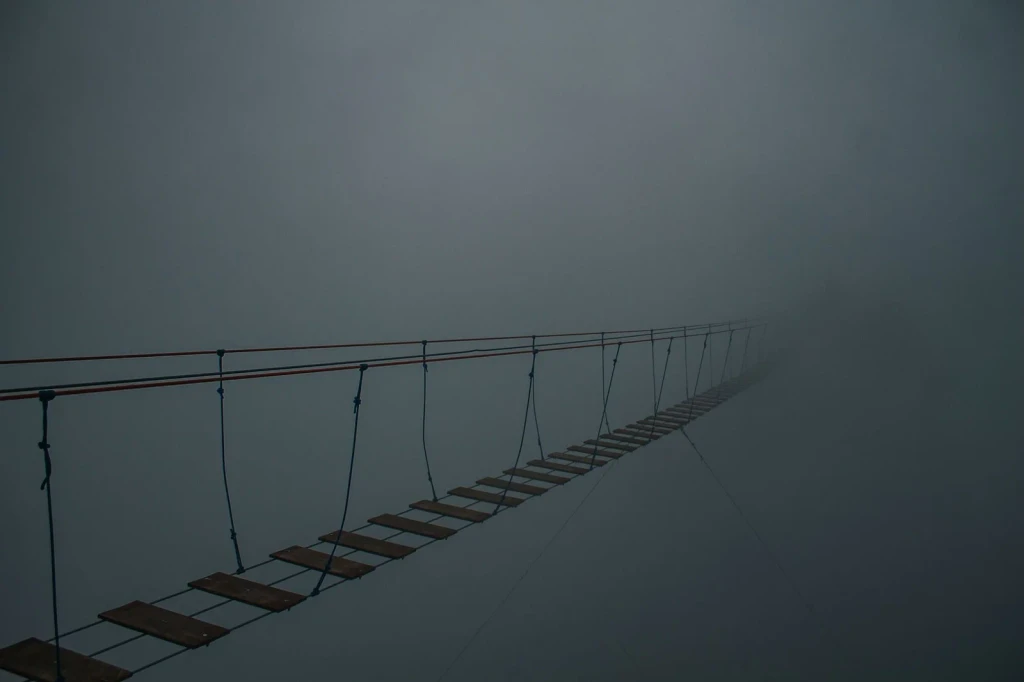
A suspension bridge dissolves into dense fog, its form becoming mysterious. The photograph suggests how bridges, physical and metaphorical, can seem to disappear when visibility fails.
Photograph by Air Rus, via Pexels.
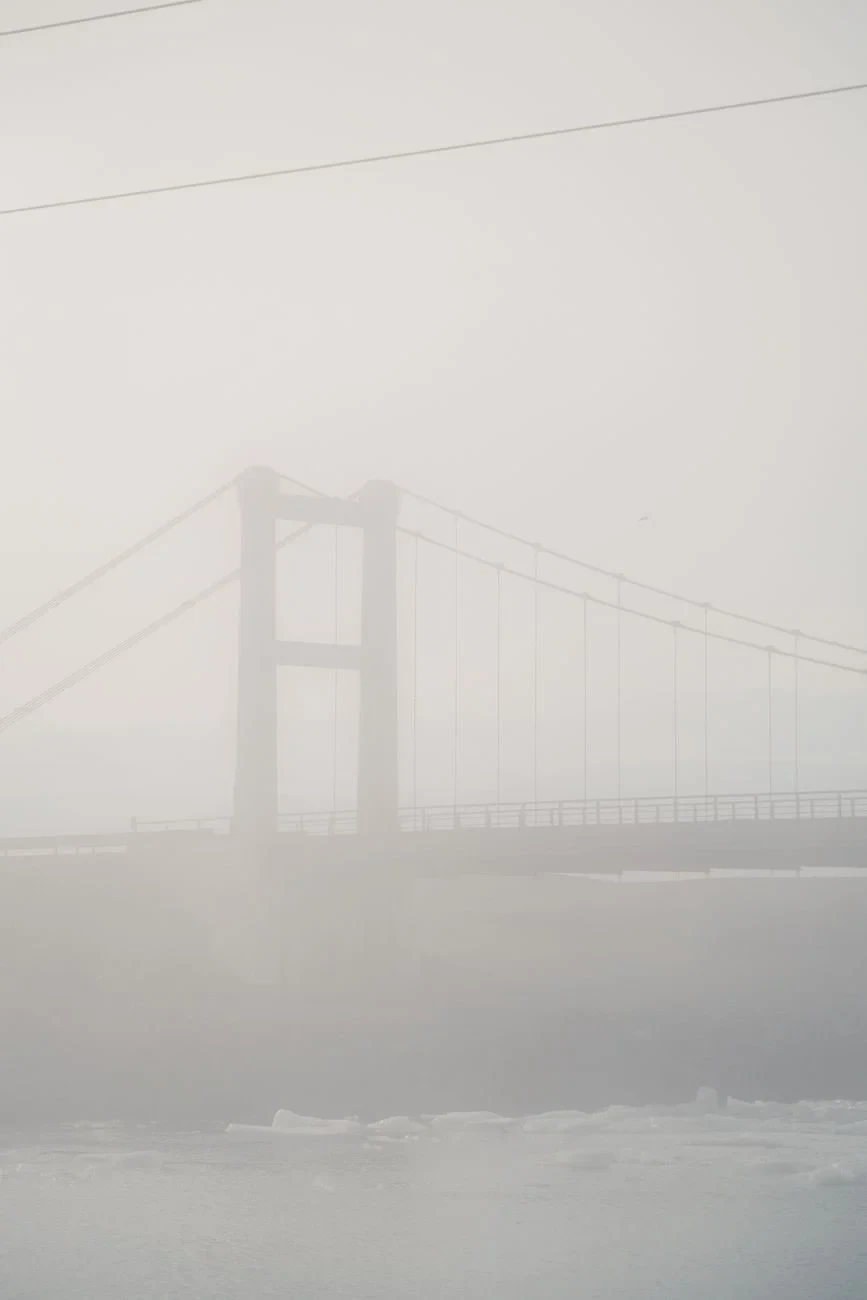
Thick fog transforms a suspension bridge into something mystical. The photograph captures how barriers and atmosphere can shift our perception of passage.
Photograph by Laura Paredis, via Pexels.
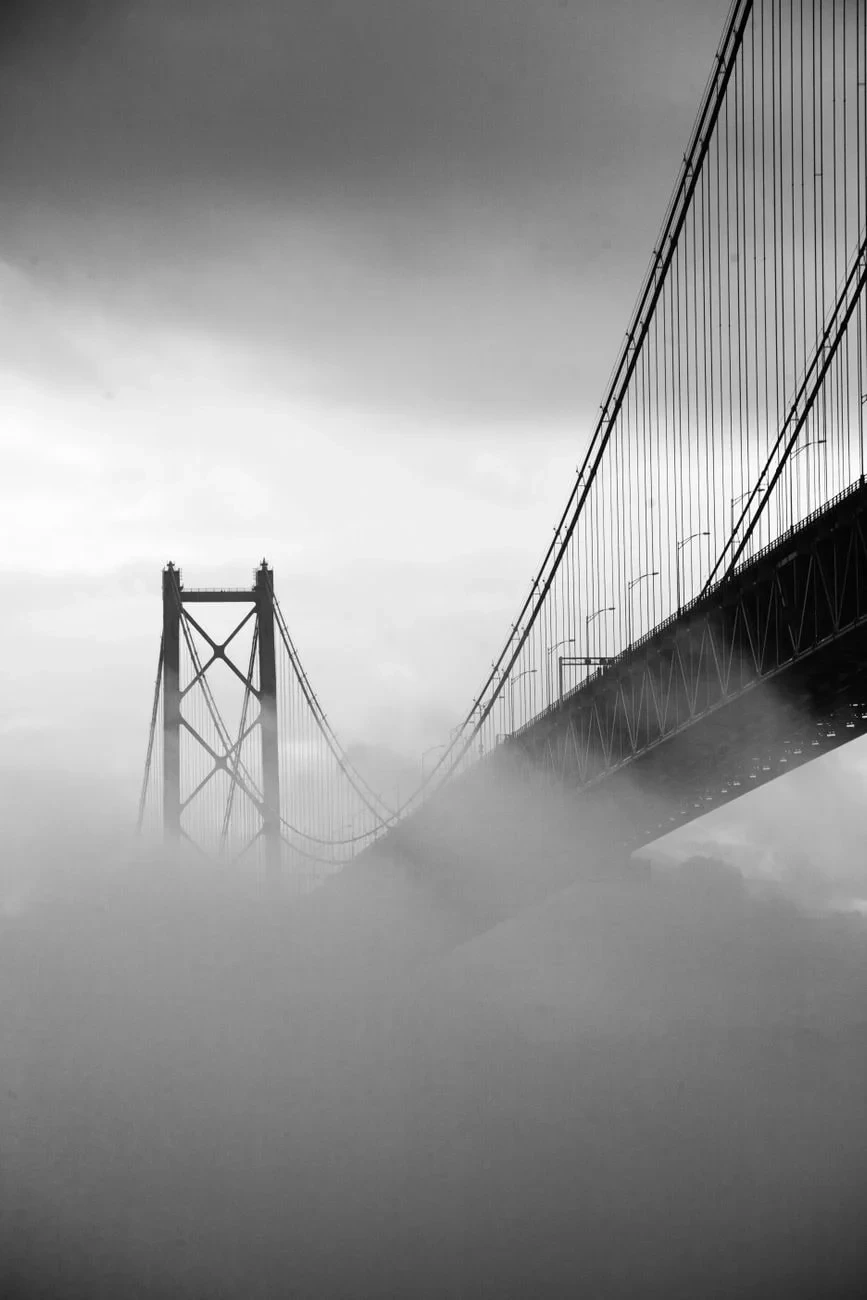
Monochrome photography intensifies the drama as fog consumes a suspension bridge. Stripped of color, the image emphasizes the boundary between what we can see and what remains hidden.
Photograph by João Cabral, via Pexels.
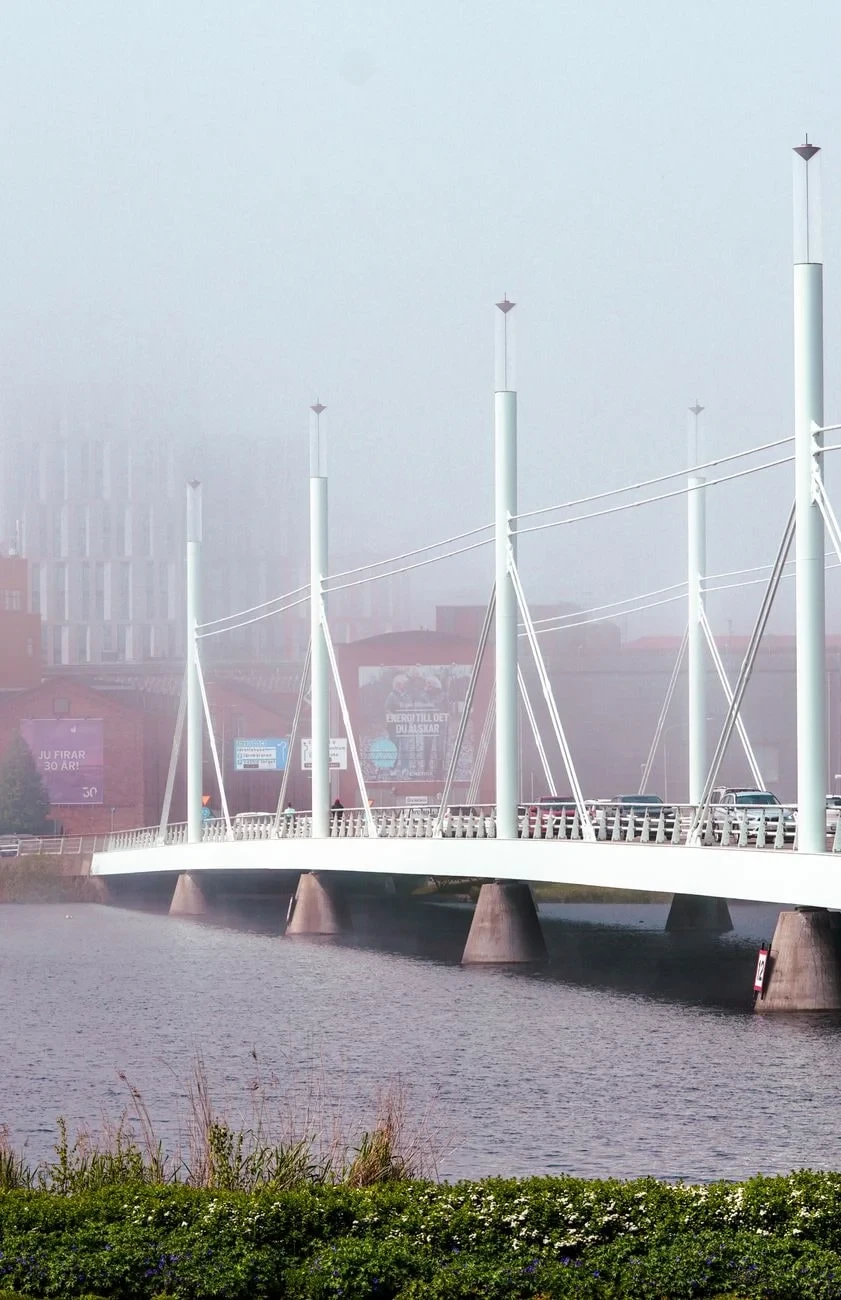
A modern bridge and still river merge in mist. The serene composition speaks to passages that are quiet, patient, and almost invisible in their constancy.
Photograph by Damir K ., via Pexels.
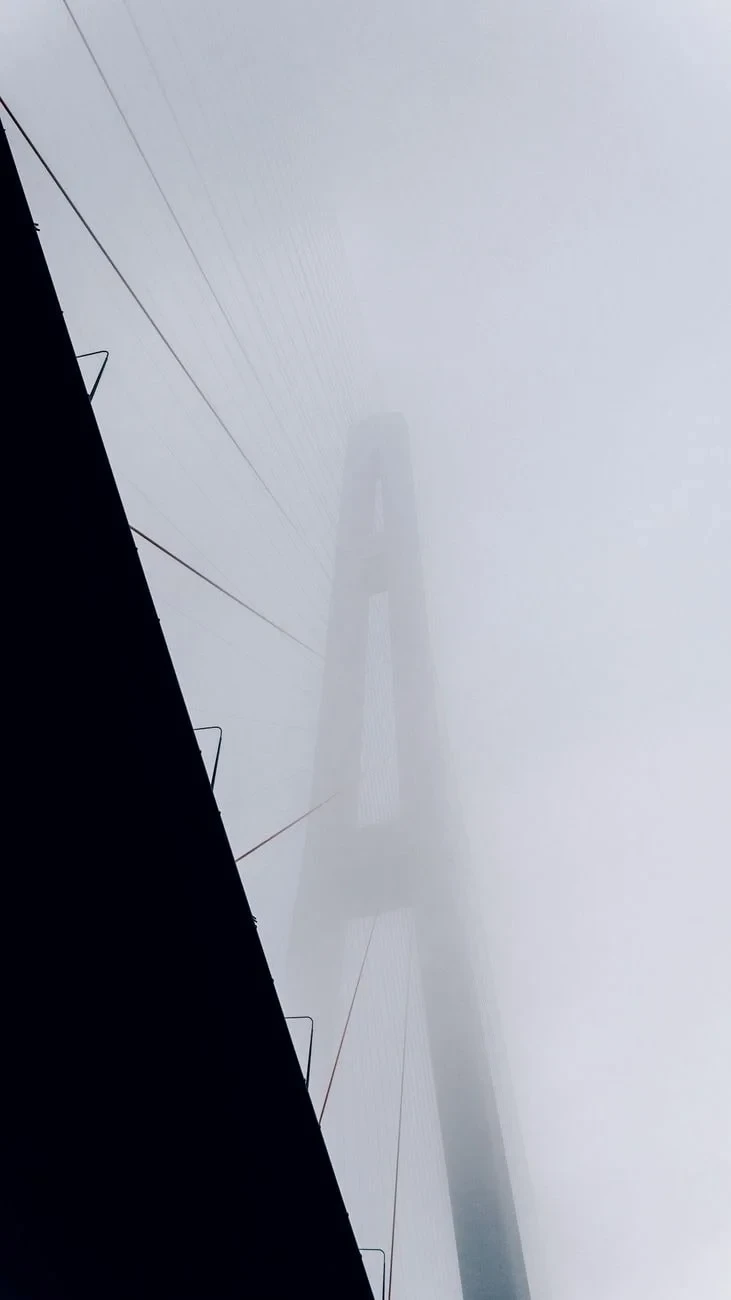
Fog envelops a suspension bridge in this dramatic view. The photograph explores how obscurity can make familiar structures feel strange and distant.
Photograph by Maxim Boldyrev, via Pexels.
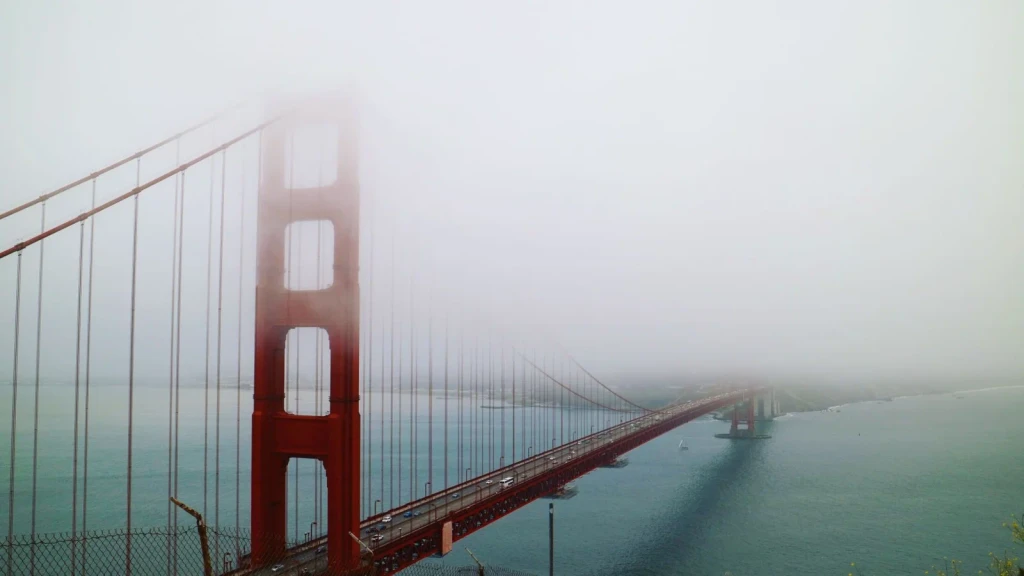
A well-known bridge becomes unrecognizable in fog. Shrouded and mysterious, it reminds us that connection persists even when we cannot fully see it.
Photograph by Belli Kins, via Pexels.
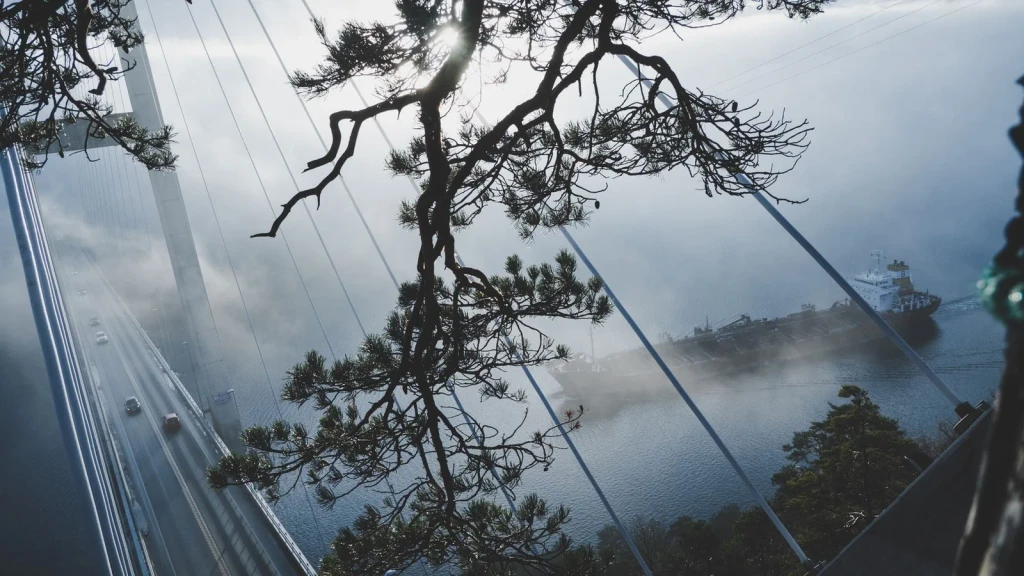
A bridge, cargo ship, trees and sunlight emerge from fog in layered silhouettes. The photograph suggests multiple kinds of crossing: by foot, by water, through mist toward clarity.
Photograph by Nikolai Ulltang, via Pexels.
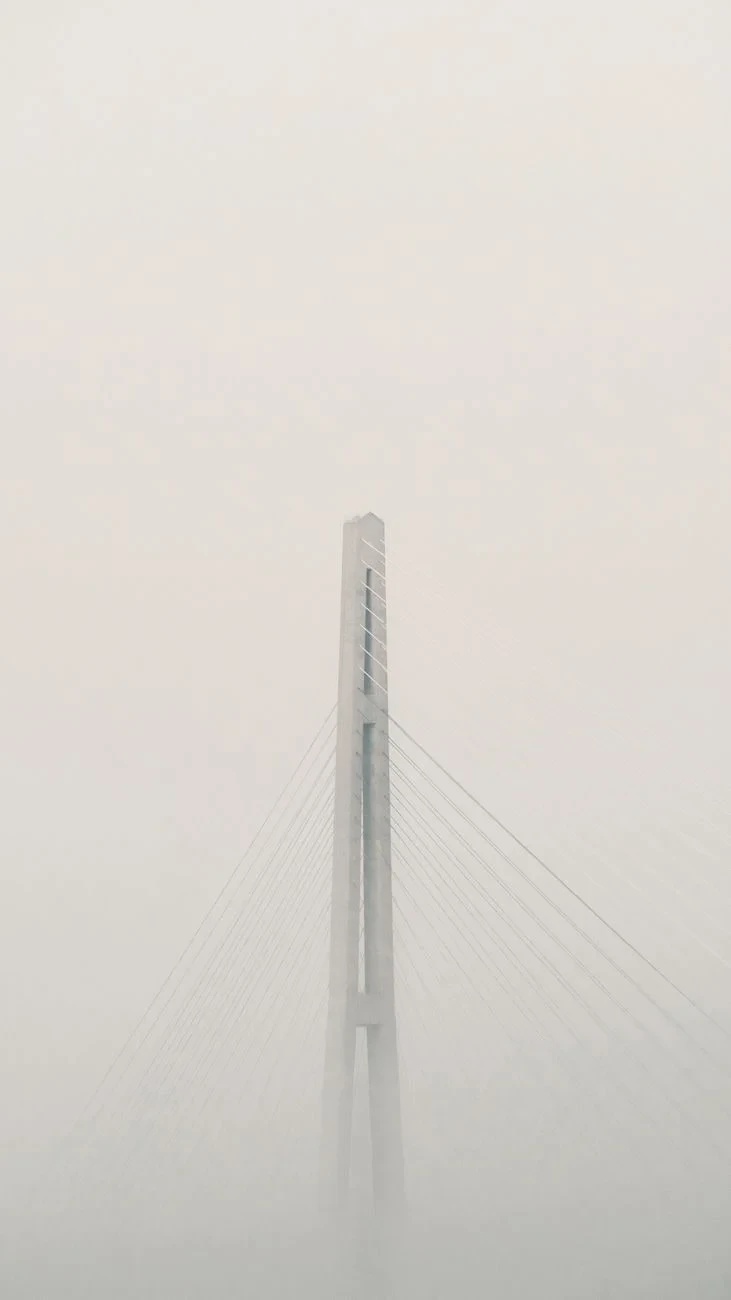
A bridge barely visible within dense fog. The photograph reduces a structure to its essence, inviting us to imagine the gap it spans.
Photograph by Maxim Boldyrev, via Pexels.
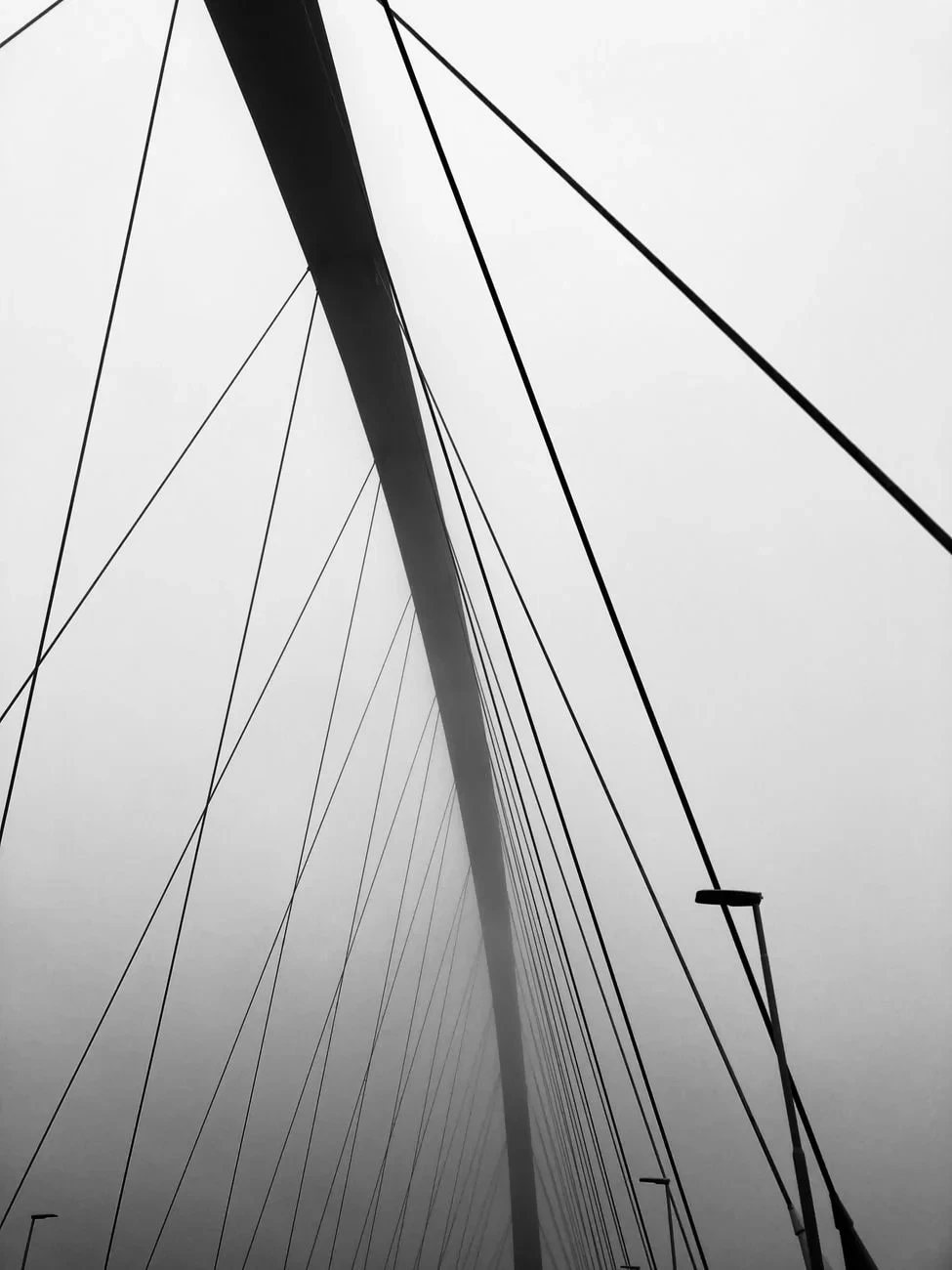
A contemporary curve arcs through misty air. The bridge itself becomes harder to read than the weather surrounding it.
Photograph by Lieke, via Pexels.
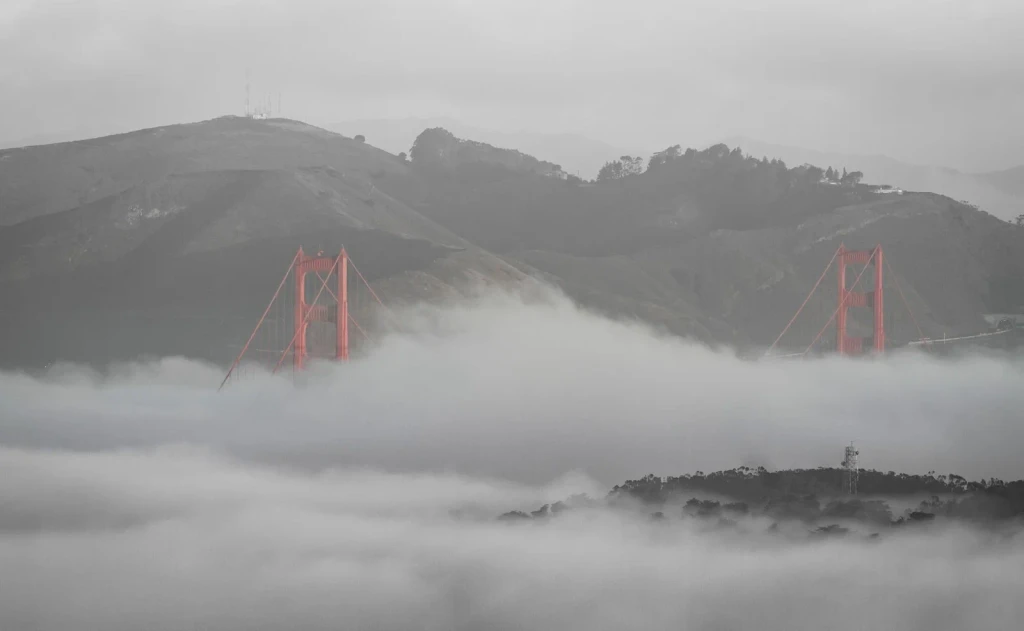
A bridge materializes from fog. Golden light and distant hills suggest a landscape slowly revealing itself. The obscured view mirrors the exhibition's central question: what lies between here and there?
Photograph by Stephen Leonardi, via Pexels.
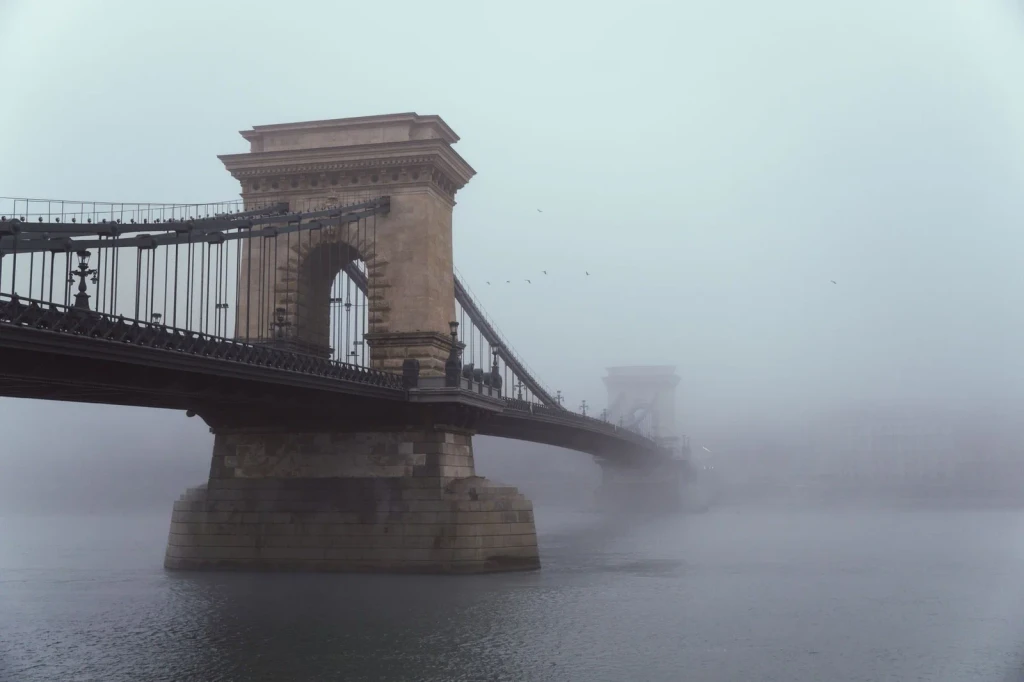
A historic bridge floats ethereal above the Danube. Wrapped in fog, it becomes timeless, suggesting how bridges carry centuries of crossing and connection.
Photograph by János Csatlós, via Pexels.
