3D Gallery
Chocolate Has a Dark Side
Enter gallery
Chocolate Has a Dark Side is a 3D virtual gallery on MyGallery3D, a walkable online exhibition of 14 works. Step inside and explore it in your browser: no app, no headset.
This is a 3D virtual museum of chocolate. Walk through it in your browser, then look again at the wrapper in your hand.
More than 70% of the world's cacao is grown in Africa, with Ivory Coast and Ghana producing about 58% of global supply. The number of children working on cocoa farms in Ivory Coast rose from an estimated 819,921 to 1,303,009; in Ghana the figure was 957,398. The first allegations of child slavery in cocoa appeared in 1998. As of 2018 the global chocolate trade was worth over US$100 billion.
In 2001 the heads of eight major chocolate companies signed a protocol witnessed by US senators Tom Harkin and Herb Kohl, Representative Eliot Engel, and the ambassador of the Ivory Coast. The goal was to eliminate the worst forms of child labor from cocoa production by 2005. It was not reached. The deadline was extended repeatedly, and the target was softened to a 70% reduction.
Cocoa pods grow straight from the trunk, and each holds 30 to 50 seeds. They ripen unevenly, so the harvest is cut by hand with a curved knife on a long pole, three or four times a week, for months. One person can harvest an estimated 650 pods a day. About 400 dried beans make one pound of chocolate.
This is not a modern lapse. By 1524 the Spanish had taken central Mexico and expanded cacao production, worked under the encomienda system of forced labor. When the Native American population collapsed, output moved to the Guayaquil coast of Ecuador and to Venezuela, where cacao was grown using slaves from Africa. The industry has run on coerced hands since its first century.
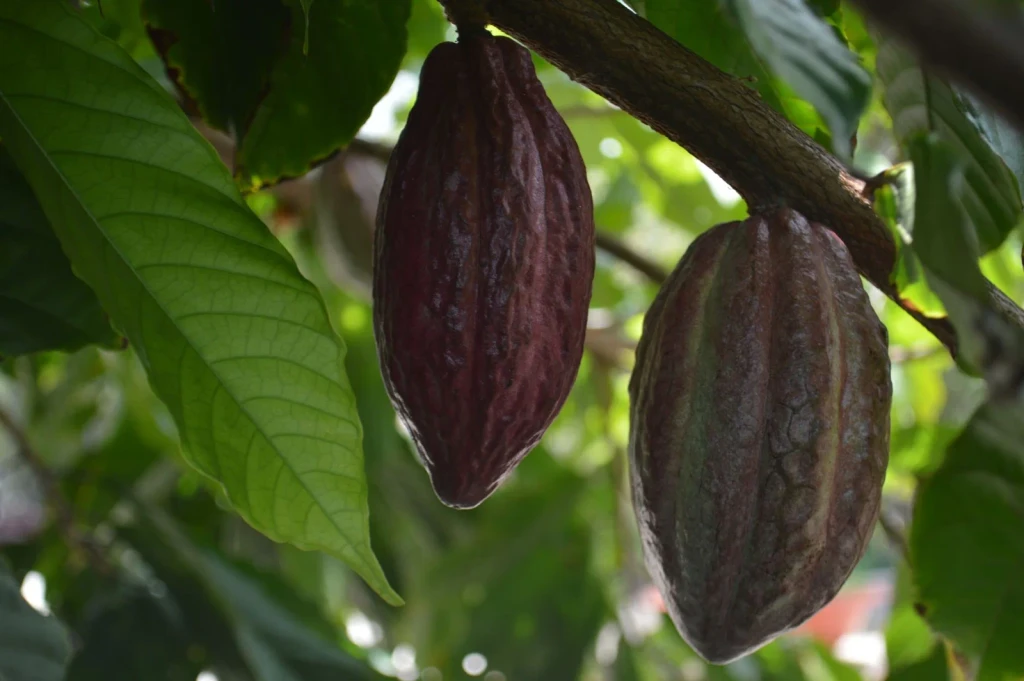
Ripe cocoa pods hang heavy on a branch in tropical conditions. The image captures the moment before picking, when the fruit is ready to be transformed.
Photograph by Valeria Drozdova, via Pexels.
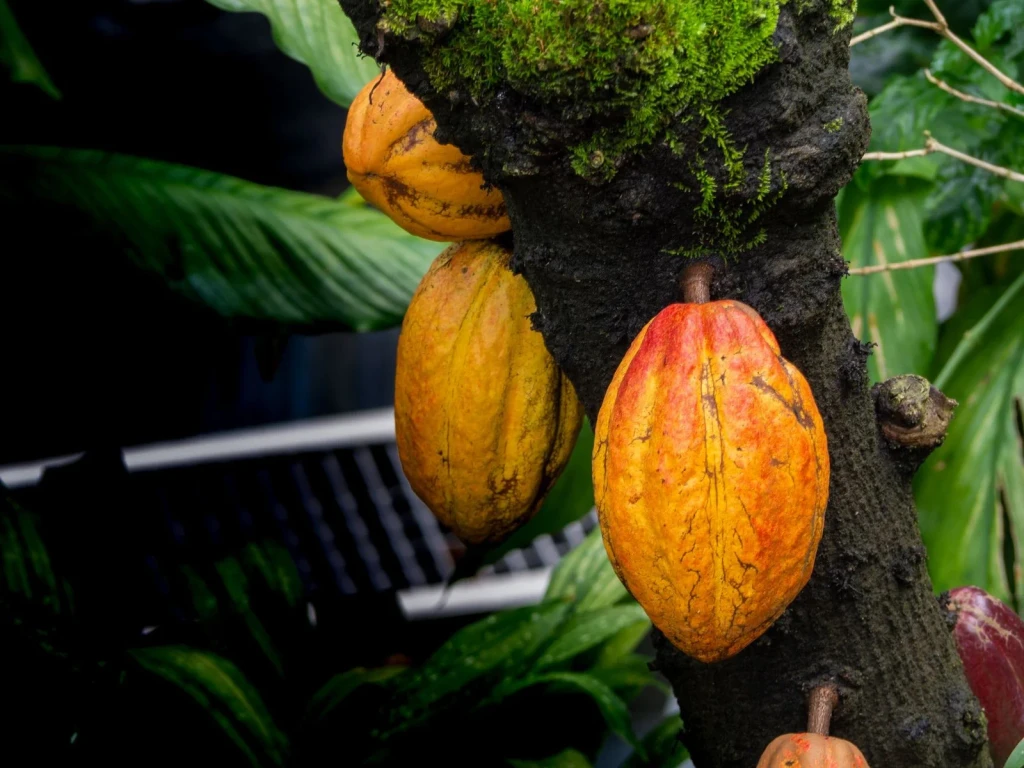
Mature cacao pods cluster on a tree trunk surrounded by green growth. The image documents the plant's natural state of production.
Photograph by KLT Dinusha, via Pexels.
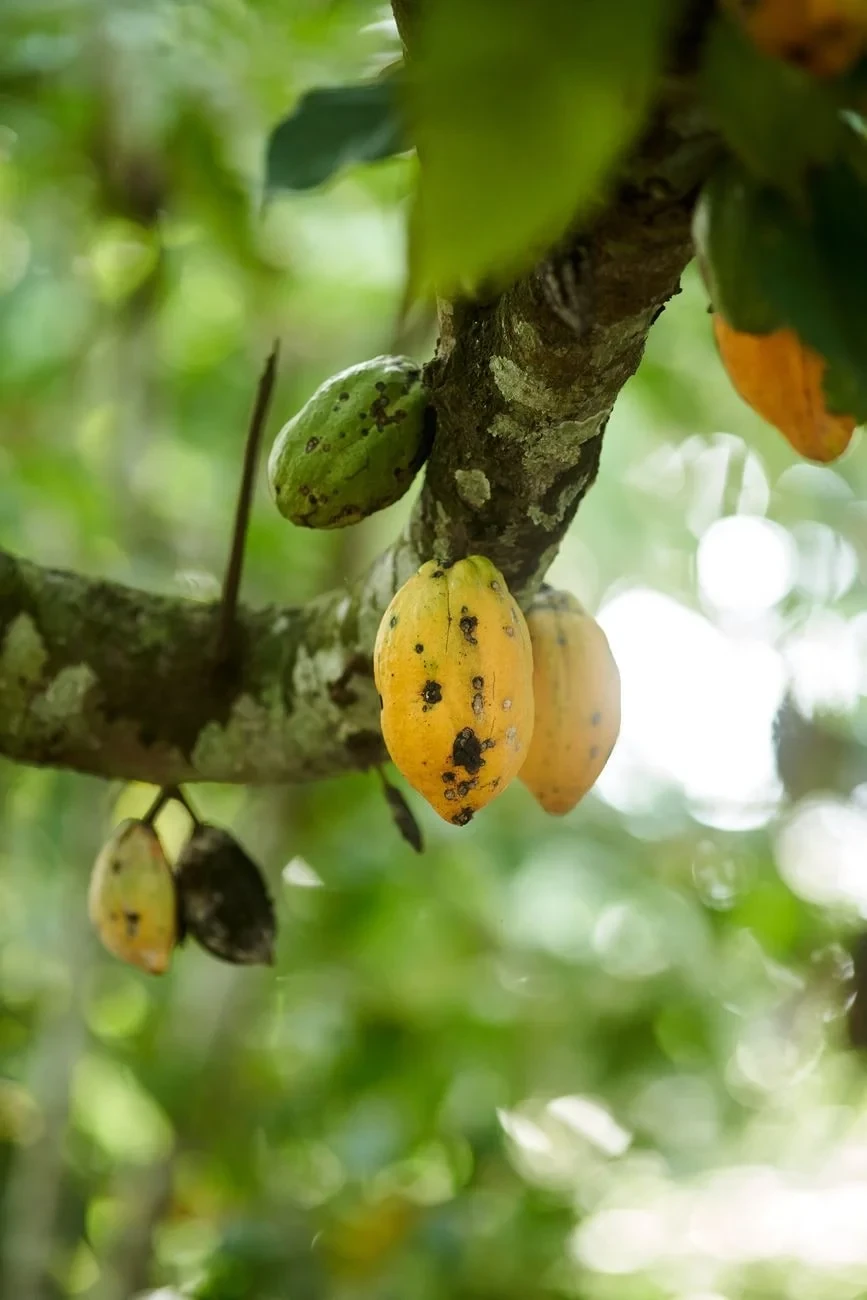
Cacao pods nestle among lush leaves in a tropical forest. The image shows the plant's natural environment, far from the industrial processes that follow harvest.
Photograph by Xavier Messina, via Pexels.
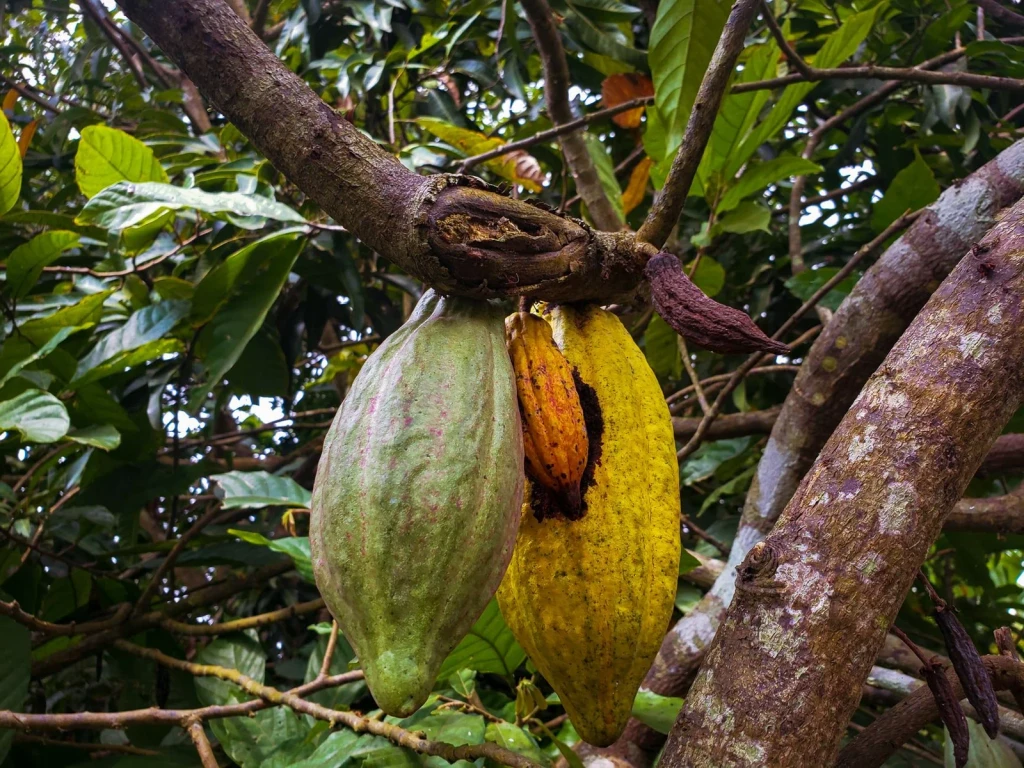
Vibrant pods in a cultivated plantation. Industrial-scale cacao farming sustains the chocolate industry while often obscuring difficult truths about those who grow it.
Photograph by Tope J. Asokere, via Pexels.
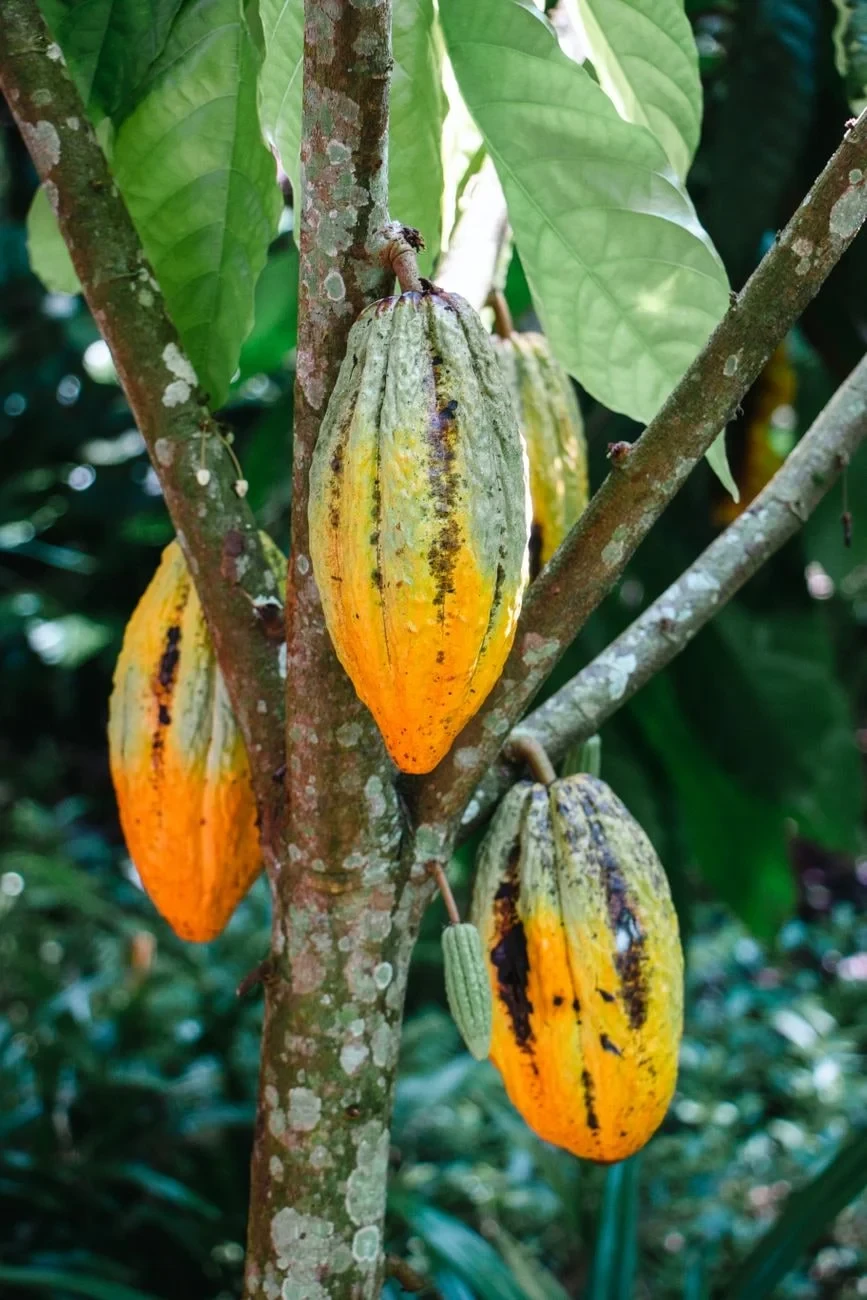
Ripe cocoa pods display their natural beauty in close-up. The image shows what makes chocolate possible, before the complications begin.
Photograph by Pincalo, via Pexels.
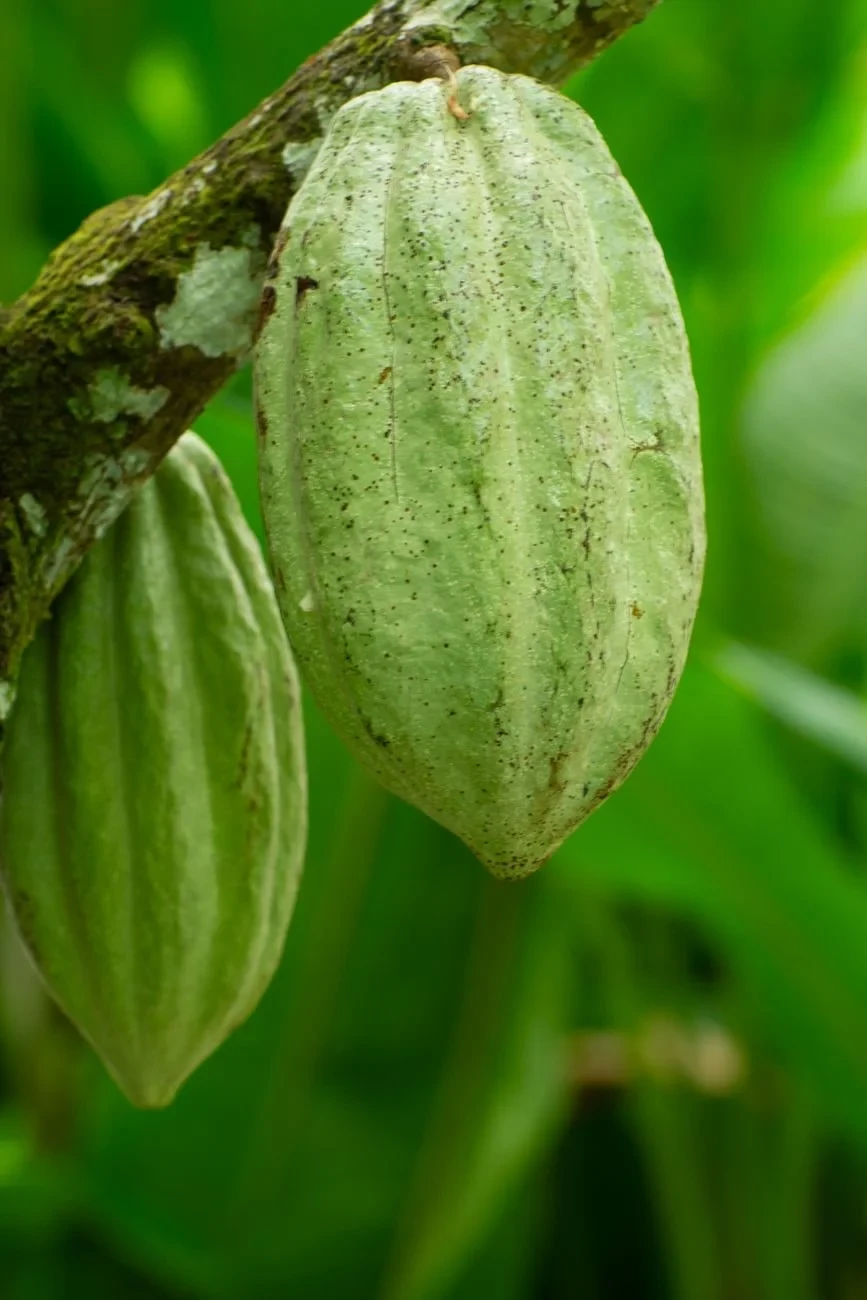
Cocoa pods in their unripe state hang amid tropical foliage. The photograph captures the plant before it reaches the vibrant colors we associate with chocolate's final form.
Photograph by William ZALI, via Pexels.
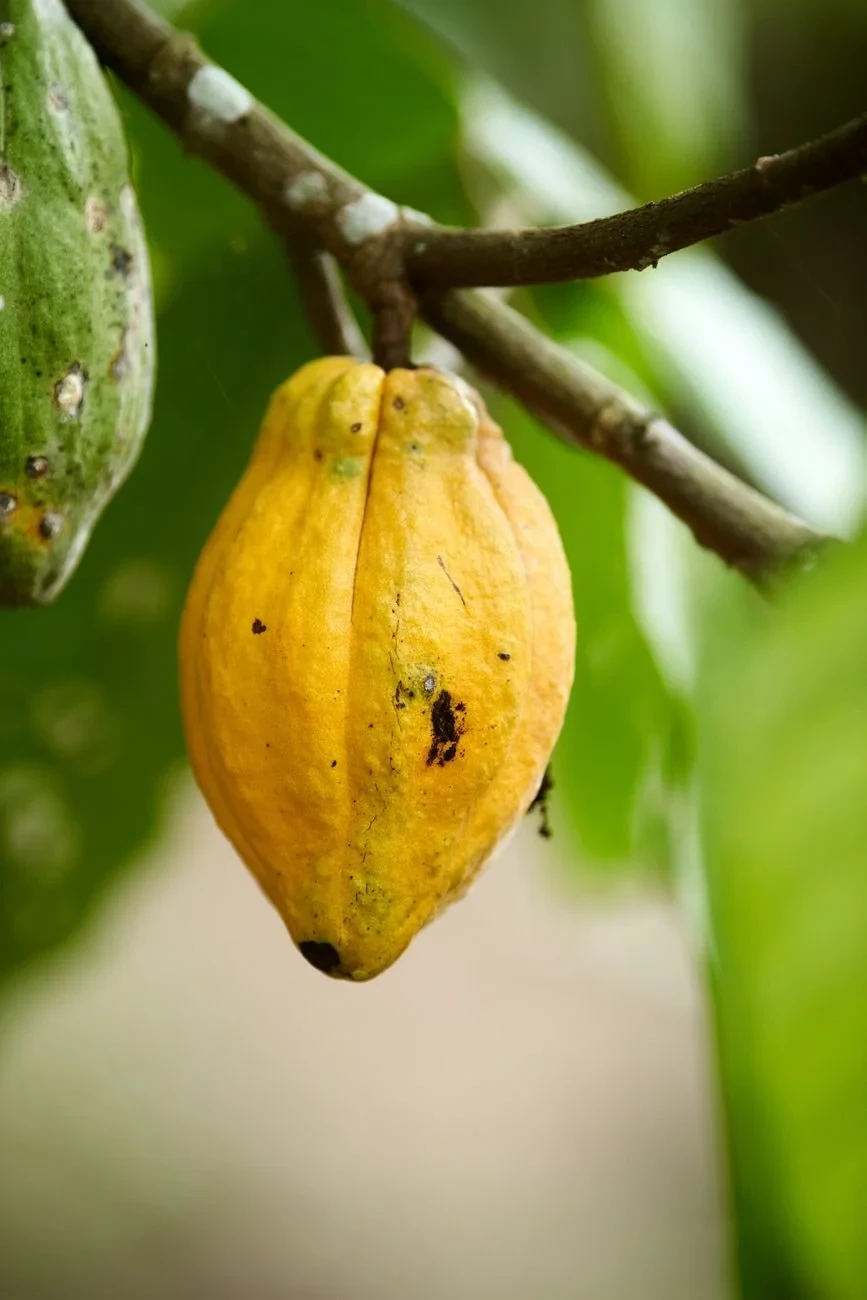
A single ripe cocoa pod glows in bright yellow. The photograph isolates one moment in the crop's lifecycle, before processing transforms it into the commodity we know.
Photograph by Xavier Messina, via Pexels.
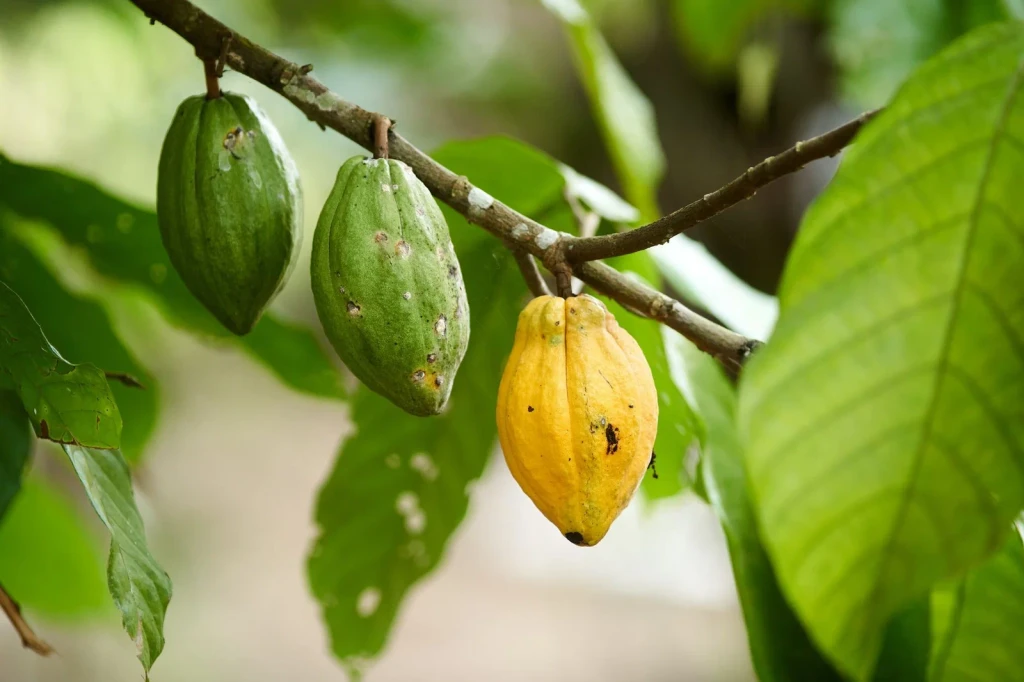
Cacao pods clustered on a branch with surrounding leaves. The serene image offers no hint of the labor and exploitation tied to chocolate production.
Photograph by Xavier Messina, via Pexels.
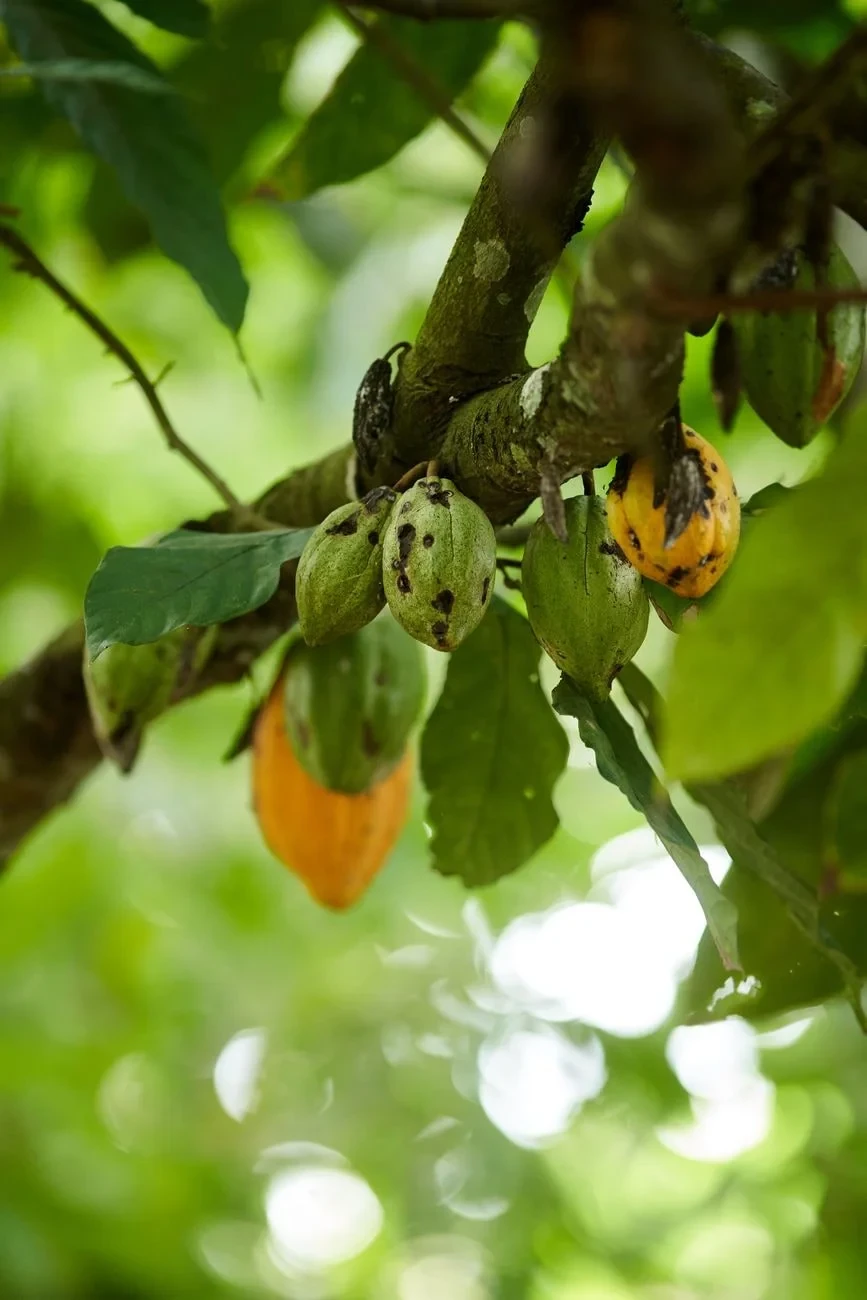
Cacao pods amid vibrant foliage and dappled light. The verdant abundance masks the darker realities embedded in chocolate's supply chains.
Photograph by Xavier Messina, via Pexels.
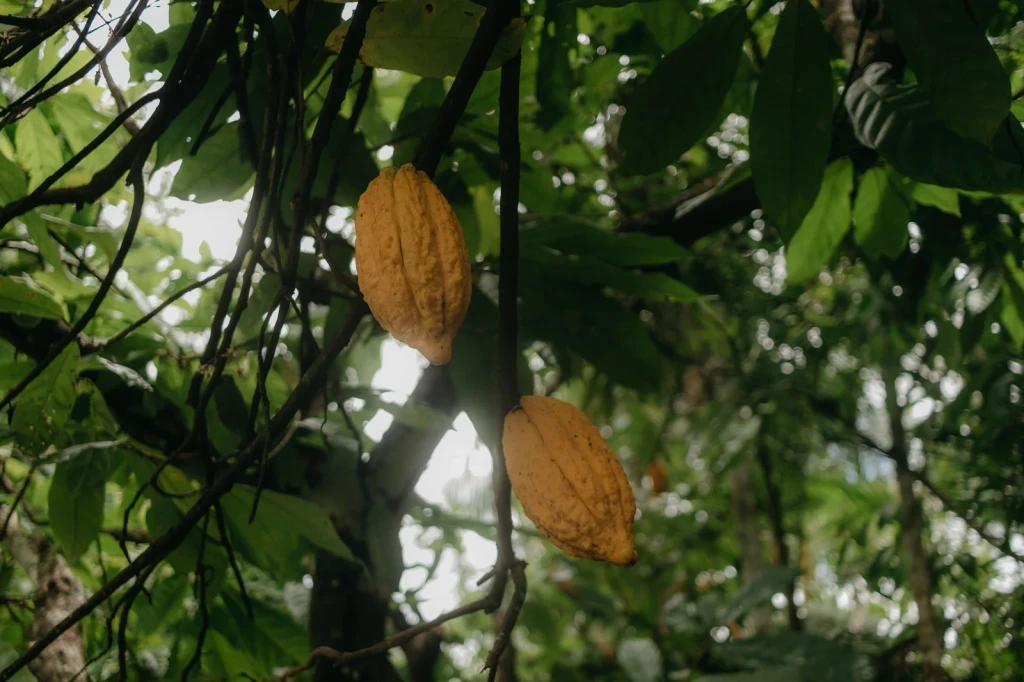
Cacao pods grow sheltered among dense leaves in a tropical forest. The photograph shows the crop in its environmental context, before the work of harvest begins.
Photograph by Kawê Rodrigues, via Pexels.
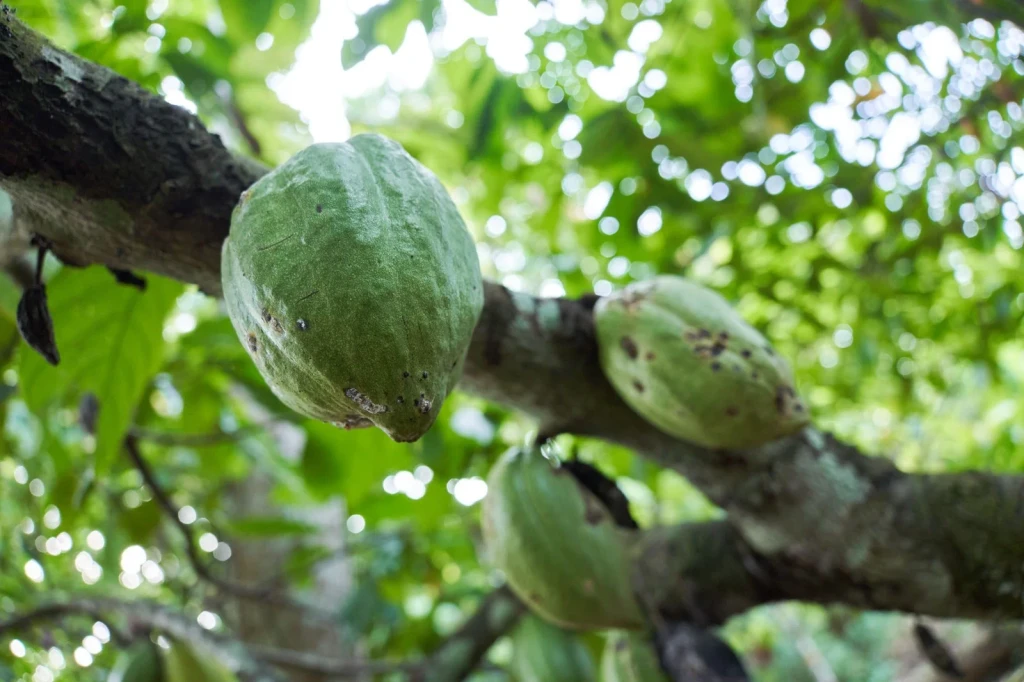
Unripe green pods on the branch. These early-stage fruits will eventually mature, but their potential comes at a cost not visible here.
Photograph by Xavier Messina, via Pexels.
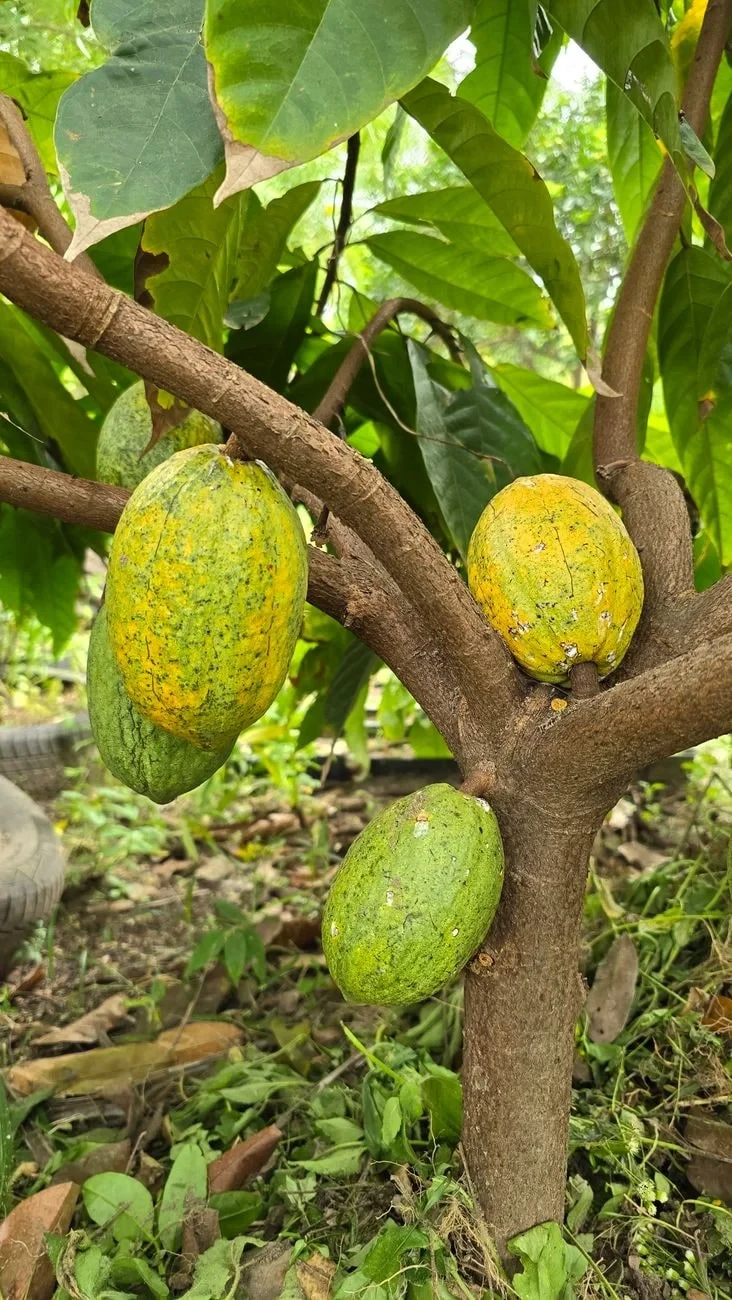
Cacao pods at various stages of maturity in an outdoor setting. Beauty in nature contrasts with the hidden costs of chocolate.
Photograph by Shiloh Spice, via Pexels.
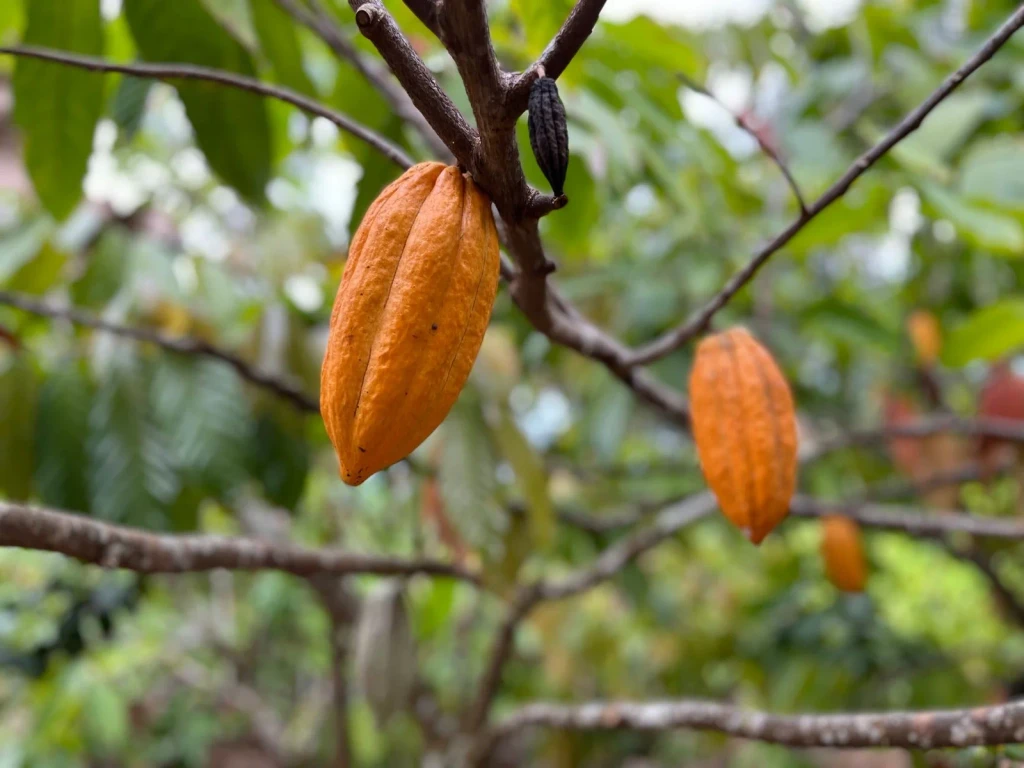
A close-up of mature cacao pods in their full color. Ripeness signals readiness for harvest, yet the journey from tree to chocolate involves complexities this image doesn't reveal.
Photograph by Franco Colomba, via Pexels.
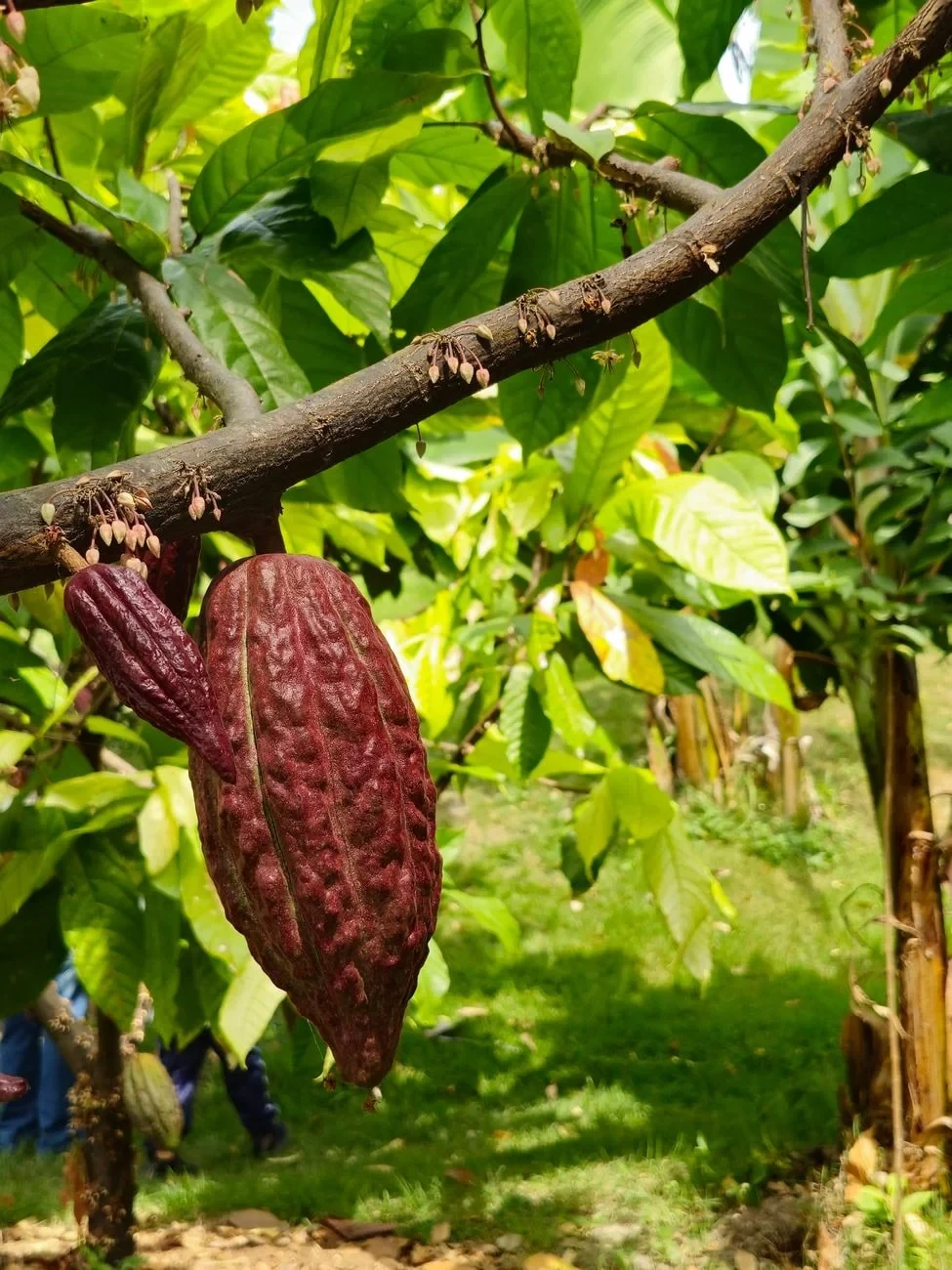
A single cacao pod hangs from a tree in cultivated green space. The photograph captures the crop at the center of chocolate's story.
Photograph by Caleb Pineda, via Pexels.
