3D Gallery
Railways: The Iron Roads That Shrank the World
Enter gallery
Railways: The Iron Roads That Shrank the World is a 3D virtual gallery on MyGallery3D, a walkable online exhibition of 13 works. Step inside and explore it in your browser: no app, no headset.
Step into this 3D virtual gallery of railways and walk the whole line in your browser, from wooden mine wagons to the Trans-Siberian.
Railways did not simply move goods faster. They flattened price itself. The first transcontinental railroad in the United States carried passengers and freight across the country in days rather than months, at one-tenth the cost of stagecoach or wagon transport, and rail created national markets in which prices varied less from city to city. Rail still carries about 8% of the world's passengers and freight.
A steam locomotive is a fire that drags its own draught. Burning coal heats water until it turns to gas and its volume increases 1,600 to 1,700 times. The exhaust steam then shoots up the chimney, dragging the smokebox gases with it and lowering the pressure there, which pulls air up through the coal bed and keeps the fire burning. The engine breathes by running.
The Trans-Siberian Railway runs 9,289 kilometres from Moscow to Vladivostok across eight time zones, and the journey takes eight days. Seven sections were worked simultaneously by 62,000 workers. Until the Circum-Baikal Railway was finished in 1904, the track simply stopped at Lake Baikal: an ice-breaking ferry, the SS Baikal, carried 24 railway coaches and one locomotive across in four hours.
Rail began underground. From the 1550s, wooden rails carried ore tubs to and from mines across Europe, and Georgius Agricola illustrated them in 1556. The carts had unflanged wheels running on wooden planks, with a vertical pin dropped into the gap to hold the line. Miners called them Hunde, dogs, after the noise they made on the tracks. Everything since is that idea in steel.
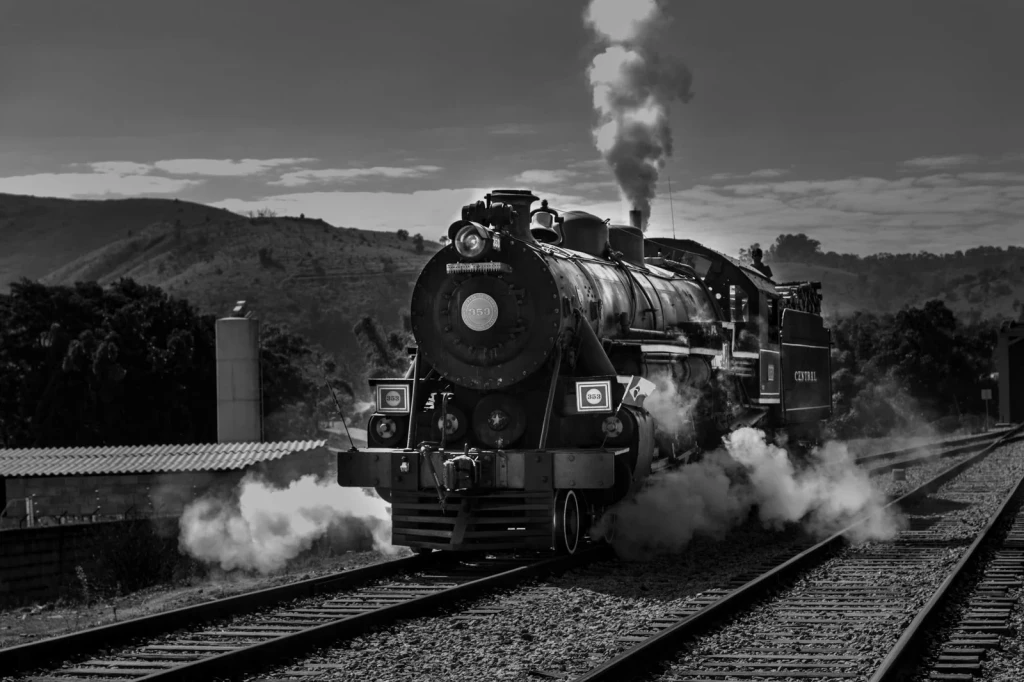
A steam locomotive moves through scenic terrain. Smoke billows against distant hills, capturing the romance of rail travel and its power to connect distant places.
Photograph by Reginaldo G Martins, via Pexels.
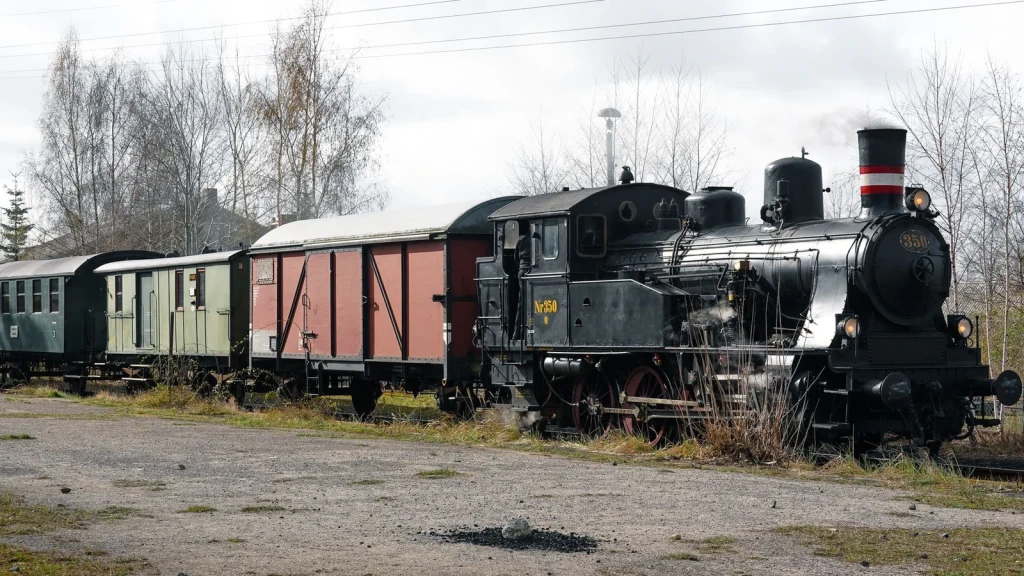
Historic steam train captured outdoors in Geesthacht, Schleswig-Holstein, showcasing railway heritage.
Photograph by Wolfgang Weiser, via Pexels.
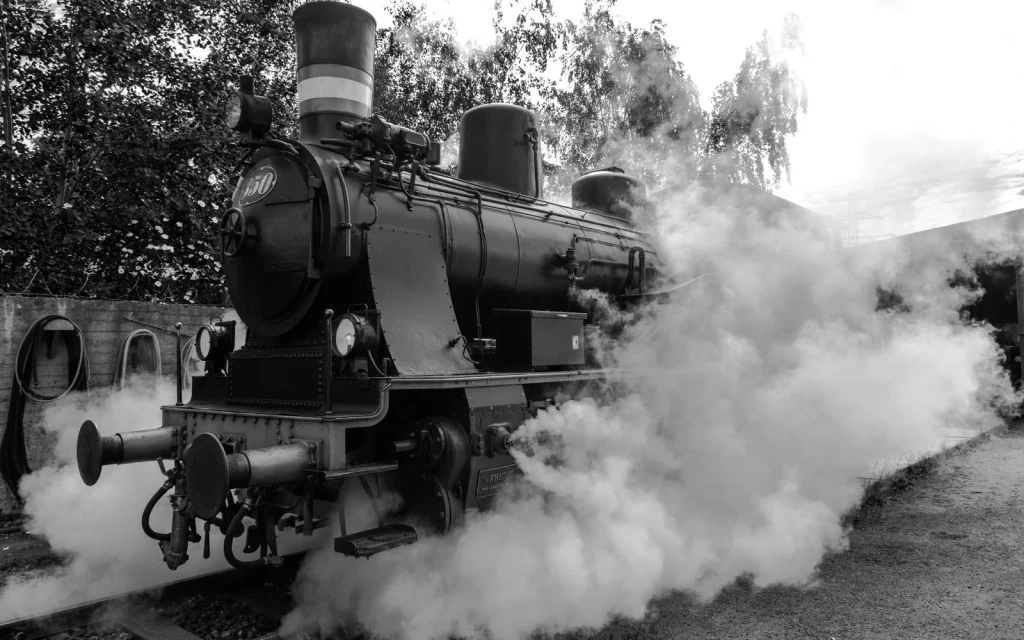
A vintage steam locomotive releasing steam in an outdoor setting. The dramatic clouds illustrate the raw mechanical force of industrial rail transport.
Photograph by Wolfgang Weiser, via Pexels.
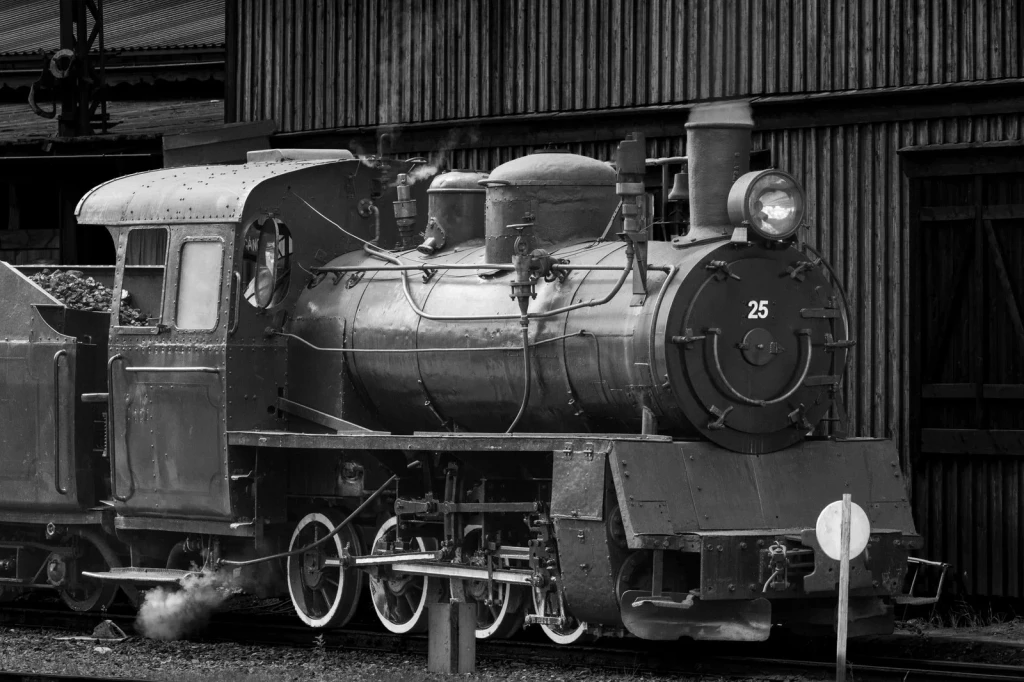
A historic steam engine pauses at the platform. This locomotive represents the machines that once connected distant places.
Photograph by Lorenzo Manera, via Pexels.
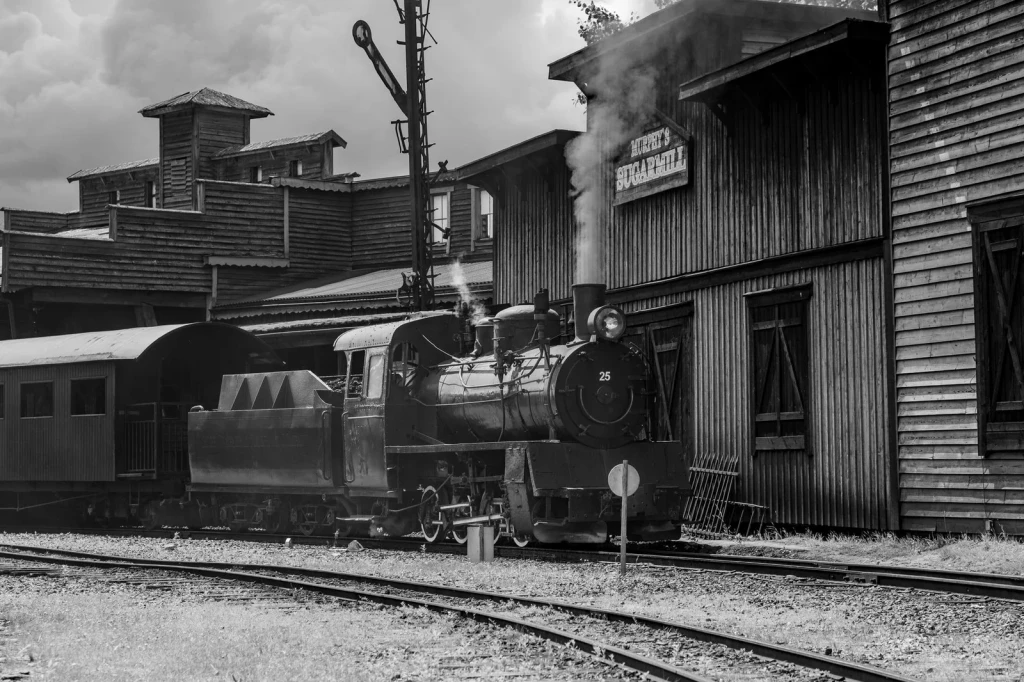
A vintage steam train at a wooden station evokes an earlier era. The image captures the nostalgia of rail travel's formative years.
Photograph by Lorenzo Manera, via Pexels.
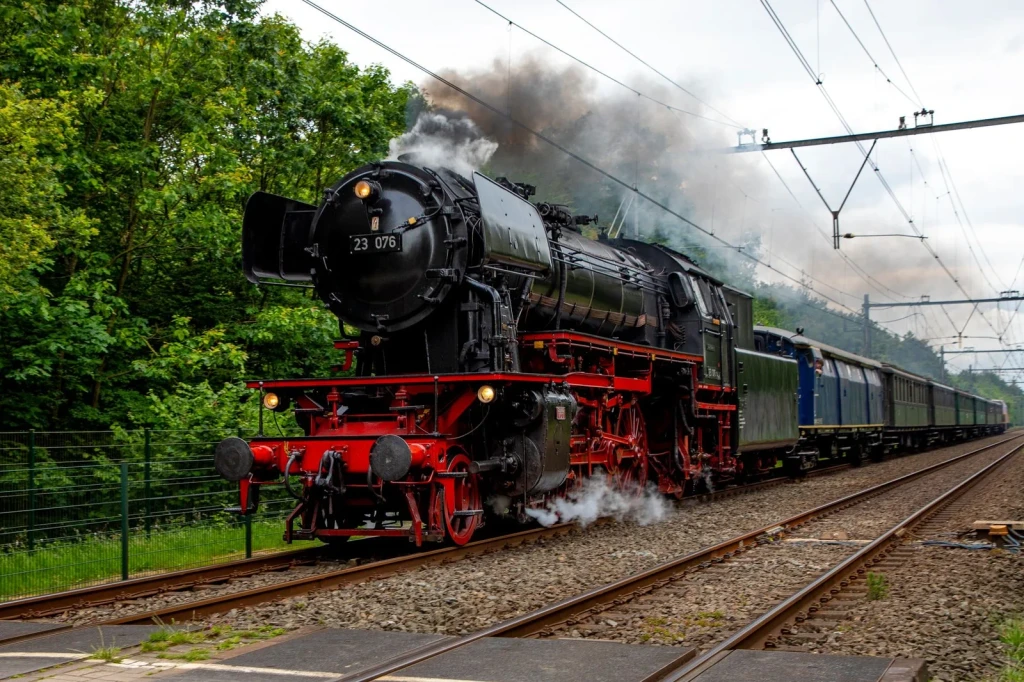
Steam train passing through lush greenery in the Netherlands. The image shows how railways cut through natural landscapes, reshaping travel and commerce.
Photograph by Frank van Dijk, via Pexels.
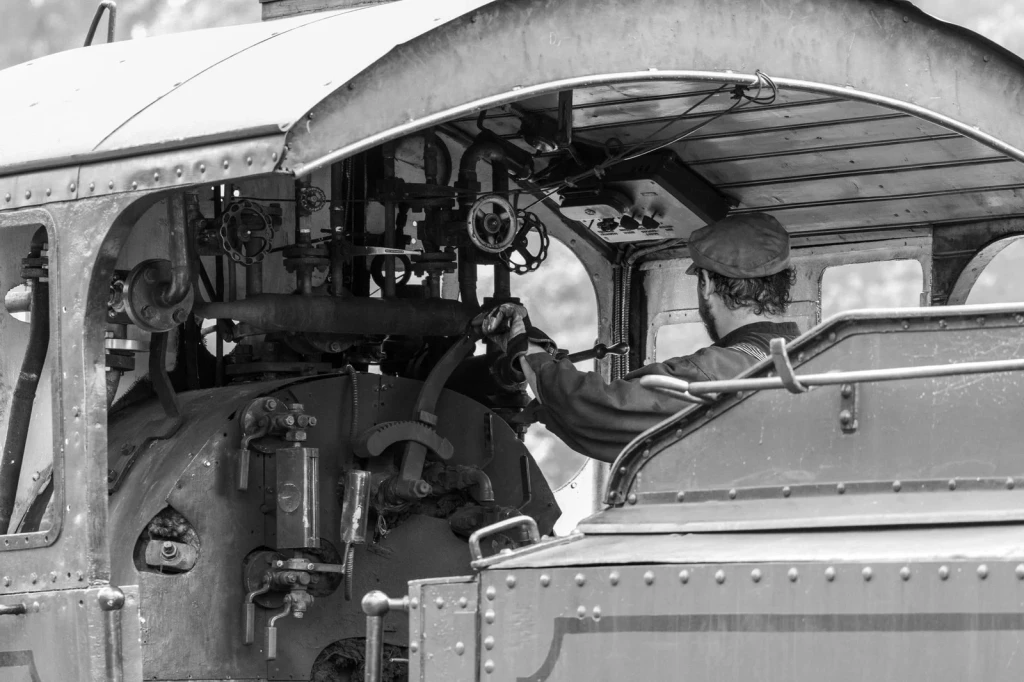
Black and white portrait of a train engineer in the locomotive cabin. An intimate look at the skilled labor behind steam rail operation.
Photograph by Lorenzo Manera, via Pexels.
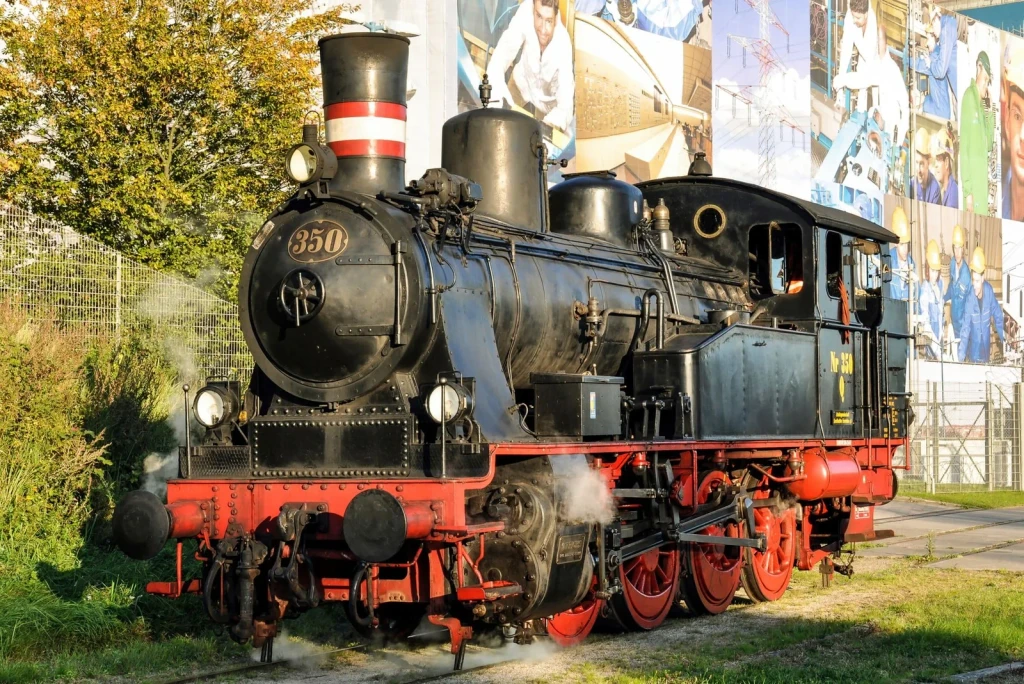
Historic steam locomotive documented in daylight. The vibrant surroundings suggest how railways connected communities across the landscape.
Photograph by Wolfgang Weiser, via Pexels.
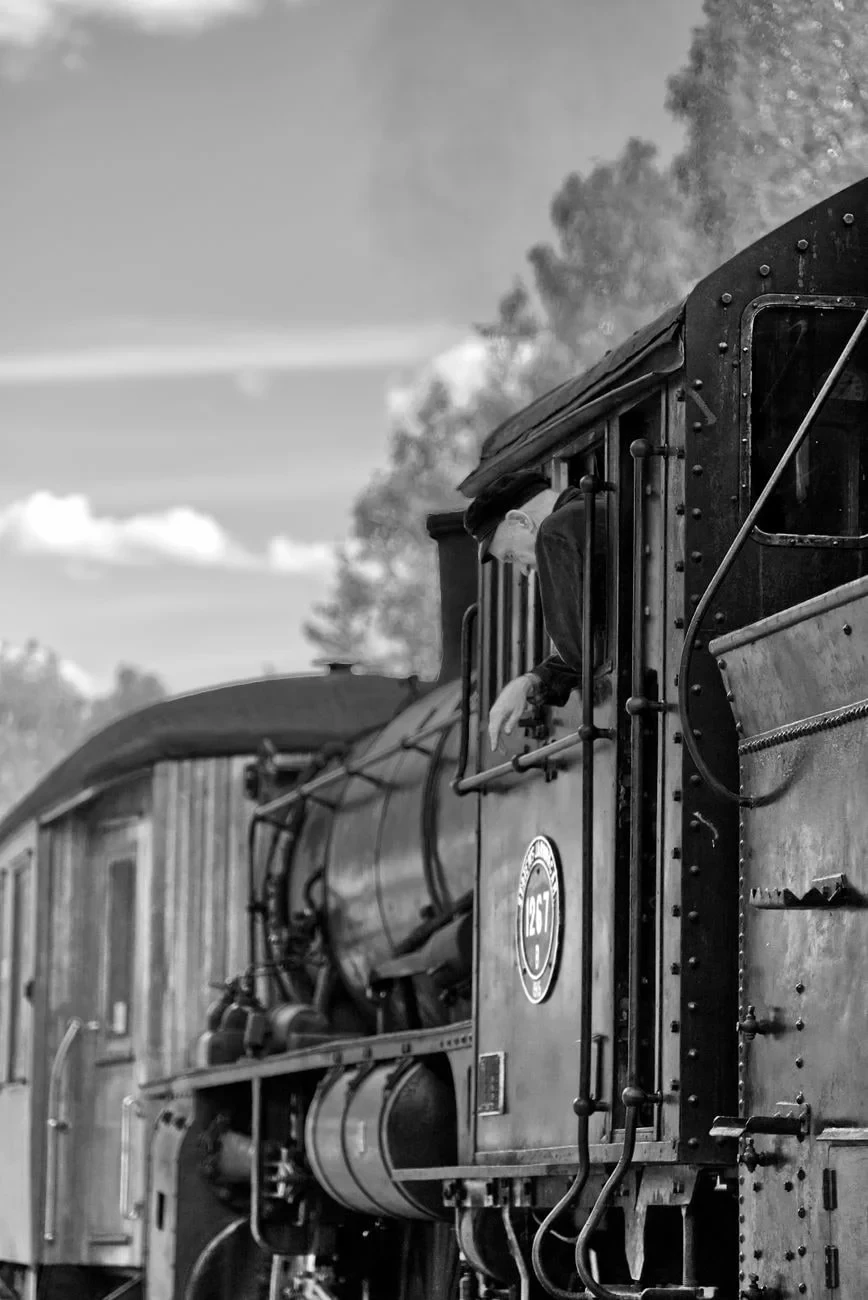
Smoke billows from a vintage locomotive in open countryside. The image records the power these machines brought to rural areas.
Photograph by Peter Månsson, via Pexels.
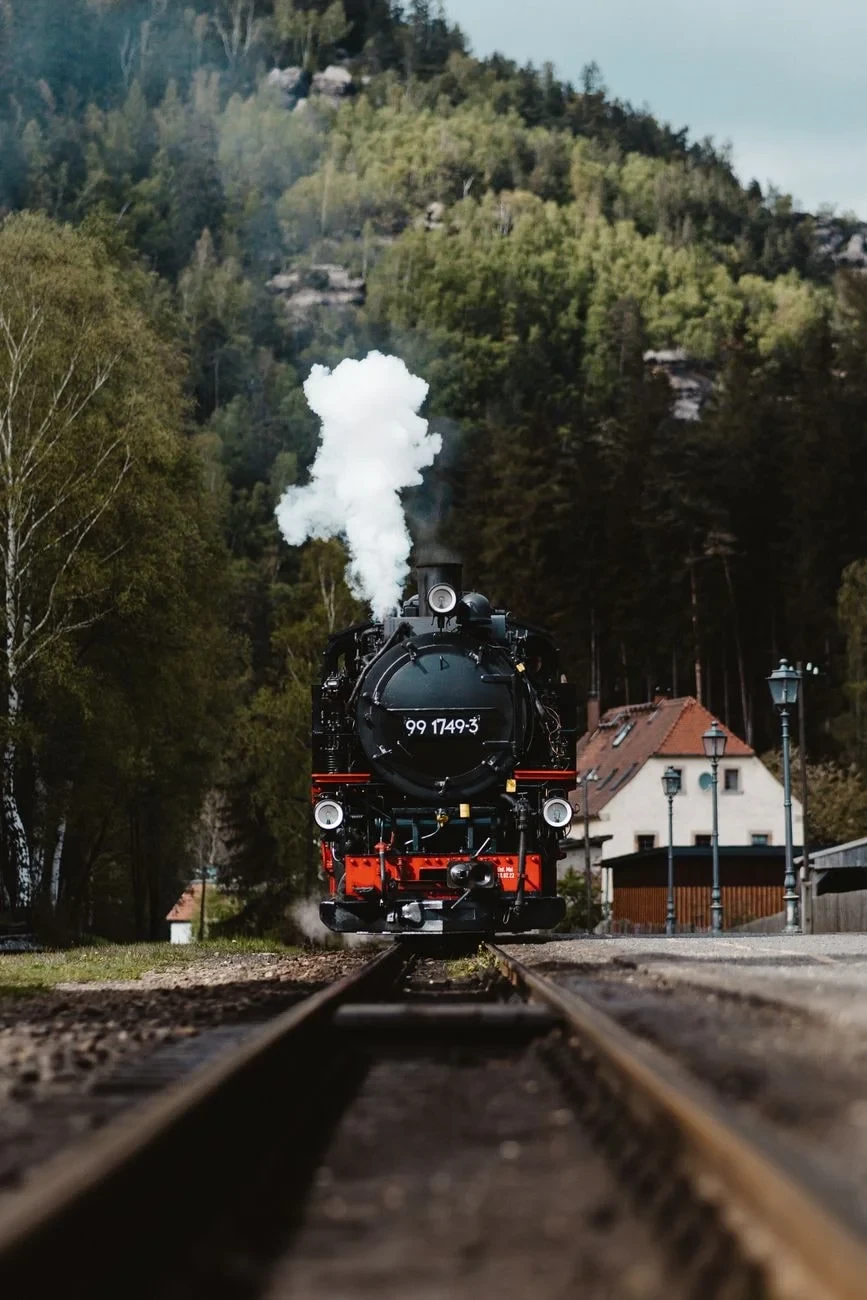
A locomotive travels through scenic countryside surrounded by greenery. Railways brought transformation to the natural world they passed through.
Photograph by Sebastian Luna, via Pexels.
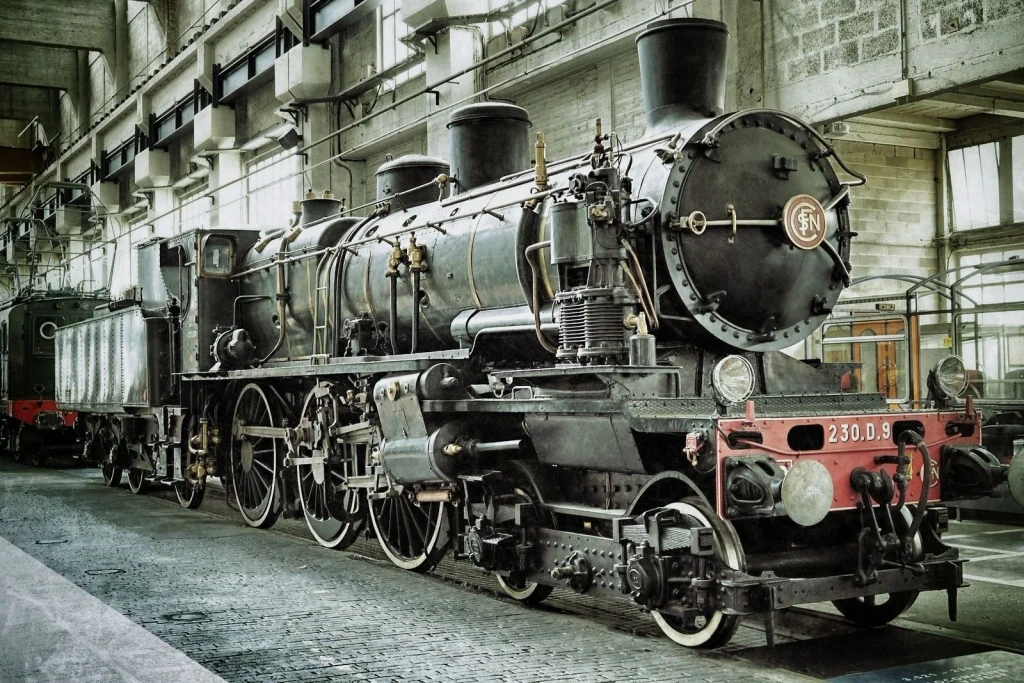
A locomotive rests indoors at a railway station. The controlled setting emphasizes the engineering behind these iron roads.
Photograph by Flickr, via Pexels.
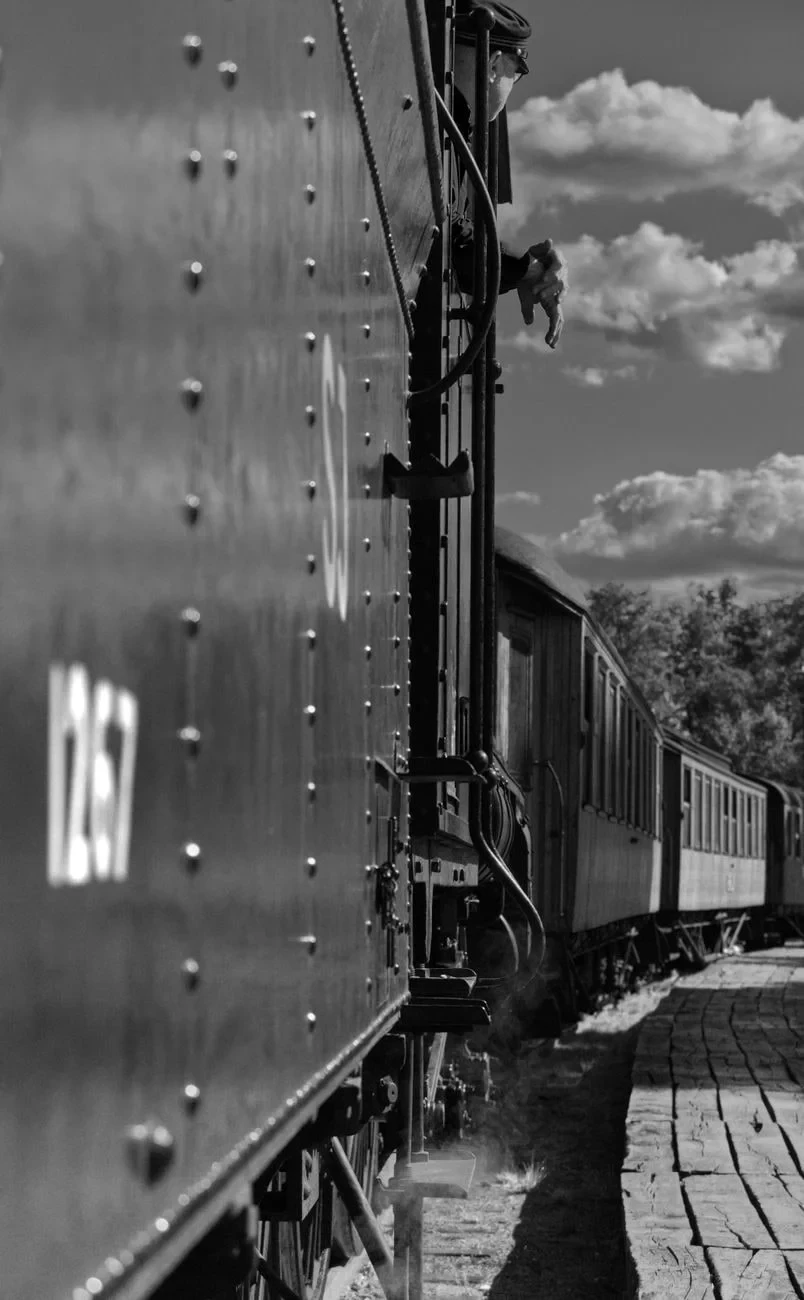
A black and white study of steam locomotive and track. The composition captures the essential geometry of rail infrastructure against an open sky.
Photograph by Peter Månsson, via Pexels.
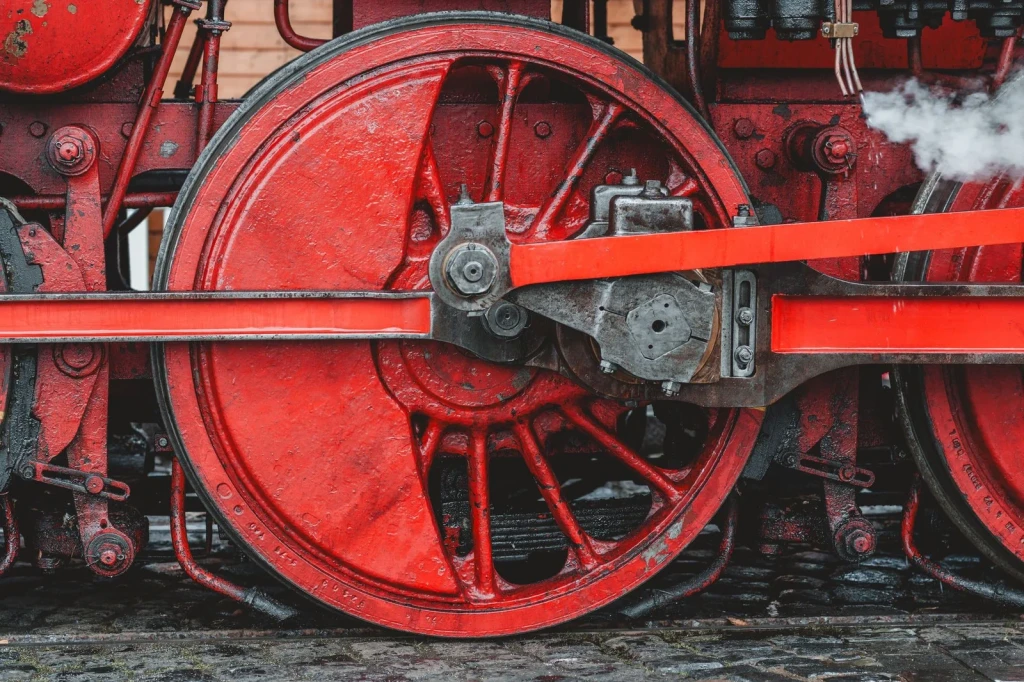
A close view of a locomotive's red wheel and pistons. This detail reveals the mechanical ingenuity that drove the railway age.
Photograph by Masood Aslami, via Pexels.
