3D Gallery
Ice: The Solid That Shaped Continents
Enter gallery
Ice: The Solid That Shaped Continents is a 3D virtual gallery on MyGallery3D, a walkable online exhibition of 14 works. Step inside and explore it in your browser: no app, no headset.
Welcome to a 3D virtual gallery of ice, which you can walk through in your browser. Ice is a mineral, and a glacier is a rock that flows.
Once ice is about 50 m thick, stress on the layer above exceeds the bonds between layers, and the mass deforms under its own weight, grinding out whatever it crosses. Fjords carved this way reach a kilometre in depth. The Great Lakes are a hollow left behind. Glaciers hold about 69% of the world's fresh water; if Antarctica and Greenland melted, the sea would rise over 70 m.
About one tenth of an iceberg's volume sits above the surface; the rest is invisible, and its shape is hard to judge from what shows. Icebergs can weigh more than 10 million tonnes. The largest on record, sighted by the USS Glacier in the South Pacific Ocean on November 12, 1956, measured 335 by 97 kilometres. It was larger than Belgium.
Water does something unusual when it freezes: it expands. Hydrogen bonds lock the molecules into a hexagonal lattice that packs less compactly than the liquid, leaving ice about 8.3% less dense, a volume increase of about 9%. This is why pipes burst, why rock crumbles under freeze-thaw weathering, and why ice floats instead of sinking, so lakes never freeze solid from the bottom up.
Snow falling on an ice sheet compacts into firn, and at a density of about 830 kg/m3 it seals into ice, trapping the air of that year in bubbles. Drills reach over two miles down and recover ice up to 800,000 years old. Crack a bubble open and you are sampling the atmosphere directly: not a proxy for ancient carbon dioxide, but the gas itself.
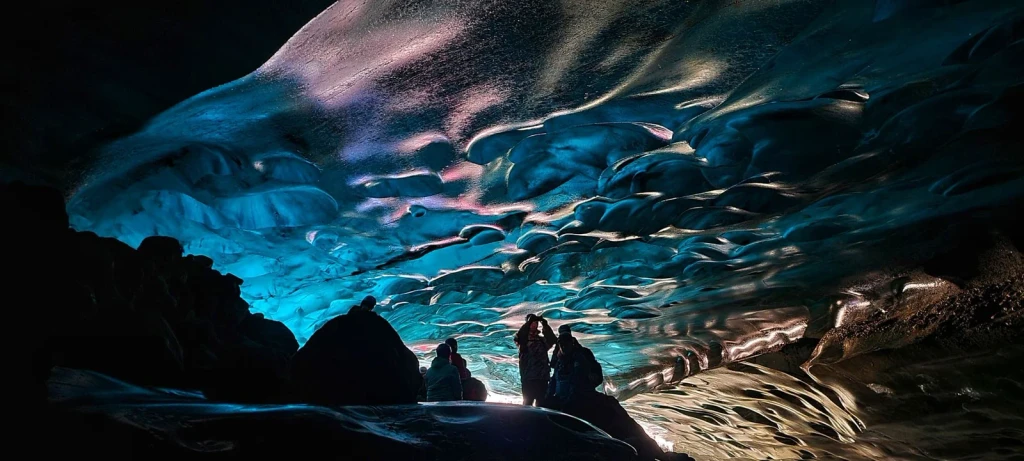
People stand within an ice cave, dwarfed by its luminous walls. The image captures how ice shapes not just continents, but the human experience of scale and wonder.
Photograph by Lyn Ong, via Pexels.
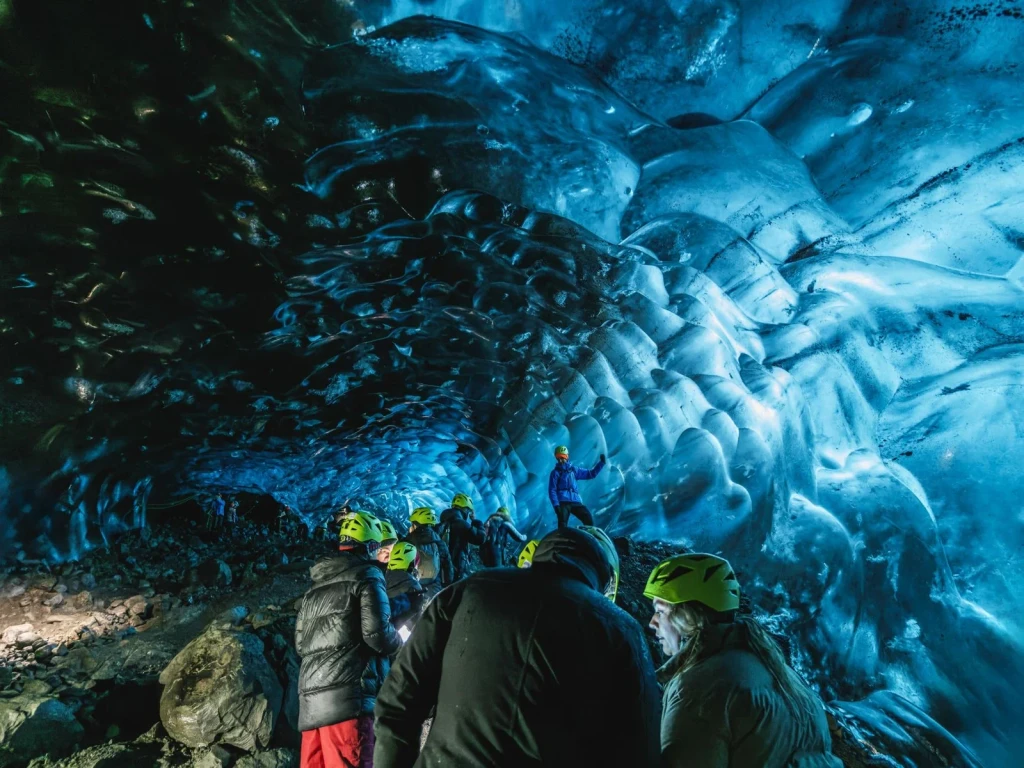
People in winter gear navigate an illuminated ice cave. The image shows humans dwarfed by ice formations that shaped landscapes.
Photograph by Rino Adamo, via Pexels.
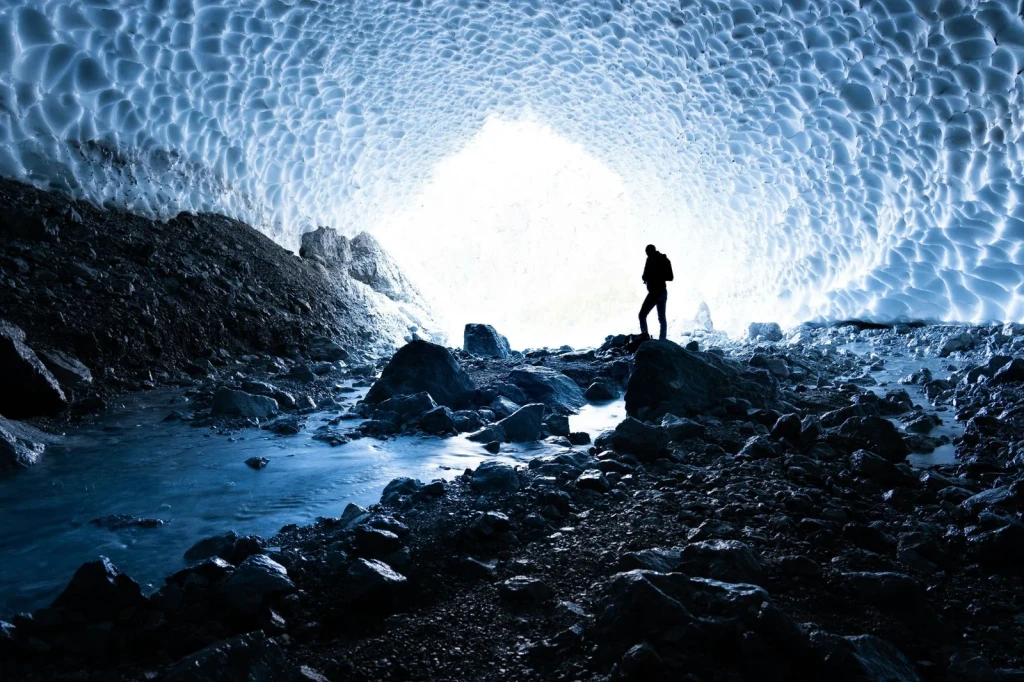
Glacial ice and rock meet in this cave, where the ice has carved its passage through stone. The image shows ice as a patient, persistent shaper of landscapes.
Photograph by Julien R, via Pexels.
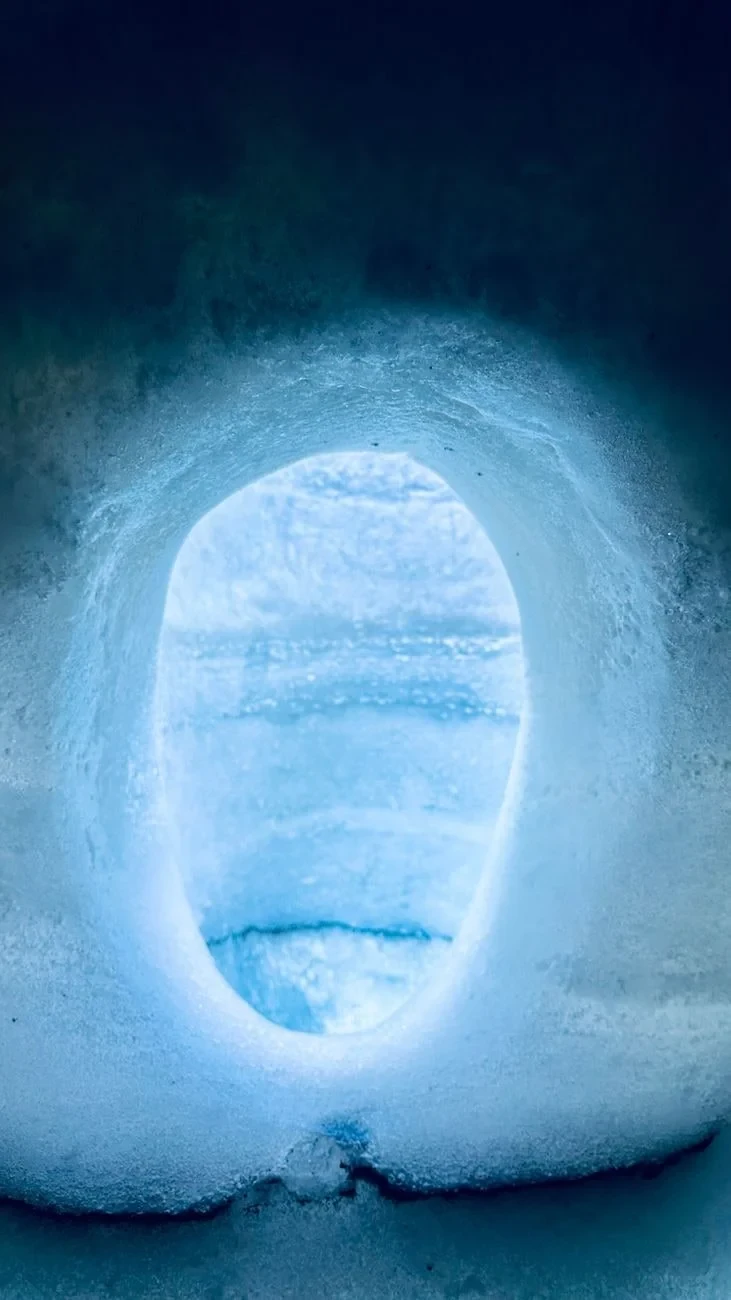
Soft blue light suffuses the interior of ice, revealing the delicate complexity hidden within frozen masses. This glow hints at the geological power locked in crystalline form.
Photograph by Sutha Hasan, via Pexels.
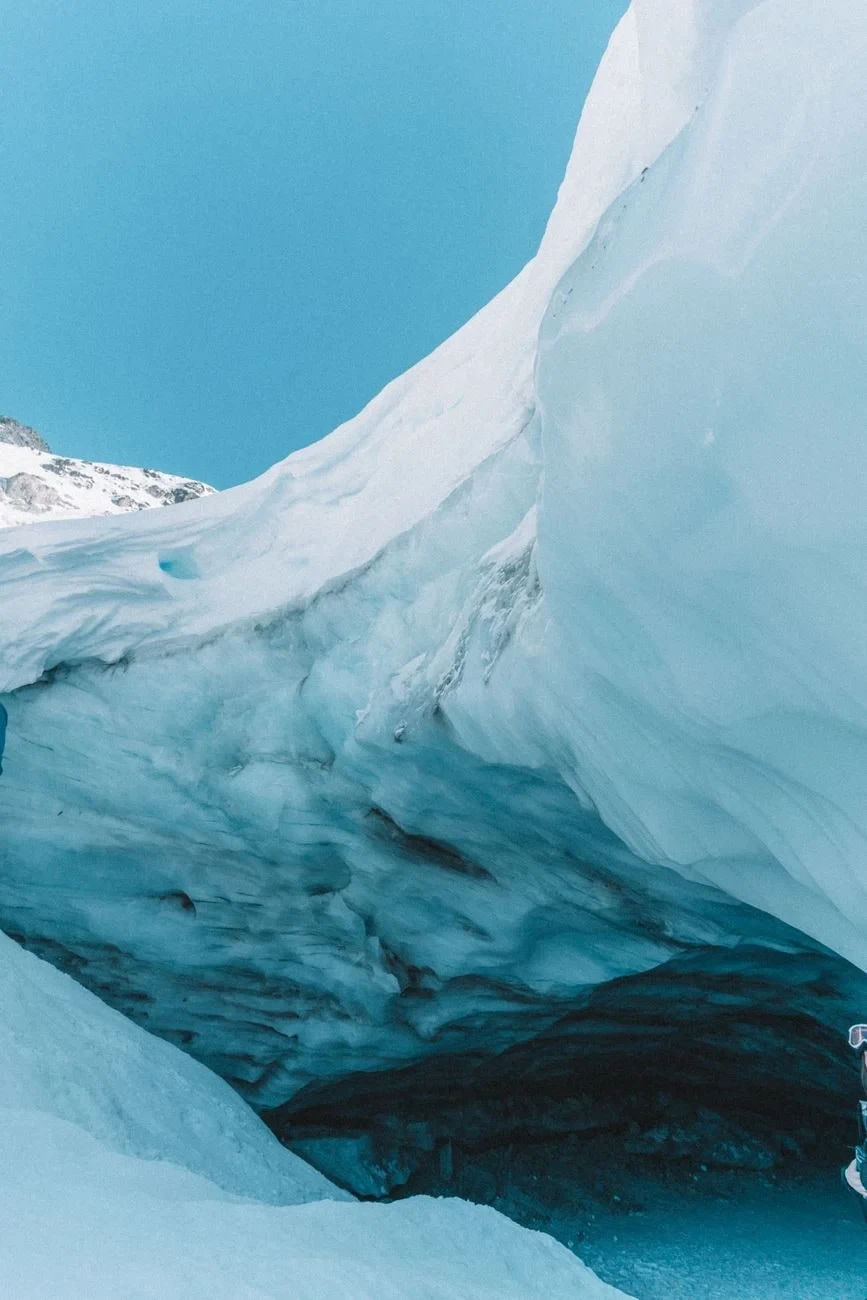
A stunning ice cave formation emerges within a glacier. It documents the intricate structures that glaciers create over time.
Photograph by Nick Gosset, via Pexels.
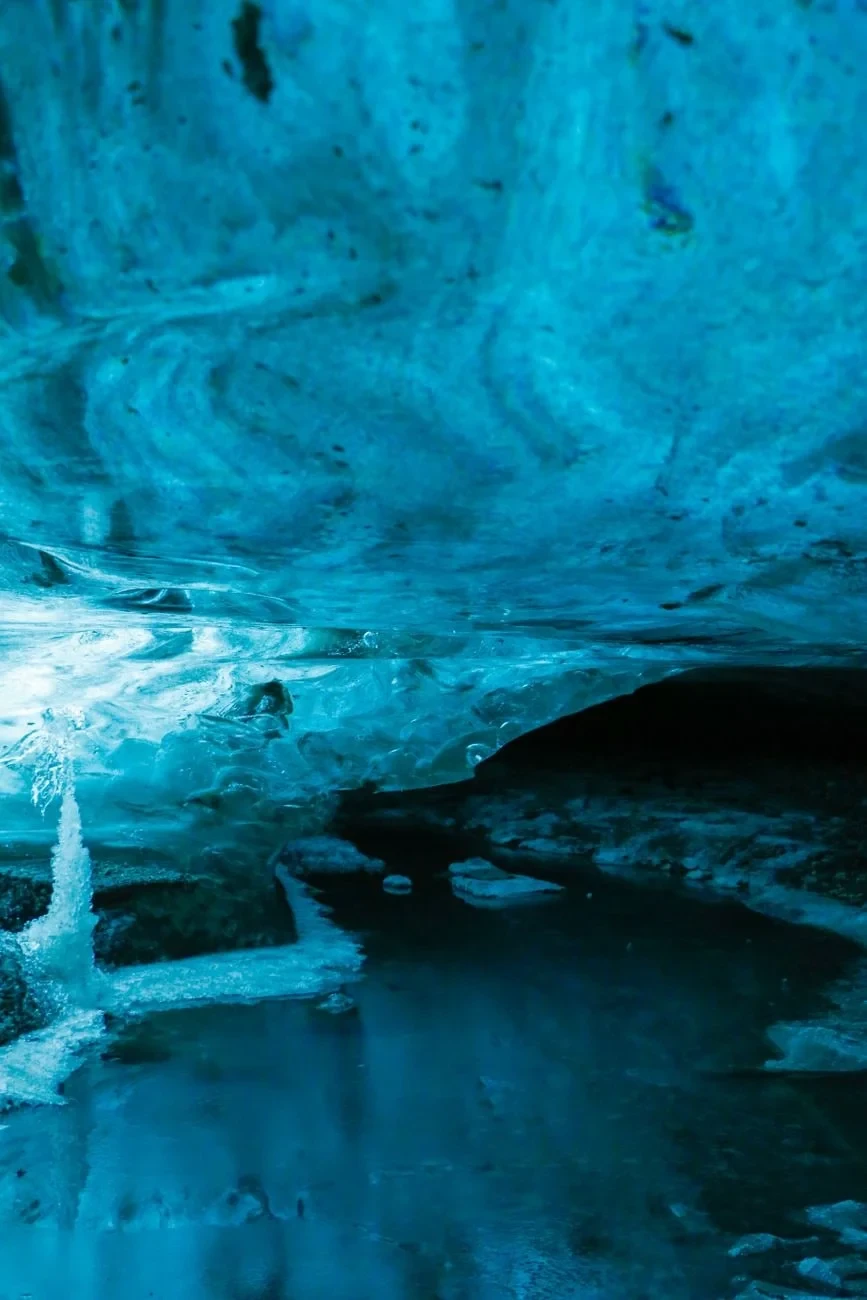
A natural icy formation glows with mesmerizing colors. Ice reveals its hidden palette when light passes through.
Photograph by Shuo Wang, via Pexels.
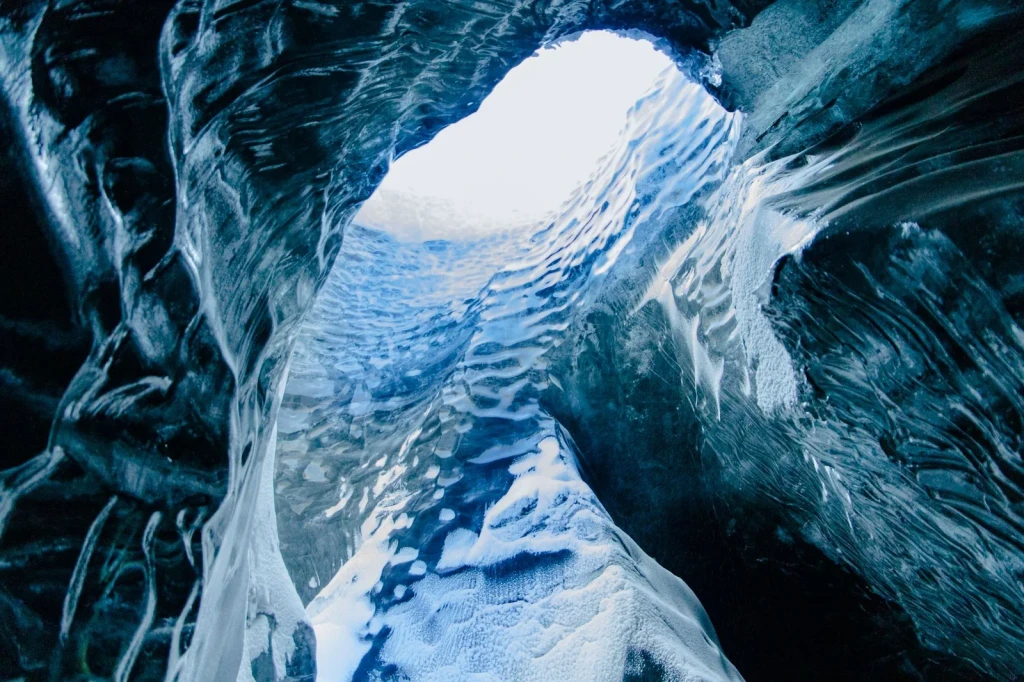
An ice cave reveals the sculpted beauty that forms within frozen landscapes. These formations speak to ice's power to reshape the world into ethereal, otherworldly spaces.
Photograph by Han-Chieh Lee, via Pexels.
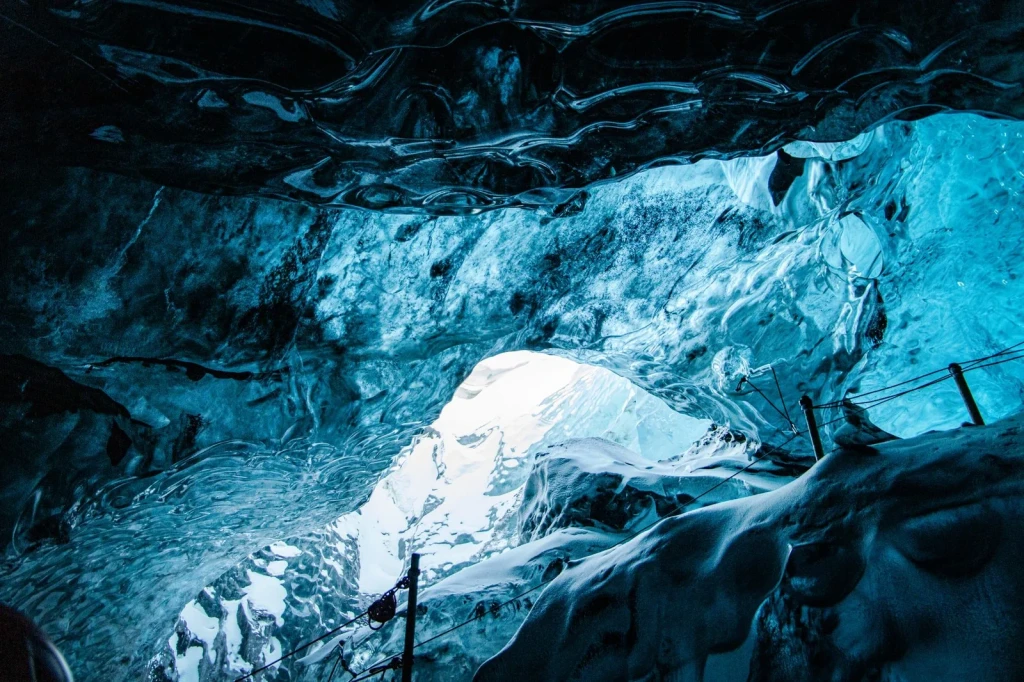
An ice cave interior displays brilliant blue hues and frozen textures. The colors reveal how glacial ice absorbs and transforms light.
Photograph by Han-Chieh Lee, via Pexels.
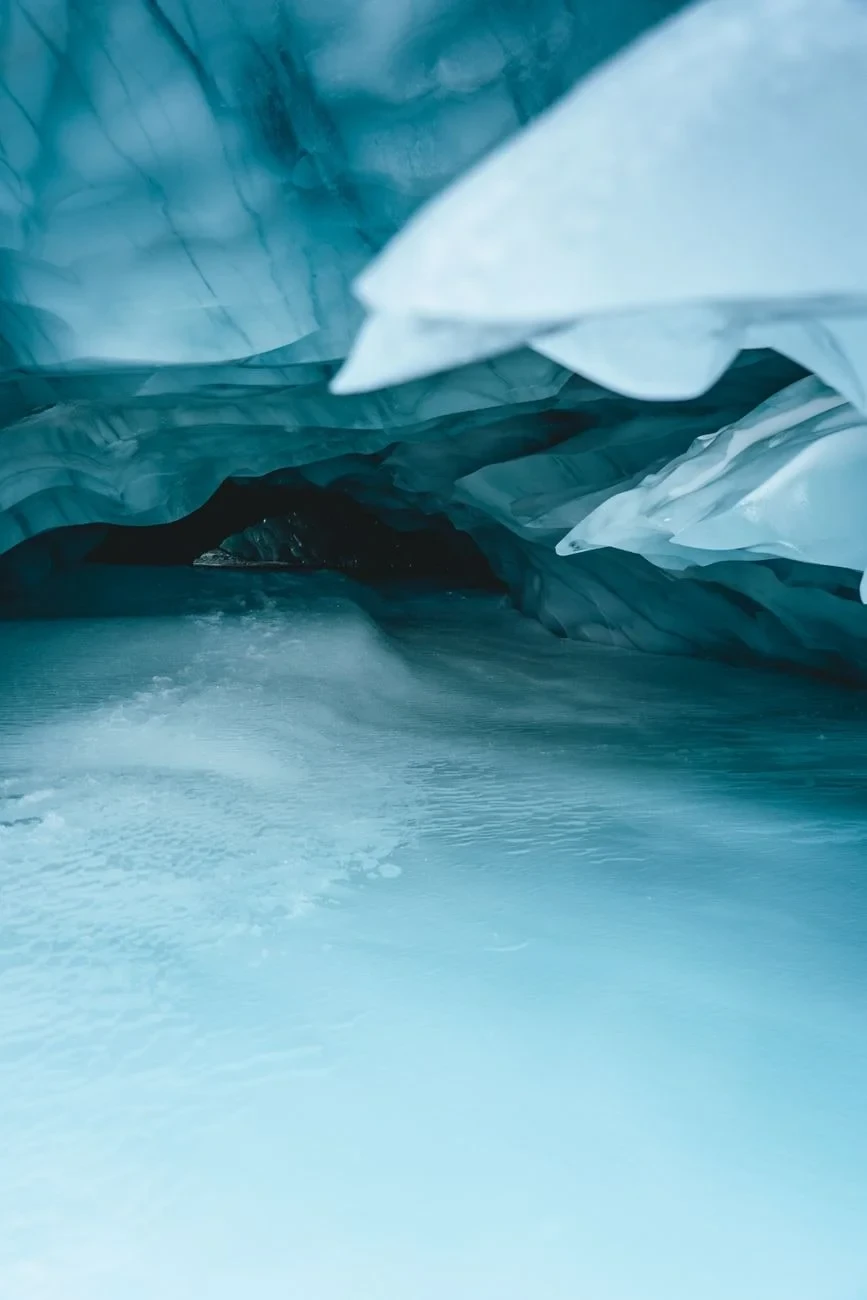
Pristine icy formations create serene geometry within a glacier. This image shows how ice sculpts itself into caves of surprising beauty.
Photograph by Christian Buergi, via Pexels.
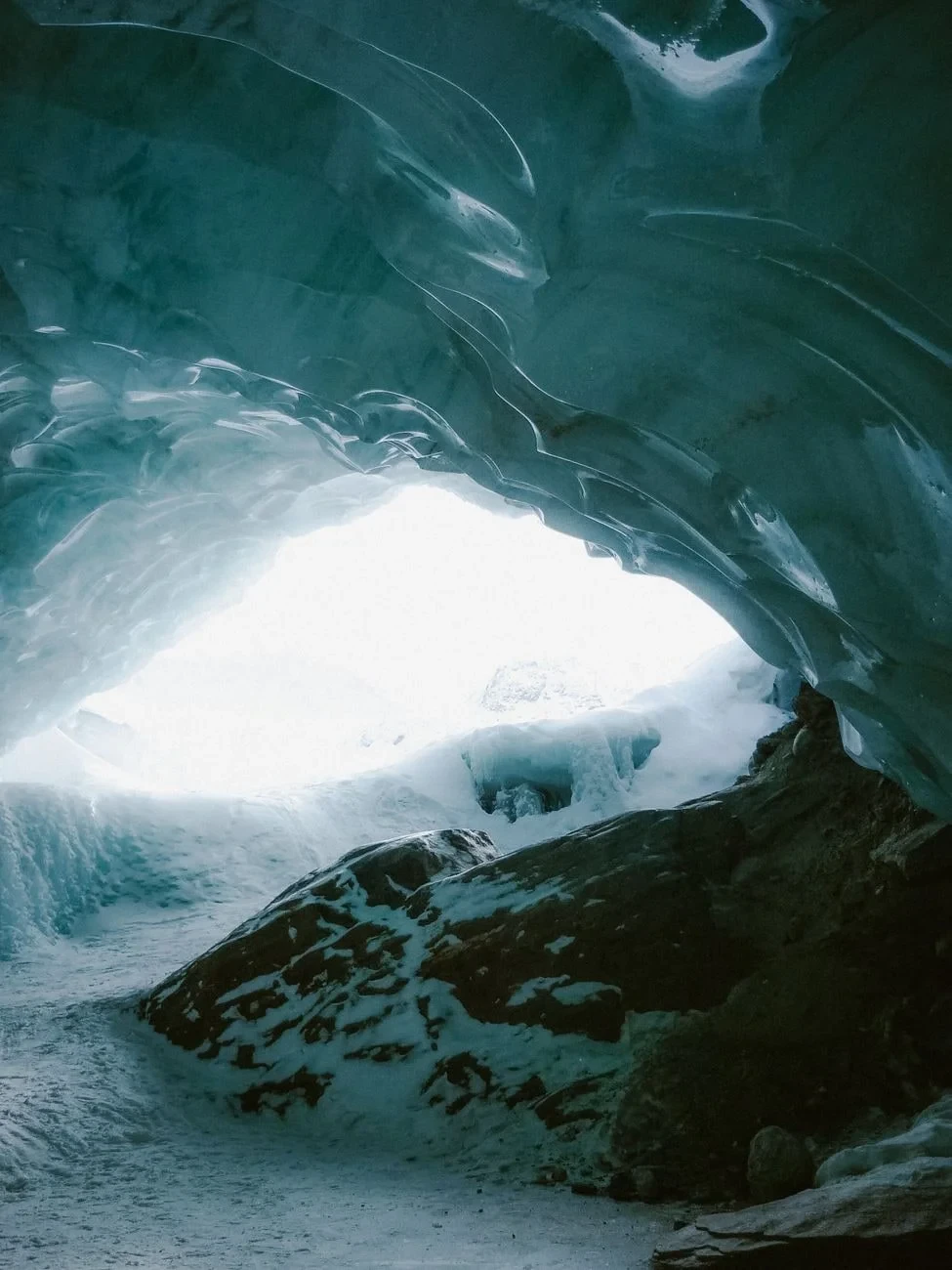
Natural daylight reveals the intricate surface of an ice cave in serene detail. Each texture marks where water froze, layer upon layer, sculpting the solid that shaped continents.
Photograph by Andreas Ebner, via Pexels.
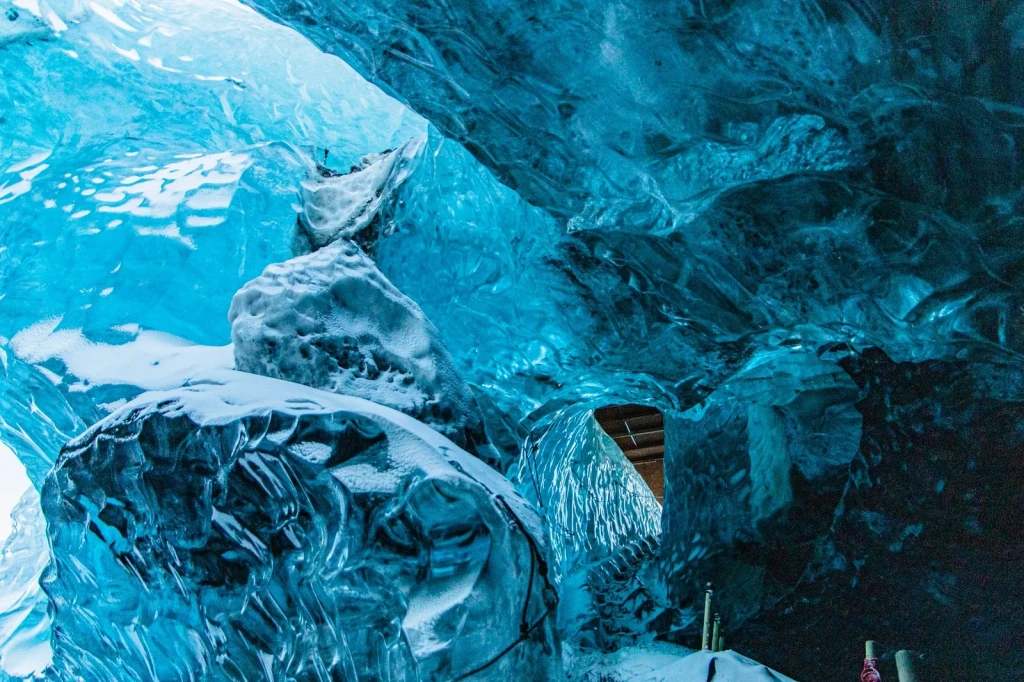
Cool turquoise textures fill this ice cave's interior. The color speaks to the density and age of compressed glacial ice that sculpts earth over millennia.
Photograph by Han-Chieh Lee, via Pexels.
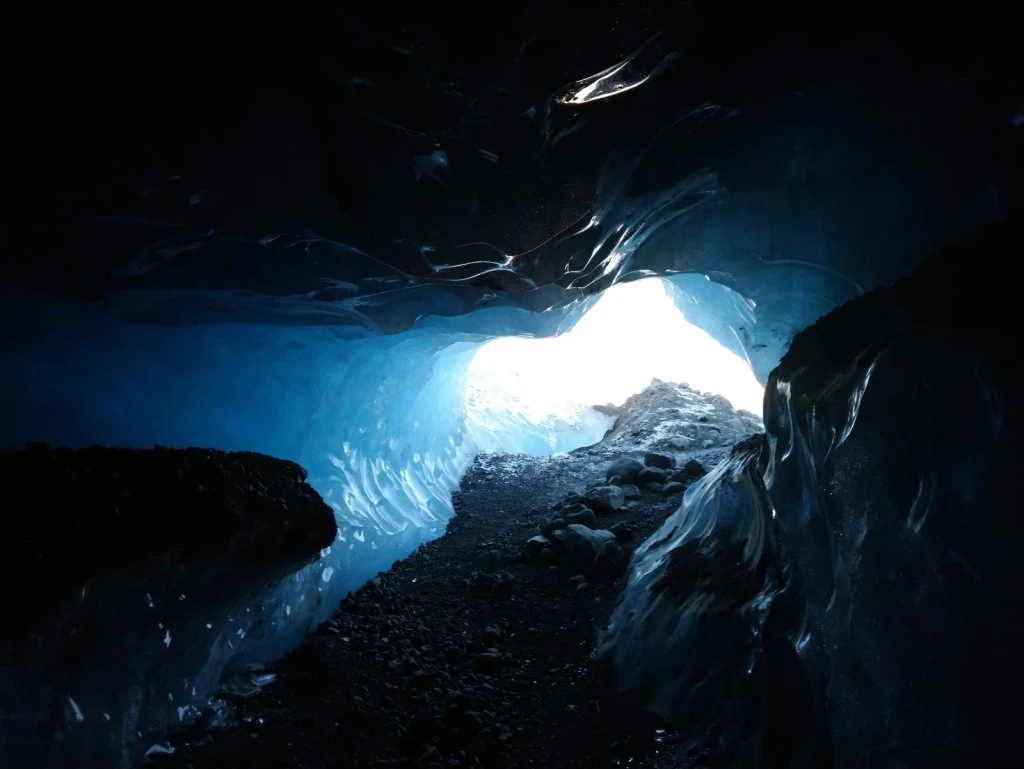
An ice cave demonstrates the sculptural beauty of frozen landscapes. Such formations show ice as both landscape and artwork.
Photograph by Rozemarijn van Kampen, via Pexels.
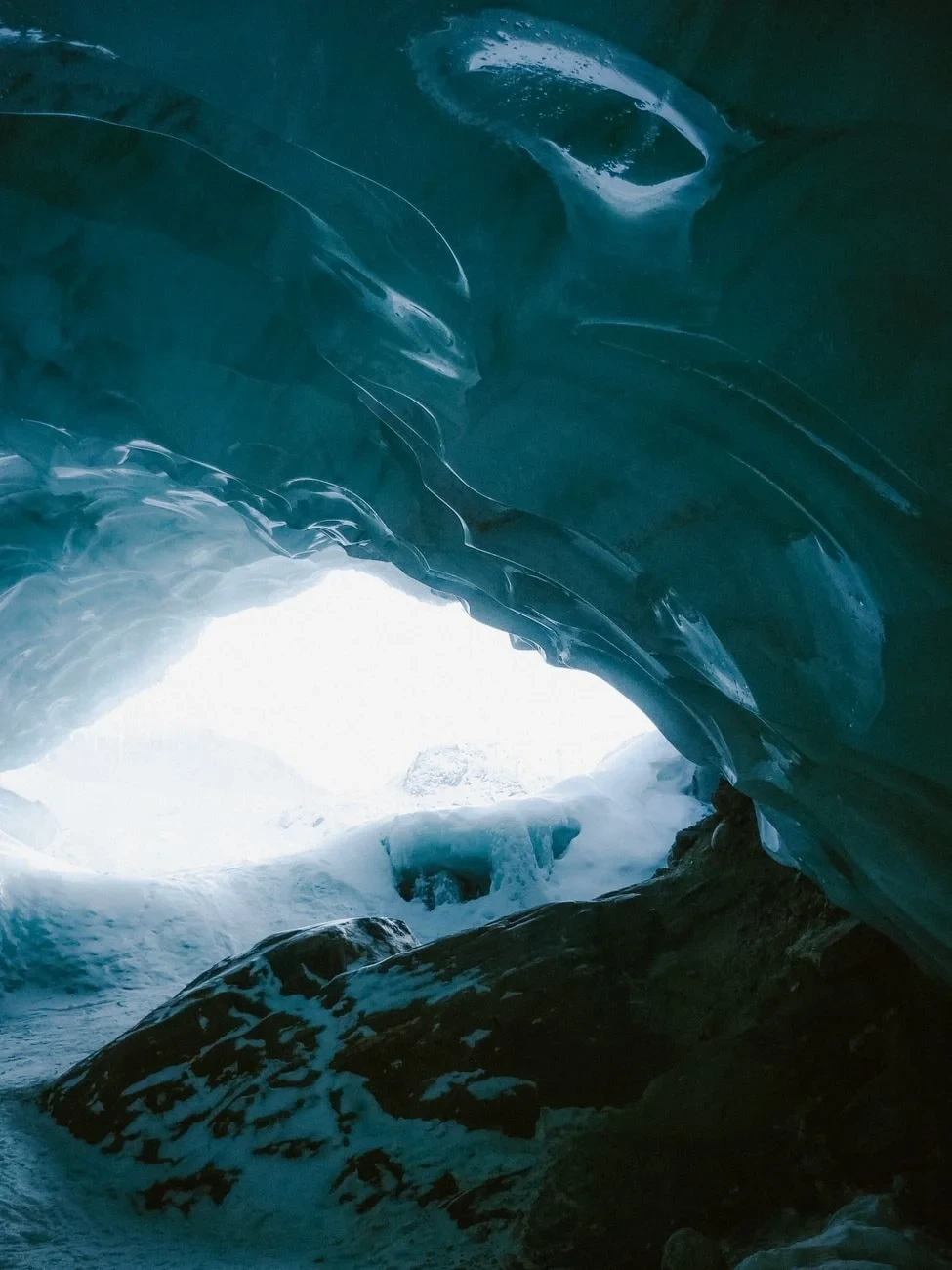
Intricate icy formations create patterns throughout this cave's interior. Each texture documents the slow, magnificent work of ice transforming solid ground.
Photograph by Andreas Ebner, via Pexels.
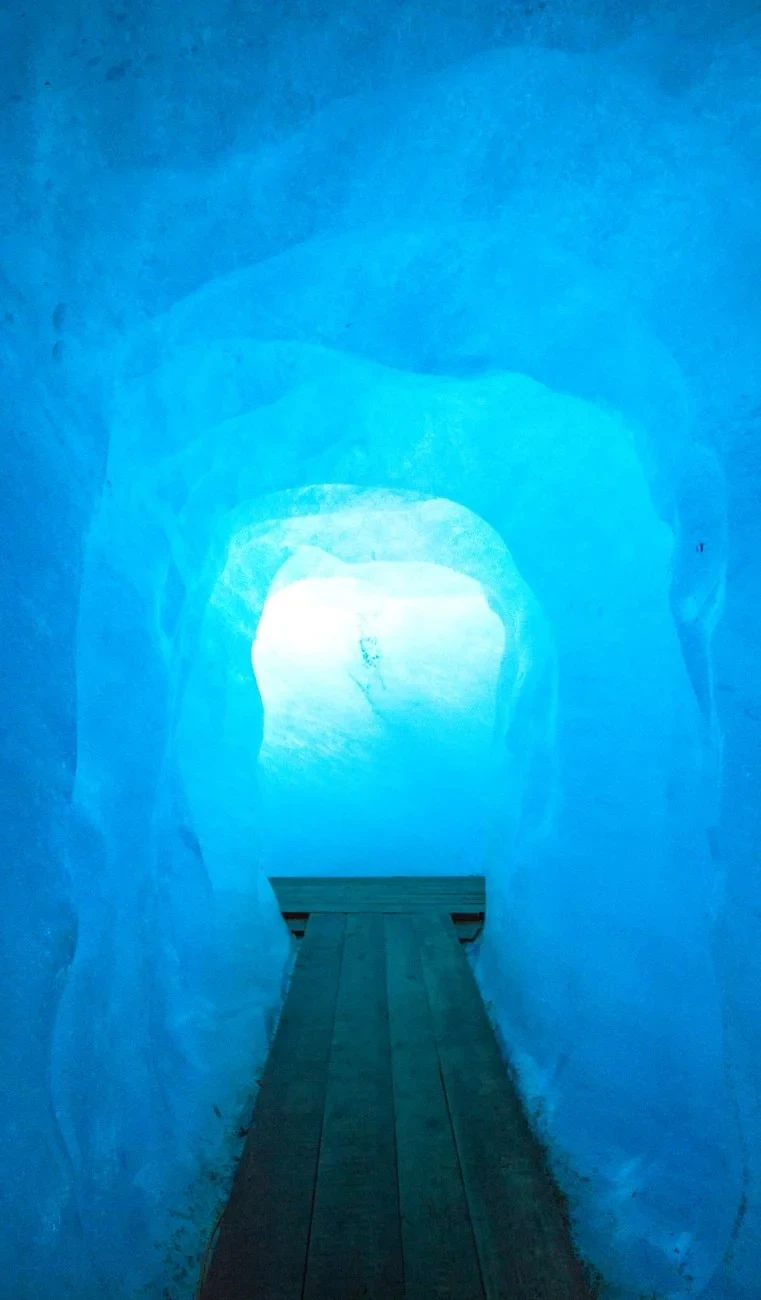
A striking blue passage carved through Swiss glacial ice in winter. The colour itself tells the story of ice compressed over time, dense enough to absorb all wavelengths but blue.
Photograph by Miki Czetti, via Pexels.
