3D Gallery
Terracotta Army: An Emperor's Stone Escort
Enter gallery
Terracotta Army: An Emperor's Stone Escort is a 3D virtual gallery on MyGallery3D, a walkable online exhibition of 16 works. Step inside and explore it in your browser: no app, no headset.
Walk through this 3D virtual museum of the Terracotta Army in your browser. What you are looking at is an army in the wrong colour.
The figures were painted: cinnabar red, malachite green, azurite blue, faces in pink, eyebrows in black. Under the paint was lacquer, and in Xi'an's dry air that lacquer can curl within fifteen seconds of being uncovered and flake off in four minutes. Grey is not the original. It is what a few minutes in the open air leave behind. That is one reason the emperor's tomb has still not been opened.
Heads, arms, legs and torsos were made separately in workshops and luted together, so an army could be assembled like machinery. Yet no two figures share the same features. Scholars have identified 10 base facial forms, then worked outward from them into individual faces. The men stand between 1.75 and about 2 metres, taller with rank. The sculptors signed their names in the armpits.
On 29 March 1974, Yang Zhifa, his five brothers and their neighbour Wang Puzhi were digging a well east of the tomb mound and struck hardened dirt, then red earthenware. Nobody understood what it was. Villagers carried the terracotta bricks home to use as pillows. Yang Zhifa was paid 10 yuan for two carts of fragments of the first emperor's guard.
Sima Qian wrote that 700,000 conscripted men laboured on the mausoleum, that 100 rivers were simulated in mercury, and that crossbows were primed to shoot anyone who broke in. It read as legend until soil testing found anomalous mercury: one point measured 1440 parts per billion, while 53 other points averaged around 205. The chamber itself remains sealed.
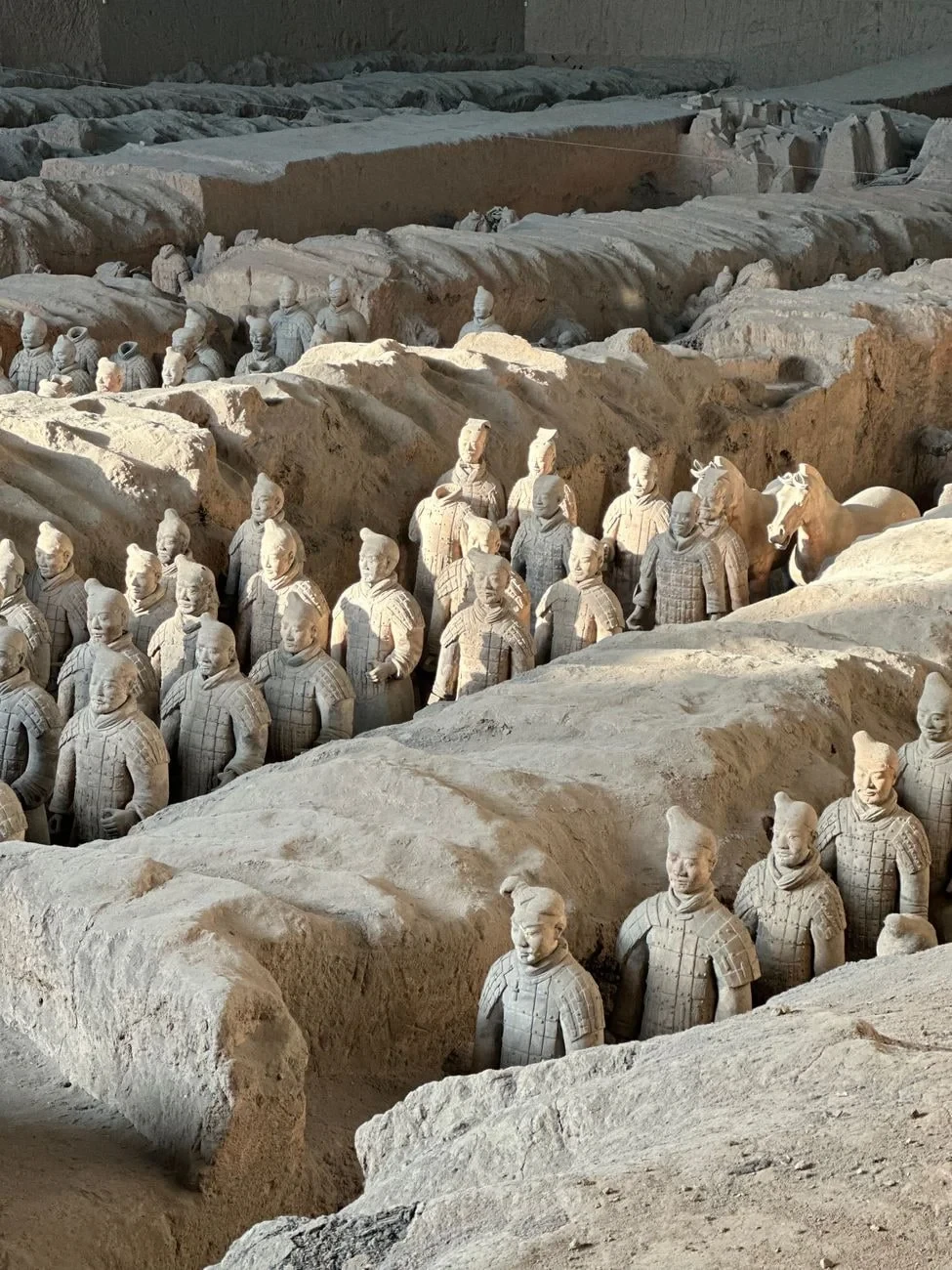
A close examination of terracotta sculptures reveals the craftsmanship behind these ancient figures. Each surface speaks to the skill of hands working in clay centuries ago.
Photograph by Nadine K, via Pexels.
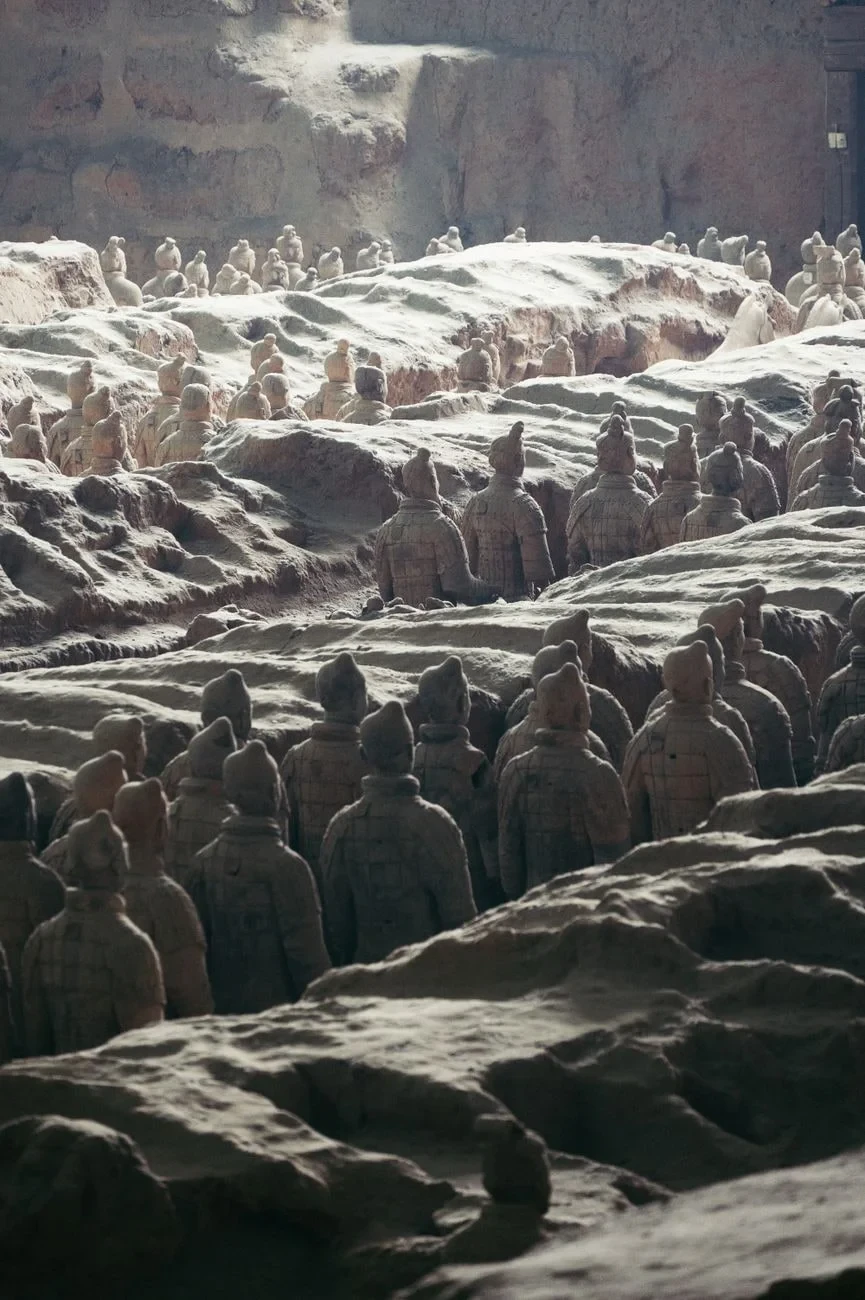
Terracotta figures displayed as part of an imperial burial practice. These sculptures speak to ancient beliefs about the afterlife and the honor due to rulers.
Photograph by 征宇 郑, via Pexels.
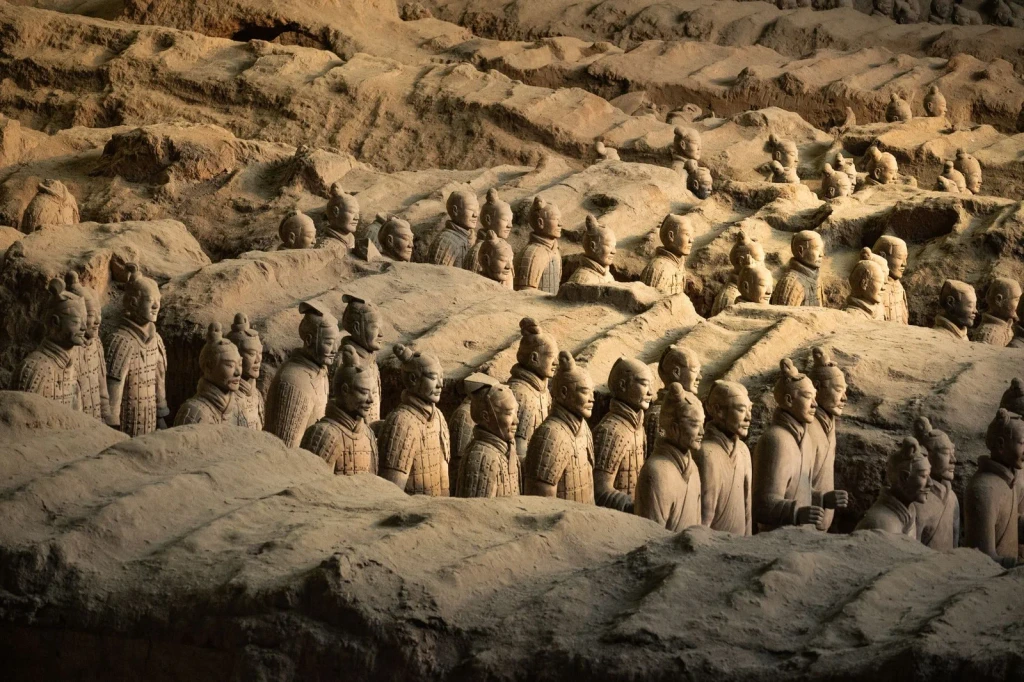
Terracotta figures stand as evidence of ancient craftsmanship. Their creation required knowledge, technique, and vision on a remarkable scale.
Photograph by 下城 古明地, via Pexels.
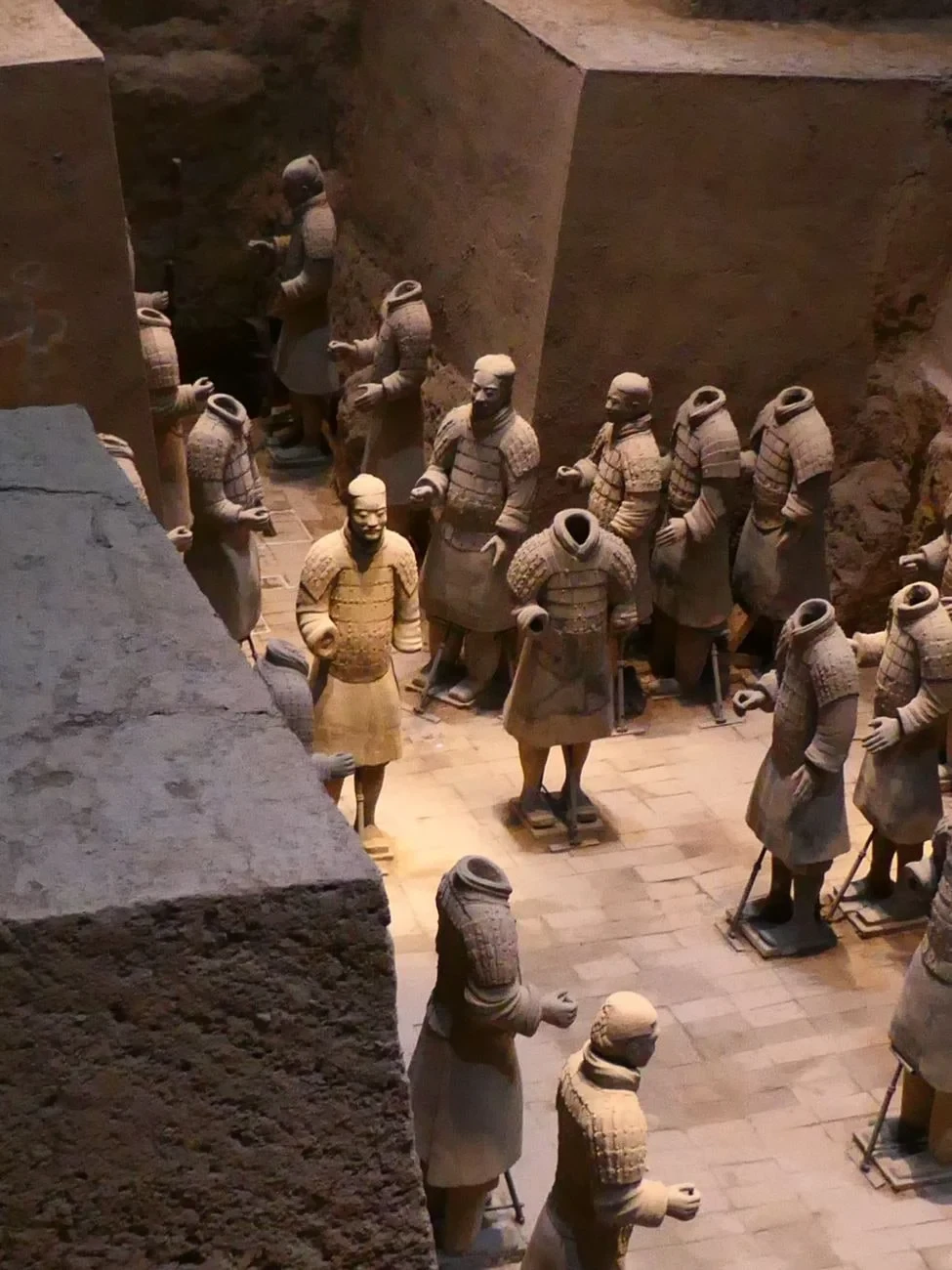
Warriors arranged at this archaeological location form part of a larger whole. What we see here is fragment of an immense undertaking.
Photograph by nana liu, via Pexels.
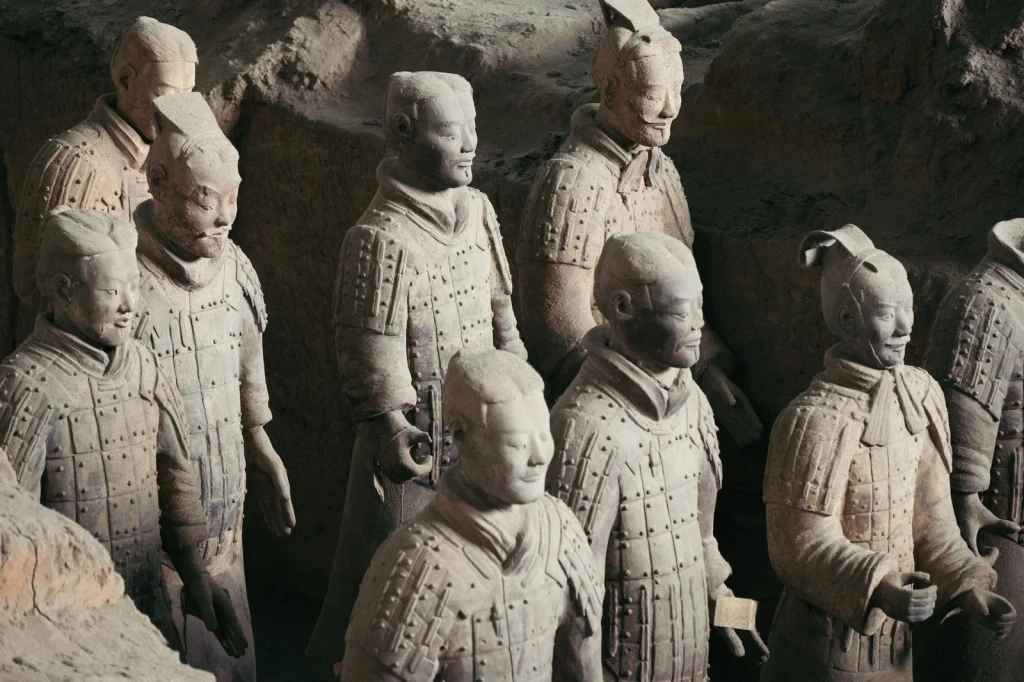
A close-up study of the terracotta army reveals the fine carving and attention to detail in these ancient sculptures.
Photograph by 征宇 郑, via Pexels.
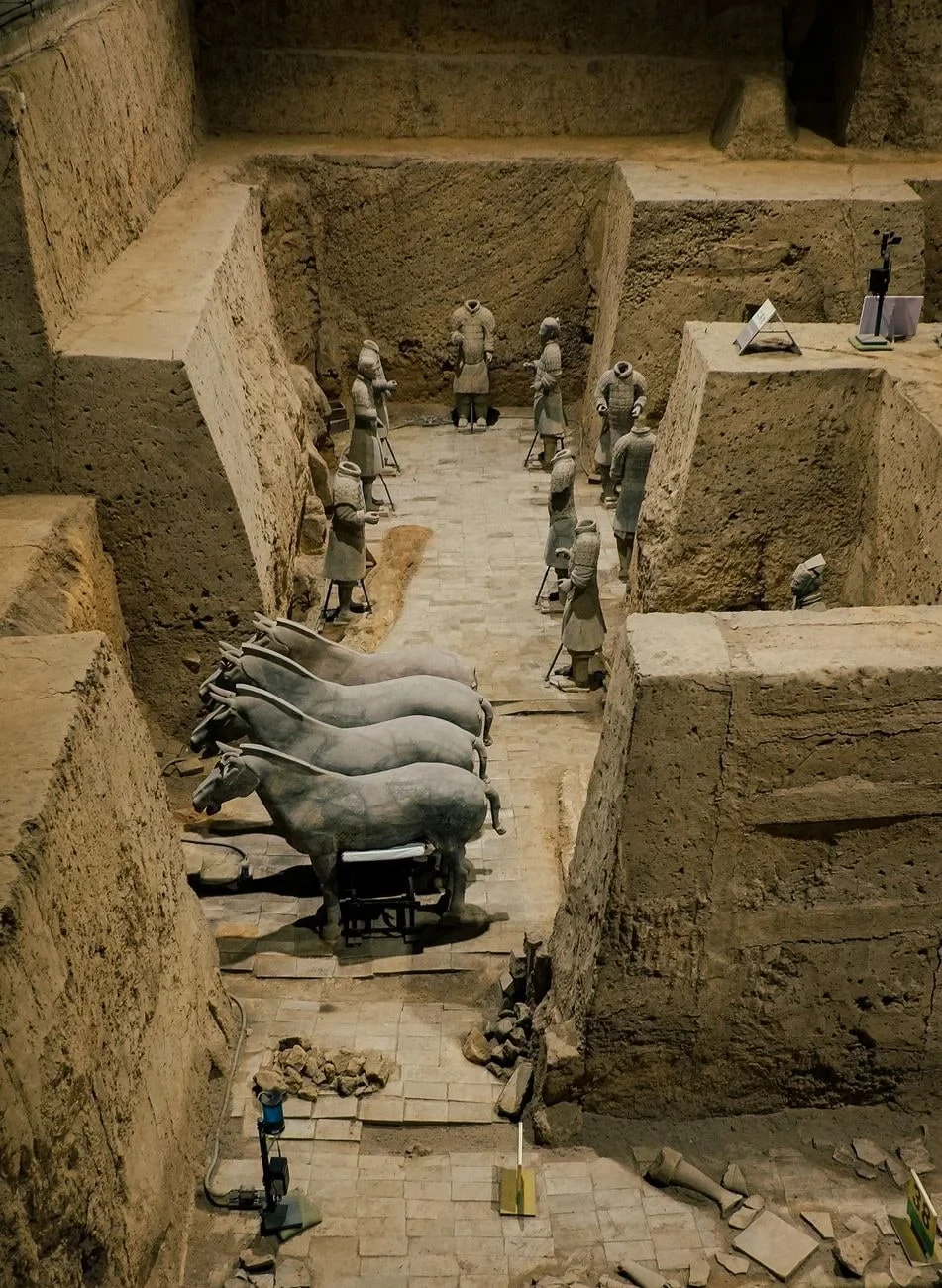
A view of the terracotta army excavation site in China, showing where these figures were uncovered and preserved.
Photograph by TonyNojmanSK, via Pexels.
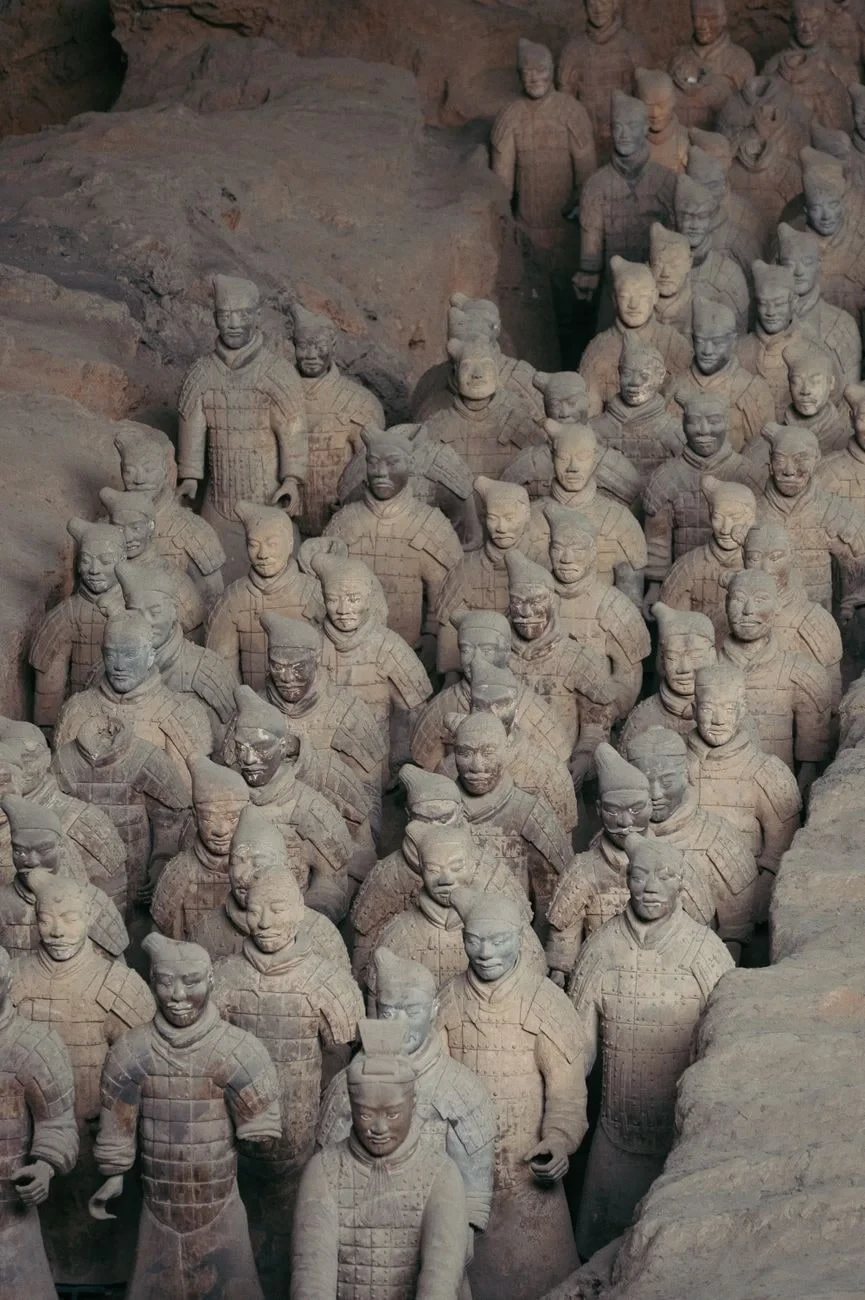
Detailed view of warrior figures demonstrates ancient Chinese artistry. The figures showcase both technical skill and the aesthetic traditions of their time.
Photograph by 征宇 郑, via Pexels.
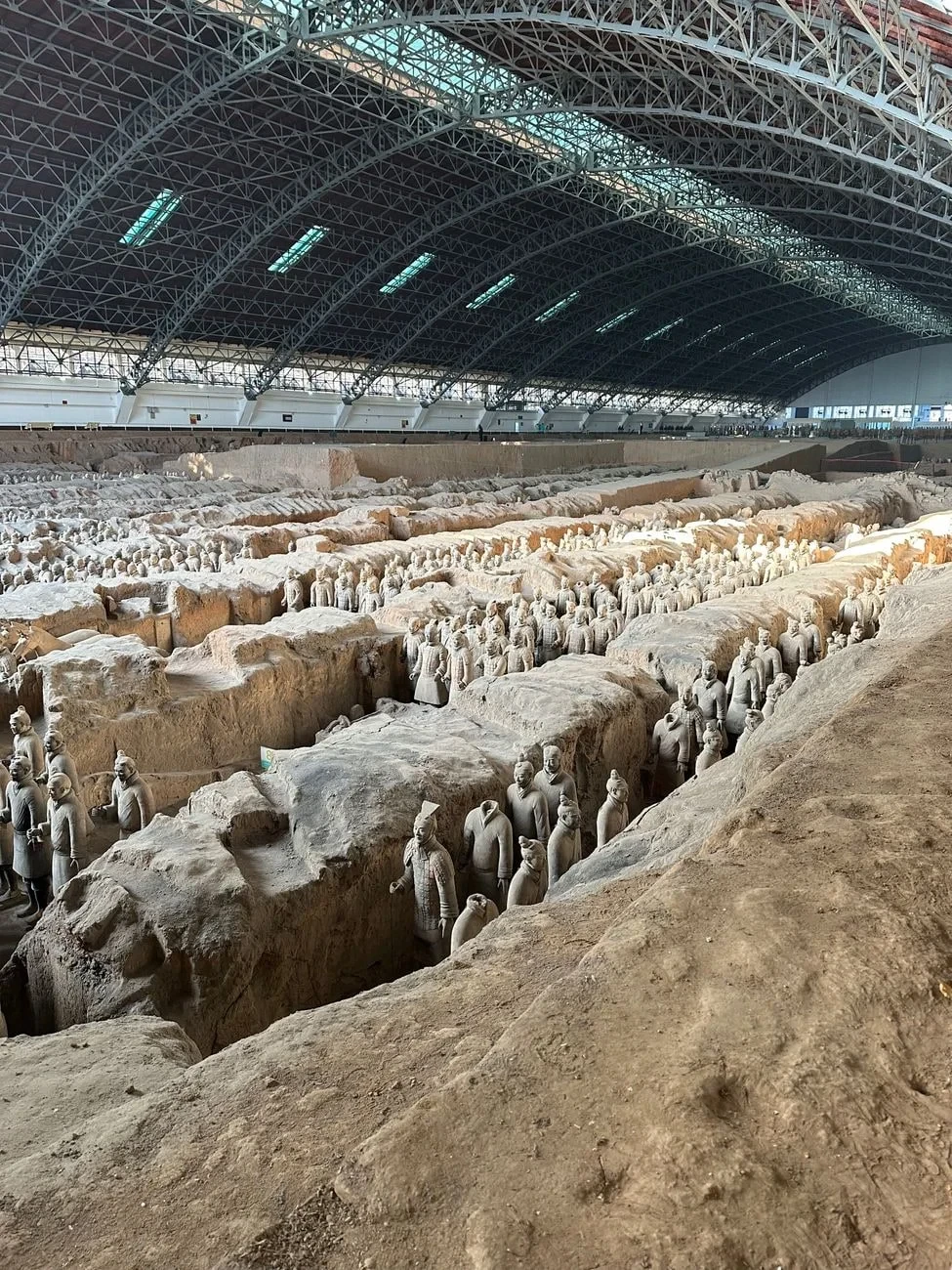
Ancient terracotta figures arranged in a museum setting. These stone escorts represent one of history's most ambitious burial practices.
Photograph by Nadine K, via Pexels.
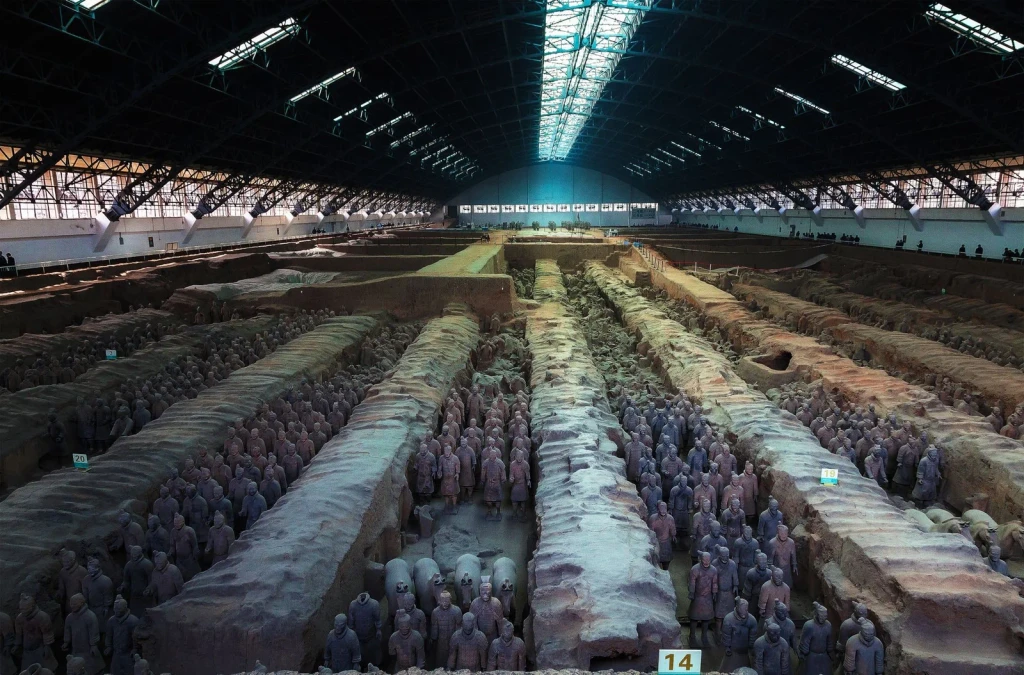
This panoramic perspective shows the complete arrangement of terracotta figures. The scale and organization reveal the ambition behind this monumental creation.
Photograph by Robert Stokoe, via Pexels.
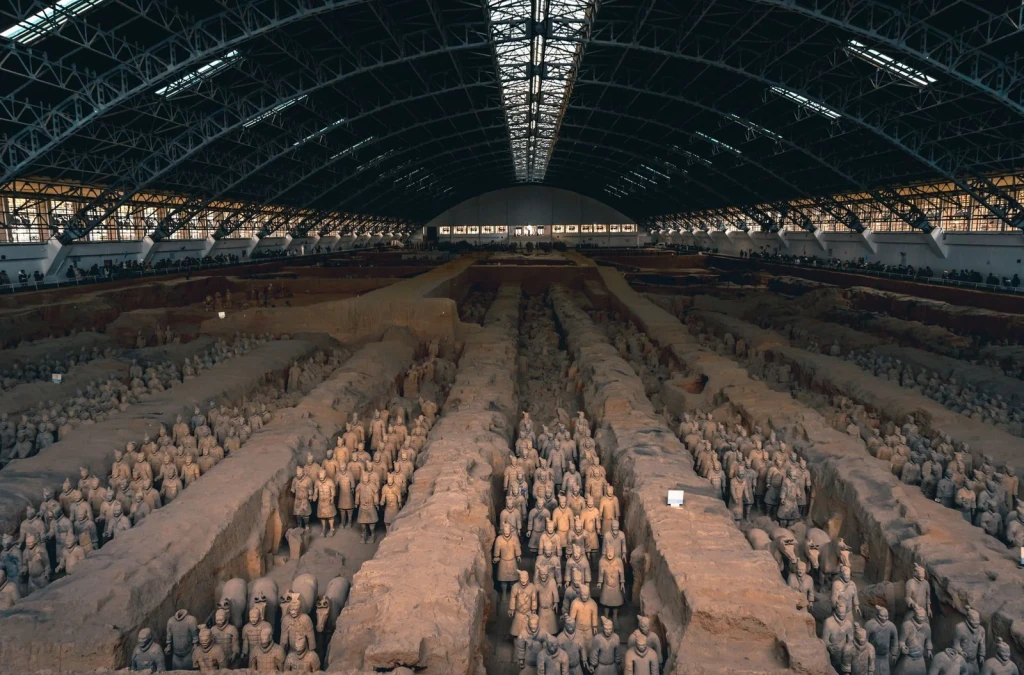
These iconic sculptures are presented in a museum setting, where scale and arrangement shape how we encounter this ancient escort. The space itself becomes part of the experience.
Photograph by Ang Lee, via Pexels.
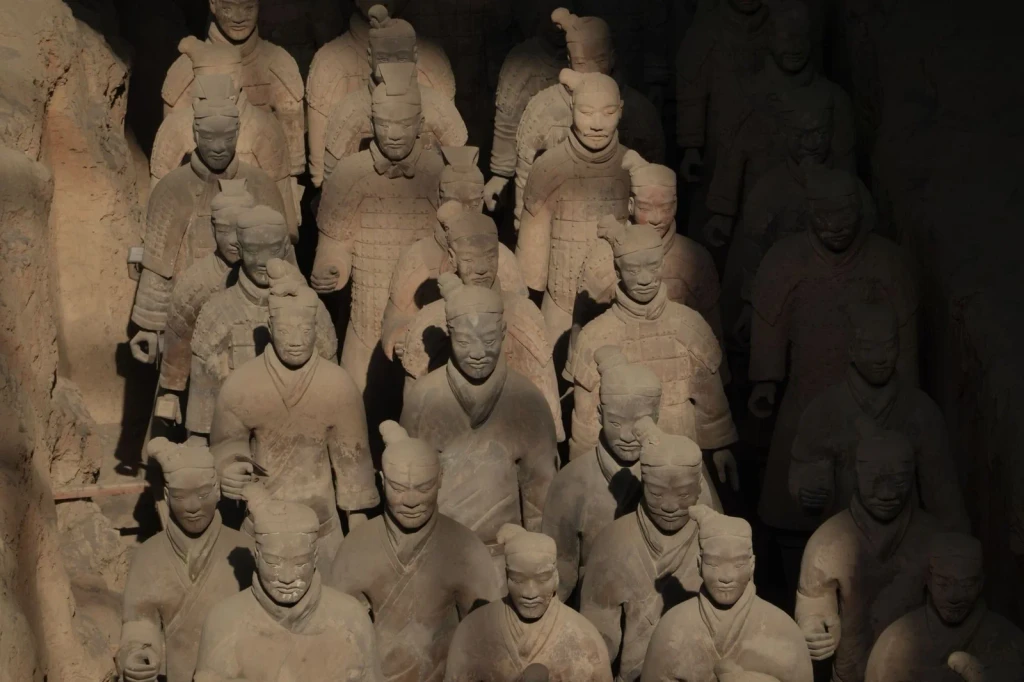
The ancient Terracotta Army statues in Xi'an, showcasing historical artistry.
Photograph by 兴 罗, via Pexels.
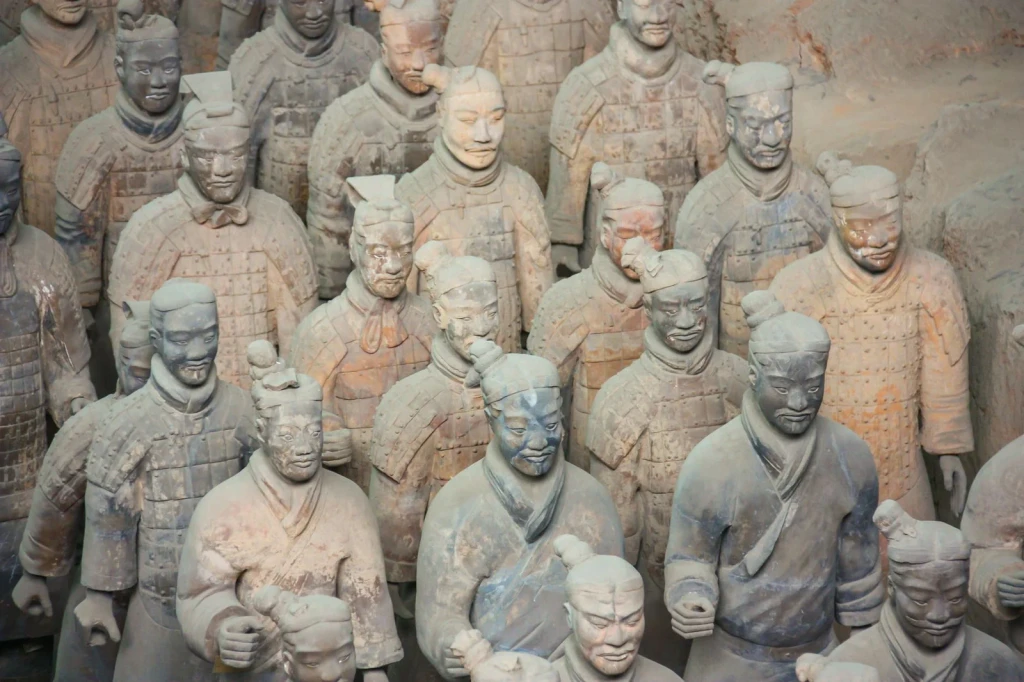
A closer look at individual terracotta statues shows the skill of ancient craftspeople. Each figure bears distinct features and careful sculptural work.
Photograph by Maciej Cisowski, via Pexels.
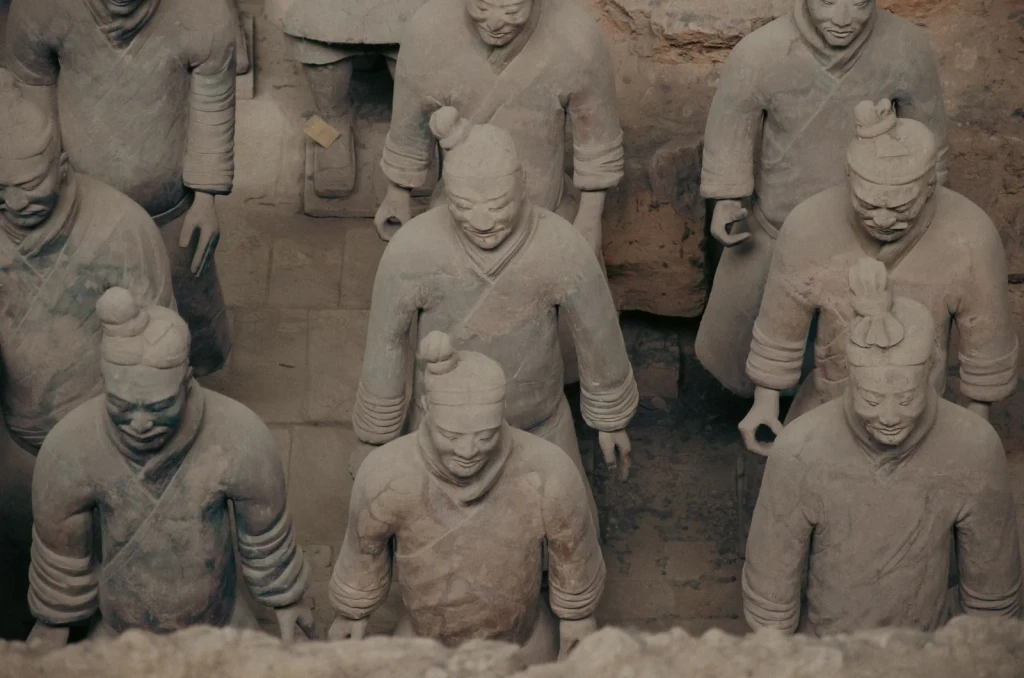
Terracotta warriors on display in China. These figures demonstrate the artisanal skill of ancient Chinese craftspeople.
Photograph by Jan Dvorak, via Pexels.
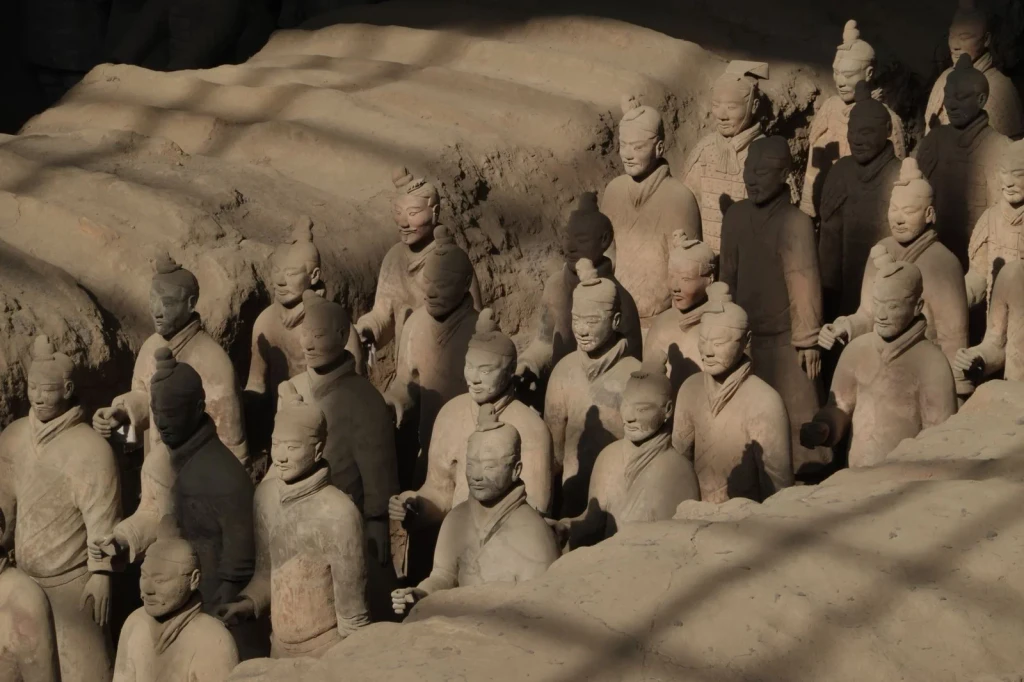
A high-angle view reveals the scale and arrangement of the terracotta army at this UNESCO World Heritage site in China.
Photograph by 兴 罗, via Pexels.
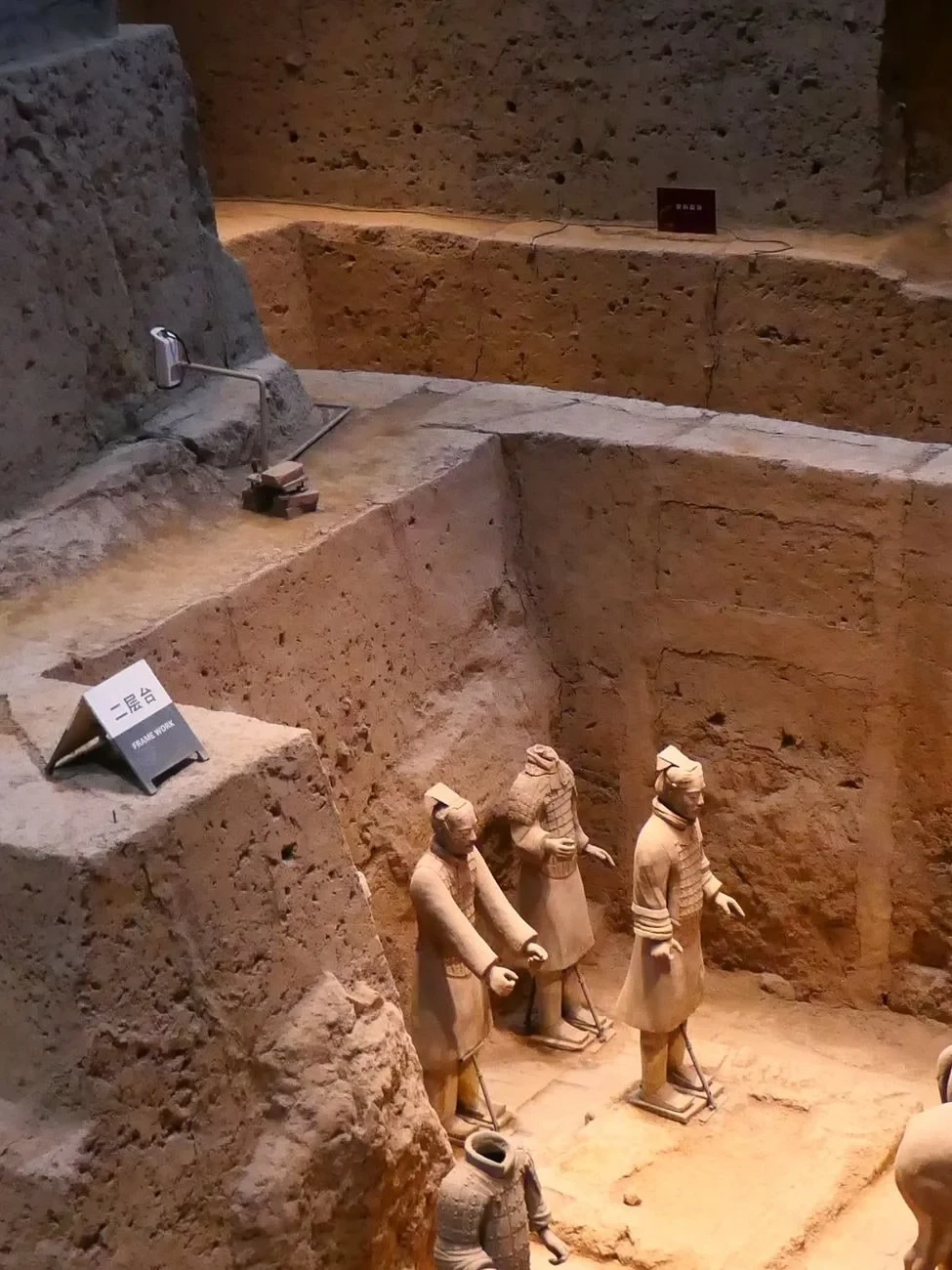
Ancient terracotta figures arranged for viewing in Shaanxi Province. A preserved ensemble from China's archaeological heritage.
Photograph by nana liu, via Pexels.
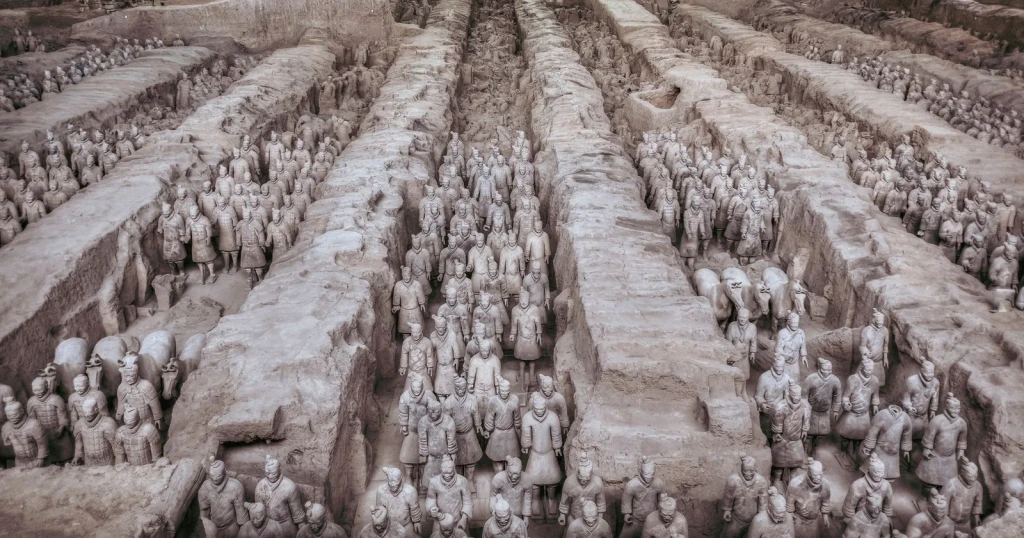
A sweeping view from above reveals the scale of the assembled terracotta army. The vantage point emphasizes the vast number of figures created for this imperial tomb.
Photograph by TonyNojmanSK, via Pexels.
