3D Gallery
Volcanoes Are the Planet Rebuilding Itself
Enter gallery
Volcanoes Are the Planet Rebuilding Itself is a 3D virtual gallery on MyGallery3D, a walkable online exhibition of 15 works. Step inside and explore it in your browser: no app, no headset.
Walk into this 3D virtual gallery of volcanoes in your browser and begin with the ones nobody photographs.
Most of Earth's plate boundaries lie underwater, so most volcanoes lie underwater too. Along the mid-ocean ridges the plates pull apart, mantle rock rises, the drop in pressure melts it, and new seafloor is made. The eruptions you have seen pictures of are the exception, the loud kind above a subduction zone. The quiet kind, out of sight, is manufacturing the surface of the planet.
Vesuvius buried Pompeii under 4 to 6 m of ash and pumice in 79 AD. The ash set around bodies and wooden objects, and as the organic matter decayed it left cavities, so archaeologists can cast moulds of figures in their final moments. Even the graffiti survived, holding the Vulgar Latin that people actually spoke, which is otherwise largely lost.
Mauna Loa stands 4,169 m above sea level, but that is not its height. It is over 100 km wide at the base and contains some 80,000 km3 of basalt, and it is so heavy that it has slumped the crust beneath it a further 8 km. Measured from where it began, it is about 17,170 m tall. Mount Everest is 8,848 m.
The Ring of Fire runs about 40,000 km around the Pacific and holds between 750 and 915 active or dormant volcanoes, roughly two thirds of the world total. About 90% of the world's earthquakes happen inside it. It is not one structure but a chain of subduction zones, where old ocean floor dives under continents and melts its way back up.
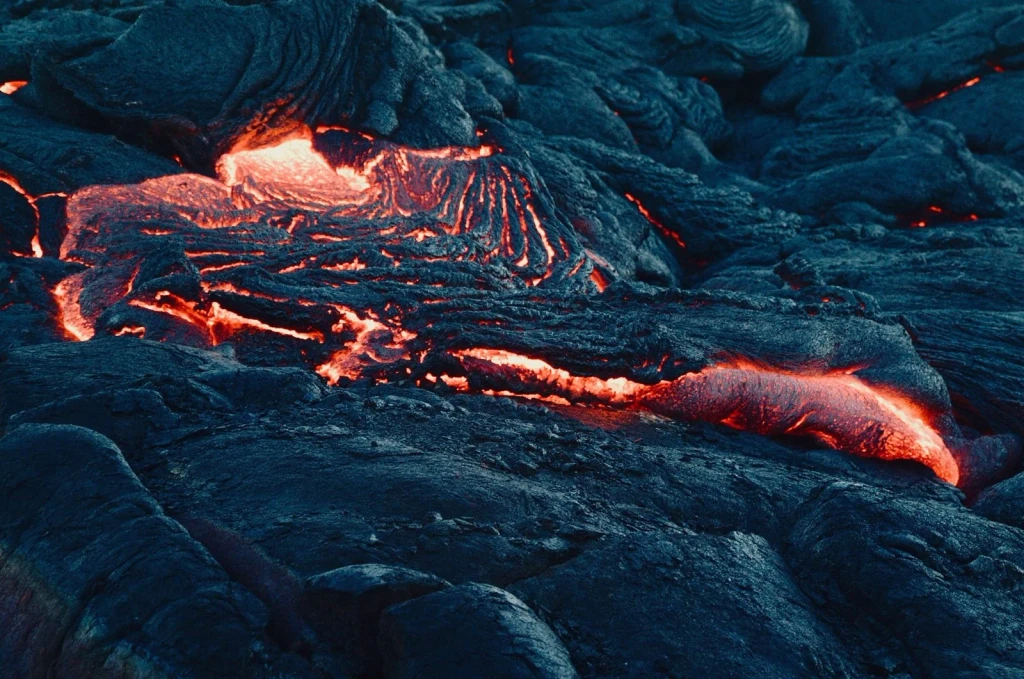
A flowing landscape of intense heat and complex surface. The texture reveals how the planet works: breaking down to build again.
Photograph by Brent Keane, via Pexels.
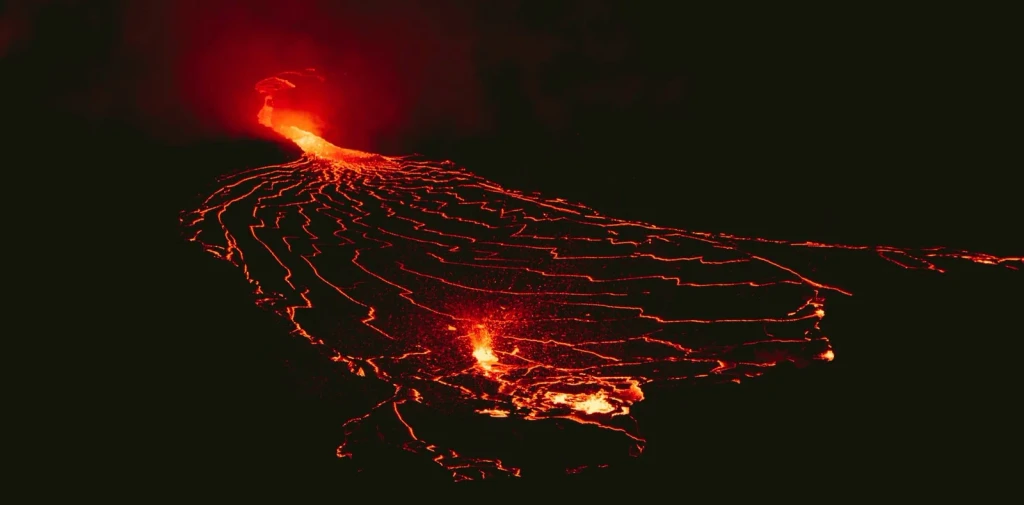
Lava flows while smoke rises into darkness. The volcano's violent release reveals how the planet continuously remakes itself.
Photograph by Daniel Torobekov, via Pexels.
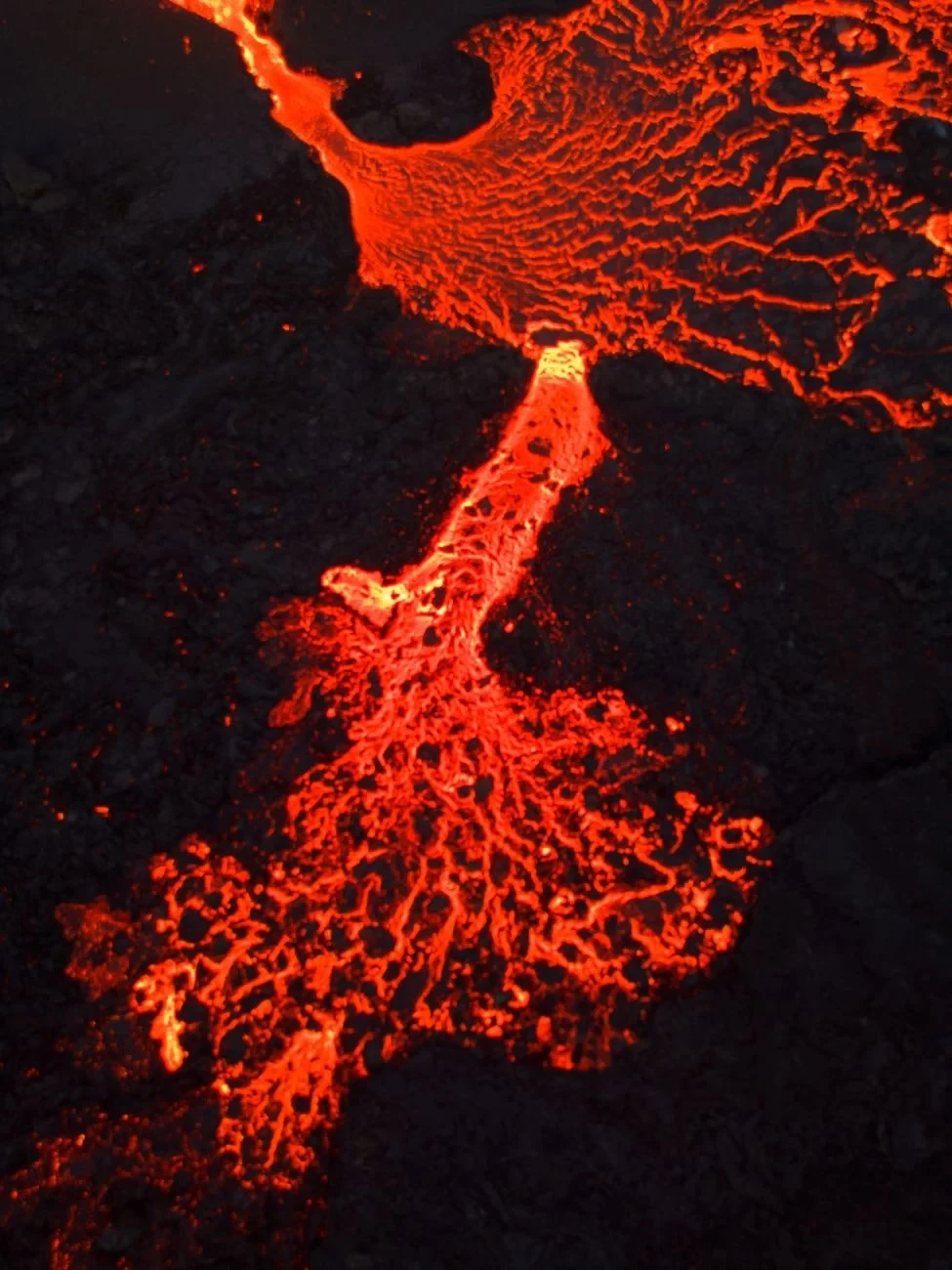
Vibrant lava displays intricate textures as it flows. The details show how creation at planetary scale is both violent and precise.
Photograph by Tomáš Malík, via Pexels.
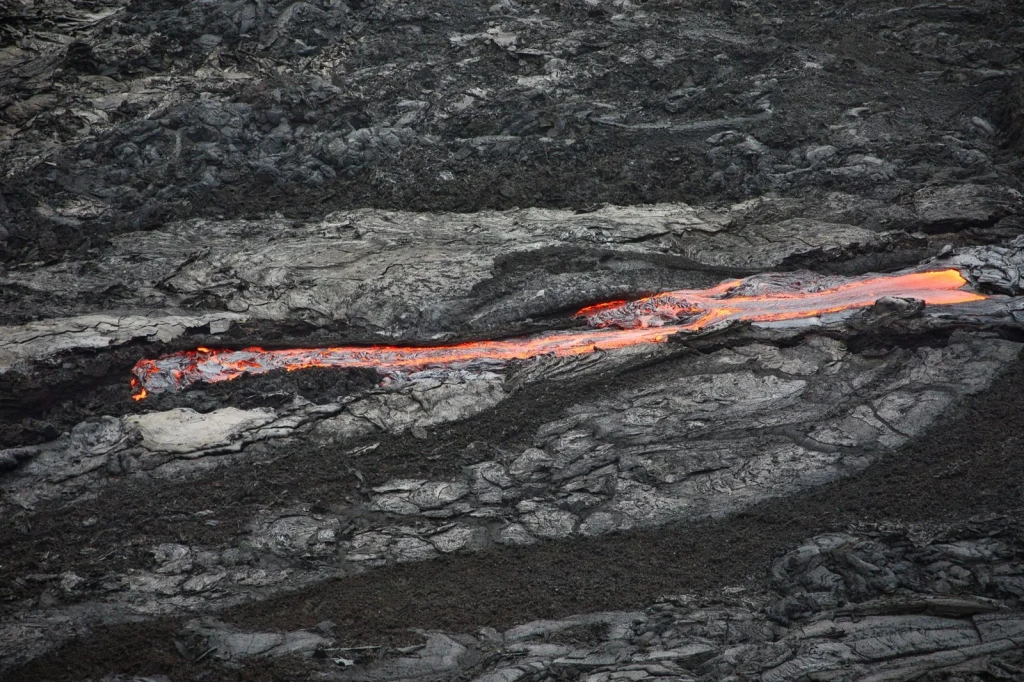
A close study of molten movement. The photograph documents the visceral power of lava in motion, the planet actively reconstructing itself.
Photograph by Koen Swiers, via Pexels.
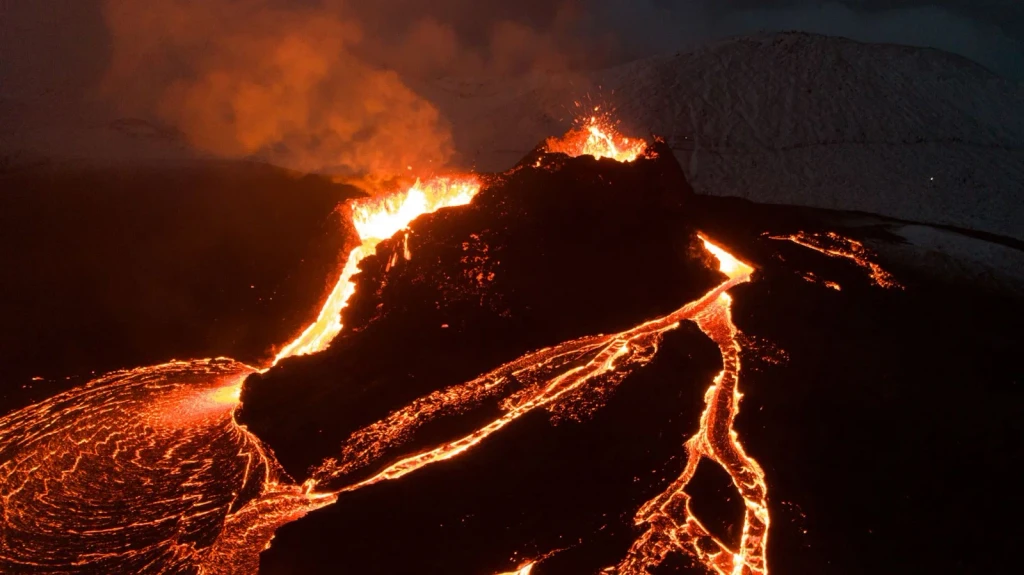
Molten rock flows beneath a night sky in this aerial view. The image shows how volcanic activity operates on its own timeline, indifferent to darkness or human schedules.
Photograph by Björn Austmar Þórsson, via Pexels.
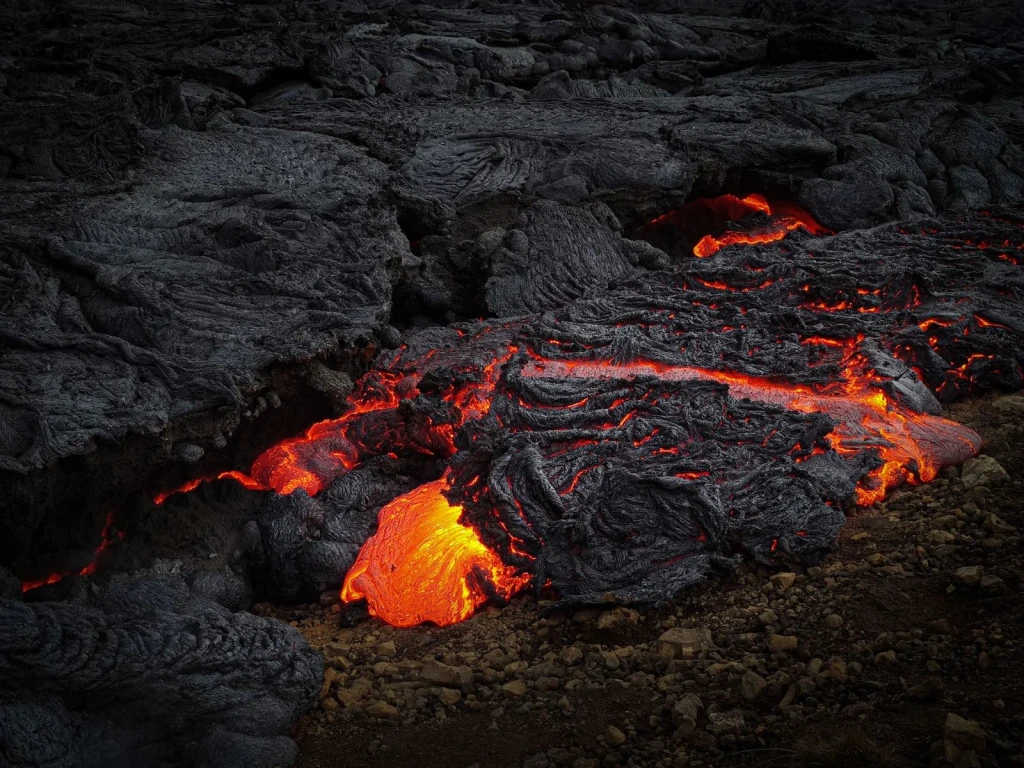
Molten lava moves across hardened rock, the meeting of fire and cooled earth. This is geology in action: destruction and creation happening at once.
Photograph by David Zherdenovsky, via Pexels.
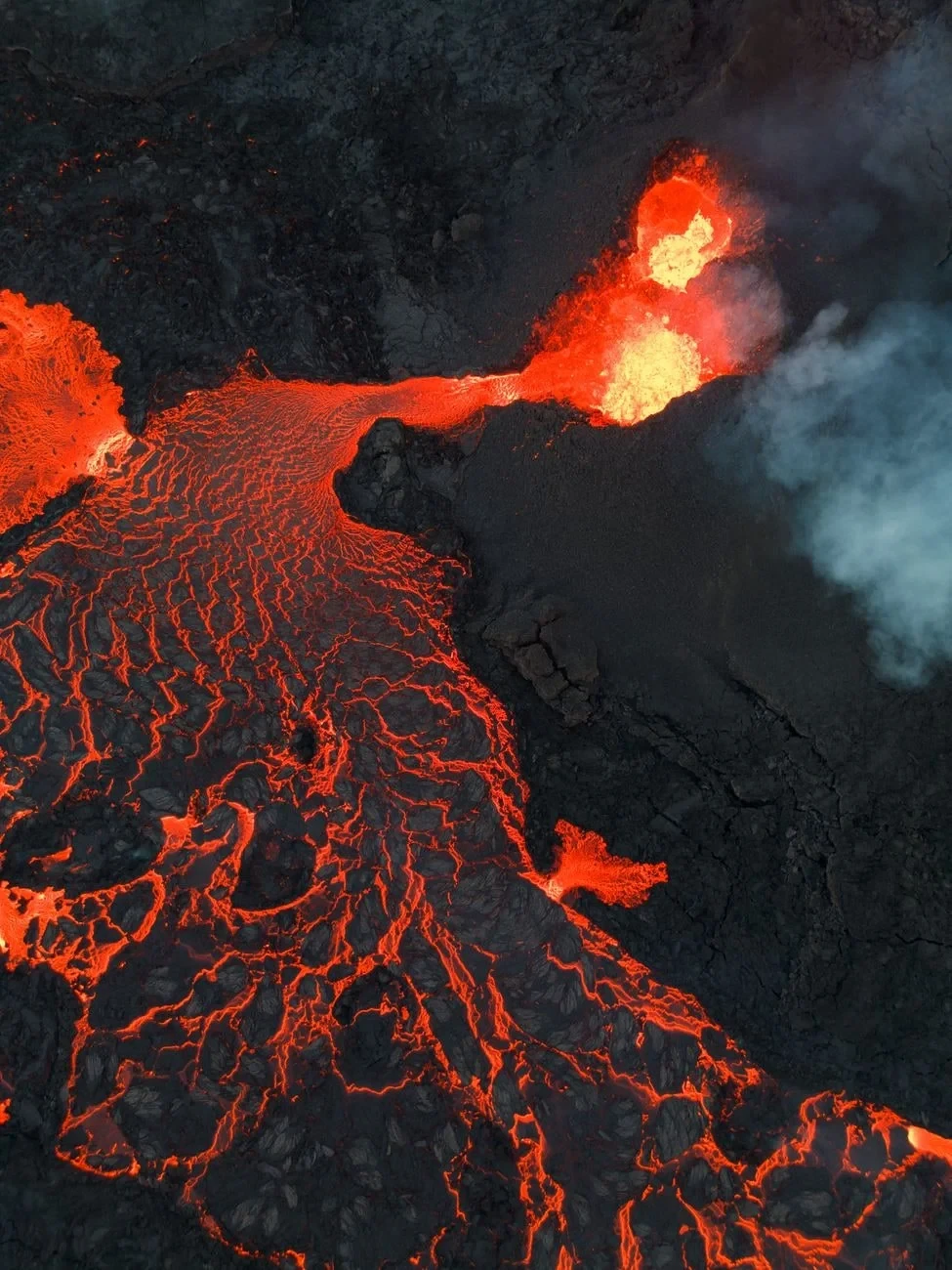
Vibrant lava streams viewed from above. The aerial perspective reveals how volcanic eruptions reshape topography on a scale that transforms the land itself.
Photograph by Tomáš Malík, via Pexels.
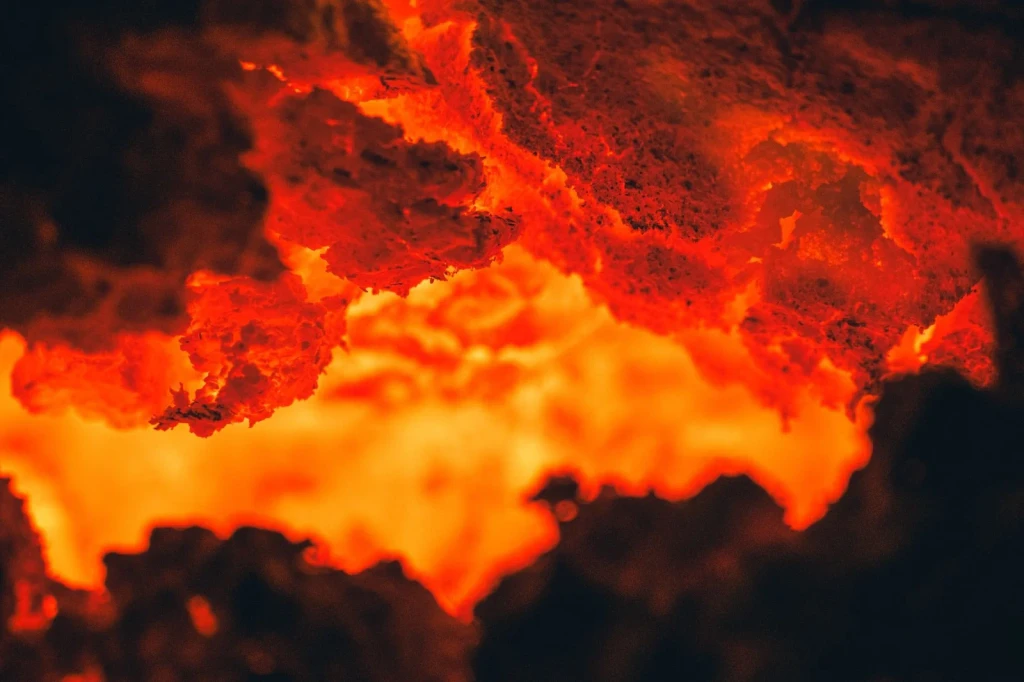
Bright, fiery detail of active lava. This close view reveals the intense heat and texture beneath, the raw material of planetary renewal.
Photograph by Atlantic Opus, via Pexels.
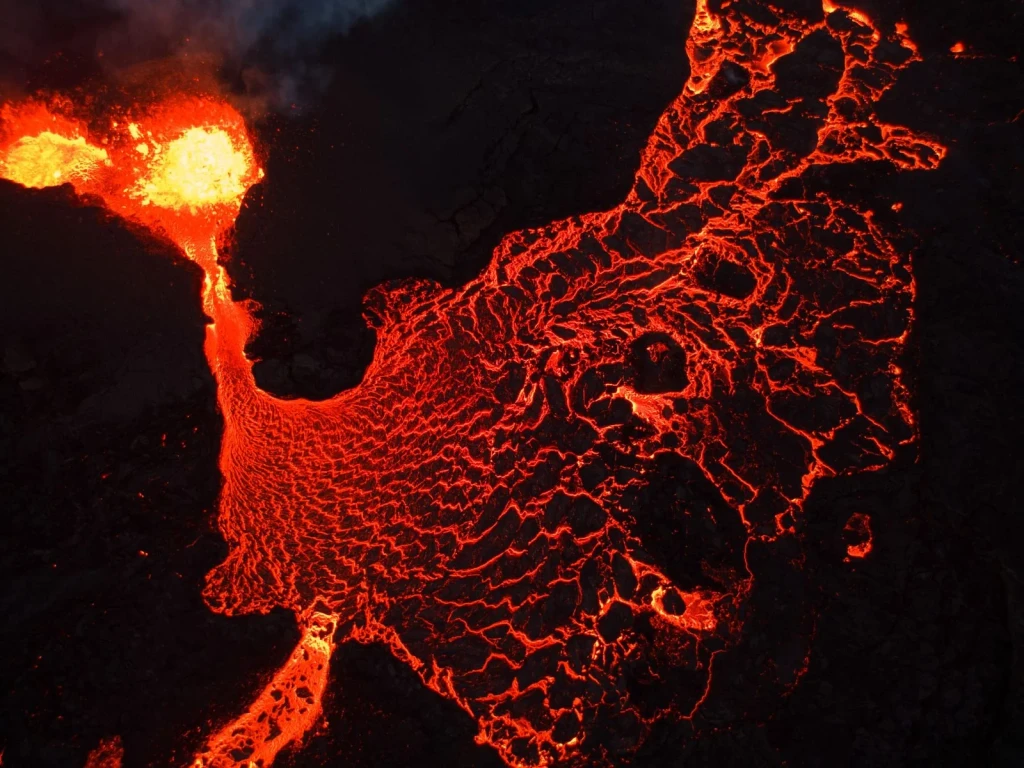
From above, an erupting volcano releases glowing lava into the night. Creation and destruction happen at the same moment.
Photograph by Tomáš Malík, via Pexels.
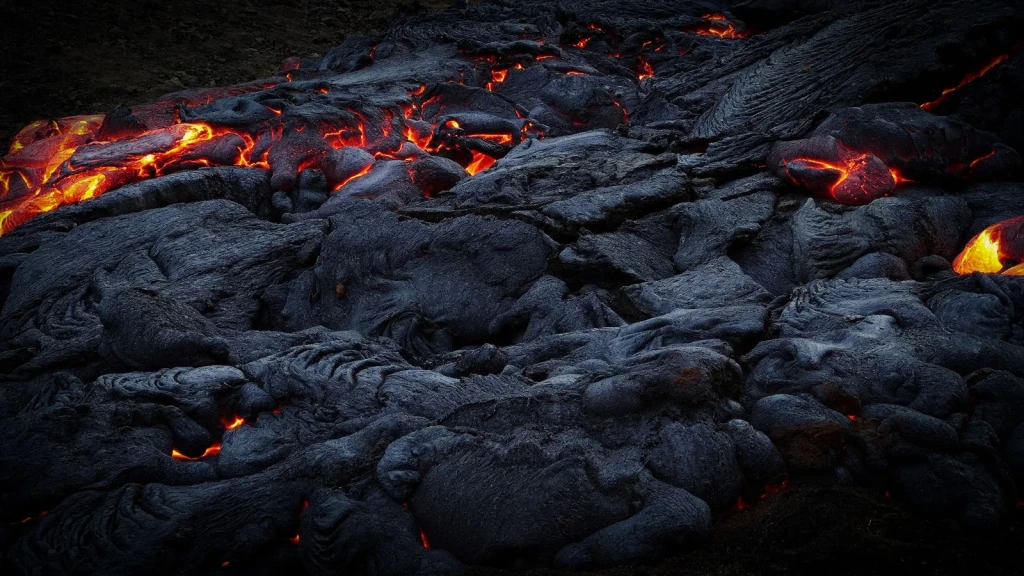
A close view of glowing lava against dark volcanic rock. The contrast shows heat itself as a visible force, reshaping the landscape.
Photograph by David Zherdenovsky, via Pexels.
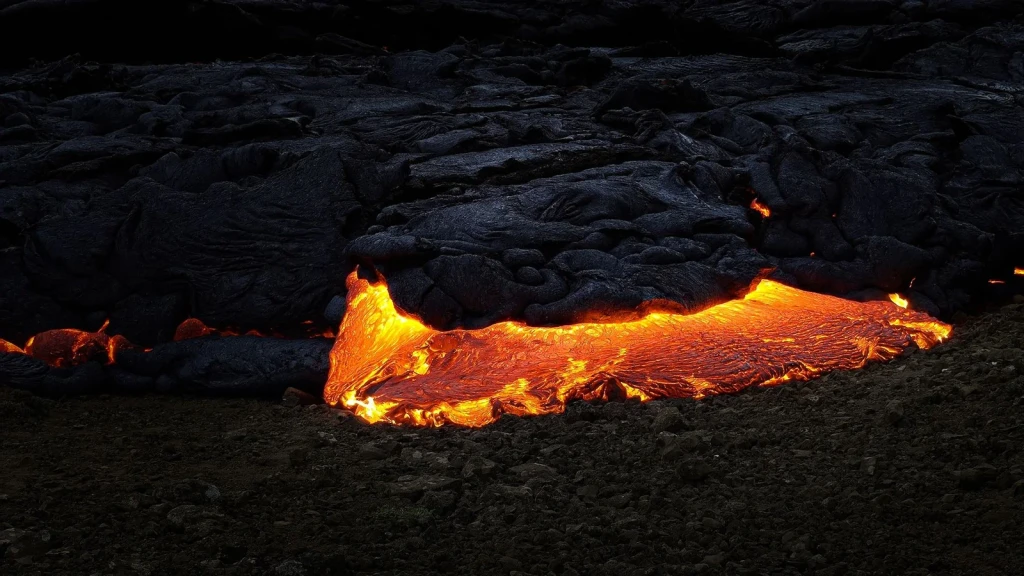
Molten lava crosses dark rock in darkness. The planet's molten interior emerges, reshaping the surface beneath our eyes.
Photograph by David Zherdenovsky, via Pexels.
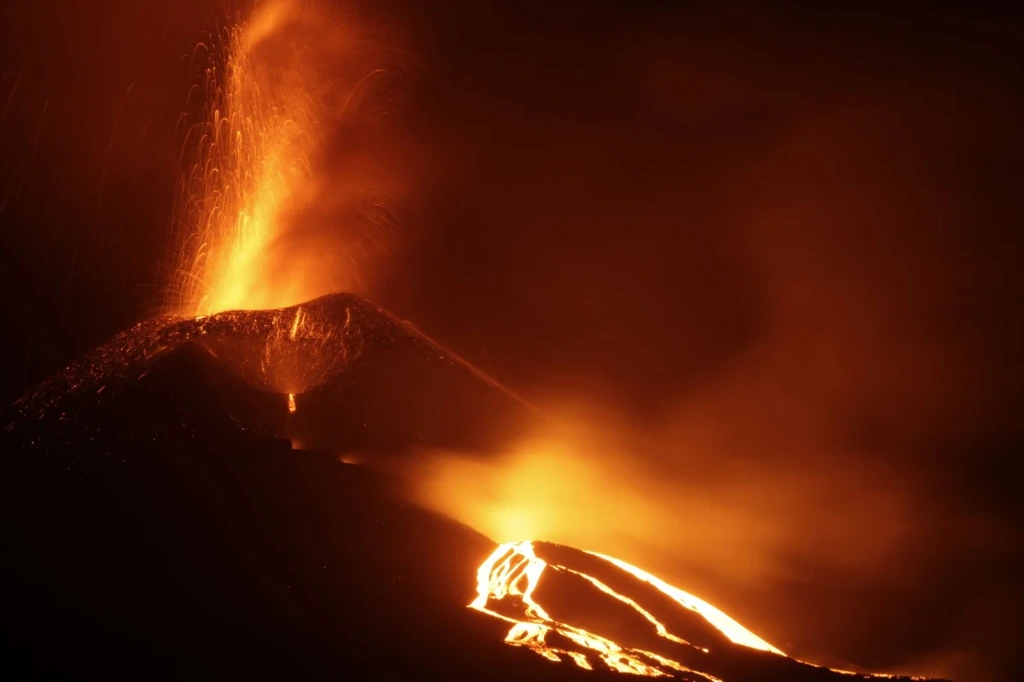
Flowing lava and sparks illuminate darkness in this dramatic scene. The photograph shows eruption as a rebuilding process, violent and luminous.
Photograph by Carlos, via Pexels.
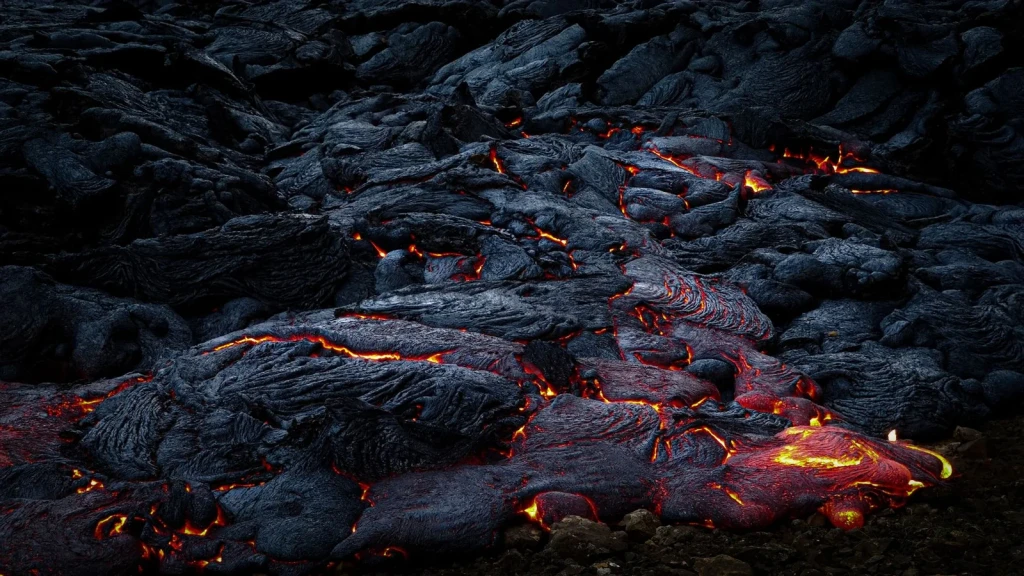
Vivid molten lava flows over cooled rock under darkness. The glow illuminates what fire has already built from what came before.
Photograph by David Zherdenovsky, via Pexels.
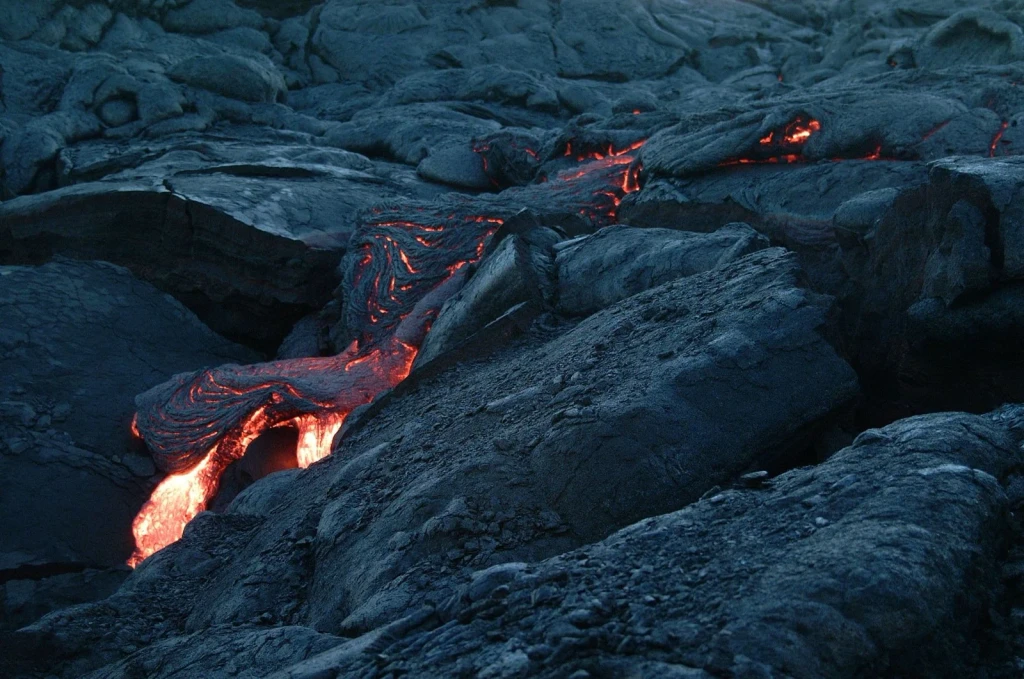
Glowing lava pours over stone already hardened from earlier flows. Two states of the same material: destruction and reconstruction layered together.
Photograph by Brent Keane, via Pexels.
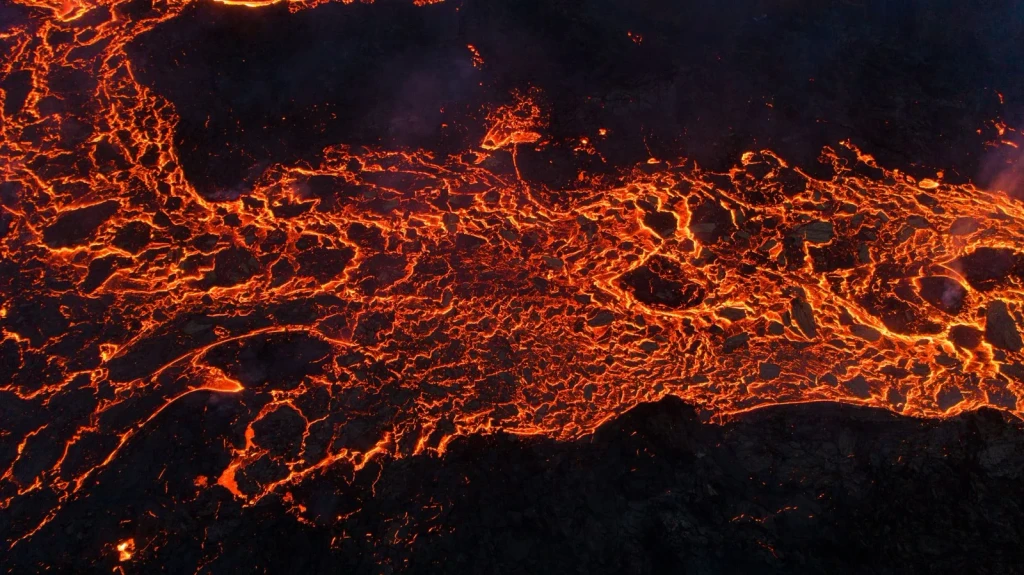
An aerial perspective of lava advancing across darkened ground. The photograph captures the planet's capacity to reshape its own surface through raw thermal force.
Photograph by Björn Austmar Þórsson, via Pexels.
