3D Gallery
Cheese Is Milk That Learned to Keep
Enter gallery
Cheese Is Milk That Learned to Keep is a 3D virtual gallery on MyGallery3D, a walkable online exhibition of 15 works. Step inside and explore it in your browser: no app, no headset.
Step into a 3D virtual gallery of cheese and walk it in your browser, wheel by wheel.
Nobody invented cheese. Milk carried in a vessel made from an animal's stomach curdled by itself, because the lining holds rennet. That accident is still the method: rennet's enzyme chymosin strips the casein proteins of the coating that keeps them apart, and they clump. The oldest cheese anyone has found was lying on mummies in the Xiaohe Cemetery, in the Taklamakan Desert, from as early as 1615 BCE.
Cheese keeps, travels, and packs fat, protein, calcium and phosphorus into a block that long outlasts the milk it came from. That is also why it walks out of shops: by 2012 cheese was one of the most shoplifted items in supermarkets worldwide. World production from cow milk reached 22.6 million tonnes in 2022, and the United States made 28% of it.
Rennet was scraped from the fourth stomach chamber of young unweaned calves, a byproduct of veal. Today less than 5% of cheese in the United States is made that way. Chymosin genes were moved into fungi and yeast instead, and the fermentation-produced version held 90% of the global rennet market by 2017. One gram of extract can coagulate 15 kg of milk.
Blue cheese is a mold farm you can eat. Penicillium roqueforti needs oxygen, so the wheels are pierced to open air tunnels, and the veins grow along them. The smell is partly Brevibacterium linens, the same bacterium behind foot and body odor. Miners at Hallstatt were already eating blue cheese, and beer, between 800 and 400 BC.
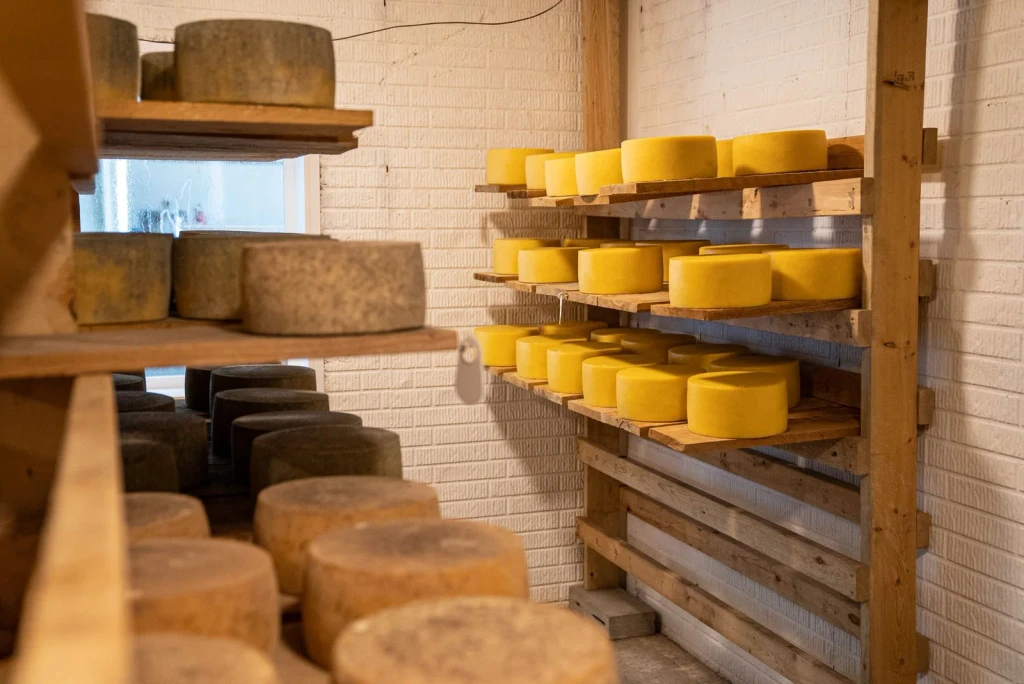
Cheese wheels mature on wooden shelves against brick walls. The storage room itself becomes part of the transformation.
Photograph by Mark Stebnicki, via Pexels.
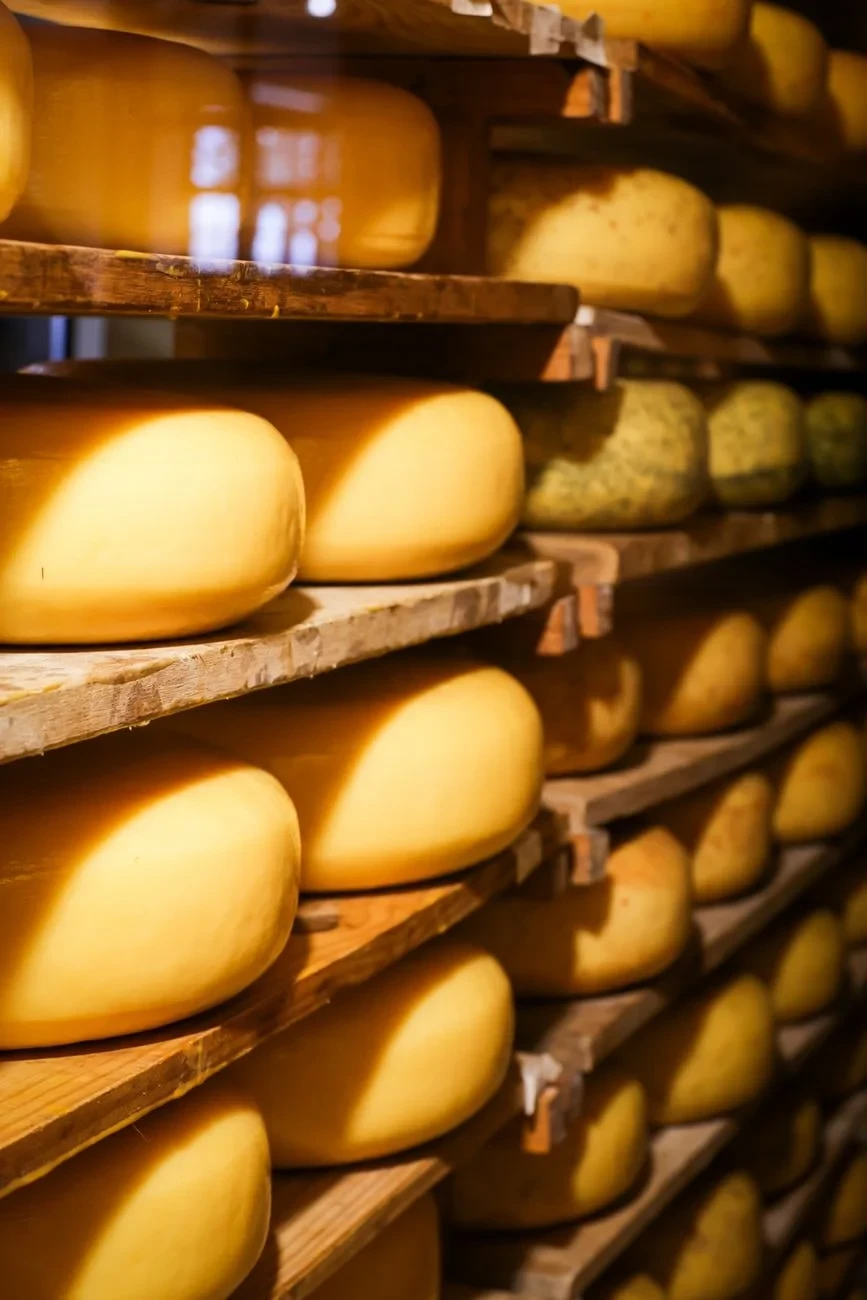
Rows of cheese wheels rest in a dimly lit space on wooden shelves. Darkness and stillness are essential to what milk becomes.
Photograph by Magda Ehlers, via Pexels.
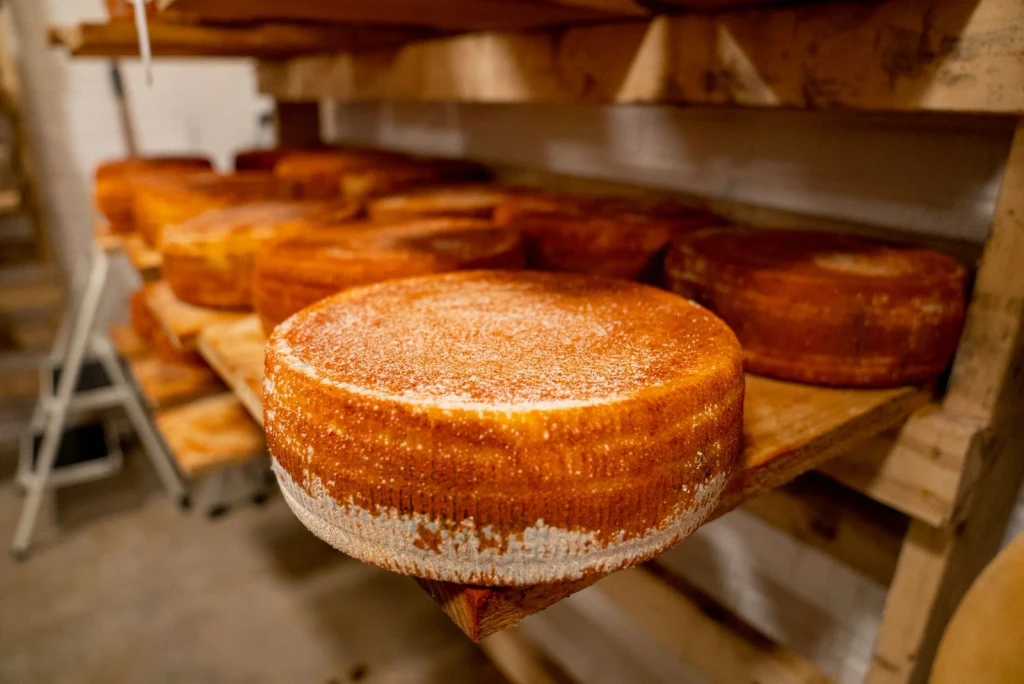
Aged cheese wheels arranged on wooden shelves. Evidence of time doing its work.
Photograph by Mark Stebnicki, via Pexels.
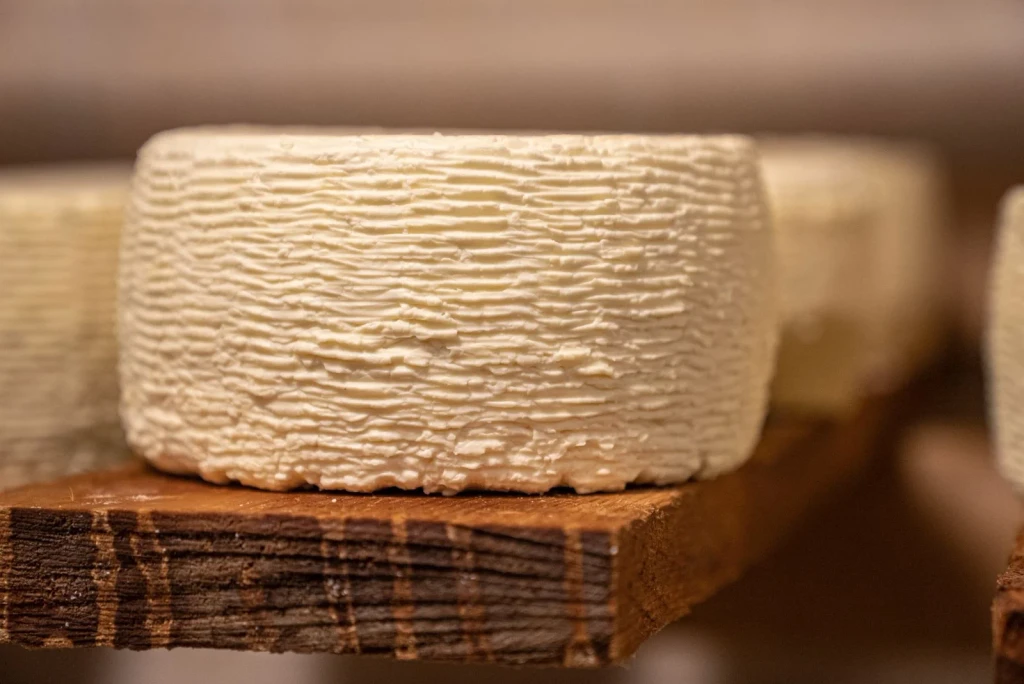
A single cheese wheel's texture tells the story of patience. The artisanal mark visible here is time made tangible.
Photograph by Mark Stebnicki, via Pexels.
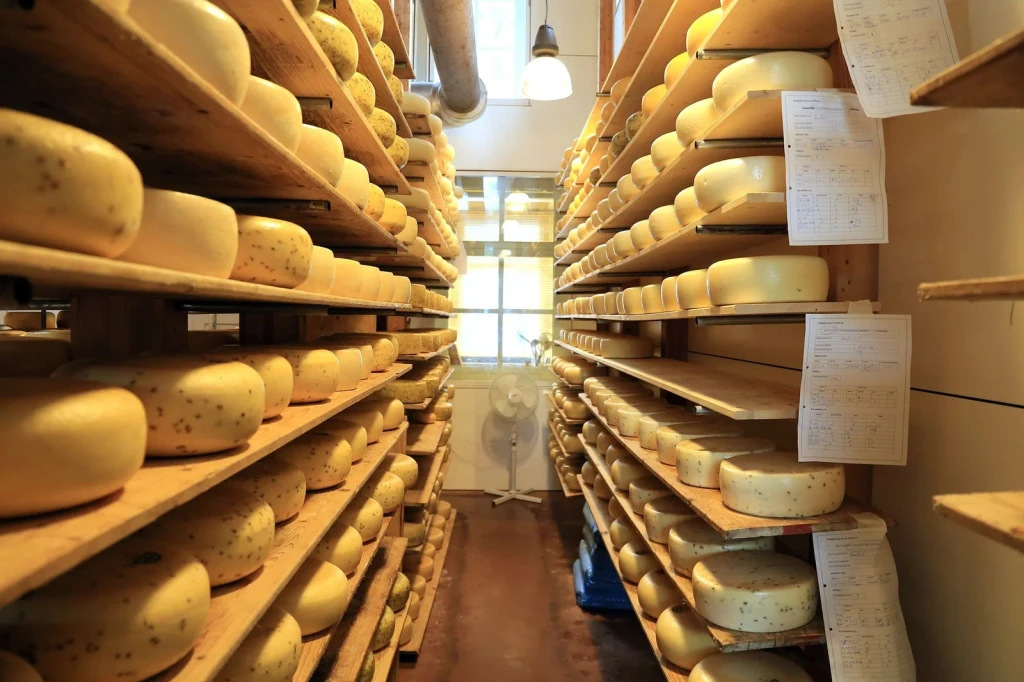
Artisan cheeses rest on wooden shelves. Milk learned to keep through patient hands.
Photograph by Theo Graber, via Pexels.
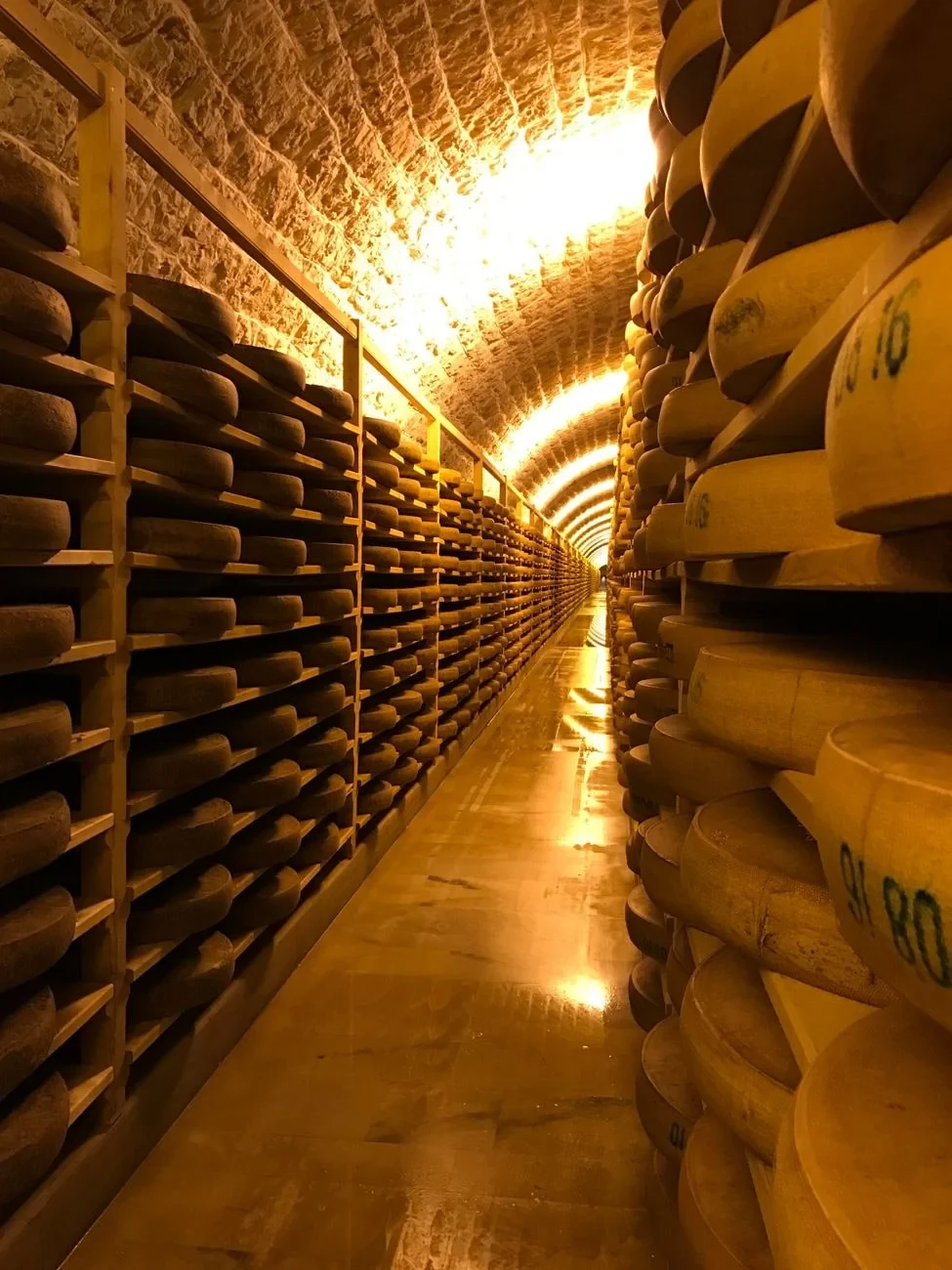
Cheese wheels line wooden shelves in dim storage. Time and patience made visible.
Photograph by Frédéric Pelhate, via Pexels.
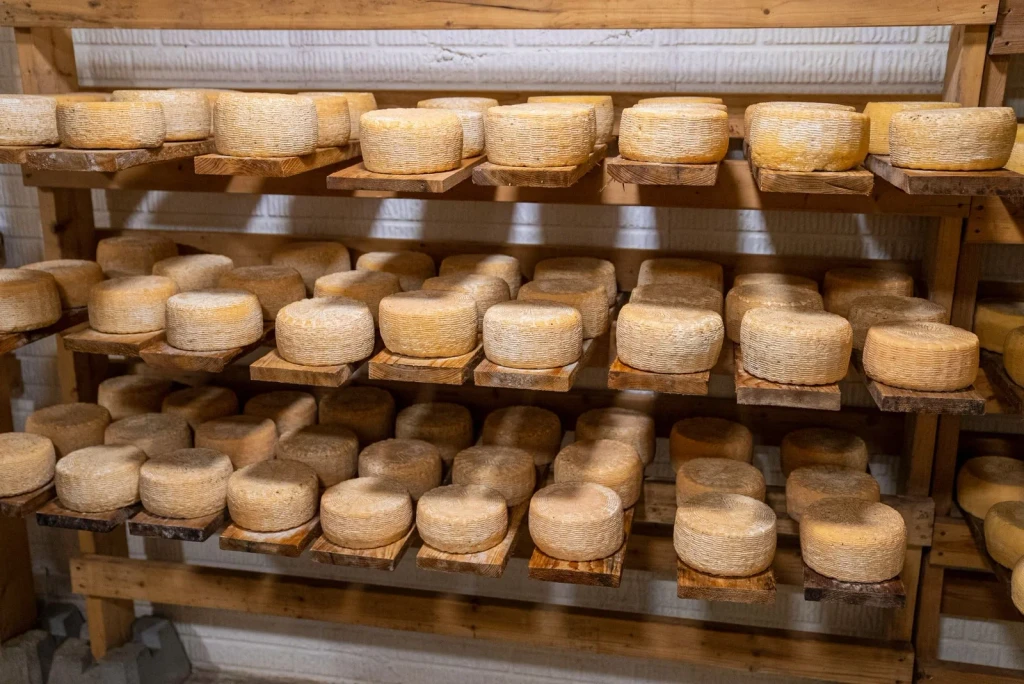
Neatly organized wheels age on wooden shelves in a traditional storage area. Organization and time work together in the cheese-maker's process.
Photograph by Mark Stebnicki, via Pexels.
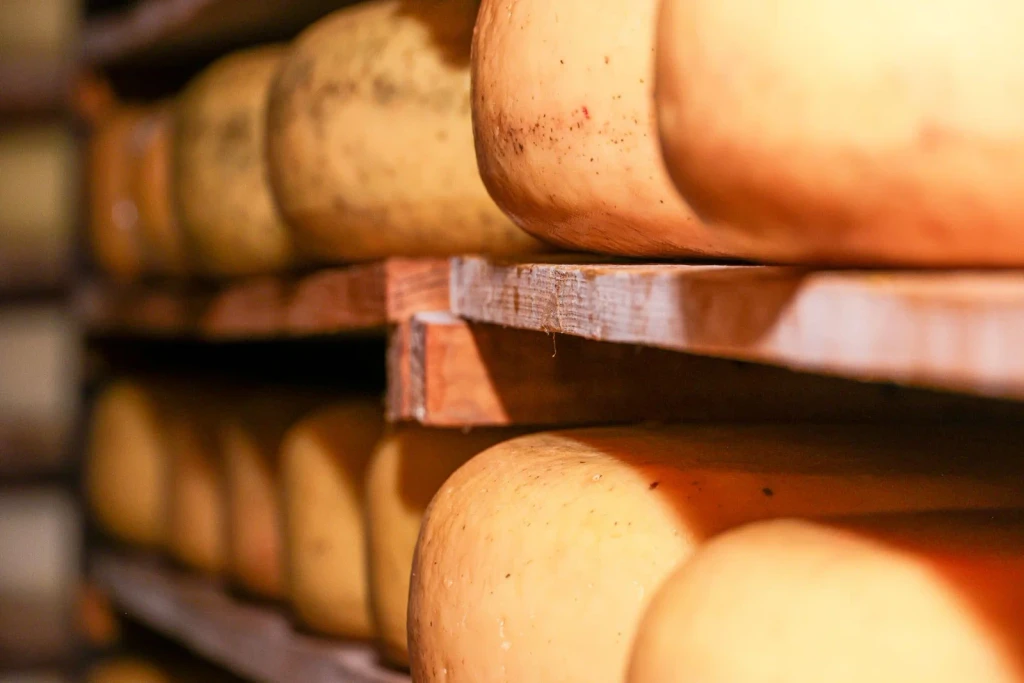
A close view of maturing cheese wheels on shelves. The photograph shows the texture of time spent in traditional storage.
Photograph by Magda Ehlers, via Pexels.
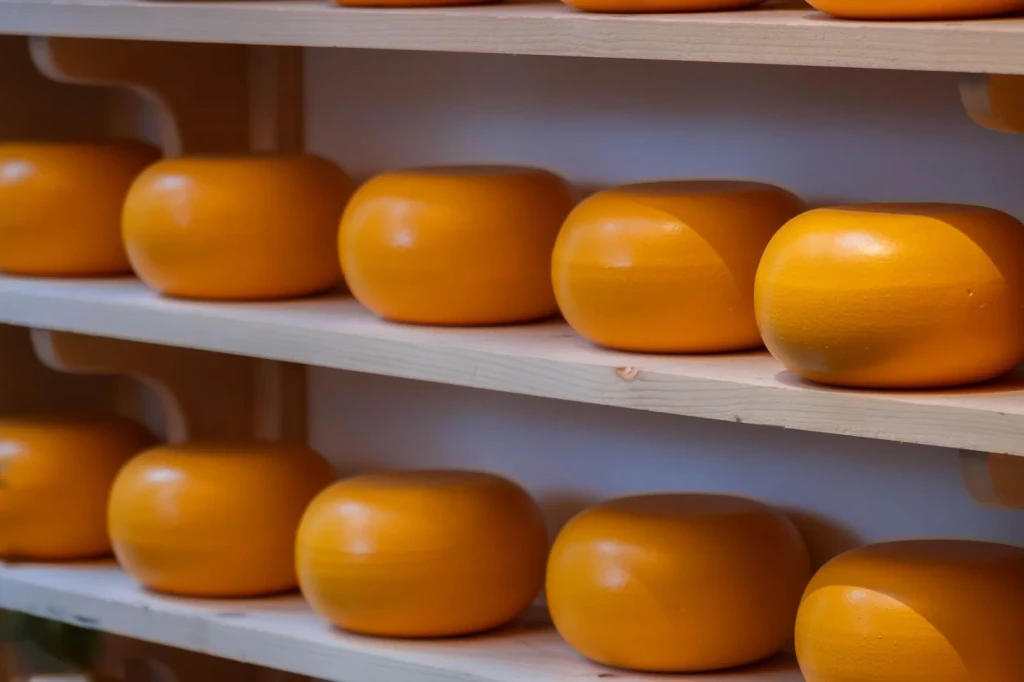
Close-up of Gouda cheese on wooden shelves. Milk transformed into something that endures.
Photograph by Najm Shihabi, via Pexels.
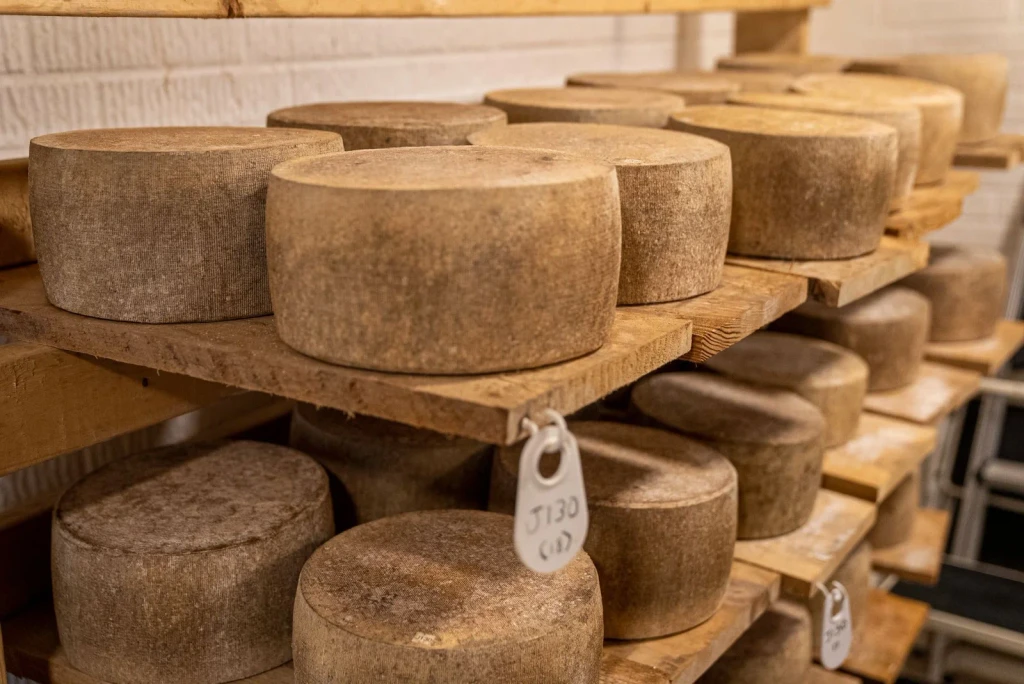
Close-up of wheels aging on shelves in a cheese cellar. The work of craft unfolds slowly.
Photograph by Mark Stebnicki, via Pexels.
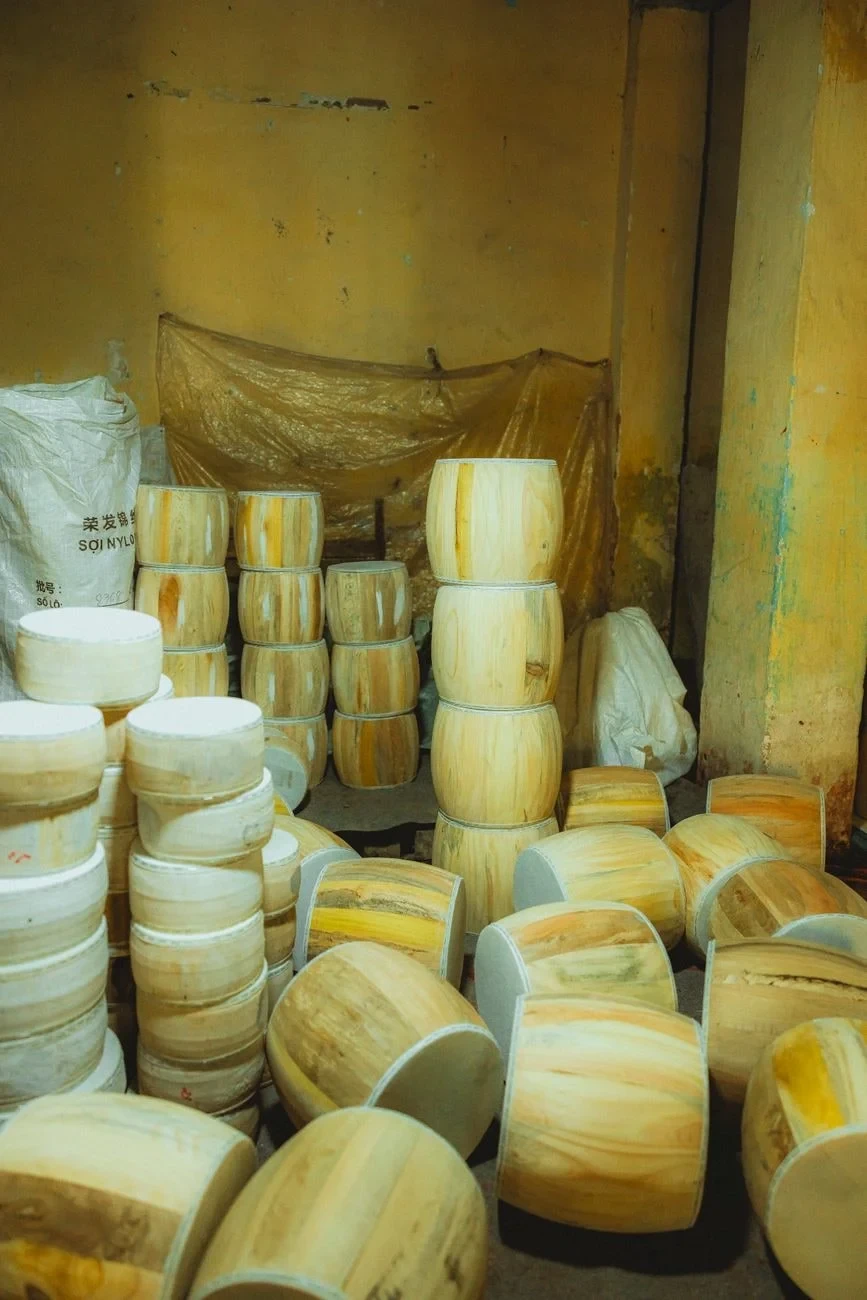
Wooden barrels hold aging cheese in a rustic basement. An old method of preservation continues.
Photograph by HONG SON, via Pexels.
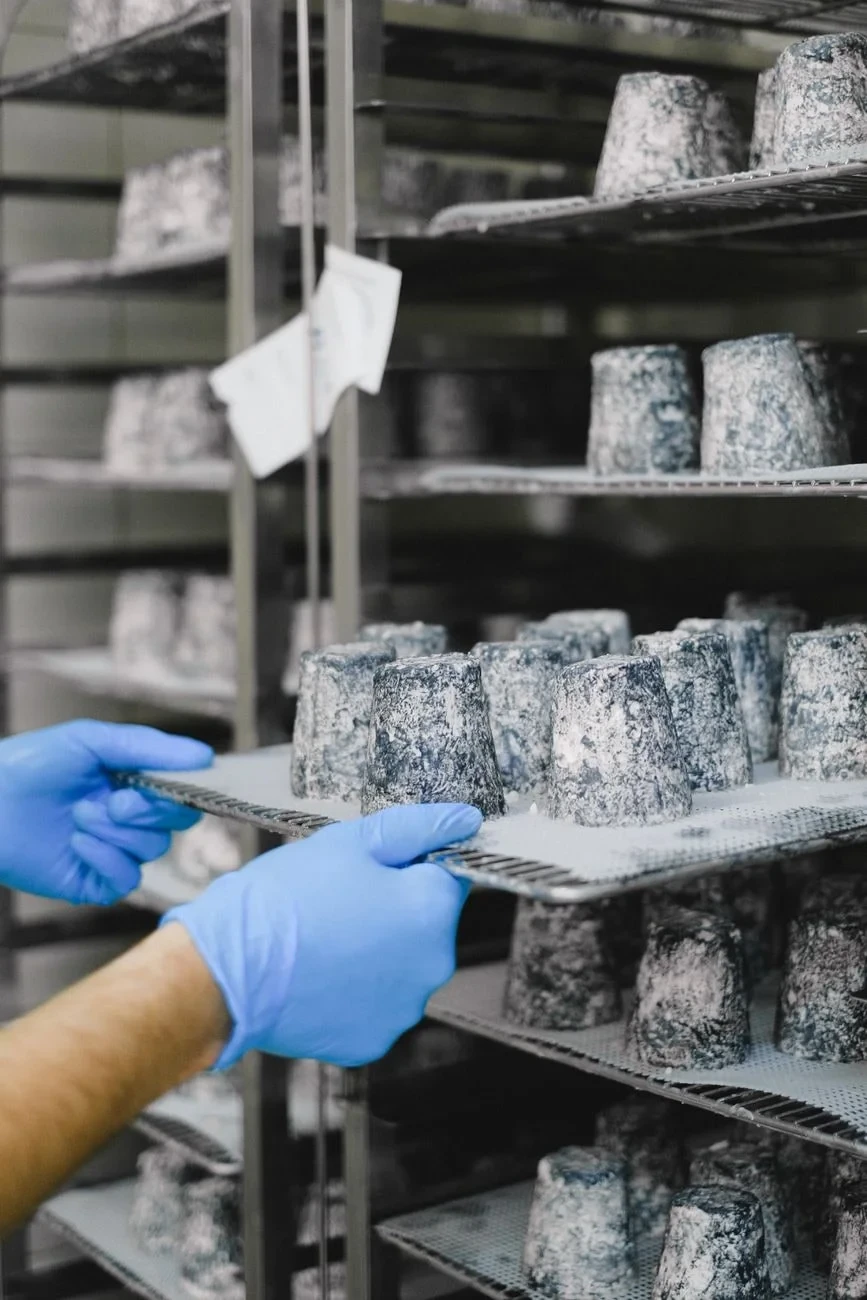
Blue cheese undergoes transformation through controlled aging. Gloved hands guide the process in an industrial setting, where tradition meets precision.
Photograph by Anna Shvets, via Pexels.
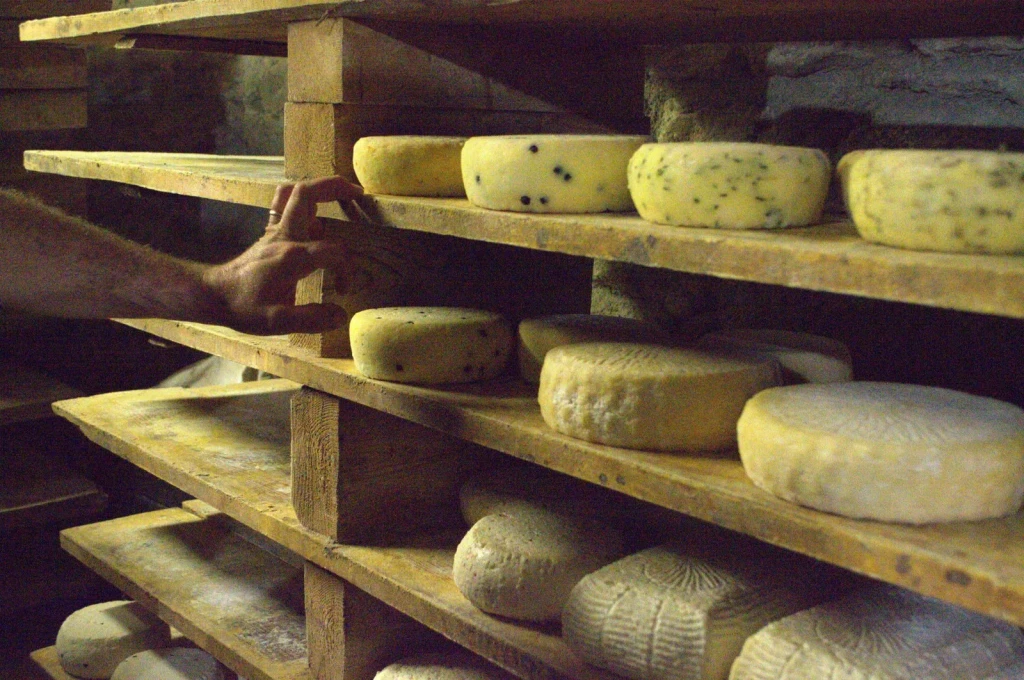
Artisanal cheeses rest on wooden shelves, their maturation a slow conversation between milk and time. Each wheel becomes something entirely new.
Photograph by Fondazione Contrada Torino Onlus, via Pexels.
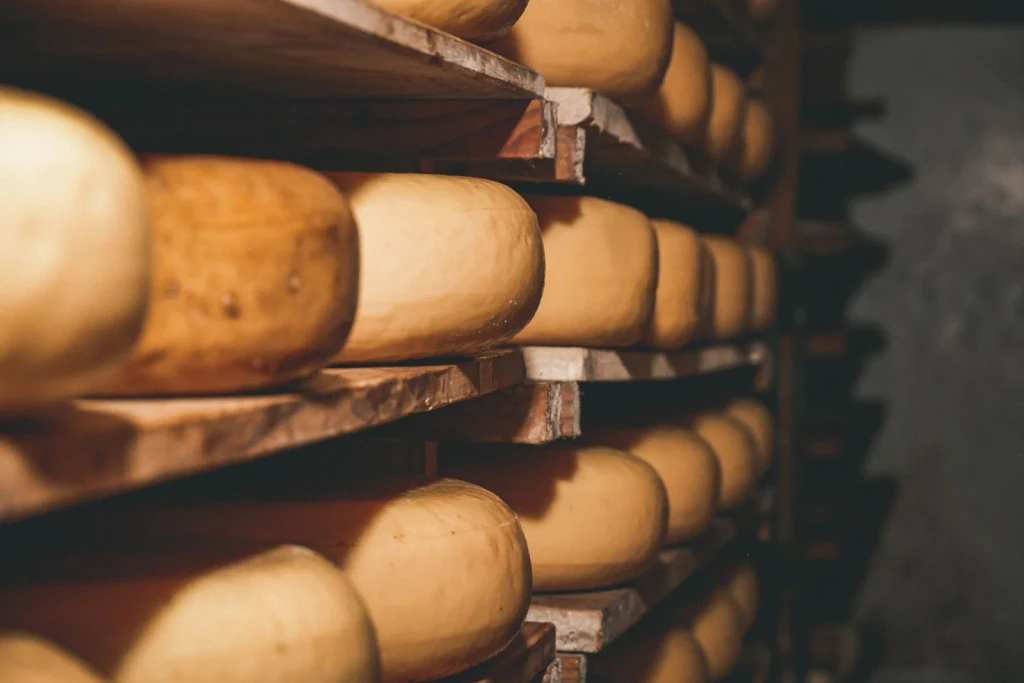
Cheese wheels rest on wooden shelves in a rustic setting. The photograph documents a method that connects past practices to present craft.
Photograph by Magda Ehlers, via Pexels.
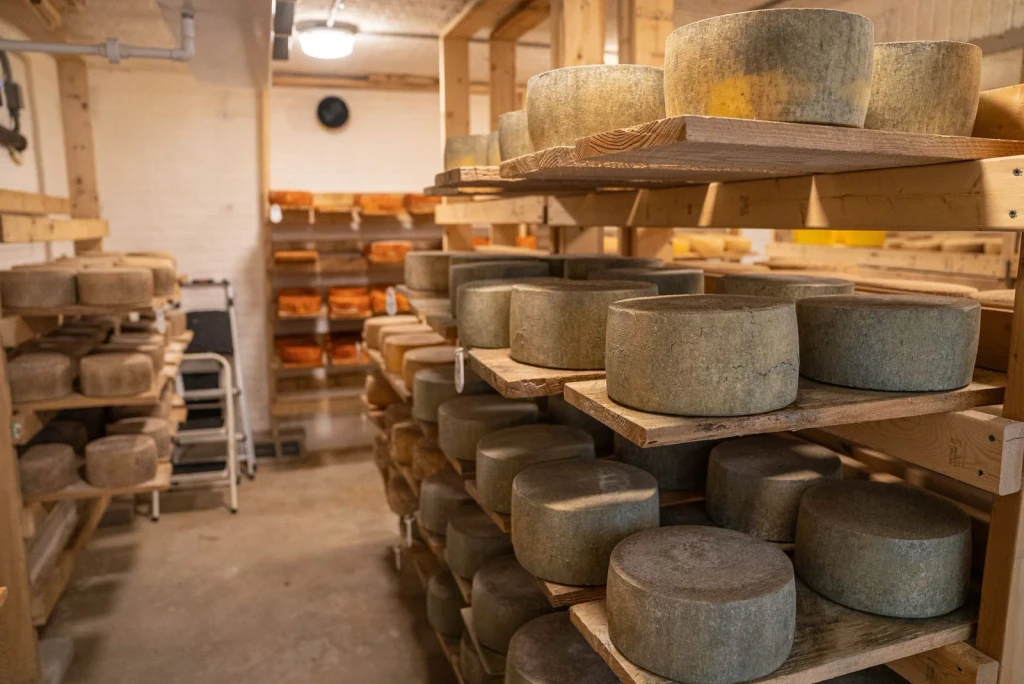
Aged cheese wheels arranged in a traditional storage space. Time and patience transform milk into something that endures.
Photograph by Mark Stebnicki, via Pexels.
