3D Gallery
Fermentation Is Controlled Rot
Enter gallery
Fermentation Is Controlled Rot is a 3D virtual gallery on MyGallery3D, a walkable online exhibition of 12 works. Step inside and explore it in your browser: no app, no headset.
Walk through this 3D virtual museum of fermentation in your browser. Everything here is decay, held at the exact point where it turns into food.
Fermentation is a bad way to make energy. It yields between 2 and 5 ATP molecules per glucose, against 32 from aerobic respiration. Life does it anyway, because it needs no oxygen: over 25% of bacteria and archaea ferment, forming nearly 300 combinations of end products. Humans have used it for 13,000 years. The oldest evidence is beer residue, with the consistency of gruel, in a cave near Haifa.
Early records of kimchi mention neither garlic nor chili pepper. Chili peppers are a New World crop, unknown in Korea until the early seventeenth century, and introduced to East Asia by Portuguese traders. The first mention appears in Jibong yuseol, an encyclopedia published in 1614, and their use in kimchi became widespread only in the 19th century. Napa cabbage arrived later still.
Alaska has more cases of botulism than any other state in the United States, and they have risen steadily since 1985. Fish heads, seal oil and whale flippers are traditionally left to ferment in a grass-lined hole. The risk is exacerbated when a plastic container is used instead: Clostridium botulinum thrives in the air-tight anaerobic conditions. Kombucha must stay below pH 4.6 for the same reason.
A sourdough starter is flour, water, wild yeast and lactobacilli. Amylase in the flour breaks starch down into glucose and maltose; the bacteria ferment starches the yeast cannot, and the yeast metabolises their by-products and gives off carbon dioxide. Prospectors in the Klondike Gold Rush of 1898 carried a pouch of starter around the neck to keep it from freezing. Old hands came to be called sourdoughs.
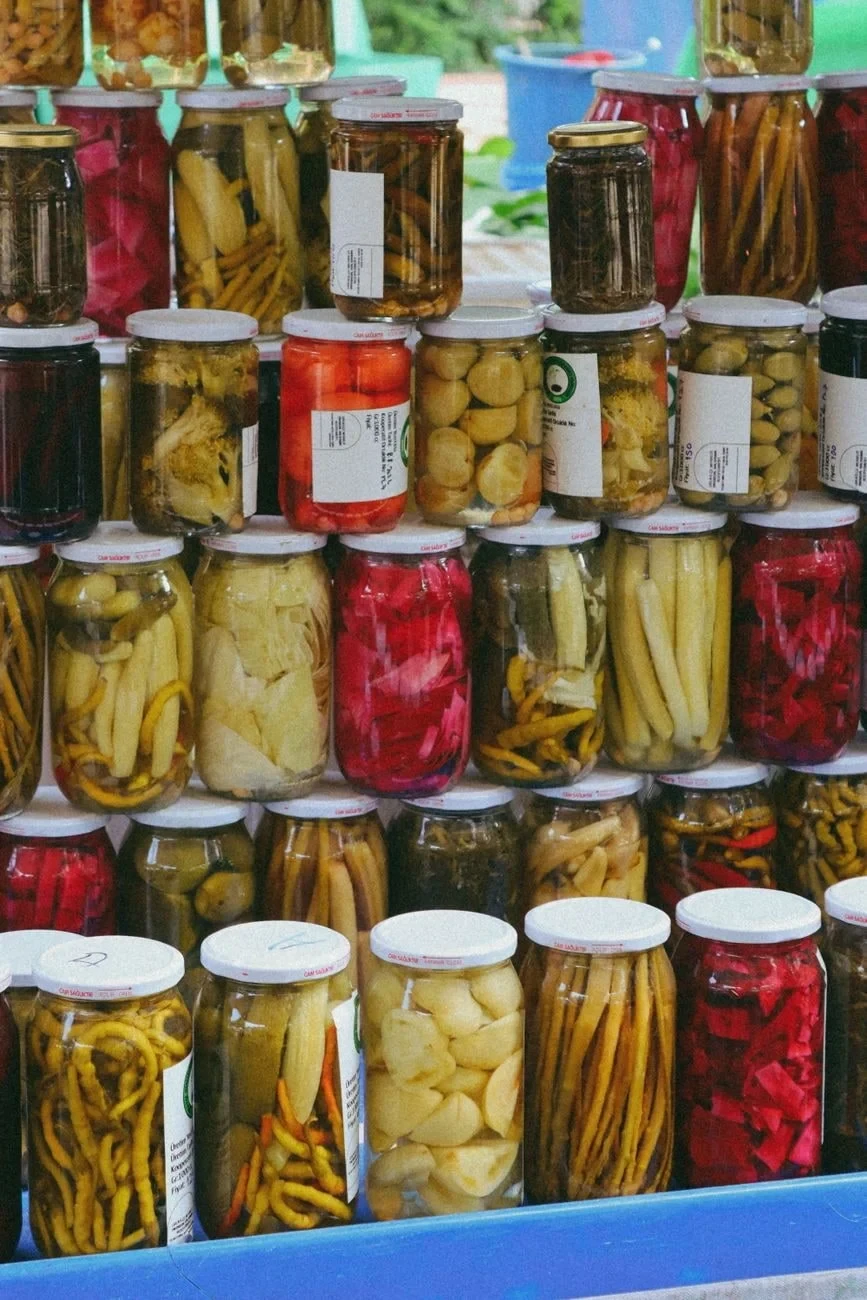
Pickled vegetables fill jars at a traditional market. The abundance suggests fermentation as a valued, practiced craft within this community.
Photograph by Berre Öngen, via Pexels.
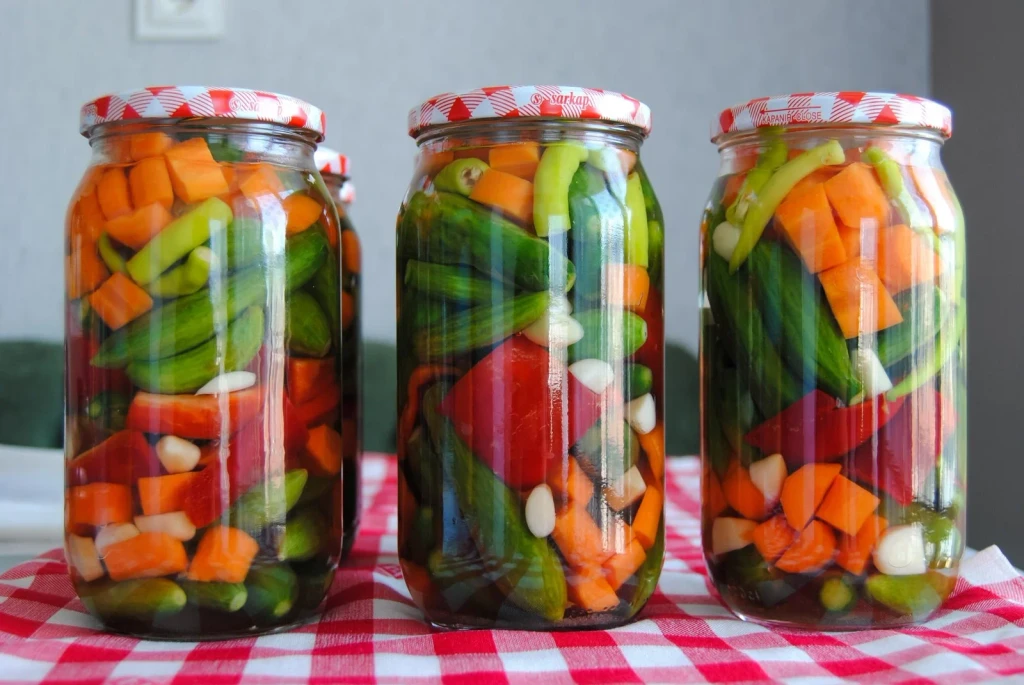
Assorted pickled vegetables rest on a red checkered tablecloth. A simple, intimate arrangement that frames fermentation as both practical and domestic.
Photograph by zeynep, via Pexels.
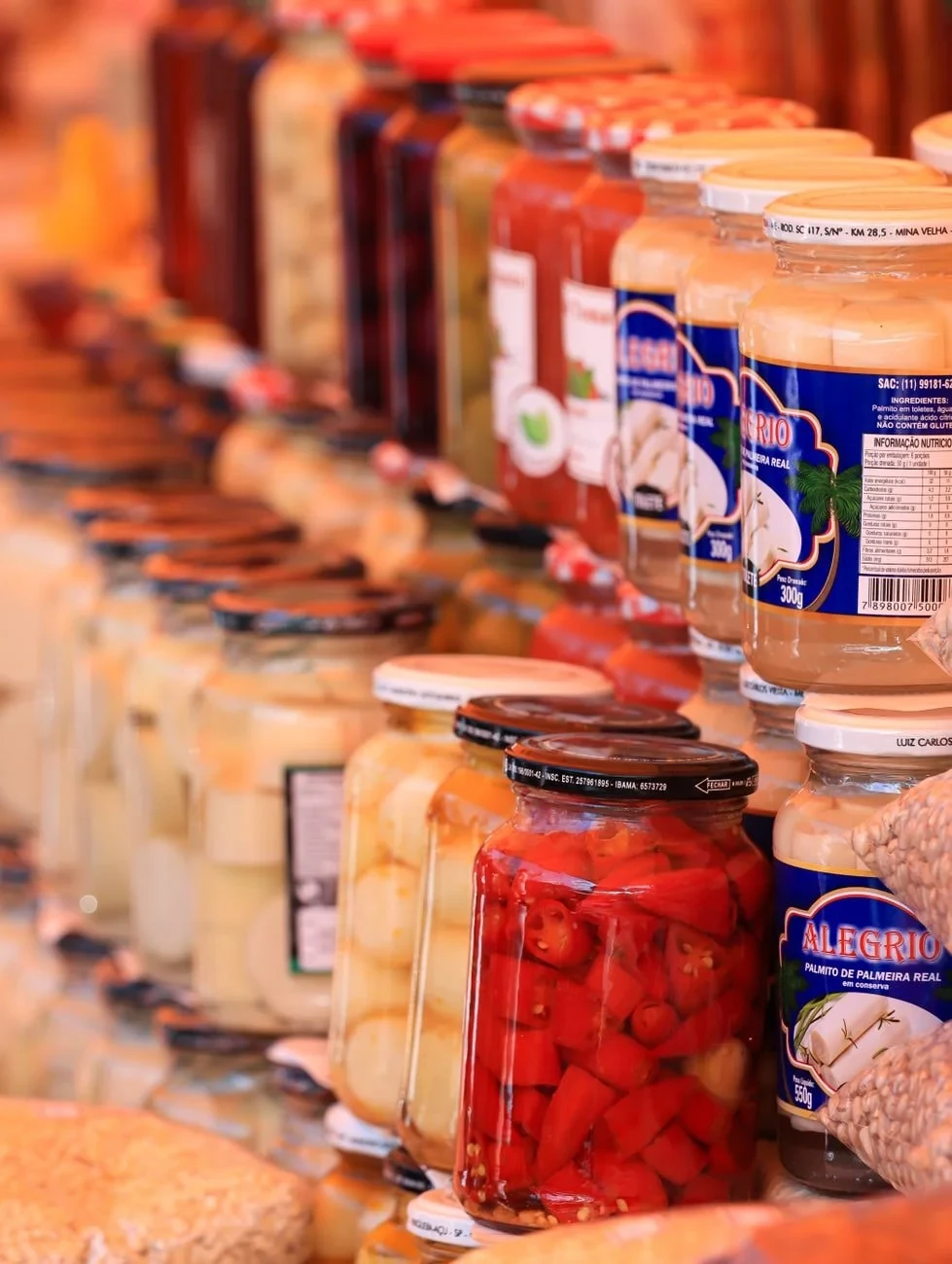
Colorful jars of preserved food arranged in a vibrant market setting. Community fermentation, made public and available.
Photograph by Nascimento Jr., via Pexels.
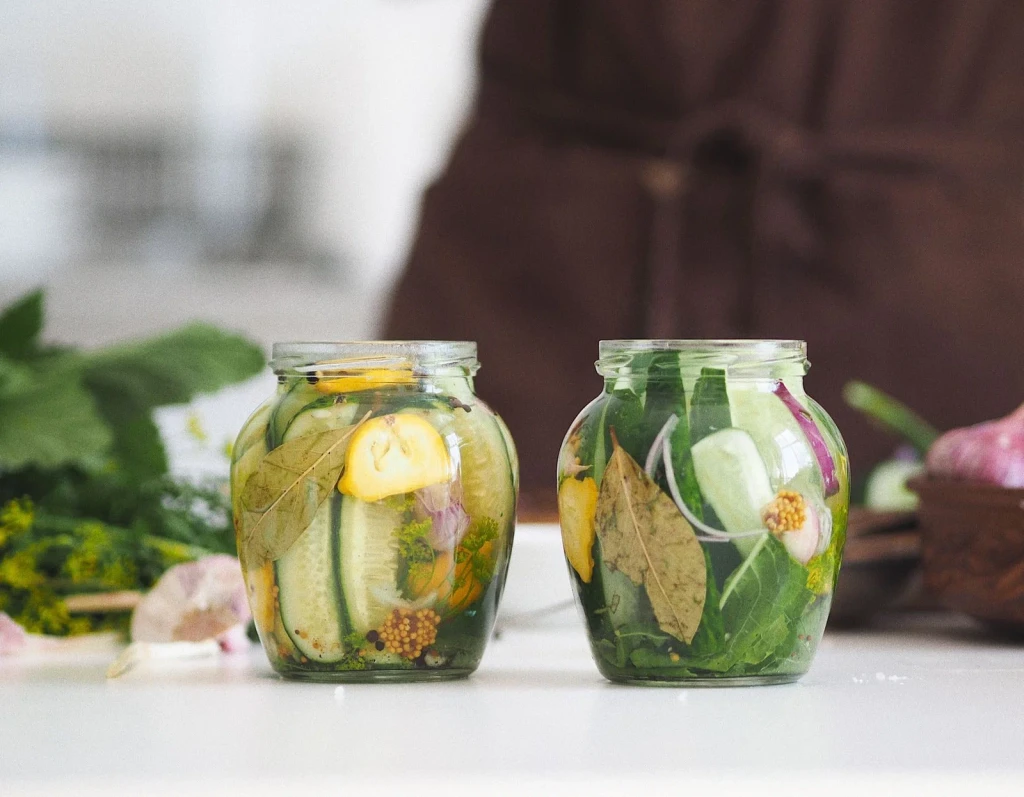
Two glass jars of homemade pickled cucumbers and herbs sit on a kitchen surface. A study in domesticated fermentation, quiet and orderly.
Photograph by Maria Verkhoturtseva, via Pexels.
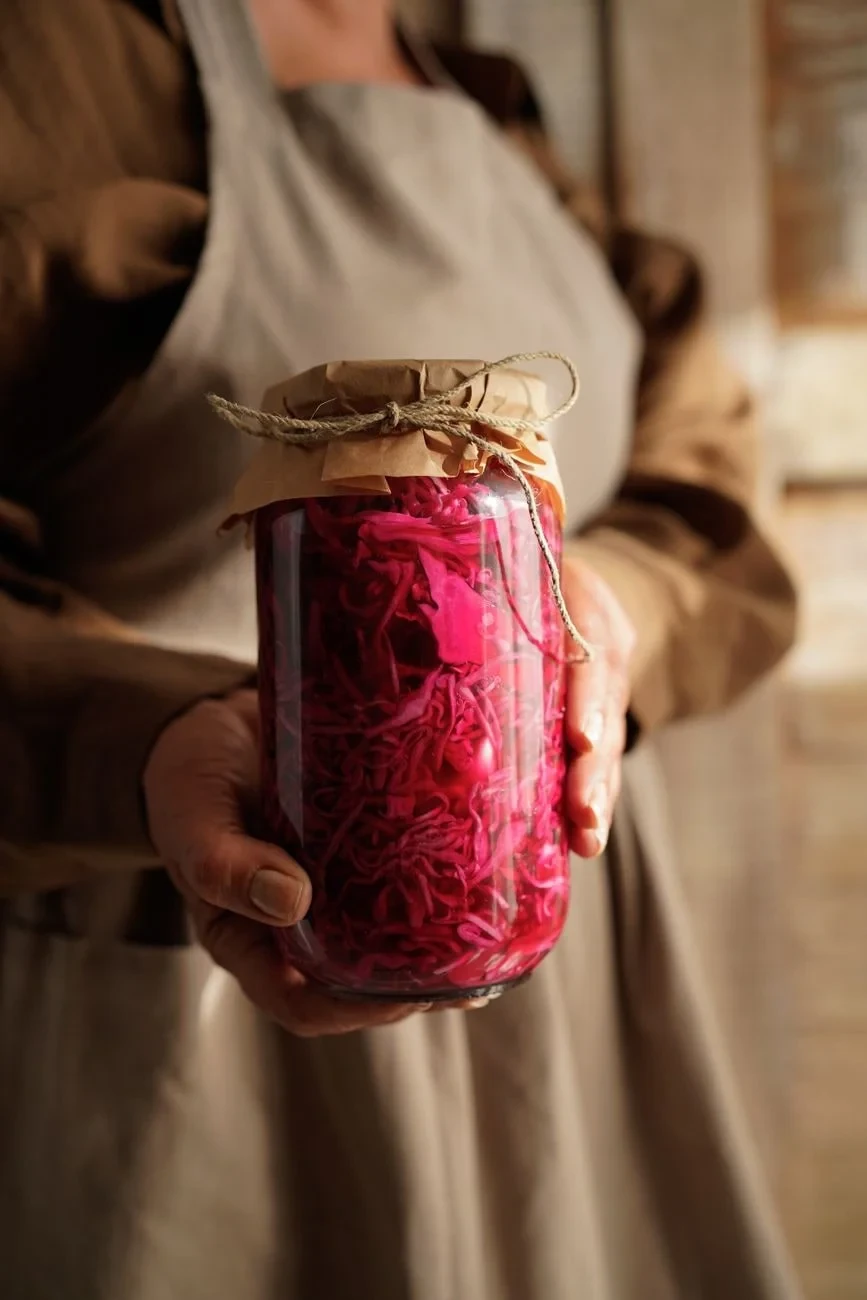
A close-up of homemade pickled vegetables in a jar held in hand. The image captures controlled rot made tangible, transformation rendered intimate and rustic.
Photograph by hello aesthe, via Pexels.
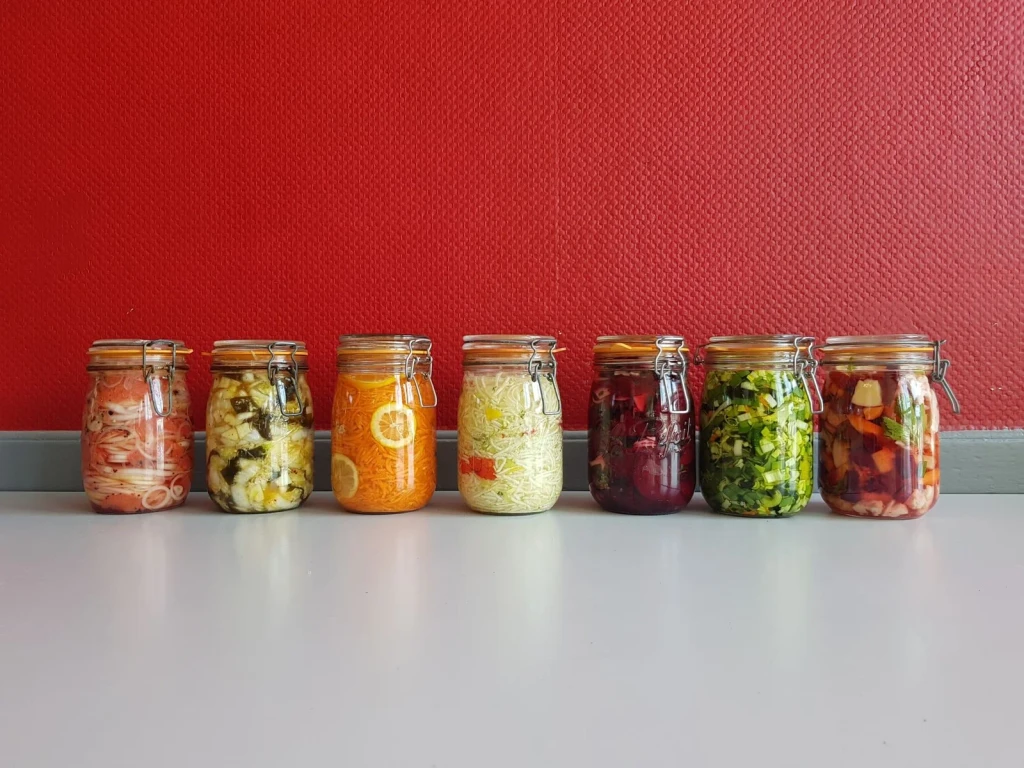
A row of multicolored jars holds fermented vegetables against a red wall. The vivid display shows how fermentation transforms raw ingredients into something worth preserving and presenting.
Photograph by Beatrice B, via Pexels.
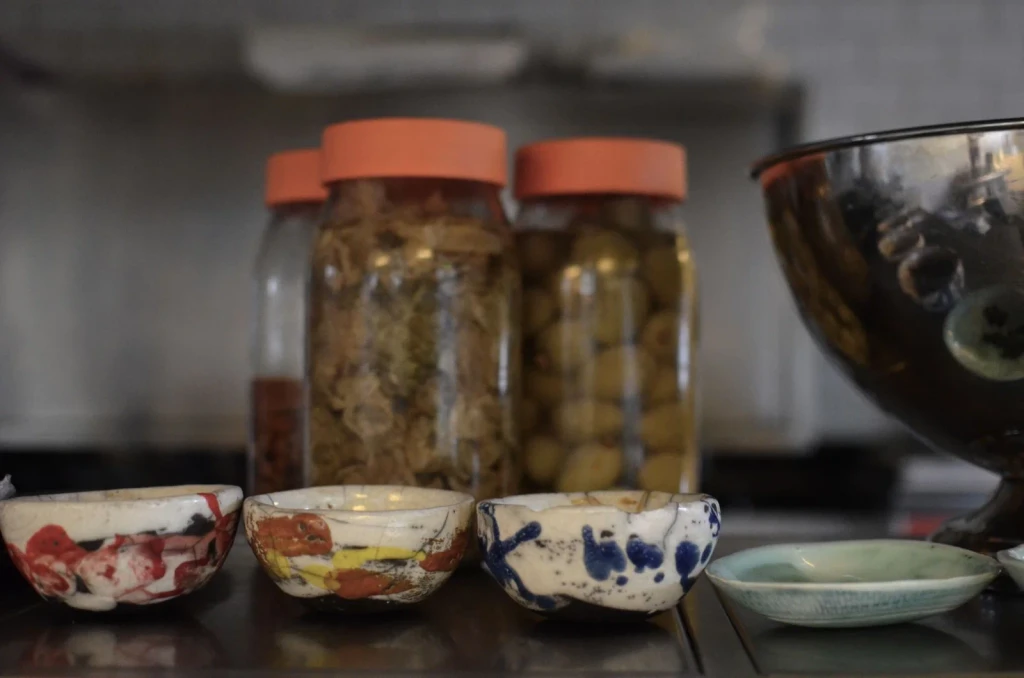
Colorful ceramic bowls and jars of fermented food arranged on a kitchen counter. An artistic approach to preservation, treating the everyday as composed still life.
Photograph by Skylar Kang, via Pexels.
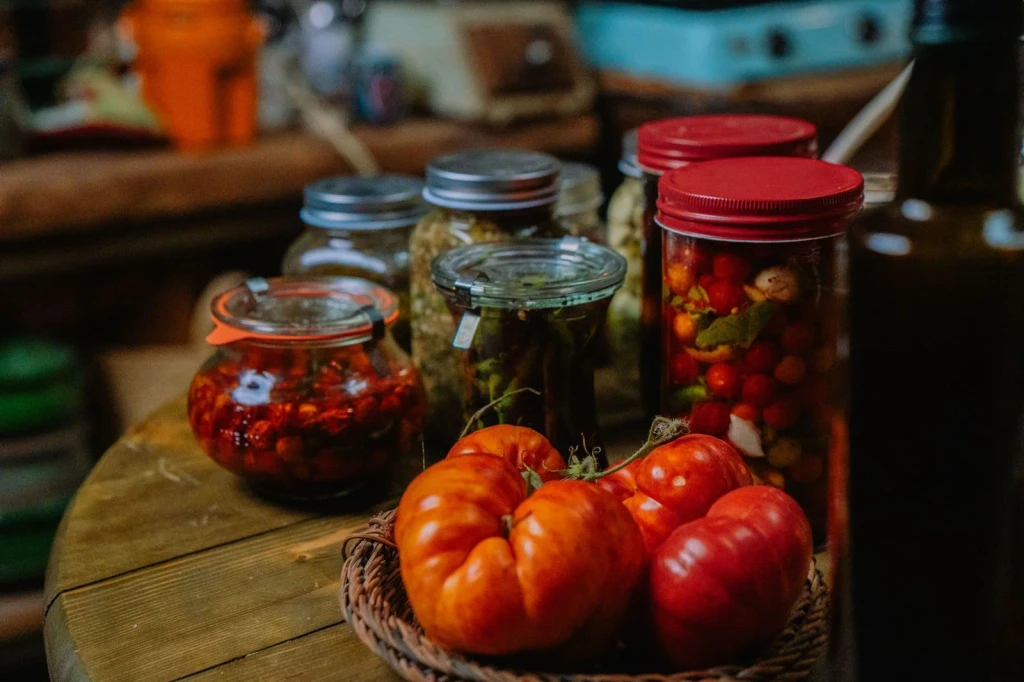
Fresh tomatoes and pickled vegetables in glass jars arranged in a rustic kitchen. Raw and transformed ingredients coexist in one frame.
Photograph by TIVASEE ., via Pexels.
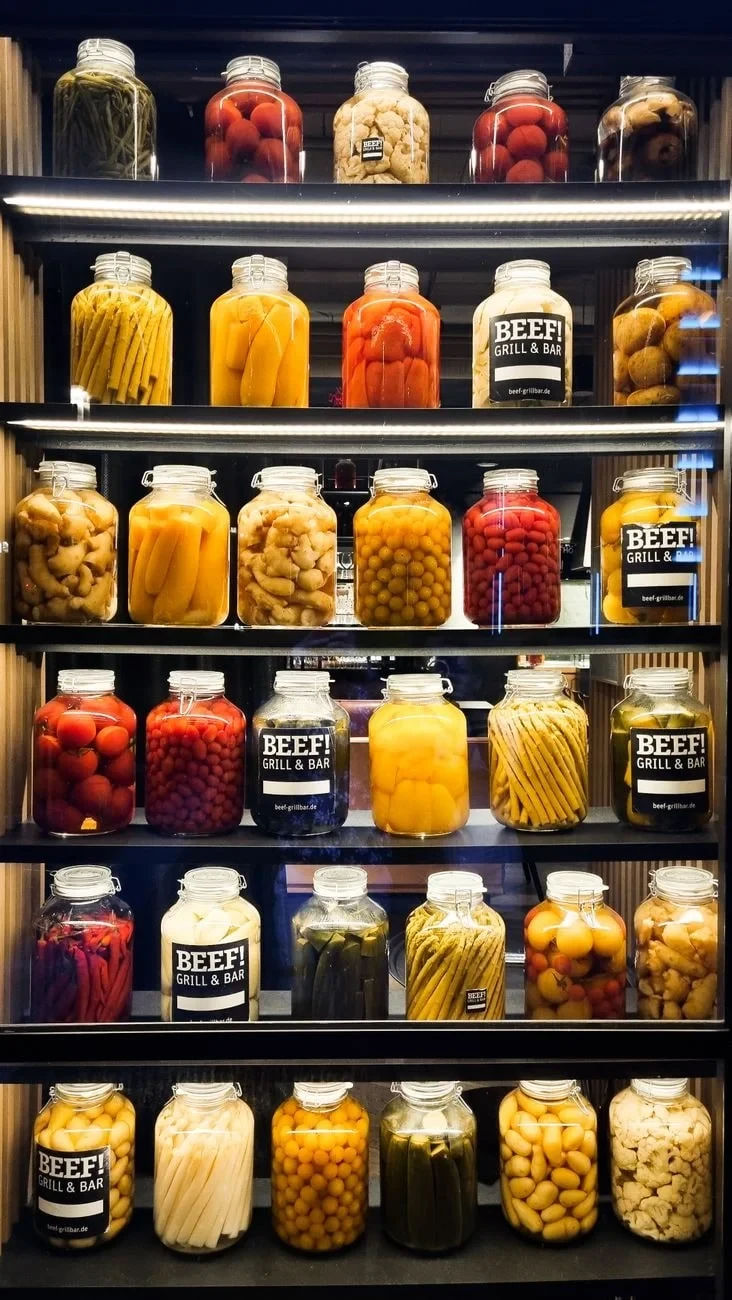
Preserved jars line shelves in a vibrant display. The arrangement shows how fermented goods are stored, organized, and made ready for use.
Photograph by José luis Rivera correa, via Pexels.
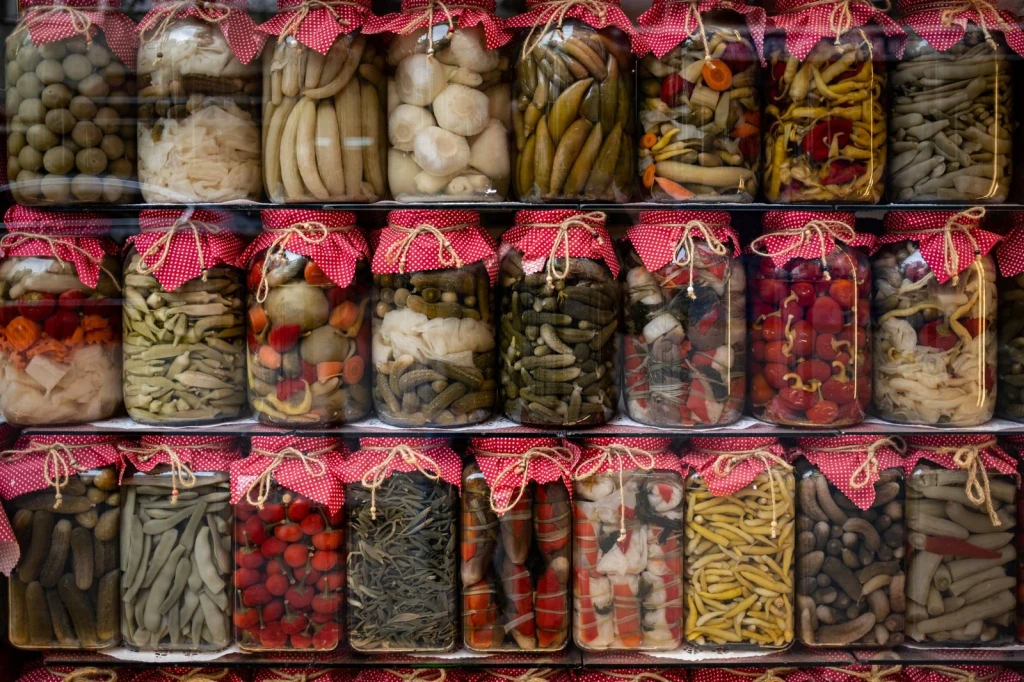
Pickled vegetables in jars with red fabric covers sit on shelves. The protective covering hints at the care required to maintain these fermented goods.
Photograph by mehmet uzut, via Pexels.
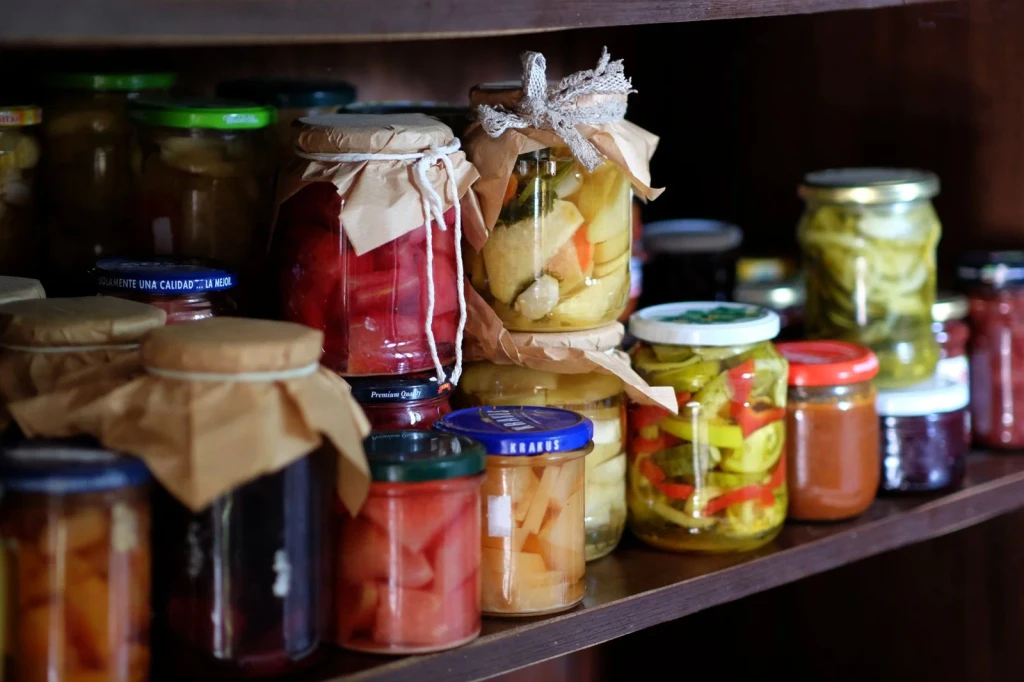
Homemade preserves and pickles stored on rustic wood. Time made visible, held in glass and stored.
Photograph by Roman Biernacki, via Pexels.
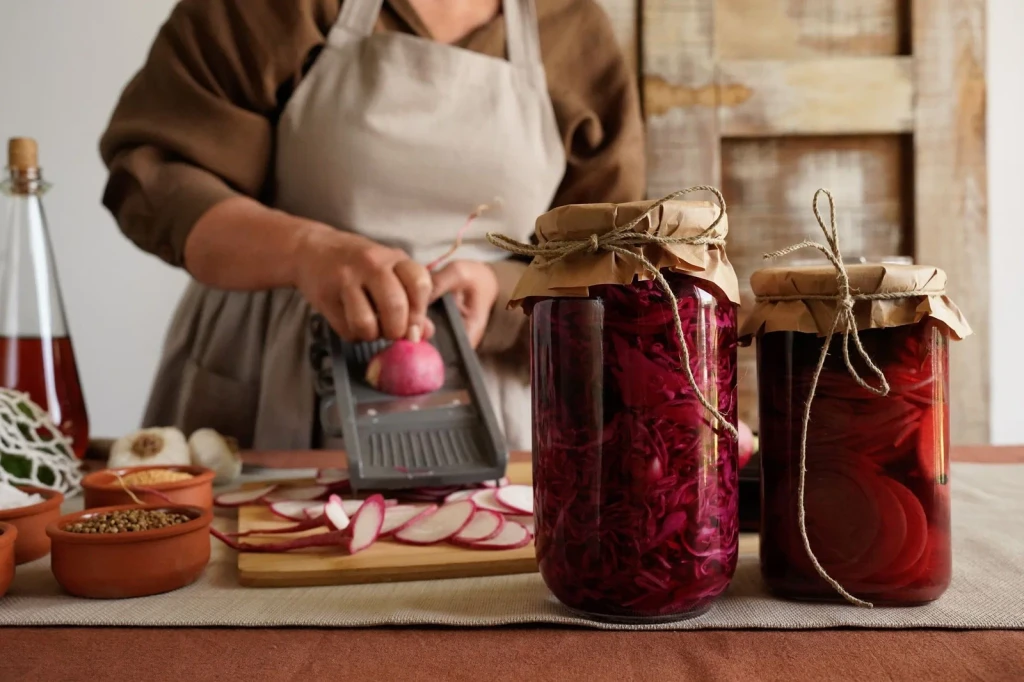
A woman prepares pickled radishes in a rustic kitchen. The photograph captures fermentation as an active, everyday practice rather than a finished product.
Photograph by hello aesthe, via Pexels.
