3D Gallery
What Mirrors Did to the Self
Enter gallery
What Mirrors Did to the Self is a 3D virtual gallery on MyGallery3D, a walkable online exhibition of 16 works. Step inside and explore it in your browser: no app, no headset.
This is a 3D virtual gallery of mirrors: walk it in your browser and watch a luxury turn into furniture.
In the late seventeenth century the Countess de Fiesque traded an entire wheat farm for a mirror, and reportedly considered it a bargain. Venice held the tin amalgam secret for a century, and Venetian mirrors ran up to 40 inches square. Then the secret leaked through industrial espionage, French workshops industrialized the process, and mirrors became affordable to the masses, in spite of the toxicity of mercury's vapor.
In Mesoamerica a mirror was not a personal cosmetic accessory. It was a divinatory aid and part of elite status costume, a metaphor for a sacred cave, a conduit for supernatural forces. Maya mirrors were mosaics of iron ore on slate backs, made by artisans who may have been aristocracy or even royalty, and laid near the head, chest or feet of the dead.
The Olmecs preferred concave mirrors, ground from single pieces of hematite, ilmenite or magnetite, and the larger ones could be used to light fires. Classical Antiquity knew this too: Diocles studied parabolic mirrors in On Burning Mirrors, and Ptolemy experimented with curved polished iron. The same geometry now aims telescopes, antennas that talk to broadcast satellites, and solar furnaces.
In 1835 Justus von Liebig worked out how to deposit a thin layer of metallic silver on the rear surface of glass by chemically reducing silver nitrate. Tony Petitjean refined it: mix a solution of diamminesilver with a sugar, spray it onto the glass, and the silver oxidizes the sugar, reduces itself to elemental silver, and deposits. Mass manufacturing followed, and the mirror stopped being a treasure.
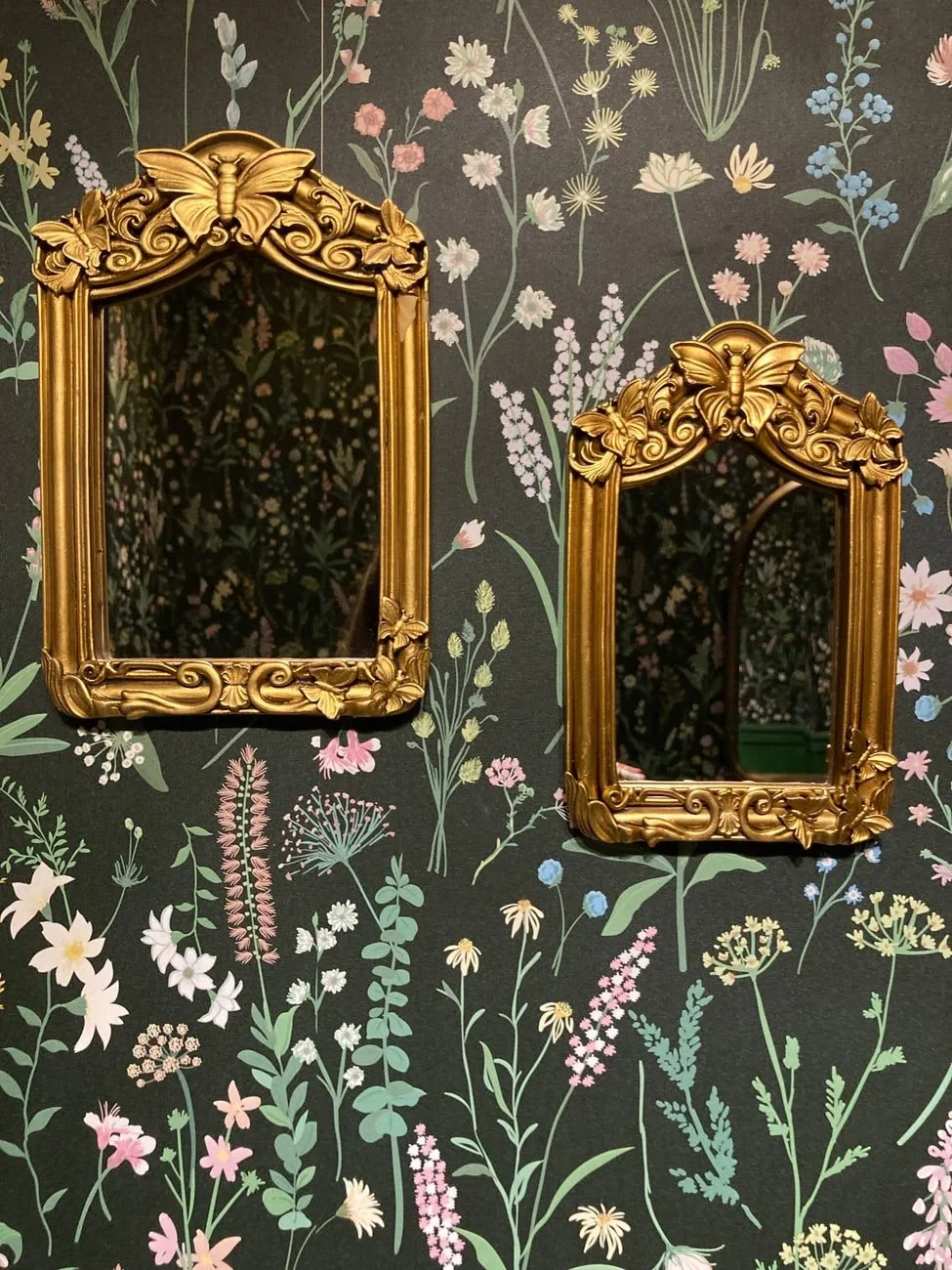
Gold mirrors with floral engravings hang against patterned wallpaper. Decoration upon decoration creates layers of ornamentation, each layer framing what lies beyond.
Photograph by Ivett Elisea, via Pexels.
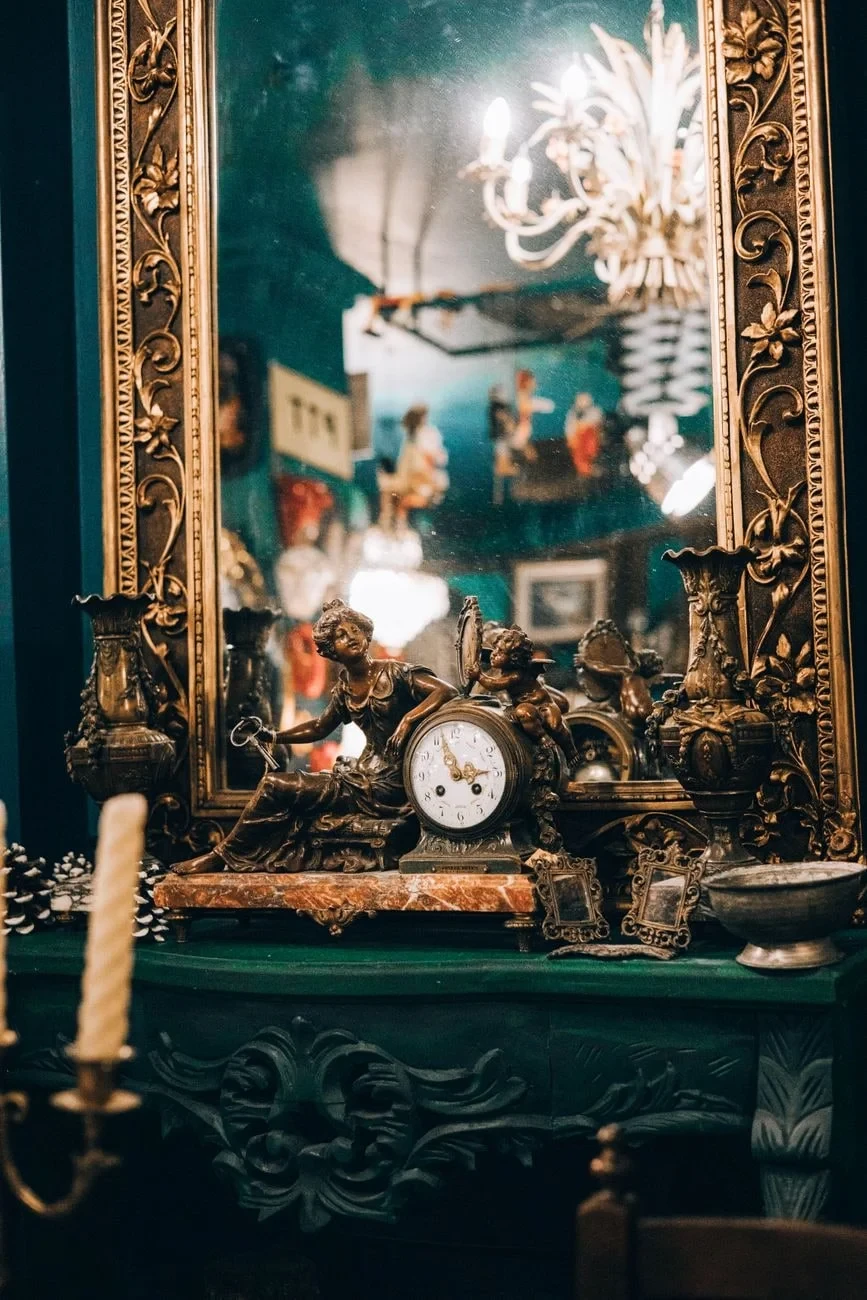
A clock and ornate mirror share a desk. Together they measure two kinds of time: the mechanical and the reflective, each claiming to show us something true.
Photograph by Lokman Sevim, via Pexels.
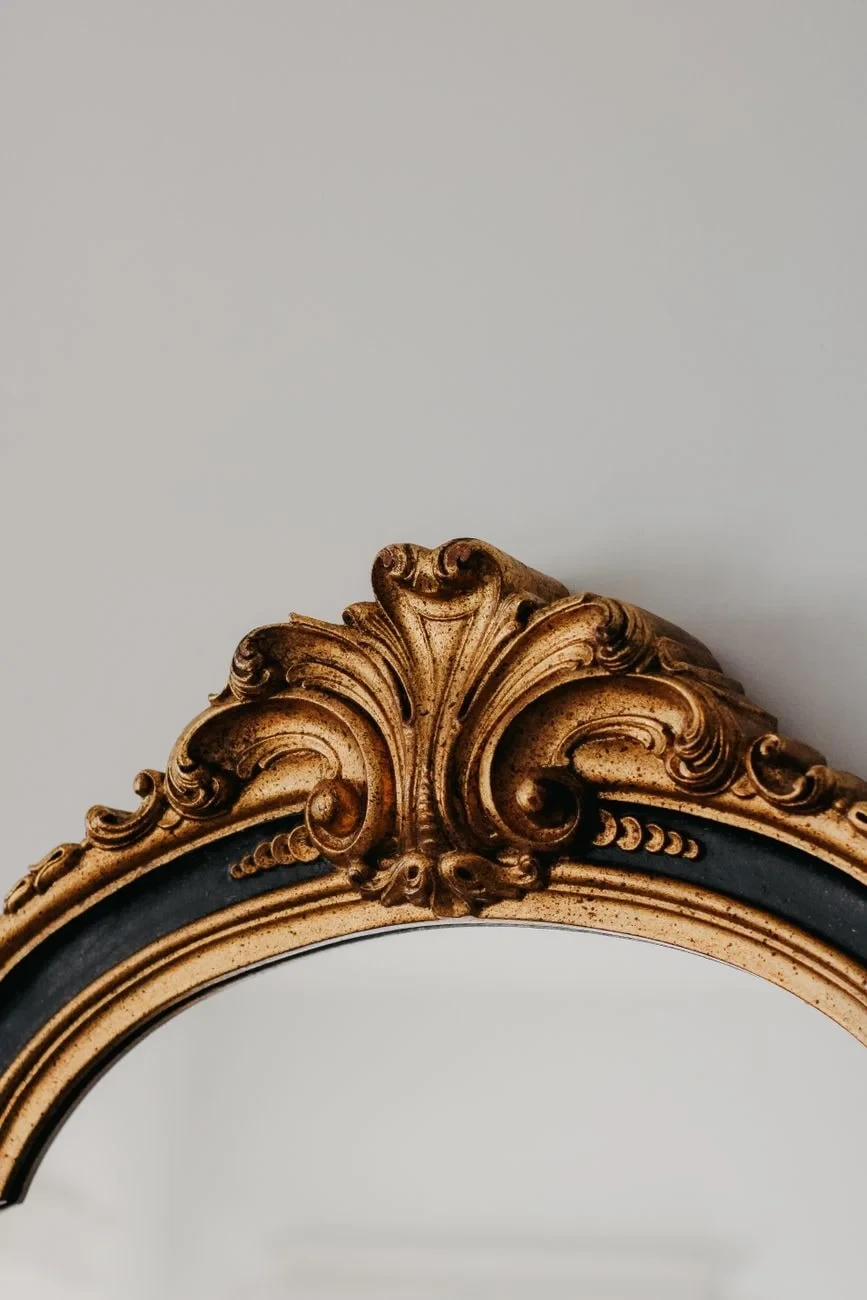
A mirror reduced to its decorative frame. Gold and intricate details become the subject. We see the object itself rather than what it reflects.
Photograph by Nati, via Pexels.
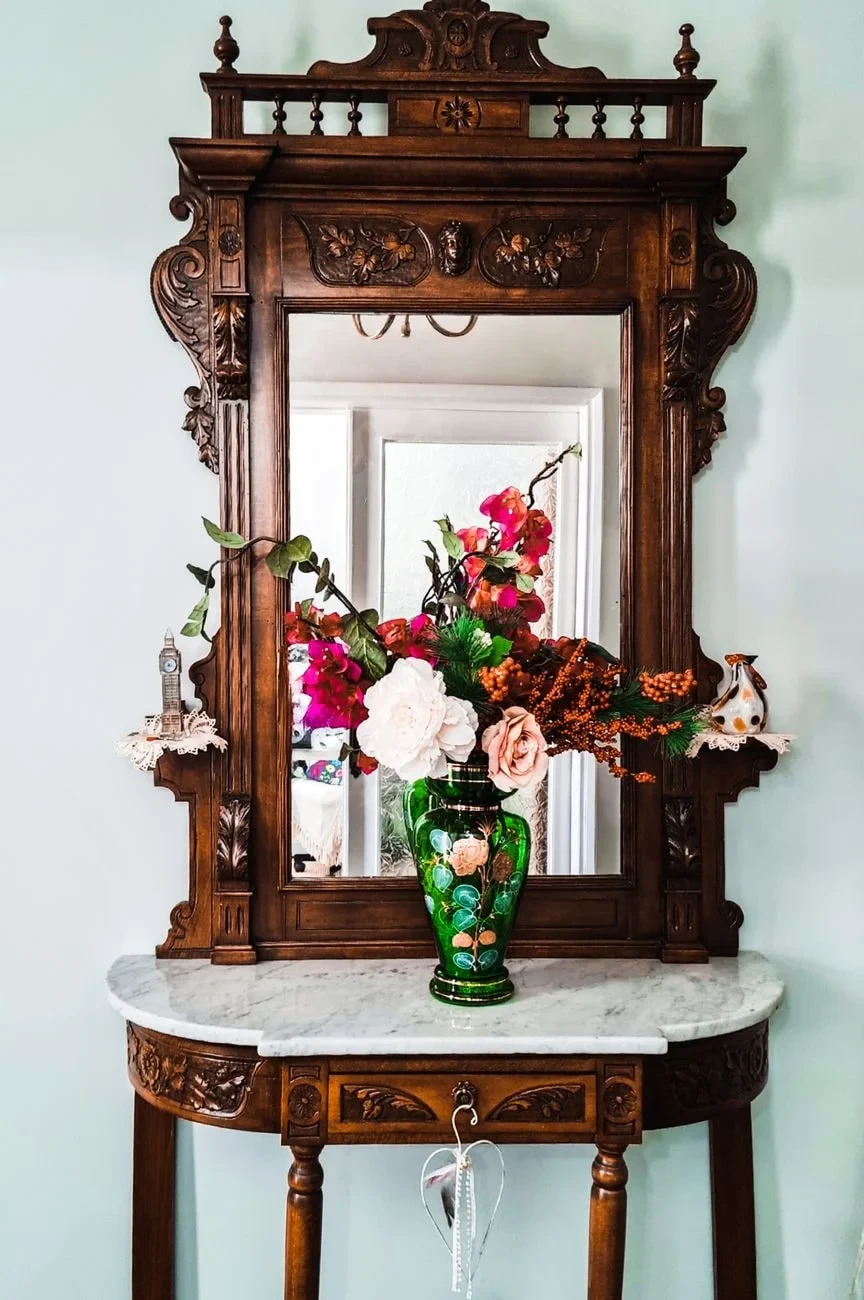
An antique mirror shares a wooden table with a green vase. Decoration surrounds decoration. Beauty arranged alongside beauty.
Photograph by Eftychia Syrimi, via Pexels.
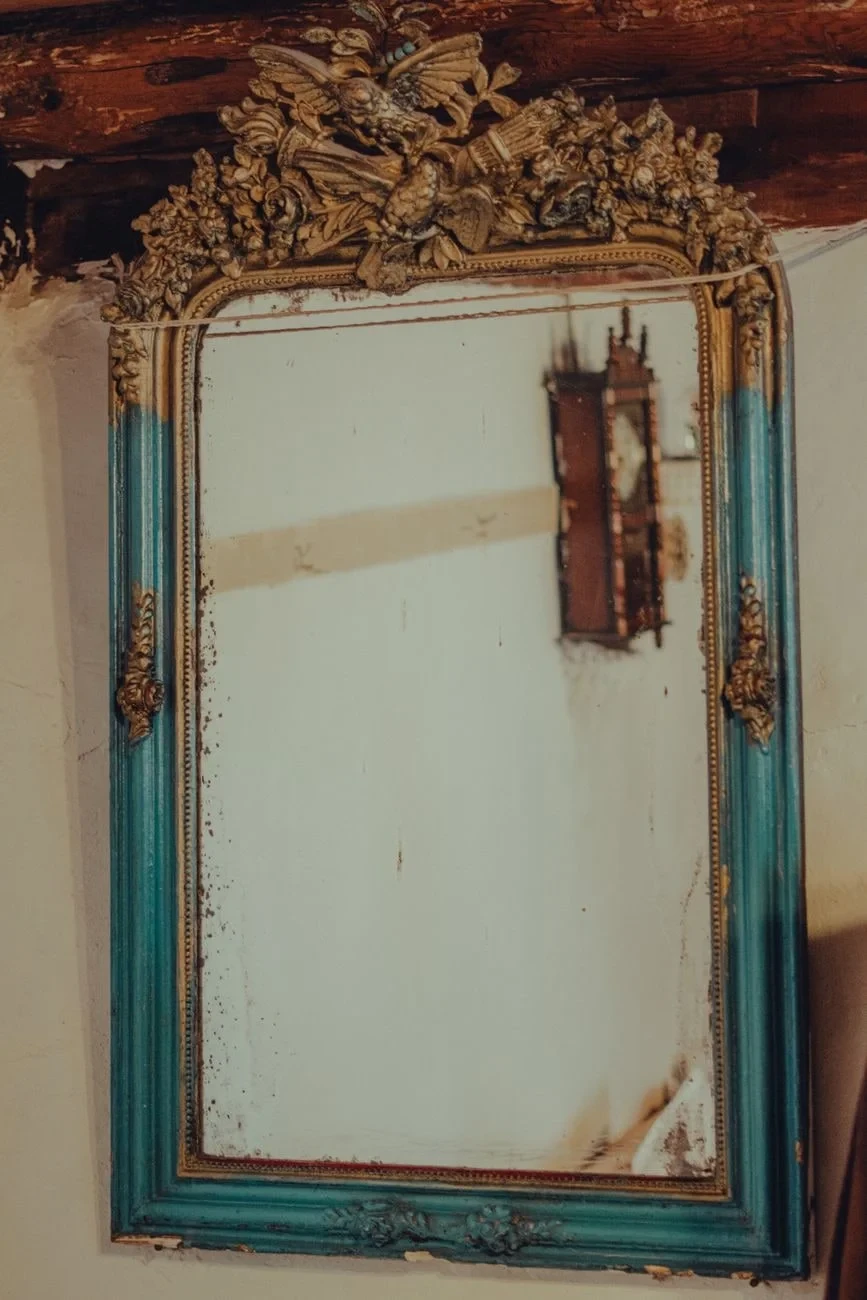
An antique mirror with ornamental detailing sits against a rustic backdrop. The frame's age contrasts with its surroundings.
Photograph by Çağrı Beşli, via Pexels.
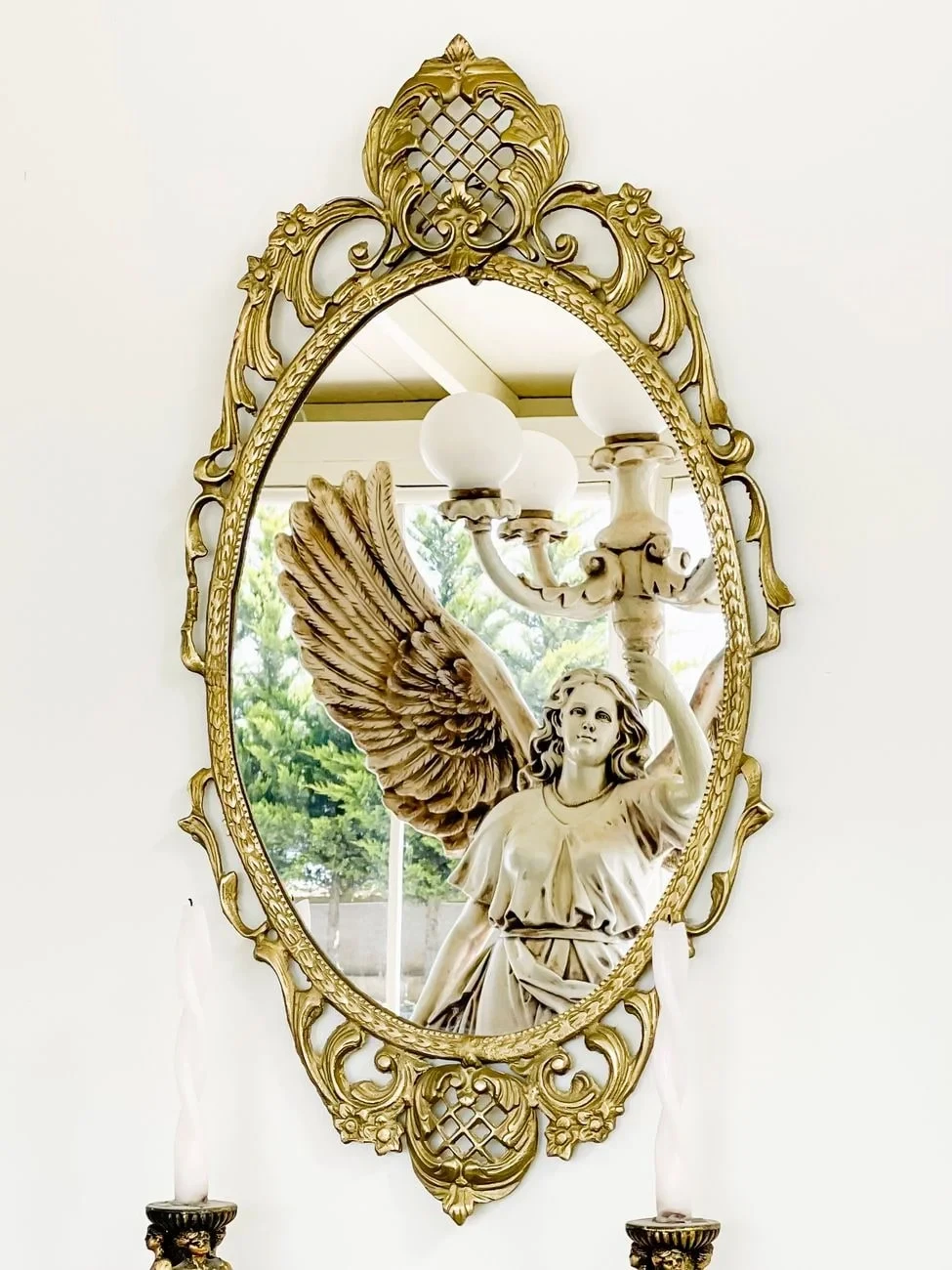
Gold frame and angel statue meet in reflection. The mirror doubles what we see, asking what the self becomes when watched by something ethereal.
Photograph by Ssümçiğ, via Pexels.
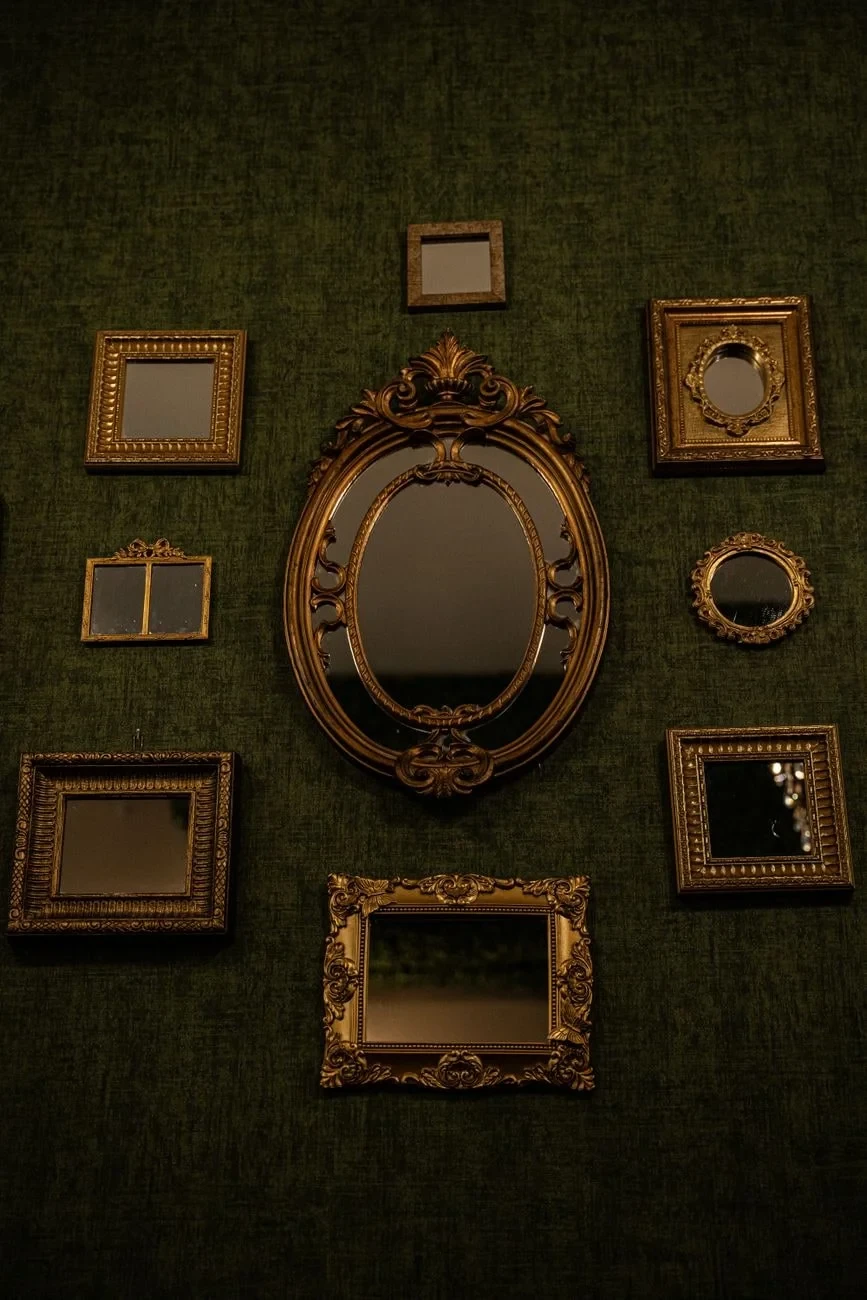
Multiple vintage mirrors crowd a green wall. Their abundance raises a question: does collecting reflective surfaces give us more self-knowledge, or just more reflections?
Photograph by apertur 2.8, via Pexels.
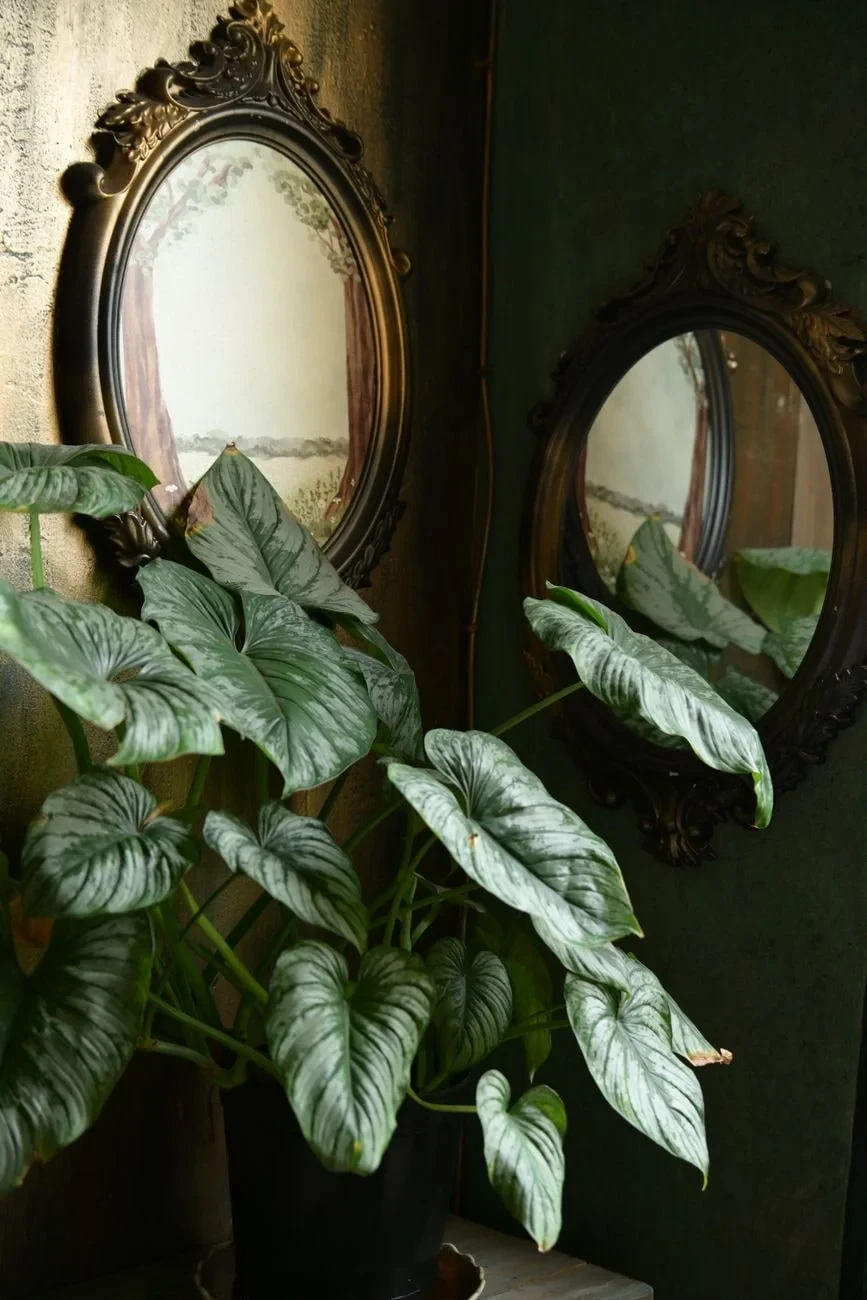
An indoor plant appears in vintage mirrors, multiplied across reflective surfaces. Each reflection reshapes how we perceive a living thing.
Photograph by Sóc Năng Động, via Pexels.
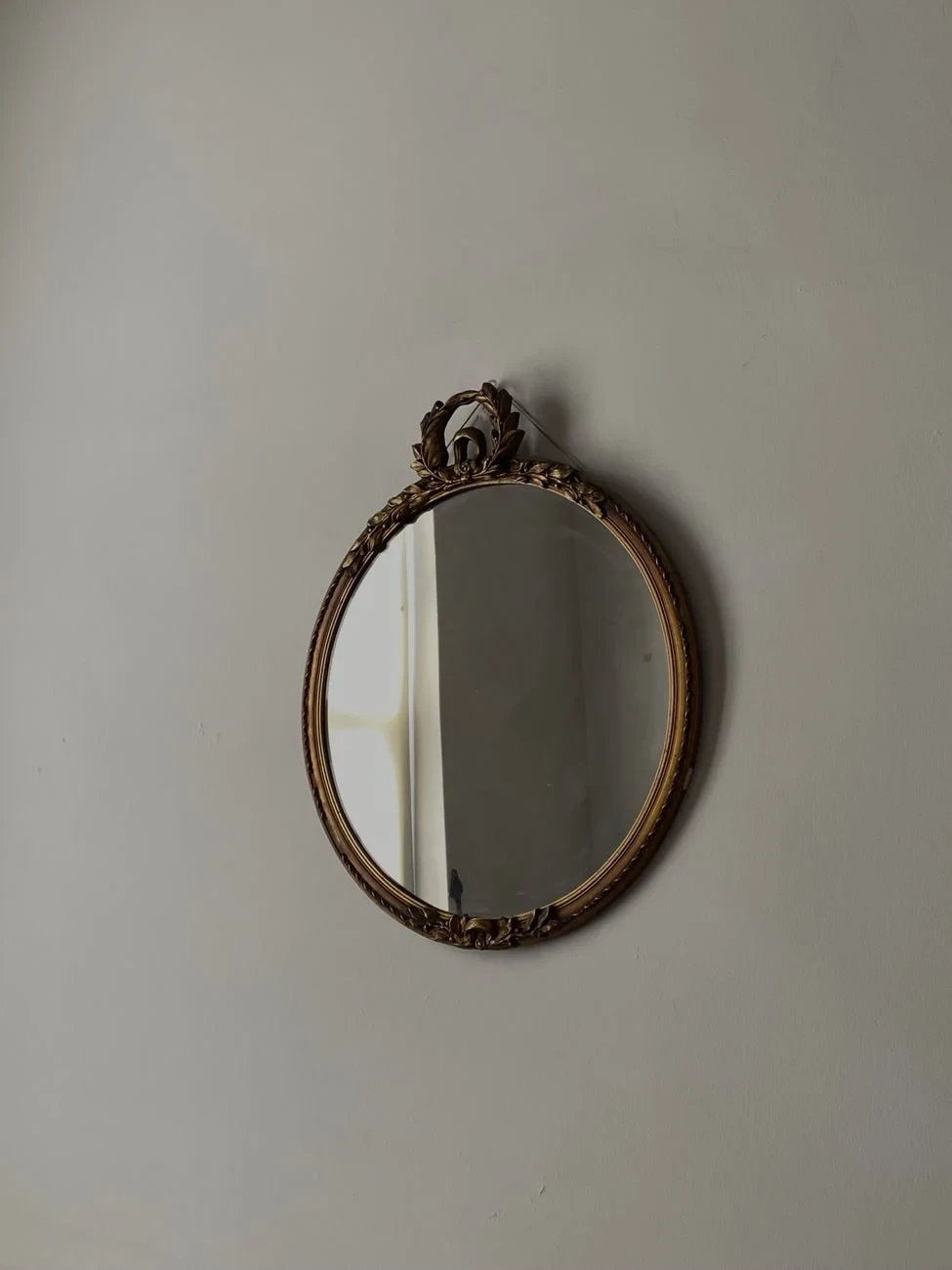
A round mirror catches light on a plain wall. The ornate frame suggests how mirrors transform even simple spaces into something precious.
Photograph by Tuğçe Arslan, via Pexels.
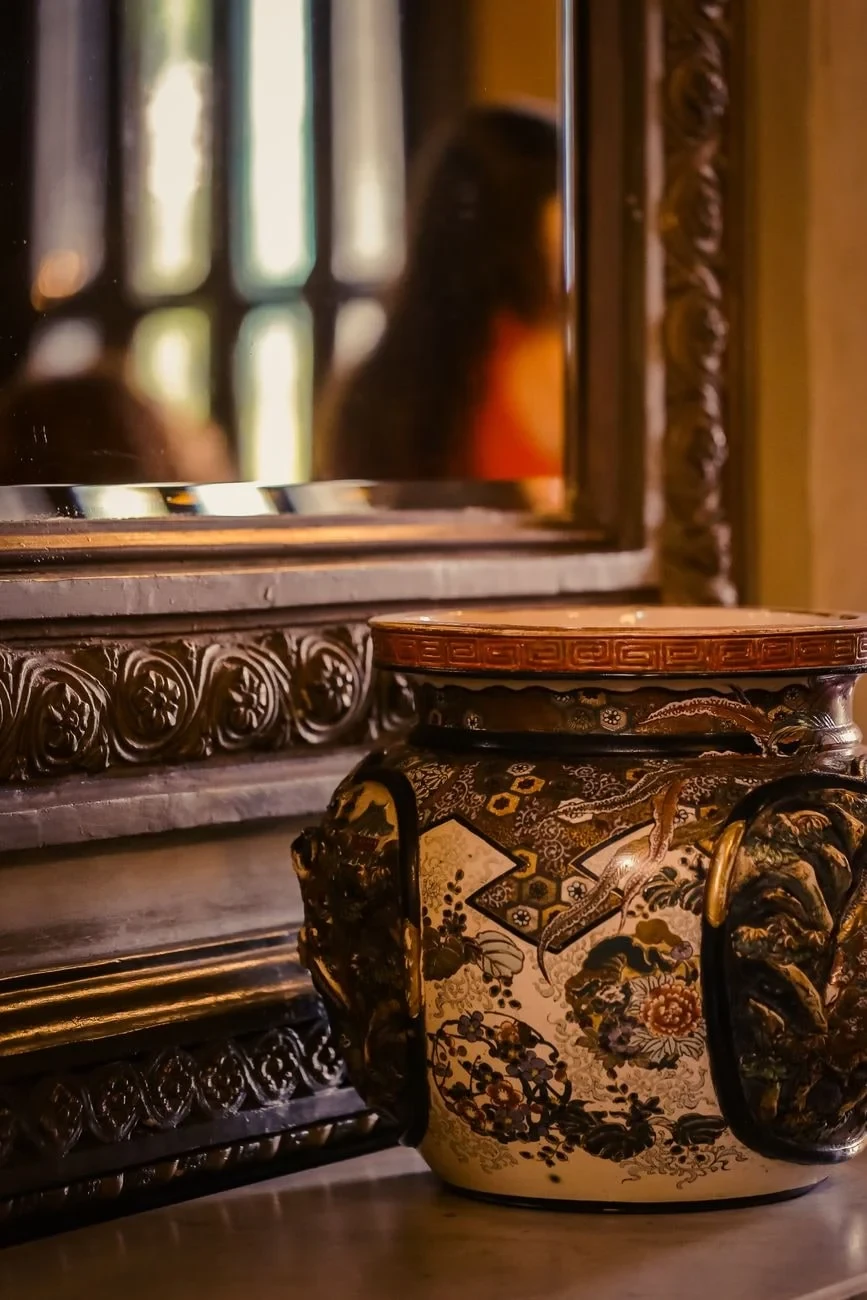
An ornate vase sits beside an ornate mirror. Two patterned objects facing each other raise questions about reflection and originality.
Photograph by Daniel Neves Cotta, via Pexels.
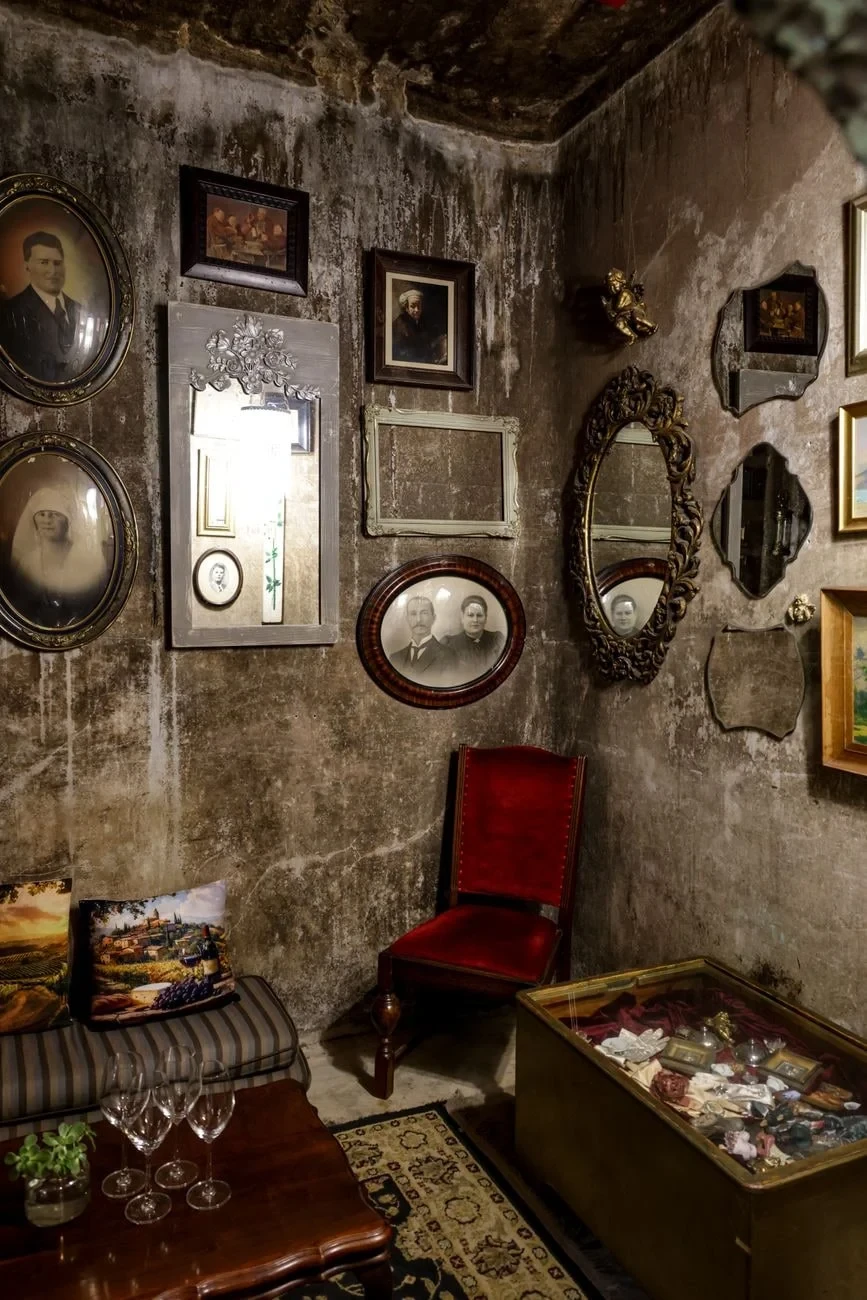
Mirrors and antique frames fill a vintage interior. Multiple reflecting surfaces exist together in one composed space.
Photograph by Magda Ehlers, via Pexels.
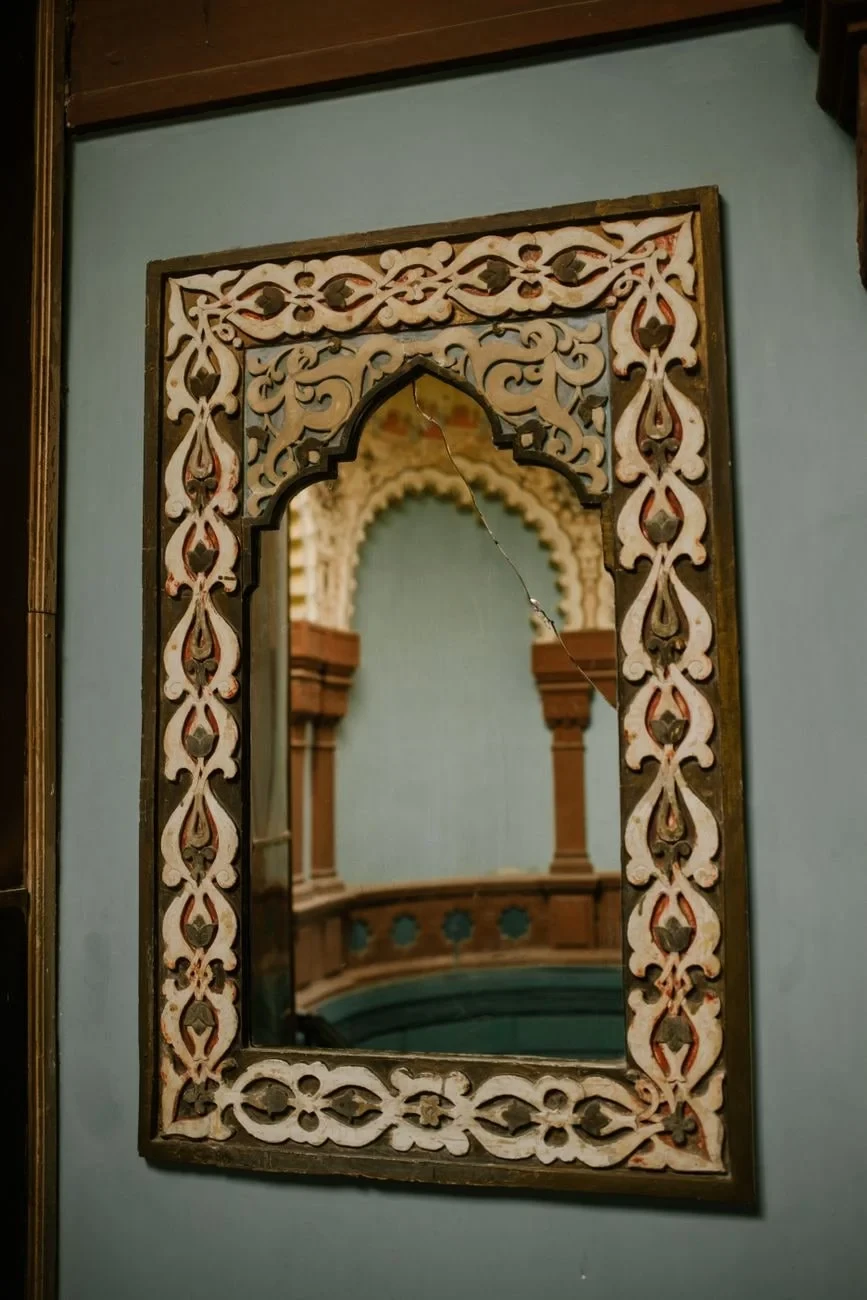
Wooden architectural elements appear in this mirror's reflection. The ornamental frame holds a glimpse of structure and time.
Photograph by Julia Volk, via Pexels.
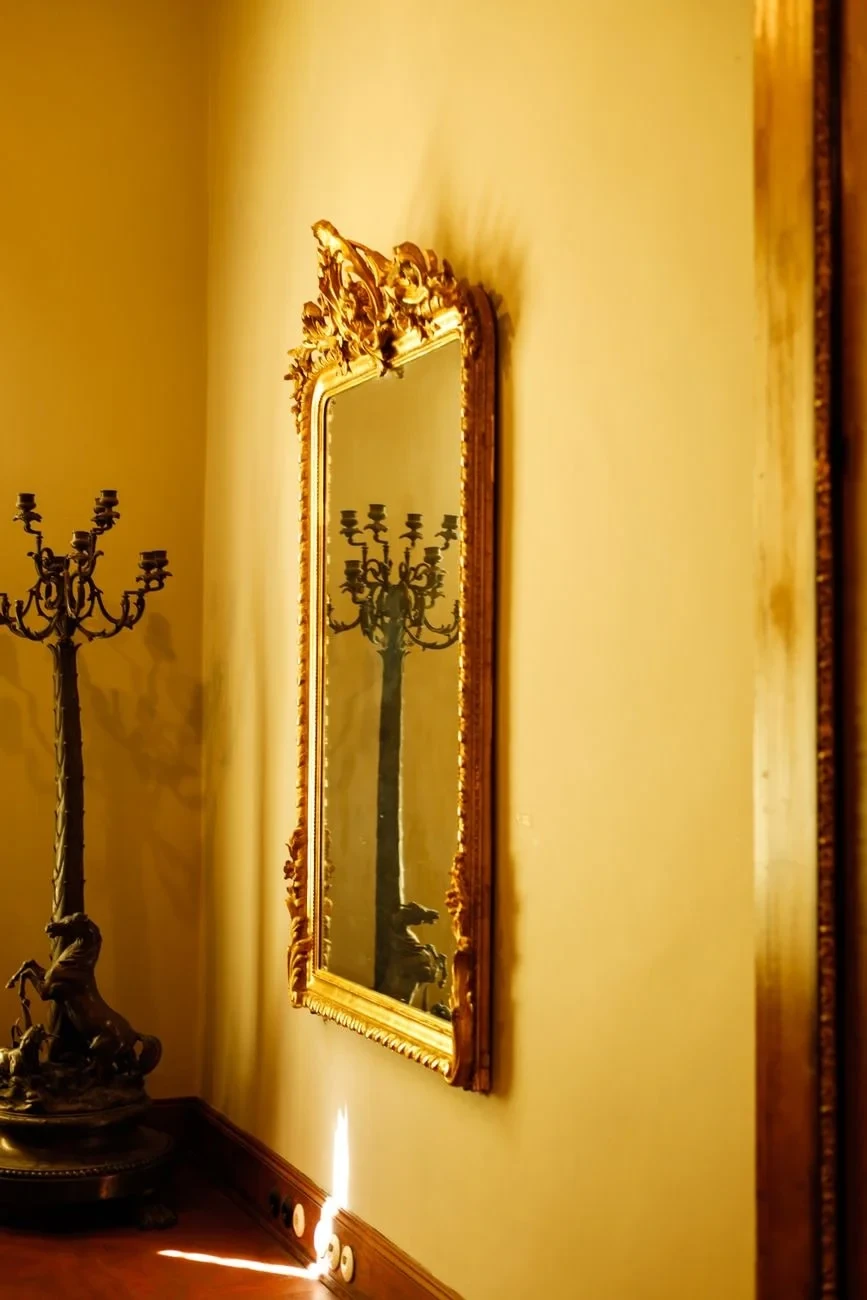
A candlestick glows within a gold-framed mirror. Reflection softens and repeats the light, changing what we see of ourselves in it.
Photograph by Esra Korkmaz, via Pexels.
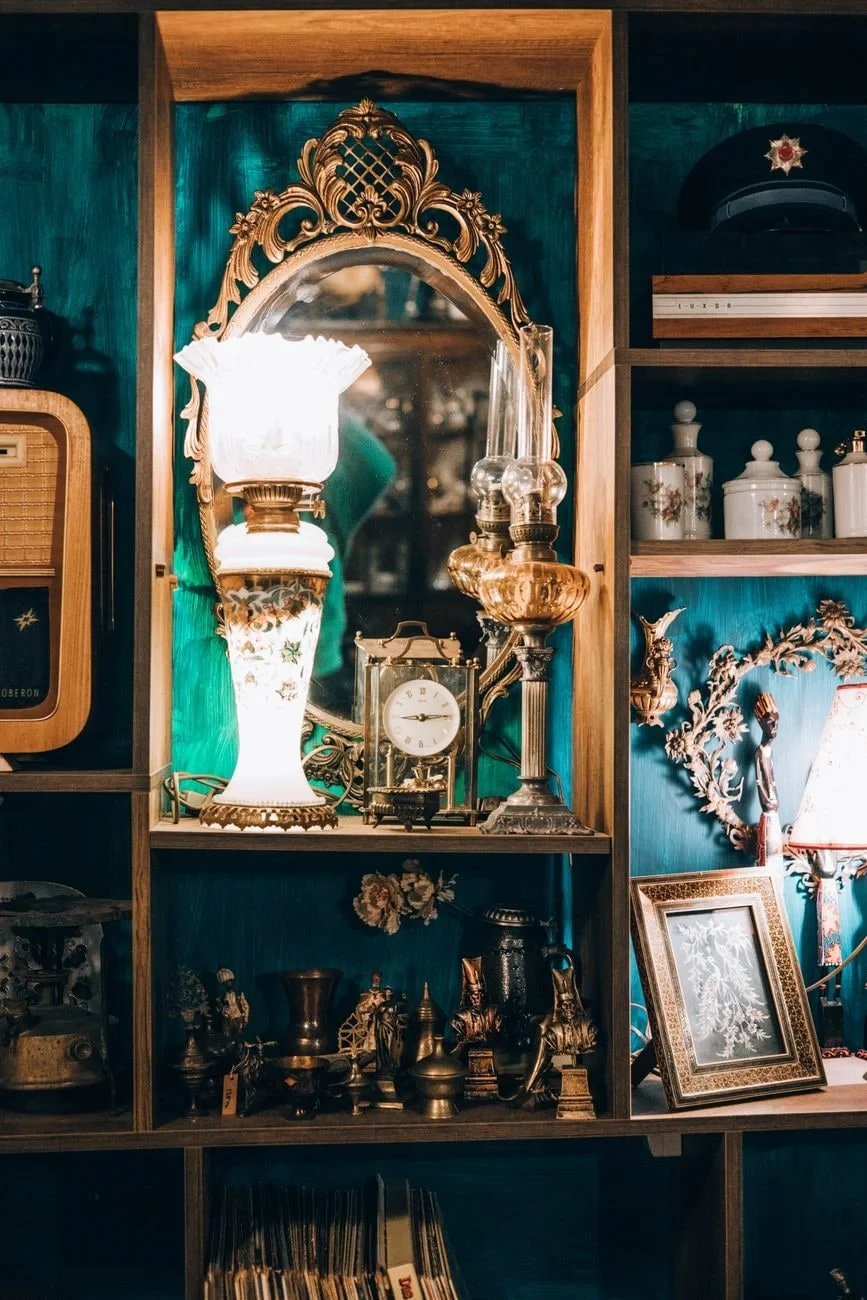
Clock, lamps, and shelves fill a vintage room. Multiple objects suggest how mirrors complicate our sense of time and space.
Photograph by Lokman Sevim, via Pexels.
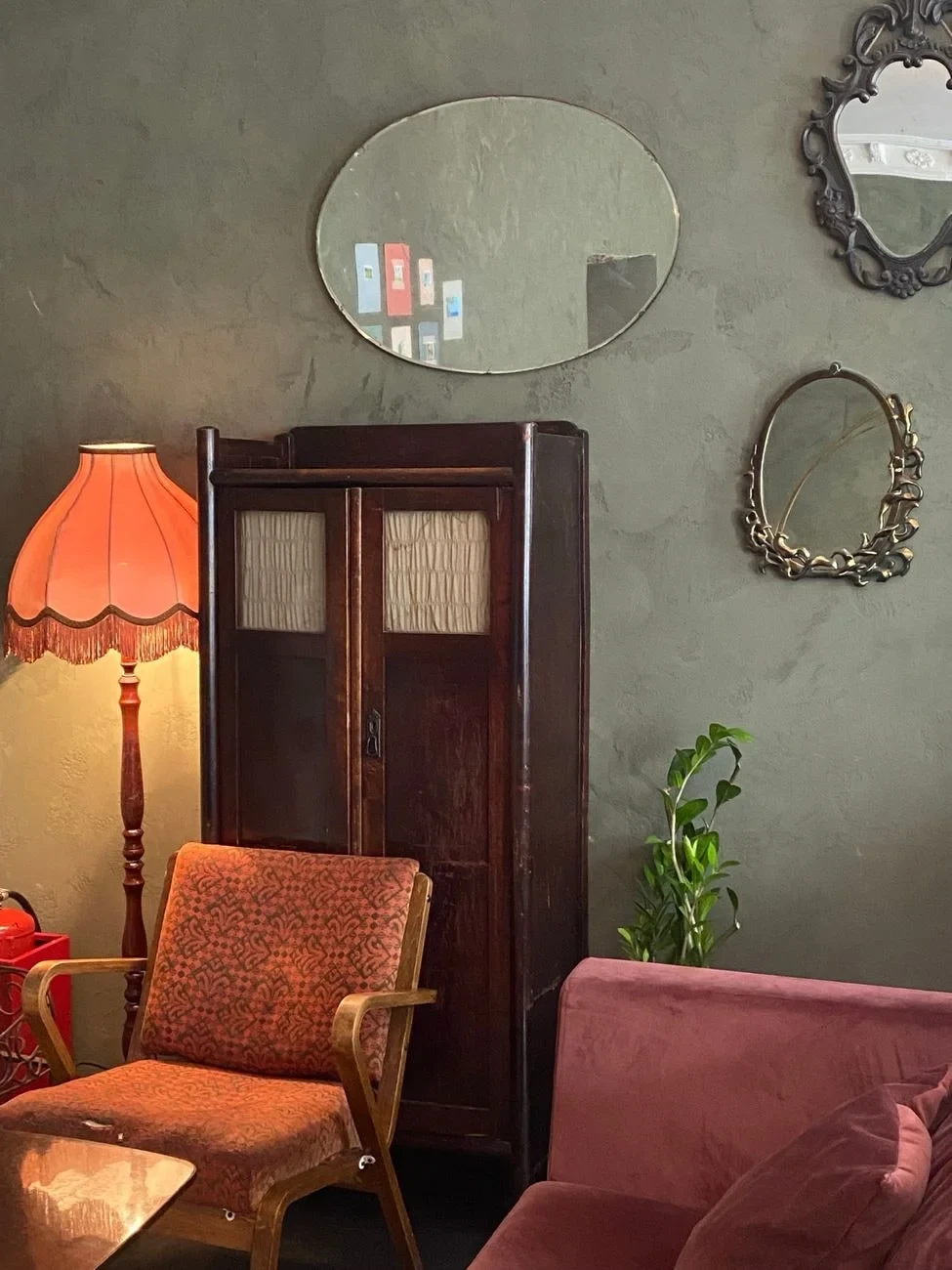
A vintage interior filled with furniture, ornate mirrors, and soft light. The space is designed to be witnessed and admired, suggesting home as a stage for the self.
Photograph by Bozhena, via Pexels.
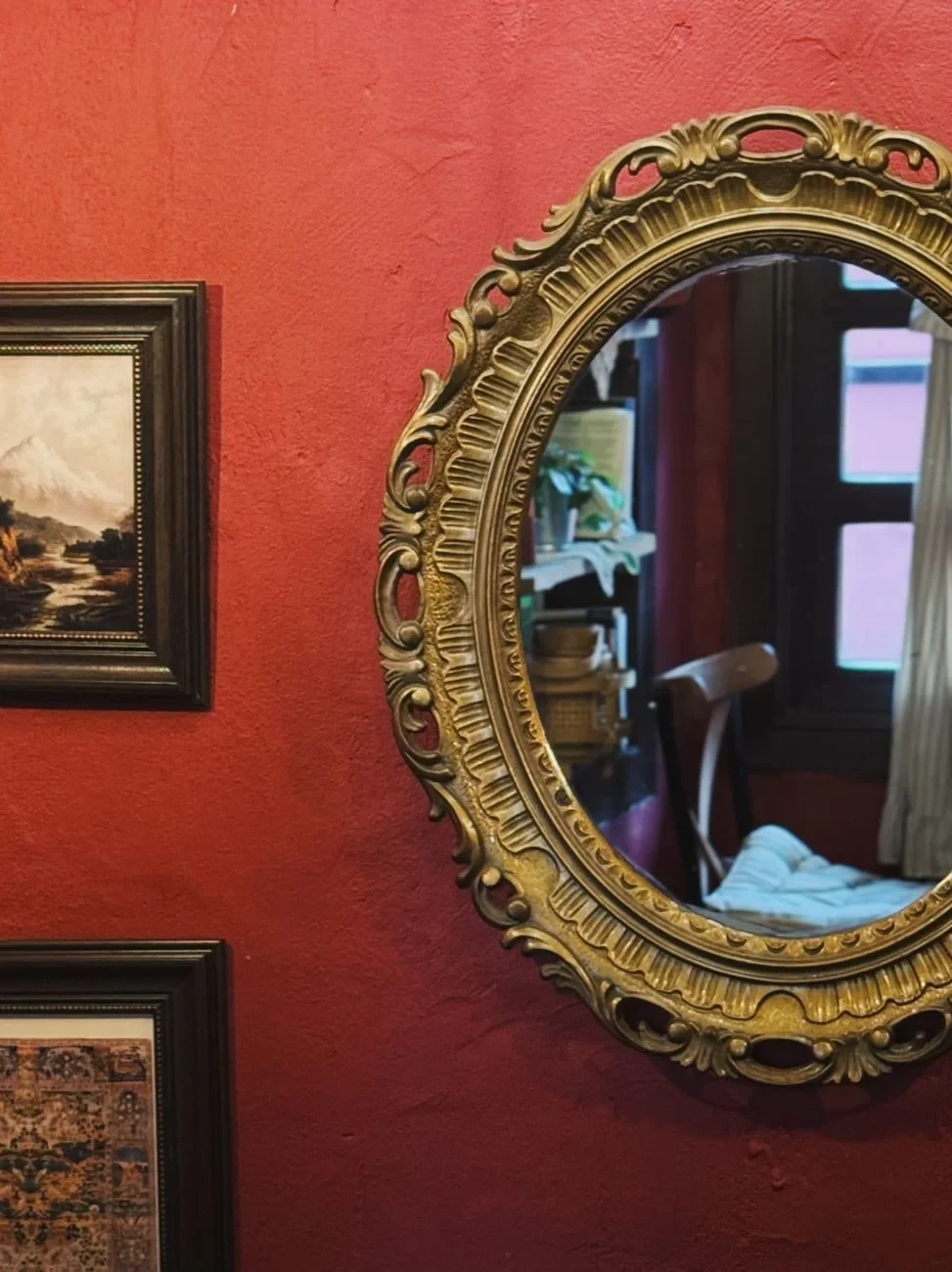
A mirror hangs among other framed objects on a red wall, reflecting the room around it. It claims space as both reflector and decoration.
Photograph by Fatma Gül, via Pexels.
