3D Gallery
Every Harbour Began as a Promise
Enter gallery
Every Harbour Began as a Promise is a 3D virtual gallery on MyGallery3D, a walkable online exhibition of 12 works. Step inside and explore it in your browser: no app, no headset.
Step into a 3D virtual gallery of harbours and walk the quays in your browser.
A harbour is simply water that has been made calm enough to trust. Where headlands and reefs do not do that work, people build it: the oldest known artificial harbour, at Wadi al-Jarf on the Red Sea coast, is at least 4500 years old. Calm water is expensive. At the tip of the breakwater at Punta Langosteira near La Coruña, Spain, the sea is held off by concrete cubes weighing up to 195 tonnes each.
Themistocles began fortifying Piraeus in 493 BC and moved the Athenian fleet there from Phaleron. Millennia later, with Greece struggling to finance its debt, COSCO bought 51% of the Piraeus Port Authority in 2016 for 280.5 million euros, and held 67% of the shares by 2021. A dockworker, Constantinos Tsourakis, called it a giveaway of property belonging to the Greek people.
Calm water behind a breakwater lets sediment settle. Build enough of it and a tombolo forms, choking the longshore drift that used to feed the coast further along. Beaches down-drift starve and erode, which calls for more engineering, which starves the next stretch. The flattened seabed also warms and takes more UV, and species abundance and diversity fall.
A breakwater absorbs wave energy by mass or by slope. Rubble mound designs pile sorted stone, small in the core, large as armour, and let structural voids swallow the waves. Caissons do it with sheer weight, and in deeper water they save money over rock. The Rock Manual caps standard rock armour at 10 to 15 tonnes; beyond that, the rock itself fractures.
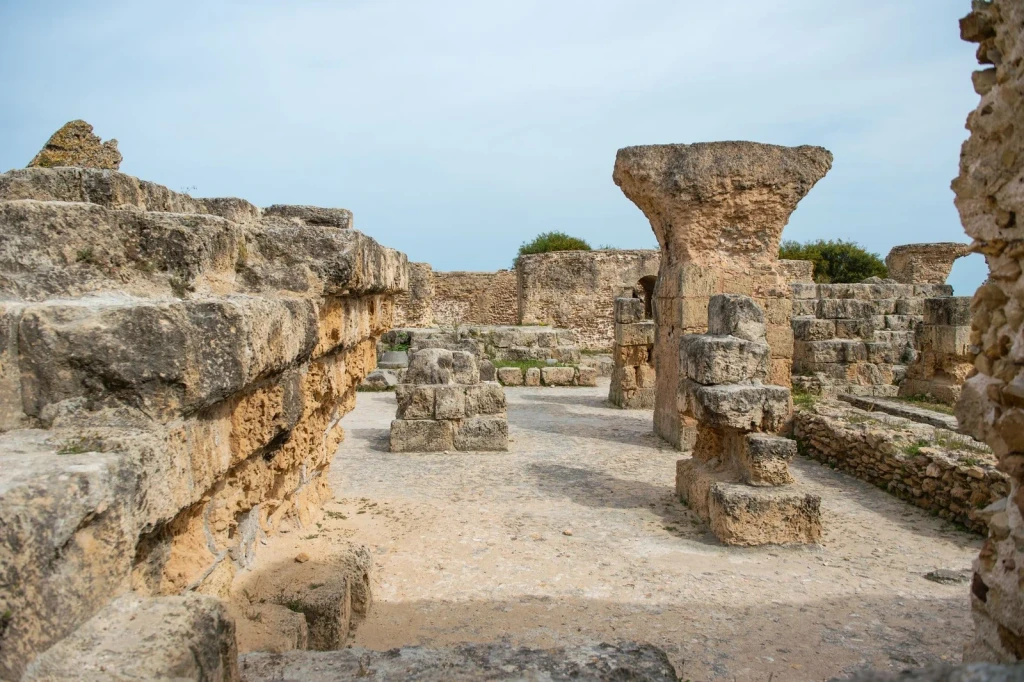
Ruined stones stand against clear sky. What remains speaks as much as what is gone. A harbour begins when someone believes in building.
Photograph by Son Tung Tran, via Pexels.
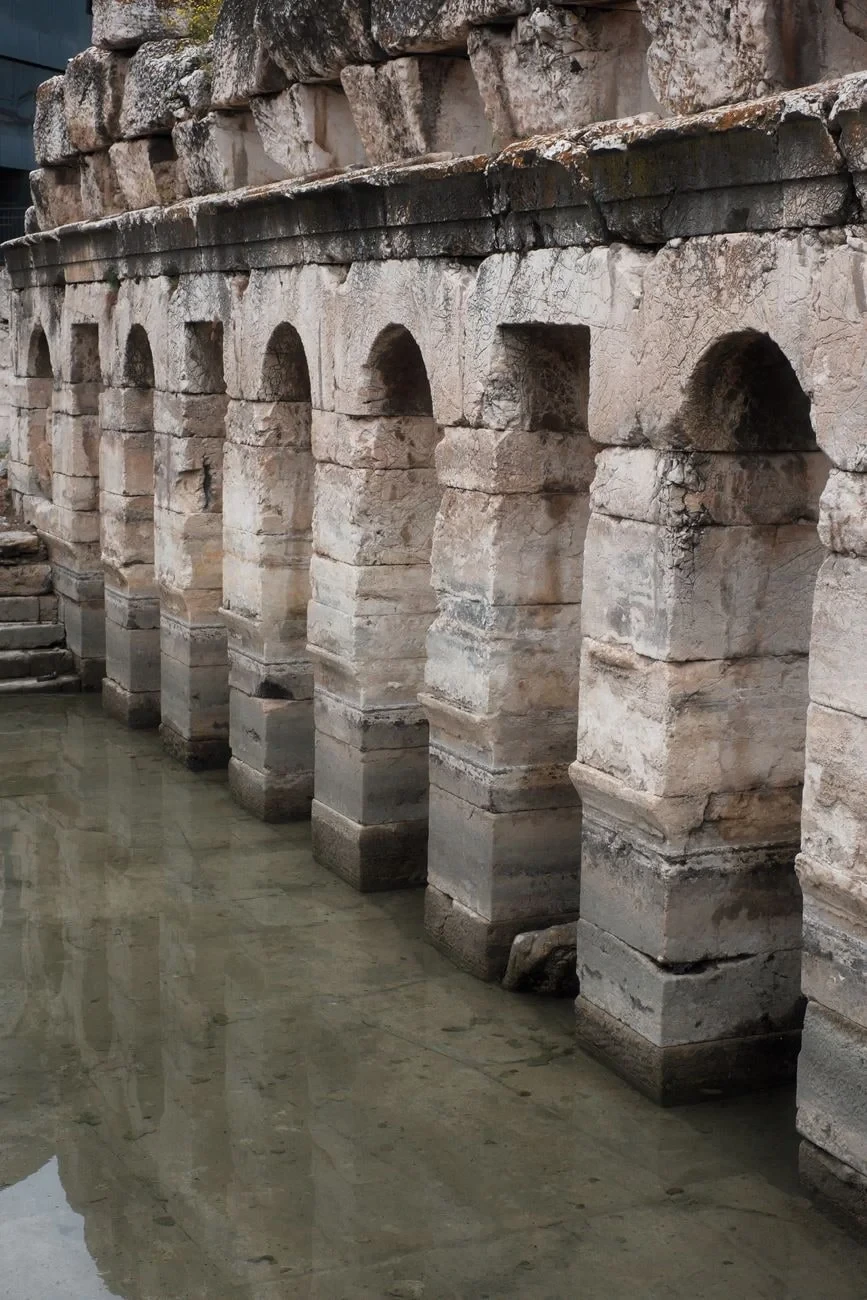
Arches meet their own image in still water. Architecture preserved, mirrored, doubled. A promise that what we build endures, at least in reflection.
Photograph by Rüveyda Akkaya, via Pexels.
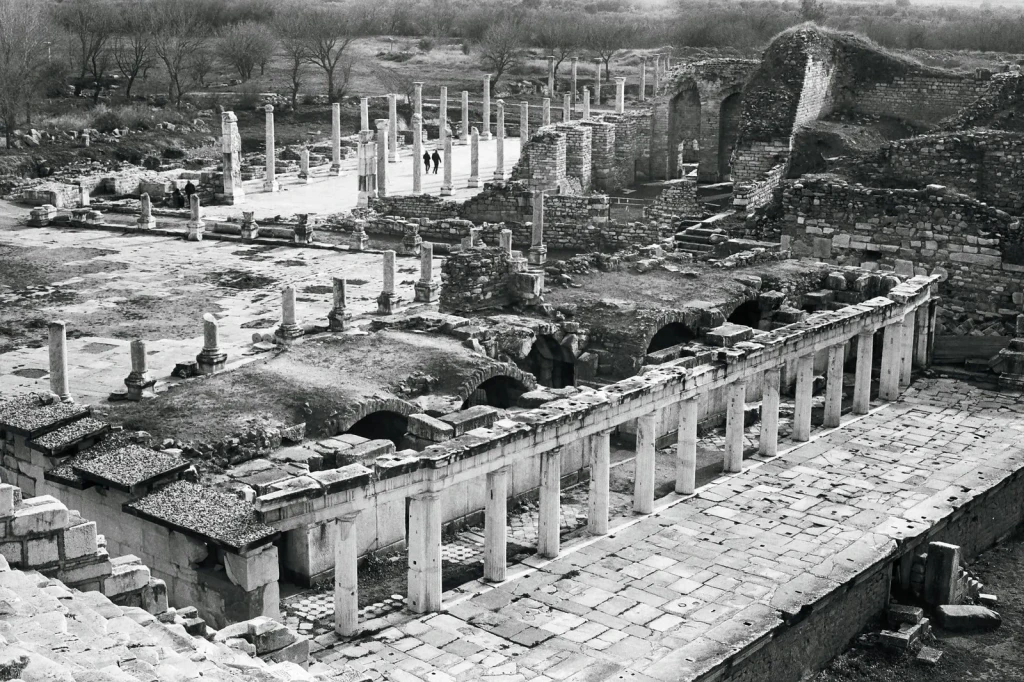
Ancient architecture rendered in black and white. History stripped to its essentials. What survives the centuries becomes pure form.
Photograph by umut erdem, via Pexels.
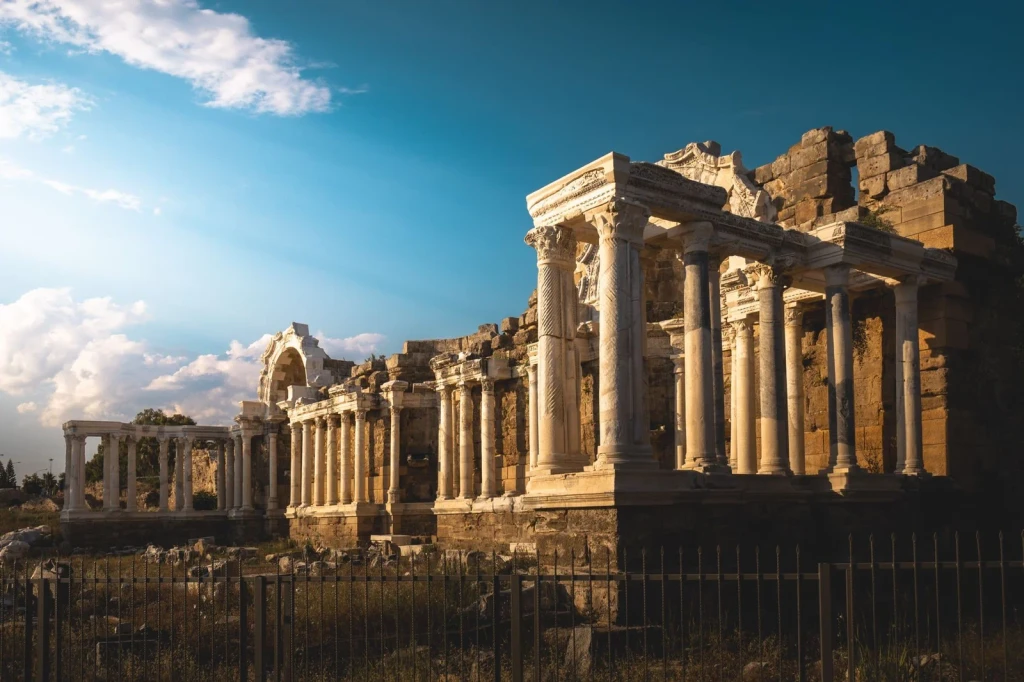
Light catches weathered columns at day's end. Classical forms hold the dying sun. A moment when ruin becomes beautiful.
Photograph by Melih Özmen, via Pexels.
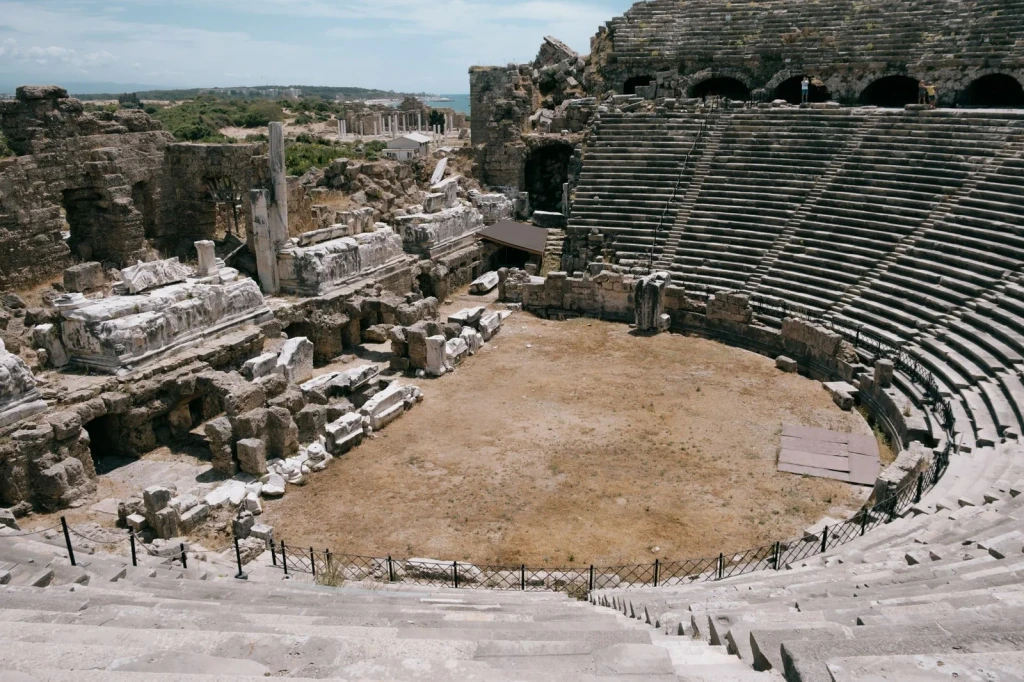
An ancient gathering place, now silent ruins. Voices once filled this space. Now only the architecture speaks.
Photograph by Ata Ebem, via Pexels.
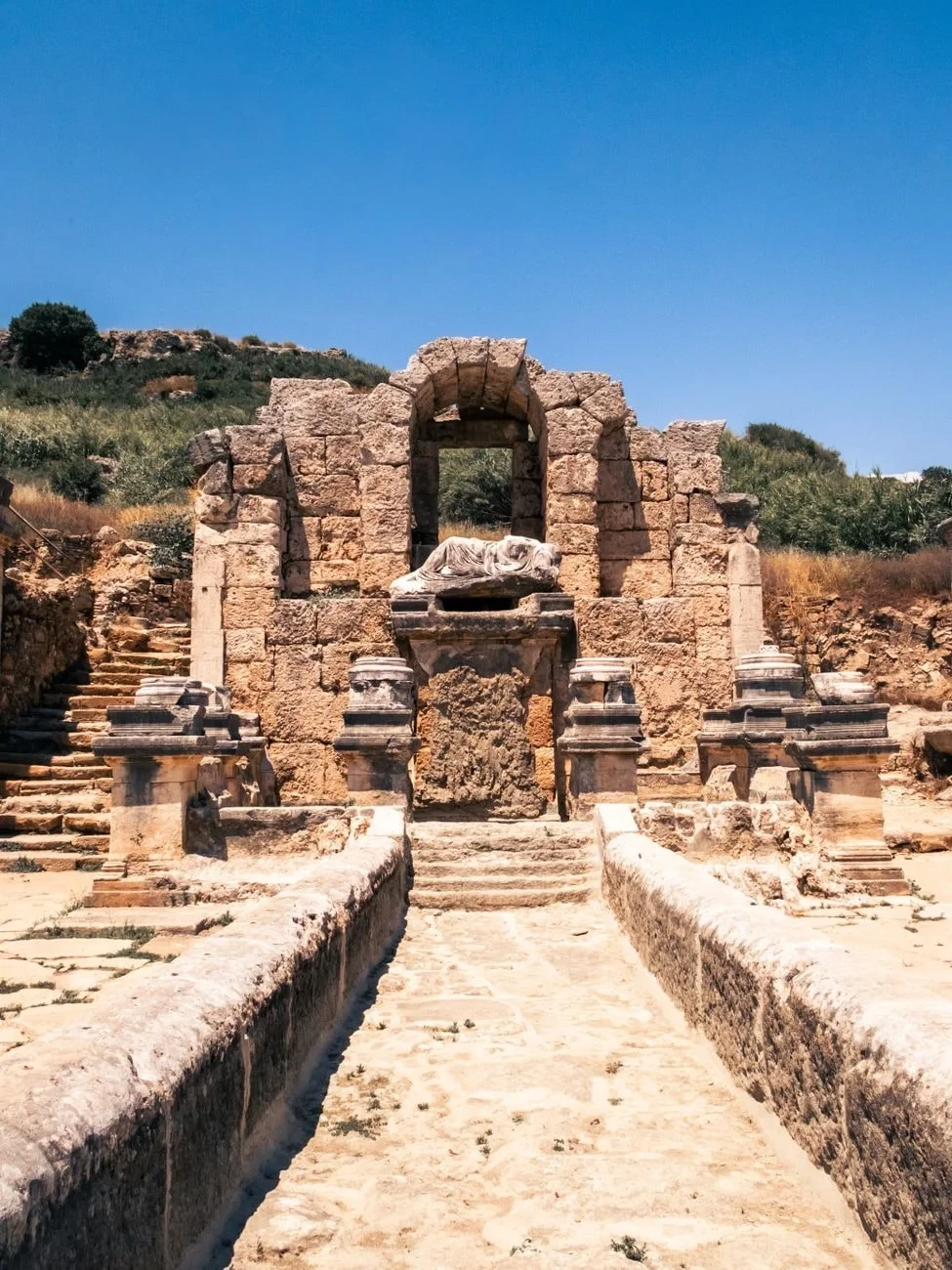
Well-preserved ancient Roman structures stand bright beneath clear sky. What once promised to shelter generations now rests in silence.
Photograph by Ayşegül Aytören, via Pexels.
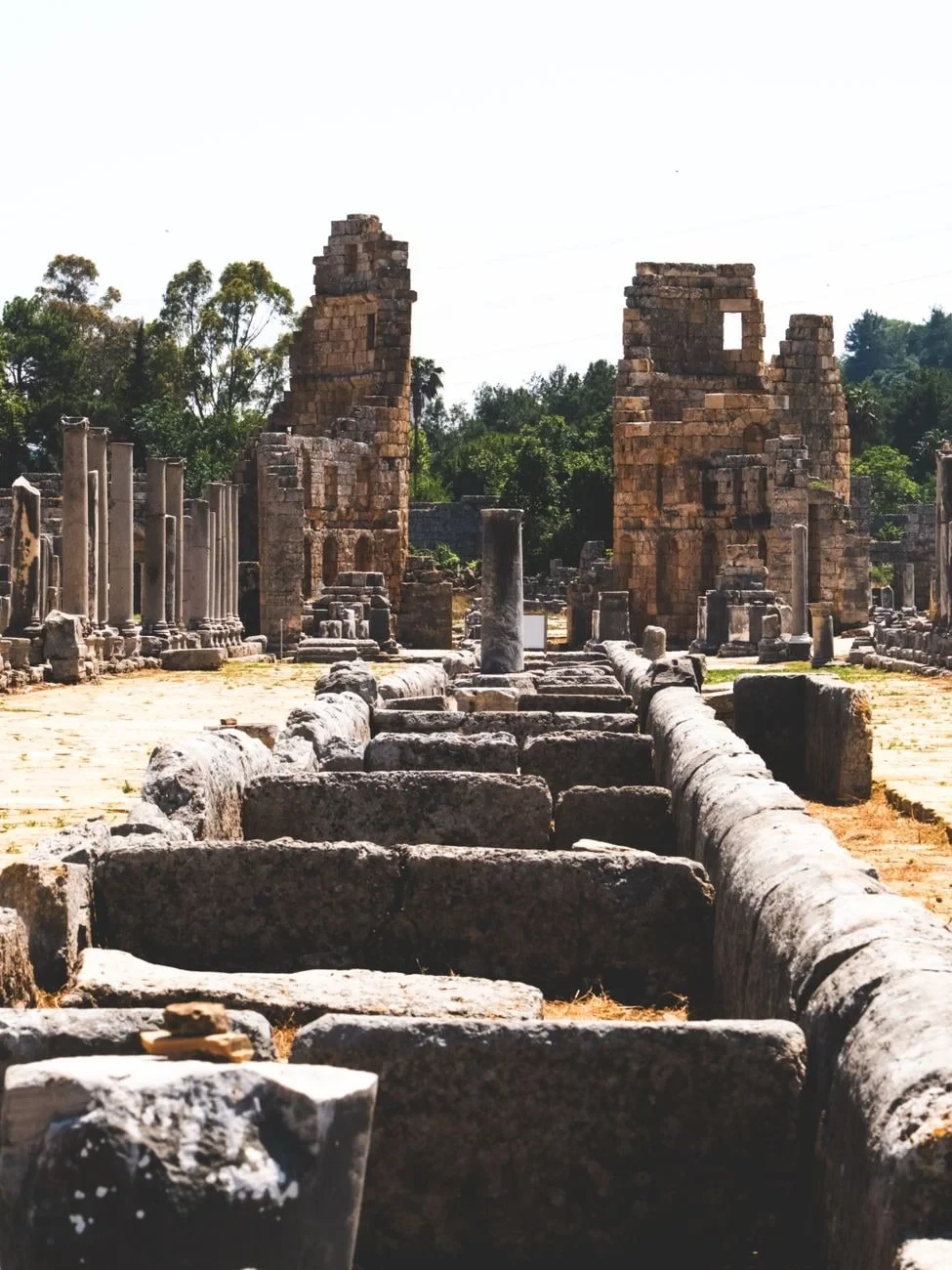
Towering structures persist in their historical setting. Stone records what stone alone remembers. A record without words.
Photograph by Ayşegül Aytören, via Pexels.
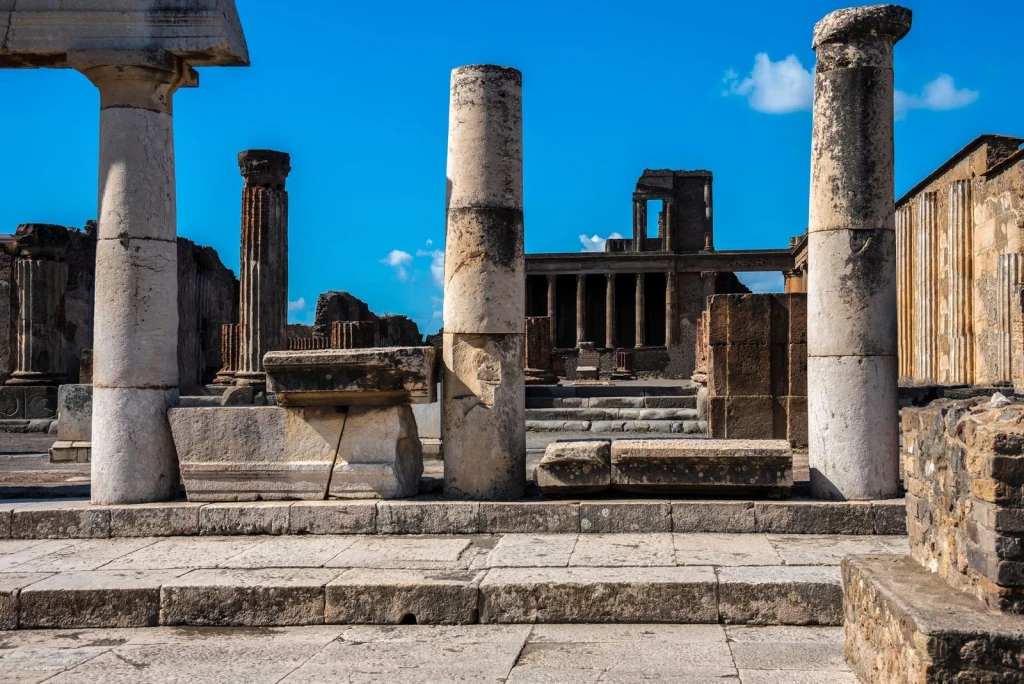
Classic columns stand among the ruins of an ancient site. Structures that once promised permanence, now weathered by centuries.
Photograph by Russ Stoneback, via Pexels.
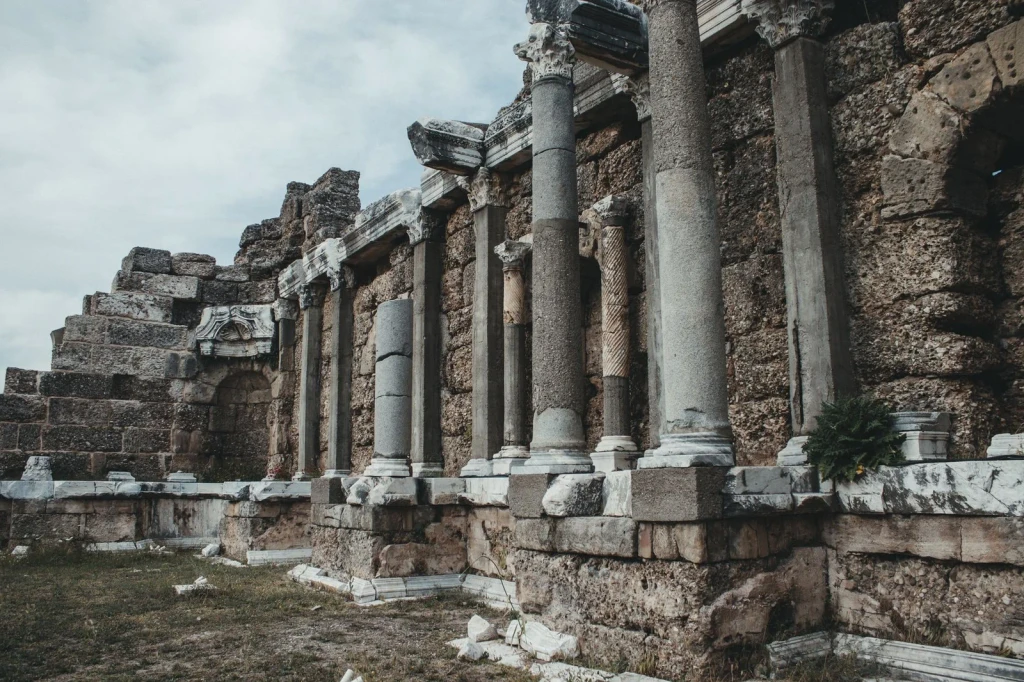
Majestic ancient ruins with impressive columns and intricate carvings. A vision of architectural ambition, now fractured by time.
Photograph by İdil Ceren Çelikler, via Pexels.
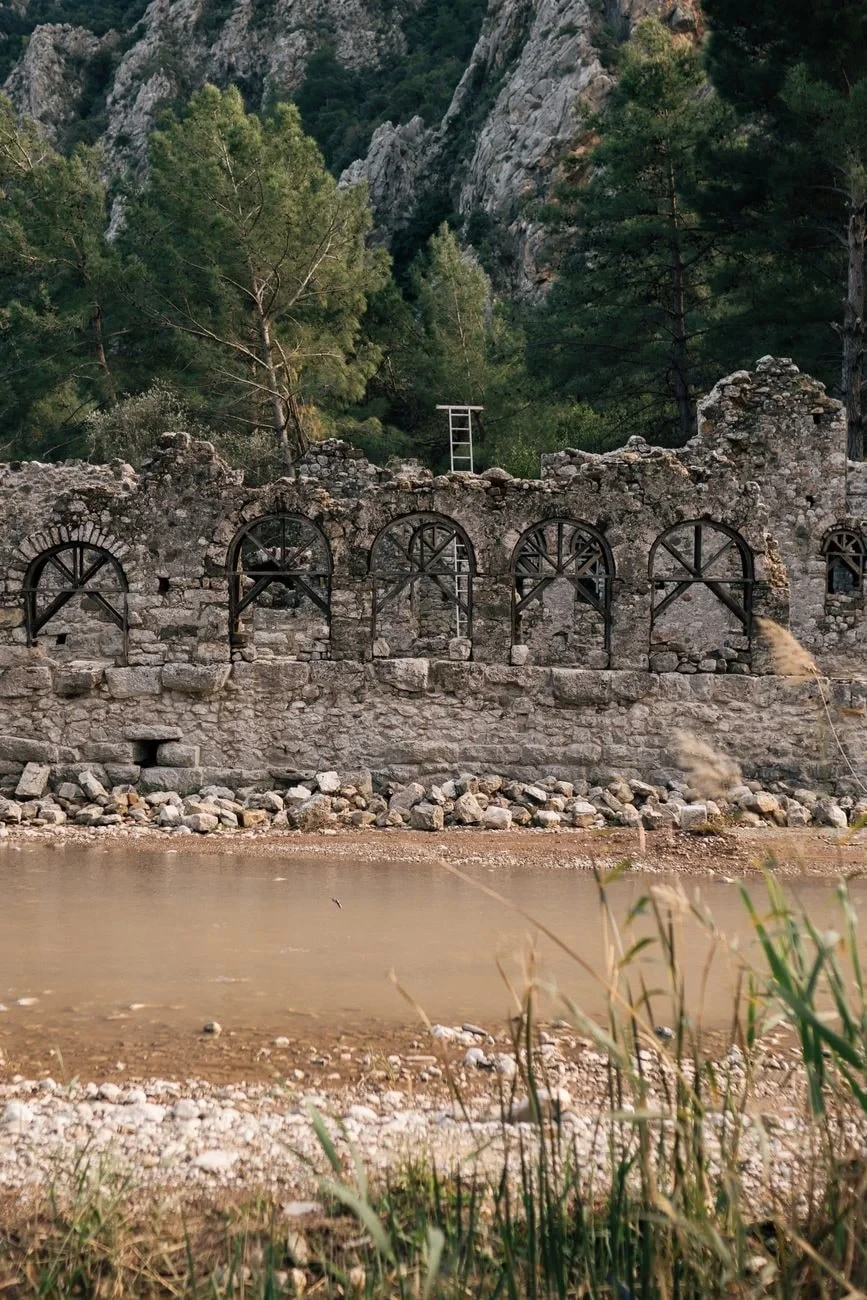
Historical architecture emerges from lush forest and riverside. Nature reclaims the spaces where human promises were once inscribed.
Photograph by Faruk Tokluoğlu, via Pexels.
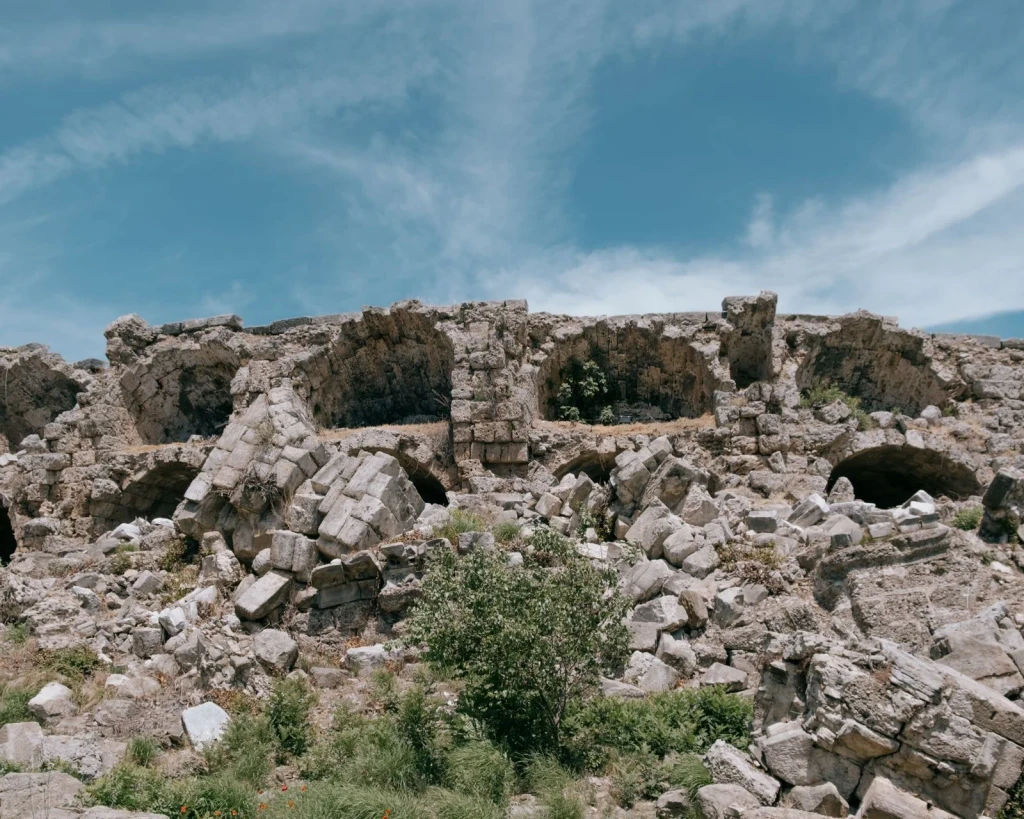
Ancient ruins set against dramatic natural rock formations. Built promises nestled within the enduring landscape.
Photograph by Ata Ebem, via Pexels.
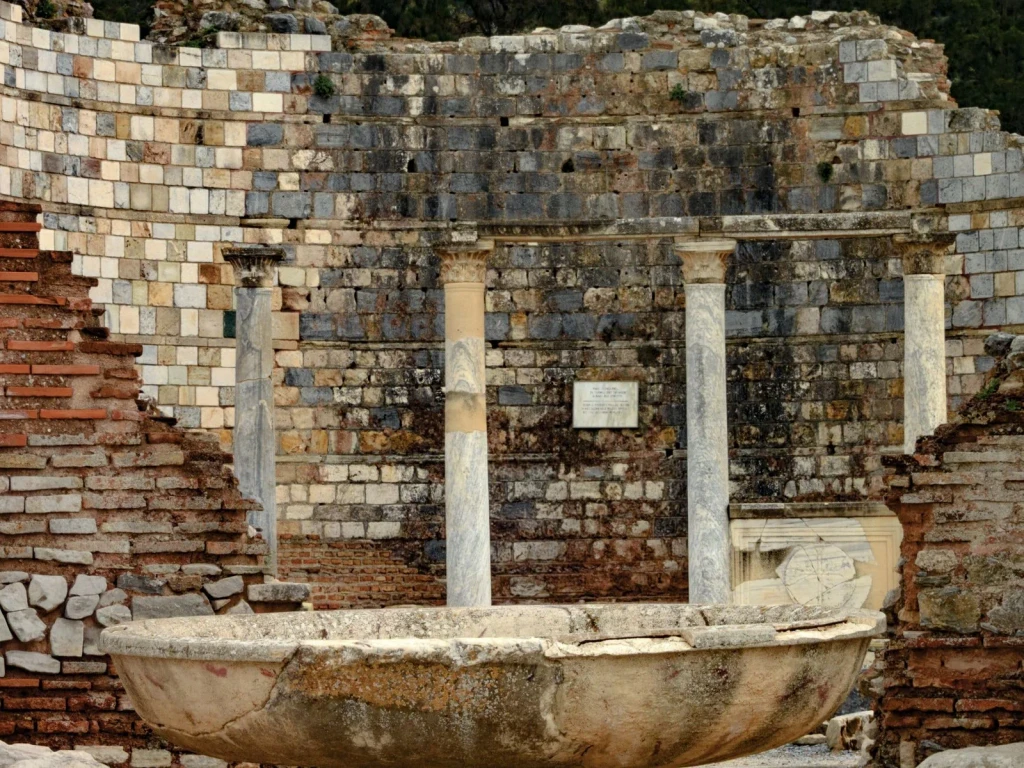
Well-preserved stone columns frame the remnants of a historical structure. Evidence of human aspiration built to last.
Photograph by Selim Fetvacıoğlu, via Pexels.
