3D Gallery
What Holds a Cloud Up?
Enter gallery
What Holds a Cloud Up? is a 3D virtual gallery on MyGallery3D, a walkable online exhibition of 15 works. Step inside and explore it in your browser: no app, no headset.
Walk through this 3D virtual museum of clouds in your browser and ask the obvious question: what holds all that water up?
Nothing does. Water vapor rises, cools to its dew point and condenses, but it needs something to condense onto: cloud condensation nuclei, specks of salt or dust small enough that ordinary air circulation keeps them aloft. Every drop in the sky is built around a piece of dirt. The result is not decoration. Clouds both reflect sunlight and trap heat, and they remain the main uncertainty in climate sensitivity.
In 1802 Luke Howard, a methodical observer in England with a strong grounding in Latin, gave the sky its names. Jean-Baptiste Lamarck proposed a rival scheme in France that same year, in informal French, with 12 categories including hazy clouds and broom-like clouds. Nobody used it. Howard's Latin was published in 1803 and caught on quickly. Goethe wrote him four poems.
A cumulonimbus can begin as low as 200 m and then climb. Normal peaks reach 12,000 m, and the tallest top out around 20,000 m, where the flat anvil spreads against the tropopause. The average thunderstorm is 24 km across. Most storm cells die after about 20 minutes, when their own precipitation turns the updraft into a downdraft.
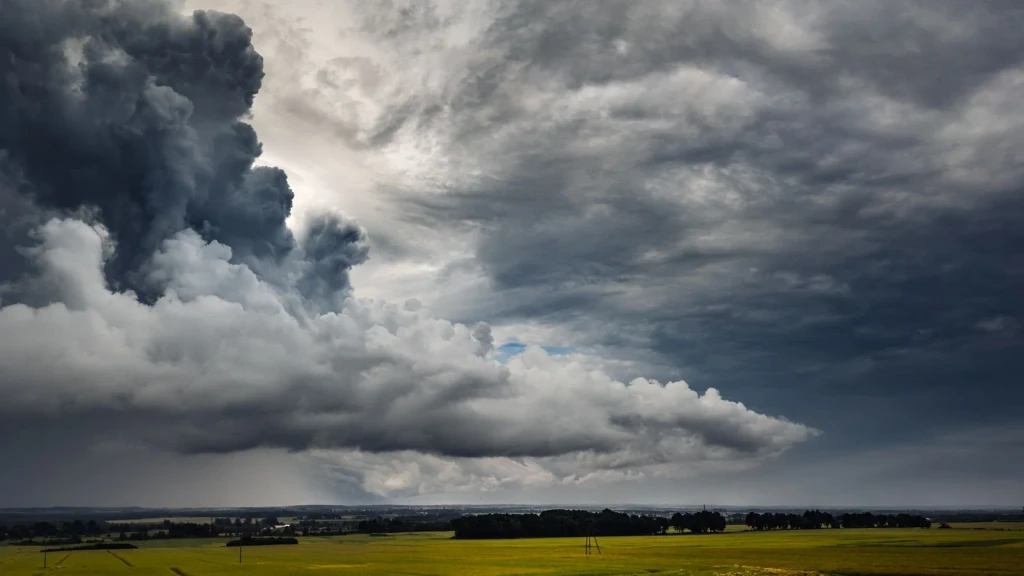
Dark clouds gather above an open landscape. The image captures the tension between ground and sky, asking what invisible forces hold such weight aloft.
Photograph by Marek Piwnicki, via Pexels.
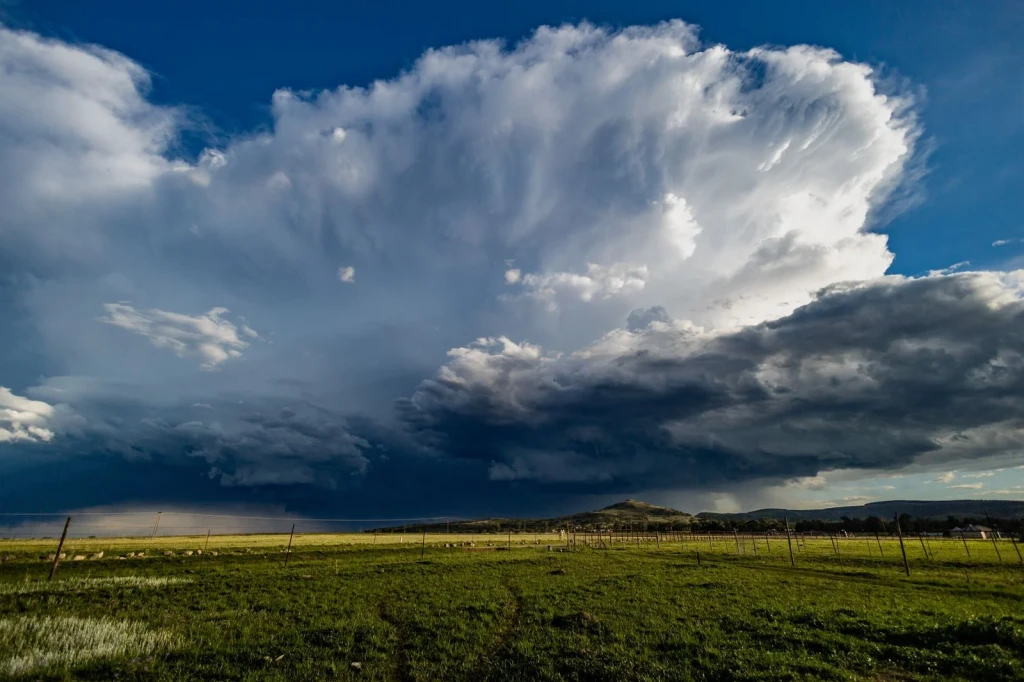
A vast cumulonimbus rises above a green field. The scale of the cloud against the landscape below makes us wonder: what holds it there?
Photograph by Ndumiso Mvelase, via Pexels.
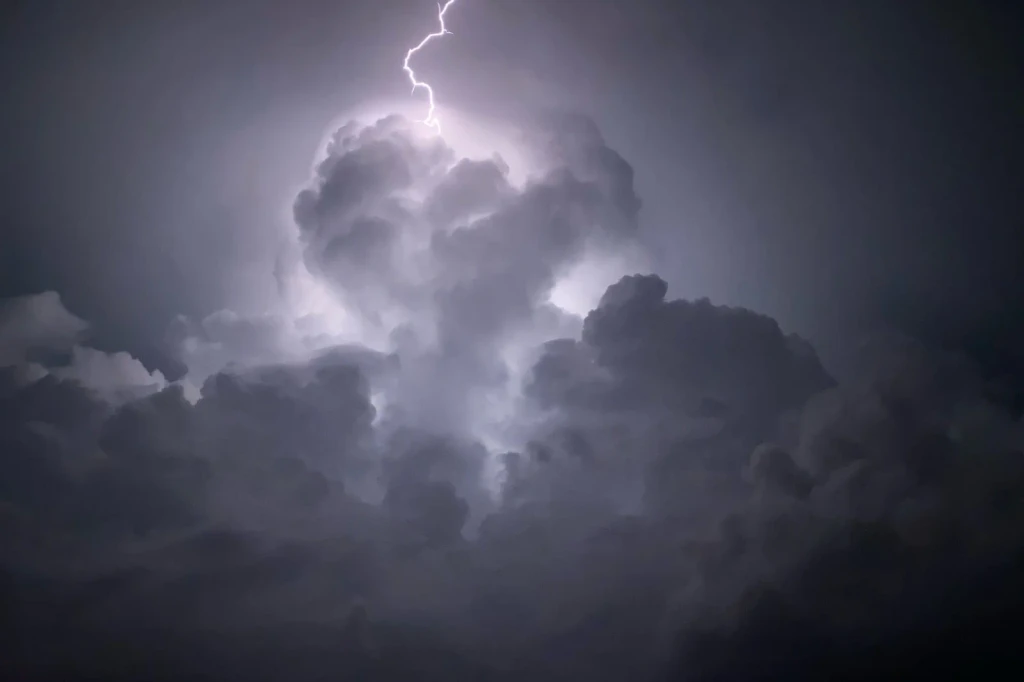
A lightning strike cuts through dark clouds, illuminating the invisible forces at work in the atmosphere. Raw electrical energy made visible.
Photograph by Nathan Evans, via Pexels.
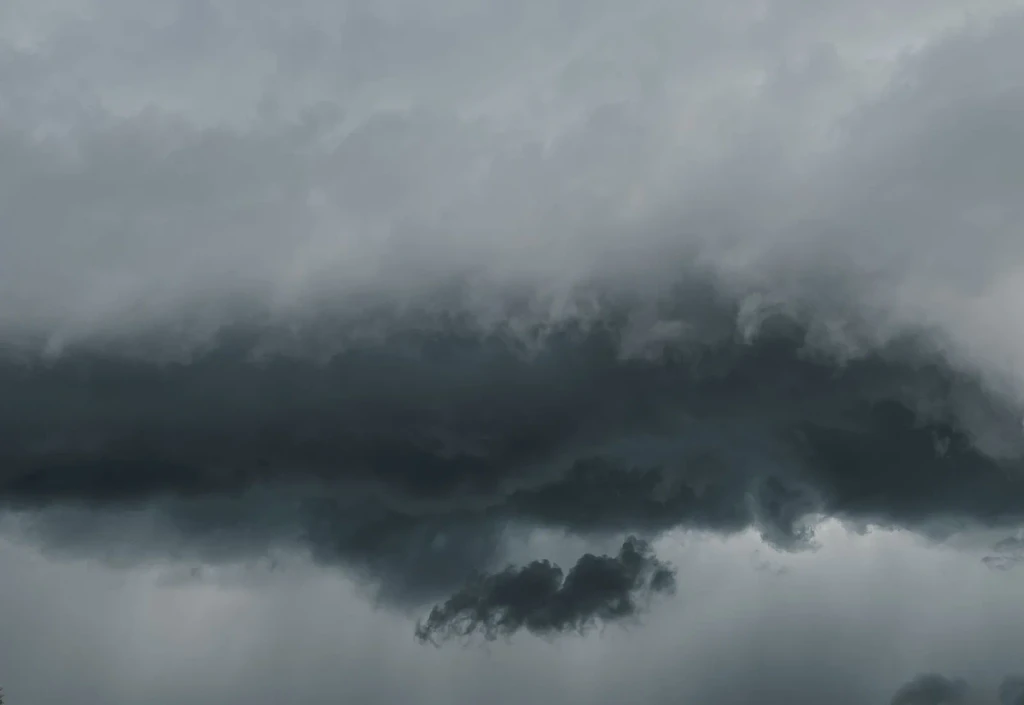
Storm clouds mass together in formation, their edges sharp and turbulent. A visible manifestation of atmospheric pressure and movement.
Photograph by Elina Volkova, via Pexels.
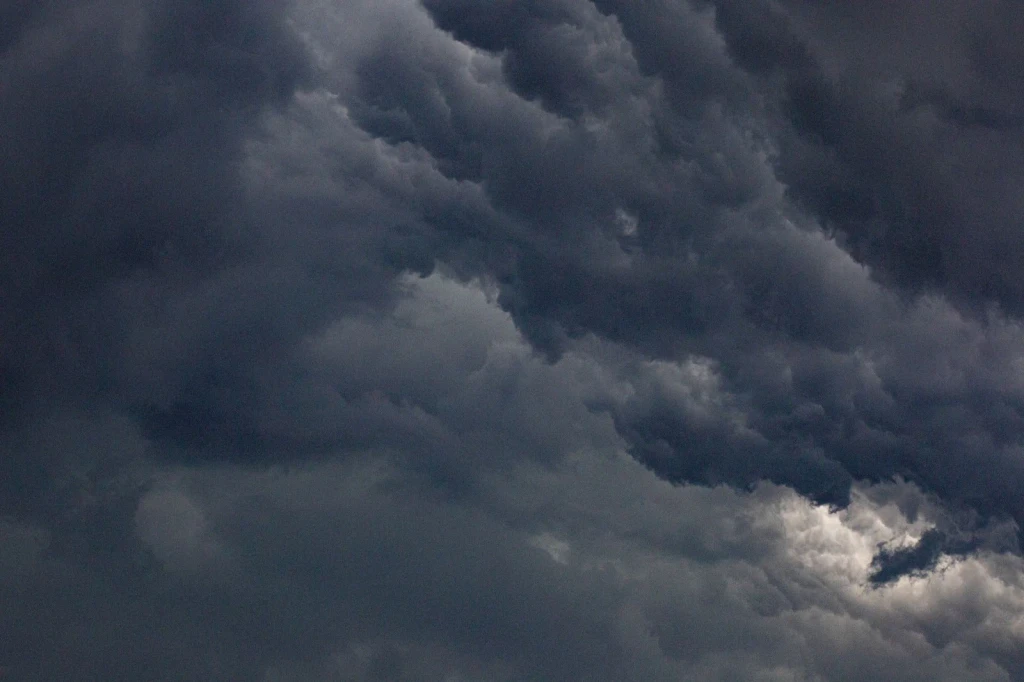
Heavy clouds dominate a moody sky. The density visible here prompts us to consider what keeps something so substantial from simply falling.
Photograph by Lucas Pezeta, via Pexels.
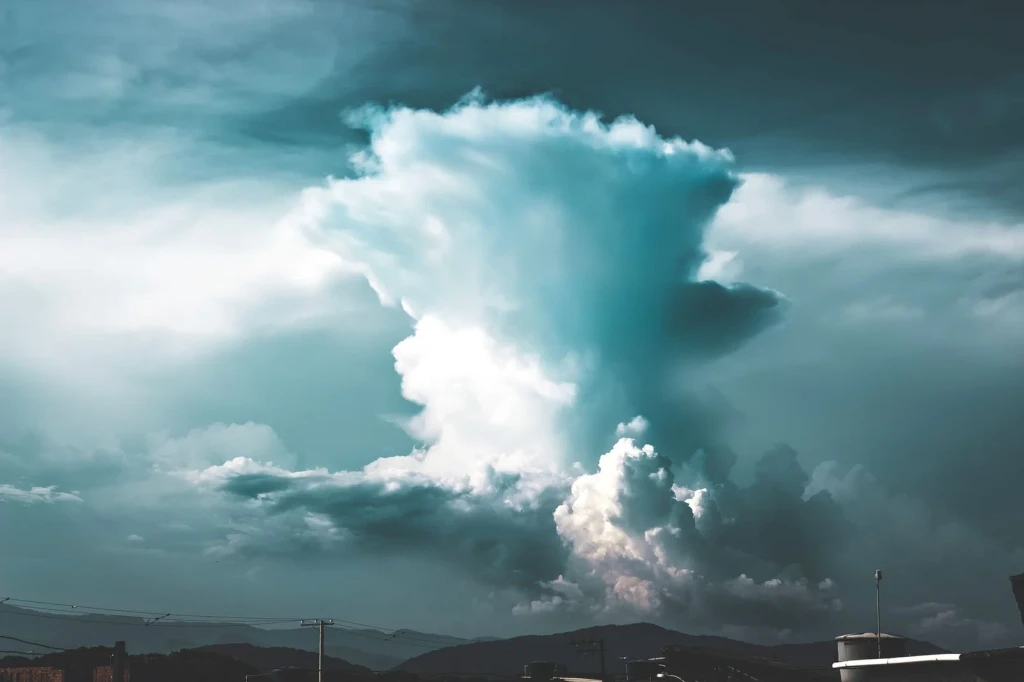
A towering cloud formation rises against the sunset, its scale commanding the entire sky. Architecture built from water vapor and air.
Photograph by Anderson Martins, via Pexels.
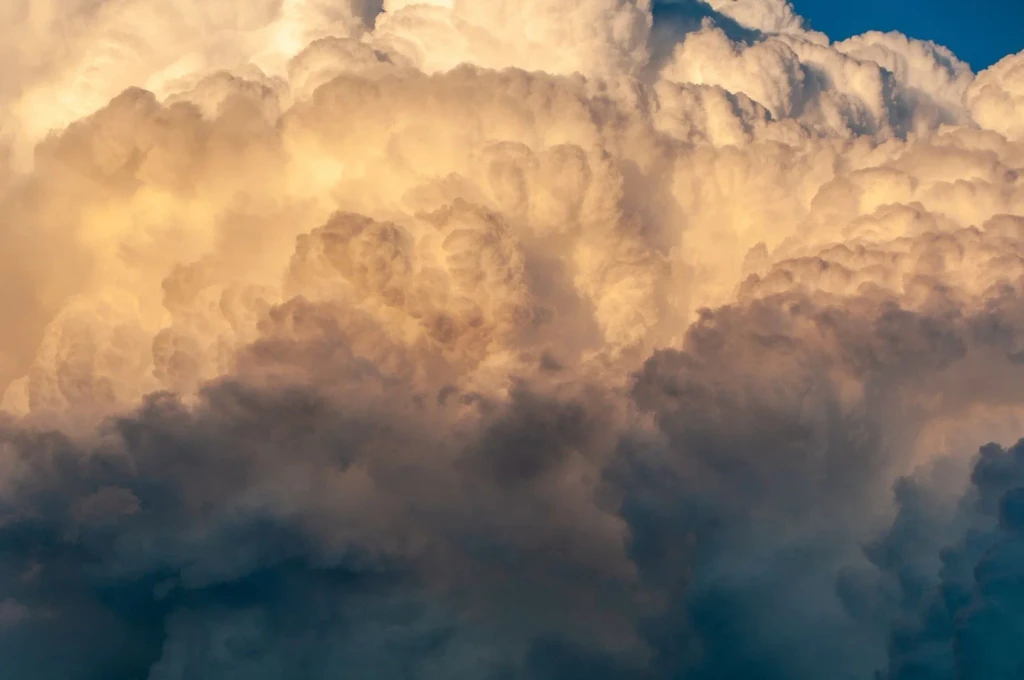
A close view of vibrant storm clouds at dusk. The dramatic light reveals the cloud's structure and scale, hinting at the forces within.
Photograph by wal_ 172619, via Pexels.
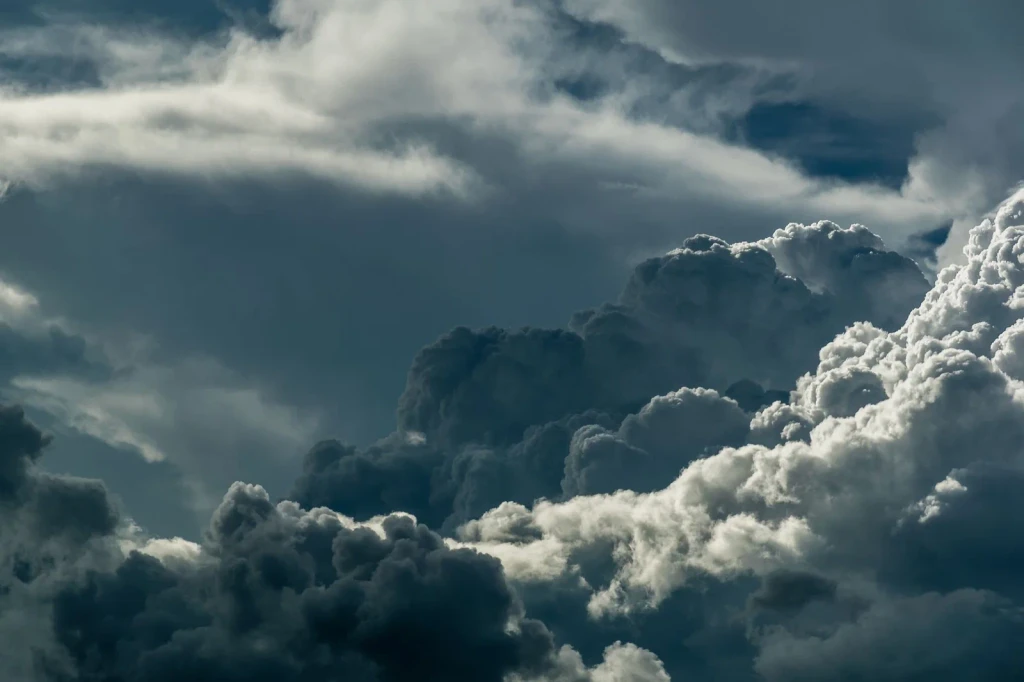
Dark clouds stretch across the sky in an imposing display. Their presence raises the fundamental question: what holds them there?
Photograph by Pixabay, via Pexels.
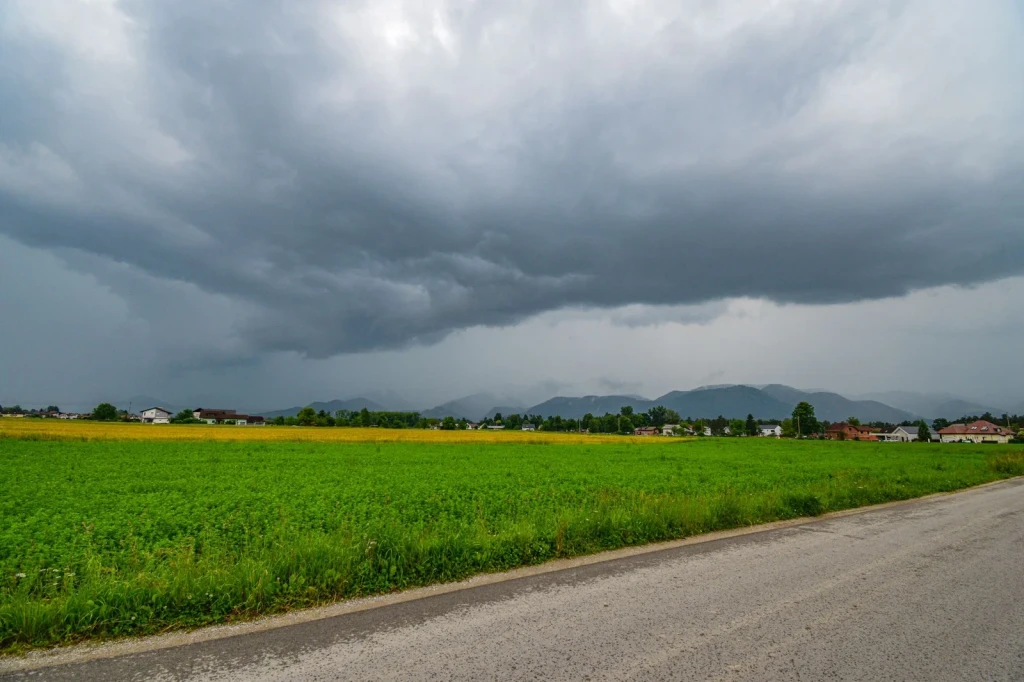
Dark clouds build above a green field and distant houses. The composition holds both vulnerability and the scale of approaching weather.
Photograph by Nejc Parašuh, via Pexels.
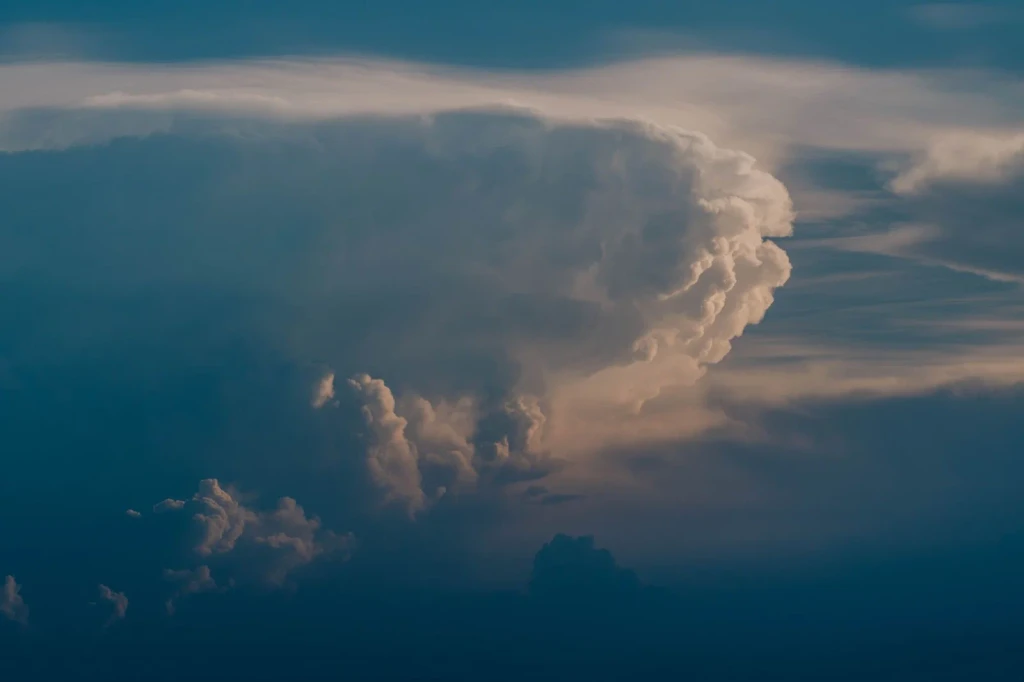
A single majestic cloud towers against clear sky. The isolation makes its vertical presence unmistakable and raises the exhibition's central question sharply.
Photograph by FOX ^.ᆽ.^= ∫, via Pexels.
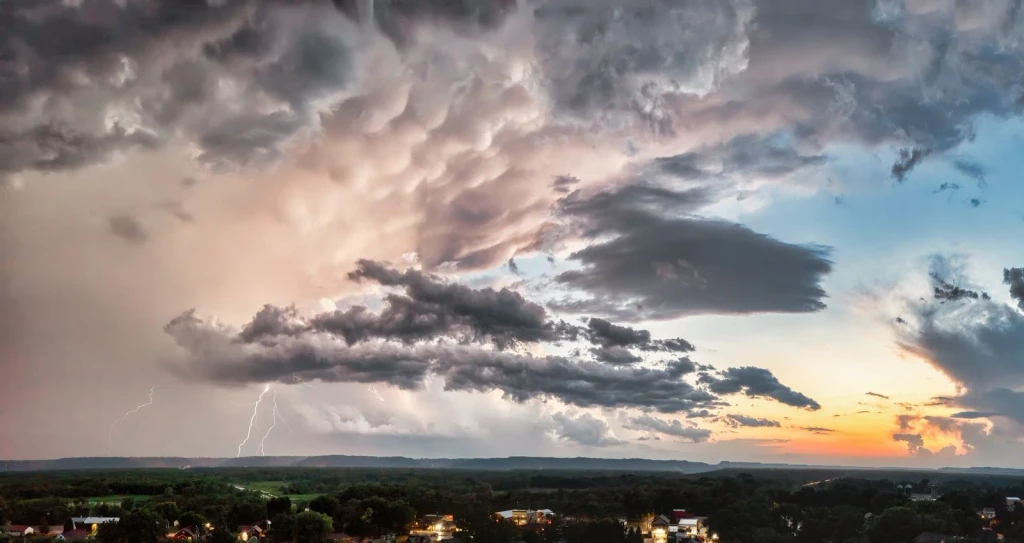
A thunderstorm unfolds over Nelson, WI as the sun breaks through. Electricity and light compete for the sky.
Photograph by Tom Fisk, via Pexels.
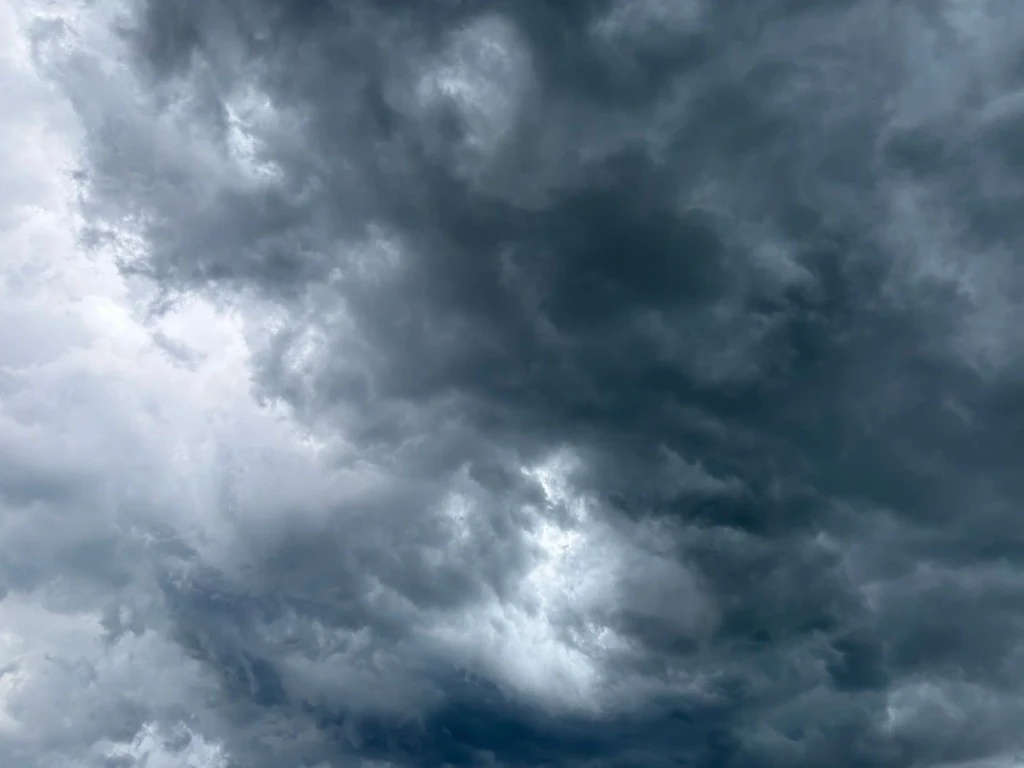
Intimidating clouds mass overhead. The photographer captures the moment before the weather turns, when the sky itself seems to press down with dramatic intent.
Photograph by Clinton Weaver, via Pexels.
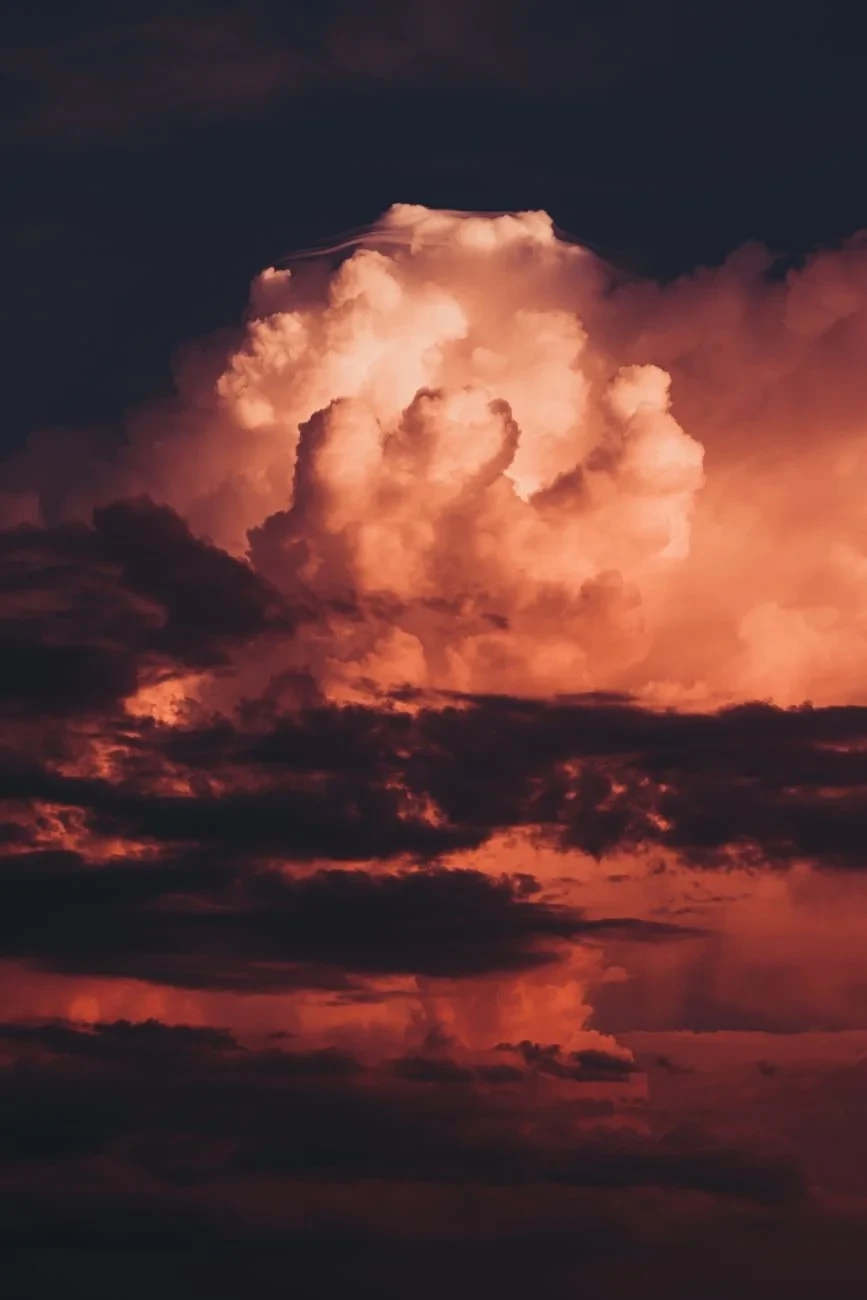
Vibrant clouds catch the fading light, their colors shifting the sky from day to night. A natural architecture suspended in air.
Photograph by Dhilip Antony, via Pexels.
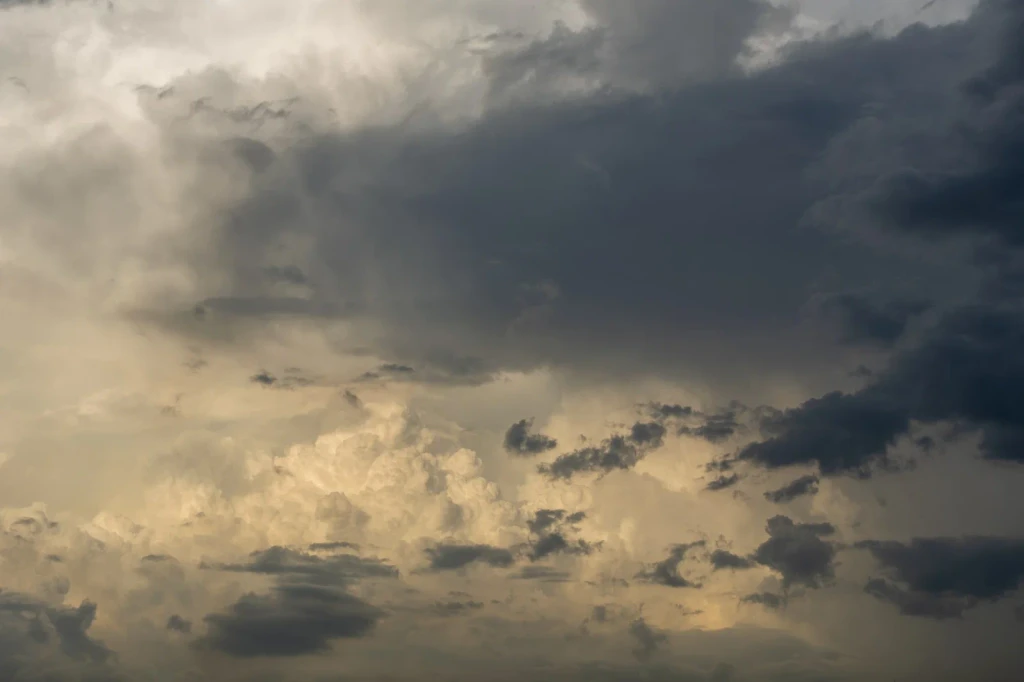
A striking arrangement of storm clouds fills the frame. The dramatic contrast between cloud and sky raises the question at the heart of this exhibition: what physics keeps these masses suspended?
Photograph by Justin Piggy, via Pexels.
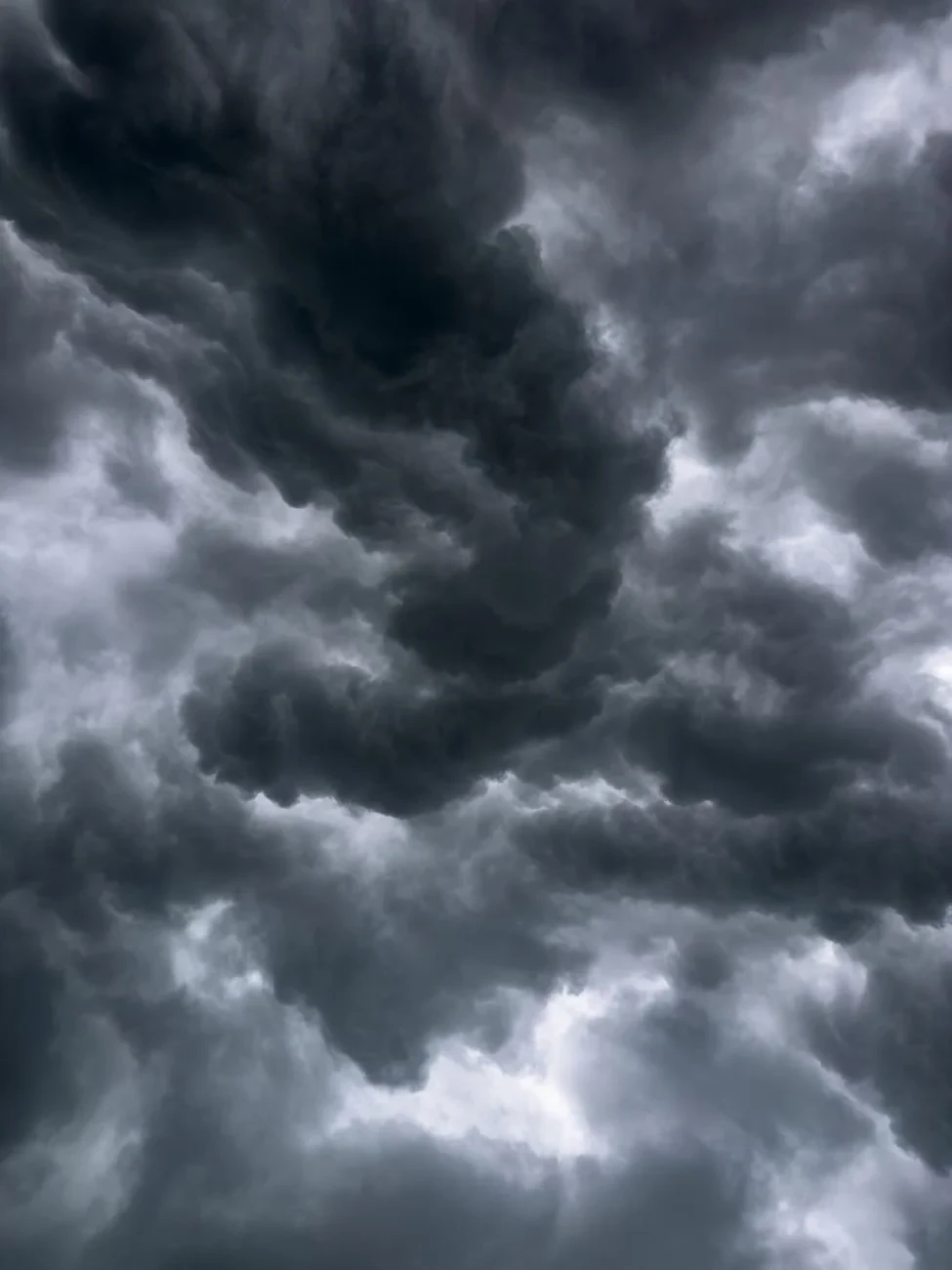
Dark clouds gather overhead, their weight and mass evident. A moment that asks: what keeps something so heavy aloft?
Photograph by Gavin Young, via Pexels.
