3D Gallery
Why Colour Is Not Really There
Enter gallery
Why Colour Is Not Really There is a 3D virtual gallery on MyGallery3D, a walkable online exhibition of 13 works. Step inside and explore it in your browser: no app, no headset.
Step into this 3D virtual gallery of colour and walk it in your browser, then consider that nothing on these walls is coloured.
Colour is not a property of matter. It is a verdict your brain reaches from three numbers. The retina holds three types of cone, and light of any composition is reduced to three signals; from those, humans distinguish roughly 10 million colours. The cones we call red peak at about 570 nm, in the greenish yellow. Red is not in there. It is assembled afterwards.
Pull a peacock's tail feather apart and the pigment in it is brown melanin. The blue, turquoise and green come from structure: layers of chitin and air acting as a diffraction grating, splitting light by interference. Robert Hooke noticed in 1665 that wetting the feather destroyed the colours. Nothing was washed away. The reflection and refraction had simply been altered.
The spectrum is a straight line, with violet at one end and red at the other. Magenta appears nowhere on it. No single wavelength produces it; it can only be made by mixing light from both ends at once, and the brain obligingly closes the line into a wheel. Pink and brown are missing from the spectrum too. Brown is simply a low-intensity orange-yellow.
Newton divided the spectrum into six colours: red, orange, yellow, green, blue and violet. He added indigo as a seventh because he believed seven was a perfect number, connecting colours to musical notes, the known objects in the Solar System and the days of the week. The human eye is barely sensitive to indigo. Where the spectrum gets cut into named colours is a matter of culture, not physics.
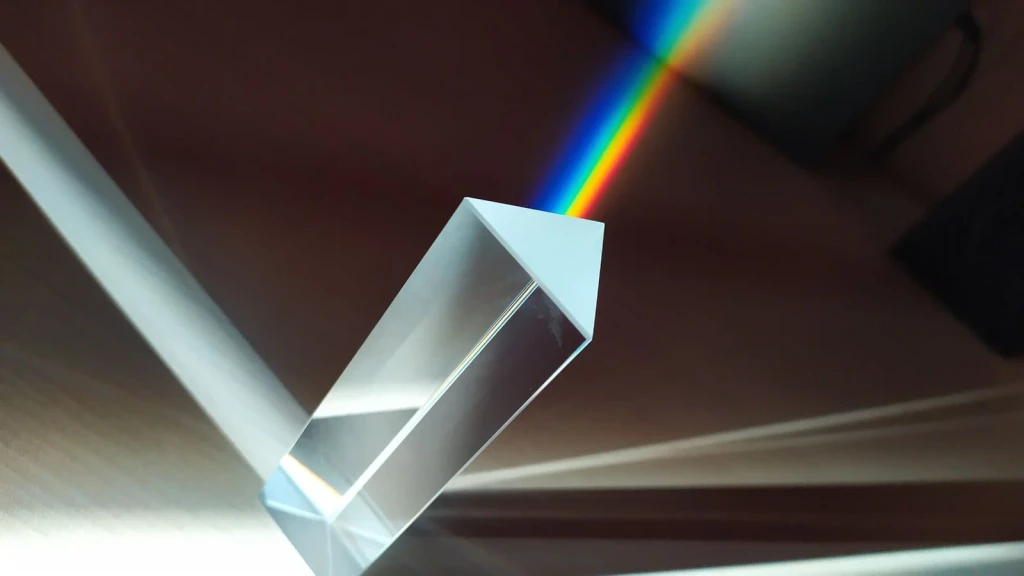
A glass prism bends light into geometric rainbow reflections. The ordered beauty here reveals what the exhibition's title suggests: colour exists only in our perception of refracted light.
Photograph by Design Bits, via Pexels.
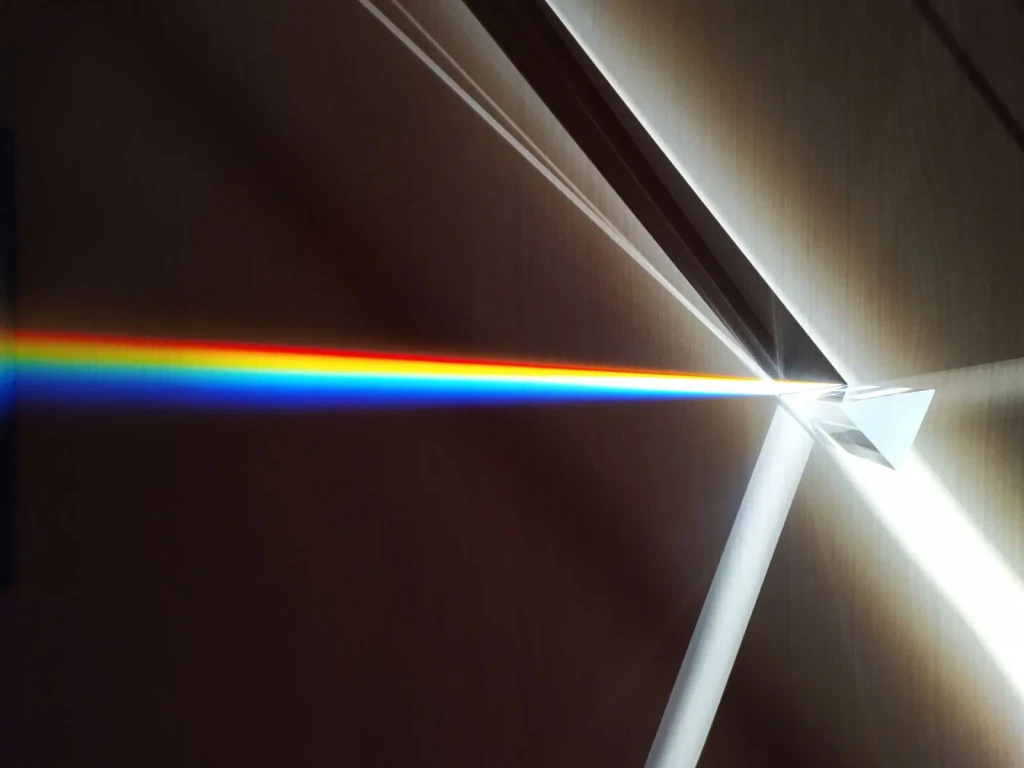
Glass refracts light into rainbow bands. What we call colour is simply our brain's response to different wavelengths. Remove one, and the colour vanishes.
Photograph by Design Bits, via Pexels.
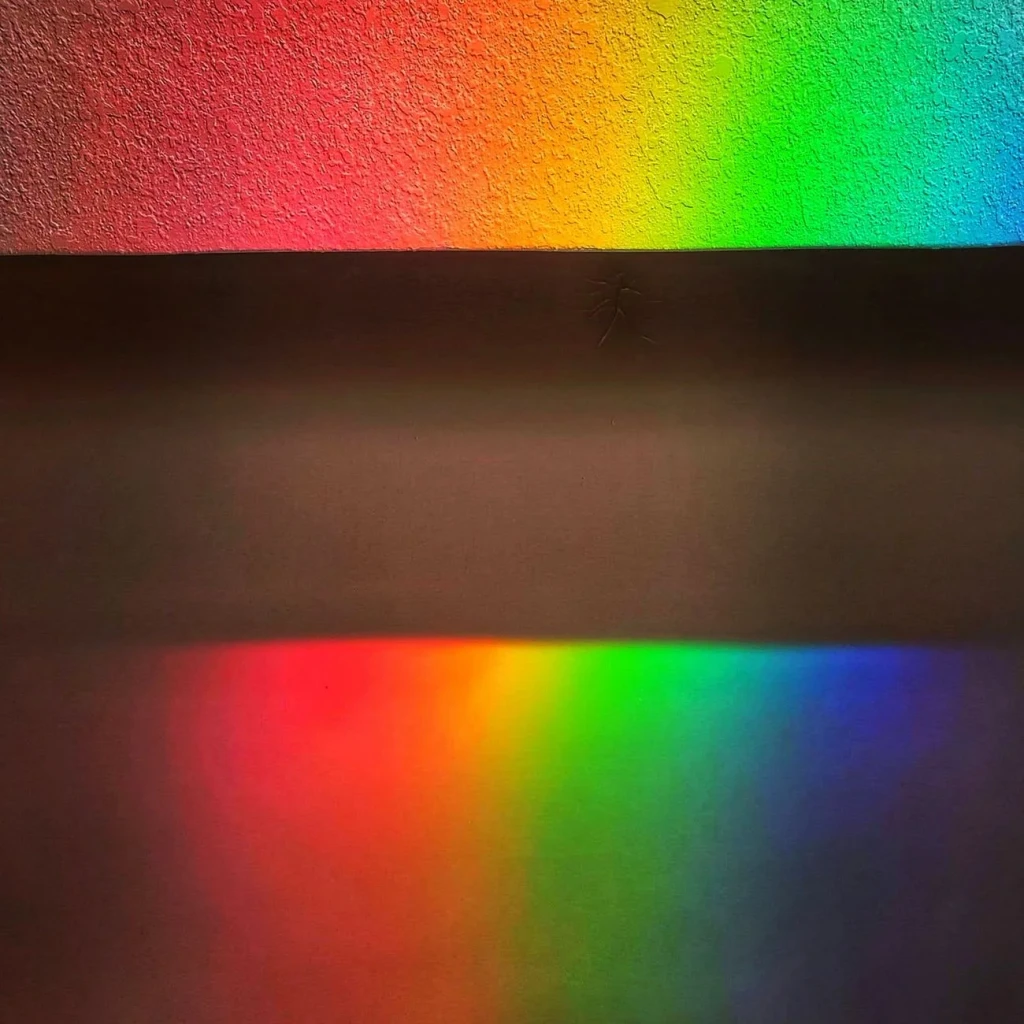
A rainbow of light plays across texture and surface. Color manifests where light meets matter. Change the angle, and the color vanishes.
Photograph by Em Hopper, via Pexels.
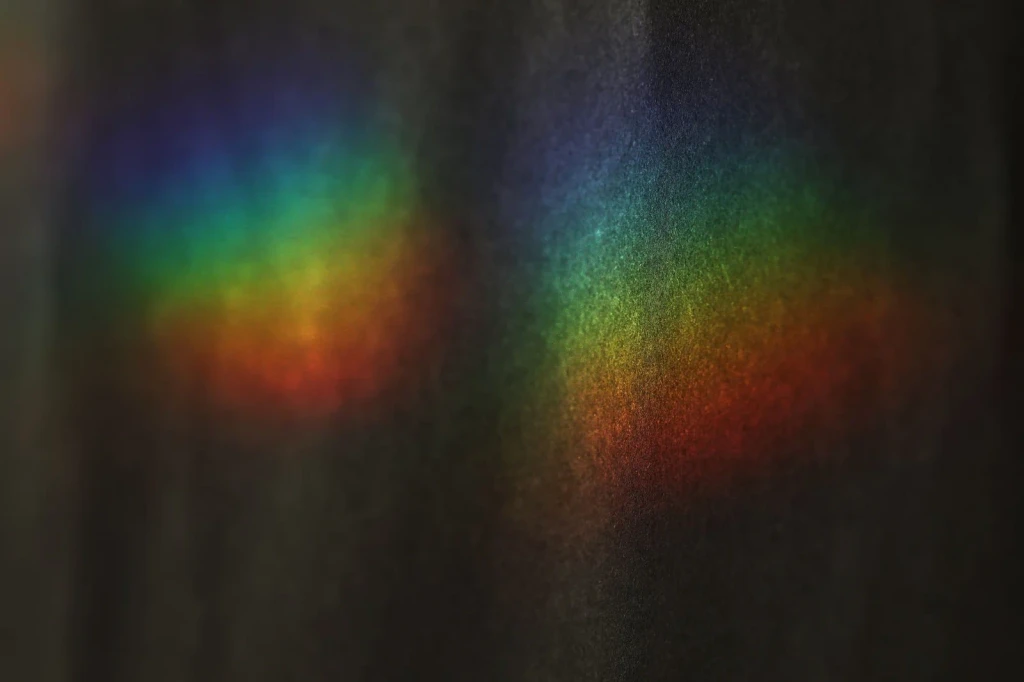
A light prism creates vibrant rainbow patterns on darkness. These colours have no physical substance. They exist only in the meeting of light and perception.
Photograph by Nop Viwat, via Pexels.
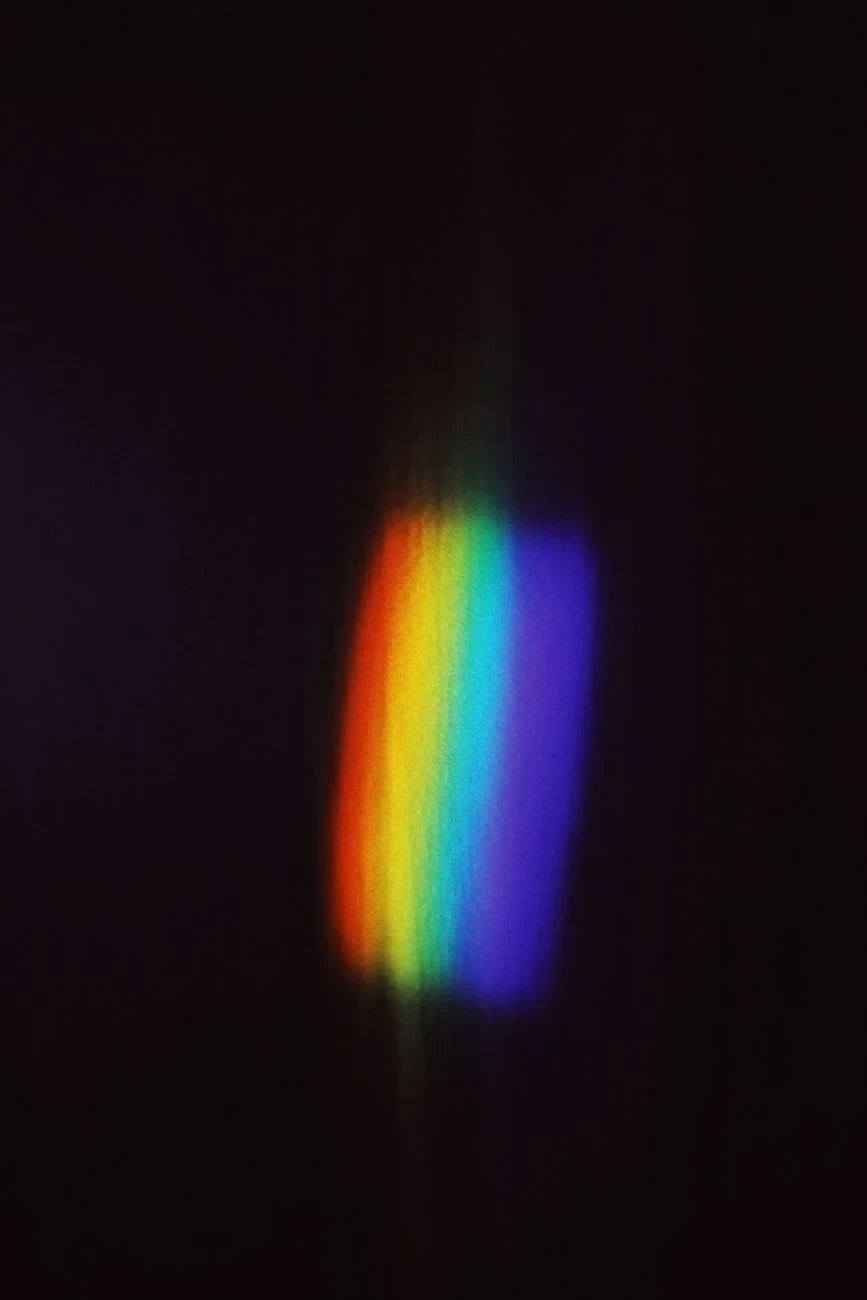
Rainbow light against black background. The contrast makes color visible. Yet the colors exist only in how our eyes and brain respond to light.
Photograph by Nothing Ahead, via Pexels.
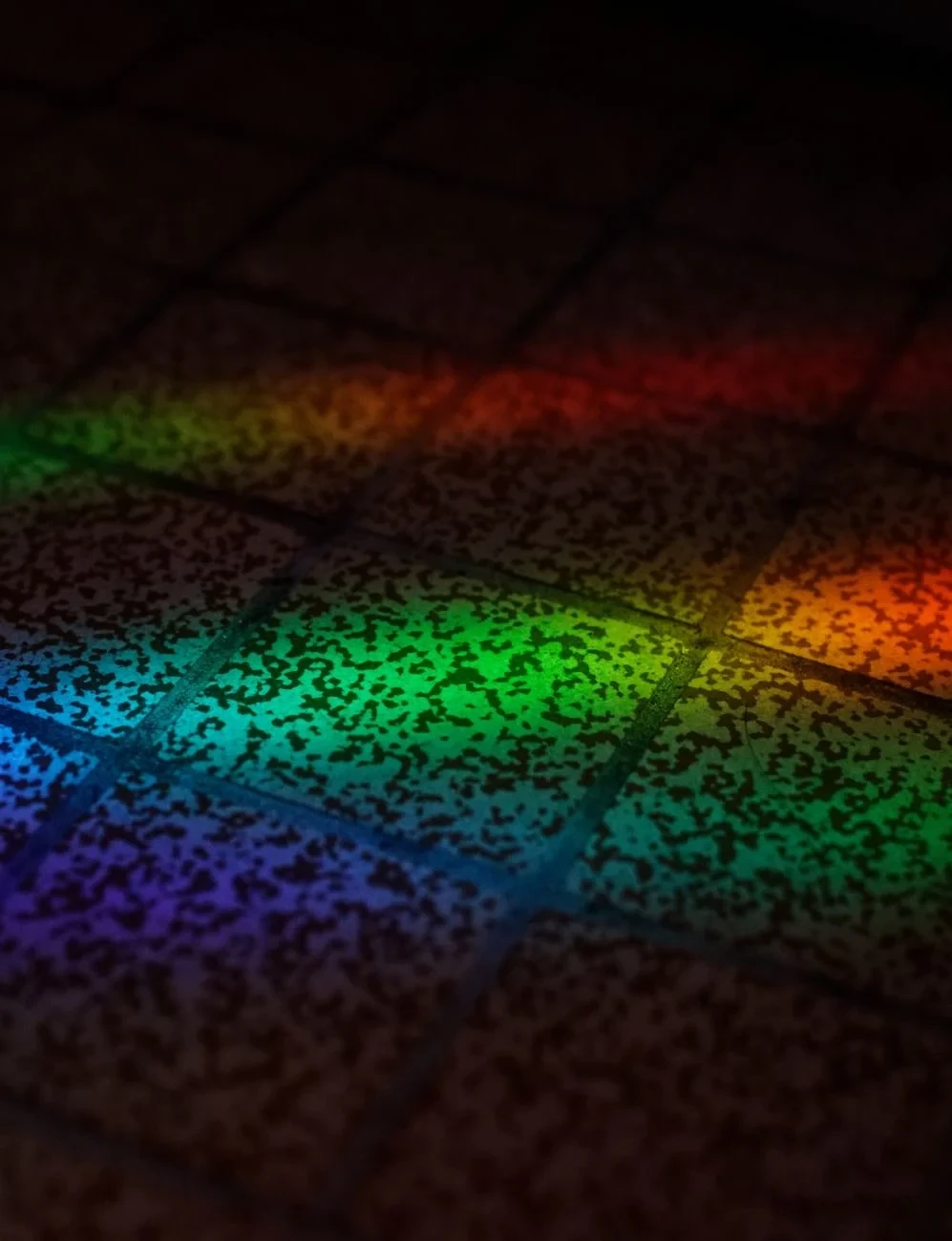
Colorful light creates vibrant patterns across a textured surface. The spectrum exists only in how light and material meet, nowhere else.
Photograph by Kévin Dorg, via Pexels.
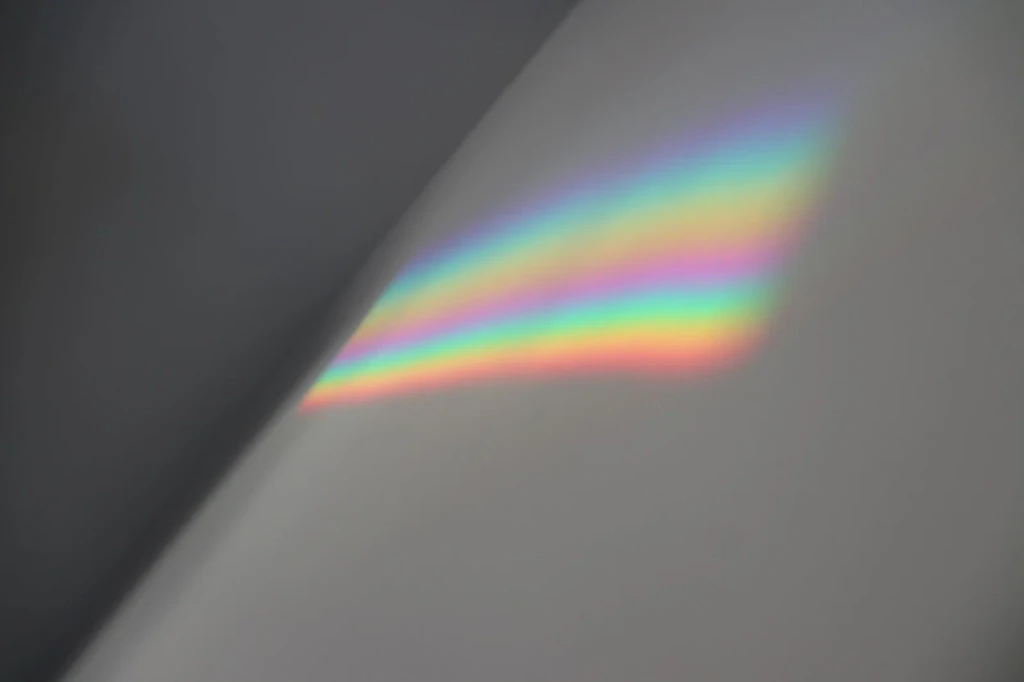
Soft spectrum light falls across a neutral grey wall indoors. Colour emerges only where light touches surface and eye meets light.
Photograph by Klaus G, via Pexels.
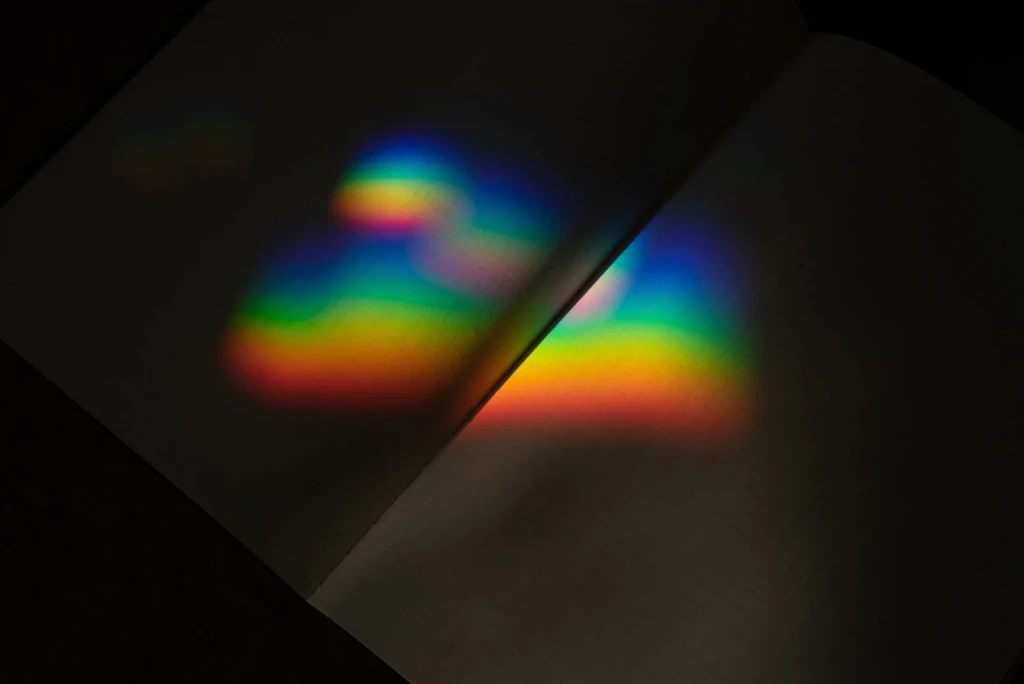
Rainbow reflection cast onto an open notebook in dim light. Color appears where refracted light touches the page. Move the source, and color moves too.
Photograph by Evie Shaffer, via Pexels.
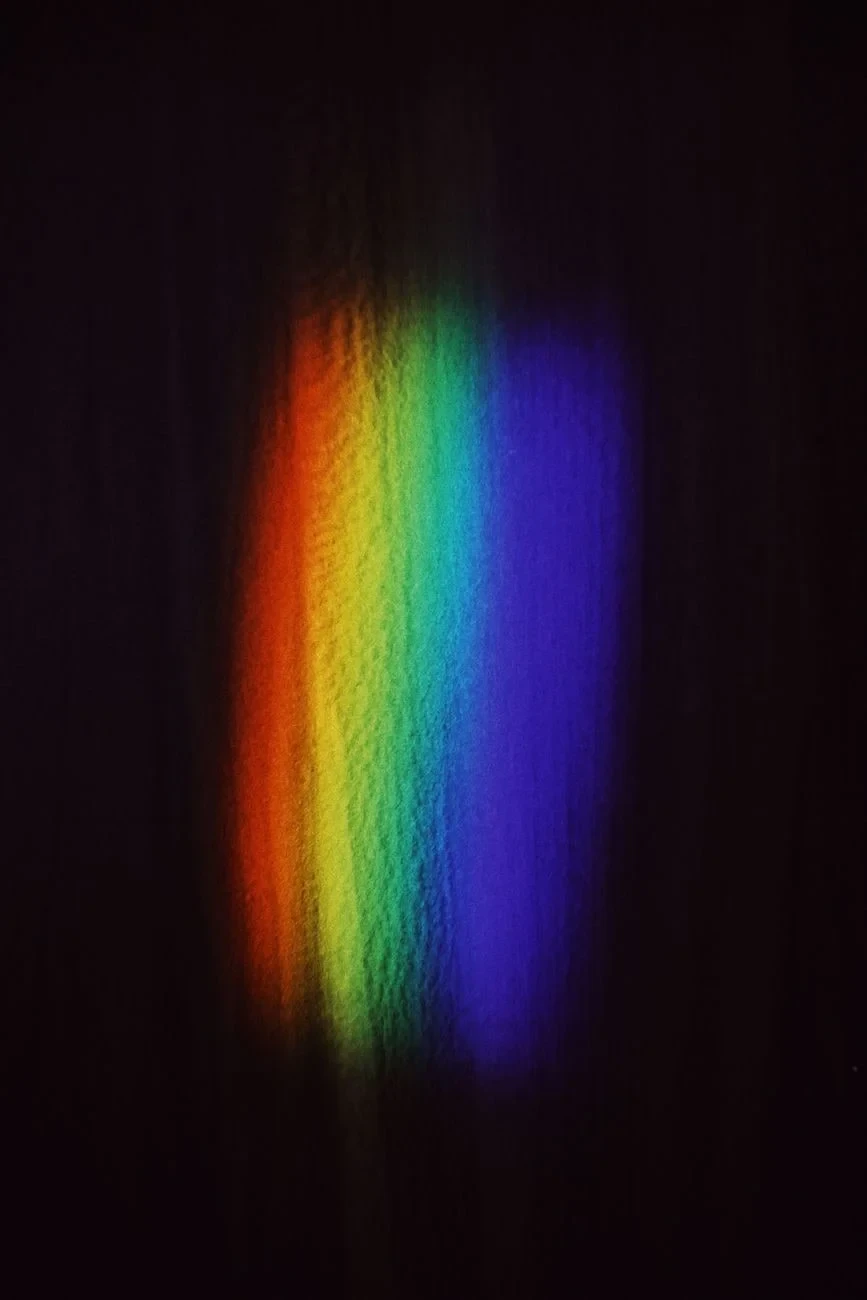
Vibrant rainbow colours appear against a dark surface. Without light, without an eye to see it, this spectrum would not exist at all.
Photograph by Nothing Ahead, via Pexels.
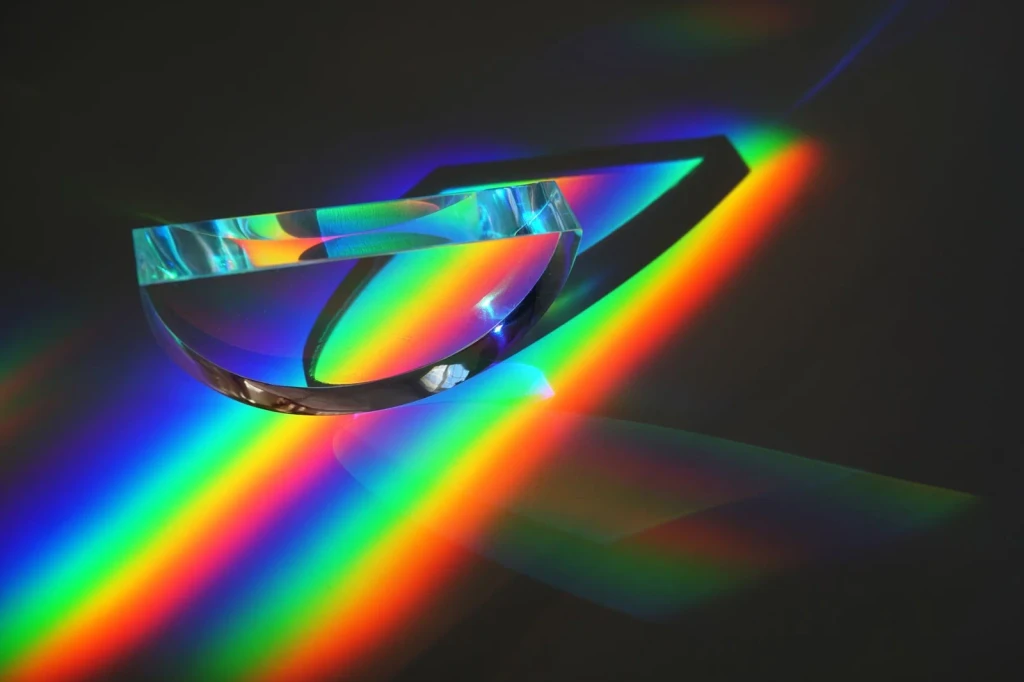
A prism displays the full light spectrum in abstract form. The colours we see are not in the glass itself, but in how light behaves when passing through it.
Photograph by Nancy Zjaba, via Pexels.
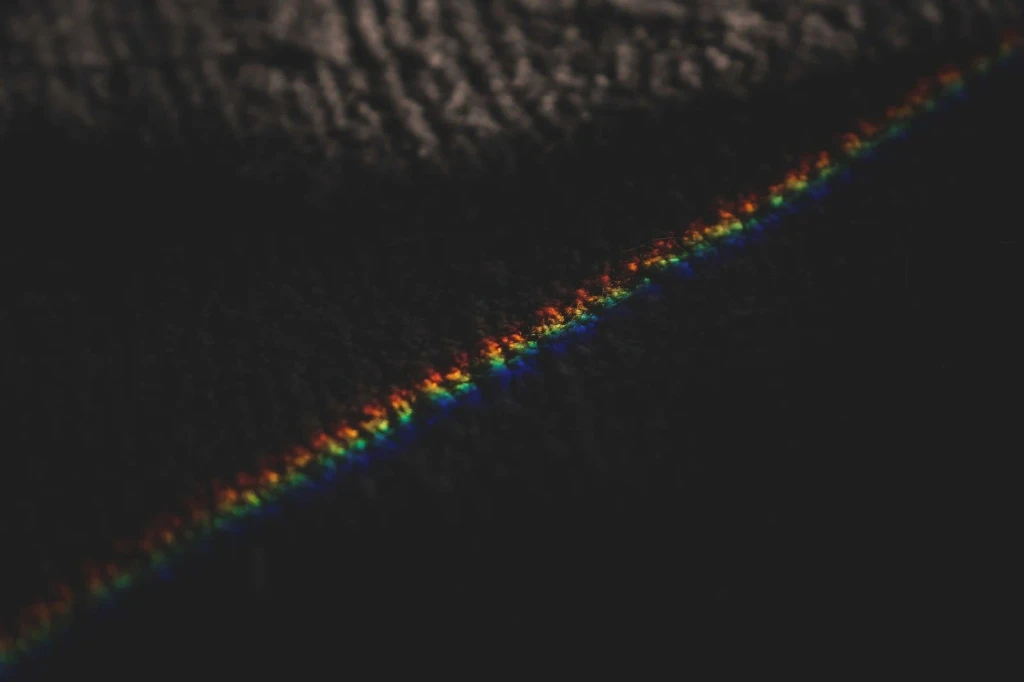
Rainbow light refracted through a prism onto fabric. The spectrum appears because the prism bends wavelengths. Color emerges from physics, not from the prism itself.
Photograph by Francesco Ungaro, via Pexels.
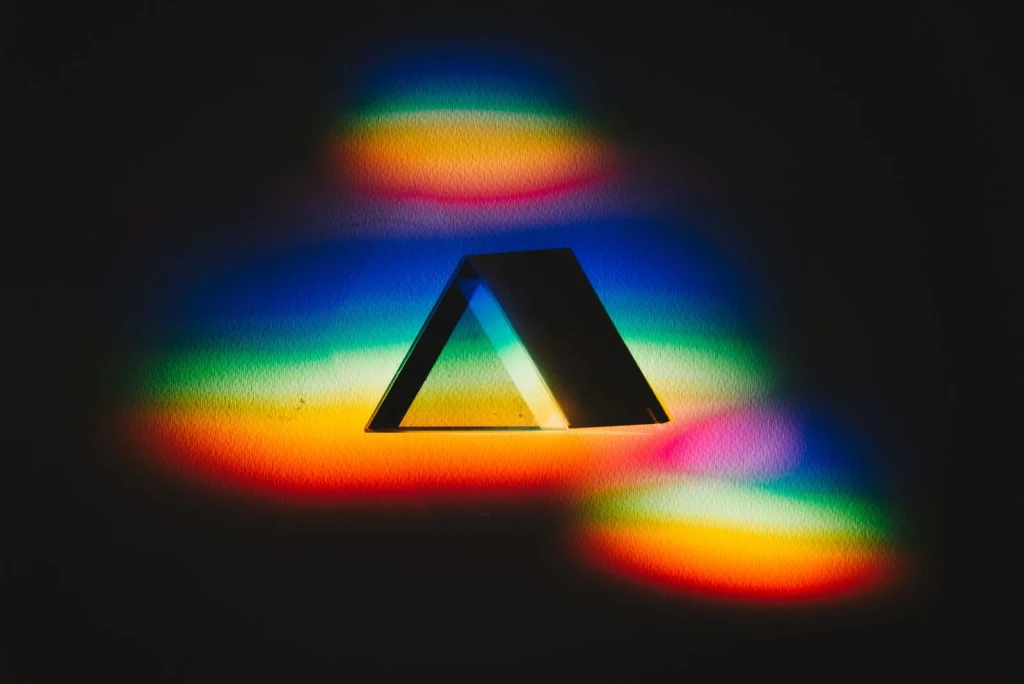
Light dispersed through a prism creates a vibrant rainbow against darkness. The colors we see depend entirely on how the prism bends light waves.
Photograph by Evie Shaffer, via Pexels.
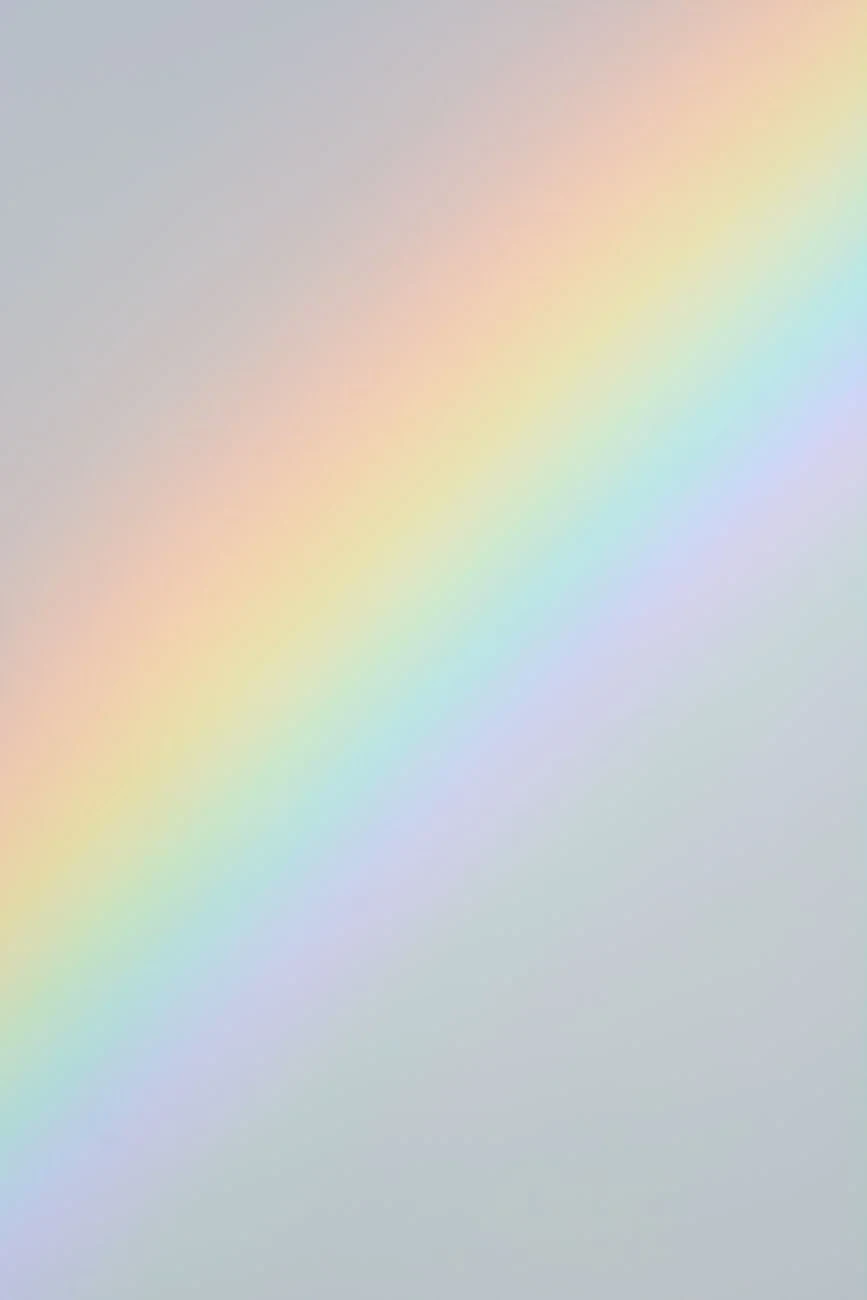
A rainbow spans clear sky. This natural spectrum is also light refracted through water droplets. The rainbow exists in a precise angle between sun, water, and observer.
Photograph by Peter Steiner 🇨🇭 1973, via Pexels.
