3D Gallery
Why We Wear Masks
Enter gallery
Why We Wear Masks is a 3D virtual gallery on MyGallery3D, a walkable online exhibition of 15 works. Step inside and explore it in your browser: no app, no headset.
Walk through this 3D virtual museum of masks in your browser and ask what a covered face is actually for.
Venice made the answer explicit. The bauta, a white mask with no mouth and a jutting chin, was regulated by the government and obligatory at certain political decision-making events, where all citizens were required to act anonymously as peers. Its role was close to that of the secret ballot. Only men could wear it, and carrying a weapon with it was a crime. The mask was not a disguise; it was a legal condition.
In the 16th century Republic of Venice, homosexuality was punishable by death by hanging and burning in Piazza San Marco. But Venetian law said no one could be punished for crimes committed while performing as a masked character during Carnival. Male prostitutes used that exactly: they wore cat masks called gnaga, dressed as women, and carried baskets of kittens.
Noh masks are carved from Japanese cypress and painted on a base of glue and crushed seashell. There are about 450 of them, based on roughly sixty types. The carving is cut so that light does the acting: tilt the head up and the face appears to smile, tilt it down and it clouds into sadness. Only the shite, the main actor, usually wears one.
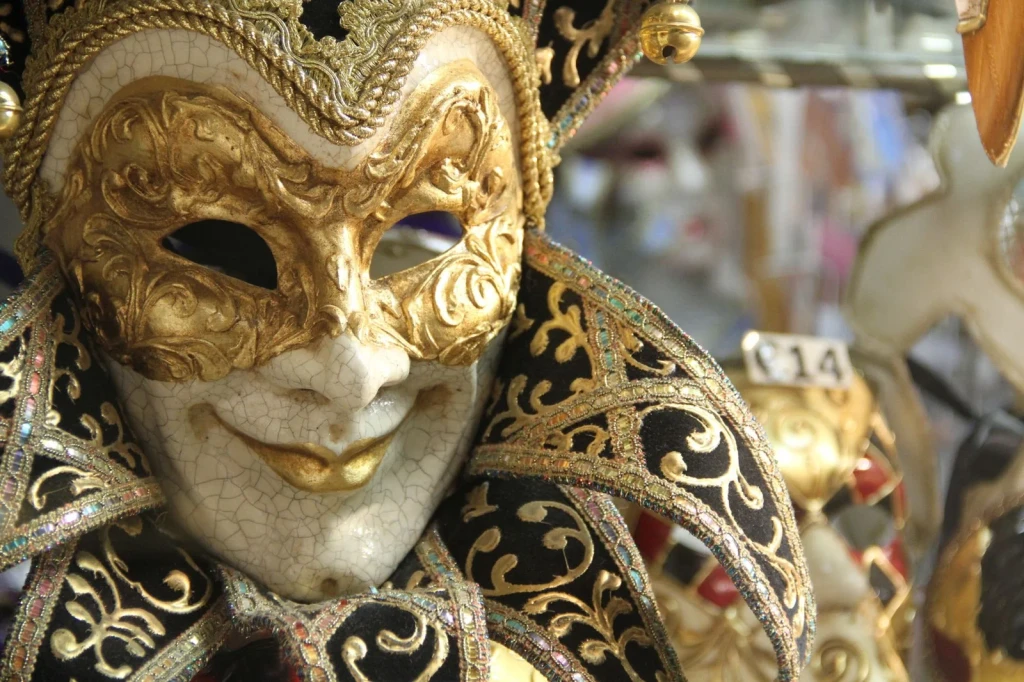
A traditional mask hangs in a vitrine, waiting to be worn. It sits between ornament and purpose, decoration and disguise.
Photograph by João Pavese, via Pexels.
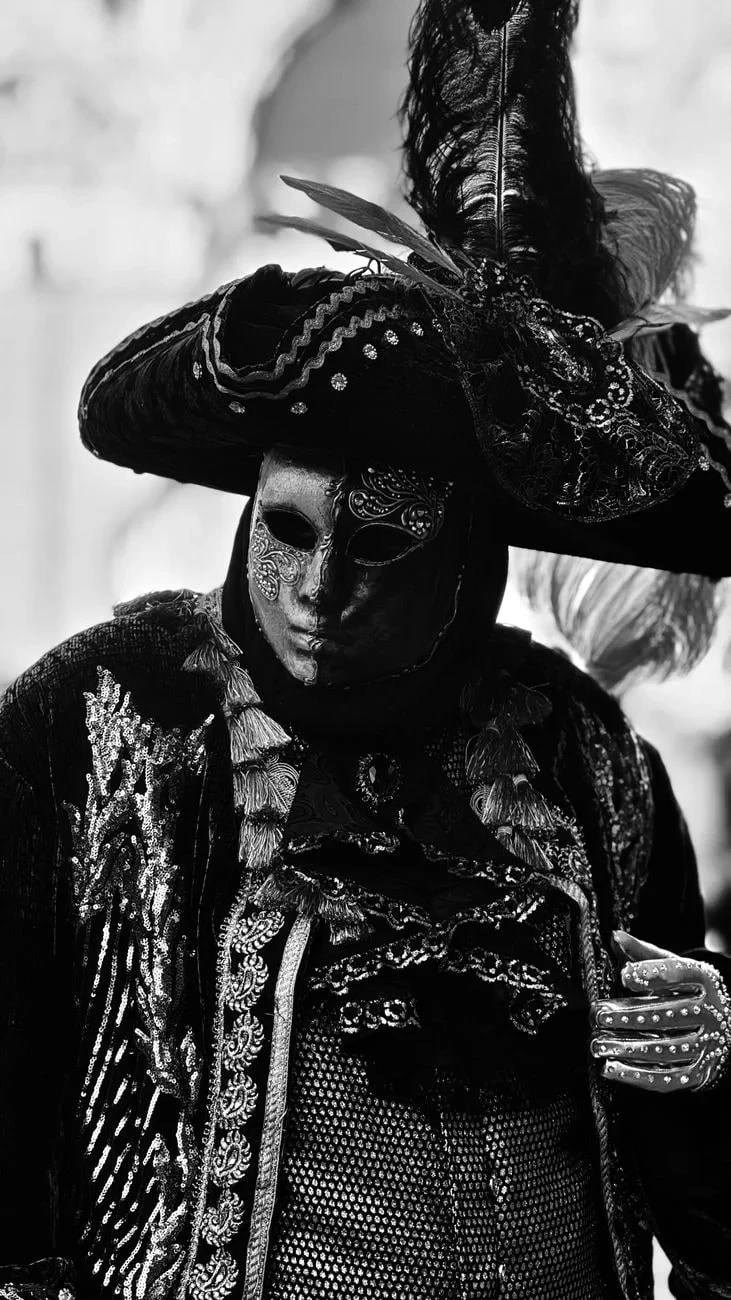
An elegant masquerade costume with ornate black mask and hat. Formality in concealment. The mask becomes part of structured, ritualized presentation.
Photograph by Pegah Sharifi, via Pexels.
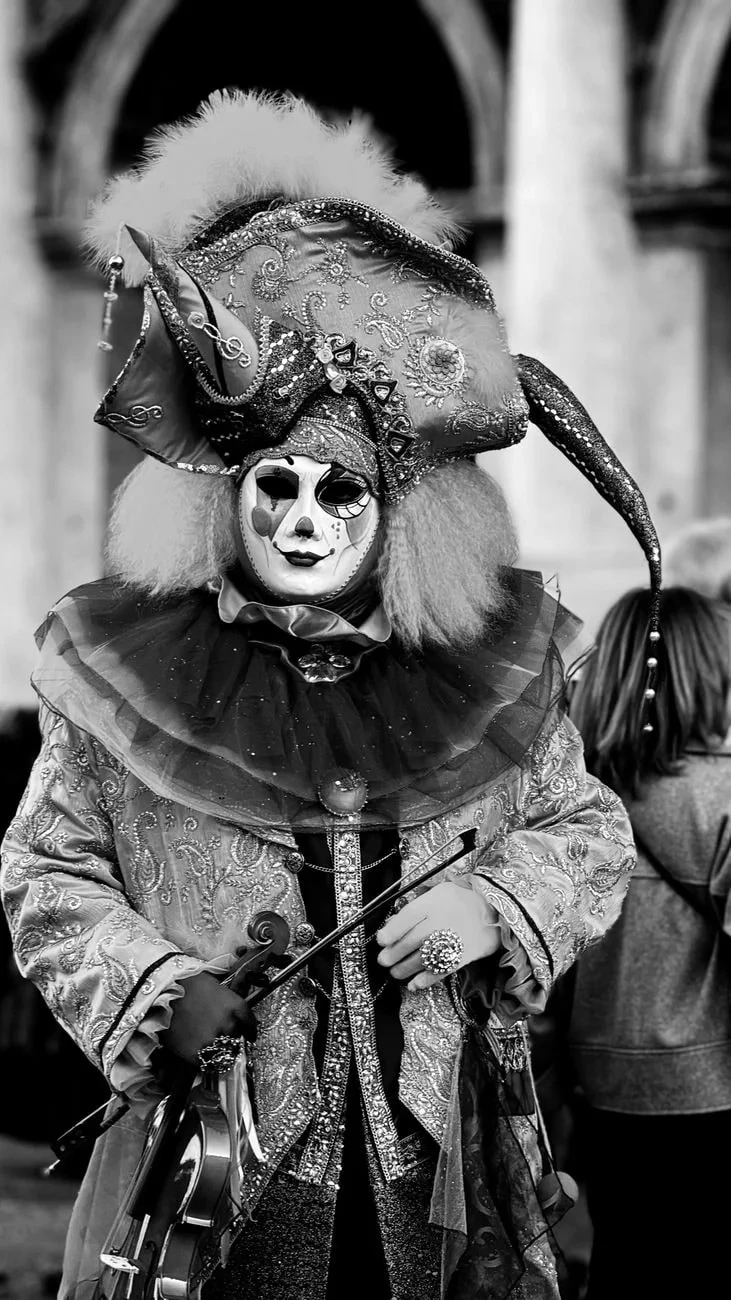
A figure in full carnival costume and mask appears in black and white. The photograph captures someone transformed, their face replaced by ornament.
Photograph by Pegah Sharifi, via Pexels.
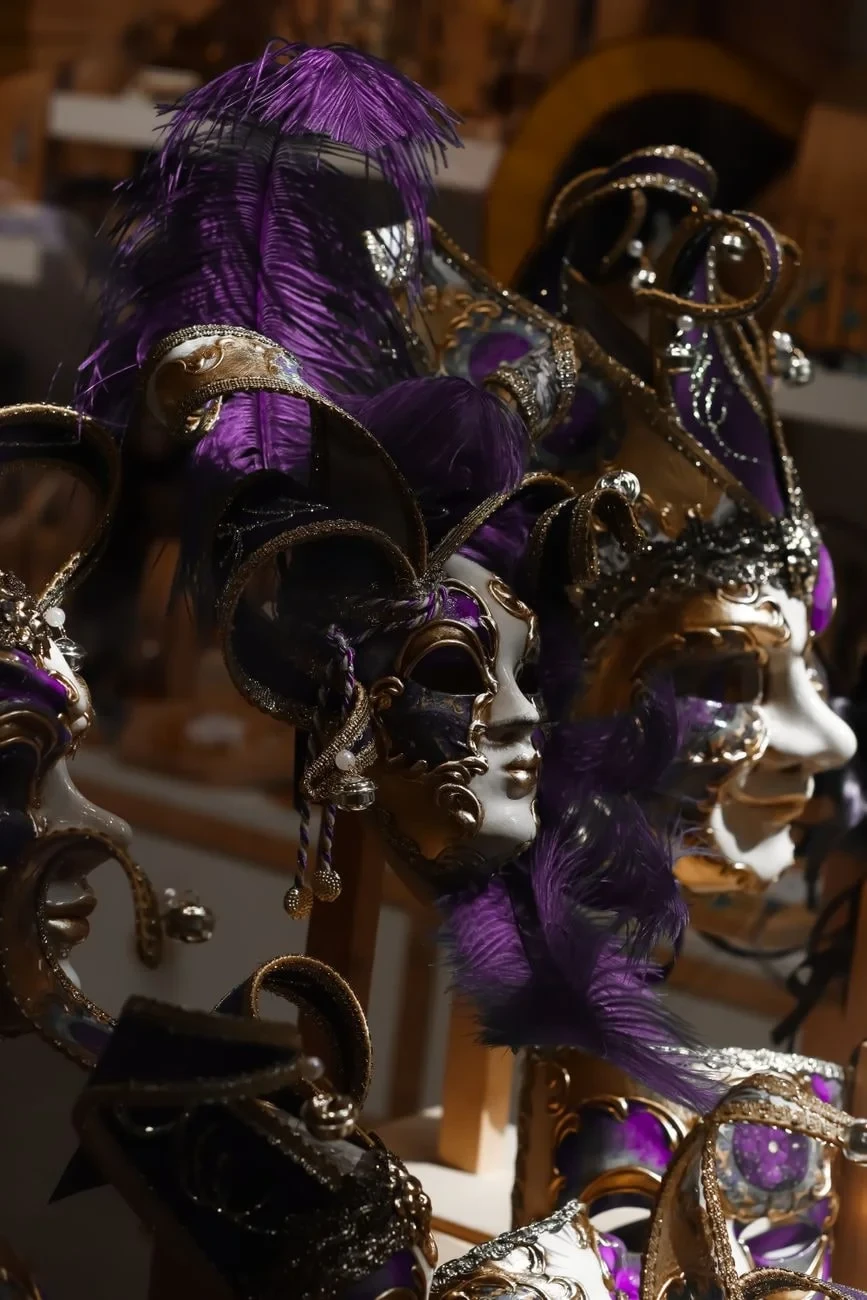
Close-up of ornate Venetian masks with purple feathers. The craftsmanship suggests masks as objects worthy of study in themselves, not merely worn.
Photograph by Goszton, via Pexels.
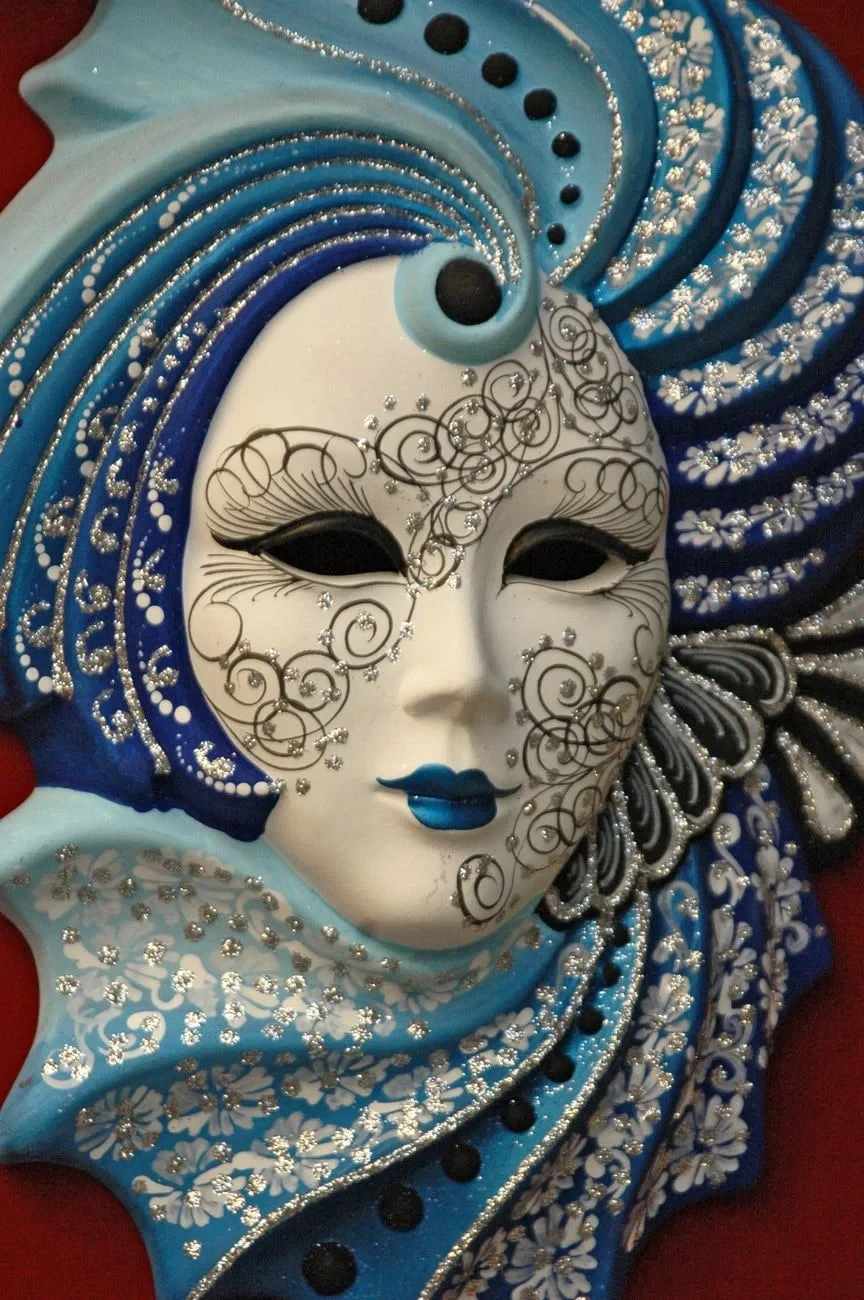
Blue and silver designs create striking contrast on this carnival mask. Color and pattern announce the wearer's presence even as the mask conceals identity.
Photograph by CARLOSCRUZ ARTEGRAFIA, via Pexels.
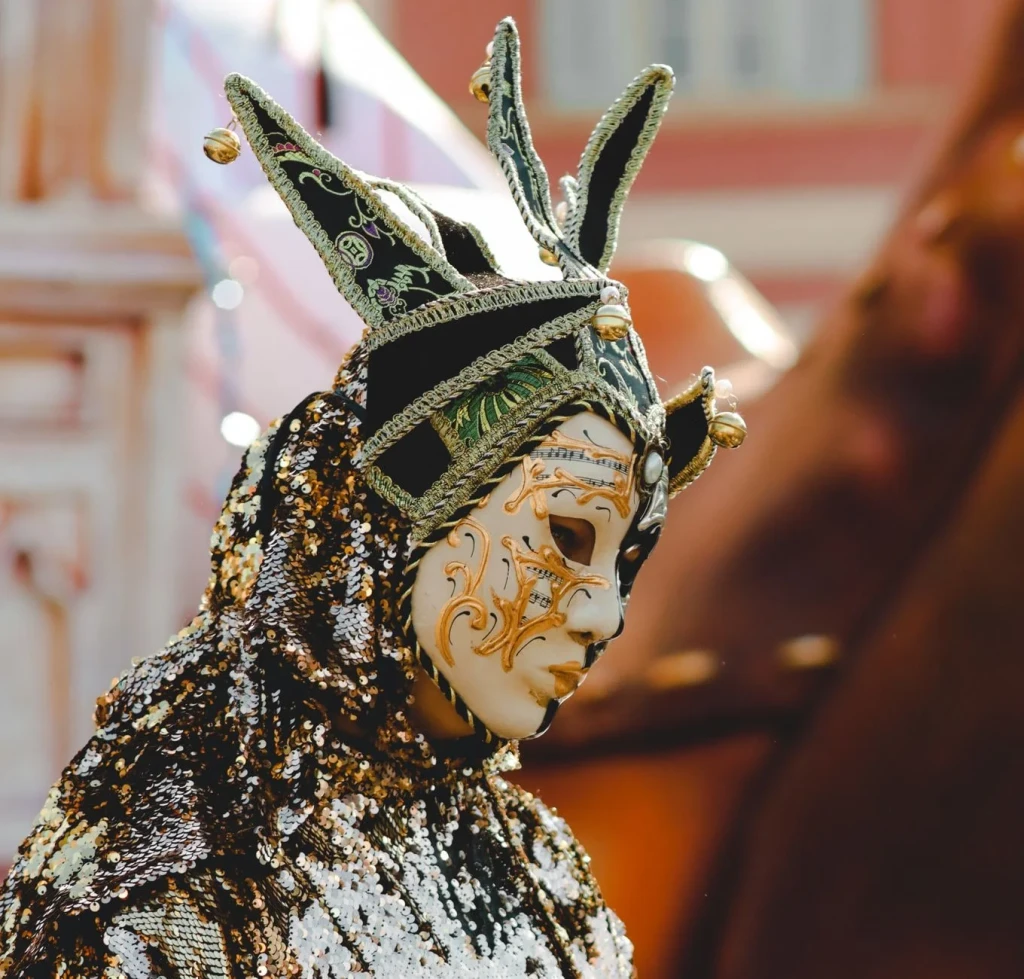
A colorful jester-style mask with intricate patterns. The playful aesthetics hint at how masks can signal playfulness and alter social expectation.
Photograph by Elodie Astier, via Pexels.
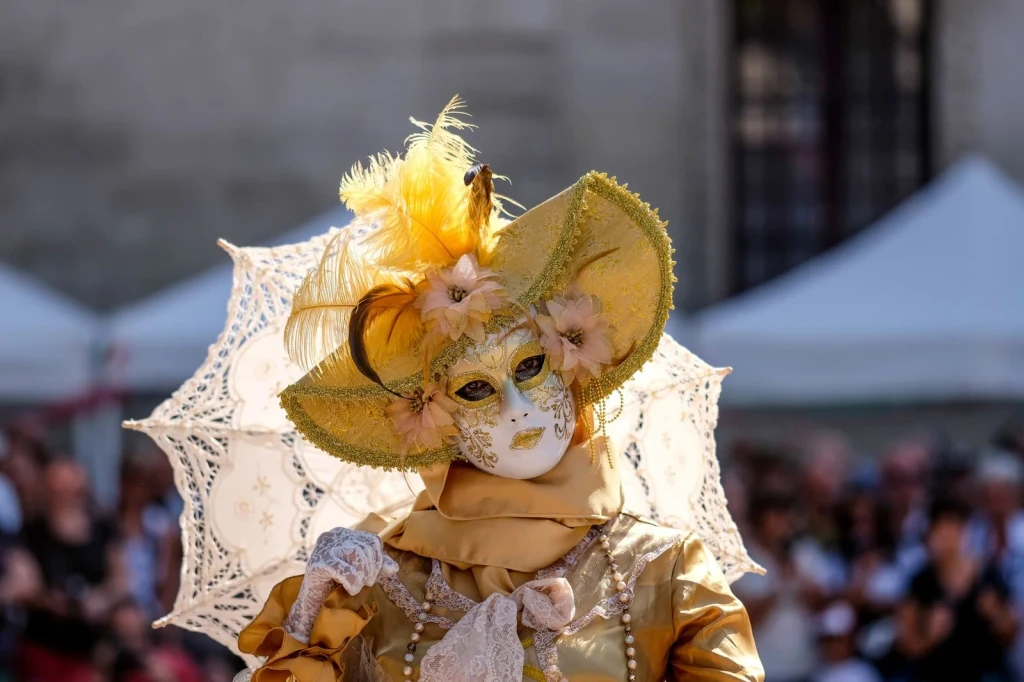
A figure in full Venetian costume, mask and parasol in hand at a festival. Costume as complete transformation. The mask becomes one element in a larger performance of identity.
Photograph by gael le quernec, via Pexels.
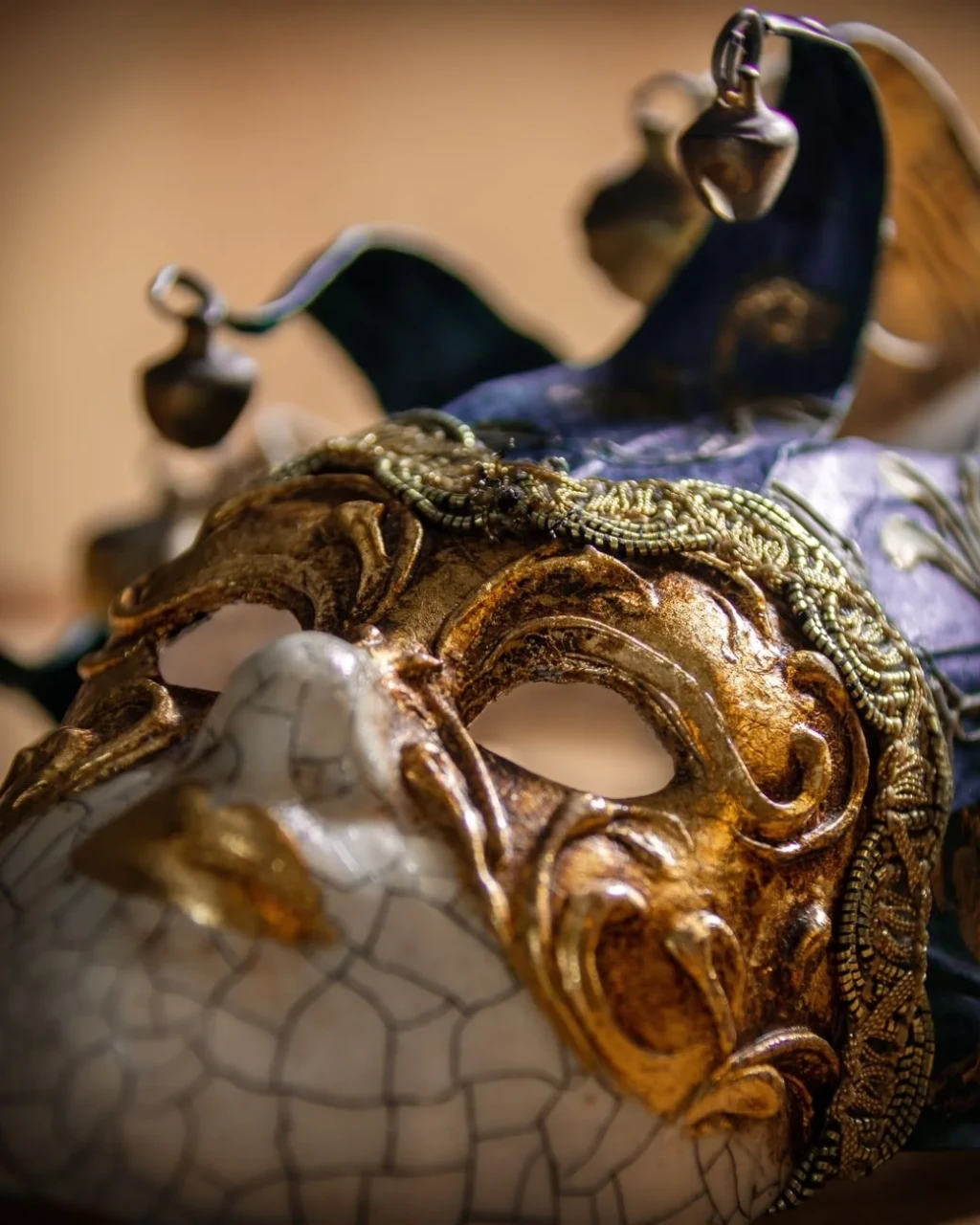
Gold detailing catches light across an intricate surface. The mask becomes a beautiful barrier between self and world.
Photograph by Oscar Sebastian Chaile, via Pexels.
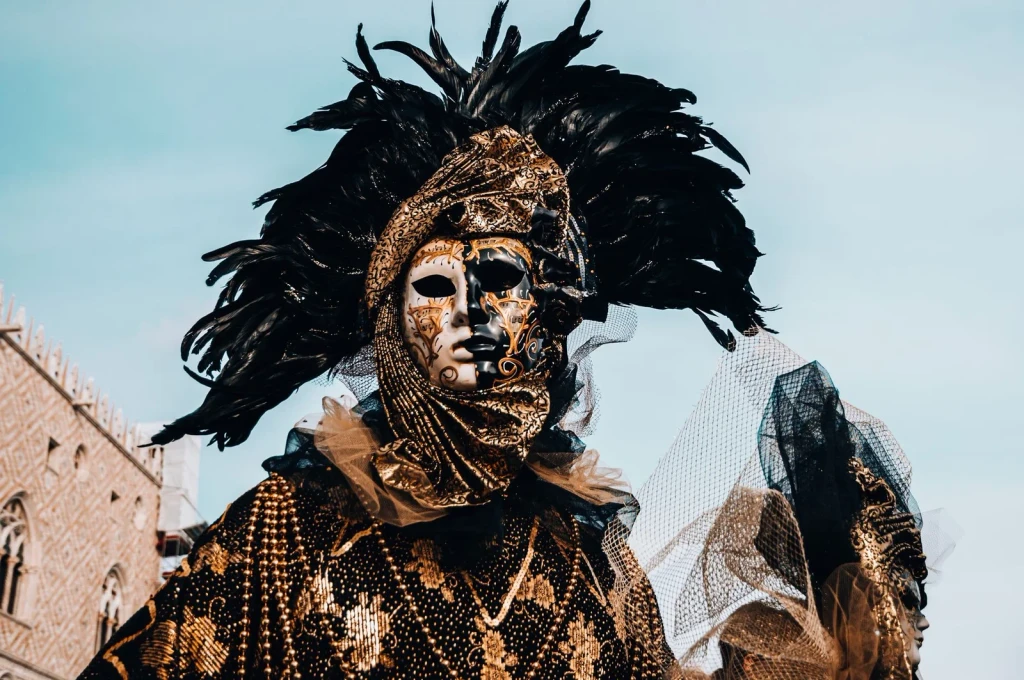
A person wearing a lavish Venetian mask and costume at a festival. The image shows mask as transformation. worn and embodied rather than observed.
Photograph by Helena Jankovičová Kováčová, via Pexels.
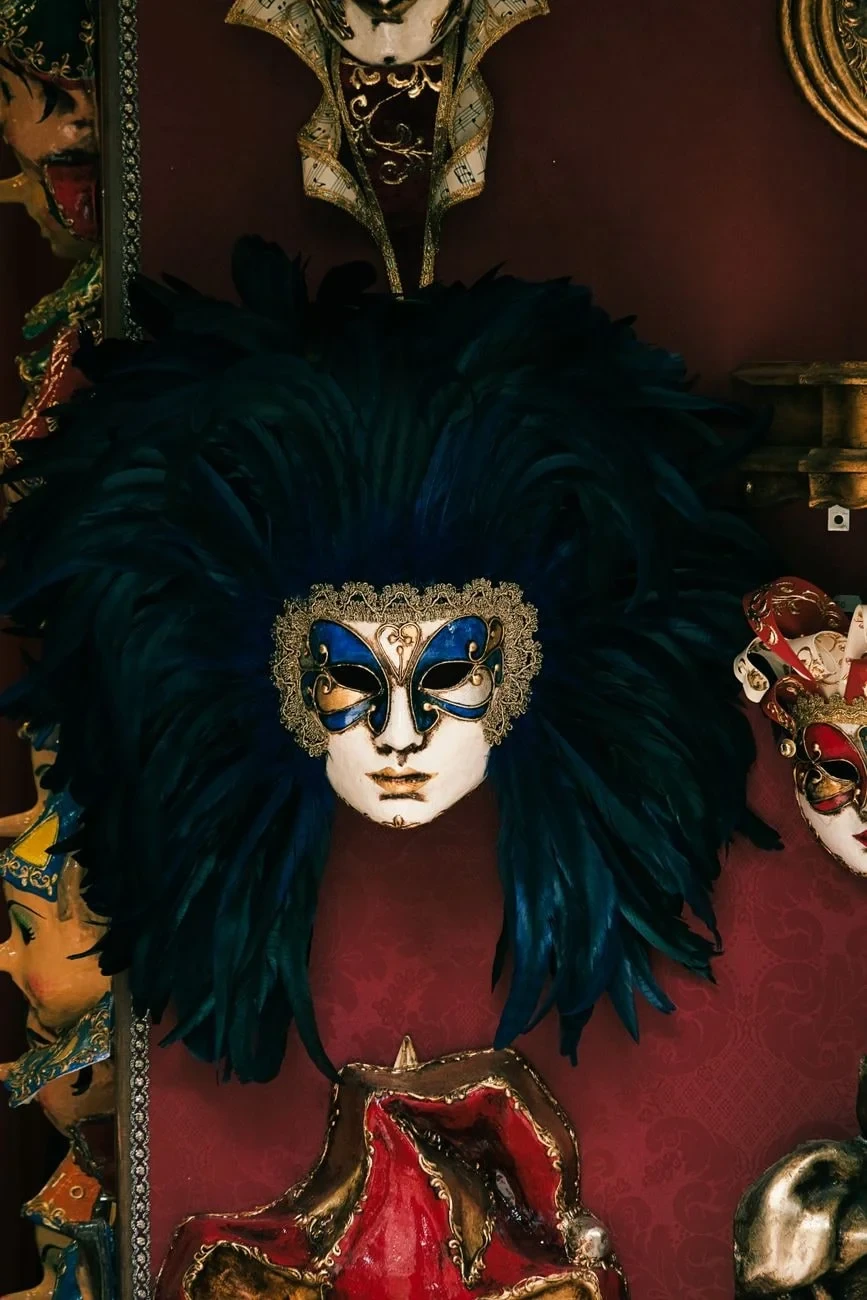
A close-up of an ornate Venetian mask with feathers. The craftsmanship speaks to masks as objects of beauty, removed from the body and presented for admiration.
Photograph by Anastasia Sidorova, via Pexels.
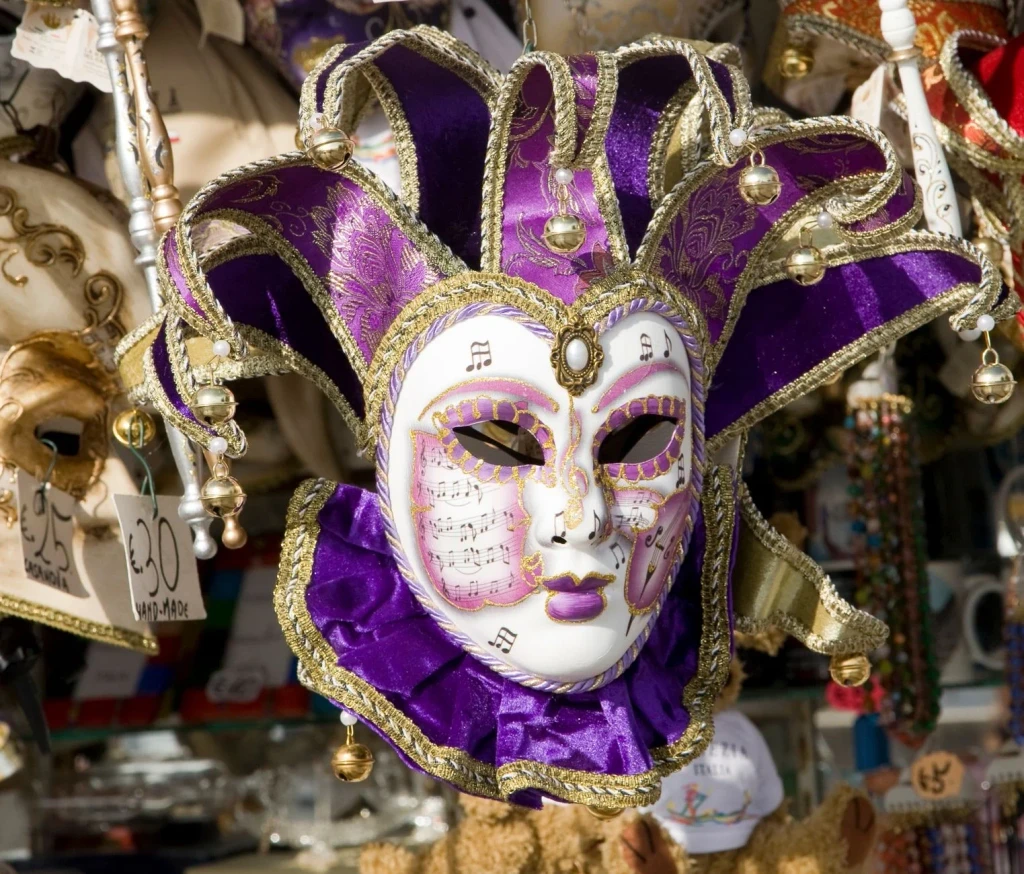
A traditional jester mask in purple and gold. The theatrical nature of the design suggests masks as tools for playing roles, for comedy and character.
Photograph by Charl Durand, via Pexels.
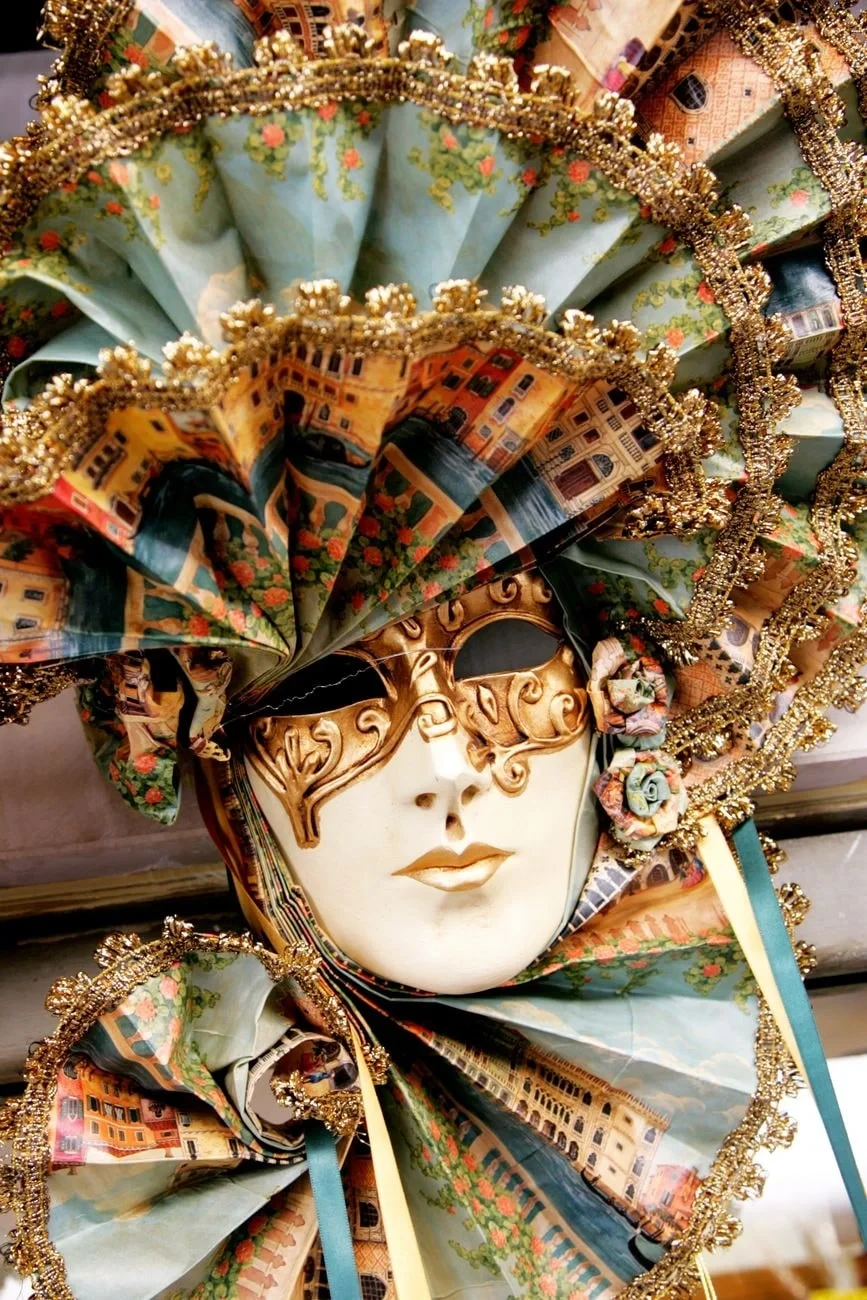
An intricately designed Venetian mask. The detail required in its making suggests the care taken to create something meant to transform and conceal.
Photograph by Aigars Jansons, via Pexels.
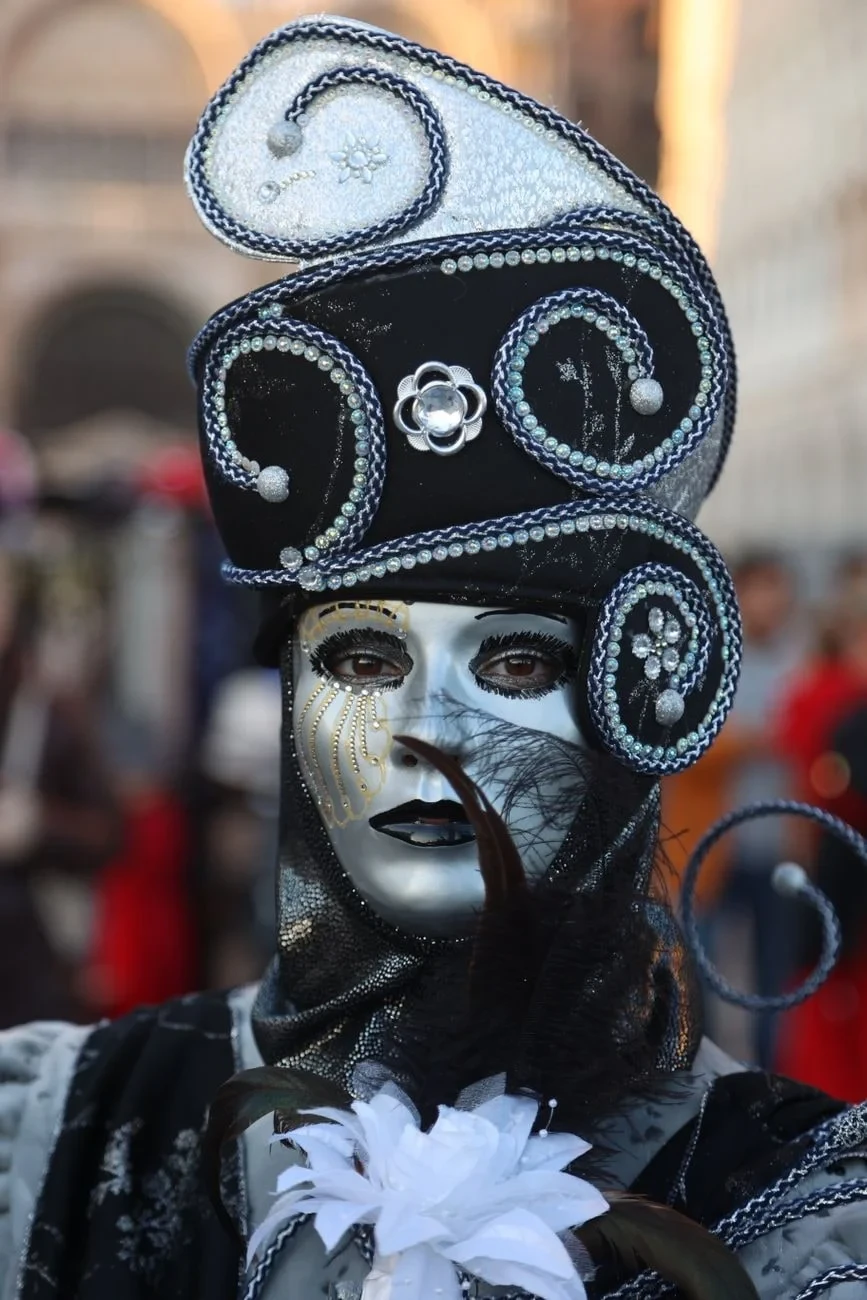
A beaded and feathered Venetian mask in a carnival setting. Festive masks as social objects. Worn or displayed, they signal permission to step outside everyday life.
Photograph by Toni Canaj, via Pexels.
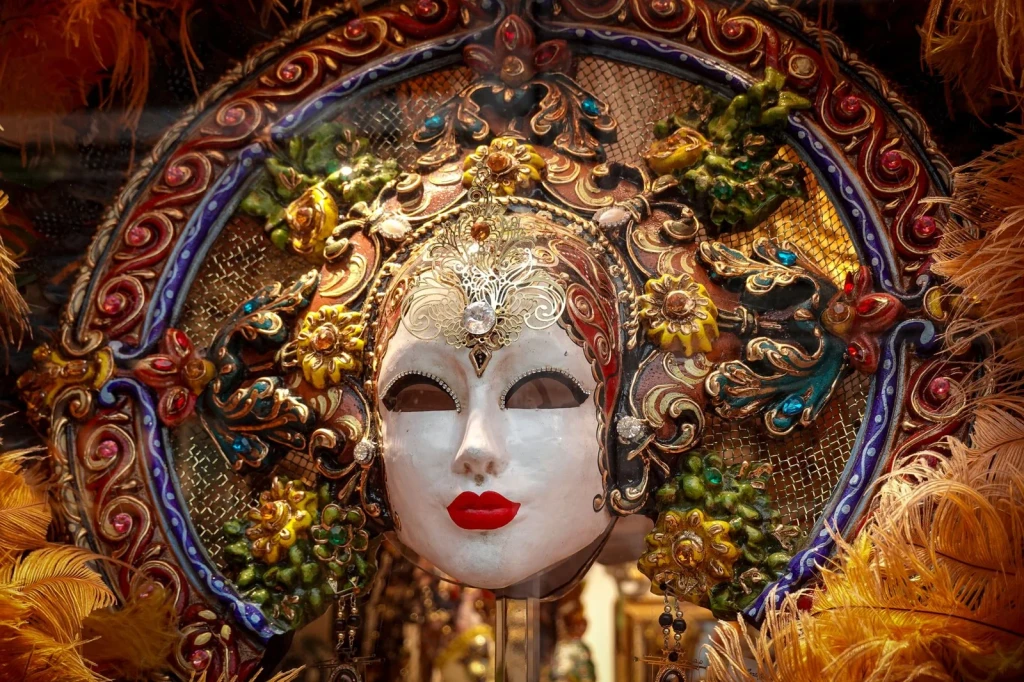
A detailed mask showcases intricate craftsmanship and vibrant colors. The elaborate design raises questions about what we conceal when we dress ourselves.
Photograph by Magda Ehlers, via Pexels.
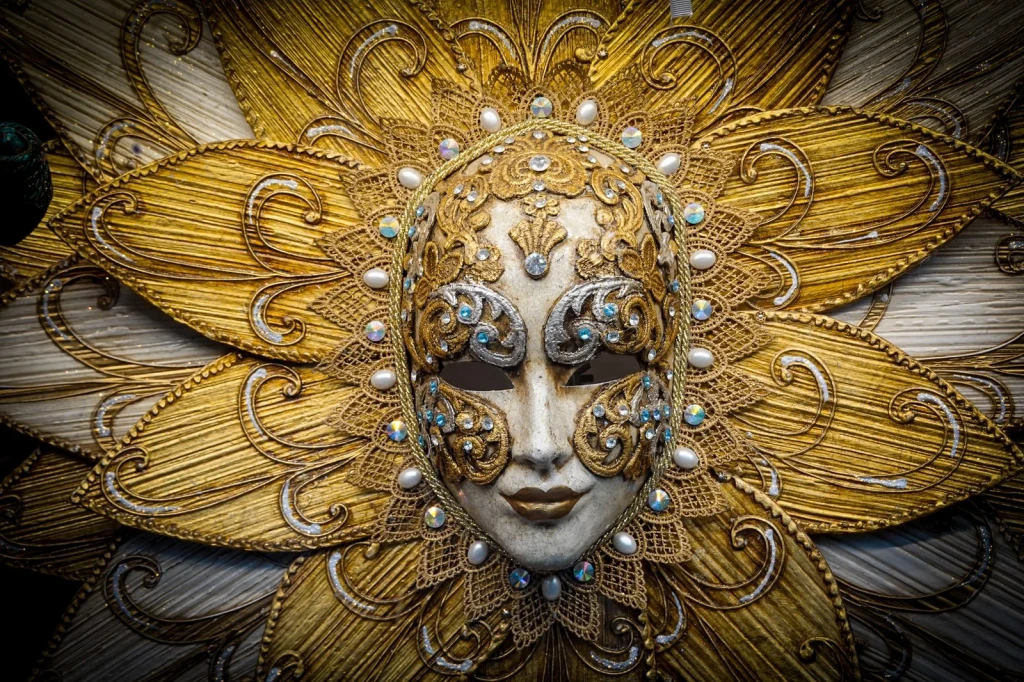
Golden ornaments and jeweled details create an exquisite surface. Masks like this one transform the wearer into someone elaborate, someone other.
Photograph by Magda Ehlers, via Pexels.
