3D Gallery
The Fruit That Fights Back
Enter gallery
The Fruit That Fights Back is a 3D virtual gallery on MyGallery3D, a walkable online exhibition of 14 works. Step inside and explore it in your browser: no app, no headset.
Walk into this 3D virtual museum of chili peppers in your browser. The heat you are about to look at was never meant for you.
Capsaicin is a defence. It binds to TRPV1, the receptor that also reports real burning, so a mammal chewing a pepper feels fire. Birds do not: their TRPV1 ignores it. That is the point. Mammal molars grind the seeds to nothing, while a bird passes them whole and drops them somewhere they can germinate. The plant is not flavouring your dinner. It is choosing its courier.
Wilbur Scoville measured heat in 1912 by dissolving dried pepper in alcohol, diluting it in sugar water, and feeding it to five trained tasters until at least three could no longer detect it. The dilution was the score. A bell pepper rates zero. A jalapeño runs 4,000 to 8,000. The Carolina Reaper was recorded at 1,641,183.
Chilies appear in Spanish records by 1493. Unlike the black pepper vine, which grows naturally only in the tropics, they would grow in temperate gardens. They reached Italy by 1526, Germany in 1543, and the Balkans by 1569, where they were processed into paprika. Portuguese traders carried them to Africa, Goa and Malacca. The earliest known Chinese mention dates to 1591.
Most mammals take the hint. We did not. The psychologist Paul Rozin calls eating chilies a constrained risk, like riding a roller coaster: an extreme sensation you can enjoy because you know it will not really harm you. So the defence became a crop. In 2024 the world grew 45 million tonnes of green chillies and peppers, and China grew 39% of them.
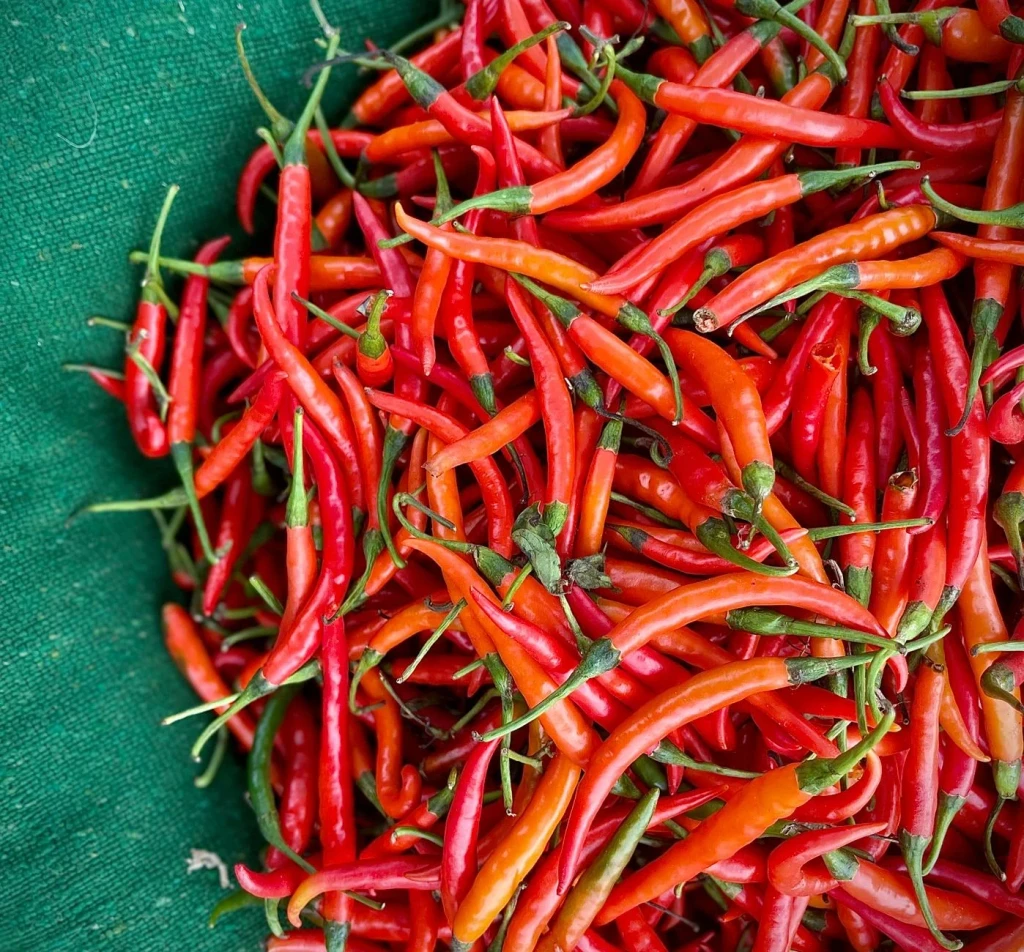
Red chilies stacked together reveal their texture and color. A simple arrangement that announces the subject of this exhibition. the fruit that fights back.
Photograph by Nishant Aneja, via Pexels.
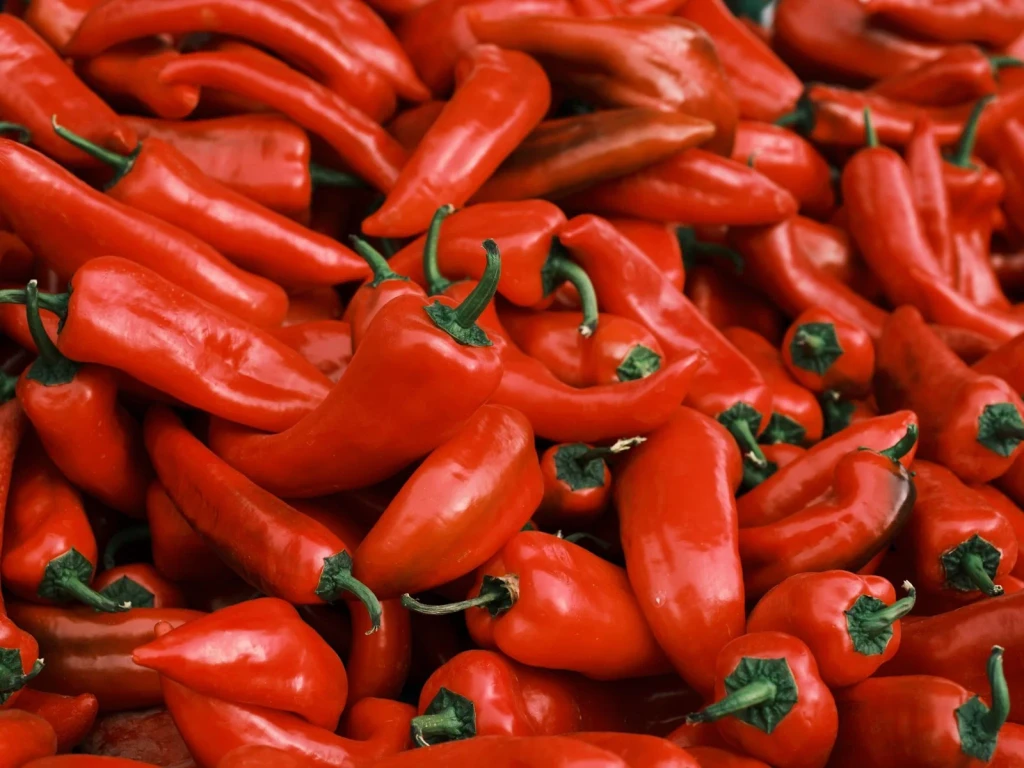
Vibrant red chili peppers clustered together showcase their organic texture and vivid presence. A study in natural arrangement.
Photograph by Engin Akyurt, via Pexels.
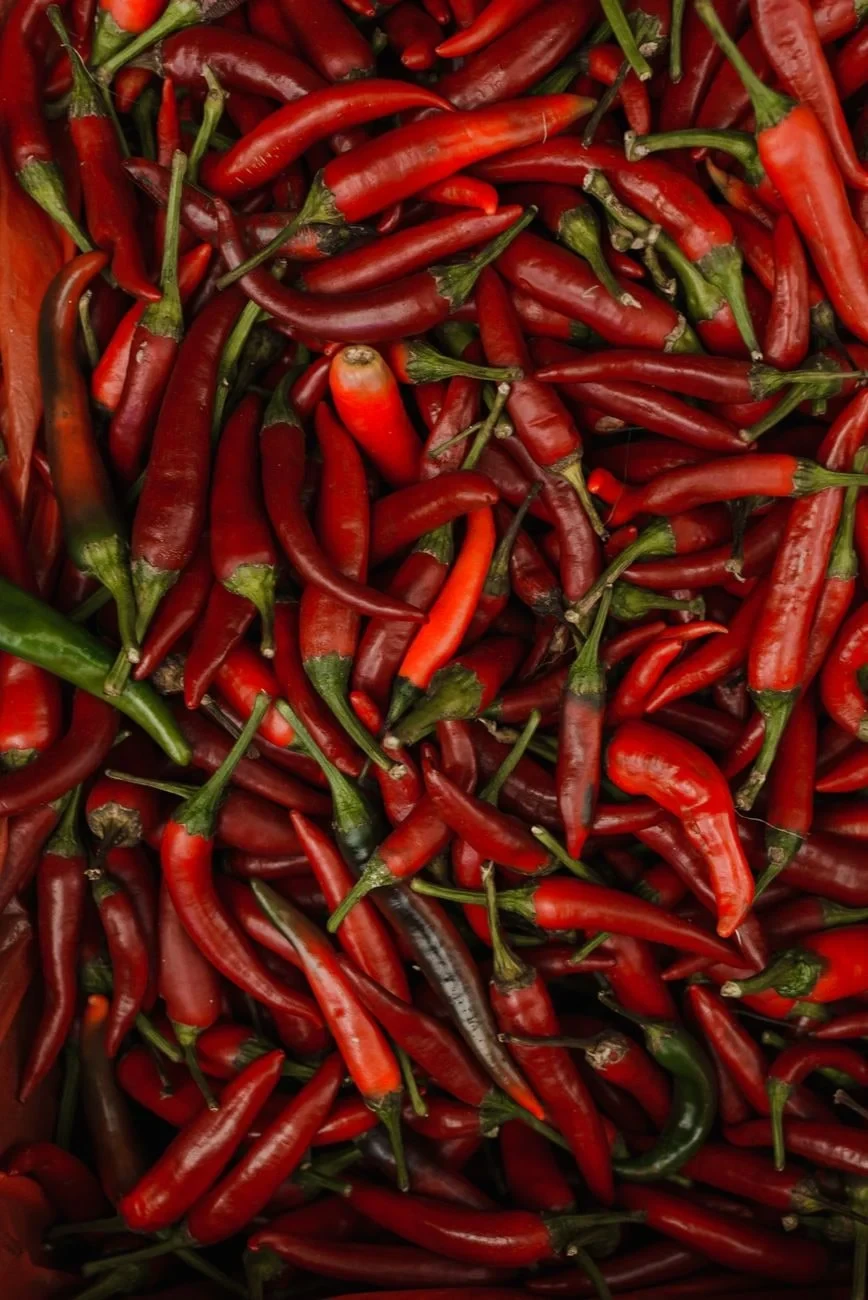
Red chilies grouped in their natural setting. A straightforward portrait of the exhibition's subject.
Photograph by Arina Krasnikova, via Pexels.
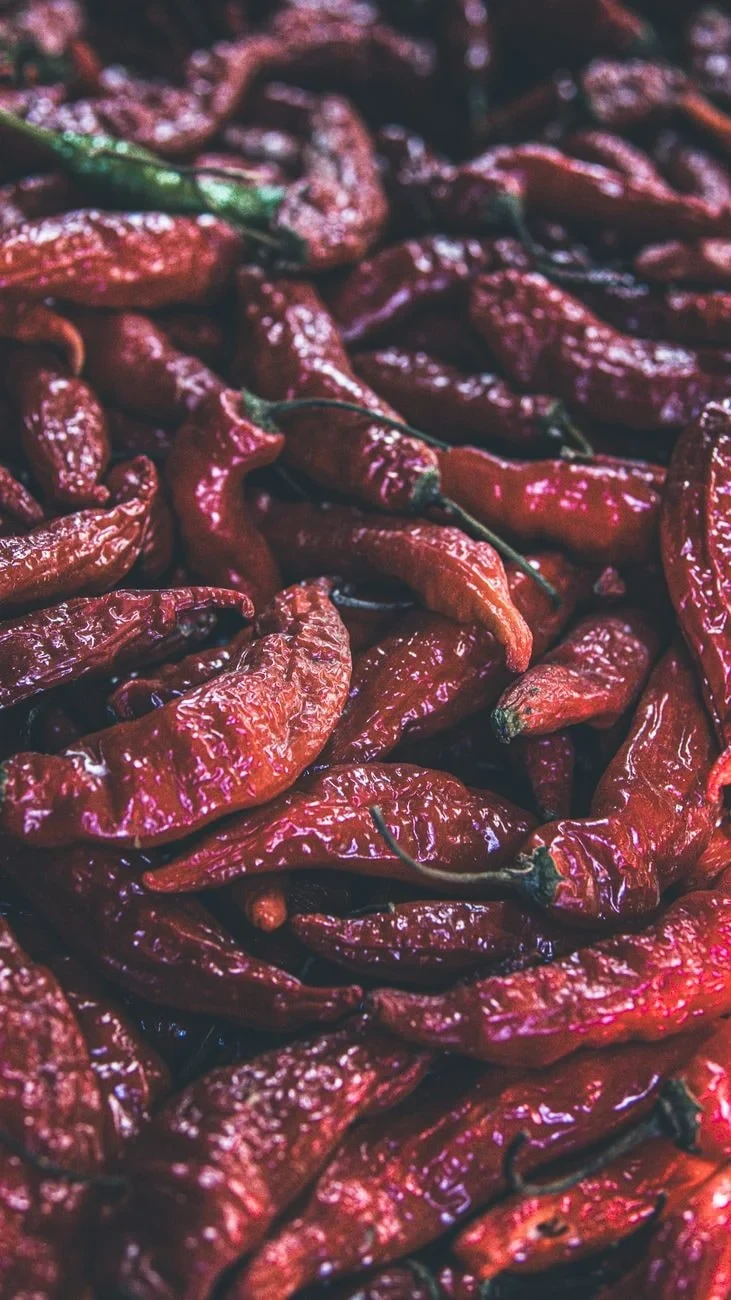
A close study of fresh red chili peppers. Texture and color are everything here.
Photograph by Enzo Renz, via Pexels.
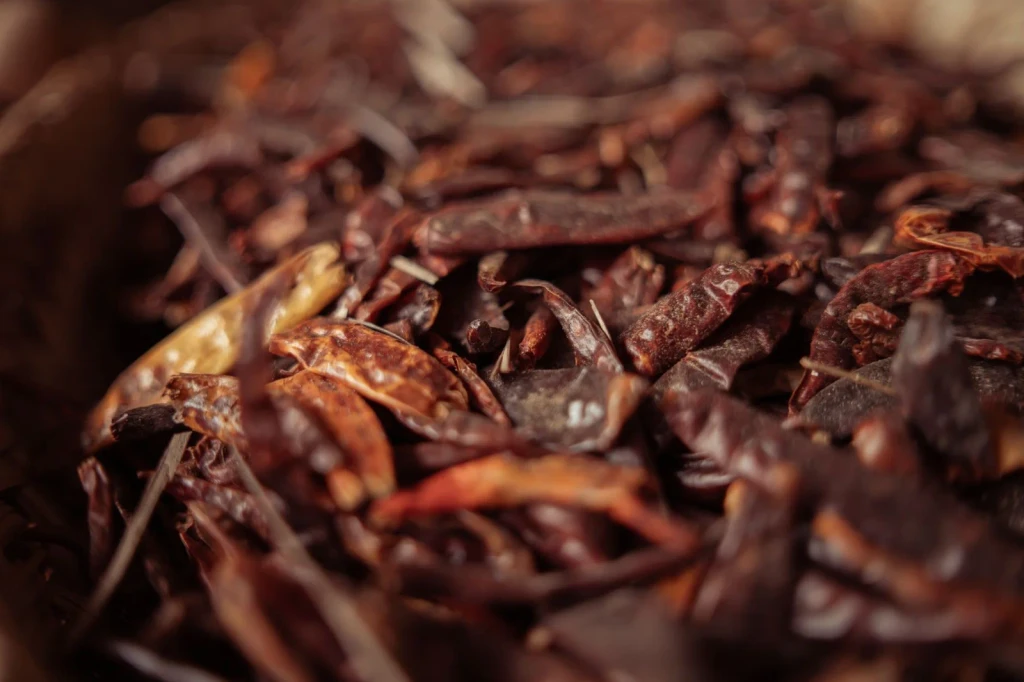
Time transforms fresh peppers into weathered forms. Wrinkled skin holds concentrated heat. The fight continues long after harvest.
Photograph by Denys Gromov, via Pexels.
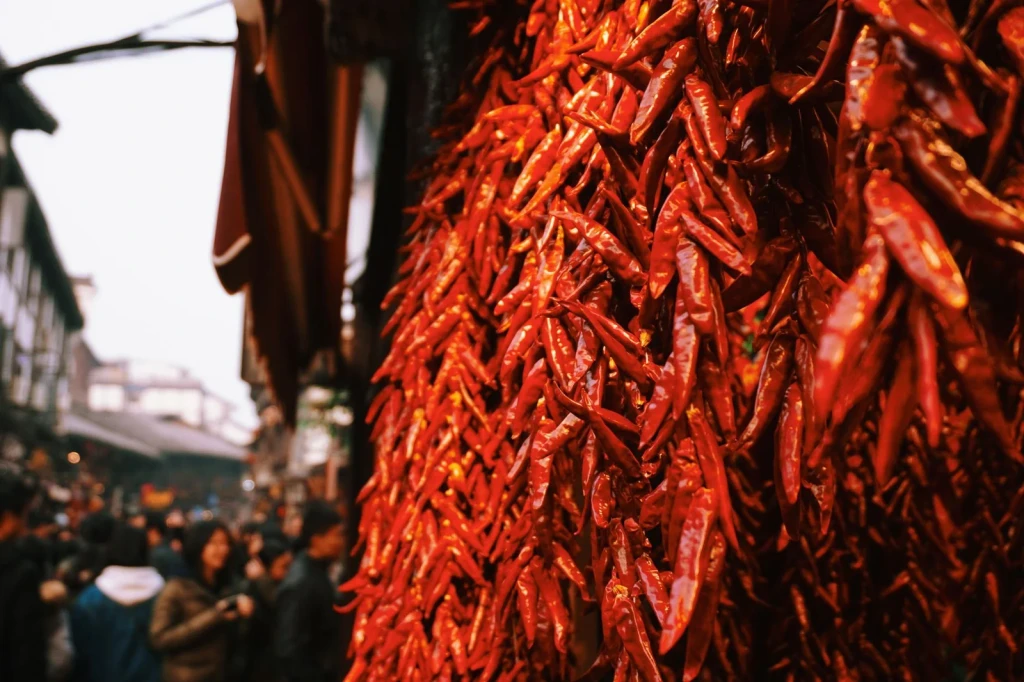
Red chilies among the crowd and energy of a street market. The fruit in its social context.
Photograph by sklei, via Pexels.
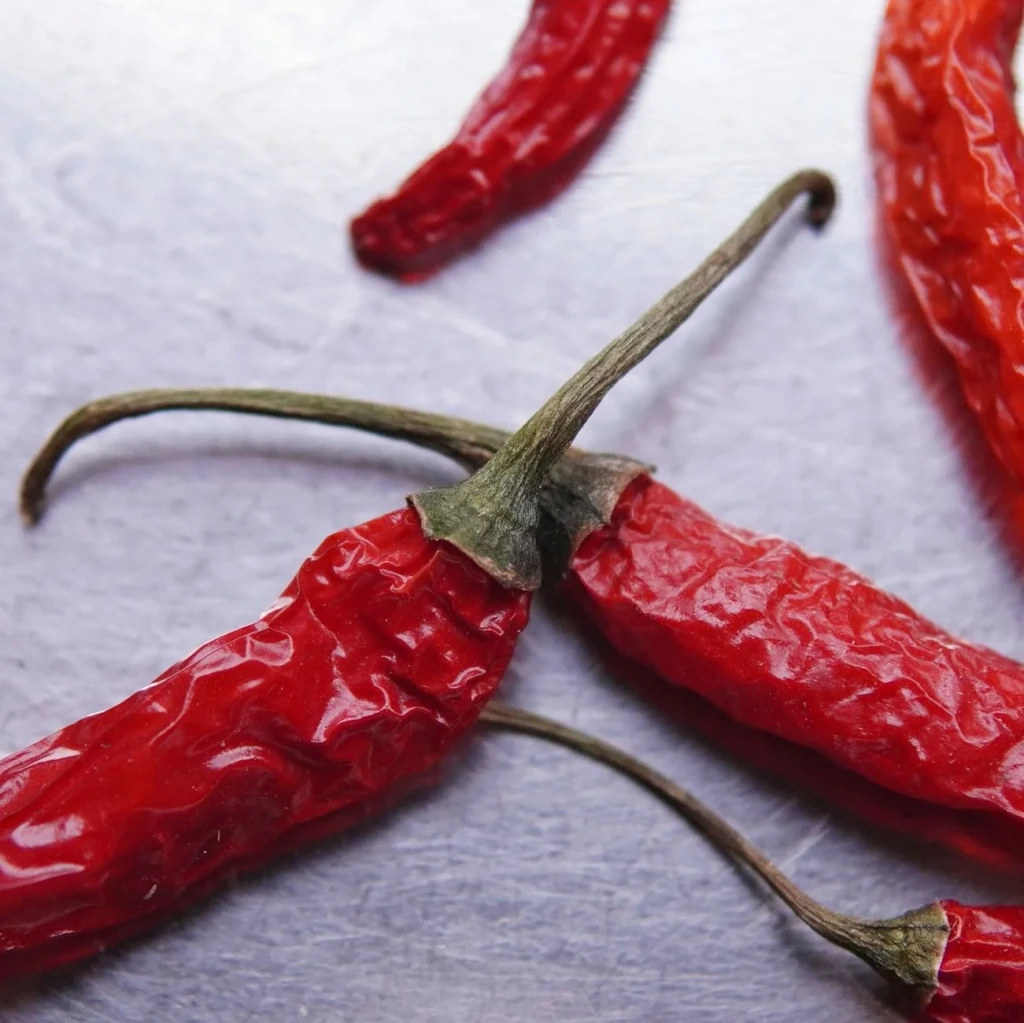
Red dried chili peppers rest on a metallic surface in close detail. The shift from fresh to dried speaks to transformation and endurance.
Photograph by Tridib Mal, via Pexels.
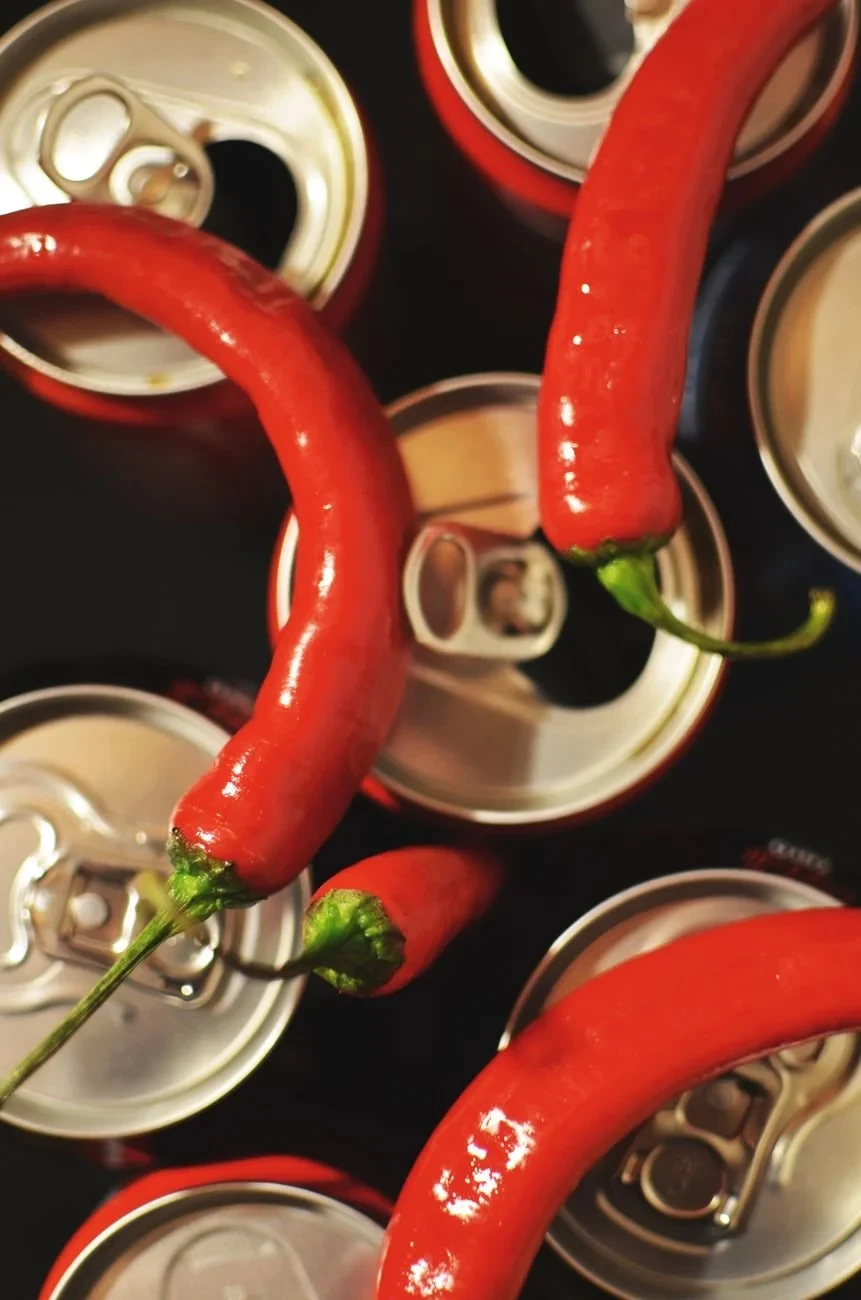
Red chili peppers rest on soda cans in this overhead view. The pairing suggests an unexpected dialogue between heat and coolness.
Photograph by Breakingpic, via Pexels.
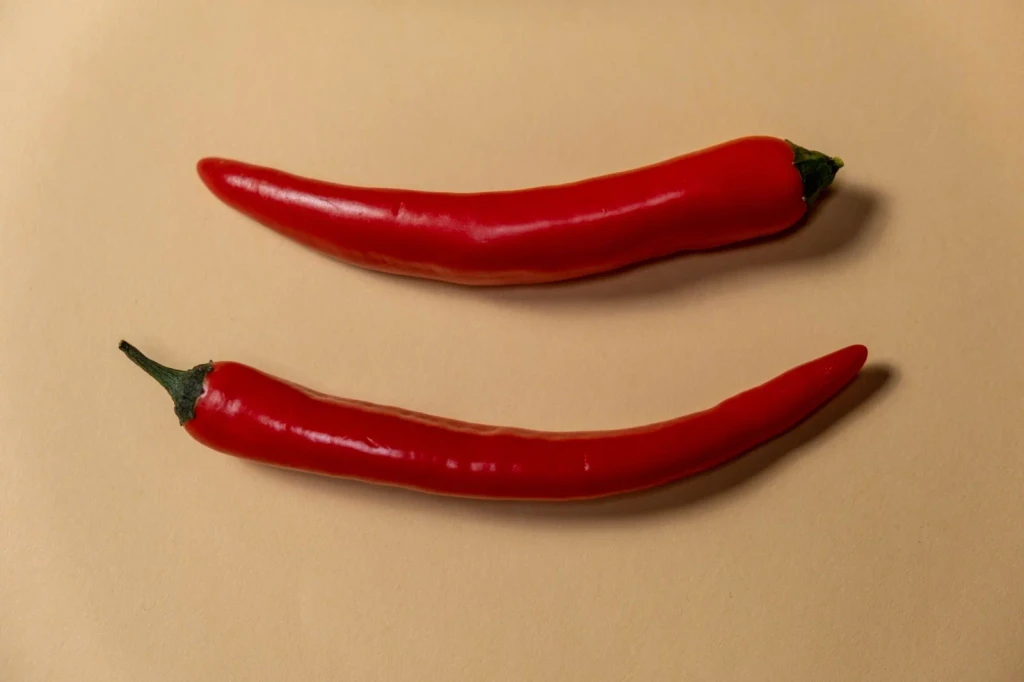
Two vibrant red peppers against a neutral ground. The simplicity frames what makes these fruits formidable. Color becomes weapon.
Photograph by cottonbro studio, via Pexels.
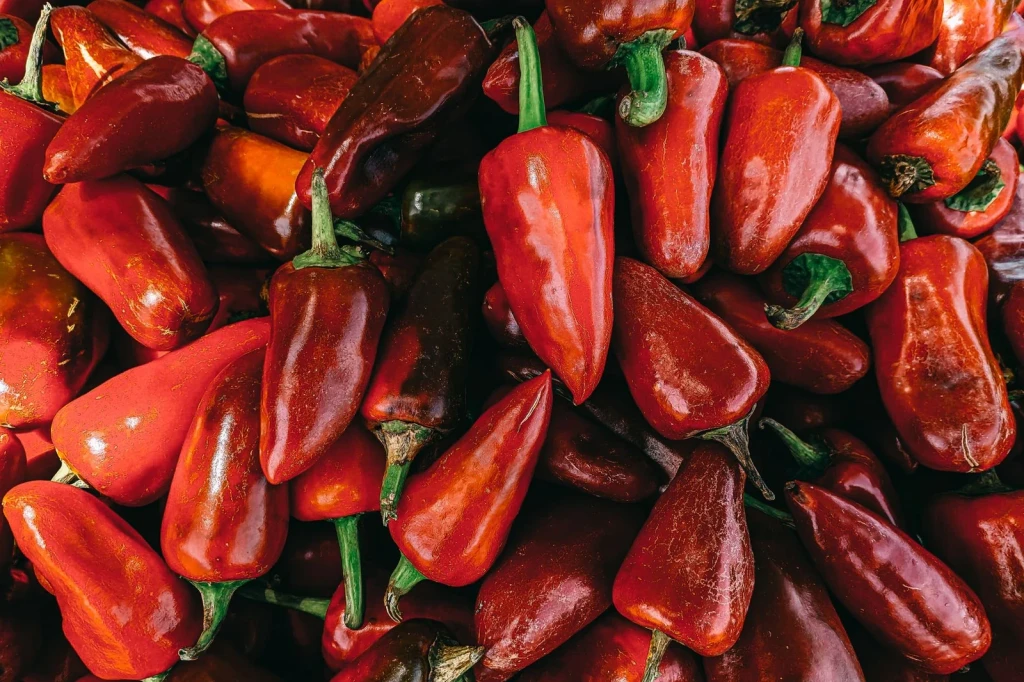
Fresh red chili peppers pile together in close detail. Their rich color and organic forms invite attention to texture and natural variation.
Photograph by Shivam Patel, via Pexels.
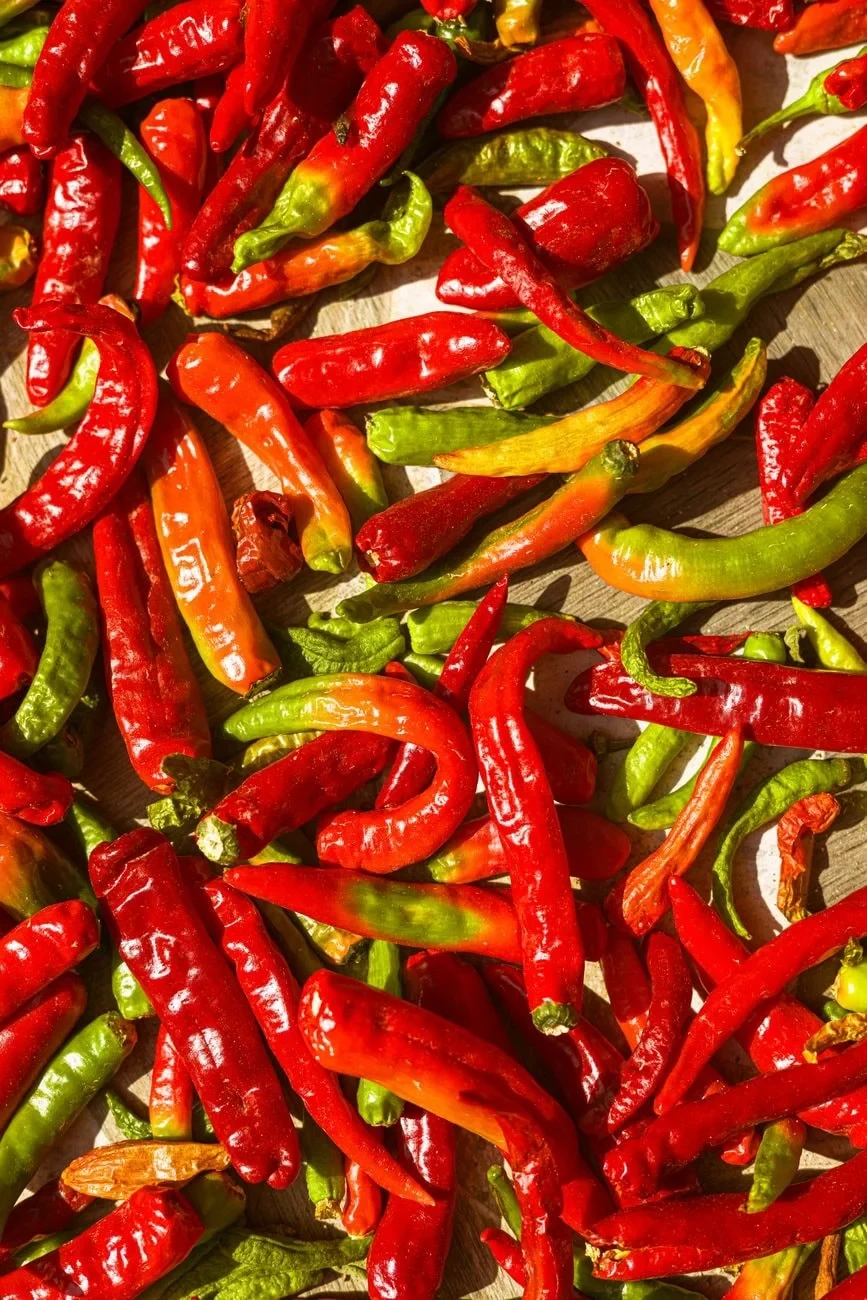
Red and green chili peppers spread across a flat lay. The colorful array presents variety within a single subject.
Photograph by Iqbal farooz, via Pexels.
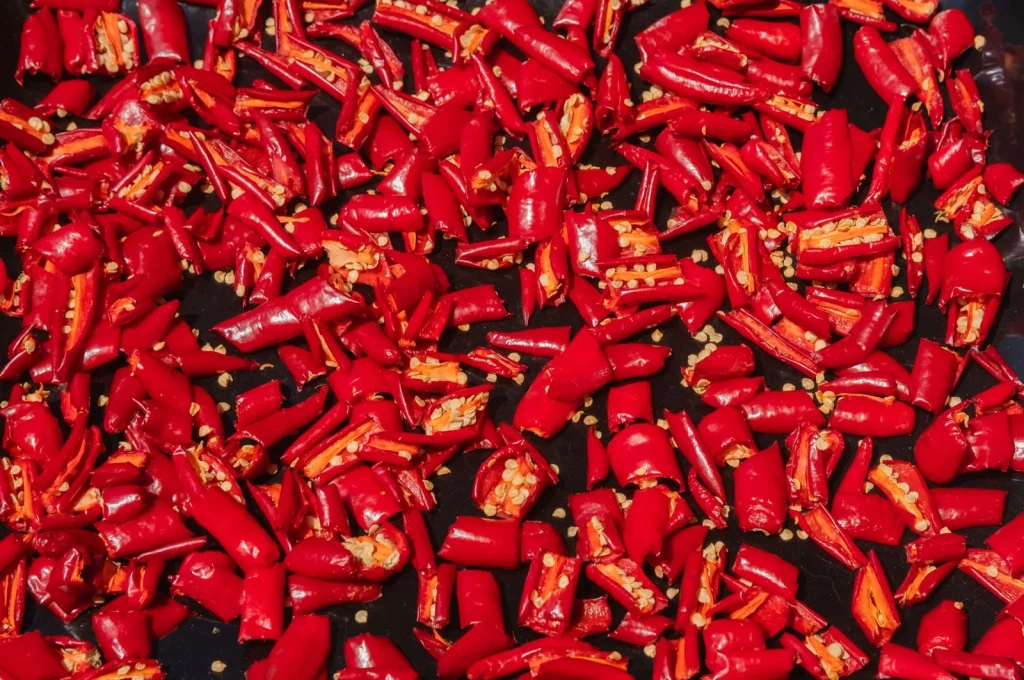
Sliced open on dark ground, these peppers show their spicy seeds in sharp detail. The interior heat made visible.
Photograph by Doğan Alpaslan Demir, via Pexels.
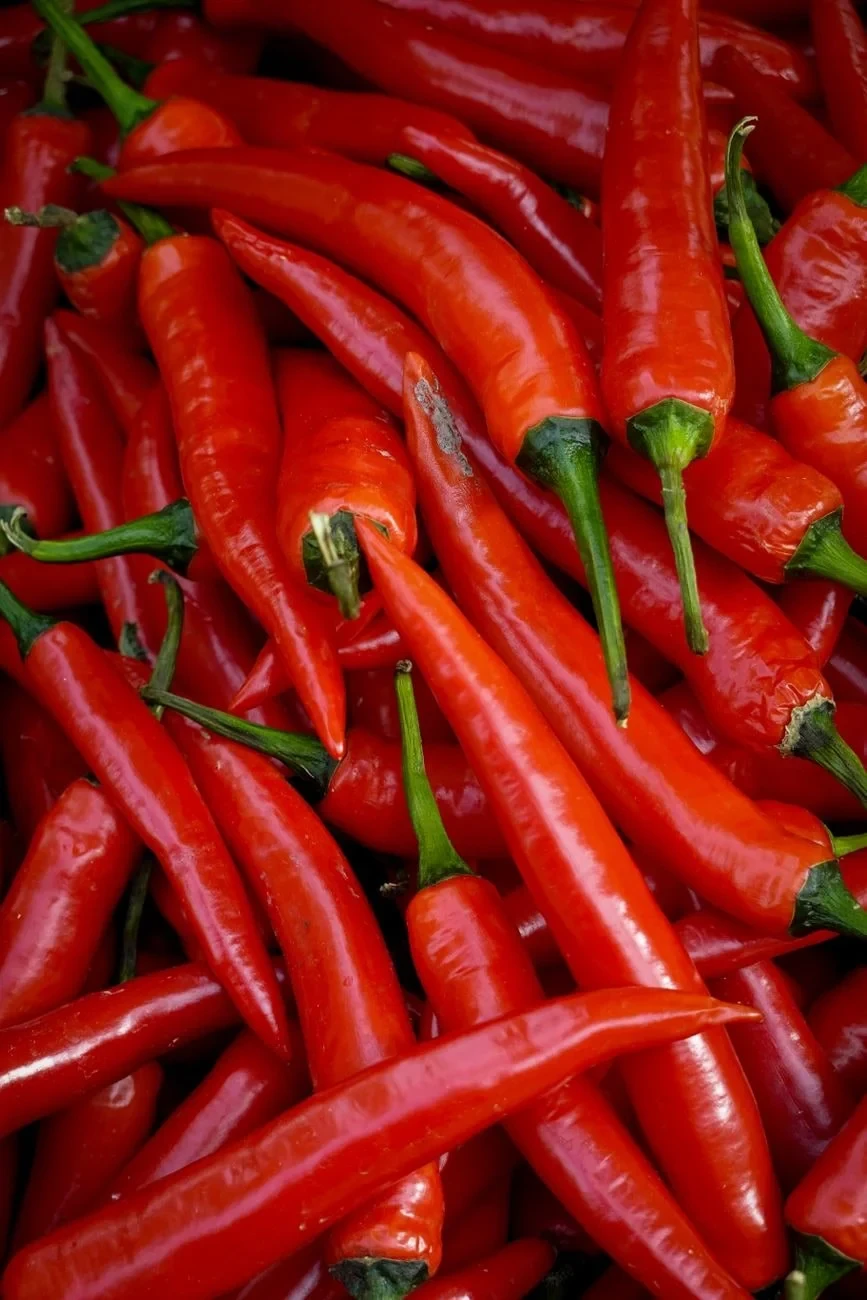
Fresh red chilies presented as a visual idea. Spicy food imagined through vibrant close-up photography.
Photograph by Magda Ehlers, via Pexels.
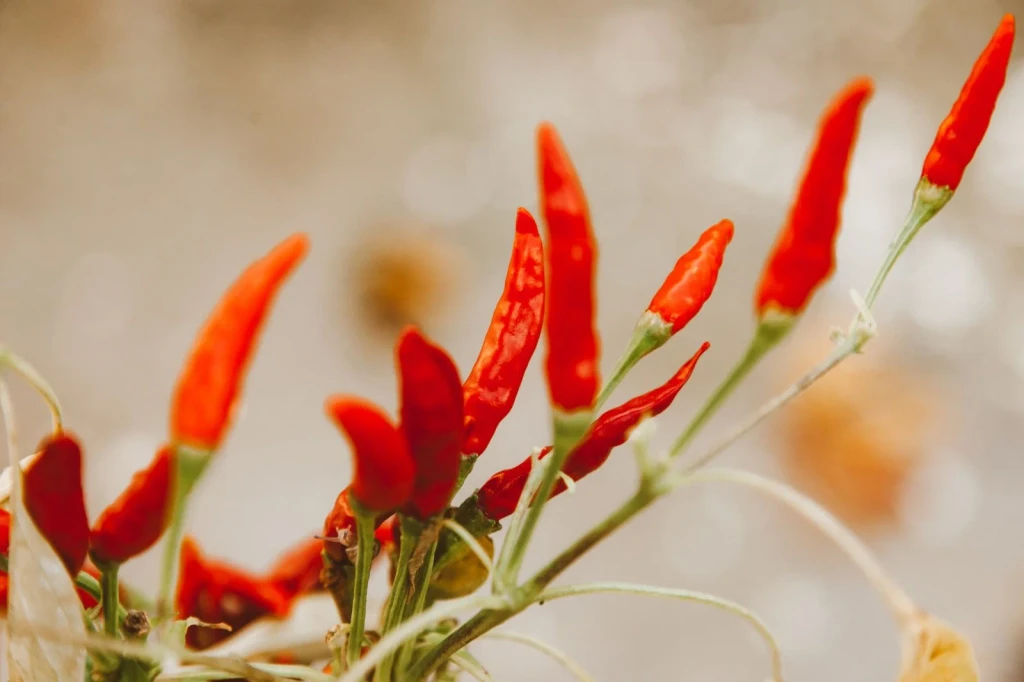
A close-up of red chili peppers draws the eye to their form. Selective focus isolates the subject, emphasizing the quiet intensity of a single element.
Photograph by ROMAN ODINTSOV, via Pexels.
