3D Gallery
Every Typewriter Shouted
Enter gallery
Every Typewriter Shouted is a 3D virtual gallery on MyGallery3D, a walkable online exhibition of 13 works. Step inside and explore it in your browser: no app, no headset.
Step into a 3D virtual museum of typewriters and walk the room in your browser, machine by machine.
The first commercially successful typewriter could print only upper-case letters. People who received its output found the mechanical, all-upper-case writing impersonal and even insulting. It cost about $125, roughly the average annual income per person at the time, and by December 1874 only 400 had been sold. Historians have estimated that some form of the typewriter was invented 52 times before one of them stuck.
Christopher Latham Sholes spent five years rearranging his alphabet. Remington's mechanics finished the job in a few months, moving the R key into the place previously allotted to the period key, supposedly so salesmen could peck out the brand name from a single row. That story is not formally substantiated. Contrary to popular belief, the layout was not designed to slow the typist down.
IBM introduced the Selectric on 31 July 1961. It threw out the basket of typebars and the moving carriage, and used a chrome-plated plastic element, a typeball, that rotated and tilted into position before striking the paper. Inside, mechanical binary coding and two whiffletree linkages chose the character. Three models took 75 percent of the United States market for business electric typewriters.
Before the office wanted them, blind writers did. In 1802 Agostino Fantoni built a machine so his blind sister could write. Between 1801 and 1808 Pellegrino Turri made one for his blind friend Countess Carolina Fantoni da Fivizzano. The Typograph, invented by William Hughes in 1850, had raised keys and became a standard tool in British schools for the blind.
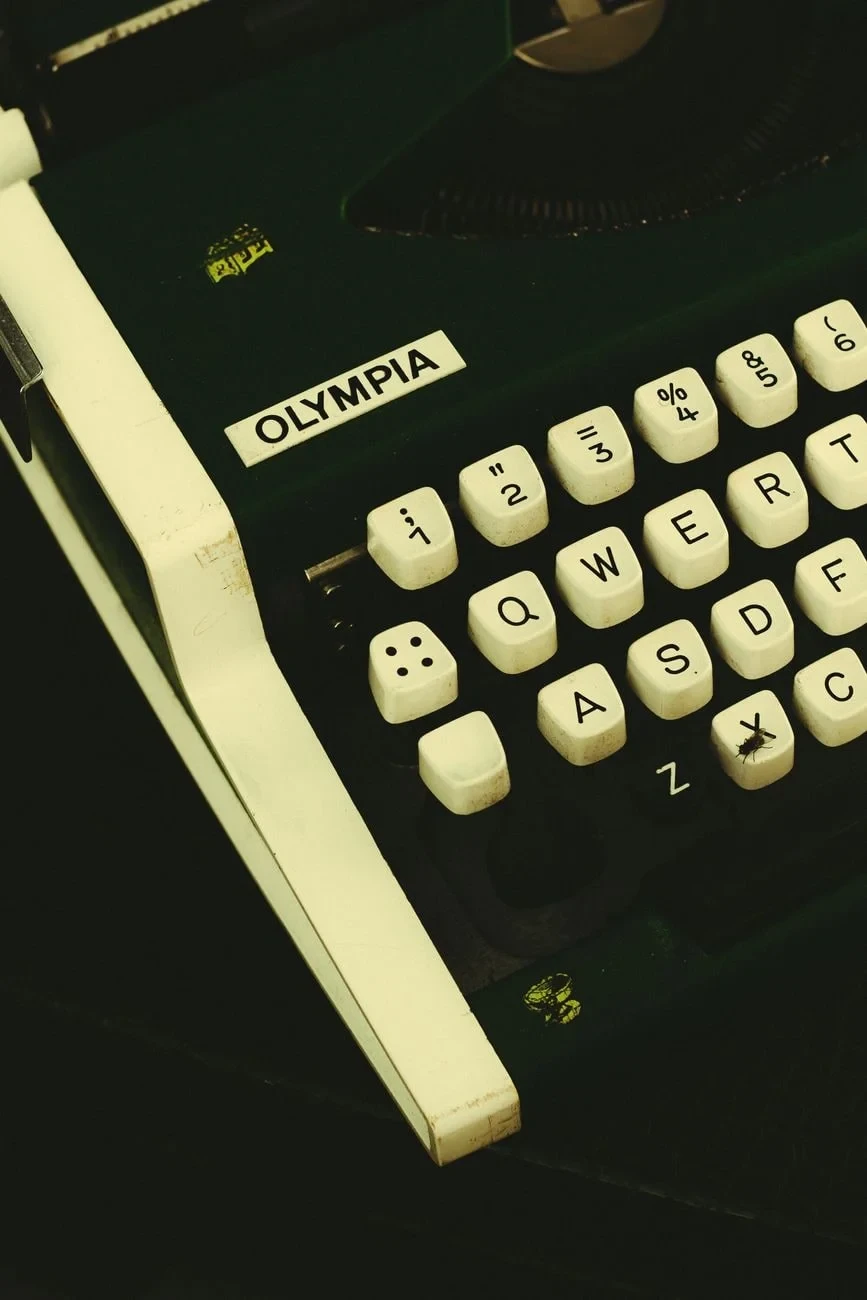
Close view of a vintage Olympia typewriter, its keys and design on display. A particular machine made visible.
Photograph by David Eluwole, via Pexels.
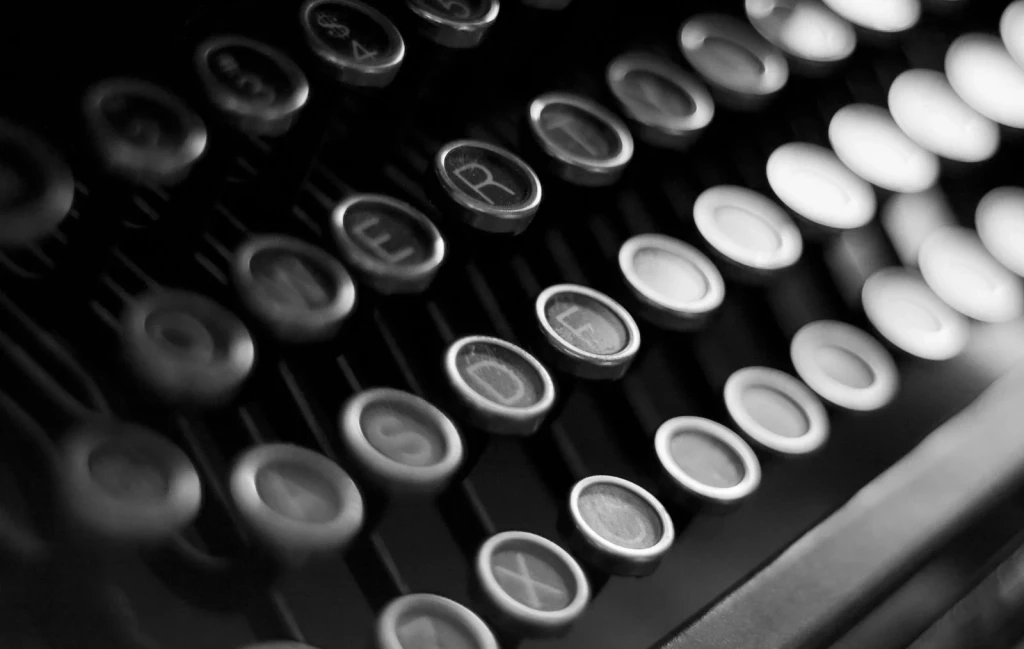
Individual keys appear in stark monochrome. The photograph focuses on the typewriter's interface. Each key represents a voice waiting to speak.
Photograph by CARYN MORGAN, via Pexels.
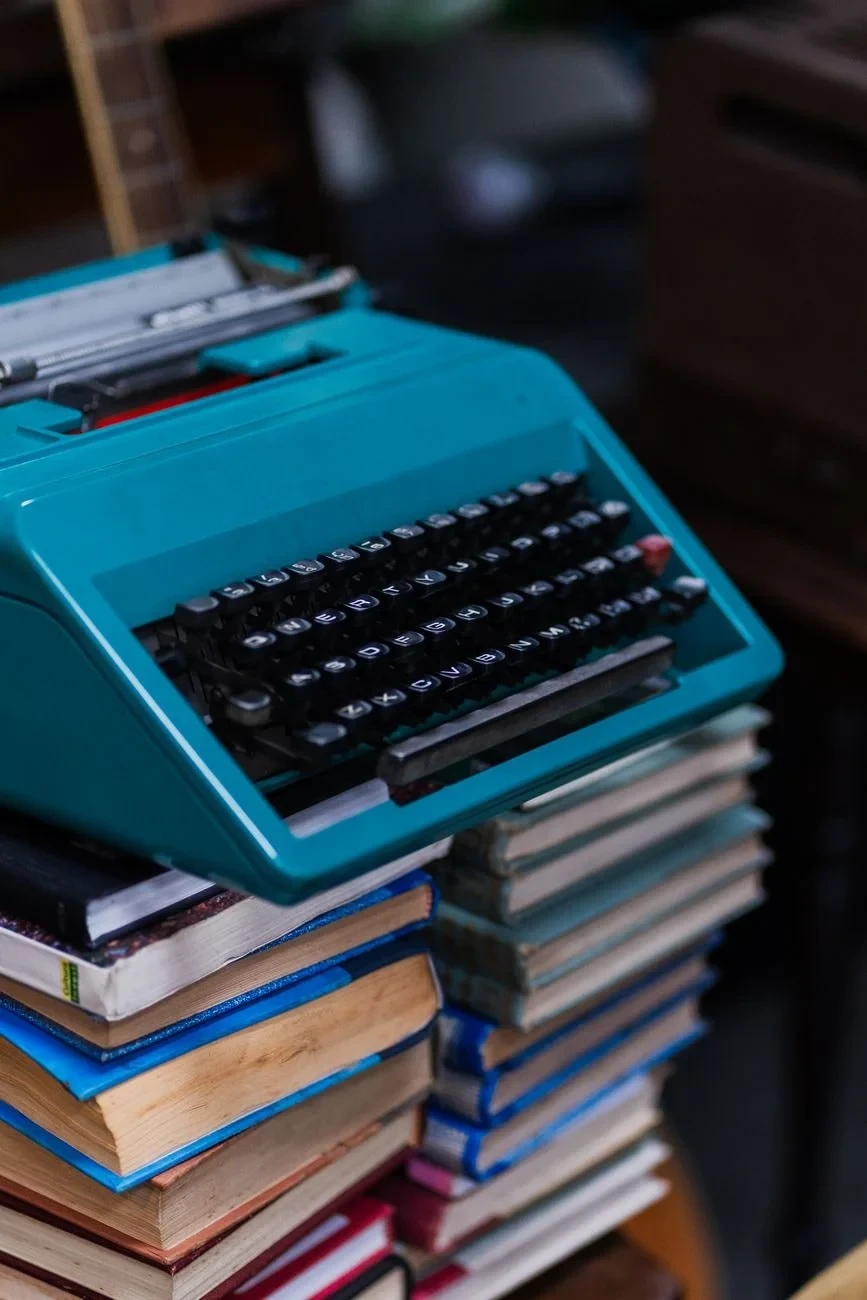
Turquoise keys sit atop a stack of vintage books. The composition suggests creativity and the typewriter's place within a literary environment.
Photograph by Wolf Art, via Pexels.
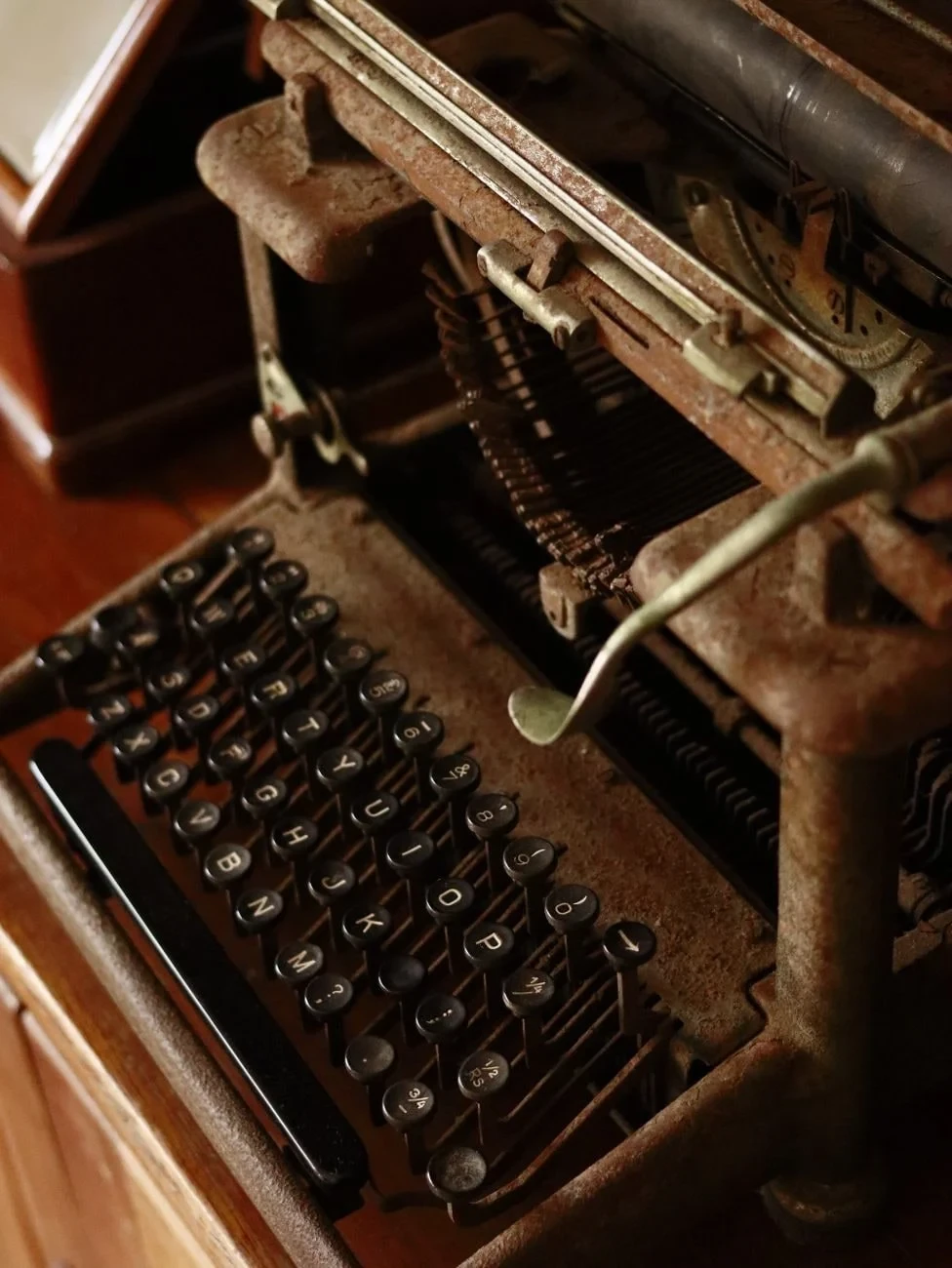
Antique typewriter with metal keys resting on wood. The composition speaks to handmade work and the tactile spaces where writing happened.
Photograph by Aakash Chary, via Pexels.
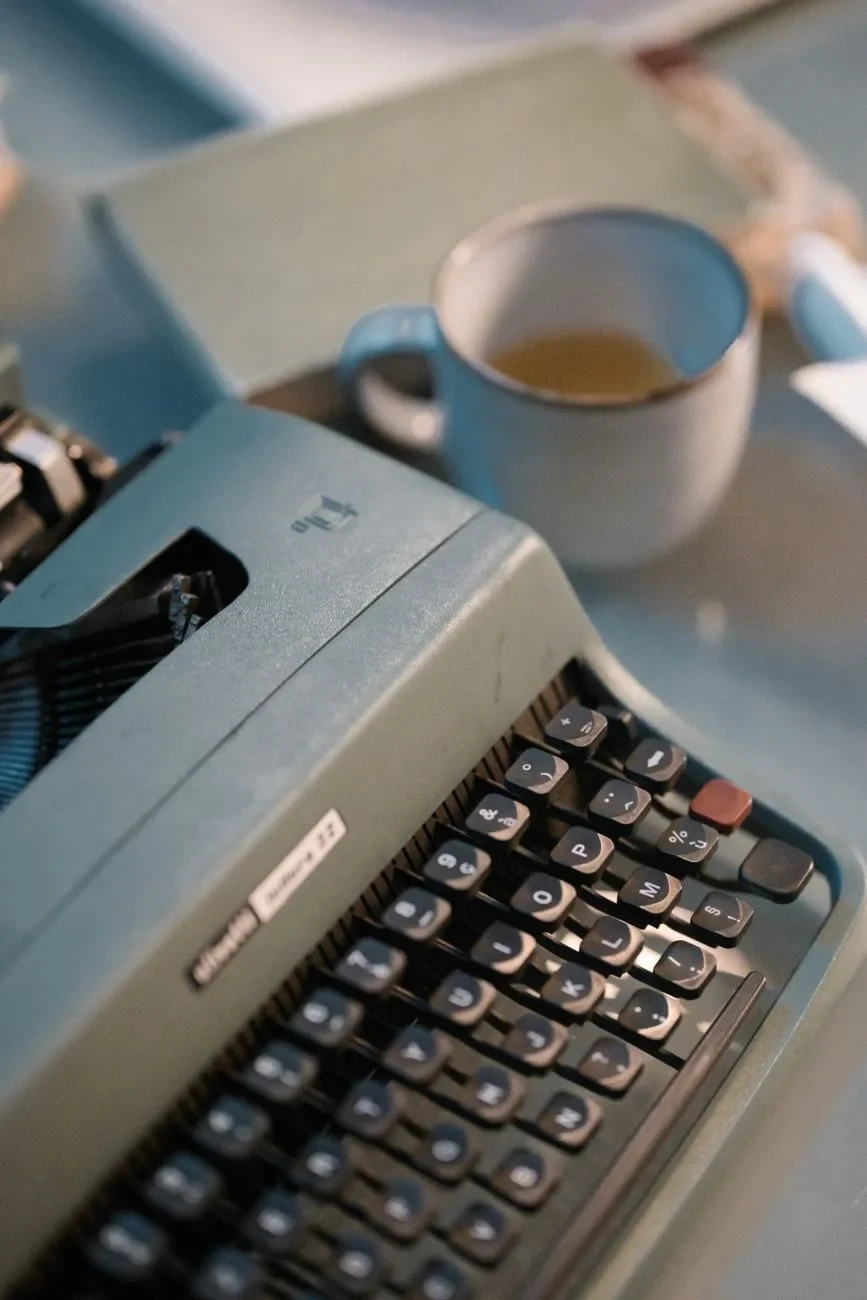
A typewriter shares desk space with a coffee mug, composing a retro work setup. The pairing suggests ritual and focused writing.
Photograph by Ron Lach, via Pexels.
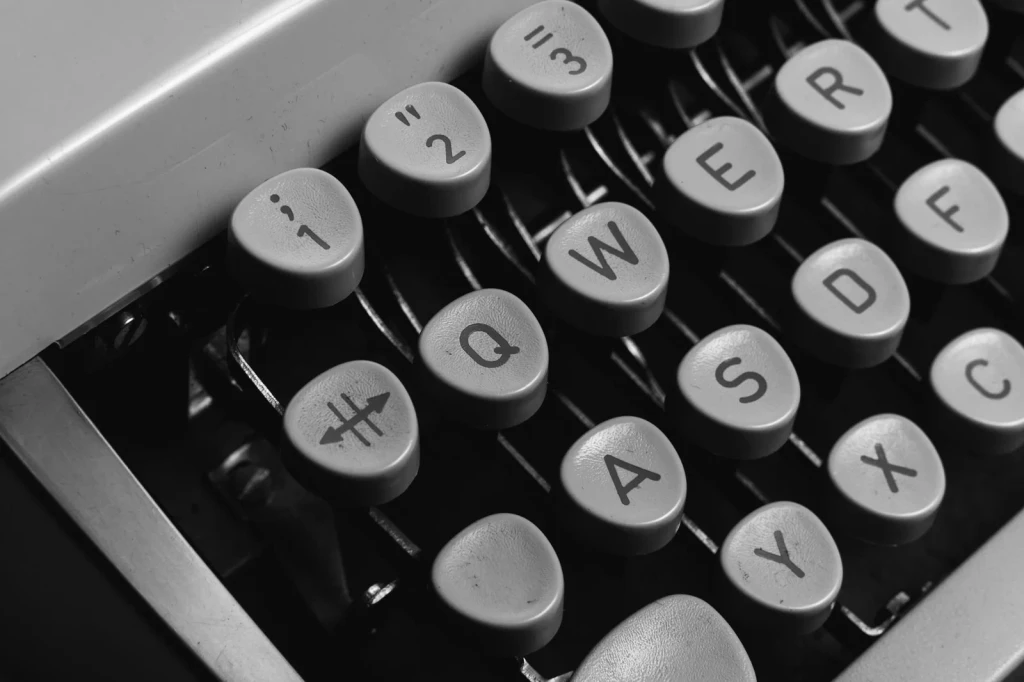
A monochrome study of vintage typewriter keys. The stark contrast emphasizes the designed quality of antique technology. Each key a small monument to mechanical precision.
Photograph by Markus Winkler, via Pexels.
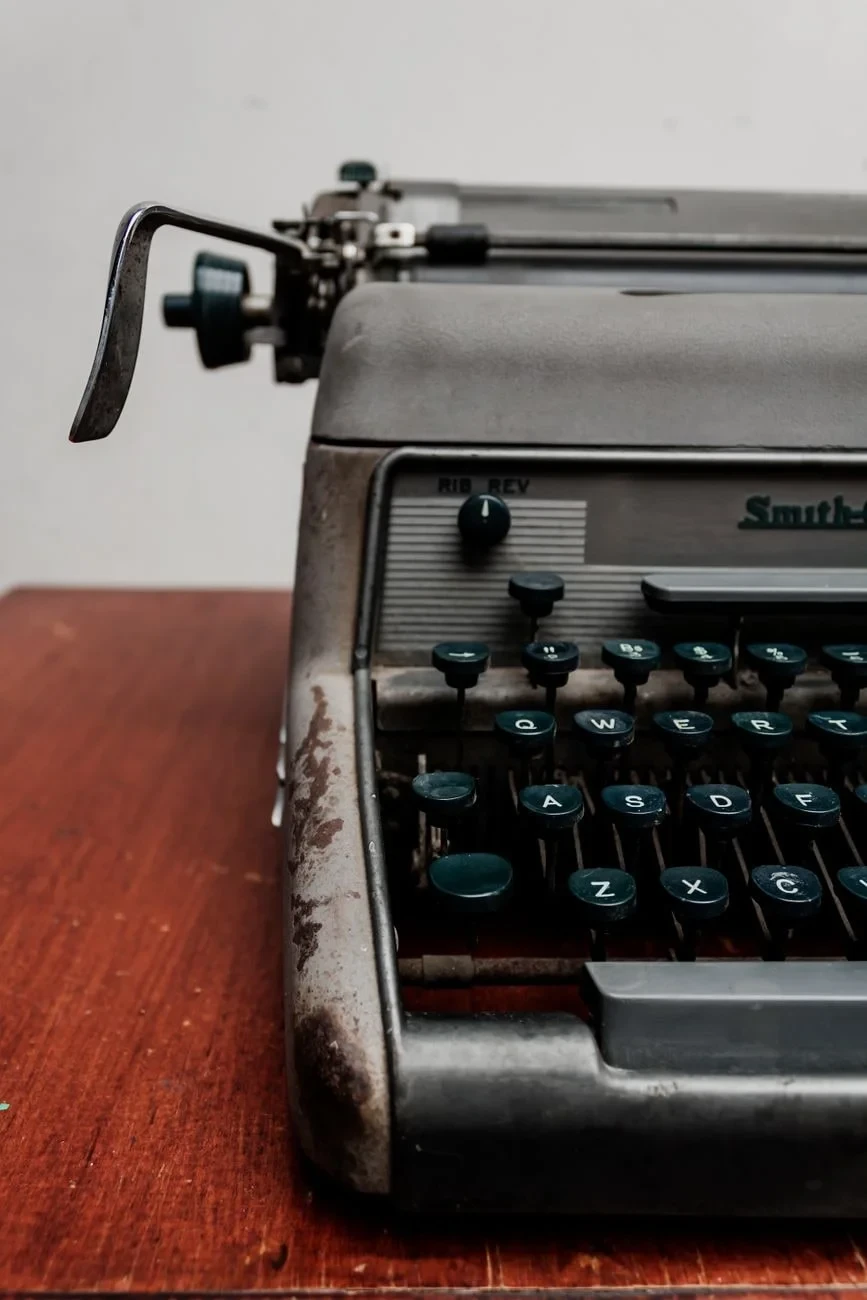
A vintage typewriter rests on wood, evoking a workspace frozen in time. The photograph speaks to typewriters as objects of nostalgia and enduring design.
Photograph by Arturo Añez., via Pexels.
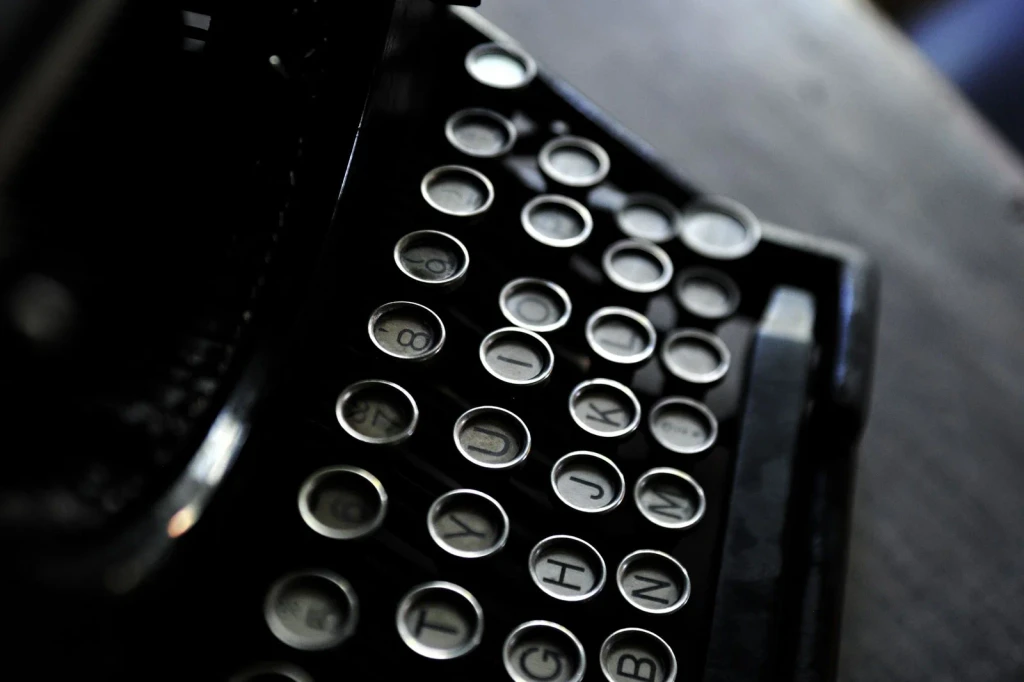
Artistic close-up emphasizing contrast in typewriter keys. The photographer uses light and shadow to transform mechanical parts into visual rhythm.
Photograph by DΛVΞ GΛRCIΛ, via Pexels.
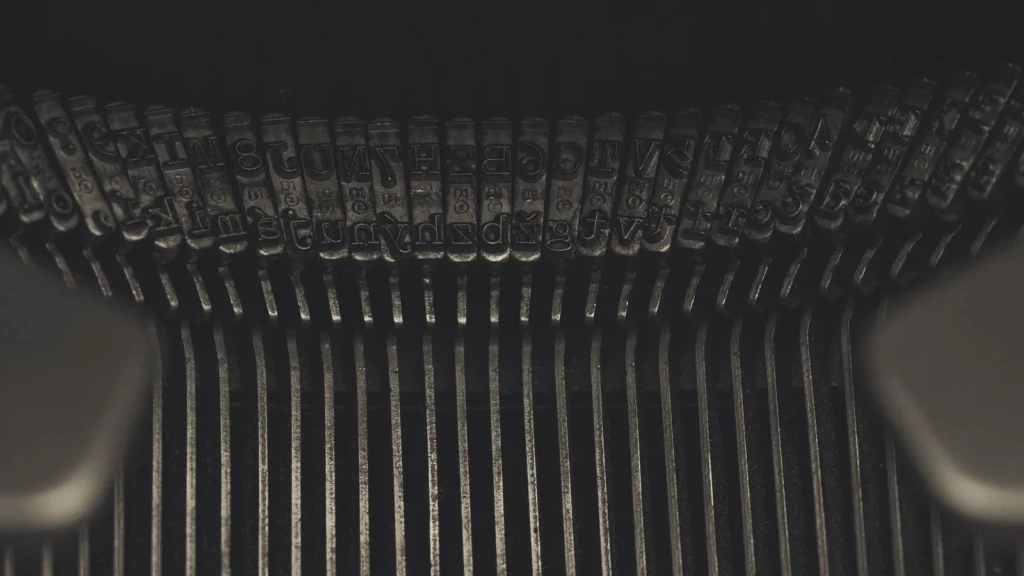
Metallic typebars fill the frame in close detail. This view isolates the typewriter's internal mechanics, revealing the complexity behind every keystroke.
Photograph by Matej, via Pexels.
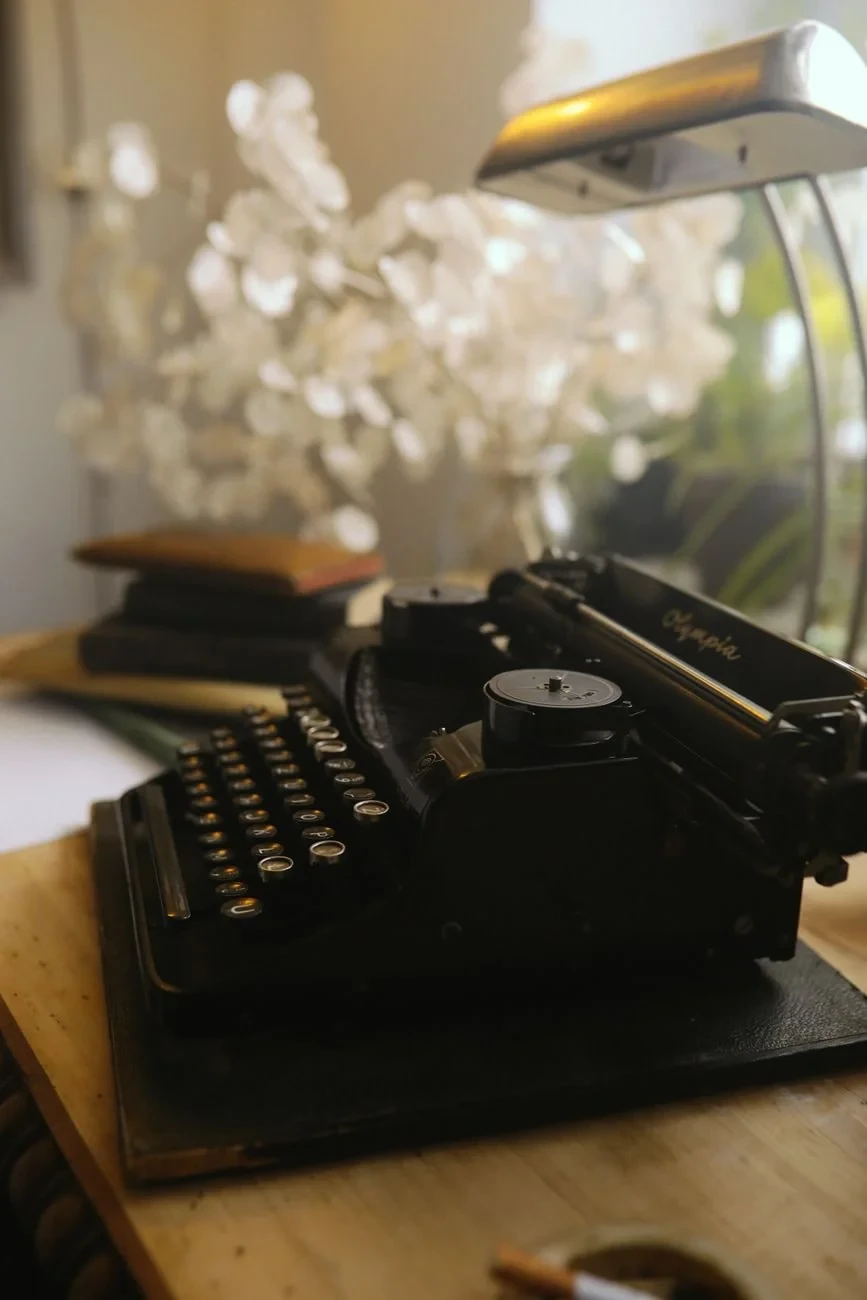
Vintage typewriter in an indoor setting with warm lighting. The photograph situates the machine not as relic but as present object in lived space.
Photograph by KoolShooters, via Pexels.
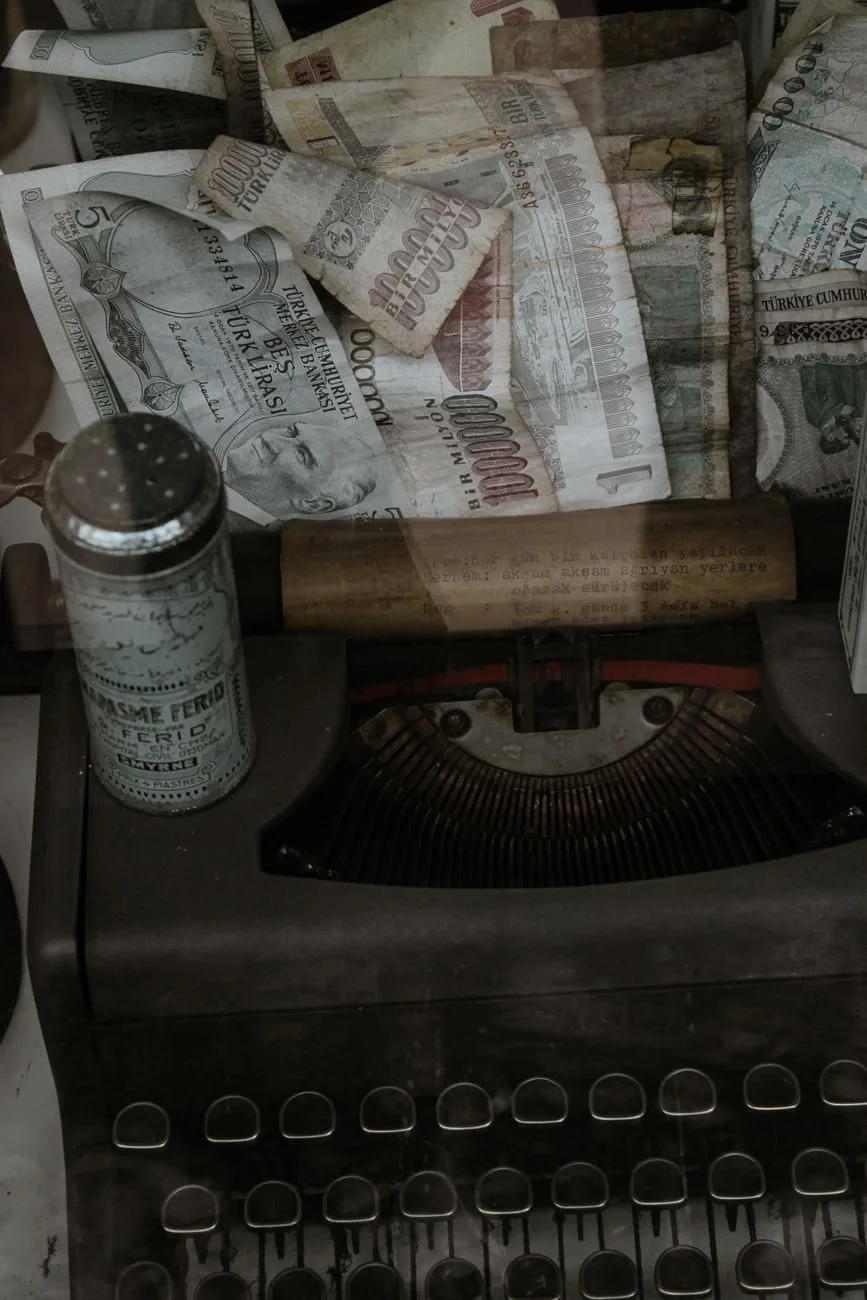
Vintage typewriter alongside old banknotes. The photograph pairs two obsolete forms of communication and value, suggesting what we leave behind.
Photograph by beytlik, via Pexels.
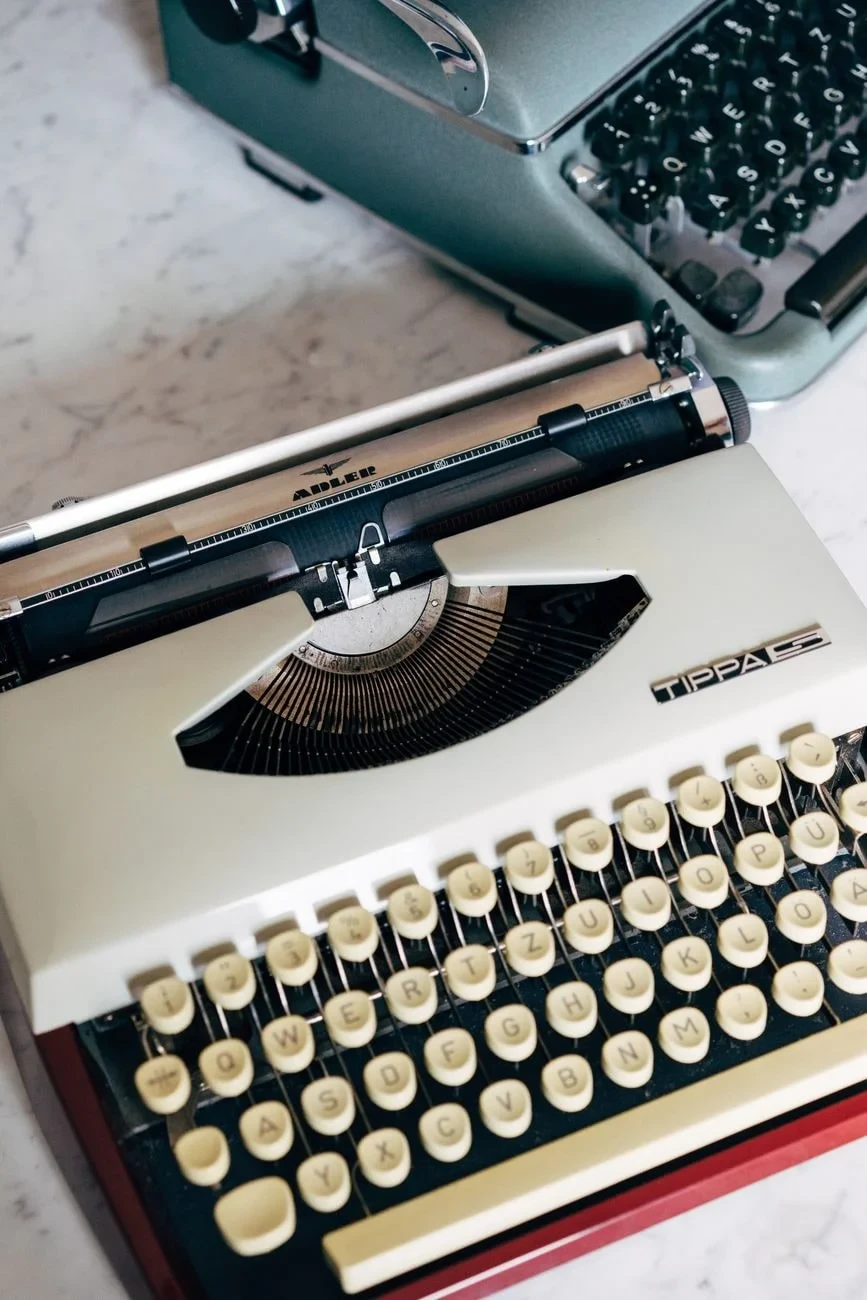
Two vintage typewriters rest on marble. Side by side, they become objects of contemplation. Marble suggests permanence, yet typewriters remain impermanent tools.
Photograph by Markus Winkler, via Pexels.
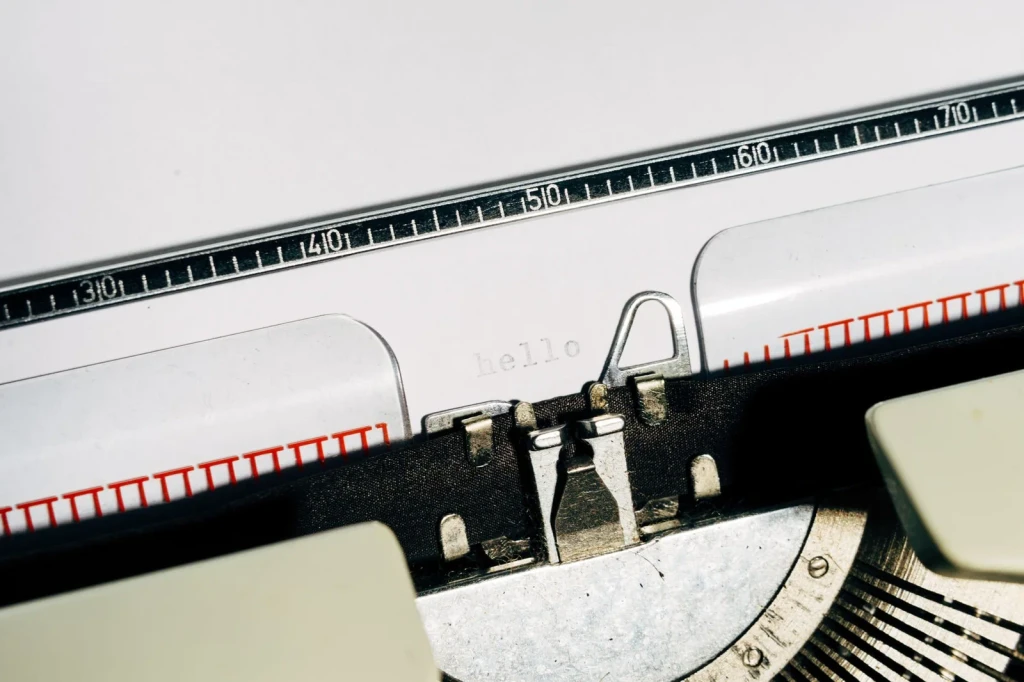
A typewriter speaks in its most basic form. The keys strike paper to spell out a simple greeting, making visible the machine's primary purpose: to amplify human words.
Photograph by Markus Winkler, via Pexels.
