3D Gallery
When Marks Became Writing
Enter gallery
When Marks Became Writing is a 3D virtual gallery on MyGallery3D, a walkable online exhibition of 13 works. Step inside and explore it in your browser: no app, no headset.
Walk through this 3D virtual gallery of the world's writing systems in your browser, and start where writing itself started: with a receipt.
Cuneiform was not invented to tell stories. It grew out of clay tokens used in Mesopotamia to count livestock and grain, and the earliest documents, from Uruk at the end of the 4th millennium BC, are accounts. True writing has been invented from scratch perhaps four times: in Mesopotamia, in Egypt, in China, and in Mesoamerica. Nearly every script alive today, Latin, Arabic, Cyrillic, Brahmic, is a descendant of one of those four.
Clay tablets could be baked hard in a kiln for a permanent record, or left moist and recycled when permanence did not matter. Most surviving tablets are the second kind. They lasted only because fires destroyed the buildings they were stored in and accidentally fired them. An estimated half a million sit in museums today; the British Museum alone holds roughly 130,000.
By the 4th century AD few Egyptians could read hieroglyphs; the last known inscription, the Graffito of Esmet-Akhom at Philae, dates to 394. Knowledge of the script was then lost completely. In July 1799 Napoleon's soldiers demolishing a wall at Fort Julien uncovered the Rosetta Stone: one decree cut three times, in hieroglyphs, Demotic and Greek. Champollion announced the transliteration in 1822.
Pictographs could draw a sheep. They could not write a name. The escape was the rebus principle: a sign was borrowed for any word that sounded like it. In Sumerian the sign for arrow, ti, came to carry that sound wherever it was needed, including the word for life, til. Around 2800 BC the inventory fell from some 1,500 signs to some 600, and writing turned phonological.
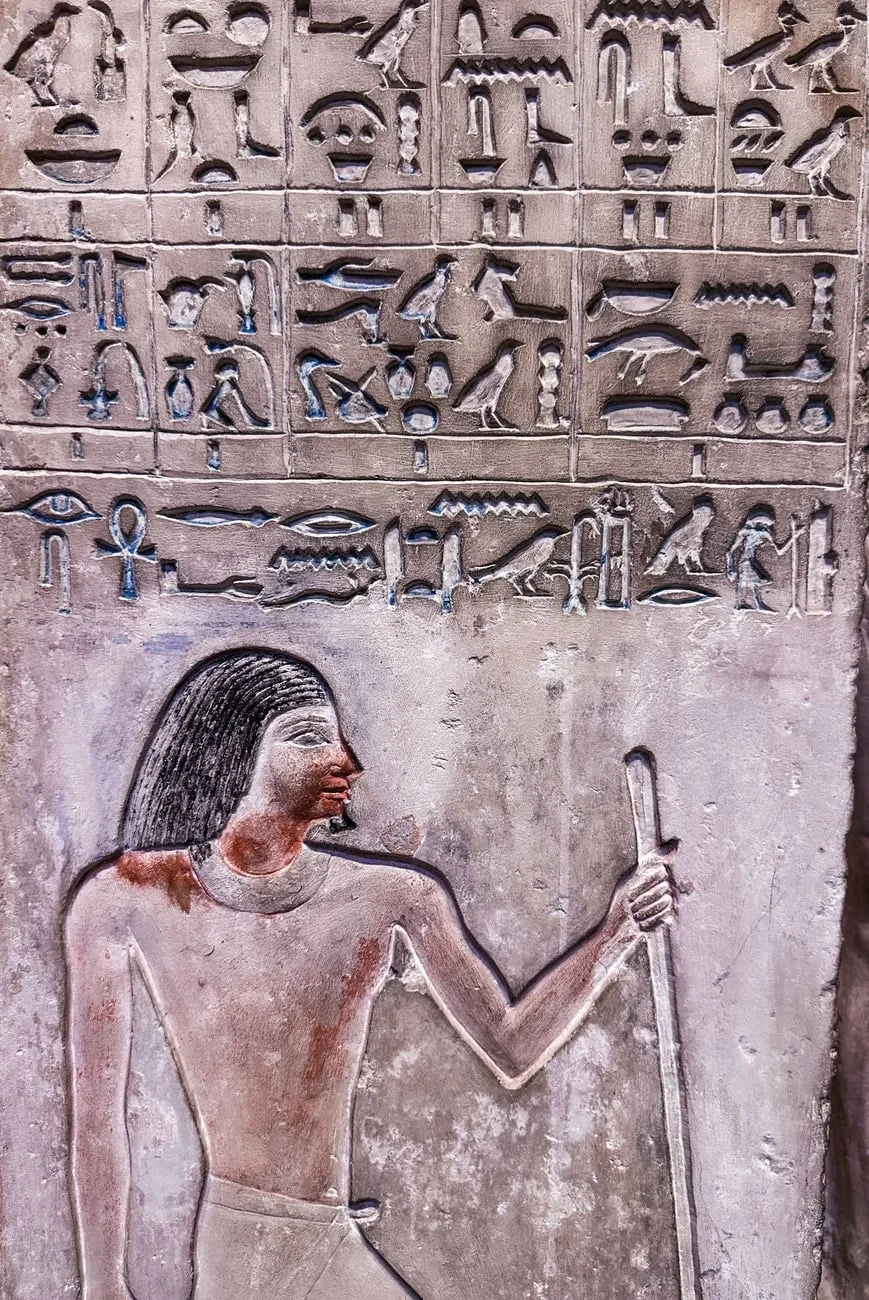
A detailed view of ancient Egyptian hieroglyphic script carved into stone. The image shows how marks on surfaces became a recorded language.
Photograph by hayriyenur ., via Pexels.
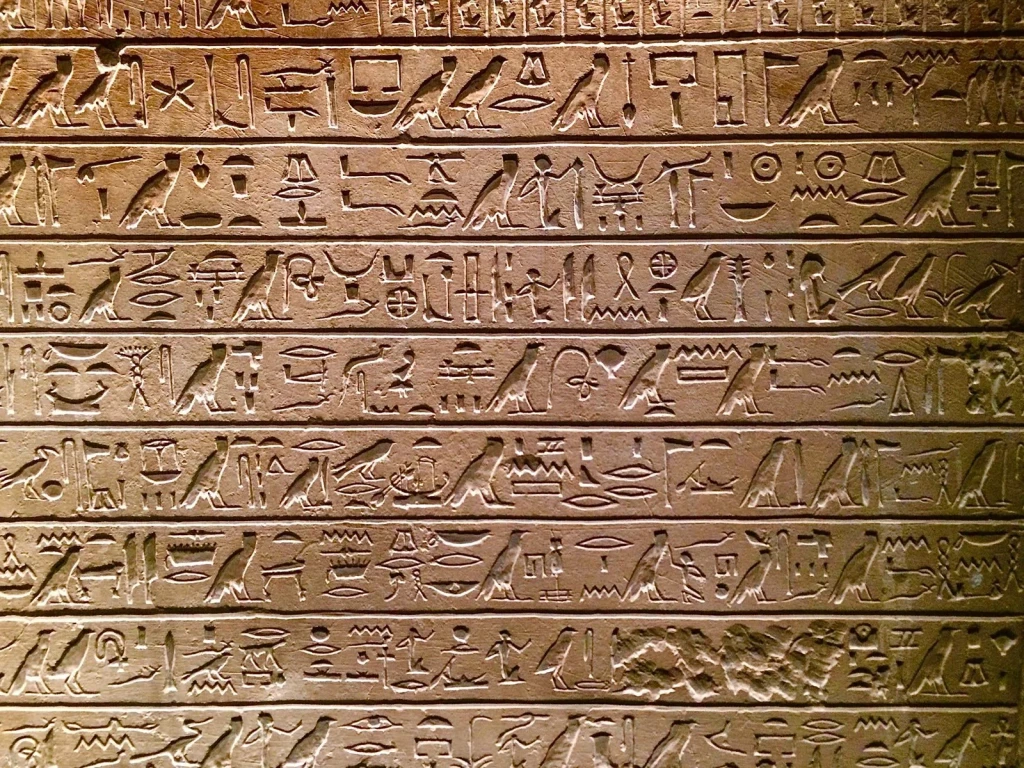
Symbols carved into stone wall. Each figure and sign represents the moment when pictures began to mean specific words and sounds.
Photograph by Alejandro Quintanar, via Pexels.
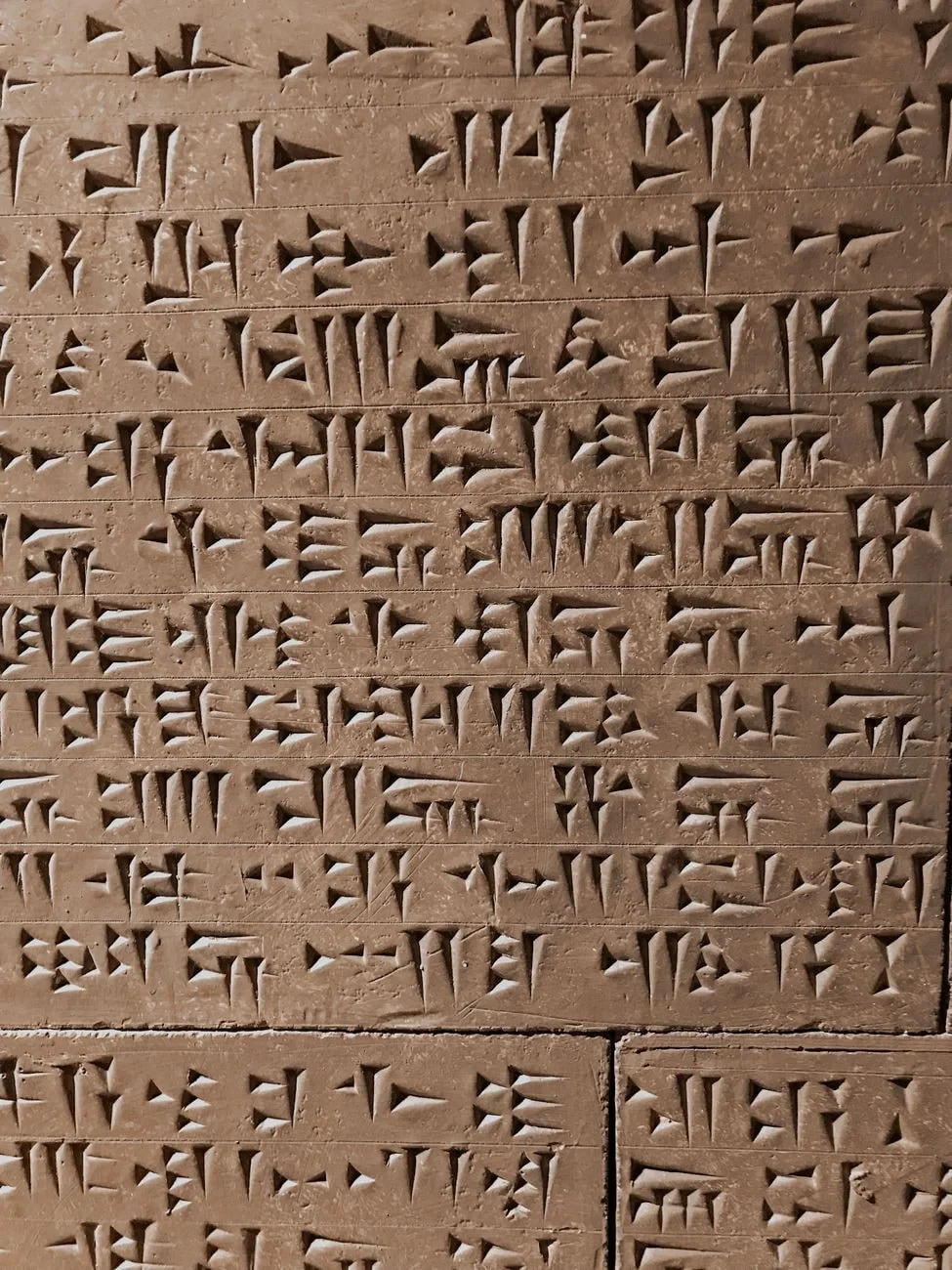
Marks pressed into stone surface. The wedge-shaped impressions that became one of writing's earliest systems.
Photograph by Bilge Şeyma Kütükoğlu, via Pexels.
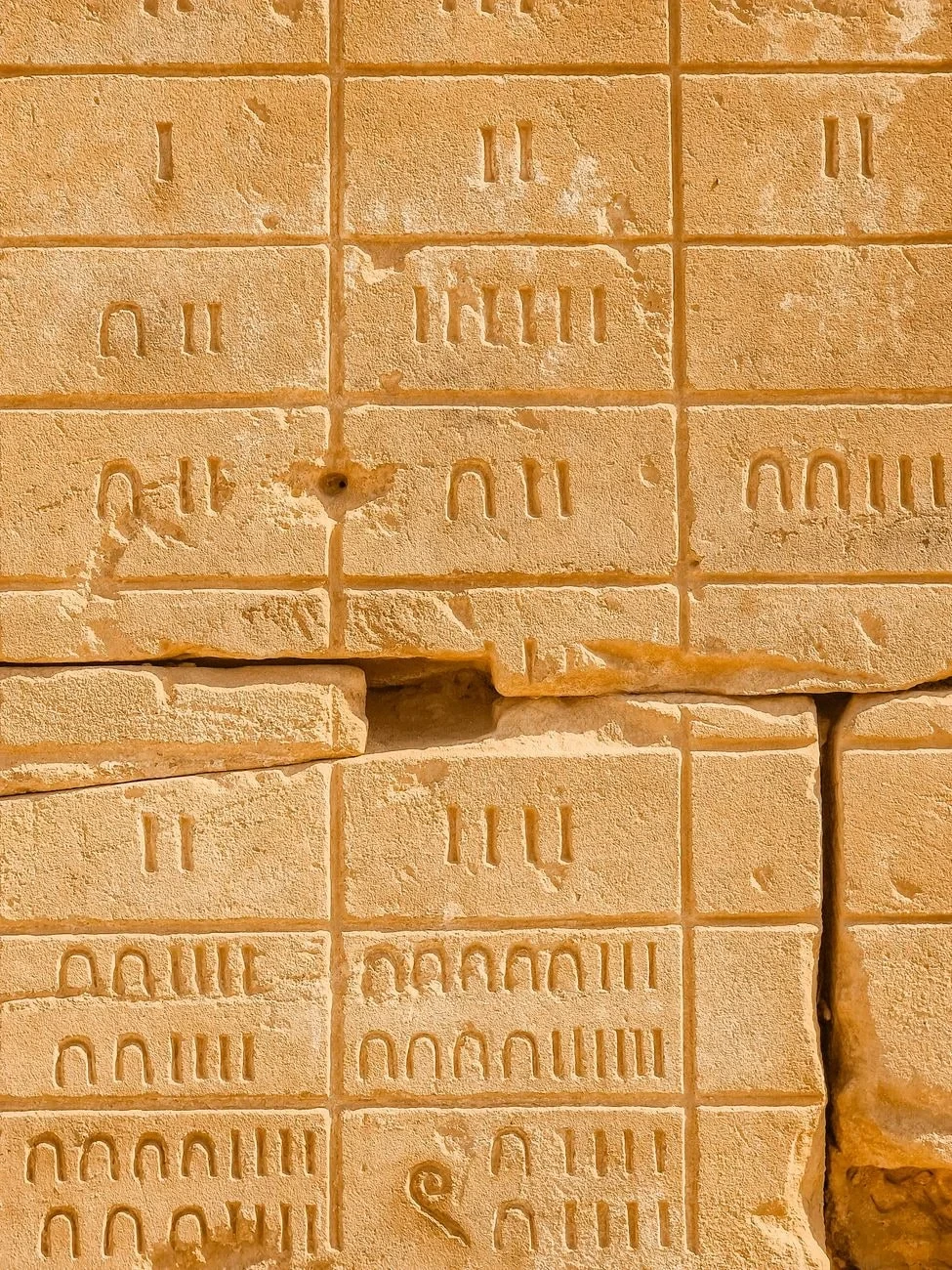
Ancient hieroglyphs are carved into a stone wall. The carved marks demonstrate the moment when symbols transformed into written language.
Photograph by Pia Varošanec, via Pexels.
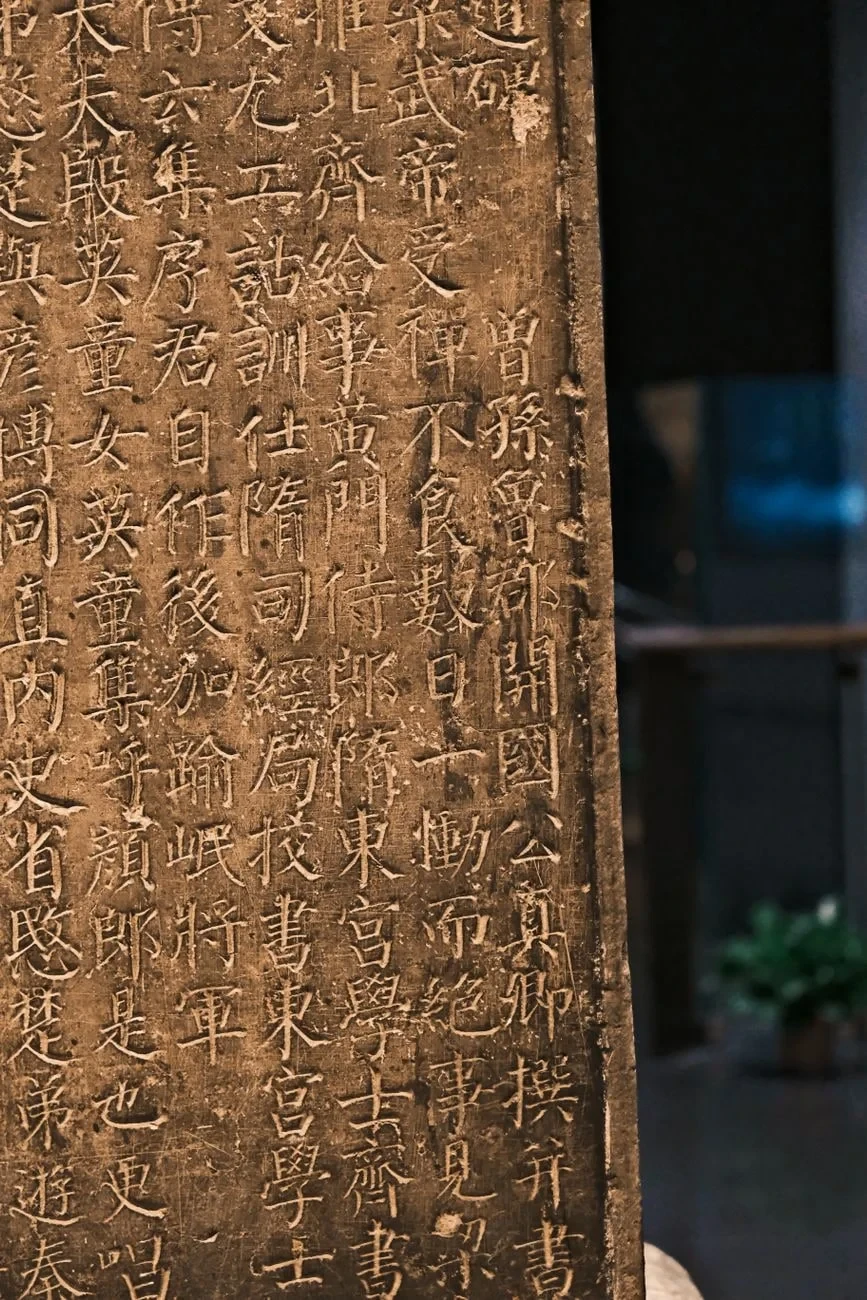
Traditional inscriptions appear on an ancient stone tablet in close detail. This photograph captures a system where careful marks conveyed meaning and culture.
Photograph by Lily Lili, via Pexels.
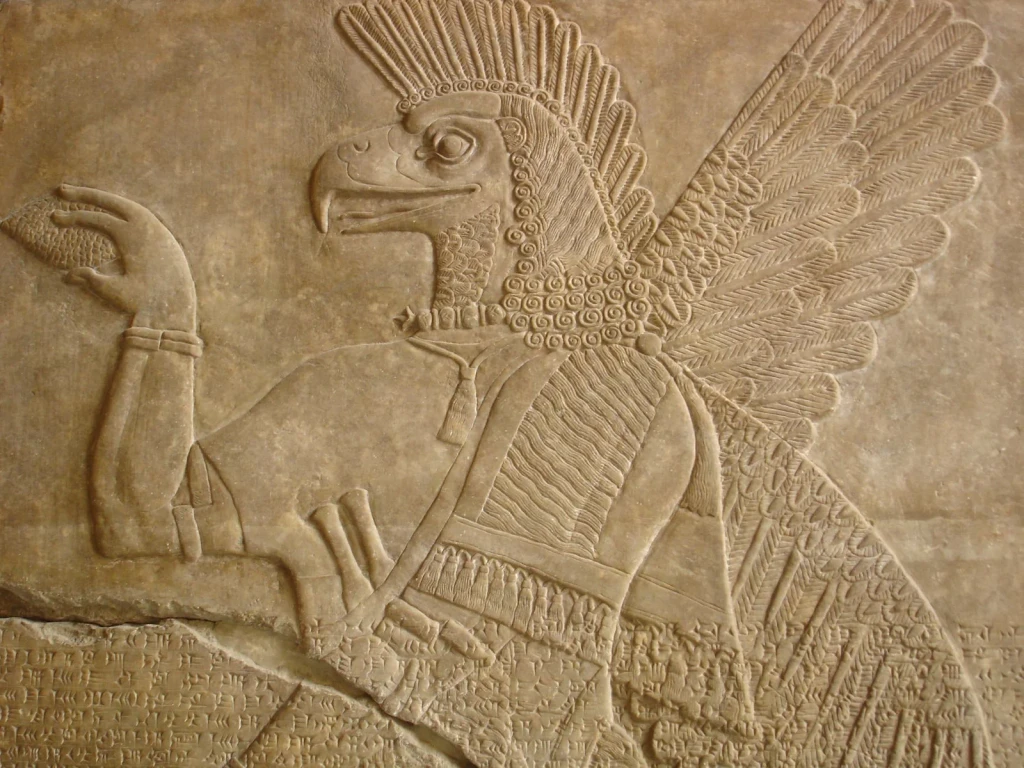
A figured scene carved into stone. When storytelling moved from speech to permanent surface, myths could survive and travel.
Photograph by JP Nunes, via Pexels.
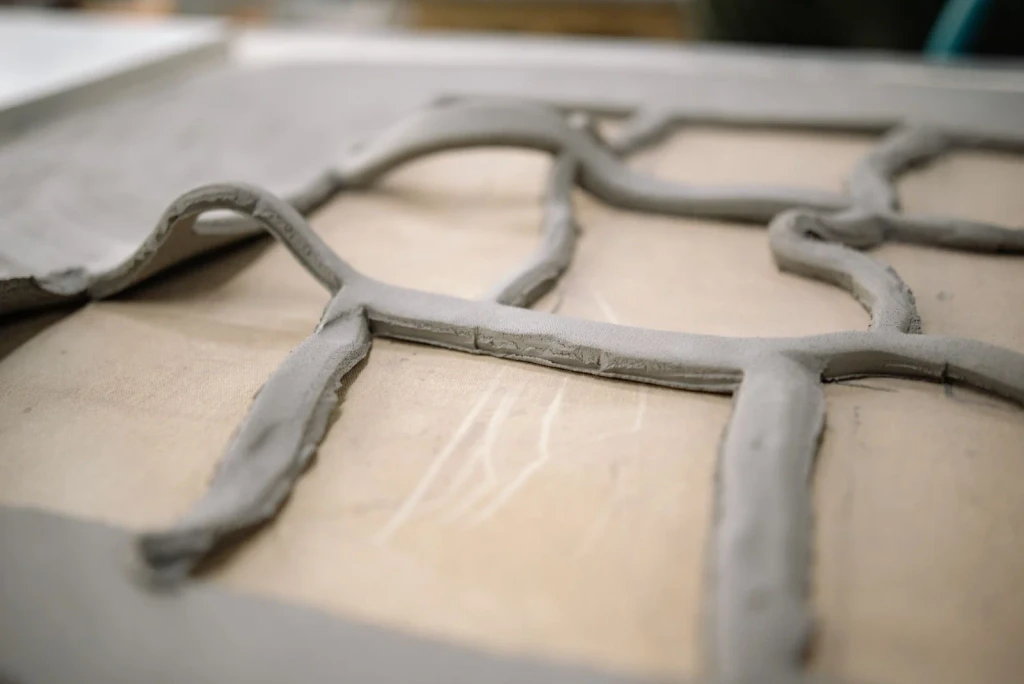
Abstract lines and forms emerge from clay's surface. The photograph captures how marks can organize themselves into something approaching meaning.
Photograph by Yan Krukau, via Pexels.
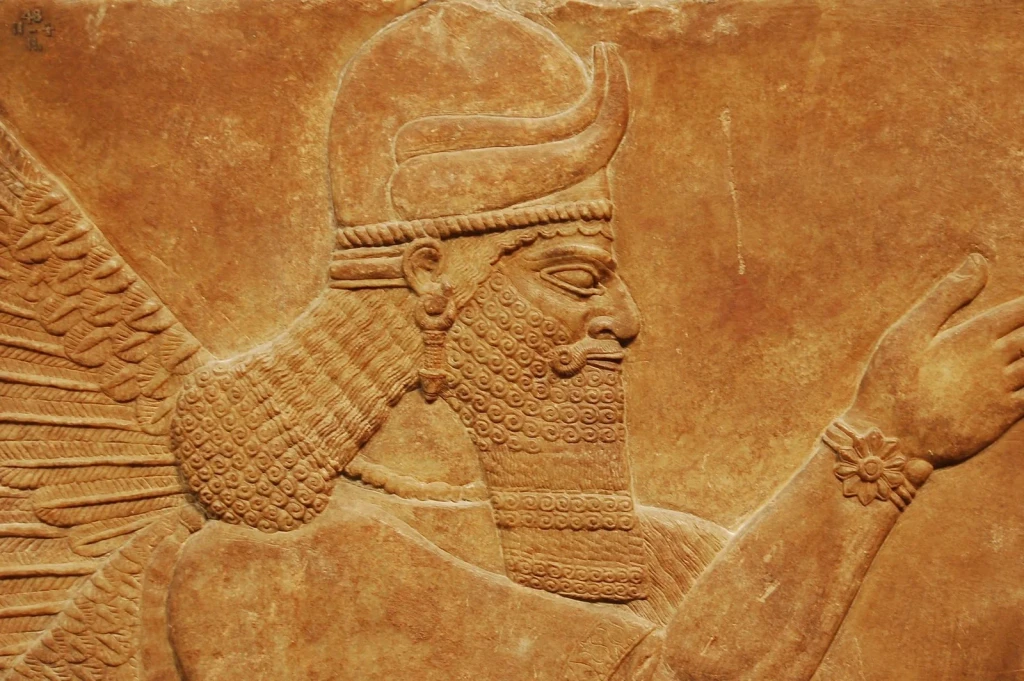
Intricate patterns in carved stone. Decoration and inscription intertwined, speaking across centuries through deliberate human hands.
Photograph by Alejandro Quintanar, via Pexels.
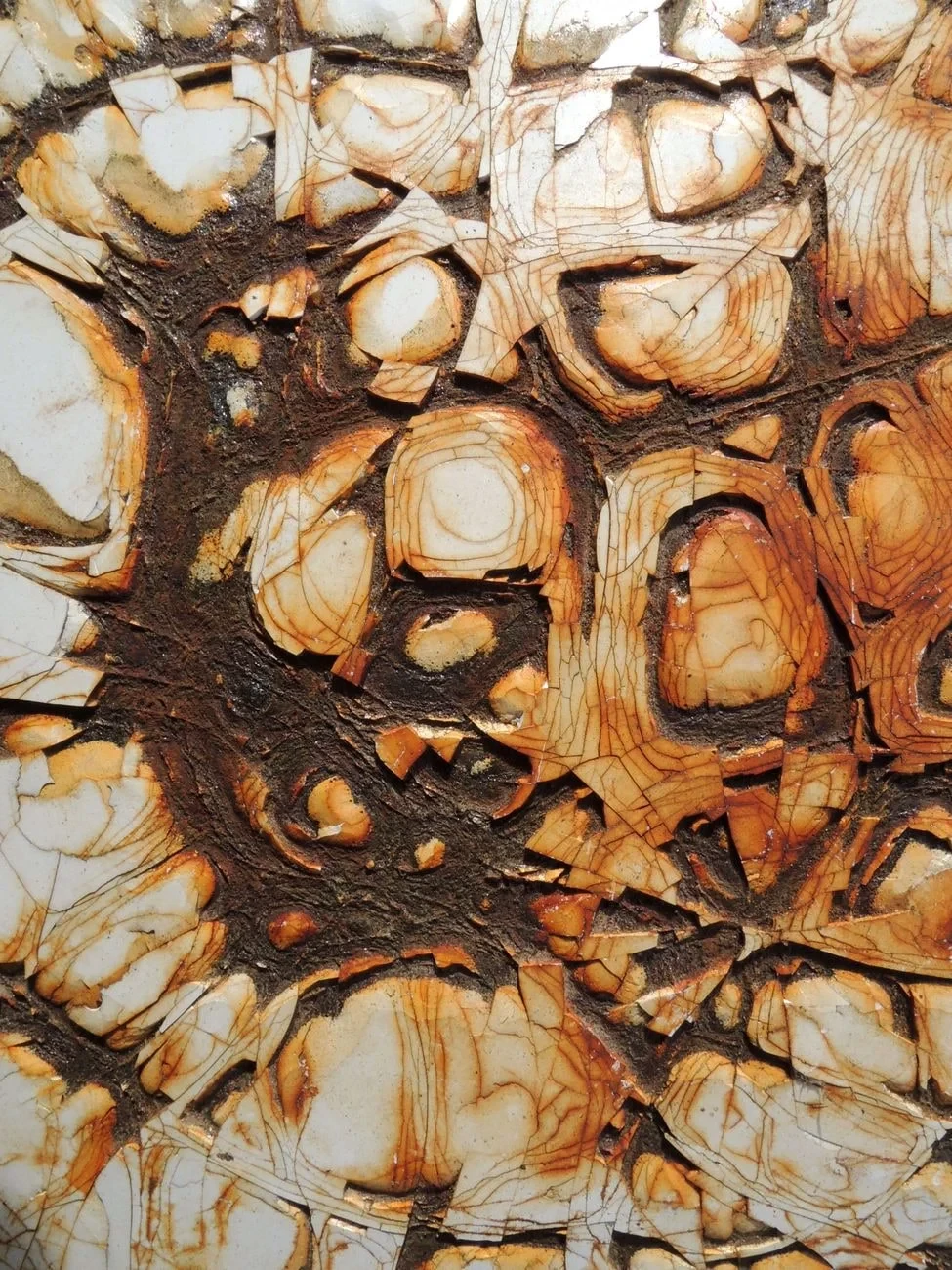
Brown and white tones form a cracked pattern across a surface. The abstract composition invites questions about how marks, intentional or accidental, create meaning.
Photograph by Avak Ava, via Pexels.
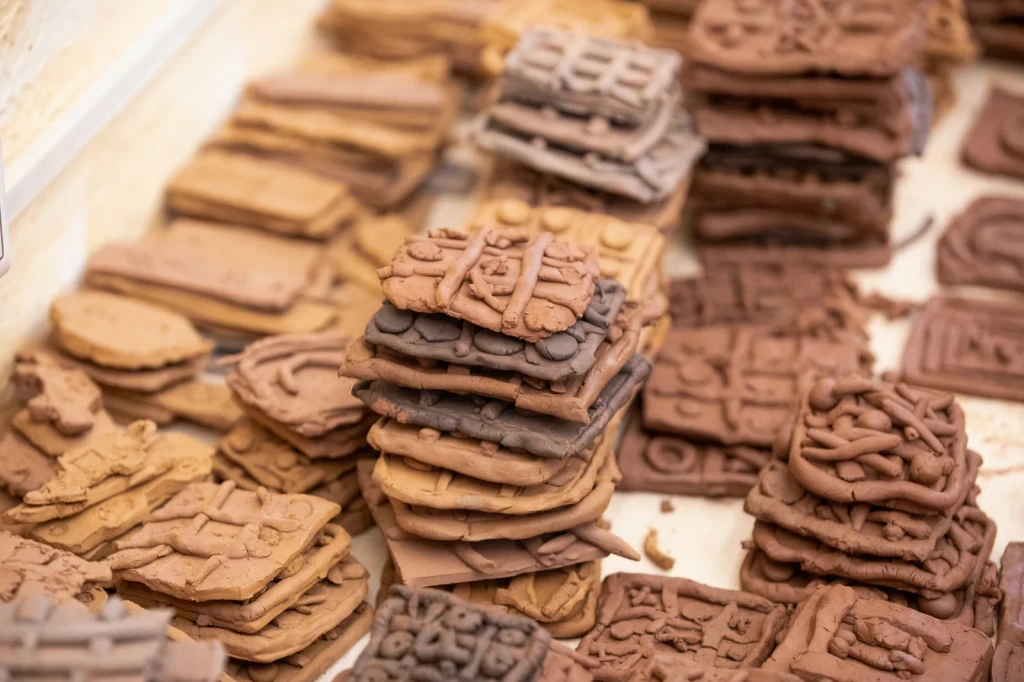
Stacked tablets show repetition and accumulation. These surfaces held the thoughts people needed to preserve and share.
Photograph by Anil Sharma, via Pexels.
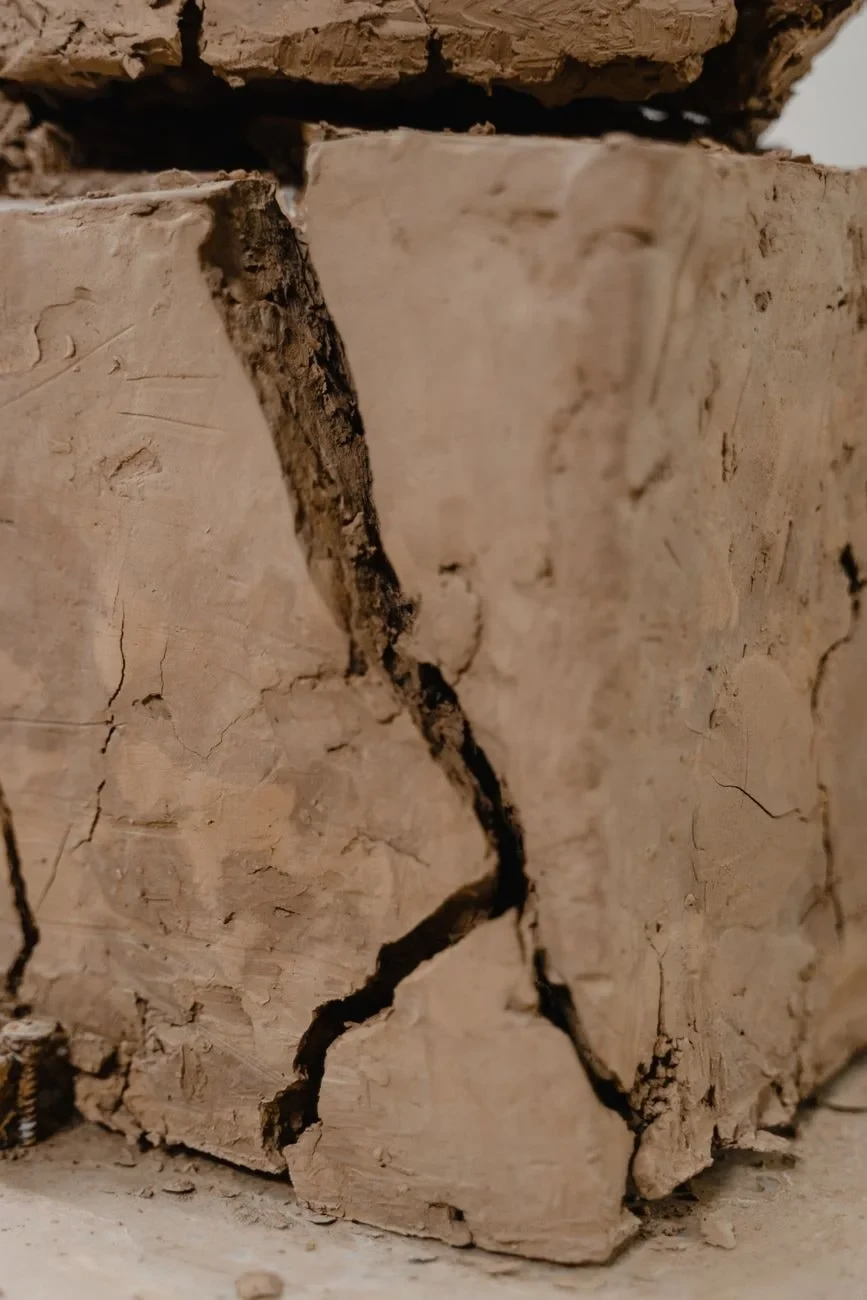
A cracked clay block reveals intricate textures and raw surface detail. The photograph suggests how surfaces themselves, even broken ones, can communicate.
Photograph by Tima Miroshnichenko, via Pexels.
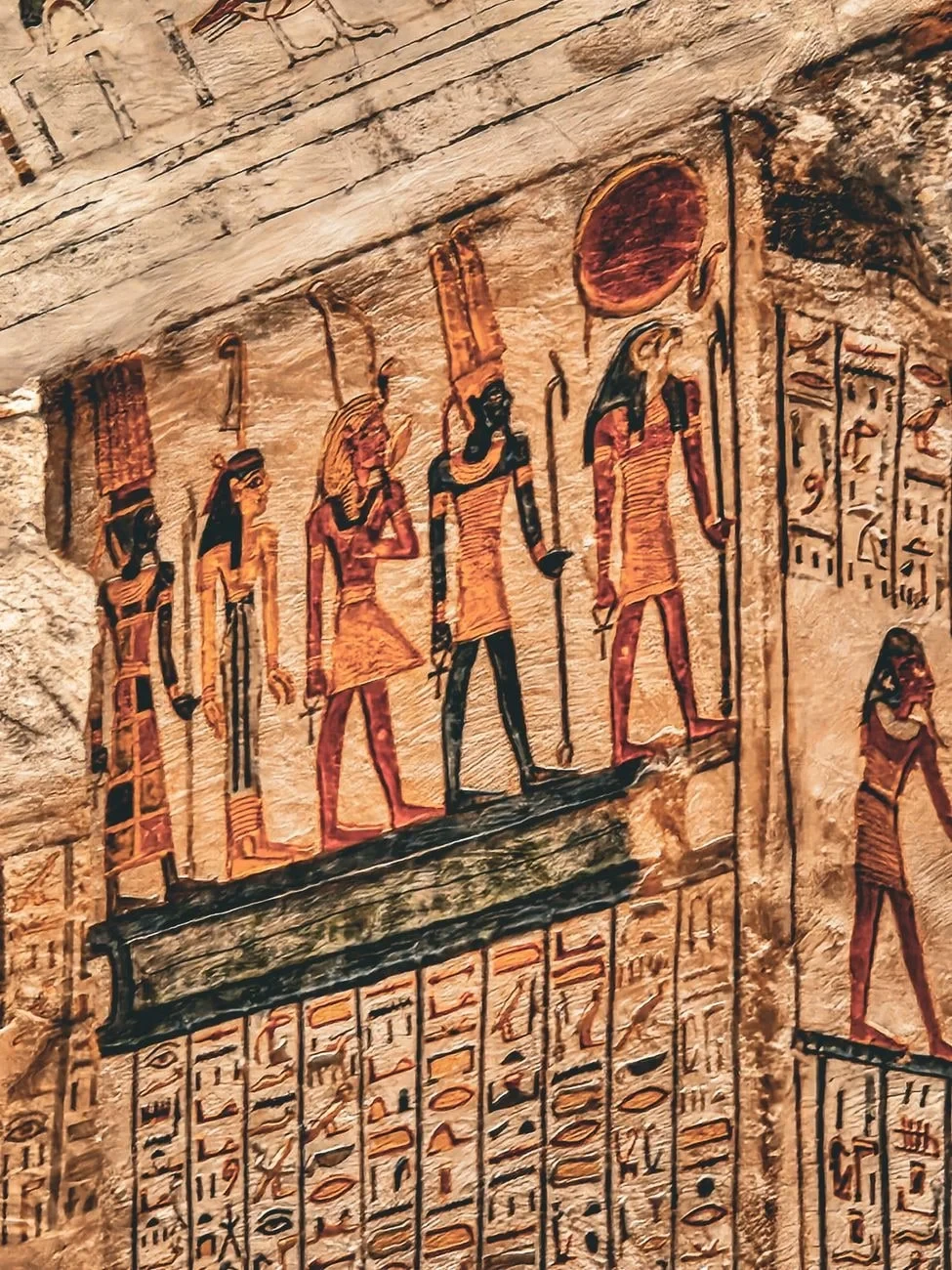
Stone temple walls display ancient hieroglyphs and deities in detailed relief. The image shows how marks served both artistic and linguistic purposes.
Photograph by AHAD HASAN, via Pexels.
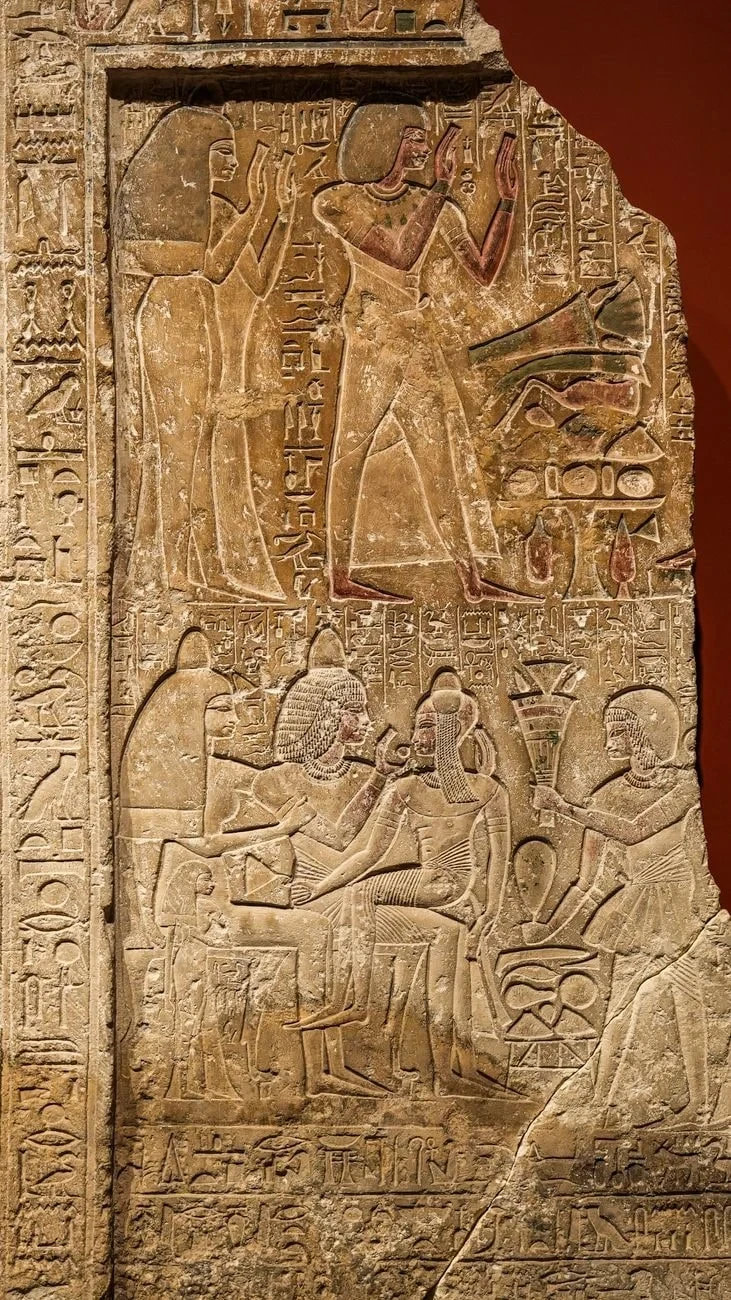
Stone relief combining written signs with representational figures. Image and language carved together into permanence.
Photograph by Fatih Dağlı, via Pexels.
