3D Gallery
What Fossils Taught Us About Deep Time
Enter gallery
What Fossils Taught Us About Deep Time is a 3D virtual gallery on MyGallery3D, a walkable online exhibition of 16 works. Step inside and explore it in your browser: no app, no headset.
Walk through this 3D virtual museum of fossils in your browser. Every object here is an argument about time.
For most of history a fossil was a curiosity or a charm. Pliny the Elder called shark teeth glossopetra, tongue stones. English folklore turned sea urchins into shepherd's crowns and placed them by doorways. Then in 1796 Georges Cuvier looked at fossil elephants and wrote that the facts "seem to me to prove the existence of a world previous to ours, destroyed by some kind of catastrophe." The ground had a history, and it was not ours.
Mary Anning worked the Lyme Regis cliffs in winter, when landslides opened the rock and the sea took back whatever was not collected fast. At twelve she found the rest of an ichthyosaur skeleton her brother had begun, over 5 yards of it, and the family was paid about £23. She found the first complete Plesiosaurus. As a woman she could not join the Geological Society of London.
Petrification is a swap. Groundwater carrying dissolved quartz, calcite, pyrite or apatite seeps into the pores of bone, shell or wood and precipitates there; then the original material dissolves and minerals take its place. The slower the exchange, the finer the copy. Replacement alone can reproduce microscopic structure, which is why the slowest fossils are the most detailed.
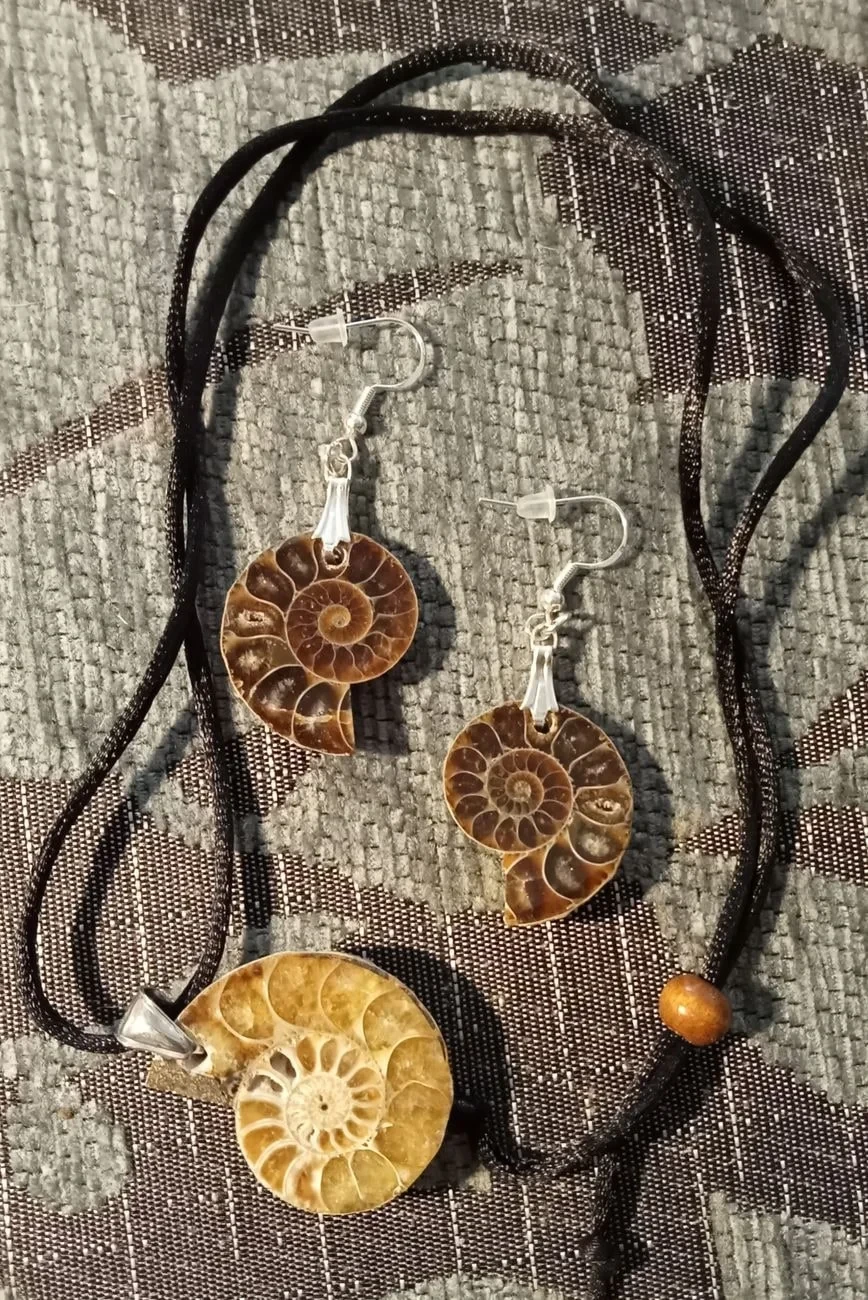
Ammonite imagery adorns contemporary jewelry. The fossil becomes cultural object, crossing from scientific specimen to personal adornment.
Photograph by Q. M., via Pexels.
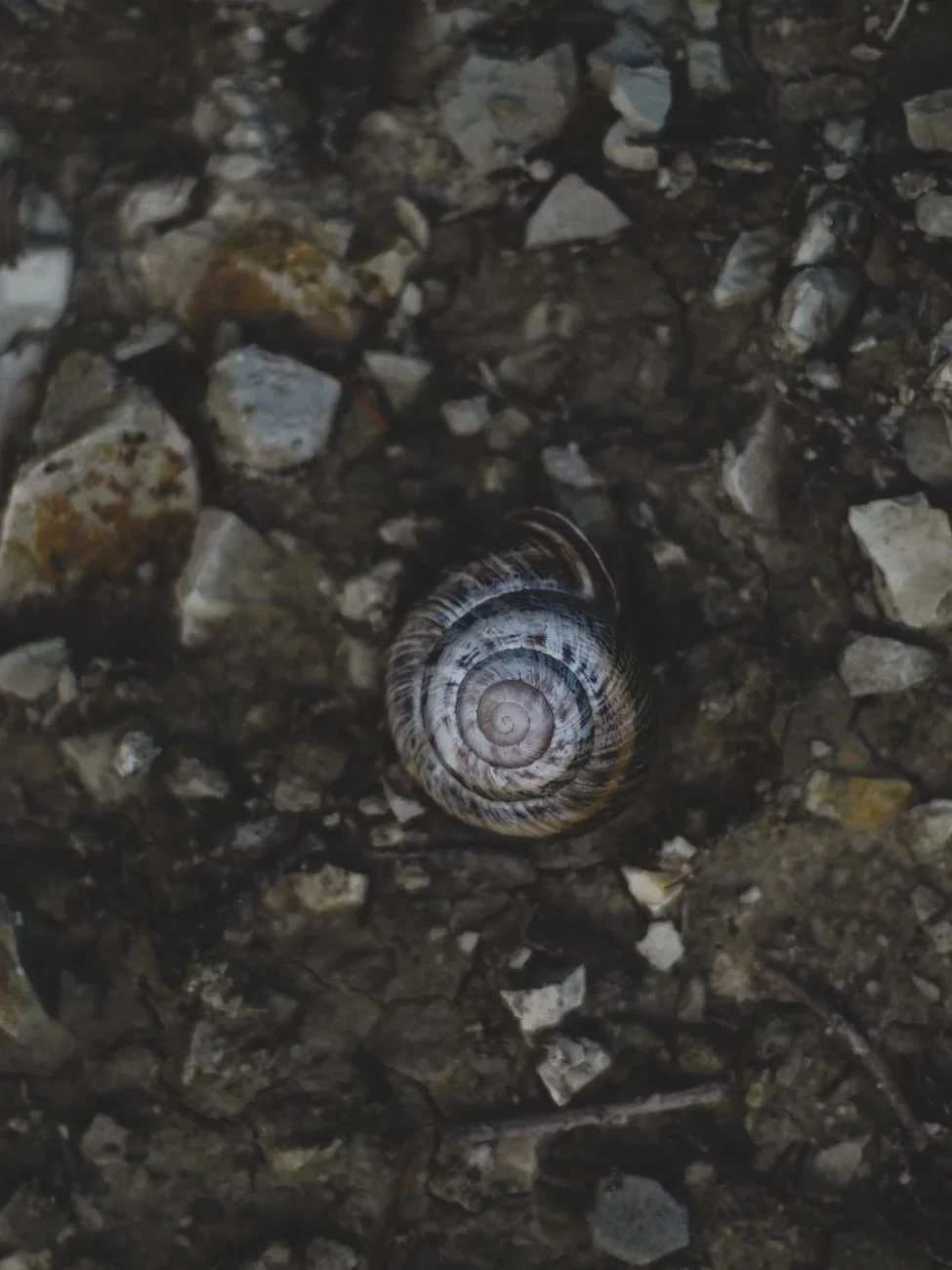
A snail shell rests on stone. The texture of both surfaces reminds us that living things leave their imprint on the world.
Photograph by Marina Solis, via Pexels.
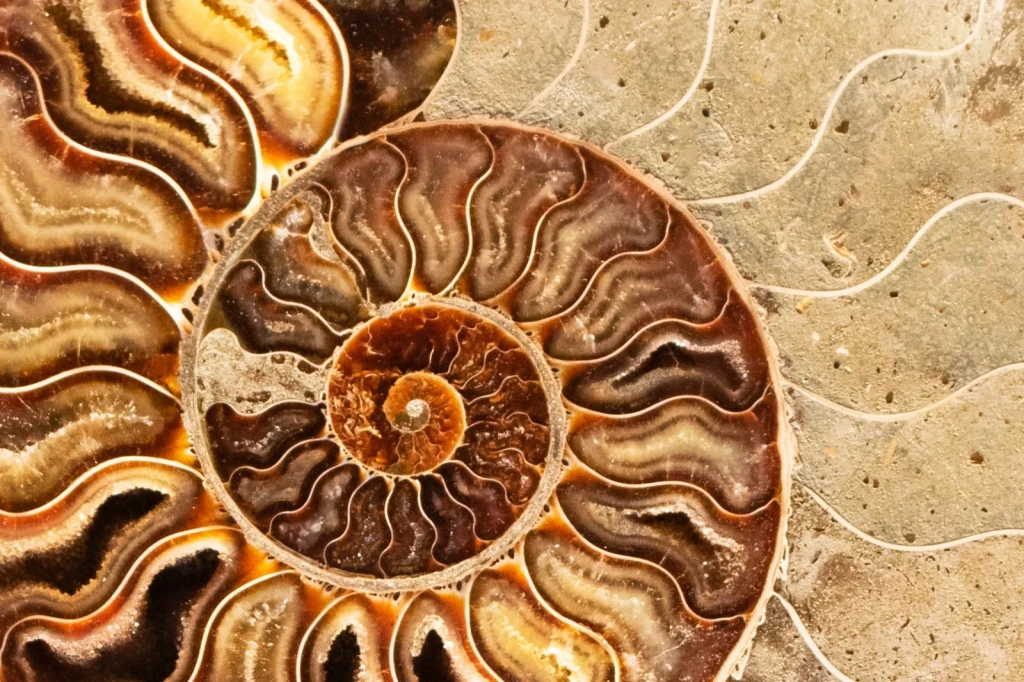
A close study of fossilized ammonite shell reveals the spiral patterns preserved across millions of years. Such intricate geometry speaks to deep time's power to hold form.
Photograph by adrian vieriu, via Pexels.
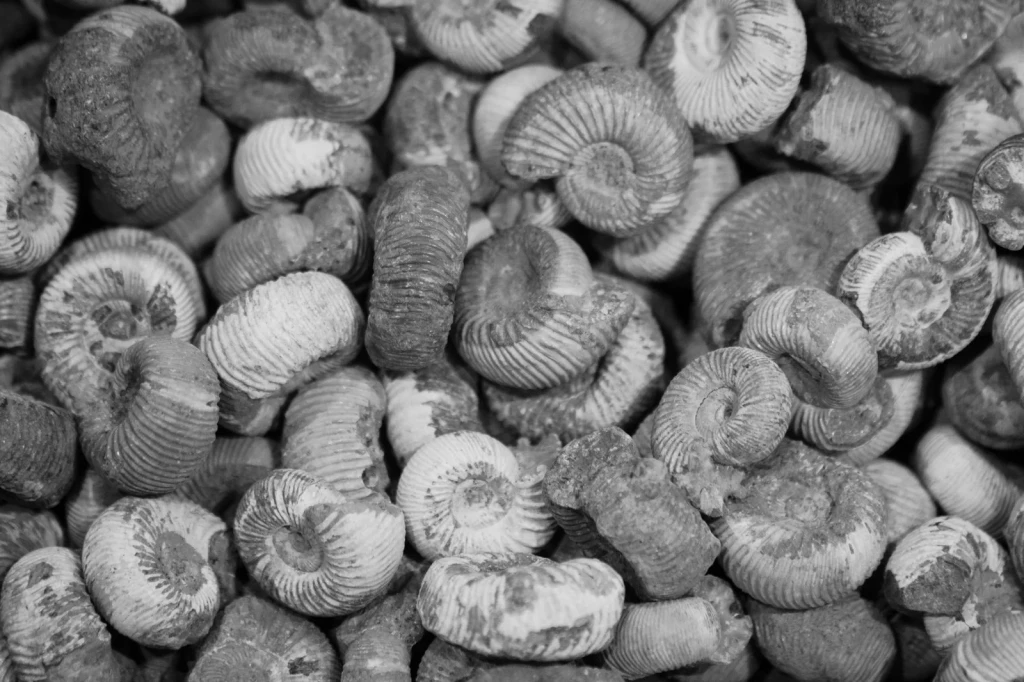
Black and white photography reveals the intricate textures layered across these fossilized shells. Each detail whispers of age.
Photograph by Budget Bizar, via Pexels.
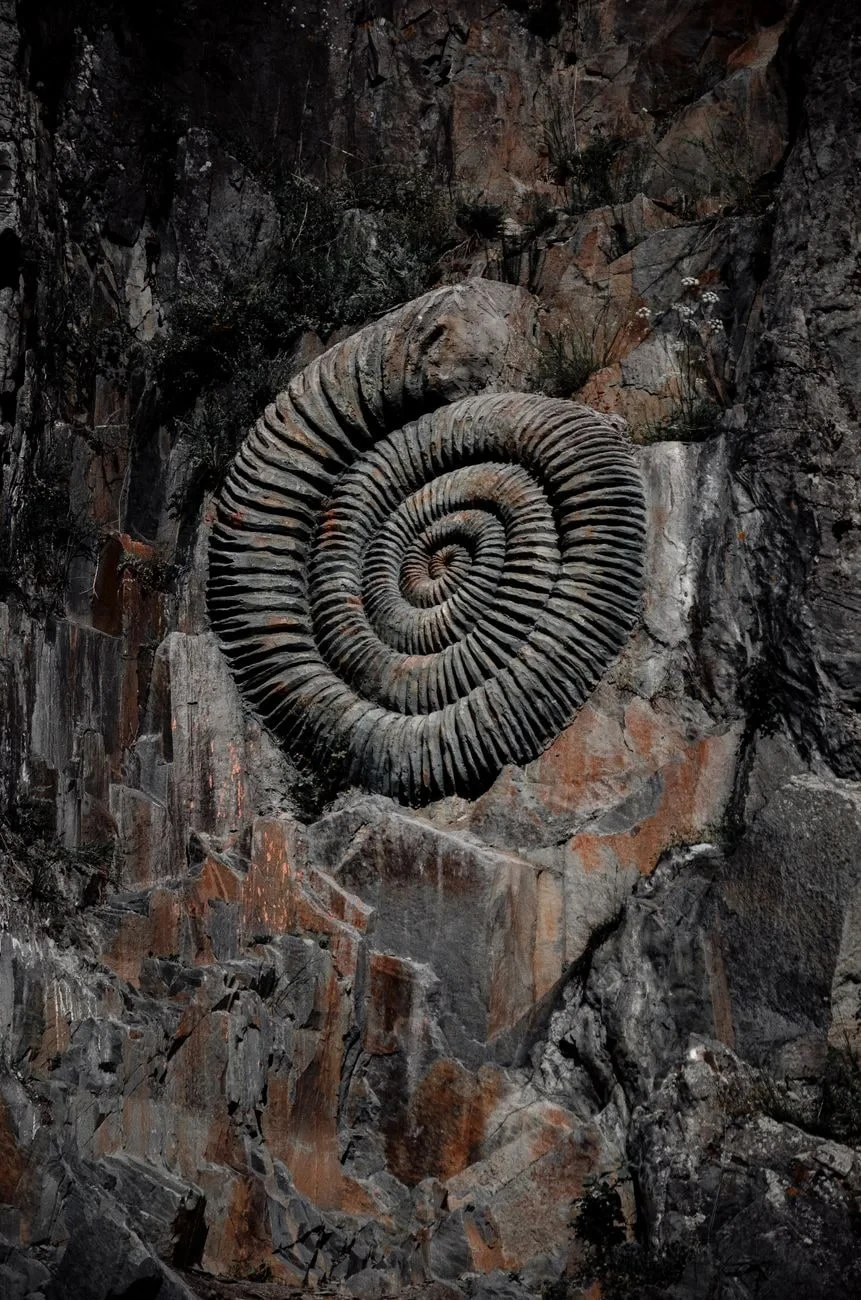
An ammonite's spiral geometry persists within rugged stone. Nature's design endures across deep time.
Photograph by Egor Litvinov, via Pexels.
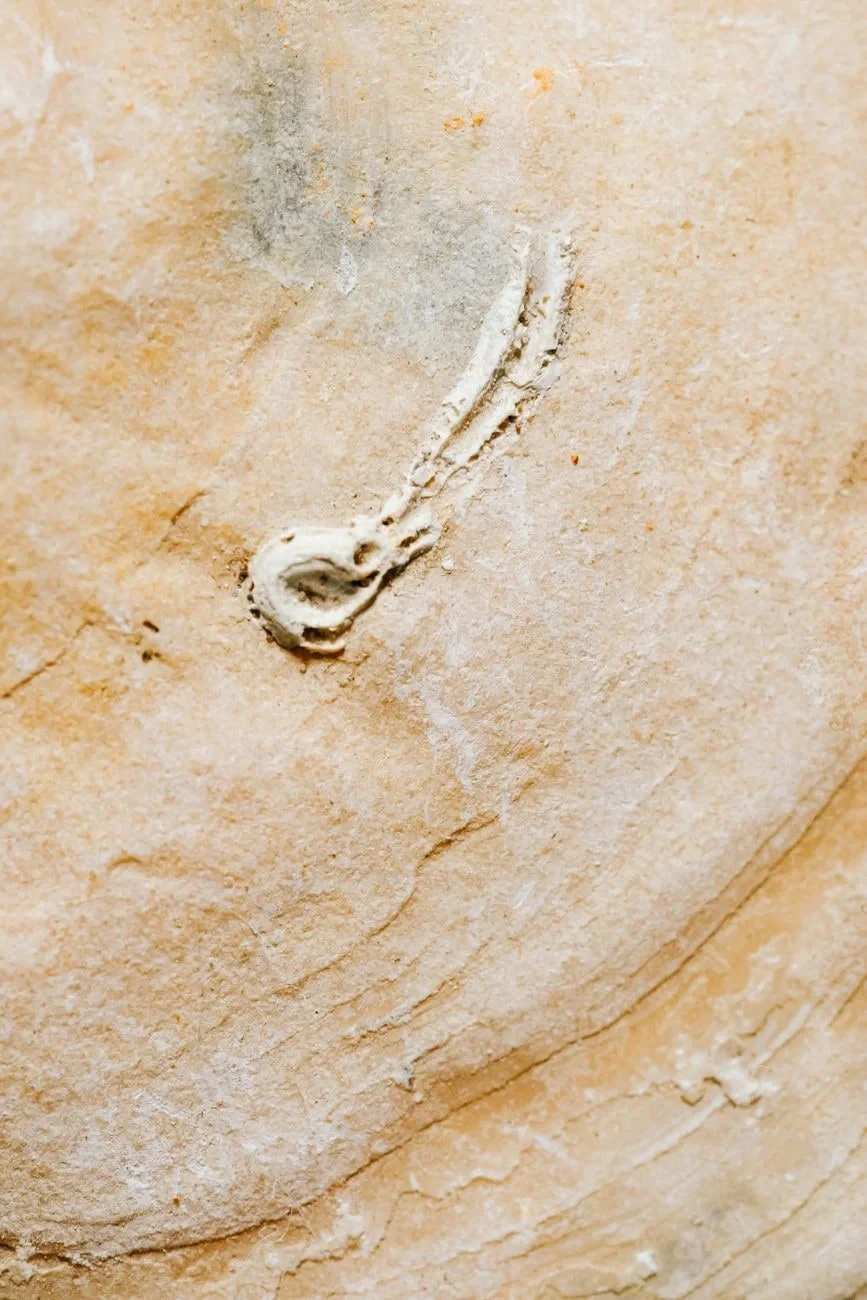
Natural patterns mark a textured stone surface. Such patterns often tell stories older than we can measure.
Photograph by www.kaboompics.com, via Pexels.
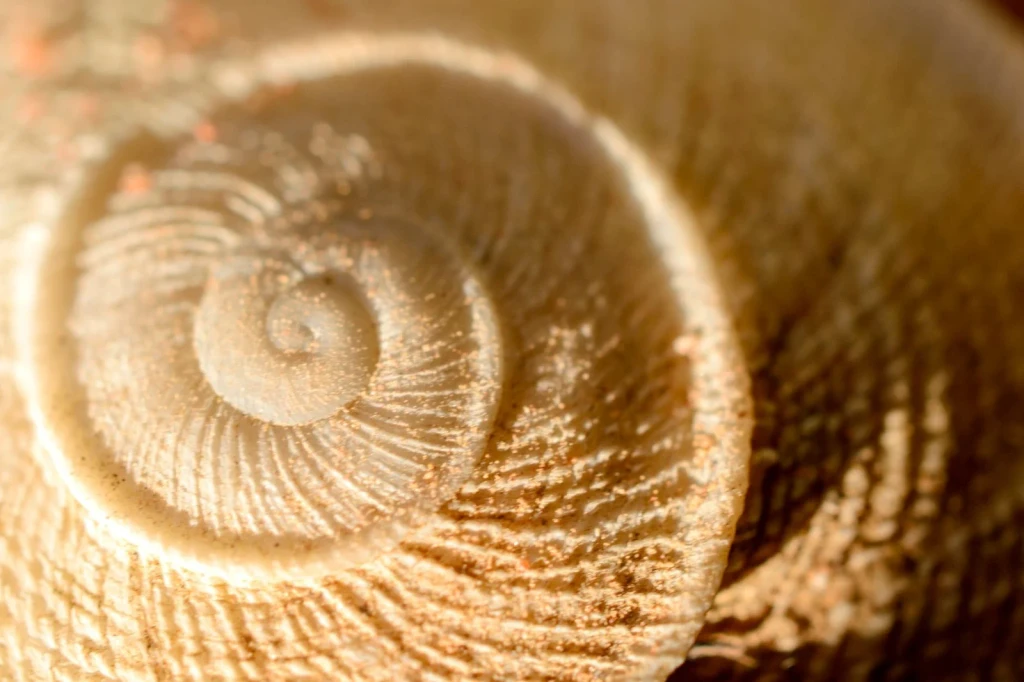
A spiral pattern rendered in fine detail. The shell's natural geometry speaks to how life's forms persist across vast stretches of time.
Photograph by Ali Camacho Adarve, via Pexels.
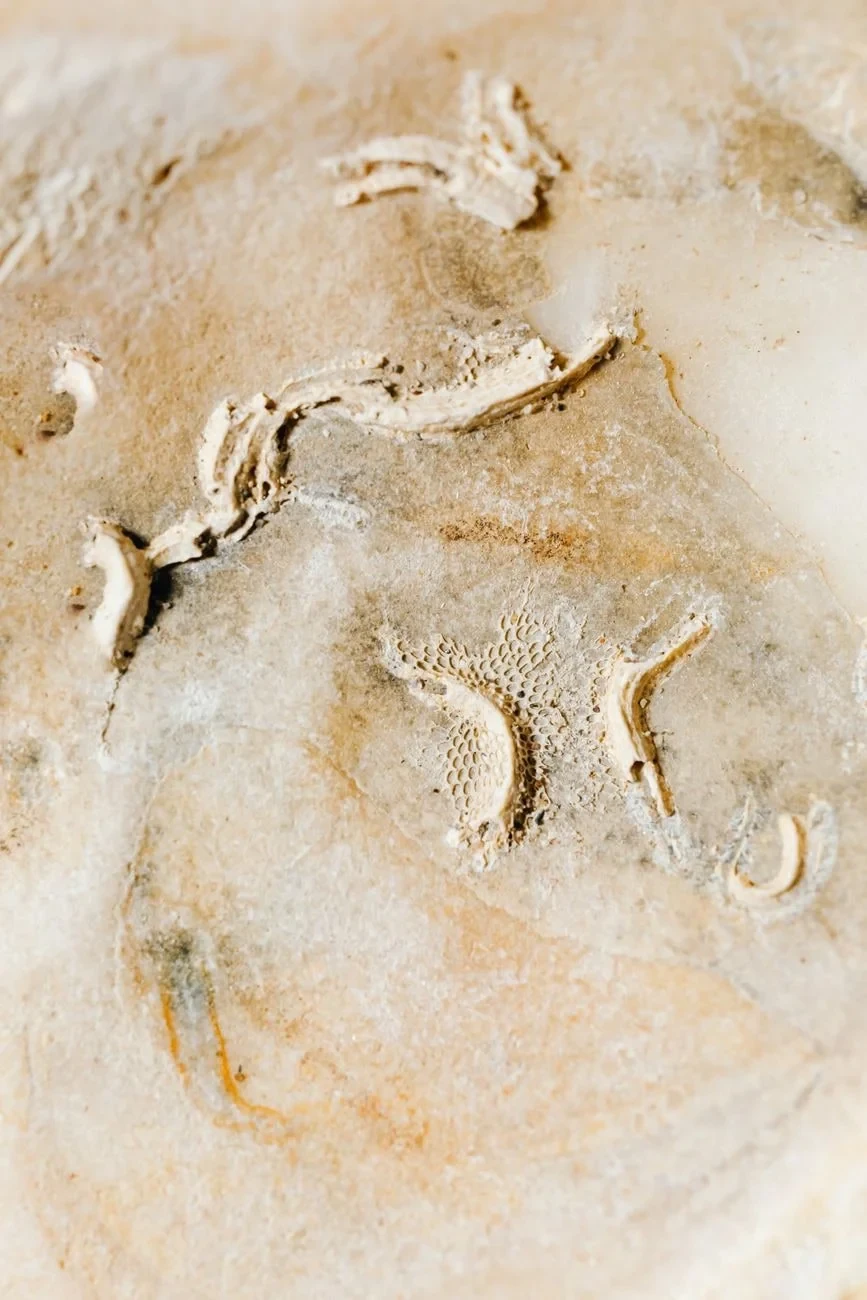
A fossilized shell sits within stone, its patterns still visible. This is how deep time writes itself into rock.
Photograph by www.kaboompics.com, via Pexels.
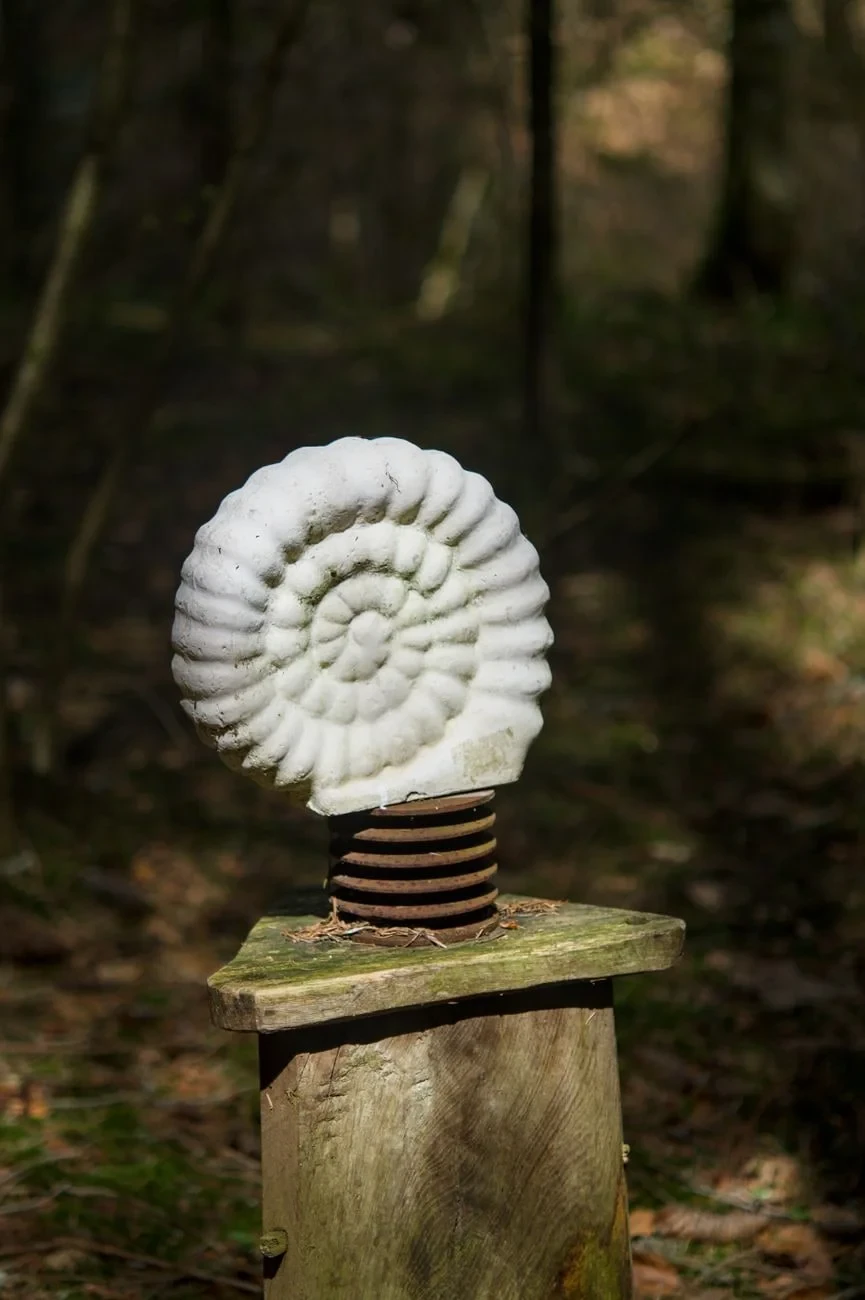
An ammonite sculpture sits within a forest setting. The image juxtaposes ancient marine life with present woodland, collapsing temporal distance.
Photograph by Jean-Paul Wettstein, via Pexels.
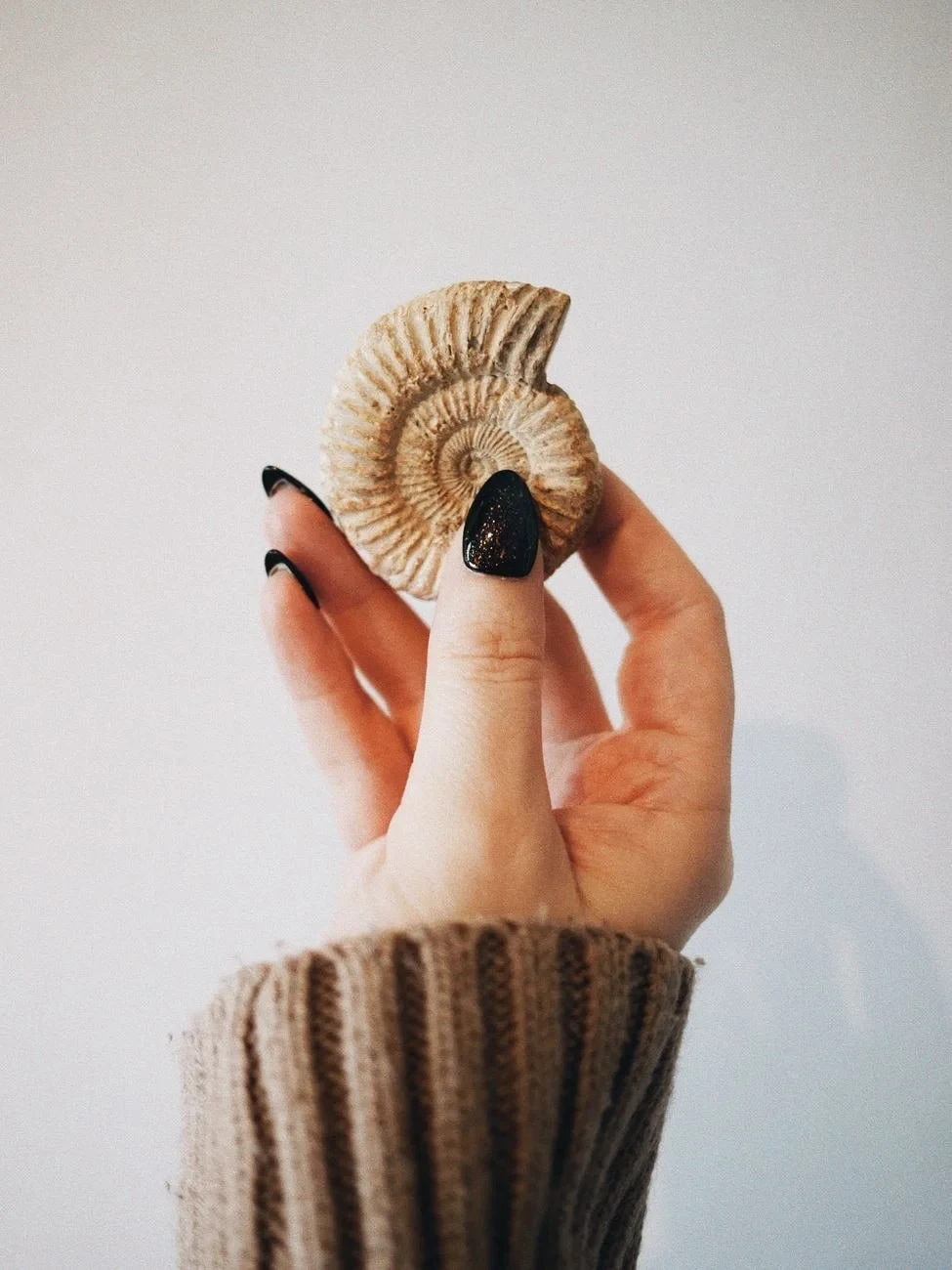
A hand holds a fossilized shell against simple background. The gesture connects us directly to ancient life.
Photograph by Lisa from Pexels, via Pexels.
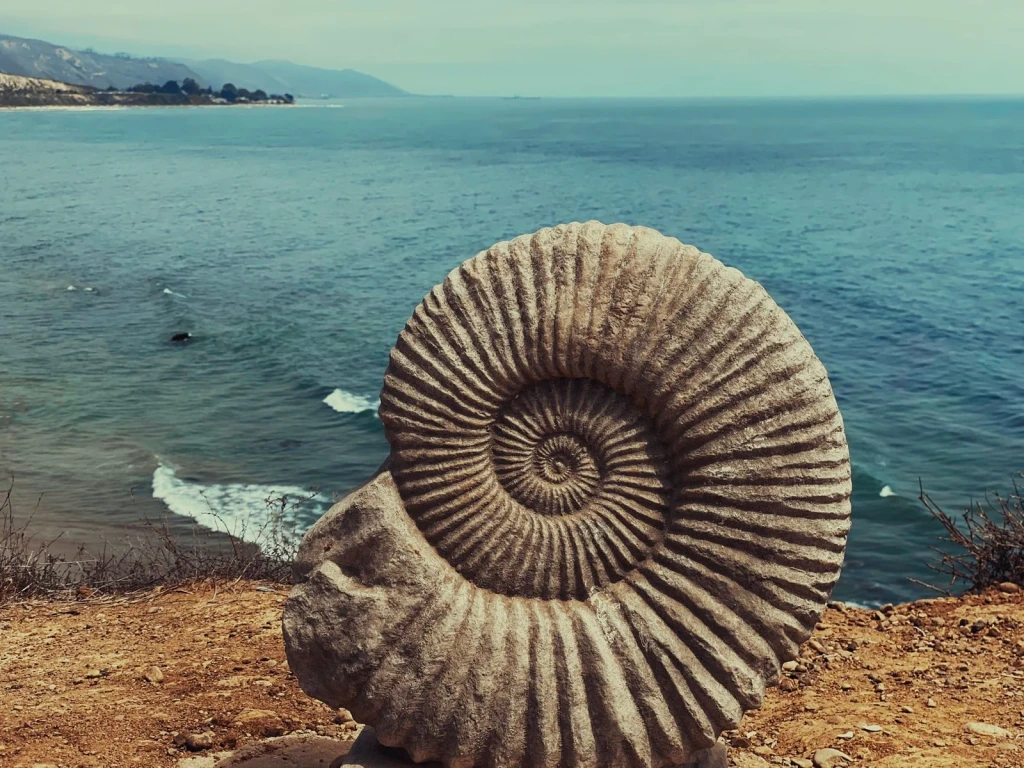
An ammonite sculpture frames an ocean view. Past and present meet in a single composition.
Photograph by James Lee, via Pexels.
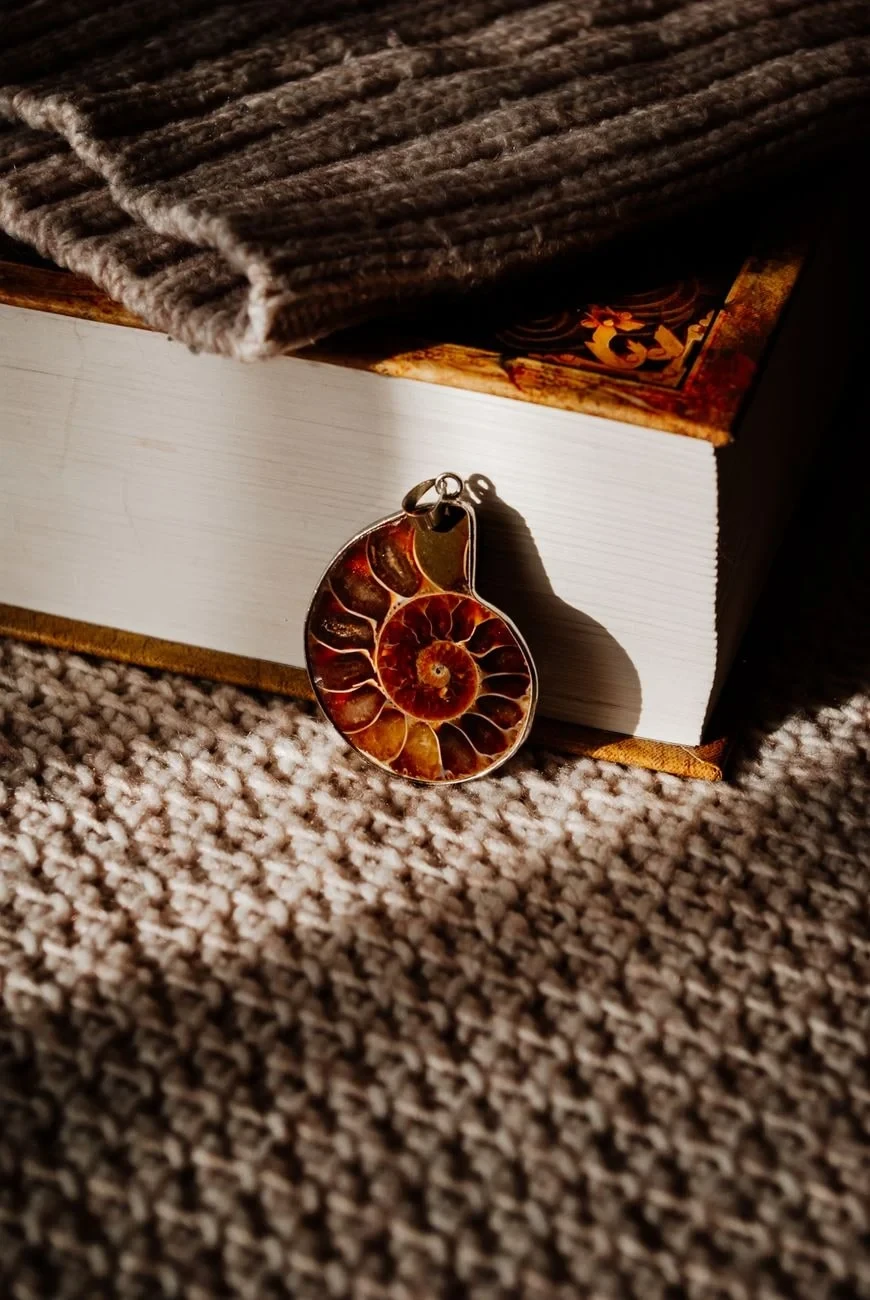
An earring rests among personal items: book, blanket, sweater. Fossil becomes part of daily life, intimate and ordinary.
Photograph by Dagmara Dombrovska, via Pexels.
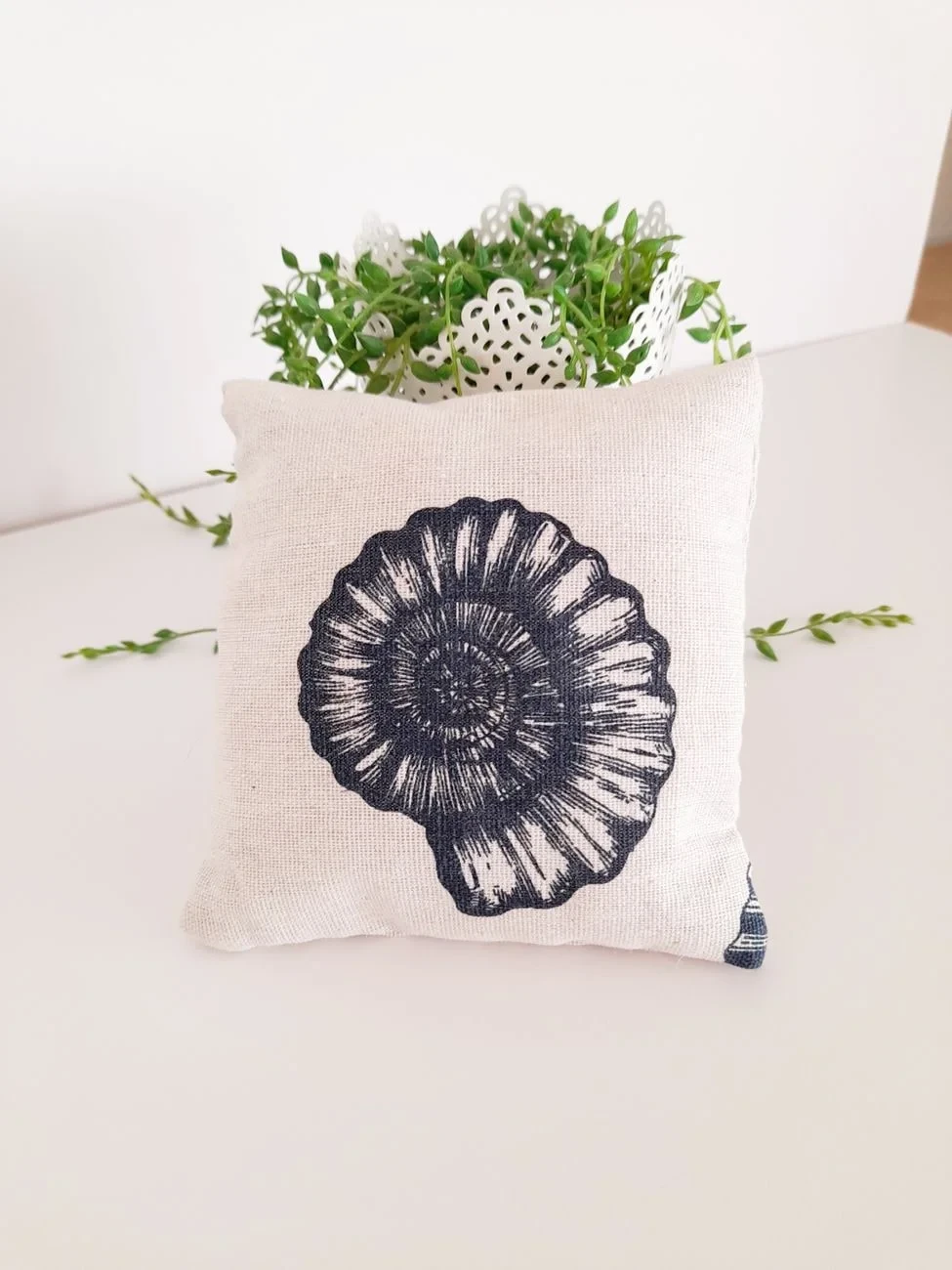
A throw pillow features seashell imagery for home decor. Fossil form becomes design element, distant from scientific study.
Photograph by Alice Oliver, via Pexels.
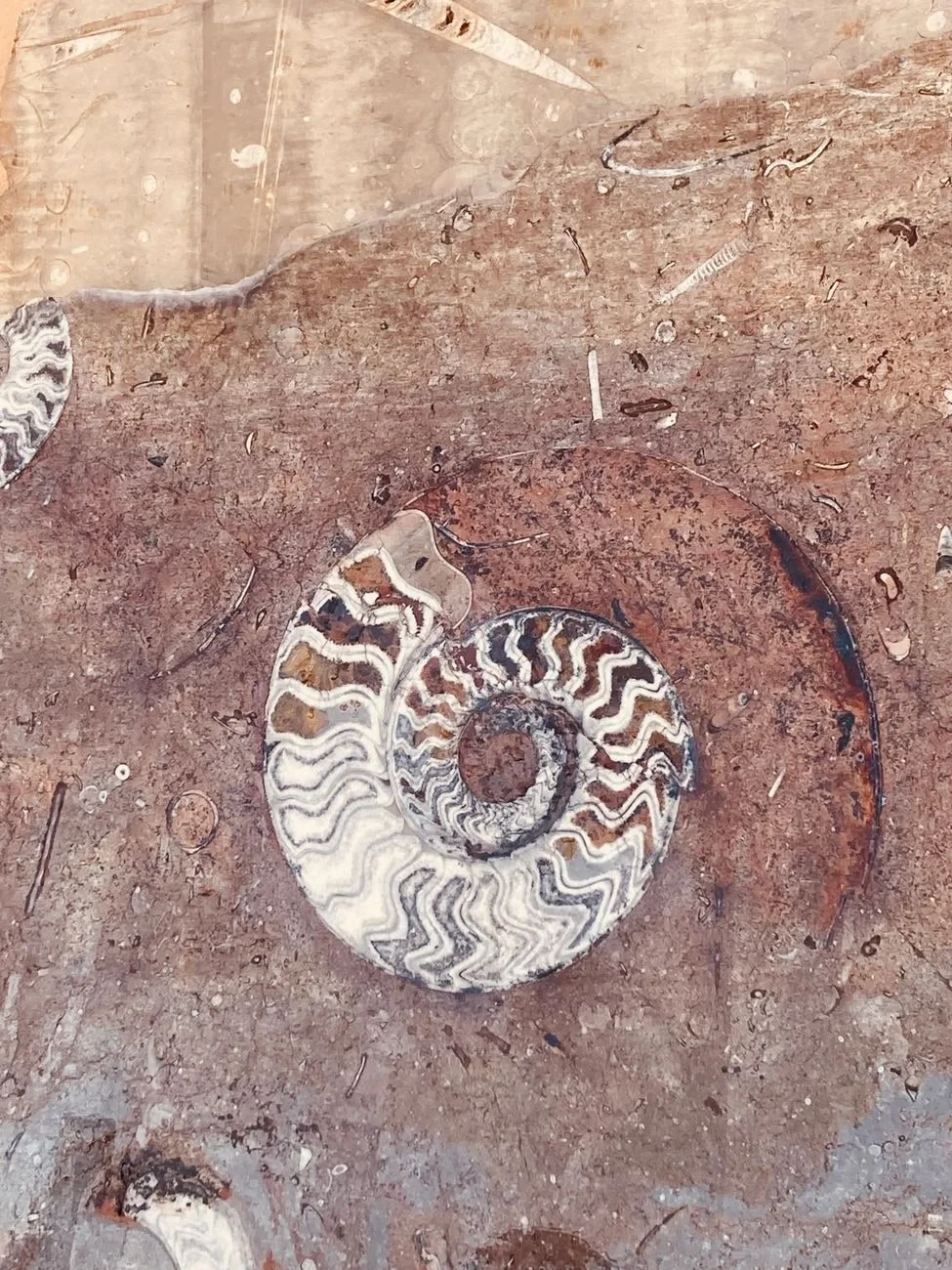
A fossil rests embedded in rock, its natural patterns visible across millions of years. This is deep time made tangible.
Photograph by SONNIE WING, via Pexels.
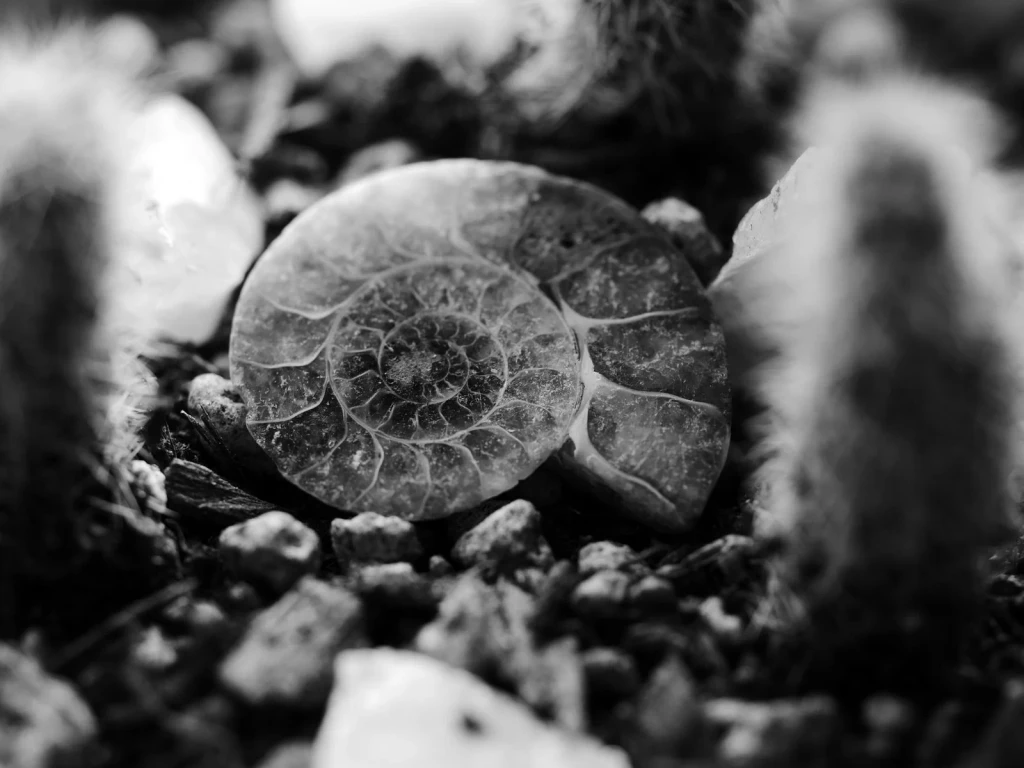
The intricate spirals of an ammonite emerge in monochrome. Each chamber records a moment in an ancient life.
Photograph by Jason Stewart, via Pexels.
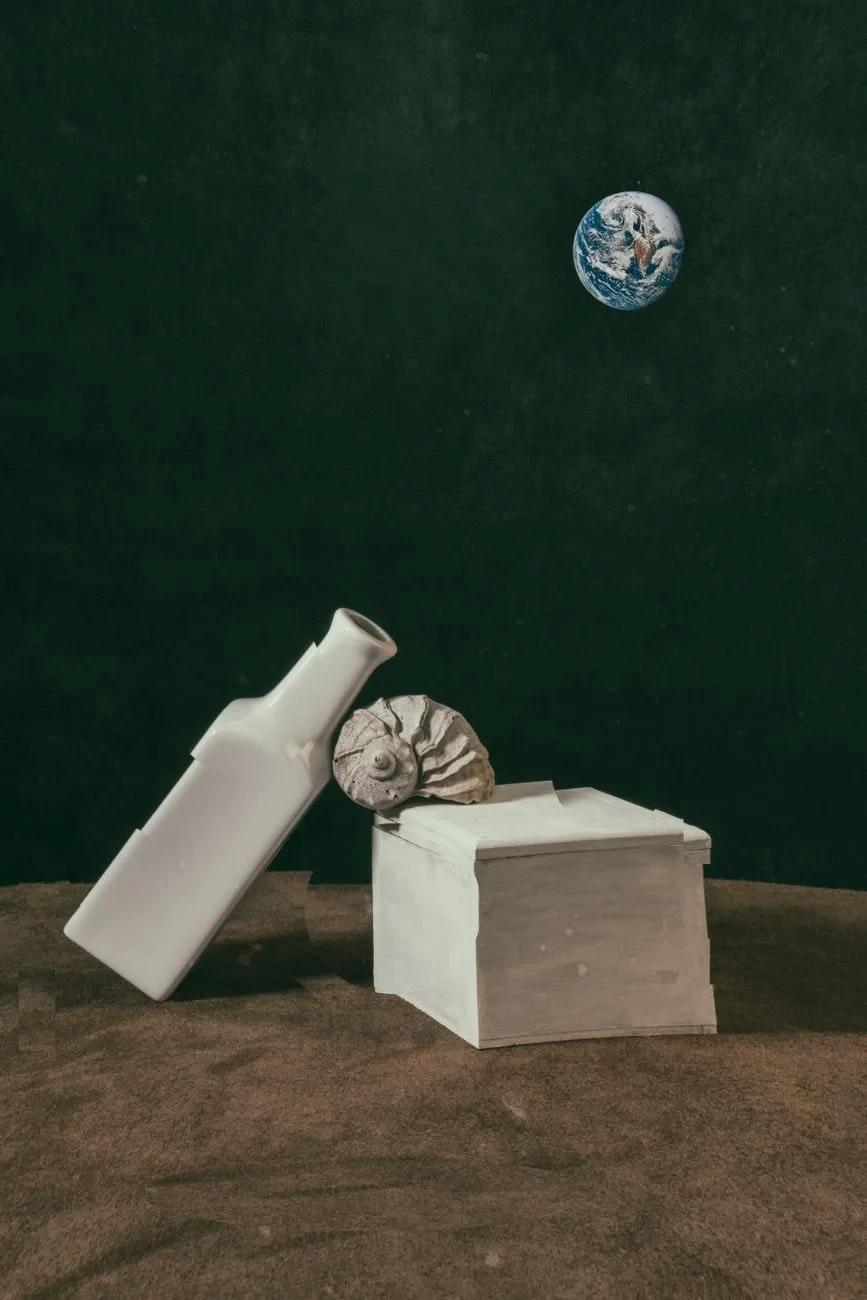
Ceramic objects and Earth coexist on a textured surface. The photograph offers dreamlike geometry rather than clear documentation.
Photograph by Valentin Ivantsov, via Pexels.
