3D Gallery
Bookbinding: How Pages Became Objects
Enter gallery
Bookbinding: How Pages Became Objects is a 3D virtual gallery on MyGallery3D, a walkable online exhibition of 12 works. Step inside and explore it in your browser: no app, no headset.
Step into a 3D virtual gallery of bookbinding and walk the room in your browser.
A binding is not packaging. It is a filter. Between the 4th century, when the codex gained wide acceptance, and the Carolingian Renaissance of the 8th, many works that were never converted from scroll to codex were lost. In Egypt, by the fifth century, the codex outnumbered the scroll ten to one. What someone chose to fold, sew and cover is most of what we still have to read.
Before writing, the skin. It is soaked in lime for days, stretched on a frame called a herse, tied at the edges around pebbles called pippins, then scraped with a crescent knife, the lunellum. An average calfskin yields three-and-a-half medium sheets. Parchment was expensive, so it went to the wealthy and powerful, who could also pay for colour and gold.
Coptic binders in Egypt sewed sections through their folds and linked them with chain stitch across the spine, with no cords or thongs at all. Roughly 120 complete Coptic bindings survive, with remnants of perhaps 500. Every later decorated leather binding in the West descends from them. Sewn without leather, a Coptic book still opens a full 360 degrees.
A scroll is sequential: to reach a given page you unroll and re-roll everything else. The Romans built the alternative out of wax tablets hinged along one edge, and called it a codex, from caudex, the trunk of a tree. It could be opened flat at any page, written on both sides, and held comfortably in one hand. Martial praised it for travel.
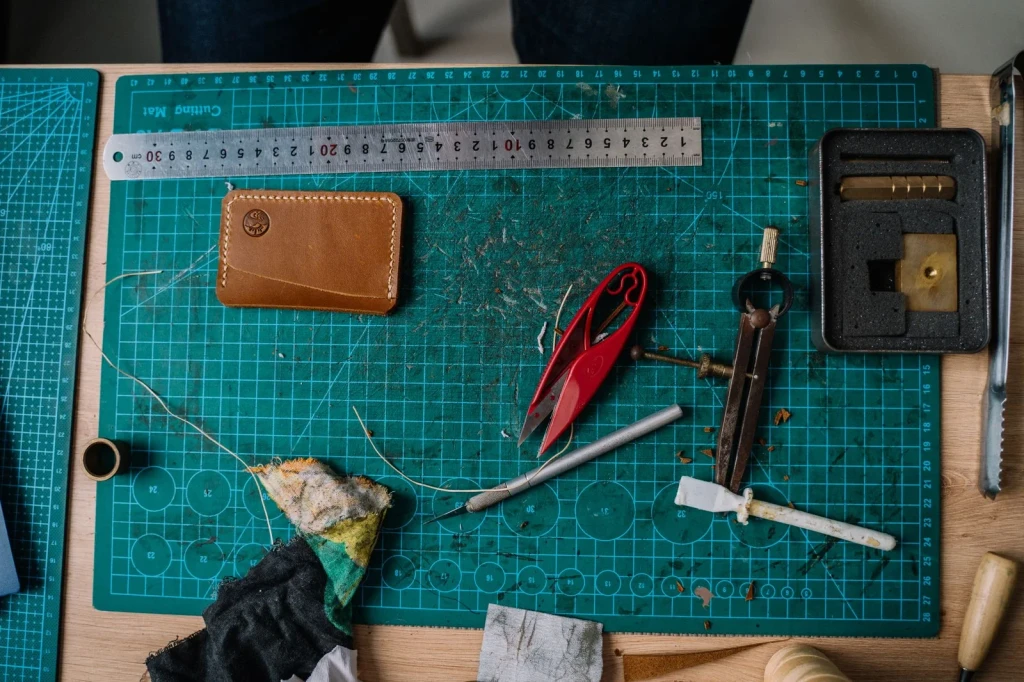
Leather crafting tools arranged on a work table. The ruler, scissors, and wallet suggest the precision required to transform raw material into bound pages.
Photograph by Anna Tarazevich, via Pexels.
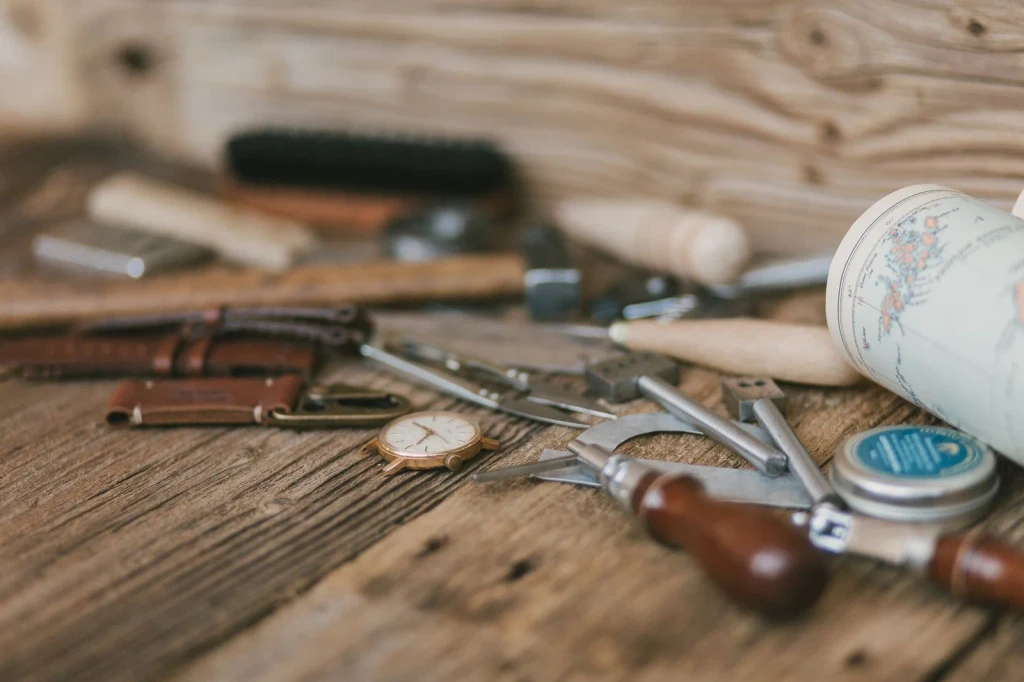
Artisan tools rest on wood. Each tool speaks to the skills required to turn materials into bound books.
Photograph by Vlada Karpovich, via Pexels.
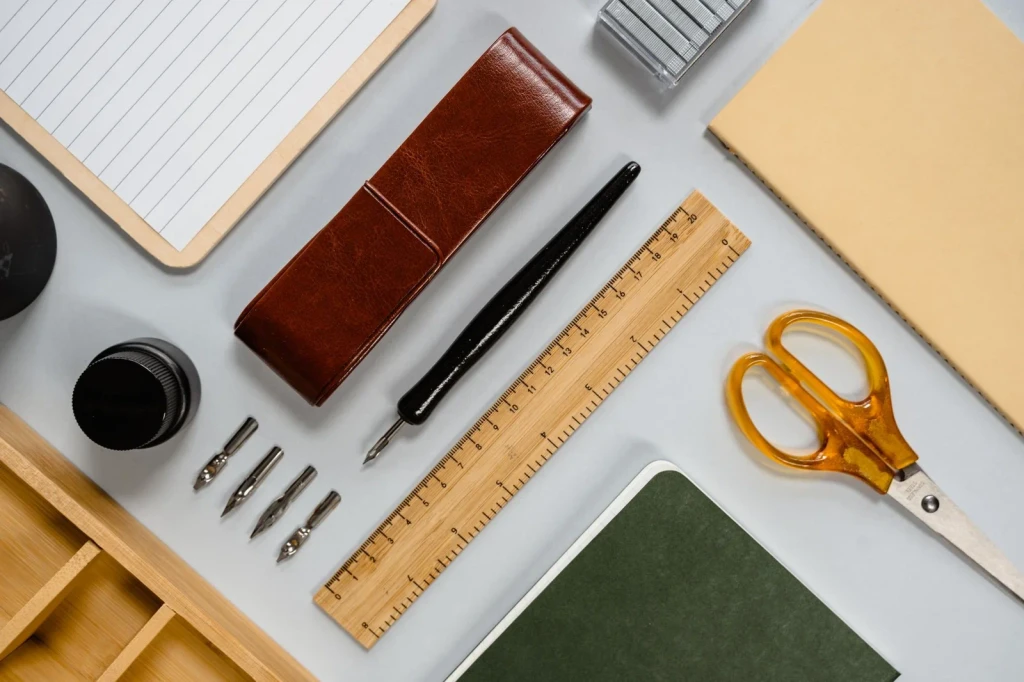
A desk arranged with pens, notebooks, and implements. These stationery objects suggest the everyday tools that support writing, organization, and the creation of bound forms.
Photograph by MART PRODUCTION, via Pexels.
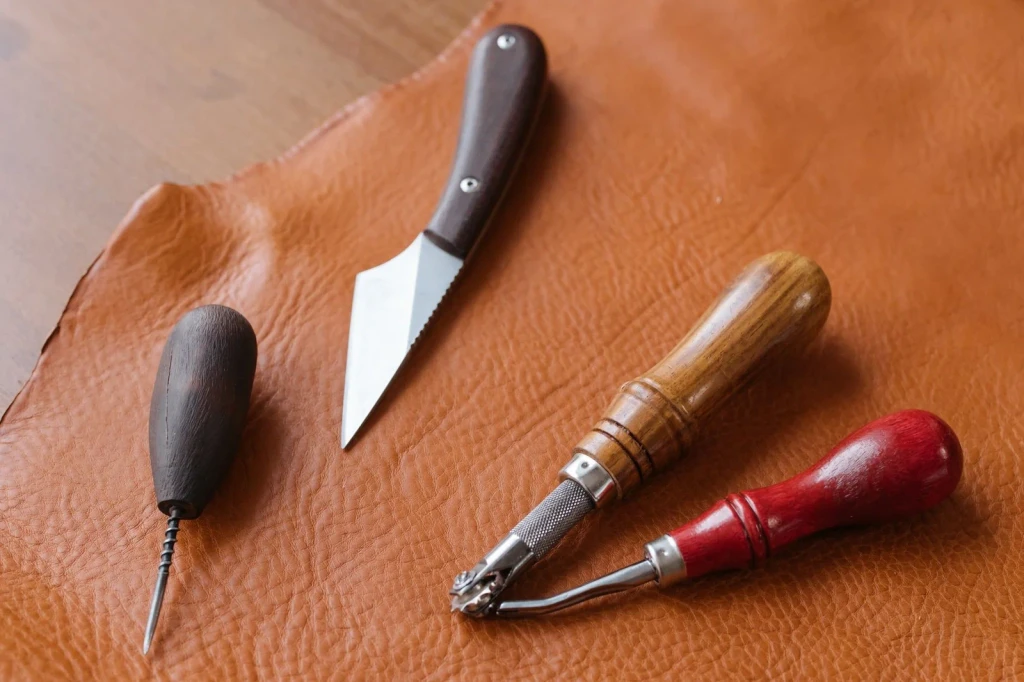
Metal tools rest on leather. Awl, knife, and groover lie ready for shaping material. This photograph shows the specialized implements required to transform raw material into finished object.
Photograph by cottonbro studio, via Pexels.
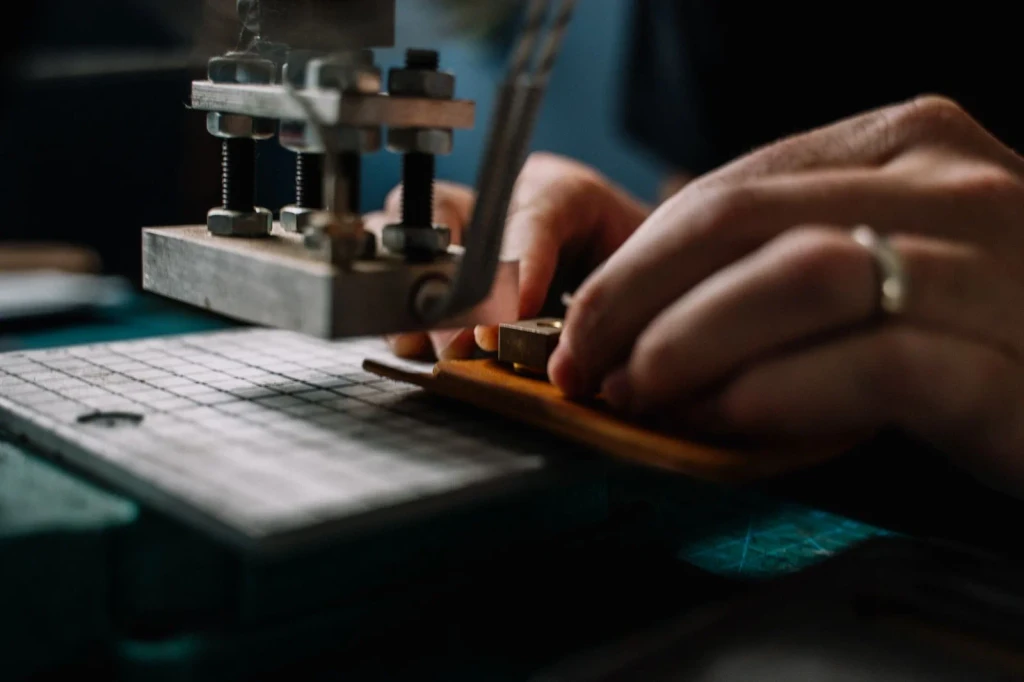
A leather artisan works with metal tools in a creative space. The photograph documents skilled hands transforming material into leather goods. Each action reflects the patience required to make objects by hand.
Photograph by Anna Tarazevich, via Pexels.
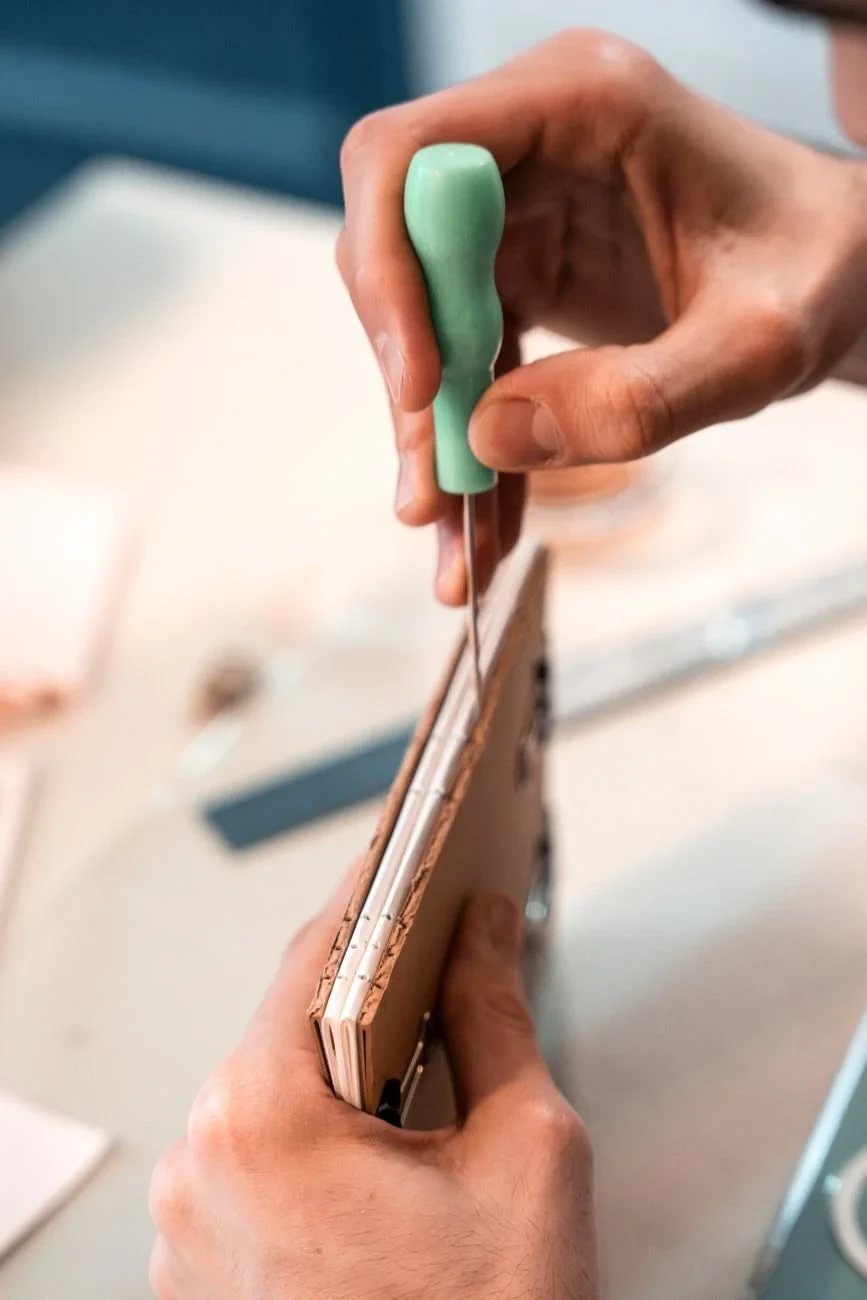
Hands at work with thread and awl, binding pages together. The photograph captures craftsmanship in its most elemental form: the moment when separate sheets become a unified whole.
Photograph by Nur Demirbaş, via Pexels.
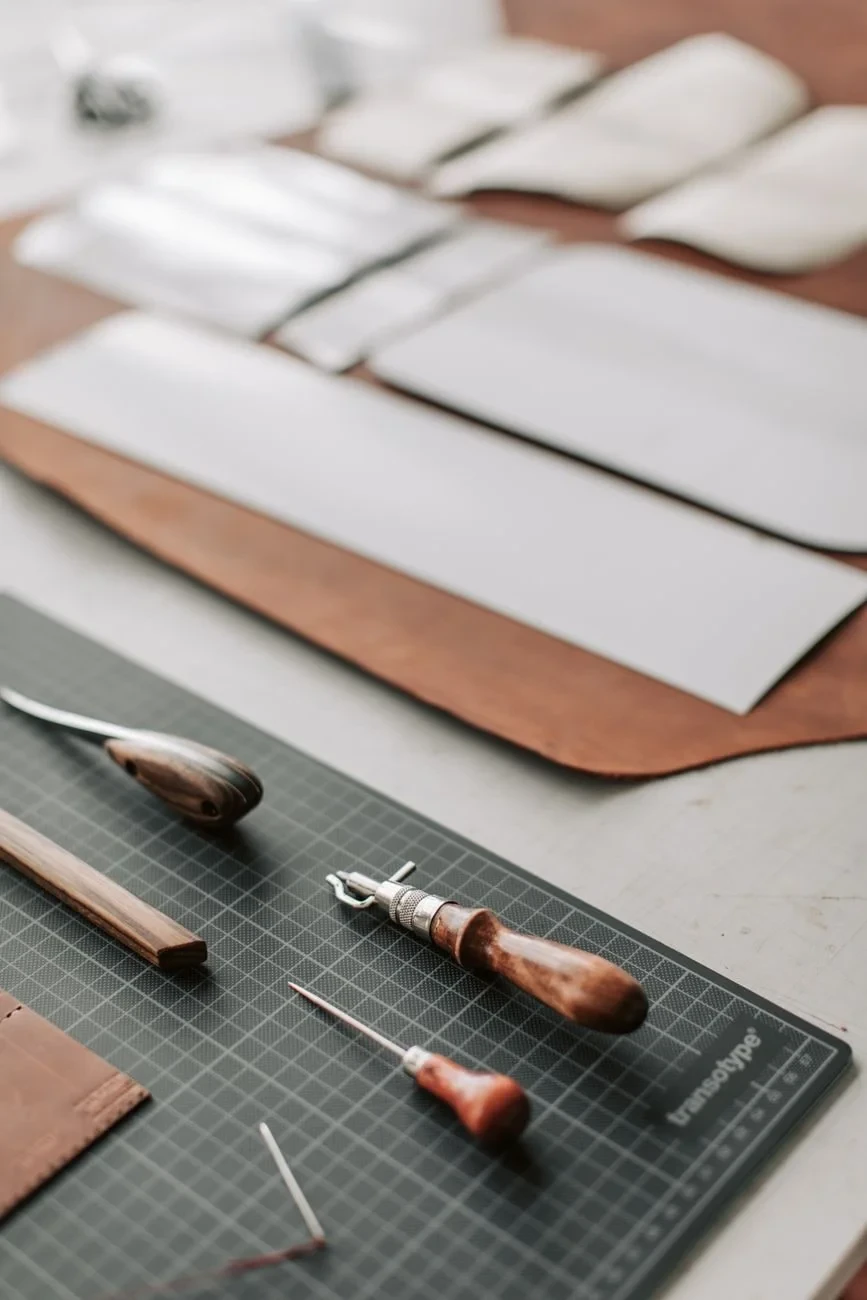
Leather crafting tools laid out. The arrangement reveals the thought and care involved in binding.
Photograph by Vlada Karpovich, via Pexels.
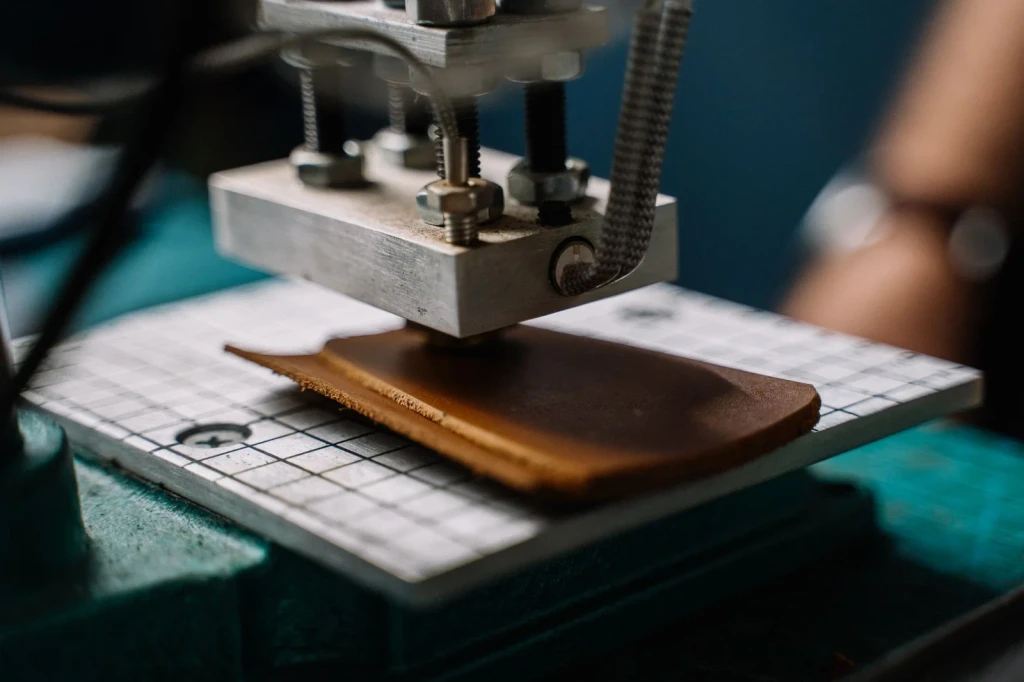
A machine cuts leather in the workshop. Industrial methods shape the material that will hold pages together.
Photograph by Anna Tarazevich, via Pexels.
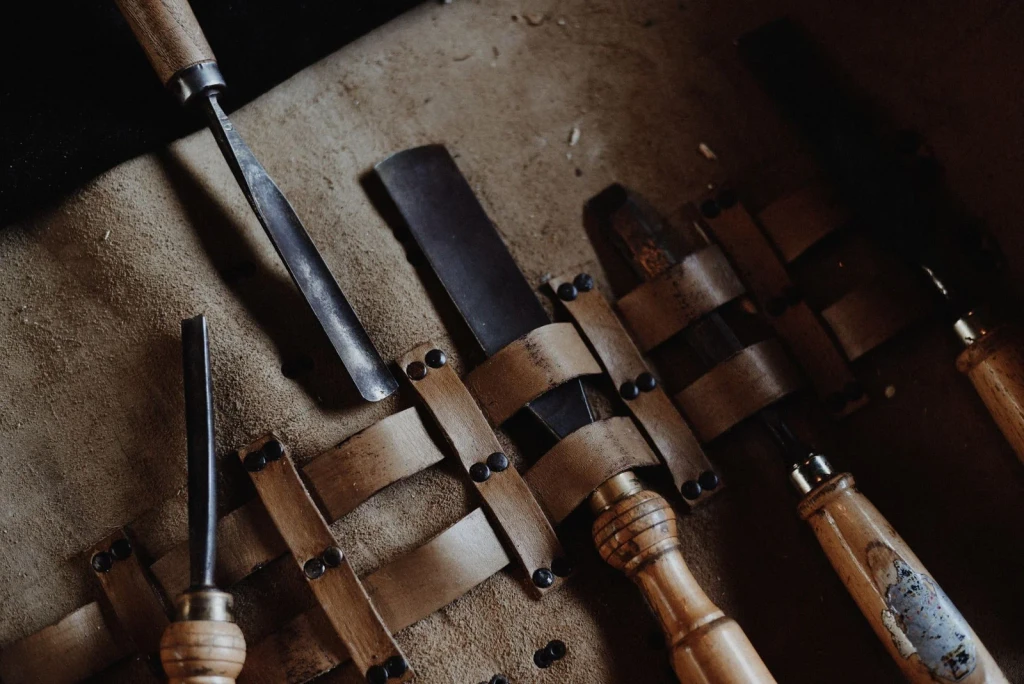
A set of chisels arranged on leather. Though traditionally used in woodworking, such precision tools share the spirit of hand-crafted bookbinding. Both trades shape material with care and skill.
Photograph by Cihan Yüce, via Pexels.
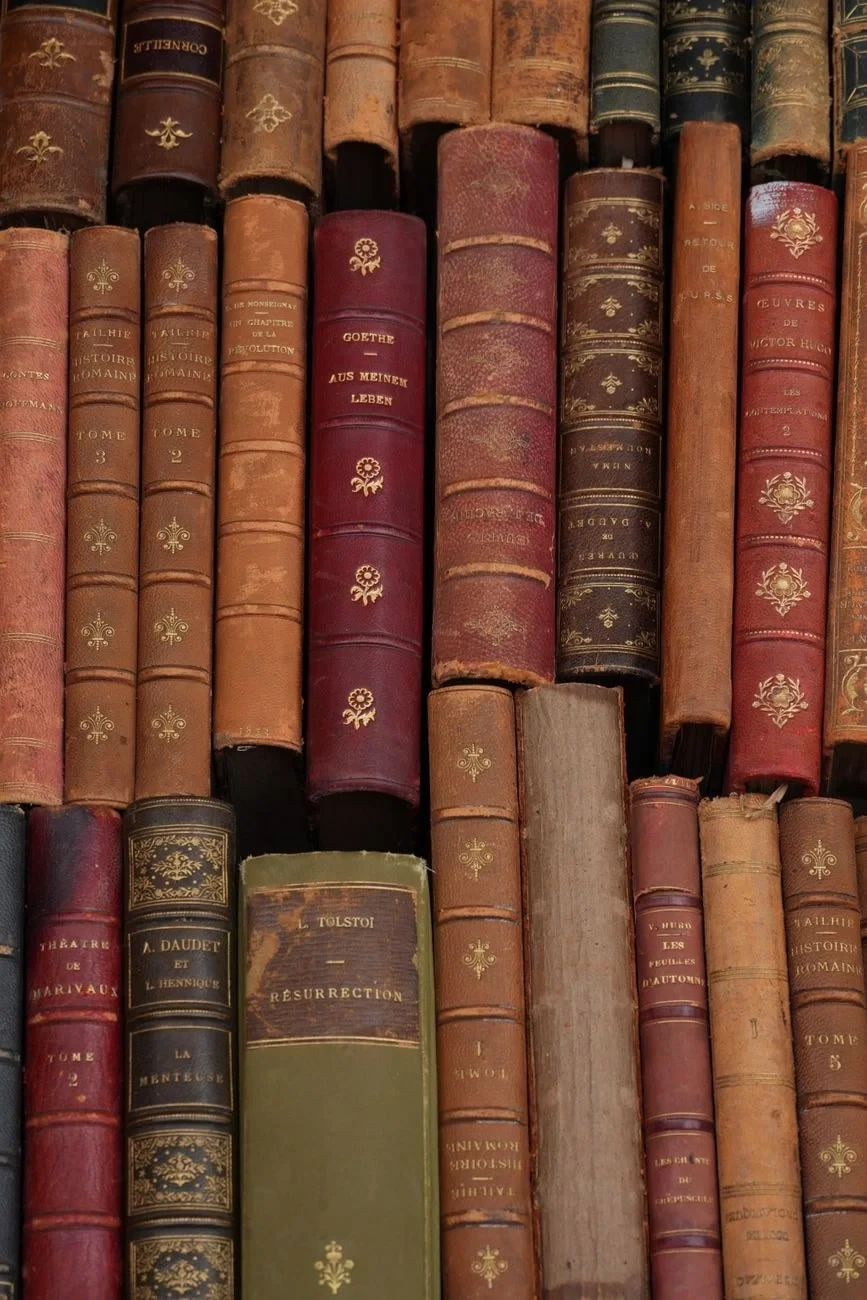
Vintage leather-bound books with ornate spines line a shelf. The result of craft. pages transformed into objects to be held, displayed, and preserved.
Photograph by Muhammed Baltakıran, via Pexels.
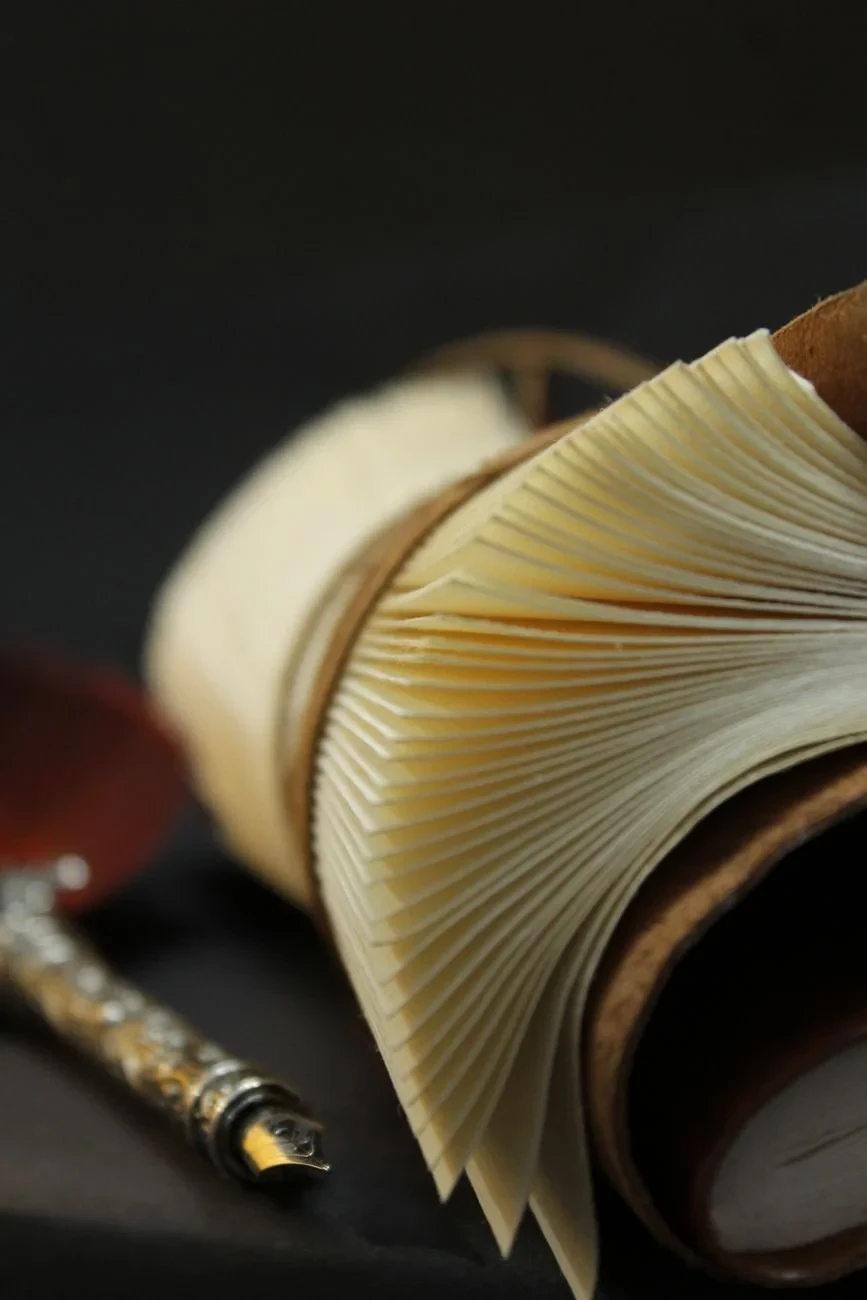
A notebook and pen photographed with attention to detail. The image frames these bound objects as artifacts worthy of study in their own right.
Photograph by Yashasvi Nagda, via Pexels.
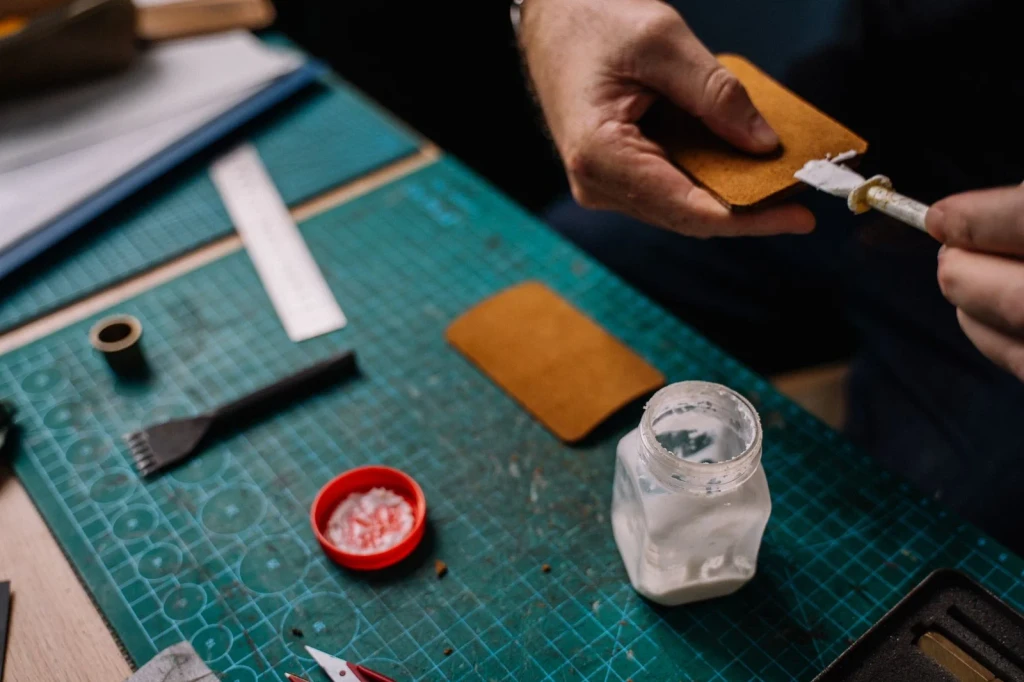
Glue is applied by hand to leather. This intimate moment shows how pages become objects through deliberate craft.
Photograph by Anna Tarazevich, via Pexels.
